


The Myth Of Semi Formal Uniformity: Why You Keep Getting It Wrong

What The Host Actually Wants
You’re anxious because you think semi-formal has one fixed meaning, and you’re terrified of looking underdressed or overdressed in front of people who matter. Here’s the mechanism: semi-formal is deliberately ambiguous. The host chose this term because it signals restraint without demanding precision. Think of it like a contract written in vague language on purpose. The vagueness protects the host from having to enforce strict rules while still filtering out people who show up in jeans or a ball gown.
Semi-formal means the host values presentation but not performance. They want to see effort applied appropriately, not maximum effort. This distinction matters because it reveals the real test: can you read a room and calibrate? The dress code isn’t about matching a checklist. It’s about demonstrating you understand social context well enough to make a judgment call. Most people get this wrong by treating the invitation like an instruction manual instead of a signal about the host’s values.
Location, Time, And Event Type Set The Actual Rules
The specific occasion and setting override any generic definition of semi-formal you find online. A semi-formal wedding in the South at 6 PM reads differently than a semi-formal gala in Manhattan at 8 PM or a semi-formal brunch in a suburb. Geography, climate, and regional formality expectations shift what semi-formal actually demands. Time of day matters equally: evening semi-formal expects different fabric weight and color saturation than daytime semi-formal.
The event category itself determines how you interpret the term. Semi-formal for a company dinner, a friend’s anniversary party, a country club event, or a charity auction each carry different unstated expectations. Your job is to research the specific context, not memorize a universal rule. Call the host if genuinely unsure. That single action demonstrates you respect the occasion enough to clarify rather than guess. This is the protocol: context first, then dress.
The “Dress Attire On Invitation” Deception: Beyond The Black And White
The Casual Trap: Avoiding Underdressing
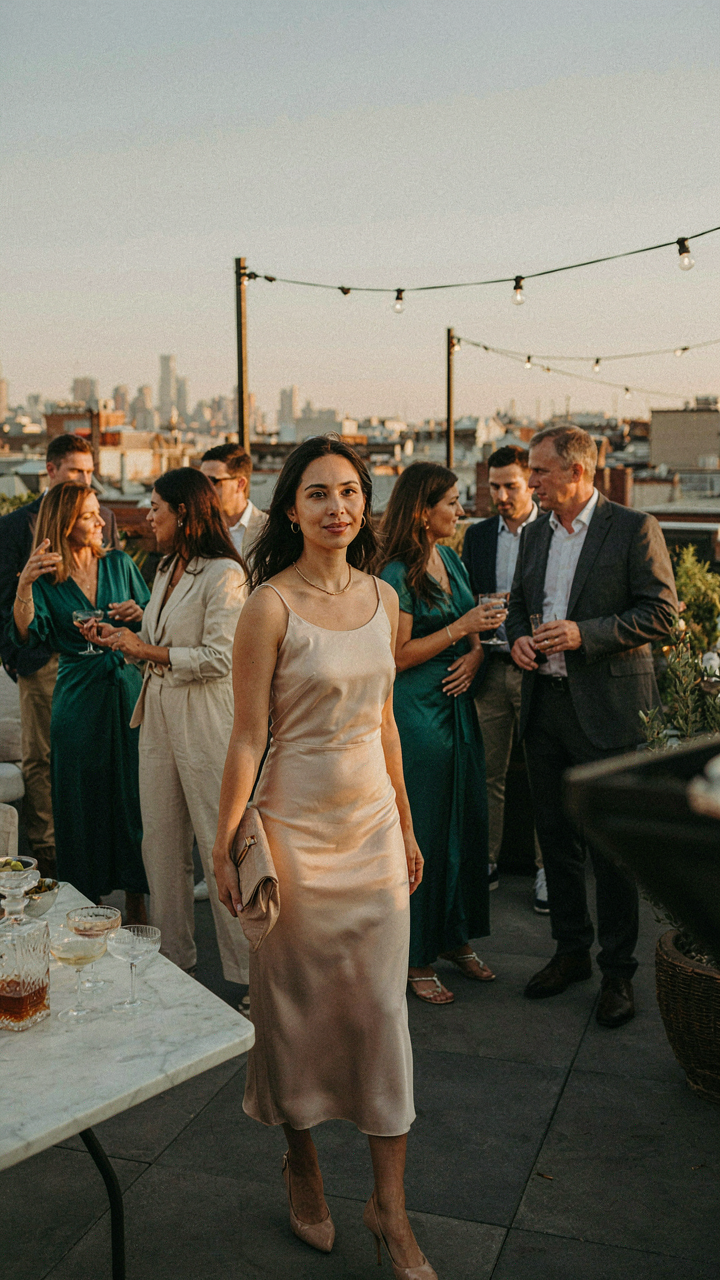
You’re worried people will judge you for not fitting in, and that fear makes you want to play it safe by dressing down. Here’s the mechanism: semi-formal exists as a status signal, not a style guide. When you underdress relative to the stated code, you communicate either ignorance or deliberate disrespect for the event’s hierarchy. The host sets the baseline. Going below it signals you didn’t take the invitation seriously enough to prepare.

Semi-formal for women means a dress, skirt with blouse, or tailored pants paired with structured tops. Fabric weight and finish matter more than formality level. Think silk, cotton blends, or wool rather than jersey knits. Shoes should be closed-toe or strappy heels, not flats or sneakers. The cut should be intentional, not casual. Underdressing happens when you show up in what you’d wear to brunch with friends instead of what you’d wear to prove you belong in the room.
Overdressing Risk: The Subtle Power Imbalance
Overdressing creates a different problem: you visually claim a status tier above the event’s stated code, which makes others uncomfortable and positions you as either clueless or trying too hard. Sociology calls this “status incongruence,” and it destabilizes the social contract everyone agreed to follow. When you arrive in full formal wear to a semi-formal event, you rewrite the rules without permission and make the host’s calibration look wrong.
Semi-formal explicitly signals what formal is not. Formal means floor-length gowns, tuxedos, or black-tie protocol. Semi-formal means you stop one step before that. Skip the evening gown, the statement jewelry, the formal updos. Wear a knee-length or midi dress instead. Wear simple jewelry. Keep your hair down or in a basic style. The goal is alignment, not elevation. Matching the code shows respect for the boundary the host drew.
The Nuance Protocol: Deciphering Semi Formal Dress Code Wording
The Words That Actually Matter
You’re anxious you’ll look wrong. That fear drives most people to Google the same question twice. Here’s the mechanism: invitation language contains signals that override the label itself. “Semi formal” on paper means nothing without the modifiers surrounding it. Event hosts bury their true expectations in adjectives, venue details, and time stamps. A 6 PM wedding invitation reads differently than a 2 PM one, even with identical dress code text. The word choice reveals whether the host expects you to blend in or stand out.

Pay attention to words like “black tie optional,” “cocktail attire,” or “dressy casual.” These aren’t redundant. They’re calibrations. “Optional” signals you can go lighter. “Dressy” pushes formality higher than the base label suggests. Time of day functions like inflation on formality: evening events demand more coverage and refinement than afternoon ones. The venue name matters too. A country club semi formal differs from a rooftop bar semi formal by an entire tier.
Reading Between The Lines: Unspoken Expectations
The real formality lives in what the invitation doesn’t say. Event planners who care about dress codes state them explicitly. Vague invitations suggest casual environments masquerading as formal. If the host mentions “cocktails,” they expect you to prioritize appearance. If they mention “dancing,” movement matters more than polish. The guest list signals expectation too: business associates attending means higher formality; close friends only means lower.
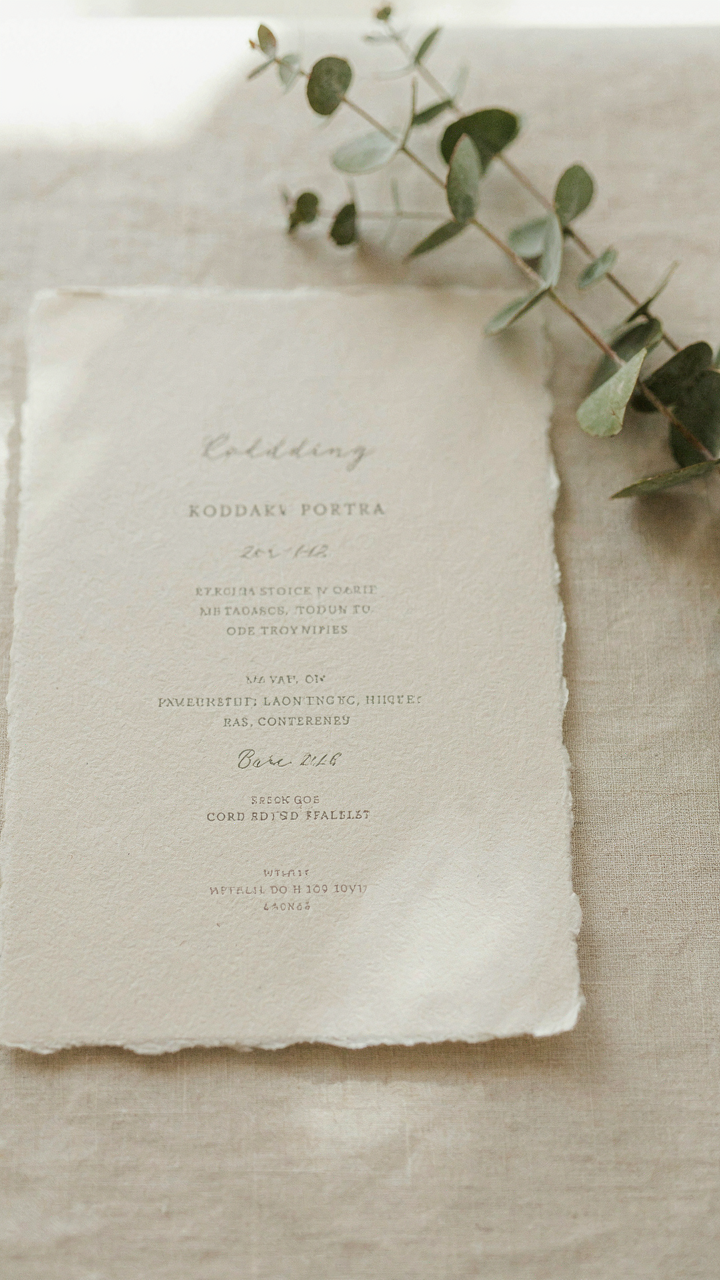
Season and geography shift the baseline. A winter semi formal event expects heavier fabrics and closed-toe shoes. Summer semi formal permits lighter materials and more skin exposure. Location geography matters: rural semi formal differs from urban. Urban events assume you have access to tailored pieces and expect refined execution. The invitation’s design itself communicates formality level. Printed cards on cardstock signal higher stakes than email invites. Font choice, spacing, and paper texture all encode the host’s investment in formality standards.
Semi Formal Wedding Invitation: Decoding The Event’s True Gravity
When The Venue Tells You What To Wear
You’re worried you’ll look wrong. That’s the real reason you’re reading this. Here’s the mechanism: semi-formal wedding invitations use time and location as encoded signals because they communicate the event’s formality tier without saying it directly. A 6 PM ceremony at a country club signals different dress code expectations than a 2 PM garden party at a public park. The invitation’s logistics are the actual instruction manual.

Afternoon semi-formal weddings, typically before 5 PM, assume natural light and outdoor settings. They require lighter fabrics and less structured pieces. Evening semi-formal events, after 6 PM, shift toward jewel tones, metallic accents, and fabrics with subtle sheen. The venue’s formality anchors your outfit choice more than the words “semi-formal” ever will. A ballroom demands different construction than a barn.
What The Bride’s Attendants Reveal About Your Threshold
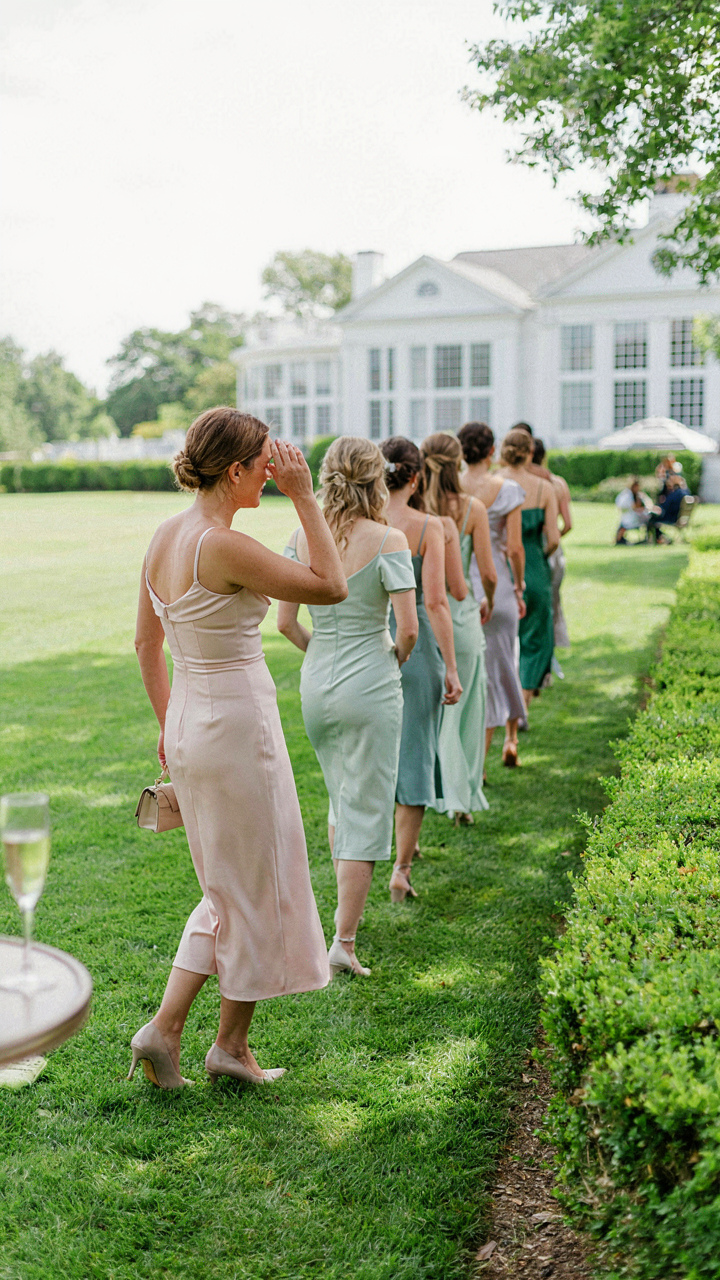
The bridesmaids are your calibration tool. They show you the event’s actual formality level before you commit to your outfit. If the invitation says semi-formal but the bridal party wears floor-length gowns with formal jewelry, you’ve been signaled that this event runs formal. If they wear knee-length dresses with simple accessories, the event genuinely sits at semi-formal’s lower boundary.
This benchmark prevents the worst outcome: underdressing relative to the room’s tone. Semi-formal allows range, but your outfit should land within sight of the bridesmaids’ formality level, not above or below it. Match their dress length category and accessory weight, then adjust for your personal style. The bridal party’s appearance is the only real calibration device the host provides.
The “Formal Wedding Attire” Spectrum: Where Semi Formal Sits
Formal Versus Semi Formal: Crucial Distinctions
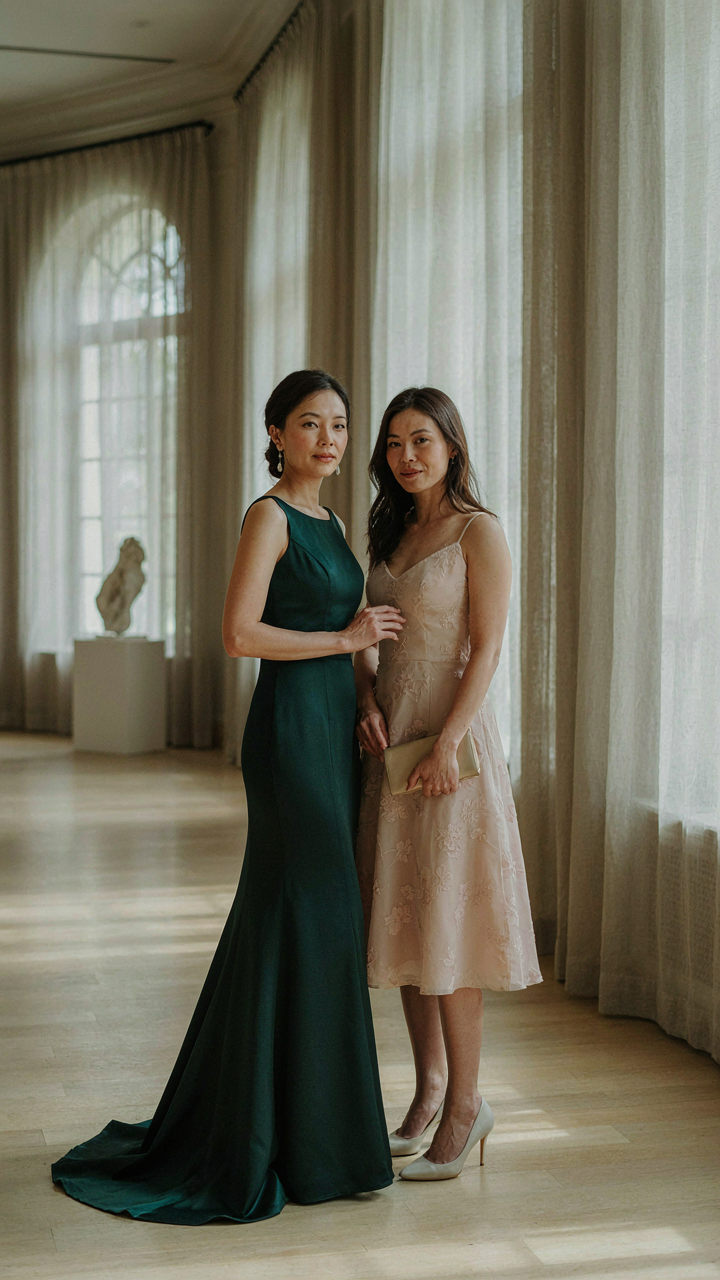
You’re worried about showing up underdressed and looking cheap. Here’s what actually matters: formal and semi-formal are defined by specific garment rules, not vibes. Think of dress codes like a signal hierarchy in communication systems. Formal is the strongest signal. It demands floor-length gowns, structured jackets, minimal skin showing below the collarbone, and jewelry that doesn’t move. Semi-formal weakens that signal intentionally. You get midi or knee-length dresses, separates that work together, exposed arms or shoulders, and room for personal interpretation without breaking protocol.

The distinction isn’t subjective. Formal means you follow a rigid template because the event centers on tradition or rank. Semi-formal means you follow a framework with latitude. A formal black-tie wedding gives you one lane: floor-length gown, closed-toe shoes, upswept hair optional but conventional. Semi-formal gives you actual choices. You can wear a midi dress or tailored separates. You can wear flats if they’re formal flats or heels. You can show your collarbone. The mechanism is permission. Formal removes it. Semi-formal restores it within guardrails.
Navigate Ambiguity Without Hesitation
Most advice tells you to “feel confident” or “wear what makes you happy” when facing semi-formal confusion. That’s useless. The real problem is that semi-formal is genuinely undefined in most invitations because hosts often don’t know what they’re asking for. Your job isn’t to guess their intent. It’s to identify what semi-formal actually excludes, then build upward from that floor. Semi-formal excludes casual fabrics like cotton, linen, and denim. It excludes athletic silhouettes. It excludes visible workout wear. Everything else operates within bounds.
Pick a dress or outfit that signals effort and structure. Midi length with a fitted bodice works. Knee-length with tailored separates works. A cocktail dress that reads polished works. Closed-toe shoes that aren’t sneakers work. You’re aiming for “dressed for a business dinner, not a casual outing.” That’s the mechanism. Semi-formal means you’ve acknowledged an occasion exists and you’ve altered your presentation to reflect that acknowledgment.
The Game Theory Of Semi Formal: Predicting Social Outcomes
Dress Code As Economic Signal
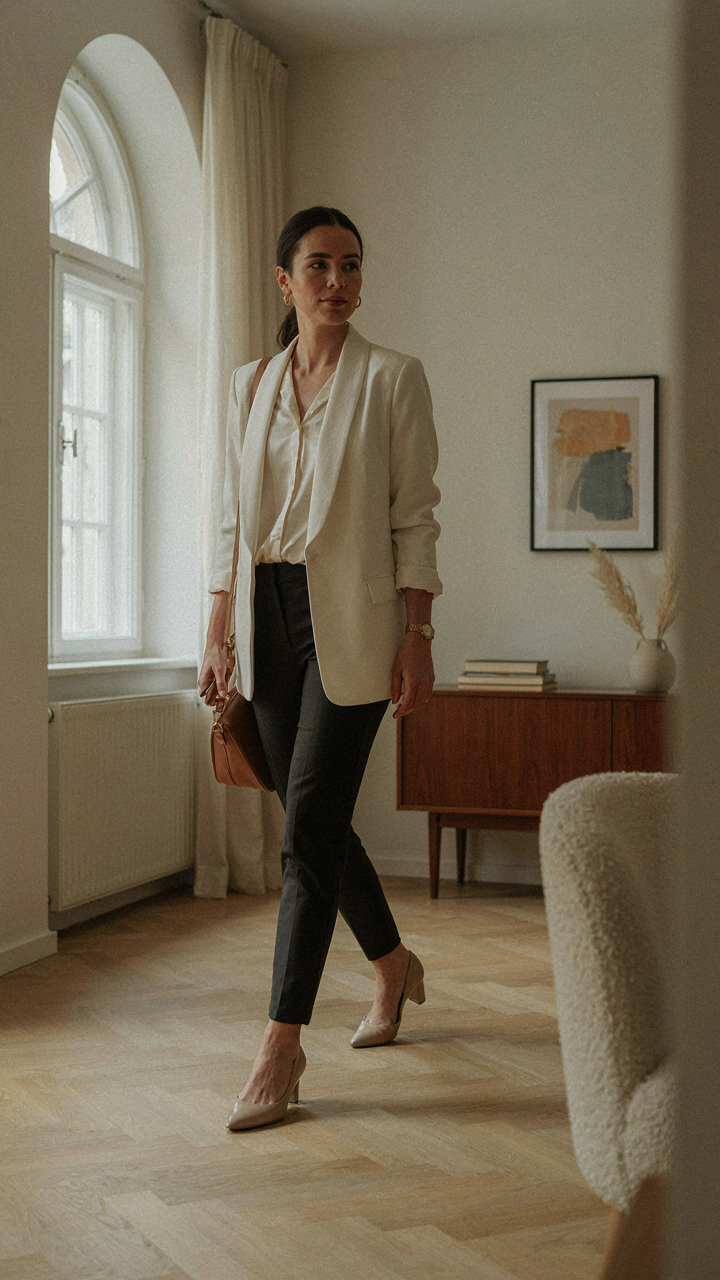
You care about this because you want to spend the right currency without overspending or underspending on social proof. Economics calls this signaling theory: you broadcast information about yourself through costly choices. Semi-formal dress signals that you respect the event’s weight without claiming the formality of black-tie. You’re saying “I prepared” without saying “I’m trying too hard.” The cost of your clothing choice matters less than the specificity of your choice. Wearing a midi dress with a structured blazer signals you decoded the code. Wearing sequins signals you didn’t.

The mechanism works because semi-formal exists in the gap between casual and formal. It demands interpretation. Women who dress for semi-formal correctly demonstrate they can read unstated social hierarchies and respond with precision. This reading ability signals competence in other domains. The invitation isn’t really about the clothes. It’s about whether you understand what the host values. Hosts who specify semi-formal want guests who can operate without explicit instruction.
Hierarchy Through Presentation Choice
Evolution didn’t wire us to trust strangers equally, so we use visible markers to rank people within groups. Semi-formal dress is a dominance display that doesn’t announce dominance loudly. You’re establishing your position through restraint and appropriateness, not through expense or visibility. A woman in a well-fitted blazer and tailored pants reads as someone who moves through formal spaces regularly. Someone in a cocktail dress reads as someone who prioritizes being noticed over being credible. Semi-formal succeeds when it makes people assume you belong in higher-status rooms than this one.
The protocol is structural: choose pieces that read as intentional rather than decorative. A simple silk camisole under a structured jacket beats a statement necklace and dress. Your shoes should be polished leather, not embellished. Your hair should be styled but not theatrical. Semi-formal is the dress code of people who don’t need to prove they can dress. It’s the uniform of assumed competence.
Building Your Semi Formal Attire Wedding Invitation Wording Arsenal
The Core Pieces That Actually Work
You want to know the right formula so nobody questions your judgment. That’s the real motive here. Semi formal operates like supply chain logistics: you need base inventory that covers most scenarios, then tactical additions for specific contexts. The foundation pieces are non-negotiable because they translate across venues, seasons, and guest lists.
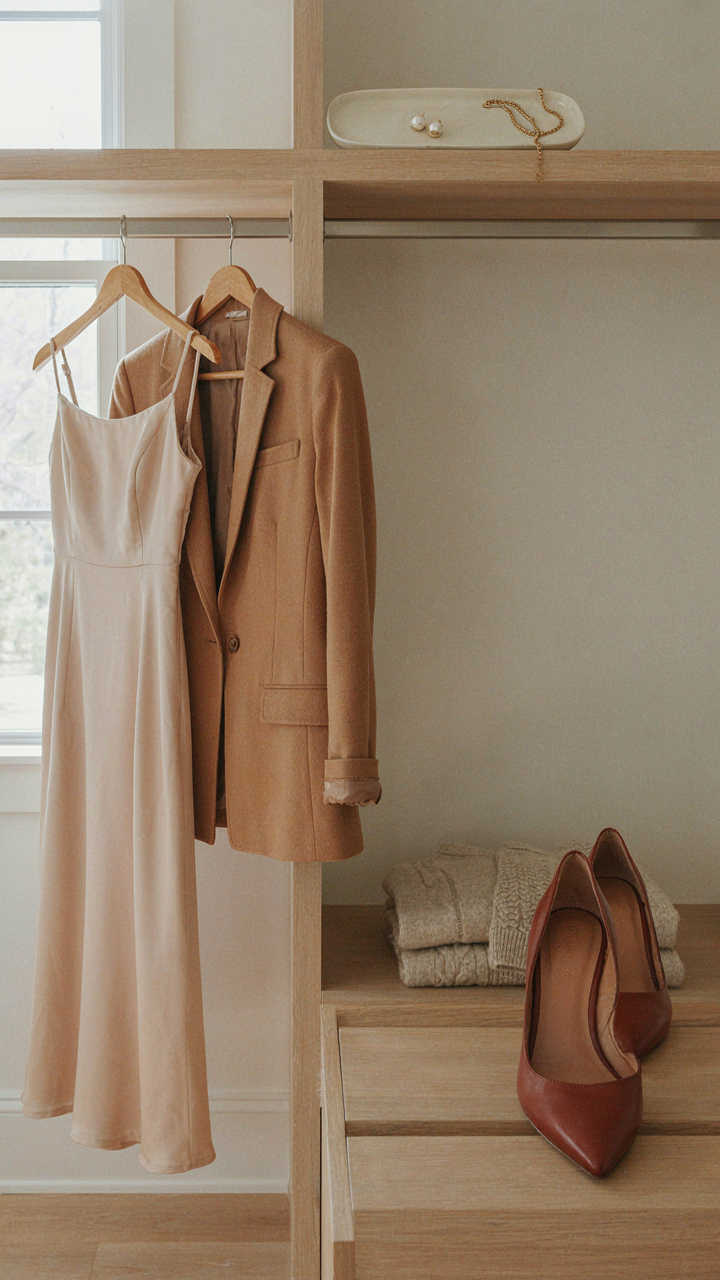
- Midi or knee-length dress: The standard length for semi formal is midi (hitting below the knee) or knee-length. This sits between cocktail and black tie. A knee-length option works because it signals formality without the floor-length commitment black tie demands.
- Structured blazer or jacket: A tailored blazer elevates any dress and bridges formality gaps. This piece reads as intentional and signals you understand the dress code. Works for both outdoor and indoor events.
- Closed-toe heels or dressy flats: Semi formal typically excludes sandals and sneakers. Closed-toe shoes ground the outfit in formality. Heel height is your variable, not the shoe type itself.
- Simple jewelry in one metal: Mixing gold and silver reads unfinished at semi formal. Commit to one metal and keep the visual weight minimal. This avoids the “trying too hard” impression that kills semi formal execution.
- Appropriate undergarments: Visible panty lines or bra straps undermine formality instantly. Smooth layers underneath are the invisible infrastructure that makes everything else work.

These pieces form your baseline. From here, you adjust for venue and season, but you never drop below this threshold. The invitation wording that specifies “semi formal” is telling you these pieces are the minimum expectation, not the ceiling.
Accessories That Signal Restraint
The consensus advice says “add personality through accessories.” That’s lazy. Accessories at semi formal are actually about demonstrating you understand proportion and know when to stop. The mechanism here is subtraction as confidence, not addition as expression.
A structured clutch, minimal jewelry, and one statement piece if any works because it shows you edited yourself. Most people fail semi formal by layering too many accessories, thinking more detail equals more formality. It’s the opposite. A single pair of earrings or a simple necklace reads cleaner than a full jewelry set. Your shoes matter more than your bag at semi formal because they ground your silhouette. If you wear a patterned dress, keep accessories neutral and simple. If your dress is solid, you have slightly more room to introduce texture through a metallic bag or structured shawl. The final step: before leaving, remove one accessory you planned to wear, then check the mirror. What you kept is exactly right.
Dress Code Invitation Ideas: Engineering Your Look
The Core Pieces That Actually Work
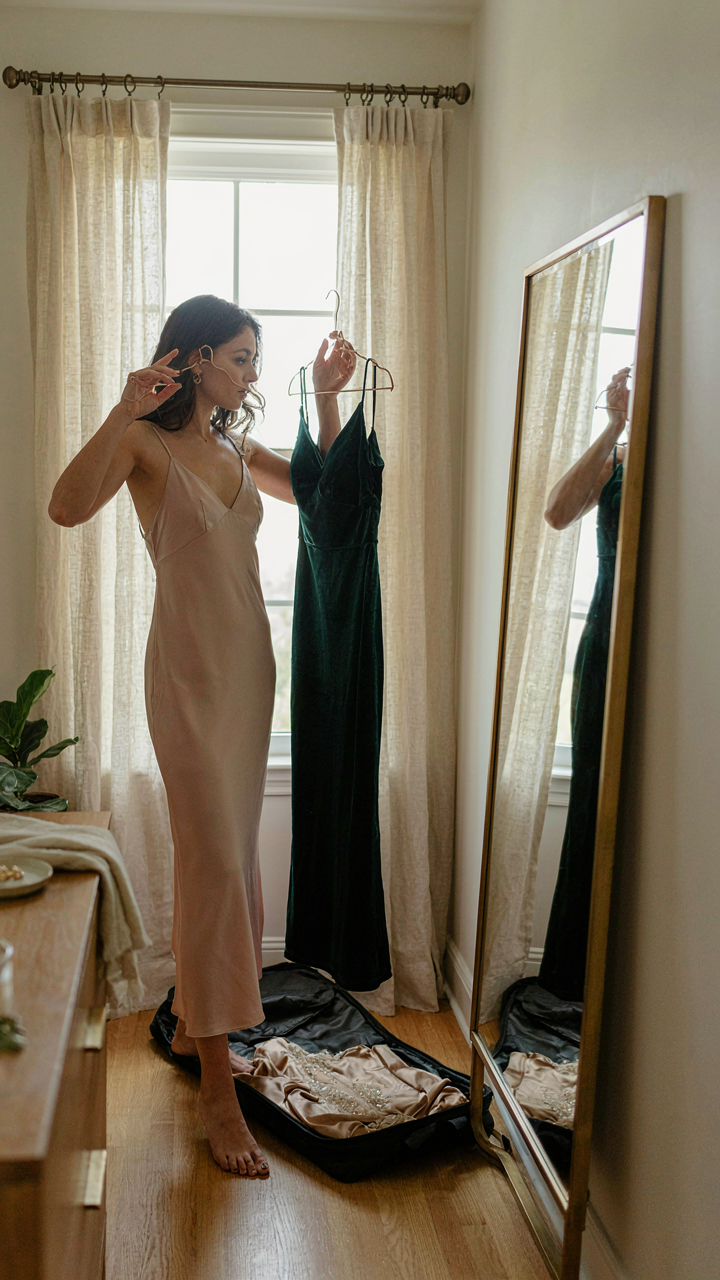
You want to know this so you don’t show up wrong and lose status points in the room. Here’s the mechanism: semi-formal dressing works like portfolio construction in finance. You build a base of stable assets, then add tactical positions for specific events. The base pieces are what you wear repeatedly across different semi-formal settings. They’re interchangeable. A tailored blazer, dark trousers, a structured dress, a pencil skirt. These are your non-volatile holdings.

The mistake most people make is buying event-specific pieces instead of building a system. You end up with ten dresses you wear once. Instead, select five to seven core pieces in neutral colors: black, navy, charcoal, cream, burgundy. Pair them in different combinations. A blazer over a dress changes the look entirely. Add or remove a cardigan. Swap shoes from heels to flats. The math is simple: fewer pieces, more combinations, lower cost, higher confidence because you actually know what works on your body.
Seasonal And Venue Calibration
Semi-formal changes texture and weight based on when and where it happens. Winter semi-formal means heavier fabric, closed-toe shoes, long sleeves or layering. Summer semi-formal means breathable material, shorter sleeves or sleeveless with a cover-up, open-toe shoes if the venue allows. The venue itself signals constraints you can’t ignore: black-tie charity gala requires different energy than semi-formal business dinner or rehearsal dinner at a casual restaurant.
Read the venue as a technical specification, not a suggestion. Restaurant semi-formal means you can wear a dress without a jacket; museum semi-formal might need one. Outdoor venue in evening means you need closed shoes and probably tights or pants. Indoor corporate semi-formal means match their existing culture’s color palette. Don’t overthink it: pick one core piece as your anchor, then layer around it based on temperature and formality level, and you’ll land in the correct zone every time.
The Real Problem Isn’t The Dress Code; It’s Your Assumption Of A Universally Agreed-upon Standard
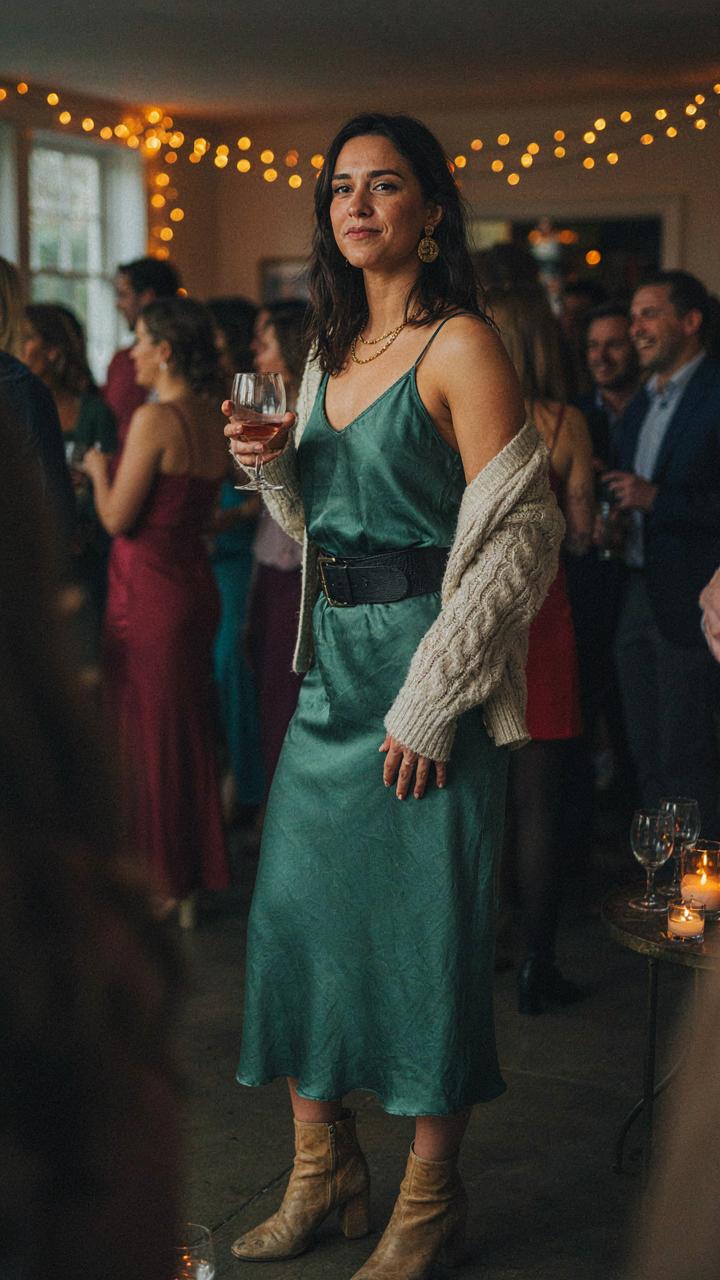
Stop asking what semi formal means. Start asking who invited you and what they actually value. The dress code isn’t a rulebook. It’s a signal of intent. You ignore it at your own social cost, but you also don’t need permission to interpret it differently if you know your audience. Text the host. Clarify once. Then dress like you belong there. The person who shows up confident in the wrong outfit beats the person who shows up anxious in the “right” one every single time.