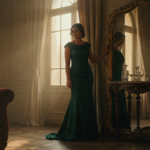

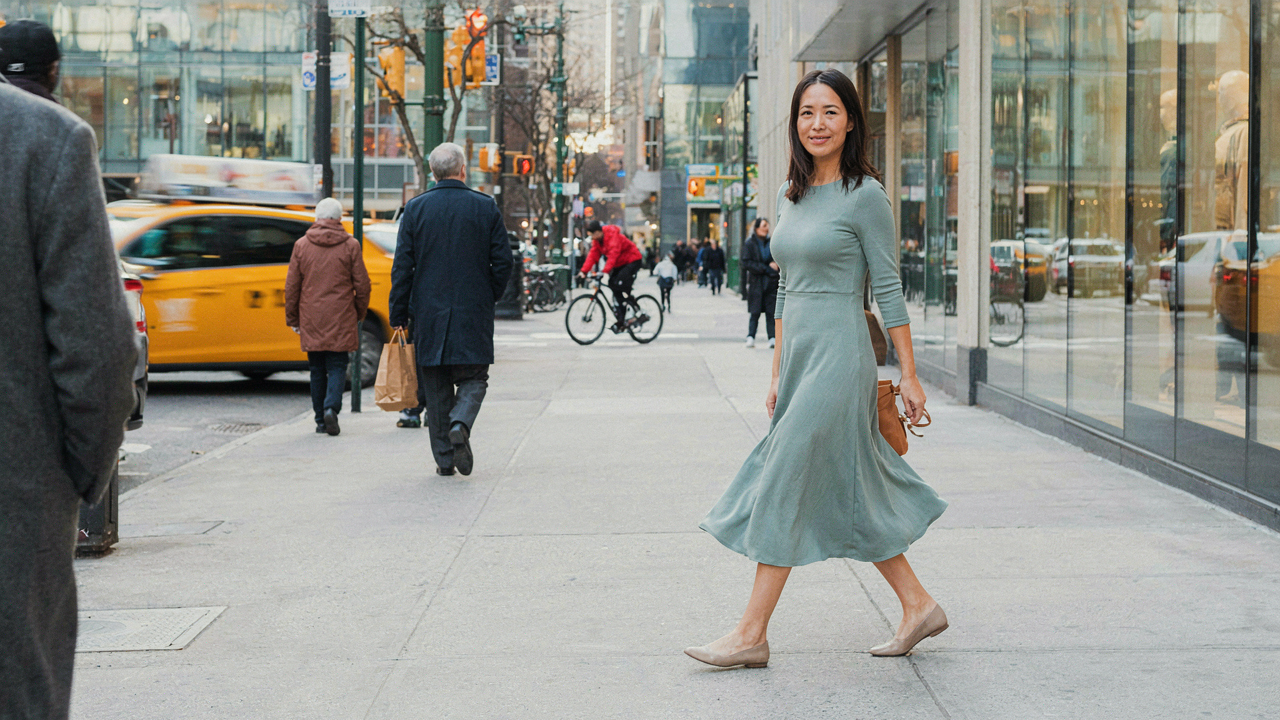
The Unposed Paradox: Why “Natural” Looks Forced
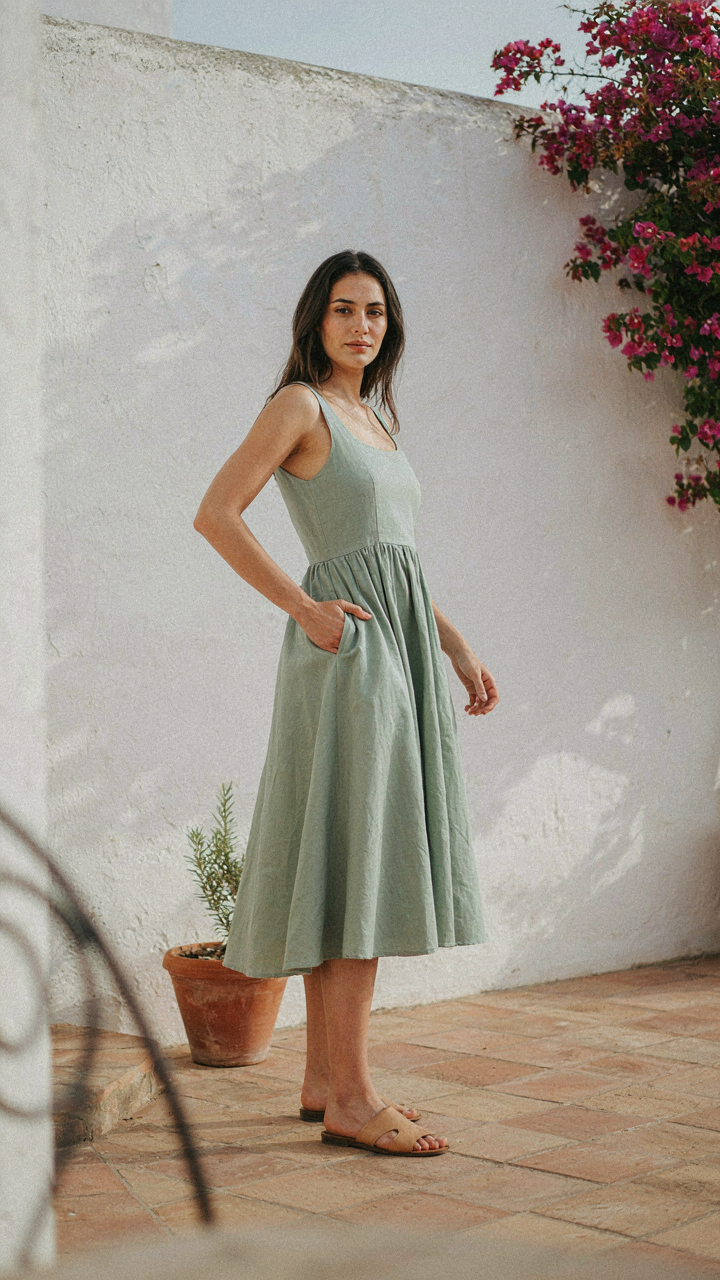
Authenticity Is Manufactured, Not Found
You want people to believe you didn’t try. That’s the real reason you’re reading this. Natural-looking photos feel more trustworthy, more human, less desperate. But here’s the mechanism: authenticity in photography is engineered through constraint, not freedom. The camera doesn’t capture truth. It captures angles, light, and body position. Remove the pose, and you get a slouch or an awkward freeze. The midi dress doesn’t change this. Every flattering photo involves deliberate choice about where your weight sits, which direction your shoulders face, and how your arms occupy space.
The confusion comes from conflating relaxed with unposed. Fashion photography from the 1990s and early 2000s popularized “candid” posing, which looked unstudied but required intense technical control. Your job is to learn which poses feel unstudied while actually being constructed. A midi dress demands this more than shorter cuts because the fabric length magnifies postural mistakes. Slouching reads as sloppy. Standing too rigid reads as uncomfortable. The solution is learning poses that compress the visible decision-making without abandoning structure altogether.
Engineered Nonchalance For Midi Dress Style
In theater, directors call this “motivated movement,” meaning every action connects to intention. Apply that framework to your midi dress poses: every limb position should solve a specific visual problem rather than just exist. Your arms aren’t just hanging. They’re either creating negative space, breaking up vertical lines, or directing the viewer’s eye toward your face. Weight distribution matters more with midi because the skirt length shows your full silhouette. Shift weight to one leg, and the fabric drapes differently. Keep weight centered, and you look rigid.
The protocol is simple: choose one primary pose anchor, then add controlled details. If your anchor is weight on the left leg with a slight hip shift, then add the arm detail next—crossing at the waist, or holding fabric, or resting on your thigh. This sequence prevents the scattered, uncertain look of someone trying everything at once. Start with the structural problem first, solve it, then layer in the refinement. A midi dress requires you to think about proportions from knee to hip to shoulder as a connected system, not separate elements.
The “Looks Chic” Deception: Beyond Surface Level Flattery
Angles That Actually Work
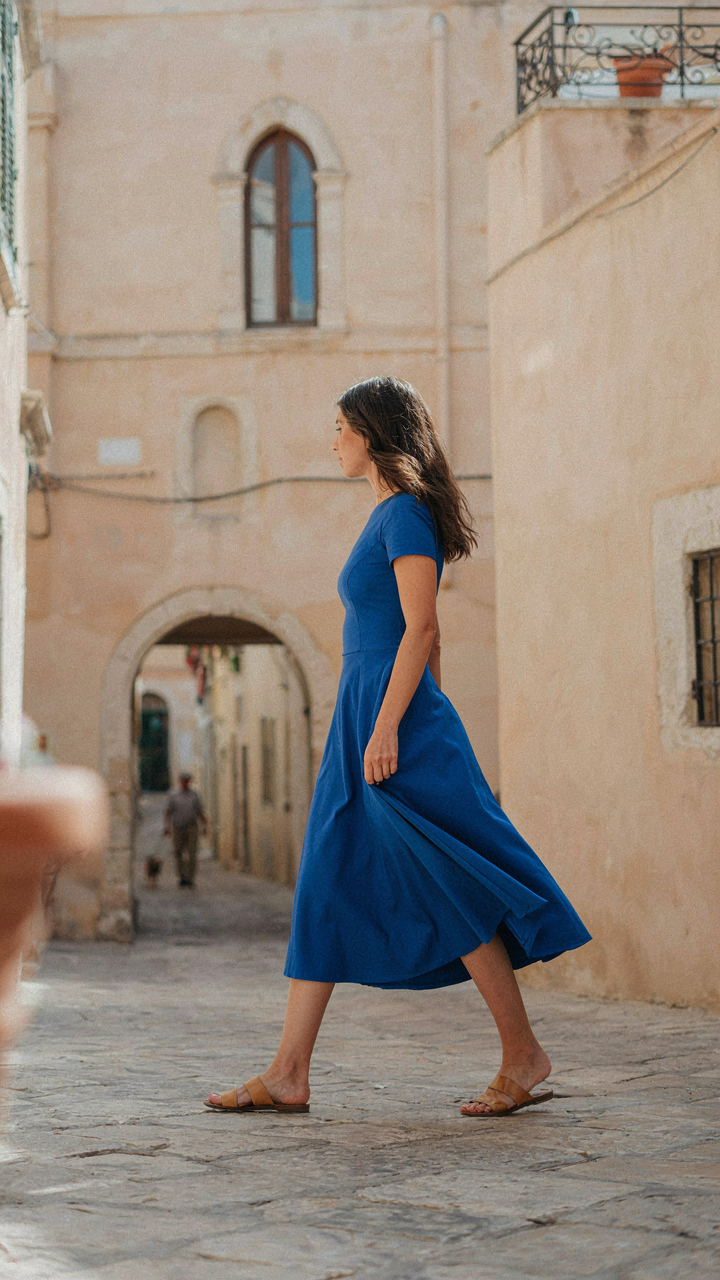
You want the photo to hide what you’re insecure about. That’s the real reason you’re reading this. But the mechanism isn’t “slimming angles” or “flattering poses”—it’s trajectory. Borrow from photography: the angle between your body and the camera lens determines how the midi dress fabric reads in 2D space. A 45-degree body angle compresses vertical lines. A direct front shot elongates them. Neither is objectively better. Pick the angle that matches how the dress is cut, not your anxiety.

The midi length creates specific constraints nobody mentions. At knee-plus length, your posture becomes the primary visual anchor. Slouching collapses the fabric into shapeless folds. Standing with shoulders back and spine neutral lets the dress hang as designed. Test both in your camera roll. One reads as intentional. One reads as accidental. The angle amplifies whichever choice you make, so make it deliberate.
Fabric Tells The Real Story
Movement reveals construction in ways stillness never will. The fabric of a midi dress—whether cotton, linen, jersey, or structured cotton blend—has inherent behavior that posing either exploits or wastes. Designers choose weight and weave specifically to create volume, drape, or structure. Your job in the photo is to show what that fabric actually does, not fight it. A lightweight linen midi needs motion. A structured cotton blend needs angles that catch light on its dimensional folds.
Stop thinking about “showing off your figure.” Start thinking about showing the dress. Walk a few steps before the shot. Shift your weight to one leg. Reach one arm forward or to the side. These aren’t decorative moves—they’re revealing moves. They show the fabric’s behavior under tension, under weight distribution, under real conditions. The fabric movement becomes the visual interest. The pose becomes functional rather than performative.
The Proprioception Protocol: Sensing Your Midi Dress Space
Your Body Knows Where The Fabric Ends
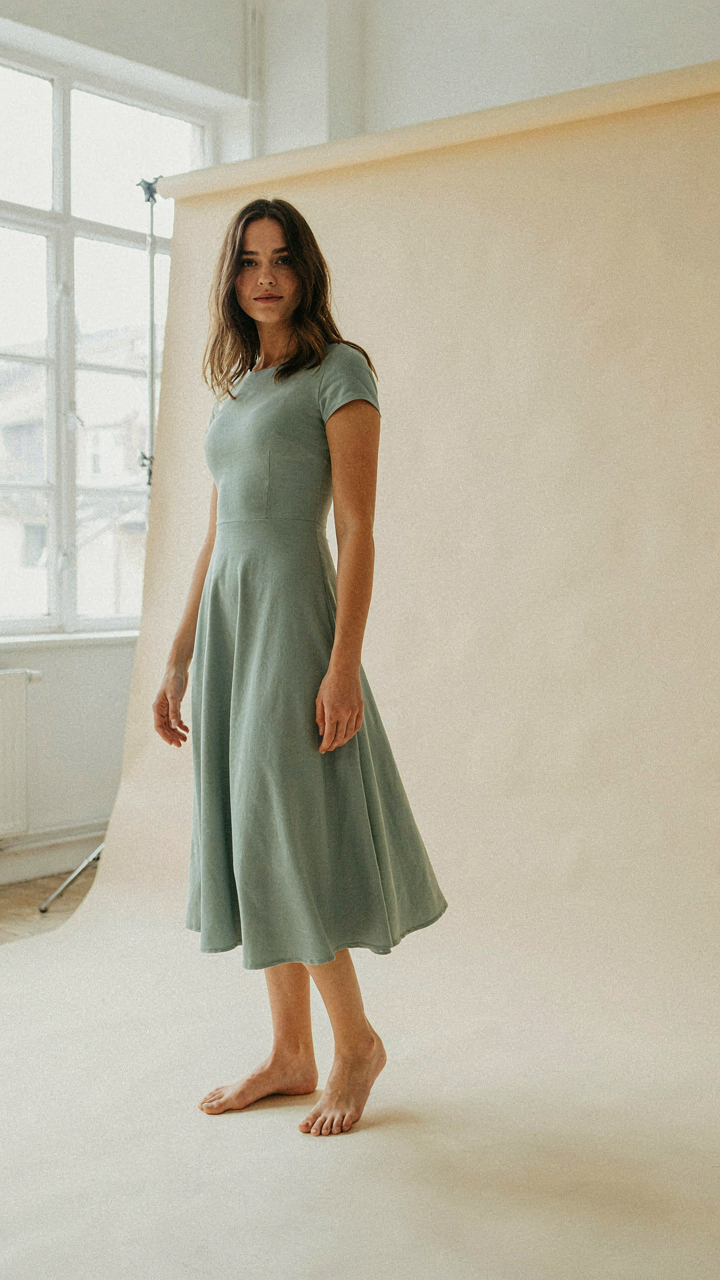
You want the photo to look effortless, which means you’re actually afraid it won’t. Here’s the mechanism: your nervous system reads fabric position the same way it reads your limbs. Proprioception is your body’s ability to sense where it exists in space without looking. A midi dress is an extension of that system, not a separate object you’re wearing. Most posing advice ignores this and treats the dress as decoration. It’s not. Your legs, torso, and the fabric form one kinetic unit the camera sees.

The dress changes how your body balances and moves. Fabric weight pulls differently than bare skin. The hem creates a visual boundary your eyes can’t see while posing, but your proprioceptive system feels it. This is why models who understand their garment look grounded in photos while others look like they’re fighting invisible resistance. You need to practice standing and moving in the dress off-camera first. Feel where the fabric settles on your legs, how it moves when you shift weight, where the hem actually falls when you stand versus when you bend. This baseline awareness transfers directly into confident posing.
Finding Actual Balance, Not Perceived Balance
Physics teaches us that center of gravity is the single point where an object’s weight distributes equally. Your center of gravity shifts the moment you put on a midi dress. The fabric adds mass below your natural pivot point, forcing your body to compensate. Most posing tips say “stand naturally” which is useless because natural standing changed when you got dressed.
Shift your weight slightly forward onto the balls of your feet instead of pressing through your heels. This counteracts how midi fabric pulls downward and backward. Your core naturally tightens when you do this, which reads as posture in photos. Tilt your pelvis forward by a few degrees, not dramatically. This small adjustment keeps your body’s actual center of gravity aligned with the dress’s added lower mass. The result is a pose that feels stable because it is stable, not because you’re fighting your body’s natural mechanics.
Beyond “Butter Yellow Dress Women”: Color As A Narrative Tool
What Yellow Actually Does To Perception
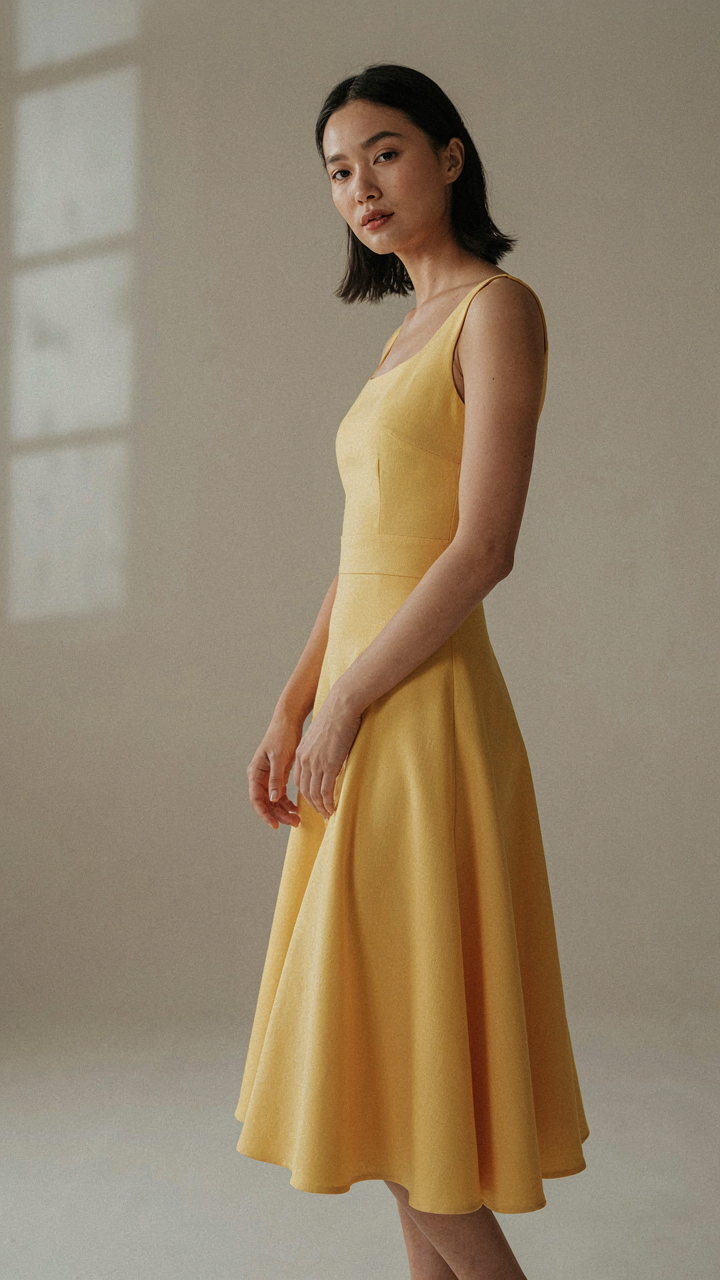
You want people to notice you first and remember you second. That’s the real reason you care about this section. Color psychology isn’t mystical—it’s neurology. Your brain processes color before it processes form. In photography, this means the viewer’s eye lands on color saturation and warmth before they register your pose, body position, or facial expression. Yellow triggers approach behavior in humans. Warm yellows activate the anterior cingulate cortex, the region responsible for decision-making and attention allocation. When you wear yellow in a midi dress, you’re not just wearing a color—you’re controlling where the camera looks first.

The midi dress amplifies this because the garment’s length creates vertical real estate. Yellow in that vertical space reads as motion even when you’re static. Position yourself slightly off-center in the frame. Let the yellow occupy the left or right third of the composition. This forces the viewer’s eye to travel through your body before settling on your face. The pose becomes secondary to the color’s narrative—which means your body position only needs to support what the color is already saying, not fight against it.
Saturation As Contrast Currency
Everyone says wear bold colors for impact. Wrong framing. Saturation isn’t about boldness—it’s about information density. In visual design, saturation controls contrast. A midi dress in muted mustard reads as one tonal zone. A midi dress in high-saturation gold reads as a separate object from your skin. The physics term is luminance contrast. Higher saturation creates steeper luminance gradients between the dress and your surroundings, making the dress—and your pose within it—sharper and more defined in the final image.
Your pose must account for this visual separation. When you wear high-saturation color, tight framing works. Crop close to the torso or waist. Let the color fill the frame. The dress becomes the primary subject, your body becomes the armature. When you wear desaturated color, step back. Use negative space. Let the dress breathe in the composition so it doesn’t flatten into the background. The saturation level determines your proximity to the camera, which determines which poses read as intentional versus accidental.
The Environment Equation: Contextualizing Your Floral Midi Dress Outfit
Background As Active Element
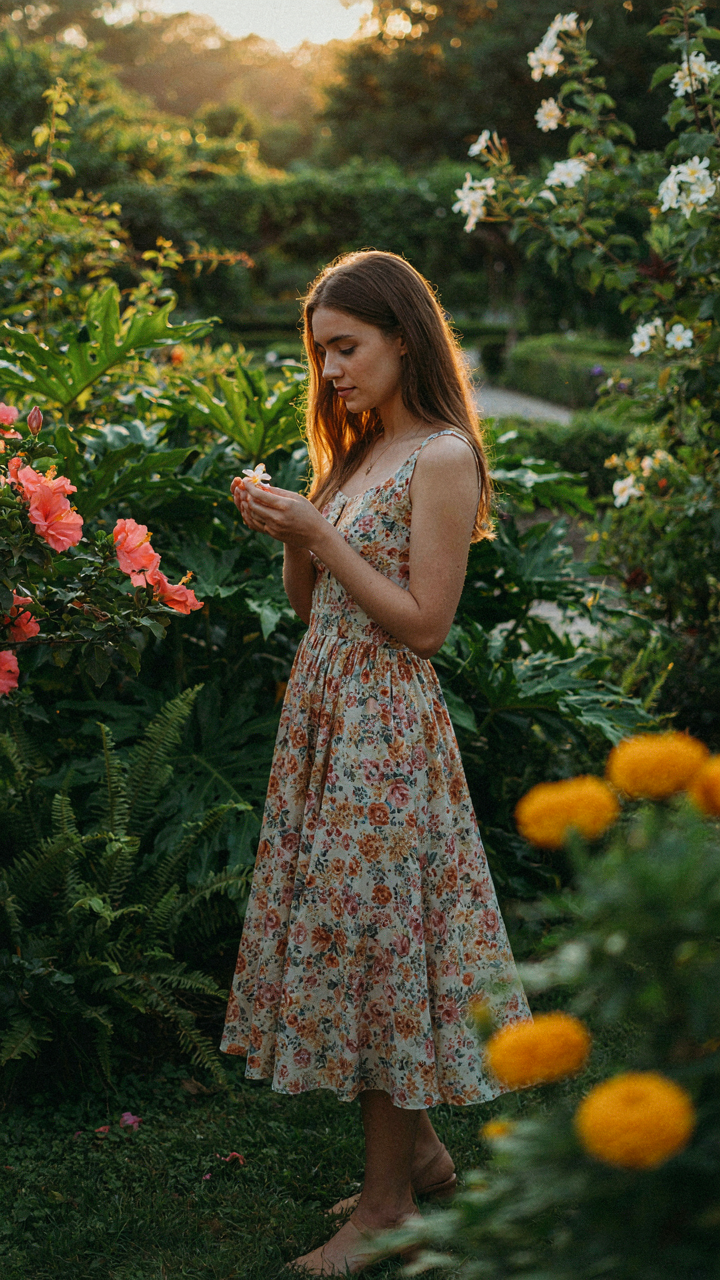
You want the background to disappear so people look at you. That’s the wrong frame. The background doesn’t disappear—it works or it doesn’t. In photography, this is negative space theory: the empty or muted area around your subject amplifies the subject itself. A midi dress needs breathing room in the frame. Shoot against a plain wall, a blurred street, or open sky. The background’s job is contrast, not invisibility. When the background competes for attention, your outfit loses definition.

Clutter behind you fragments the viewer’s eye path. A midi dress relies on line and proportion to communicate fit and style. When backgrounds demand attention—busy patterns, multiple people, signage—the silhouette collapses into visual noise. Test this: shoot the same pose against a detailed brick wall, then a plain surface. The dress reads completely different. Your body’s vertical lines, the dress’s drape, the ankle exposure—all sharpen against simplicity. Choose environments that let the garment speak.
Framing Techniques For Visual Dominance
Framing in composition means controlling what the camera includes and excludes to guide attention. Shoot from chest height or slightly above, never from below unless you’re shooting upward into natural light. Chest-height framing places the midi dress’s proportional advantage—the balance between covered leg and visible ankle—in the viewer’s natural sight line. This isn’t preference. It’s how human eyes process vertical proportion. Lower angles distort the dress’s length-to-body ratio and make ankles look stubby instead of defined.
Tighter crops outperform wide shots for outfit detail. Frame from mid-thigh up, or full body with margin above your head. Wider shots dilute the midi dress by making it share space with too much environment. Position yourself off-center in the frame, not dead middle. This creates visual tension that keeps eyes moving through the photo rather than stalling at the center. Your torso angle, head tilt, and leg position compound this. Step one foot forward slightly, angle your body forty-five degrees from the camera, and shift your weight to your back leg.
The Dynamic Silhouette: Mastering Midi Dress Movement
Capturing Motion For Summer Dress Outfits
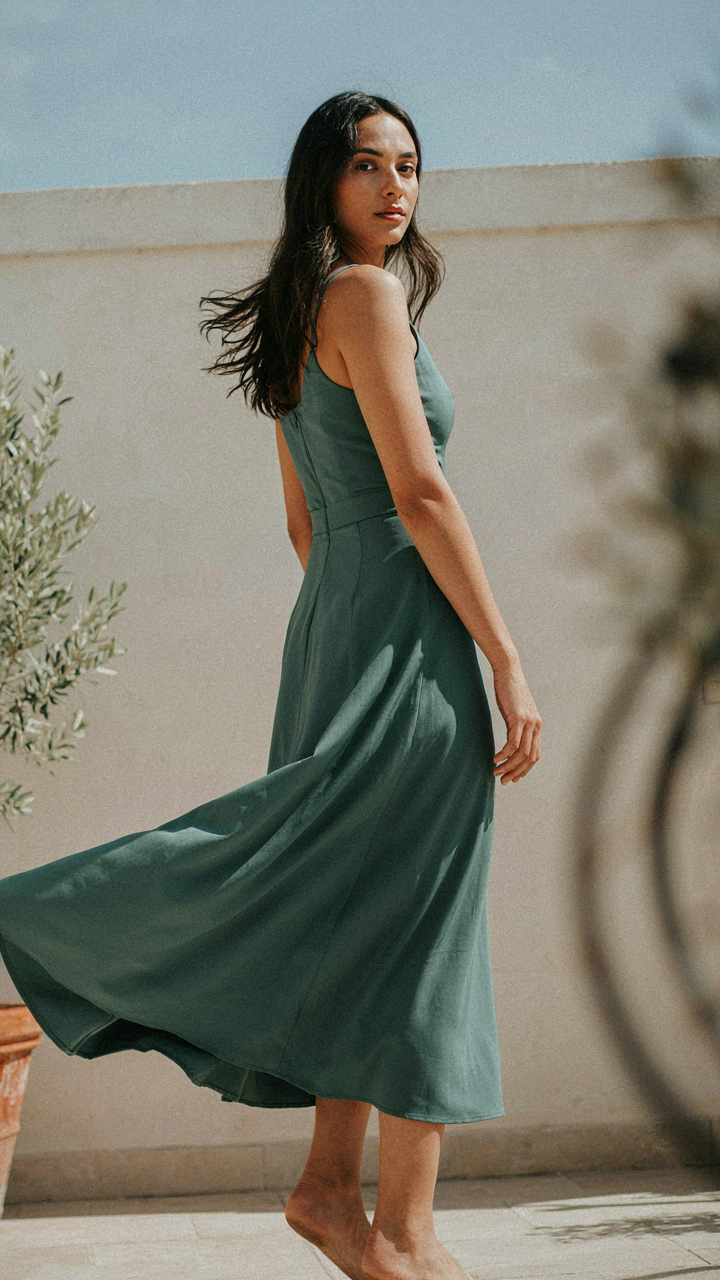
You want to look effortless because you’re terrified stillness exposes how unnatural you actually are in front of a camera. Motion solves this. Borrowed from cinematography, the concept of “leading lines” applies here: your body becomes a vector that guides the viewer’s eye through the frame. A midi dress in motion creates continuous lines that flatter and distract from static posture problems.
- Walking toward the camera: Creates depth and elongates the silhouette. The dress moves with your stride, revealing leg line without standing planted. Capture mid-step for genuine motion blur.
- Mid-turn with shoulder rotation: Twisting your torso while moving generates diagonal lines that slim the frame. The dress fabric follows milliseconds behind, creating dimension that flat poses cannot match.
- Weight shift to back leg: Step forward with one leg while pushing weight back. The dress drapes differently on the supporting leg, creating asymmetry that reads as intentional rather than awkward.
- Skirt engagement with hand: Lightly touch or adjust the fabric as you move. This breaks the awkwardness of dangling arms and gives the dress permission to move naturally around your body.
- Walking away then over-shoulder glance: Capture motion from behind, then turn your head back toward camera. The dress moves away from your body in this angle, showing its cut and volume without clinging.

The mechanism is simple: stillness demands perfect posture and perfect proportions. Motion forgives both. A midi dress moves independently of your body when you’re walking or turning, which means the fabric itself becomes part of the composition. You’re not posing in the dress. The dress is posing around you.
Intentional Folds And Drapery Manipulation
Forget the advice to “let the dress drape naturally.” That’s lazy direction that produces limp, unflattering results. You need to architect the folds before the camera fires. Midi dresses sit at the knee or mid-calf, which means excess fabric bunches predictably at the hip, thigh, and hem. You control where that bunching happens.
Start by pinching the fabric at the hip or thigh and pulling it slightly back toward your body. This creates a vertical fold line that defines your waist and breaks up horizontal bulk. For the front of the dress, gather a small section of fabric and tuck it subtly to one side, creating an intentional diagonal that pulls the eye upward. At the hem, step slightly forward with one leg to create tension across the knee area. This lifts the back fabric and prevents the dress from pooling formlessly around your feet. The physics here: fabric under tension reads as intentional. Fabric at rest reads as sloppy.
The “Classy Outfits” Fallacy: It’s About Control, Not Convention
Elegance As Deliberate Tension
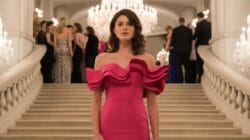
You think this section matters because you want permission to look refined. Here’s what’s actually happening: elegance in photos isn’t about following rules—it’s about breaking them with intention. Military strategists call this “controlled asymmetry.” You apply the same principle to posing. Traditional midi dress poses rely on symmetry and stillness. Power comes from asymmetry—one shoulder forward, weight shifted, a deliberate angle that breaks the frame’s center. This disruption reads as confidence because it is confidence.
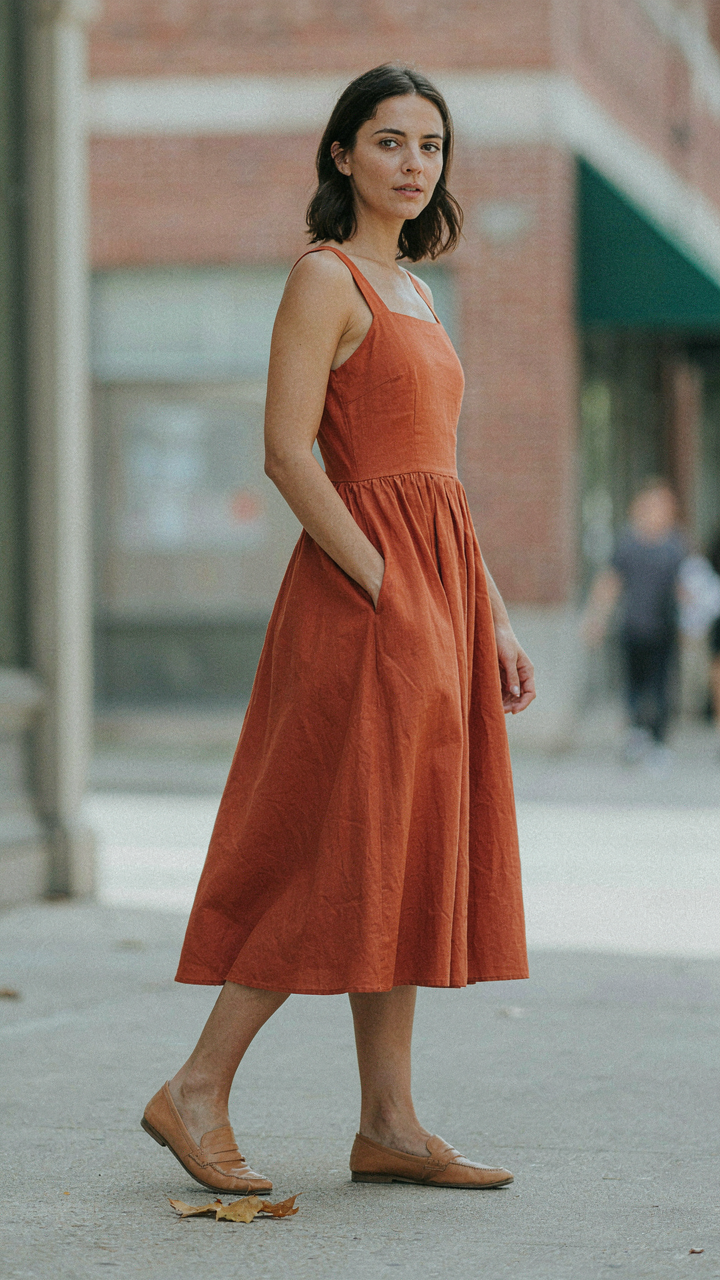
The mistake most people make is treating elegance as submission to convention. It’s the opposite. You study the rules to know which ones to violate. A midi dress demands formality, so your pose should introduce one element of deliberate casualness—a hand in a pocket, a tilted head, a bent knee breaking the line. This single asymmetrical choice prevents the photo from looking staged or stiff. It signals you’re comfortable enough in your own frame to break the mold.
Anchoring Yourself To The Frame
Commanding presence in a midi dress photo depends on one mechanical fact: where your weight appears to rest determines how viewers interpret your authority in the space. Plant your weight on one leg, not both. This creates a load-bearing line that reads as intention rather than passivity. Your shoulders should sit slightly forward of your hips. This posture closes the distance between your body and the camera without you moving closer. It’s a compression of depth that magnifies presence.
The positioning works because of basic visual hierarchy. Symmetry reads as neutral. Asymmetry reads as agency. When you stand with equal weight on both legs in a midi dress, you become decorative—something to be looked at. When you shift weight, angle shoulders, and tilt your head toward the camera by just five degrees, you become someone making a choice. This is the difference between posing and being posed. To execute: stand on your back leg, roll shoulders back and slightly forward, turn your head toward the lens by fifteen degrees, and place one hand on your hip or in your pocket.
The Vêtements Stylés Blueprint: Curating Your Visual Authority
Build A Pose Grammar Before You Shoot
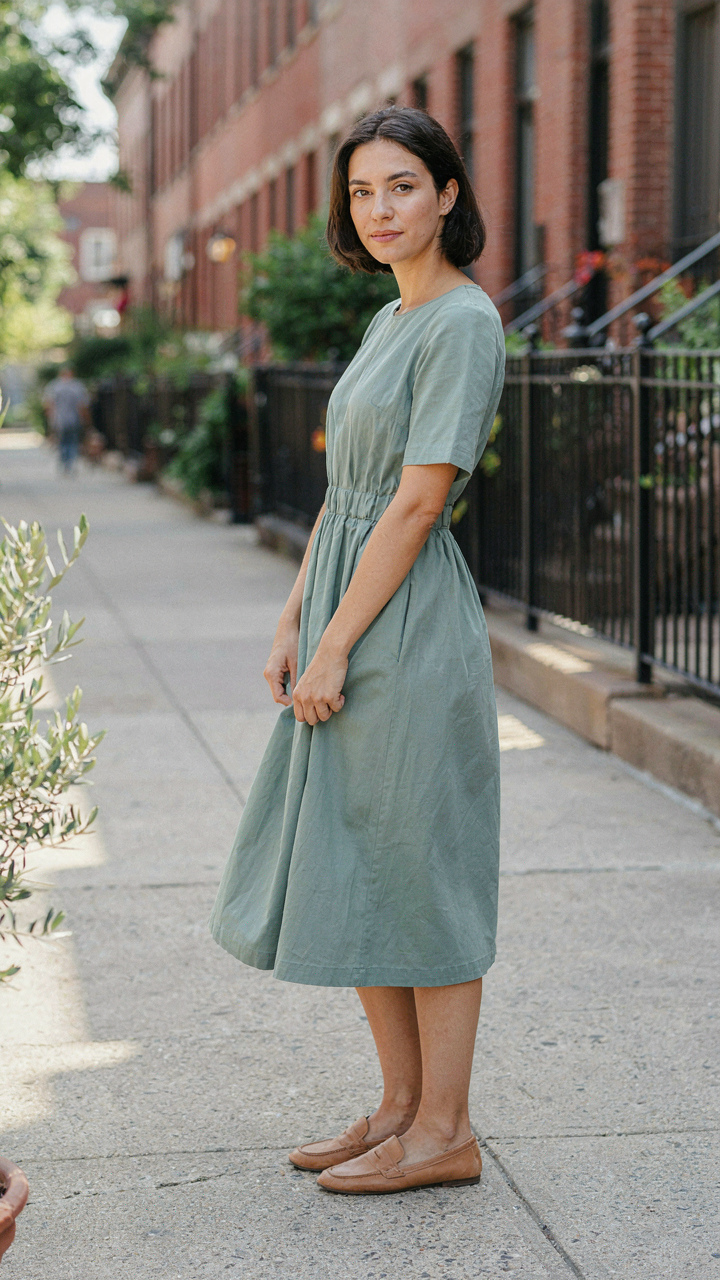
You want people to recognize you instantly, which means you need consistency so badly you’re willing to look “predictable.” Here’s the mechanism: visual recognition works like language. You need grammar rules, not spontaneity. In linguistics, grammar is the constraint system that makes communication possible. Apply this to posing: develop three to four pose templates you own completely, then layer variables within them. A midi dress demands this more than shorter lengths because the garment itself has fewer visual variations. The fabric drape and leg coverage are already doing work, so your pose positions must compensate by staying legible.

Your signature doesn’t mean rigidity. It means you control the variables deliberately. Angle of the head, hand placement, weight distribution, and camera distance become your repeatable elements. When you shoot in a midi, lock in one foundational stance first: weight shifted to the back leg with a soft knee bend, shoulders slightly rolled back. This creates dimension without requiring constant repositioning. Once you internalize this base, you add the variables. Different hand placements. Different head tilts. Different fabric interaction points. The constraint creates recognition. The variables create content.
Repetition With Strategic Shifts
Showing up the same way trains your audience’s eye. The common advice says “mix it up to stay interesting,” which is lazy thinking. Repetition builds authority. You see this in luxury brand photography: the same pose language across campaigns for years. This is intentional. It makes the brand unmissable. Repeat your midi dress poses across ten outfit photos, and by the eighth one, people start anticipating your visual signature before they see your face.
Strategic shifts happen within the system, not outside it. If your default is standing weight-back with hands at chest, your variations are: hands in pockets, hands adjusting the hem, hands holding an object, hands in hair. You’re not abandoning the base pose. You’re controlling which element changes while others stay constant. Shoot the same midi dress in this framework for three weeks. You’ll watch your engagement accelerate because people recognize the visual pattern before they process the outfit details.
The Gaze Game: Directing Attention, Not Begging For It
Eye Contact As Command
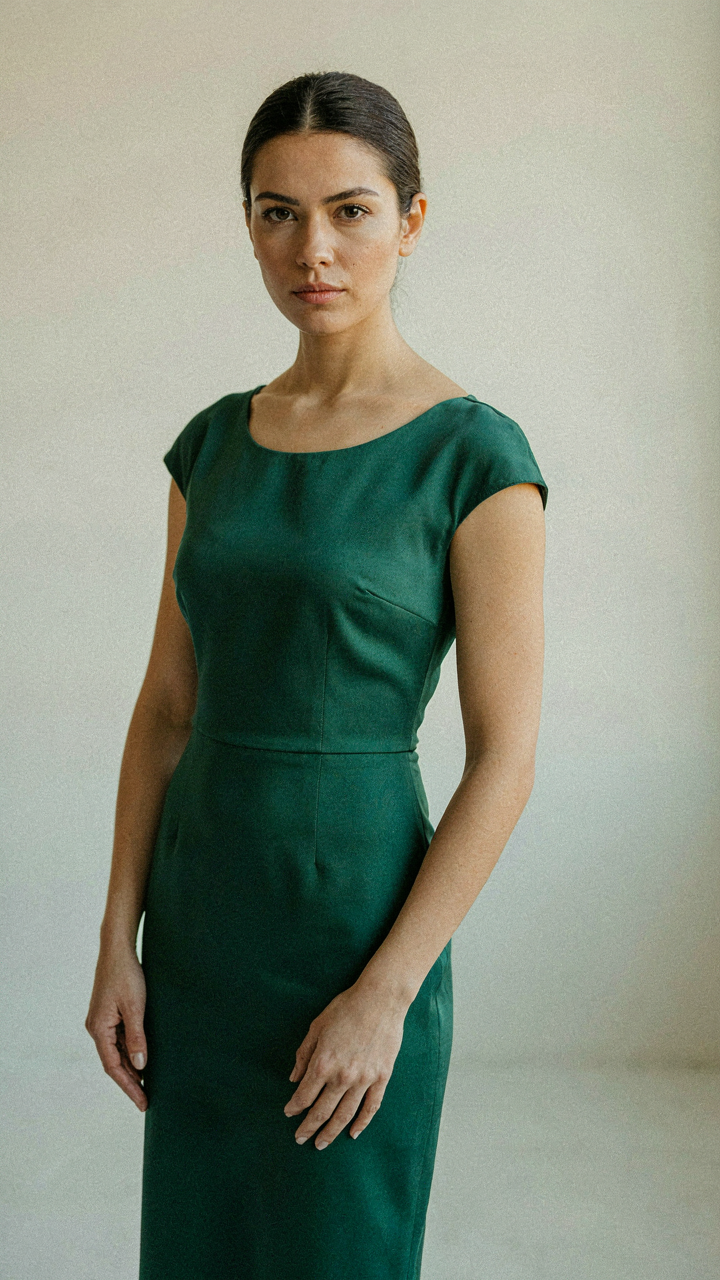
You want people to feel something when they see your photo. That’s the real reason you care about where your eyes go. Here’s the mechanism: direct eye contact forces the viewer into reciprocal engagement. Borrowed from social dominance hierarchy in primates, eye contact is a claim of territory. In a midi dress photo, looking straight at the camera isn’t friendly. It’s an assertion. Your gaze becomes the focal point before the dress does.
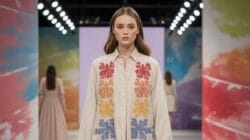
This works because of pupil response and mirror neurons in the viewer’s brain. When you hold eye contact in a photo, the person looking at it experiences a moment of social pressure. Their attention locks to your face first, then travels down. The midi dress benefits from this sequencing because it’s already framed by the proportions your body occupies. Intensity of gaze determines how long someone stays engaged. Don’t soften the eyes. Contract them slightly, as if you’re looking through the camera, not at it.
Narrative Built On Absence
The common advice is to look away for “softness” or “natural vibes.” That’s incomplete. Looking away isn’t about being soft. It’s about directing the viewer’s gaze into negative space, implying something exists outside the frame worth your attention. This is borrowed from composition theory in visual art. The off-camera gaze creates what photographers call leading lines. Your eyes lead the viewer’s eyes. In a midi dress shot, a gaze directed downward or to the side pulls attention toward the silhouette and fabric flow.
When you look away, you’re also creating narrative tension. The viewer becomes an observer of a moment rather than a subject being observed. This reversal shifts power. They must earn the story by studying the dress, the posture, the angle of your chin. Downward gaze works best when your chin is slightly lowered. Side-directed gaze works best when one shoulder angles toward the camera. The mechanism: absent eye contact makes the viewer work to understand the image, which increases time spent looking.
The Object Imperative: Integrating Props With Purpose
Props Become Part Of Your Silhouette
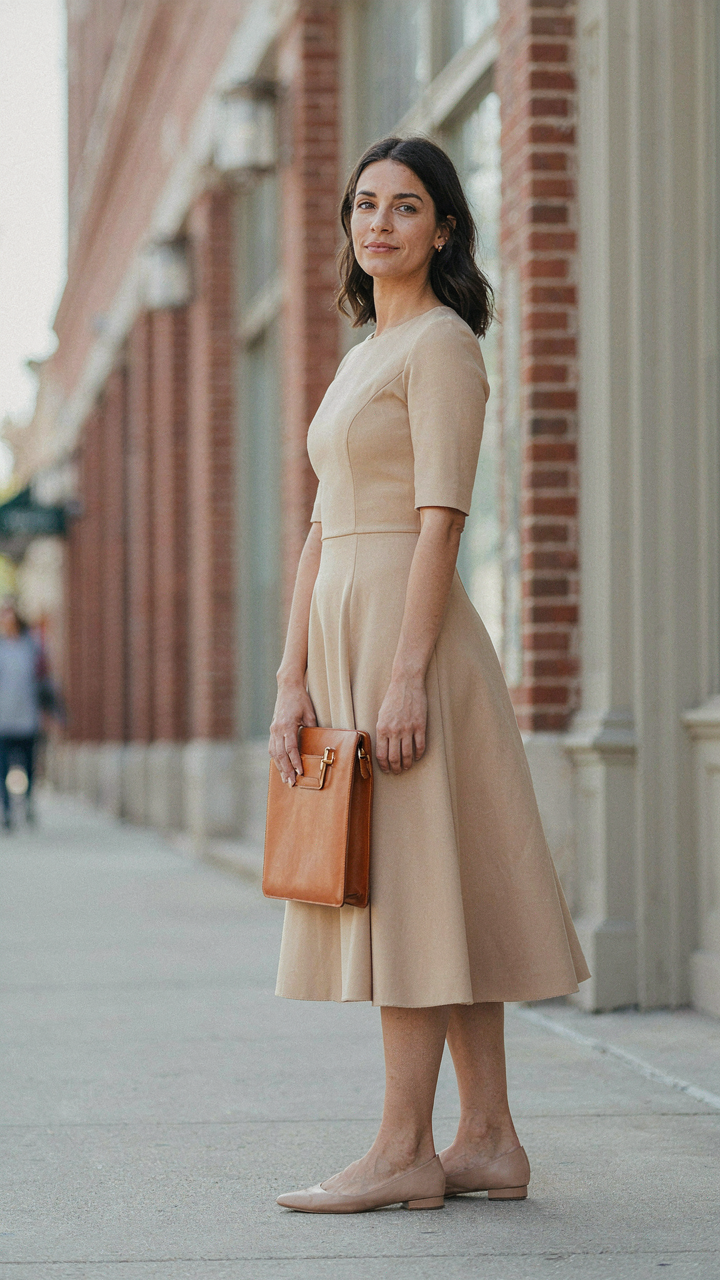
You want props to solve a visual problem without making you look like you’re trying too hard. Here’s the mechanism: objects either reinforce or disrupt the midi dress’s line. In fashion photography, line dominance means the viewer’s eye follows the strongest visual path. When you hold or wear a prop, it either extends your body’s geometry or breaks it. A clutch held at hip level continues the dress’s vertical emphasis. A crossbody bag creates a competing diagonal that fragments the composition. Choose props that complete rather than compete with the midi’s natural structure.
The midi dress works within specific proportional constraints. Most midi lengths hit between knee and ankle, creating a contained lower half. Props should honor that containment instead of fighting it. A structured handbag, a book, or a jacket draped over one arm maintains visual unity. These objects function as punctuation marks in your outfit’s sentence, not interruptions. They anchor the pose and give your hands a reason to exist in the frame.
Every Item Must Justify Its Presence
Most advice says “add what feels right” because most advice avoids the real problem: you’re including objects out of habit, not strategy. A watch, a ring, a bag strap, a phone in your hand—each creates competing visual weight. The midi dress already establishes a strong vertical statement. Additional objects dilute that statement unless they actively enhance it. Strip down to one intentional prop. One object forces you to make a choice about what your outfit actually communicates.
Test your prop choice against this question: does it say something about your lifestyle or personality that the midi dress alone doesn’t already say? A leather satchel suggests work and purpose. A vintage book suggests intellect or leisure. A specific brand handbag signals taste and budget awareness. Without this clarity, the prop becomes scenery instead of character. Your final pose should feature one prop maximum, positioned to create depth or visual balance rather than fill empty space in the frame.
Your Real Obstacle Isn’t The Pose; It’s The Lack Of Narrative Discipline
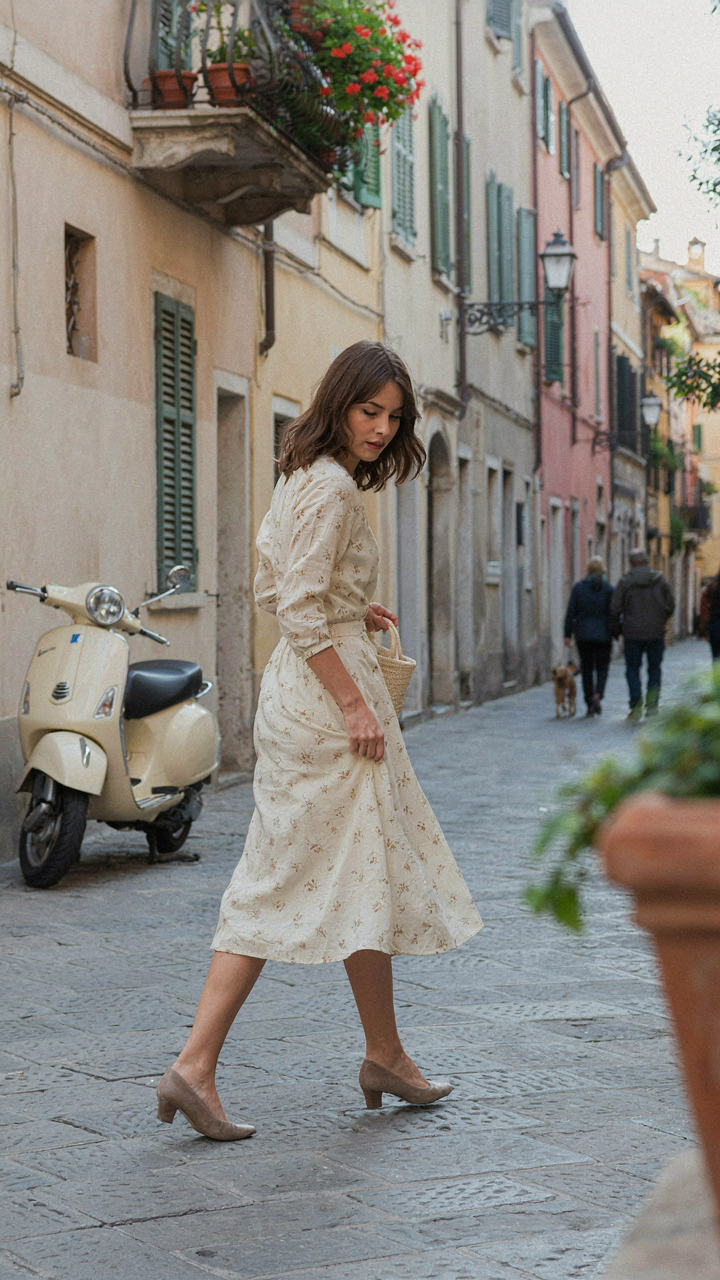
Most people fail at outfit photography because they treat each pose like an isolated moment instead of a story beat. You’re not just standing in a midi dress. You’re showing how you move through the world wearing it. That distinction matters. Stop obsessing over angles and start obsessing over intention. Pick one emotion you want the photo to communicate. Then build every element around that single idea. Your pose becomes obvious once you know what you’re actually selling. Take one outfit photo today with a clear narrative intention instead of copying what you saw on Instagram.