


The Illusion Of Versatility: Why “Multi Purpose” Fails
Single Function Items Excel
You want one outfit that does everything because buying less stuff feels smart. It’s not. Borrowing from engineering, we can call this “tolerance stack-up”—when you design something to handle multiple demands, each function compromises the others. A jacket that breathes well for summer walking will be too thin for cool evenings. Pants with cargo pockets bulk at the hips and ruin your silhouette. The item that does everything does nothing well.
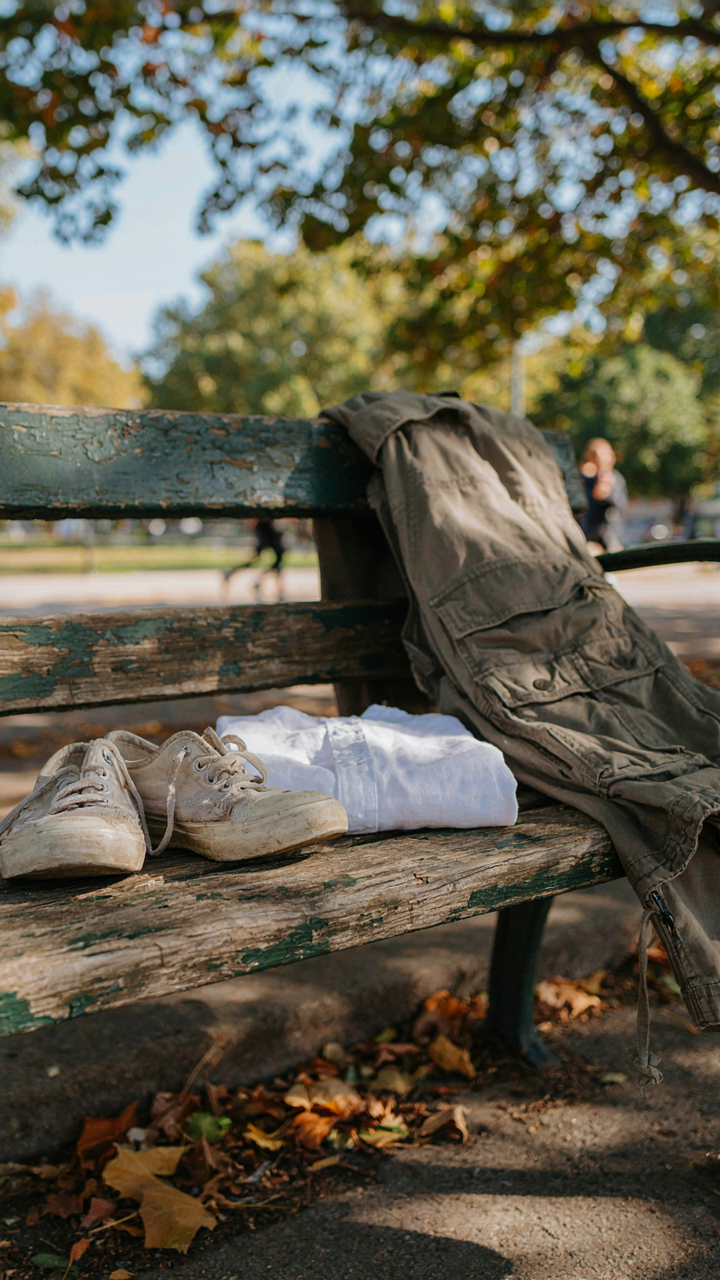
Single-function pieces perform their job without negotiation. A linen shirt handles heat without trapping moisture. Canvas shoes take miles without your feet swelling inside neoprene. A structured tote carries weight without collapsing. You skip the mental overhead of asking whether this thing will work for two scenarios. It works for one. You add the second item when you need it.
Specific Needs Demand Specific Gear
The travel industry sells you “4-in-1 travel pants” because they profit from volume, not your comfort. You believe the myth because it sounds efficient. It’s actually the opposite. A pair of pants designed for casual walking moves differently than pants designed for layering under weather protection. Shoes that excel on cobblestone won’t grip polished museum floors the same way. A backpack optimized for shoulder comfort compresses differently than one optimized for airline bins.
Stop trying to force one item into two jobs. Buy the walking shoe. Buy the dressier shoe. The weight difference is minimal compared to the friction tax you pay replacing worn-out compromise gear mid-trip. List each activity you’ll actually do in your city. Map one piece of clothing or footwear to each activity. Execute.
The “Loadout” Protocol: Strategic Outfit Assembly
Know Before You Pack
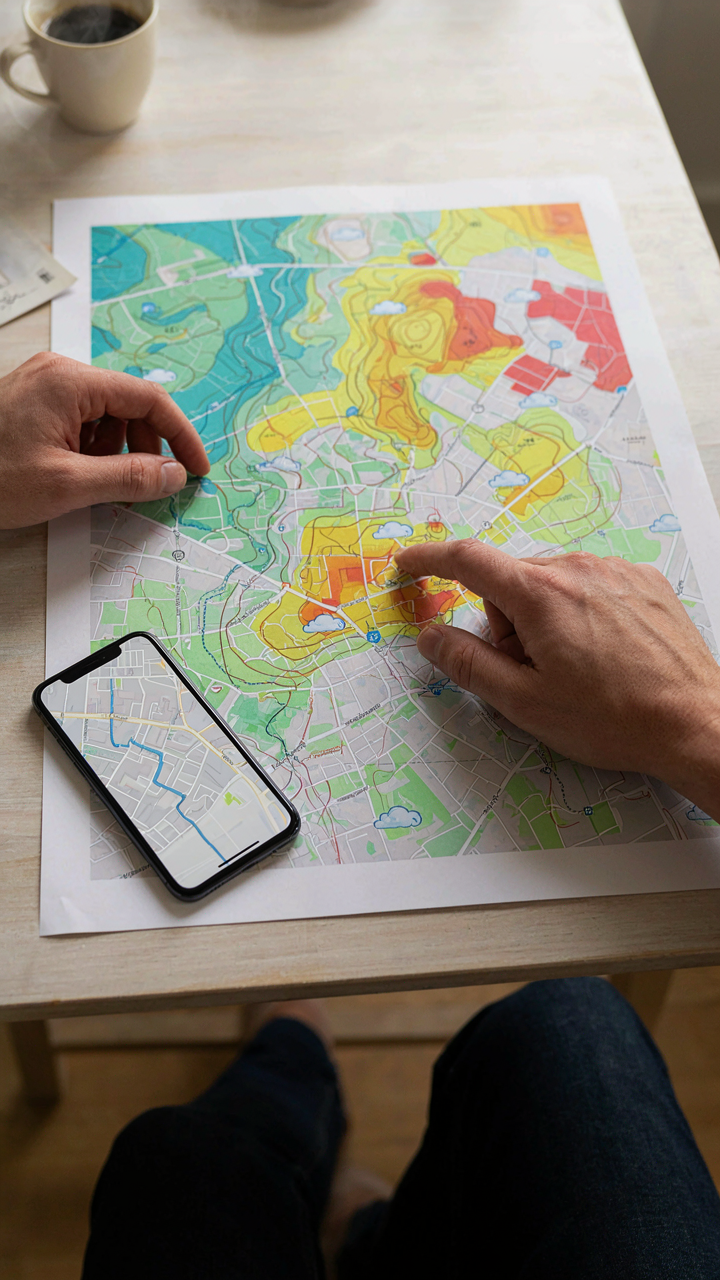
You want to feel confident walking unfamiliar streets without looking like you’re trying too hard. Here’s what actually matters: the outfit works only if it matches the real variables you’ll face. Weather, terrain, and your actual itinerary determine everything else. Guessing destroys efficiency. You need to audit the city first, then reverse-engineer your clothes from that data, not the other way around.

Research isn’t optional. Check the exact forecast for your travel dates, not a general climate zone. Identify the specific neighborhoods you’ll explore and their street conditions. Know whether you’re navigating cobblestone, concrete, or metro stairs for eight hours straight. This information determines shoe choice, pant fabric, and layer weight. Skipping this step wastes money on clothes you won’t wear and creates friction on day one.
Layers Without The Bulk
Temperature control in cities uses the same principle as military load-bearing systems: distribute weight across multiple thin layers instead of relying on one heavy piece. Each layer serves a discrete function. The base wicks or regulates. The mid-layer traps or moves air. The outer shell blocks wind and water. This flexibility beats a heavy coat because cities force constant micro-transitions: heated metro, cold street, warm café, exposed plaza.
Built-in versatility compounds. Start with a fitted base layer in merino wool or synthetic blend. Add a lightweight sweater or shirt you can tie around your waist if unused. Bring a packable overshirt or unstructured jacket that compresses to nothing. Wear comfortable shoes with breathable uppers to handle the temperature shifts your feet endure. This stack costs less, takes less luggage space, and adapts to any weather surprise than a single heavy garment.
Footwear As Foundation: The Comfort Imperative
Arch Support And Cushioning Matter More Than Brand
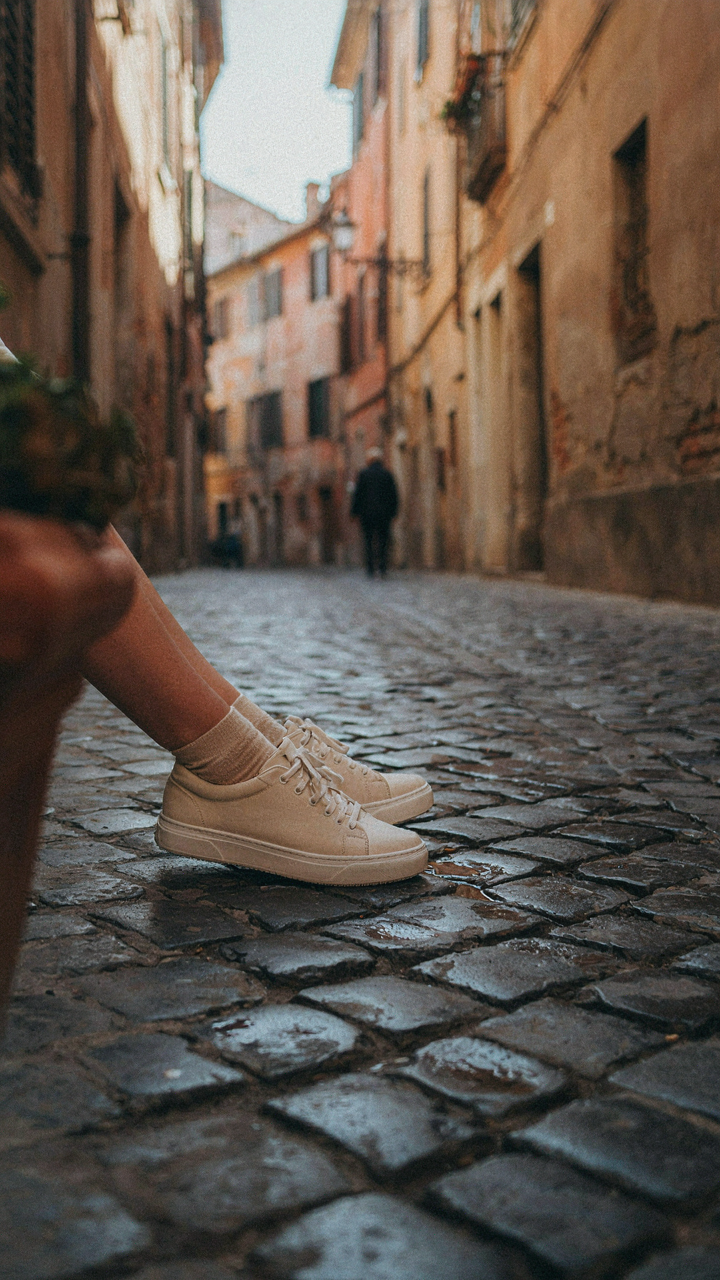
You care about this because blisters and foot pain derail your entire trip, and you don’t want to admit that cheap shoes will cost you days of exploration. The mechanism is biomechanical load distribution. Think of your foot as a load-bearing structure in civil engineering: without proper arch support and sole cushioning, stress concentrates at pressure points instead of dispersing evenly across the plantar surface. This concentration creates friction, inflammation, and pain within hours on city streets.

Arch support prevents your foot from collapsing inward with each step, which happens naturally on hard pavement when muscles fatigue. Cushioning absorbs impact that concrete amplifies. Together, they reduce the metabolic cost of walking. Most travel advice skips this: it focuses on “stylish” or “lightweight” shoes instead of the engineering that keeps your feet functional. Examine the midsole density and arch geometry, not the marketing language. Test shoes on tile or concrete floors at the store, not carpet, to feel how they handle real city surfaces.
Break In Shoes On Actual City Terrain
Breaking in shoes in your home environment gives you false confidence. Your living room floor and stairs don’t replicate the demands of sustained urban exploration. The shoe molds to your foot, yes, but your foot also adapts to the shoe’s geometry. You need to know how it performs under load on the specific surfaces you’ll encounter: uneven sidewalks, stairs, cobblestone, and long straightaways.
Wear new shoes on at least three separate city trips of 90 minutes or more before departure. Walk through neighborhoods with mixed terrain and varied elevations. Pay attention to where friction develops, where your arch feels supported or unsupported, and how your feet respond hours after walking stops. If pain emerges during these trial runs, you have time to return or exchange the shoes. If you break them in during your actual solo trip, you’ve wasted exploration days managing blisters instead of navigating the city.
The “Camouflage” Principle: Blending Vs. Standing Out
Read The Room Before You Dress
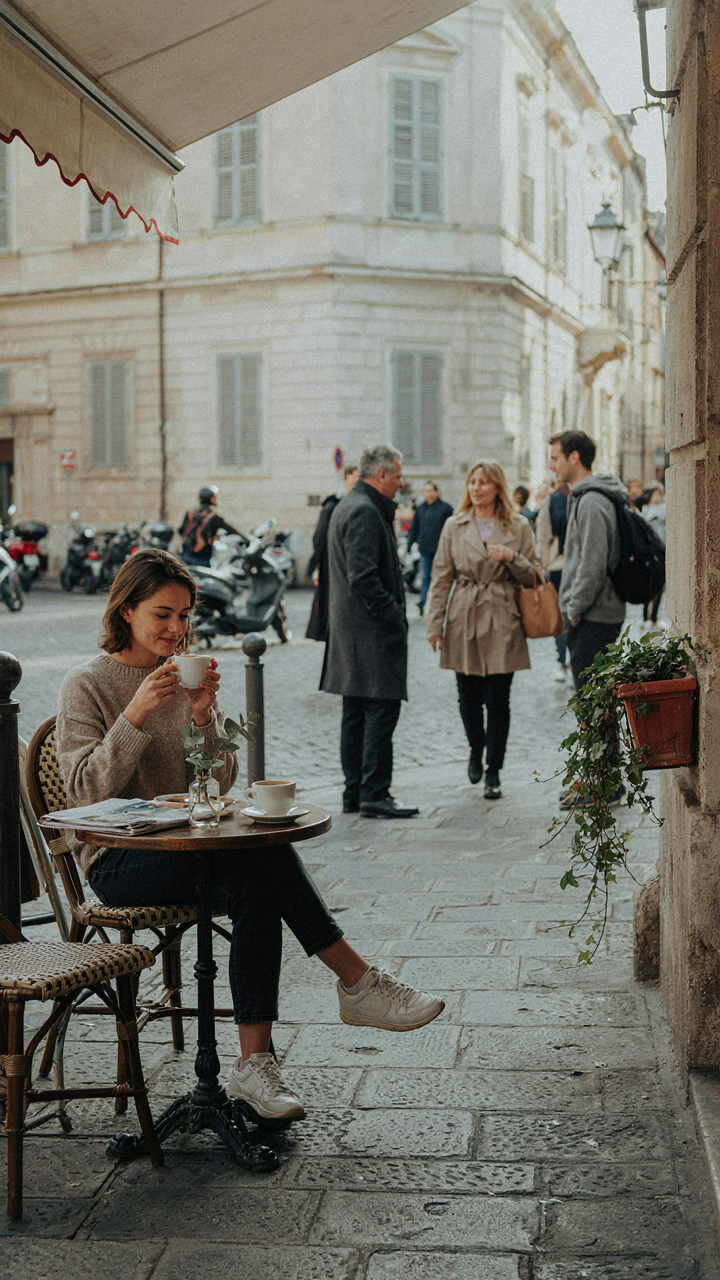
You want to move through a city without friction, without feeling watched, without the low-level anxiety that comes from being obviously foreign. That’s the real driver here. The mechanism is simple: cities operate on visual codes. Locals read your outfit the way you read a headline. They clock you in seconds and decide whether you’re worth engaging with or avoiding.

Spend your first hour just observing. Watch how people in the neighborhood actually move and what they wear. Not tourists in the guidebook district. The people buying coffee at 8am, walking to work, sitting in parks on a Tuesday. Note the shoe styles, the jacket weights, how tight or loose clothing sits on bodies. Colors matter. Material finishes matter. This isn’t about copying perfectly. It’s about reading the dominant visual frequency and staying within three notes of it.
Tourist Markers Kill Your Access
The generic advice says wear comfortable shoes and you’ll blend in. That’s incomplete. Everyone wears comfortable shoes now. What actually marks you is the constellation of details combined. A specific backpack style plus hiking-grade jacket plus white socks plus tech watch equals automatic tourist read, even if each piece alone is innocuous.
Avoid: branded outdoor gear, pristine athletic wear, cargo pants with excessive pockets, hiking sandals, crossbody bags designed for security theater, and visibly new or color-blocked everything. These aren’t inherently bad clothes. They’re just loud announcements. Locals don’t need to broadcast their gear function because they’re not navigating an unfamiliar terrain. They dress for the social space first, utility second. Adopt that hierarchy when you pack for city exploration.
Fabric Intelligence: Beyond Cotton And Denim
Synthetics For Movement And Survival
You want synthetic fabrics because they solve a problem you won’t admit: you’ll sweat in a city and you don’t want to smell or look wet. Cotton holds moisture like a sponge. Synthetics wick it away. The mechanism is simple physics. Hydrophobic fibers repel water molecules. Sweat evaporates instead of pooling against your skin. Polyester, nylon, and spandex blends dry in hours instead of days. Your clothes stay functional across multiple days of wear without washing.

The real advantage emerges on day three of a week-long trip. Cotton becomes heavy, develops odor bacteria, and takes forever to dry in hotel bathrooms. Synthetic bases layer under linen or wool without adding bulk. They compress into carry-on space because they don’t absorb water weight. Brands like Patagonia, Decathlon, and Arc’teryx engineered these blends specifically for people moving through environments constantly. Pick 70 to 85 percent synthetic base layers and casual tops. They’re the infrastructure nobody talks about but everyone regrets skipping.
Merino Wool Rewrites The Rules
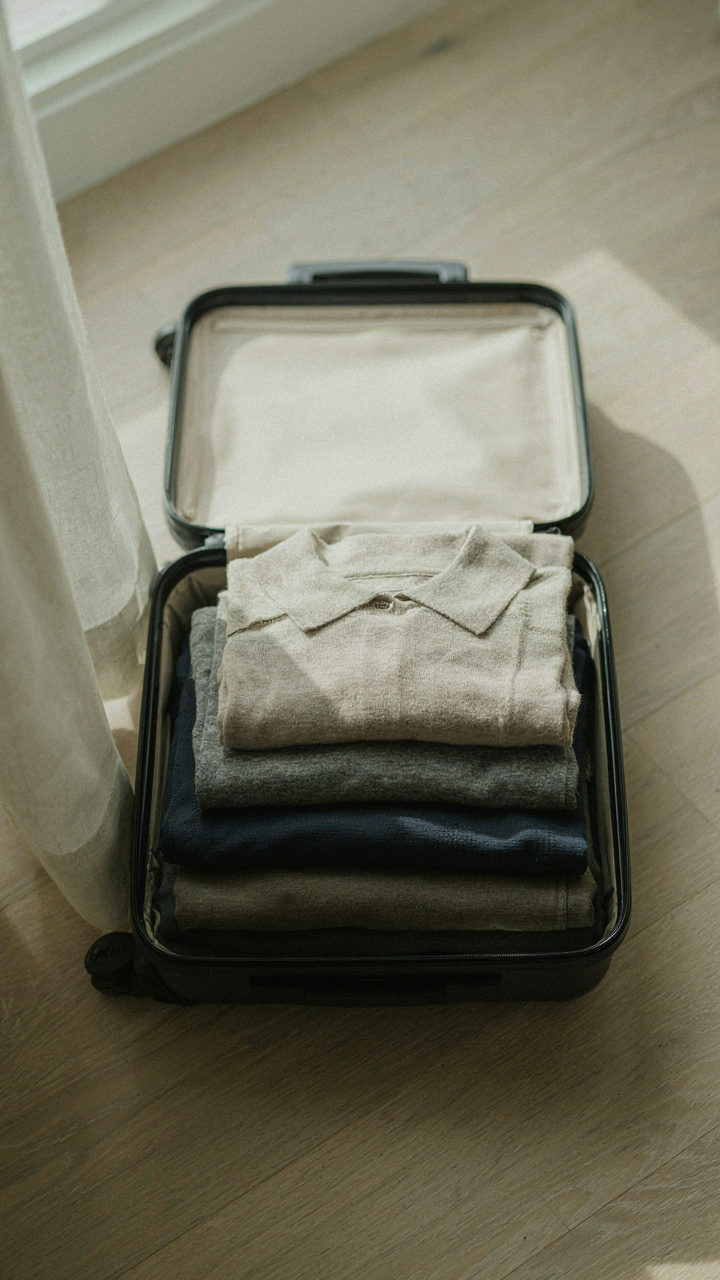
Merino wool isn’t luxury. It’s biology applied to travel. The fiber contains lanolin, a natural compound that repels bacteria and odor. This is thermodynamic advantage, not marketing copy. A merino wool shirt worn for four days won’t smell. The same cotton shirt worn for two days will.
Merino regulates temperature better than any synthetic because it absorbs moisture slowly while maintaining insulation. In cold cities it retains warmth. In warm cities it keeps you from overheating. One merino layer replaces three regular layers in your suitcase. Brands like Icebreaker and Smartwool make travel weight merino pieces starting at 150 grams. The cost is higher upfront. The calculation flips when you pack one shirt instead of four and actually wear each piece across different days and climates without washing between them.
The Minimalist Matrix: Packing Efficiency
Build Around Five Core Pieces
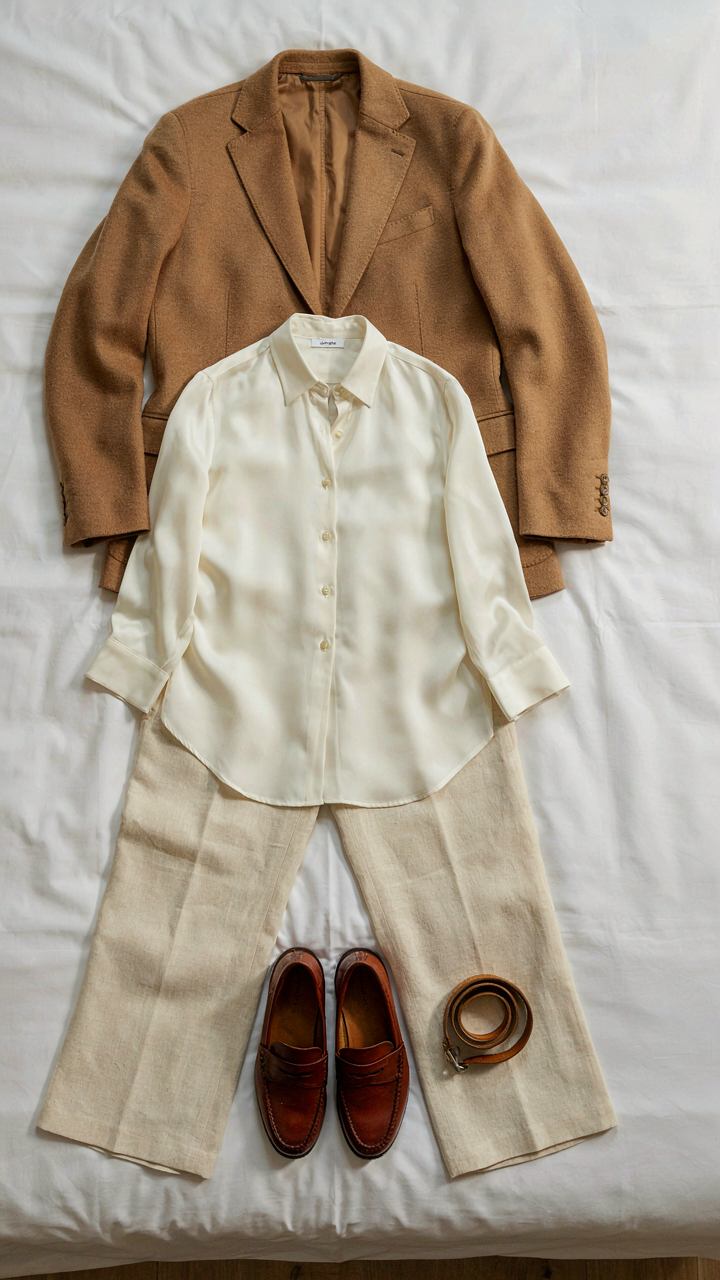
You want to feel organized without looking like you’re playing dress-up in someone else’s closet. Here’s the mechanism: constraint forces decision-making, and decision-making kills the friction that wastes travel time. A capsule wardrobe works because it eliminates the mental load of “what goes with what” before you leave your hotel.
Start with one neutral base layer, one mid-weight layer, one structured outer layer, one bottom that works for day and evening, and one statement piece that shifts context. Everything else hangs on these five. The math is brutal: five pieces create roughly twenty outfit combinations if you choose materials that actually coordinate. You’re not buying more clothes. You’re buying elimination of choice paralysis. Pick a color family and stay in it.
Rolling, Folding, And Space Reality
The rolling versus folding debate is theater. Logistics shows us what matters: compression efficiency and wrinkle tolerance, not method preference. Rolled clothes compress air out faster and fit awkward luggage shapes better. Folded clothes wrinkle less on impact. What actually works depends on your specific luggage geometry and fabric weight, not ideology.
- Merino wool garments: Roll these. They resist wrinkles naturally and compress tight. Rolling saves thirty percent more space than folding for layering pieces.
- Structured blazers or jackets: Fold these once lengthwise, then roll the bundle. Maintains shape without sacrificing pack space in your carry-on.
- Denim and heavy bottoms: Fold flat in thirds. Rolling these creates unnecessary bulk. Stack vertically in luggage corners instead.
- T-shirts and basic knits: Roll tightly into cylinders. Maximizes space and lets you see every color at once when packing or repacking mid-trip.
- Undergarments and socks: Use compression cubes or small packing cells. Keeps these from scattering and doubles your usable space in any bag.
The real move is matching method to fabric weight and destination humidity. Heavy fabrics withstand folding. Lightweight synthetics compress better rolled. If you’re traveling to a humid city and staying five days, rolling wins. If you’re moving between cities every two days, folding with cube organization wins. Test your actual luggage with your actual clothes before departure, then commit to one system for the entire trip.
Accessorizing With Intent: Function Over Fashion
The Scarf That Earns Its Weight
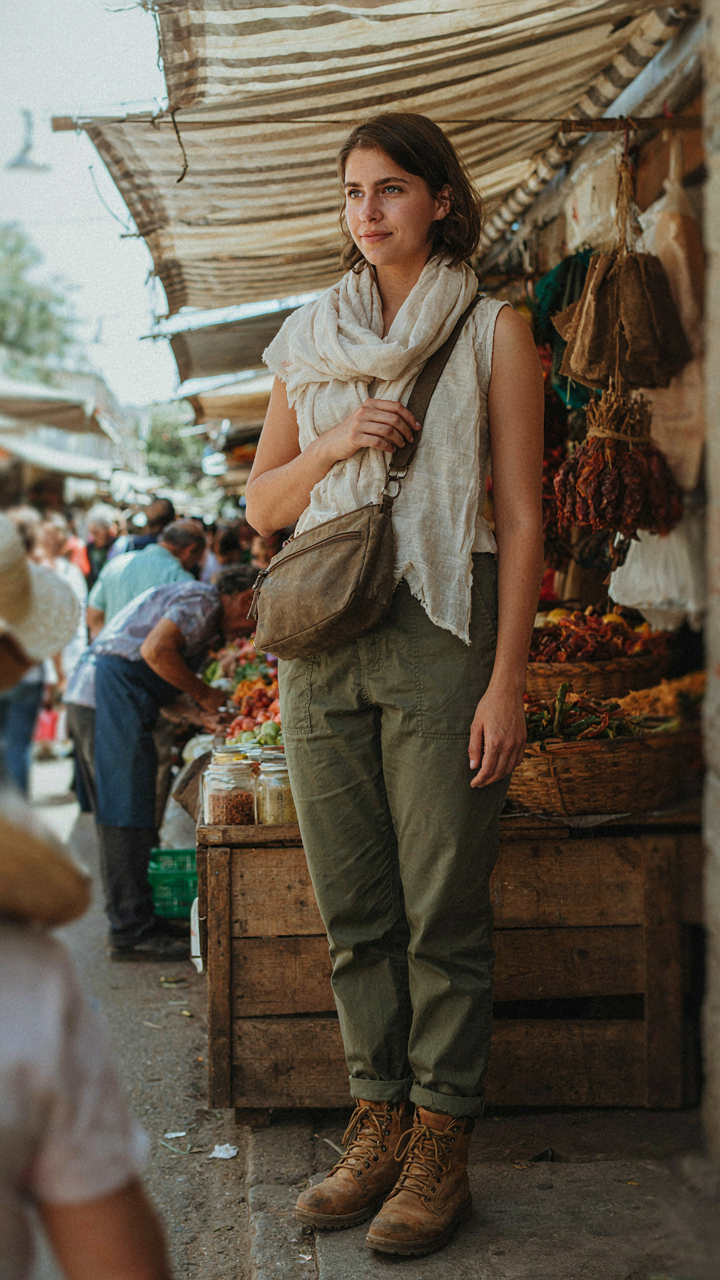
You want accessories that solve problems without adding bulk because you’re afraid of looking like a tourist or, worse, like you’re trying too hard. A lightweight scarf operates on the principle of layering from fashion design: one piece that shifts function based on context. Cotton or linen scarves pack small, weigh almost nothing, and solve three distinct problems in a city environment.

Sun protection on your shoulders or neck costs zero effort once it’s in your bag. You tie it around your waist when the temperature drops in air-conditioned museums. It becomes a makeshift pillow on a bench, a head covering in religious sites that require it, or a privacy screen if you need to change in a hostel. The mechanism is constraint removal: fewer decisions about what to pack means more mental energy for navigation and observation.
The Crossbody Bag: Security Through Geometry
The crossbody bag works because it keeps your valuables in front of you and distributes weight across your torso, not your shoulder. Every solo traveler states they want “security,” but most miss the actual threat model. Pickpockets target the back pocket or a shoulder bag you can’t see. A crossbody bag strapped across your chest makes theft mechanically harder and keeps your hands free for phone navigation, water bottles, or your camera.
Choose a bag with a theft-resistant design: slash-proof fabric, zipper covers, and a strap that tightens against your body. The size matters: large enough for a water bottle, phone, wallet, and sunscreen, small enough that you don’t look like you’re carrying everything you own. Before you enter a crowded market or transit station, run your hand over the bag to confirm the zipper is closed and the strap is tight.
The Adaptive Strategy For Unforeseen Conditions
Weather Reading Before You Leave
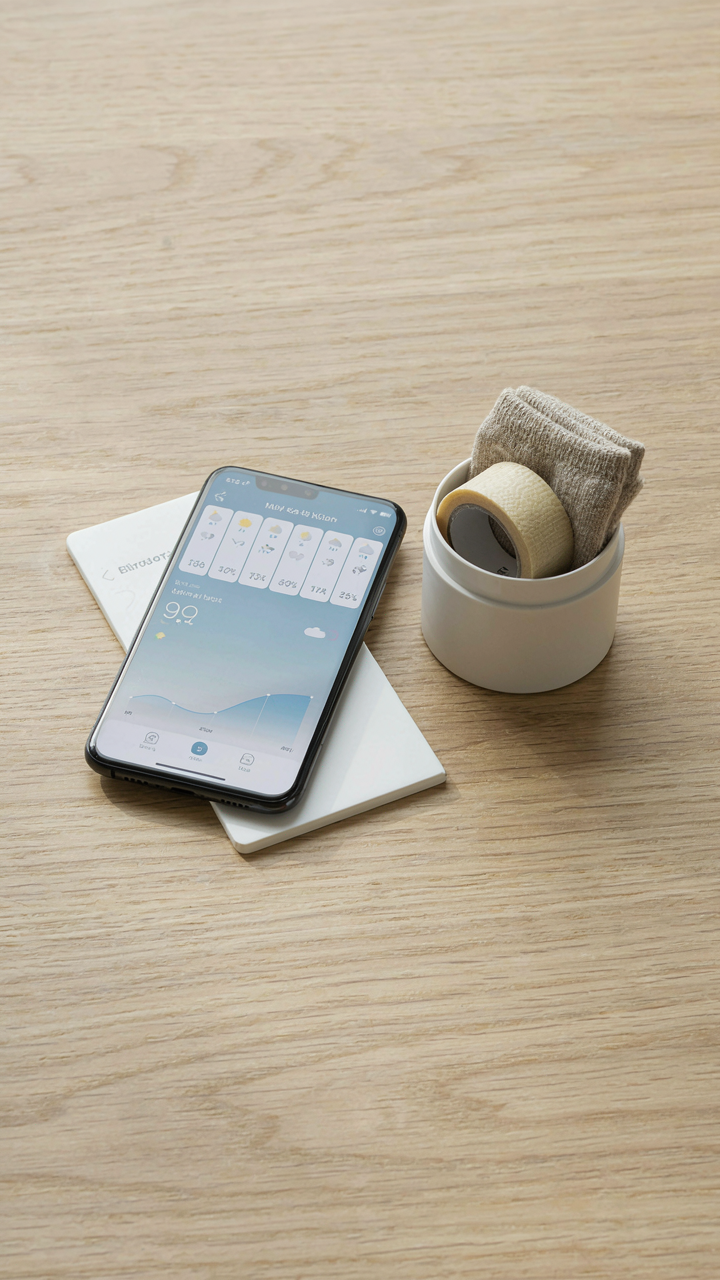
You want to feel prepared so you don’t panic mid-trip. The real mechanism is this: weather apps give you raw data, but military intelligence doctrine teaches us to separate signal from noise. A five-day forecast is noise. A 48-hour window with hourly precipitation and wind data is signal. Cities amplify weather unpredictably due to buildings and pavement, so the app reading matters less than observing what locals wear on the street the moment you arrive.

Check the forecast 36 hours before departure, not five days out. Download the offline maps and bookmark local news weather stations for your destination city. This eliminates the guesswork that makes travelers over-pack. You’re not preparing for every possibility; you’re calibrating your baseline outfit to what will actually happen in the next two days, then adjusting piece by piece as conditions reveal themselves.
Backup Pieces That Aren’t Insurance
Most travel advice treats a backup outfit like a parachute you’ll never use. That’s wrong. A contingency piece works only if it solves a specific failure, not if it’s vague insurance. Your shoes get wet because you misjudged a puddle or a sudden rain. Your base layer loses function because sweat and friction created a blister. Your pants tear at the crotch because denim breaks under repetitive movement on city streets.
Pack a single replacement item that directly addresses your weakest link from past trips, not an imaginary disaster. If your feet fail first, bring merino wool socks and blister tape. If your pants shred, bring lightweight joggers that compress to nothing. If rain destroys your shoes, bring a compact rain cover or accept that shoes dry in a hotel room overnight. The contingency plan is diagnosis first, then one targeted solution that fits in your carry-on without thinking.
Post Exploration Refresh: Maintaining Readiness
Wash Clothes Fast Without A Laundromat
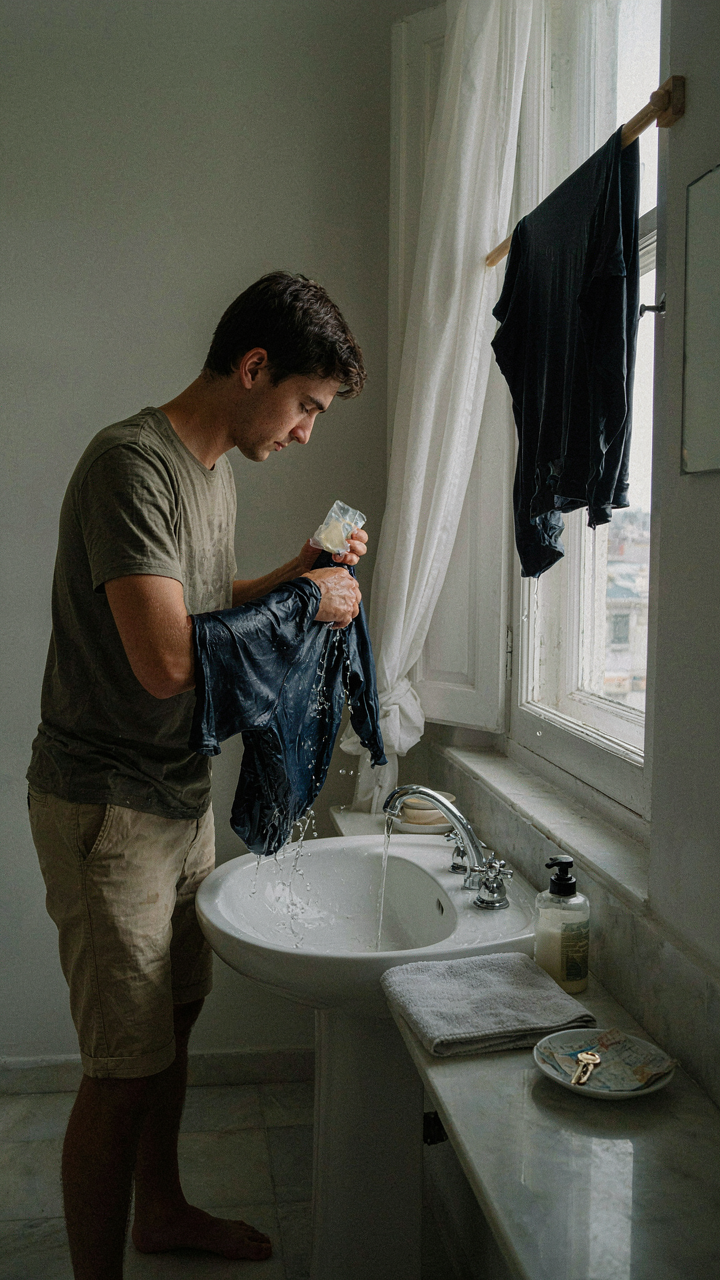
You want your outfit rotation to stay infinite so you never repeat the same clothes in the same city. That’s the real fear underneath the question. Synthetic fabrics dry in four to six hours because water evaporates faster from materials with low absorbency. Merino wool dries in eight to twelve hours. Cotton takes sixteen to twenty-four hours. Solo travelers who rotate between quick-dry synthetics and merino eliminate the laundromat dependency entirely.

The mechanism is simple: hand wash in your sink or shower using cold water and a travel detergent packet. Wring out excess water with pressure, not wringing. Hang items near airflow, open windows, or use your hotel’s bathroom exhaust fan. Nylon, polyester, and polypropylene fabrics bounce back fastest. A portable microfiber towel accelerates the process by absorbing residual moisture before hanging. Most solo travelers who stay in cities three to seven days never need a washing machine if they pack the right base layer materials.
Keep Minor Damage From Killing Your Outfit
Most advice says pack a sewing kit. That’s incomplete because it treats the symptom, not the cause. A shoe scuff, torn seam, or loose button ends an outfit’s usability in your head before it ends in reality. The real mechanism is preventative: you catch damage before it spreads. A small repair kit takes thirty seconds to deploy, costs nothing, and extends outfit life by weeks.
Carry a needle, three colors of thread, a small pair of scissors, fabric glue, and a spare button that matches your most-worn jacket. Shoe repair paste restores scuff marks on leather or canvas instantly. When a seam starts separating, you stitch it the same night, not three days later when it’s split open. The protocol is non negotiable: check your shoes and clothes every evening, identify damage, repair it within two hours, then continue wearing confidently.
The Unspoken Rule: Confidence As Your Best Accessory
Stop Performing For Strangers
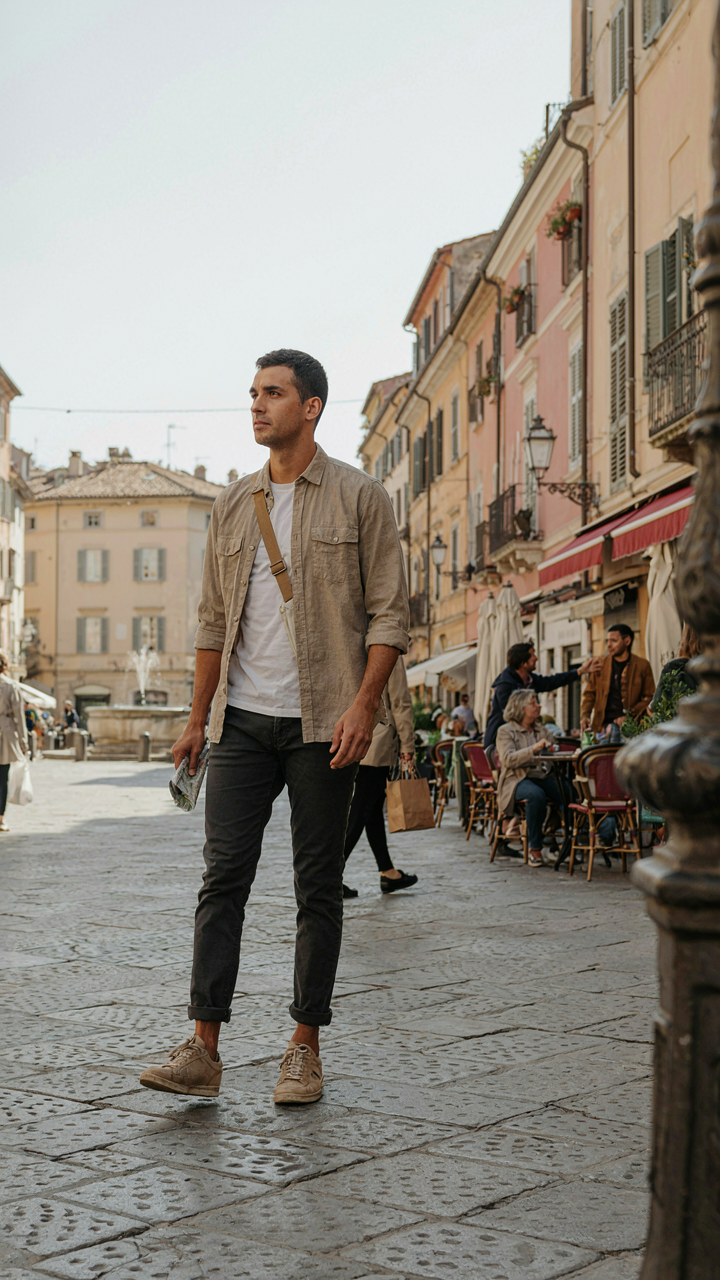
You want to know if your outfit reads as “competent traveler” instead of “lost tourist” because status matters, and you’re afraid the wrong clothes broadcast incompetence. Here’s the mechanism: authenticity projects faster than costume does. When you wear what aligns with how you actually move through cities, your body language shifts. You stop second-guessing yourself mid-stride. People read that certainty, not the brand tags. The outfit becomes invisible because you inhabit it instead of performing in it.
Most travel guides tell you to “dress the part.” That’s backwards. You don’t dress to become confident. You become confident first, then the outfit stops being a problem. A city explorer wearing basic sneakers and wrinkled linen moves differently than someone in pristine athleisure who’s checking their reflection in storefront glass every thirty seconds. The shoes don’t matter. The internal permission to take up space does. Pick neutral pieces that don’t demand maintenance, then redirect that mental energy toward actually navigating the place you’re in.
The Feedback Loop Between State And Appearance
Neuroscience calls this embodied cognition: your physical posture shapes your neurological state, which shapes how others perceive you. Apply that principle to solo travel outfits, and it flips the common assumption. You don’t need impressive pieces to feel capable. You need pieces that get out of your way so your confidence can register on other people’s radar. Worn-in sneakers, a fitted shirt that doesn’t pull when you reach for a map, pants with functional pockets. These remove friction. Friction kills confidence faster than a bad outfit ever could.
The feedback loop works like this: wear something practical and you move with purpose. Moving with purpose makes you look like you know where you’re going, even when you don’t. Locals extend patience to travelers who appear intentional. Other travelers approach you differently too. Your internal state drives external perception drives how the city actually treats you. That last loop is not psychological. It’s mechanical. Start the day in clothes that fit your actual body and actual movement patterns, and watch how different the city responds.
Your Fear Isn’t Looking Bad; It’s Feeling Unprepared. Conquer The Latter, The Former Vanishes
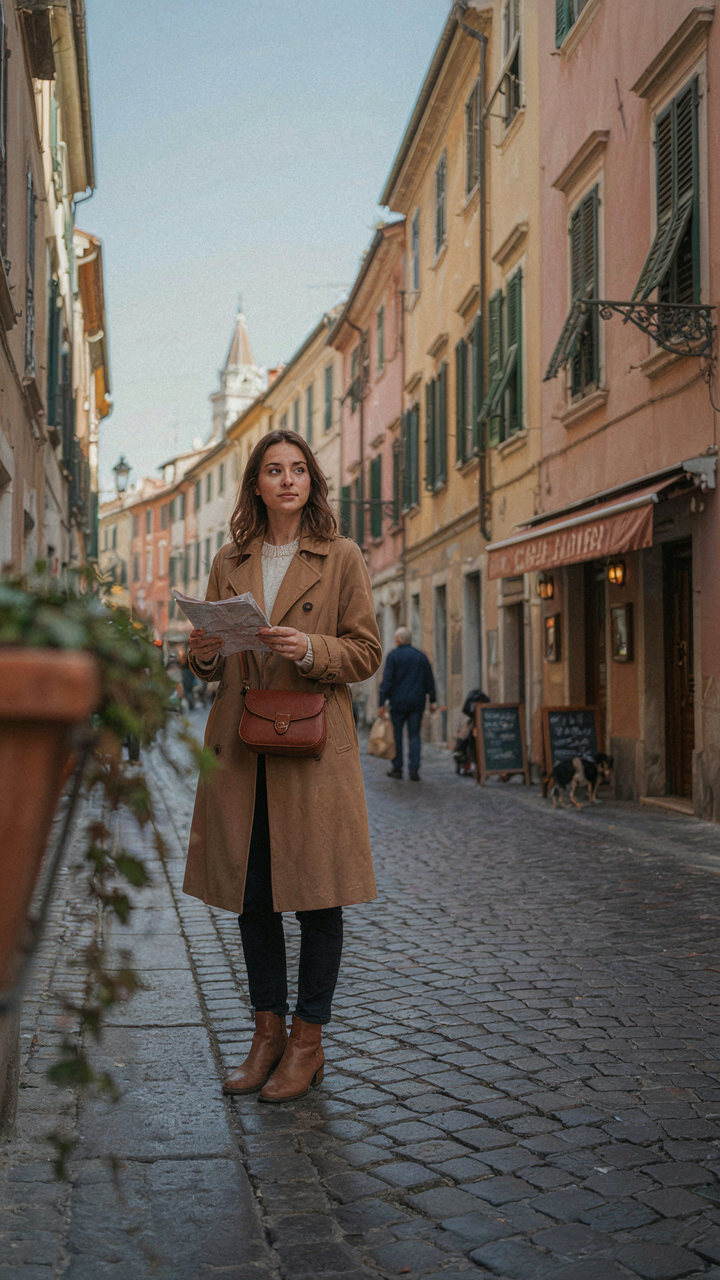
The real gamble isn’t your outfit. It’s showing up to a city without a system. Right now, pick one city you’re visiting in the next three months. Map out three walking routes using Google Maps. Buy one pair of shoes that works for eight hours straight. That’s it. You don’t need the perfect fit. You need the confidence that comes from knowing you won’t hit mile four with destroyed feet. Everything else follows from that single choice.