


The Cognitive Load Tax: Why Most Packing Fails

Decision Fatigue Before You Leave
You’re afraid you’ll look incompetent in front of people who matter. That fear makes you think you need more options, which destroys your actual ability to choose well. Decision fatigue is an economics term: each choice depletes your mental bandwidth until you make worse ones. Your suitcase becomes an economy where you’re spending currency you don’t have on decisions that don’t matter.
Every outfit choice you make before the trip is a decision you won’t have to make at 6 AM in a hotel room. The goal is to front-load the cognitive work when your brain works. Most people do the opposite. They pack everything, then suffer through outfit assembly while running late, exhausted, and primed to repeat the same mediocre combination because it’s easiest.
Stopping The Analysis Loop
The standard advice is to “just pack less.” Useless. The real problem is that without a framework, you can’t determine what “less” means, so you keep adding pieces hoping they’ll magically work together. A capsule forces specificity. You’re not choosing between infinite outfits. You’re choosing five core pieces and building everything from those anchors. This stops the loop cold.
Limitation is the mechanism that ends paralysis. Decide your core neutral base today. Decide your accent color. Decide your shoe count. Three pieces of footwear maximum for a work trip: professional flats or heels, one backup, one dinner option. The constraints are the freedom. Without them, you’ll stand in front of your closet at midnight, drained, adding a sixth blouse you don’t need.
The “Utility Matrix” Method For Work Capsule Wardrobe Women
Build Around Repeated Combinations
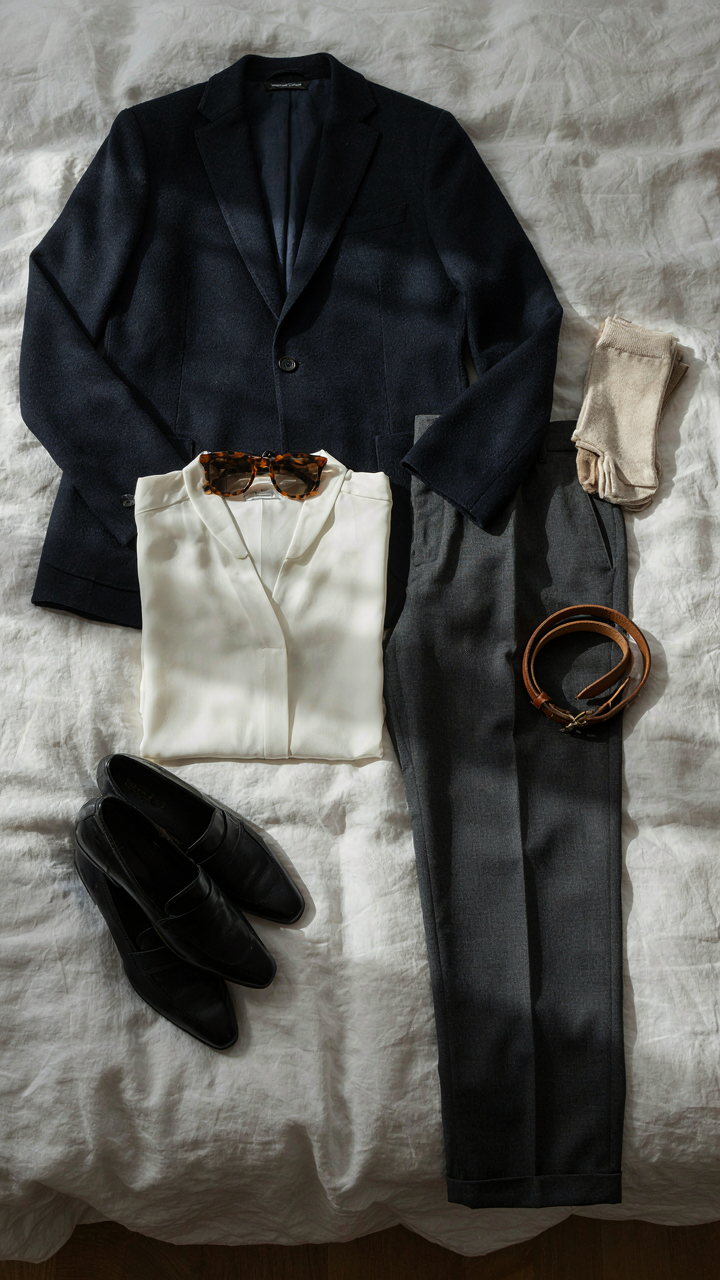
You want to look competent without thinking about clothes, and that fear of being underdressed is what makes most people overpack. The mechanism is simple: a garment has value only when it combines with pieces already in your bag. In economics, this is called complementarity. One blazer alone is deadweight. That same blazer worn over three different shirts, with two different pants, across four outfit combinations becomes the engine of your entire trip.

Stop building a wardrobe from “pieces you love.” Start with the outfit combinations you actually need, then work backward to find the minimum garments that create them. A navy blazer serves day meetings and dinner. A white silk shell works under the blazer and alone at a client lunch. Your core trousers pair with the blazer for formal moments and with a sweater for casual client dinners. Every garment earns its luggage space through overlap, not through isolation.
The Three Day Rule For Core Pieces
Most advice says “pick neutral colors,” which is incomplete. What you need is pieces that function across three distinct contexts: business formal, business casual, and social dinner. For a five day trip, you need exactly two bottoms. One pair of tailored trousers in charcoal or navy. One pair of ankle pants or midi skirt in a similar neutral. Both should fit your actual waist, sit at your natural hip, and reach your shoe line without excess fabric. Loose trousers read as costume on camera and in person.
Your tops layer across contexts instead of replacing each other. Two shells or fitted blouses in white and cream. One lightweight sweater in grey or camel. One structured blazer in navy or charcoal. One casual top for evenings when you shed the business uniform. The dinner outfit isn’t separate from day wear. It’s the same trousers with the blazer removed, a different top added, and jewelry swapped. You’re not packing two wardrobes. You’re packing pieces that migrate between contexts without looking like costume changes.
Beyond Business Casual: The Dinner Outfit Dividend

The Three Hour Problem
You’re worried people will notice you wore the same outfit twice. That’s the real anxiety here, and it’s unfounded. The actual mechanism at play is temporal separation. Your colleagues won’t register that your Tuesday lunch blazer is your Wednesday dinner jacket because different contexts create different memory files in their brains. Dinner happens in different lighting, different social posture, different everything. You exploit that gap by using the same pieces across both environments without detection.

The trick is choosing pieces that shift their read based on context, not color. A structured wool blazer reads corporate in fluorescent office light with a silk shell underneath. That same blazer at dinner, worn open over a textured knit and dark jeans, reads intentional rather than repetitive. The blazer doesn’t change. Your positioning of it does. That’s the entire dividend: fewer items, more perceived variety, zero additional packing weight.
Fabric Weight As Your Layering System
Think of layering through the lens of physics, where density determines how a system responds to external conditions. In capsule wardrobe terms, fabric weight is your density variable. Heavy fabrics anchor an outfit and hold shape. Light fabrics adapt and transform. You stack them strategically to create completely different silhouettes from the same base pieces.
A merino wool sweater worn under your blazer in the office reads structured and formal. Remove the blazer at dinner, drape a linen overshirt across your shoulders, and the merino becomes foundation wear. The sweater hasn’t moved. The social signal has flipped entirely because you’ve changed the density hierarchy around it. This is why cheap, thin layers fail. They can’t hold multiple readings. Buy merino, linen, and wool that weigh enough to maintain their shape across different configurations. Your packing stays lean while your outfit range expands geometrically.
The Adaptation Principle For Travel Capsule Wardrobe

Why Your Clothes Need Biological Constraints
You want to pack light without feeling underdressed, and that fear is driving this search. The mechanism is adaptation, borrowed from evolutionary biology: organisms survive by responding to environmental pressure with minimal energy waste. Your capsule wardrobe functions the same way. Each piece must perform across multiple contexts—conference room, casual dinner, client meeting, hotel lobby—without redundancy. Constraint breeds efficiency.

The real insight: most people pack backup options because they haven’t designed their base pieces to adapt. They add a second blazer instead of choosing one that works formally and semi-formally. They pack three pairs of shoes when two handle everything. The adaptation principle demands you frontload the design choice, not the volume. Pick pieces that shift context through layering, tucking, or accessory changes rather than pieces that lock into single purposes.
Versatility As Active Survival, Not Passive Comfort
Versatile garments don’t just exist—they work. A neutral merino wool sweater isn’t versatile because it’s nice to have around. It’s versatile because it layers under blazers, wears standalone with dress pants, and handles temperature swings in hotels where you can’t control the thermostat. It performs a survival function: temperature regulation across unknown environments. The same applies to your trousers, shoes, and outerwear.
Most advice stops at “choose neutral colors.” That’s incomplete. Neutral color matters, but it’s secondary to cut and fabric behavior. A well-cut pant in charcoal works with five tops and two blazers across day and evening because the fit doesn’t betray casual movement or formal stillness. The fabric—a cotton blend that doesn’t wrinkle excessively—lets you reset it without access to an iron. Build your capsule around garments that actively solve problems, not garments that simply avoid offense.
The Zero Redundancy Protocol For Capsule Wardrobe

Stop Buying Clothes That Only Work Once
You want permission to pack less because you’re afraid of looking repetitive. That’s not the real problem. The real problem is you’re buying items designed to do one job instead of three. In logistics, this is called single-point failure: when one component has no backup function, the entire system collapses. Your blazer that only matches one pair of pants is a single-point failure. It looks like versatility. It’s actually dead weight. Strip every piece down to its actual utility: can this item pair with at least two other bottoms, two other tops, and work across two different formality levels? If not, it doesn’t leave the house.

The mechanism is simple. Most people shop by outfit instead of by component. They see a pre-styled look and buy the whole thing. Retailers engineer this deliberately because it moves inventory. You need to reverse this. Before any purchase, you force-map it to your existing pieces. A neutral blazer in wool or cotton blend works business casual and business formal. A black trouser works that same blazer, plus a casual sweater, plus a dinner shirt. That second pairing is the difference between five outfits and ten. Buy components that stack across contexts, not outfits that stand alone.
Fabric And Fit Drive Everything Else
Compatibility lives or dies on two variables: fabric behavior and silhouette width. Everything in your capsule must respond to the same care pattern and stack cleanly without bulk. Cotton, linen blends, and fine wool breathe similarly and tolerate machine or gentle hand wash. Polyester blends trap heat and create visual volume when layered. You cannot mix them as though they’re interchangeable. Pick one fabric family and stick to it. Fit follows: if your trousers sit at a clean, tapered line through the leg, your tops need compatible proportions. Oversized tops over fitted bottoms or vice versa create visual discord and limit outfit combinations. Intentional constraint makes everything work.
Select neutral base colors that sit in the same tone family: warm blacks pair with cream and camel, cool blacks pair with white and grey. Never assume all blacks are identical. Hold swatches together in natural light before committing. Your dinner shirt, blazer, and trousers all converge in three looks minimum: blazer plus trousers for formal dinners, blazer plus casual bottoms for client meals, blazer off for smart casual drinks. That triple-duty blazer is your system’s backbone. Everything else rotates around it.
Fabric Intelligence: Your Unfair Advantage
Materials That Don’t Betray You
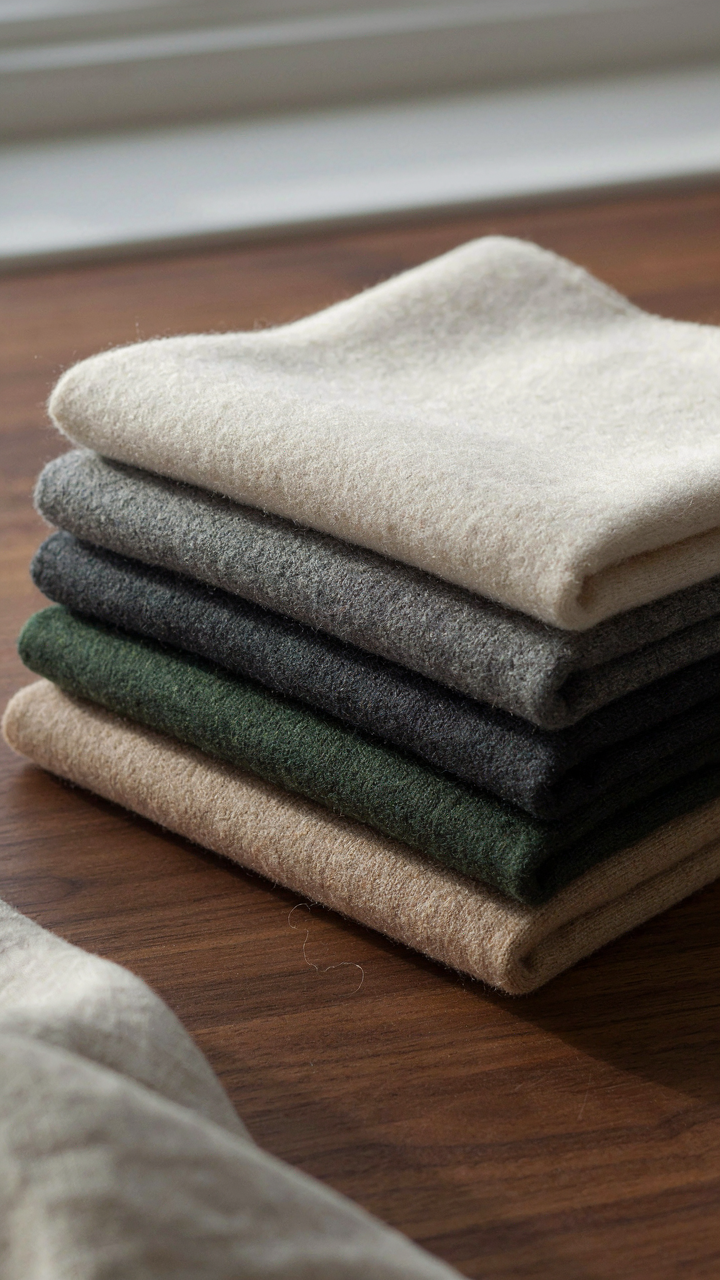
You care about this section because you’re afraid of looking rumpled in front of people who matter. Here’s the mechanism: fabric choice determines whether your clothes work for you or against you across multiple days without access to proper laundry. This isn’t about luxury. It’s about material science doing the labor you can’t.

Natural fibers wrinkle because their molecular structure relaxes when wet and compressed. Synthetics and blends resist this through their polymer chains, which is why performance fabrics dominate travel. You need textiles engineered to bounce back after packing, absorb sweat without staining, and shed odor naturally.
- Merino Wool Blends: Temperature regulating, antimicrobial properties prevent odor buildup, maintains shape through multiple wears without washing.
- Polyester Microfiber: Quick drying, wrinkle resistant, moves moisture away from skin, practical for humid climates and packed luggage.
- Nylon Stretch Blends: Recovers from compression within hours, resists creasing, durable through repeated packing cycles.
- Linen Cotton Blends: Breathable like linen but wrinkles less, dries faster than pure cotton, maintains structured appearance.
- Elastane Blends (Spandex): Maintains fit through multiple wears, resists sagging in shoulders or waistband, recovers shape after stretching.
Read the fiber content tag before buying anything. Generic “wrinkle-free” marketing means nothing. You need actual performance fibers in the weave, not just a chemical treatment that washes out after three cleanings. Test pieces in your bathroom at home—pack them damp, leave them overnight, then unpack. If they still look structured, they work for a trip.
Investment Versus Consumption
The common advice here is wrong. People tell you to buy expensive basics and cheap accessories. Reality is different. You need expensive pieces specifically where fabric matters most and wear patterns concentrate damage.
Trousers and blazers live on your body eight hours daily during a trip. Cheap versions pill, lose shape, and develop shine marks within days. You wear a dress shirt or blouse multiple times across outfits. Poor construction creates button stress, seam separation, and visible wear. Spend on these categories. Accessories like scarves, belts, and jewelry reset your entire look with zero fabric stress. Buy strategically here, not conservatively. A solid blazer in merino blend or structured polyester lasts five years of trips. A fast-fashion dress shirt fails in two trips. The math isn’t about price per item. It’s about cost per wearing across time and durability. Calculate backwards from how many business trips you take annually. Then invest accordingly in pieces that travel with you repeatedly.
The “Accessory Amplification” Playbook
How Three Items Create Six Outfits
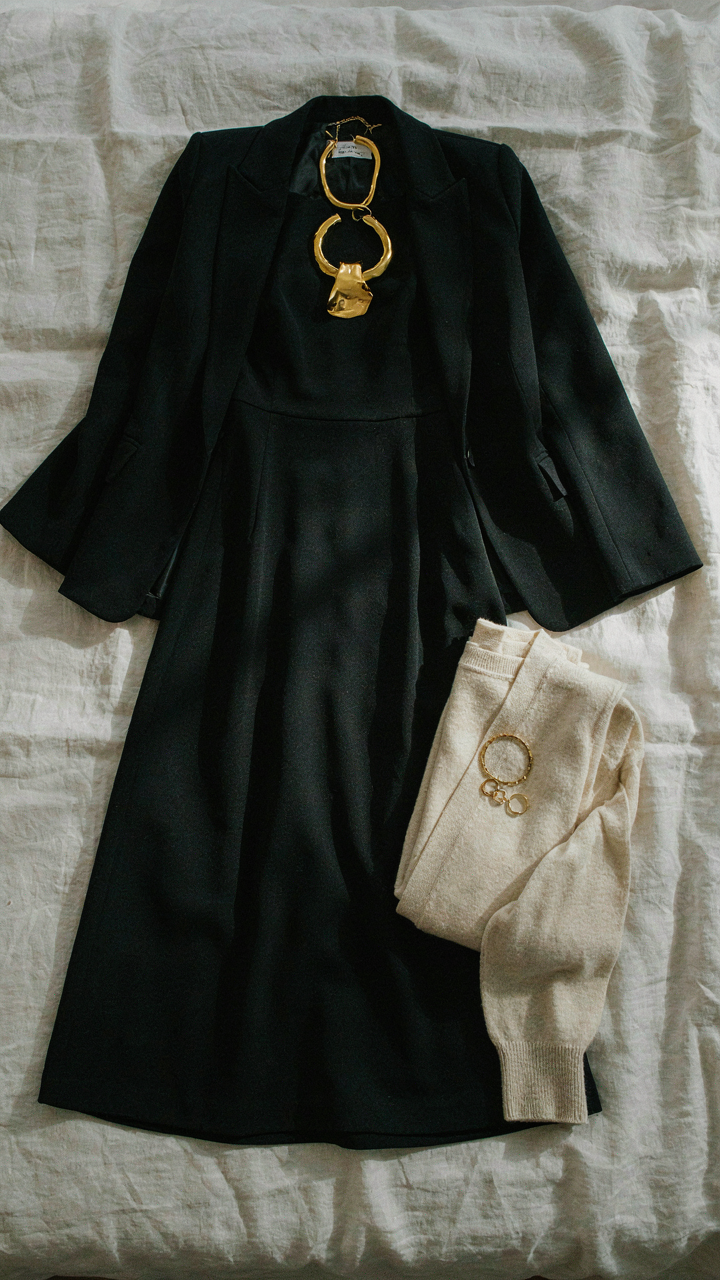
You want to pack less and look intentional. The mechanism is this: most people think outfits are built bottom-up, starting with pants or skirts. That’s backward. You’re actually working in layers of visual priority, and accessories sit at the top of that hierarchy because they’re the last thing your brain registers but the first thing it uses to categorize you. A blazer changes meaning entirely based on the scarf or jewelry you pair with it. One neutral base becomes multiple distinct looks through strategic layering of texture, color, and proportion at the edges.

The economy here is borrowed from graphic design: contrast and repetition. Repeat your base pieces religiously. Contrast them through accessories that shift silhouette and mood. A black dress works with a statement necklace and blazer for dinner, then strips down to minimal jewelry and a cardigan for day meetings. Your three core bottoms and four tops stay static. Your belt, scarves, and jewelry do the work. You’re not multiplying pieces; you’re multiplying outcomes by controlling what your eye lands on first.
Shoes And Bags: The Leverage Points
Two shoes and two bags will handle every scenario on a work trip if you choose by actual function, not aesthetic preference. This is where people break their capsule. They pack four shoes because they can’t decide, then use none of them strategically. A structured leather loafer or flat works for business day meetings and casual dinners. A simple heel or elevated loafer handles formal dinners and evening events. The distinction is height and formality signal, not style.
Bags follow the same logic. One professional leather tote handles meetings and day client dinners. One smaller structured bag or crossbody covers evening events and reduces the visual weight of a more formal outfit. Both should be neutral and simple in construction so they pair with every outfit without competing for attention. This pairing creates what stylists call “outfit coherence”: nothing fights for focus. Your clothes, accessories, and bags form one visual statement instead of four competing ones. Pick both shoes and both bags before the trip and test them against every planned outfit on your bed.
Pre Flight Wardrobe Engineering For Capsule Wardrobe Work Women

Test Every Combination Before Packing
You’re afraid you’ll get there and realize nothing works together. The mechanism is simple: your brain can’t actually visualize outfit combinations in real time, especially under travel fatigue. You think you packed variety. You packed repetition you didn’t see coming. Lay every piece on a bed. Build each outfit you plan to wear, day by day. Take a photo of each combination. This isn’t extra work—it’s the work you’ll do anyway, just moved to your control.

The test run catches the gaps before they cost you. You discover the blazer doesn’t sit right with that shirt. The pants need a specific shoe to balance proportions. The neutral you thought was versatile actually clashes with half your tops. These aren’t small problems when you’re presenting in front of clients or sitting across from decision makers. You fix them now, at home, where you have options.
Fold, Roll, And Position For Wrinkles
The advice about rolling clothes to save space is incomplete because it ignores fabric weight and trip length. Heavy fabrics like wool blazers and dress pants wrinkle from compression, not from folding. Hang these on a garment bag or fold them once, loosely, along their natural seams. Light fabrics like knits and cotton blouses can roll without penalty because their wrinkles release during unpacking and movement. Layer rolling items horizontally in your bag, not stacked vertically. Heavier pieces go on top where pressure matters less.
Pack your bag in reverse order of wear. The outfit you wear on day one goes in last, at the top. This prevents you from excavating and disturbing everything else. Use the original packaging from dry cleaning or grab thin plastic bags—these create friction barriers that slow wrinkle formation during transit. When you arrive, hang everything immediately, even if you’re not wearing it that day.
The “Post Trip Refinement” Feedback Loop

What Actually Worked Against What Didn’t
You want to believe your capsule was perfect so you don’t have to think about this again. That’s not how getting better works. The mechanism is simple: wear rotation creates data. Every outfit you wore on the trip either solved a problem or created one. Your job is to document which pieces actually moved through your suitcase and which sat there.

Pull your trip suitcase. Note which items you reached for repeatedly and which you didn’t touch. Don’t trust your memory here. The pieces you wore multiple times are your signal. The pieces that stayed folded are noise. Mark them. Most people skip this step because it feels obvious. It’s not. This is where your next capsule improves or stays the same.
Building The Next Iteration
This isn’t continuous improvement theater. It’s replacement logic. Take your wear data and ask one question per piece: did this solve a specific problem, or did I wear it because I was stuck? Pieces that solved problems stay. Pieces you wore because you had no alternative get replaced with something that actually fits your trip patterns.
The refinement protocol works like this. Document three categories: wore constantly, wore once or twice, didn’t wear. For constantly worn pieces, those are your anchors for the next trip. For the didn’t wear pile, identify why. Too formal, too casual, wrong color for the climates you actually encountered, or wrong season. Replace those systematically. Your next capsule doesn’t get bigger. It gets smarter.
Your Biggest Obstacle Isn’t Your Wardrobe; It’s Your Inability To Define Your Desired Outcome

Most people pack like they’re solving a puzzle instead of like they’re solving a problem. You don’t need more clothes. You need clarity on who you’re becoming on that trip. Before you touch a single item, write down exactly what you want people to think when they see you walk into that conference room or restaurant. That answer determines everything. Your capsule wardrobe works only when you stop treating it like a packing strategy and start treating it like an identity statement. Stop guessing and start deciding.