


The Muted Myth: Why Your “Effortless” Look Is Effortful
What Everyone Gets Wrong About Simplicity
You want to believe French women wake up looking polished without trying. That’s the real appeal here—the fantasy that taste is innate, not constructed. The mechanism is the opposite: French style capsule wardrobes work because they’re built on constraint, not inspiration. Limited options force better decisions. When you own fewer pieces, each one must earn its place through repeated wear and genuine compatibility. This is economics applied to closets. Scarcity breeds intentionality.
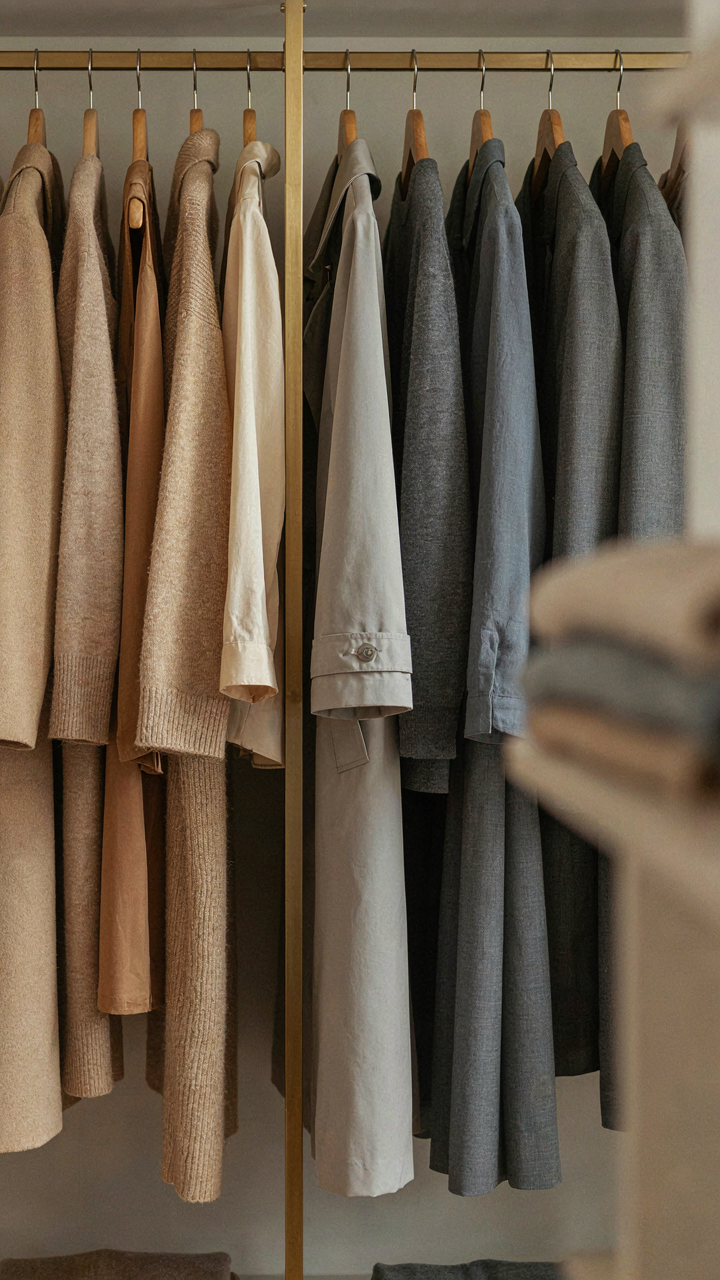
The common advice says “buy neutral basics and mix them.” That’s incomplete. Neutrals aren’t interchangeable. A warm beige doesn’t pair with cool gray the way consensus fashion blogs suggest. French fall wardrobes succeed because they commit to a single undertone temperature across all pieces—warm or cool, never both. This removes invisible friction from getting dressed. You’re not secretly failing at combinations that technically should work but visually clash.
The Undertone Lock That Changes Everything
French style doesn’t optimize for variety. It optimizes for coherence through undertone consistency. Think of undertone as a frequency in physics: if all your pieces broadcast on the same wavelength, they resonate together without effort. Muted tones in fall—taupe, mushroom, sage, rust, charcoal—only work as a capsule when they share the same undertone base. A cool taupe and a warm taupe in the same outfit create visual discord that reads as “tried too hard” or “doesn’t fit right.”
The real protocol: before buying anything, determine your undertone anchor. Choose one piece you love—a coat, a sweater—and build backward. Every subsequent piece must match that undertone exactly. This isn’t aesthetic philosophy. It’s supply chain logic applied to personal style. One coherent system beats ten items fighting each other for visual attention.
The “Curated Comfort” Protocol: Beyond Beige And Black

Start With Utility, Not Aesthetic
You want permission to buy expensive clothes without feeling frivolous. The mechanism that makes a French capsule work isn’t restraint—it’s ruthless elimination of anything that doesn’t solve a specific problem. Borrow from systems design: treat each piece as a node in a network where every connection must serve a function. A sweater that works only with one item is dead weight. A trouser that requires three other pieces to look intentional is failure.

Start by listing what you actually do in fall. Office days. Weekend errands. Evening events. Now identify the gaps between your current clothes and these contexts. A blazer isn’t decorative—it’s the difference between “presentable at work” and “unprepared.” A structured tote isn’t luxe—it’s the difference between fumbling with bags and moving efficiently. Function precedes form. Once you know what each piece must accomplish, the aesthetic choices become obvious, not arbitrary.
Personality Demands Contrast, Not Uniformity
The muted-only trap kills the entire concept. Everyone builds taupe and gray and cream, then wonders why they look invisible. The French didn’t invent the capsule to erase personality—they engineered it to amplify it. Muted tones work because they create negative space, not because they’re inherently superior. That negative space is where your actual taste becomes visible.
Add one piece in deep burgundy, forest green, or charcoal that acts as a visual anchor. Pair it with your neutrals. The contrast makes both sides work harder. Your cream sweater looks richer next to that forest green coat. Your muted trousers look intentional, not defaulted to. This isn’t about breaking the rules—it’s about understanding why the rules exist. The rule is coherence, not colorlessness. Introduce your accent piece in fall’s first three weeks, then build the rest of the wardrobe around it.
Quality Over Quantity: The Economic Law Of Diminishing Returns

The True Cost Of Cheap Clothes
You’re worried you’ll look poor if you don’t own enough. That’s the real fear driving the impulse to buy more. The mechanism is simple: cheap clothes deteriorate faster, forcing replacement cycles that destroy your budget over time. Economics calls this “total cost of ownership”—the real price includes every replacement, every repair abandoned, every item discarded after five wears. A twenty-dollar sweater that pills after two seasons costs more per wear than a one-hundred-dollar merino that lasts three years. Most people ignore this calculation entirely.

French wardrobing works backward from this principle. You buy fewer items because each one must survive repeated wear in varying conditions. Cotton-linen blends fade predictably but hold structure. Wool develops character rather than degrading. Leather improves with time. The cheap alternative—synthetic blends that look fresh for one season then collapse—creates hidden debt. Every garment you buy forces a decision: pay once or pay twice.
Investment Pieces That Generate Returns
Build your fall capsule around pieces that multiply in usefulness as your life changes. A quality camel coat worn September through April justifies its cost through frequency alone. Muted tones amplify this effect because they pair with everything already in rotation. Dark charcoal trousers in structured wool work with twenty different tops across multiple seasons. French style avoids trend-dependent cuts specifically for this reason. Straight silhouettes, modest sleeve lengths, and timeless proportions remain functional for years.
Calculate wardrobe ROI by dividing total cost by actual wears. A five-hundred-dollar coat worn eighty times costs six dollars per wear. A sixty-dollar fast-fashion piece worn four times costs fifteen dollars per wear before it shreds. The French approach treats basics like infrastructure rather than consumption. Each piece should work across ten or more outfits minimum. If you can’t pair it five different ways, it doesn’t belong in a capsule.
French Fall Outfits: The Strategic Pairing Principle
How Many Outfits Does Your Closet Actually Make
You want to look put-together without thinking about it. That’s the real reason you’re reading this. The mechanism is combinatorics: a small number of items engineered for overlap generates exponential outfit variety. Ten pieces in a French fall capsule don’t produce ten outfits. They produce dozens. Most people buy thirty pieces hoping for five good combinations. You’re doing the reverse.

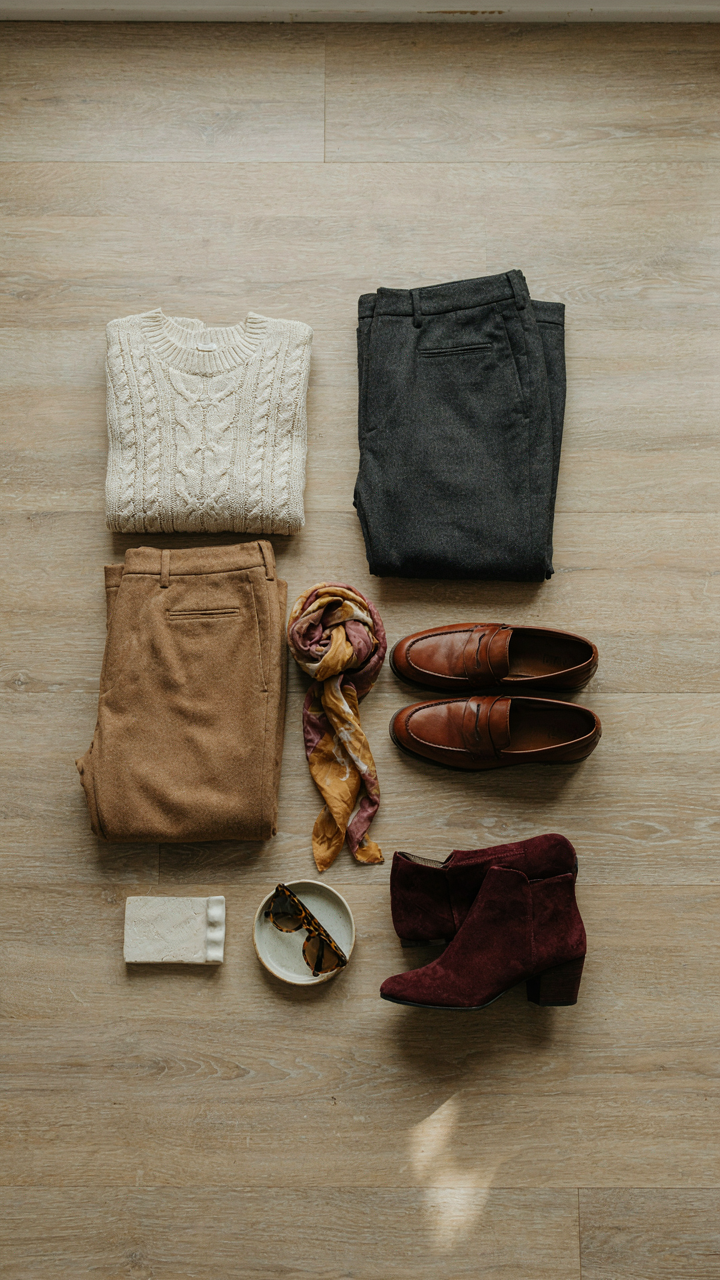
The math is simple but overlooked. Swap the base layer, change the shoe, add a coat, and the entire story shifts. A cream sweater works with charcoal trousers and cognac loafers on Monday. Tuesday it pairs with camel wool with burgundy boots. Same sweater. Different reads. French dressing exploits this through constraint, not abundance. Muted tones force intentional pairing because nothing clashes on impulse.
Engineering Your Combinations Before You Buy
Versatility doesn’t happen by accident. You design it. Start with your bottoms as the anchor: two pairs in muted tones that share the same undertone family. If your trousers are warm grey, your jeans lean the same direction. All your tops and outerwear then work across both. This is the non-negotiable rule everyone skips.
Now layer in texture and weight, not color variety. A merino sweater, a linen shirt, a silk camisole, a knit cardigan. Each performs a function and combines with every bottom you own. Add one quality coat that touches every piece without competing. One belt. One bag. Watch the outfit count multiply while your actual wardrobe stays minimal. The protocol: choose pieces first, verify cross-compatibility second, buy nothing until the grid is complete.
The French Capsule Wardrobe: Building Your Personal Uniform
Stop Chasing Approval Through Clothes
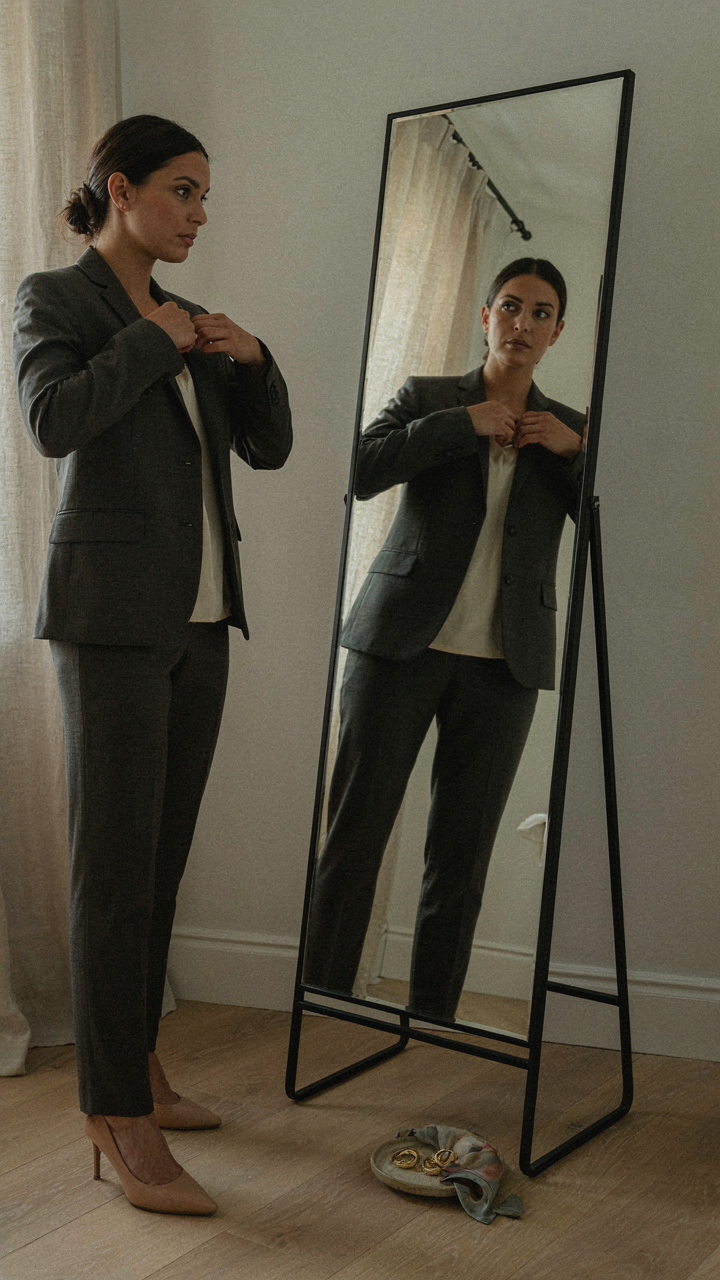
You want this to work because you’re tired of feeling like you’re performing for invisible judges every time you get dressed. The real mechanism is constraint. The French capsule model works because it removes the daily decision tax by establishing a repeatable formula instead of a wardrobe. You’re not building a collection. You’re building a system that makes you look intentional without requiring thought.

The capsule approach treats your closet like an operating system, not a gallery. You choose 10 to 12 base pieces in muted fall tones—charcoal, cream, camel, taupe, rust—and everything coordinates. This sounds restrictive until you realize restriction is what creates clarity. Most people own 40 pieces that conflict. You’ll own 12 that work together every single day. The French understood this decades ago because they valued consistency over novelty.
Define Your Uniform In Two Steps
Forget the generic advice about “finding your style.” That’s meaningless. Instead, inventory your actual life for 14 days. Note what you reach for. Note what you avoid. Note what makes you feel steady versus anxious. The pattern emerges fast. You’ll see three to four outfit templates you already prefer. Your job is to identify those templates and buy only pieces that fit them.
Once you know your template, select pieces based on your body and your climate, not editorial boards. If you’re tall and move a lot, long cardigans and straight trousers work better than cropped silhouettes. If you live somewhere with real seasons, add a structured wool coat and quality knitwear in October. If you’re prone to coffee spills, skip white and choose cream or soft gray. You’re not building a French wardrobe. You’re building a French wardrobe that actually fits your life. Then stop shopping.
Paris Autumn Capsule Wardrobe: The Environmental Context
Weather Specific Dressing Matters
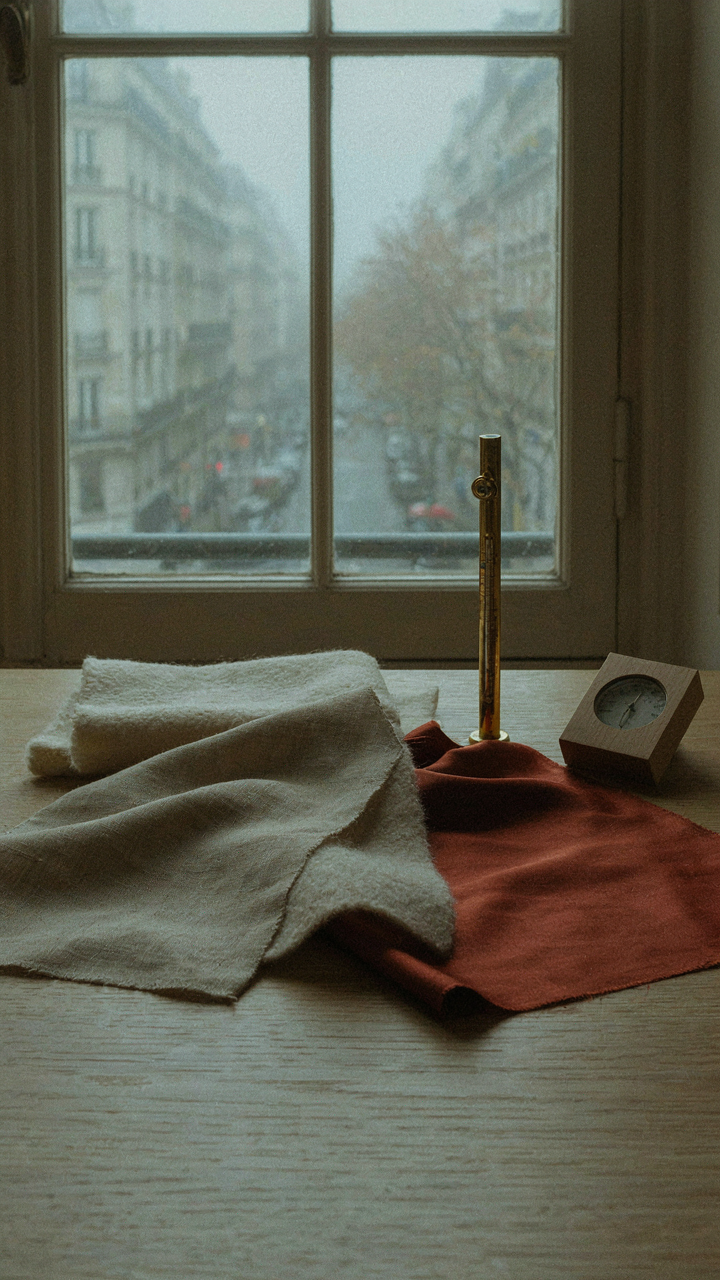
You want this to work because you’re tired of owning clothes that don’t fit the actual conditions you live in. The mechanism is simple: Paris autumn temperature swings between 50 and 65 degrees Fahrenheit, with unpredictable humidity and rain. Your capsule pieces must function across this range without requiring a closet twice the size. This isn’t aesthetic preference. This is engineering.

Muted tones expose fabrication choices because they strip away visual distraction. A navy merino wool sweater performs differently than a navy cotton blend. Fall in Paris punishes poor fiber selection faster than spring does. You need pieces that breathe when layered and insulate when the wind comes off the Seine. Forget trend pieces. Build for the actual climate first, then choose the colors.
The Layering Architecture
Think of layering as thermodynamics. You’re managing heat retention and vapor transmission through stacked materials. Parisian autumn isn’t about bulk. It’s about strategic density. A lightweight linen undershirt plus a merino base plus a wool overshirt handles temperature variance better than one thick coat because you can shed or add layers without leaving your environment.
The common advice treats layering as visual stacking. Wrong. Layering is about material compatibility and moisture management. Wool wicks better than cotton against skin. Linen breathes harder than synthetics. A silk slip under your sweater isn’t decoration. It’s a barrier that lets you wear heavier knits without overheating indoors. Your pieces must nest together without creating dead air pockets or trapping sweat. Test your layers before committing to the full capsule.
French Style Outfits Autumn: The Accessory Multiplier
Minimalist Base, Maximum Leverage
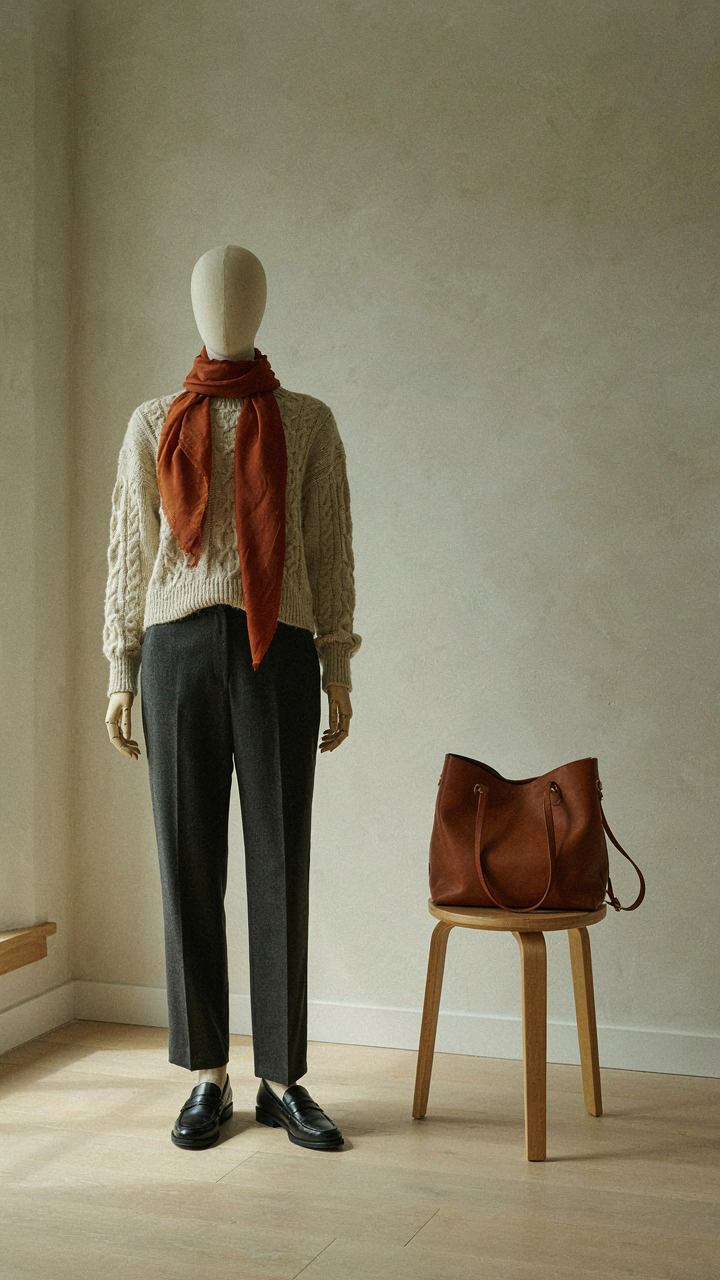
You want permission to buy less and look better. Here’s the real mechanism: a restricted color palette and neutral silhouettes create cognitive space in an outfit. Your eye lands on what moves, not what blends. French dressing doesn’t minimize accessories—it maximizes their function by removing competition. In economics, this is scarcity value. A muted base makes a single scarf, leather belt, or pair of shoes do the work that five pieces would do in a busier outfit. The constraint forces intention.

A cream sweater and charcoal trousers stop working as background. They become architecture. A burnt sienna scarf becomes structural, not decorative. A cognac leather bag anchors the entire composition. This is why French women appear to own nothing and somehow own everything they need. They’ve eliminated the noise that dilutes impact. Start with three neutral pieces. Add one accessory that carries weight in material, color, or texture. Watch what happens when nothing fights for attention.
Few Pieces, Multiplied Purpose
Everyone says choose quality over quantity. They mean buy expensive things. Wrong framework. The real strategy borrows from systems design: constraint optimization. You choose pieces that perform multiple roles across different outfits. A structured leather belt in cognac works over cardigans, blazers, and dresses. A wool scarf in taupe shifts from neck to shoulders to bag tie. A minimalist leather loafer transitions from weekend to semi-professional contexts. This multiplier effect is why five accessories feel like fifteen.
French fall dressing demands accessories that operate at intersections. A silk square functions as head covering, neck detail, or pocket accent. A structured tote in muted leather carries from September through November, across rain and dry days, professional and casual settings. Invest the decision-making effort upfront—choose each piece for its ability to alter outfit meaning, not to fill visual space. Once you’ve identified pieces with three or more functions, you’ve found your multiplier. Execute this system before buying anything new.
The French Girl Capsule Wardrobe: Beyond The Instagram Filter

What The Algorithm Doesn’t Show You
You want proof that this works because you’re tired of buying clothes that don’t fit your life. Here’s the mechanism: Instagram French style isn’t French style. It’s a highlight reel edited for engagement, stripped of context, and built on the assumption that aesthetics equal function. Real French capsule dressing uses economics as its framework. In economics, efficiency means maximum output from minimum input. A French capsule achieves this by eliminating decision fatigue through constraint, not by looking perfect in natural light.

The filtered version shows a woman in a perfectly pressed linen shirt at a café. What it doesn’t show is that she owns three versions of that shirt in rotation, wears it with different trousers depending on the day, and chose the exact weight of linen that works in her climate. The gap between the image and the system is where most people fail. They buy the shirt, style it once like the photo, then wonder why it doesn’t feel effortless.
Building Systems Instead Of Collections
Forget the advice about curating a “signature look.” That’s a misunderstanding of how personal style actually develops. Authentic style emerges from understanding your own constraints and solving for them repeatedly, not from copying someone else’s constraints. A French woman in Lyon has different weather, different social contexts, and a different body than a woman in Paris or Marseille. Her capsule isn’t universal. It’s built on what she actually does.
The real work is documenting your actual life for two weeks. Not your ideal life. What you wear when nobody’s watching. What works in your office. What moves comfortably when you sit. What doesn’t pill after three washes. What fits when you’re bloated. Once you have this data, you build backward into a small collection that serves those scenarios. Then you stop shopping for “pieces” and start replacing worn items with identical replacements.
French Capsule Wardrobe 2026: The Anti Trend Imperative
Why Trends Die But Basics Compound
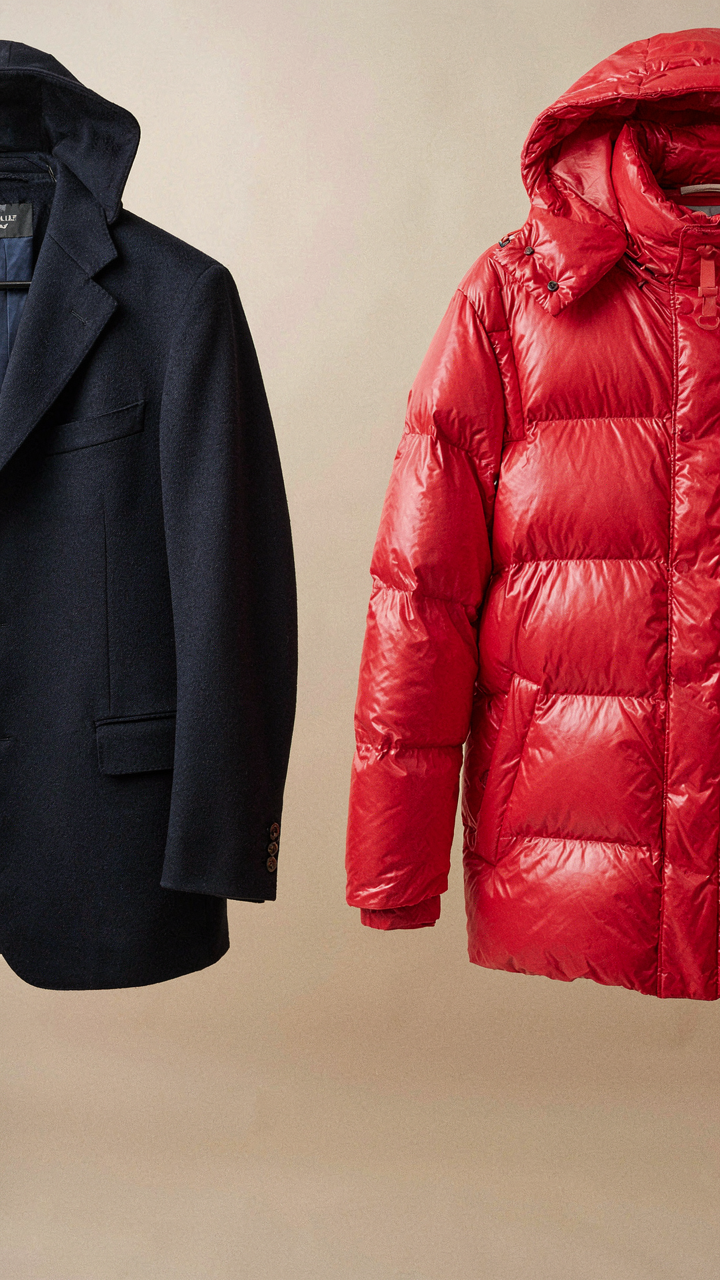
You’re afraid of looking outdated. That fear is exactly what keeps you buying the same silhouette every season in a new color, burning money while your closet grows heavier. The mechanism is simple: fashion moves in cycles, but your body doesn’t. French capsule dressing treats wardrobe building like compound interest in materials, not financial markets. A quality wool blazer from 2015 performs the same function in 2026 because the cut solved a real problem, not a made-up one. Trends solve nothing except the industry’s need for sales velocity.

The brands screaming about 2026 color forecasts and fabric trends are funding their marketing through your obsolescence. Ignore them. A muted palette in navy, charcoal, cream, and camel stays legible across decades because these colors reflect light consistently and pair without calculation. The real cost of trend-chasing isn’t the purchase price. It’s the mental energy spent deciding if something “still works” and the closet space occupied by pieces that serve no function.
The Economics Of Buying Once
Building a wardrobe that survives means understanding one principle from economics: opportunity cost. Every dollar spent on a piece that lasts three years is a dollar not spent on a piece that lasts ten. French style doesn’t maximize variety. It maximizes utility per garment per year. You need fewer items because each one earns its place through repeated wear, not novelty. A camel wool coat worn sixty times over five falls beats twelve fast fashion jackets worn three times each.
Longevity requires specificity. Muted tones work across seasons because they don’t announce their timeliness. Invest in construction details that slow degradation: French seams in knitwear, reinforced buttonholes, weight in natural fibers. Buy from makers who’ve been producing the same piece for years, not companies that rebrand seasonally. Check the fiber content. Wool blends under seventy percent wool deteriorate faster. Linen should be sturdy enough to soften with wear, not fray. Make one purchase monthly if necessary, but make it count.
French Style Autumn Outfits: The Art Of Deliberate Neglect
Restraint Works Because You’re Afraid It Won’t
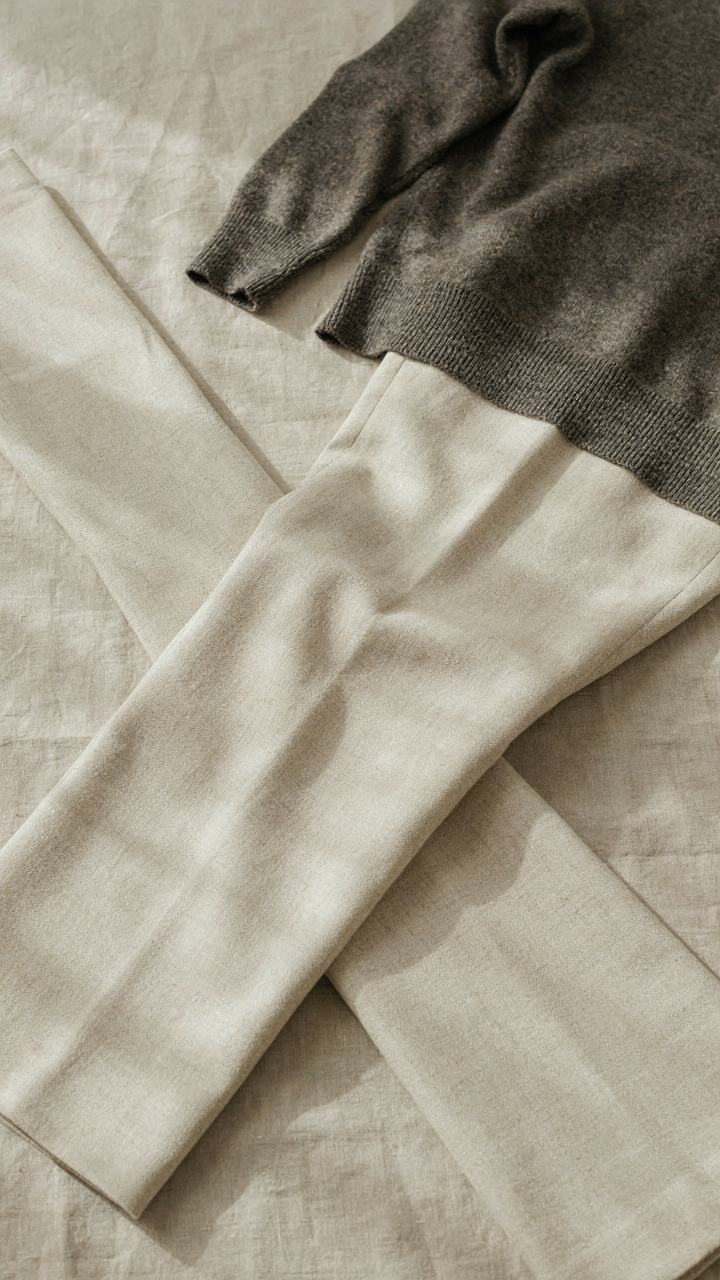
You’re worried that wearing less will make you invisible. That’s the real fear underneath the question. The mechanism is this: in fashion, subtraction signals control. When you remove visual noise, every piece registers with intent. French style autumn dressing uses omission the way a photographer uses negative space. The empty areas make the subject matter. You’re not adding confidence through decoration. You’re building it by refusing to apologize for simplicity.
Most advice says add accessories, add layers, add personality. Wrong. The actual power lives in what you don’t wear. A muted camel coat over navy trousers with no pattern, no embellishment, no statement jewelry says you know exactly what you need. That’s not boring. That’s dangerous. Boring is the person trying to fill silence with noise. You’re filling it with silence.
The Flaw In Your Outfit Is The Feature
You think imperfection is a failure to execute. It’s not. It’s the difference between something that looks expensive and something that looks real. Pilling knitwear, creased linen, leather that shows wear—these aren’t damage. They’re proof of use. French style embraces this because the alternative, the obsessively maintained garment, reads as trying too hard. The human element isn’t decoration. It’s authenticity.
Your muted tone capsule for fall works precisely because it shows time and texture. A charcoal sweater faded at the collar from repeated washing. Cream trousers with a slight crease that won’t fully press out. These details make the outfit credible. They signal that you wear these pieces because you like them, not because you’re performing likeability. Stop correcting every wrinkle before you leave the house. The wrinkles are doing the work you can’t fake.
Your Wardrobe Isn’t The Problem. Your Indecision Is
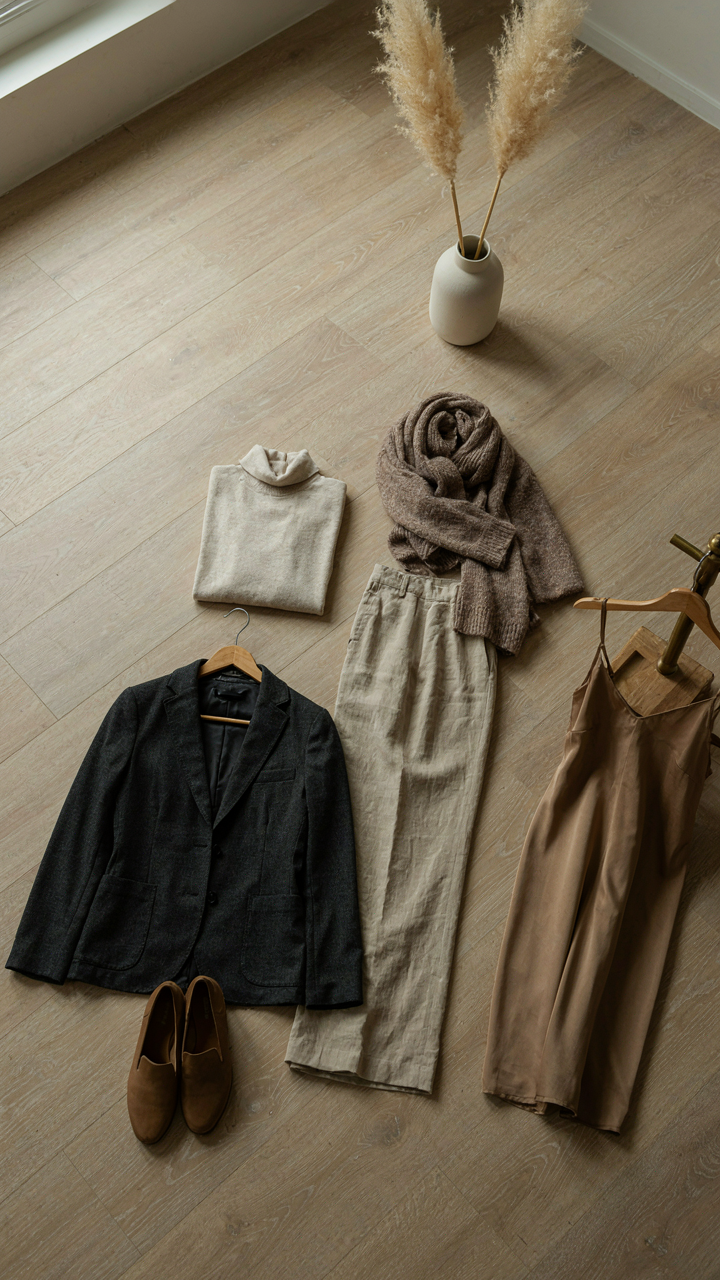
You already know what works. A French capsule wardrobe in fall’s muted tones isn’t about owning more pieces, it’s about committing to the ones you choose. Pick five neutrals today, not next month. Commit to them. The paralysis of endless options kills more style than bad taste ever could. Stop researching. Start wearing. Your closet reflects your decisions, not your intentions.