

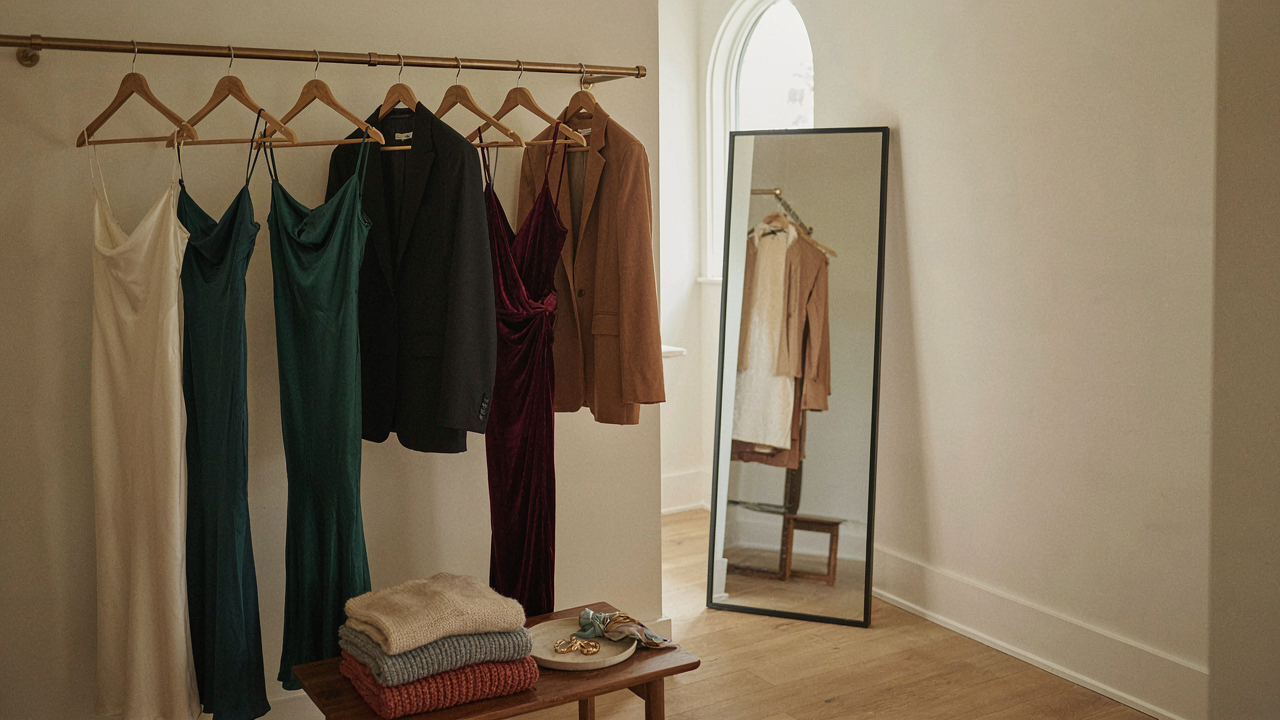
The Illusion Of More: Why Your Closet Is Lying

The Scarcity Trap Nobody Names
You’re afraid you don’t have enough. That’s the real engine here—not practicality, not aesthetics, but the creeping dread that one outfit won’t cut it. Consumption psychology calls this “scarcity bias,” and your closet exploits it ruthlessly. Every new event feels like proof you need something you don’t own. You’re solving for reassurance, not for dressing well.
The mechanism is simple: your brain treats rare occasions as rare problems. A cocktail event happens three times a year, so you convince yourself you need three different outfits for it. You don’t. Most people own six to eight “cocktail pieces” they rotate endlessly while believing they’re worn out. The pieces aren’t worn out. Your justification for buying more is.
The Same Outfit Worn Differently
Everyone says “mix and match.” That’s weak advice and it’s incomplete. The real move is understanding that five quality pieces worn in different combinations create seventeen distinct looks—without you owning anything new. People see the blouse differently when paired with a different skirt, belt, or shoe. Context changes perception more than inventory does.
This isn’t theory. Historical cocktail dressing operated on exactly this principle. Before fast fashion normalized buying something for every occasion, people owned fewer pieces and rotated them strategically through different combinations. A black dress became formal or casual depending on what you layered over it or how you accessorized it. Build a cocktail capsule around this constraint, not against it. You stop buying when you hit five to seven core pieces that combine in multiple ways.
The Core Four: Your Non Negotiable Foundations
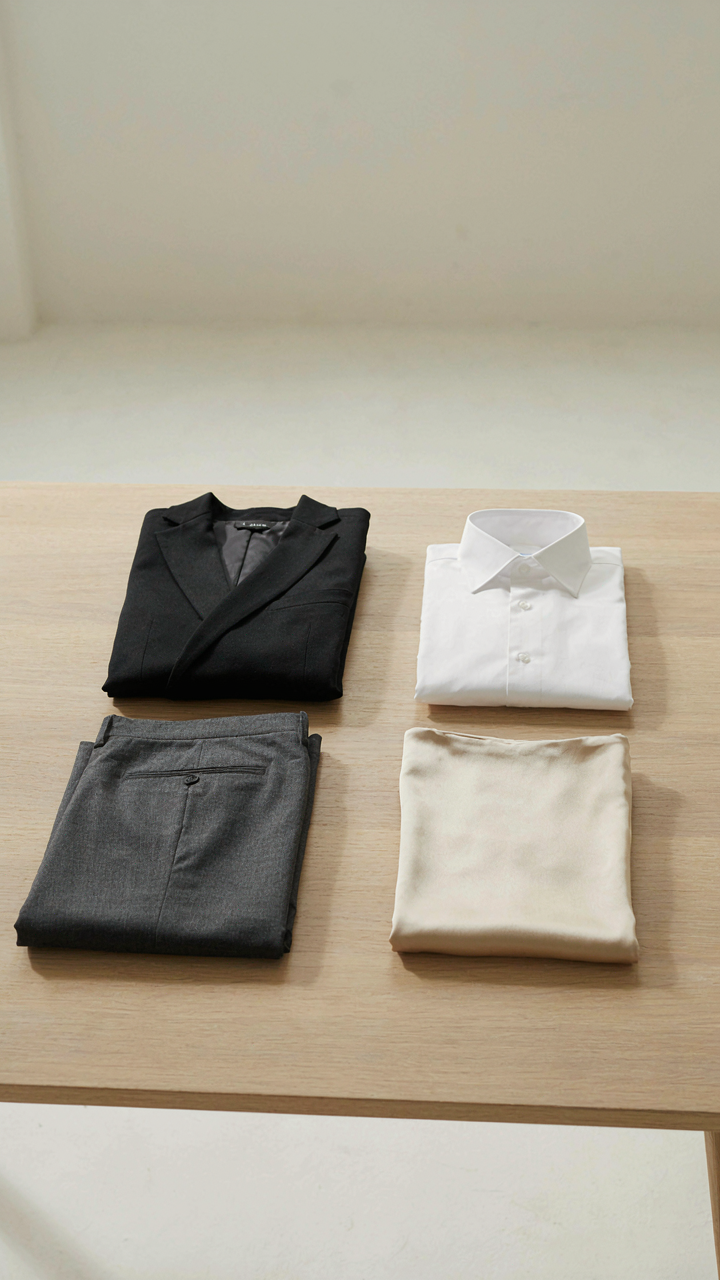
Four Pieces That Actually Work
You want permission to buy less and look better. That’s the real reason you’re reading this. The mechanism is constraint. When you own fewer items, each one must function across multiple contexts. A black blazer isn’t just for weddings. A white shirt isn’t just for offices. This forced versatility eliminates dead weight from your closet and forces you to think like an editor instead of a collector.

The four foundations are a structured blazer, a white dress shirt, tailored trousers, and a simple sheath dress. Each piece works across formal dinners, semi-formal events, and business occasions. They’re not trend items. They’re tools that anchor every combination you’ll build. Start here before adding anything else.
Fit And Material Trump Everything Else
Most advice says buy quality. That’s correct but useless. The real lever is this: fit determines whether a piece works across your body and across time. A poorly fitted expensive blazer fails faster than a well-fitted mid-range one. Material matters for longevity and drape, but fit determines whether you actually wear the thing.
Spend money on tailoring, not just on the garment itself. A structured blazer in wool blend with a tailor’s adjustment costs less than a designer piece that doesn’t fit your shoulders. Natural fiber blends outperform pure synthetics because they breathe and hold their shape through seasons. Trousers should sit at your natural waist. The shirt collar should close without pulling. These aren’t preferences. They’re the baseline for a capsule that functions.
The “Classy Cocktail Attire” Multiplier Effect
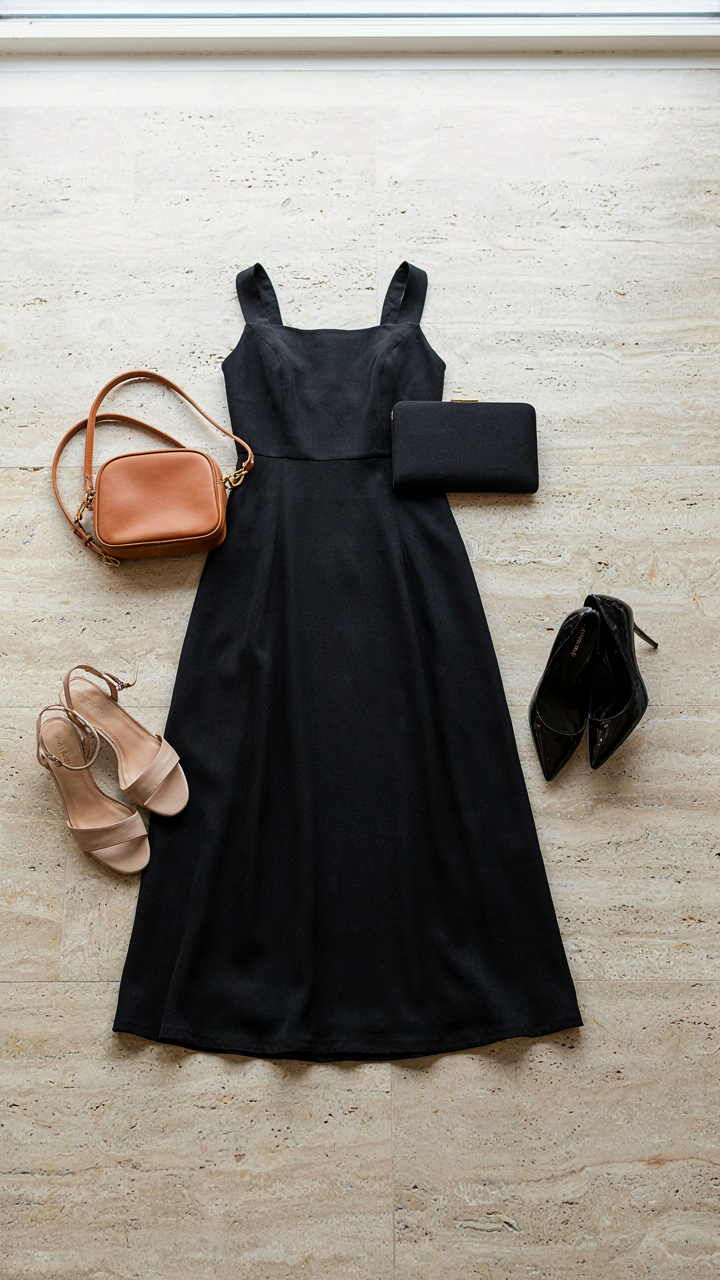
Accessories Shift The Formality Lever
You want permission to buy fewer pieces and call it strategy. Here’s the real mechanism: accessories function as formality modifiers. A neutral dress moves up or down the formality spectrum based entirely on what you layer over it or carry with it. The same black dress works for casual dinner with a crossbody bag and flat sandals, or for a formal cocktail event with a structured clutch and heeled pumps. The dress stays static. The accessories recalibrate perception.

This is why department stores sell accessories separately while positioning them as afterthoughts. They’re not afterthoughts. They’re the compression algorithm for your entire wardrobe. A silk camisole with a structured leather blazer and statement earrings reads formal. The same camisole with an unstructured linen shirt and minimalist jewelry reads casual. You’re not building multiple outfits. You’re building lever points that collapse your closet size while expanding your occasion range.
Strategic Anchors Eliminate Decision Friction
Shoes, jewelry, and bags operate as anchors in a system. Choose one structured leather bag in black or navy that survives every season. This single bag becomes your formality anchor for cocktail occasions. Pair it with heels that share the same color family and material profile, and you’ve eliminated forty percent of your outfit decisions before you dress. The real leverage isn’t having options. It’s having repeatable, reliable anchors that work across different pieces.
Jewelry functions identically. A pair of simple drop earrings in gold or silver and a thin bracelet create a formality baseline that works with any dress or top combination from your capsule. You’re not building a collection. You’re establishing a formula. When you need to shift the outfit’s formality up or down, you swap the bag and shoes while keeping the jewelry and core piece constant. This protocol cuts planning time to under five minutes and guarantees you won’t accidentally underdress or overdress for the occasion.
The Darwinian Wardrobe: Evolve Or Become Obsolete

Pieces That Survive Across Seasons
You’re reading this because you’re afraid of wasting money on clothes that won’t work. Here’s the mechanism: in evolutionary biology, survival depends on adaptability to environmental change. Your cocktail capsule works the same way. Pieces that function across multiple seasons and temperature ranges reproduce themselves through repeated wear. Pieces that don’t get buried.

A navy silk charmeuse blazer worn in October works again in May under different layers. A cream silk camisole serves winter over a long sleeve, then spring bare. The rule is brutal: if a piece demands a specific season to justify its existence, it’s a liability, not an asset. Build for overlap.
The Ruthless Inventory Audit
Common advice says keep pieces you love. That’s wrong. You keep pieces that work in at least three different outfit combinations across different months. Everything else creates visual debt. Pull every item from your cocktail rotation. Test each one against this question: does this piece function in June, August, and December without modification or additional purchases?
Eliminate pieces that need specific jewelry, shoes, or undergarments to function. Eliminate those requiring a particular body condition or season-specific foundation. Eliminate anything you’ve worn once in two years. The act of removing creates space for pieces that actually function. Your cocktail wardrobe shrinks, but its utility density increases exponentially.
The “Capsule Outfits” Protocol: A Systems Approach

Build Looks From Constraints
You want permission to buy less while looking like you own more. The mechanism is constraint-based design: you deliberately limit your palette so each piece forces itself into multiple combinations. No dead inventory. No orphaned items that work with nothing else.

Start with a neutral base of three to four core pieces in black, navy, or charcoal. A tailored blazer, a fitted dress, trousers, a skirt. These anchor every outfit. Then introduce exactly two accent colors that sit opposite each other on the color wheel or share tonal depth. A burgundy and cream. A forest green and gold. Everything you add from here must work with both anchors and both accent colors.
Map Engagement Party To Gala
The real work happens before you dress. You design outfits backward from the events you attend, not forward from random purchases. An engagement party dress becomes a gala top when you swap the skirt. The gala blazer becomes the engagement party layer when you drop the formal dress underneath.
Take your burgundy sheath dress. Pair it with the tailored blazer and heels for a gala. Remove the blazer, add a silk camisole, swap heels for flats: engagement party. Add a statement necklace to the dress alone for a cocktail hour. The same three pieces cycle through four distinct contexts without repetition appearing. You build your calendar into your closet, not your closet around impulse.
Beyond The “Evening Wear Capsule Wardrobe”: The Fabric Of Time
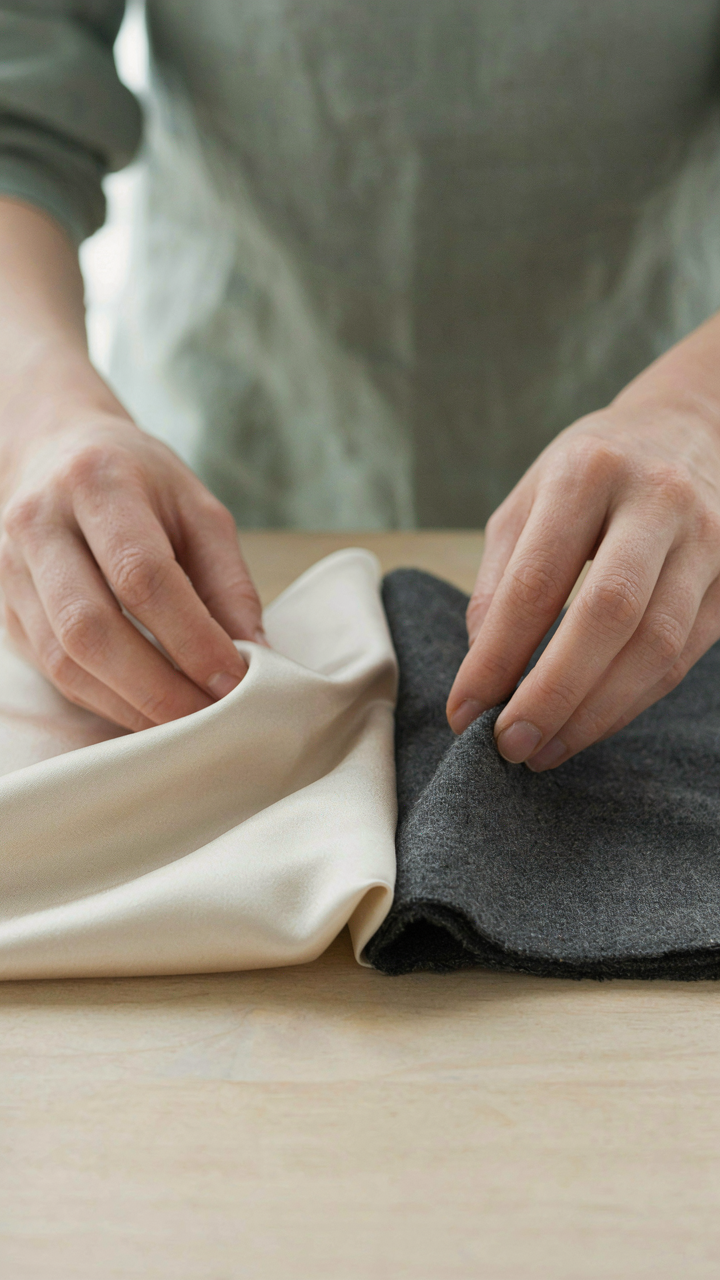
Natural Fibers Hold Their Shape
You’re drawn to this section because you’re afraid cheap fabric will expose you. You want insurance that your investment won’t collapse after three seasons. Here’s the mechanism: natural fibers like silk, wool, and linen have molecular structure that resists deformation. Synthetic blends compress and pill because their polymers lack that resilience. A silk charmeuse cocktail dress maintains its drape for decades. A polyester knockoff flattens within months. The difference is physics. Natural fibers also develop a patina instead of degradation, which reads as intentional aging rather than deterioration.

Cocktail wardrobes demand fabrics that survive repeated wear without visible fatigue. Wool crepe trousers hold a crease through a full evening and multiple wearings. Linen blazers wrinkle on purpose, which works for the silhouette. Cotton blends in dress shirts maintain structure around the collar and cuffs where friction hits hardest. You’re not paying for luxury here. You’re buying predictability. The fabric won’t betray you mid-event when it matters most.
Cost Per Wear Reveals The Real Math
This is where common advice fails completely. People calculate cost per wear by dividing purchase price by number of wears. That’s incomplete. You must factor in replacement cycles, dry cleaning frequency, and the loss of versatility when fabric degrades. A hundred-dollar silk dress worn thirty times costs three dollars per wear if the fabric holds. A fifty-dollar polyester dress worn ten times before visible pilling and color fading costs five dollars per wear, plus you’ve lost it from rotation. Durability compounds your advantage invisibly over time.
Material choices dictate how often you’ll need replacements and how much the piece contributes to your overall wardrobe efficiency. High-quality wool holds color and shape through dozens of dry cleanings. Budget wool fades and bags at the knees. The premium piece sits in your rotation longer, covers more occasions, and actually costs less annually. Evaluate every cocktail capsule purchase against its expected lifespan before you compare price tags. That’s the protocol.
The Travel Wardrobe Imperative: Pack Less, Experience More

Dress Code Flexibility Without Compromise
You’re worried about looking underdressed or running out of options when you’re away from home. The mechanism is simple: a travel cocktail capsule works because each piece serves multiple dress codes instead of one. A silk charmeuse blazer covers business casual, serial dates, and cocktail events. Dark trousers work under that blazer and also pair with a silk camisole for semi-formal dinners. You’re not building a travel wardrobe—you’re building a constraint system that forces higher leverage per garment.

The constraint model comes from engineering: with limited resources, you maximize output through intentional overlap. A structured cocktail capsule for travel demands pieces that code-shift across formality levels. This isn’t about minimalism for its own sake. It’s about owning garments that don’t announce their context.
- Silk charmeuse blazer in black or navy: Layers over cocktail dresses, works solo over camisoles, transitions from day to evening without feeling out of place at any formality level.
- Tailored trousers in a neutral neutral: Pairs with everything from silk shells to beaded tops, works for business events and upscale casual dinners equally well.
- Sheath dress in a solid neutral or jewel tone: Functions as base layer under the blazer or stands alone depending on venue and season context.
- Silk camisole in white, black, and one accent color: Builds outfit combinations with trousers and blazers, works layered or solo under jackets for temperature flexibility.
- Statement earrings and a structured evening clutch: Telegraphs formality without adding bulk, transforms casual combinations into cocktail-appropriate ensembles through accessory swaps alone.
Travel forces honesty about how many actual occasions demand different outfits. Most don’t. You wear the blazer three times, the trousers four. The sheath dress covers two events by itself. When you remove the luxury of excess, you discover which pieces actually deliver across contexts. That discovery is what makes a travel cocktail capsule work at home too.
The Minimalist Decision Framework For Formal Events
The common advice here is wrong: people say “choose neutral colors” and “pick versatile pieces.” That’s not a framework. That’s a vague direction. The real constraint is this—you have a fixed suitcase size and a fixed number of formal events. Work backward from events first, not from aesthetics. Count your actual commitments: two cocktail parties, one wedding, one gala dinner. That’s four events. Most people pack for twelve.
Every piece you add past the core travel capsule is a bet that you’ll wear it. Most bets lose. One extra dress that doesn’t coordinate with your shoes, one blazer that only works with one bottom, one top that needs a specific undergarment. Those bets occupy space and mental energy while doing nothing. The minimalist approach to formal events means each piece solves two or three specific event gaps, not “just in case” gaps. Your baseline items handle 80 percent of contexts. You pack one accent piece for the remaining 20 percent—a beaded top if all your events are cocktail, a floor-length skirt if one is black-tie. That’s the protocol: inventory your real commitments, build your base capsule to handle them, then add exactly one context-specific piece. No more.
The “Lookbook Outfits” Deception: Real Style Vs. Instagram Filters

When Perfection Becomes The Problem
You’re scrolling because you’re afraid your outfit won’t read as intentional. Here’s what influencer lookbooks don’t show: they’re designed to make replication impossible. The mechanism is simple. A stylist shoots five looks in controlled lighting with a specific model’s body type, then applies filters, color grading, and styling tricks that vanish the moment you step into natural light. You see the outcome, not the system that produced it. Your apartment has different light. Your body occupies space differently. Your life has friction that studio shoots eliminate.

The real damage isn’t the unattainable standard itself. It’s that you mistake documentation for instruction. Lookbooks show you what worked for one context on one day with one person. They don’t teach you why those pieces work together or how to adapt them to your actual life. You memorize the image instead of understanding the logic. When you wear the exact combination at a cocktail event, something feels off because you’ve borrowed taste instead of developing judgment. The cocktail capsule only functions as a system when you know the reasoning behind each pairing, not just the visual result.
Understanding Why Over Copying What
Real style operates like grammar, not vocabulary. You don’t speak by memorizing sentences. You learn the rules, then generate infinite combinations. Influencers show vocabulary. They don’t teach the rules. Most style advice skips this entirely and just says “find your aesthetic,” which is useless. You need to understand construct and contrast. You need to know why a silk camisole works under a blazer but a cotton t-shirt reads differently. You need to see the actual relationship between fit, fabric weight, and formality level.
Start by reverse engineering three lookbooks you respect, but differently than you’ve been doing it. Don’t ask what pieces are there. Ask what problem each piece solves in that outfit. Why that shoe? Because it balances the weight of the fabric above it, or because it grounds a lighter silhouette, or because its finish matches the formality signal of the event. Write down the mechanism for each choice. Then test one of those mechanisms in your own wardrobe with different pieces. That’s when you move from follower to builder.
Your Personal Uniform: The Ultimate “Minimalist Wardrobe” Statement
Signature Style Across Seasons
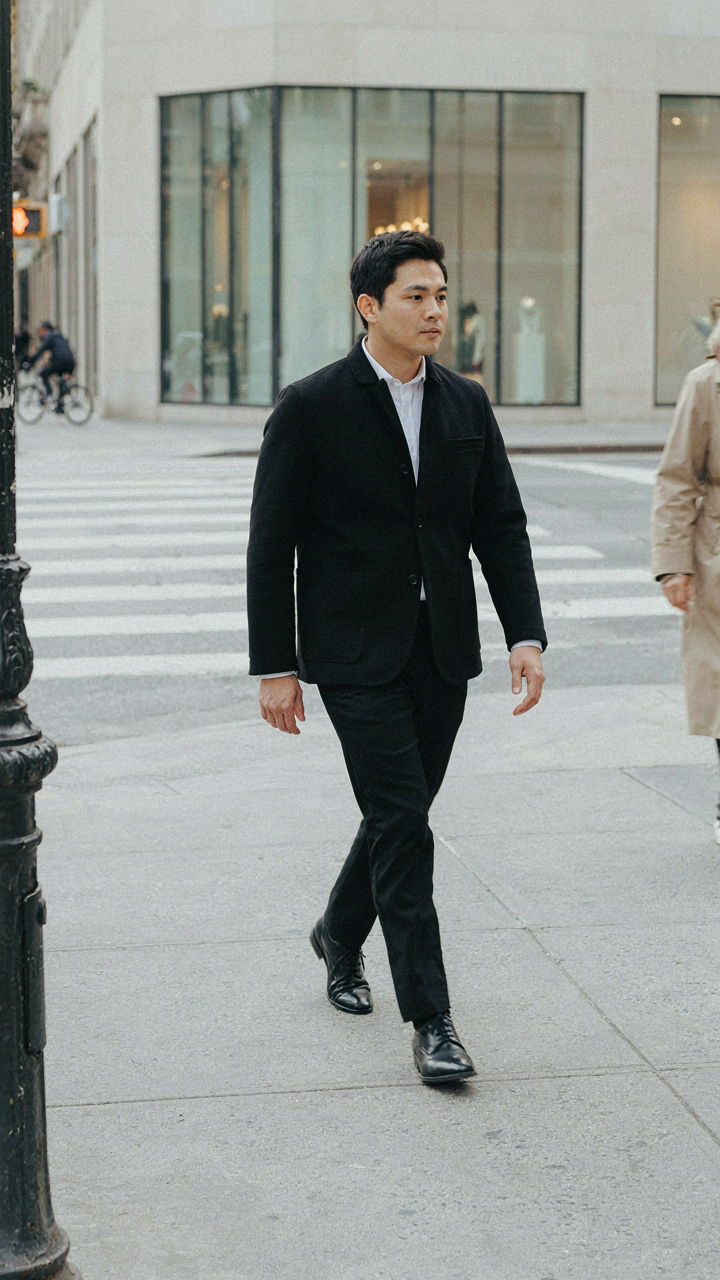
You want permission to stop changing. That’s the real reason this section matters. The mechanism is simple: a signature style eliminates the decision tax that kills consistency. When your cocktail pieces work across winter galas, spring weddings, and fall events without reinvention, you stop treating dressy occasions like costume changes. You build recognition instead.

A true signature style uses constraint as its engine. Pick a color palette that flatters your skin year-round, then build variations within it. Black, navy, and cream work across seasons because fabric weight and layering do the heavy lifting, not color swaps. Your silhouettes stay consistent too. If a tailored column dress works in silk for summer and crepe for winter, you’re not building a new wardrobe. You’re refining one.
Repetition Builds Credibility
The fashion industry calls this “brand consistency,” but it’s actually a principle borrowed from neuroscience: repeated exposure increases perceived authority. Wear the same cut of pants, the same shoe style, the same structured blazer across multiple events. People don’t notice what you’re wearing. They notice you’re always polished.
This works because your brain stops processing the details and starts processing the pattern. When someone sees you in a well-fitted blazer three times, they unconsciously file you under “puts effort in.” The garments become invisible. Your presence becomes visible. The protocol here is deliberate: choose four to five core pieces that can anchor different outfits, then buy those pieces in the colors and fabrics that suit the occasions you actually attend.
The Only Thing Limiting Your Wardrobe Is Your Imagination, Not Your Closet Space

Most people mistake a cocktail capsule wardrobe for a shopping list. It’s not. It’s permission to stop overthinking and start experimenting with the pieces you already own. Pull three items from your closet right now and force yourself to wear them together to your next event. You’ll realize you’ve been sitting on outfit combinations worth hundreds of dollars, just waiting for you to see them. A real cocktail wardrobe doesn’t expand, it compounds.