


The Illusion Of More: Why Your Closet Is A Black Hole
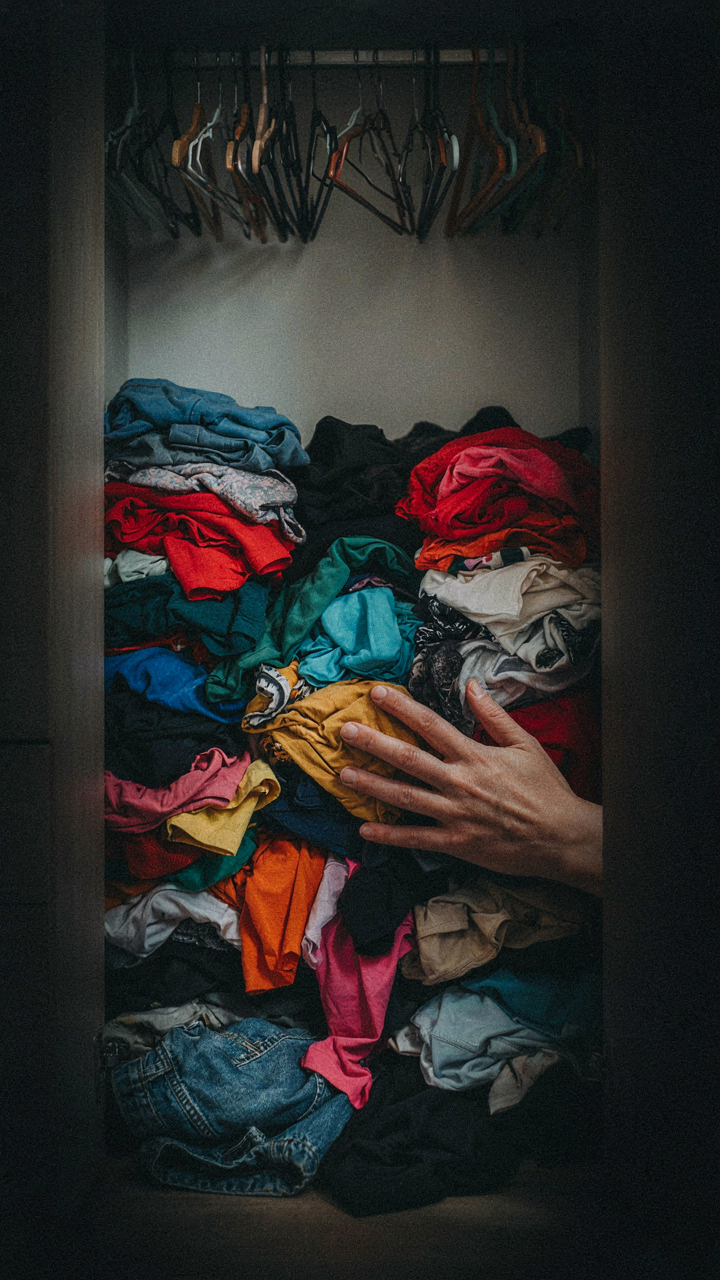
Fashion Moves Faster Than You Do
You think you need more because admitting you’ve wasted money on clothes you don’t wear feels worse than buying more. The mechanism is simple: the fashion industry manufactures seasonal pressure. Design houses release new collections on fixed cycles, retailers mark down old stock to clear shelf space, and marketing creates artificial scarcity. Your closet doesn’t actually need replenishing. The industry needs you to believe it does.
This isn’t accidental. Fast fashion scaled the tactic deliberately. By rotating inventory every four to six weeks instead of seasons, brands force a psychological loop: last month’s trends feel dated immediately. Department stores and discount retailers amplify this by fragmenting what you own into “old” and “current” categories in your own mind. You stop seeing what you already have because the frame around it changed.
The Chemical Reward System Behind Shopping
Economics calls this variable reward scheduling, and your brain treats new purchases like a slot machine. The dopamine spike happens in the anticipation phase, not wearing the item. You feel the hit scrolling through options, during checkout, and opening the package. The actual garment disappoints because the neurological event already passed. Then the cycle resets. You need another hit.
This is why outfit repeats feel boring even though they work perfectly. Wearing the same black blazer produces zero dopamine. Buying a new one does. The fashion industry knows this mechanism works and structures itself around it. Evening events trigger this hardest because you believe you need something “new” for a big night. The solution isn’t willpower. It’s breaking the feedback loop by separating the purchase decision from the event, then choosing from what solves the actual problem instead of what promises the chemical experience.
The “Less Is More” Lie: Understanding Strategic Scarcity In Your Night Out Outfit
Curated Vs Limited Choices
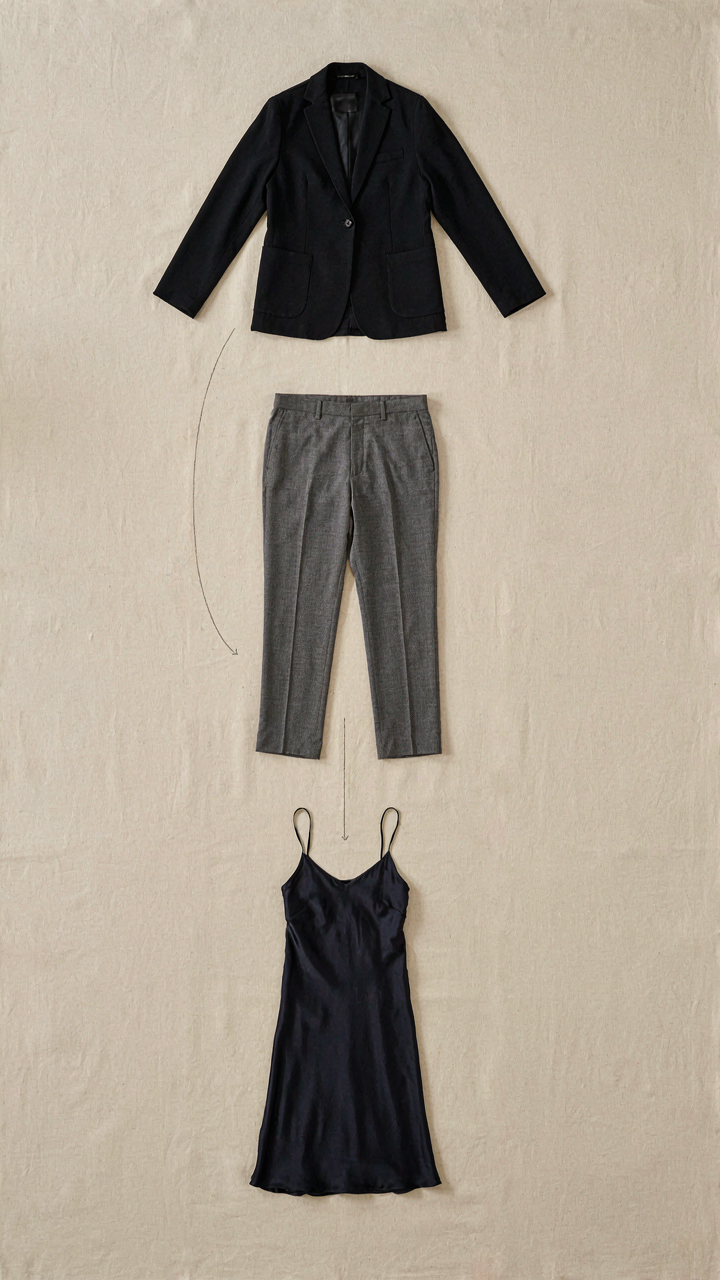
You want permission to own fewer clothes without feeling like you’re settling. That’s the real issue here. The difference between curation and limitation is intentionality. Curation means you picked each piece because it solves a specific problem. Limitation means you bought what was available and now pretend that constraint is a virtue. One scales your options. The other traps you.

A curated evening capsule gives you actual combinations that work. You know the black blazer pairs with the grey trousers and the navy dress. You’ve tested it. You own it. Limited choices just mean you grab the same outfit because nothing else functions. Economics calls this the “scarcity principle”—constraints force prioritization. Apply it here: each piece must earn its place by enabling at least three distinct looks.
The Real Versatility Mechanism
Stop thinking about versatility as something magical that happens when you buy neutral colors. Versatility is a function of silhouette compatibility, not palette uniformity. A well-cut white button-up works with evening trousers, under a dress, or solo because the proportions work across contexts. A shapeless oversized shirt doesn’t gain versatility just because it’s white. You’re confusing material with mechanism.
Build your evening capsule around silhouettes that stack and layer without bulk. A fitted base layer under a structured blazer creates one look. That same base layer under a slip dress creates another. The blazer works solo over trousers as a third option. Each piece must transition between contexts without requiring different sizes or refitting. When you buy, ask: does this change function based on what goes under or over it? If not, it’s a statement piece, not a capsule component.
The Core 5 Protocol: Building Your Indestructible Evening Capsule Wardrobe
The Non Negotiable Foundation
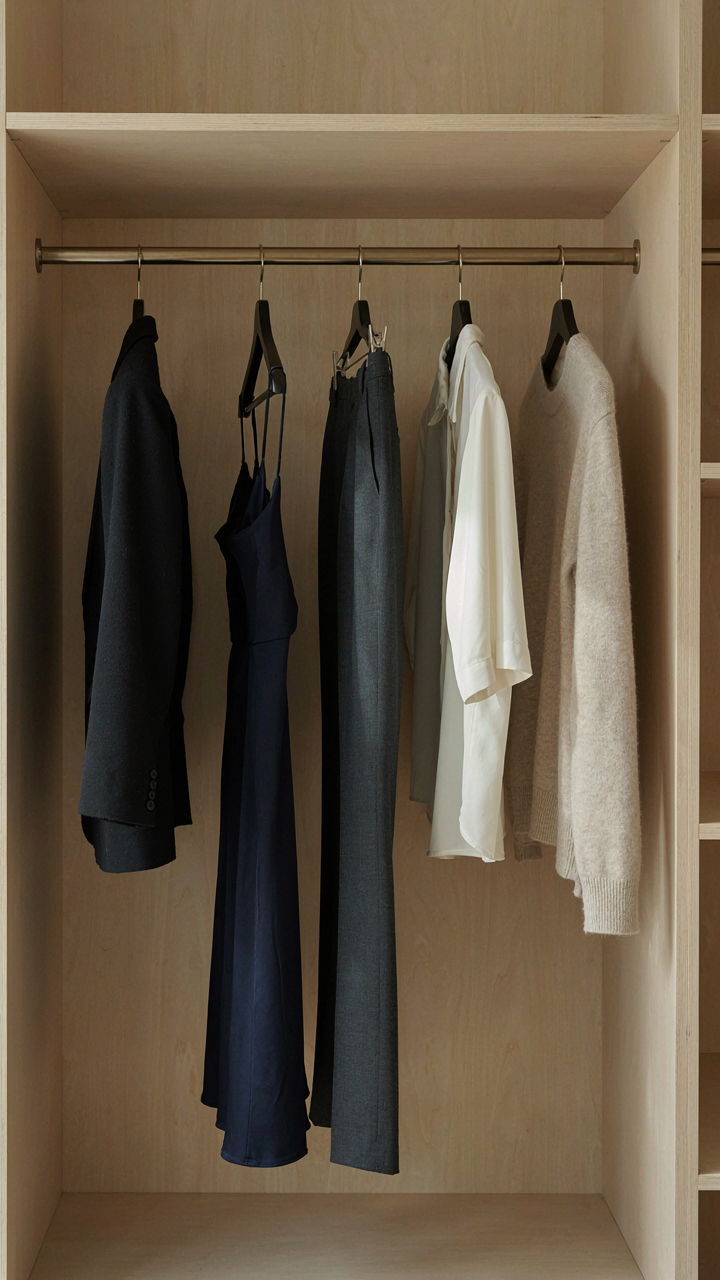
You want this section to work because you’re tired of standing in front of your closet with nothing to wear to something that matters. The mechanism is simple: you need pieces that combine without thinking. Most people own random evening clothes. What you need is a system where every item touches every other item. Start with the colors that don’t compete. Black, navy, and charcoal form the base layer. White and cream act as bridges. Everything else is optional.

The reason this works is constraint. You’re not building a wardrobe. You’re building a language where each piece speaks to the others without conflict. When you limit the color palette to five tones, every combination becomes viable. You stop wasting mental energy on “does this match.” You spend that energy on fit and occasion instead. A black blazer pairs with navy trousers. Navy trousers work with charcoal. Charcoal works with white. The loop closes. No dead pieces. No outfit anxiety.
Strategic Fabric Investment
Economics teaches the concept of sunk cost. In evening wear, the real sunk cost is wearing something that falls apart after three events. Buy pieces where the fabric handles repetition and cleaning. Natural fibers like merino wool, silk, and cotton blends outlast synthetics by years. They also regulate temperature in ways that matter when you’re sitting at dinner for three hours.
- Merino Wool Blazers: Resists wrinkles, breathes better than standard wool, holds shape through repeated wear and cleaning without pilling or losing structure.
- Silk Blend Trousers: Drapes with intention, doesn’t wrinkle on flights or car rides, maintains sheen after washings that destroy pure polyester alternatives.
- High Quality Cotton Dress Shirts: Pure cotton softens with age instead of degrading, maintains buttons longer, and breathes in warm venues without looking damp.
- Wool Blend Skirts: Sits properly at the waist, resists static and clinging, tolerates hand washing without shrinking or losing color saturation.
- Structured Leather Accessories: Real leather develops patina and grip over time, whereas faux leather cracks and peels within a season of regular use.
Buying one excellent piece beats three mediocre ones. You wear the excellent piece more because it functions. It holds up to the cleaning methods that don’t destroy it. It costs more upfront. It costs less per wear within eighteen months. This is where most people fail: they calculate initial price, not cumulative cost. Reverse that math.
Beyond Black: A Deeper Dive Into Color Psychology For Chic Dinner Outfit

The Restraint Principle
You want color to signal refinement without screaming for attention. The mechanism here is contrast scarcity: your brain perceives restraint as status because restraint requires confidence. Wear what most people won’t, which means wearing less color variation than they do. The dinner guest in a monochromatic palette reads as intentional. The one in five clashing hues reads as confused. Subtlety compounds. Small color choices compound into a perception of control.

Economy of color selection beats diversity every time. Pick one dominant hue, one secondary accent, and stop. This isn’t limitation. This is ammunition. When you remove the noise, the fit, fabric, and your presence do the talking. Restraint makes people listen harder.
Color As Emotional Calibration
Emotional psychology treats color as a signal that lands before language does. Your nervous system responds to certain wavelengths faster than your conscious mind processes them. Navy reads as trustworthy and contained. Burgundy reads as confident without aggression. Deep jewel tones like emerald or sapphire signal wealth without flaunting. These aren’t opinions. They’re measurable responses your audience’s brain executes automatically.
The dinner event demands color that works with your goal, not against it. If you’re meeting someone for the first time, burgundy or deep plum pulls conviction without demanding attention. If you’re attending a formal event where visibility matters, navy with a single metallic accent lets you occupy the room without dominating it. The color you choose is the emotional instruction you send before you speak.
The Adaptability Matrix: How Travel Wardrobe Principles Apply To Local Events

Build Systems That Gain From Disorder
You want a wardrobe that works everywhere because you’re afraid of being trapped by one context. That fear is correct. The real mechanism comes from antifragile system design: a framework from risk management that separates things that break under stress from things that improve because of it. Your evening capsule isn’t a fixed set of clothes. It’s a collection of pieces that perform better when conditions change, not worse.

Most people build wardrobes by occasion: one outfit for dinner, another for cocktails, another for dates. This fails immediately because occasions overlap, venues change last-minute, and you end up with dead inventory. Antifragile thinking flips this. You choose pieces that gain optionality under varied conditions. A silk shirt works at a client dinner and a casual date. A structured blazer works over dresses, over separates, in warm rooms and cold ones. The system strengthens as you use it across more situations, not fewer.
Pieces That Perform Across Temperature And Social Contexts
Components that thrive under varied conditions don’t follow traditional dressing rules. They ignore the false binary between formal and casual. Take a bias-cut slip dress in a dense fabric like silk charmeuse or a quality viscose blend. It reads formal next to a structured jacket. It reads contemporary paired with a linen overshirt unbuttoned. It moves well in overheated venues and layers under heavier pieces in cold restaurants. The fabric weight and cut create inherent adaptability.
The mechanism is material and proportion, not category. A well-fitted trouser in a four-way stretch fabric with a slight taper works in dim cocktail bars and bright dinner settings because the fabric has movement and doesn’t read as athletic or formal through accident. Neutral tones aren’t boring. They’re functional because they reflect light differently depending on layering and environment, and they pair with every accent piece you own. When you test each piece across five different event types before buying, you’re not building a wardrobe. You’re building infrastructure that performs under demand.
Accessories As Force Multipliers: Elevating Your Minimalist Wardrobe

The Math Of Jewelry And Bags
You want to look expensive without owning expensive things. Here’s what nobody says plainly: jewelry and bags operate like leverage in physics. One object magnifies the perceived value of everything touching it. A mediocre black dress becomes plausible next to a structured leather bag and real metal. The mechanism is contrast and specificity. Generic accessories flatten outfits. Intentional ones sharpen them. Your brain processes a five-piece outfit as either “cohesive” or “random,” and accessories tip that scale entirely.

A simple rule works: one statement piece per category, two neutral fallbacks. The statement piece demands real material. Leather. Metal. Stone. Not faux. The neutrals can be simpler because they’re invisible support. Your bag anchors silhouette and formality. Your jewelry signals whether you dressed deliberately or grabbed what was clean. The entire evening reads differently based on these two decisions alone.
Shoes That Reshape The Silhouette
Shoes don’t just complete an outfit. They change body proportion and posture, which changes how every piece above them sits. A flat sole reads casual and grounds the body. A heel lifts the leg line and compresses the torso, making the whole frame look leaner and longer. This is why wearing the wrong shoe weight for your dress creates visual discord even when the colors match perfectly. The shoe’s visual weight, height, and line must correspond to your dress’s visual density.
A two-shoe system handles nearly all evening events: a structured heel for formal dinners and date nights, a flat with presence for cocktail hours and casual events. Structured means a defined heel, clean lines, no soft edges. The flat needs material weight or a bold shape so it doesn’t look like leftover daywear. Test both against your entire capsule before committing. If either shoe makes you second-guess the dress itself, the match is weak. Wear the shoe combination that makes you stop thinking about your feet.
The “Womens Capsule Wardrobe” Myth: Your Body, Your Rules
One Size Never Fits Anyone
You want the formula because formulas feel safe—they promise you won’t waste money or look wrong. The mechanism is simple: generic capsule wardrobe advice treats bodies like they’re interchangeable units. They aren’t. A piece that works for someone with a short torso sabotages someone with a long one. The proportions change everything. What the internet calls a “versatile blazer” might pull at your shoulders or drown your frame. The real move isn’t following a list. It’s identifying what actually fits your specific geometry, then building around that constraint instead of against it.

Most capsule wardrobe guides skip this because it’s not scalable—you can’t sell the same advice to everyone. They give you color palettes and silhouettes as if your body matches the model’s. It doesn’t. Your proportions, your stance, your frame width—these determine what reads as elegant versus awkward on you. A navy blazer is not automatically your friend. Neither is a black dress. The evening pieces that work for you depend on where your proportions actually sit. Start there. Everything else follows.
Fit Precision Over Brand Loyalty
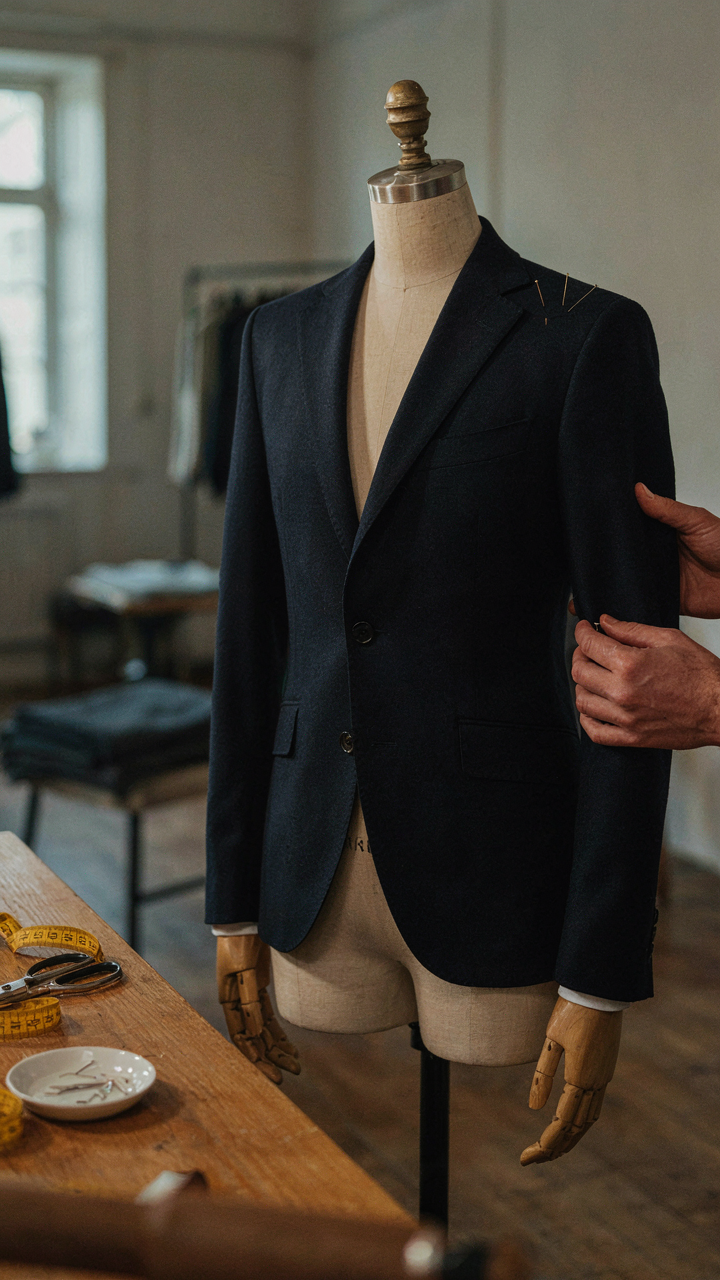
Fit is an engineering problem, not an aesthetic one. Tailoring isn’t a luxury—it’s a correction tool you apply after purchase. Most people buy a piece and wear it wrong because they never adjusted it to their body. The seams should sit where your joints are, not where the brand decided they should be. Sleeve length, shoulder seam placement, waistband height—these are measurable. Get them right and confidence isn’t a feeling you manufacture. It’s a direct result of the garment sitting correctly.
Work with a tailor before you commit to a piece as part of your evening rotation. Get them to show you what a proper fit looks like on your frame. This creates a standard you can replicate when shopping. You’ll stop chasing brands and start chasing fit. That shift saves money and time. The piece that fits you perfectly beats the expensive option that doesn’t every single time.
Maintenance Is Mastery: Preserving Your Stylish Capsule Wardrobe
The Real Cost Of Neglect
You’re afraid that quality pieces will fall apart and you’ll waste money. Here’s what actually happens: garments degrade through friction, moisture, and heat exposure. Proper maintenance isn’t optional upkeep—it’s the difference between a piece lasting three years or ten. Think of it like equipment maintenance in manufacturing. Downtime costs more than prevention. Your evening pieces are the same. A silk blouse left unwashed accumulates body oils that break down fibers from the inside out. A wool blazer stored incorrectly develops creases that become permanent deformations. The mechanism is simple: fibers weaken faster under stress and contamination. You either invest small amounts of effort regularly or lose the entire piece suddenly.

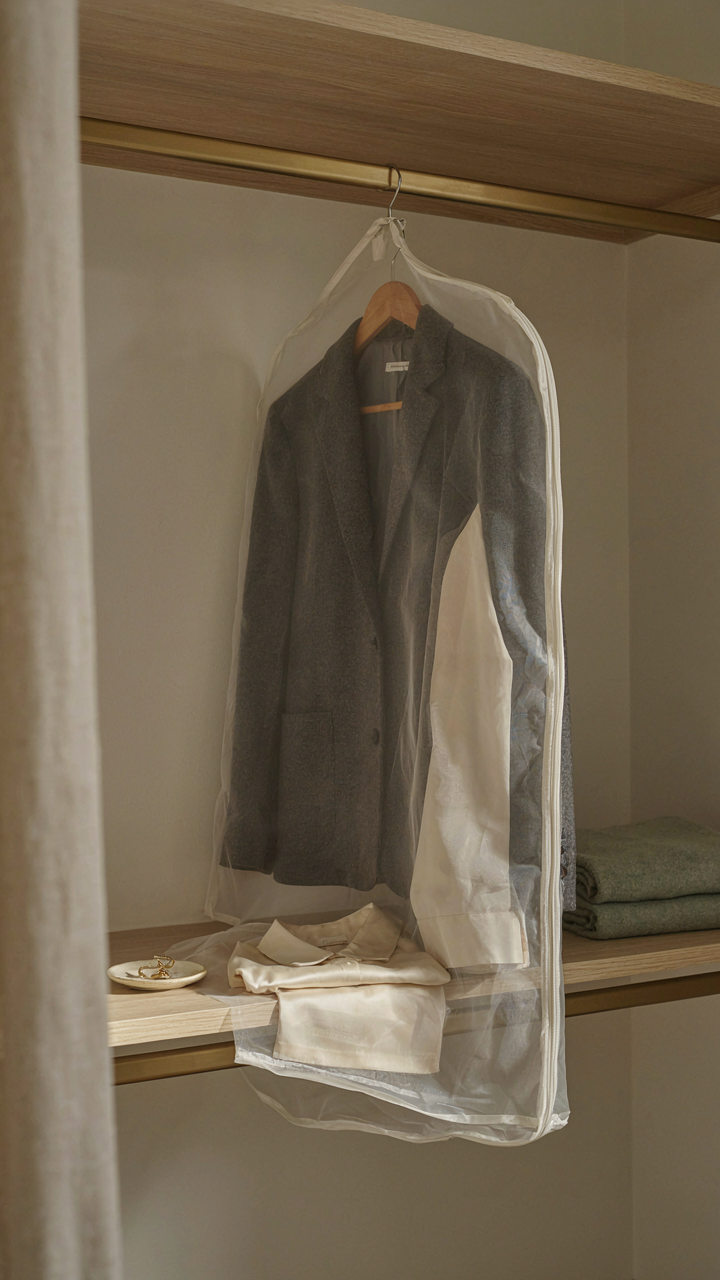
Store evening pieces in breathable garment bags, not plastic. Plastic traps moisture and accelerates oxidation. Hang blazers and dresses on padded hangers that won’t create shoulder dimples. Fold cashmere and knits flat in drawers or sealed containers with cedar blocks. Never hang knits. Gravity pulls stretched fibers downward and the piece warps permanently. Keep garments away from direct sunlight and heat sources. Rotate pieces between wears—don’t rewear the same blazer three nights running. This gives fibers time to recover their shape through natural relaxation.
The Economics Of One Good Piece
Investment in long-term appearance compounds like compound interest compounds money. A single silk charmeuse evening blouse costs more than fast fashion alternatives. But that blouse holds its shape, drape, and color for years while cheaper versions yellow and bag out within months. The real metric isn’t the price tag—it’s cost per wear. Wear that blouse twice monthly for five years and the per-wear cost drops to under two dollars. Compare that to a polyester knockoff worn twelve times before it degrades into unwearable status.
Start with proper washing and drying protocols. Dry cleaning works for structured pieces like blazers and tailored trousers—use it sparingly, maybe twice yearly. For delicate fabrics, hand wash in cool water with appropriate soap. Never wring or twist. Roll garments in a towel to remove water. Lay flat to dry or hang in a cool, dry space. Check garment care tags but understand they’re conservative guidelines. Merino wool and silk tolerate gentle hand washing better than manufacturers admit, but polyester blends often deteriorate faster under repeated dry cleaning chemicals. The goal is removing soil without accelerating fiber breakdown.
The Unspoken Language Of Fabric: Textile Choices For A Sophisticated Capsule Wardrobe Women
Natural Fibers Versus The Synthetic Trap
You care about this because you sense that fabric choice signals something about you to others, and you’re right. Here’s what actually happens: natural fibers breathe and move with your body, creating micro-adjustments in drape that read as intentional and controlled. Synthetic fabrics sit static on your frame. Your nervous system detects this difference instantly, even if your conscious mind doesn’t name it. This is why a silk charmeuse slip dress reads expensive and a polyester one reads costume.

The mechanism is physics. Natural fibers like silk, linen, and wool have irregular molecular structures that scatter light and absorb moisture. This creates visual depth and responsive movement. Your evening capsule wardrobe needs this because events demand presence, not visibility. Synthetics maximize durability and wrinkle resistance, which matters for travel and storage, but they never create the subtle light-play that makes fabric look alive. Choose natural fiber bases for your core pieces and accept the maintenance cost as part of the investment.
Drape And Weight Shape Perception
The common advice is that fabric choice is about comfort. That’s incomplete. Drape is architecture. A heavier silk charmeuse or wool crepe holds structure without stiffness, creating an optical effect that lengthens your silhouette and defines your body without clinging. Light fabrics cling. Heavy fabrics command space. Your evening capsule needs pieces that work independently because you’re building combinations, not outfits.
Weight determines how fabric interacts with movement and stillness. A four-ounce silk skims your body in motion but collapses when sitting. A ten-ounce wool crepe maintains volume seated and standing. For evening events where you transition between standing and seated positions, select pieces with enough weight to hold intention through the entire event. This single choice eliminates constant micro-adjustments and prevents the visual collapse that reads as uncertainty.
Beyond The Event: Integrating Your Evening Capsule Wardrobe Into Daily Life
The Formality Gradient, Not The Binary
You want permission to wear expensive clothes without feeling overdressed at the coffee shop. Here’s the mechanism: formality isn’t binary, it’s a gradient. Most people think “evening wear” stays locked in the evening because they misread the social signal. A silk blouse works at dinner and works at the office. A tailored blazer functions at a gala and functions at lunch. The constraint isn’t the garment. It’s how you layer and accessorize it.
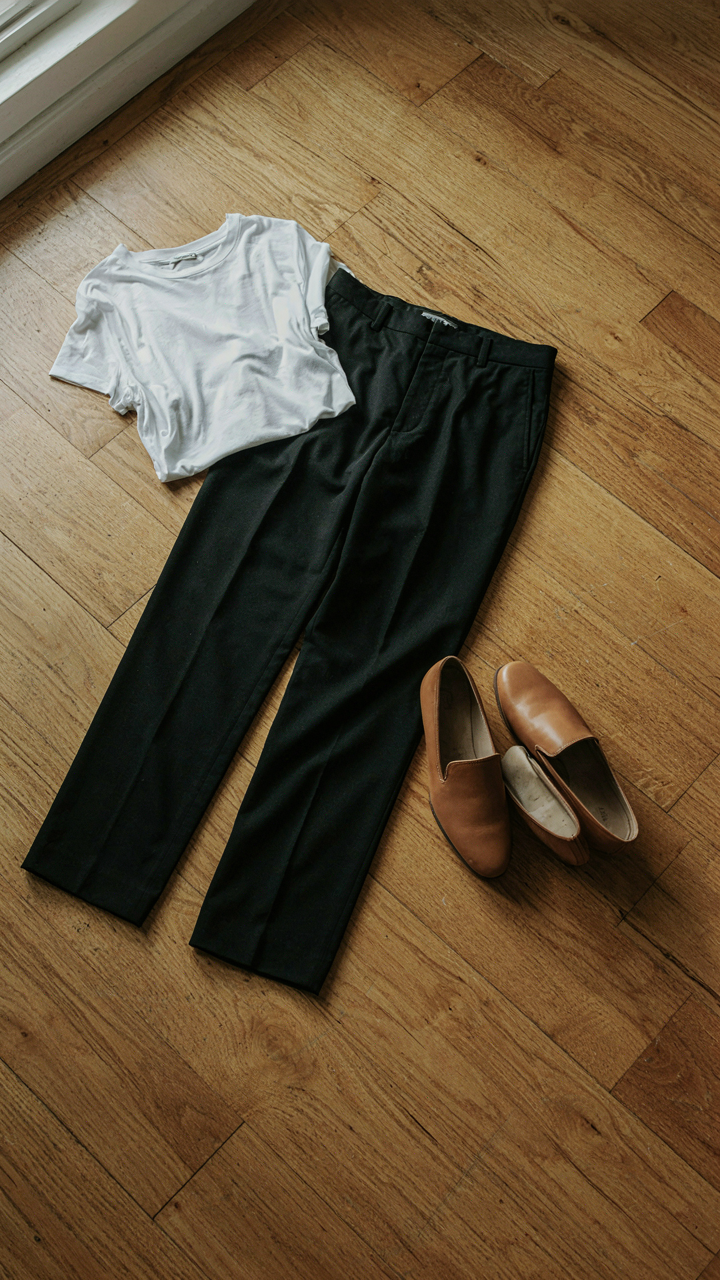
Traditional menswear operates on this principle openly. A tuxedo jacket becomes a sport coat when you remove the bow tie and swap the trousers. Women’s wardrobes pretend this flexibility doesn’t exist, which wastes half the utility of what you own. Strip the evening context from your pieces and rebuild them for daylight. A satin pant becomes professional paired with a simple tee and loafers. The garment doesn’t change. The combination does.
ROI On Pieces You Actually Wear
Everyone says buy pieces you love, which is useless advice masquerading as wisdom. What matters is frequency divided by cost. Take a structured evening blazer in black or navy. You wear it to three events per year, but you also wear it to client meetings, over dresses on casual Fridays, and layered under weekend outfits. That’s fifteen to twenty wears annually. A two-hundred-dollar blazer costs ten dollars per wear at that rate. Compare that to a hundred-dollar trend piece you touch four times.
The real leverage lives in neutral evening basics that read as regular clothes in daylight. Silk charmeuse trousers transition from formal dinner to business casual with a white button-up. A simple evening dress becomes a weekend outfit with a denim jacket and flats. Metallic flats that work with evening wear also work with jeans. The integration happens when you deliberately choose pieces that don’t scream occasion. Your evening capsule wardrobe shouldn’t feel separate from your life. It should be your life with the volume turned up.
Your Wardrobe Isn’t Lacking Clothes; It’s Lacking A Cohesive Personal Aesthetic

Most people own enough to dress well. They just own it all wrong. An evening capsule wardrobe forces you to make a choice: who are you actually trying to be? Stop buying pieces. Start buying a point of view. Pull three items from your closet right now that genuinely excite you. That’s your aesthetic foundation. Build everything around those three pieces, not around what you think you should own. Your closet works when every piece says the same thing about you.