


Satin Jumpsuit: The Illusion Of Effortless Elegance
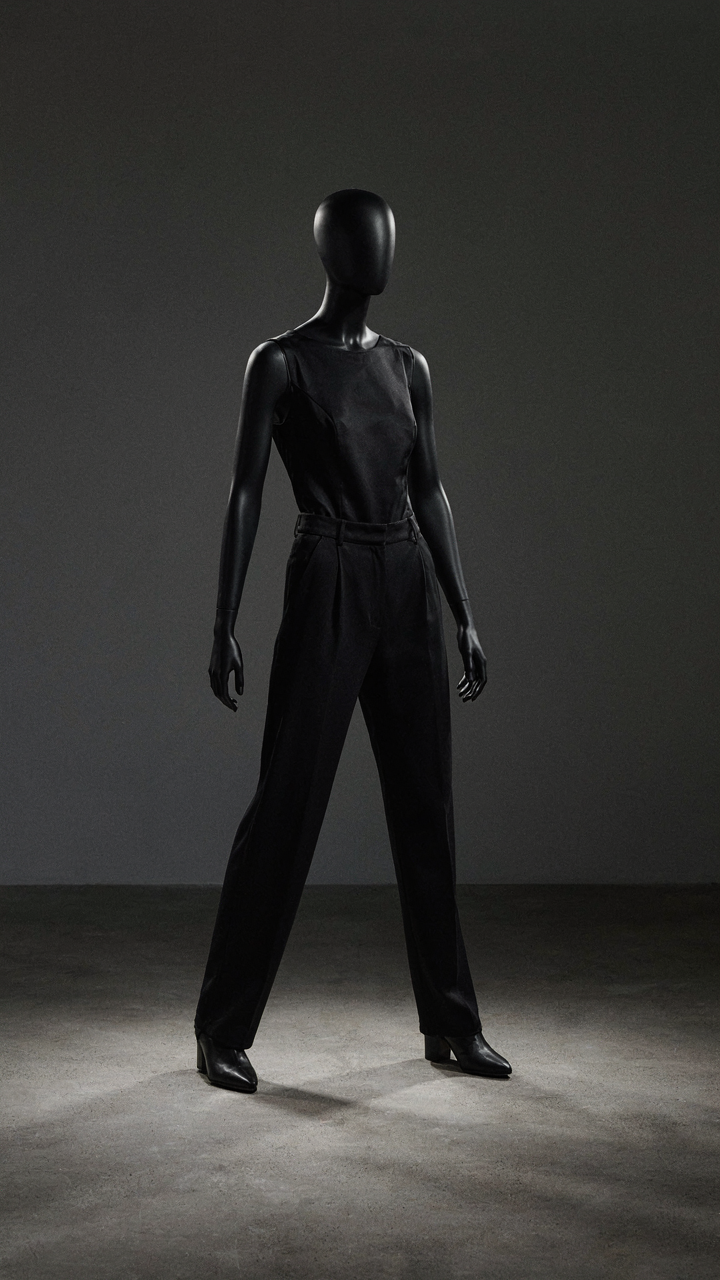
The Trap Of Borrowed Confidence
You want people to assume you didn’t try. That’s the real motive behind chasing “effortless elegance”—it signals you’re above the game while still winning it. The mechanism is borrowed from theater: a satin jumpsuit evening look works because it compresses multiple outfit decisions into one garment, eliminating the cognitive load that usually signals effort. One piece replaces the equation of top, bottom, and coordination. People read simplicity as sophistication because they don’t see the labor underneath.
Most advice tells you to “just throw it on.” That’s incomplete. A satin jumpsuit demands specificity in cut, fit, and proportion before it reads as intentional rather than costume. The fabric’s reflective quality amplifies every sizing mistake. Loose through the hip when it should taper reads as negligence. The garment offers no room for approximation, which is why most people fail wearing it.
Where The Work Actually Hides
Effortless style operates on the same principle as magic: the audience only sees the final reveal, not the setup. With a satin jumpsuit evening look, the real labor occurs before you dress. You’re selecting a cut that matches your actual body proportions, not an aspirational version. You’re testing the neckline’s depth against your chest and shoulder width. You’re confirming the inseam length lands precisely at your shoe line, not a half-inch above it where it reads sloppy.
The fit work determines whether satin reads as luxury or costume rental. A jumpsuit in the wrong cut makes you look like you’re attending a themed party. The correct cut makes it look like you own your body rather than fighting it. Once fit is locked, styling becomes real. You add one deliberate accessory—structured clutch, thin chain, pointed heel—that anchors the look to intentionality. Without this anchoring piece, even perfect fit collapses into “wearing a pajama situation to dinner.”
Beyond Dress Codes: Decoding The Real Rules Of Guest Attire

Formal Jumpsuit: Superficial Versus Substantive Appropriateness
You’re worried the jumpsuit breaks the invisible rules and marks you as someone who doesn’t belong. Here’s the actual mechanism: dress codes operate on two levels, and most people confuse them. The written rules (black tie, cocktail attire) are signals. The real rule is whether you demonstrate competence in reading the room’s actual formality level. A satin jumpsuit at a formal dinner works because it shows understanding of material hierarchy—satin is evening-appropriate fabric regardless of silhouette. The cut, fit, and grooming communicate whether you took the event seriously. A wrinkled cotton jumpsuit signals carelessness. A tailored satin one signals deliberation.

What separates appropriate from inappropriate isn’t whether you wear a dress or trousers. It’s whether your choices respect the occasion’s energy. Satin jumpsuit evening wear reads formal when the fabric weight, seam construction, and drape match what the venue expects. Pair it with structured footwear, minimal jewelry, and a pressed appearance. The venue staff and other guests evaluate coherence, not conformity to outdated gender-based costume rules. Execute the details correctly, and nobody questions the silhouette.
Ignoring Explicit Rules For Implicit Social Cues
Most advice says follow the invitation’s stated dress code exactly. That’s incomplete. The real read comes from what people don’t write down—venue type, guest list demographics, the host’s known preferences, and timing. A seven-PM formal dinner at a country club requires different energy than a nine-PM gallery opening labeled “formal.” Both have rules, but one expects traditional evening wear while the other rewards sophistication that bends conventions. A satin jumpsuit excels at the second scenario because it communicates formal awareness while signaling you understand formal doesn’t mean costume.
Check three things before finalizing your choice. First, research the venue’s past events through photos and reviews to see what attendees actually wore. Second, contact the host or organizer with a specific question—not asking permission, but confirming your read on the event’s formality. Third, examine the guest list if available to gauge whether this crowd values convention or values distinction. When these implicit signals align with formal evening wear expectations, a well-constructed satin jumpsuit becomes the move that says you’re paying attention without performing obedience.
The Satin Cape Strategy: Amplifying Impact, Minimizing Commitment

When A Layer Becomes The Outfit
You want the impact without the risk. That’s the real reason you’re reading this. A satin jumpsuit evening look lives or dies on what you layer over it, and most advice treats the cape or shawl as decoration. Wrong. Borrow from architecture: a cape functions as structural amplification. It doesn’t hide the jumpsuit. It makes the jumpsuit the foundation of something larger. The cape redirects attention, adds volume, and lets you control formality level without changing your base piece.

A satin jumpsuit alone is a commitment. Add a structured satin cape, and suddenly you’ve transformed the entire visual weight and occasion flexibility. The mechanism works because satin capes catch light differently than the jumpsuit fabric, creating depth and dimension. You’re not adding more clothes. You’re multiplying perceived effort and intentionality with one additional piece that stores flat and travels light.
Why One Piece Doesn’t Solve The Problem
Everyone sells you the “one perfect jumpsuit” fantasy. It’s incomplete thinking. A single satin jumpsuit evening garment can’t adapt to different lighting, body compositions, venue temperatures, or social contexts without external modification. The real work happens in pairing strategy, not in finding some mythical universal piece.
Satin jumpsuits need editing because the fabric demands contrast to avoid looking flat or costume-like. A structured belt, a layered cape, or a sheer overlay gives the eye something to track. Without intentional pairing, you get visibility without presence. The protocol is simple: identify what the jumpsuit lacks (structure, layering opportunity, coverage option), then select one strategic addition that addresses that gap. This approach eliminates guesswork and keeps your satin jumpsuit evening options genuinely useful across multiple scenarios.
Sleeveless Jumpsuits: The Climate And Context Algorithm
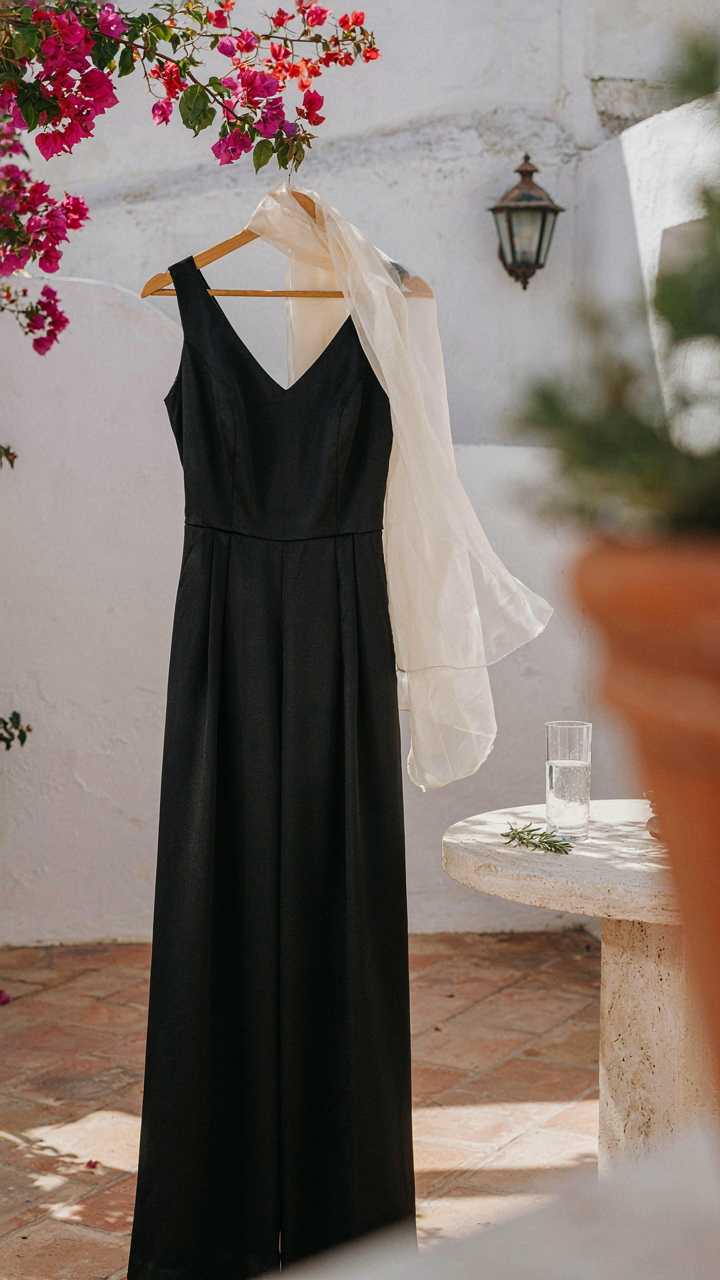
When Temperature Decides Your Silhouette
You want the sleeveless jumpsuit to work because removing sleeves signals confidence and skin, and you’re terrified it won’t translate to your specific venue. Here’s the mechanism: a sleeveless satin jumpsuit functions as a thermal regulator within a defined social space. Think of it like load balancing in systems engineering—you’re distributing body heat exposure based on venue climate and duration. Indoor heated restaurants tolerate bare shoulders. Outdoor evening events below 65 degrees Fahrenheit create a mismatch between garment and environment that reads as either bold or careless depending on observer charity.

The real variable isn’t your comfort tolerance—it’s the venue’s climate control intensity and event length. A two-hour seated dinner indoors operates differently than a four-hour standing cocktail party. Satin’s thermal properties work against you in cold settings because the fabric conducts heat away from skin rather than trapping it. Before committing to sleeveless, confirm the venue maintains 72+ degrees and verify whether you’ll transition between climate zones during the event. If the answer is no on either count, the sleeveless silhouette becomes a liability masquerading as a choice.
Layering Strategy Without Compromise
The standard advice here is wrong: throw a blazer over your sleeveless jumpsuit and call it solved. That approach neuters the entire visual point of wearing a sleeveless cut in the first place. Predictive modeling for appropriate layering means working backward from the jumpsuit’s neckline and shoulder design to identify layering that enhances rather than obscures the piece. A structured jacket destroys the fluid lines of satin. Sheer overlays, lightweight wraps, and cropped cardigans preserve the garment’s intentional design while adding thermal coverage.
Your actual protocol: identify the jumpsuit’s strongest visual feature first—whether that’s the neckline, back cutout, or armhole depth—then select a layer that exposes that feature. A sleeveless satin jumpsuit with a dramatic low back requires a layer that covers shoulders and arms but leaves the back open. Silk scarves, tulle shawls, or mesh overlays accomplish this without adding bulk. When layering is necessary, the layer itself becomes secondary visual architecture rather than an afterthought cover-up.
Wedding Jumpsuit: The Antidote To Generic Wedding Guest Outfit

The Consensus Trap
You’re worried people will judge you for standing out, and that fear keeps you wearing the same navy dress or rental tux everyone else wears. The mechanism is simple: safe choices feel safe because they’re invisible. You blend in. Nobody remembers you. The satin jumpsuit evening alternative works because it reverses this equation entirely. Satin fabric catches light in a way traditional suiting doesn’t. The cut demands attention. You stop being furniture at the event.

The real cost of generic wedding attire isn’t the outfit price. It’s the wasted opportunity to signal anything about yourself. A guest list is a room full of people making snap judgments about who you are based on visual information. A satin jumpsuit communicated intentionality, style literacy, and comfort with visibility. These read as confidence. Confidence reads as status. The garment does the work before you speak.
Strategic Visibility
Borrowed from physics: a satin jumpsuit evening look operates on the principle of contrast. In a field of matte fabrics and predictable silhouettes, reflective surfaces and unconventional cuts increase perceived presence without increasing volume. You don’t need to be louder. You need to be different in a way that registers.
Non-conformity at celebrations works because weddings and formal parties are actually rigid costume events with invisible rule books. Most guests follow those rules automatically and resent the fact that they do. A well-executed satin jumpsuit signals you read the room and chose to operate on your own terms anyway. That distinction matters. The strategy isn’t rebellion for its own sake. It’s calculated visibility within an acceptable frame. A satin jumpsuit reads as fashion-forward at a wedding, not disrespectful. Execute the choice by pairing it with formal grooming, appropriate accessories, and venue awareness. Attend the wedding as yourself, not as a version of what you think a guest should be.
The “Vestidos De Fiesta” Deception: Authenticity Over Trend
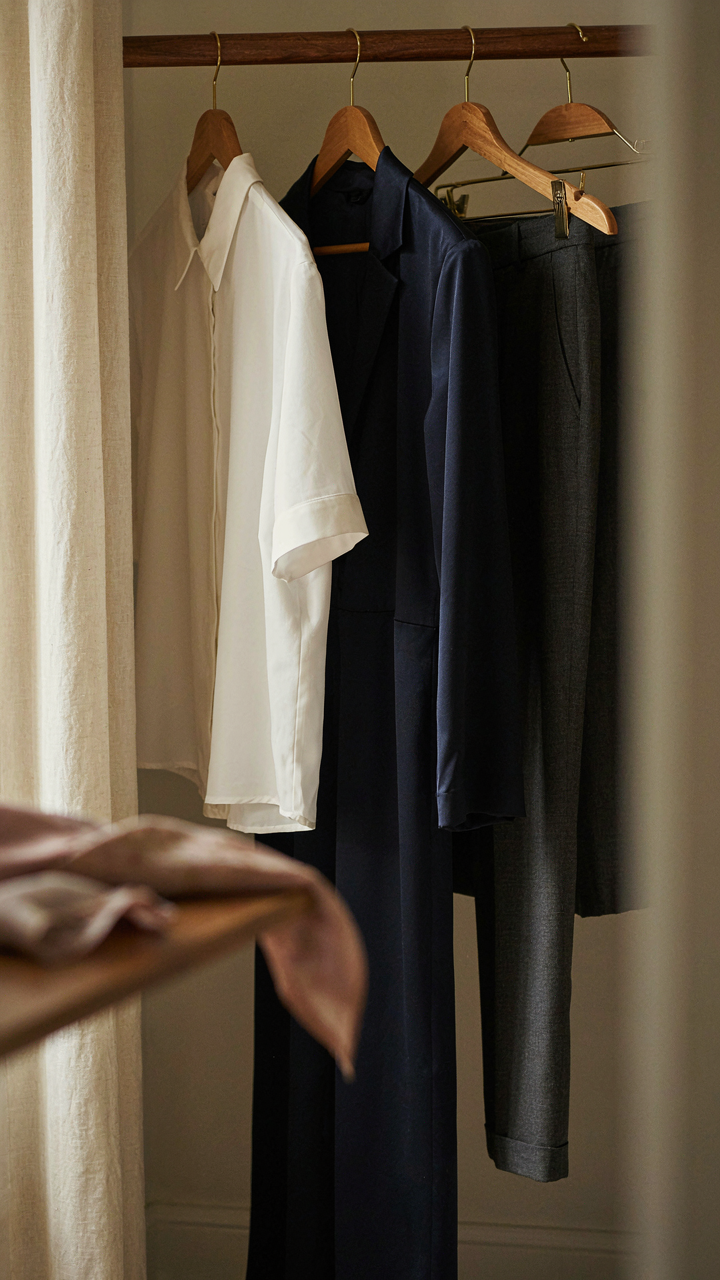
Why Trends Vanish But Your Closet Remains
You want to feel current. That’s the real thing driving this section. The mechanism is this: trends in satin jumpsuit evening wear follow the same adoption curve as any other fashion signal. Early adopters wear them. The mass market floods in. Saturation kills the signal. By the time everyone recognizes a trend, it’s already dead. A satin jumpsuit in this season’s hot color becomes evidence of last season’s thinking within months. You’ll own the garment long after it stops working.

The common advice is to “stay on top of trends” or “mix trends with classics.” That’s incomplete. The real play is recognizing that satin jumpsuit evening looks derive their power from context, not from chasing what fashion media highlights this quarter. A well-cut satin jumpsuit in a neutral tone worn with intention reads as deliberate. The same piece in trend colors and cuts reads as reactive. One ages. One doesn’t.
The Mechanism Of Personal Uniform Building
Your style is inventory you keep returning to, not a rotation of purchases based on external noise. Build around what works on your body, in your life, at your actual events. A satin jumpsuit evening look becomes part of your personal uniform when you’ve tested it, worn it repeatedly, and refined how you accessorize and wear it. This requires resistance to seasonal marketing cycles. It requires wearing something past the point where it feels novel.
The protocol: choose one satin jumpsuit in a color you wear in other contexts. Wear it to three separate events before updating it. Document what works. Refine shoes, jewelry, and layering based on real feedback, not editorial spreads. When you’ve done this once, you stop treating every dinner as a reason to buy something new. You’ve built a system.
The “Event Horizon” Protocol: Preparing For Unseen Variables

What Actually Goes Wrong At Events
You’re worried something will break or fit wrong, and you’ll look unprepared in front of people who matter. That’s the real fear underneath this section. The mechanism is simple: satin jumpsuits fail in three predictable ways—seam stress under movement, static cling destroying the drape, and temperature shifts making fabric behave differently than it did at home. Borrowing from astrophysics, an event horizon is the point past which you cannot control outcomes. Your jumpsuit reaches that horizon the moment you step into the venue. Everything before that moment is preparation.

The gap between what you practice at home and what happens under live conditions is massive. You wear the jumpsuit once, move around your bedroom, check the mirror. The event involves three hours of sitting, standing, dancing, temperature swings, and humidity you didn’t account for. Most people ignore this entirely and hope. The real move is to stress-test the jumpsuit under conditions that mimic the actual event environment, not just wear it casually and assume it will perform.
What You Pack Before You Go
Contingency accessories aren’t insurance items you throw in a bag and forget. They’re pre-calculated solutions for the specific failure modes your jumpsuit is prone to. Satin responds to friction, heat, and moisture in predictable ways. You compute what could go wrong, then you bring the exact tool that fixes it without making you look scrambled or out of control.
Keep static spray in your clutch or pocket. Satin attracts static charge, which collapses the fabric against your body and kills the silhouette. A two-second spray before photos or when you notice cling restores the shape. Bring a small sewing kit with thread matching your jumpsuit color—if a seam starts to separate, you address it in a bathroom stall in five minutes rather than spending the evening managing a widening tear. Pack a silk scarf or thin shawl. Venues vary wildly in temperature. A scarf gives you coverage control without changing your outfit. Keep blotting papers for skin shine, which photographs as jumpsuit shine under flash. One small adhesive fabric tape roll fixes small pulls in satin before they spread. These aren’t backup plans. They’re the actual plan.
Accessorizing A Satin Jumpsuit: The Minimalist’s Force Multiplier
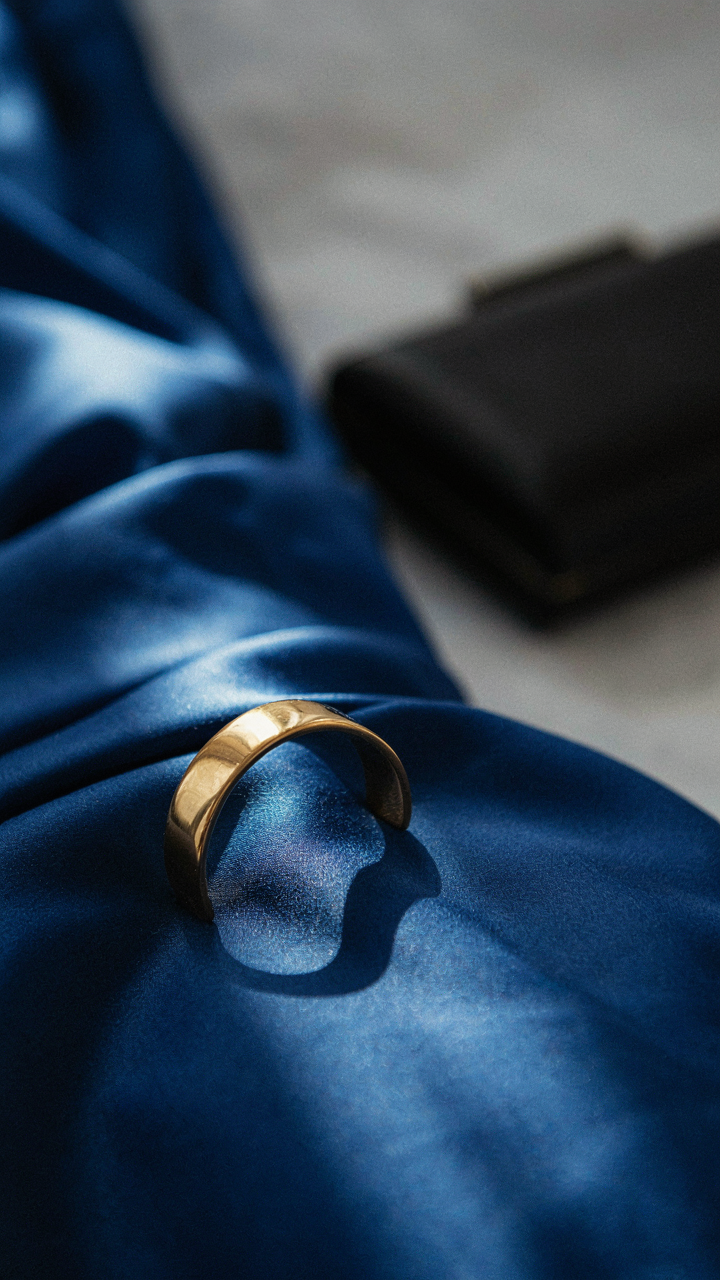
Strategic Additions That Shift The Entire Look
You’re worried that accessories will either make you look overdone or disappear entirely. The real mechanism is leverage: one intentional piece redirects how someone reads the entire outfit because satin already commands attention. You’re not adding decoration. You’re placing a fulcrum.

Satin demands restraint because the fabric itself reflects light and creates visual weight. A single structured bag, one statement earring, or a sharp belt becomes the focal point that justifies the garment’s boldness. The jumpsuit works as the foundation. Accessories become the argument.
- Gold or silver cuff bracelet: Metallic reflection pairs with satin’s sheen without competing. Wear one on the wrist closest to your torso for asymmetrical balance.
- Structured clutch or frame bag: Hard-edged silhouettes cut through the fluid drape of fabric and create visual contrast that reads as intentional.
- Single layered pendant: A thin chain with one geometric or minimalist stone sits at the collarbone without crowding the neckline satin creates.
- Tailored blazer or cropped jacket: A fitted layer adds dimension without softening the jumpsuit’s architectural lines or burying the fabric’s texture.
- Pointed-toe heels in matching or neutral tone: Satin jumpsuits photograph well when shoes match the color story, creating one cohesive vertical line.
Each piece works because it acknowledges what satin already does: command space. You choose accessories that amplify, not compete. The jumpsuit is the statement. Everything else either reinforces it or fails.
When Less Becomes More Visible
Most advice tells you to “let the jumpsuit shine” without explaining what that actually means operationally. It means you remove visual noise so the brain processes one idea quickly. A busy accessory spread exhausts attention before it settles on you.
This isn’t about being minimalist for aesthetic reasons. It’s about information hierarchy. When someone sees you, their eyes land on color, silhouette, then detail. If accessories fracture that sequence, they’ve stolen the jumpsuit’s power. A single gold bracelet creates a visual anchor. Three mismatched pieces create confusion. The mechanism is ruthless: simpler presentations process faster in human perception, which reads as more confident and intentional.
Color Theory For Evening Looks: Beyond Basic Black
The Black Trap
You wear black to disappear into competence. The mechanism is simpler than you think: black reads as safe, which means it reads as forgettable. Everyone defaults to black for formal events because it’s the path of least resistance, the color that promises you won’t make a mistake. That promise is exactly what kills your presence in a room. A satin jumpsuit in black blends into the visual noise of every other formal attendee. The fabric’s luminosity gets neutralized by the color’s void. You paid for satin’s reflective properties and then chose a color that demands darkness.

Black also signals deference. In professional and social hierarchies, it’s the uniform of service staff and the anxious. Wearing it to an evening event suggests you’re there to observe, not participate. The real cost isn’t that you look bad. It’s that you hand control of the room’s attention to whoever chose differently. Satin demands a color that respects the material’s function: to catch light and hold it.
Strategic Depth Over Trend
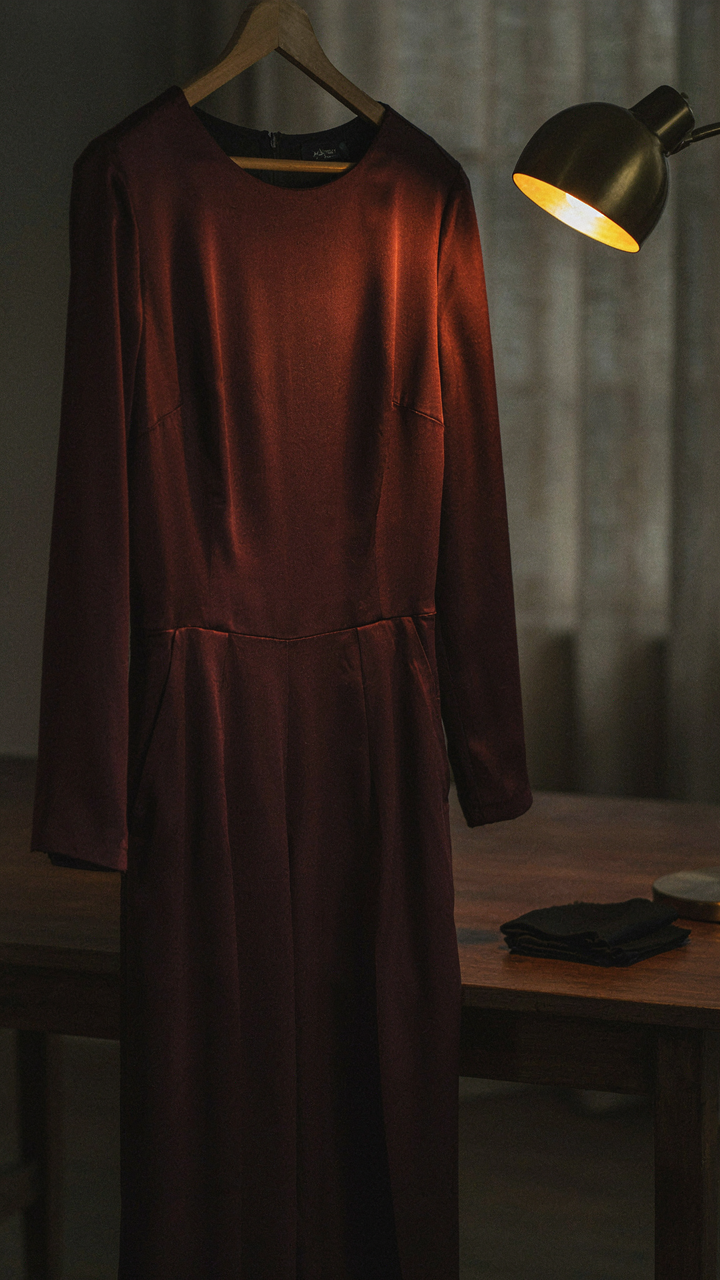
Color theory borrows from architecture: consider color’s value contrast, saturation depth, and spatial receding. Deep jewel tones in a satin jumpsuit don’t recede from the viewer. They advance. Emerald, sapphire, and burgundy read as intentional because saturation creates visual weight. These colors have historical precedent in evening wear, which means they carry gravitas without screaming for attention. They’re not trendy. They’re established.
The mechanism: saturated cool tones on satin create perceived confidence because the combination demands presence without apology. A burgundy satin jumpsuit commands the room differently than black because it forces the wearer to own the choice. You can’t hide behind it. Paired with minimal jewelry and neutral shoes, deep color lets the garment’s cut and fabric do their work. Start with swatches held under actual evening lighting in the spaces you’ll occupy, not in daylight or fluorescent retail environments. The color transforms under different light conditions, and that transformation is part of why it works.
The Post Event Debrief: Learning From Your Satin Jumpsuit Successes
What Actually Happened That Night
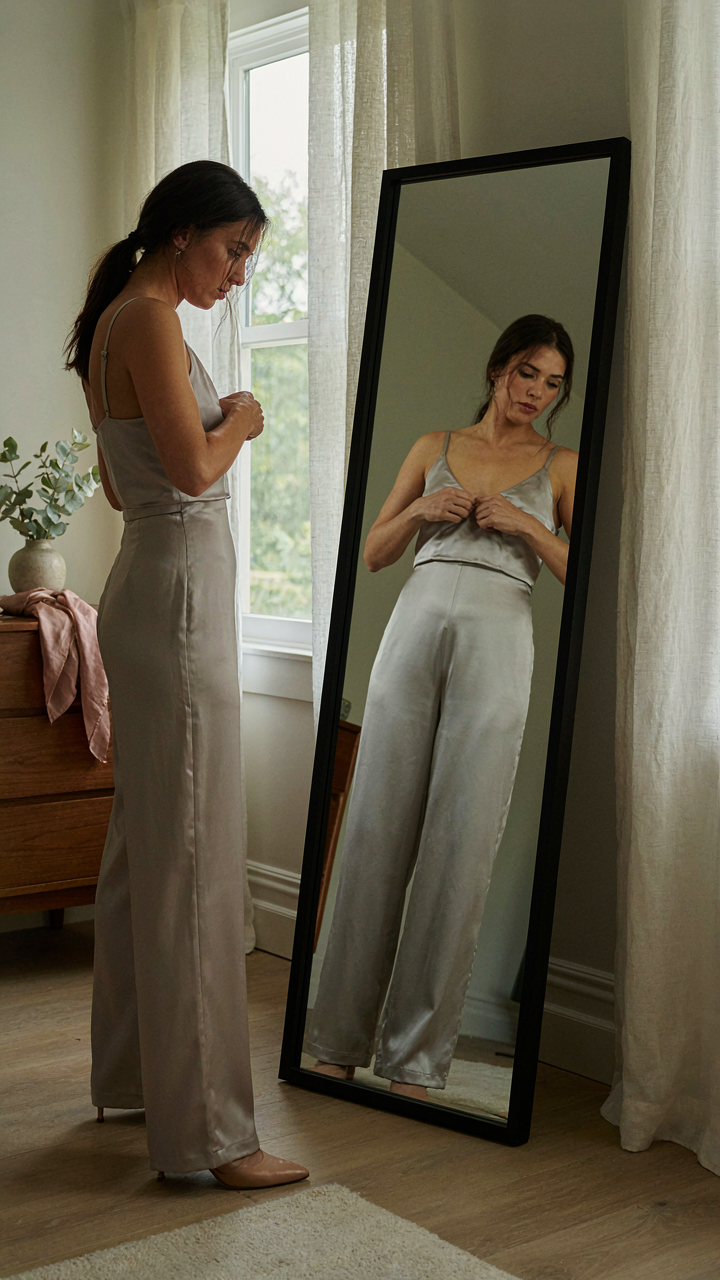
You want to know if people noticed you. That’s the real question buried under talk of “learning” and “improvement.” The mechanism is simple: feedback loops only work if you extract the right signal from noise. Most people misread social interactions entirely because they conflate politeness with genuine response.
Satin catches light and movement differently than other fabrics. When you wear it, you’re more visible. The question isn’t whether people saw you. The question is what specific behavior or comment tells you whether the garment served your actual purpose at that event. Write down three concrete moments: a conversation that shifted, a photo you appeared in, a compliment about fit versus fabric. These are data points, not feelings.
Calibrating For Next Time
Everyone says “wear what makes you feel confident,” which is useless advice. Confidence is an output, not an input. The real lever is specificity. A satin jumpsuit behaves differently at a cocktail party than a seated dinner. Satin wrinkles under pressure. It shows movement. It demands posture adjustments you don’t make in structured blazers.
Review the setting before you repurpose the jumpsuit. Note how much you sat, stood, or moved. Check photos for fabric creasing or bunching that telegraphs discomfort. If you wore it again under identical conditions, would the same issues appear? If yes, that’s your constraint. Either alter the jumpsuit’s cut, choose a different event type, or accept the trade-off between visual impact and physical freedom. Pick one consciously next time.
The Real Limitation Isn’t The Jumpsuit, It’s Your Conformity

You already know what works. A satin jumpsuit evening look commands a room because it refuses to blend in. The real question is whether you’ll actually wear it. Most people buy bold pieces and wear them once to prove they’re interesting, then retreat to black pants. The mechanism is simple: stop asking if something looks good and start asking if it feels like you. Buy the jumpsuit today. Wear it this week to somewhere ordinary, not some special occasion that justifies it. Boring people play it safe. Interesting people just get dressed.



