

The Unwritten Bar Mitzvah Social Contract: Beyond The Dress Code
Service And Party Operate Under Different Rules
You’re worried about standing out for the wrong reason. That fear is valid because the service and party actually function as separate dress codes disguised as one event. The service is religious theater. The party is social performance. They demand different uniforms.
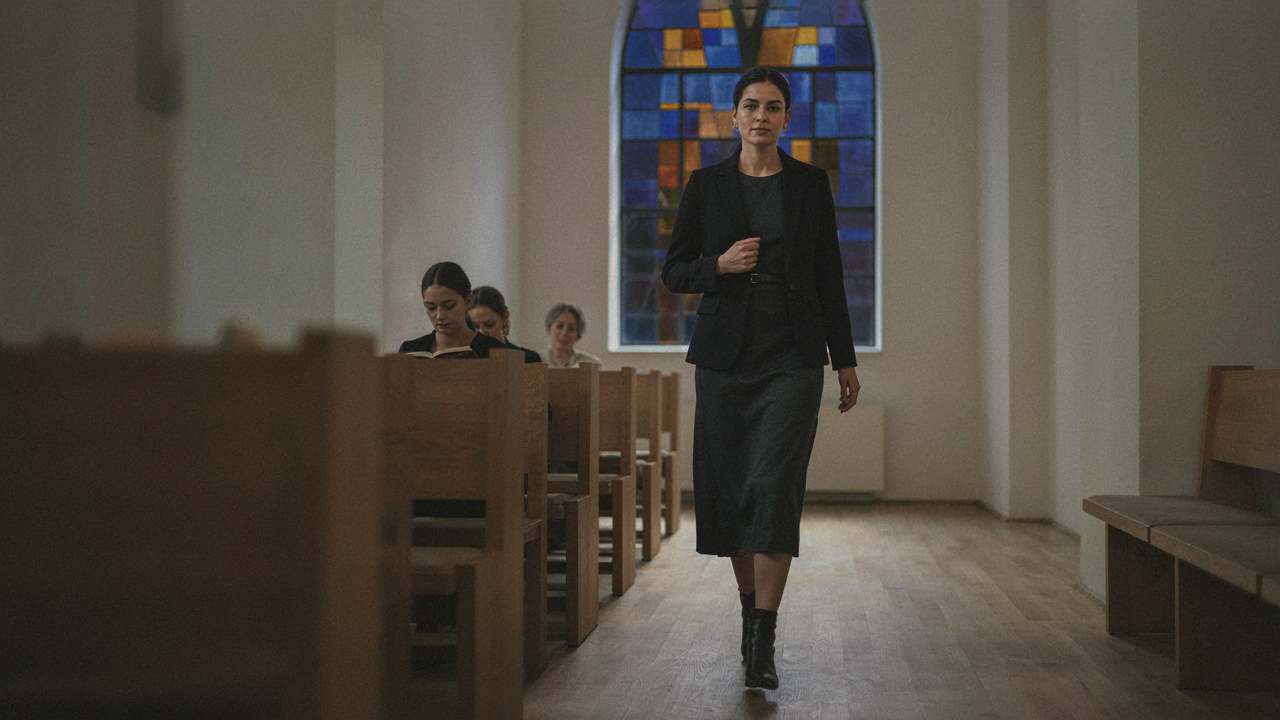
The service has real constraints. Synagogues enforce actual rules: shoulders covered, knees covered, no transparent fabrics, hair off the neck if Orthodox. These aren’t suggestions. The party has invisible constraints instead. You can wear more, but you cannot wear wrong. The gap between these two moments is where most women make their mistake, treating the party like an extension of the service rather than a code switch.
The Fatal Middle Ground Between Restraint And Statement
Everyone says dress modestly at a bar mitzvah. That advice is incomplete and it costs you. Modest doesn’t mean invisible. The real trap is the outfit that looks like it tried to be both modest and noteworthy and landed in the mediocre zone instead. This is the peacock pigeon territory: too decorated for the service, too buttoned-up for the party.
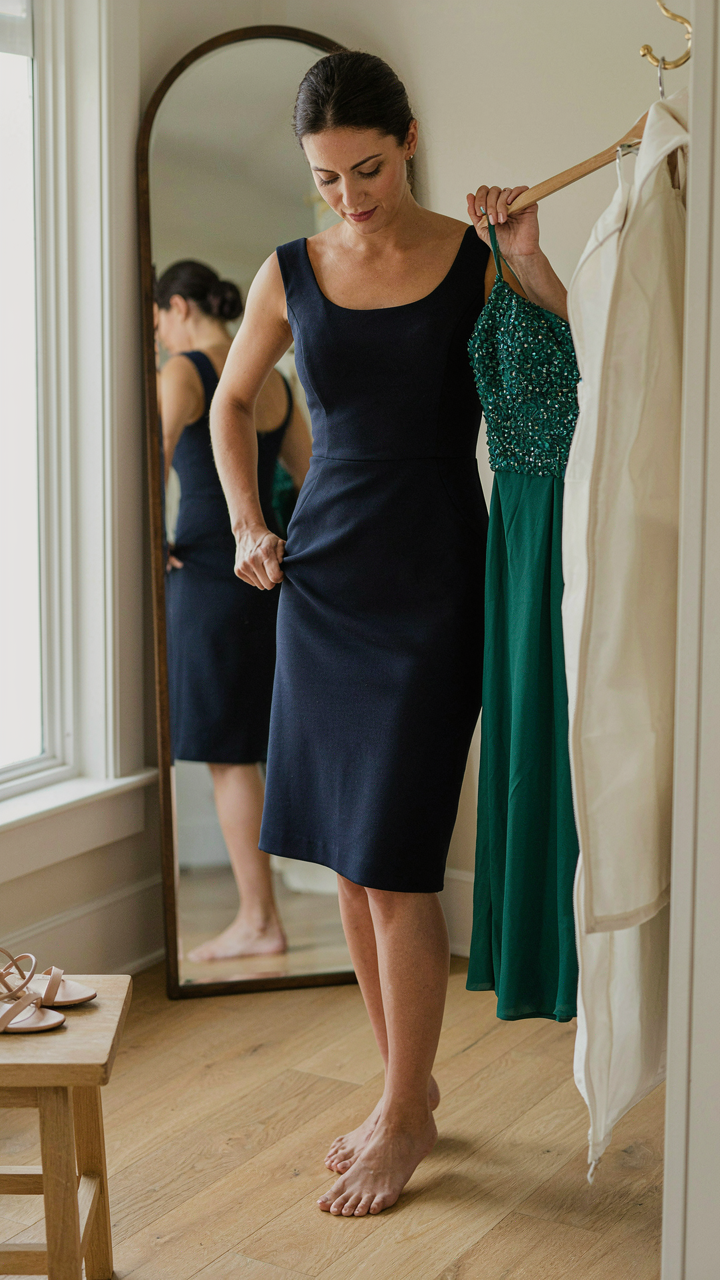
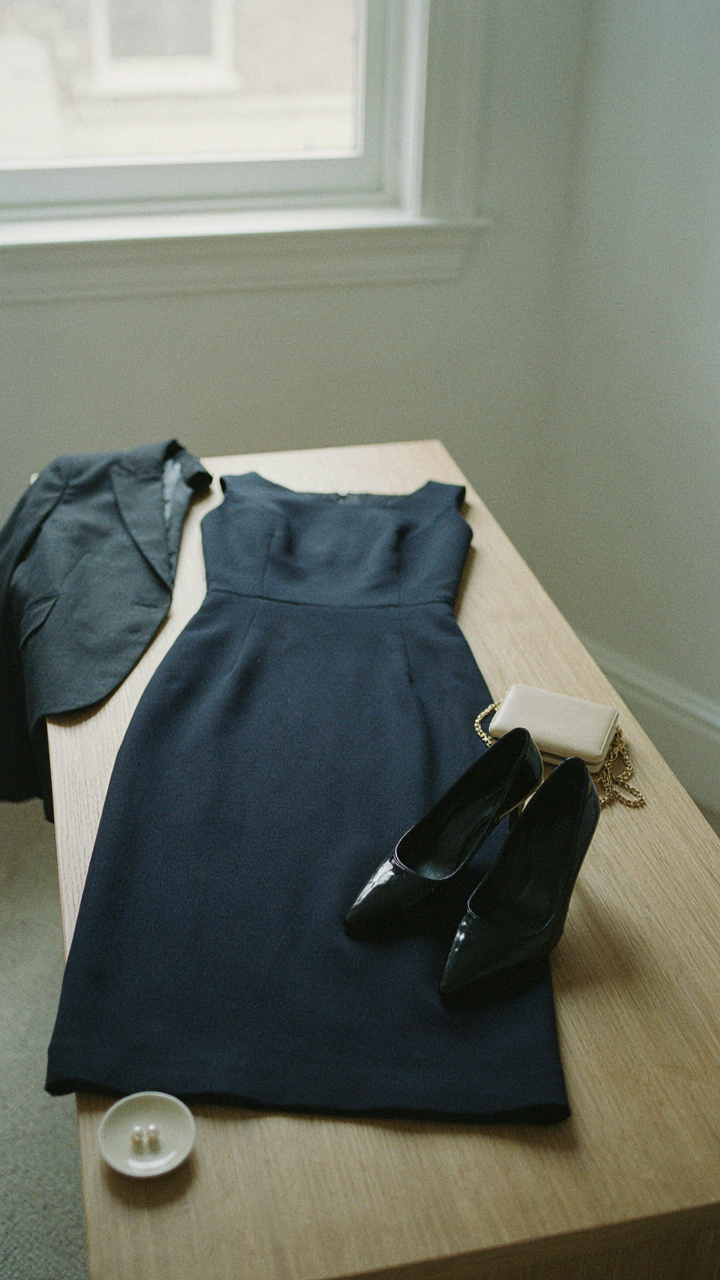
At the service, wear something that disappears. A sheath dress in navy or charcoal, structured but neutral. At the party, this same dress reads as playing it safe. You have two choices: keep the dress and add visual weight through tailoring, accessories, or fabric sheen that the religious setting would have prohibited, or change entirely. The women who navigate this successfully treat it as a wardrobe swap, not a single outfit stretched across two contexts.
The “Cognitive Load” Of Guesthood: Why Simplicity Wins
Build Your Outfit Around Two Anchor Pieces
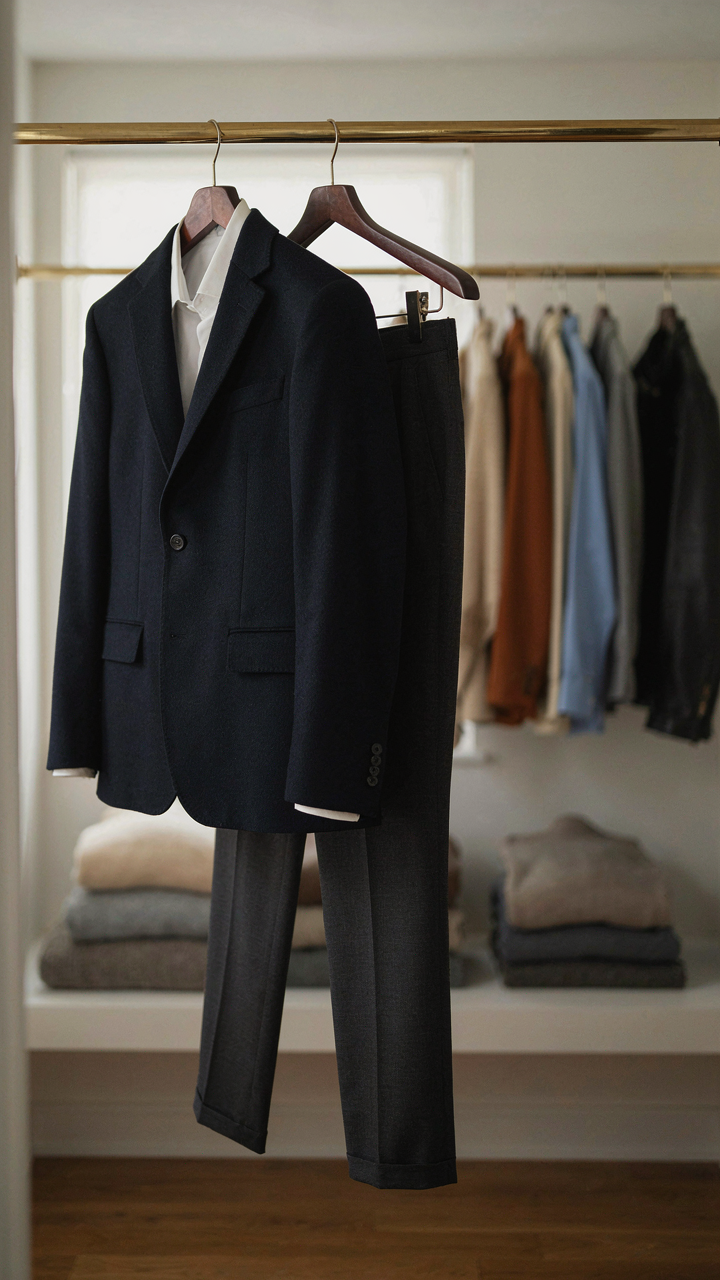
You’re worried about standing out or, worse, blending in so hard you disappear. Here’s the mechanism: cognitive load from decision fatigue makes you choose wrong. Borrow from economics—constraint is production. Limit yourself to two non-negotiable pieces: one top, one bottom. Everything else hangs off those anchors. A navy blazer and tailored trousers become your foundation. A jewel-tone dress becomes your foundation. This cuts the number of variables you’re deciding on from ten to three.

The anchors work because they’re neutral enough to pair with multiple options but specific enough to guide every other choice. You’re not starting from blank canvas each time you get dressed. The blazer tells you what shoes work. The dress tells you what jewelry doesn’t. You move faster and make fewer mistakes because the system constrains you into better decisions.
Neutral Doesn’t Mean Invisible
Common advice says “blend in, don’t stand out.” That’s incomplete. Strategic neutrality means you choose colors and cuts that don’t demand attention while your presentation does. Beige, navy, charcoal, and jewel tones read as intentional, not invisible. A well-cut blazer in a solid color costs attention because the fit is precise, not because the color screams.
The protocol is simple: pick one statement piece—a structured jacket, a well-tailored dress, quality shoes—and let the rest recede. Your presence registers through confidence and polish, not through pattern or volume. This is how you occupy space without performing. The outfit becomes furniture for your actual body and face, not a costume.
The Signaling Game: What Your Outfit Really Says (Cocktail Attire)

Respect Through Fabric Choice
You care about this because you’re afraid of getting it wrong and broadcasting that you don’t belong. The mechanism is basic economics: cocktail attire at a bar mitzvah signals you’ve allocated resources and thought to the event. Natural fabrics—silk, linen blends, quality cotton—hold their shape and read as intentional. Synthetic blends wrinkle, pill, and look like you grabbed something from the back of your closet. The family notices which guests made the calculation to show up dressed, not just dressed up.

Fabric weight matters more than price. A lightweight wool or a structured linen holds its silhouette through the service and into the party without looking stiff. Avoid thin jersey knits that cling to your frame or show every movement. The goal isn’t luxury for its own sake—it’s durability that lasts eight hours and projects that you respect the occasion enough to choose something built to perform.
Precision In Fit And Restraint
Forget the generic advice about “finding your style.” That’s not the play here. Fit is a signaling mechanism borrowed directly from tailoring tradition: tight construction means someone cared enough to adjust for your body, while loose construction suggests indifference. Your cocktail outfit works when seams sit exactly where they’re meant to and nothing pulls, gapes, or shifts as you move from the sanctuary to the reception.
Accessories create the second layer of restraint. A structured clutch, not a shoulder bag. Metal jewelry that doesn’t clang or catch light distractingly. A wrap or shawl that drapes cleanly without fussing. Each choice removes clutter from the visual frame and keeps focus on presence, not performance. When your outfit requires zero adjustment during the event, people perceive you as composed and intentional.
The “Adaptive Radiation” Protocol: Evolving Your Look
Build Your Fashion Genotype First
You’re worried you’ll look wrong. That fear drives most outfit planning for events like this. But here’s the mechanism: in evolutionary biology, adaptive radiation describes how one ancestral species branches into multiple forms to fill different niches. Your wardrobe works the same way. You need distinct outfit templates that respond to the actual conditions you’ll face, not generic “dressy” pieces that do nothing well.

Start by mapping the two environments you’re entering: the service and the party. These demand different things. The service requires restraint, formality, and respect for tradition. The party requires you to move, sit for hours, and exist in variable lighting and temperature. Most women buy one outfit and hope it works for both. It doesn’t. Build two distinct templates instead.
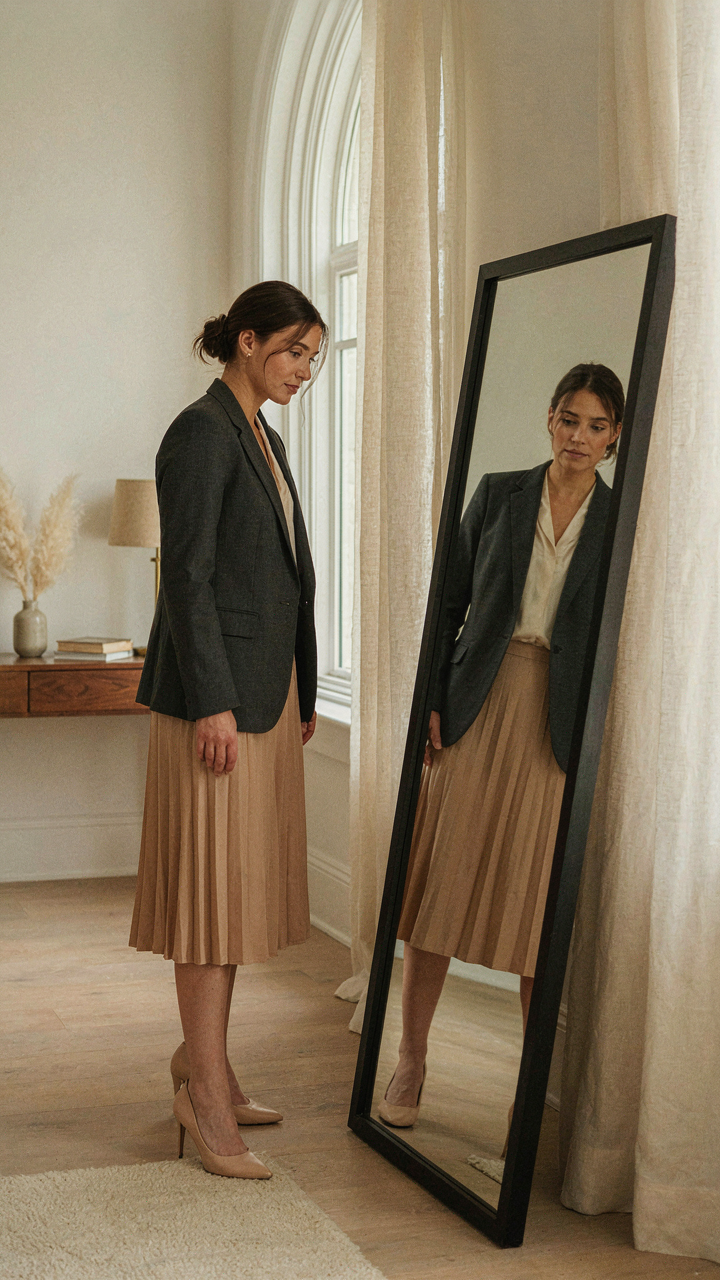
- Tailored Separates Over Dresses: A structured blazer with quality trousers or a knee-length skirt lets you shed layers and adjust formality between venues without changing entirely.
- Neutral Base With Accent Piece: Start with navy, black, charcoal, or cream. Add one statement element—a silk blouse, specific jewelry, or a patterned wrap—that transforms the baseline.
- Hosiery and Footwear Pairing: Opaque tights or bare legs with heels for the service; switch to flats or comfortable heels and go bare-legged or hosiery-free at the party if the venue allows it.
- Structured Bag That Holds What You Need: A small structured bag for the service, then either keep it or transition to something you can actually carry through a party without thinking about it.
- Wrap or Jacket as Your Modifier: A blazer or shawl functions as your control mechanism. Wear it during service for formality, remove it during party for approachability and comfort.
The real advantage isn’t looking polished. It’s that you stop second-guessing yourself mid-event. You’ve pre-decided which pieces work where, so you move through both spaces with intention instead of anxiety.
Let The Dress Code Edit For You
Everyone says “dress for the occasion,” which tells you nothing. What actually matters: Jewish bar mitzvah tradition prioritizes modesty and formality during the service in ways that secular events don’t. Your natural selection filter is simple—if a piece wouldn’t read as respectful in a temple or synagogue, it doesn’t belong in your service outfit. If you can’t move freely in it or you feel self-conscious, it doesn’t belong at the party.
Stop treating the dress code as a suggestion to maximize impact. Treat it as information that removes decisions. Conservative necklines, knees covered, sleeves present—these aren’t restrictions that make you invisible. They’re the baseline that lets you signal competence and respect. You then differentiate through fit, fabric quality, and how you accessorize. The pieces that survive this filter are the ones worth owning.
What To Wear To A Bar Mitzvah Is The Wrong Question

Comfort Beats Everything Else
You’re asking this question because you’re afraid of being wrong. The mechanism underneath is simple: you confuse visibility with appropriateness. A bar mitzvah guest outfit works when it lets you sit through two hours of service and move through a party without thinking about your clothes. Everything else is noise.

The outfit you wear must function first. You’ll sit on wooden pews. You’ll stand for prayers. You’ll navigate a buffet and a dance floor. Wear something that doesn’t restrict your movement, doesn’t ride up when you sit, doesn’t require constant adjustment. Comfort is the foundation. Without it, you broadcast anxiety instead of respect.
Your Choices Don’t Need Justification
The advice out there says dress to blend in. That’s incomplete. The real move is to own whatever you choose so thoroughly that second-guessing becomes impossible. Insecurity signals louder than any outfit choice ever could.
If you choose a dark dress, wear it like you chose it. If you pick a blazer with tailored pants, don’t apologize mentally. The guests watching you aren’t analyzing your outfit. They’re noticing whether you seem settled or rattled. You signal settlement through commitment to your choice, not through picking the statistically safest option. Pick something appropriate for the venue, then stop editing yourself.
The Bar Mitzvah Outfit Women’s Guide To Effortless Elegance
Build A Rotation, Not A One Off
You’re worried people will notice you wearing the same dress twice. That’s the real problem here, and it’s costing you money and mental energy for a non-issue. The mechanism is simple: treat bar mitzvah season like a capsule wardrobe where three to four core pieces rotate across different events with swapped accessories. A midi dress in navy or charcoal works the service. Add a blazer for the cocktail hour. Swap jewelry for the dinner. That’s three distinct looks from one foundation.

The economics of this approach beat buying separate outfits every time. You’re not building for one event. You’re building for the three to six bar and bat mitzvahs most people attend in a season. One quality dress in a neutral, a tailored blazer, structured heels, and a clutch become your infrastructure. Everything else is customization. The dress costs more upfront, but you wear it five times instead of once. That’s the actual math.
Accessories That Earn Their Space
Most advice says add statement jewelry and call it interesting. Wrong. Statement pieces actually dilute intention. The real move borrows from product design’s principle of constraint: remove everything that doesn’t add function or signal. Each accessory must communicate something specific about the occasion or your relationship to it, not just fill visual space.
A necklace works harder than a bracelet because it frames your face at the service and remains visible through formal photos. Earrings should complement your hairstyle choice, not compete with it. A structured clutch signals formality better than a soft bag. Skip the scarf unless the dress demands it for coverage. Everything you add should replace something else, not just pile on. This discipline makes you look intentional instead of decorated.
Beyond “Classy Girl Outfit”: The Subtlety Of Power

Confidence Without The Announcement
You want people to notice you’re the person who has her life together. That’s the real reason you’re reading this section. The mechanism is constraint, borrowed from economics: scarcity signals value. When you wear less, demand more interpretation. Wear one striking piece—a tailored blazer, a structured bag, real jewelry—and leave the rest neutral. The outfit that whispers wins against the outfit that shouts. Silence in a room full of noise reads as control.

Most advice says wear color or texture to stand out. That’s backwards. Standing out at a bar mitzvah means being remembered as composed, not as someone trying. A cream linen dress, gold watch, and no other accessories works because it forces people to look at your face, your posture, your presence. Restraint is the currency of authority in a room full of guests performing formality.
The Architecture Of Quiet Authority
Power dressing without dominance requires one principle: proportion. A fitted waist, straight lines, and proper hem length communicate intention without aggression. Avoid oversized silhouettes that read as borrowed or uncertain. The cut of fabric matters more than the fabric itself.
- Structured blazer in neutral tone: Single-breasted, fitted through the ribs, hits at hip. Pairs with tailored trousers or a dress. Works for both service and reception without changing.
- Tailored trousers or knee-length skirt: No excess fabric bunching. Hem should graze shoe or sit one inch above ankle. Signals precision and intentionality.
- Simple gold or silver jewelry: One bracelet, one necklace, or earrings. Real metal reads different than costume. Quality eliminates the need for quantity.
- Closed-toe shoes in leather: Flats, low heels, or loafers. Avoid strappy or embellished styles. Leather ages well and carries weight—literally and visually.
- Investment bag in dark leather: Structured, not slouchy. Holds actual items without bulging. Works for both day service and evening party.
The difference between looking put together and looking like you’re trying too hard lives in one decision: choose three elements and commit to them fully. A navy blazer, cream trousers, gold earrings. That’s the entire statement. Everything else fades into the background where it belongs. This protocol eliminates decision fatigue and creates visual coherence that reads as authority.
The Bat Mitzvah Outfits For Guests Equivalence Principle
Core Principles Transfer Across Similar Events
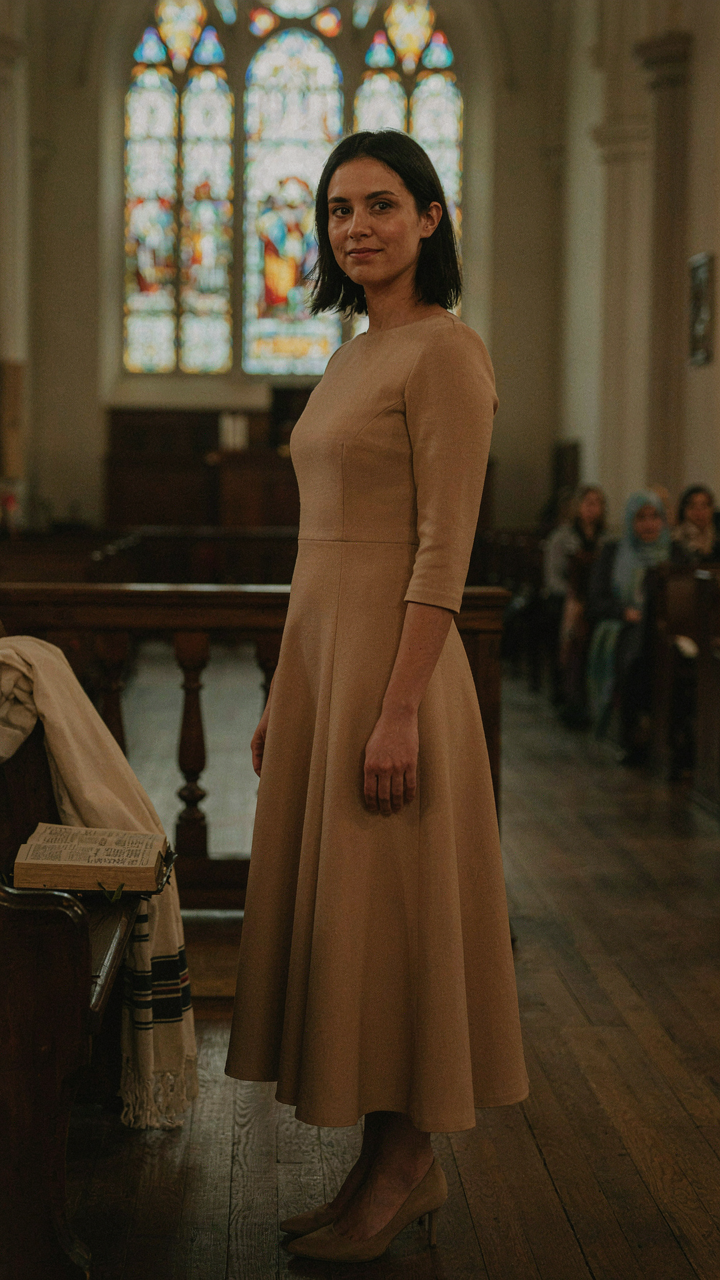
You’re reading this section because you want permission to reuse outfits and feel confident you’re not breaking an unwritten rule. The mechanism is simple: bat mitzvahs and bar mitzvahs follow identical dress codes because they mark the same religious milestone. A service requires modest, respectful clothing. A party relaxes that constraint but maintains formality. The outfit logic stays constant across both events and transfers to other Jewish lifecycle celebrations.

Conservative Judaism treats bat mitzvahs and bar mitzvahs identically from a guest perspective. You wear the same outfit to both services without friction. Reform and reconstructionist communities apply the same logic. The dress code isn’t tied to the gender of the person being honored but to the event’s structure and religious significance. Once you understand what works for one, you’ve solved the other.
Small Changes, Strategic Placement
The difference between a service outfit and a party outfit isn’t a complete wardrobe swap. Consumerism tells you to buy separate looks. Reality demands one adjustment: shoes and jewelry. A service requires closed-toe shoes and minimal, conservative accessories. A party allows statement jewelry, open-toe heels, or metallic sandals. Keep the dress, top, or pants identical. Swap only what touches the floor and your wrists.
Fabric choice compounds this advantage. A midi dress in structured material works for both contexts without feeling overdressed at the party or underdressed at the service. A knit that breathes but holds shape moves seamlessly from one event to the next. You’re not optimizing for two separate occasions. You’re choosing a base that performs across both, then modulating one element per environment. That’s the protocol.
The Real Obstacle Isn’t The Dress Code; It’s Your Reliance On External Validation Over Internal Social Calibration

Stop asking “Is this appropriate?” and start asking “Does this reflect who I am?” The bar mitzvah guest outfit women overthink isn’t about the rules. It’s about outsourcing your judgment to invisible people who won’t remember what you wore anyway. You already know the venue, the formality level, and your own body. Pick something that makes you move with confidence instead of constantly adjusting it. Your outfit choice becomes irrelevant the moment you stop performing it. Wear what you’d wear if nobody was watching.




