
The Myth Of The “Fine Dining Outfit”
Why Generic Advice Misses The Mark
You’re looking for permission to feel confident, which means you’re afraid generic guidance will make you look like you don’t belong. The real problem: most fine dining dress code advice treats all restaurants as one category when they operate on completely different social contracts. A Michelin-starred French restaurant enforces different rules than a high-end steakhouse, which differs from a contemporary tasting menu spot. Generic lists of “what to wear” ignore this entirely and leave you guessing which rules actually matter at your specific venue.
The mechanism is simple. Restaurants signal their formality level through their own presentation, not through a universal code everyone follows. When you walk in, you’re not being measured against a dress code rulebook. You’re being measured against how seriously the restaurant takes its own aesthetics. Fine dining establishments don’t police your outfit because you followed a checklist. They notice when your outfit signals you took the occasion as seriously as they did. That calculation happens in seconds and determines whether you feel like a guest or an intruder.
Restaurant Intent Versus Your Actual Wardrobe
What separates a fine dining venue from a standard restaurant is architectural and material commitment, not arbitrary rules about hemlines or jewelry. The space itself makes a statement about formality through fabric choices, lighting design, and table spacing. Your job is not to match an imaginary uniform. Your job is to match the restaurant’s demonstrated investment in presentation. When a restaurant spends money on details, it expects you to show up with the same intentionality in how you dress.
Most women own clothes that work in fine dining settings already. You likely have a blazer, a dark pair of trousers, a dress without distressing, and closed-toe shoes. The gap between “looking fine” and “looking fine dining appropriate” is not about buying new pieces. It’s about choosing pieces that look deliberate and finished rather than casual or worn. Before you reserve, look at the restaurant’s own photography, their website aesthetic, and their Instagram. Match that energy level in fabric quality and grooming, not in following someone else’s outdated rules.
Decoding The Invitation: Beyond Black Tie
What The Dress Code Actually Says
You’re scanning that invitation because you’re terrified of showing up wrong and signaling you don’t belong. Here’s what most people miss: dress codes exist because restaurants use clothing as a filter for atmosphere and clientele, not to torture you. The stated code is only half the message. The other half lives in what they don’t say, the gaps between words.

When a restaurant writes “business casual,” they’re naming a floor, not a ceiling. When they write nothing at all, they’re telling you they’ve decided the market doesn’t need their guidance. Both are signals. The first establishes a minimum standard. The second suggests the restaurant either attracts a self-selecting crowd or doesn’t care enough to regulate. Neither tells you what matters: what actual guests wear when they walk through that door.
Restaurant Website As Your Real Intelligence Source
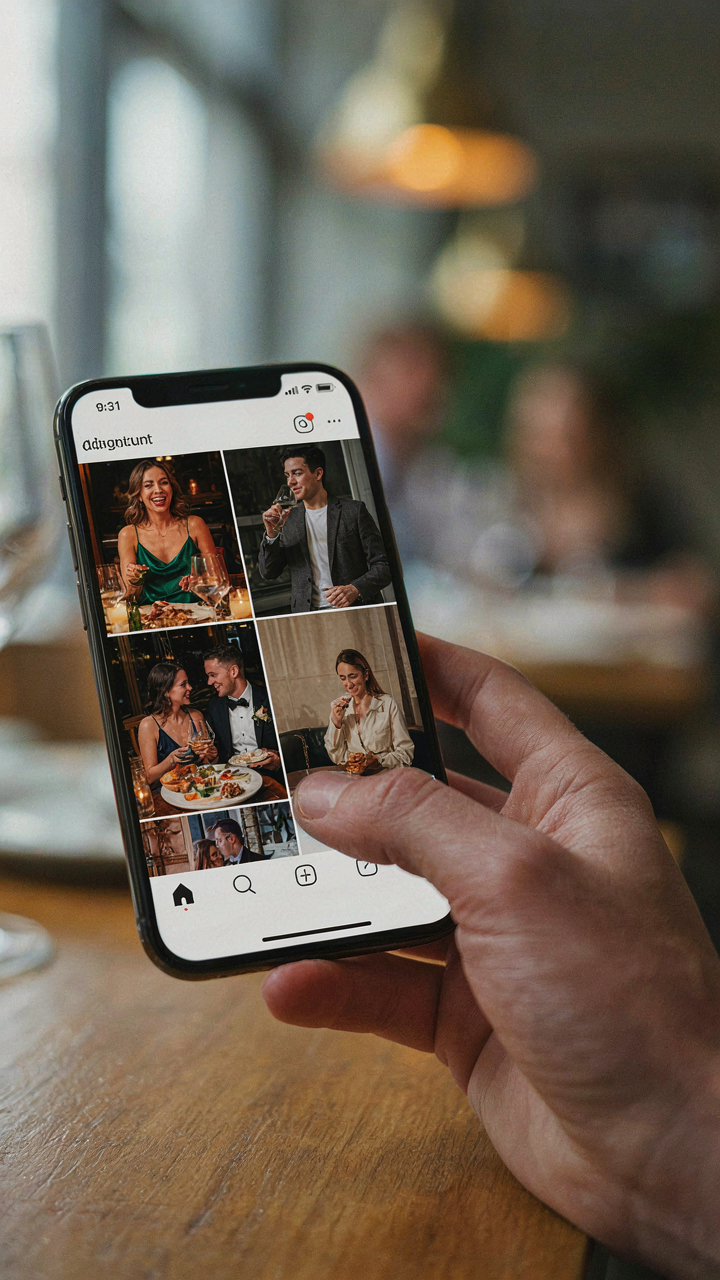
Forget the dress code card. Your actual research happens on the restaurant’s own site, their social media, and Google Images of the dining room. This is applied semiotics: you’re reading the visual language the establishment projects about itself, not the formal rules they publish. A Michelin-starred French brasserie and a Michelin-starred modern American restaurant both say “fine dining,” but the first expects different visual composition than the second.
Pull three data points: photos from their official channels showing guests actually dining, the aesthetic of the dining room itself, and if available, any video content from events. You’re not looking for fashion inspiration. You’re identifying the dominant material palette, formality level, and whether guests lean toward classic tailoring or contemporary cuts. The restaurant’s own visual choice about what to showcase tells you what they’ve decided represents their standard. That becomes your baseline.
The Contextual Elegance Protocol
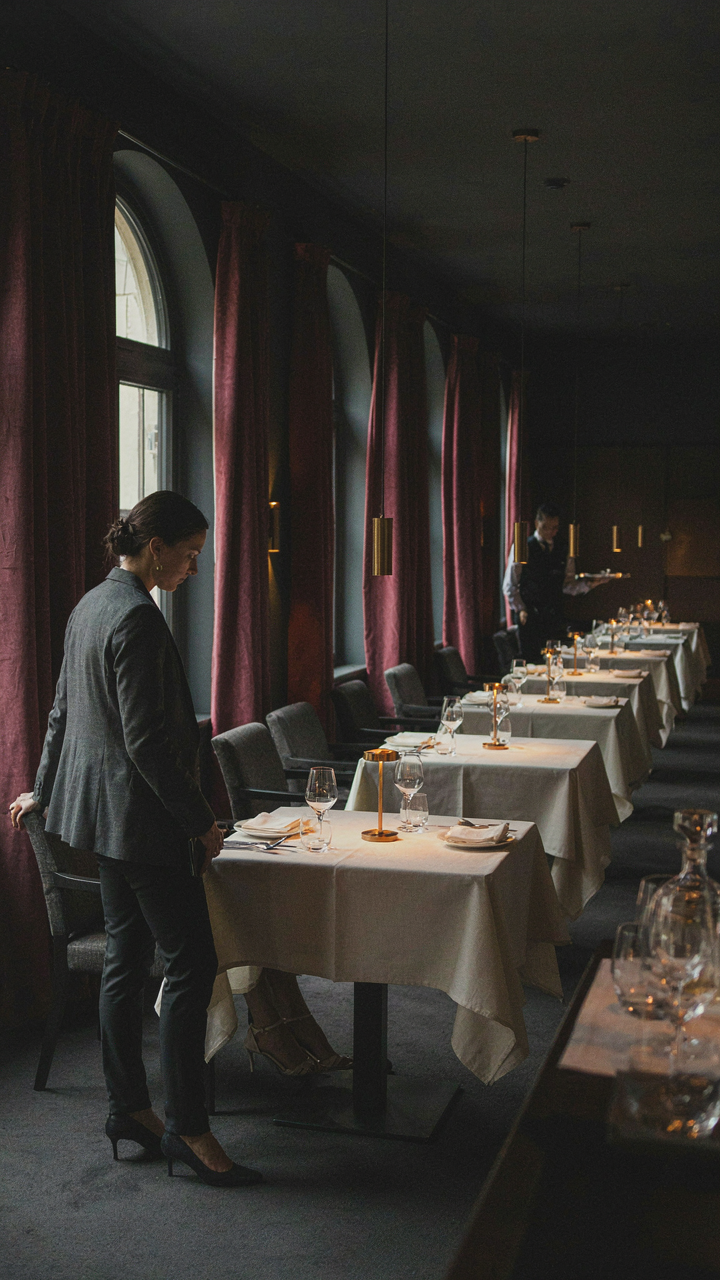
Time Of Day Shifts The Entire Calculation
You want a rule that works everywhere because rules feel safe. Here’s the mechanism: fine dining operates on context stacking, borrowed from theater lighting design where different color temperatures change how an audience perceives the stage. Lunch and dinner aren’t the same event. A silk blouse and tailored trousers work at noon. That same outfit reads underdressed at 8 PM in the same restaurant.

Dinner demands more visual weight. Darker colors, structured fabrics, and elevated materials become the baseline. Time of day determines your starting point. Lunch forgives business casual masquerading as refined. Dinner forgives nothing. The restaurant doesn’t change. Your outfit’s requirement does.
Read The Space Before You Read The Dress Code
Most dress code advice online is theater for the anxious. Restaurants publish guidelines that don’t capture what actually matters. A Michelin-starred French establishment and a haute cuisine tasting menu restaurant in Tokyo both say “smart casual” and mean completely different things. Walk in. Observe three tables. What are the women actually wearing?
The room tells you what the restaurant enforces versus what it tolerates. You’re calibrating to the crowd’s actual choices, not the posted policy. Notice fabric sheen, sleeve length, and whether anyone wears jewelry. Notice shoe height. This takes ninety seconds and eliminates the gap between what you think you should wear and what will make you invisible in the best way possible.
Building Your Fine Dining Capsule: The “Old Money Dinner Outfit Women” Strategy
The Real Cost Of Replacing Everything
You want permission to spend money without feeling reckless. Here’s the mechanism: fast fashion forces repeat purchases because the pieces collapse after five wearings, while investment pieces hold structure and color for years. Economics calls this “total cost of ownership”—divide the price by actual wearings, and a $400 blazer worn sixty times costs $6.67 per event. A $60 blazer worn eight times costs $7.50. The math breaks in favor of quality immediately.

Fine dining dress codes demand clean lines and finished construction. Fast fashion delivers loose threads, seams that separate, and fabric that pills within a season. You’ll find yourself shopping again before the next event, leaking money into nothing. Investment pieces in natural fibers—wool, silk, linen—maintain their appearance and fit for a decade. This isn’t luxury thinking. It’s resource efficiency.
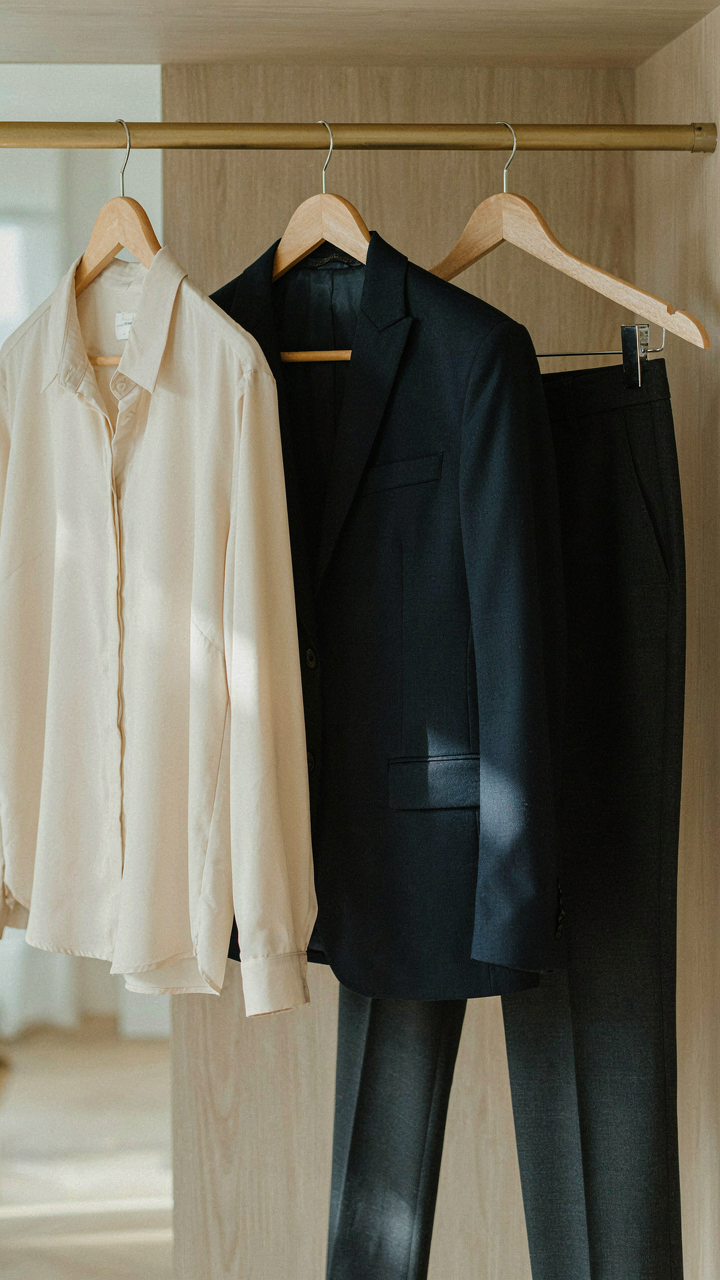
- Silk charmeuse blouse in cream or ivory: Drapes without clinging, resists wrinkles, works across seasons. Real silk reflects light properly under restaurant lighting, which polyester blends never replicate correctly.
- Tailored wool trousers in navy or black: Hold creases through repeated wearing and cleaning. The weight of quality wool prevents the fabric from bunching at the waist or knees.
- Wool blend blazer with structured shoulders: Acts as the outfit’s anchor piece. A proper blazer finishes any base and signals intentionality, which is the actual function of fine dining dress codes.
- Leather pumps in neutral tone: Quality leather doesn’t crack or peel. One resoled pair outlasts twenty cheap pairs. The heel height should sit between 2 and 3.5 inches for stable posture during a multi-course meal.
- Structured evening bag in leather or silk: Holds essentials without flopping. A bag that maintains its shape projects competence—this matters more than you think in formal settings.
These pieces absorb wear and maintain their function. Build around them before adding anything else. Your job is to replace nothing for years.
Mixing And Matching Without Looking Repetitive
Versatility operates like a hinge in engineering—one fixed point allows infinite motion. Your base pieces must combine with each other and with temporary pieces (accessories, shoes, bags) without visual contradiction. A cream silk blouse pairs with navy trousers and black pumps today, then with a navy skirt and metallic heels tomorrow. Same blouse, different context, zero visual fatigue.
The constraint is fabric compatibility and color logic. Don’t mix warm and cool tones in the same outfit unless you intend it as contrast. A cream blouse reads cool, so pair it with cool-toned navy or black rather than warm camel or rust. Texture matters equally—pair a matte blazer with a silk blouse, not a velvet blouse, or the outfit becomes visually muddy. Add one statement piece per outfit: either a notable bag, intentional jewelry, or textured shoes. Never two. When you follow this protocol, you rotate five pieces into ten distinct outfits without repetition across a season of dining events.
The Accessory Multiplier: Elevating Simple Silhouettes
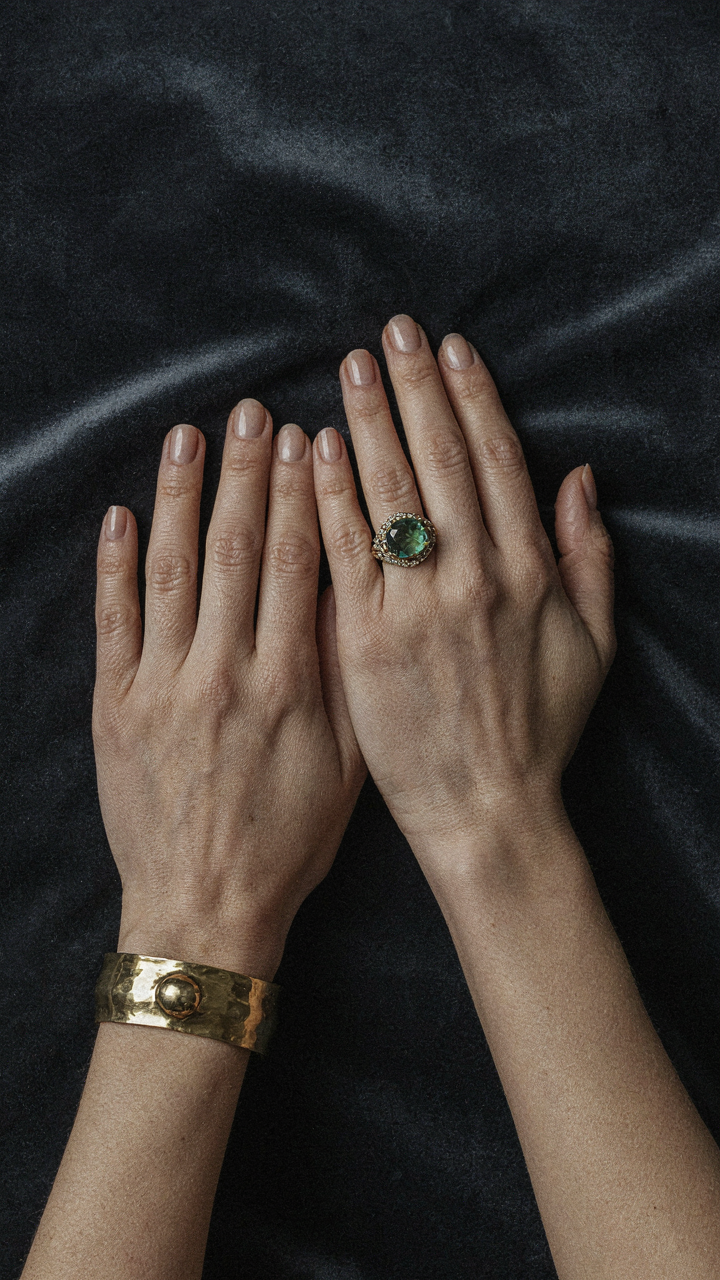
Jewelry As Focal Point, Not Clutter
You’re worried that a plain dress won’t signal that you belong there. Here’s what actually works: one statement piece beats five mediocre ones because it gives the eye a destination. This is restraint, not deprivation. The mechanism is cognitive load. Your brain processes a single focal point faster and assigns it more weight than distributed noise.

Choose jewelry that occupies real space: a structured cocktail ring, a substantial bracelet cuff, or a collar necklace that sits high. Avoid delicate chains that disappear into fabric or stacked thin rings that read as nervous. Fine dining venues expect intentionality. One piece that demands attention works harder than an inventory of accessories. The dress becomes the backdrop for the one thing you decided mattered.
Shoe Architecture And Stance
In cybernetics, leverage is the ratio of output force to input force. Your shoes are leverage. They determine not just how you look standing still, but how you move through a dining room. Common advice says “wear heels,” but that’s incomplete. The real variable is sole architecture and heel geometry, which dictate your posture, stride length, and perceived authority at the table.
A structured pump with a defined heel pitch (the angle of the shoe’s sole) forces your body into an upright carriage. A flat sole gives you flexibility but removes that automatic alignment. Fine dining dress codes reward shoes that demonstrate control. Worn leather, scuffed soles, or broken heels destroy the signal regardless of style. Shoes signal whether you’ve prepared. Condition them before you go, verify the heel isn’t worn down to the shoe’s interior structure, and choose a height you can walk in without adjustment.
Color, Fabric, And Texture: The Unspoken Language Of Classy Dinner Outfits

Monochrome And Neutrals Command The Room
You want to disappear into competence instead of screaming for attention. That’s the real reason color strategy matters. In visual hierarchy, monochrome operates like a single focal point in design: it forces the viewer’s eye to land on one thing instead of fragmenting across competing signals. One dominant color or neutral palette reads as intentional and controlled. Restaurants notice this. People notice this. You become the statement instead of your outfit becoming the distraction.

Black, navy, charcoal, cream, and white have dominated fine dining for decades because they work mechanically, not because of arbitrary tradition. These colors absorb light or reflect it consistently across different venues and lighting conditions. A loud pattern fractures under restaurant lighting. A monochromatic dress reads clean. The fabric matters more than the color when you commit to this lane, which is why neutrals give you permission to invest in texture and material quality without visual clutter competing for dominance.
Texture Signals Investment More Than Pattern Ever Could
The common advice says mix prints for interest. Wrong. Fine dining reads tactile richness as wealth and restraint reads as confidence. A silk charmeuse gown in deep burgundy tells a different story than a polyester dress with a floral print. Material weight, sheen, and how fabric moves on your body communicate more information than any pattern ever could. Restaurants are dark enough that most prints vanish anyway. What remains visible is how fabric catches light and drapes.
Satin, silk, crepe, wool blends, and structured cotton communicate deliberate choice. These materials have visual depth. Velvet, jacquard, and subtle sheen add dimension without graphic loudness. When selecting fabrics, prioritize how they respond to movement and light over whether they carry a recognizable design. Run your hand across samples before buying. This single step eliminates pieces that photograph well but feel cheap. The person across from you at dinner won’t see the tag, but they will register whether your dress absorbs or reflects the room’s energy.
Beyond The Clothes: The “Fine Dining Dress Code” Is A Mindset
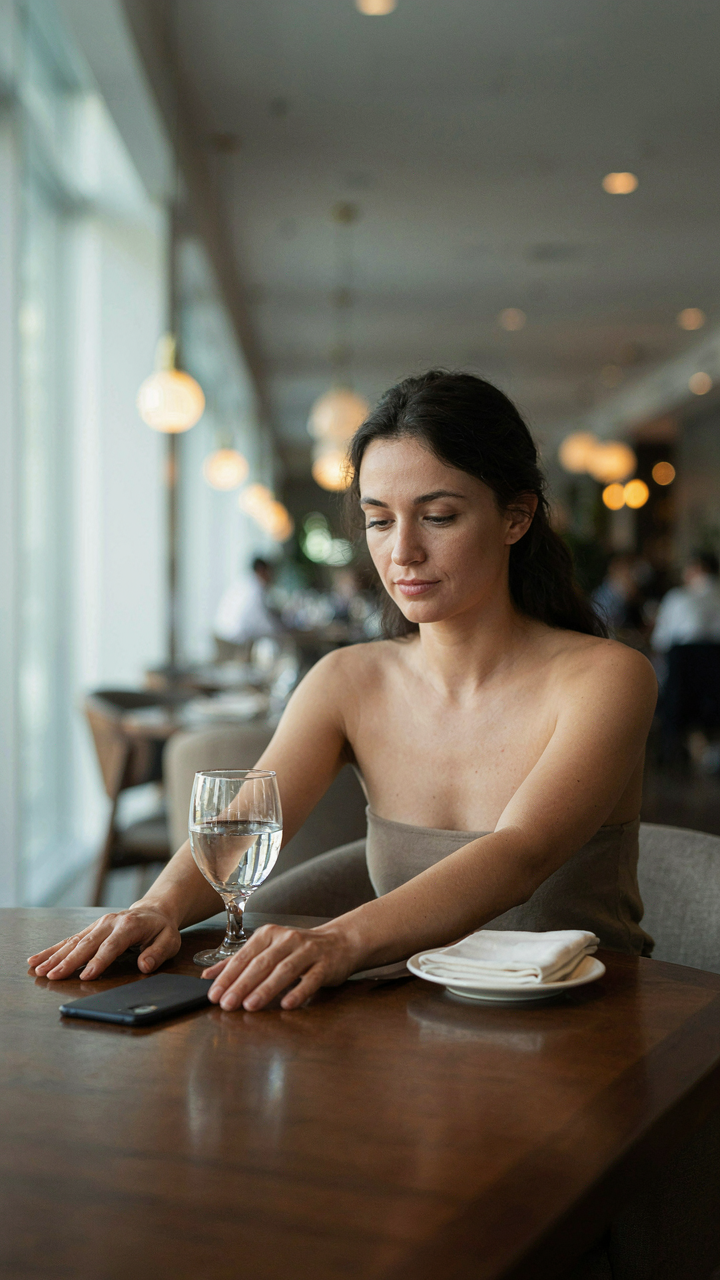
Poise Is The Actual Uniform
You’re reading this section because you’re afraid the clothes alone won’t work, and you’re right to be afraid—they won’t. Here’s the mechanism: fine dining culture evolved in contexts where dress codes functioned as visible proof of self-control. The real signal isn’t the fabric. It’s whether you move like you belong there.

Poise operates like a gravitational field in physics—it pulls attention toward you or away from you based on your positioning and momentum. Someone in a basic black dress who sits upright, makes deliberate movements, and doesn’t fidget commands more presence than someone overdressed and anxious. Restaurants notice this. Other diners notice this. The host notices this before your reservation even begins.
Presence Beats Perfection Every Time
The common advice says “just be yourself.” That’s incomplete. Fine dining doesn’t reward authenticity—it rewards intentionality. Presence means you’re aware of the space without being hyperaware of yourself in it. You speak at the volume the room uses. You order without asking seventeen questions. You acknowledge the server’s labor without performing gratitude like it’s a scene.
The protocol is straightforward: arrive five minutes early to acclimate to the environment before sitting. Locate the restroom, the exit, the table layout. This removes the scrambling energy that reads as uncertainty. When seated, place your phone away completely—not silenced, away. Keep your posture upright but not rigid. The moment you stop fighting your own body for control, everyone else stops wondering if you belong there. That’s when the evening actually begins.
Error Proofing Your Elegant Dinner Outfit: Common Pitfalls

The Calibration Problem
You’re worried you’ll look poor or clueless. That’s the real calculation happening here. But most advice on overdressing versus underdressing treats it like a coin flip when it’s actually an economics problem: you’re matching your clothing’s perceived value to the venue’s perceived value. Undershoot and you signal disrespect for the space. Overshoot and you signal either ignorance of context or desperation to impress. The mechanism is status alignment, not personal preference.

Fine dining restaurants calibrate their dress codes around a narrow bandwidth. A Michelin-starred establishment in a major city expects formal evening wear: dresses, tailored separates, or jumpsuits in dark, structured fabrics. A high-end casual establishment allows significantly more latitude but still expects grooming and intentionality. The mistake most people make is treating “formal” as a single setting when restaurants occupy different tiers. Call ahead if you’re uncertain. The restaurant staff won’t judge you for asking and will tell you exactly what works. This single step eliminates 80 percent of dress code anxiety.
The Discomfort Tax
Comfort and credibility feel opposed but they’re not. The real problem is self-sabotage disguised as sophistication. You pick an outfit that looks right but pinches at the shoulders, creates tension in your neck, or requires constant adjustment. Within two hours your posture collapses, your attention fragments, and your presence weakens. You stop looking composed and start looking strained.
Formal doesn’t mean suffering. Test every piece sitting down, standing, and during deliberate arm movements. A dress that fits beautifully standing still becomes a liability if you can’t breathe while seated for three courses. Shoes matter most: if your feet hurt after thirty minutes of wear, you’ve already lost. Wear what you’ve tested before, not runway pieces from recent purchases. Your outfit works when you forget you’re wearing it and focus on the meal, the company, and the experience.
The Only Outdated Trend Is Performing For Approval
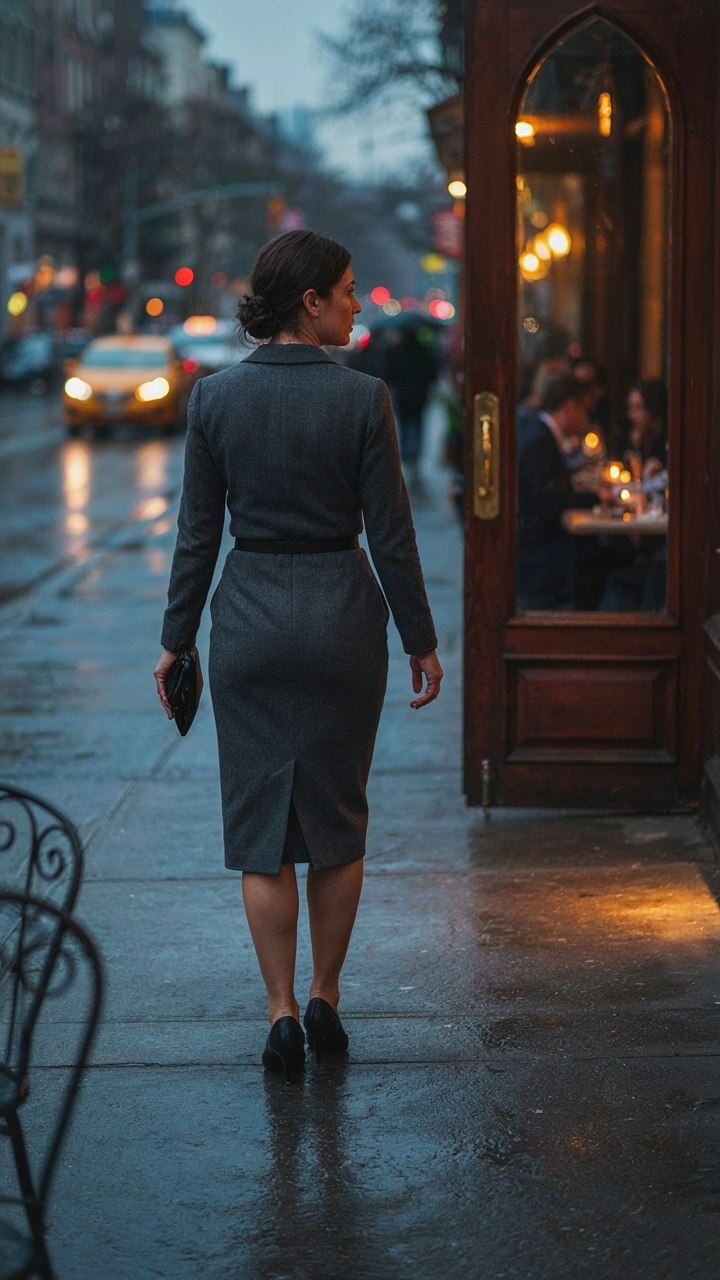
Stop dressing for the room. Dress for the experience you want to have. Fine dining rewards confidence, not compliance. Pick one piece that makes you feel like the best version of yourself, build around it, and move. Your outfit isn’t the story. How you carry yourself is. The woman who knows what she wants always looks better than the woman who’s guessing what others expect.