


Decoding The Casual Lie: Why ‘Upscale Casual Dress Code’ Isn’t Casual At All
Casual Exists On A Spectrum
You’re reading this because you’re afraid of looking wrong. The real mechanism behind “upscale casual” is constraint, not freedom. Think of it like signal processing: casual dress removes the noise of formality, but upscale casual adds back a specific frequency—intentionality. It’s not “wear whatever,” it’s “wear what signals you know the rules and chose to bend them strategically.”
The spectrum runs from truly casual (gym clothes, beach wear) through business casual (the corporate compromise) into upscale casual, where the gap between fabric quality, fit precision, and detail work widens dramatically. Most people miss this: upscale casual isn’t less formal than business casual. It’s differently formal. It requires the same decision-making rigor as suiting, just deployed toward appearing relaxed. The difference lies in material weight, construction visibility, and whether your choices look considered or accidental.
Effortlessness Requires Strategy
Everyone says “dress like you put no effort in.” This is incomplete advice that fails most women. Effortlessness in upscale casual is a constructed aesthetic that demands more planning than it appears to require. Each piece must anchor itself in quality markers: natural fiber blends, clean seaming, fit that accommodates movement without excess fabric, and color restraint that reads as editorial rather than random.
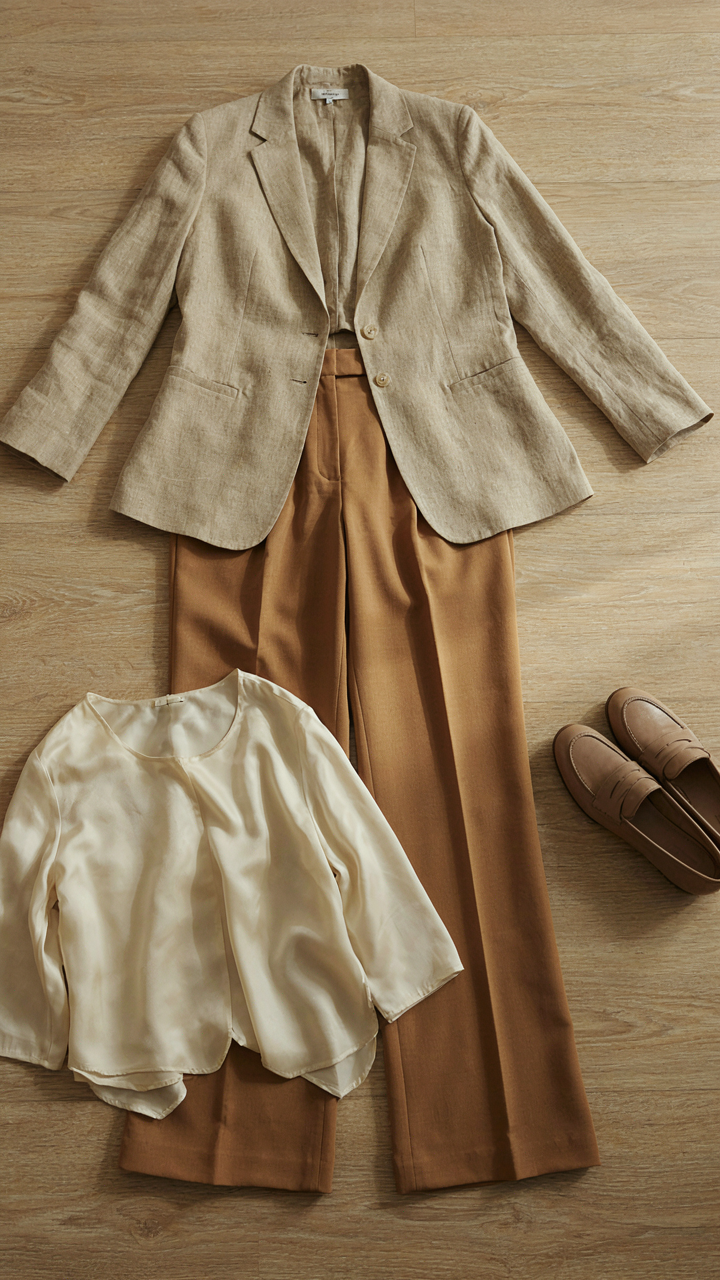
The mechanism is editing, not addition. You select fewer items but ensure each one works across multiple contexts and combines without visual noise. A linen blazer in neutral, well-cut trousers, a silk-blend shell, and structured flats form a closed system where every element validates the others. When a woman appears effortlessly upscale, she has eliminated decisions through advance strategy. She knows her proportions, her color palette, and which combinations signal competence without performance. This is the actual work.
The Perception Protocol: Weaponizing Your Wardrobe For Instant Status

Your Personal Brand Is The Outfit
You’re reading this because you’re anxious about being perceived as less-than in a room where it matters. That’s the real mechanic at work. Your outfit functions like a signal in economics—it communicates information before you open your mouth, and that information either confirms or contradicts your actual competence. In upscale casual settings, this signal is weaponized differently than in formal wear because the stakes are paradoxically higher: you’re being read not just on formality but on judgment and self-awareness.

Your clothes are the first three seconds of your personal brand. They telegraph whether you understand context, whether you respect the room, and whether you’ve thought about something beyond yourself. Upscale casual demands intentionality disguised as ease. This is not about matching or looking “put together”—it’s about sending the signal that you belong there and you know what you’re doing. Wear something that contradicts your competence level and the gap shows immediately.
Dress For The Role You Already Hold
The military uses rank insignia to establish hierarchy instantly. Dress code functions identically in civilian spaces—you’re signaling your role before anyone asks what you do. The trap most people fall into is dressing for the role they want instead of the role they actually occupy right now. This costs you credibility immediately. Upscale casual requires you to dress as someone already confident in their position, not someone auditioning for it.
If you work in finance, tech, creative, or any upscale casual environment, your outfit must reflect operational competence, not aspiration. Quality basics, neutral tones, fitted silhouettes, and one elevated piece become your toolkit. The mechanism is simple: when your clothes suggest you already belong, people treat you as if you do. When they suggest uncertainty or trying too hard, people respond to that signal instead of your actual capabilities.
Beyond Business Casual: The Art Of Authority Without The Suit

Where Fit Functions As Rank
You want permission to look powerful without looking corporate. That’s the real question. Tailoring is structural integrity. In architecture, load-bearing walls distribute weight across a system instead of collapsing it at one point. Clothing works the same way. A well-fitted blazer, dart placement, and seam positioning distribute visual weight across your frame so you read as intentional, not desperate. The silhouette carries authority because it controls how light and shadow hit your body.

Most advice tells you to wear tailored pieces. That’s incomplete. The mechanism is proportion. Your shoulders, waist, and hip ratios create visual hierarchy. When a blazer skims without clinging, when sleeves end at your wrist bone, when a pant leg hits your shoe without bunching, you signal control. Women in upscale casual settings who command respect don’t rely on formality. They rely on precision. Every garment fits like it was chosen specifically for their body, not borrowed from a generic rack.
Restraint Compounds Interest
Most women overdress accessories in upscale casual environments. They layer necklaces, stack rings, add scarves to an already complete outfit. The actual mechanism is signal-to-noise ratio. When you have ten things competing for attention, none of them work. One quality watch, one statement ring, or one structured bag creates focal points. Accessories function as punctuation, not decoration. They direct the eye exactly where you want it.
The protocol is this: choose one accessory that serves the outfit’s function. If the blazer is your power play, the watch becomes a supporting detail. If the bag is your statement, jewelry recedes. If you’re wearing a colored shoe or bold earring, everything else flattens to neutral. Intentional choices read as expertise. They tell people you understand the stakes of the room and you’re not trying too hard. That’s the entire game.
The Micro Signals Of Mastery: How Fabric And Fit Command Respect
What Fabric Actually Communicates
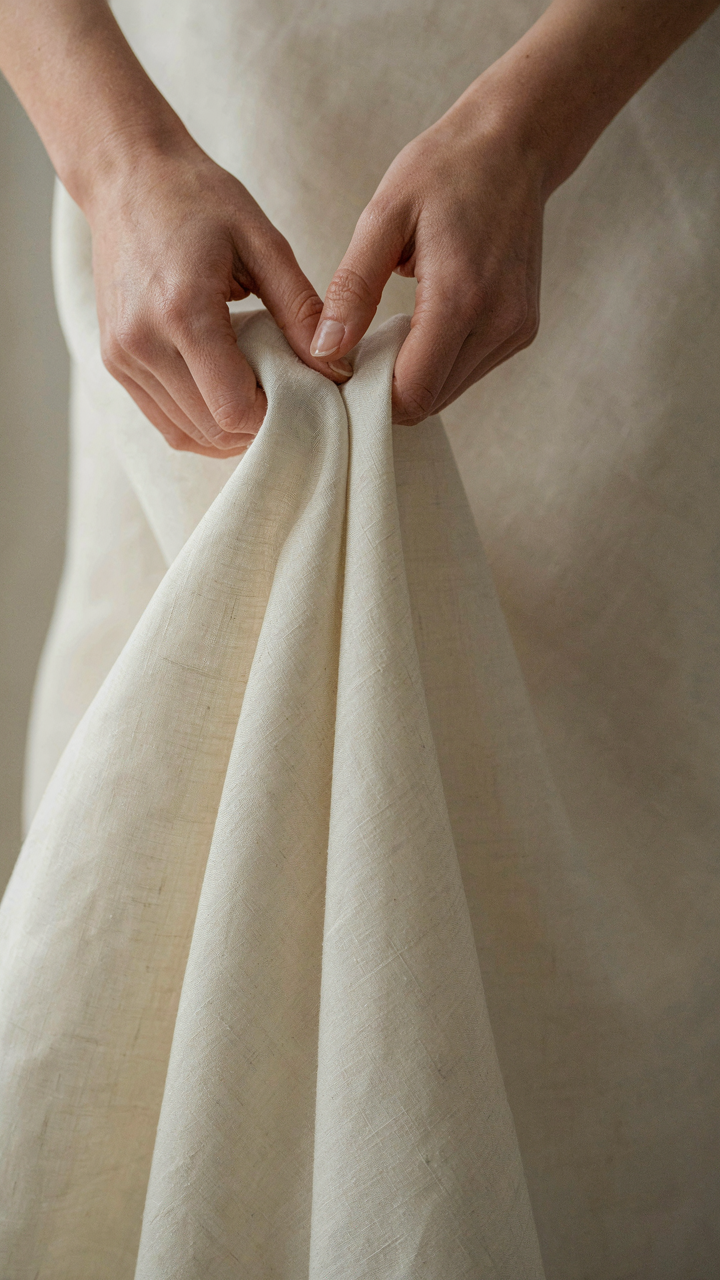
You care about this because you know instinctively that cheap fabric reads as cheap, and you’re right to fear it. Fabric is semiotics: it’s the vocabulary through which material communicates status before anyone speaks. Natural fibers like cotton, linen, wool, and silk have molecular structure that reflects light differently than synthetics. That difference is visible. Cotton at 200 thread count wrinkles visibly and photographs poorly. Cotton at 300-400 thread count holds its shape through a day and catches light cleanly. The gap between them costs nothing to a manufacturer but signals everything to an observer.

Weight and drape separate upscale casual from everything below it. A silk-linen blend hangs with intent. Polyester clings or billows depending on weave. Dense cotton blends don’t move like fabric does—they move like material doing what it’s told. When you wear something that drapes instead of fits, you occupy space differently. The garment doesn’t fight your body. This isn’t psychology. This is physics translating into how others perceive your control and competence in that moment.
Proportion As The Rule System
Fit operates like syntax: the rules that make meaning coherent. In linguistics, syntax determines whether words make sense together. In upscale casual, fit determines whether your silhouette reads as intentional or accidental. Most advice here is lazy—”wear what flatters you” or “dress for your body type.” Wrong. Fit in upscale casual is about proportion relationships, not personal preference. A blazer that hits at your hipbone creates a different visual weight than one that hits mid-thigh. Sleeves that sit at your wrist instead of two inches up your forearm change the entire messaging of the garment.
Silhouette consistency matters more than tightness or looseness. If your top has a clean, defined waist and your bottom is relaxed, the contrast reads as intentional sophistication. If both are loose or both are fitted without logic, you look uncertain. The mechanism is simple: your proportions must tell one story, not contradict themselves. Measure your key pieces against your actual dimensions. If you’re 5’4″, a maxi dress hits differently than it does on someone 5’10”. Adjust inseams, blazer lengths, and neckline depth until each piece aligns with your frame. That alignment is what commands respect, not the brand or the price tag.
Navigating The Nuances: From Casual Wedding To Evening Elegance
Reading The Room Before You Dress
You want permission to dress down without looking like you missed the memo. Here’s the mechanism: upscale casual exists in a social bandwidth where the host controls the floor by setting expectations, and your job is to decode them first, then calibrate. The invite, the venue, the time of day, and who’s hosting all transmit real information about how much formality you actually need.

Don’t rely on the phrase “upscale casual” alone. That term means nothing without context. A cocktail hour at a rooftop bar reads different than a casual dinner at a Michelin restaurant. Call the host or check the venue’s website for dress code specifics. Look at photos from similar events they’ve hosted. Match the energy of the space, not the label on the invitation.
The Strategic Capsule For Code Switching
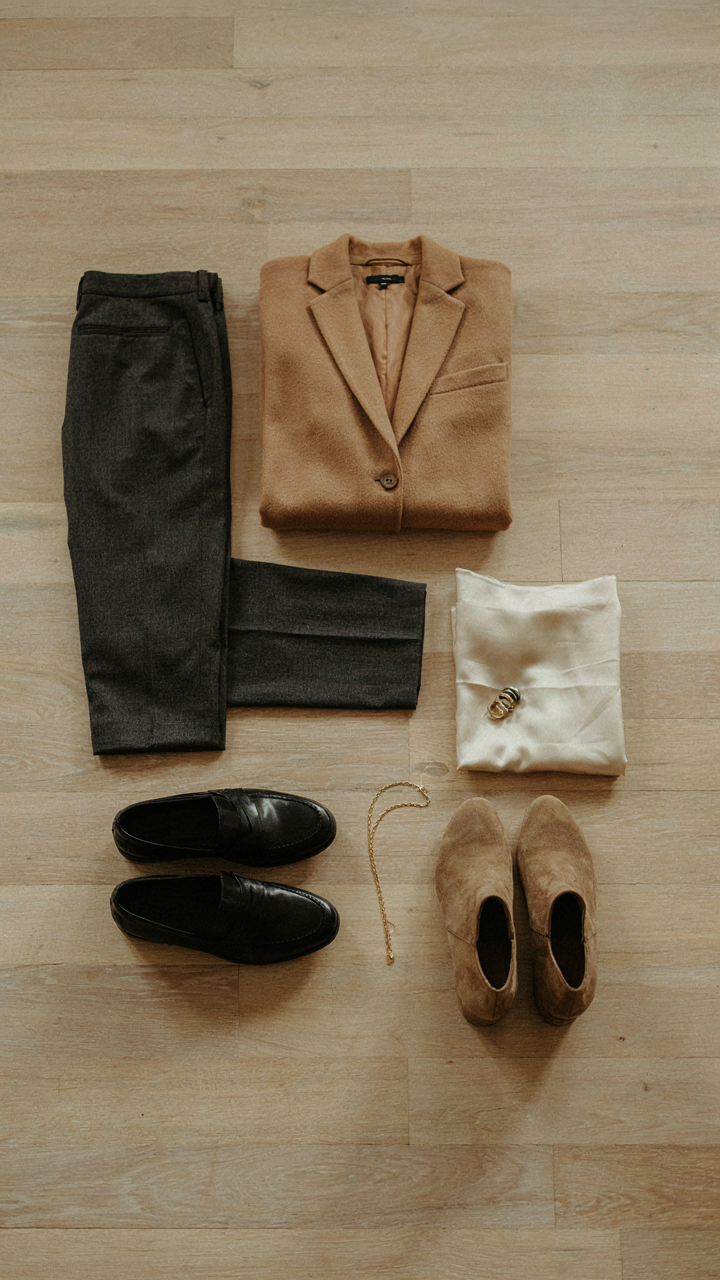
Common advice tells you to own one blazer and swap bottoms. That’s lazy thinking and it misses the real play. Think in terms of anchors and variables from a designer’s perspective: anchors are pieces that hold authority regardless of context (structured trousers, quality white button-up, tailored jacket), while variables are what shift the formality dial (sneakers versus loafers, tucked versus untucked, layering choices).
Build backward from your most formal event first, then subtract. If you own pieces that work at evening elegance, you dial them down for casual weddings. Start with quality trousers in neutral tones that fit through the hip and thigh without excess fabric. Add a tailored blazer in a structured fabric. These two pieces anchor everything. The shoes, jewelry, and layering beneath become your calibration tools for any upscale casual situation you encounter.
The Skirt & Blazer Equation: Maximizing Impact, Minimizing Effort

Why This Pairing Works
You want the outfit to do the work so you don’t have to think about it. The skirt and blazer combination triggers recognition faster than any other upscale casual format because it borrows visual grammar from economics: signal value and effort appear disproportionate. A blazer reads as “I have options” without demanding formal wear. The skirt softens this, which makes the equation work. You’re not dressing down or up. You’re controlling perception through structural balance.

The mechanism is simple: tailored jacket plus a defined lower half creates immediate coherence. This pairing works across body types because the structure does the lifting. The blazer frames your torso. The skirt separates top from bottom, preventing shapelessness. No matching sets required. No styling gymnastics. The combination itself carries the weight, which is exactly why women default to it when they need to look credible but not corporate.
How Fabric And Cut Determine Everything
Most styling advice skips this: fabric choice determines whether you look polished or overdressed, approachable or cold. Cotton blends in blazers read casual. Wool reads sharper. Linen reads intentional but requires pressing discipline. For upscale casual, wool blazers in neutral tones stay the baseline because they hold structure and don’t wrinkle aggressively. The cut matters equally. A fitted blazer with defined shoulders conveys competence. An oversized blazer reads editorial but risks appearing unmotivated.
Skirt fabric and length create the visual anchor. A-line cuts in midi length keep upscale casual grounded because they’re proportionally forgiving and don’t demand specific body types to work. Heavier fabrics like wool or quality cotton blends sit better than thin materials. Lighter fabrics bunch and cling, breaking the intention. Length stops at or just below the knee for this dress code. Shorter reads casual or evening. Longer reads formal. Accessories then fine-tune: a structured belt, simple leather shoes, and a minimal bag complete the equation without noise.
The Failsafe Formula: Never Be Underdressed, Never Overstated
The Essential Uniform Go To Pieces
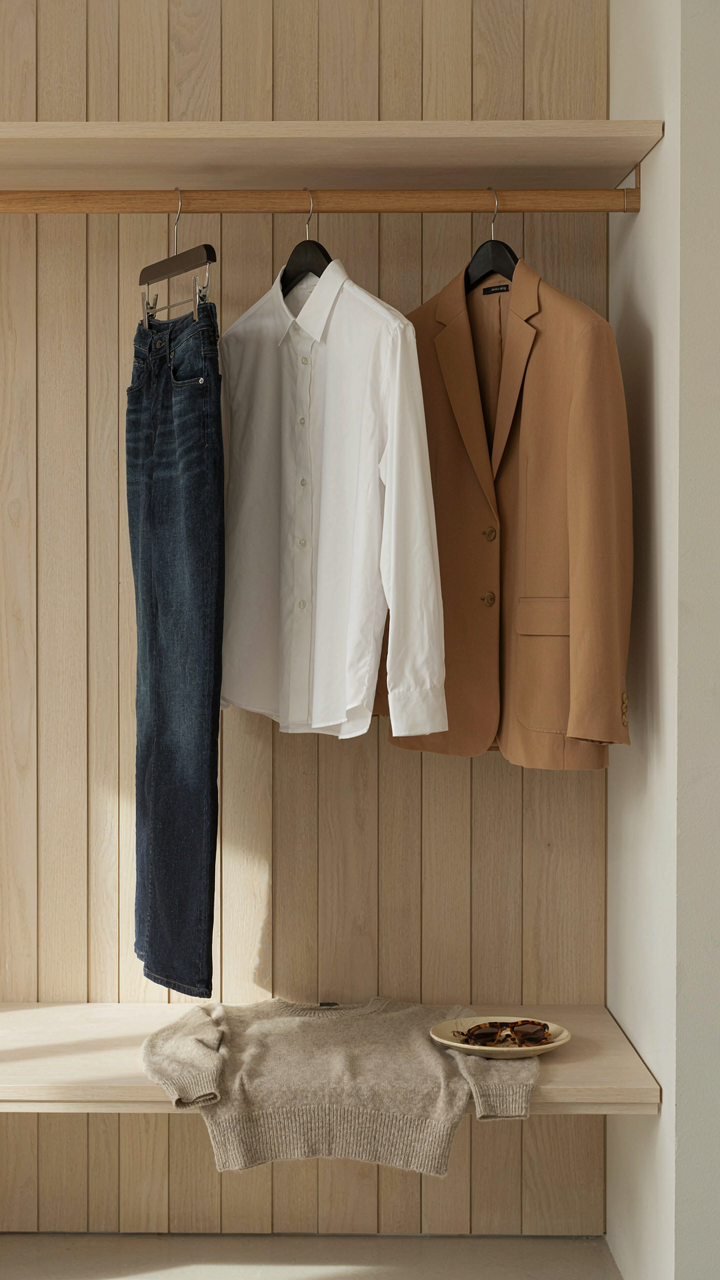
You want this section because you’re afraid of making a mistake in front of people whose judgment matters to you. The mechanism is simple: upscale casual removes decision fatigue by establishing a wardrobe floor. Once you own these pieces, you can’t fail. You show up appropriate, period.
- Dark jeans or tailored trousers: The base layer that works everywhere. Dark wash hides wear and reads polished without formality. Fit matters more than brand here.
- White button-up shirt: Functions as both standalone top and layering piece. Wrinkles less than lighter colors. One piece solves multiple outfit scenarios across seasons.
- Neutral blazer in wool or linen blend: Instantly elevates any combination. Structure matters more than color. Navy, camel, or gray works across contexts and skin tones.
- Simple crew neck sweater: Provides warmth and polish without appearing tryhard. Merino wool resists wrinkles and pilling better than cotton. Neutral tones stack with everything.
- Leather flats or loafers: Comfortable enough for all-day wear, refined enough for upscale settings. Quality leather softens with use and ages well. Eliminates the sneaker problem entirely.

These five pieces form the skeleton. Everything else you add builds outward from here, not around it. Most women own variations of these already but don’t use them strategically. Wear them as default, not backup.
Layering For Versatility Adapting To Environment
Upscale casual borrows from thermodynamics: the system needs to retain heat while allowing controlled release. In dress terms, this means building an outfit that works across temperature shifts and social intensity without looking like you dressed for a different event.
Start with a fitted base layer. Add a mid-weight piece like a cardigan or structured shirt. Finish with an outer layer if needed. This stacking approach lets you adjust for actual conditions instead of guessing the room’s climate. Remove the cardigan and you’re still appropriate. Add it back and you’re covered. The outfit adapts with you, not against you.
Time of day matters more than temperature. Morning coffee calls for less layering than evening dinner at the same venue. A blazer over a simple top works at 6 PM. The same blazer at 11 AM reads like you’re heading to court. Watch how people actually dress in the specific space before you arrive. Layering solves the problem of not knowing by giving you control over visual weight without requiring a full outfit change.
The Unwritten Rules: When Dress Code Rules Don’t Apply
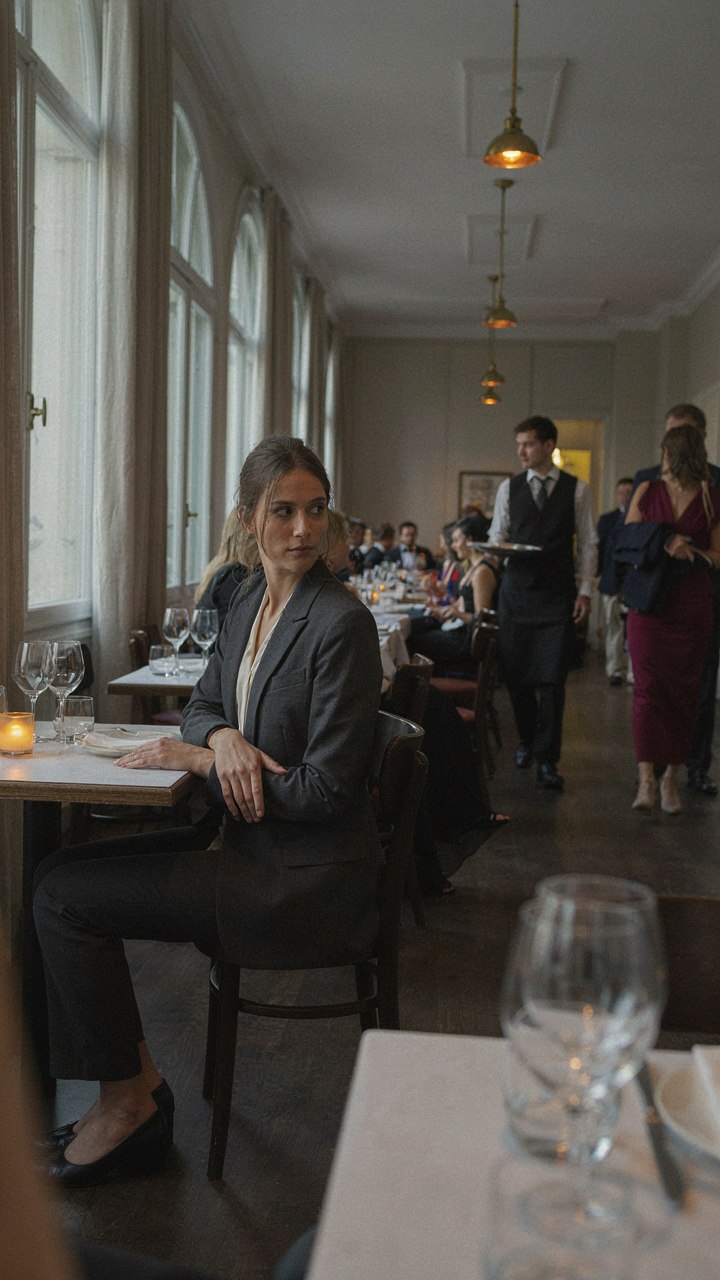
Reading The Room: Context Beats Guidelines
You’re reading this section because you want permission to break the rules without looking like you don’t understand them. Here’s the mechanism: upscale casual dress codes aren’t really rules. They’re signals of what the environment rewards. The stated guidelines are baseline noise. What matters is what people actually wear in that specific setting, at that specific time, among that specific group.

Walk into the venue early or observe who’s already there. Women in upscale casual settings often push boundaries differently than men do. A woman in elevated basics with one statement piece—a designer bag, quality jewelry, a tailored blazer—reads as intentional, not reckless. The environment telegraphs what flexibility exists. Pay attention to who gets deference and what they’re wearing. That’s your real code.
Breaking Rules Strategically: The Calculated Exception
The common advice is to follow the dress code precisely. That’s wrong. Following the stated code exactly signals you’re uncomfortable with ambiguity. Strategic rule-breaking means understanding the principle behind the rule, then executing a deliberate variant that demonstrates you understand the principle better than the rule states it.
In upscale casual, this looks like swapping tailored trousers for dark, well-fitted jeans if the blazer and accessories are refined enough. Or wearing a silk camisole instead of a traditional blouse if the overall silhouette reads expensive and intentional. The move isn’t defiance. It’s showing restraint while signaling confidence. Before you deviate, identify one person in that setting whose judgment you trust. If they’d approve the choice, you have cover. If you can’t find that person, don’t break the rule.
Your Biggest Style Enemy Isn’t The Dress Code; It’s Your Own Indecision
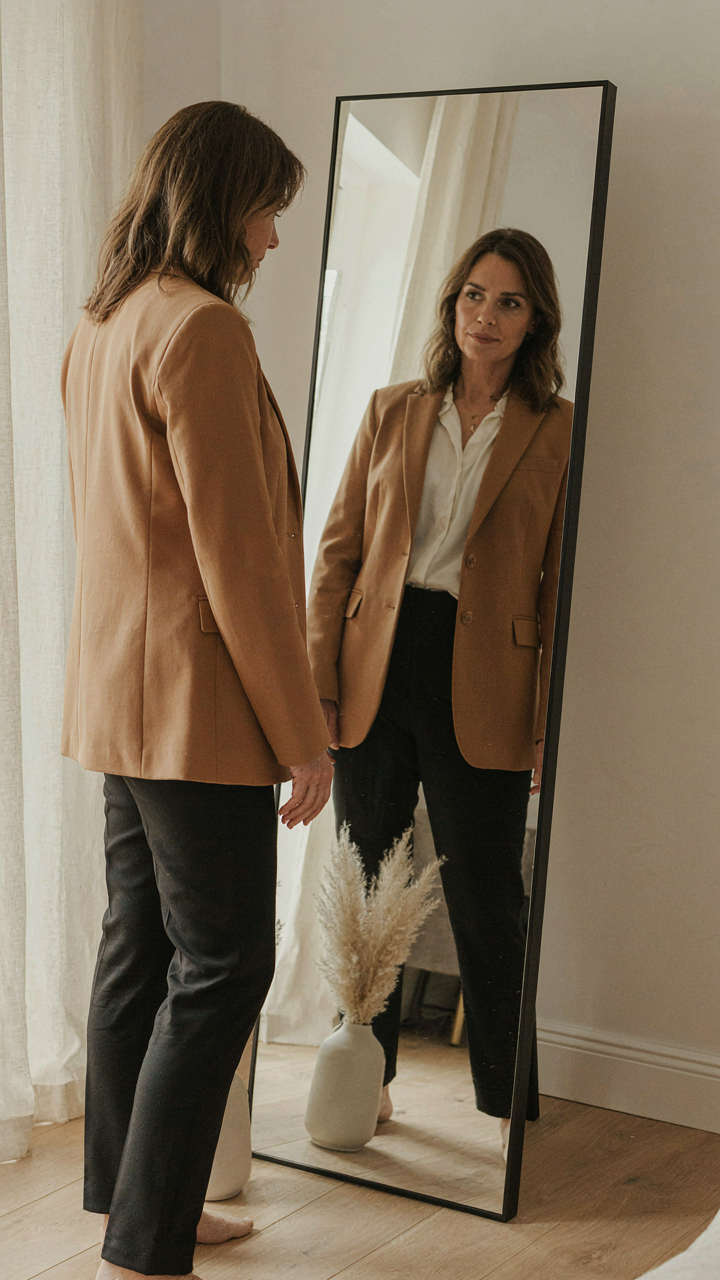
Most women kill their upscale casual look not because they choose wrong, but because they choose nothing. They stand in front of the mirror paralyzed, second-guessing each piece. Stop this. Pick one anchor item today—blazer, tailored pants, quality sneaker—and build three outfits around it. Commitment beats perfection every single time. You won’t unlock confidence until you stop treating getting dressed like a hostage negotiation.




