
The Unseen Audience: Why “Camera Ready” Is A Trap
Document First, Perform Later
You want to look good in photos because you think strangers online will validate the trip. That’s not a character flaw—it’s how attention works. But the mechanism is simple: performing for an invisible audience while traveling kills the actual experience you came for. Self-documentation means capturing what happened, not staging what you wish happened. The outfit matters differently when you’re recording reality instead of constructing it.
Travel photography that works comes from being present enough to notice light, moment, and genuine interaction. When you’re hyper-aware of how you look in every frame, you miss the shots that actually matter—the unguarded laugh, the way morning light hits a street, the texture of a place. The best solo travel photos aren’t orchestrated. They’re evidence that you were there, doing something real, wearing something practical that worked.
The Minimalist Uniform Isn’t Authenticity
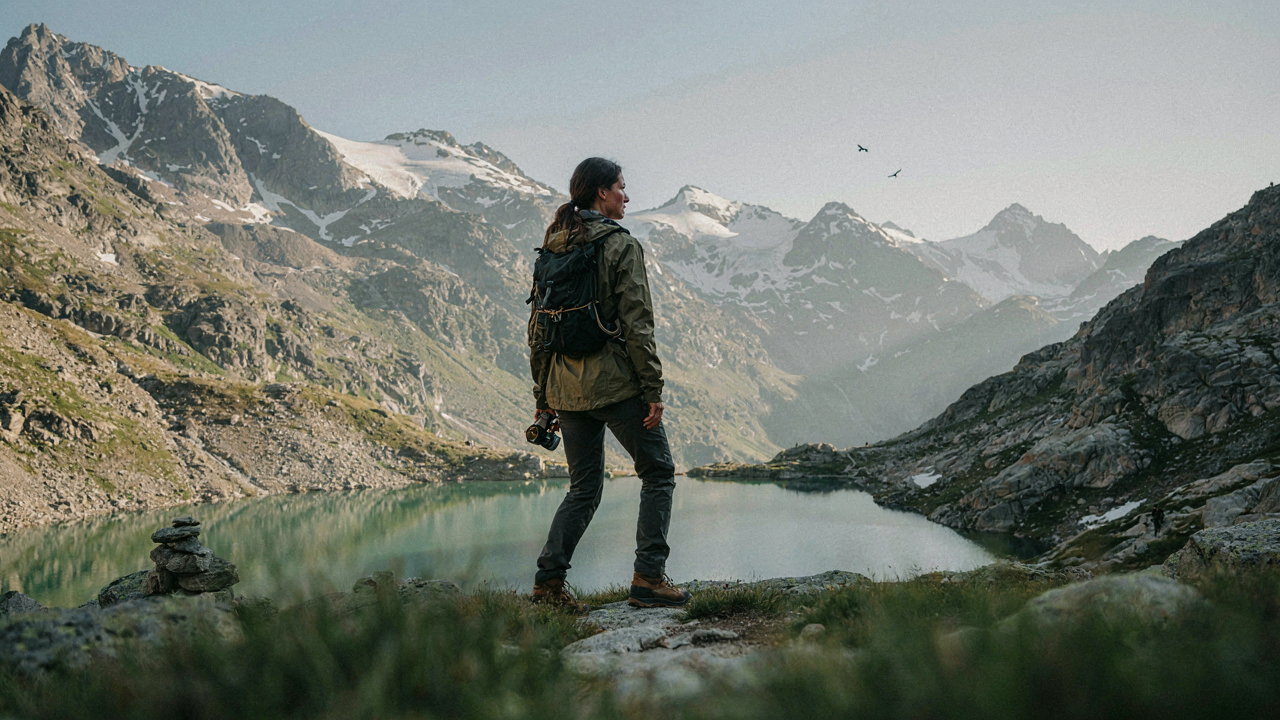
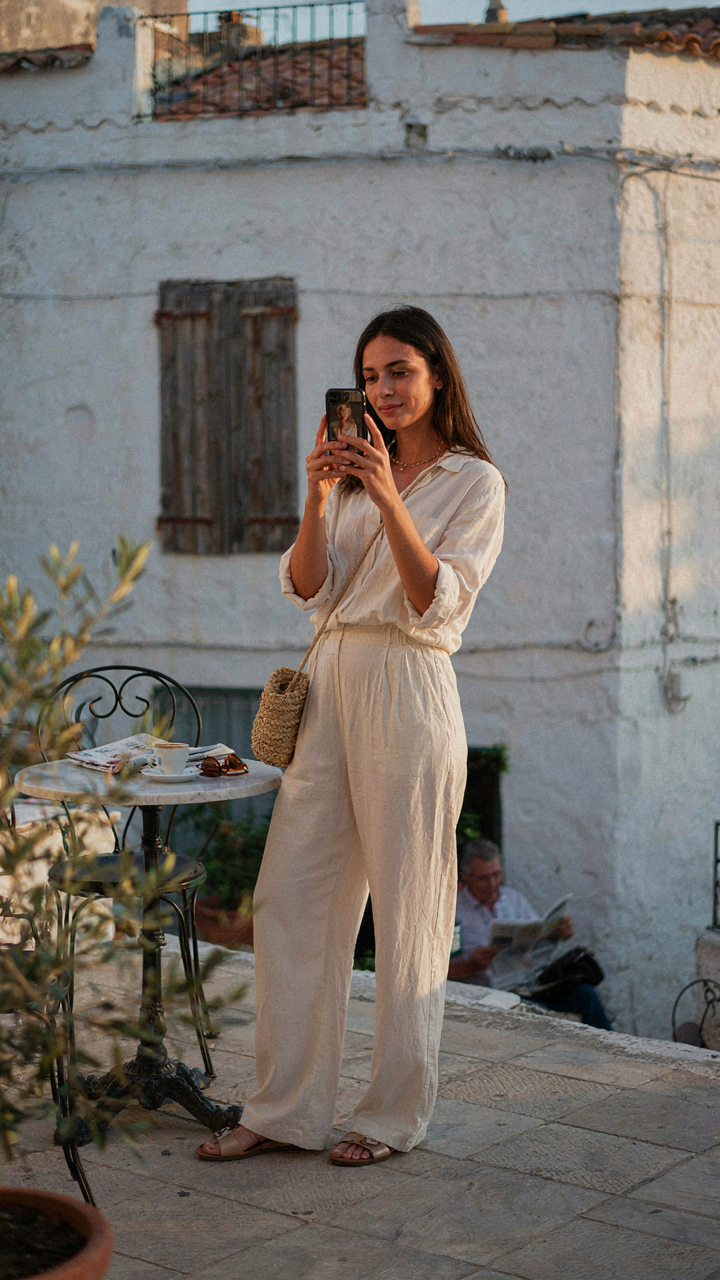
The Instagram solo travel aesthetic—cream linen, oversized sunglasses, neutral tones, artful candids—is a genre now, which means it’s already consumed. Fashion marketing normalized the idea that there’s a “correct” way to look while traveling alone. That’s false. Most functional solo travel outfits look nothing like that. They’re worn jeans, technical fabrics, shoes rated for eight miles of walking, and whatever actually protects you from weather.
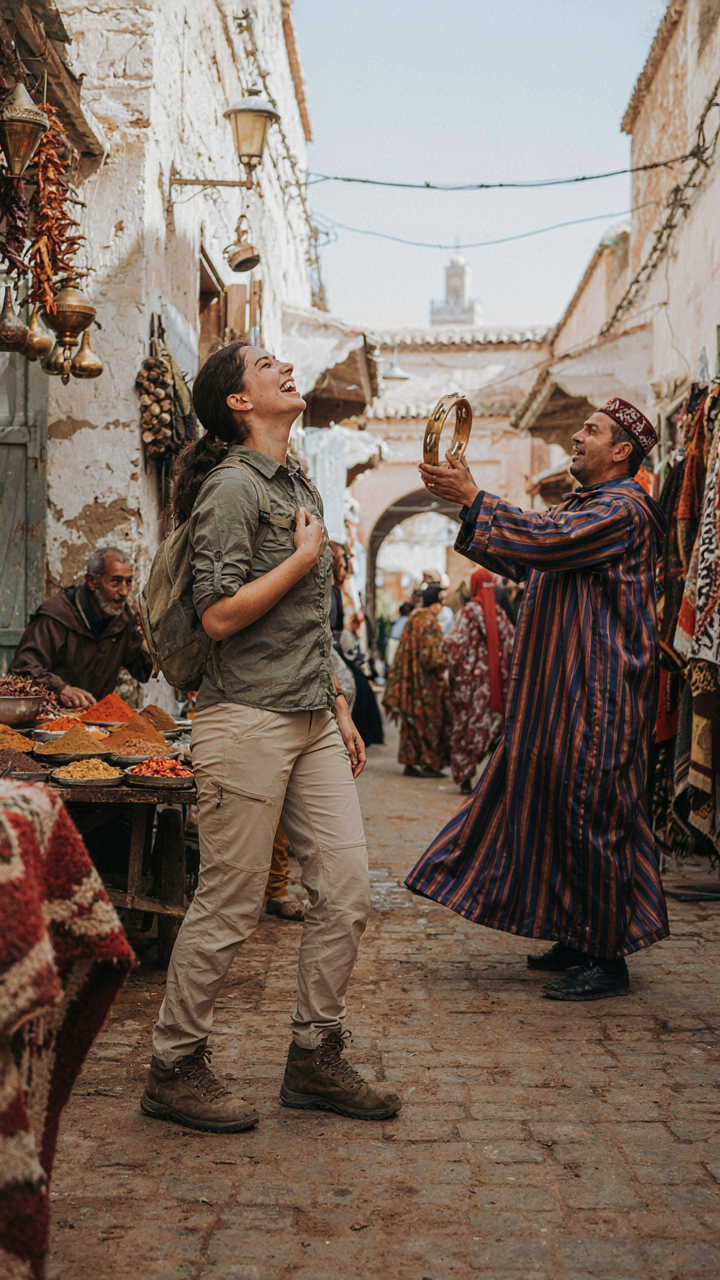
The real tell of a forced aesthetic is repetition across different climates and activities. If your outfit works for a street market in Morocco and a hiking trail in New Zealand with the same styling logic, you’ve chosen performance over function. Actual solo travel requires outfit flexibility—layering systems that change based on what you’re doing and where you are. Stop treating your closet like a mood board. Treat it like a toolkit that solves problems you’ll actually face.
The Visual Thesis: Defining Your Solo Travel Persona
Start With Intent, Not Aesthetics
You want to look good in photos because you’re afraid the trip won’t feel real unless you have proof. The mechanism is simple: your outfit becomes the visual anchor for every frame, so it has to match what you’re actually doing, not what you think you should look like. Most people reverse this. They pick an aesthetic first, then force it onto incompatible destinations. That creates cognitive dissonance in every shot.

Before you touch a suitcase, name your primary travel mode: are you moving through cities, hiking terrain, sitting in cafes, or mixing all three? Your outfit thesis lives in that answer. A minimalist urban explorer needs different pieces than someone spending two weeks at a beach town. The specificity cuts through the noise of generic “travel outfit” advice that works for nobody.
Translate Vision Into Fabric And Color
Design thinking borrows from architecture the concept of load-bearing walls. Apply it here: certain outfit pieces carry the visual weight of your trip’s entire story. A structured linen shirt works differently than a t-shirt because it signals intention. Worn denim signals something else entirely. Your core pieces are not load-bearing walls but load-bearing signals. They anchor how the camera reads every single frame.
Your color palette should reflect the place’s natural light, not your personal brand. Golden hour in Mediterranean towns plays differently with warm neutrals. Overcast Nordic light flattens saturated colors. Shoot test photos on day one in candidate outfits to see how your clothes actually render on camera before committing to a week of mismatched tones. This one protocol step eliminates 80 percent of flat-looking travel photos.
The Travel Pose Protocol: Engineered Authenticity
Mental Mapping Before You Land
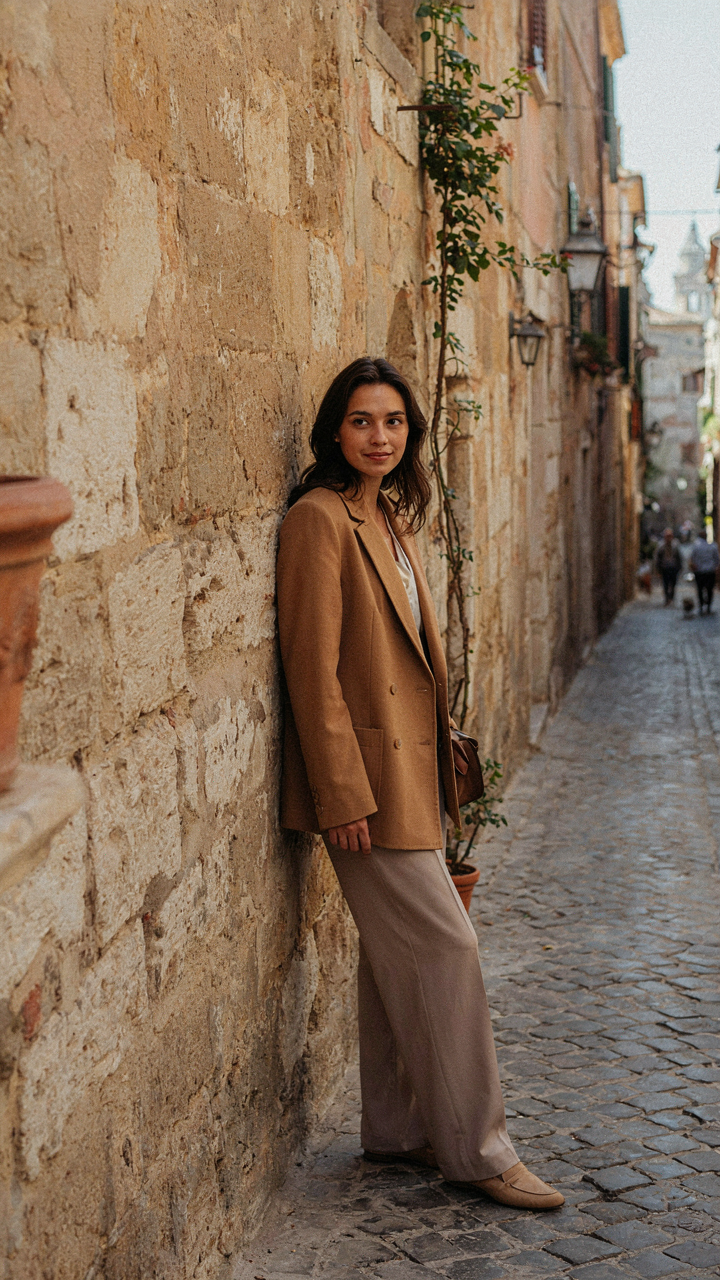
You want proof that you were there, that your life looks intentional. The mechanism is simple: your brain won’t compose a pose in real time under pressure. You need a visual database built before the camera appears. Pre-visualization works like architectural blueprinting. You sketch the shot before construction begins, which compresses decision time from minutes to seconds.

Walk through each location type you’ll encounter and lock in two to three poses per environment. Beach shots demand different body angles than urban streets. Mountains require different arm placement than cafes. Your outfit only works if your pose works. Document these mentally: what your chin does, where your weight shifts, how your hands rest. This isn’t about being stiff. It’s about removing the paralysis that kills authenticity.
The Candid Friction Method
Real candid photos fail because you’re fighting your own self-awareness. Most travel photography advice ignores this: authentic-looking shots require staged preparation, not pure spontaneity. Steal from documentary filmmaking, where “natural” scenes get blocked before rolling. You need micro-adjustments that look unplanned but aren’t.
- The Halfway Turn: Face the camera at 45 degrees, not dead-on. Slightly rotate shoulders away while keeping your gaze forward. Creates dimension without the “looking at you” stiffness.
- The Walking Break: Ask your travel companion to shoot while you’re mid-stride, then pause. Motion blur and genuine expression happen in transition, not in stationary poses.
- The Ground Anchor: Place one hand or forearm on a surface—bench, railing, table edge. Gives your upper body natural tension and kills the dangling-arm problem.
- The Over-Shoulder Glance: Position yourself looking away, then glance back slightly toward the camera. Requires minimal repositioning but reads as caught-in-the-moment.
- The Depth Layer: Stand with foreground or background elements between you and the lens. Your outfit reads better with environmental context, and the framing masks awkward angles.
The adjustment phase takes ten seconds per pose. You move, the photographer adjusts framing, you micro-correct your chin angle or shoulder height, then shoot. Not five minutes of trial and error. The outfit shows better when your body mechanics are locked. Precision in pose execution is the difference between a photo you delete and one you keep.
The Environmental Algorithm: Adapting To Global Backdrops
Fabrics That Survive What You Don’t
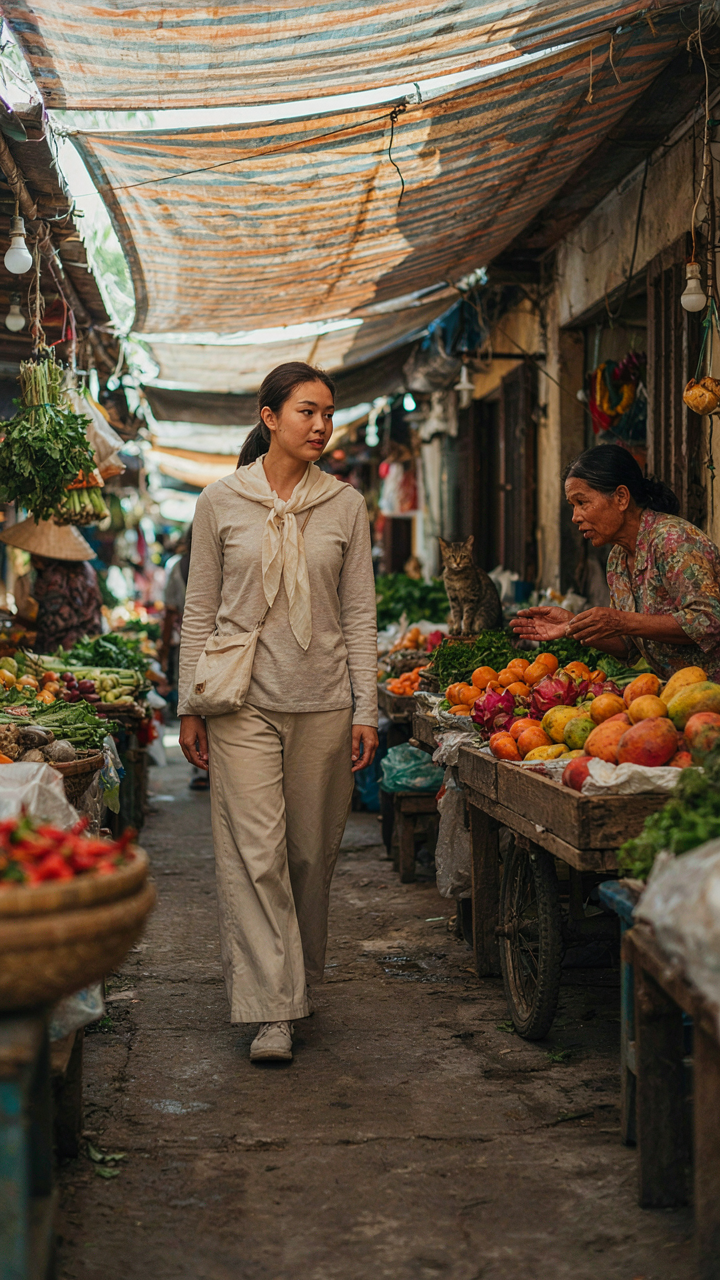
You want to look effortless in every climate because you’re terrified of looking unprepared. Here’s the mechanism: fabric choice isn’t aesthetic—it’s thermodynamic. Cotton absorbs moisture and dries slowly, making you cold in humid climates and keeping you damp in photos. Merino wool regulates temperature across 40-degree ranges and resists odor, meaning one shirt works Vietnam to Lebanon without washing between shoots. Synthetic blends with nylon or polyester wick moisture and dry in hours, which matters when you’re moving daily and can’t afford wrinkled gear.

Layering isn’t about adding bulk. It’s about control. A lightweight long-sleeve base layer under a breathable overshirt gives you range without the weight penalty that kills mobility in frame. The real win: these layers photograph as intentional styling, not costume changes. Choose neutral tones in technical fabrics so you can add or subtract pieces based on light and temperature without breaking visual continuity across your image set.
Respect Reads As Authenticity
Cultural context isn’t a moral checkbox—it’s a technical requirement for images that don’t date themselves as ignorant. Showing bare shoulders in a mosque-heavy region or wearing form-fitting clothes in conservative areas marks you as an outsider before the camera even focuses, which means your photos read as tourist documentation instead of integration. Research religious sites, local dress norms, and seasonal modesty expectations before you pack. This information lives on travel blogs, visa requirement pages, and regional tourism boards.
The mechanism is simple: clothes signal whether you’re observing or invading. Fitted, neutral-tone trousers work across Lebanon, Vietnam, Thailand, and Morocco without compromise. A scarf or light wrap addresses both sun protection and cultural respect simultaneously. Long sleeves in natural fabrics handle both climates and expectations. When locals see you’ve made an effort to blend rather than stand out, they permit closer shots, better light windows, and genuine moments instead of posed defense.
The Kinetic Photography Method: Movement As Storyteller
Body Language Builds Frame Narrative
You want the photo to do the work so you don’t have to explain yourself later. That’s the real reason this matters. Body language is borrowed from theater staging—where blocking positions an actor in space to telegraph intent before they speak. In solo travel photography, your outfit and posture combine to create the narrative frame without captions. Stillness reads as passive. Motion reads as agency.

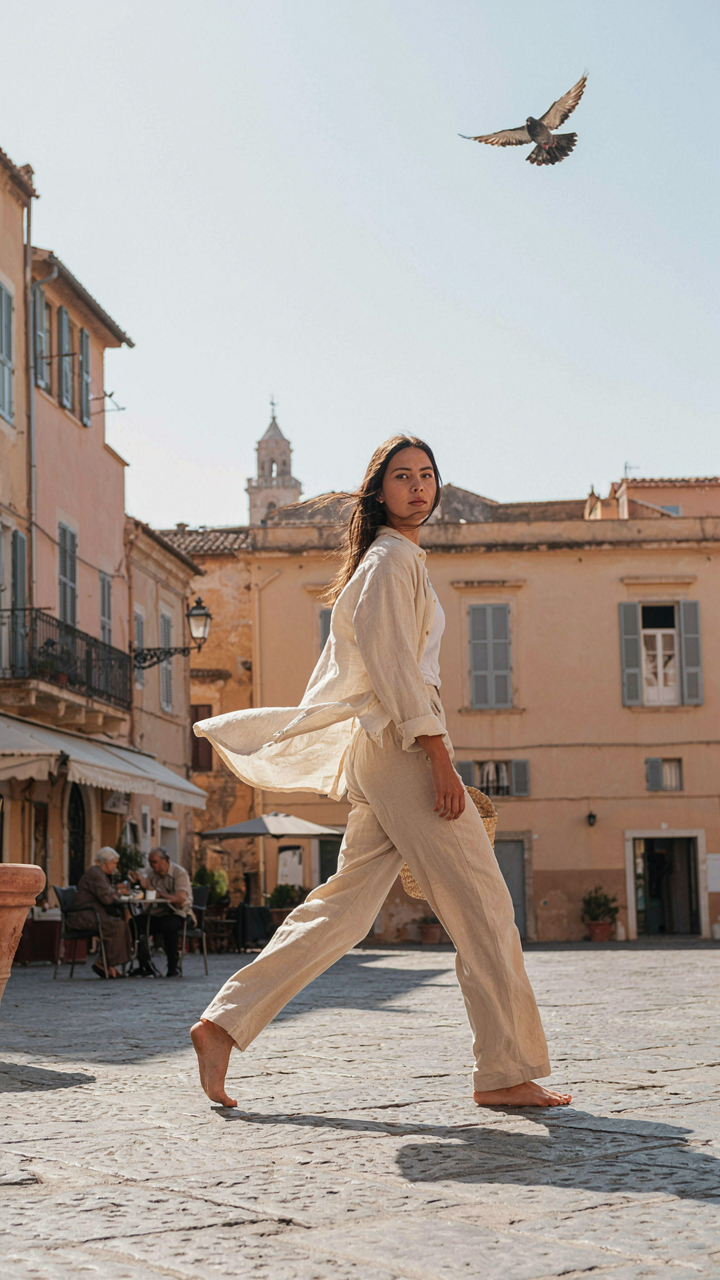
The mistake most travel photographers make is treating the outfit as decoration and the pose as an afterthought. Reverse this. Choose pieces that move with you: linen that catches air, layers that shift when you walk, silhouettes that telegraph action rather than rest. Wear something that looks intentional in motion, not just in stillness. A shirt that drapes differently when you turn creates visual depth the camera captures automatically. Your body becomes the story; the outfit amplifies it.
Velocity And Visual Weight In Frame
Dynamic composition is physics applied to the frame—where velocity refers to how fast visual elements move through space, and weight refers to how much attention they demand. Blur isn’t accident; it’s intention. Motion blur occurs when you or your subject moves faster than the shutter can freeze, which creates directional energy the viewer’s eye follows instinctively.
Wear neutral or single-tone layers when you’re intentionally moving through frame. This prevents visual noise from competing with blur patterns. Solid colors let motion blur speak without fighting pattern clutter. If you’re stationary and your companion shoots, position yourself near foreground elements so they stay sharp while background blurs. The outfit choices that work best are those that don’t fragment visually when captured mid-motion. Monochromatic or blocked color palettes compress into unified shapes, making blur patterns readable instead of chaotic.
The Europe Photo Poses Anomaly: Beyond The Cliché
Why The Same Poses Keep Failing You
You want proof that your trip mattered. That’s the real reason you care about poses that look “different” while still being recognizable to people back home. The mechanism is simple: consensus poses exist because they work visually, not because they’re interesting. Every tourist photographs the Eiffel Tower the same way because the angle is objectively strong. Copying it proves you went there, but it also proves you saw what everyone else saw. The problem isn’t the pose itself. It’s that you’re competing for novelty in a space where the landmark dictates 80 percent of the frame already.
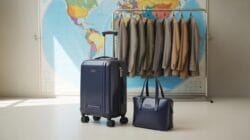
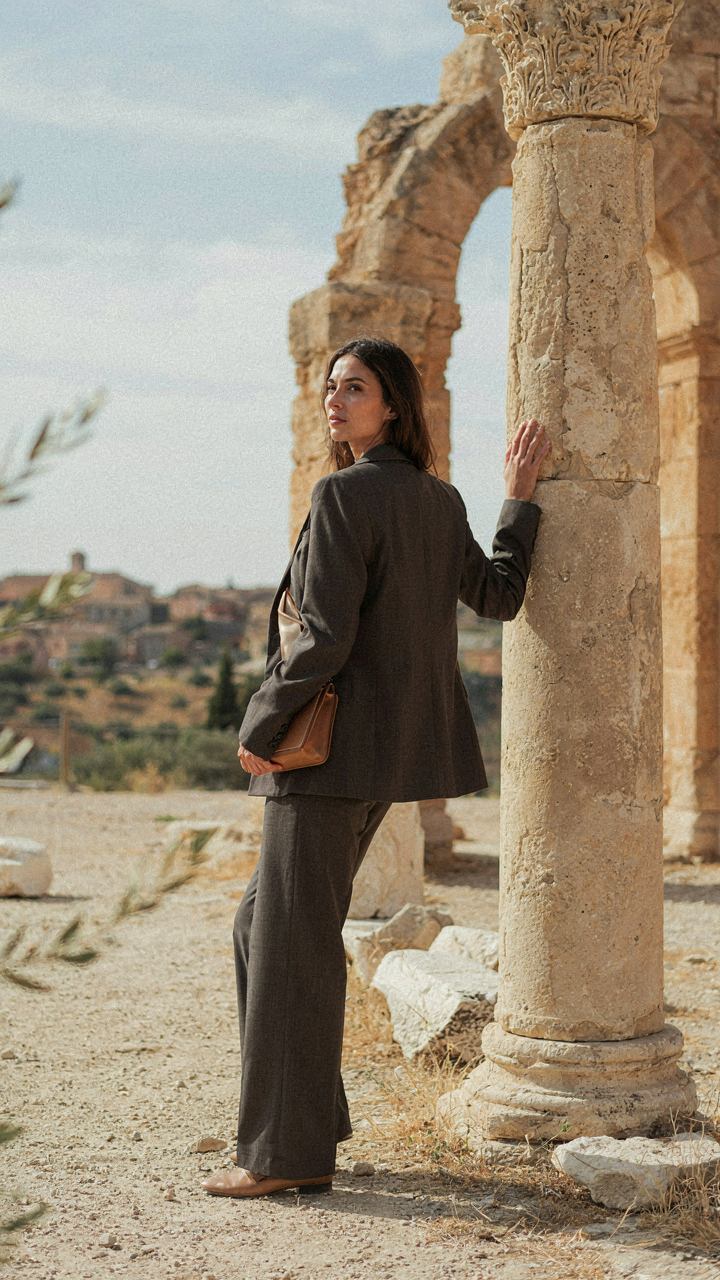
The outfit becomes your only variable. Most travel advice tells you to “dress for the location” or “blend in.” That’s incomplete. Your clothing only registers in the pose if it breaks the expectation of what someone wearing that outfit should be doing in that location. A woman in a structured blazer standing still at the Colosseum reads as a tourist. The same woman climbing a side staircase or sitting on unconventional stone reads as someone who knows the place. The outfit didn’t change. The interaction did.
Where The Angle Actually Lives
Photography borrowed the concept of depth of field from optics, but solo travel poses need depth of interaction. You’re not just choosing where to stand relative to the landmark. You’re choosing what action or stillness you’re performing in relation to it. Most poses fail because they’re symmetric with the landmark, meaning your body mirrors its scale and importance. That’s the visual grammar of a tourist photo. Break the grammar by positioning yourself in the margins or in motion toward something else in the frame.
Your outfit works hardest when the pose forces the viewer’s eye to travel through multiple planes. Wear a contrasting color or texture in a fabric that moves. Position yourself mid-stride, not mid-smile. Lean into an architectural edge instead of facing the camera head-on. These aren’t tricks. They’re the difference between being the subject of the photo and being part of the landscape. The outfit carries more weight when your posture and positioning demand that viewers actually look at what you’re wearing instead of just registering that you’re there.
The Wardrobe Entropy Principle: Minimize To Maximize Impact
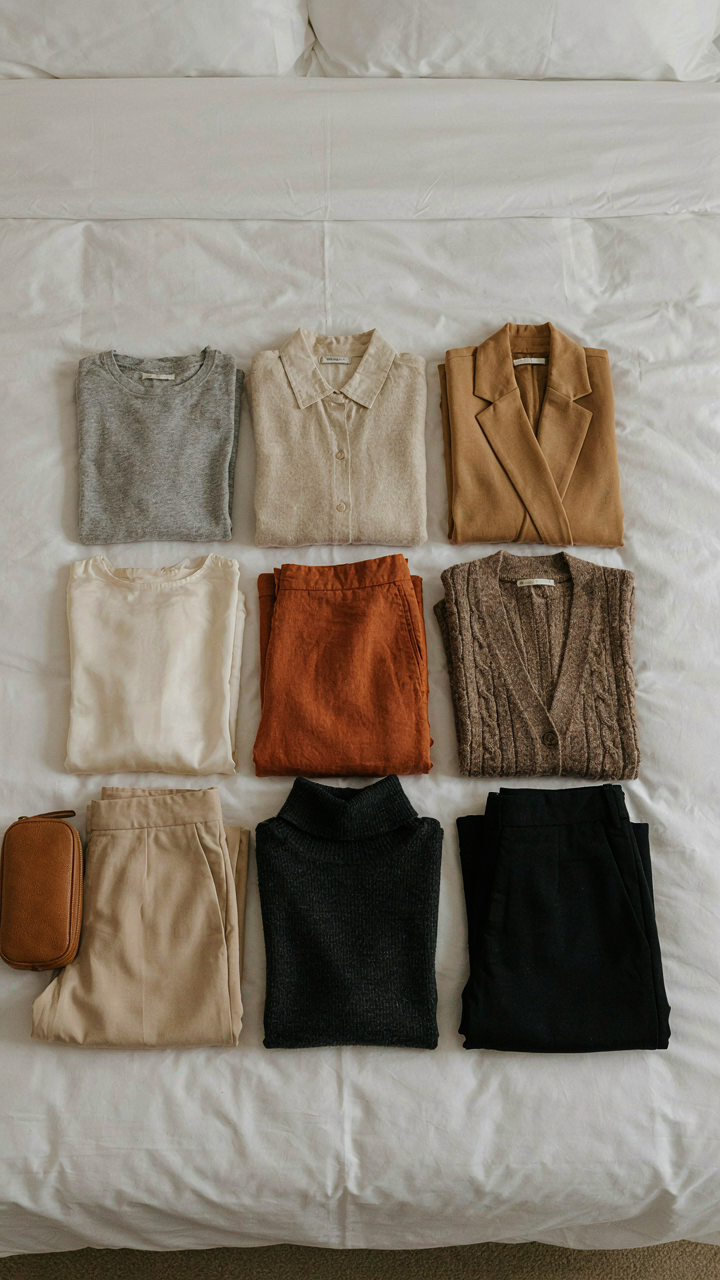
Decision Fatigue Kills Your Shot Composition
You want to look effortless in photos because effortless reads as confident, and confidence sells the image you’re building. Here’s the mechanism: thermodynamics teaches us that systems with high entropy require more energy to maintain. Your brain is a system. Every outfit choice you make on a trip drains cognitive energy that should go toward composition, light, and storytelling. Pack light and you eliminate decision fatigue before it starts.

Most travel advice says “pack versatile pieces.” That’s incomplete. The real move is recognizing that fewer options force better constraints. When you have twelve shirts, you waste mental cycles comparing them. When you have three, you pick one and move on. This mental bandwidth becomes available for actual photography work. Your outfits aren’t the creative output. They’re the infrastructure that clears space for it.
The Capsule Logic
A capsule wardrobe isn’t about looking fashionable. It’s about maximizing outfit combinations from minimal pieces, which reduces luggage weight and decision burden simultaneously. You’re applying constraint-based design: each item must work with at least three others. Pick a neutral base color, add one accent color, and include pieces that layer and contrast. Dark jeans, white tee, navy button-up, and a structured jacket create six workable outfits without redundancy.
The math is simple but overlooked. Five pieces in complementary colors and neutral tones generate fifteen combinations. Ten pieces generate forty-five. The jump from chaos to order happens fast. Stick to muted palettes because they photograph consistently across different lighting conditions and locations. When you travel to shoot, every outfit you wear becomes a potential background element in your content. This isn’t vanity. It’s production design. Photograph yourself the same way you’d photograph a product: with intentional repetition that builds visual recognition.
Post Production As Narrative Arc: The Final Polish

Curate Images Around Your Visual Thesis
You want people to think you’re a better photographer than you actually are. That’s not judgment—it’s the mechanism. You shot 300 frames across seven countries. Nobody needs to see all of them. Curation is subtraction disguised as selection. Pick the 30 to 40 images that reinforce a single visual statement. Your outfit choices matter less after the shoot ends than the story you build from what you keep. Narrative beats individual shots.

A visual thesis means constraint: consistent color temperature, repeating compositional patterns, or outfit elements that echo across frames. If you shot in neutral base layers and earth tones, your final gallery should reflect that intentionality. Don’t jump between aesthetic systems. That 4K blue-hour shot in your formal hiking jacket contradicts the minimalist linen narrative you’re building. Kill it. Coherence compounds perceived quality faster than any individual frame ever will.
Enhance Mood Without Visible Editing
The common advice says “enhance your photos with warm tones and contrast.” That’s wrong. Over processing screams insecurity and destroys the outfit’s credibility in context. Subtle editing means the viewer never notices the edit happened. Lift shadows to reveal texture in your technical fabrics. Reduce highlights to protect skin tone and keep clothing details readable. These moves preserve reality instead of imposing a filter layer on top of it.
Consistency matters more than drama. Shoot in the same light when possible. If you must edit across different conditions, use one preset as your baseline, then make minor adjustments per image. Your outfit choices—the fabrics, colors, fit—do the emotional heavy lifting already. The edit just removes obstacles between what you wore and what the camera captures. Lock your color temperature between 4500K and 5500K across the set unless environmental conditions demand otherwise. Then move forward.
The Real Obstacle Isn’t Your Wardrobe, But Your Courage To Define Your Own Visual Legacy, Unburdened By External Gaze
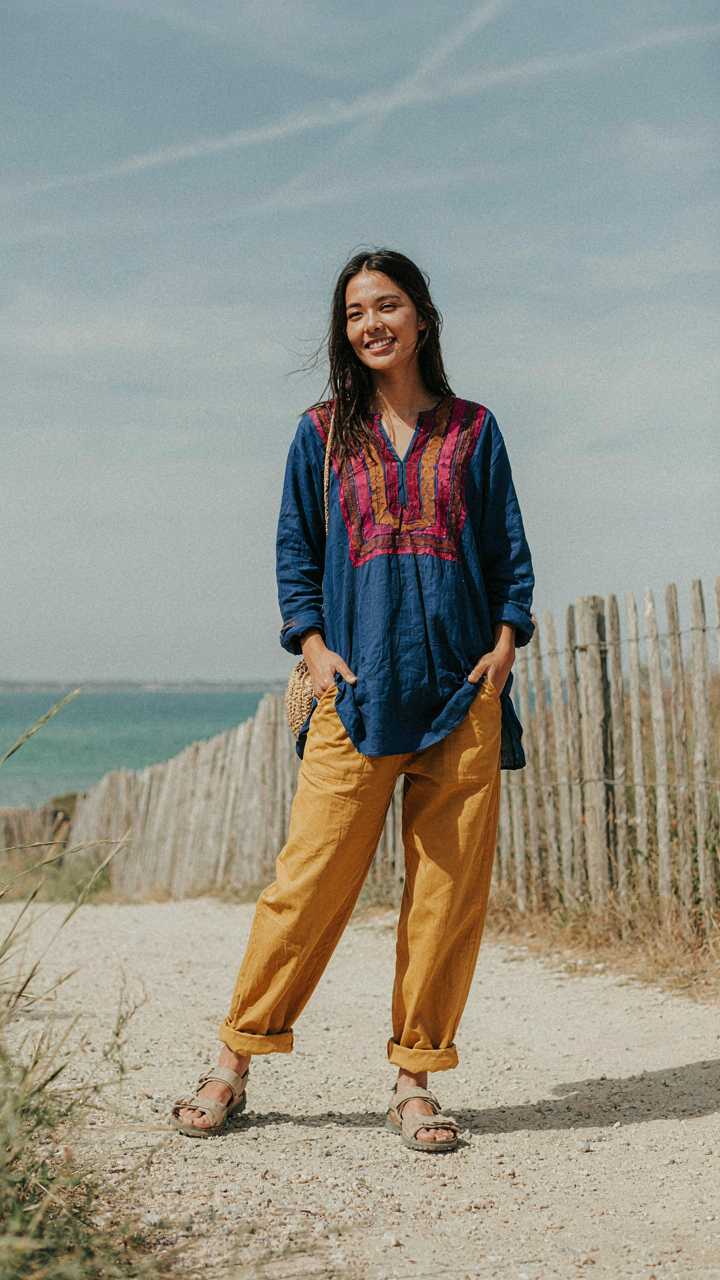
You don’t need permission to look the way you want in photos. The outfit matters less than the decision to stop performing for imaginary judges. Pick one piece today that makes you feel like the person you actually want to be, not the person you think you should photograph as. Wear it tomorrow. The confidence you project becomes the only aesthetic that matters.