


The Waterfront Fallacy: Why Your “Practical” Attire Is Failing You
Comfort Over Coherence Costs You
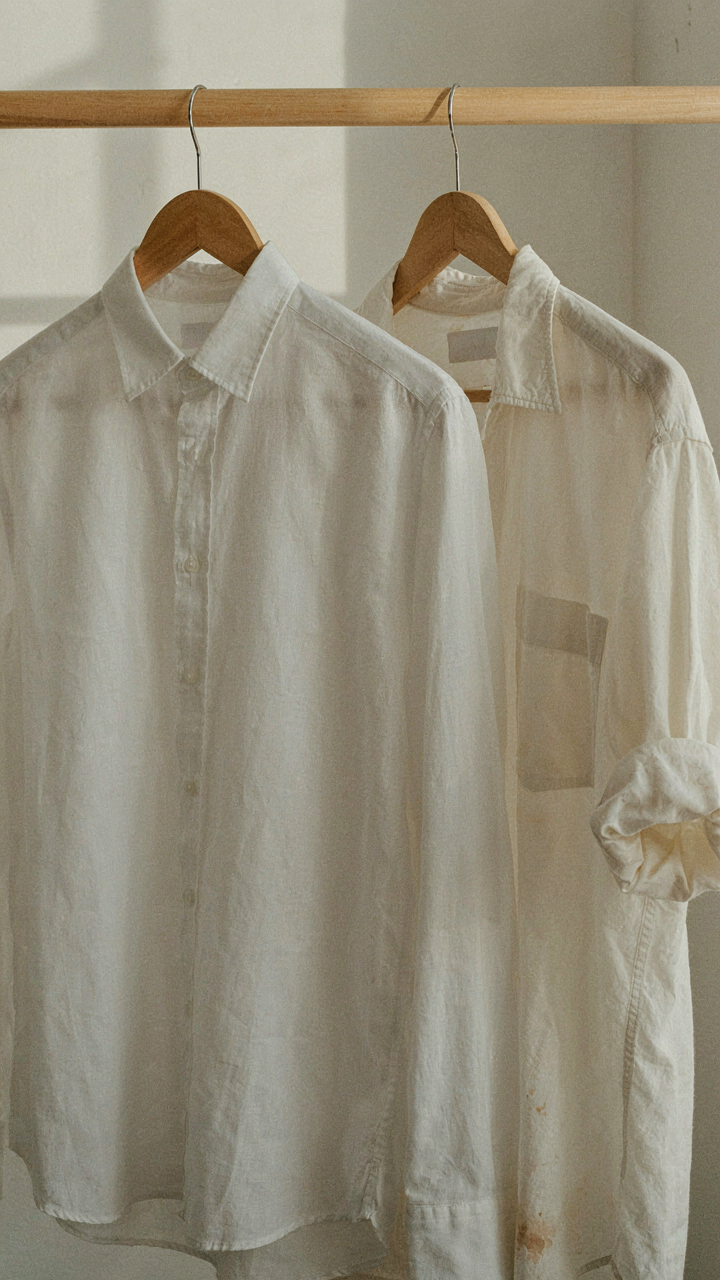
You want to show up comfortable because you’re afraid you’ll feel out of place. Here’s the mechanism: comfort and aesthetic cohesion operate on opposite vectors at lakeside weddings. Choosing clothes that prioritize your physical ease signals to the room that you didn’t account for the environment when you got dressed. The couple planned around waterfront conditions. You’re announcing you didn’t.
Standard advice tells you to “wear breathable fabrics and skip the heels.” Incomplete. Breathable linen matters, but so does cut, color coordination, and how a fabric drapes in humidity. A cotton blend that fits poorly reads as sloppy regardless of temperature. A fitted linen piece that’s slightly warm reads as intentional. You’re choosing between being comfortable and being coherent. The coherence wins every time in how people perceive you.
The Silent Status Broadcast
Semiotics is the study of signs and meaning. In lakeside wedding attire, fabric choice is a semiotics signal that travels before you do. Linen signals preparation and expense. Polyester signals resignation. Cotton blends sit ambiguous. Before anyone speaks to you, your material choice has already told them whether you researched the environment or showed up in something that works everywhere because nothing about it works anywhere specific.
Most people get this backward. They think casual waterfront means “anything goes.” It doesn’t. Casual waterfront actually requires more precision because the stakes are lower and the dress code is unwritten. You can’t hide behind formality. A rumpled linen shirt over fitted trousers reads as “I understood the assignment.” The same person in untucked khakis reads as “I grabbed what was clean.” The difference isn’t effort. It’s whether you made one tactical decision before getting dressed: acknowledge the setting exists and dress for it, not against it.
Decoding The “Breezy” Deception: Beyond The Wind Chill
Humidity’s Real Damage On What You’re Wearing
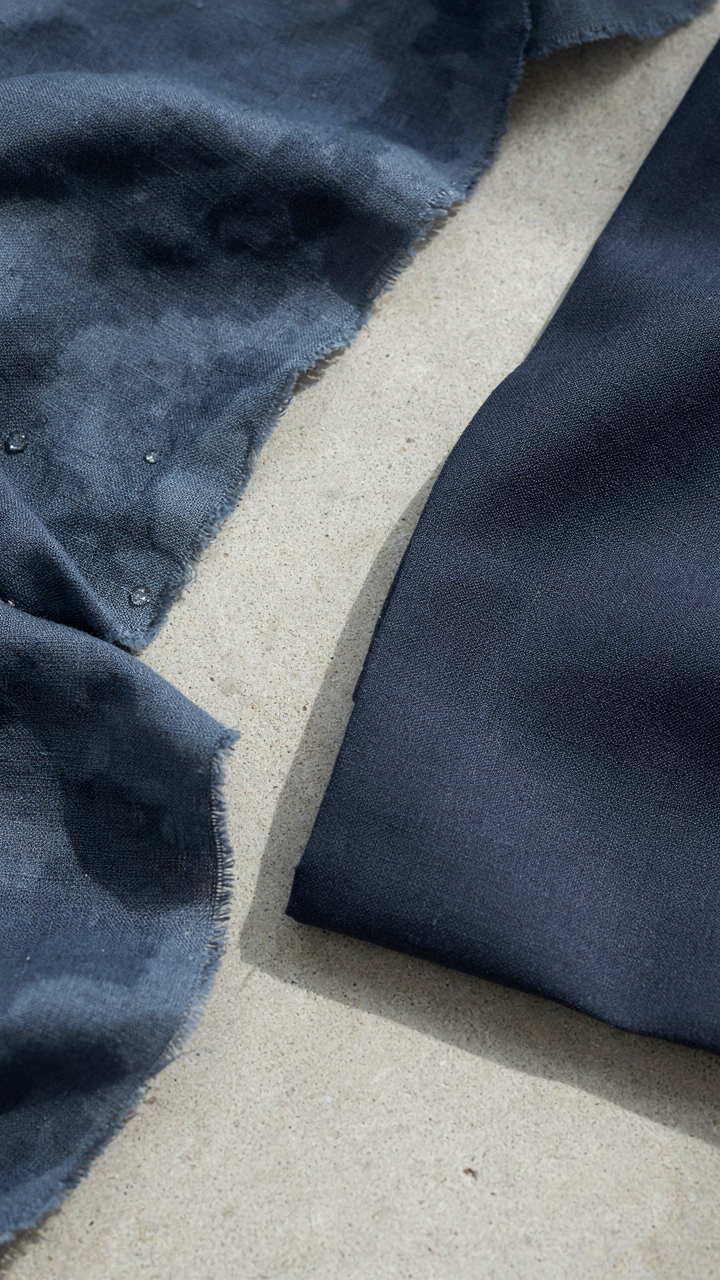
You want to look composed at a lakeside wedding because composure signals control, and lakeside humidity strips that away in real time. Humidity operates on fabric like osmotic pressure operates on cell membranes: water molecules move across semipermeable barriers until equilibrium hits. Your natural fiber absorbs moisture, swells microscopically, and loses its structure. Cotton wrinkles faster. Linen goes limp. Even wool loses its snap. This isn’t about comfort. This is about your clothes physically changing shape throughout the day.

Hair absorbs moisture too, which is the mechanism nobody names plainly. The cuticle layer opens in humid air, thickening strands and disrupting whatever style you locked in. Synthetic fabrics don’t absorb water, which is why they cling and wrinkle differently than naturals. Your move: wear performance blends or pure synthetics for the ceremony and reception time. Save pure cotton and linen for pre-event photos near the parking lot. Bring a microfiber cloth, not cotton, to blot moisture without redistributing it.
Sun Damage Without The Tactical Gear Look
The generic advice says wear SPF and sunscreen. That misses the actual mechanism. Extended water reflection amplifies UV exposure by roughly forty percent compared to inland settings. The sun bounces off the lake surface straight back at your face and exposed skin. Sunscreen alone won’t cut it for a four-hour event. You need physical barriers that don’t read as “I’m worried about wrinkles.” Lightweight linen shirts with tight weaves block UV without screaming sun protection. Oversized sunglasses that sit closer to the face do more work than you think. A wide-brimmed hat worn at the start prevents the accumulated damage that shows up in photos. Skip reflective sunglasses and metallic accessories near water, as these create glare in photos and draw attention to protection rather than appearance.
Wear your hat during cocktail hour and the first thirty minutes. Remove it before formal photos begin. This prevents the hat line on your forehead while still capturing the damage-prevention window. The skin damage accumulates fastest in the first two hours of sun exposure. You’re protecting the specific hours when you’re most visible and most photographed. That’s the actual protocol.
The Effortless Elegance Protocol: Attire As Adaptive Camouflage

Fabric Choices: The Unseen Battle Against Wrinkles
You want to look put-together without looking like you tried. That fear drives most of the bad choices here. The mechanism is simple: natural fibers wrinkle fast, synthetic blends hold shape longer, but blends trap heat and sweat near your body in humidity. Lakeside environments demand fabrics that resist creasing while breathing. Linen wrinkles by design—it’s woven loose. Cotton-polyester blends at 65/35 or higher poly ratios resist wrinkles without the synthetic cling of pure polyester. The trade-off isn’t subtle. You choose performance or authenticity, not both.

Silk and silk-adjacent fabrics like rayon create a different problem. They drape beautifully but absorb moisture and show sweat marks in minutes. High humidity near water accelerates this. Wool blends work for cooler lakeside settings but feel suffocating in warmth. Cotton-linen blends split the difference: they wrinkle less than pure linen, breathe better than polyester, and won’t trap heat. Weight matters too. Lighter fabrics reduce cling. Heavier fabrics hold their shape longer. For lakeside weddings, aim for mid-weight blends that won’t crease into accordion folds by the ceremony’s end.
Color Palettes For Lakeside Harmony, Not Contrast
Everyone says wear neutrals. That’s incomplete advice masking a real principle: water reflects light onto your face, and high contrast between your clothes and the background creates visual noise against that reflection. Biology borrowed from camouflage theory applies here. Muted tones blend with the environment. Bright whites and blacks compete with it. Soft grays, taupes, dusty blues, and warm beiges mirror the lakeside palette—sky, sand, water, stone. You fade into the setting rather than standing apart from it.
Avoid pure white. It reflects too much light and reads as harsh near water. Navy blue works because lakes reflect blue, making it contextual rather than arbitrary. Blush tones, sage green, and warm cream tones work equally well. The rule: if the color exists naturally in the surrounding landscape, it works. If it doesn’t—neon, hot pink, electric blue—it creates visual friction. This isn’t about being boring. It’s about letting the event’s setting define the aesthetic, not your outfit.
Beyond The Dress Code: The Behavioral Economics Of Guest Attire
What Your Outfit Actually Communicates
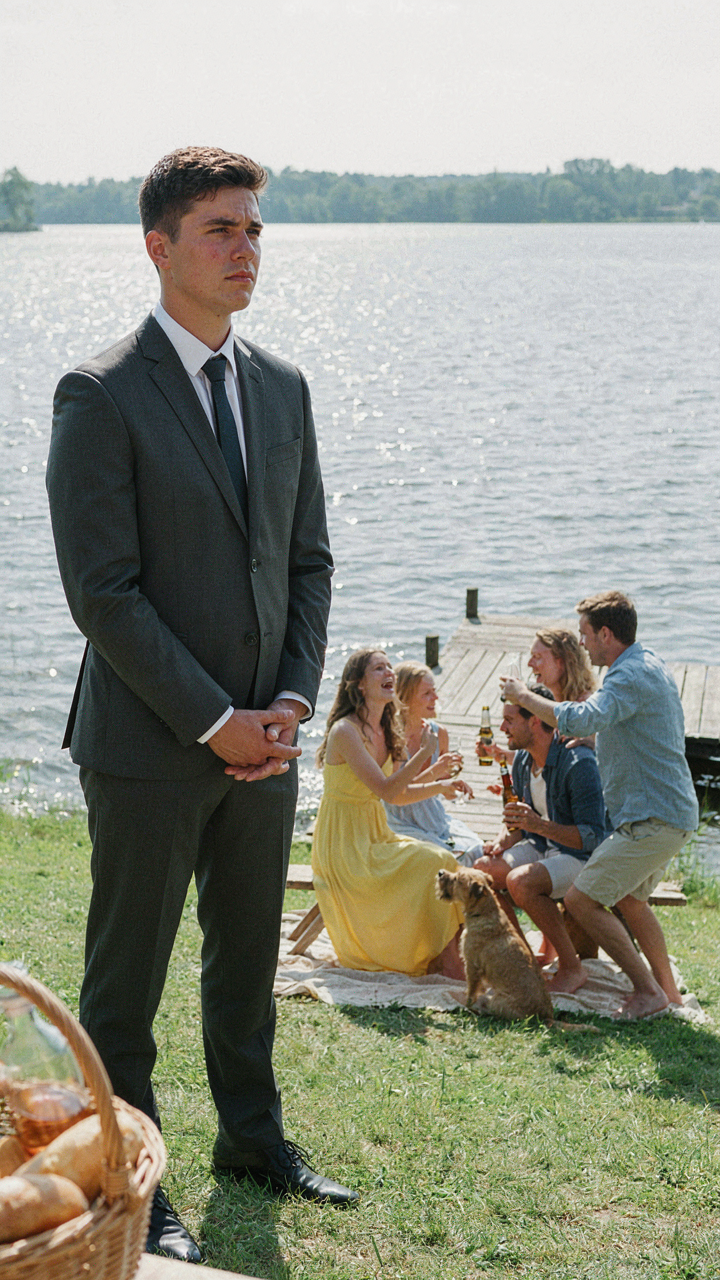
You care about this section because you’re afraid of sending the wrong signal. Signaling theory from economics says people broadcast information through costly choices, and clothing at lakeside weddings operates exactly this way. Your outfit tells the room three things before you speak: whether you respect the couple’s event, whether you understand context, and whether you belong in that social tier.

The lakeside setting amplifies this. Formal attire at a casual waterfront wedding signals you either misread the room or ignored the invitation details, which reads as either clueless or dismissive. Underdressing signals you didn’t care enough to prepare. The sweet spot is dressing for the specific event type and location, not some generic idea of what weddings require. This is why the invitation wording matters more than the venue type.
The Real Price Of Getting It Wrong
The common advice here is garbage: “Just wear what feels comfortable” misses the entire point. Discomfort at a lakeside wedding comes from social friction, not fabric. When you underdress, you spend the day managing anxiety around standing out. When you overdress, you overheat, restrict your movement, and create distance from other guests who dressed appropriately. Both outcomes waste your time and mental energy.
Overdressing costs you physically. Heavy fabrics, structured shoes, and formal layers turn waterfront environments into endurance tests. Wind, humidity, and sun exposure hit harder when you’re locked into formal wear. Underdressing costs you socially. You second-guess your presence in photos, avoid the ceremony front rows, and stay peripheral to conversations. The protocol: match formality to invitation language, then adjust one level down for outdoor water proximity and heat factors.
The Strategic Layering System For Coastal Cocktail Dress Code
Start With Skin Contact
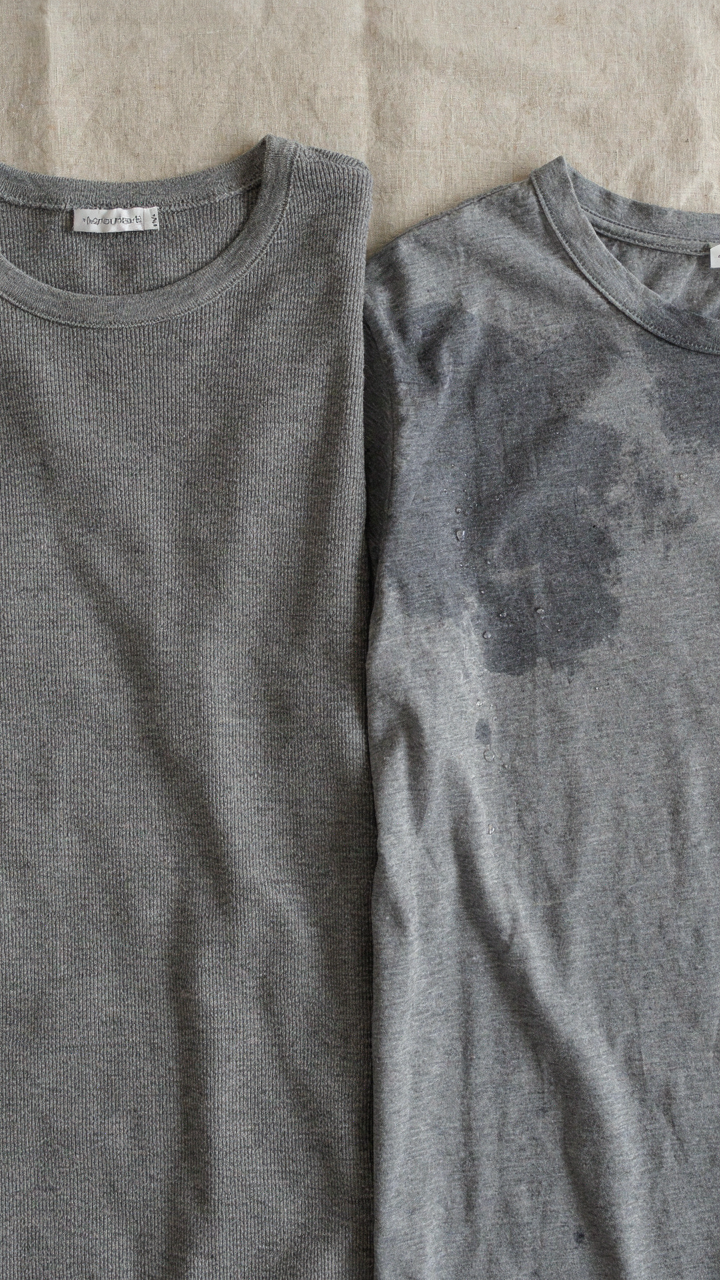
You’re worried the outfit won’t hold up because you don’t trust yourself to pick the right thing. Here’s what actually matters: the base layer touches your skin and determines whether you spend four hours uncomfortable or present. Moisture-wicking fabrics—merino wool, synthetic blends, technical cotton—pull sweat away from your body instead of trapping it. At a lakeside venue, temperature swings between sun and shade create constant micro-evaporation. Cotton holds moisture and turns clammy. Your base layer is the invisible mechanic that makes everything else work.

A fitted undershirt or tank in merino wool costs more upfront but solves the problem permanently. You won’t fidget. You won’t overheat under direct sun, then freeze the moment you step into the tent. The fabric regulates temperature without bulk, so your outer layer fits clean. This is foundational—get it wrong and no outer piece saves the day.
Wind Resistance Meets Silhouette
Physics teaches us that drag force increases with surface area and velocity. Your outer layer functions as a drag reducer in coastal conditions. A structured blazer, lightweight sport coat, or tailored cardigan isn’t decorative—it’s a wind barrier that stabilizes your core temperature and prevents the dress or suit from billowing or clinging awkwardly in gusts. Generic advice says wear a shawl or pashmina. That’s incomplete. Those add fabric without structure, creating more surface for wind to catch.
- Tailored Blazer: A fitted jacket in cotton blend or linen creates clean lines and blocks wind without overheating. Choose unstructured shoulders for movement.
- Linen Sport Coat: Breathable and formal enough for coastal events. Wrinkles are acceptable and expected with linen at lakeside venues.
- Structured Cardigan: Button-front in merino or cotton blend offers adjustability—you can unbutton if temperature rises, button if wind picks up.
- Lightweight Overshirt: Worn open over your dress or worn on its own with rolled sleeves. Functions as both style element and climate control.
- Woven Wrap or Kimono: Must have body and weight to avoid fluttering. Opt for structured fabrics in cotton or silk blend, not thin gauzy material.
Match your outer layer color to your base outfit without matching exactly—complement, not duplicate. Cream blazer over a navy dress. Tan cardigan over a white jumpsuit. This creates visual depth while keeping the layering functional and intentional. The outer piece should feel like part of the outfit, not an afterthought you’re holding in your lap all night.
Footwear As Foundation: Navigating Uneven Terrain With Grace
When Heels Become Anchors Instead Of Accessories
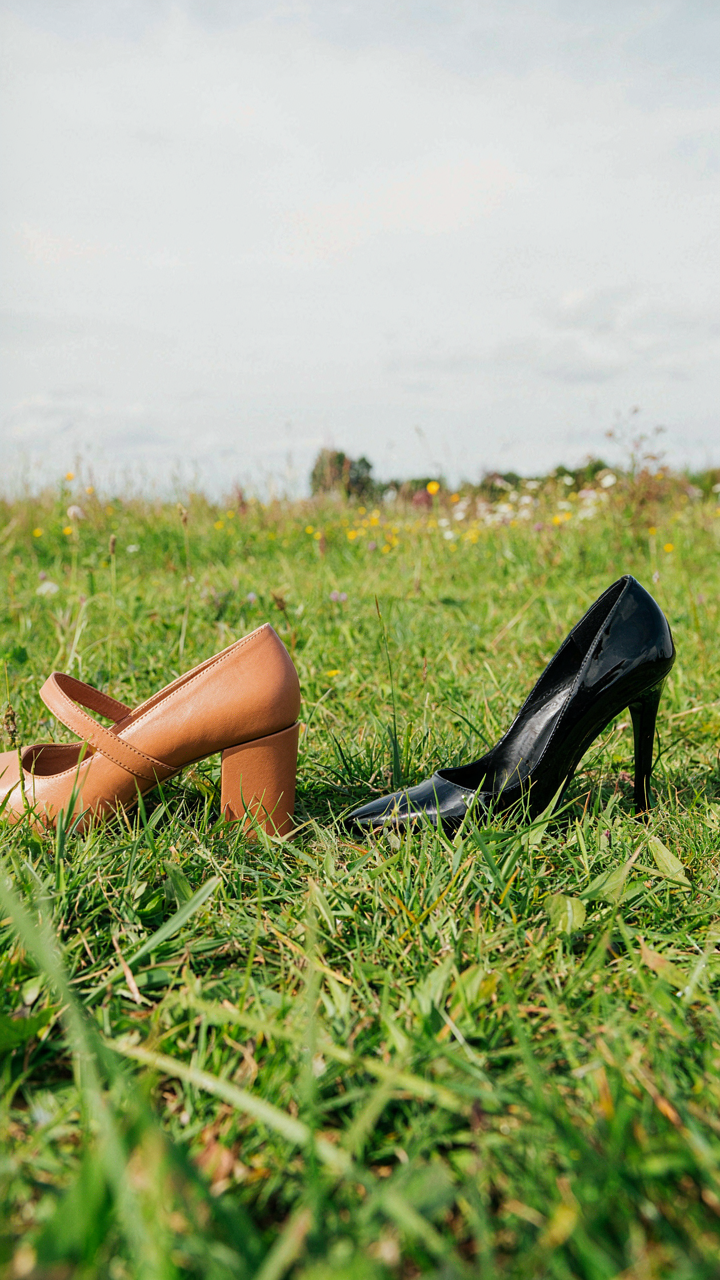
You’re worried about looking unstable. That’s the real concern underneath the shoe question. Physics determines this outcome, not preference. A heel concentrates force into a smaller surface area, which means it sinks into soft ground instead of distributing weight. Lakeside terrain—whether grass, sand, or soil—cannot support a concentrated point the way a ballroom floor does. The ground yields. Your heel follows. You compensate with awkward posture and visible strain.

Block heels and wedges work because they function like a platform in structural engineering terms. The wider base spreads load across more surface area, keeping you level on uneven ground. Flat shoes outperform heels entirely because they eliminate the mechanical disadvantage altogether. Stilettos belong at evening receptions on patios with finished flooring, not on the lawn during the ceremony or cocktail hour. Choose shoes with a heel no higher than one inch, or go flat. The choice determines whether you move naturally or fight the ground all afternoon.
Materials That Actually Survive What You’ll Walk Through
Everyone says “bring backups” or “go minimal.” That advice avoids naming what matters. Suede absorbs water and stains permanently, making it a liability near water. Leather creases and discolors when wet but recovers if dried properly. Synthetic materials like polyurethane or rubber-based soles grip damp grass better than leather and resist sand embedding. Metal embellishments corrode in salt spray if you’re near ocean weddings. Metallic finishes tarnish faster than matte finishes.
The practical protocol is this: choose leather uppers with rubber soles for lakeside ceremonies. Rubber grips better on wet surfaces and sheds sand more easily than leather soles do. If the wedding includes beach proximity or heavy water features, prioritize closed-toe styles in neutral tones so visible dirt doesn’t register as damage. After the event, dry shoes slowly away from direct heat and wipe soles with a damp cloth to remove residual sand. This prevents tracking debris into your car and preserves the shoe’s structure for future wear.
Accessories: The Leverage Points Of Lakeside Wedding Guest Attire

Broad Brimmed Hats As Shade Strategy
You want people to notice you’re comfortable while everyone else squints. Here’s the mechanism: physics uses leverage to multiply force with minimal effort. A broad brimmed hat functions the same way—it multiplies your sun protection across a larger surface area than a baseball cap or visor. The brim’s width determines shade coverage. A hat with a two to three inch brim protects your face and neck. Anything narrower fails at lakeside conditions where UV reflection bounces off water and sand.

The hat also solves a status problem most guests ignore. You look intentional, not desperate. Material matters here: straw breathes in heat, felt works for cooler lakeside temps, and cotton canvas handles wind without flapping. Choose natural fibers that don’t trap sweat. Position the hat so the brim angles slightly forward but doesn’t obstruct your face during conversations. This is not a fashion choice—it’s a durability play that keeps you functional for six to eight hours outdoors.
Strategic Weighting Prevents Fashion Collapse
Most advice says “bring a shawl” or “wear a light wrap.” That’s incomplete. Wind at lakeside venues moves unpredictably because water creates temperature gradients that push air currents in multiple directions. A shawl without weight becomes a liability. You need accessories that stay anchored to your body or weigh enough to resist movement.
Use weighted accessories as your anchor system. A structured clutch or small handbag stays with you without floating away. A scarf pinned at the shoulder with a brooch does the same. For footwear, choose shoes with a wide base that won’t topple on uneven terrain near water. Lightweight jewelry catches wind and snags on fabric—wear pieces close to your body instead. Anchor your accessories before you arrive so you spend the event present, not chasing what the breeze took.
The Man Wedding Guest Outfit: Beyond The Linen Shirt
Fiber Selection For Waterfront Formality
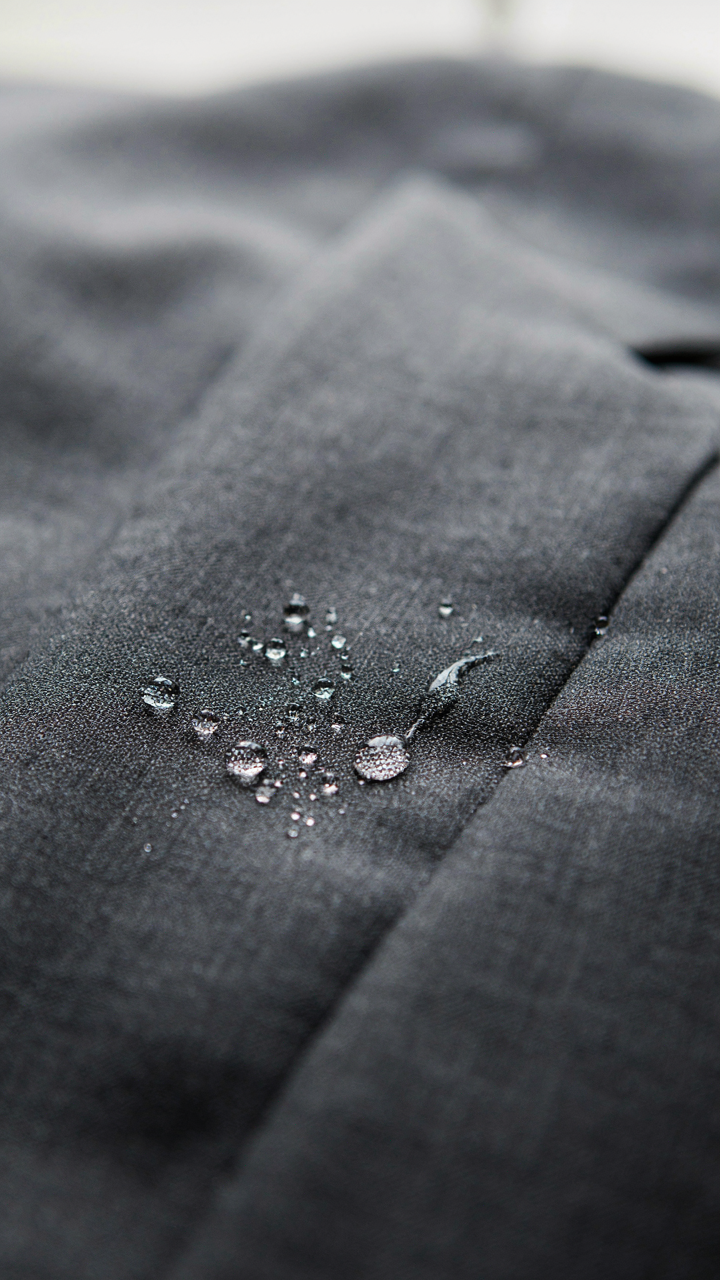
You want permission to look good without trying too hard. Here’s what actually matters: fabric choice determines whether you absorb humidity or shed it. Cotton breathes but wrinkles on contact with sweat. Linen wrinkles by design and shows water stains. Wool blends trap heat. The real mechanism is vapor transmission rate, borrowed from textile engineering. High-performance synthetic blends move moisture away from skin while resisting salt spray and humidity. A 65% polyester, 35% wool blend outperforms pure natural fibers at lakeside events because it stabilizes in damp air and recovers from compression.

Most wedding advice tells you to wear natural fibers because they sound better. Wrong. Natural fibers were designed for different climates and social contexts. What matters at a lakeside wedding is fiber that tolerates humidity, salt, and water spray without losing structure. Merino wool blends and technical suit fabrics work because they manage moisture actively rather than just absorb it passively. Check fiber content on the label. Avoid anything above 90% cotton or linen for outdoor waterfront events. Choose blends that list moisture-wicking properties.
Layering Without Looking Overdressed
Spring cocktail attire at lakeside venues demands one tactical layer beyond the standard suit jacket. The mechanism is simple: you need barrier removal without formality reduction. A knit polo or merino sweater under an unstructured blazer gives you temperature control when wind picks up. Vests create bulk. Cardigans read casual. A quality merino layer stays flat, moves with you, and disappears visually under an open blazer. This is your protocol for managing the microclimate around moving water.
The mistake most men make is adding layers that read as hesitation. Extra buttons, visible textures, and stacked pieces undercut lakeside elegance. Skip the sweater vest entirely. Wear a fitted merino base layer under your blazer and keep the blazer unbuttoned until temperature requires otherwise. Bring a lightweight wool overshirt rolled in your bag if weather forecasts show wind. Dress in minimum viable layers, then add only what the conditions demand at the moment you arrive.
The Real Obstacle: Your Fear Of Looking Like You Tried Too Hard
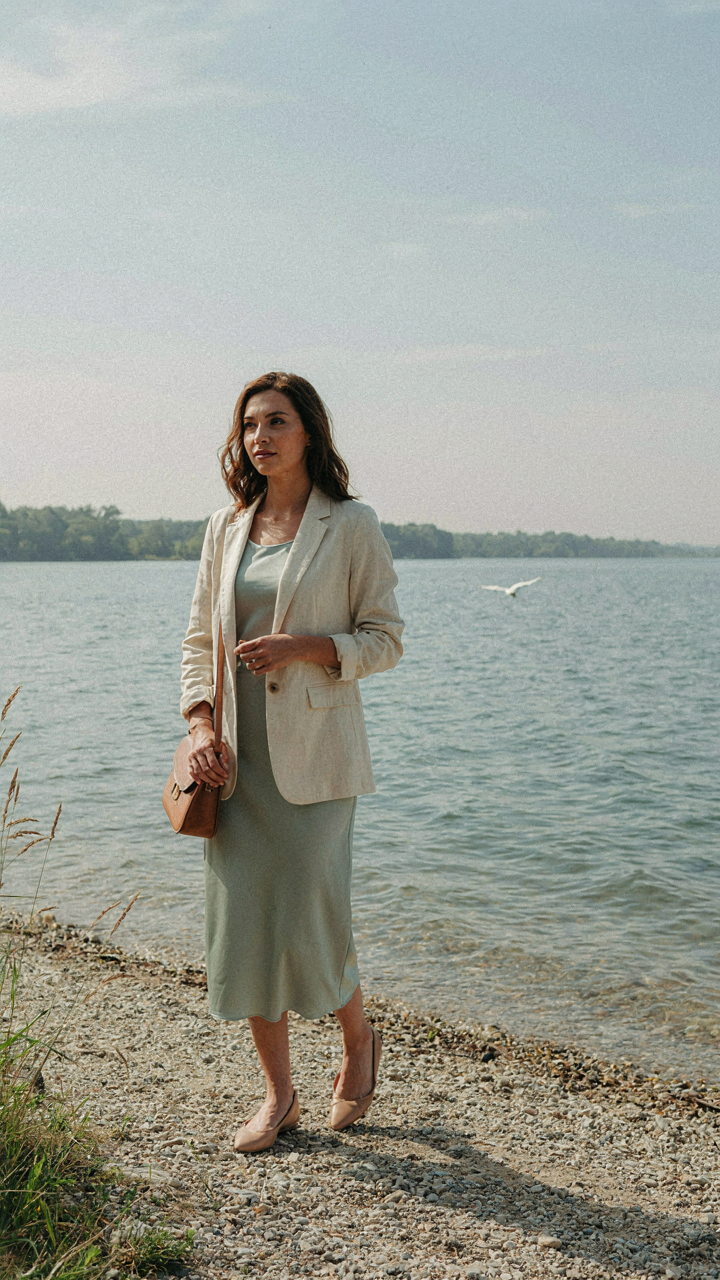
You already know what works for lakeside wedding guest attire. You’re stalling because caring about clothes feels shallow. Stop. That thinking kills your confidence before you leave the house. Pick one outfit today. Not tomorrow. Today. Commit to it fully. The guests who look best aren’t the ones who overthought it. They’re the ones who decided and moved on. Looking intentional beats looking lost every single time.