


The Thermal Regulation Fallacy: Why Your “Summer Dress” Fails
Fabric Myths That Cost You Comfort
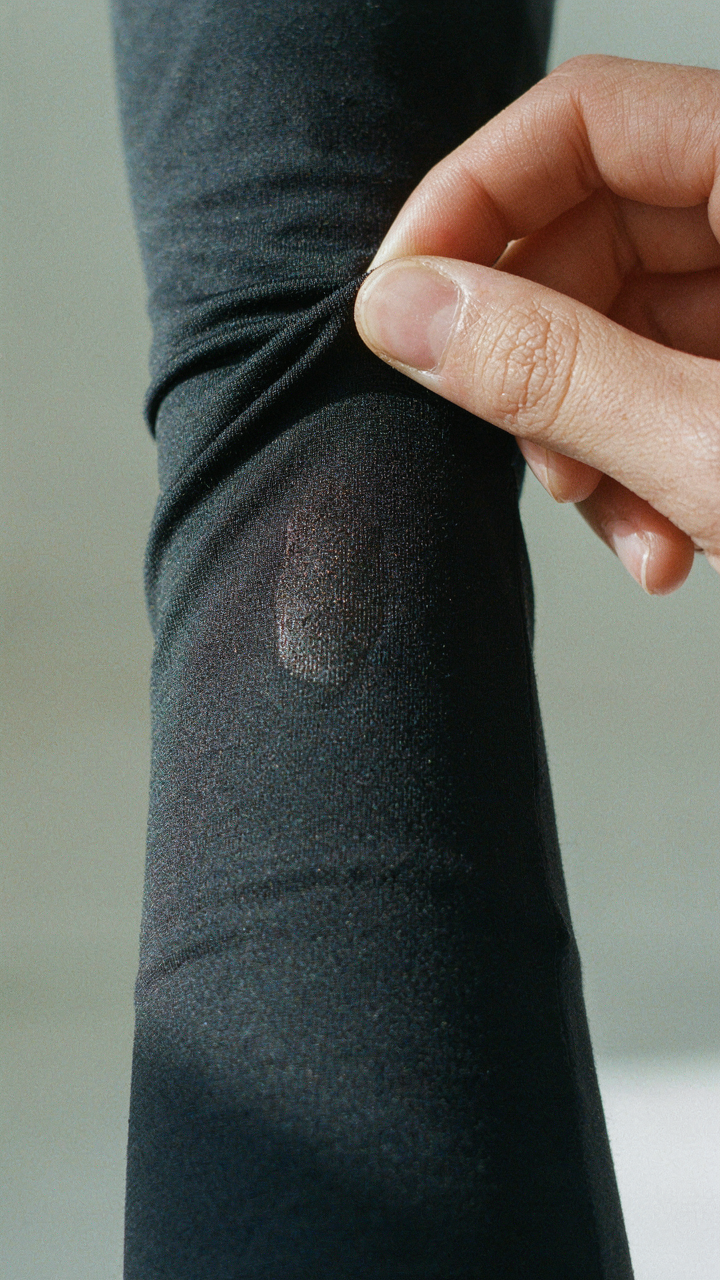
You want to believe a fabric label will solve this for you, so you don’t have to think about the actual physics. It won’t. The common advice treats fabric choice as a binary: natural versus synthetic, breathable versus not. That’s incomplete. What matters is how a fabric manages moisture and air movement together, not what fiber it claims to be.
Cotton absorbs moisture but holds it against your skin, slowing evaporative cooling. Linen wicks faster and dries quicker, but both perform poorly if they fit tight or lack airflow. Synthetics like polyester actually wick sweat away from skin efficiently, which is why performance athletic wear dominates the market. The real mechanism: you need a fabric that moves moisture away from skin AND allows air to pass through the weave. Most “summer dresses” fail the second requirement because designers prioritize drape over ventilation.
Sweat Management Versus Sweat Suppression
The wedding dress industry sells you sweat suppression, which is impossible. Biology doesn’t work that way. Your body sweats in heat to cool itself through evaporation. Trying to stop that process traps heat and makes you feel worse. The actual skill is managing where sweat goes and how fast it evaporates.
A dress with loose construction, high armholes, and open weave fabric lets sweat evaporate before it pools against your body. A fitted dress keeps moisture trapped regardless of fiber content. The difference is immediate and physical. Wear a dress with half-inch seams and a tight waistband to a hot outdoor wedding and you’ll understand why construction matters more than fabric name. The mechanism is simple: create pathways for air to move across your skin, not barriers that funnel sweat to specific spots.
The Material Science Of Cool: Fabrics That Actually Breathe
Natural Fibers With High Thermal Conductivity
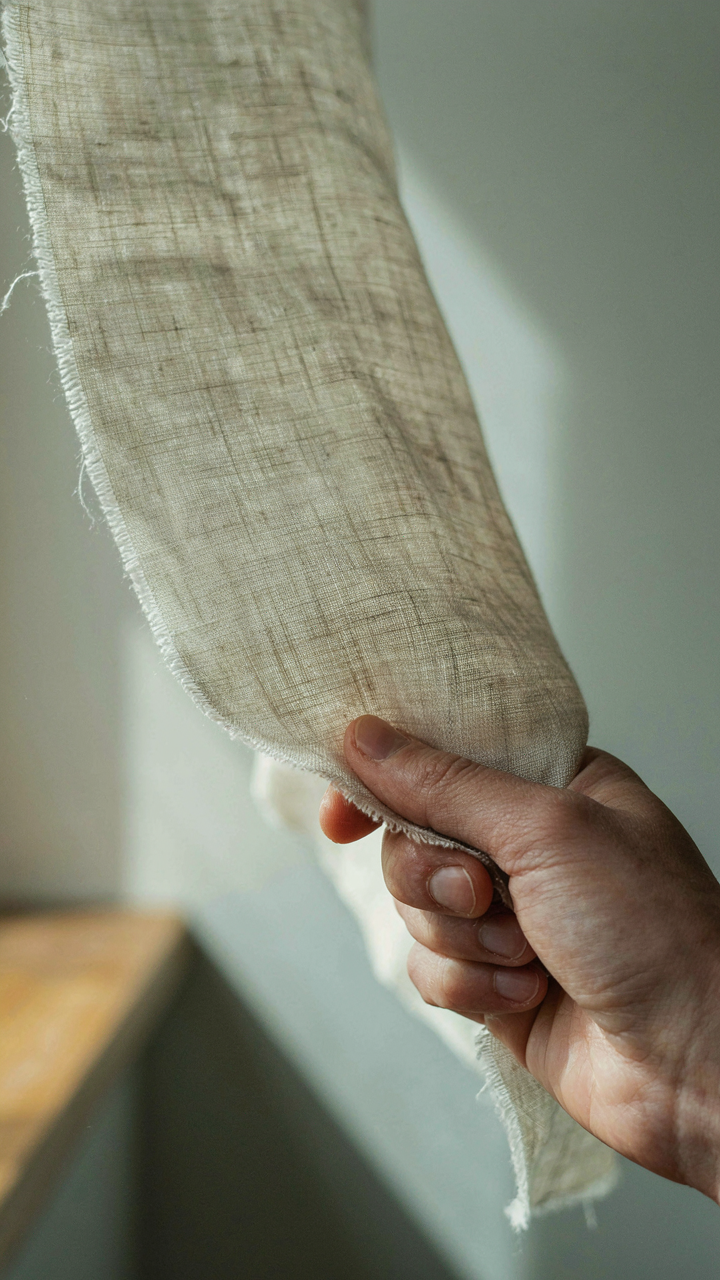
You want to look like you belong at an upscale event without sweating through your clothes. The mechanism is thermal conductivity, borrowed from physics: it’s the speed at which a material moves heat away from your skin. Cotton, linen, and silk all conduct heat outward faster than synthetics because their molecular structure has air gaps that don’t trap warmth. This isn’t about thread count or thread quality. It’s about the fiber’s ability to transfer your body heat into the environment instead of holding it against your skin.

Linen dominates here because it conducts heat roughly three times faster than cotton. The trade-off is texture: linen wrinkles immediately and looks casual unless you treat it as intentional. Silk conducts heat efficiently but requires careful handling and shows sweat stains visibly on lighter colors. Cotton strikes a middle ground for most weddings, but choose tight weaves rather than loose ones, since loose weaves trap more air and reduce cooling efficiency. Check fabric weight in ounces per square yard, not just fiber type. Lighter weight fibers move air better.
Engineered Synthetics For Moisture Wicking
The conventional advice here is garbage: most wedding guests believe synthetic fabrics are hot and unbreathable. That’s backwards. Modern performance synthetics like polyester blends and nylon actively pull sweat away from skin through capillary action, a completely different mechanism than natural fibers. Natural fibers absorb moisture and hold it; engineered synthetics redirect it to the fabric surface where it evaporates faster. This distinction matters because absorption causes clinging and visible wet patches, while wicking keeps the garment dry to the touch.
Microfiber polyester and nylon blends work best for structured pieces like jackets or fitted dresses because they maintain shape while moving moisture outward. Spandex blends add stretch without compromising breathability if the polyester content stays above sixty percent. Check the garment label for fiber composition and confirm synthetics are specifically engineered for moisture management, not just standard polyester. Test the fabric by holding it against your skin for ten seconds, then checking if it feels wet or dry to the touch. Dry fabric wins.
The Aerodynamics Of Attire: Optimizing Airflow For Cooling

Silhouette Choices For Maximum Ventilation
You want to look composed at the ceremony while your body screams. The real mechanism here comes from physics: aerodynamic drag. Tight fabrics create boundary layers that trap heat against skin. Loose cuts allow air to move across your body, disrupting that thermal blanket. A-line and flowing silhouettes aren’t romantic notions, they’re ventilation systems. The gap between fabric and body is your cooling asset, not a style compromise.

Cotton and linen dresses with straight cuts from shoulder to hem outperform tailored fits in heat. Maxi dresses work if the fabric weight stays under 4 ounces per square yard. Avoid empire waists or gathered hips, which compress fabric against your body. Sleeveless designs eliminate arm pit accumulation, but cap sleeves offer sun protection without trapping heat like full sleeves do. The trade-off between coverage and cooling depends on your sweat response, not on what looks “appropriate.”
Strategic Layering And Anti Chafing Solutions
Most advice about hot weather dressing says to strip down completely, which misses the real problem: friction destroys comfort faster than heat does. Layering in heat works differently than in cold, where each layer traps air. In hot weather, layers create micro ventilation channels and separate sweat-producing zones. A thin slip under a sheer dress prevents thigh chafing without adding insulation. Breathable undergarments matter more than dress fabric choice for all day comfort.
Anti chafing happens through material selection and strategic placement. Seamless synthetic blends designed for athletic wear wick faster than cotton underwear. Wear a slip that ends above the knee to eliminate friction on moving parts. Place body tape on inner thighs or behind heels before getting dressed, not after pain starts. The goal is structural separation between skin surfaces and between skin and outer fabric, reducing the moisture that causes rubbing damage.
The Color Theory Of Heat Absorption: Light Vs. Dark
Light Colors Reflect Heat More Efficiently
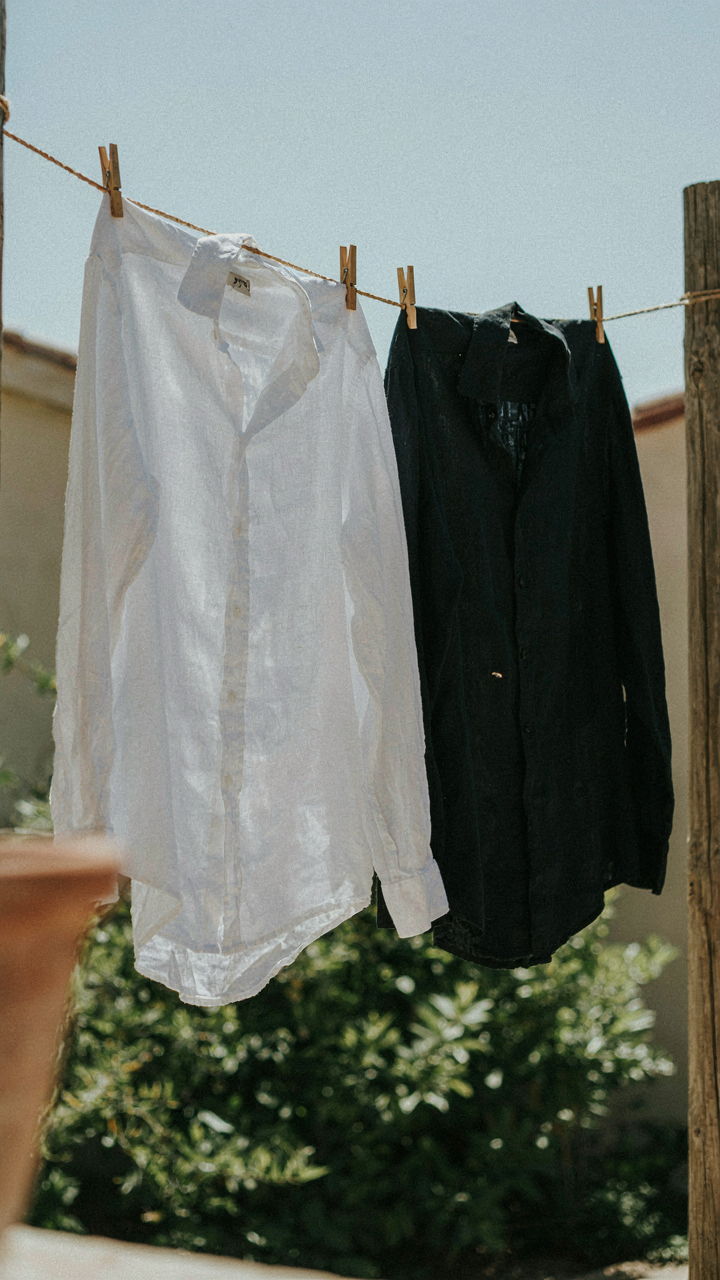
You care about this because wearing the wrong color makes you visibly uncomfortable in photos, and nobody wants that record. Physics gives us albedo—the measure of how much light a surface bounces back instead of absorbing. A white garment has higher albedo than black, meaning it reflects more solar radiation away from your skin rather than converting it to heat. This isn’t opinion. Fabric dyed white reflects roughly 70 to 90 percent of incoming solar energy, while black absorbs 90 percent or more.

The practical effect matters most: a white linen shirt stays measurably cooler than an identical black one in direct sun. Cream, ivory, and pale neutrals work similarly. The mechanism is straightforward—less absorbed energy means lower fabric surface temperature, which means slower heat transfer to your body. Wear light colors to outdoor summer weddings. Dark colors trap heat and force your body to work harder at cooling itself, making you sweat more, feel fatigued sooner, and look wilted in ceremony photos by hour two.
Pattern And Texture Interrupt Heat Retention
Everyone says “wear light colors,” so they ignore texture entirely. That’s incomplete advice. Texture changes how fabric interacts with heat transfer through convection. A smooth silk surface in black holds heat differently than a textured weave in the same color because texture creates air pockets. Pattern matters because visual density affects perceived temperature and psychological response—a small repeating print on a light base reads cooler than a solid color to your brain and body alike.
Matte finishes diffuse light rather than concentrate it like shiny fabrics do. A matte linen weave reflects and disperses heat more effectively than a glossy rayon of the same color. Linen’s looseness also allows air circulation. Choose textured, matte, light-colored fabrics with open weaves over smooth, shiny, dark, tightly woven options. Pair this with your color choice to stack cooling effects: light color plus loose texture plus matte finish compounds the outcome, not just multiplies it.
The Microclimate Protocol: Accessories For Personal Cooling Systems

How Your Body Actually Sheds Heat
You want to look composed at a wedding while everyone else visibly wilts. That’s the real concern. The mechanism is simple: your body dumps heat through radiation, convection, evaporation, and conduction. Radiation accounts for roughly 60 percent of heat loss in normal conditions, which means your skin must stay exposed to air and light. Covering your body with fabric blocks this pathway. This is why the instinct to wear less doesn’t always work. Strategic accessories redirect airflow and reduce radiant absorption instead of trapping sweat.

Accessories solve what fabric alone cannot. A wide-brimmed hat blocks direct solar radiation before it hits your scalp and face, dropping skin temperature measurably. A lightweight scarf draped loosely around your neck creates an air gap that disrupts the boundary layer where heat concentrates. Sunglasses reduce eye strain and prevent the unconscious facial tension that signals discomfort to others. The protocol isn’t about adding bulk. It’s about interrupting the mechanisms that spike your core temperature and make you look flushed.
Cooling Your Extremities First
The body prioritizes core temperature over everything else. Peripheral cooling via wrists, ankles, and the back of the neck tricks your thermoregulation system into thinking you’re cooler than you are. This is a documented physiological response. A thin metal bracelet or cuff worn loose on your wrist acts as a heat sink, drawing warmth from arterial blood that runs close to the surface. The same principle applies to ankle bracelets or minimal anklets. These aren’t decoration first. They’re thermal management tools disguised as accessories.
Metal conducts heat away from skin faster than any fabric. Wear a cuff or bracelet in aluminum or stainless steel, loose enough to allow air circulation but snug enough to maintain contact with your pulse points. Position a thin scarf so the back drapes against your neck, creating evaporative cooling without blocking your face. This combination keeps you visibly composed while your body’s cooling system works optimally.
Deconstructing The Boho Chic Wedding Guest Outfit For Functionality

The Physics Of Loose Fabric Against Skin
You want boho because it signals you didn’t try too hard, which is the opposite of what you actually did. The real mechanism here borrows from thermodynamics: air needs space to move. Tight fabric traps heat against your body. Loose fabric creates a buffer zone where air circulates and evaporates sweat before it cools you. Boho silhouettes naturally create this dead air space through their cut, not through fabric choice alone. The drape matters more than thread count.

Linen, cotton blends, and rayon handle heat because they absorb moisture and release it fast. Boho pieces rarely use synthetics, which is why the aesthetic accidentally aligns with function. A maxi dress with volume at the hip and a looser armhole lets convection work for you instead of against you. The fabric itself must breathe, but the silhouette determines whether breathing actually happens. Volume without airflow is just decoration.
How To Build One Without Guessing
Most advice tells you to just pick “flowy pieces.” That’s incomplete. You need three components: a base layer that wicks, a middle layer with actual volume, and a top layer that blocks UV without trapping heat. A linen camisole under a gauze or cotton voile caftan-cut dress gives you this stack. Add a lightweight kimono or shawl in the same fabric family, not contrasting material that fights your system.
The construction matters more than the brand. Check seams for quality and look for garments with gussets at the underarms, not tight armholes. Hems should be finished but not heavy. Boho fabrics wrinkle easily, which you’ll accept because wrinkles create more surface area for air movement and they signal the aesthetic is working, not that you failed. Build your outfit in layers you can remove.
Summer 2026 Wedding Guest Dresses: The Unspoken Rules Of Undergarments
The Invisible Infrastructure
You care about this section because visible undergarments tank your entire outfit regardless of how expensive the dress is. Here’s the mechanism: heat makes fabric cling, and cheap undergarments show every contour. Thermal physics applies here—moisture transfer happens faster when fabric clings to skin. You need garments that wick sweat away rather than hold it against your body. Seamless construction eliminates the ridges that trap moisture and create visible lines. Nylon blends outperform cotton under heat because they dry faster and don’t absorb sweat the way cotton does. The goal isn’t comfort alone; it’s invisibility under stress.

Microfiber and nylon spandex blends are standard for hot-weather undergarments because they compress without bunching and move moisture away from skin to the outer layer of fabric. Look for bonded seams rather than stitched edges—they sit flatter against your body. Weight matters: lighter weight foundation garments (under 0.5 ounces per square yard) feel like a second skin instead of a constraint. Brands engineering for this explicitly market “zero-VPL” (visible panty line) construction. Your undergarments should disappear completely when you move, sit, or dance.
Managing Sweat Before It Shows
The common advice here is wrong: antiperspirant on your dress won’t stop sweat lines, and neither will fabric sprays. The real mechanism is thermal management at the source. Your body sweats; the question is whether that moisture evaporates or pools against fabric. Dress fabric selection determines this more than anything else. Linen, cotton, and lightweight blends allow moisture to travel through the weave. Dense synthetics trap it. The sweat line appears where fabric stays damp longest—usually the lower back, underarms, and where the dress contacts your ribcage.
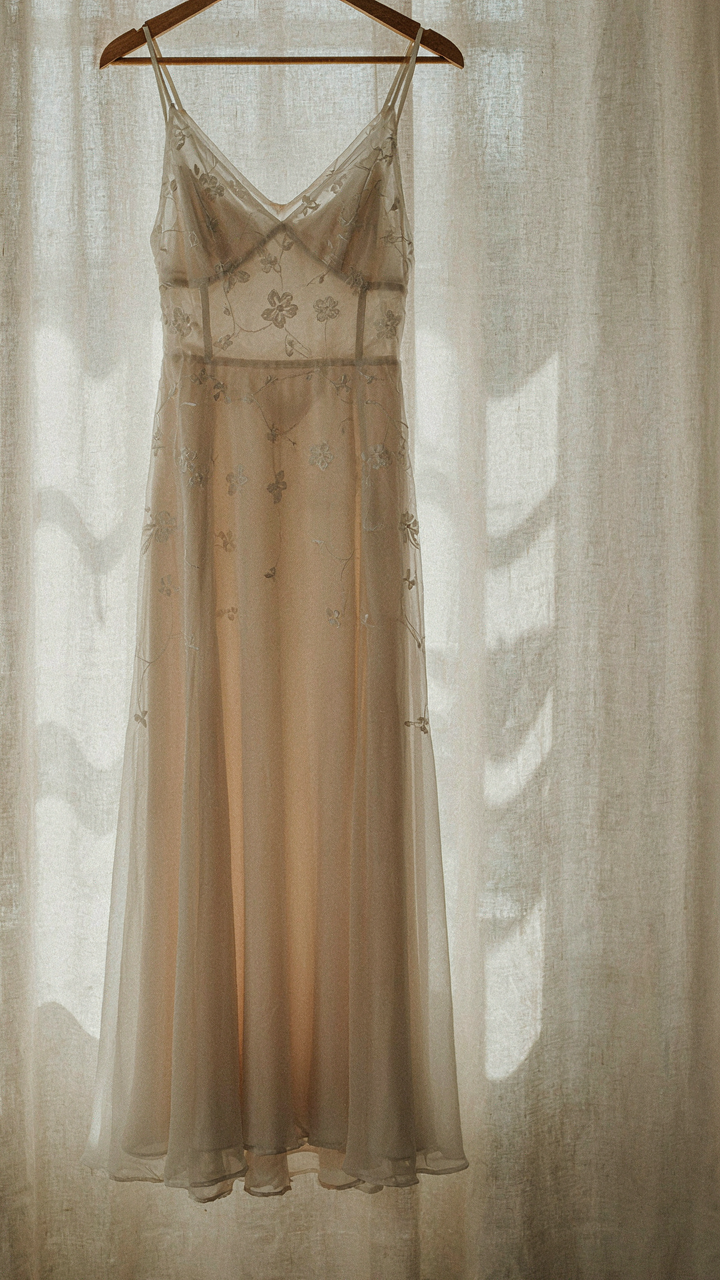
Wear a slip or lightweight underdress in breathable fabric underneath. This creates a barrier that absorbs initial moisture before it reaches the outer dress. Moisture wicks up and out through the slip faster than through multiple layers. Choose slip fabric in the same breathable material category as your dress: linen slip under a linen dress, cotton slip under cotton. The slip also prevents the dress from clinging to your skin in humidity, which compounds the sweat-line problem. Change the slip if needed during the reception instead of changing the entire dress.
The Garden Party Guest Outfit: Beyond The Floral Facade

Shoes That Won’t Betray You On Grass
You want footwear that signals you belong at an upscale event while your feet don’t sink into the lawn like tent stakes. The mechanism is simple: rigid soles transfer your weight across a wider surface area, distributing pressure instead of concentrating it. Soft-soled shoes, ballet flats, and thin heels all fail this test outdoors.

Flat sandals with structured undersides work. Dressy flip-flops with arch support exist and perform better than you’d expect. Metallic leather sandals read formal enough for garden settings. The rule: if the sole bends easily in your hand, it will fail on uneven ground. Test before the wedding.
Your Head As An Accessory That Functions
Hats aren’t decoration here; they’re thermal regulation. Think of microclimate strategy from environmental design: a hat creates a buffer zone of still air between direct sun and your scalp and face, lowering skin temperature measurably. Most advice treats hats as optional fashion choices. They’re not. They’re protective infrastructure.
Wide-brimmed styles work for formal daytime events. Fascinators and smaller headpieces are acceptable if the venue bans full hats. Straw options in neutral tones breathe better than felt or velvet, which trap heat. The protocol: pick your hat first, then build your outfit around it, not the reverse.
Semi Formal Cocktail Dress Wedding Guest: Elevating Comfort, Not Just Style
How Structure Moves Air
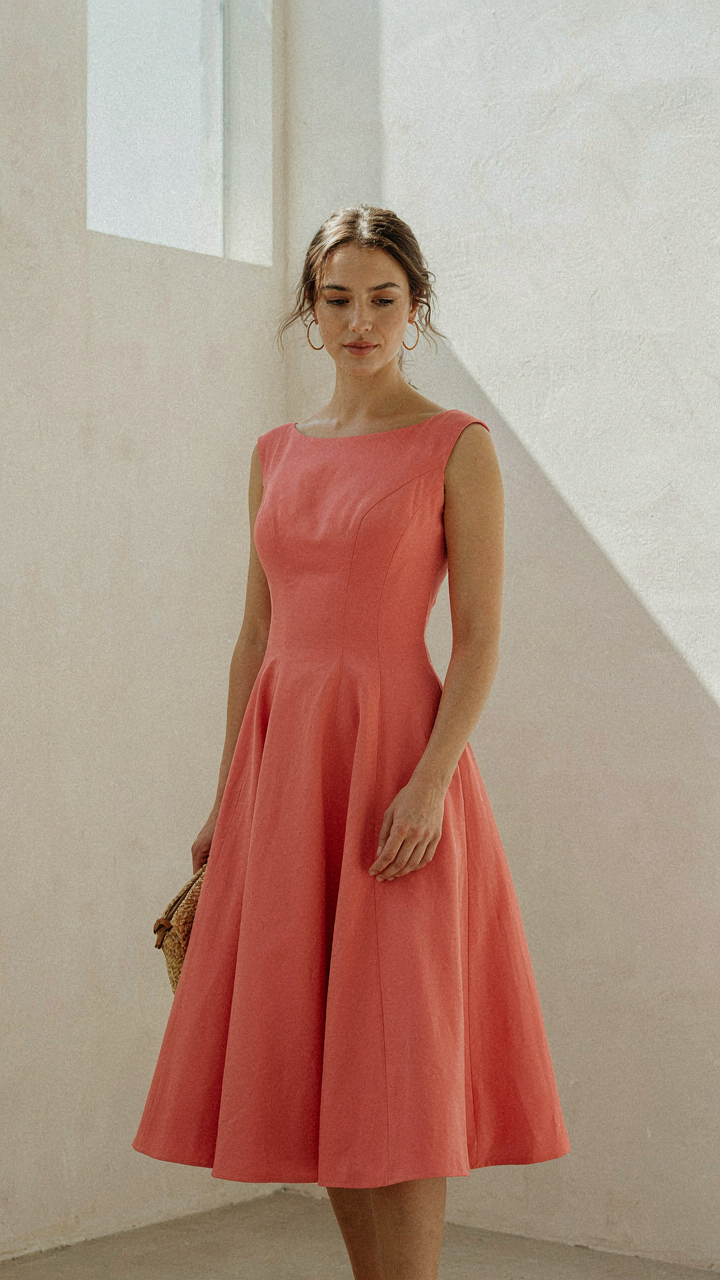
You’re worried that looking polished means suffering. That’s the fear underneath. Here’s the mechanism: in thermodynamics, airflow follows the path of least resistance. Tight fabrics create dead zones where heat traps against your skin. Structured fabrics with internal space between fibers and body allow convection to work. A semi-formal cocktail dress in linen or cotton-linen blend with a defined waistline and A-line or wrap silhouette doesn’t fight heat. It channels it away. Structure becomes the tool that enables cooling, not the enemy of it.

The difference between draped and structured isn’t about formality levels. It’s about surface area and spacing. A fitted sheath dress with no room between fabric and torso holds body heat. A dress with defined seams, darts, and intentional volume at the hip creates micro-pockets of moving air. The fabric itself needs to breathe. Linen wrinkles by design because the weave is loose. Cotton-linen blends at 55/45 ratios hit the sweet spot: they hold shape for cocktail formality while maintaining the porosity of natural fiber. Choose a dress with architectural lines, not a limp column.
Metal Touches That Steal Temperature
Everyone says wear less jewelry in heat. That’s incomplete advice. The real issue is material conductivity. Metals absorb and radiate heat faster than any other accessory material. Gold, silver, and brass transfer warmth from your skin directly outward, then pull ambient heat back in when you stop moving. In a hot venue, this becomes a constant cycle of thermal drain. Drop metal entirely from neck, wrists, and ears. Replace it with clear acrylic, resin, or silk scarves. These materials don’t conduct temperature. They sit neutral.
A semi-formal cocktail dress requires some visual weight. Jewelry does that work. Solve it by choosing one statement piece in a non-metal material. A chunky resin bracelet or a silk wrap adds presence without the thermal penalty. Stone and ceramic also work because they don’t conduct like metals do. Skip layered necklaces, stacked bracelets, and dangling earrings entirely. One piece, no metal, positioned where it has maximum visual impact but minimum skin contact. This is how you look intentional without creating a personal heating system.
The Only Fashion Rule: Your Body Isn’t A Trend Report
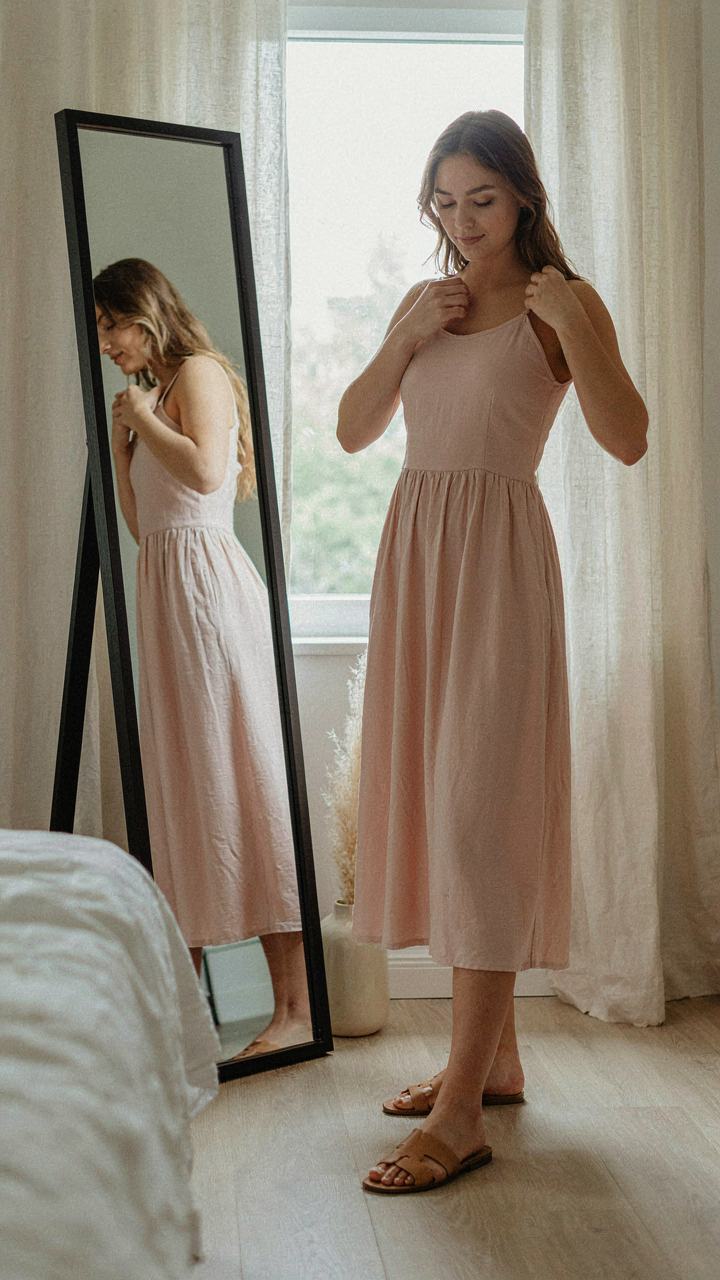
Stop dressing for the wedding. Dress for your body in heat. The difference matters because comfort wins every time, and the second you stop fidgeting with fabric that clings or bunches, you actually look confident. Pick one outfit today, try it on, move around, sit down. If you’re adjusting it more than once, it’s wrong. Wear what doesn’t fight you.