


Beyond The Black Suit: The Subversion Of Expectation
Silhouette As Dominance Signal
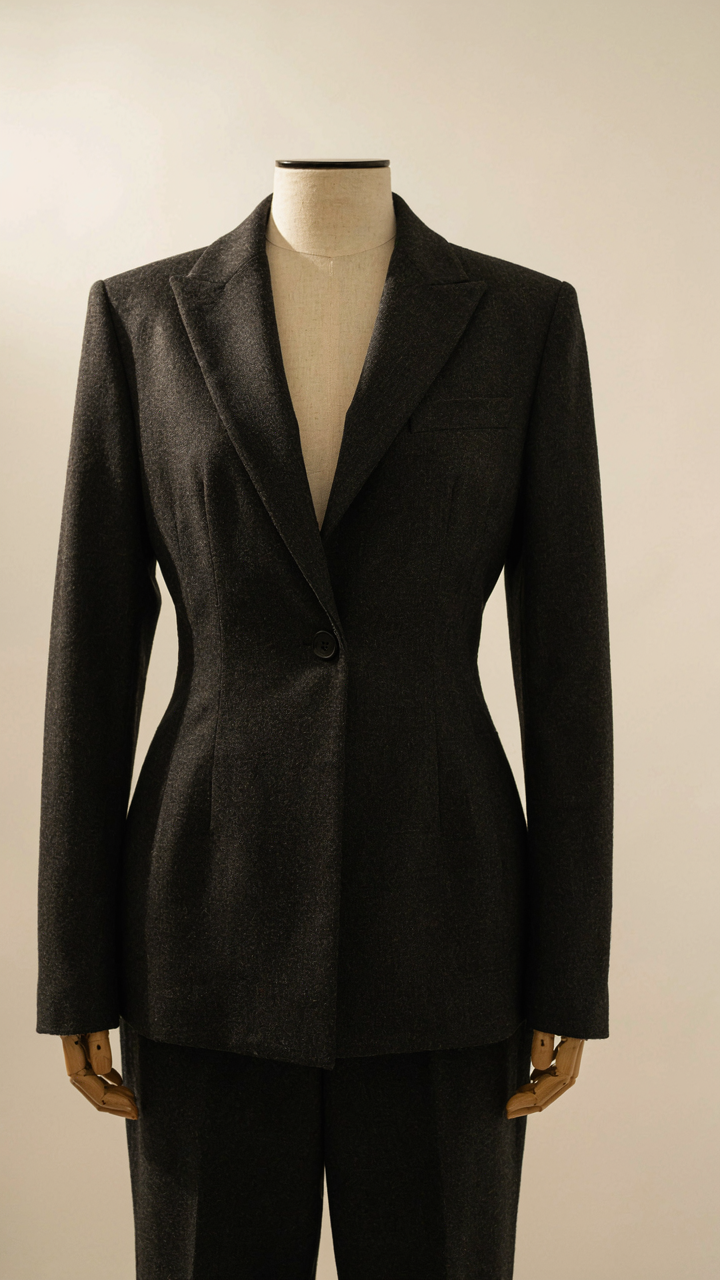
You want to know how to stand out without looking like you’re trying. The mechanism is simple: formal dress codes exist to flatten hierarchy, and the person who controls their own silhouette within those constraints controls the room. Borrow from architecture—load-bearing structure matters more than decoration. A sharp, fitted blazer with a defined waist and strong shoulders communicates occupancy of space. A loose, oversized cut communicates apology. The traditional feminine silhouette in formal settings punishes definition. Reject that trade.
The conventional advice says “wear what makes you comfortable.” That’s incomplete. Comfort that reads as uncertainty kills authority. A structured dress or separates that create clean lines at the shoulders, waist, and hem force the eye to register your boundaries. Asymmetrical hems, unexpected necklines, or a blazer worn as a dress all work because they break the expected template while maintaining formality. The subversion isn’t about being bold—it’s about being deliberate where others are default.
Fabric Weight As Intentional Messaging
Fabric signals intent before anyone hears you speak. A heavy wool or silk blend doesn’t drape apologetically like cotton blends do—it holds its shape and demands the wearer own the space. This is basic material science: denser fabrics create more defined silhouettes and reflect light differently, making the wearer more visually present. Lightweight fabrics read as provisional. You’re not choosing comfort; you’re choosing whether you look like a decision-maker or a guest.
Matte finishes communicate authority more reliably than shine. Satin, silk charmeuse, and structured wool all work because they absorb light rather than bounce it around. A subtle texture—crepe, structured cotton, fine wool gabardine—adds dimension without distraction. The mistake most women make is treating fabric as aesthetic preference instead of a tool. Your fabric choice determines whether you disappear into formality or command it. Select materials that hold their form through an eight-hour event and move with your body as an extension of your intent, not against it.
The Power Player’s Palette: Color As A Strategic Asset

Bold Hues Versus Muted Tones
You want color to do the work for you—to signal authority without saying a word. Here’s the mechanism: contrast and saturation directly control how much visual real estate you occupy in a room. Bold hues claim space. Muted tones recede. The common advice that both work equally is wrong. Saturation operates like volume. Turn it up, you dominate the visual field. Turn it down, you blend into the background. Your choice depends on whether the room is already watching you or still deciding.

Bold colors work when you control the context: board meetings, presentations, deliberate entrances. A jewel-tone dress or a saturated red separates you from the visual noise. Muted tones work when you need to move unnoticed or when the garment itself—cut, fabric, structure—carries the message instead. The strategic play is knowing which scenario you’re walking into. Most women default to safe tones because they fear bold color. That’s a missed lever. The real mistake is using bold color without understanding the room dynamics you’re entering.
Seasonal Color Theory For Sustained Relevance
Color theory borrowed from art and design gives us a framework that actually applies: undertone matching determines whether a color reads as flattering or off. Your skin has an undertone—warm, cool, or neutral. Seasons amplify this by pairing undertones with wardrobe choices. A warm undertone paired with spring-warm colors stays coherent. A cool undertone in warm-season palettes creates subtle discord that observers feel without naming. Sustained relevance means your formal wear never looks dated or misaligned with the season because the color sits correctly on your body.
Winter and autumn palettes use deeper saturations and cooler or earthy undertones—jewel tones, blacks, deep burgundies. Spring and summer benefit from lighter values and brighter undertones—pastels, crisp whites, clear jewel tones. The tactical advantage is consistency: when you build your formal wardrobe around undertone-aligned colors, every piece compounds the last. You’re not rebuilding your color logic each season. You’re working within a system. Start by identifying your undertone through honest lighting—natural daylight, not mirrors. Then anchor your formal pieces to that palette. Every new purchase should sit within it.
The Unconventional Corporate Headshots Women: Framing Your Narrative

Expression And Posture: Conveying Competence, Not Stiffness
You want the photo to do the status work before you open your mouth. Here’s what everyone gets wrong: they confuse formality with rigidity. Borrowed from physics, think of your frame as vector and force combined. Vector is where you’re aimed (forward, toward camera, toward the viewer’s eyes). Force is the energy behind it. Stiffness kills force. A relaxed shoulder dropped back creates presence. A clenched jaw destroys it.

Competence reads through micro-movements, not through locked stillness. Drop your shoulders two inches lower than feels natural. Angle your body forty-five degrees to the camera, not straight-on. Lift your chin slightly so the camera shoots at you, not down at you. The expression should be neutral to slightly engaged, eyebrows level, no forced smile. This setup works because it removes the defensive posture that formal wear triggers in most people. The camera captures someone settled into authority, not someone performing it.
Accessories That Amplify Presence, Avoid Distraction
Most guidance tells you to go minimal with formal wear. That’s incomplete. Minimal is not the goal. Signal clarity is. Your accessories should communicate one thing, not compete for attention. A structured handbag in leather (not metallics or novelty textures) anchors the frame. A watch with a simple face and minimal bezel reads as purposeful. Jewelry should be matte or brushed finish, never shiny or reflective, because shine moves the eye away from your face. Statement jewelry fails in headshots because the camera prioritizes the brightest object in the frame, which becomes the jewelry instead of you.
Choose one focal point maximum. If you wear a necklace, skip the bracelet. If you wear a structured ring, keep the necklace subtle. For formal corporate headshots, a thin watch and a single pair of earrings (small studs or minimal hoops, matte metal) functions as the protocol. Everything else competes with your face. Remove or adjust anything that moves, catches light, or draws downward. Your accessories exist to frame competence, not to announce taste.
The Formal Attire Coat: Your Architectural Outer Layer
Structure And Drape: The Psychology Of Power Dressing
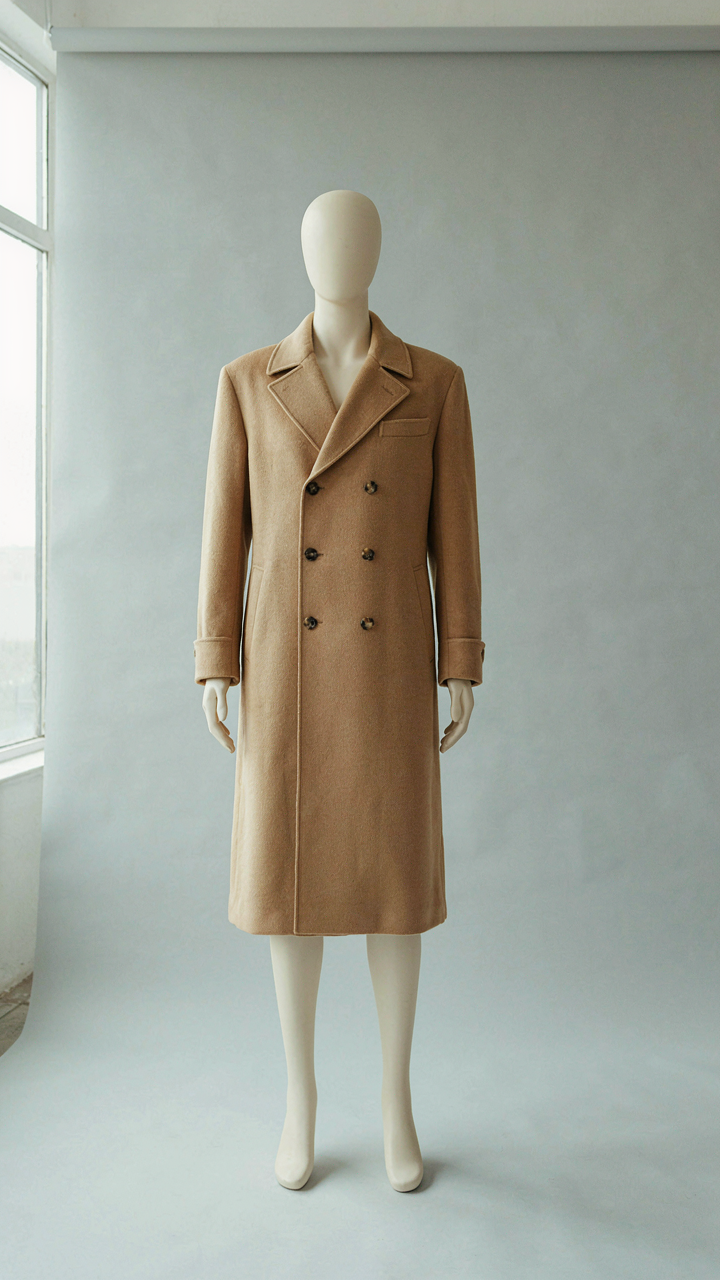
You want this coat because you know it changes how people read you before you speak. The mechanism is borrowed from architecture: load-bearing walls. Your coat’s structure doesn’t just hang there. It channels the eye upward, frames your shoulders, and creates visual weight at specific points. Structured fabrics like wool crepe or structured silk blends don’t drape limply. They hold form. This signals control.

The seam placement matters more than the fabric cost. A coat with a defined waistline, clean shoulder seams, and a structured neckline forces your silhouette into a contained shape. Tailoring adjusts where this structure lands on your body. Generic advice says wear what flatters you. Reality: wear what commands attention through intentional geometry. The coat becomes the container that makes every other choice legible.
Layering For Impact, Not Just Warmth Or Modesty
Layering a formal coat isn’t about staying warm or covering up. That’s the lazy read. Layering is about creating visual density and breaking up body mass into smaller, more controlled units. A sleek sheath dress plus a structured coat creates a box silhouette. A draped dress under a fitted coat creates contrast that stops the eye. The coat doesn’t soften the outfit. It completes it through opposition.
The functional protocol: decide what visual story the base layer tells, then choose a coat texture that contradicts or reinforces it deliberately. Matte coat over glossy dress reads expensive and intentional. Glossy coat over matte dress reads modern. The coat layer functions as your final edit. You adjust it according to the room temperature and the formality signal you need to send in that moment.
Blazer Outfits: The Command And Control Method

Fit As Your Actual Leverage Point
You want the blazer to do the work so people notice your authority before they notice you. Here’s what nobody admits: fit determines whether a blazer commands attention or disappears. A blazer that doesn’t conform to your shoulders, chest, and torso length reads as costume. Tailoring isn’t optional refinement—it’s the mechanism that transforms fabric into signal. Poor fit broadcasts uncertainty. Correct fit broadcasts control.

The shoulder seam must land where your shoulder ends. If it extends past that point, the blazer drowns your frame. If it stops short, you look cramped. Sleeve length reaches your wrist bone with a half-inch of shirt visible. The torso closes without pulling or gaping at buttons. These measurements aren’t aesthetic preferences. They’re the technical requirements for a blazer to function as formal wear.
The Blazer As Directional Tool
Military strategy teaches that positioning determines outcome. Apply this directly: a blazer positions your body vertically, creating an impression of vertical authority. The structured shoulders extend your silhouette. The clean lines guide the eye upward. Contrast—a darker blazer over a lighter base—creates visual separation between upper and lower body. This isn’t decoration. It’s visual hierarchy applied to clothing.
The blazer works because it creates definition without apology. You pair it with a simple shell or blouse. Add trousers or a skirt in a coordinating tone. The blazer does the communicating. Your presence becomes the secondary message. Wear the same outfit twice and people remember the blazer first, you second. That inversion of attention is where formal authority lives.
Workwear Fashion Beyond The Boardroom: Situational Dominance

Formal Elements Across Professional Contexts
You’re reading this because you suspect the same blazer won’t work everywhere, and you’re right to be paranoid about it. Context changes which formal elements read as competent versus costume. A structured jacket works in finance and law because those industries expect visual gatekeeping. In creative fields, the same jacket signals you didn’t get the memo that formality is dead. The mechanism is simple: formal attire for women functions as a compliance signal, and compliance only matters where the institution demands it. Overdress in a room that rejects hierarchy and you become the problem.

The real move is stripping formality down to its functional components and reassembling them per setting. A pencil skirt works in conservative corporate environments because it visually minimizes. The same skirt in a startup reads as trying too hard. Swap it for tailored trousers with the same structured blazer and suddenly you’re adaptable. Formal attire for women works best when you keep the skeleton but change the fabric weight, color value, and proportion to match the room’s actual power structure.
Reading The Room Through Fabric And Silhouette
Sociology calls this “social proof,” and your outfit is constantly broadcasting which group you belong to. The signal isn’t your intention. It’s what people see before they hear you speak. Women in stiff, high-contrast fabrics get read as rule-followers. Women in fluid, muted fabrics get read as creative. Neither is true, but both create friction if you’re misaligned with the environment. Formal attire for women only works when the silhouette matches the institution’s actual culture, not its stated values. Most places lie about their culture in job postings.
The protocol is observation before assembly. Spend your first week watching what the women with actual authority wear, not what the handbook prescribes. Note the fabric drape, the color range, the accessories present or absent. If senior women wear unstructured blazers, structured ones will mark you as an outsider. If they wear pointed-toe heels, ballet flats signal you don’t understand the rules. Formal attire for women is a translation exercise, and the grammar changes by location.
The Black Formal Suit For Women: Reclaiming A Classic
Texture And Sheen: Elevating A Ubiquitous Choice
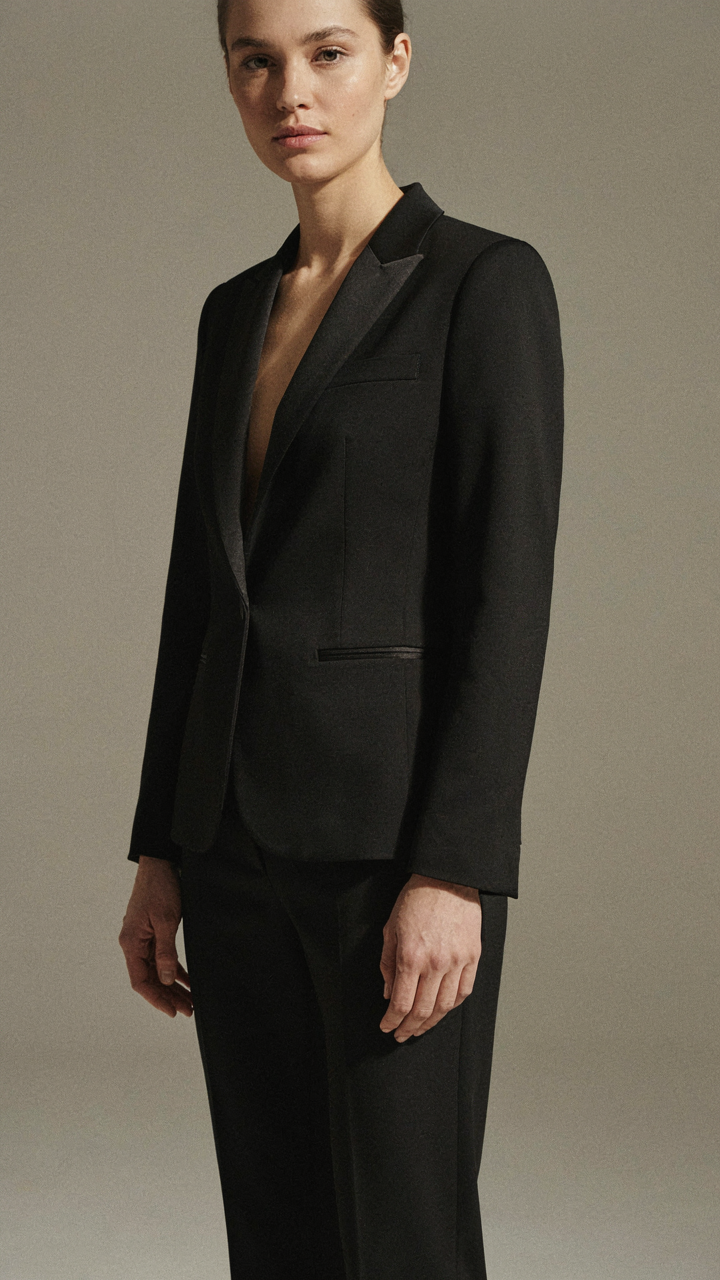
You want the black suit because you think it signals competence and won’t offend anyone. That’s half right. The mechanism at work is material contrast, borrowed from surface physics: light behaves differently on matte versus reflective surfaces, and human perception tracks that difference instantly. A flat black wool suit reads as uniform and forgettable. Introduce sheen through silk-wool blends, subtle satin lapels, or a structured gabardine with natural luster, and the same black suit commands attention without screaming.

The difference between “I wore a suit” and “I wore a formal suit” lives in fiber composition and weave structure. Wool-silk blends at 70/30 or 80/20 ratios hold shape better than pure wool while catching light in ways that pure wool cannot. Satin-back crepe for jackets and trousers creates deliberate shine without looking cheap. The sheen must be restrained—pearl, not mirror—or it collapses into costume territory. Order samples, hold them under the exact lighting where you’ll wear the suit, and verify the sheen reads as intentional polish rather than accidental gloss.
Subtle Distinction Beats Visual Noise
The common advice is to add a statement piece—a brooch, bold jewelry, dramatic collar. That’s how you sabotage a formal suit. Distinction in formal wear operates inversely: the fewer visible elements, the more each one matters. A black suit’s power comes from its visual economy. Interrupt that economy with clashing details and you’ve stopped being formal. You’ve become costume.
Distinction emerges through fit architecture, not decoration. A single-breasted jacket cut shorter at the hip with a nipped waist reads as intentional and current. Trousers with a precise break at the shoe and pressed center crease signal control. Buttons in black horn or dark mother-of-pearl rather than plastic sit imperceptibly but register as quality. Lapel width, pocket placement, and seam construction—these are where formal distinction lives. Have the suit tailored to your body, verify the button stance aligns with your natural shoulder slope, and keep jewelry to one piece: wrist or neck, not both.
Women In Formal: The Strategic Accessorization Protocol

Restraint Versus Abundance
You’re reading this because you’re afraid of looking underdressed or overdone, and you want someone to tell you which one costs you status. Here’s the mechanism: restraint signals control. Abundance signals anxiety. Formal dress codes exist because they compress variables. Accessories either reduce noise or add it. The strategic choice isn’t about taste—it’s about information density. A woman in a floor-length gown with minimal jewelry communicates authority through subtraction. A woman in the same gown layered with statement pieces communicates something else entirely: that she doesn’t trust the dress to do its work.

The common advice is “let the dress speak for itself,” which is incomplete. What matters is intentionality. If you wear minimal accessories because you don’t own others, that reads as constraint. If you wear them because you chose restraint, that reads as command. The difference lives in your decision-making process, not the outcome. Test this: audit formal events you’ve attended. The women people remember aren’t those wearing the most jewelry. They’re those whose every piece existed for a reason.
Each Piece Earns Its Place
Jewelry, bags, and shoes function like military logistics: each unit must justify its position or it creates drag. The error most women make is treating accessories as decoration rather than communication. A formal necklace isn’t there to be pretty—it’s there to frame the face, control sight lines, or anchor the entire look. A clutch isn’t there to hold lipstick—it’s there to signal whether you’re comfortable, rushed, or staged. A shoe isn’t there to match—it’s there to ground the silhouette and clarify your posture.
Here’s the protocol: start with the dress code and work backward. Black-tie requires specific shoe profiles—closed toe, refined heel, minimal embellishment. Semi-formal allows flexibility but not randomness. Jewelry scales to neckline exposure and dress complexity. A high neckline eliminates the need for a statement necklace; a bare shoulder demands it. Your bag should coordinate with your shoes, not compete with them. Evaluate each piece by asking: does this piece make the overall statement clearer, or does it dilute it? If the answer isn’t clear, leave it behind.
Dresses And Separates: The Modularity Matrix
The Physics Of Interchangeable Pieces
You want to look polished without buying ten different outfits. That’s the real driver here. Modularity—borrowed from systems engineering—is how you multiply options without multiplying closet space. Each piece functions as a variable in an equation. Change one, the whole output shifts. A silk blouse works with a pencil skirt, a wide-leg trouser, a formal skirt. One top, infinite configurations.

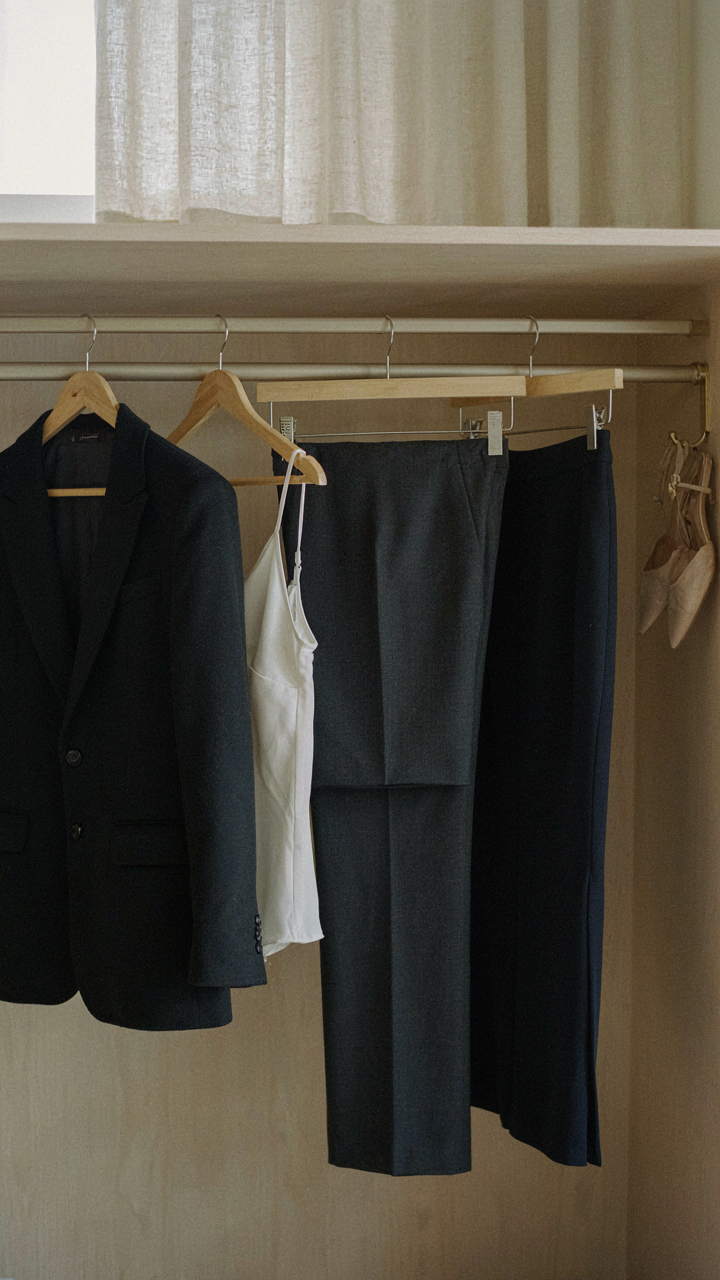
The mechanism is simple: purchase separates that share a color story and fit system. Formal separates work because they’re designed for repetition. A structured blazer in black or navy pairs with anything neutral. A silk camisole layers under jackets or stands alone. These pieces weren’t meant to be one-hit wonders. They’re engineered for rotation.
- Silk camisoles in neutral tones: Serves as a layering base or solo piece under jackets. Works with trousers, skirts, and dresses. Provides coverage without bulk.
- Structured blazers: A single quality blazer in black or navy transforms casual separates into formal wear instantly. Pairs with trousers and skirts across multiple color palettes.
- Tailored trousers in two weights: One lightweight for warmer months, one heavier for winter. Both in black or navy create a foundation that accepts any formal top.
- Pencil and A-line skirts: Pencil skirts pair with fitted tops and structured blazers. A-line skirts work with tucked blouses and belted arrangements for different silhouettes.
- Neutral formal dresses as bases: A simple column dress or sheath dress works alone or under a blazer. Accessories and layering change its context entirely without altering the core piece.
The compounding effect happens when you stop thinking about outfits and start thinking about variables. Three tops, three bottoms, and two jackets don’t create six outfits. They create eighteen. Each combination signals formal intent while requiring minimal inventory.
Core Wardrobe Scaling With Demand
Most formal wear guidance talks about building “capsule wardrobes” as if one size works forever. It doesn’t. Your needs change when your role changes. A junior professional needs something different than a director attending board dinners. Scale means adding pieces in layers, not replacing everything.
Start with the non-negotiable base: one well-fitted formal dress in black or navy, one structured blazer, one pair of tailored trousers. This covers 80 percent of formal events with minimal effort. Add a second dress only when you attend formal events monthly. Add a third only when you’re dressing formally weekly. Each addition should solve a specific problem, not fill space.
The second layer adds color range. Once black and navy work seamlessly, introduce charcoal or deep jewel tones. A burgundy or forest green formal dress or separates set expands your options without creating confusion. This happens after you’ve worn the core pieces enough to know your body and your calendar.
The third layer targets specific contexts. An evening gown only enters your wardrobe when you attend black-tie events regularly. A formal pantsuit only matters if you present at conferences. A cocktail dress sits separate from full formal wear because its job differs. Add based on frequency, not aspiration. When you finally buy the third piece, you’ve already validated that the first two earned their space.
The Unseen Advantage: Confidence As Your Ultimate Fabric
How You Feel Shapes How You Move
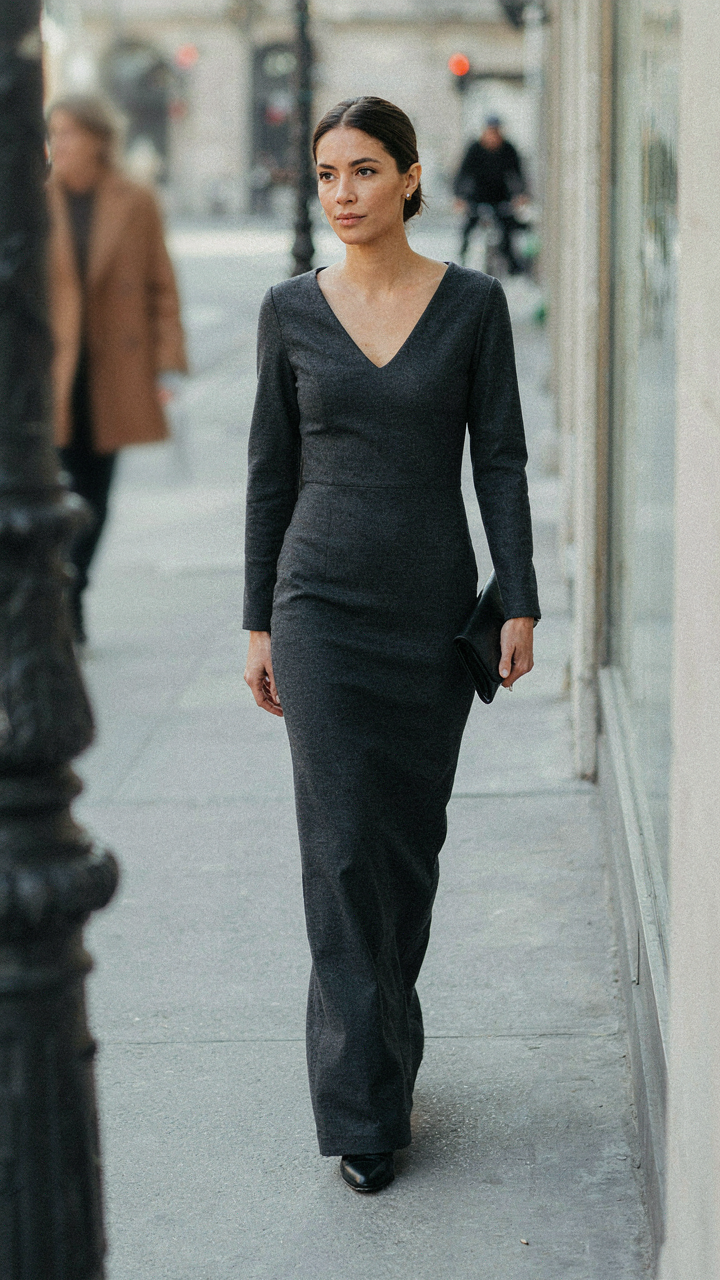
You’re reading this section because you suspect the dress matters less than you think. You’re right. The real work happens before you leave the house. Your nervous system reads the fit, the weight, the structure of fabric against your skin. A dress that fights your body creates tension you can’t hide. A dress that moves with you releases that tension. This is biomechanics, not mysticism. Your posture, your stride, your eye contact all shift based on whether your body feels supported or constrained.
The mechanism is simple: comfort at the physical level drives confidence at the behavioral level. When a formal dress fits properly, your shoulders sit back naturally. When the hem hangs right, you stop adjusting it. When the neckline doesn’t pull, you stop checking it. You stop managing the garment and start managing the room. This frees your attention for what matters—your words, your presence, your actual performance. A well-fitted formal dress becomes invisible. A poorly fitted one demands constant micro-corrections that drain your mental energy.
The Armor That Doesn’t Hide You
Formal attire isn’t a costume. The old advice treats it as a mask, something to hide behind. That’s backward. Formal wear amplifies whoever you actually are. If you’re anxious, structure makes that worse because it removes your escape routes—you can’t fidget with an oversized sweater. If you’re composed, structure gives you a container. The dress becomes an extension of your intention, not a cover for your doubt.
Authenticity here means selecting formality that matches your actual baseline. A woman who dresses formally but moves like she’s uncomfortable sends a split signal that undermines everything. Your body language must agree with your wardrobe. This alignment is the thing people actually read, not the fabric itself. When your internal state and external presentation match, you stop looking like you’re playing a role. You look like you belong.
The Only Thing Truly Unfashionable Is Your Fear Of Standing Out
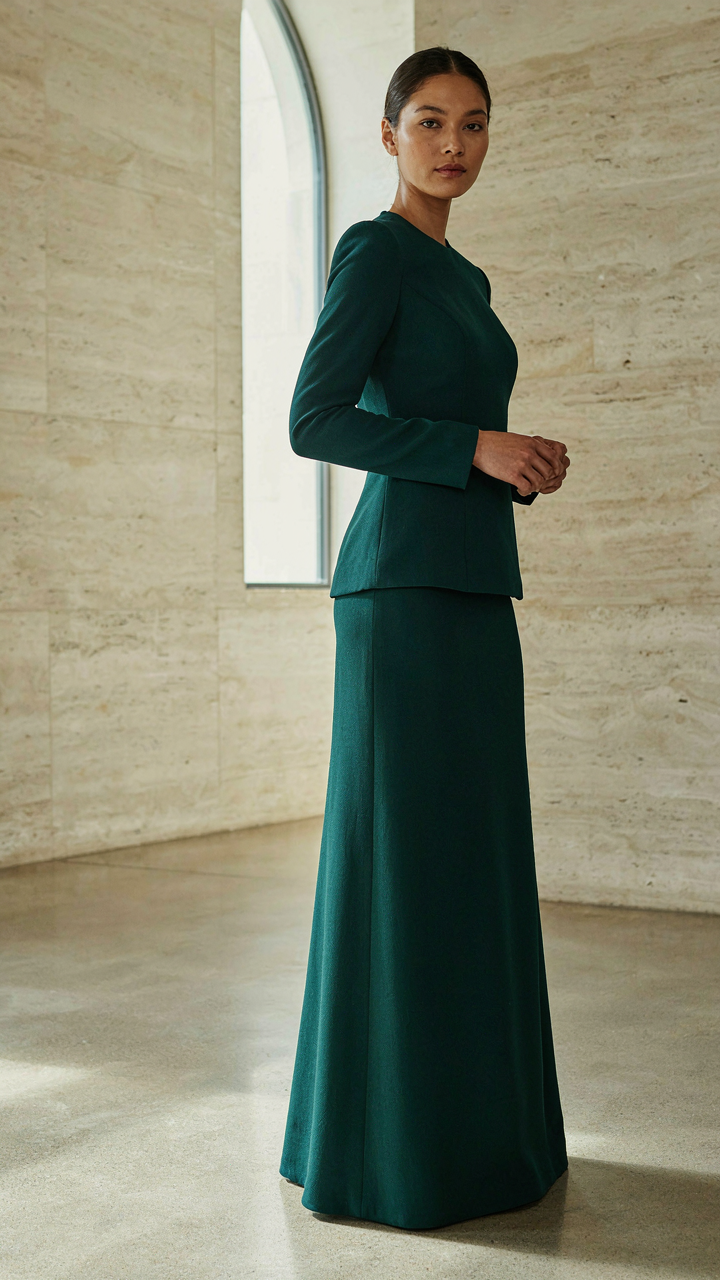
Women spend more time worrying about fitting in than commanding a room. The shift you need: stop treating formal attire as a costume to hide in. Your clothes either announce your presence or apologize for it. Pick one dress or separates combination this week that makes you uncomfortable, and wear it. The difference between forgettable and unforgettable isn’t the dress. It’s your refusal to dim yourself down.



