

The Illusion Of Choice: Why More Clothes Mean Less Impact

The Paradox Of Abundant Options
You want a capsule wardrobe because you’re tired of feeling like you have nothing to wear, even though your closet is full. That’s not a closet problem. It’s a choice problem. Economics calls this the paradox of abundance. The more options available, the harder it becomes to pick one. Your dressy occasion capsule experiences the same friction: each additional piece multiplies the number of possible outfits, which paradoxically makes getting dressed slower, not faster.
The mechanism is straightforward. When you own ten blazers, you spend mental energy comparing them before each event. With one blazer, you move on to the next decision. Abundance creates comparison loops. Your brain evaluates fit, color, formality level, and event context across multiple candidates instead of accepting the predetermined choice. Five core pieces eliminate these loops entirely because there are fewer combinations to process.
Decision Fatigue In Getting Dressed
The common advice says a capsule wardrobe saves time. That’s incomplete. What it actually does is shift decisions from the moment you get dressed to the moment you built the wardrobe. You pay the cognitive cost once, upfront, not repeatedly. Decision fatigue degrades judgment, especially under time pressure before an event when you’re already stressed.
Most people feel decision fatigue after five to seven discrete choices in a session. Getting dressed involves selecting a base piece, top, accessories, shoes, and sometimes outerwear. Add color matching and formality calibration, and you’ve hit your cognitive limit. A five-piece dressy capsule caps your decisions at three or four per outfit because pieces already coordinate by design. You execute rather than deliberate.
The 5 Piece Protocol: Deconstructing ‘Dress Capsule Wardrobe’ Power
What Actually Goes In Your Core Five
You want to look expensive without buying expensive things. The real mechanism is constraint. In economics, scarcity drives perceived value. Your capsule works the same way: fewer pieces force intentional pairing, which produces the optical illusion of sophistication. Five pieces are the minimum threshold where combinations become visible but decisions stay simple.
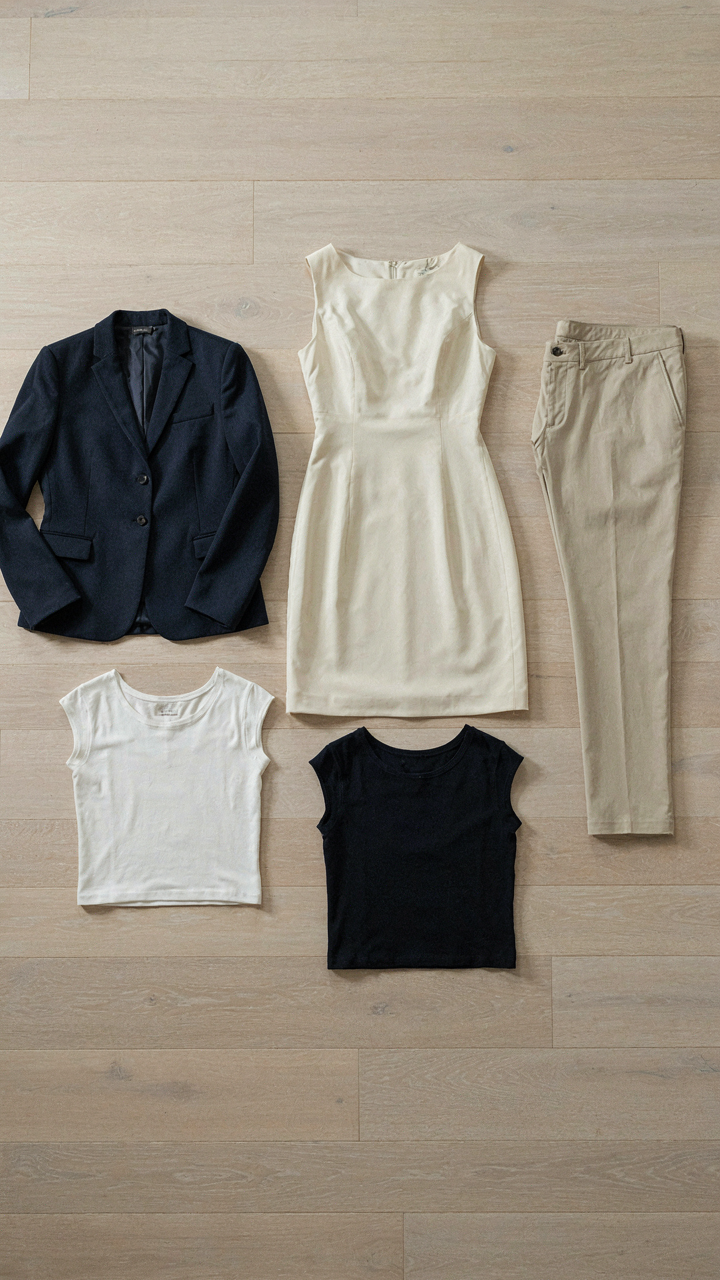
- Tailored Blazer (neutral, wool blend): The anchor piece that signals competence. Works over dresses, with trousers, over separates. Choose navy, charcoal, or black for maximum reach across seasons and occasions.
- Trousers or Tailored Pants (neutral, flat front): The workhorse bottom. Must fit at the hip and taper cleanly. Wool or wool-blend holds structure through multiple wearings without constant pressing.
- Neutral Sheath or A-line Dress (wool or blend, knee-length minimum): The standalone base. This dress works alone for moderate formality and layers under the blazer for elevated events. Neutrals compound versatility.
- White Crisp Button Down (cotton or cotton blend, tailored fit): The layer that extends outfit permutations. Wear under the dress, under the blazer, or alone with trousers. Quality matters here because fit defines everything.
- Silk or Silk Blend Shell (neutral, sleeveless or capped): The intermediary layer for temperature and visual interest. Works under blazers, over trousers, under dresses. Adds dimension without adding bulk or decisions.

These five pieces eliminate the false choice between “nothing fits” and “I own too much.” Each piece talks to at least three others. That redundancy is intentional. It shrinks your morning to a binary decision instead of a maze.
Why Most Advice On This Fails
The consensus tells you to buy “versatile” pieces, which is useless because versatile means nothing. What people actually mean is pieces that bridge formality levels and seasons. That requires ruthless specificity, not generic permission to shop. Most guides skip the hard part: cutting everything that doesn’t speak to everything else.
The five pieces work only if they coordinate on color, weight, and formality. A black blazer with a cream dress with a white shell creates visual noise. Navy blazer, navy trousers, cream dress, white shell, navy shell creates a closed system. When you select your five, lay them flat and verify that any combination reads as intentional, not accidental. This is where the capsule either becomes a tool or another pile of regrets.
Beyond ‘Minimalist Wardrobe’: Crafting Perceived Value

The Investment Thesis Behind Fewer Pieces
You care about this because you’re tired of looking like you’re trying. That’s the real mechanism at work. Economics teaches us about signaling—the idea that quality sends information faster than quantity ever could. In a capsule wardrobe for dressy occasions, five elevated pieces signal restraint and intentionality instead of confusion. You’re not drowning in options. You’ve made decisions. That’s what people see.

Most advice tells you to “invest in basics.” That’s incomplete. Real investment means buying pieces that compound in value through wear, not pieces that depreciate the moment you buy them. A wool-blend blazer worn fifty times costs less per wear than a trendy jacket worn three times. The math works backward from what you actually wear, not from what a brand tells you to want. Buy for longevity, not for the moment.
Restraint Reads As Authority
Fewer pieces demand higher standards from each one. Someone wearing three perfect options looks more controlled than someone with fifteen mediocre ones. Cognitive load matters here. When others see you in the same tailored trousers week after week, they don’t think “limited wardrobe.” They think “knows what works.” This is pattern recognition at work. Consistency builds perception of competence.
The mechanism is simple: restriction forces quality. You can’t hide behind volume. Every piece has to earn its place through fit, durability, and versatility across actual occasions. A five-piece dressy capsule means your black trousers work for dinner, presentations, and gallery openings. Your blazer functions both as a layer and as standalone outerwear. This overlap is not a compromise. It’s the entire point. Build each piece to do multiple jobs flawlessly.
The Strategic Playbook: Applying Military Logistics To Fashion Capsule

Supply Chain Efficiency In Formal Dressing
You want a capsule wardrobe for dressy occasions because you’re tired of decision fatigue before events that matter. Military logistics calls this “supply chain optimization”—the elimination of redundancy so resources hit their target without waste. Your closet works the same way. Instead of owning fifteen blazers, you stock one that pairs with everything. Instead of six pairs of trousers in similar shades, you own two in complementary neutrals. The mechanism is elimination, not addition.

Every piece you own must service multiple formal contexts. A charcoal wool blazer works for business dinners, cocktail events, and semi-formal gatherings. A cream silk camisole layers under jackets and wears solo under open suits. White dress shirts transition between black-tie and business-casual territory depending on what you layer them with. The constraint forces intentionality. You stop buying pieces that “might work” and commit only to pieces that work across at least three distinct scenarios.
Resource Deployment For Maximum Impact
Most advice on capsule wardrobes treats all five core pieces as equal. That’s wrong. Military strategy prioritizes impact per resource—getting the most outcome from the least input. Your capsule has a hierarchy. The blazer is your primary weapon. Everything else amplifies it or provides alternatives when the blazer isn’t needed. This changes how you shop and what you prioritize.
A single blazer worn across forty different occasions through layering combinations outperforms five mediocre pieces each worn eight times. That blazer becomes your foundation. The trousers, skirt, and two shells orbit around it, each chosen so they multiply the blazer’s versatility rather than exist independently. Your final piece—a structured layer like a cardigan or cropped jacket—functions as tactical flexibility for temperature and formality shifts. This hierarchy means you invest money and attention proportionally where it generates the most return.
Unlocking Capsule Wardrobe Women Potential: The Adaptable Foundation

How Five Pieces Solve Multiple Dress Codes
You want to look right without buying constantly. That’s not shallow—it’s resource management. The real mechanism here borrowed from systems engineering: constraint breeds efficiency. Your five core pieces function as nodes in a network where each one connects to multiple event types, multiplying your output without multiplying your inventory.

A structured blazer in navy or charcoal, a white silk shirt, tailored trousers, a neutral sheath dress, and a quality belt form the skeleton. These pieces work because they’re agnostic to occasion. The blazer layers over cocktail dresses or pairs with trousers for galas. The shirt becomes formal under a vest or casual under a sweater. You’re not buying five outfits; you’re buying five tools that recombine. This is why five works where ten pieces would just sit unused.
Pivoting Between Day Formality And Evening
The common advice here is wrong: you don’t need separate day and night pieces. You need pieces that shift through context alone. Fabric weight and cut do the work, not different garments. A blazer in a structured weave reads corporate at 2 PM and formal at 8 PM if you swap your accessories and shoes.
Your sheath dress functions across both daylight and dark hours depending on what you layer and what you pair it with. Wear it to an afternoon wedding with a cardigan and flat shoes. That same dress works for evening with the cardigan off, heels swapped in, and a statement necklace added. The transition point isn’t a clothing change; it’s a deliberate swap of finishes and scale. Your belt and shoe choices compress or expand the formality without a wardrobe refresh.
The Multiplier Effect: Transforming Capsule Wardrobe Outfits
Accessories As The Scaling Lever
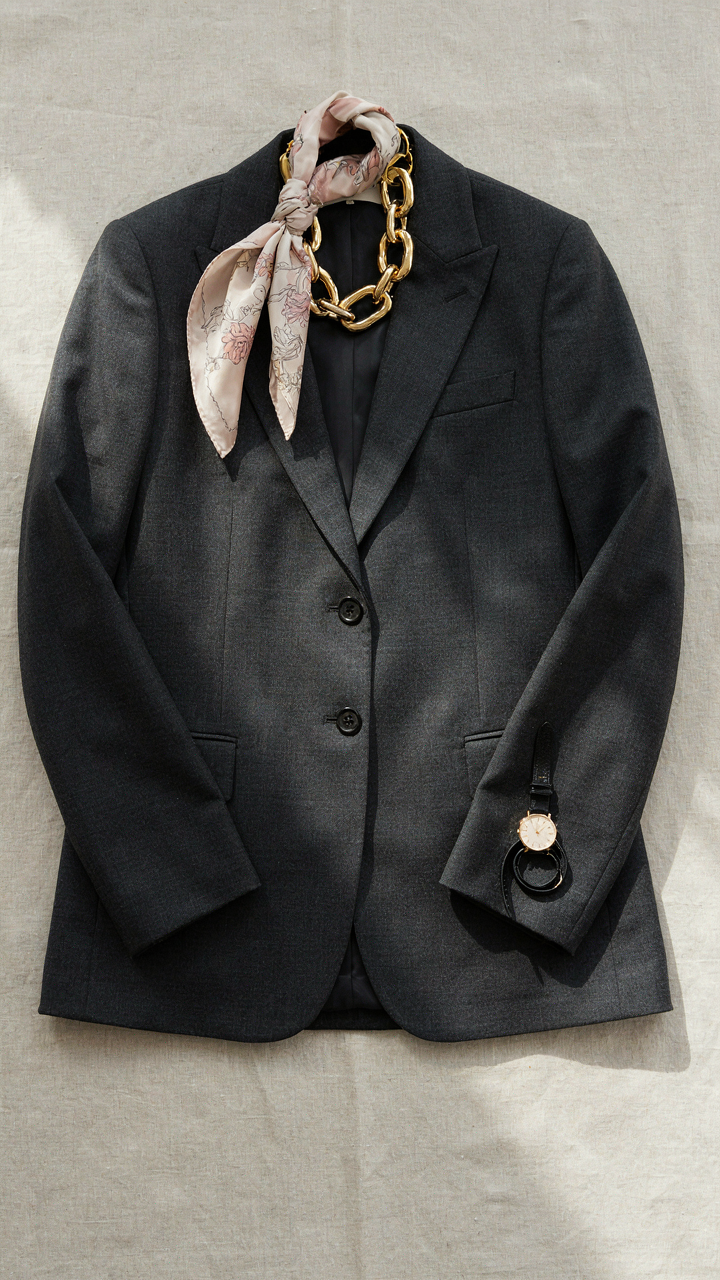
You want to feel like you own more than five pieces without actually buying more. That’s the real math here. Accessories work like leverage in physics: a small force applied at distance moves enormous weight. A silk scarf, watch, or pair of shoes doesn’t replace your core garment. It repositions how the brain categorizes the entire outfit. The same blazer becomes three different entities depending on what hangs from your neck or sits on your wrist.

Most people treat accessories as decoration. They’re wrong. Accessories are the variable that turns repetition into variety. The mechanism is simple: your five core pieces remain constant. Your accessories rotate. This compounds the outfit combinations without requiring more closet space or capital.
- Statement Scarves: Silk or linen scarves worn at the neck, as a headpiece, or knotted at the waist dramatically shift how observers categorize the base outfit. Same dress, three distinct visual narratives.
- Metallic Watches: Gold, silver, or rose gold watches anchor an outfit’s formality level and era. They signal intentionality and control the visual weight distribution on your wrist.
- Leather Belts: A structured belt redefines silhouette and proportion. Wear it at the waist with a blazer for business. Wear it lower with a dress for a different era and mood.
- Simple Jewelry Sets: One pair of earrings, one necklace, one ring per outfit. Repetition of the same piece across multiple occasions creates recognition and reduces decision fatigue.
- Structured Bags: A single leather bag in neutral tone carries 80 percent of your outfits. Swap it for an evening clutch for formal events. The bag often registers before the clothes themselves.
The compound effect arrives when you stop thinking about accessories as additions. You’re building a second capsule that rotates through your first. Five core pieces plus eight to ten accessories gives you tactical combinations that feel fresh because the accessories change the context, not because you bought new foundation pieces.
Recontextualization Through Occasion Shifting
The real leverage isn’t in the pieces themselves. It’s in the permission structure you grant yourself to wear them differently. A navy blazer functions as business wear at 9 AM and evening wear at 7 PM. Most people don’t test this. They buy separate wardrobes for separate occasions instead of learning the single dress code rule that collapses them.
Recontextualization means understanding fabric weight, silhouette, and formality as sliding scales, not fixed categories. A silk camisole worn under your blazer for a board meeting becomes visible under the same blazer unbuttoned at a dinner event. Lighting changes. Layering changes. The blazer doesn’t change. This is the mechanism that gives five pieces the functional range of fifteen. You’re not buying different versions of the same item. You’re learning to read the same item through different lenses depending on time, light, and what sits adjacent to it. The protocol is this: before buying a sixth piece, wear each of your five pieces twice in different contexts. Document how the outfit registers differently. Once you’ve done this, you understand whether you actually need more inventory or whether you need to change your styling approach.
Escaping The Time Capsule Wardrobe Outfits Trap: Timeless Vs. Trendy

Build On Enduring Design Language
You’re afraid your investment will look dated in two years. That’s the real concern underneath this whole section. Here’s the mechanism: timeless design isn’t about being boring. It’s about understanding architectural principles in clothing—proportion, balance, and constraint work the same way they do in buildings. A well-cut blazer from 1995 reads identically to one from 2024 because the underlying structure hasn’t shifted. Trend-chasing happens at the surface level—hem height, lapel width, fabric weight. The skeleton stays constant.

Your five core pieces survive trends because they operate at the structural level, not the decorative one. A black evening trouser has remained functionally identical for decades because it solves a specific problem with zero ambiguity. When you buy based on proportion and construction rather than “what’s in,” you’re selecting pieces that will outlast three fashion cycles. The moment you chase a trend into your capsule, you’ve surrendered your five-piece framework and started building a closet instead. Test this: pull any dressy piece you own from five years ago. If it still fits and still works, the cut was sound. If it looks absurd, the trend was the driving force.
Recognize The Cycle, Then Ignore It
Most capsule advice tells you to ignore trends entirely. That’s incomplete because trends aren’t random—they’re cyclical and predictable. Knowing the pattern means you can spot which trends are structural shifts (the rise of tailoring in women’s suiting over the past decade) versus decorative noise (micro-trends in pocket placement). The five-core-piece model protects you by design. You’re not building a wardrobe that trends can penetrate easily.
The real protocol is this: when a trend arrives, ask whether it changes the fundamental problem your piece solves. A trend in color doesn’t affect your black trouser’s function. A trend in fit that actually improves proportion—like returning to higher rises after years of low-rise—signals a structural correction worth noting. But the five pieces themselves shouldn’t shift. You add nothing to the capsule until the trend has completed its cycle and you can confirm it changed the baseline, not just the decoration. This is how you stop replacing perfectly functional pieces every eighteen months.
The Travel Wardrobe Blueprint: Dressy Edition

Stacking Occasions Into One Suitcase
You’re afraid of looking underdressed or repeating an outfit in front of people who matter. That fear is the real problem. The mechanism is constraint forcing intentionality: when you pack five pieces, you stop buying clothes and start buying combinations. Each piece must work with at least three others. This isn’t about minimalism as virtue. It’s economics. Limited inventory forces higher quality per item and eliminates dead weight that sits unused.

A five-piece dressy capsule for travel operates on the same principle as a military loadout: redundancy in function, not form. Every garment must earn its space by serving multiple events and contexts. A navy blazer works for cocktail events, business dinners, and casual layering. A silk camisole pairs under the blazer, over trousers, and under structured dresses. The constraint isn’t limitation. The constraint is clarity.
Looking Expensive While Moving Light
Packing light isn’t about carrying less. It’s about eliminating the visual tells that broadcast “I’m traveling.” The common advice says stick to neutrals and call it done. Wrong. Neutrals alone make you invisible, which defeats the entire purpose of dressing for dressy occasions. The real move is choosing one anchoring neutral, one accent color, and allowing fabric quality to do the heavy lifting where volume used to live.
Wrinkle resistance matters more than thread count when you’re condensing days into a carry-on. High-quality synthetic blends and performance fabrics hold structure without constant steaming. Italian merino wool, silk-linen blends, and modal fabrics travel without degradation. Pack structured pieces that don’t require ironing to maintain their form. Your five pieces should arrive looking like you invested in each one because you did. Fabric quality and cut replace quantity in the visual hierarchy of expensive dressing.
From ‘Fashion Capsule’ To Personal Brand: Your Signature Style

Know Your Visual Language
You want people to remember you as “put together” without trying. That’s the real motive. Here’s the mechanism: your brain categorizes people by visual consistency. When you wear the same five core pieces across different dressy occasions, you create pattern recognition. Others stop seeing “an outfit” and start seeing “you.” This is borrowed from branding strategy—the principle of visual identity repetition. A logo works because it’s the same every time. Your capsule works the same way. Consistency builds recognition faster than variety ever could.

The five core pieces do this automatically because they repeat across contexts. A navy blazer worn to a cocktail event looks familiar when you wear it to a formal dinner three weeks later. Your guests’ minds catalogue the blazer as “part of your thing,” not “a blazer she happened to wear.” That shift from random choice to signature element is what separates someone who gets dressed from someone who has a style. You’re not building a collection. You’re building a visual trademark.
The Confidence That Comes From Knowing
Confidence isn’t a feeling you manufacture. It’s a side effect of removing decisions. When you own five core pieces that work together, you never stand in front of your closet panicking about whether something fits the occasion. You already know. A structured black dress, a cream silk blouse, tailored trousers, a camel coat, and nude heels cover formal dinners, gallery openings, professional events, and elevated weekends without gaps or friction.
This consistency signals something to others that goes beyond clothes. It says you have criteria. It says you’re not desperate for options or trends. People read that as intentionality, which reads as confidence. The mechanism is simple: when you repeat the same elements, observers assume those elements are deliberate. Deliberate choices look like control. Control looks like confidence. You only need five pieces to communicate this.
The Real Secret: Not What You Wear, But How You Command It

Posture And Presence As Ultimate Accessories
You’re hoping the five pieces do the work for you. They don’t. Here’s the mechanism: in social psychology, “enclothed cognition” shows that clothing affects the wearer’s behavior and self-perception first, before anyone else sees you. Your five-piece capsule works only when your body language proves you selected those pieces intentionally. Slouching in a tailored blazer signals doubt. Standing centered in it signals control.
The room reads your body before it reads your fabric. Shoulders back, sternum visible, weight distributed across both feet—this baseline posture transforms a simple navy blazer from costume into uniform. Most people dress for approval and then undermine it with nervous positioning. The five pieces demand certainty in how you occupy space. Without it, they become decoration you’re wearing rather than infrastructure you’re commanding.
Owning Your Limited, Powerful Choices
The common advice says repetition feels boring. That’s consumer psychology talking, not reality. Uniform dressing—wearing the same five pieces in different combinations—creates authority through constraint, not limitation. You’ve made a decision and you’re living by it. That consistency reads as conviction. People notice and they trust it.
Every time you step into the same tailored blazer, the same white shirt, the same two trousers, you’re signaling that you’ve already solved this problem. You don’t debate your wardrobe because you don’t need to. The five pieces shrink the cognitive load to zero, which frees mental energy for the actual event. That’s the real advantage. On game day, wear the uniform you’ve already chosen.
Your True Obstacle Isn’t Choice; It’s The Lack Of A System That Commands Respect Without Shouting

Most men own thirty shirts and wear five. A capsule wardrobe for dressy occasions strips that noise away. You stop negotiating with yourself every morning. The shift happens when you commit to five core pieces and refuse to add the sixth. Today, pull those five pieces from your closet. Lay them out. This is your system now. Respect flows from consistency, not volume.