

The Myth Of More: Why Your Luggage Is Lying To You

You Pack For The Person You Wish You’d Be
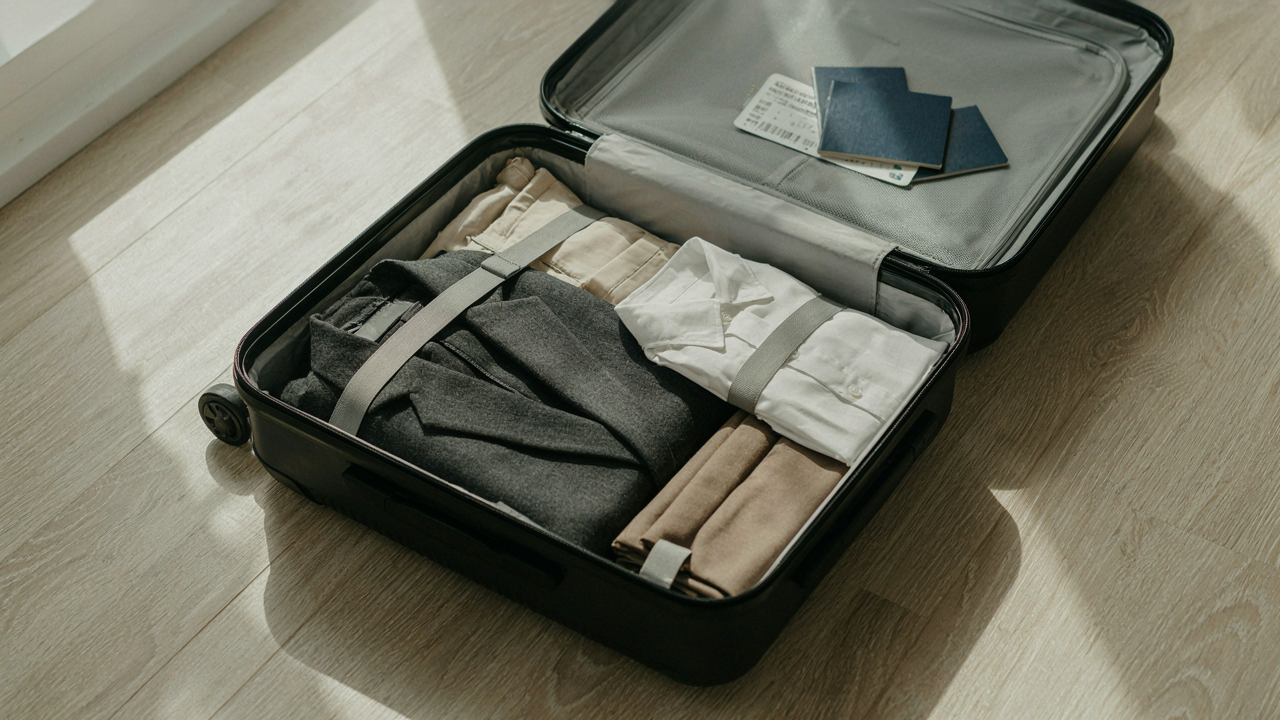
You’re packing for scenarios that won’t happen because admitting that feels like failure. You throw in the blazer you might wear to an unexpected formal dinner, the backup shoes in case the first pair fails, the three shirt options when two work fine. The mechanism is simple: excess feels like insurance against looking unprepared. It’s not. It’s anxiety wearing a practical disguise.
The real cost isn’t the extra weight. It’s that you’ll spend your trip mentally cataloging unused items instead of focusing on the actual meeting. Your brain burns cycles on a wardrobe you’re not using. You’ll second-guess outfit choices because you have too many. Decision fatigue compounds when options multiply. A business trip isn’t the place to test this theory.
Constraints Force Better Decisions
Economics calls this scarcity pricing, but the principle works on your closet too: limited resources force optimization. When you pack eight shirts for a three-day trip, you’ve already lost. You haven’t committed to a formula. You’re still deciding each morning, which drains mental energy before your actual work begins.
Packing fewer pieces means every item has to work multiple ways. A neutral trouser becomes the anchor for three different looks. A white shirt layers under blazers and wears solo under cardigans. When you eliminate the luxury of redundancy, you stop carrying dead weight and start building combinations. Before you book your trip, calculate the exact number of days and committed events. Pack for that number only, then subtract one piece.
The Inversion Principle: Dressing For Impact, Not Impressions

One Outfit Does Four Jobs
You want people to remember you, not your clothes. That’s the real fear underneath every capsule wardrobe question. The mechanism is simple: constraint forces intentionality. When you own fewer pieces, each one must earn its place through utility, which means it works across contexts. A blazer that only fits one meeting is dead weight. A blazer that transitions from boardroom to dinner to casual breakfast is a tool.

This is leverage borrowed from engineering: one component performing multiple functions. In your capsule, this means a charcoal wool blazer becomes your meeting armor, your dinner layer, and your credibility signal when you walk into a room. The piece doesn’t change. The context does. You move through the day without opening your suitcase twice because the garment was designed to scale across situations. Pick fabrics that don’t wrinkle easily, cuts that fit multiple shirt weights underneath, colors that pair with at least three other items you’ve packed.
Simplicity Reads As Authority
The consensus advice says dress like everyone else in the room, just slightly better. That’s wrong. Dressing like everyone else makes you invisible. Dressing simpler than everyone else makes you look like the person who decided not to try, which reads as either arrogance or irrelevance. The real move is dressing simpler in a way that shows intention, not laziness.
Two colors throughout your entire trip. Navy or charcoal as your base. One accent color that appears in a shirt or knit. Monochromatic dressing isn’t about being boring. It’s about removing visual noise so your competence becomes the loudest signal in the room. When someone remembers you after a meeting, they remember what you said and how you carried yourself, not that your tie clashed with your pocket square. The protocol is brutal: if a piece doesn’t fit within your two-color system, it doesn’t come. This discipline compounds across the trip because you’ve eliminated the decision tax at 6 AM before a presentation.
The ‘5 Day Business Trip Outfits’ Algorithm

Start With Hard Constraints, Not Vibes
You want to feel confident without overthinking. The mechanism that actually works is constraint-based design, borrowed from systems engineering: you input fixed parameters, eliminate variables, and get a reliable output every time. Your trip duration, scheduled events, and climate aren’t suggestions. They’re the only three inputs that matter. Everything else you’ve read about “finding your style” or “dressing authentically” is noise that delays decisions.

Map your days first. Identify which events demand formal dress, which allow business casual, which are client dinners versus internal meetings. Then check the weather forecast for your destination, not your home city. A five-day trip to Chicago in October requires different pieces than five days in Miami in July. You’re not building a wardrobe. You’re solving an equation with known variables.
Cut Until Nothing Else Breaks
Most advice tells you to add pieces. That’s backward. Start with everything you think you need, then remove items ruthlessly until one outfit fails. This is subtraction as a design principle. If you can wear a navy blazer to your Monday client meeting and your Wednesday dinner, one item covers two events. If you pack a third blazer because you want options, you’ve wasted a bag slot for a problem that doesn’t exist.
The rule: no item travels unless it functions in at least two distinct outfits. A white dress shirt works with blazers, chinos, and under sweaters. A graphic tee works in one outfit, maybe two if you’re generous. One graphic tee stays home. Test your packing before you leave. Lay out each day’s outfit on a bed. If you see unused pieces, remove them now, not halfway through your trip when the damage is done.
Beyond “Business Travel Outfits Woman”: The Uniform Advantage

Decision Fatigue Is The Real Cost
You want a capsule wardrobe because you’re tired of choosing what to wear, but you won’t admit that’s the real reason. The mechanism is simple: every decision you make depletes cognitive resources. Psychology research shows this is measurable and compounds throughout the day. By the time you’re in a client meeting, you’ve already burned decision-making capacity on something that should be automatic. Successful operators eliminate the trivial choices first. Clothing is trivial.

A personal uniform collapses the decision tree to zero. Steve Jobs wore black turtlenecks and jeans for the same reason CEOs repeat the same breakfast. The uniform removes the variable. When you travel for business, you’re already managing flight delays, time zones, and client expectations. Adding “what do I wear tomorrow” to that stack is voluntary suffering. The uniform trades perceived freedom for actual mental clarity. That clarity shows up in how you show up.
Repetition Builds Recognition, Not Boredom
The common advice here is wrong: repeating outfits makes you look limited. That’s backwards. Repetition with intentional variation builds a recognizable personal brand. You’re not dressing the same way. You’re building a coherent visual system. Think of it like a company logo. A logo doesn’t change every day, and that’s the point. Recognition requires consistency.
Build your travel uniform around three to four core pieces that work together across contexts. A tailored blazer, two pairs of trousers, one dress, quality shoes that transition from meeting to dinner. Add layers and accessories that swap in and out. This isn’t boring. This is professional architecture. The goal is that anyone who sees you twice remembers you, not your clothes. Implement this by selecting pieces first, then buying nothing else until you’ve worn the system for two weeks.
The Second Law Of Thermodynamics And Travel Capsule Wardrobe

More Options Create More Friction
You think more clothes give you more control. They don’t. Physics applies here: entropy is disorder, and every additional item in your bag increases the number of decisions you make without increasing your actual options. The second law of thermodynamics states that disorder in a closed system always increases. Your suitcase is a closed system. Each shirt, each pair of pants, each jacket you add creates new combinations you’ll never wear and combinations you’ll second-guess.

The math looks good on paper. Ten pieces times three pieces times two pieces equals a hundred outfit combinations. But your brain doesn’t work in combinations. It works in friction. You stand in front of your open suitcase at six in the morning before a client dinner and you have twelve shirts. Twelve options collapse into paralysis, not freedom. You cycle through each one, comparing, doubting. You pick the safest option, which is usually wrong because safe pieces in a suitcase full of noise get lost.
Fewer Items, Higher Signal
The real move is inverting the problem. Don’t pack to have options. Pack to eliminate options. This is what designers call constraint-based thinking, and it’s how luxury brands operate. Hermes doesn’t sell you fifty bags. It sells you five. Constraints force intentionality. They force every piece to earn its weight in the suitcase.
When you pack five neutral base pieces and two statement layers, every item works with every other item. You reach into your bag in the dark and you can’t pick wrong. You’re not managing combinations anymore. You’re managing utility. Each piece has one job: it solves a specific moment in your trip. A charcoal blazer doesn’t compete with a navy blazer because you only brought one. That blazer works over the grey pants and the black trousers and the chinos because everything was chosen with that constraint in mind. Your outfit doesn’t depend on finding the perfect pairing. It depends on not packing the imperfect one.
The Business Casual Women Capsule Wardrobe Deconstructed
The Dress Code Nobody Defines Clearly
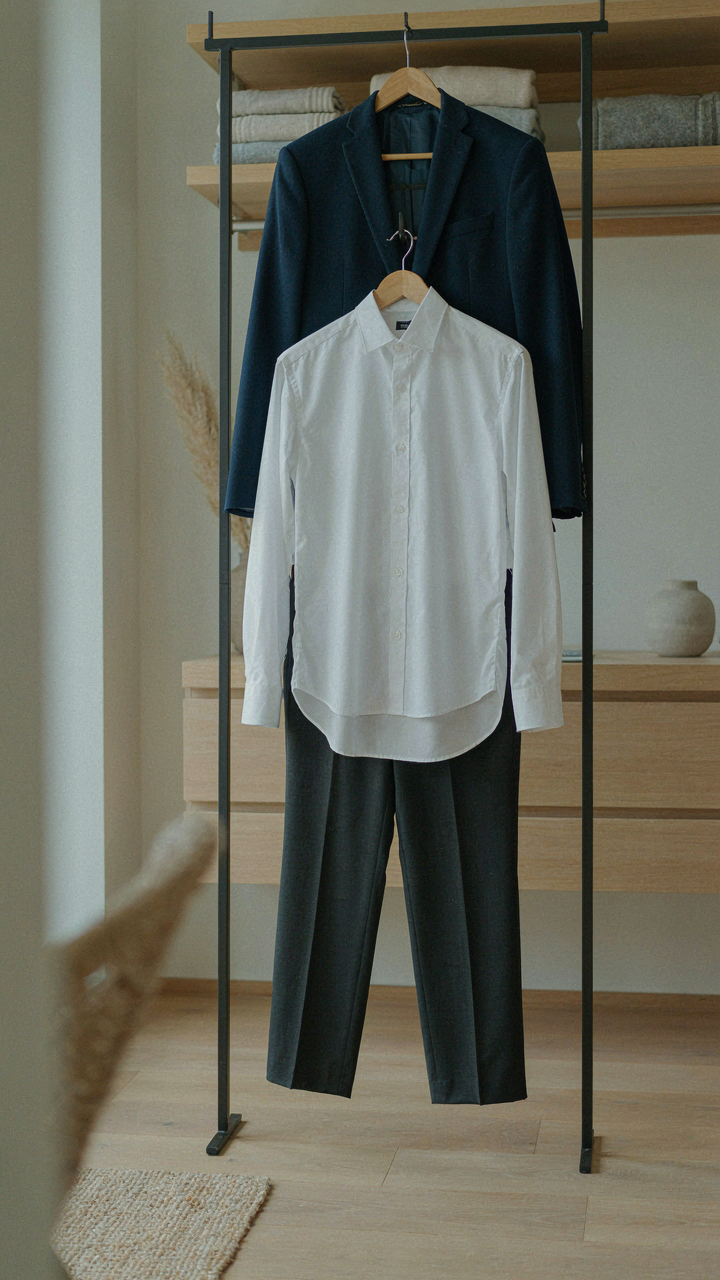
You’re worried people will judge you for dressing wrong, and that fear makes you overthink a label that most companies define poorly anyway. Business casual is not a relaxation of standards—it’s a constraint that eliminates the formal uniform while keeping the professional signal intact. The mechanism is simple: remove the blazer, keep the structure. A button-up shirt, tailored trousers, and closed-toe shoes remain non-negotiable. The sloppiness creeps in when women treat business casual as permission to wear what they’d wear on a weekend.

The real distinction lands here: business formal demands a jacket and follows rigid color rules. Business casual demands intention. Your pieces must fit your frame, colors must read as intentional rather than accidental, and fabric must look maintained. Wrinkles, loose threads, or shoes that read “comfort” over “professional” trigger the exact judgment you’re trying to avoid. The baseline is always tailoring and fabric quality—these two factors do more work than any trend or style choice.
The Four Pieces That Actually Travel
These items earn their space because each one works with the others across contexts: day meetings, client dinners, and the downtime between them.
- Structured trousers in neutral tones: Charcoal, navy, or black in a wool blend or cotton blend that resists wrinkles. Must fit at the waist without gaps and taper to your ankle. This is your foundation piece that anchors every outfit combination.
- Crisp button-up shirts in white and light blue: Cotton or cotton-blend fabric that packs without creasing severely. White works for formal meetings; light blue adds versatility for casual client dinners. Both transition from day to evening without change.
- Layering knit in cream or gray: A fine-gauge merino wool or quality cotton cardigan or sweater that fits close to the body without clinging. Solves temperature variation in hotels and offices while adding polish without formality.
- One elevated blouse in a subtle pattern or texture: A silk-blend blouse in a small print, diagonal weave, or tonal stripe distinguishes your evening look from your daytime setup. Keeps the outfit from feeling repetitive across multiple dinners.
- Tailored blazer in a neutral: Optional but powerful for client dinners or company events. A well-fitted single-breasted blazer in navy or charcoal elevates any foundation outfit and compresses your choices.
These pieces multiply each other rather than compete. A white button-up over neutral trousers reads corporate. Add the elevated blouse instead, and the same trousers read dinner-ready. The cardigan bridges both contexts without requiring a second round of packing. The mechanism is constraint through combination, not through owning more items.
The Travel Capsule Strategic Deployment
Know The Dress Code Before You Pack
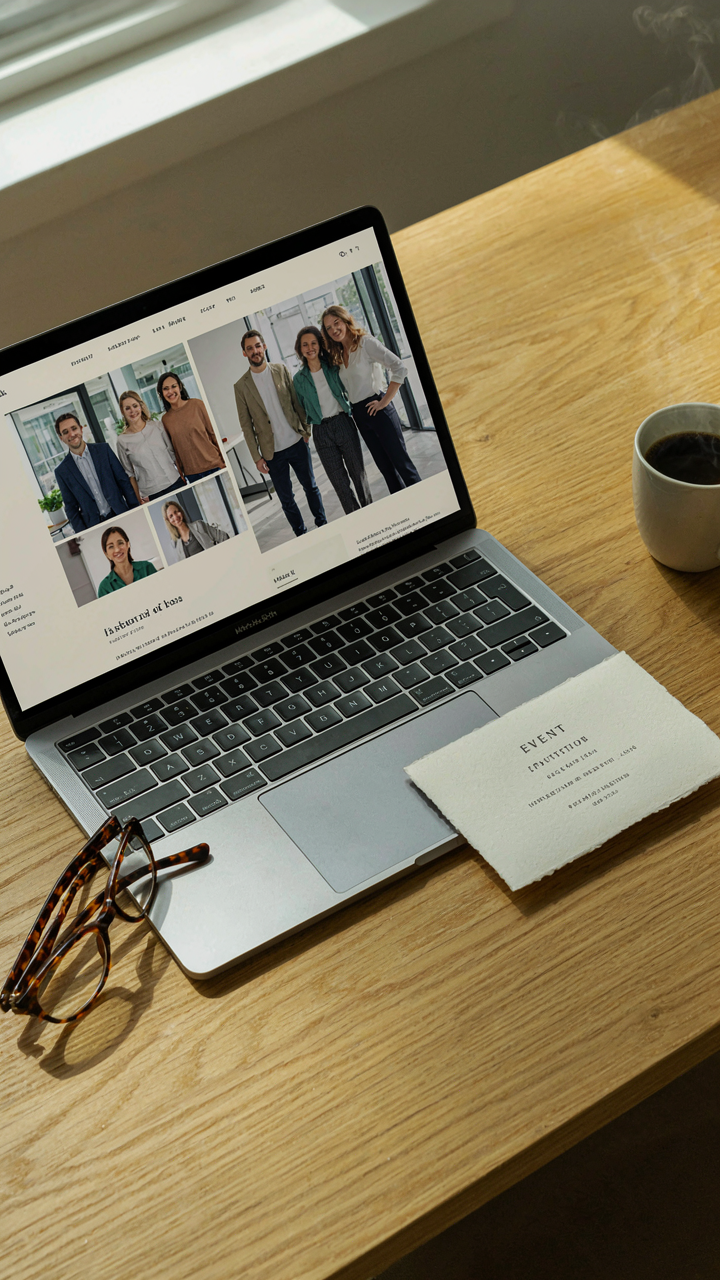
You’re really asking: will I look like I don’t belong? That’s the actual question. The mechanism is simple—dress codes exist to sort people into status tiers, and getting it wrong signals you didn’t prepare. Intelligence gathering eliminates guesswork. Check the event invite for explicit language. Call the host’s assistant if nothing’s stated. Browse the company website for photos of past events. Look at LinkedIn profiles of attendees. One email asking “business formal or business casual” costs nothing and prevents arriving overdressed or underdressed.

The standard advice says “business casual is safe.” It’s not. Business casual at a formal dinner reads as either lazy or ignorant. Business formal at a casual startup mixer reads as out of touch. The gap between these isn’t big, but it’s visible. You need specific intelligence, not hedging. Document what you find—send yourself a one-line note with the dress code and event type. This becomes your packing instruction set. No guessing at the hotel at 5 PM.
Arrange Clothes By Access Pattern, Not By Day
Most people pack by calendar: Monday outfit, Tuesday outfit, Wednesday outfit. This creates friction. You’re hunting through luggage for the one item you need. Instead, think like inventory management—organize by access frequency and event type. Put dinner pieces on top or in the easiest compartment. Toss daily business wear in the middle. Reserve the bottom for backup items you rarely touch. Your most-worn pieces should take fifteen seconds to locate, not five minutes.
The physical arrangement of your luggage determines how many times you’ll rewear the same shirt or tie because “it’s already out.” Bad logistics create waste and reduce your actual outfit options despite packing enough pieces. Hang blazers and trousers vertically if your luggage has a hanging section. Roll other items to maximize space and visibility. When every piece is visible and accessible without unpacking everything, you use what you bring. When it’s buried, you cycle through the same three items and look repetitive.
The Future Of Business Travel Outfits: Less Is The New More
Build Clothes That Last Longer Than Your Career
You want permission to buy expensive things and feel virtuous about it. Here’s the real mechanism: durability compounds. Economics calls this “cost per wear.” A blazer worn 200 times costs half as much per use as one worn 50 times, even if you paid double the price upfront. Business travel demands repetition. You’re cycling the same five outfits across dozens of trips. Synthetic blends deteriorate under this stress. Natural fibers and construction methods designed for longevity don’t.

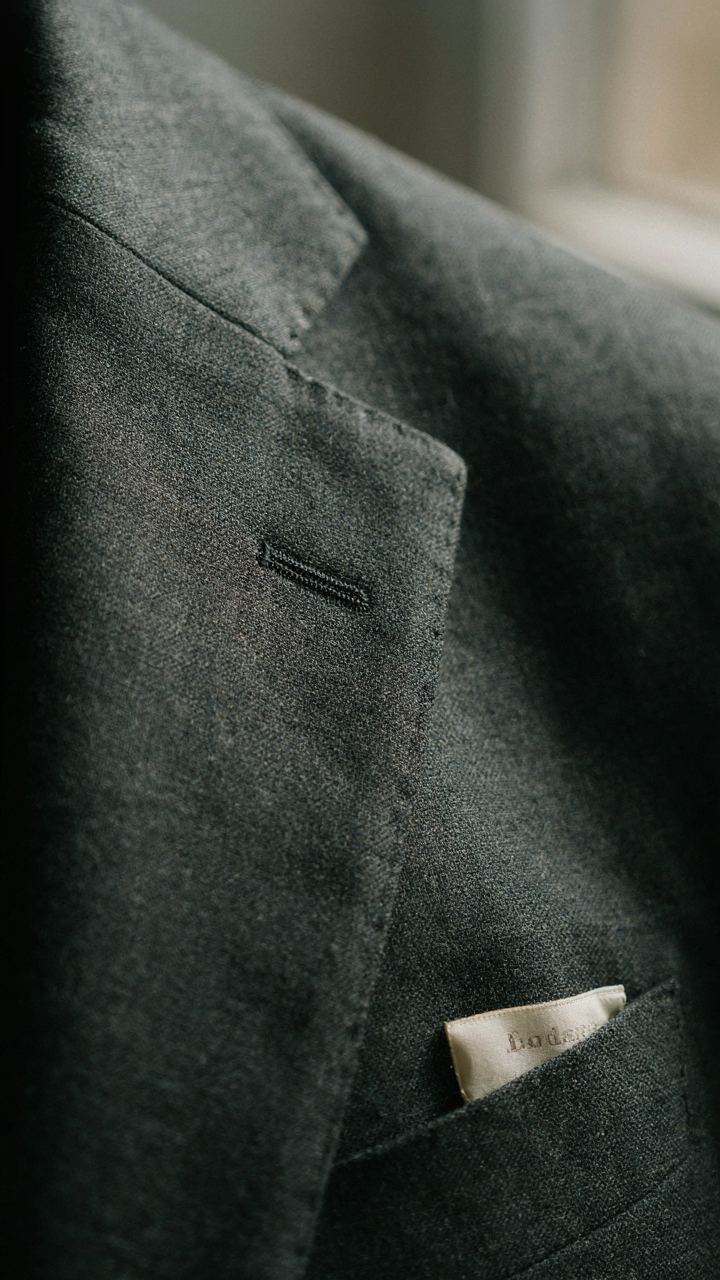
Wool, linen, and cotton hold structure through repeated laundering and packing better than polyester blends. Italian wool blazers with hand-finished seams outlast fast-fashion equivalents by years, not months. This isn’t romance about craftsmanship. It’s math. When you travel for business, you need pieces that survive compression, humidity, and constant wearing without visible degradation. A capsule built on longevity means you’re not replacing basics every eighteen months because they’ve lost their shape.
Quality Compounds When You Stop Replacing Things
Most advice here is backward. People say buy fewer items. That’s incomplete. The real move is buying items that don’t need replacing. A single premium pair of trousers that holds its fit for five years beats buying three cheaper pairs that bag out after two. Your travel budget gets consumed by replacement cycles if you start with low durability.
Quality fabrics and construction reduce decision fatigue on trips too. You reach for the same pieces because they perform. No surprises with fit, no stains that won’t come out, no seams splitting mid-meeting. This reliability lets you pack lighter and focus on work instead of managing a wardrobe problem. Every item you buy for business travel should justify itself across at least fifty wears before you move on.
Business Travel Capsule Wardrobe: The Unspoken Advantage

The Clarity That Comes From Fewer Choices
You want this because you’re afraid you’ll show up wrong and blow the deal. That fear is noise. Here’s the mechanism: decision fatigue is real neurology, not motivation theory. Every clothing choice you make before a meeting burns glucose your brain needs for actual negotiation. A capsule wardrobe eliminates the variable. You walk into the room with one less cognitive load.

Most people treat this as a convenience hack. It’s not. It’s cognitive resource management. You have finite mental energy per day. Spend it on what matters. When your outfit is predetermined, you preserve that energy for reading the room, tracking microexpressions, and adjusting your strategy mid-conversation. The person who isn’t thinking about their tie is the person winning the negotiation.
Attention On The Work, Not The Wardrobe
The real cost of a bloated travel closet isn’t luggage weight. It’s attention residue. You’ve heard of context switching in software development. Clothing decisions trigger the same tax on your focus. Every morning, you’re context switching between “what should I wear” and “what should I accomplish.” A capsule removes that switch entirely.
Stop saying you don’t care what you wear. You do care, which is exactly why a capsule works. You care enough to pick pieces that work everywhere. That means when you’re in the meeting or at dinner, there’s no background anxiety about whether you nailed the dress code. Your attention stays where it belongs: on the person across the table and what they’re actually saying.
Your Overpacked Suitcase Isn’t A Plan; It’s A Monument To Indecision. Travel Light, Think Clear
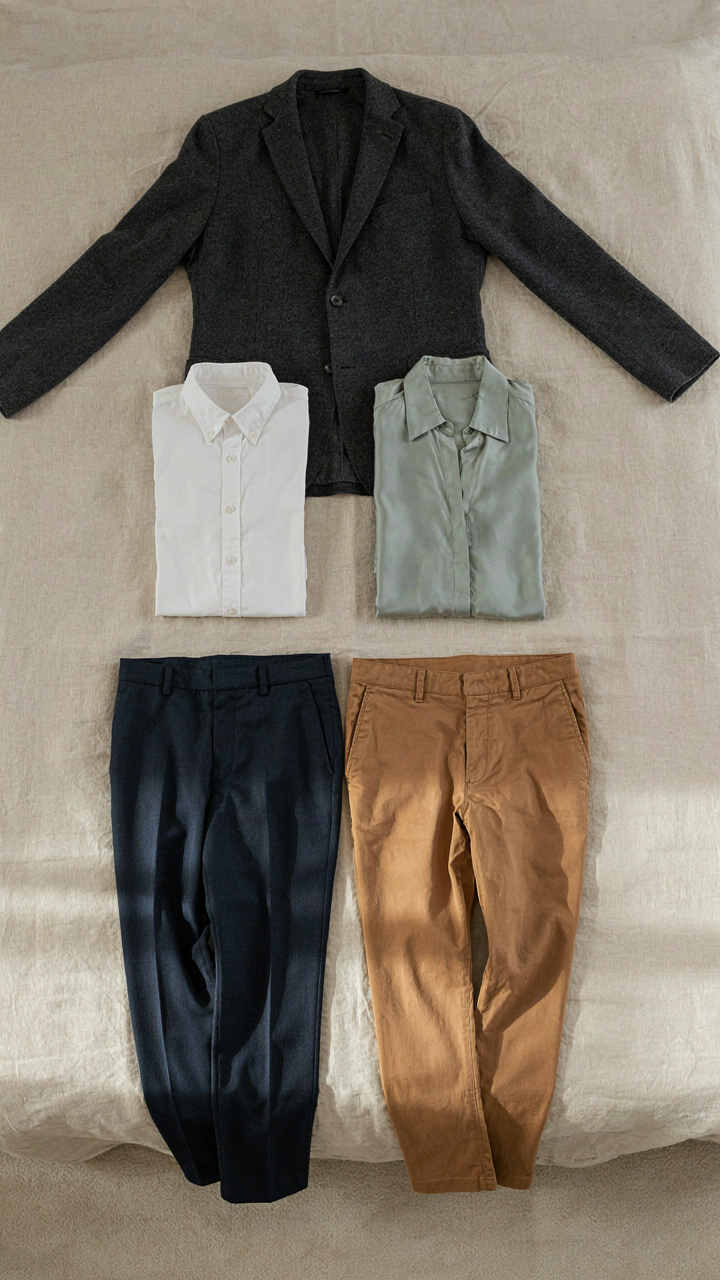
The real shift happens when you stop treating your suitcase like insurance against uncertainty. Every extra shirt you pack is a decision you’re postponing. You’re not buying options; you’re buying anxiety. Pull five items from your closet right now. Not tonight, not tomorrow. Lay them flat. Mix them. Wear them mentally through your entire trip. That discomfort you feel? That’s clarity arriving. A focused wardrobe forces you to show up as yourself, not as a walking apology for being underprepared. Underprepared people pack everything. Prepared people pack nothing but confidence.