


The Cognitive Load Fallacy: Why More Choices Means Less Travel

Decision Fatigue Hits Before You Leave
You want to feel prepared, so you think more options equal more control. They don’t. Cognitive psychology shows decision fatigue as a measurable drain on mental resources: each choice depletes the same finite pool of willpower. Pack twelve pieces and you’ve burned decision capital before boarding the plane. You’ll waste energy on outfit combinations instead of navigating unfamiliar streets, talking to locals, or noticing what matters about a city.
The mechanism is simple. Every morning in Europe, you face two problems: what to wear and what to do. Your brain allocates attention as currency. Spend it on clothes and you have less for everything else. Solo travelers who overpack don’t just carry weight. They carry unresolved choices into every day, fragmenting focus exactly when you need it intact.
The Real Cost Of Planning Flexibility
Common advice says pack versatile pieces so you have options. It’s half-true and half-trap. Economists call this the paradox of choice: more options create decision paralysis and lower satisfaction, not higher. You think flexibility means freedom. It means standing in front of your bag every morning weighing combinations instead of acting. The opportunity cost isn’t the five minutes you waste deliberating. It’s the mental state you enter and can’t leave.
Build a constraint instead. Limit your palette to five core pieces that work together without thought. This sounds restrictive. It’s actually liberating. You eliminate the daily negotiation with your own closet. Your brain stays available for the city. Solo travel demands presence. Wardrobe abundance steals it.
Beyond “Versatile”: The Antifragile Wardrobe Protocol For Europe Packing Outfits

Core Pieces That Gain From Chaos
You want a packing list that makes you feel in control. That’s the real fear underneath this question. You’re betting your entire trip on choices made in your bedroom, and most packing advice treats clothes like they’re interchangeable units instead of systems that either break down or improve under pressure.

Nassim Taleb’s antifragility concept applies directly here: a piece gains optionality when stress increases its usefulness. A merino wool base layer doesn’t just survive repeated wearing without washing—it performs better. A linen shirt wrinkles predictably, making creases into design features rather than failures. The mechanism is this: cheap synthetic fabrics degrade under European laundry cycles and temperature swings. Quality base pieces actually become more valuable the harder you use them. This is the opposite of normal clothing psychology.
Redundancy Versus Adaptability Through Strategic Constraint
Military logistics distinguishes between supply depth and supply flexibility. Depth means carrying extra. Flexibility means each unit serves multiple roles. Most solo travelers choose depth because it feels safer. They pack eight tops for ten days. That’s military overstretch applied to luggage.
The better strategy mirrors special operations: constrain your total pieces ruthlessly, then ensure each one adapts across contexts. A dark crew neck merino works as sleepwear, layering base, casual top, and semi-dressed option. A linen overshirt handles sun protection, layering, and semi-formal situations. You’re not choosing between redundancy and adaptability—you’re weaponizing constraint to force adaptability. When you own fewer pieces, each one travels harder and your decision fatigue collapses. Before packing, lay pieces flat and document every outfit combination on paper. If you can’t create eight distinct looks with your pieces, reduce quantity and add one neutral anchor item.
The 3 Color Rule: A Blueprint For Europe Capsule Wardrobe
Pick Your Base, Accent, And Neutral
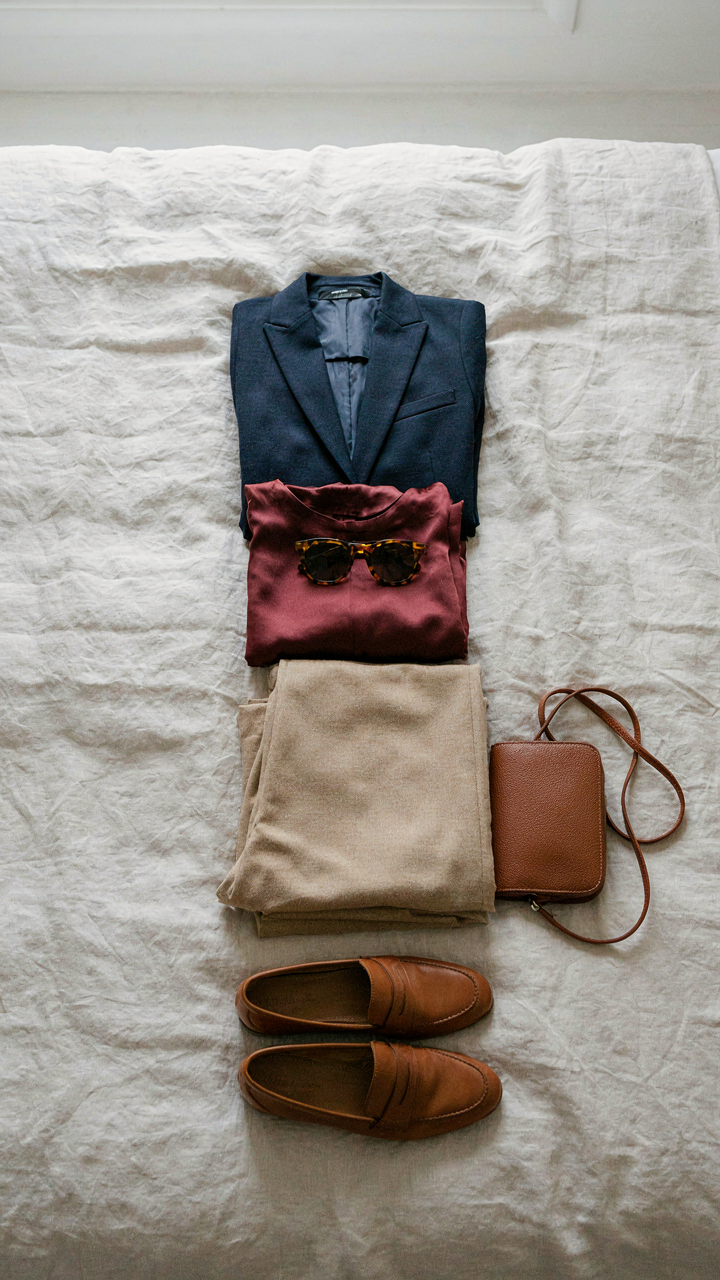
You want permission to pack less without looking like you’re wearing the same outfit. That’s the real fear. The mechanism is simple: three colors eliminate decision fatigue while maximizing combinations. This borrows from graphic design’s color theory, where a triadic or analogous palette creates harmony without monotony. Pick one base color for 60 percent of your pieces, one accent color for 30 percent, and one neutral for 10 percent. Base colors anchor your wardrobe. Accent colors create variation. Neutrals prevent clashing.

Choose your base from colors that don’t fade under European sun and photograph well in mixed lighting. Navy, charcoal, and olive work because they’re practical and read well across seasons and climates. Your accent color should contrast enough to feel intentional but sit within a natural range: burgundy, rust, or muted forest green. Skip trendy colors. Pick shades that existed five years ago and will exist five years from now. Neutrals mean cream, white, gray, or black. These three colors become your visual language for the entire trip.
The Pairing Protocol That Actually Works
Most advice says “just mix and match everything” without explaining why some combinations feel intentional and others feel accidental. The rule is mechanical: every piece in your base color pairs with every piece in your accent color. Every piece in either base or accent pairs with every neutral piece. Neutrals pair with each other. That’s it. You’re not creating a web of possibilities. You’re creating a system where bad combinations become impossible.
The hidden benefit is psychological, not practical. When you limit your color universe, you stop second-guessing yourself in the morning. You grab a base piece, add an accent piece, throw on a neutral layer. Done. No “does this work with that” spiraling. Test your palette before you leave by laying out five outfits using only your three colors. If every combination looks cohesive, your system works. If even one combination feels off, adjust the accent color before packing.
Layering As A System: Adapting To European Weather Whims
Build From The Skin Out
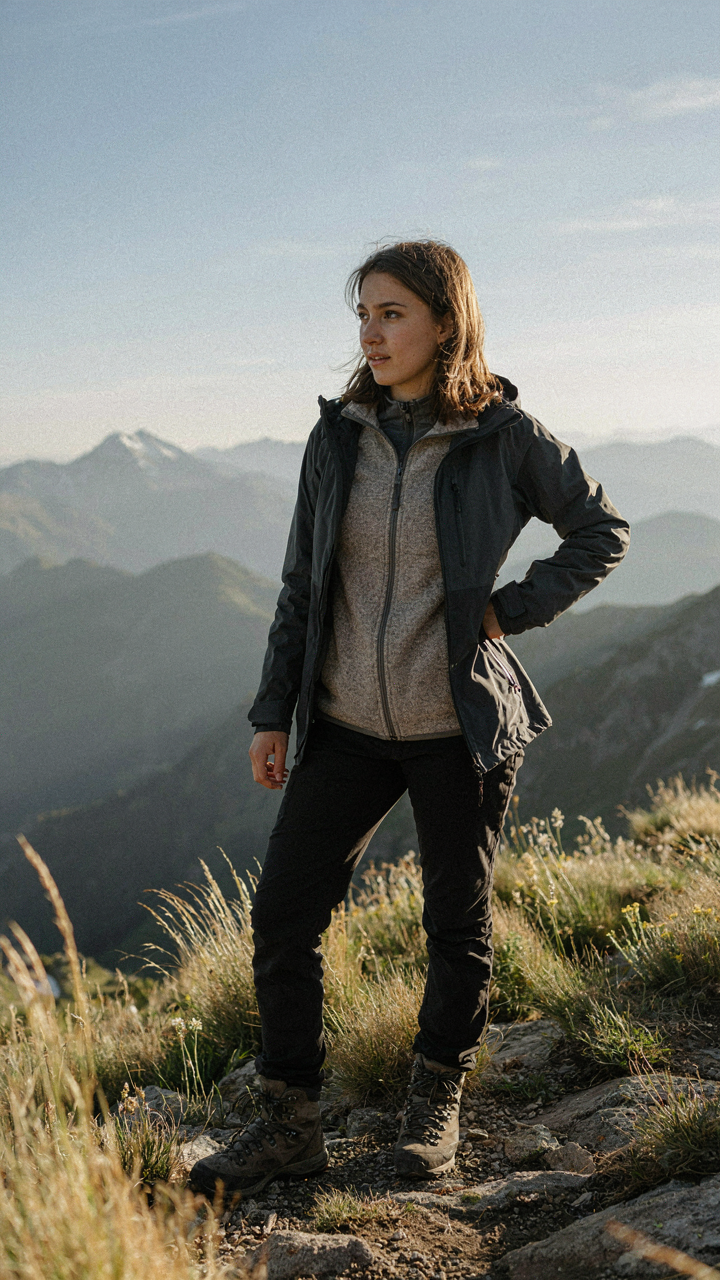
You want to look intentional without sweating through your shirt in a Milan train station. That’s the real fear: looking unprepared or, worse, uncomfortable in front of people who’ve mastered their environment. The mechanism is simple thermodynamics. Your body generates heat. Layers trap dead air space and control that heat’s escape. The onion principle isn’t poetic—it’s applied physics. Start with a base layer that moves moisture away from skin, add an insulating mid-layer for trapped warmth, then deploy an outer shell that blocks wind and water. Each layer serves a single job. Remove the wrong layer and the whole system fails.

European weather doesn’t follow linear patterns. Spring in Barcelona differs entirely from spring in Vienna. You can’t predict it, so you build flexibility instead. A merino wool base layer works in 50-degree rain and 70-degree sun because it regulates temperature rather than trapping heat like cotton does. The mid-layer—a fleece or knit—adds insulation only when you need it. The outer shell stays constant: a technical jacket that breathes and sheds water. This structure lets you add or subtract without carrying redundant pieces.
Materials Make The Decision For You
Generic travel advice tells you to “pack light layers.” This misses the actual constraint: material choice determines whether three pieces work or six pieces barely work. Breathability and insulation operate as inverse forces in most fabrics. Cotton breathes perfectly but insulates when wet, making it worse than useless in damp European weather. Synthetic materials like polyester insulate even when damp, but they trap odor and feel clammy. Merino wool solves both problems—it breathes, insulates, resists odor, and manages moisture—but costs more upfront.
The real calculation is garments per day, not garments total. If your mid-layer requires washing every two days, you need two of them or access to laundry. If your base layer works for four days without degrading, you need one. Merino base layers and technical synthetic jackets reduce the garment count because they perform longer before washing. Fleece mid-layers dry faster than wool sweaters, cutting dependency on laundry timing. When you choose materials first, your packing list builds itself downward, not upward.
Minimal Packing Outfits: The “One In, One Out” Rule For Travel Capsule Wardrobe Europe Spring
Strict Limits Force Real Decisions
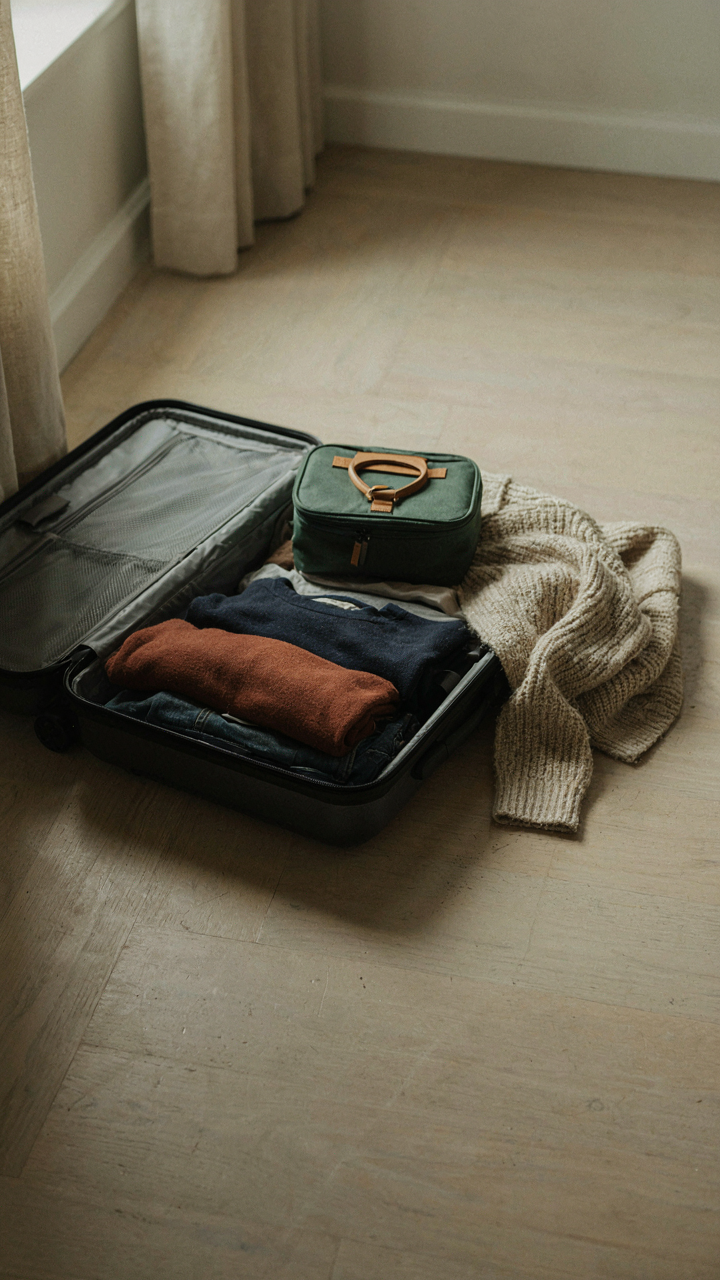
You want permission to pack more because you’re afraid of repeating outfits and looking underprepared in front of strangers you’ll never see again. The mechanism is simple: constraint kills optionality paralysis. Every piece you add must replace something already in your bag. This isn’t about deprivation. It’s about forcing you to evaluate actual utility instead of collecting “just in case” items that sit unused in your luggage for two weeks.

The “one in, one out” rule works because it creates negative feedback. You feel the weight of your decision immediately. Before you pack a third sweater, you ask whether it beats one already in rotation. Most times it doesn’t. Most times you’re packing based on fear, not function. This mechanism keeps you honest about what you actually wear versus what makes you feel prepared.
The Packing List Purge: What Actually Works
Most packing advice tells you to lay everything out and “only pack what you’d wear.” That’s vague garbage. Here’s what makes the cut: items that work across temperature swings (layering pieces), that pair with everything else already packed, that dry quickly, and that don’t wrinkle visibly after being compressed. Spring in Europe means 45 to 60 degrees Fahrenheit most days. Plan for that range, not for exceptions.
- Merino wool base layers: Temperature-regulating, antimicrobial, pack small, work under everything. One set performs multiple days between washes.
- Neutral chinos or travel pants: Dark colors hide wear. Flat front. One pair replaces four traditional options through versatility alone.
- White and navy t-shirts: These anchor 80 percent of outfit combinations. They’re forgettable by design, which is exactly the point.
- Structured overshirt or lightweight blazer: Worn over t-shirts, works for casual and restaurant settings. Elevates without adding bulk.
- One waterproof layer: Spring means rain. A packable shell weighs nothing and solves the weather problem without replacing other pieces.
Apply this filter ruthlessly: If an item only pairs with one other thing in your bag, it’s dead weight. If you hesitate for more than three seconds about whether to include it, leave it home. Pack what you’d grab first, not what you think you should own. That’s the difference between a traveling wardrobe and luggage full of insurance policies.
Footwear: The Unsung Hero Of European Capsule Wardrobe Fall
The Two Shoe Maximum
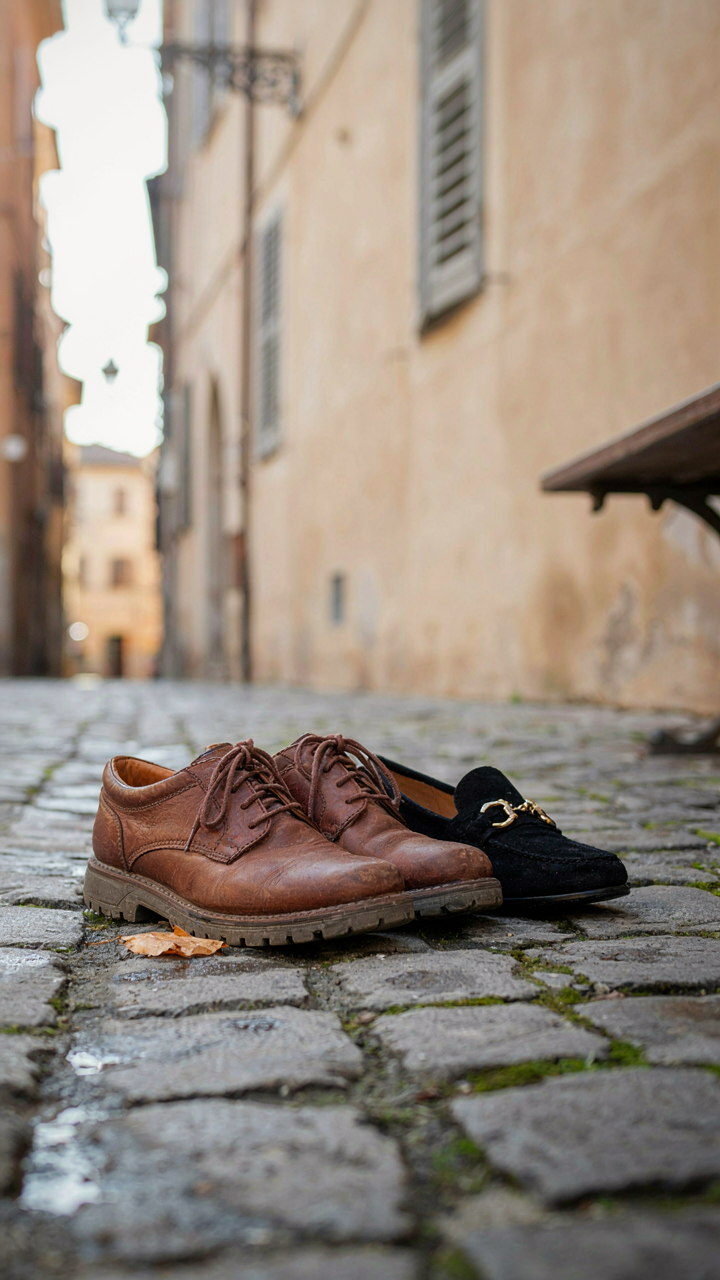
You want to look like you travel frequently without the friction of managing five pairs of shoes. Here’s the actual mechanism: footwear takes up disproportionate luggage space relative to its styling impact, and Europe’s cobblestone streets destroy shoes designed for flat surfaces. Most travelers pack three to four pairs out of anxiety, then wear the same two anyway. The constraint isn’t deprivation. It’s clarity.

Pick one walking shoe for daily use and one dressier option for restaurants or evening situations. This forces intentional selection rather than hedging. A leather sneaker or structured slip-on handles eight to twelve hours on stone streets without degradation. A leather oxford or loafer covers dinner reservations and museum visits. Both must fit perfectly on day one because there’s no break-in period during travel. This pairing covers 95 percent of fall European scenarios.
Durability Over Immediate Comfort
The difference between comfort and durability is economics applied to footwear. Comfort is immediate sensory feedback. Durability is cost-per-wear over the trip’s length. A shoe that feels comfortable in the store but breaks down after six days of city walking costs you more in practical terms than a shoe with a steeper learning curve that lasts the full two weeks. European cobblestones punish poor arch support and thin soles. Comfort liars often reveal themselves on day four.
Leather construction matters more than cushioning hype. Leather adapts to your foot, moulds to surface irregularities, and resists moisture from rain without degrading. The soles should be rubber with real traction, not the smooth plastic compounds that slip on wet stone. Break shoes in at home for three to four wears before travel. Wear them on the plane and during the first full day in Europe. This confirms fit issues before you’ve invested eight hours exploring a city with blisters forming. Replace insoles with higher-arch support versions if you have flat feet.
Accessories: Strategic Multipliers For Europe September Outfits Women

Scarves As Layering Tools, Not Decoration
You want scarves to solve the problem of looking intentional without hauling extra layers. That’s the real mechanism here. A scarf works like a lever in physics: you apply force at one point to move weight elsewhere. In a wardrobe, a scarf repositions how people read your outfit. Throw it over a basic tee and jeans becomes styled. Wrap it around your shoulders over a dress and you’ve added warmth without a jacket. Europeans wear scarves to function, not perform.

September in Europe runs 50 to 70 degrees Fahrenheit depending on location. A merino wool or linen scarf handles morning chill, afternoon sun, and evening damp without taking suitcase space. Choose neutral tones, solid weaves. A 70 by 28 inch scarf folds into a bag pocket. One scarf replaces the warmth of a cardigan you won’t pack. The mechanism: one item solves three problems instead of three items solving one each.
Belts And Jewelry As Silhouette Anchors
The common advice is to add jewelry for personality. Wrong frame. Belts and jewelry aren’t decoration, they’re architecture. A belt at the waist changes how a dress or loose shirt reads on your body. It breaks up proportion and creates visual separation. One thin leather belt works over dresses, cardigans, and loose pants. Gold or silver jewelry doesn’t multiply your outfit options, it emphasizes structure. A thin chain necklace draws eyes up. Small hoop earrings ground a casual look.
Jewelry travels without weight or baggage penalty. Bring one delicate bracelet, one pair of small earrings, one thin necklace. A belt under 100 grams takes no real space. These three items shift how every existing piece photographs and reads in person. You’re not adding more outfits, you’re changing the visual architecture of what you already have. The protocol: before packing any jewelry, verify it works with at least four different base pieces you’re bringing.
The Pre Trip Simulation Stress Testing Your European Capsule Wardrobe 2026
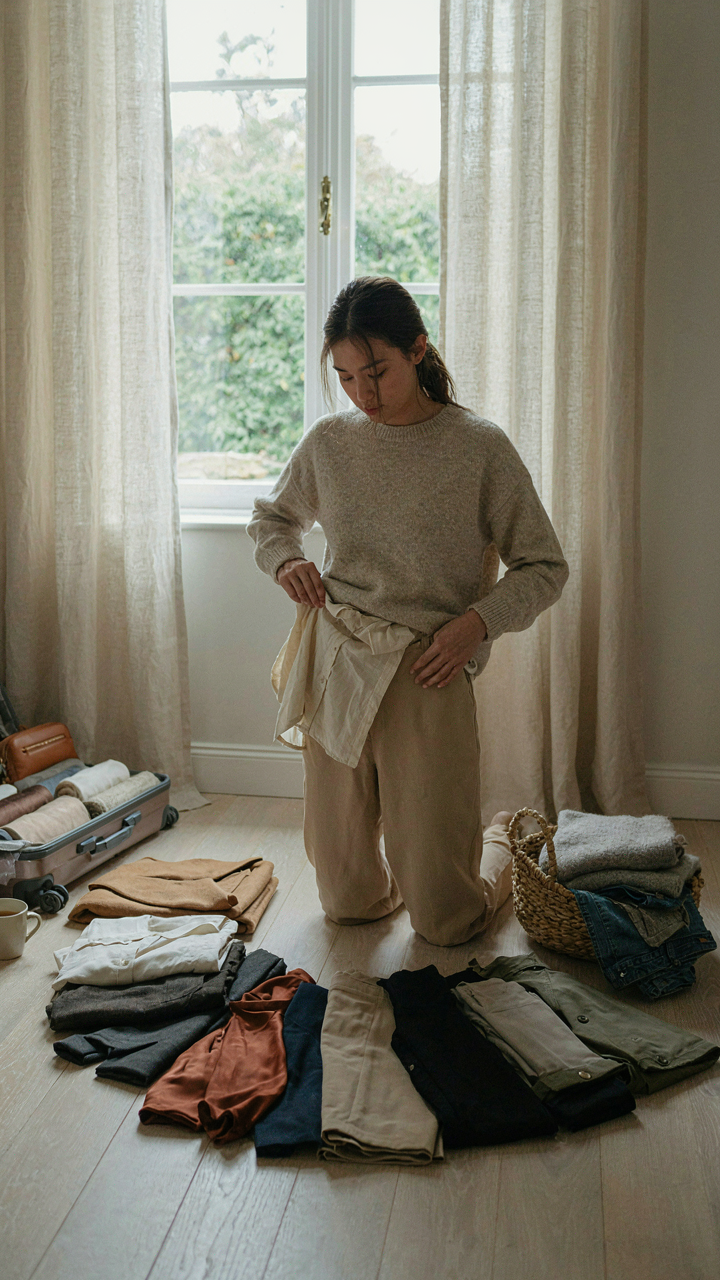
Wearing Your Entire Capsule At Home
You want to avoid looking stupid in front of strangers on the street, and that fear is actually useful. The mechanism is this: wearing the full capsule at home before departure exposes friction you can’t see in a mirror. Real wear reveals what actually works together versus what looks good in theory. You move differently. Pockets fail. Proportions clash when you’re sitting down. Fabrics wrinkle or hold shape differently than expected. This isn’t about confidence building. It’s about data collection.

Spend one full week rotating through every outfit combination you plan to take. Document what actually happens. Which pieces feel stiff or restrict movement? Which combinations look awkward when you’re bent over a backpack or climbing stairs? Which items create laundry problems, like bleeding dye or wrinkling permanently? Take photos of every outfit under different lighting. European cities have varied light throughout the day and season. Your capsule needs to function in all of it, not just in your bedroom at noon.
The Elimination Protocol
Most advice tells you to pack less, which is useless because it doesn’t address why you overpack in the first place. The real problem is uncertainty avoidance. You pack options because you don’t trust your combinations will work. The simulation fixes this. Once you’ve worn everything together at home, uncertainty disappears. Now elimination becomes mechanical, not emotional.
After your week of testing, remove any piece that didn’t appear in a combination you’d actually repeat. If you wore something once and felt neutral about it, it goes. Remove anything that requires special conditions to work, like a delicate top that needs careful layering or a jacket that only pairs with one outfit. European travel demands pieces that integrate into multiple combinations without hesitation. The final step is packing your verified capsule and wearing it daily for three more days before departure. Any discomfort or regret surfaces now, not in Milan.
Your Real Obstacle Isn’t What To Wear, But The Subconscious Fear Of Appearing Incompetent, A Silent Killer Of True Exploration

You don’t need a perfect wardrobe. You need permission to stop performing. Most travelers obsess over outfits because they’re terrified locals will judge them as incompetent outsiders. The truth: no one cares. Europeans wear the same five pieces you do. Pick your mix and match items today, then delete the voice in your head that whispers you’re doing it wrong. Stop dressing for validation and start dressing for freedom.