

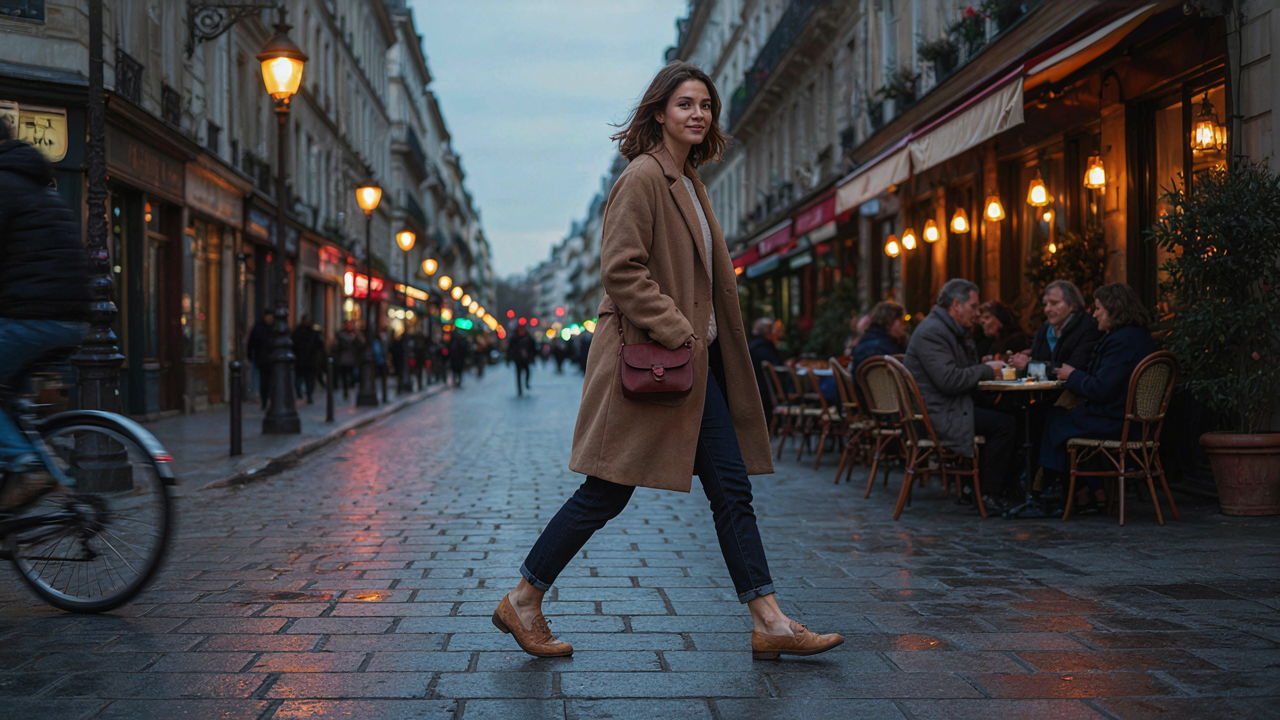
The Myth Of The Perfect European Summer Dinner Outfit
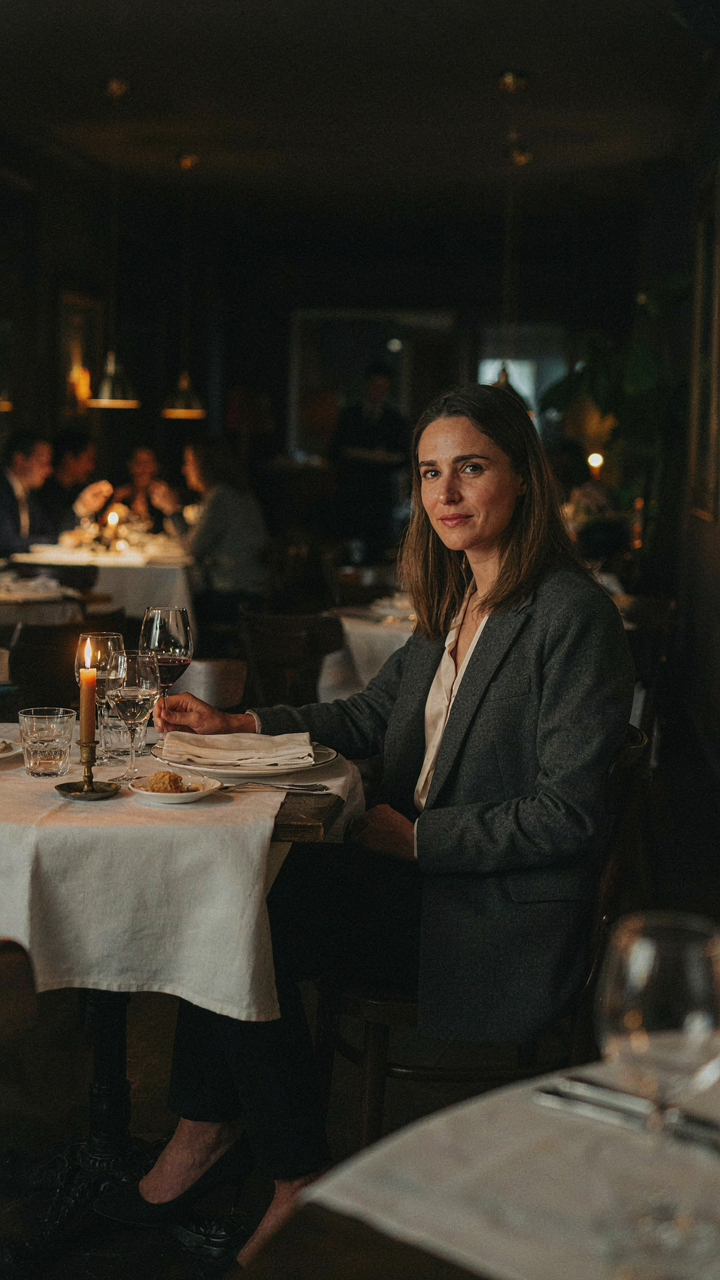
You Don’t Need Permission To Exist In A Room
You’re afraid a waiter will judge you for eating alone, so you think the outfit fixes that. It doesn’t. The mechanism is simple: restaurants don’t care about your solitude. They care about payment and table turnover. A solo diner in clean clothes spends money the same as a couple. Your outfit won’t erase the discomfort you already feel about being visible, so stop treating fabric like armor against a problem that only exists in your head.
What actually matters is this: European restaurants operate on an unspoken dress code based on cuisine type and price point, not on whether you’re accompanied. A casual trattoria in Rome expects different attire than a Michelin-listed establishment in Copenhagen. Solo diners follow the same rules as everyone else. The outfit isn’t a confession or an apology. It’s a signal that you understand the context. Nothing more.
The Real Reason Advice Fails You
Most advice tells you to “dress up a little” or “blend in” because it avoids the actual decision you need to make. Generic guidance wastes time because it doesn’t account for the restaurant’s operational reality. A fine dining room in Paris has dress codes written in its reservation system. A beach taverna in Greece has none. The advice that works addresses this split directly instead of pretending all solo dining is the same situation.
What fails is treating your outfit as a costume for belonging. The solo diner problem isn’t sartorial. It’s psychological. You either match the restaurant’s functional dress code or you don’t. Restaurants abroad enforce this through their clientele and atmosphere, not through security staff. If your outfit misaligns with the room’s standard, other diners notice immediately because the contrast is visible. Your job is to read the environment beforehand and dress inside its boundaries, not to create an outfit that transcends the boundary itself.
The “Contextual Agility” Protocol: Your Packing Strategy
Pieces That Move Between Settings
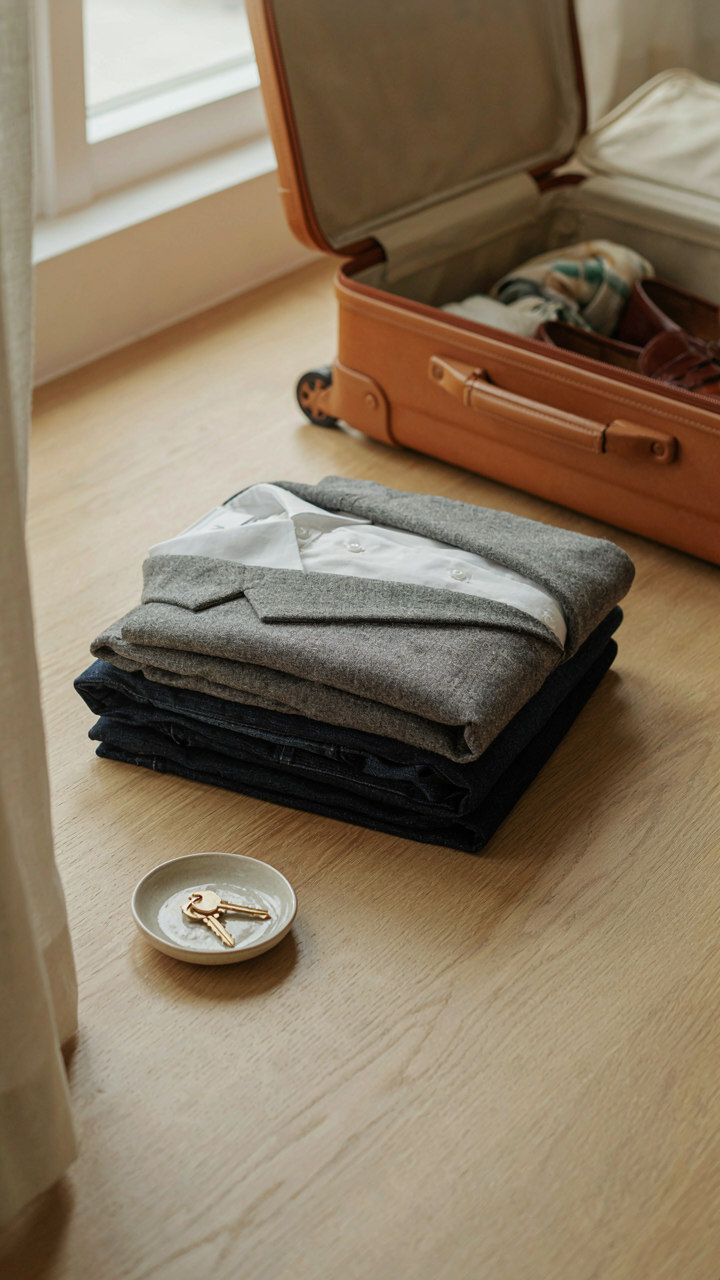
You’re worried you’ll look out of place, and that fear is driving you to overpack. Here’s the mechanism: restaurants operate on a spectrum, not categories. The same shirt works at a casual spot at 6pm and a dressy restaurant at 8pm if you control two variables: fit and layering.

Dark jeans or chinos in neutral colors transition everywhere because they’re contextually invisible. A quality long-sleeve button-up in white, navy, or charcoal does the same work. Wear them alone for casual dining. Layer them under a sport coat or structured blazer for dressy venues. You’re not changing outfits—you’re adjusting surface tension. That’s the real system.
Constraint As Clarity
Common packing advice tells you to “bring options” and “pack for every occasion.” That’s backwards and wastes luggage space. Minimalism here isn’t about virtue—it’s about applied economics from military logistics: maximum output from minimum input. Fewer pieces force intentional combinations. You plan outfit sequences instead of grabbing randomly.
Pack one neutral base layer system, one transitional layer, and one elevated piece. Wear the base to casual dining. Add the transitional layer for semi-formal spots. Combine both with the elevated piece for fine dining. Rotate these three anchors through your entire trip. You’ve covered every restaurant type with one cohesive wardrobe. Nothing sits unused in your bag.
Casual Dining Abroad: Beyond The Tourist Trap Uniform

Fit And Proportion Matter More Than Brand
You’re worried people will clock you as the outsider, so you’re searching for the magic outfit that signals you belong. That won’t work. What actually works is fit. Fit is the mechanism that separates locals from tourists faster than any logo or trend. A well-fitted basic shirt or sweater tells the room you’ve thought about your body and how cloth moves on it. Casual restaurants abroad don’t care about your brand—they care whether you move through space like someone who knows what they’re doing.

The specifics shift by region, but the principle holds everywhere. In Mediterranean casual dining, fitted jeans with a tucked linen shirt and clean sneakers reads as someone who plans their day. In Northern Europe, a fitted merino wool sweater with chinos communicates the same thing. Proportion is what sells it. Oversized everything reads as either costumey or lazy. Tight everything reads as insecure. Get pieces that skim your body without clinging and without drowning you. Your tailor becomes more valuable than your shopping budget the moment you accept this.
Looking Composed Without Trying
The real skill here isn’t fashion knowledge—it’s the ability to execute one specific visual strategy: repetition with minor variation. Most people overthink casual dining clothes because they think each meal demands a new outfit. It doesn’t. Choose a neutral base color you wear well, then build three outfits from the same palette. Dark denim, one quality sweater, one structured shirt, one pair of clean leather shoes, one pair of quality sneakers. Rotate them.
This approach removes decision fatigue and creates a coherent visual presence. You’re not scrambling to piece together outfits. You’re showing up in different combinations of the same reliable pieces. Add one layering piece—a linen jacket or cardigan that fits properly—and you move between casual and slightly dressy spaces without flagging yourself as indecisive. The person who wears the same base pieces differently each night looks more composed than someone in new clothes constantly. Consistency in proportion and palette is the actual shorthand for put-together.
Dressy Dining: It’s Not A Red Carpet, It’s A Meal
The Dress Code That Actually Exists
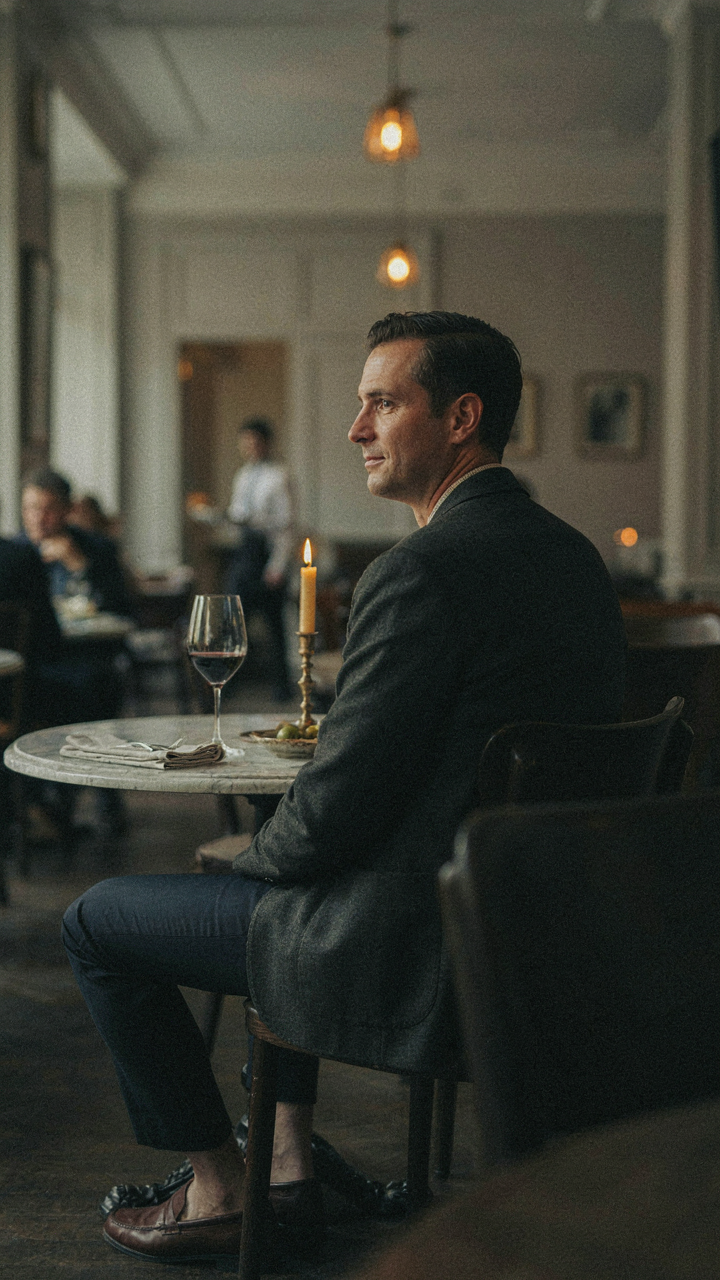
You’re worried the waiter will judge you. That’s the real thing happening here, and it matters less than you think. The mechanism is simple: restaurants enforce dress codes to protect their revenue model, not to police taste. A high-end restaurant charges premium prices because it controls the entire environment, including who sits where and what baseline they establish. Your job is to read that specific environment, not imagine a generic one.

Local dress codes vary wildly because they reflect what customers in that region expect to pay for. Paris “smart casual” means structured clothes and leather shoes. Tokyo “smart casual” means tailored cuts and minimal logos. Barcelona “smart casual” means you could wear white sneakers if the fit is intentional. The Hollywood version—tuxedos and gowns for anything “dressy”—is theater for people who don’t eat out. Real restaurants want you dressed better than the street, not dressed for an awards show.
Pieces That Work Across Continents
Forget the notion that you need a different outfit per city. That wastes money and luggage space. Smart fabric choices—cotton blends, wool, linen structured properly—read as intentional everywhere because they have weight and drape that cheap synthetics can’t fake. A merino wool blazer in charcoal works in Milan, Singapore, and New York because it signals you understand proportion and care about the meal, not the status.
Invest in two things: one structured blazer that fits your shoulders correctly, and one pair of leather shoes that aren’t sneakers. The blazer handles 80% of dressy restaurant situations across cultures. Leather shoes—oxfords, loafers, or simple flats—work because they’re not casual wear; they’re intentional. Skip the tie unless the restaurant explicitly requires it. Skip the statement jewelry unless you wear it daily anyway. Your clothes should say “I respect this meal” in the most boring, universal language possible.
The Unspoken Language Of Italy Outfits: Confidence Over Brand
Dominance Signals That Actually Work
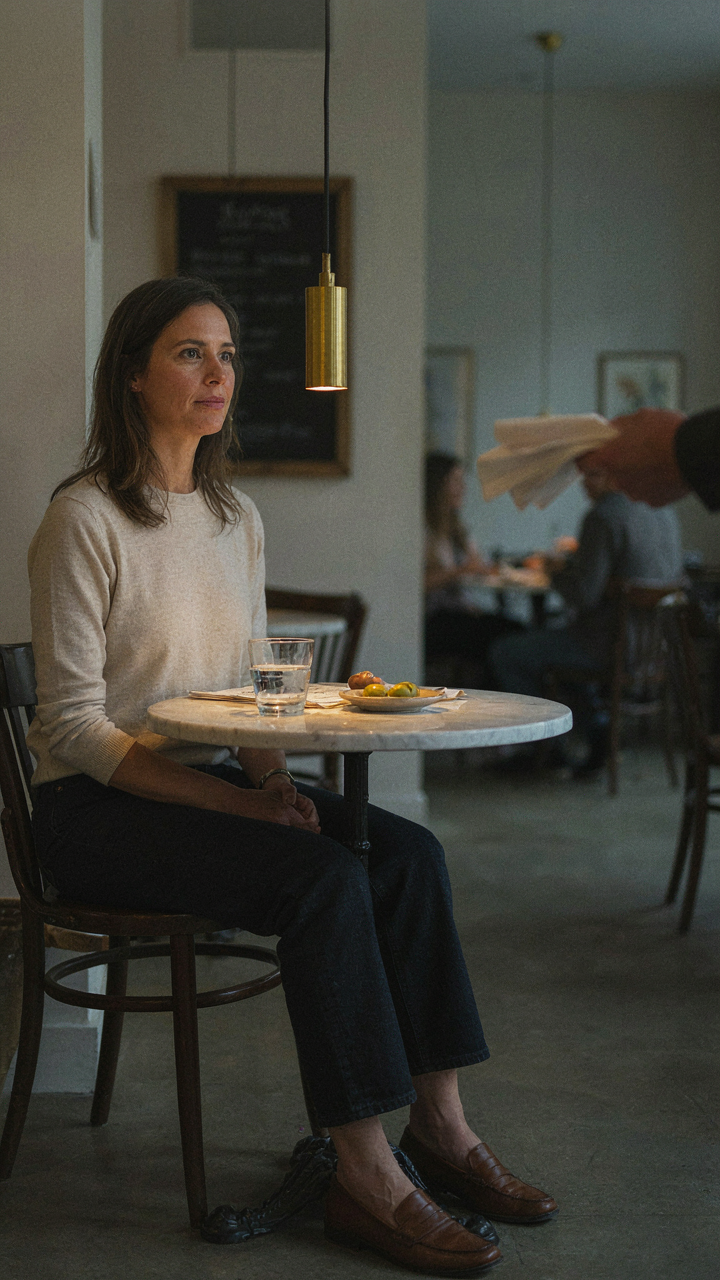
You want permission to believe that what you wear matters because you’re afraid it doesn’t. Here’s the mechanism: evolutionary psychology calls this “costly signaling.” You’re broadcasting intent and fitness through clothing choice, not brand names. A solo diner in a wrinkled shirt reads as someone who didn’t prepare. A solo diner in clean, fitted basics reads as someone comfortable in their own frame. Italians don’t judge the label. They judge whether you respect the room enough to show up assembled.

Confidence operates like a thermostat for how others calibrate you. When you dress with intention, you move differently through a restaurant. Your posture straightens. You make eye contact with servers. You sit without fidgeting. This isn’t psychology nonsense. This is observable behavior. The fit of your clothes determines your physical range of motion. Tighter clothes restrict. Loose clothes let you breathe. Breathable clothing reduces cortisol and keeps your nervous system settled. A settled nervous system reads as confidence to everyone watching.
The Economics Of Dressing For Yourself
Common advice says “dress for the occasion.” That’s incomplete. Behavioral economics reveals the real choice: you’re either optimizing for external approval or internal alignment. External optimization creates a feedback loop where you need validation from strangers. Internal optimization creates a feedback loop where your clothing reinforces your own standards. Solo dining abroad isolates you from your social circles. You have no peers validating your outfit choices. This means external optimization fails completely.
Dressing for yourself means choosing pieces that survive your own scrutiny, not the room’s. Wear the shirt you’d wear alone in your apartment. Wear the pants that fit your actual body, not the size the tag suggests. Pick shoes you can walk in without thinking. This isn’t about minimalism or having fewer items. It’s about wearing things that don’t create internal friction. When you’re not managing your clothing throughout a meal, you have cognitive space for the food, the environment, the experience. The mechanism: reduced decision fatigue equals increased presence. Presence is what other diners actually register as confidence.
Summer Night Outfit: The Art Of Layering In Europe
Build Your Base Layer First
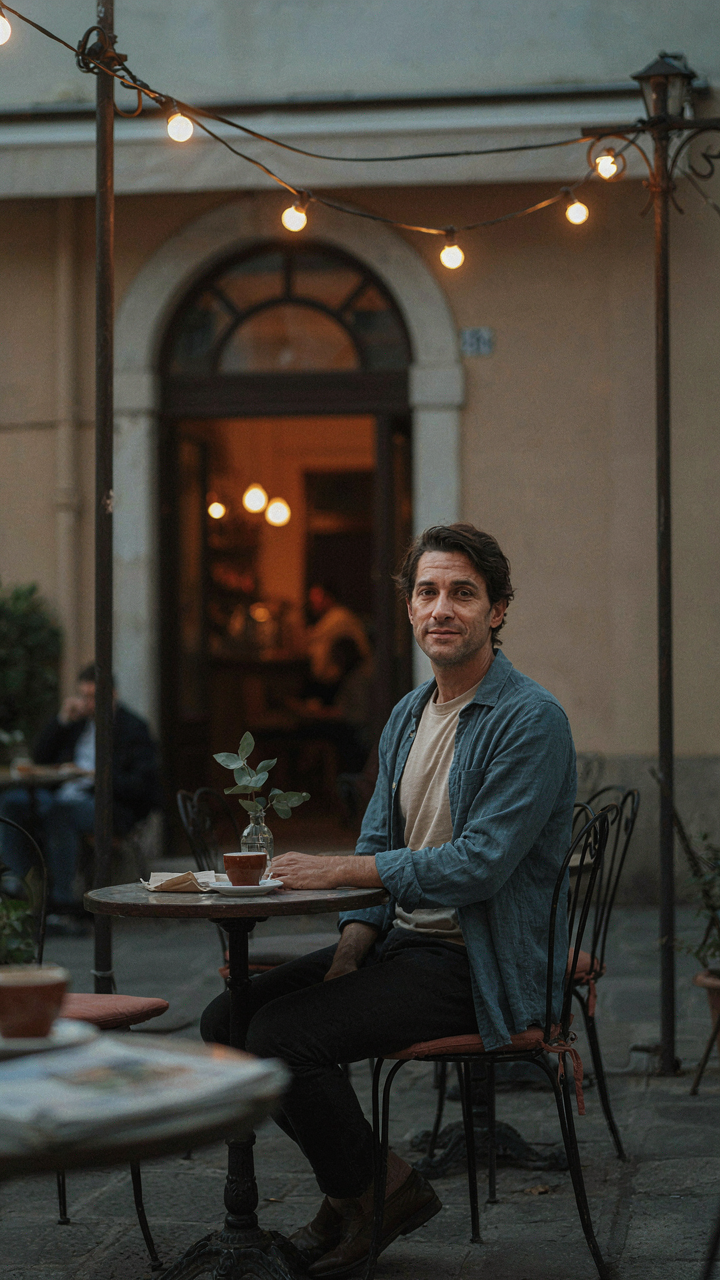
You’re worried about looking underdressed or overdressed, which means you’re afraid the meal won’t matter because you’ll be preoccupied with yourself. The actual mechanism is this: layering works like a portfolio in finance—you distribute risk across positions so no single move kills you. Start with a fitted base layer that works as a complete outfit alone. A quality long-sleeve shirt in cotton or linen worn solo must read as intentional, not like you forgot the rest. This base is your floor. Everything else adds optionality without adding bulk.

The base layer does two jobs simultaneously. First, it manages temperature because European summer nights drop faster than most diners expect, especially near water or in elevated towns. Second, it establishes your silhouette before you add texture. Wear something that fits your actual frame, not one size up or down. Avoid anything oversized at the shoulders or loose through the chest. The base layer vanishes when you’re dressed up, but it dominates the room when you’re alone in it.
- Cotton oxford cloth button-up: Breathes well, doesn’t wrinkle excessively, works untucked or tucked, reads as intentional at any formality level.
- Linen camp collar shirt: Signals effortlessness without trying, maintains structure despite wrinkles, appropriate for casual and mid-range establishments.
- Merino wool long-sleeve tee: Temperature-regulating, doesn’t retain odor, works under a blazer or worn alone, heavier than cotton for evening presence.
- Lightweight sweater in neutral tone: Worn unbuttoned over a tee, adds visual weight without overheating, easily removable if the restaurant is warm.
- Fine-gauge knit polo: Structured neckline works as formal as a button-up in casual contexts, bridges gap between t-shirt and shirt without overthinking.
Your second layer needs to earn its weight by serving two states: on and off. A blazer or overshirt you can remove transforms a casual outfit into something restaurant-appropriate without requiring a wardrobe change. The piece stays with you either around your waist or on the chair, maintaining visual consistency whether you’re at the bar waiting or seated at your table.
Fabrics That Work Smarter, Not Harder
Most advice says “breathable fabrics,” which is lazy guidance that ignores what matters: fabric behavior under the specific conditions of solo dining at night. You need textiles that maintain their appearance after sitting for two hours, don’t cling when you move between temperature zones, and don’t require constant adjustment. Linen is legendary for looking good while wrinkling, but wrinkles on linen read as intentional wear-in, not decay. Cotton holds structure longer but traps body heat in stationary seating. Wool regulates temperature across both heat and cool but can feel heavy in peak summer. The real mechanic: pick one primary fiber, then add a secondary for flexibility.
A linen shirt with a cotton blazer works because linen handles the skin contact zone while cotton controls the silhouette layer. A merino wool base under a cotton overshirt manages sweat without looking damp. Synthetic blends (cotton-polyester or linen-poly) aren’t inferior—they resist wrinkles better and dry faster if you’re eating near water or in humid regions. The mechanism is simple: test your outfit in the exact lighting and temperature of the restaurant type you’re visiting, then trust that combination for the trip. Bring one backup base layer in case the first gets soiled, but commit to your fabric choices before you board the plane.
Vacation Outfits For Dinner: Practicality Trumps Pretense
Shoes That Work On Pavement And Tile
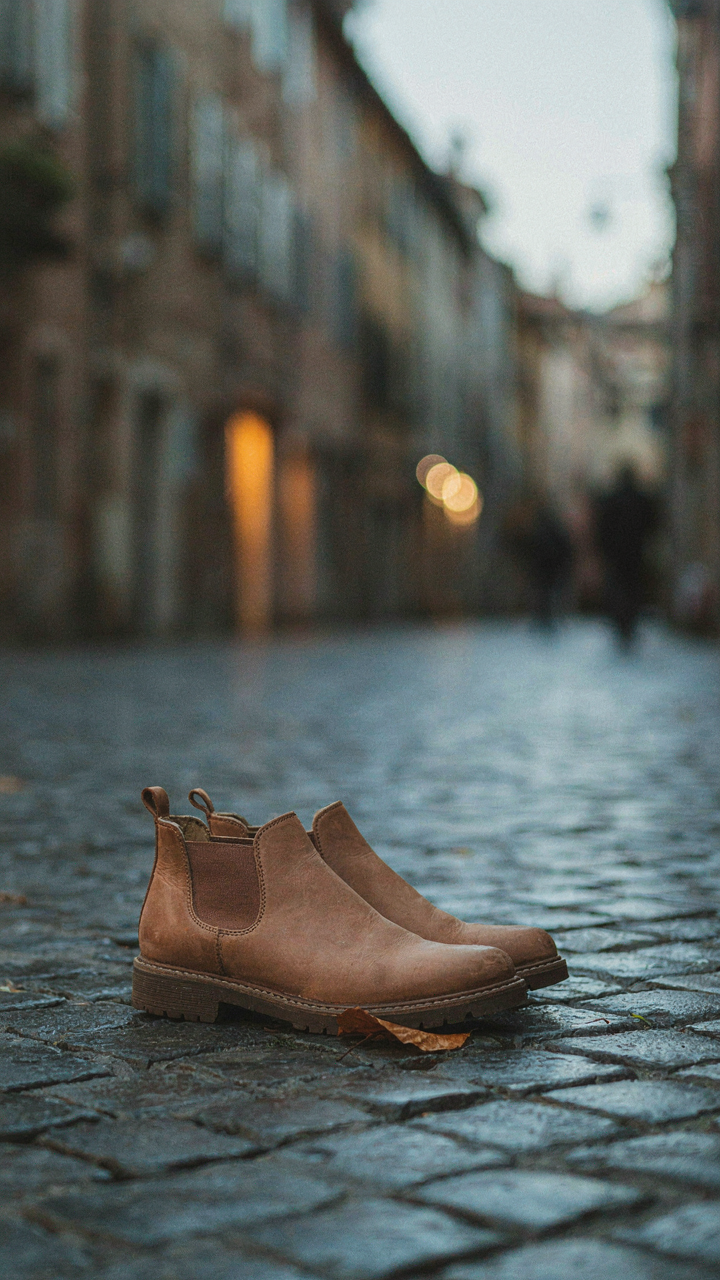
You’re worried people will judge your shoes. What actually matters is that you walk three miles through cobblestone streets without limping into dinner. This is simple mechanics: ground impact determines foot fatigue, which determines posture, which determines how you carry yourself at the table. Bad shoes signal suffering. Good shoes signal control.

Leather dress shoes with rubber soles outperform rigid dress shoes on uneven terrain. They grip wet surfaces, absorb impact, and don’t announce each step. Chelsea boots or loafers handle multiple restaurant visits without requiring break-in time you don’t have. Skip thin-soled dress shoes entirely when walking solo abroad. You’ll spend the meal thinking about your feet instead of the food.
Accessories: The Constraint Principle
Most advice says wear less. That’s incomplete. Wear nothing that requires management. This borrows from engineering constraint theory: remove variables that demand attention during the interaction. A watch that catches on napkins, a necklace that swings into your plate, a bracelet that clicks against the glass—these aren’t minor irritations. They’re interruptions that break your presence.
One piece, maximum two, if both are functional. A watch works. A simple ring works. A bag that doesn’t need adjustment works. Anything else is a distraction tax you pay throughout the meal. Solo dining already puts you in the position of being observed. Don’t give observers a prop to focus on. Simplicity reads as intentionality, not scarcity.
The “Europe Outfits” Trap: Avoiding The Generic Tourist Look
What Actually Signals You Don’t Belong Here
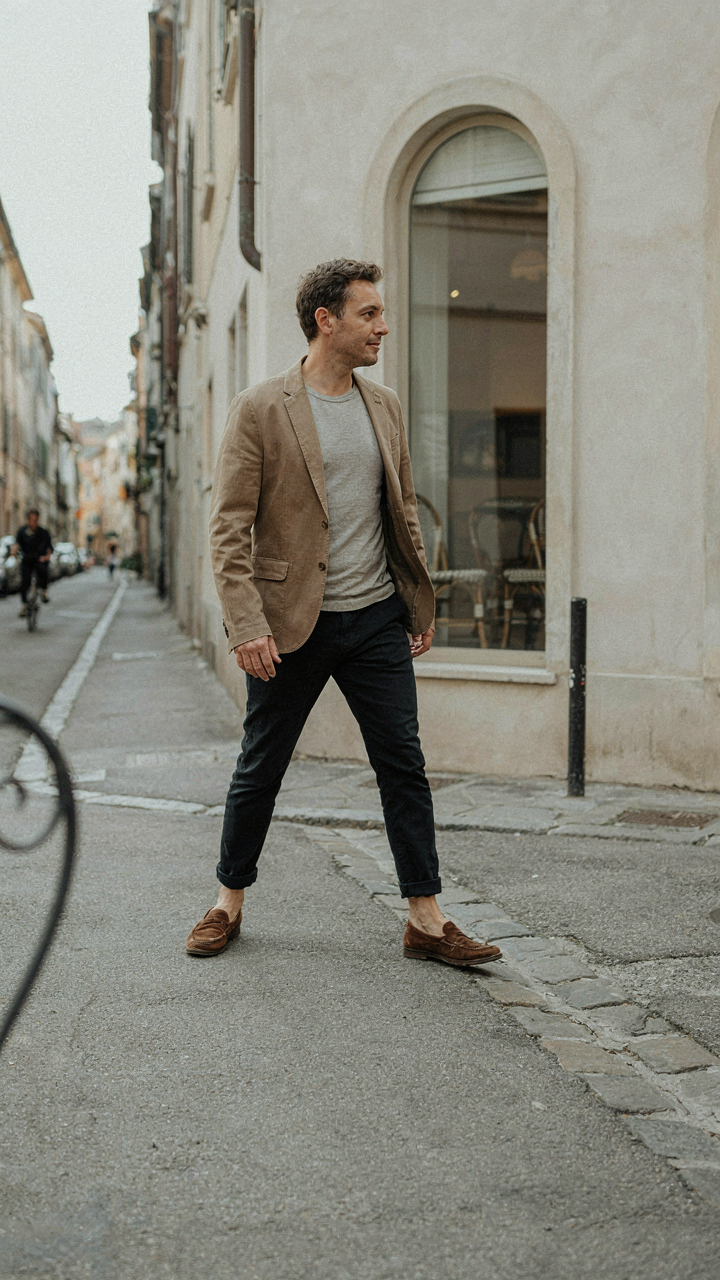
You’re worried people will clock you as a tourist because you think that matters to strangers who will never see you again. Here’s the mechanism: tourists wear visible logos, mismatched formality levels, and clothes that announce “I bought this for the trip.” Locals wear clothes that look like they’ve been worn before. The distinction isn’t about expense or brand—it’s about intentionality. A person dining solo in a dressy restaurant in Barcelona doesn’t look new. Their clothes don’t shine with retail sheen. Fit matters more than fit description. Your shirt should look lived in, not fresh from packaging.

The real tell isn’t what you wear—it’s how you wear it. Tourists coordinate outfits like they’re following a Pinterest board. A local pairs a worn blazer with jeans that fit through actual wear, not because a guide said blazer plus jeans equals European casual. Visible effort reads as outsider. Invisible effort—clothes that simply work together without announcing themselves—reads as someone who lives there. Stop thinking about looking European. Start thinking about looking like someone who doesn’t need to think about it.
Understatement As A Operating System
Minimalist design in fashion means removing everything except what functions. Apply the same logic: remove visual noise, logos, patterns that compete with each other, and colors that demand attention. Your outfit shouldn’t be a statement. It should be a neutral container that lets you move through a restaurant without your clothes doing work your presence doesn’t need. One neutral base (dark jeans, wool trousers, or dark chinos). One top in a solid, muted tone. One layer that works in multiple contexts. Done. Locals in Milan, Paris, and Lisbon don’t wear statement pieces to dinner alone. They wear things that disappear.
This isn’t about being boring. It’s about being precise. Precision looks intentional. A well-fitted navy sweater over a cream linen shirt reads differently than a graphic tee under a bright jacket. The former suggests someone who selected pieces that work together. The latter suggests someone assembling an outfit. Quality of fabric matters here because thin, shiny material looks cheap regardless of brand. Choose natural fibers when possible—cotton, linen, wool, silk blends. They age visibly and move with your body instead of against it. When you sit down at a restaurant table, your clothes should already be comfortable enough that you forget you’re wearing them.
Your Personal Style Algorithm: Optimize For Experience, Not Appearance

Comfort Determines What You Actually Taste
You care about this section because you’re afraid comfortable clothes will make you look sloppy. That’s backwards. Biomechanics shows that physical tension restricts sensory perception. Your nervous system prioritizes survival over taste buds when you’re uncomfortable. Tight collars, pinching shoes, and restrictive fabrics trigger a low-level stress response that dulls your palate and hijacks your attention. You came to eat. You didn’t come to prove something.

When your body isn’t fighting your clothes, your brain has bandwidth for the actual meal. Temperature regulation works. Digestion improves. You breathe deeper. The difference between a restrictive dress shirt and a well-fitted linen shirt isn’t cosmetic. One lets you focus on food. The other turns the experience into endurance. Choose fabrics that move with you, not against you. Your nervous system will thank you by actually processing what you’re eating.
Build Autonomy Into Your Fit
The common advice says dress for the restaurant. That’s incomplete. The real constraint is building room for self-expression while respecting the venue’s environment. Autonomy in dress means you make the call, not the dress code. A casual restaurant gives you white space to move. A dressy one sets a floor, not a ceiling. You stay within bounds but control your interpretation of those bounds.
This is where fit becomes tactical. Tailored proportions, quality basics, and one intentional detail give you control in formal settings without requiring a costume. Dark jeans and a structured shirt work casual places. That same approach scaled to dress trousers and a blazer works dressy ones. The mechanism isn’t different clothes for different restaurants. It’s the same strategic thinking applied across contexts. You wear what lets you move, breathe, and make a choice.
Your Fear Of Sartorial Missteps Reveals A Deeper Insecurity About Being Seen Alone. Conquer That
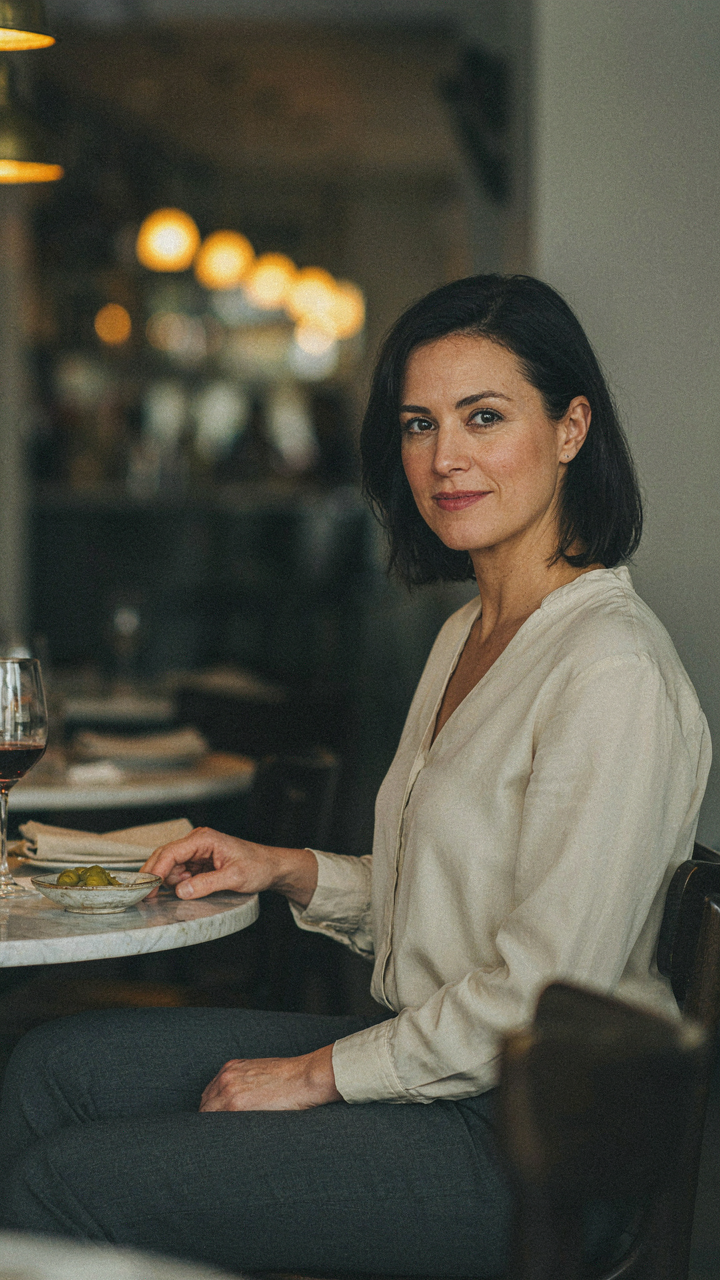
You’re not actually worried about wearing the wrong thing. You’re worried that people will judge you for eating alone. Stop outsourcing your confidence to fabric and fit. Pick one outfit you feel solid in, wear it everywhere for a month, then forget about it entirely. The restaurant doesn’t care. The strangers around you don’t care. Only you’re watching yourself. Wear what makes you invisible to your own mind, and suddenly you become visible to the world.