
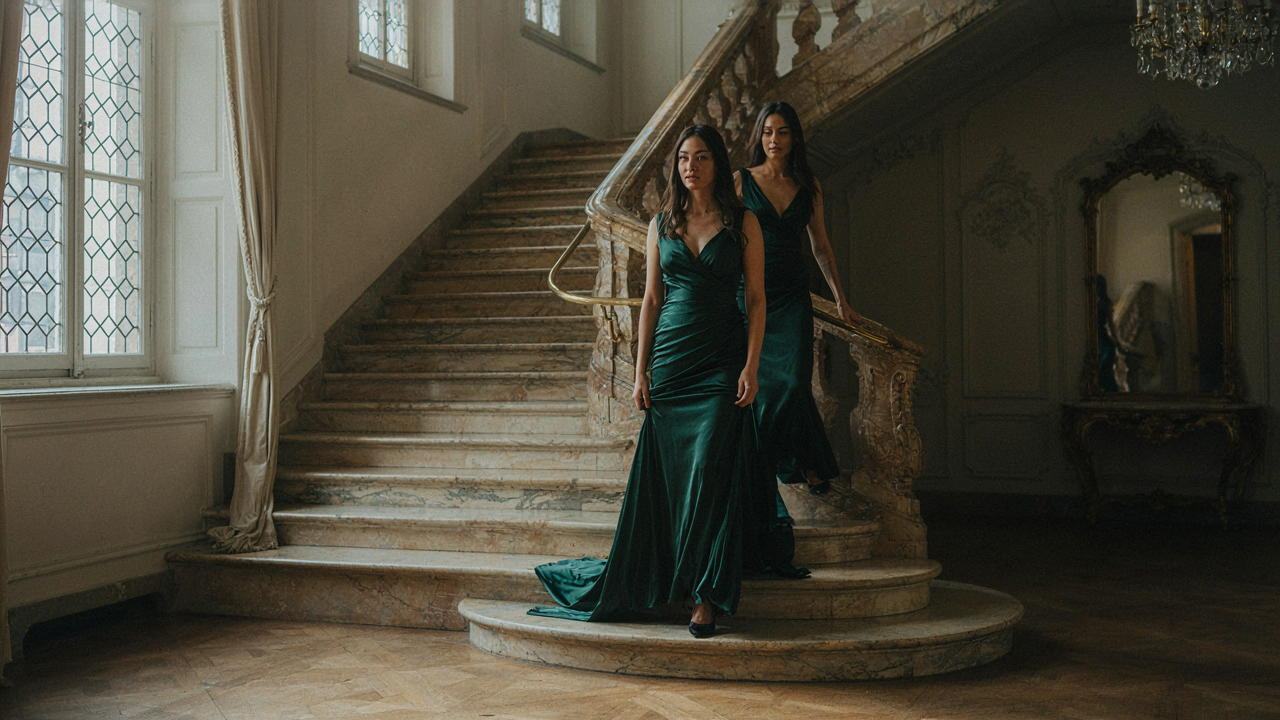
The “Natural Elegance” Myth: Stop Faking It
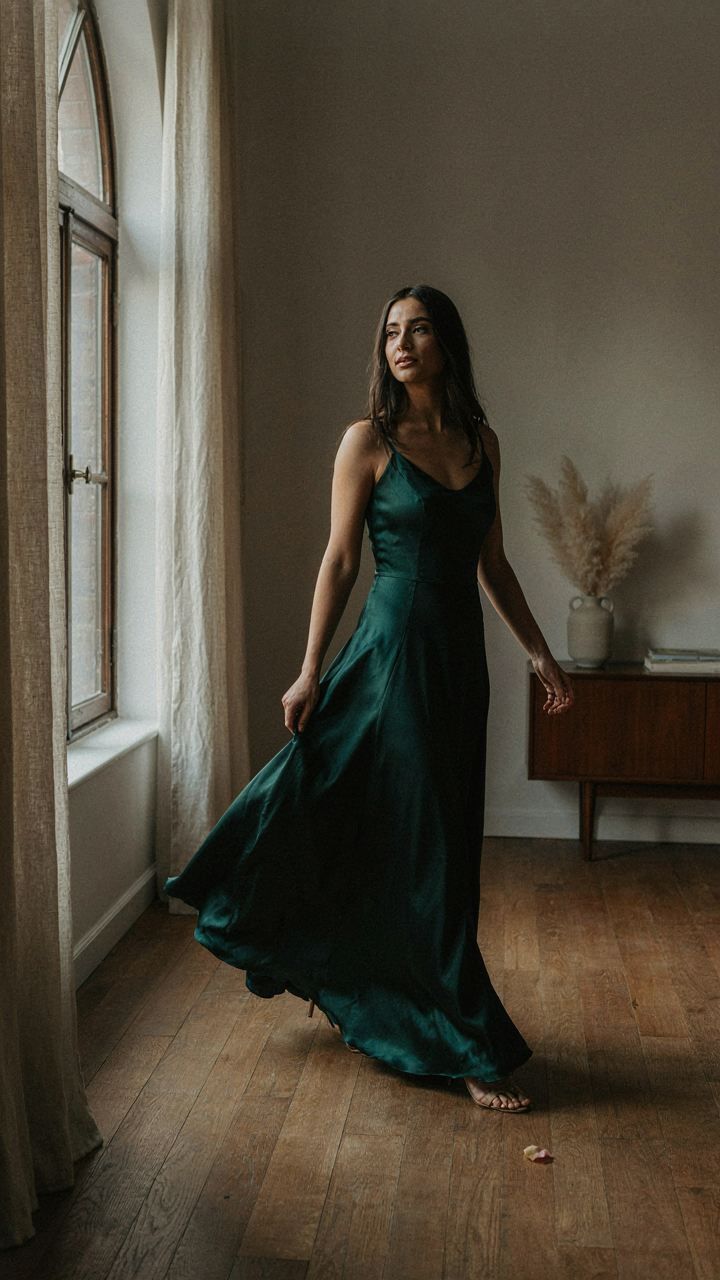
Perfection Always Betrays The Camera
You want the shot that looks effortless because you’re afraid people will see you trying. Here’s the mechanism: the camera reads tension as rigidity. When you lock your body into a “perfect” pose, you contract muscles. The lens captures that contraction as strain. Your face tightens. Your shoulders rise slightly. The gown fabric bunches where it shouldn’t. Photographers know this. Magazine editors know this. The myth persists anyway because admitting it requires accepting that elegance demands movement, not stillness.
Static poses fail because the human body is built to move. Fashion photography evolved away from rigid stances in the 1990s when photographers realized that even a small shift in weight, a slight turn of the torso, or an honest hand placement made the difference between “posed” and “present.” The gown itself moves differently when your body isn’t locked. Fabric drapes with intention. Seams align naturally. Elegance isn’t the absence of motion. It’s motion that appears inevitable rather than commanded.
Candid Momentum Over Frozen Frames
Movement is the physics principle at work here. In biomechanics, momentum refers to mass in motion continuing in a direction. Apply that to posing: a body caught mid-motion reads as intentional and alive, while a stationary body reads as held. Start moving before the shutter clicks. Walk toward the camera or away from it. Turn your shoulders. Shift your weight between feet. Let the photographer capture the moment when your body passes through a composed state, not when it arrives at one.
The difference between “posing” and “being posed to” is active versus passive. Step into the frame, don’t stand in it. Sway slightly rather than brace. Let your arms have purpose: reaching for something, moving across your body, finding a resting position that isn’t forced. Photographers capture better shots when you’re doing something rather than holding something. Tell the photographer you’ll move through positions instead of stopping at them. They’ll shoot in burst mode and select the frame where you look most natural because you actually are moving, not performing stillness.
Beyond The Gown: Your Body As The True Subject
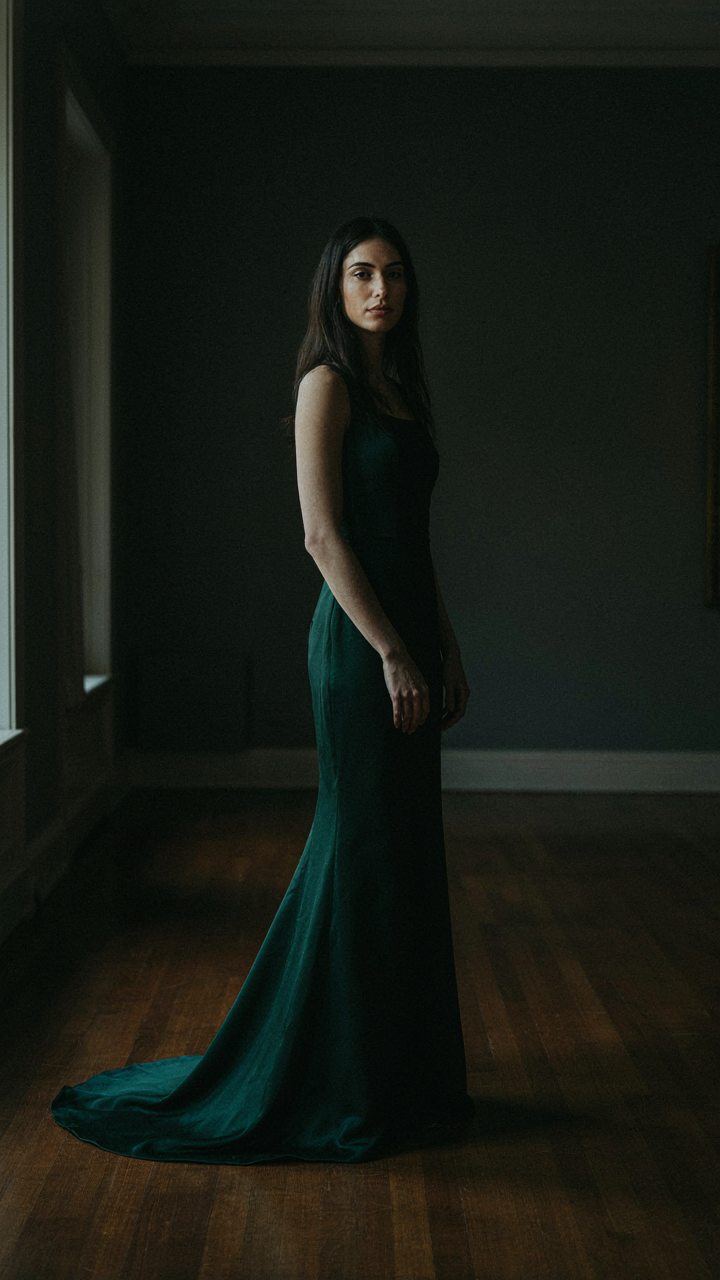
Posture Is The Invisible Skeleton
You want the gown to look expensive. Here’s what you’re actually afraid of: that bad posture will make it look cheap regardless of fabric cost or design. The mechanism is skeletal alignment, borrowed from dance and anatomical posture work. Your spine’s position determines how fabric hangs. A collapsed thoracic spine compresses the torso, bunches fabric at the waist, and kills line. An extended spine elongates the body, creates negative space for fabric to drape into, and signals control.

Slouching isn’t casual or relatable in evening wear photography. It reads as uncertainty. Pull your shoulders back and down, not up. Stack your ribs over your pelvis. This single shift transforms how the gown photographs because the garment now has a structured surface to work with. The fabric finds its intended lines instead of folding into your body’s collapse points. Posture change takes seconds and costs nothing. It’s the reason a five-thousand-dollar gown photographs worse than a thousand-dollar gown on someone who doesn’t understand spinal alignment.
Tension Creates The Frame
Core engagement sounds like fitness advice, but it’s physics. Muscular tension in your midsection creates a stable frame. Without it, gravity pulls everything down and the gown sags at the sides and back. With it, the garment maintains its intended shape and volume. Think of your core as the mannequin the designer intended, not as an afterthought.
Engage your core before the photographer shoots. Not a crunch. Not visible straining. A sustained, low-level contraction of your transverse abdominis and obliques. This tightens the silhouette, prevents fabric bunching, and holds the gown’s architectural integrity in the frame. The photographer sees a composed form, not a body fighting gravity. Your presence becomes genuine because you’re physically present, not passively wearing the dress. The gown photographs as designed when you become its proper support structure.
The Dynamic Flow Method For Gown Posing Ideas
Movement Creates Variety Without Resetting
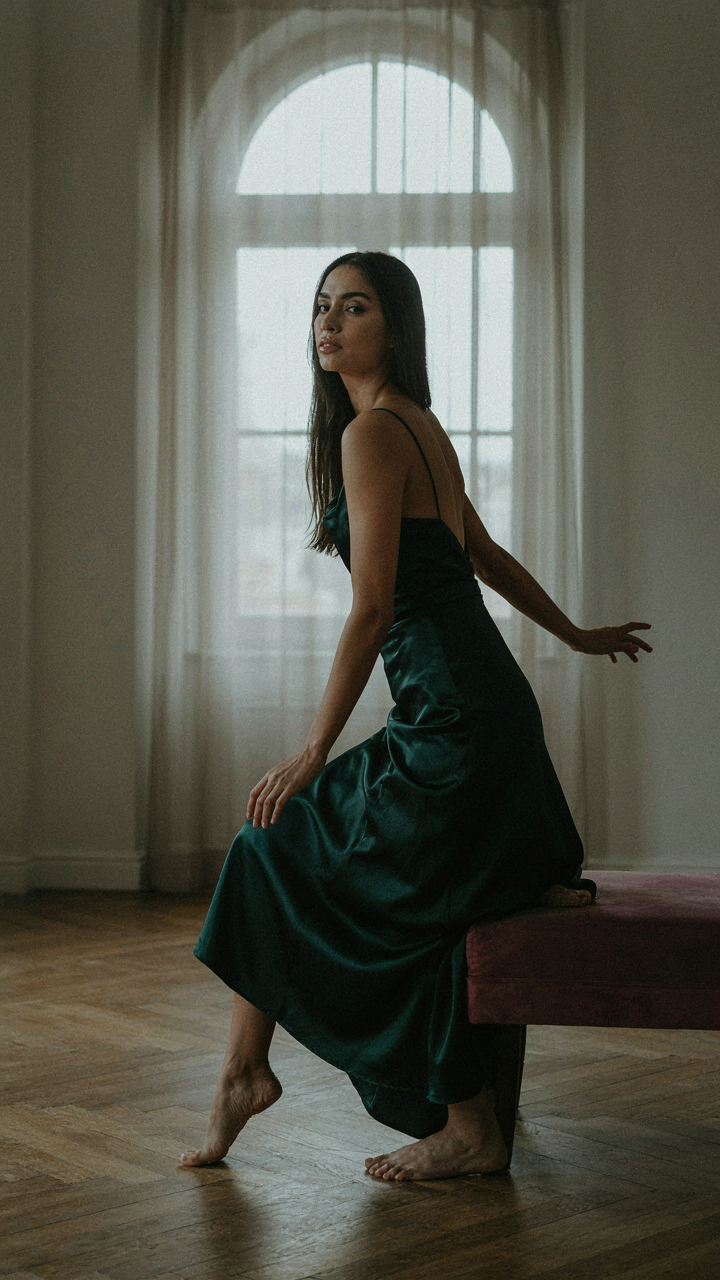
You want to look effortless in photos, which means you’re terrified of looking stiff or posed. Here’s the mechanism: static posing creates dead moments between shots. Movement solves this by generating multiple viable frames from a single action.
Think of it like momentum in physics. A gown photograph captures one freeze-frame, but the gown itself moves through space continuously. Photographers shoot in burst mode during motion because the fabric’s position, your body’s angle, and light reflection all shift microseconds apart. You generate ten usable angles from one deliberate walk or arm adjustment instead of resetting your entire body between each shot.
Pose Transitions Without The Reset
Everyone says “flow between poses.” That’s not actual instruction. The real work is anatomical sequencing: your lower body moves first, then your torso rotates, then your head follows last. This order prevents the jarring breaks that read as disconnected poses in a series.
Start each transition from your feet or legs, not your arms or face. If you’re moving from a standing position to a seated angle, shift your weight onto one leg, then pivot your hips, then let your upper body follow the rotation. Photograph during these intermediate positions, not before and after. The gown responds to weight shift with natural draping, and your body avoids the self-conscious angles that plague forced posing.
Fancy Dress Picture Ideas: The Environment As Your Co Conspirator
Engage With Space Instead Of Occupying It
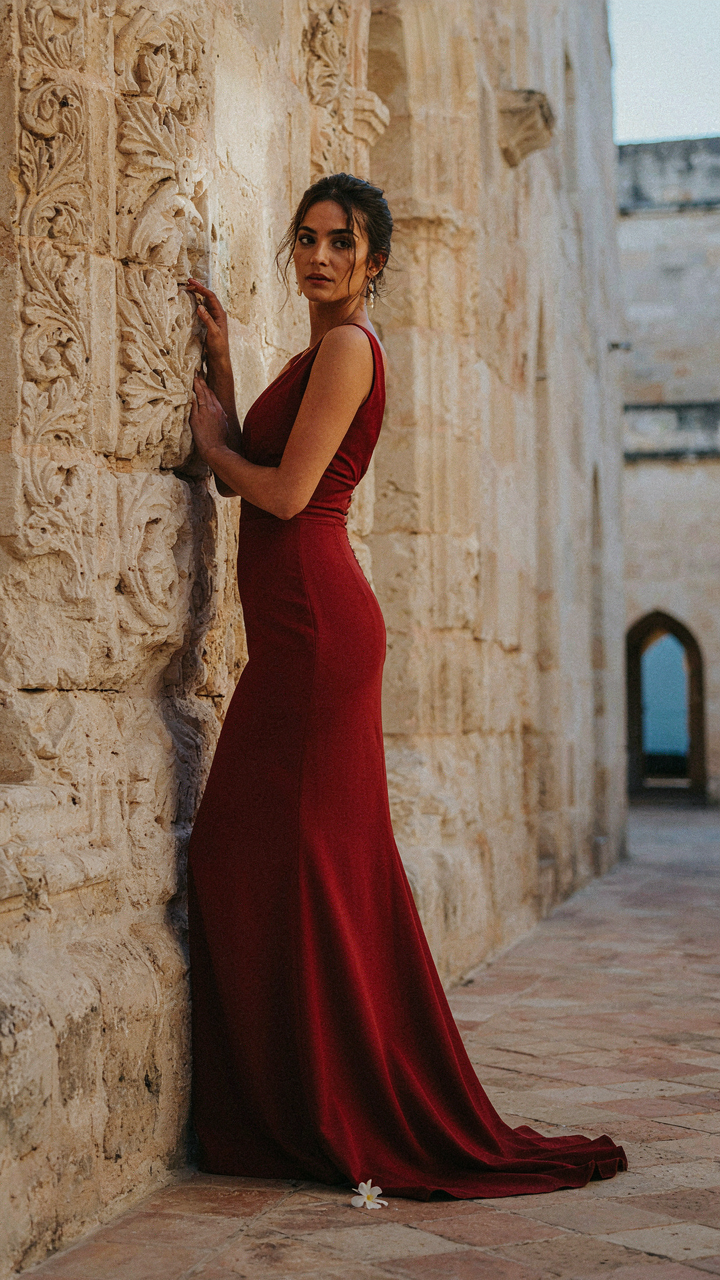
You want the photo to look effortless, which means you’re hoping the camera does the work for you. It won’t. The real mechanism here is simple: a body positioned against a static background reads as a subject being photographed. A body interacting with its surroundings reads as a moment. Walk toward something. Lean on it. Let fabric catch on architecture. The gown moves differently when you move with intention rather than for the camera.

Most evening gown advice says “find good light and pose.” That’s incomplete. Your movement creates the narrative the photograph captures. Reach toward a doorframe. Pivot on a staircase. Let your hand graze a wall or railing. These aren’t additions to your pose—they’re the pose itself. The environment becomes a partner in the frame, not a backdrop. This shift from static positioning to dynamic interaction is what separates a portrait from a photograph with presence.
Leverage Natural Elements For Visual Momentum
Architecture and landscape operate like compositional vectors in photography—they direct the viewer’s eye through the frame rather than leaving it static at center. A gown photographed against a plain wall competes for attention with the fabric itself. Photograph the same gown beside columns, staircase edges, or tree lines, and those elements create lines that move through the image. Your body becomes part of a larger visual system instead of the only visual system.
Water, stone, foliage, and architectural lines work because they create contrast and context without demanding attention. Reflective surfaces like windows or still water add dimension without complicating the frame. Shadows from architecture create natural contouring that flatters fabric drape. Position yourself where natural lines either parallel your silhouette or create intentional tension against it. The gown’s movement then becomes readable against a structured background, making even subtle shifts in fabric position register clearly in the final image.
The “Un Posed” Portrait: Mastering Gown Photoshoot
Authentic Expression Over Forced Smiles
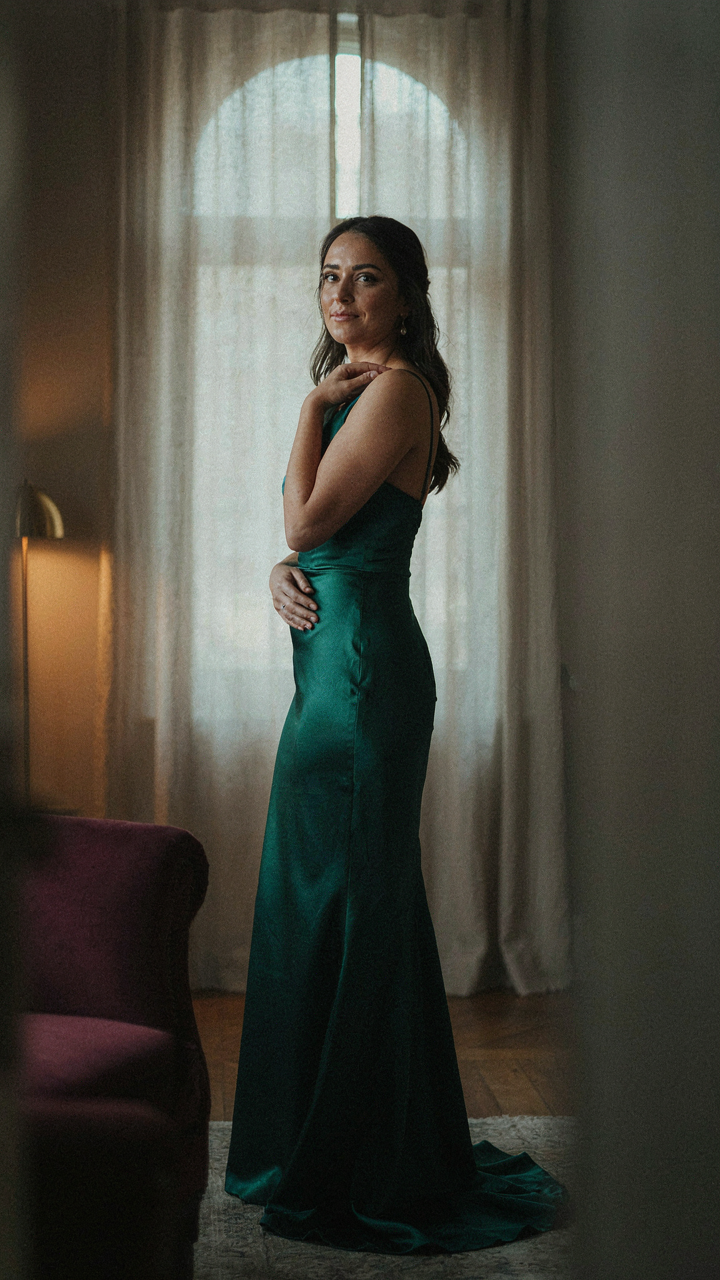
You want the shot that makes people think she wasn’t trying, which means you’re chasing permission to look effortless—and that only works if the expression is real. The mechanism is simple: forced smiles activate the wrong facial muscles. The zygomatic major pulls the mouth up, but without genuine emotion, the orbicularis oculi stays dormant. That muscle around the eye doesn’t lie. Your camera catches the gap between what she’s performing and what she actually feels.

Stop asking for smiles. Instead, ask her to think about a specific moment—not generic happiness. This redirects her brain away from “performing for camera” and toward memory retrieval. Her face softens. The eyes engage. The gown becomes context for her presence, not the main character. This shift takes three seconds to establish but changes every frame that follows.
Directing Attention Away From The Lens
Photographers often tell subjects to “look natural,” which is backwards advice. The moment someone knows they’re being watched, they stiffen. In film production, this is called breaking the fourth wall—but in still photography, you want to prevent it entirely. Give her a task that pulls her focus away from the camera and toward something in the frame.
Have her adjust the gown’s train, walk a specific path, or respond to a question you ask mid-shot. The camera captures the in-between moment when her mind isn’t defending against the lens. Her shoulders drop. Her jaw loosens. The fabric drapes authentically because her body moves like it’s alone. End the shoot by taking three to five frames after she thinks the sequence is over, when her guard completely drops.
Girl Prom Posing Ideas: Leverage Natural Light, Don’t Fight It
Position For Flattering Shadows And Highlights
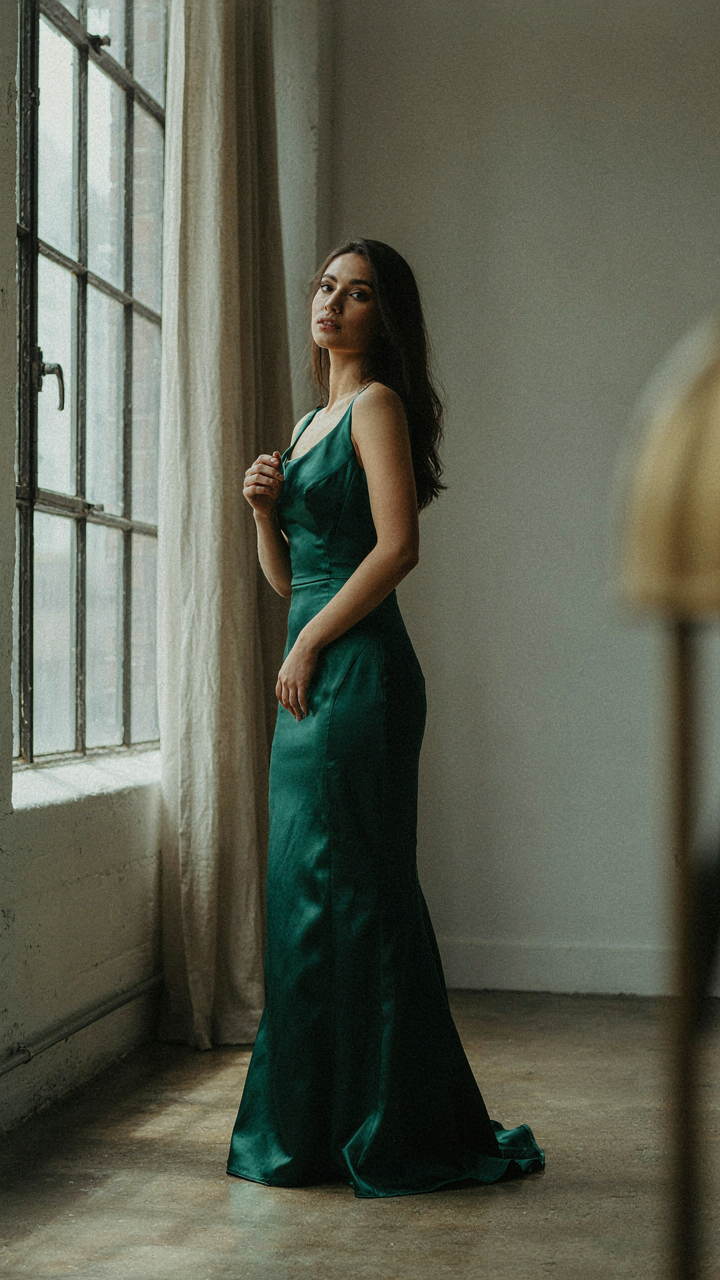
You want the photo to hide what you think is wrong with your face. That’s the real driver here. Light placement determines whether your jawline reads sharp or soft, whether cheekbones cast depth or flatten into the camera. Borrow from cinematography’s three-point lighting logic: key light (primary source), fill light (shadow softener), and backlight (separation). In evening gown photography, your key light is the window or outdoor source. Position yourself so light hits your face at a 45-degree angle, not straight-on. This angle creates definition without harsh shadows under the eyes or chin.

The gown itself demands a different light strategy than just your face. Fabric has texture and sheen that light either reveals or kills. Satin and silk require directional light to show dimension. Position yourself perpendicular to your light source if the gown has beading or embroidery you want visible. If light comes from behind and to the side, it catches the fabric’s edge and separates you from the background. Never stand parallel to a large light source if you want the gown to look dimensional instead of flat.
Avoid Harsh Overhead Lighting
Overhead light destroys evening gown photos. It casts shadows under your eyes, makes your jawline disappear, and flattens the gown’s texture into a dark blob. The common advice says “shoot in golden hour.” That’s incomplete. Golden hour works because it’s directional and low-angle, not because of the color. You get the same mechanical result from any side-positioned light source that sits above eye level but below 90 degrees.
If you’re shooting indoors or stuck with overhead sources, move. Reposition until light hits you at an angle, not from above. The gown’s neckline, shoulders, and waist are already fighting overhead light’s geometry. Add directional side light or shoot near a window instead. If you must work with overhead fixtures, stand closer to a wall and let that wall bounce reflected light back onto your face to fill in the shadows. This corrects the contrast problem overhead creates.
The Kinetic Energy Principle For Prom Portrait
Energy Stored In Stillness Reads Better
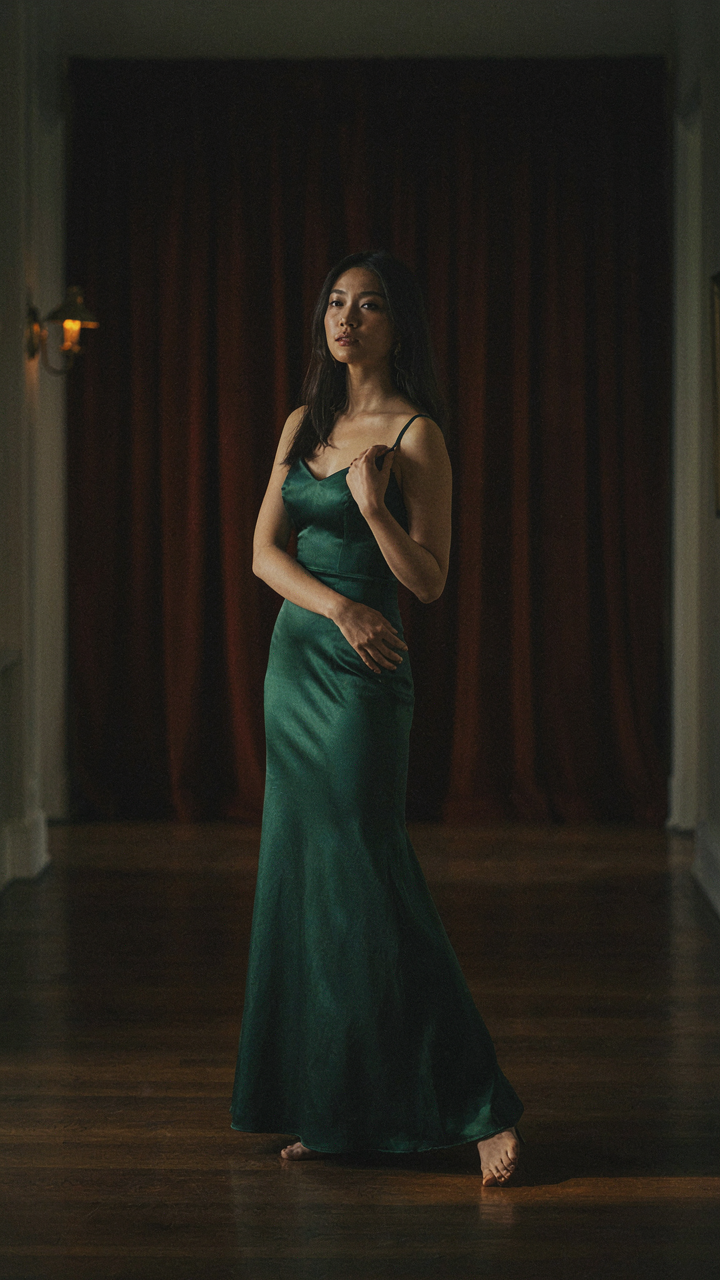
You want the shot where she looks alive without looking posed, because frozen looks amateur and movement looks intentional. Physics calls this potential energy: the capacity to do work. In photography, it’s the gap between where the body is and where it’s about to go. That gap is what reads as elegance in evening gown portraits. The dress hangs better. The face relaxes. The whole frame breathes.
Most advice says “hold this position.” That’s backwards. The moment you hold, tension enters the shoulders and jaw. Instead, you’re directing her body into a state of readiness. Weight shifted to the ball of one foot. Hip angled as if about to step. Spine lengthened as if responding to a cue. The camera captures the instant before motion, not the static freeze. This is why candid shots outperform posed ones: the body never fully stops.
Anticipation Over Execution
Tell her to shift her weight forward, not to stand still. Tell her to tilt as if responding to music, not to hold an angle. Tell her to prepare to turn, not to turn. The difference is biochemical. Anticipation engages the core and elongates the neck. Holding a pose locks the chest and compresses the shoulders. When you photograph anticipation, you’re capturing the body in its most efficient state. The gown drapes. The posture towers.
Here’s the protocol: position her, then give one actionable cue about what happens next. “Prepare to step toward me.” “Get ready to turn your shoulders left.” “Anticipate looking up.” Never say “don’t move.” Let her mind frame the next action. The photographer shoots during this mental preparation, not after she executes it. The image records a body in motion, frozen. That’s what reads as natural and alive in formal portraiture.
Gown Dress Photoshoot Poses: Details Matter, Not Just The Whole
Close Up Photography Of Beading And Fabric
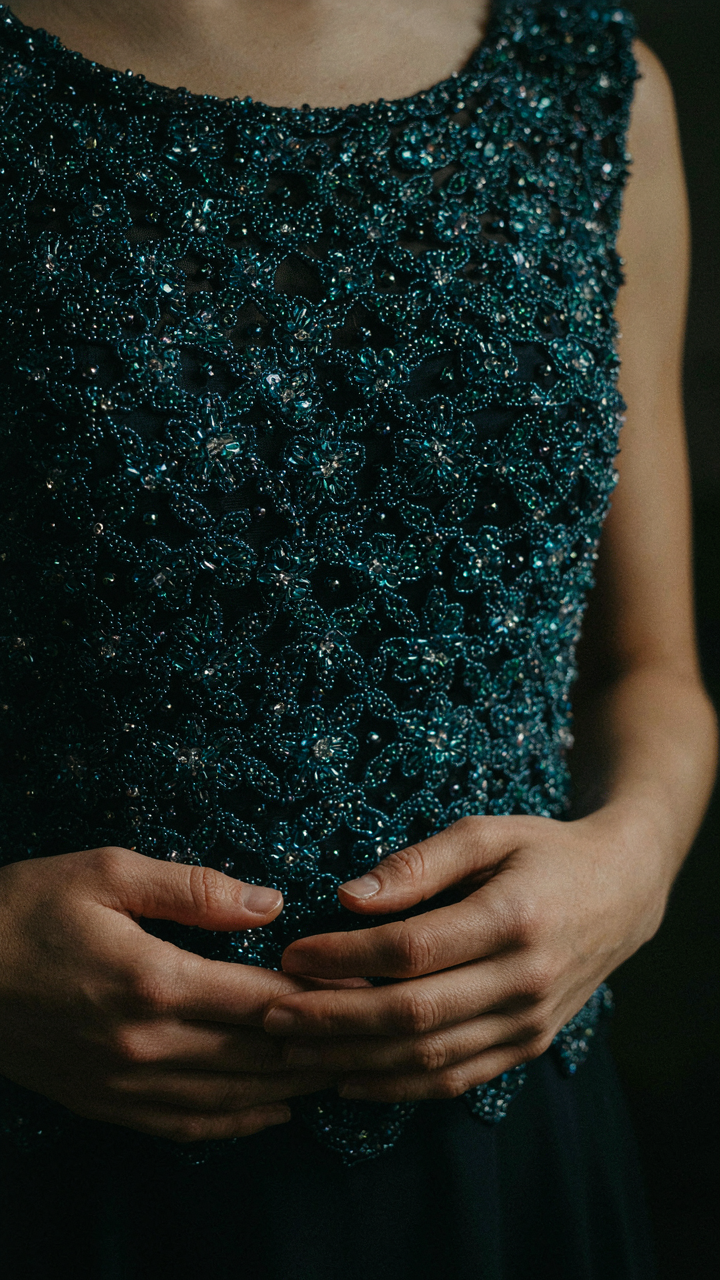
You want the shot to prove you spent money on the dress. That’s the real reason. The mechanism is simple: the camera reads texture before it reads silhouette. Beading, embroidery, and hand-finished seams disappear at full-body distance. Close-ups force the lens to capture the craftsmanship that justifies the price tag. Zoom to 85mm or tighter and shoot at f2.8 to isolate individual beads or lace patterns against soft background blur.

Position the gown so light hits the texture at 45 degrees, not head-on. Side lighting reveals depth in sequins, crystals, and layered fabric in ways flat lighting cannot. Move the camera closer than your instinct says to go. A frame filled with intricate beadwork on the bodice or a close shot of layered tulle on the train communicates luxury faster than any full-length pose. Shoot at least five close-up angles before stepping back for wide shots.
Hand Placement And Neck Line Angles
Most gown photography guides say hands are an afterthought. They’re wrong. The hand and neck together form a visual triangle that either anchors or destroys the whole image. In portraiture terms, use the principle of negative space: your hand placement should create intentional void, not fill it randomly. Rest one hand on the gown’s hip or fold both hands at the waist with fingers extended naturally, not clenched. This telegraphs confidence without effort.
The neck angle matters more than people admit. A slight chin drop and head tilt toward the shoulder creates a 15 to 20 degree angle that elongates the neck and softens the jaw. Avoid looking straight ahead in close-up gown shots. Position the head so the camera sees one side of the neck fully, especially if the gown has a bare shoulder or deep neckline. This single adjustment stops amateur-looking stiffness and makes the pose read as intentional rather than frozen.
Cool Prom Pictures: The Rule Of Imperfection
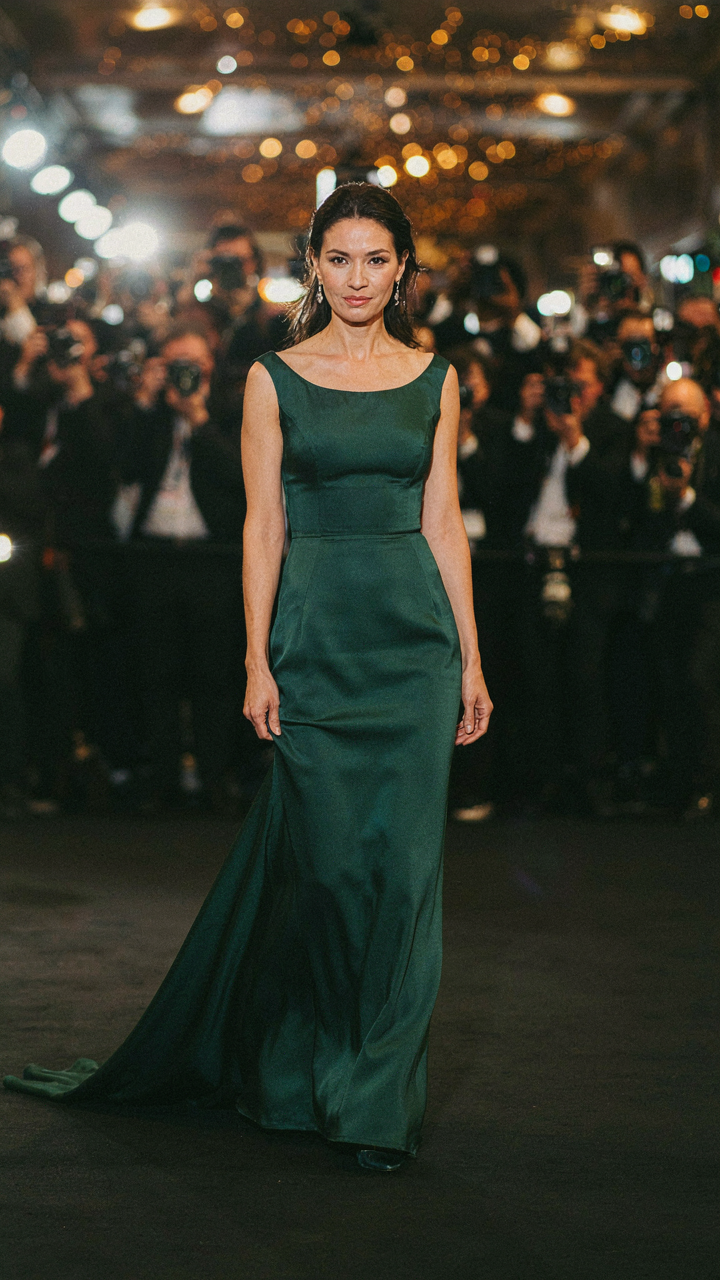
Controlled Blur Beats Sharp Symmetry
You want the shot that makes people stop scrolling, which means you’re terrified of looking stiff. That fear drives you toward overcontrol, which kills the image. The real mechanism comes from signal theory in photography: motion blur communicates energy and presence where perfect stillness reads as staged.

Slight movement during exposure, when intentional, creates directional tension that a static pose cannot match. The gown fabric catches light differently across frames. Your body reads as inhabiting the space rather than freezing for inspection. Shoot at 1/60th of a second or slower with the subject in gentle motion, walking toward or across the camera, not away. This registers as deliberate, not accidental.
The Off Axis Moment
Conventional guidance says center yourself and angle the gown to catch light evenly. That advice produces forgettable prom photos by the thousands. The real power lives in the unexpected angle where the camera isn’t where her body expects it.
Shoot from slightly below and to the side rather than front center. The gown’s dimensional folds reveal themselves through shadow and highlight contrast. Her posture shifts naturally to accommodate the perspective, which eliminates the self conscious rigidity that kills natural elegance. Position the camera at roughly a 35 to 45 degree angle from her body’s centerline, forcing her to turn into the frame rather than simply stand for it.
Gown Photoshoot Ideas: The Photographer As Director, Not Just Clicker
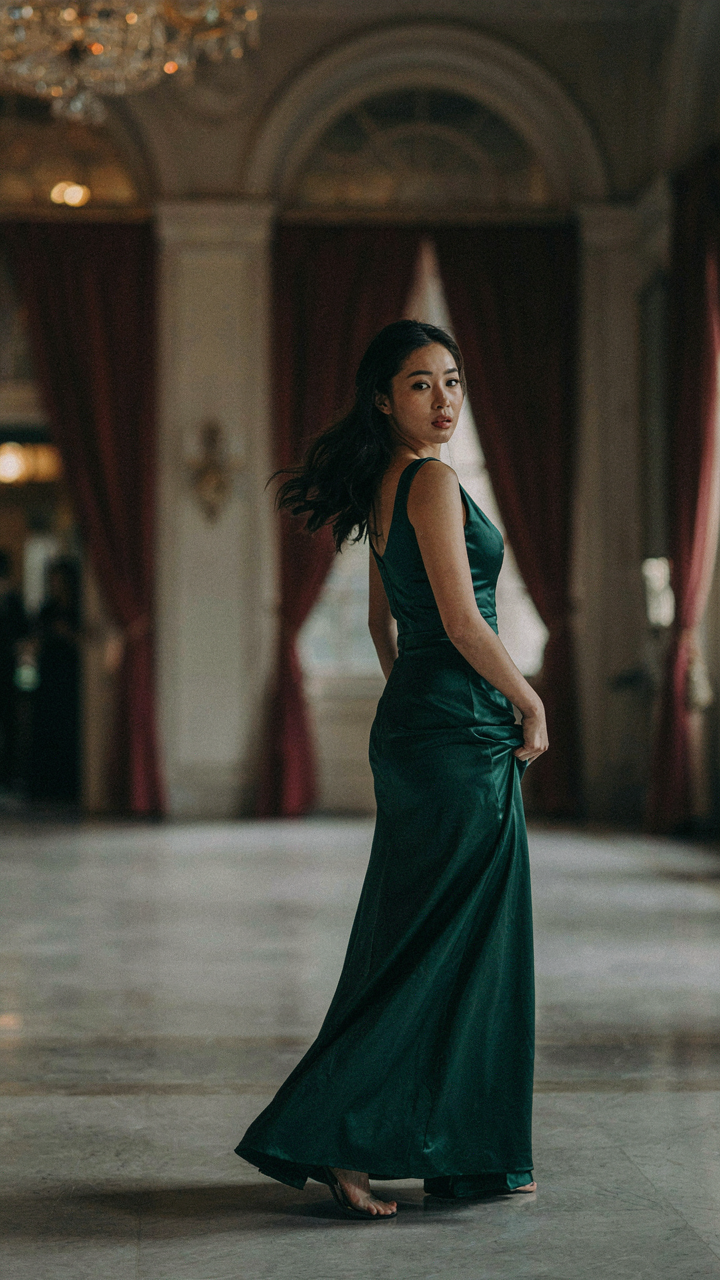
Give Her A Story To Move Through
You want the shot to feel effortless, which means you’re actually afraid of directing. Most photographers hide behind “just be natural” because it kills their responsibility if the image fails. The mechanism is simple: a person without a narrative anchor defaults to stiffness. Your job is to give her a specific action sequence, not a pose.
Tell her she’s walking to greet someone across the room. Tell her she’s adjusting her gown at the base of the stairs. Tell her she’s turning to look back over her shoulder because she heard her name. These aren’t poses. They’re momentum. The gown photographs differently when her body is finishing an action instead of holding one. Movement creates line, line creates elegance, and elegance reads as natural.
Interrupt The Performed Moment
The common advice is to shoot between poses, but that misses the target. You need to create conditions where genuine reaction breaks through before the subject locks into expression. Use timing breaks, unexpected requests, or environmental shifts to catch the moment when she’s not performing. A moment of real doubt, real joy, or real consideration reads as authenticity in fabric and form.
Ask her to step back and look at the full gown in a mirror. Comment on something unrelated to the shoot. Let her rest, then catch her as she settles. The gown drapes differently when she’s not bracing for the camera. The face reads as present instead of plastered. Small, honest reactions create the images that feel like they weren’t forced into existence.
The Only Thing Holding Back Your Gown Photos Is Your Need For Control
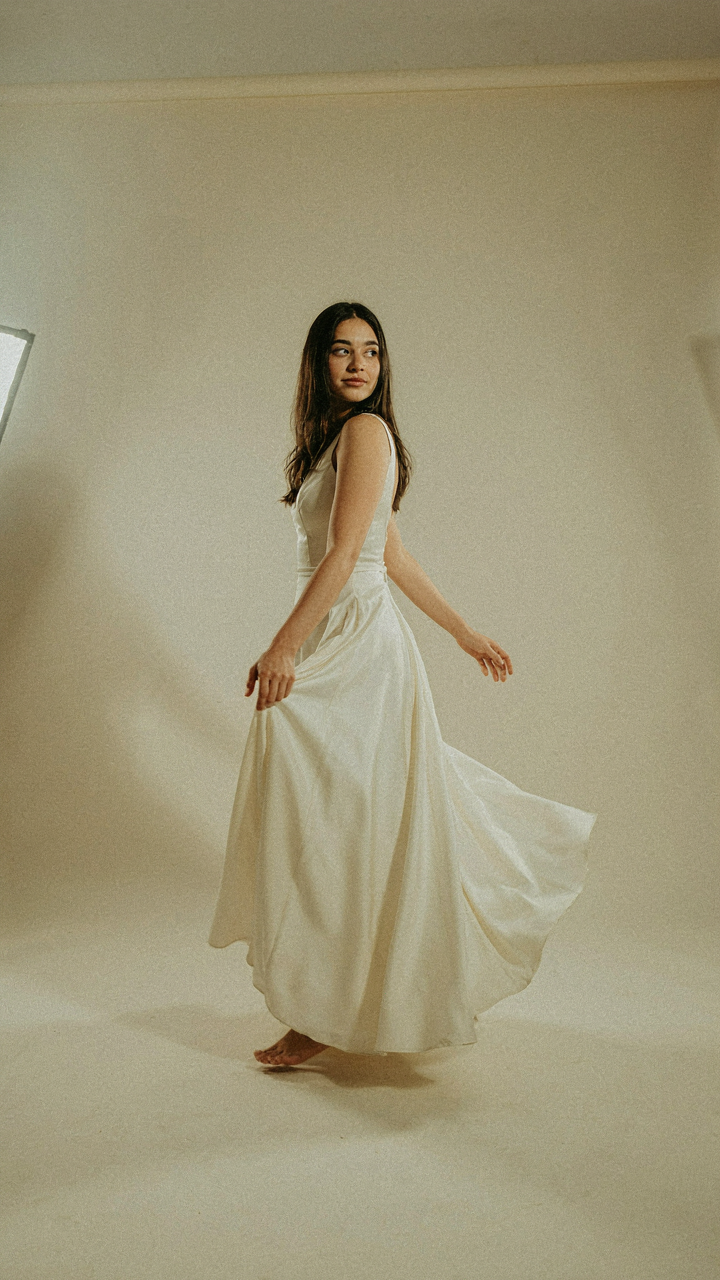
You already know the poses. You’ve seen them. The real barrier is you fighting the camera instead of trusting it. Every stiff shot happens because you’re thinking about how you look rather than how the dress moves. Stop directing your body like a puppet. Tonight, shoot one roll where you only think about the fabric. Let your limbs follow the gown’s logic, not your insecurity. The photos that stop people scrolling come from photographers and subjects who forgot to be afraid.