
Beyond “Good Angle”: The Psychology Of Presence
Commanding Attention Through Stillness
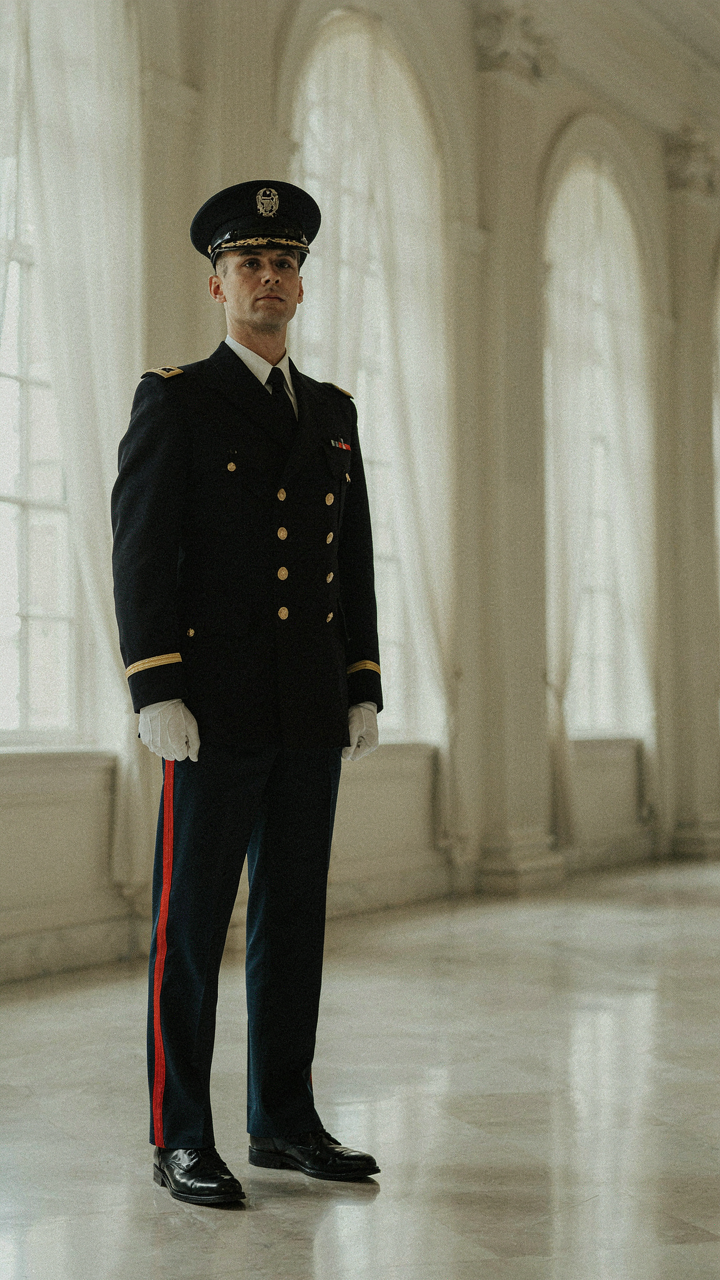
You want people to remember you walked into that room. That’s the real reason you care about this section. The mechanism is simple: most people fidget because they’re uncomfortable, and discomfort reads as low status instantly. In formal settings, stillness functions like military bearing functions in hierarchical structures—it signals control over your nervous system, which signals control over your environment. The person who moves least commands the most attention because movement itself is noise.
Photographers and camera operators have known this for decades. A held frame beats a caught moment every time. When you pose for formal dress photography, eliminate micro-movements: stop adjusting your collar, stop shifting your weight between feet, stop scanning the room. Lock your position for three to five seconds before the shot. Your body interprets this stillness as confidence and transmits it outward through the lens and across the room.
Expansion Over Contraction
The common advice is “stand up straight.” That’s incomplete. Standing straight is neutral. Expansion is active. Open your shoulders back and down, creating space across your chest and collarbone. This isn’t vanity—it’s biomechanics. A contracted posture (shoulders forward, chest in) reads as defensive or uncertain. An expanded posture occupies space without aggression, which is the exact signal formal events require from attendees.
Your arms matter more than most people admit. Never cross them. Let them hang naturally or rest one hand on your thigh if seated. Keep elbows away from your ribs, creating negative space between your arm and torso. This single adjustment makes you appear ten pounds lighter and infinitely more approachable. Position your feet shoulder-width apart, weight distributed evenly. This stance holds tension without looking tense.
The Unposed Stance: Why Effortless Wins Over Engineered
The Illusion Of Candid
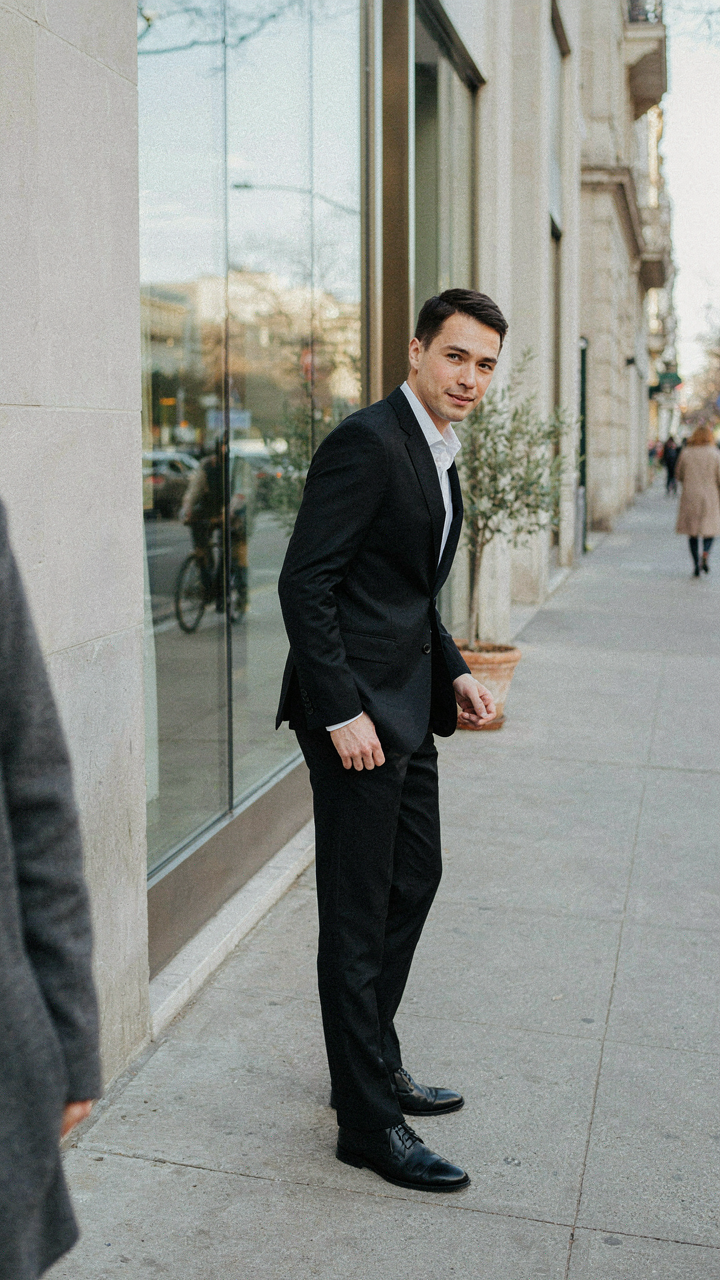
You want people to think you weren’t trying. That’s the real tell here, and it matters because effort reads as insecurity on camera.

The mechanism is borrowed from acting and photography: intent versus relaxation. In physics, tension creates visible resistance. In a formal photo, visible tension does the same thing. Your shoulders rise. Your jaw locks. Your eyes go flat. The camera doesn’t lie about effort, it amplifies it. The goal is to look like someone who belongs in the room, not someone performing the role of belonging. This means releasing the mental script that says “pose now.” Instead, find a neutral stance first. Let your arms hang naturally at your sides. Let your hands rest in front of you or one in a pocket. Your face should feel like resting face, not smiling face. That gap between genuine micro-expression and forced display is what separates formal photos that work from formal photos that scream “I was uncomfortable.”
The actual move is simple: lower your shoulders two inches, unclench your jaw, and breathe normally for three full seconds before the shot. Your nervous system will register the difference, and the camera will too.
Rejecting Stiffness For Fluid Motion
Everything you’ve been told about “standing still” for formal photos is half-wrong. Stiffness isn’t stability, it’s paralysis masquerading as control.
Fluid posture comes from one core principle: angles matter more than symmetry. When both feet point straight forward and both shoulders face the camera directly, you look flat and frontal, like a mug shot. Instead, angle your body ten to fifteen degrees away from the camera. Point one foot slightly forward, ground the other behind it. Drop one shoulder slightly lower than the other. This creates visual depth and breaks the corporate headshot effect. Your weight should sit on your back foot, giving you a forward lean that reads as engaged rather than stiff. If you’re holding a drink or resting a hand, use it as an anchor point that breaks up your silhouette. Movement doesn’t mean shifting around during the photo. It means arriving at a position where your body already suggests momentum and presence.
Before the camera fires, shift your weight three times to a new stance, then settle into the last one. Your body will feel aligned instead of locked.
The Power Gaze: Eye Contact As A Weapon
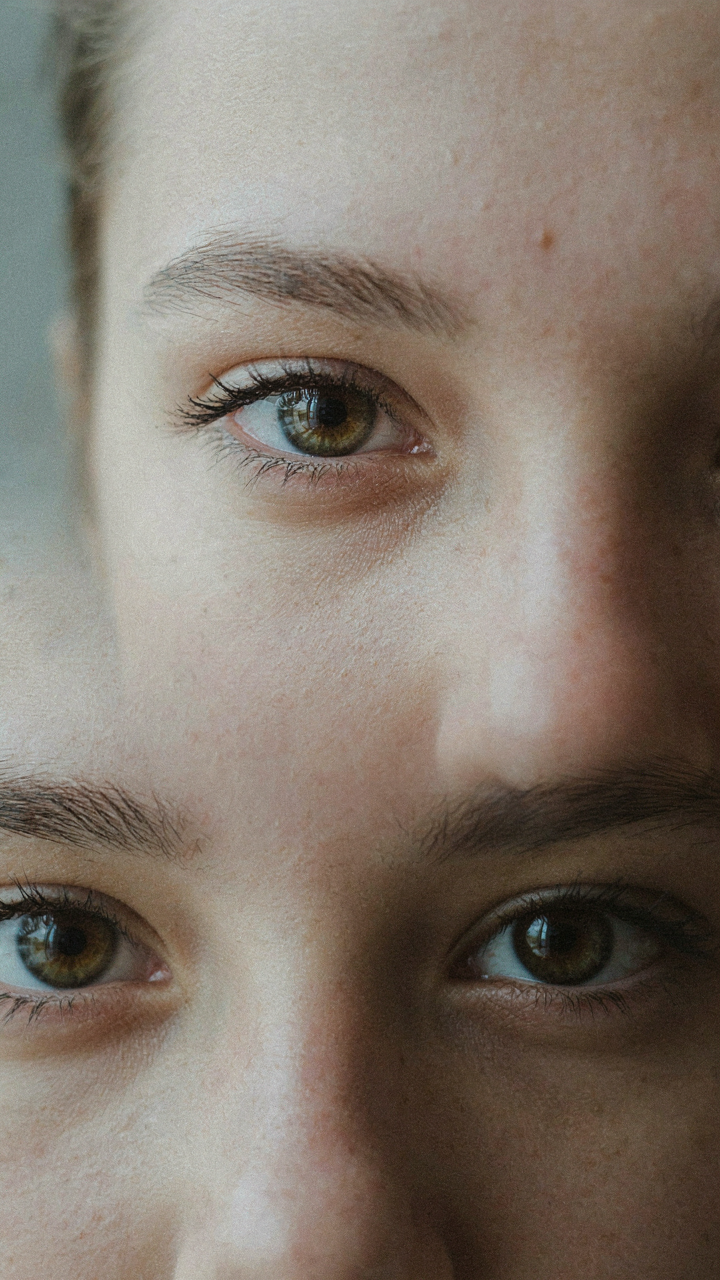
Direct Eye Contact Asserts Presence
You want people to remember you as confident, not desperate for their validation. That distinction lives in your eyes. Eye contact in formal photography works like terrain control in military strategy: whoever owns the space owns the frame. Most people dilute their gaze by looking slightly past the camera or down at their chin. This reads as uncertainty. Real presence means looking directly into the lens with intent, not intensity. Your eyes should feel settled, not searching.
The mechanism is simple: the camera captures where your attention lives. When you lock onto the lens, you create a direct line between your pupils and the viewer’s pupils. This triggers recognition of agency. You’re not waiting for permission or validation. You’re present. The photographer should see your eyes reach the back of the lens. This takes practice because most social conditioning teaches you that direct eye contact with strangers feels aggressive. It isn’t. It’s the opposite of aggression: it’s claiming your space without apology.
The Deer In Headlights Problem
Most formal pose failures aren’t postural. They’re ocular. People interpret “look at the camera” as “widen your eyes and freeze,” which produces that startled animal expression. Your eyes should be relaxed, not activated. The common advice to “smile with your eyes” is lazy direction. What actually works: soften your eyelids slightly, keep your pupils centered and still, and breathe normally. Your face should move zero millimeters once you’ve locked your gaze. Movement kills the shot.
The real tell of a bad formal photo is eyes that move between frames or dart sideways in the final millisecond. Photograph yourself in video mode and watch where your eyes go just before the shutter. Most people blink or shift. Hold your gaze steady three full seconds after you see the camera flash. This builds the neural pathway your body needs to stay put.

The Architect’s Method: Engineering Your Frame
Weight Distribution And Postural Foundation
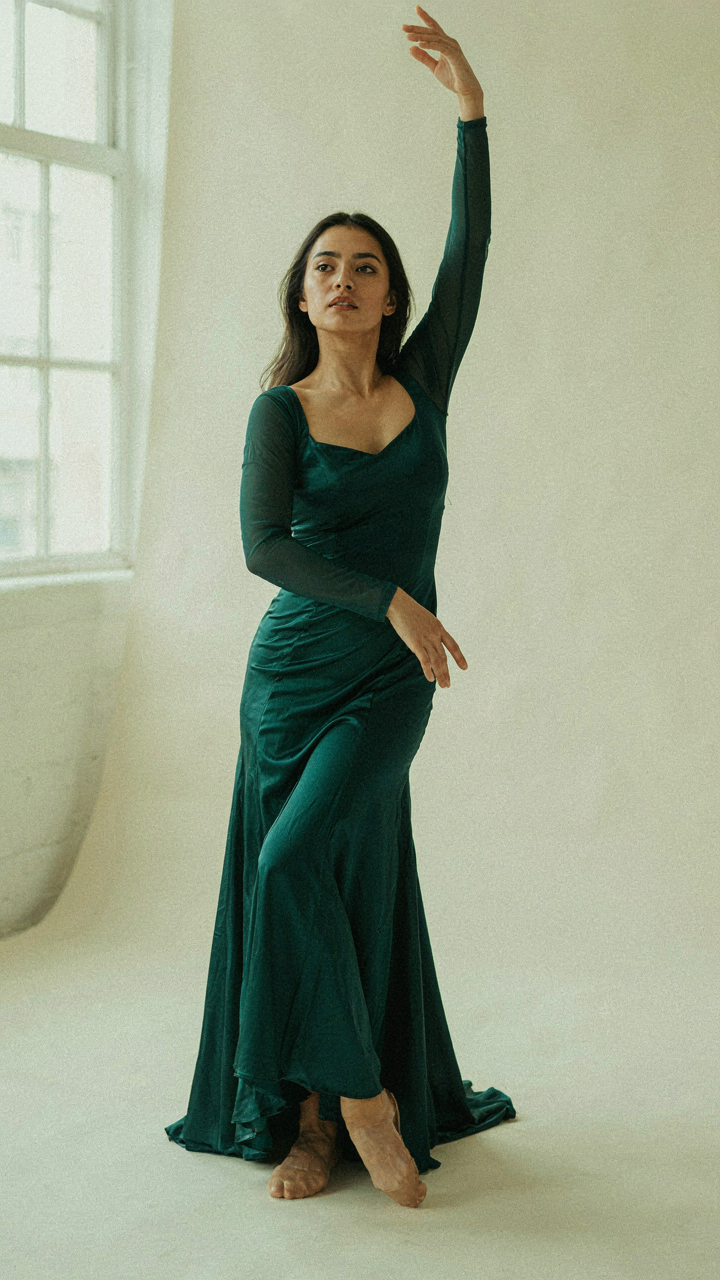
You care about this because you’re afraid you’ll look stiff or unnatural, and everyone will notice. The real problem isn’t your pose—it’s that you’re holding tension everywhere instead of anchoring weight strategically. Biomechanics teaches us about center of gravity and base of support. In formal posing, your center of gravity becomes your power source. Place 60 percent of your weight on your back leg. This single shift removes tension from your front side, creates visible separation between your torso and hips, and makes you look three pounds lighter in photographs.
The front leg becomes decorative. Straighten it slightly or angle it forward. Your back leg does the work—it’s compressed, loaded, ready. This isn’t advice to “stand tall.” It’s instruction to stack your joints vertically from your back heel through your shoulders. Knees stay soft, never locked. Engage your core minimally to maintain posture without rigidity. The moment you lock your joints, you broadcast tension. Test this: shift your weight forward onto both legs evenly and notice how your shoulders hunch. Now move it back. Everything lengthens. That’s the mechanism.
Creating Dimension Through Angles
The common advice says “angle your body” without explaining why, which means most people do it wrong and wonder why they still look flat. Angles work because they solve a camera problem: a frontal stance compresses your body into two dimensions. Fashion photography borrowed this principle decades ago. Photographers call it “breaking the plane.” When you position your body at forty-five degrees to the camera, your shoulders, waist, and hips form separate depth layers. The camera separates them instead of stacking them.
Here’s the protocol: turn your shoulders toward the camera at roughly forty degrees. Keep your hips angled five to ten degrees less than your shoulders. Your head tilts slightly toward the camera but doesn’t rotate past your shoulders. This creates a gentle S-curve from your feet upward—dimension without exaggeration. Angles are about creating visual separation between body parts, not about looking “dramatic.” Straight lines flatten you. Broken lines sculpt you. The lens reads angles as definition.

Long Dress Picture Ideas: Flow, Not Flail
Work With The Fabric, Not Against It
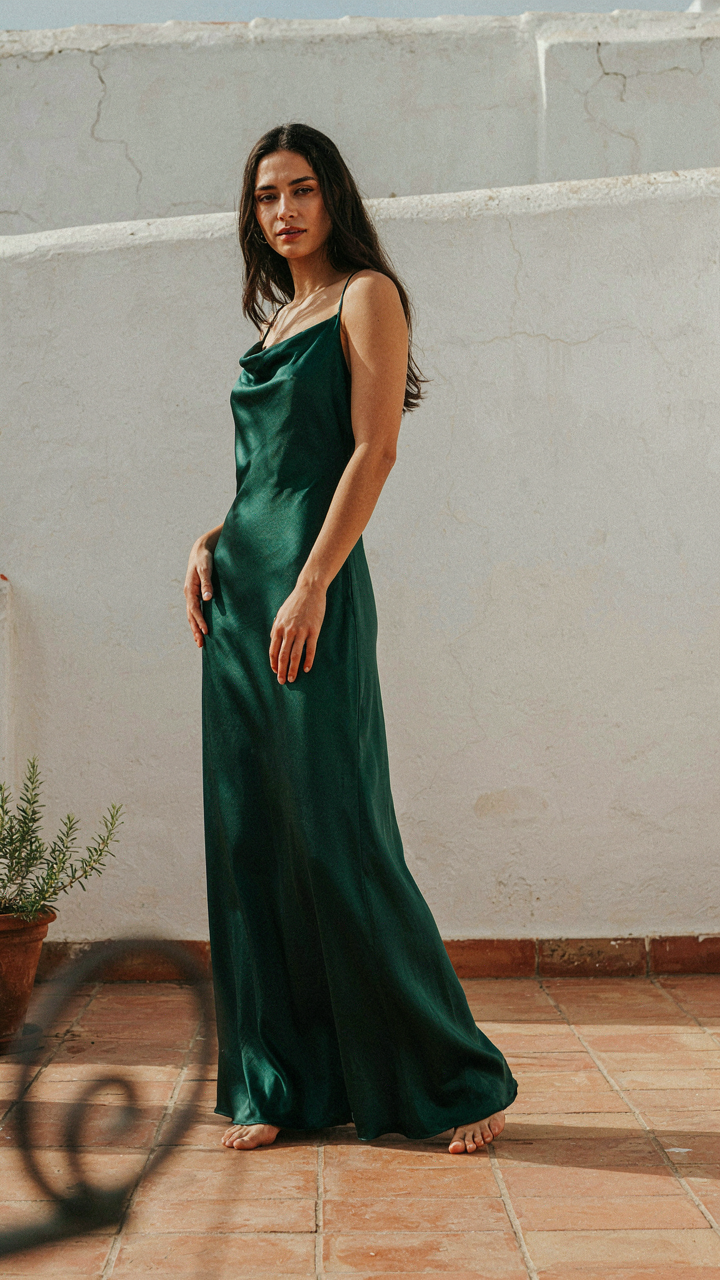
You want the dress to do the work for you because you’re tired of looking stiff in photos. Here’s the mechanism: fabric has weight and memory. Silk charmeuse behaves differently than tulle, which behaves differently than structured taffeta. Each material has a natural hang and drape pattern. When you fight that pattern by forcing the dress into an unnatural position, the fabric bunches, creases visually, and reads as tension in the frame. When you work with it, the fabric does half your job.
The practical move is simple. Before the shoot, understand what the dress is made of. Heavier fabrics like structured satin or brocade want to fall straight or create clean lines when you angle your body. Lighter fabrics like chiffon or charmeuse need movement to show dimension. Position yourself so the fabric naturally falls away from your body at angles, rather than bunching against it. This isn’t about twirling. It’s about standing at a slight angle to the camera and letting gravity distribute the material into visible folds.
Stillness Creates The Illusion Of Movement
The common advice says move more, shift your weight, create action. That’s incomplete. Movement in the frame reads as blur unless the camera freezes it at the exact right moment. Professional formal wear photography relies on a different principle: strategic stillness that creates visual tension the eye reads as dynamic.
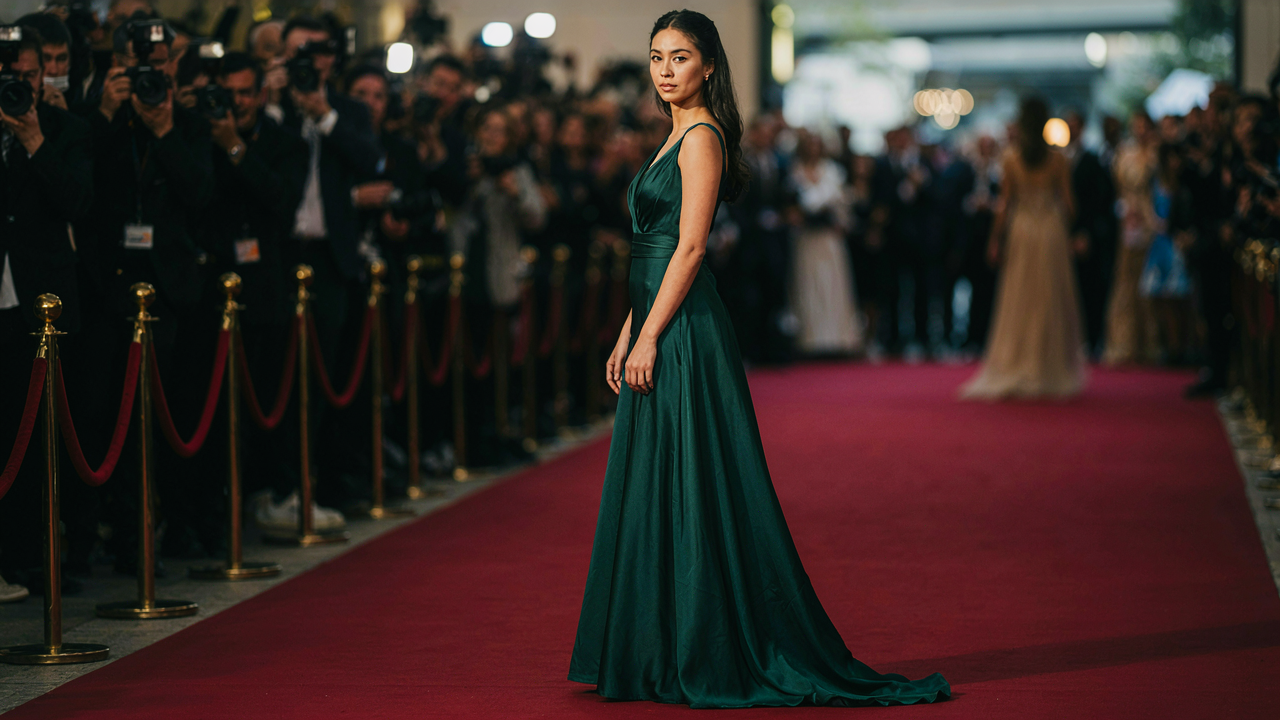
Stand with your weight on your back leg and angle your body at forty-five degrees to the camera. This creates geometric separation between your body mass and the dress fabric. The fabric falls differently on each side. The camera catches clean lines and negative space. Hold this position for three to five frames instead of shifting constantly. The stillness lets the photographer capture the exact moment the fabric settles into its most flattering shape. That’s the frame that reads as intentional and composed, not caught off guard.

Gala Picture Ideas: The Art Of Deliberate Indifference
The Unstaged Stance
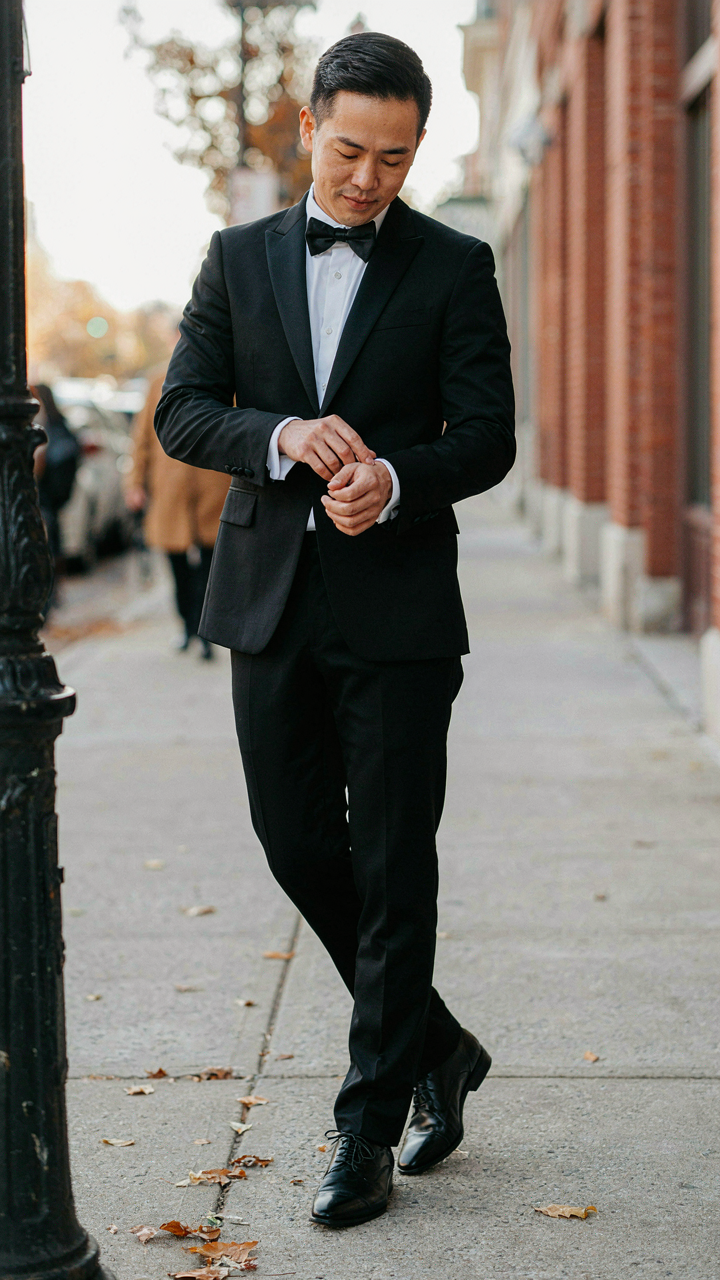
You want people to think you belong there without trying. That’s the real motive. The mechanism is borrowed from physics: momentum. A body in motion stays in motion. A posed body reads as static, defensive, uncertain. The opposite of status is visible effort. Your frame should suggest you were already moving through space when the camera found you, not that you stopped and arranged yourself for approval. This kills the desperation signal that kills credibility.
The unstaged stance begins with weight placement. Put your weight on one leg. Let the other leg bend slightly at the knee or extend forward. This creates asymmetry, which reads as unplanned. Keep your shoulders loose and slightly rotated away from the camera. Your torso should angle toward the light source, not square to it. The moment you square your shoulders to a camera, you’ve telegraphed that you know it’s there.
Quiet Movement In The Frame
Confidence doesn’t announce itself. It moves through space without commentary. The common advice is to “look natural” or “be yourself,” which is useless because it doesn’t tell you what natural actually looks like mechanically. Natural is minimal displacement. You’re not dramatically gesturing or pivoting. You’re shifting your weight, adjusting your hem, glancing past the camera rather than at it. One hand in a pocket. The other hand holding a drink or resting at your side. No symmetry. No balance. No composition.
The second layer is trajectory. Move through the frame as if the photograph is incidental to your actual trajectory. Walk slightly past the camera angle. Pause mid-stride. Adjust your jacket. These micro-actions communicate that you’re present for the event, not for the documentation. The most useful protocol: position yourself with light at 45 degrees to your body, then move slightly every three seconds. This gives a photographer multiple frames without you ever feeling like you’re “posing.” Movement breaks the stasis that makes people look defensive.
Prom Poses Solo: The “Main Character” Manifesto
Center Stage Stance
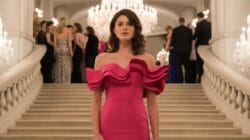
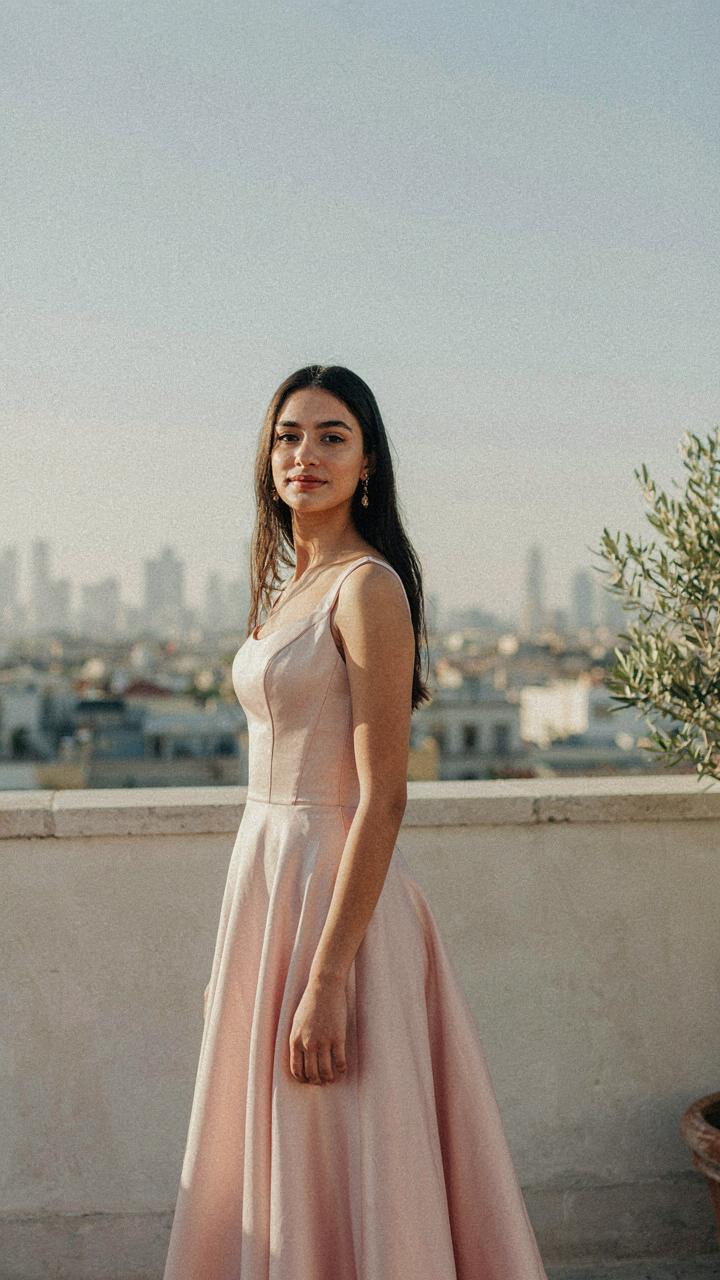
You want this photo because you need proof that you matter without needing someone else in the frame to validate it. The mechanism is simple: solo poses work when you occupy physical space like you own it, not like you’re apologizing for taking up room. In formal wear, this means planting your feet shoulder-width apart, shoulders back, and creating angles with your limbs instead of symmetry. Symmetry reads as uncertainty. Angles read as intention.
The most common mistake is standing straight-on like you’re posing for a mugshot. Instead, turn your body fifteen to thirty degrees away from the camera while keeping your head slightly toward the lens. This creates what photographers call “open posture”—your torso isn’t closing off toward the camera, it’s angled to show dimension. In a formal gown or tuxedo, this pose showcases the garment’s cut and movement while making your frame appear longer and more defined.
Command Without Company
Projecting certainty alone means eliminating fidgeting and prop-grabbing entirely. Most people reach for something (a clutch, a lapel, a pocket) to give their hands purpose, which signals they don’t know what to do with their body. Don’t do this. One hand can rest naturally at your side while the other rests on your thigh or hangs at a slight angle away from your body. Keep both hands visible and relaxed. Tension shows immediately in formal photography because the fabric itself becomes stiff around a stiff person.
Your jaw and neck matter more than people admit. Tilt your chin slightly down and forward—not drooping, but creating a defined jawline. This single adjustment prevents the “double chin” that kills solo formal photos and conveys composure. Hold this position for the shot. The pose itself isn’t the work; sustaining it without flinching is what separates a snapshot from a statement.

Formal Dress Poses Women: Beyond The “Pretty” Paradigm
Power Through Stance Architecture
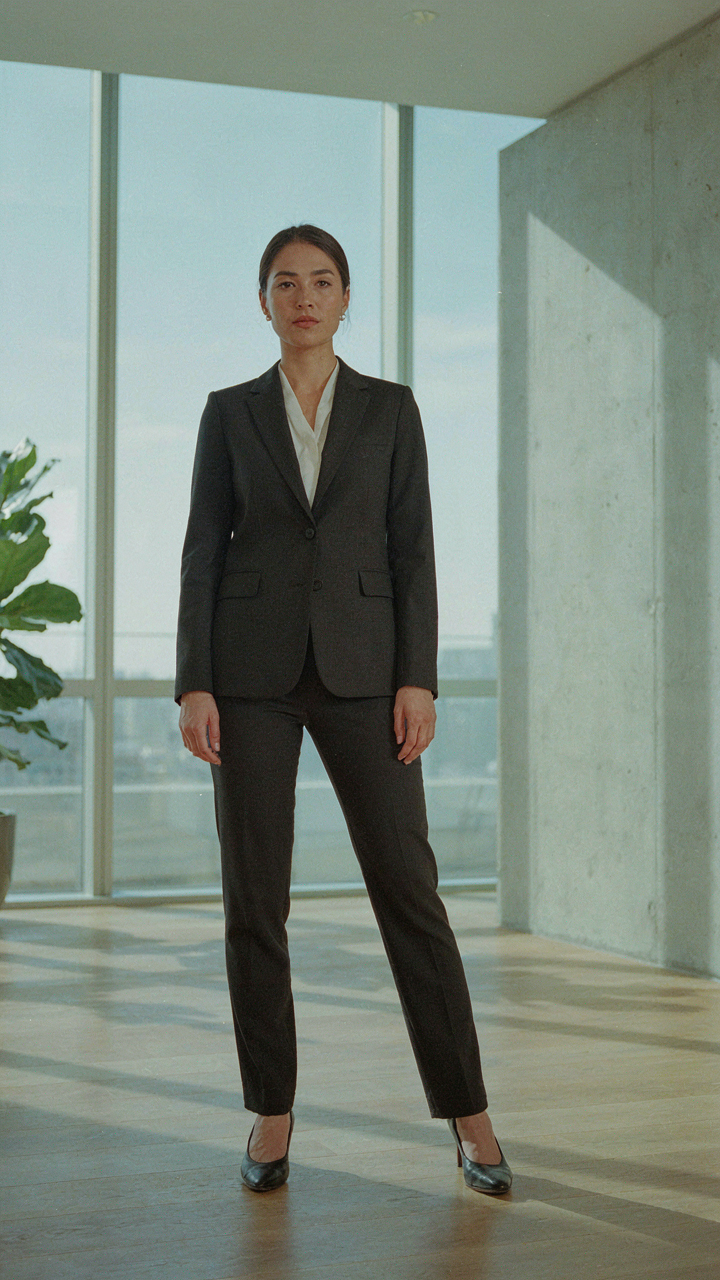
You want to look powerful because you sense that delicate poses read as decorative, and decorative people don’t get taken seriously. The mechanism is biomechanics: your body’s weight distribution and joint angles literally signal threat level or submission to the viewer’s nervous system before conscious thought kicks in. Narrow stances with closed angles signal vulnerability. Wide bases, open joints, and grounded weight signal control.
Plant your feet shoulder-width apart or wider. Angle one leg forward slightly, creating a diagonal line through your body rather than symmetry. Keep your shoulders back and down, never hunched inward. This isn’t about looking “fierce” it’s about occupying space without apology. The moment you narrow your stance or collapse inward, you’ve surrendered the frame.
Presence Without Performance
The common advice says smile more, relax, look natural. That’s hollow. Naturalness is the wrong target. What matters is intent. A woman who stands with intentional posture, direct gaze, and neutral or slightly downturned mouth reads as someone with somewhere to be and something to do, not someone waiting for approval.
Keep your chin level or slightly down, never tilted up in a submissive angle. Let your arms hang with purpose rather than arranged prettily. If you’re holding them, keep elbows away from your ribs to maintain an open chest cavity. The protocol is simple: every line of your body should communicate that you chose to be here, exactly as you are.
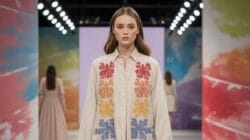
Fancy Dress Picture Ideas: Capturing The Unseen Edge
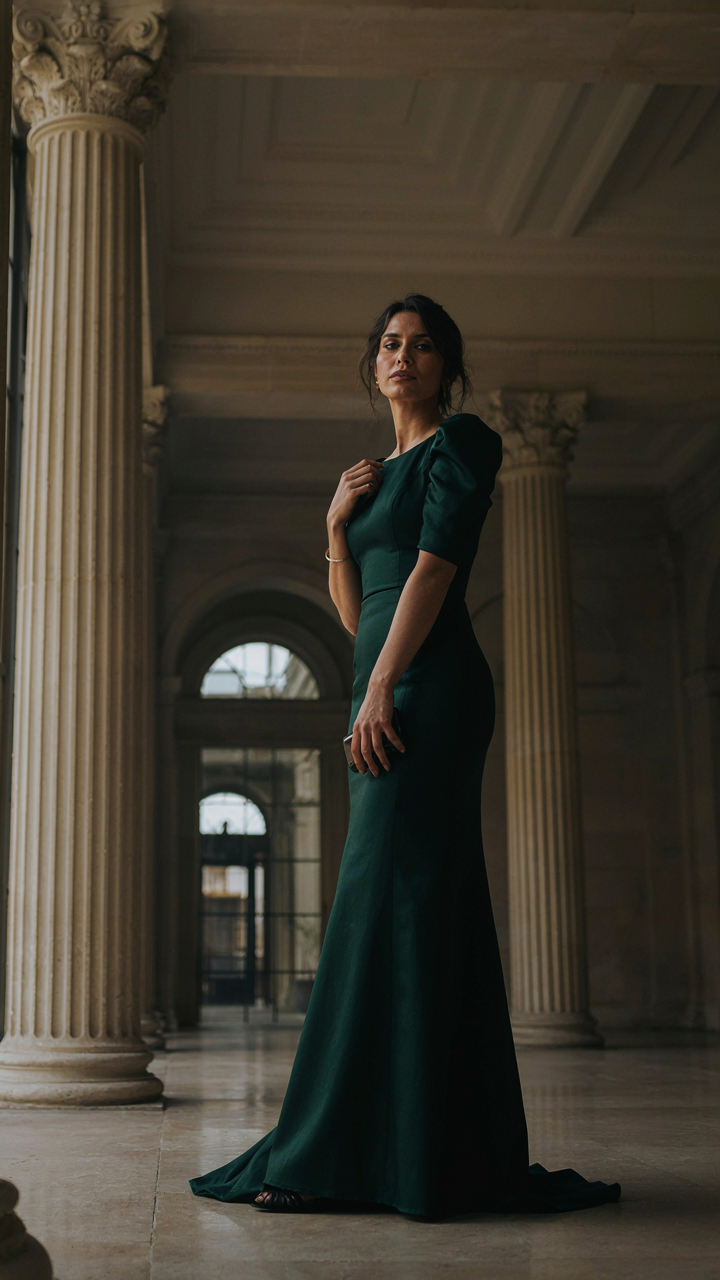
The Angle That Breaks The Pattern
You want this photo to prove something about you that strangers can’t get from looking at everyone else at the event. That’s the real mechanism here: formal dress poses fail when they copy what everyone else does. Photography borrows from portraiture’s principle of “directional intensity” – where the angle of the subject’s body and gaze creates narrative tension rather than static display. Most formal poses are centered, symmetrical, forgettable. The edge comes from asymmetry.
Rotate your body 30 to 45 degrees from the camera while keeping your shoulders squared. This creates depth and removes the mugshot flatness. Tilt your chin down slightly while looking toward the lens – not up, which reads as forced confidence. The asymmetrical stance draws the eye to fabric detail on one side of your torso while the angled head position adds dimension. This specific angle combination separates intentional styling from someone who just stood there.
The Frame As Your Co Star
Environment doesn’t frame you – you frame yourself within it. Most people treat their surroundings as background noise, which wastes the only resource that separates a formal event photo from a studio headshot. Strategic positioning means standing where the architecture, lighting, or other elements create visual contrast without competing for attention.
Position yourself at the edge of natural light sources: a doorway, a lit hallway, a window’s perimeter. Backlight creates edge definition between you and the background. If the background is busy, angle your body to use negative space – the blank wall or open area – instead of centering yourself in clutter. The pose itself becomes secondary to the composition. This shifts the viewer’s brain from “nice outfit” to “intentional presence.” Shoot from a low angle if ceiling height allows it, which adds authority and prevents the photo from reading as casual snapshot.
The Only Real Bad Pose Is One That Begs For Validation
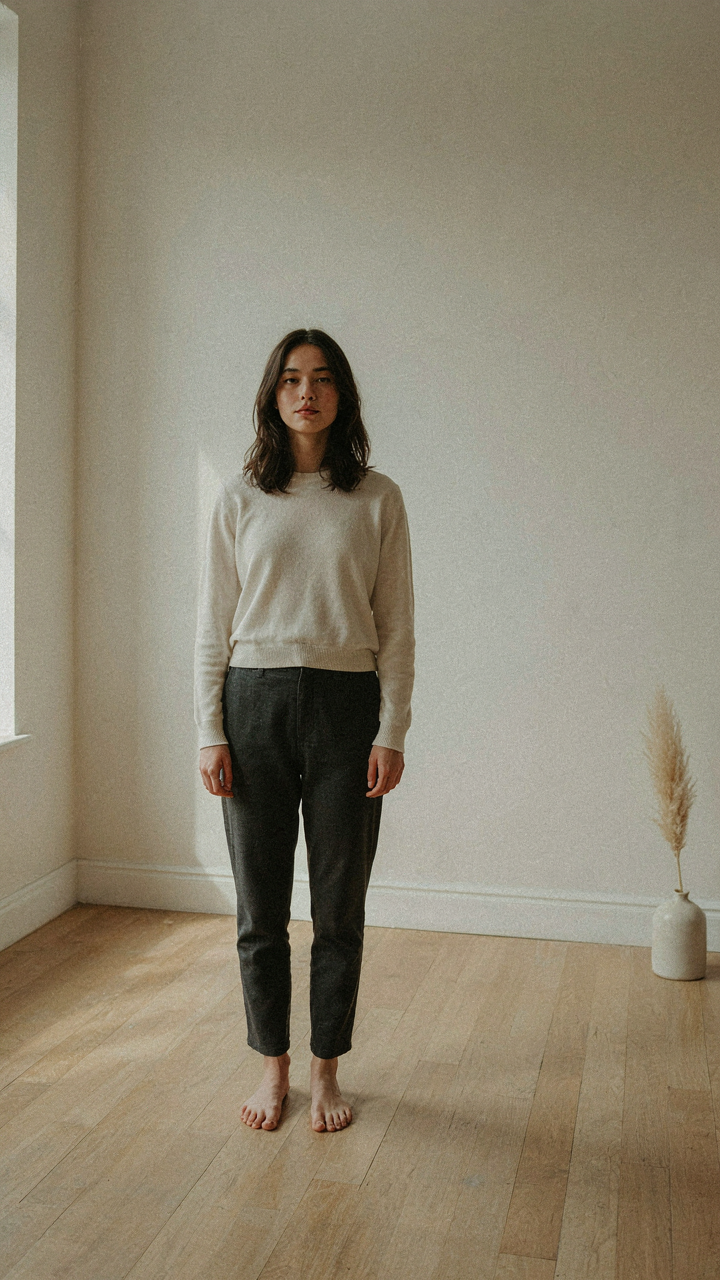
Most people kill their photos by overthinking. They contort into shapes that feel “safe” because they’ve seen them before. This kills presence. Your body knows what confident looks like. Stop performing for the camera and start owning the space you’re in. Film yourself standing still for thirty seconds today. You’ll see the difference between posing and existing. The camera doesn’t capture poses. It captures belief.