

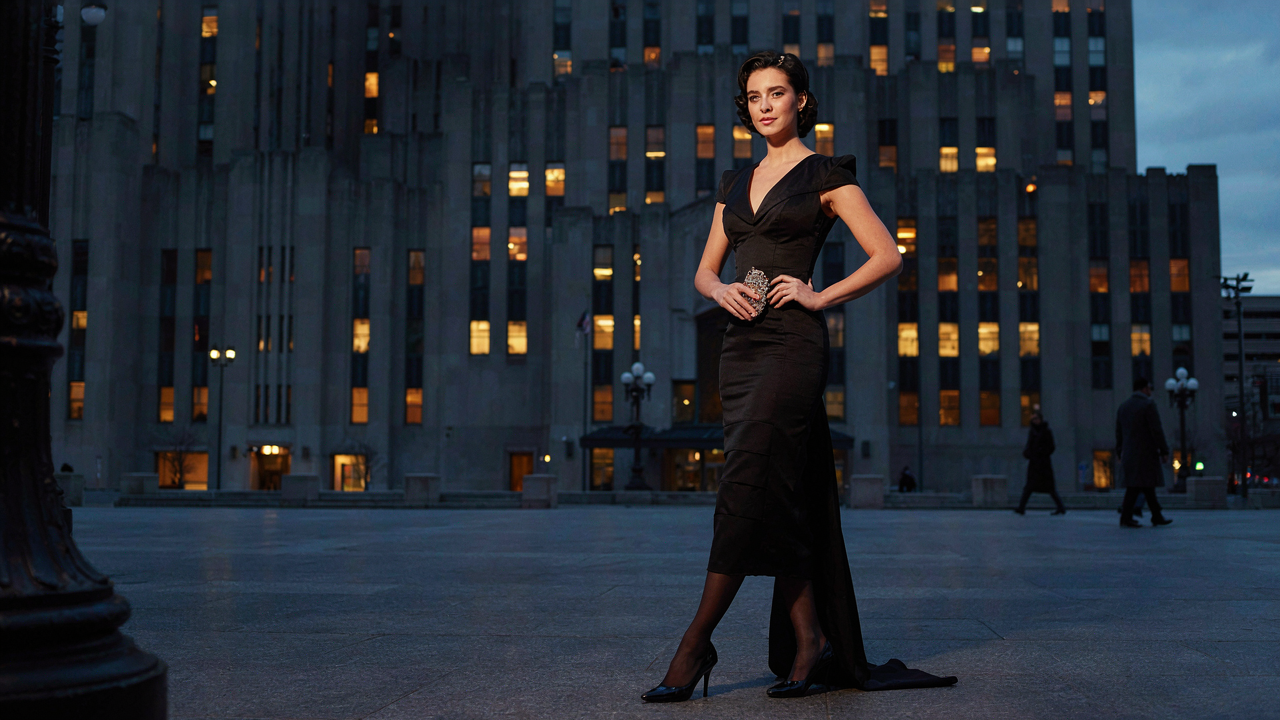
The Art Deco Deception: Why “Geometric Glamour” Isn’t About Shapes
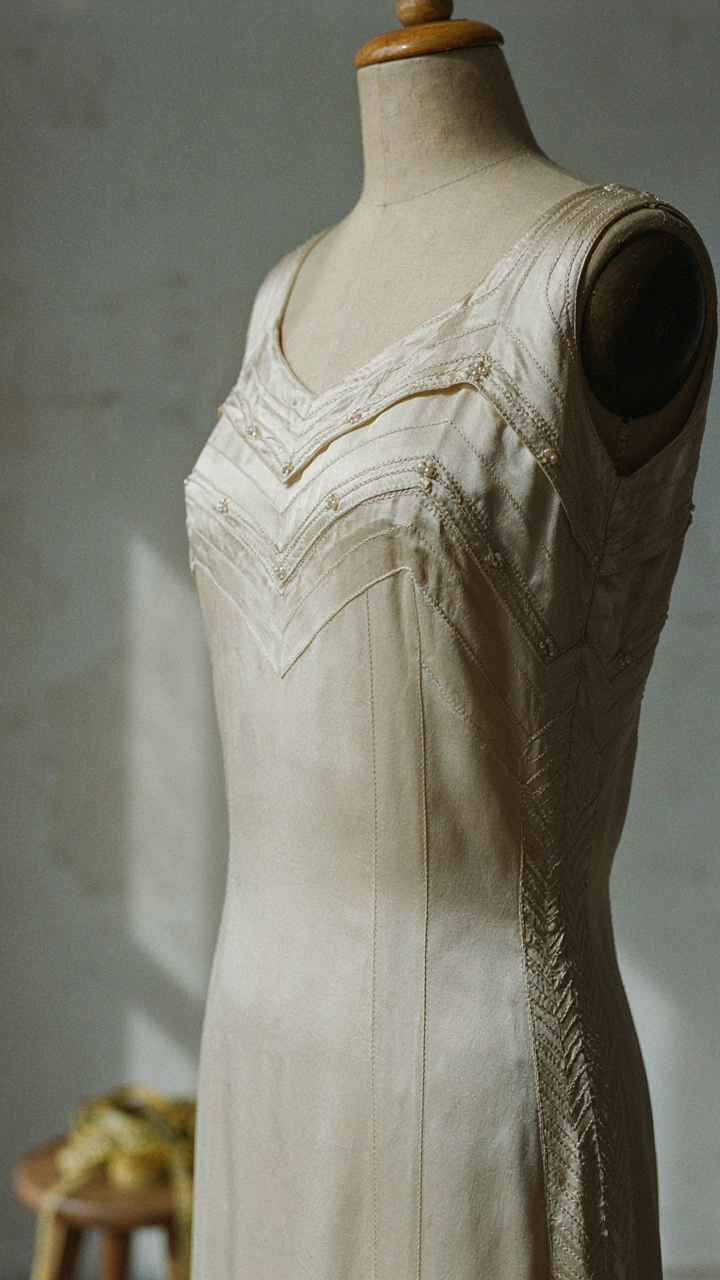
Structure Dictates Movement
You want to know about geometric patterns because you think they’re the secret to looking expensive. They’re not. The real mechanism lives in how art deco clothing constructs your body’s silhouette through architectural principles, not surface decoration. Art deco tailors borrowed from engineering: they used clean lines and sharp angles not for visual interest, but to create structural integrity. A dropped waistline on a 1920s evening gown wasn’t decorative—it reshaped how the body occupied space. The pattern came second. The skeleton came first.
When you study actual art deco garments from the period, you notice the geometry serves the cut. Chevron patterns run along seams because seams are where tailors build framework. Stepped motifs sit at bustlines because that’s where construction points anchor fabric. Geometric beading follows the grain of the dress body because it adds weight and directional emphasis where the silhouette needs control. This is the blueprint: structure creates the visual effect. Pattern reinforces what the construction already established.
Silhouette As A Closed System
Cybernetics teaches us that controlled systems maintain equilibrium through feedback loops and constraints. Art deco silhouettes work the same way. You don’t dress in art deco pieces; you enter a defined shape that tolerates minimal variation. The dropped waistline of the 1920s wasn’t optional styling—it was the system. High necklines, narrow shoulders, shortened hemlines to mid-calf, structured undergarments that flattened the torso: these constraints worked together to produce one outcome. Change one variable and the entire visual effect collapses.
The genius was the precision. Art deco cocktail attire eliminated guesswork through restriction. You couldn’t slouch in a bias-cut gown because the fabric wouldn’t allow it. You couldn’t add bulk because the silhouette rejected it. The system enforced its own rules. Modern attempts at art deco fail because people treat it as a mood board—they grab a beaded dress, add a long necklace, and call it done. Real art deco cocktail attire works as a sealed unit where every element binds to the others, and removing any part breaks the mechanism.
The Gatsby Outfit Paradox: Structure Over Ornament

Engineered Lines And Purposeful Asymmetry
You want this outfit to signal you understand something most people miss. Here’s what actually happens: Art Deco abandons symmetry the way architecture abandoned load-bearing walls. Think of it as structural engineering applied to fabric. The period didn’t scatter beads randomly. Designers placed visual weight deliberately, breaking expected balance to create tension. A dropped hemline on one side, a raised seam on the other, an unexpected cutout at the collarbone. This asymmetry reads as intentional, controlled, expensive.

The real mechanism is contrast through imbalance. A man’s tuxedo shirt gains power from precise geometric pleating at the front, not draping. A woman’s evening gown uses bias cuts and diagonal seaming that force the eye along specific paths. Uneven hemlines, angular necklines, and offset closures aren’t decoration. They’re construction decisions that make the garment move differently on the body. Your silhouette becomes geometric before any embellishment touches it.
Fabric Choices And Their Structural Impact
Fabric selection determines whether you read as Art Deco or costume. Heavy silk charmeuse, wool crepe, and linen hold engineered lines without collapsing. Lightweight fabrics destroy the geometry. Beading and embroidery weight matters here. Art Deco garments use substantial materials specifically so they can support linear patterns and structured seams without puckering or losing their shape. A flimsy fabric makes precise geometry impossible.
Metallics and sheen work because they amplify geometric patterns through light reflection, not because they’re flashy. The weave structure itself becomes part of the design language. Jacquard fabrics with geometric patterns woven into the material accomplish in production what others tried forcing through surface decoration. When you select fabric, you’re choosing whether the garment holds its lines through the evening or deflates into wrinkles. Choose weight and hand that supports structure, and the geometry does the work for you.
The “Syncopated Silhouette” Protocol: Crafting Dynamic Balance

Where The Eye Actually Stops
You want this section because you’re afraid of looking unintentional. That fear is rational. The mechanism is simple: Art Deco borrows rhythm from music theory. Just as syncopation offsets the beat, geometric silhouettes offset visual weight through proportion. The goal isn’t symmetry. It’s tension that reads as control.

Art Deco dressing abandons equal distribution. A dropped waistline paired with a raised hemline creates counter-movement. Horizontal stripes on the torso paired with vertical pleating on the skirt establish visual call-and-response. This isn’t accident. It’s constructed imbalance that your eye reads as intention. The silhouette catches light differently at each angle because the proportions demand it.
Emptiness As A Design Tool
Everyone defaults to filling space. Wrong move. Negative space in Art Deco attire is functional, not decorative. A sleeveless column dress commands more attention than a sleeved one because the bare shoulder becomes active visual real estate. The emptiness frames what remains.
Placement matters more than coverage. A strategically bare back, an open side seam, a cutaway neckline—these aren’t afterthoughts. They’re design decisions that make the garment’s geometry work harder. When you remove fabric, you force the remaining structure to carry all the visual weight. That concentration of attention is what separates Art Deco from generic evening wear. The protocol: identify one focal zone, strip it of excess, let the proportions speak through what you’ve removed.
Art Deco Outfits Women: Beyond Flapper Caricatures
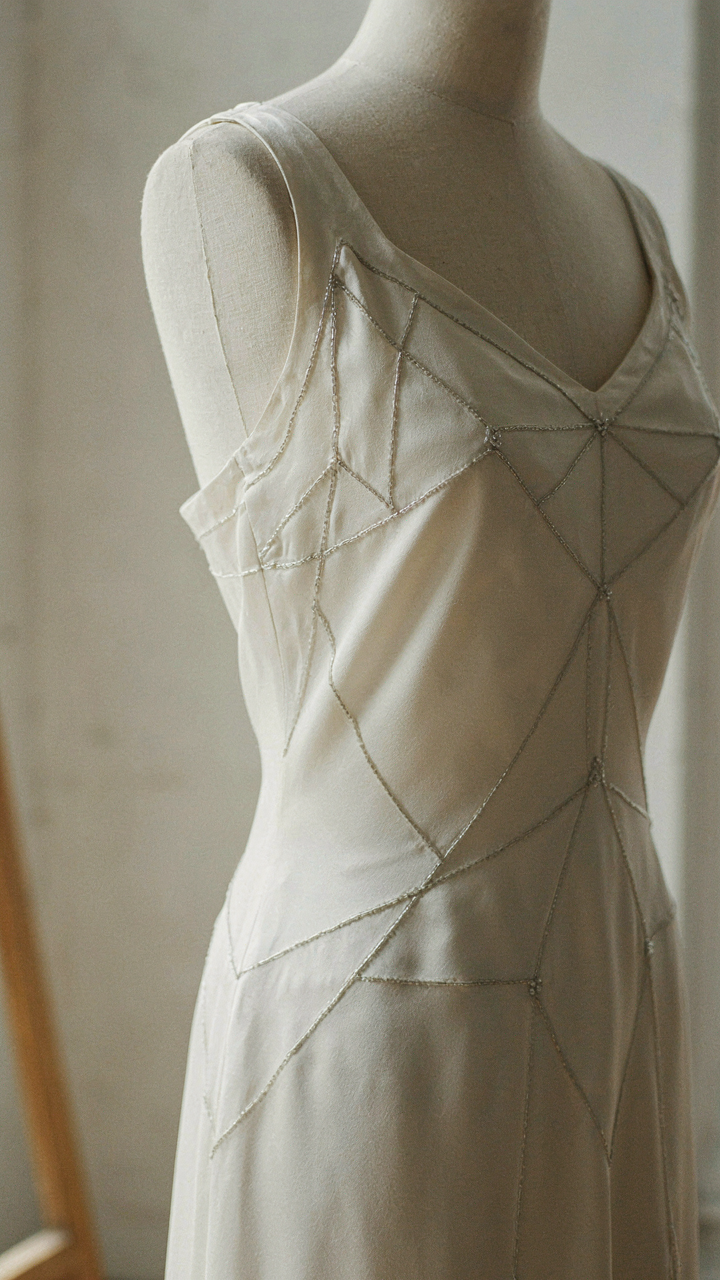
The Geometry Of Restraint
You’re here because you want permission to look expensive without looking like a costume. The mechanism at work is the same one in architecture: load-bearing walls. In art deco attire, geometric patterns and strategic cutouts are the load-bearing elements. They do the work. The fabric around them stays quiet. A woman in the 1920s wearing art deco didn’t add more. She removed what didn’t matter and let structure carry the visual weight.

The flapper narrative overshadows what actually happened in cocktail dress design. Women wore bias-cut gowns with asymmetrical hemlines, dropped waistlines, and clean lines because the silhouette itself was the statement. Beading followed geometric paths, not scattered across fabric. Metallic thread outlined angles, not filled space. The restraint was the status signal, not the abundance. This distinction changes everything about how you build a modern art deco look.
Where Strength Lives In The Details
A dropped waistline isn’t decoration. It’s a structural anchor that shifts the body’s visual center. In art deco cocktail wear, this principle repeats across every detail. The seams become the skeleton. The open back functions like a load-bearing wall in reverse—it removes mass but increases visual tension. Cutouts appear deliberate, never accidental. The strength comes from knowing exactly where fabric ends and negative space begins.
Embellishment in authentic art deco follows the geometry, never fights it. Beadwork traces lines. Fringe hangs straight from horizontal seams. Sequins cluster in zones, leaving blank fabric to breathe. When you apply this logic to modern pieces, you stop thinking about “adding sparkle” and start thinking about placement as architecture. The dress works because every element serves a functional purpose in the composition. Without this discipline, you end up with costume jewelry taped to fabric.
Vintage Cocktail Attire: The Illusion Of Simplicity
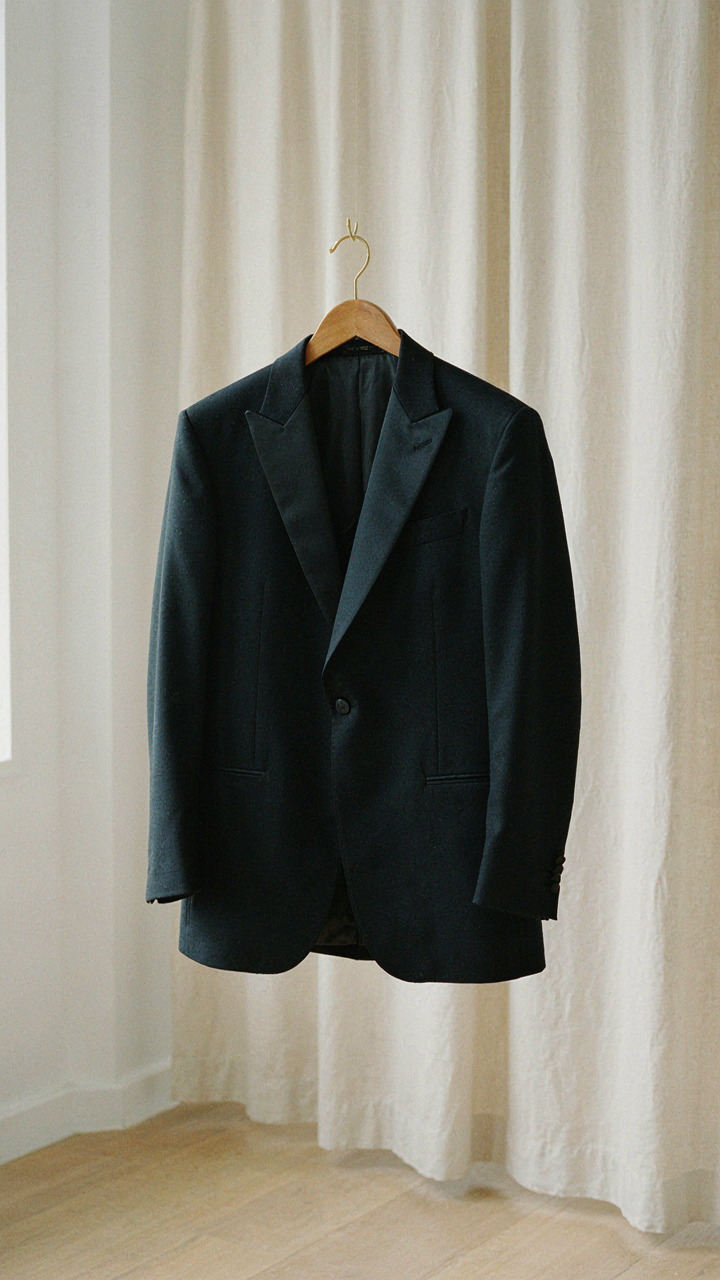
The Engineering Behind Restraint
You want to look effortless because effortless signals you didn’t try, which signals you don’t need to try, which signals power. Here’s the mechanism: Art Deco cocktail attire borrows from engineering’s principle of load distribution. Instead of scattering visual weight across a garment, you concentrate it strategically so the eye lands exactly where you want it and nowhere else. A 1920s bias-cut gown doesn’t drape loosely by accident. The cut redirects fabric tension to create apparent simplicity while the construction does the actual work underneath.

The real labor happens in seaming and proportion, not ornamentation. A well-fitted tuxedo jacket from the Art Deco era achieved its clean lines through precise shoulder construction and strategic dart placement, not through minimal fabric. The lapels sit at exact angles. The armhole depth is calculated to balance the wearer’s frame. Most people mistake this restraint for simplicity, then fail to execute it because they skip the tailoring. You’re not buying simpler clothes. You’re buying clothes that required more precision to construct.
The Markers Only Designers Notice
Details that betray design intelligence operate like a coded language only insiders decode. A geometric brooch positioned at the collarbone isn’t decoration. It breaks the horizontal line of the neckline and creates visual hierarchy. The material matters intensely: Bakelite versus glass versus marcasite reads as three entirely different statements to anyone trained to see it. A single Art Deco pattern on a clutch signals restraint and control, while scattered geometric motifs read as indecision.
These markers cluster in specific zones. Cufflinks in chrome or onyx. A single strand of pearls with asymmetrical clasp placement. The fabric composition itself becomes a signal: genuine silk charmeuse versus its modern substitutes drapes differently and reflects light in ways that announce authenticity. The protocol is to select one focal point per garment, execute it with precision, then leave everything else monochromatic and clean. One detail done right beats ten details fighting for attention.
The “Look Gatsby” Principle: The Interplay Of Light And Line

Metallics As Structural Elements
You want people to notice you’re expensive without saying it out loud. The real mechanism is this: metallics don’t decorate art deco cocktail attire, they define its geometry. Jewelry, belt buckles, and trim don’t sit on top of your outfit like afterthoughts. They function as visual anchors that clarify the silhouette underneath. Gold and silver catch light in predictable ways. That predictability is the entire point. It creates edges where fabric alone would blur.

Art deco borrowed from industrial design the concept of “load-bearing ornamentation.” A beaded neckline isn’t pretty decoration—it’s a structural line that frames the shoulder drop and reinforces the bodice architecture. Metals do the same work. They interrupt fabric surfaces intentionally, forcing the eye to follow a path you’ve constructed. A metallic trim along a seam doesn’t enhance the seam. It makes the seam legible from across a room.
Reflective Surfaces Define Form
Most people think reflective finishes add shine to existing shapes. Wrong. They create new shapes by controlling where light lands. On art deco cocktail attire, sequins, beads, and polished surfaces aren’t applied for sparkle. They’re placed to alter the apparent volume and angle of the garment itself. A sequined panel catches light differently than matte fabric, so it reads as deeper or more forward depending on angle. This visual shift is deliberate manipulation of form.
Establish a finish hierarchy before you dress. Matte grounds establish the base form. Satin provides gentle reflection that reads as intentional luxury. High-polish metals and dense beading become focal points that command attention. The placement rule is simple: reflective surfaces go where you want the silhouette redefined. A sequined waistband makes the waist appear narrower and higher. A beaded sleeve cuff makes the arm appear longer and more angular. You control how others perceive your shape by controlling where light bounces.
1920s Vintage Dresses: Mastering The Drape And Fall

How Fabric Moves Shapes What People See
You want to look expensive without announcing it, which means understanding that fabric behavior is geometry in motion. Physics calls this tensile strength and weight distribution. In art deco cocktail attire, the same principle applies: a dress’s perceived structure lives not in the cut alone but in how cloth responds to gravity and body movement. Heavy silk charmeuse reads as intentional control. Lightweight crepe reads as fluidity. The person viewing you processes these signals before they process anything else about the garment.

The geometry emerges from fiber weight and weave density, not decoration. A 16-momme silk charmeuse drapes in deep, controlled folds that reflect light at consistent angles, creating visual planes. Lighter fabrics like georgette or crepe break that light into scattered angles, softening the silhouette. Art deco design depends on defined shapes: angular necklines, geometric beading, stepped hemlines. Heavy fabric preserves these angles. Lighter fabric dissolves them. Choose fabric weight based on whether your garment’s geometry should announce itself or fade into motion.
The Bias Cut And What It Actually Changes
Everyone talks about the bias cut like it’s a magic word. It isn’t. The bias cut is a structural decision that trades stability for cling, and most people wear it wrong because they don’t understand the trade-off. Cutting on the diagonal grain stretches the weave differently than cutting straight. This creates a fabric that moves with the body instead of hanging from it. In 1920s dresses, particularly those by Madeleine Vionnet, the bias cut eliminated the need for darts and seams that would have interrupted the geometric patterns typical of art deco design.
The real mechanism: bias-cut fabric stretches lengthwise and clings without clinging. It holds shape through tension rather than fit. For art deco cocktail attire, this means beading and geometric prints stay visible across movement because the fabric moves as one unit with your body instead of shifting independently. But this demands proper undergarments and correct sizing, otherwise the silhouette collapses. Wear a slip with a bias-cut art deco dress. The slip controls the cling and preserves the silhouette’s lines through the evening.
The “Great Gatsby Outfit” Investment: Durability Of Design
Hand Stitching Signals Intentional Construction
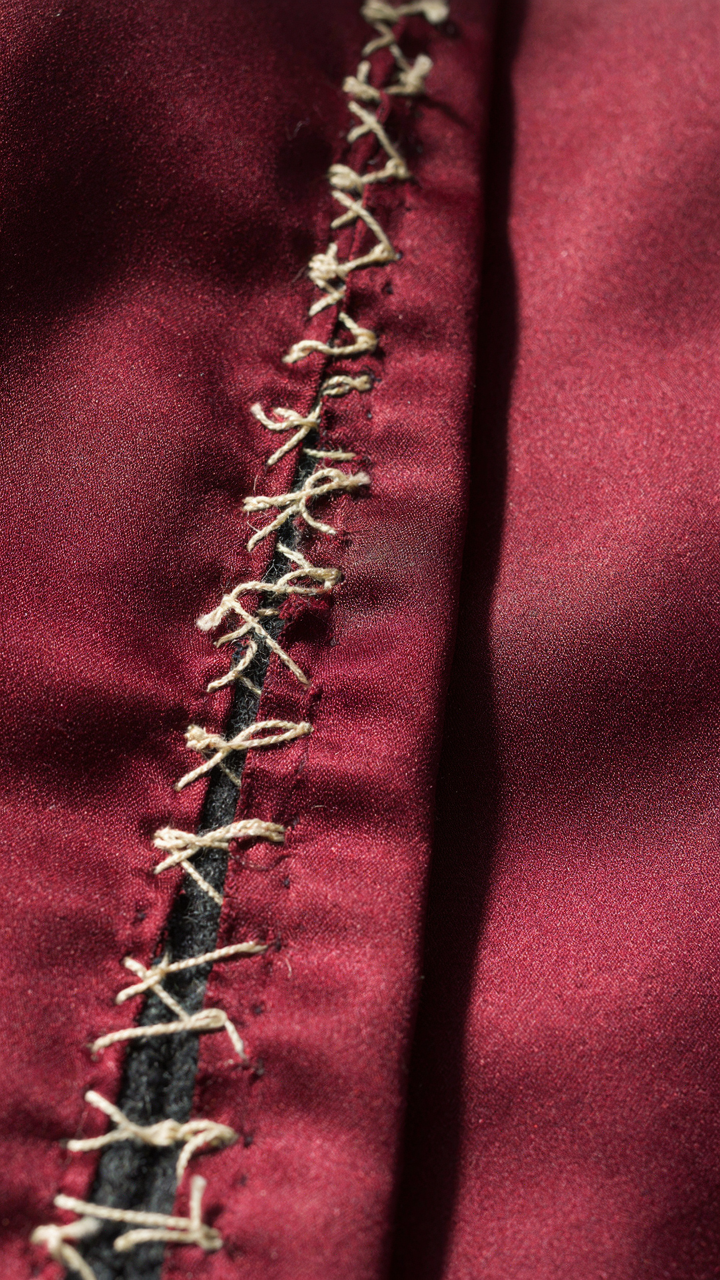
You want to believe your clothes will outlast you because it feels safer than admitting most things you buy are temporary. Here’s the mechanism: hand stitching in Art Deco tailoring creates structural redundancy. Machine stitches follow one continuous path. Hand stitches use independent anchor points, meaning a single thread break doesn’t unravel the seam. Lapels stay crisp. Buttonholes hold weight. The garment survives.

Tailors who worked the 1920s through 1940s built evening wear to endure decade-spanning use. They reinforced stress points—armholes, collar stands, pocket entries—with overlapping hand stitches. Rayon and silk linings received the same attention as exterior fabric. This wasn’t luxury theater. It was engineering applied to cloth. When you examine vintage Art Deco cocktail jackets today, the seams that survive longest are those hand-worked by craftspeople who understood that durability was the only advertising they needed.
Fabrics That Refuse Obsolescence
The common advice says “invest in natural fibers.” That’s incomplete. Natural fibers age differently depending on weave density and thread count. Silk charmeuse, used in Art Deco evening wear, actually gains character through wear—it develops a subtle patina without degrading. Wool suiting from the era resists pilling because manufacturers used tightly spun yarn and tight weaves that prevent fiber migration.
Garments designed during the Art Deco period used fabric weights engineered for repeated evening wear, not seasonal rotation. A silk-wool blend in a 1930s cocktail jacket maintains its drape and structure because the blend ratio was calculated for longevity, not cost reduction. The test is tactile: run your palm against the grain. If it snags or catches, the weave is loose. If it glides smoothly, the fabric will outlast current fashion cycles. Buy pieces that pass this friction test.
The Real Constraint Isn’t Finding The Right Dress; It’s Abandoning The Illusion That Superficial Adherence To A Theme Will Ever Create A Truly Distinguished Presence

Most people approach art deco cocktail attire backward. They chase the geometric patterns and metallics, thinking costume pieces create presence. They don’t. Conviction creates presence. Pick one element that genuinely speaks to you, own it completely, and build everything else around restraint. Today, go through your closet and remove anything you’re wearing for the theme instead of for yourself. What remains is your actual style. That’s your foundation. Authenticity always outperforms decoration.