
The OOTD Protocol: Mastering Your Wedding Guest Photo Poses
Know Your Fabric Before You Pose
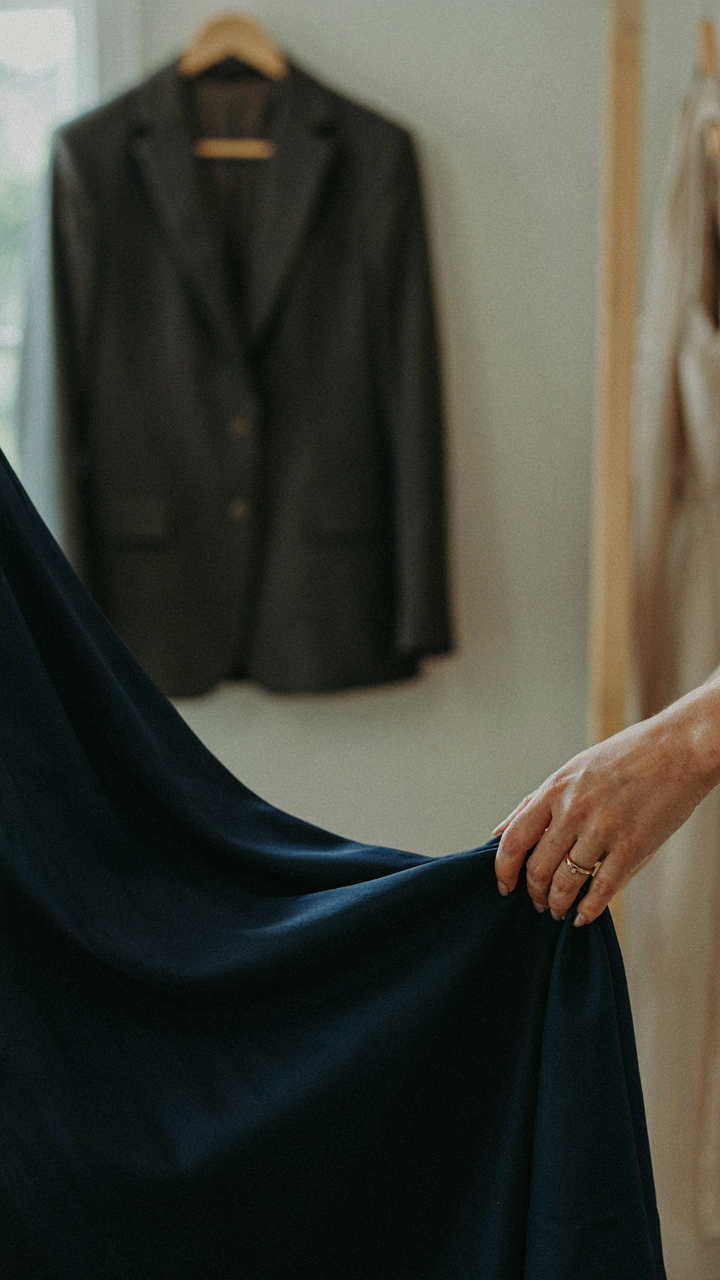
You want proof that what you wore mattered. That’s the real reason you care about posing right. Here’s the mechanism: fabric behaves differently under tension and light, and your pose either works with that behavior or fights it. Structured fabrics like cotton blends and certain synthetics hold clean lines when you stand still or angle your torso. Fluid fabrics like silk, chiffon, and jersey need movement or strategic positioning to display themselves properly.
The pose you choose depends entirely on what your outfit is made of. A tailored blazer looks sharp in a three-quarter turn with shoulders squared. A flowing dress reads better in motion or with one leg slightly forward to break up the silhouette. Don’t use the same pose for both. Analyze the weight and drape of your specific outfit, then match your stance to how that fabric actually falls in space.
Position Before Light Hits You
Photography borrows a principle from architecture called sightline control. Your sightline here is the viewer’s eye path through the outfit. The camera angle determines which elements of your outfit that eye will travel across first. Most wedding guest advice says “angle your body.” That’s incomplete. The real variable is your position relative to the light source and the camera’s position relative to you.
If the sun or key light is behind the camera, stand at a 45-degree angle to show depth and dimension on your outfit’s details. If light comes from the side, a straight-on or near-frontal angle showcases the garment’s color and fit more directly. If you’re under harsh overhead light, move into shadow or turn your body to create your own shading across the outfit. Position your outfit in light first, then angle your body to control what the camera actually captures.
Beyond The Smile: Strategic Wedding Guest Photo Ideas
The Background Works Harder Than You Do
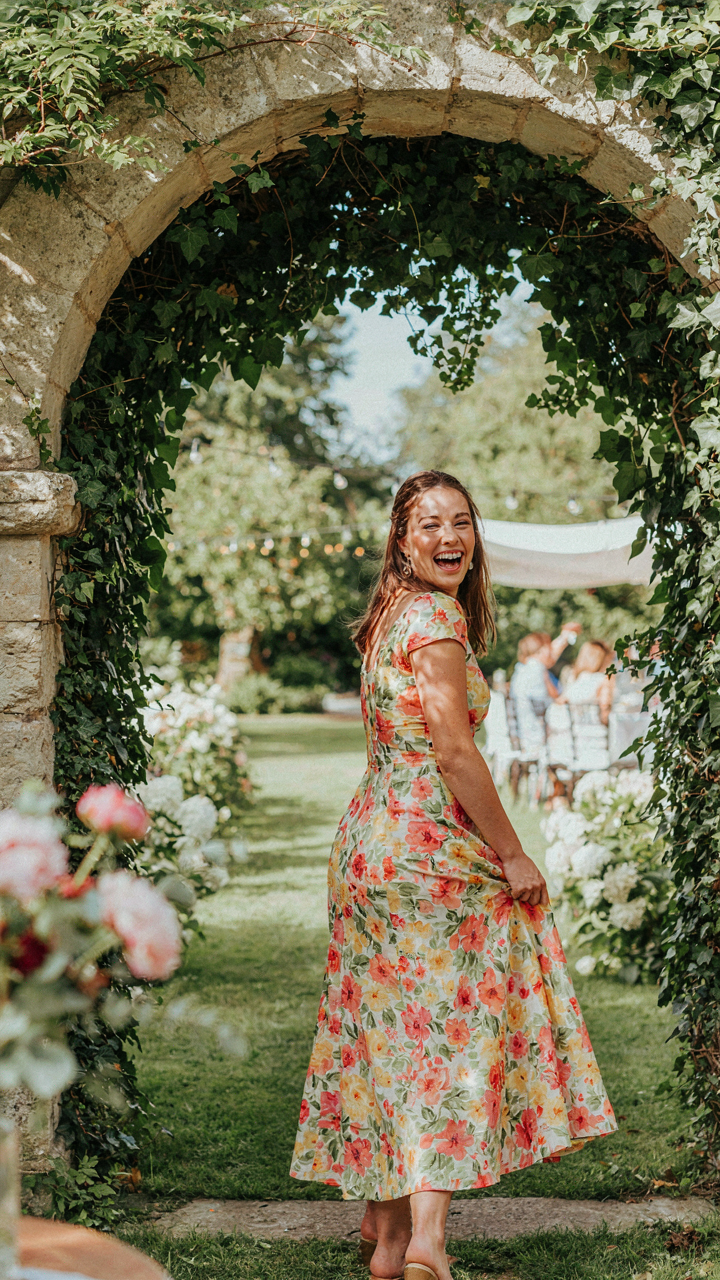
You want to look expensive in photos. That’s the real reason you care about this. The mechanism is simple: your outfit exists in space, and that space either amplifies or drowns your investment. Composition in photography uses the rule of thirds, which divides the frame into nine zones. Apply this to wedding guest posing by positioning yourself off-center and using architectural or natural elements as secondary layers that frame your outfit without competing for attention.

Most guests stand dead-center facing the camera like a mugshot. This flattens depth and makes your clothes look like they exist in a void. Instead, angle your body so the background creates visual separation between you and what’s behind you. A doorframe, garden arch, or patterned wall becomes a frame-within-the-frame. Your outfit becomes the subject. The background becomes proof of context, proof you belong in that space.
Breaking Posed For What Actually Works
The advice to “just be natural” is incomplete garbage. Candid moments require setup. You can’t stumble into a good candid photo at a wedding without understanding that authenticity on camera is engineered, not accidental. The real split isn’t candid versus posed. It’s controlled versus uncontrolled. Posed photos freeze a deliberate moment. Candid photos capture planned behavior that looks unplanned because you’ve drilled the movement.
Set yourself up for candids by moving between locations, laughing at something specific someone said, or interacting with the wedding environment rather than staring at the lens. This gives photographers actual material to work with. Your outfit reads better in motion anyway. Fabrics move, colors shift under different light, and silhouettes become dimensional. Stop thinking about holding a pose. Start thinking about creating three seconds of intentional movement that a photographer can grab one frame from.
The “Effortless” Illusion: Wedding Guest Poses That Project Confidence
Body Language Commands Attention Before The Camera Sees You
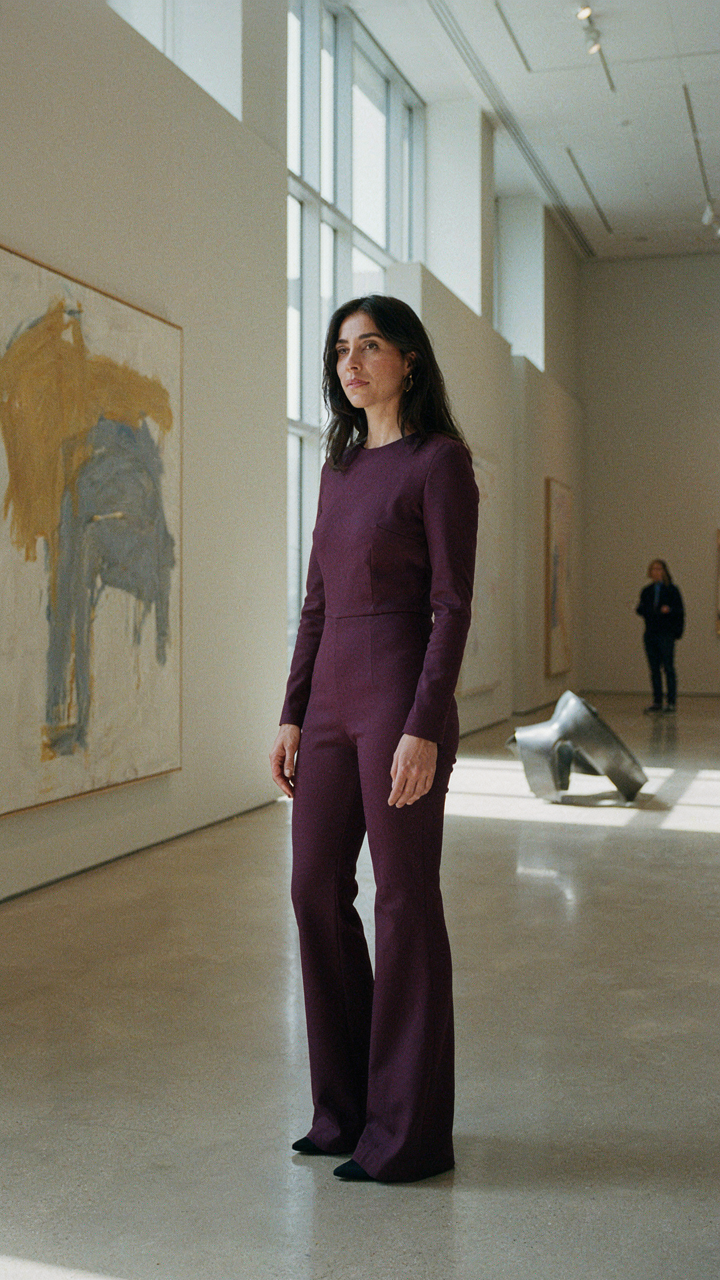
You want people to notice your outfit because you spent money and time on it, and you need external validation that the investment paid off. Here’s the mechanism: in portrait photography, posture determines whether the camera captures dominance or submission. Borrowed from biomechanics, we call this “postural expansion”—the physics of how much space your body occupies relative to its baseline. A collapsed spine reads as uncertainty. An open sternum reads as authority. Your outfit only matters if your body language gives it permission to matter.
Most wedding guests default to standing straight like they’re at attention. That’s boring and defensive. Instead, rotate your shoulders slightly away from the camera while keeping your chest open. This creates asymmetry, which combats the flat, frontal stiffness that kills outfit visibility. Your clothes drape differently when your body has geometry. The fabric catches light at angles. Seams and tailoring become visible. You’re not posing. You’re repositioning your frame so the outfit can actually be seen.
The Gaze Determines Whether Photos Read Or Fail
Where you look controls the entire emotional frequency of the shot. Not at the camera. That’s the trap everyone falls into. Looking directly at the lens creates confrontation, which overpowers the outfit by making it about personality rather than presentation. Look slightly above or to the side of the camera, or downward toward your hands or fabric. This redirect forces the viewer’s eye to travel through your body to find your face, meaning they pass through your outfit first. That’s the sequence you want.
The timing matters too. Your gaze should land softly after your body settles into position, not before. Move first, then find your focal point. This order prevents the stiff, “waiting for the flash” look that makes even expensive clothes appear borrowed. A wandering gaze that lands intentionally reads as confidence. A locked stare reads as performance. The difference is a half-second pause between positioning and committing to where you’re looking.
The Social Physics Of Wedding Guest Photos: Positioning For Impact
Where You Stand Determines What Gets Seen
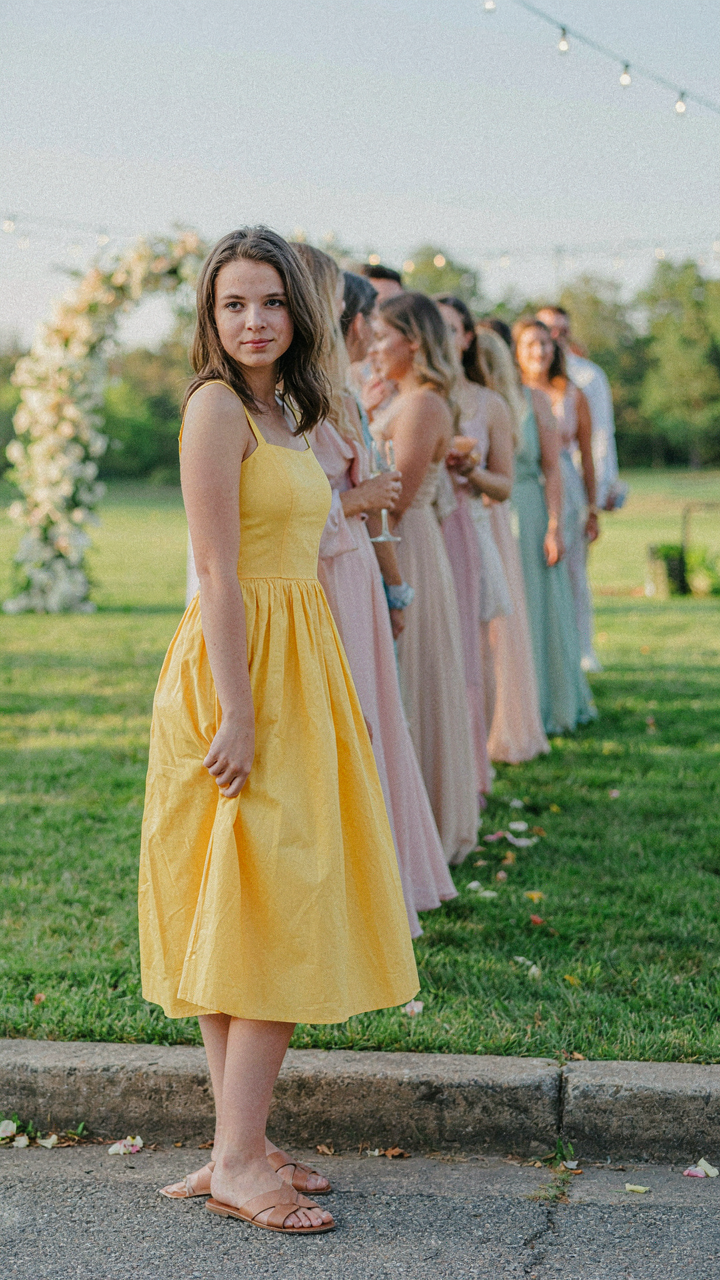
You care about this because you want to look intentional in photos, not like you were placed there randomly. The mechanism is borrowed from military strategy: flanking. In group shots, the edges of the frame get more visual weight than the center. Standing at the edge—particularly the right edge in Western-read photos—puts your outfit in the viewer’s natural exit path. Your clothes become the last thing the eye lands on, which means the last thing the brain registers as significant.

Position yourself one person away from the absolute end of the line, not dead center and not trying to hide. This removes the awkwardness of being corner-bound while keeping you in the high-attention zone. Angle your body slightly forward, shoulders toward the camera. This single shift creates separation between you and whoever stands behind the group. Your outfit reads as distinct. The photographer’s eye naturally goes to the frame edges first—that’s where contrast and detail register fastest.
Vertical Hierarchy In The Frame
Group photos operate on dominance principles borrowed from primate social hierarchies: the taller you appear relative to your position, the more authority and presence you command in the frame. This isn’t about vanity. It’s about how the eye processes stacked human figures. A person standing on a slight rise, or positioned closer to the camera than others, reads as more important. Your outfit gets more light. More pixels. More attention.
If you’re in a line shot, step slightly forward. If sitting, sit upright with your spine visible. Slumped posture collapses your torso and buries your outfit details into shadow. Stand on a curb or subtle slope if the group is on flat ground. Don’t be obvious about it. The goal is a half-inch of elevation that changes how the camera meters light across your body. This is the difference between looking like furniture in the shot and looking like someone who belongs in the front of it.
The Unwritten Rules Of Wedding Guest Photo Etiquette And How To Break Them
When The Camera Finds You First
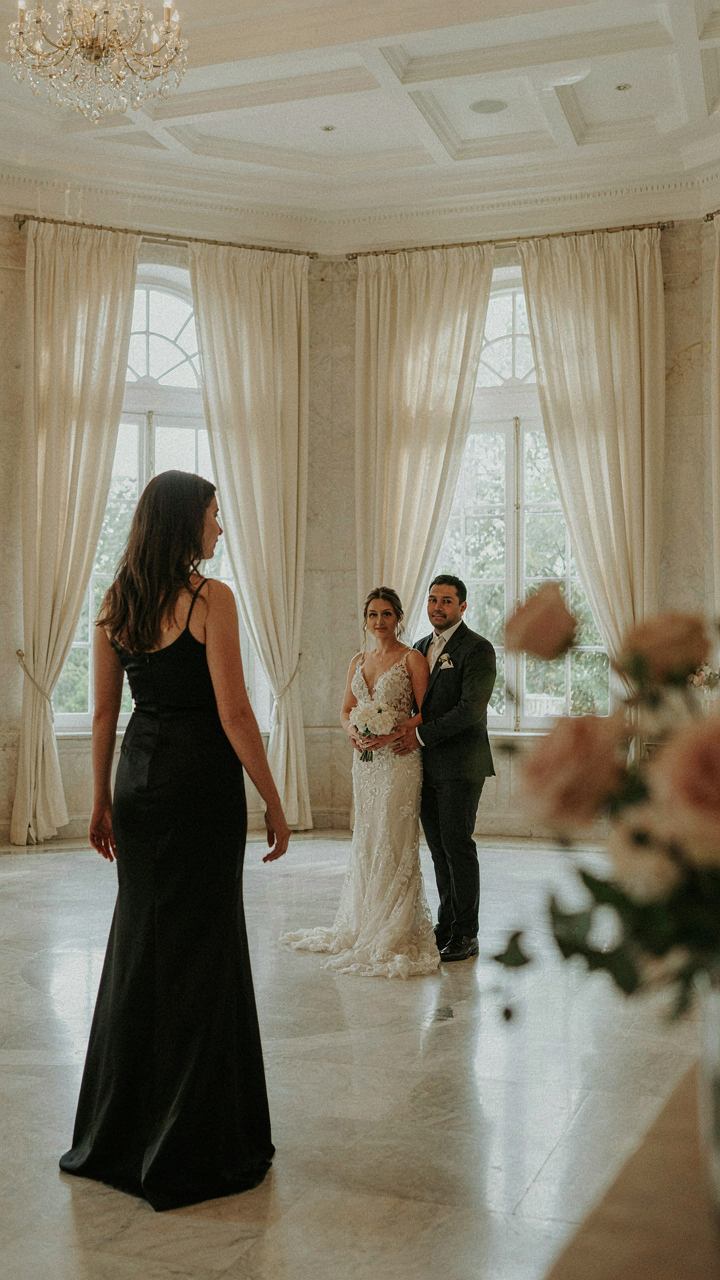
You want permission to look good without looking like you’re trying. That’s the real tension here. The mechanism is contrast: the photographer captures you naturally positioned while others pose, which makes you the focal point by accident. Stand perpendicular to the couple during group shots, not facing the camera head-on. Your outfit reads better from the side angle anyway, and you avoid the flat, frontal look that makes everyone blend together. The photographer’s eye tracks movement and depth, not compliance.
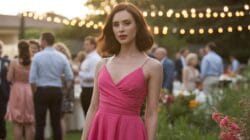
When you break the “face forward” rule, you actually become more visible in the frame. Your silhouette gains dimension. The photographer notices the person who isn’t performing directly for the lens, which is why candids outperform forced smiles in albums. Position yourself one step back and to the left or right of where you think you should stand. Let the photographer adjust you if needed, but start from an angle that showcases your outfit’s cut and fabric texture.
The Poses That Actually Sabotage Your Outfit
The advice to “smile big and face the camera” is incomplete garbage. It works against showing off what you’re wearing because it collapses your posture and flattens your chest. Your suit or dress has construction, drape, and detail that straight-on angles destroy. Stand with your weight on your back foot, shoulders rolled back slightly, and turn your body at a 45-degree angle to the camera. This elongates your frame and lets fabric fall naturally instead of bunching.
Crossing your arms reads as defensive, not confident, so keep them at your sides or rest one hand in your pocket. Avoid the “chin down, look up” pose unless you want to highlight your neck and jawline specifically. Most wedding guests use it wrong anyway, creating shadow under the chin. Instead, keep your chin level with the ground and angle your entire head slightly away from the camera. This works with almost every outfit because it doesn’t distort proportions or create unflattering shadows on the fabric.
Curating Your Digital Footprint: Wedding Guest Photo Ideas For Social Media
The Shot That Actually Converts
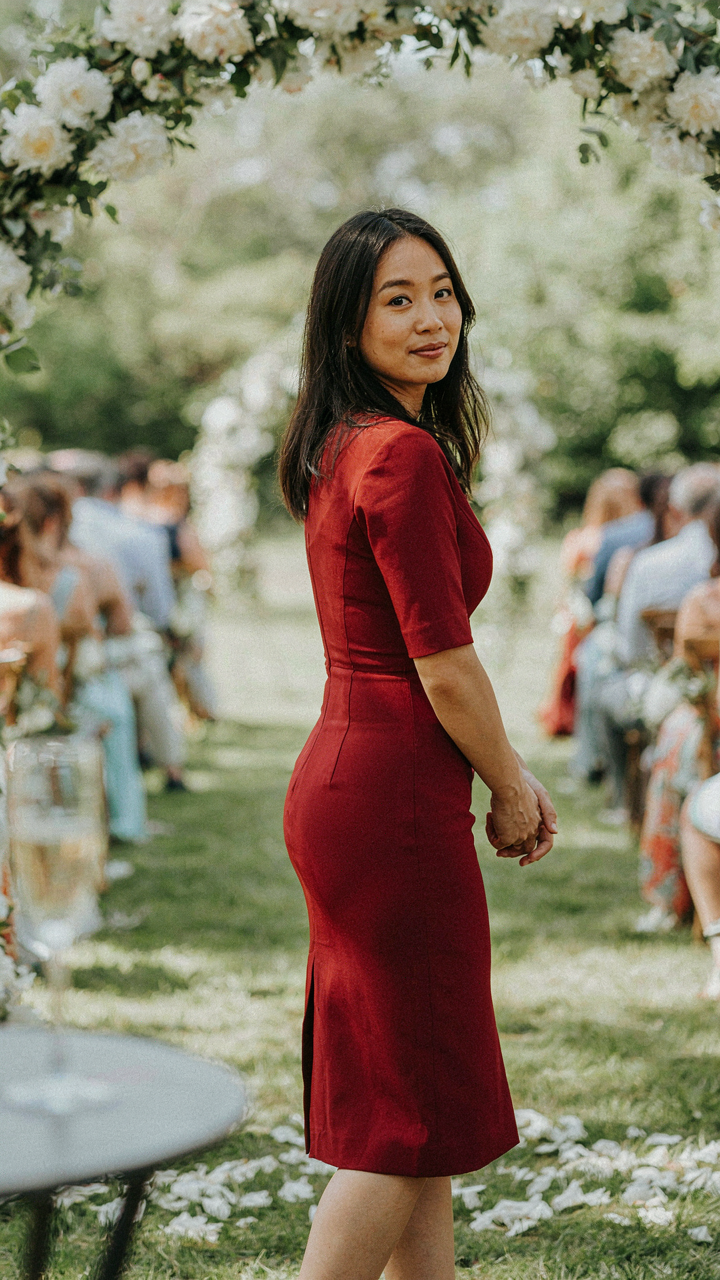
You want proof that your outfit mattered. That’s the real reason you’re reading this. The mechanism is simple: social platforms reward specificity. A full-body shot showing the entire outfit generates more engagement than a close-up because viewers can assess the complete styling choice in one frame. Angle matters more than pose. Shoot from slightly below eye level, standing at a 45-degree angle to the camera rather than square-on. This lengthens your frame and prevents the outfit from flattening against your body.

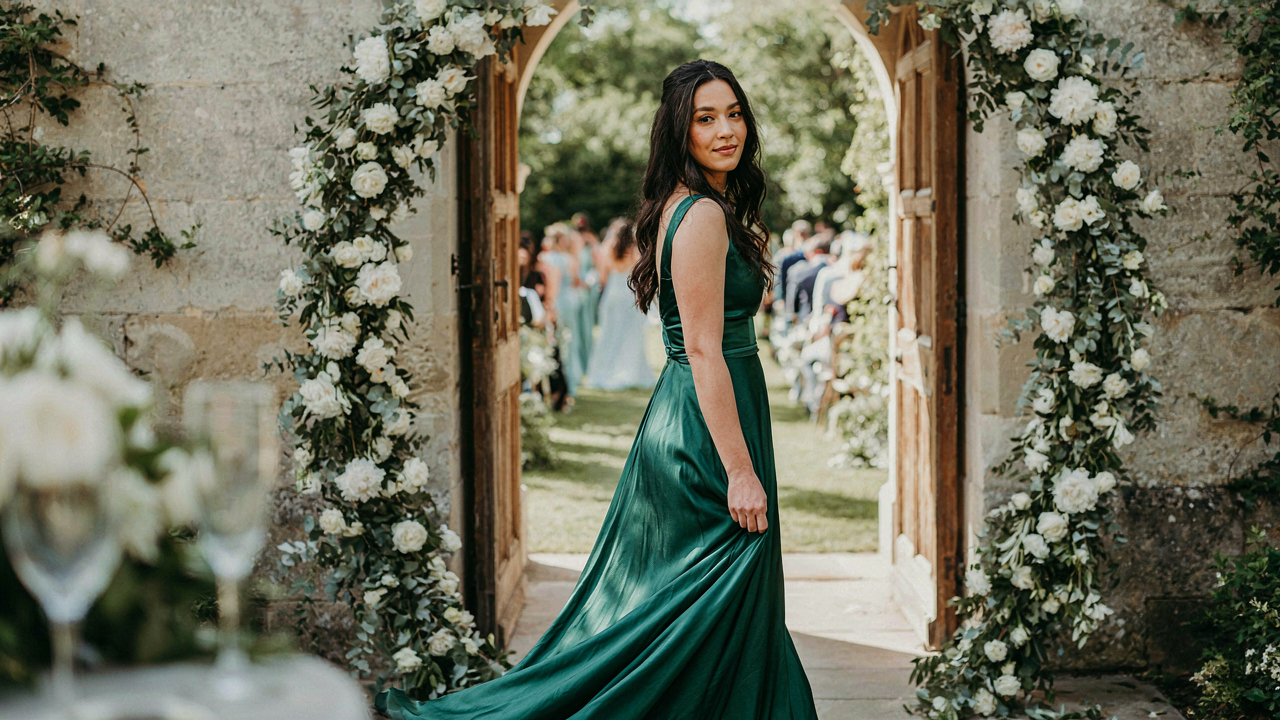
The outfit reveal pose works because it creates visual narrative. Stand with one foot slightly forward, torso angled away from the camera, then turn your head back toward it. This opens up the garment to the lens instead of obscuring it. The fabric drapes differently, seams catch light, and texture becomes visible. Capture the moment just before full rotation for maximum dimension. This pose takes two seconds but reads as intentional rather than candid.
Caption Strategy Over Hashtag Spam
Common advice tells you to write captions that tell a story. That’s incomplete. The real lever is specificity about the outfit itself. Name the designer, the color, the fabric, or the problem it solves. Algorithms and viewers both respond to concrete detail. A caption that says “loved this wedding” performs worse than “the structure of this dress held up through six hours of dancing and zero touch-ups.” The second one has search value and credibility.
Your caption should answer the question your photo raises in the viewer’s mind. If the outfit is striking, they want to know where it came from or why it works. Provide that answer in your first sentence before any personal reflection. Keep captions under 150 words. Longer posts get buried in feeds. Include one tactical detail about wearing or styling the piece that other guests could replicate. This positions you as someone with useful information, not just someone who showed up looking good.
The Anti Generic Guide To Wedding Guest Photo Poses
Find Your Signature Stance
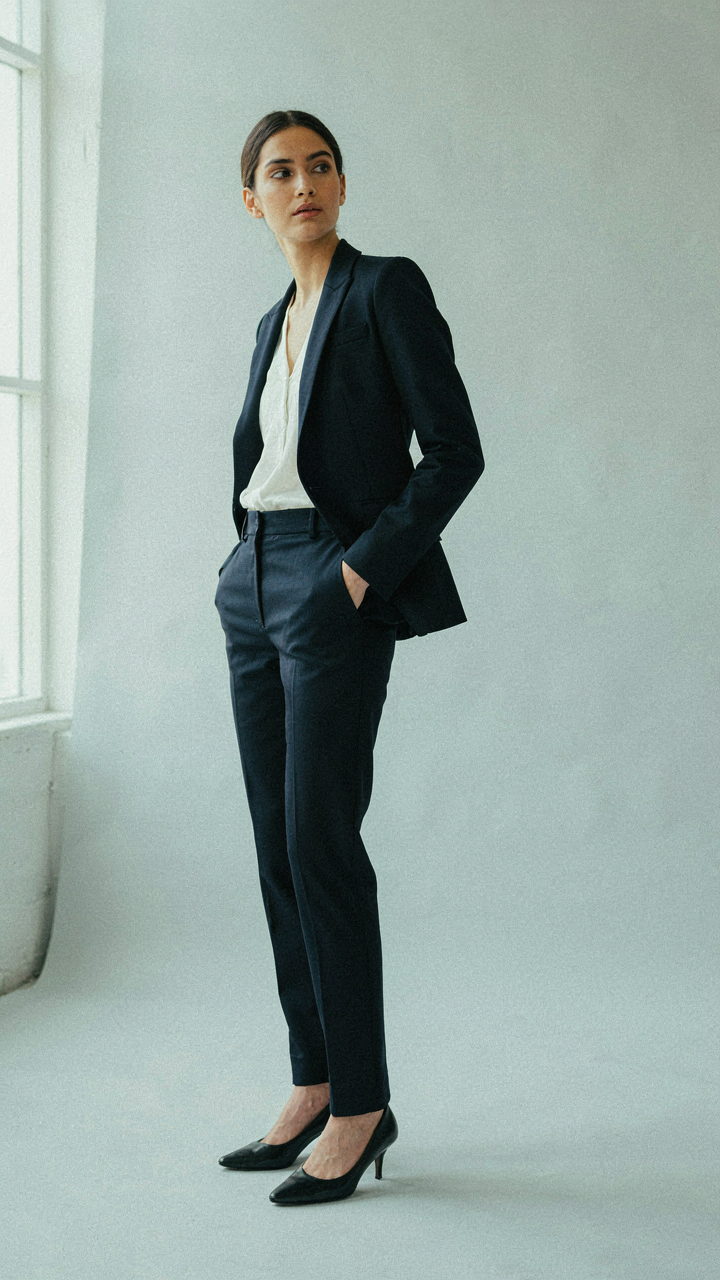
You want to look effortless in photos because looking like you tried signals you had nothing better to do. The mechanism is simple: generic poses flatten variation. When everyone stands the same way, the outfit becomes invisible. Your body position either amplifies or erases what you wore. Most wedding guests default to facing the camera dead-on with arms at their sides. This kills dimension. It also kills your clothes.
Your signature stance solves this by creating a recognizable angle. This isn’t about being weird. It’s about identifying one position that works with your frame and repeating it. The position should let fabric move, show garment construction, and create visual depth. Test this at home in natural light. Shoot the same outfit from three angles: fully facing camera, 45-degree turn, and profile. One will make the outfit read. Lock that in and use it at events.
Authenticity Over Mimicry
The consensus advice is that you should study influencer photos and copy their poses. That’s incomplete and it costs you. Borrowed poses fight your actual body mechanics and proportions, which means photos look forced no matter how good your outfit is. What actually works is recognizing which poses feel stable when you hold them, because stability reads as confidence in stills.
Authenticity here means poses that match your natural movement patterns. You don’t hold your shoulders the same way a stranger does. You don’t gesture with the same arc. When you work within your own range of motion, you hold positions longer without tensing, photographers capture that ease, and the outfit becomes the story instead of your effort. Use these anchors:
- Weight on back leg: Shifts your center forward slightly, opens your front side to the camera, and lets structured fabrics hang with shape instead of clinging flat against your body.
- One hand in pocket, one at side: Creates asymmetry that breaks up vertical lines and gives your frame visual interest without looking posed or studied.
- 45-degree angle to camera: Shows the full profile of jackets, exposes lapel detail, and prevents the dead-on flattening that generic straight-on poses create.
- Chin slightly forward: Defines your jaw line and prevents shadows under the chin that compress your neck and read as tension in photos.
- Engaged eye contact past camera: Directs viewer attention through the lens instead of at it, which makes the whole frame feel alive rather than staged.
The mechanism that makes these work is constraint. You’re not deciding pose moment-to-moment. You’re working within a framework you’ve already tested, which means you can focus on fabric placement and light angle instead of your body position.
The Art Of The Power Pose: Wedding Poses Guest Edition
Subtle Doesn’t Mean Invisible
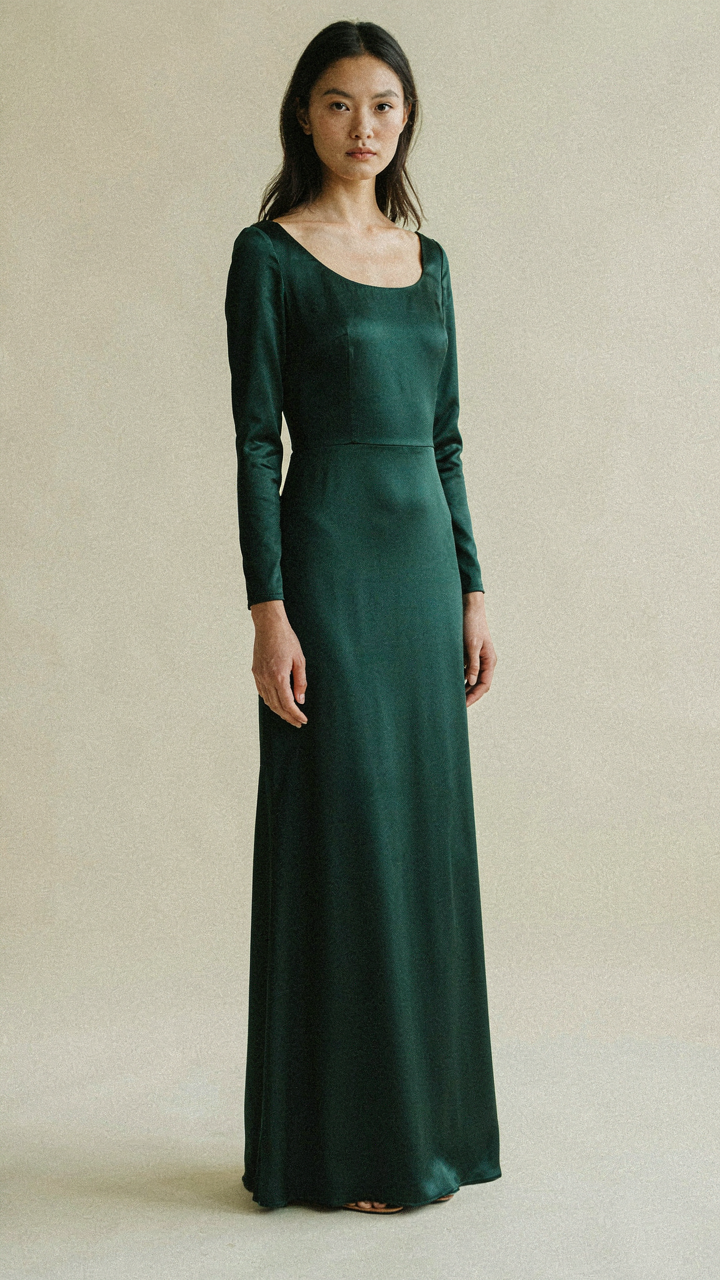
You want people to notice you without looking like you’re trying. That’s the real tension here. The mechanism is simple: constraint creates authority. When you limit your movement, you force attention inward. Photographers and guests read stillness as confidence. The common mistake is overcompensating with big gestures or exaggerated angles. That reads as insecurity. A commanding presence comes from occupying your space without announcing it. Stand with your weight distributed evenly across both feet. Keep your shoulders back but not unnaturally so. Your chin should be parallel to the ground, not tilted up or down.

Restraint is the language of control. A guest who moves sparingly and stands grounded looks like they belong there. The dress or suit matters far less than the frame holding it. You’re not performing. You’re existing with intention. When the photographer shoots, your outfit hangs on a body that isn’t compensating or fidgeting. The camera catches that stillness first. Everything else follows.
Geometry Over Gesture
Physics offers a useful principle here: leverage. The most stable structures distribute weight across multiple points. Your body works the same way. Most photography advice tells you to angle your body and pop your hip. That’s incomplete. The real play is triangulation. Position your feet shoulder-width apart or slightly wider. Point one foot toward the camera at a 45-degree angle while the other foot stays perpendicular. This creates a stable base that also lengthens your silhouette on film.
Your shoulders should sit back and slightly dropped. This opens your chest and prevents the slouch that kills outfit visibility. Keep your arms at your sides or let one hand rest in a pocket. Avoid crossing your arms, which breaks your frame. Your head should sit above your shoulders without jutting forward. A slight turn of your head away from the camera’s direct line creates definition in your jawline and neck. These adjustments cost nothing. They’re pure geometry applied to cloth and skin.
Partnering For Impact: Wedding Guest Photo Ideas Couple Edition
Synchronized Styling For Visual Coherence
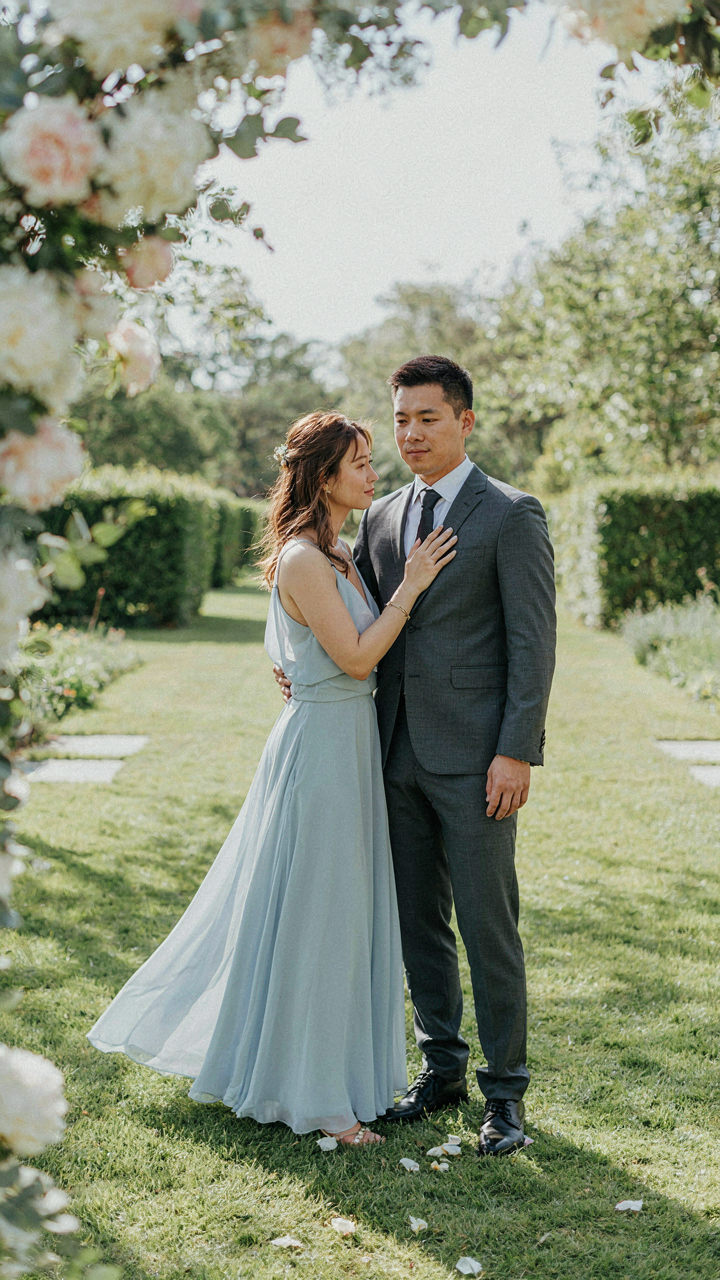
You want to look intentional in couple photos because appearing uncoordinated signals you didn’t think about how you’d appear together. The mechanism is contrast and complementarity. Your outfit needs to work against your partner’s, not compete with it. Borrowing from graphic design’s principle of figure-ground relationship, one person becomes the dominant visual anchor while the other provides supporting context. Match your color temperature, not your exact colors. If your partner wears warm neutrals, you wear cool ones. The camera reads this as orchestrated, not accidental.
Fabric weight and texture matter more than most people admit. Two people in heavy, structured fabrics photograph as a blob. One structured, one flowing creates depth and separation. This is basic photography physics: the camera flattens everything, so you need built-in dimensionality. Coordinate scale too. If your partner wears a bold pattern, you wear solid or subtle texture. If they’re in minimalist tailoring, you can anchor the frame with visual interest. The goal isn’t matching. It’s creating a frame where both outfits strengthen each other instead of fighting.
Angular Positioning For Photographable Depth
The common advice about couple poses is that you should stand close and angle toward each other. That’s incomplete. Standing close actually collapses your silhouettes into one shape on camera. Borrowing from architecture’s concept of negative space, the gap between you becomes as important as your bodies. Position yourselves at a 45-degree angle to the camera, with one person slightly forward and one slightly back. This creates spatial separation the lens can actually capture. Your outfits now occupy different planes of depth instead of layering on top of each other.
The person in the more visually dominant outfit should stand slightly behind or to the side, not front and center. This prevents your clothing from overwhelming the frame and allows your partner’s outfit to land. Feet matter more than torsos here. Point one foot toward the camera and one foot toward your partner. This creates a dynamic diagonal rather than static parallel standing. The photographer sees two people with intentional body language, not two figures standing nearby. Execute this positioning before the photographer even frames the shot. The pose has to be structural, not something you adjust in post.
The Only Bad Photo Is An Unstrategic Photo. Stop Wasting Your Social Capital
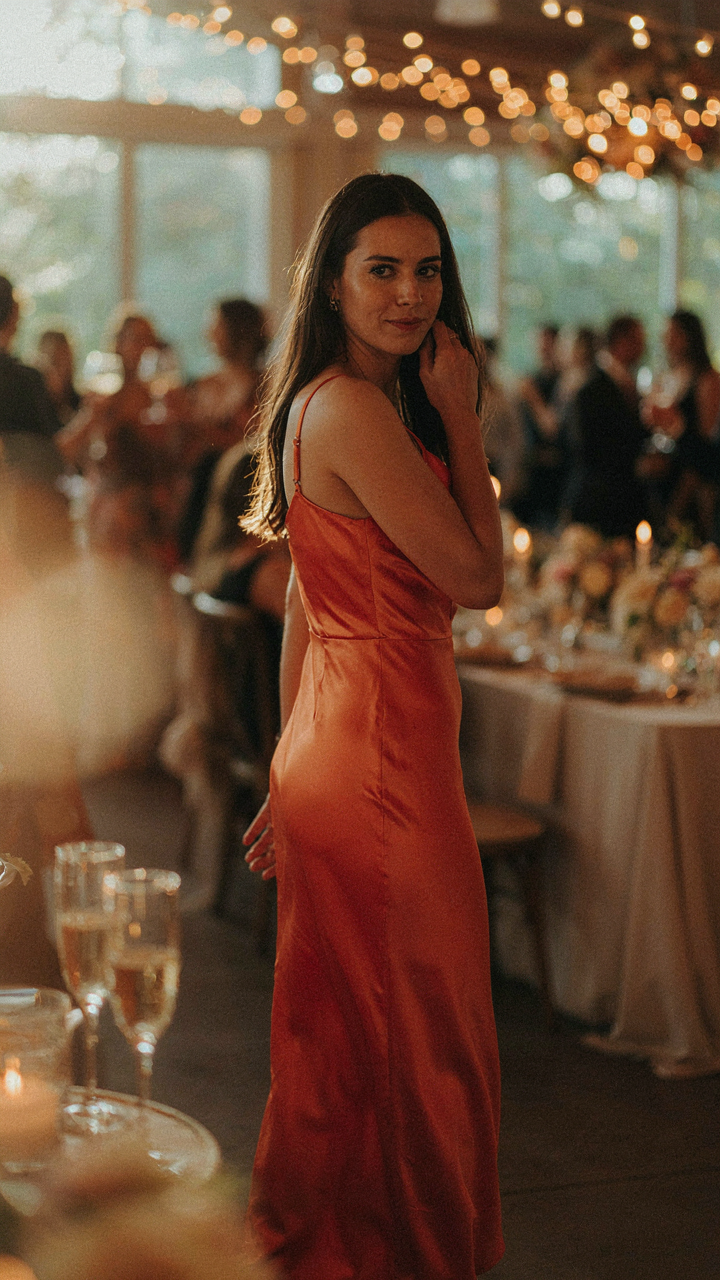
Most people show up to weddings and let the camera happen to them. You’re different. You understand that every photo is a chance to document your fit, your confidence, your presence. The shift happens when you stop treating poses as something you do and start treating them as something you design. Before the next wedding, pick one pose that highlights your outfit’s best angle. Commit to it. Own it. The difference between forgettable and memorable isn’t luck, it’s the person who decided their image mattered before the shutter clicked.