
The ‘Un Anxiety’ Fabric Protocol
What Your Fabric Choice Actually Communicates
You’re stressed about being read wrong. That’s the real problem here. Most advice tells you to pick fabric based on how it looks. That’s backwards. Borrow the concept from electrical engineering: signal-to-noise ratio. In a formal room, your fabric is the signal. Everything else is noise. Silk, wool crepe, and linen carry clean signals. Polyester blends muddy the transmission. The guest across the room doesn’t consciously decode fabric composition. Her nervous system does. It registers coherence or cheapness in under two seconds, before language kicks in.
The mechanism is simple: natural fibers have consistent light reflection. They absorb and release light in patterns your eye recognizes as expensive. Synthetic blends scatter light unpredictably because the fibers themselves are inconsistent at a microscopic level. Your brain interprets this scatter as “off.” Charmeuse silk, for instance, reflects light uniformly across its weave because the fiber itself is uniform. A polyester charmeuse lookalike creates micro-variations in reflection that register as “trying too hard.” Choose your fiber first. Color and cut follow.
The Tactile Test Before You Commit
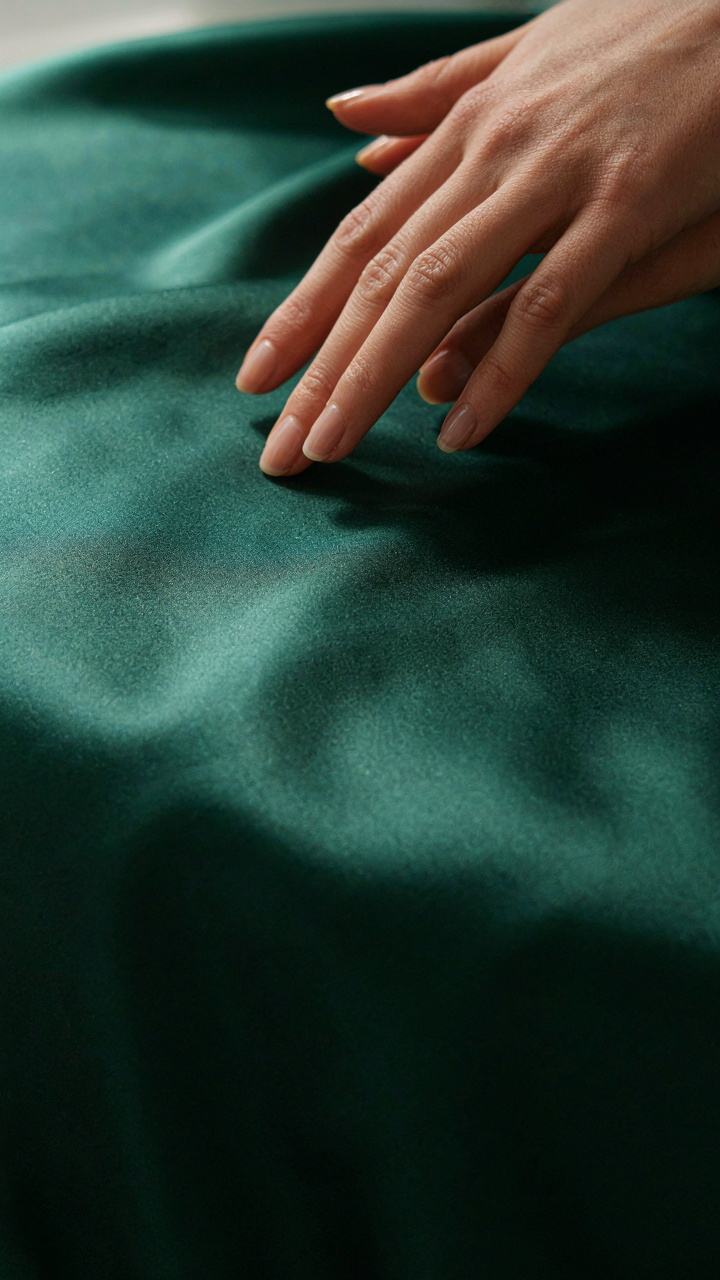
Fabric doesn’t lie because it can’t perform. Most women pick evening wear by looking at it on the hanger or in a mirror. They never touch it properly. Your hands know things your eyes miss. Press the fabric between your thumb and forefinger for five seconds. Natural fibers warm up. They respond to body heat. Synthetics stay cool and slick. That tactile difference signals authenticity to anyone who touches your arm during conversation, and more importantly, it signals it to you. Confidence isn’t pretending. It’s knowing your choice holds up under scrutiny.
Run your fingernail lightly across the weave, perpendicular to the grain. Real silk crepe creates slight resistance and a subtle sound. Poly blends feel slippery with no tactile feedback. This matters because formal events involve proximity. Someone will brush against your dress. They’ll unconsciously register whether the fabric feels like an investment or an impulse. Before ordering or purchasing, always handle the actual material, not a swatch. Your tactile intelligence catches what photographs and descriptions hide.
Simple Gowns: The Art Of Deliberate Understatement
Negative Space As The Real Fabric
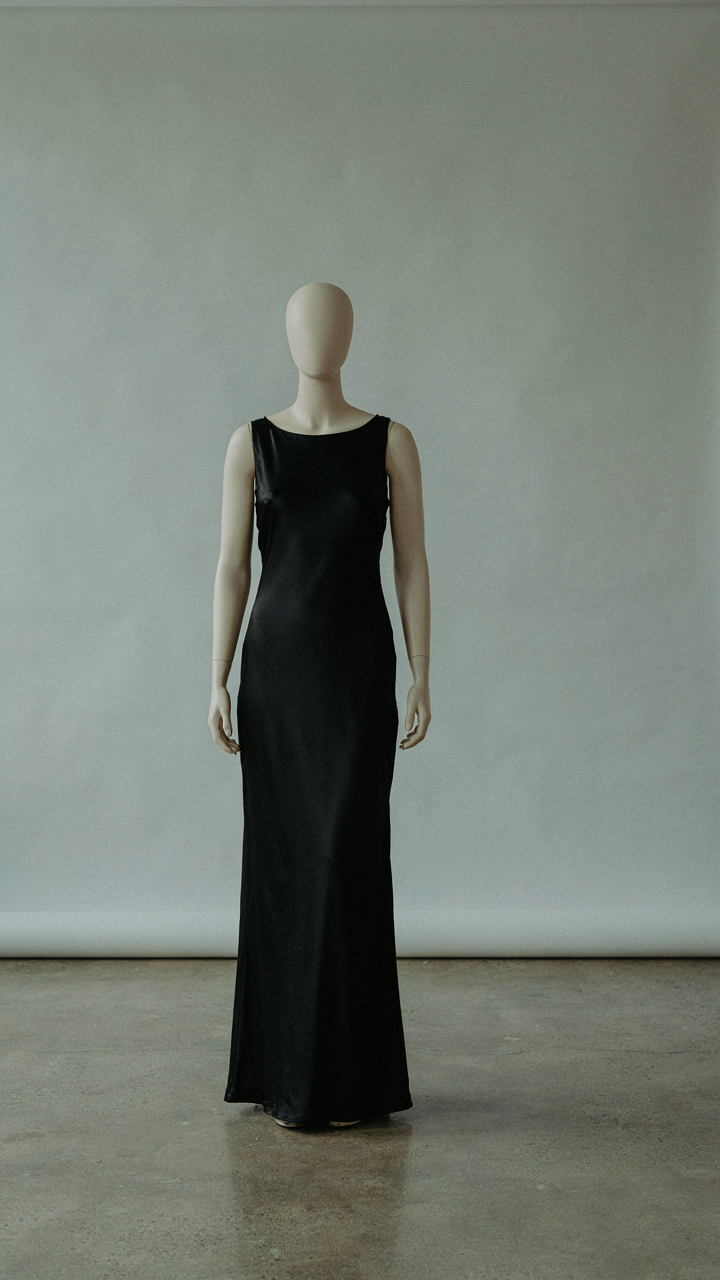
You want people to notice you without looking like you tried. That’s the real game here. Negative space in garment design works like silence in music: it forces attention toward what remains. A simple gown doesn’t whisper. It commands by removing everything that competes. The fabric breathes. The line becomes unmissable. This is why minimalist evening wear costs more, not less. You’re paying for restraint.

Designers call negative space the inverse of ornamentation, but the mechanism is ruthless simplicity. A column gown in black silk has nowhere to hide. Every seam shows. Every proportion matters. Ruching, beading, and layered tulle mask construction flaws and forgive bad fit. They work like visual noise. Remove them, and you expose everything. This is why simple gowns demand precision tailoring. The garment either works perfectly or fails completely.
When Less Eliminates Friction
The common advice says simple gowns work because they’re timeless. Wrong. They work because they delete decisions. You choose a color. You choose a silhouette. You choose fabric weight. Then the gown decides everything else for you. No pattern clashing. No proportion confusion. No arguing with yourself about which details matter. This is pure cognitive load reduction. Your brain conserves energy for how you carry yourself, which is where presence actually lives.
One elegant gown in rotation beats five decorated ones you second-guess. You move differently when you know exactly what you’re wearing and why. The gown doesn’t distract you. You don’t distract yourself. This clarity transfers to how others perceive you because hesitation reads as insecurity before a word leaves your mouth. A simple evening gown worn with certainty becomes a statement by default. The protocol is straightforward: select the piece once, wear it like you own the room, repeat.
Black Tie Wedding Guests: Blending In By Standing Out
The Unspoken Rules Nobody States
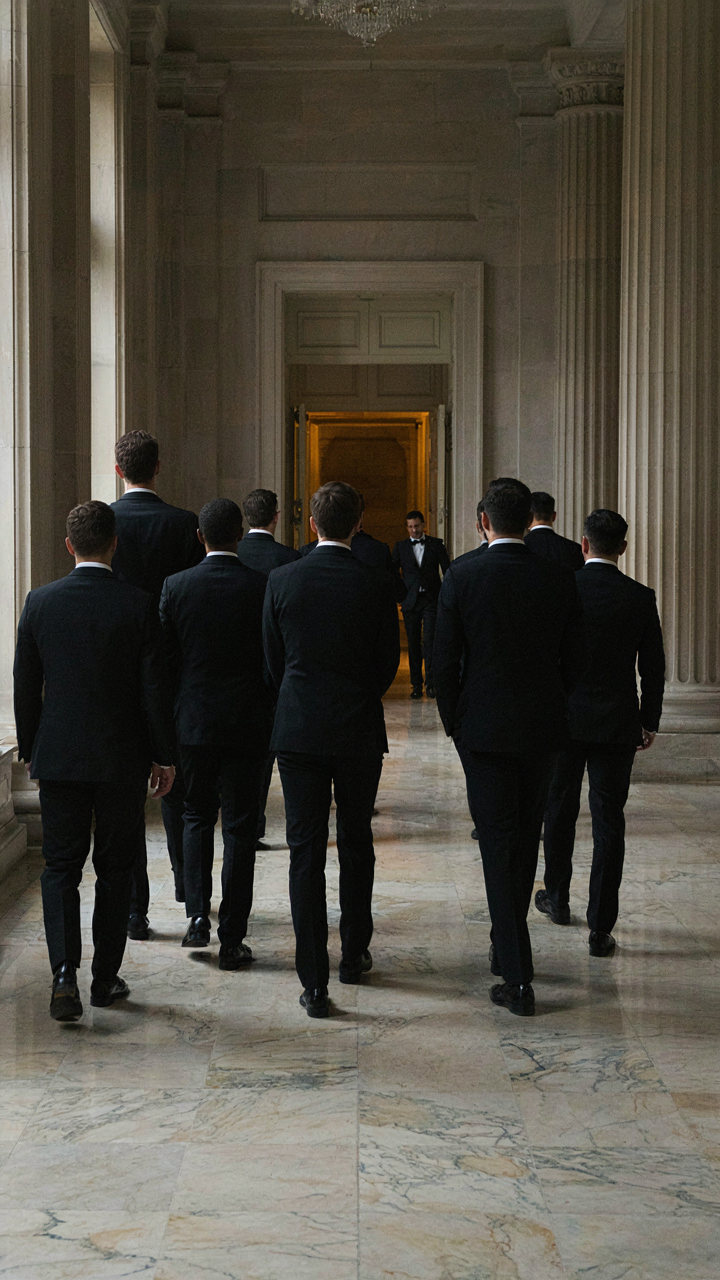
You’re worried people will judge you. That fear drives most of the bad choices at formal events. The mechanism is simple: black tie exists as a social filter, not a fashion suggestion. When you understand what the dress code actually signals, you stop overthinking and start executing. The rule isn’t about looking unique. It’s about proving you understand the stakes enough to conform deliberately.

Black tie operates like a uniform in military strategy. Just as soldiers wear identical gear to establish hierarchy and unit identity, black tie guests wear prescribed silhouettes to signal membership in a specific social tier. Your job isn’t to break the pattern. It’s to execute it flawlessly so you disappear into the backdrop. Deviation reads as either ignorance or arrogance. Neither works in your favor.
When The Dress Code Becomes Your Leverage
Most women get this backwards. They think standing out means wearing something bold or different. Wrong. Strategic conformity is the actual power move. You conform to the rules so completely that people stop noticing the dress and start noticing how you wear it.
- Silhouette precision: Floor-length gowns with clean lines signal you respect the occasion. Fit matters more than fabric choice. A perfectly tailored column or A-line in black reads intentional, not boring.
- Fabric weight and drape: Silk charmeuse, crepe, and structured silk hold their shape through a six-hour event. They move with intention, not chaos. Light fabrics wrinkle and shift, which signals you didn’t plan.
- Minimal jewelry strategy: One statement piece or nothing beyond earrings and a ring. Multiple chains and clustered bracelets broadcast insecurity. Restraint demonstrates confidence in your presence alone.
- Shoe selection without compromise: Closed-toe or structured strappy heels in black, nude, or metallics. Flat shoes or sandals break the visual line and undermine formality. The shoe matters because it’s seen during transitions and photos.
- Hair as architecture: Styled up or swept back keeps focus on your face and collarbone. Loose hair at a black tie event reads casual, which contradicts the dress code’s entire point. Structure signals you took this seriously.
The guests who command attention at formal events aren’t the ones dressed differently. They’re the ones dressed correctly with such precision that they seem to exist outside the normal rules. You don’t stand out by breaking the code. You stand out by mastering it so completely that people wonder what you know that they don’t.
The Black Gown Imperative: Beyond Basic Black
Nuance In Shade: Identifying The True Power Black
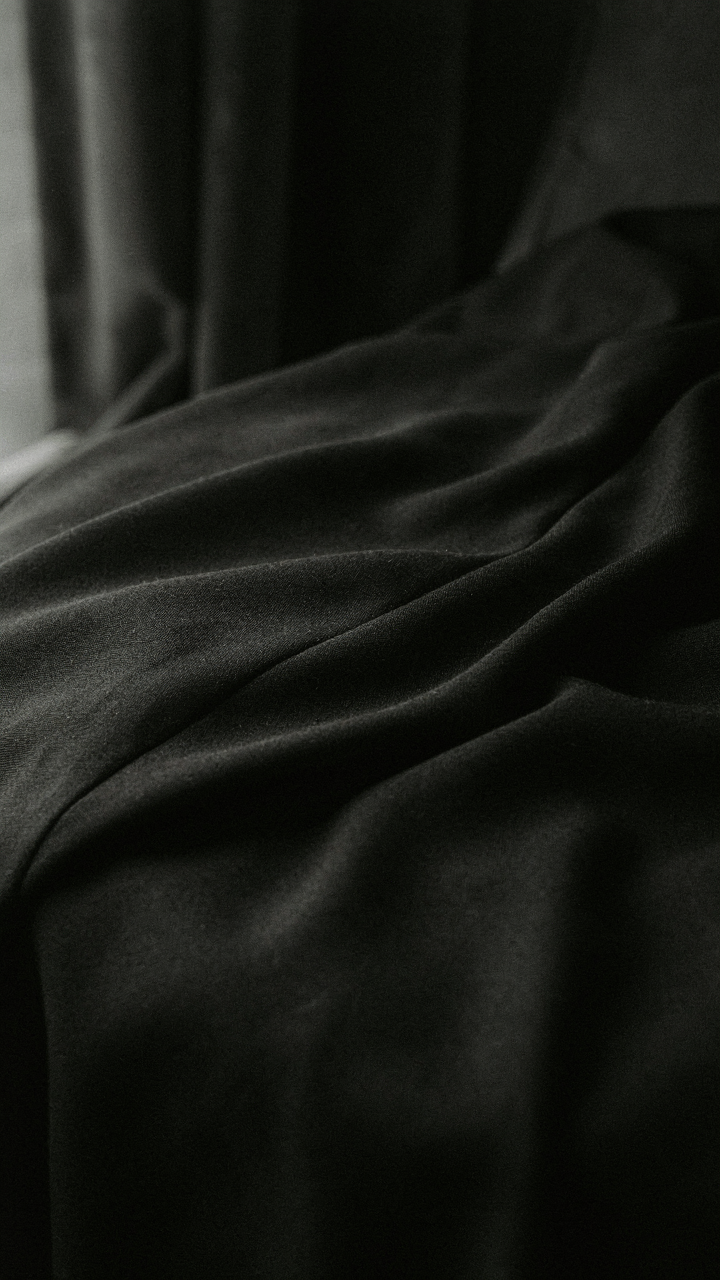
You want black because you think it solves the problem of looking expensive without actually understanding fabrics. Here’s the mechanism: black doesn’t hide quality, it exposes it. The shade of black you choose reveals everything about the construction underneath because there’s nowhere for poor craftsmanship to hide. True power black sits between charcoal and pure black, absorbing light without flattening the body’s contours. This happens because the human eye reads depth through subtle tonal shifts that pure black eliminates entirely.

Fabric fiber content determines how black actually performs on your body. Silk charmeuse holds black differently than wool crepe, which holds it differently than polyester taffeta. When you select black, you’re selecting a shade that either works with your undertone and the specific weave, or it doesn’t. Most women grab whatever black is available and wonder why it makes them look washed out. The real work happens at the fabric counter, not the fitting room.
Psychological Weight Of A Perfectly Draped Black Gown
Draping operates on the same principle as architecture: load-bearing surfaces create visual authority. A gown with proper bias-cut construction distributes fabric weight across your frame in ways that create perceived strength, not submission. The drape isn’t decoration—it’s structural. When seams and construction lines align with your body’s actual geometry, observers register coherence. This registers as competence in their subconscious before they consciously notice the gown exists.
Black gowns with intentional negative space—strategic cutouts, asymmetrical hemlines, or open backs—create visual interest that pure coverage cannot. The gown must earn its presence on your body rather than simply occupying it. Test this by moving in the gown before purchase. A well-constructed black gown will move with deliberate purpose, not flutter or cling. This creates the actual psychological effect: observers perceive you as someone with control over the room’s attention, not someone hoping the room will notice her.
Evening Dress: The Gravity Of The Gown
Silhouette As Load Bearing Structure
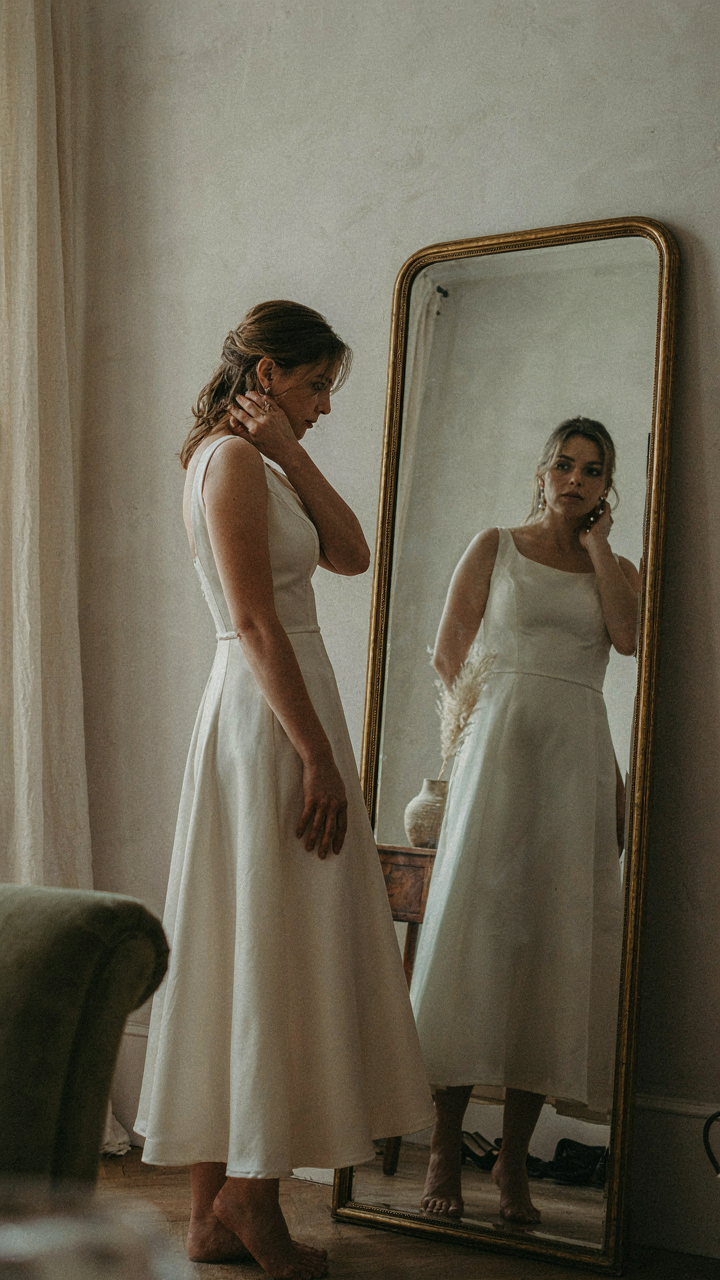
You care about this because wearing the wrong silhouette makes you visually disappear, and that stings more than admitting it. Think of silhouette like architecture’s load-bearing wall: it distributes visual weight and creates the frame everything else hangs on. A column gown concentrates mass vertically, commanding space through economy. An A-line disperses it downward, creating stability and presence. A bias-cut gown places tension at specific points, demanding confidence to wear. The silhouette you choose doesn’t flatter you—it positions you spatially relative to the room.

Most advice says “choose what flatters your body.” Wrong. The silhouette must match your posture and how you naturally hold tension. A woman who stands rigid in a column gown reads as locked. That same woman in a structured A-line reads as intentional. The gown amplifies what’s already there. Before selecting a silhouette, watch how you stand in a mirror for sixty seconds without thinking about it. Build from that baseline, not from fashion theory.
Movement Creates The Actual Garment
The dress doesn’t exist until you wear it. Fabric engineered for stillness photographs well but collapses into mundanity when you walk. Evening wear that commands attention must function under motion—how it breaks at the hip, how the hem travels, how the back reads from a distance. Silk charmeuse moves differently than dupioni silk. Tulle requires threshold speed to activate. Structured taffeta needs deliberate stride to deploy.
Test every candidate gown by walking a full room length at normal speed, turning, sitting, then standing. Do this in the dressing room. The dress that demands you alter your gait is the wrong one. The dress that rewards your natural movement with visual payoff is the right one. The mechanism is reciprocal: your body animates the fabric, the fabric extends your presence.
The Gold Standard: Color Block And Gold Satin Skirt
Why Contrast Wins The Room
You want people to notice you without trying. That’s the real motive here, and contrast is the mechanism that makes it happen. Color theory operates on the principle of simultaneous contrast: two opposing colors intensify each other when placed adjacent. A deep jewel tone paired with gold satin doesn’t compete. The dark fabric recedes slightly while the gold reflects light, creating visual hierarchy that your eye reads as intentional rather than accidental.

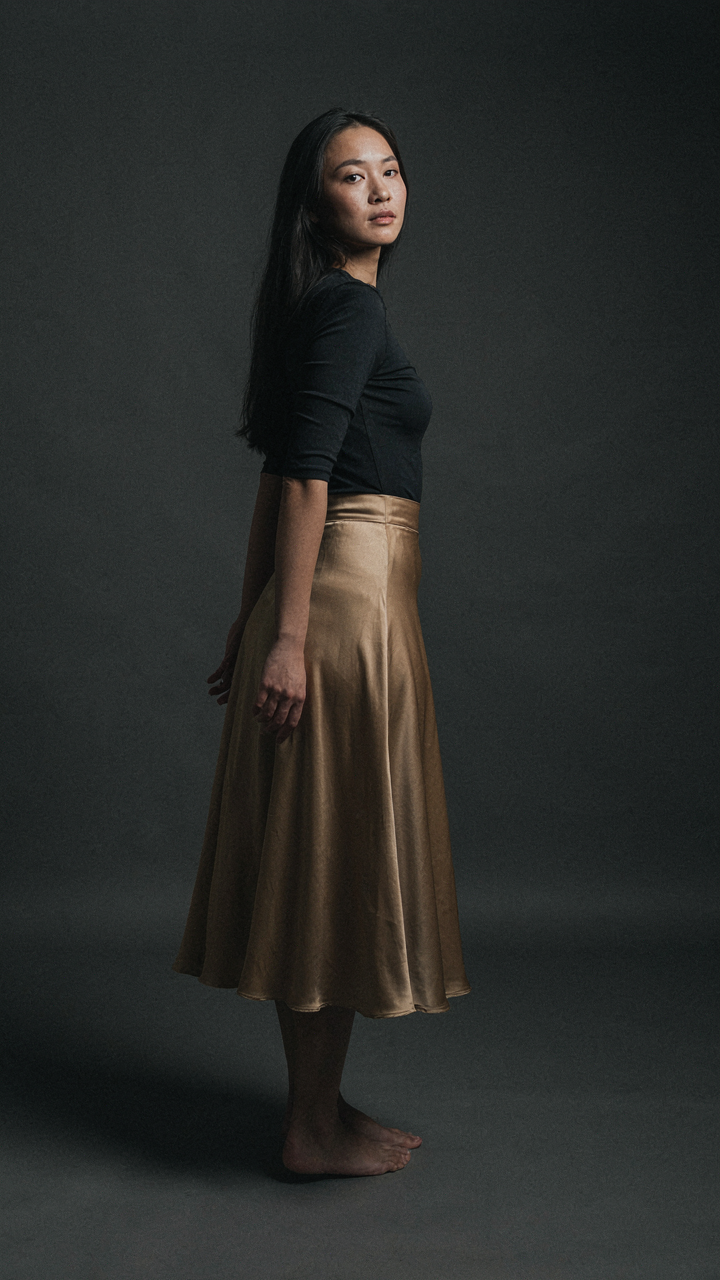
The gold satin skirt becomes the focal point because it controls where light lands. Pair it with charcoal, navy, or deep emerald on top, and you’ve created a silhouette that reads as composed and structured. This isn’t decoration. It’s optics applied to fabric. The color block approach forces the eye to move, which registers as confidence in the wearer.
Gold As Anchor, Not Accent
Common advice tells you to use gold as a highlight. That’s weak. Gold satin skirts work because they function as the primary statement, not a secondary detail. Satin’s sheen means it reflects ambient light differently than matte fabric, making it inherently prominent. When you make it your skirt rather than a clutch or shoes, you’re establishing where attention settles first.
The mechanism here is straightforward: fabric weight and drape. Gold satin has enough body to hold structure at the hip and thigh, which grounds the silhouette. Pair it with a fitted or slightly loose top in a contrasting color, and the gold becomes the frame, not the decoration inside the frame. Wear it to move through formal space with weight and intention, not as an afterthought that catches light accidentally.
Long Dress Ideas For Wedding Guest: The Unseen Edges
Hemline As Boundary
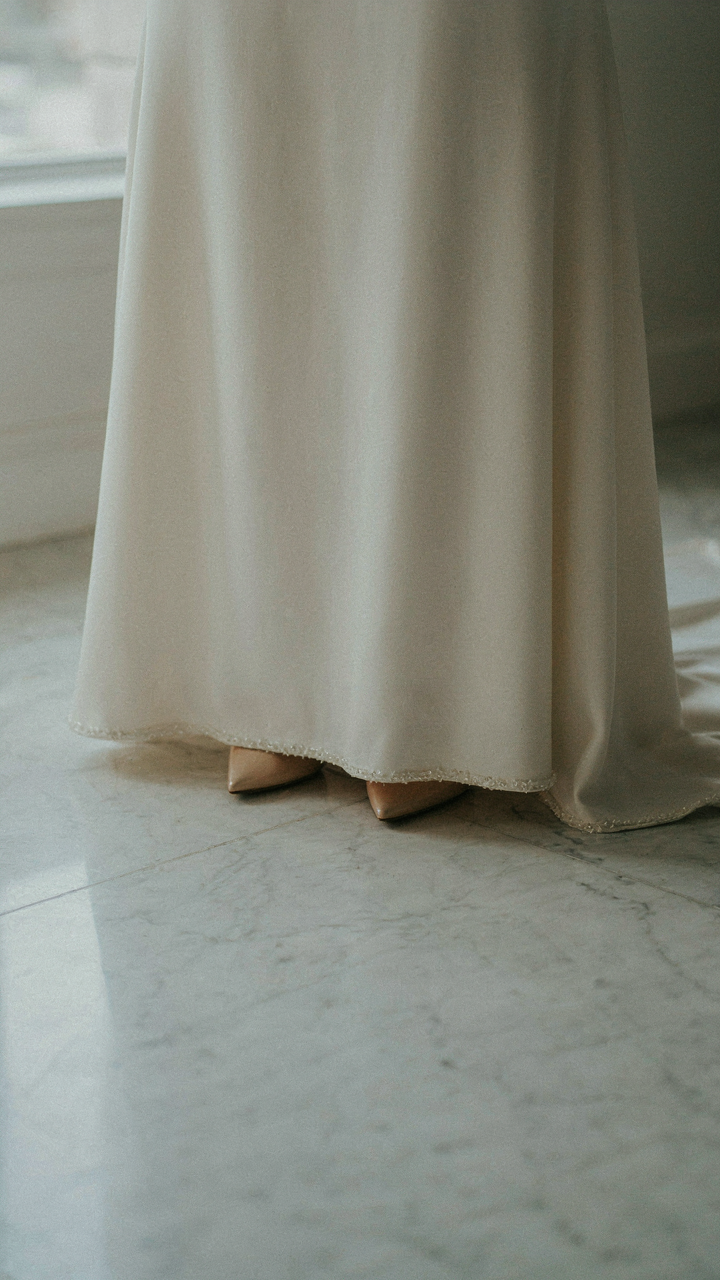
You’re worried about looking wrong. That’s the real question behind this one. The mechanism is simple: hemline signals intent. Floor-length says formality. Midi says restraint. Knee-length says accessibility. This isn’t fashion opinion. It’s visual grammar that guests read in three seconds.
- Floor-length: Establishes maximum formality. Works for black-tie and formal evening weddings. Creates vertical line that elongates. Requires appropriate footwear and undergarment planning. Most forgiving for varied body types.
- Tea-length or midi: Sits between knee and ankle, typically at mid-calf. Reads as refined without extremity. Works for cocktail-to-formal events. Less common at strictly black-tie functions. Requires proportional shoe choice.
- Knee-length or just-below: Acceptable at less formal evening events. Shifts the dress into cocktail territory. Demands careful fabric weight and structure. Reads younger than floor-length. Not appropriate for formal black-tie weddings.
- Asymmetrical or high-low hemlines: Modern compromise between formality and movement. Works only at contemporary or less traditional weddings. Requires explicit knowledge of dress code. Can read as trying too hard at formal events.
- Maxi with leg slit: Floor-length with strategic opening. Provides movement while maintaining formality. Slit height matters: knee-level is safe, thigh-level requires confidence and appropriate context.

The dress code dictates the hemline, not your preference. Black-tie demands floor-length. Semi-formal permits midi or floor-length. Cocktail accepts knee or midi. Match the hemline to the stated event level, and you’ve solved half the problem before fabric choice enters the equation.
Practicality As Luxury
Comfort is not a feeling. It’s a performance metric. You sit for two hours. You stand for photos. You walk on grass or marble. The fabric that doesn’t move, the zipper that catches, the hem that trips you—these kill elegance faster than color choice ever could. Luxury in evening wear is the dress that performs its job without reminding you it exists.
Invest in undergarments that hold structure. Choose fabrics that don’t wrinkle in a chair—silk charmeuse, quality polyester blends, structured duchesse satin. Build in a working pocket if possible. Test the neckline in the bra you’ll wear. Know your shoe heel height before hemming. Practice sitting, standing, and walking in what you buy. The elegance isn’t in the appearance. It’s in the invisibility of discomfort.
The Unwritten Rules Of Undeniable Presence
How You Carry Yourself Matters More Than What You Wear
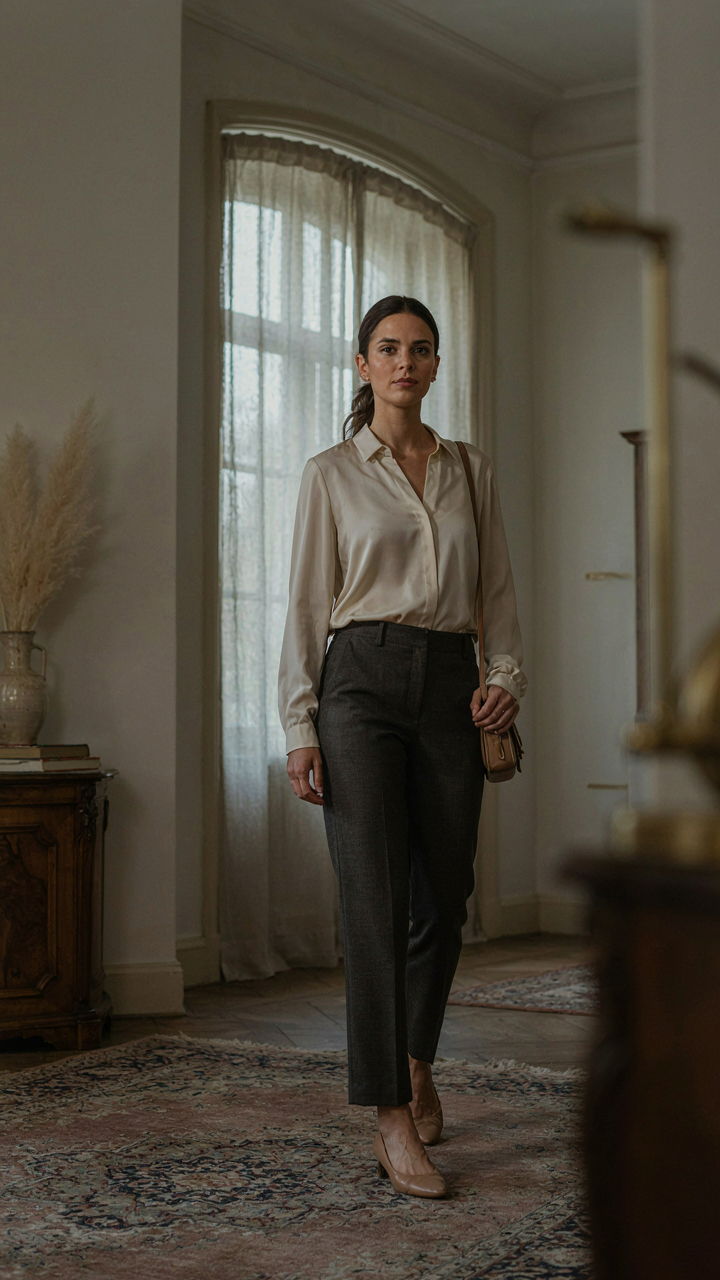
You want this section to work because you’re afraid the dress alone won’t be enough. It won’t be. Body language is the operating system; the dress is just the interface. You can wear a flawless gown and still read as uncertain. The mechanism is simple: people absorb your confidence through posture, pace, and eye contact before they process fabric or fit. Slouching in silk reads as insecurity. Standing tall in cotton reads as authority. The dress amplifies whatever signal you’re already broadcasting.

Most advice stops at “stand up straight.” That’s incomplete. The real work is understanding that formal evening wear demands a specific physical grammar. Your shoulders stay back and down, not tense. Your neck extends slightly, elongating the line. Your walk slows. You move like someone who owns the space, not someone passing through it. This isn’t about fakery. It’s about alignment. When posture matches garment quality, the observer has no cognitive dissonance to process. They see coherence. They see someone who belongs.
The Real Price Signal
Economics calls this “signaling theory,” and it applies directly to evening wear. The signal you send isn’t about the price tag. It’s about recognizable cost. Formal evening wear signals investment through three mechanisms: construction precision, material weight, and finish quality. A dress that costs more typically involves more labor hours. Seams are straight because someone was paid to make them straight. Hems are finished because the maker assumed the garment would last. Fabric drapes differently when it’s dense and high-quality because the fiber structure is engineered that way.
The mistake most people make is thinking expensive automatically signals class. It doesn’t. What signals class is the absence of shortcuts. A well-made gown from ten years ago reads as more valuable than a poorly constructed new one. The observer doesn’t know the date or the original price. They see neat seams, a hem that holds its shape, fabric that moves as a unified piece rather than separate layers. These are the markers of intention. When you move, they notice the garment moves with you, not against you. That coherence is what registers as presence.
The Only Real Faux Pas Is Caring What They Think
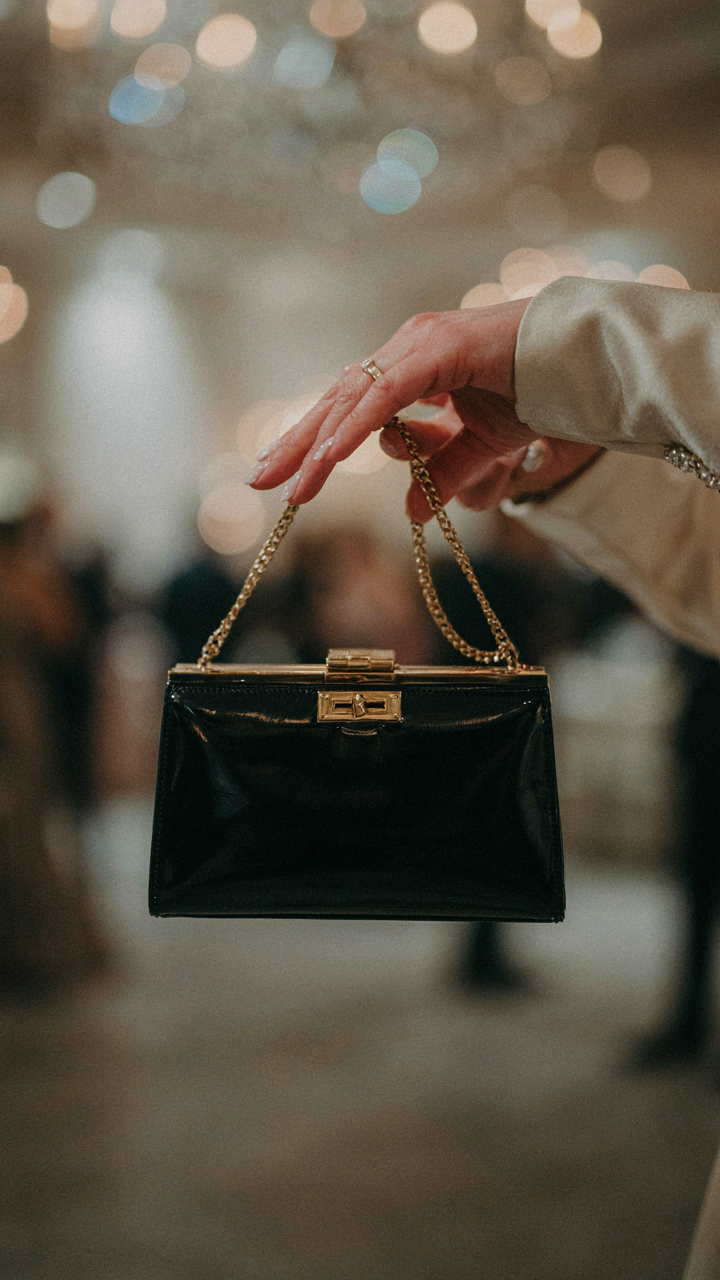
Women who own the room in classic elegance evening wear stop playing defense. They quit asking if the dress works and start asking if it makes them feel powerful. The shift moves you from seeking approval to commanding attention. Today, choose one piece you own and wear it like you picked it specifically to intimidate everyone in the room. The woman who dresses for herself doesn’t dress for validation.