


The Myth Of The “Classic” Piece: Why Your Little Black Dress Is Failing You
When Fashion History Masquerades As Timelessness
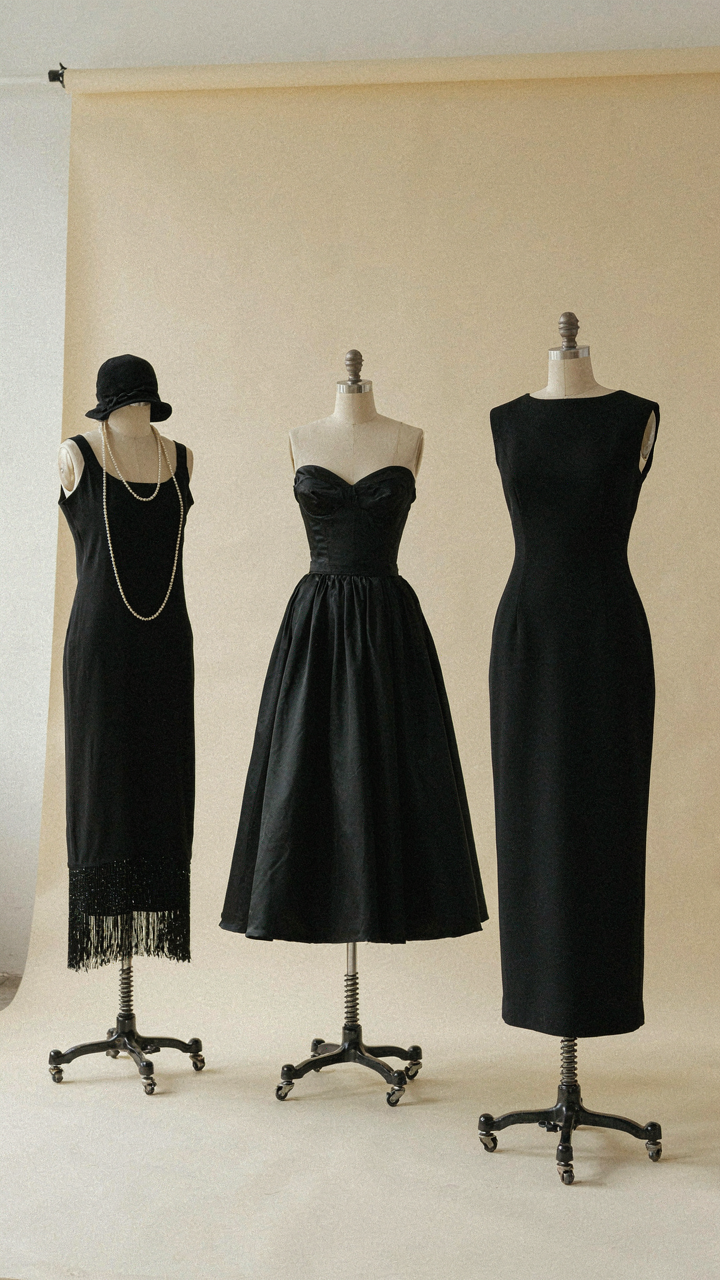
You want permission to buy something expensive and never think about it again. The little black dress gets sold as that permission slip, but the label “classic” is marketing disguised as fact. Coco Chanel popularized the LBD in the 1920s as a democratic alternative to expensive, ornate gowns. That historical moment doesn’t make the garment timeless. It makes it a product of its era that happened to survive longer than most.
The mechanism is simple: we confuse “survived the last hundred years” with “will survive the next hundred.” A dress endures because it matched a specific cultural moment and remained flexible enough to absorb periodic reinterpretation. The 1950s LBD looked different from the 1980s version, which looked different from today’s. Each generation altered the cut, fabric weight, neckline, and proportions. Calling all of these iterations “classic” is lazy. You’re not buying timelessness. You’re buying something that’s been restyled so many times it still feels relevant.
Trend Cycles Versus The Objects That Actually Last
Economics teaches replacement cycles: products designed to fail or become obsolete force repurchase. Evening wear works the same way. A trend cycle hits hard, peaks, then collapses over three to seven years. The LBD wasn’t exempt from this. It cycled through silhouettes, hemlines, and fabrications so aggressively that women kept buying new versions believing they owned “the same dress.”
True longevity in evening wear isn’t about resisting change. It’s about fundamental construction and proportion that accommodates authentic body movement without requiring alteration every season. A timeless evening piece solves a real problem: how to dress the body with respect to its actual architecture, not fashion’s invented proportions. The difference between a piece that lasts and one that merely cycles is whether the garment responds to your body or demands your body conform to it. Test this: can you wear the piece in ten years without it looking like you’re wearing a costume from a specific era? If the answer requires you to change your body or your styling choices dramatically, it’s not timeless. It’s just waiting for its trend cycle to complete.
The Wardrobe Algorithm: Engineering Your Personal Aesthetic
What Actually Stops You From Deciding
You want a formula because you’re afraid you’ll choose wrong and waste money on pieces that vanish into your closet. Here’s the mechanism: most women treat evening outfits as standalone purchases instead of parts of a system. You buy a dress. Then shoes. Then a bag. Each choice happens in isolation, which guarantees nothing works together. The real problem isn’t taste. It’s no framework for how pieces relate to each other.

Style principles aren’t feelings about colors you like. They’re constraints that force coherence. Constraint sounds limiting. It’s the opposite. A constraint is a decision already made, so you stop making the same decision twice. Pick three: silhouette preference, fabric behavior, color range, formality level, and occasion type. Write them down. These become your filter for every purchase. They’re not rules about what’s beautiful. They’re rules about what belongs in your life.
Your Personal Style Operating System
The fashion industry sells the myth that style is self-expression, which is true but useless without structure. Economics calls this a “decision tree”—you move through branching choices until you land on an outcome. Your personal style manifesto is exactly that. It’s a written decision tree you create once, then use forever. Without it, you recreate your taste from scratch every time you get dressed, which exhausts you and produces random results.
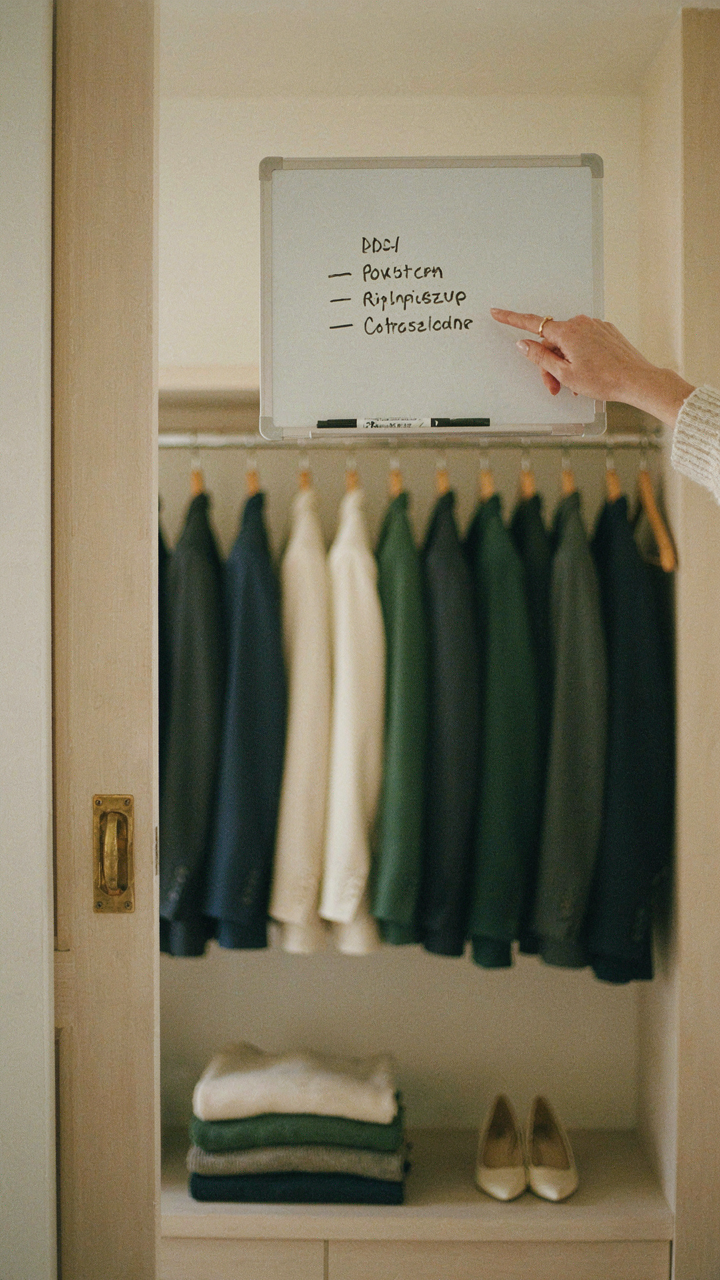
Write three sentences only. First sentence: what silhouette makes your body move the way you want. Second sentence: what formality level matches your actual life, not Instagram’s version of your life. Third sentence: which color palette you return to naturally, even when you’re not thinking about it. Post this in your closet or phone. When you consider an evening piece, run it through these three filters. If it fails any filter, it doesn’t belong in your wardrobe, no matter how beautiful it is.
Quiet Luxury Women Outfit: The Subtlety Of Power
Material, Cut, Fit Over Everything Else
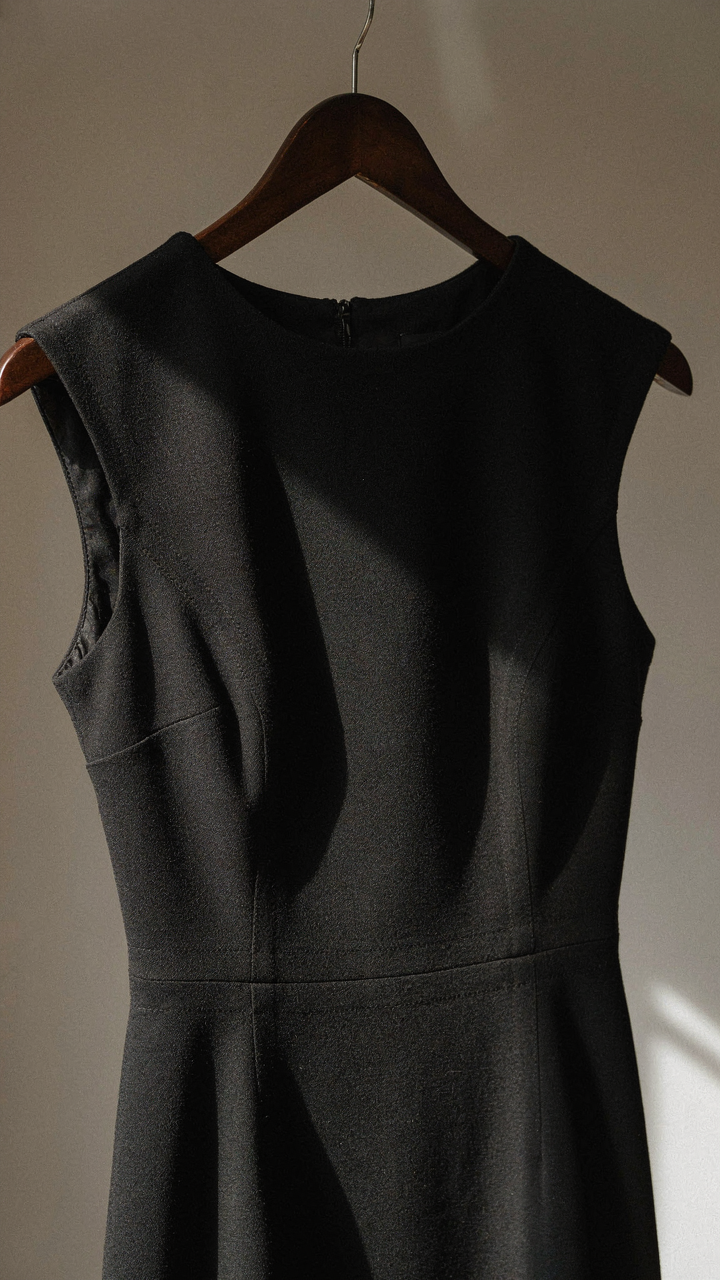
You want permission to spend money and have people notice you spent it. That’s not happening here, and that’s the whole point. Quiet luxury works on a principle borrowed from engineering: signal-to-noise ratio. In textiles, this means your outfit’s impact comes from construction quality and proportion, not logo visibility or trend adherence. A silk charmeuse gown in black reads power because the fabric moves correctly against the body and the seams sit precisely where they should.

Investment pieces whisper through three mechanisms: fiber quality that ages visibly, cuts engineered for specific body mechanics, and fit that requires tailoring. A wool crepe evening dress from a heritage manufacturer holds its shape differently than fast fashion because the fabric density resists wrinkles. The cut of a shoulder seam determines how fabric drapes from your collarbone, which determines whether you look controlled or sloppy. Fit is non-negotiable because an expensive fabric in wrong proportions reads worse than cheap fabric tailored perfectly. These three elements compound. Skip one and the entire outfit fails.
Craftsmanship Without The Brand Tax
Most advice says “invest in quality pieces.” That’s incomplete. Quality means nothing without knowing what created it. You’re looking for inherent value: the things that cost more because they actually required more skill and time, not because a marketing department invented scarcity. A hand-finished seam on a hem takes hours. A buttonhole reinforced with thread underneath the fabric prevents the button from ripping through during wear. These details exist invisibly, which is exactly why they signal real knowledge.
Recognize value by examining construction. Open a seam and look at thread type and stitch density. Check whether interfacing sits correctly under lapels or if it’s visible from outside. Look at hem depth on evening wear: shallow hems age poorly, deep hems last decades. Look for pattern matching at seams on any structured piece. These markers tell you whether a maker understood the garment’s function or simply assembled parts. Price reflects craftsmanship when a maker invested in these invisible details, not when they attached a nameplate.
The Satin Skirt Outfit Fallacy: Context Is King
When A Satin Skirt Works, And When It Falls Flat
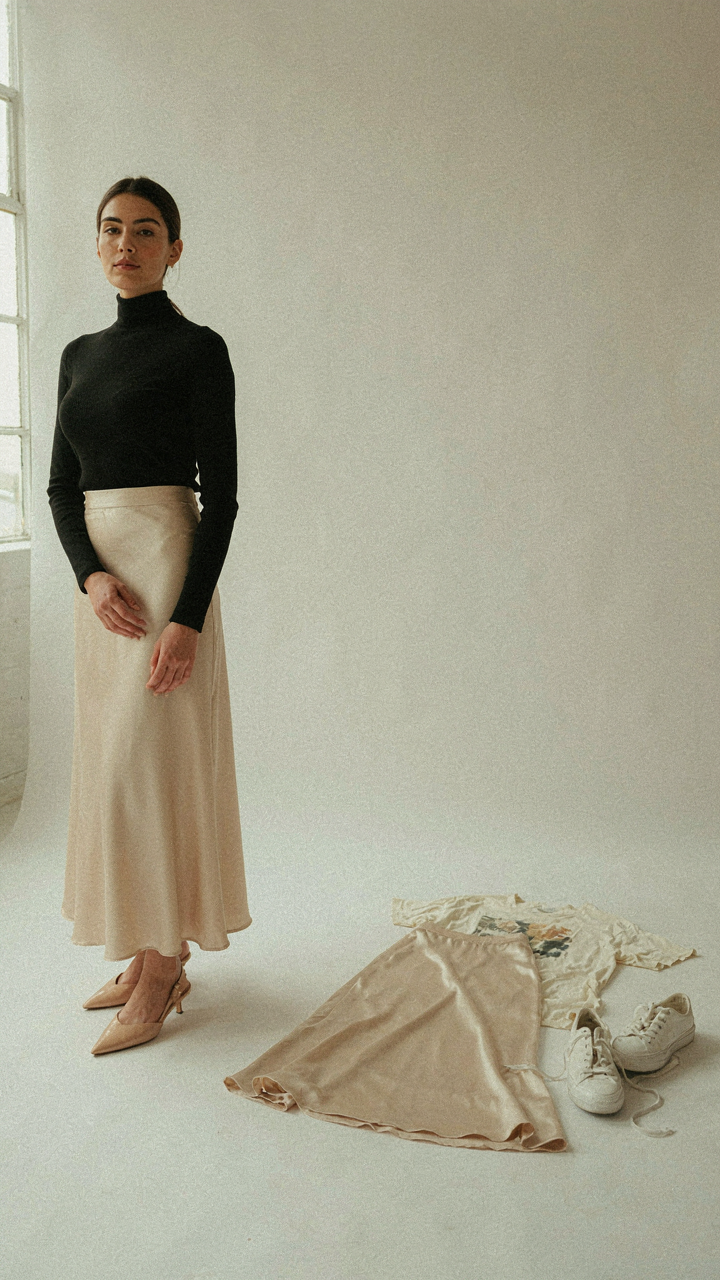
You’re drawn to satin because it signals effort without screaming try-hard, and you’re betting that one piece carries the weight of the entire outfit. It doesn’t. The mechanism here is borrowing from economics: diminishing returns. A satin skirt delivers impact only when everything around it operates at equivalent intentionality. Pair it with a rushed top or shoes that don’t belong, and the satin becomes costume rather than elegance.

Satin skirts work in formal settings where restraint dominates. A high-waisted midi in champagne under a fitted turtleneck and pointed flats reads as control. The same skirt with a cropped tee and sneakers reads as confusion. The fabric itself carries zero authority. Authority comes from fit, silhouette coherence, and the gap between fabric weight and surrounding pieces. Satin demands partnership, not solo performance.
Adapting Key Pieces To Different Evening Scenarios
The generic advice says “invest in basics and remix them.” That’s incomplete. The real constraint isn’t the pieces you own, it’s the architectural difference between occasions. A gallery opening has different lighting, duration, and movement patterns than a seated dinner. Those variables dictate which pieces work.
A tailored black trouser works everywhere because the silhouette stays predictable under all conditions. A draped silk blouse, however, moves differently when you stand for three hours versus when you sit. The drape that reads intentional at a dinner table bunches awkwardly during cocktail circulation. Before adapting a piece, map the physical demands of the event onto the garment’s behavior. Then adjust the supporting cast accordingly.
Elegant Evening Tops: Architecting Your Upper Half
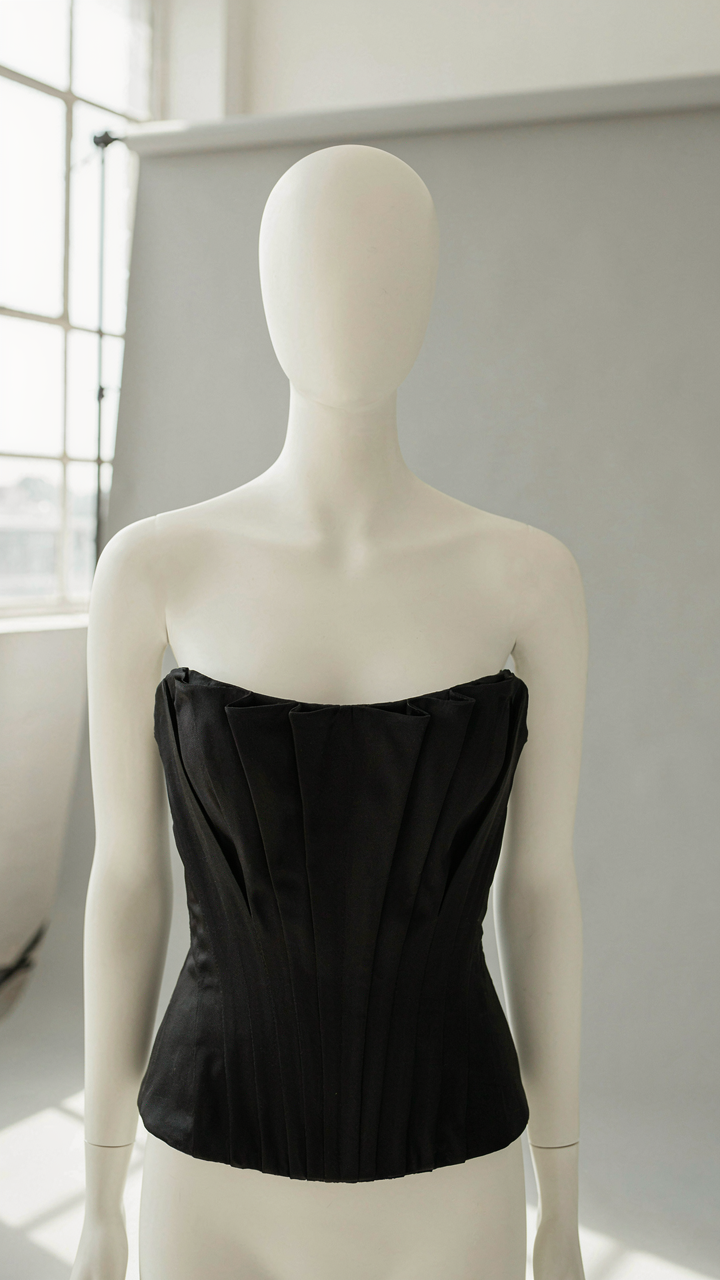
Structure Over Decoration
You want to look expensive without trying. That’s the real reason you’re reading this. The mechanism is simple: structural precision signals restraint, which signals resources. Embellishment screams effort. A top with clean lines, a defined waist seam, or architectural pleating does the work for you. The garment speaks instead of you having to.

Sculptural elements—darts, seaming, strategic draping—create dimension without relying on color, texture, or pattern. A bias-cut silk charmeuse top that skims the body and falls with intention communicates control. The cut itself becomes the focal point. When you strip away noise, what remains is always more credible than what you added to compensate.
Necklines And Sleeves That Endure
Forget the advice that one neckline works for everyone. That’s incomplete. The real rule is this: your neckline should frame your face and shoulders without competing with your bone structure. A refined evening top uses its neckline as a frame, not a statement.
The bateau, jewel, and v-neck exist because they work across decades and body types. Bateau necklines elongate without drawing attention inward. V-necks create vertical line and work on nearly every proportion. Jewel necklines sit close to the collarbone and ground the upper body. For sleeves, cap, three-quarter, and sleeveless remain dominant because they balance formality with practicality. A structured sleeve cap holds its shape; a three-quarter sleeve extends the line without the impracticality of full length.
The Black Trousers Paradox: More Than Just A Basic
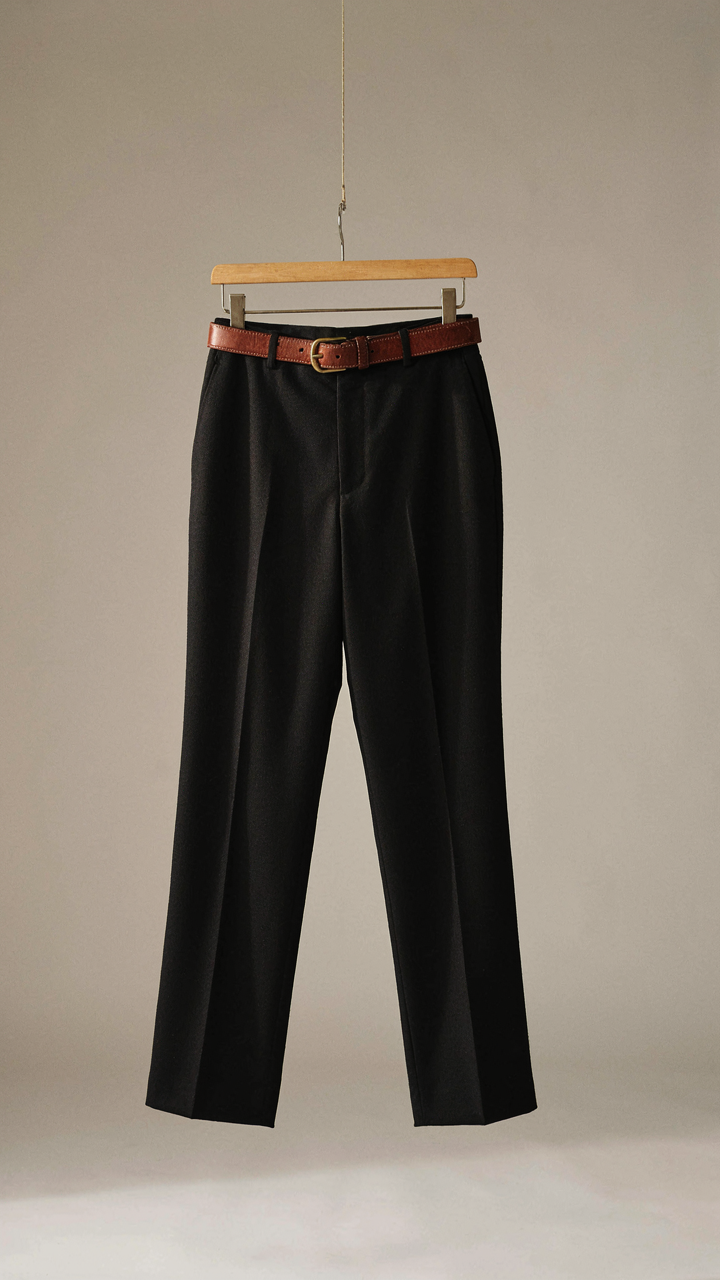
The Sartorial Utility Belt
You want black trousers because you’re afraid of making the wrong choice. That fear is the mechanism at work here. Black trousers function like inventory in a supply chain: they’re the base unit that reduces decision friction while multiplying outfit combinations. Every top, every shoe, every jacket you own already pairs with them. You’re not buying safety. You’re buying leverage.

The real utility comes from fit, not color. A well-fitted black trouser in wool or a wool blend holds its shape through repeated wear and cleaning. The fabric weight matters. Heavy enough to drape cleanly, light enough to move through a room without restricting your stride. Cut matters more than brand. High-rise, straight leg, or subtle taper all work for evening wear depending on your frame. The trouser does the heavy lifting so everything layered on top can shift.
The Elevation Through Constraint
Most advice tells you to pair black trousers with simple tops and call it done. That’s incomplete thinking. The constraint isn’t the trousers. The constraint is the fabric choice and the single styling decision you stack on top. A black wool trouser with a silk charmeuse camisole creates texture contrast that reads as intentional. Add a structured blazer in a complementary neutral like deep grey or camel, and you’ve moved from “safe outfit” to “considered outfit.”
The real move is material layering, not color blocking. Matte black trousers plus glossy fabric above creates visual interest without breaking the evening code. A simple leather belt in cognac or deep bronze becomes the focal detail that justifies the entire outfit’s restraint. When you select one small element to anchor attention, everything else recedes into the background where it belongs. The trousers disappear. The outfit remains.
The Capsule Wardrobe Outfits Doctrine: Less, But Better, For Longer
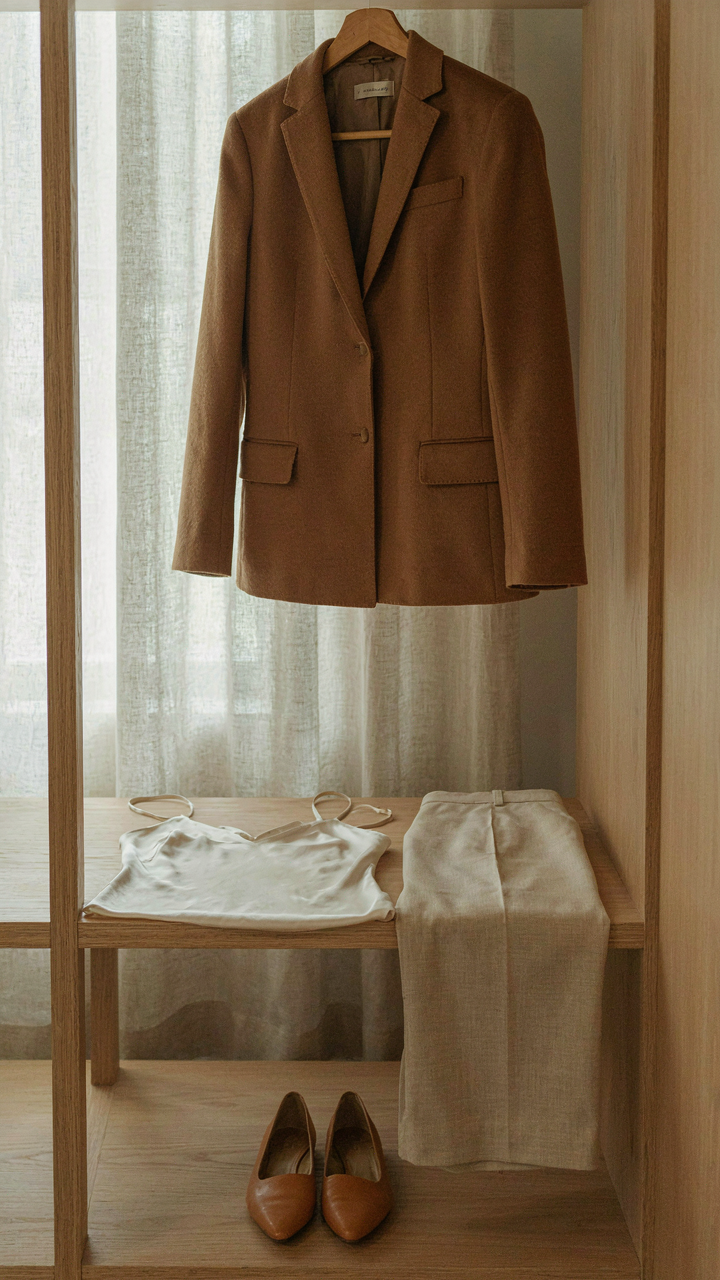
The Pareto Principle In Evening Dress
You want permission to buy less while looking like you have more. That’s the real ask. The mechanism is simple: eighty percent of your evening impact comes from twenty percent of your pieces. Stop chasing variety. Identify the silhouettes, colors, and fabrics that work on your body, then repeat them in different contexts. A well-cut black column dress worn three ways beats twelve mediocre pieces worn once each.

The math works because timeless evening outfits operate on constraint, not abundance. A structured blazer, silk slip dress, tailored trousers, and quality flat shoes create exponentially more combinations than random purchases ever will. You’re not building a closet. You’re building a system where each piece earns its space through repetition and versatility. That’s how investment pieces actually become investments instead of expensive regrets.
The Ecosystem Model Of Evening Wear
Think of your evening wardrobe like an organism in biology: every component must support the whole system or the entire structure fails. In ecology, a resilient ecosystem has redundancy built in, with each species serving multiple functions. Your evening pieces work the same way. A neutral base layer isn’t just functional—it enables every other piece to function. Remove one critical element, and combinations collapse.
- Neutral Base Layer: Black, navy, or cream silk slip dresses or tailored pieces that anchor every outfit and pair with minimal friction across seasons and occasions.
- Structured Outerwear: A single well-fitted blazer or evening jacket in a neutral tone that elevates basics and extends seasonal wearability without adding visual weight.
- Bottoms With Range: Tailored trousers and a midi skirt in neutral shades that swap seamlessly between pieces and create distinct silhouettes from identical tops.
- Strategic Texture: Quality fabrics like silk charmeuse, wool crepe, or linen linen in matte finishes that don’t compete for attention and age well with wear.
- Minimal Jewelry Framework: Three to four pieces in one metal finish that work across all outfits without requiring decision-making before each event.
Build this ecosystem first. Additions come later, but only if they solve a real gap, not a perceived one. The pieces must interconnect. A dress that only works with one blazer isn’t part of a system—it’s a dead end that wastes closet space.
Dinner Outfits: Mastering The Art Of Understated Impact
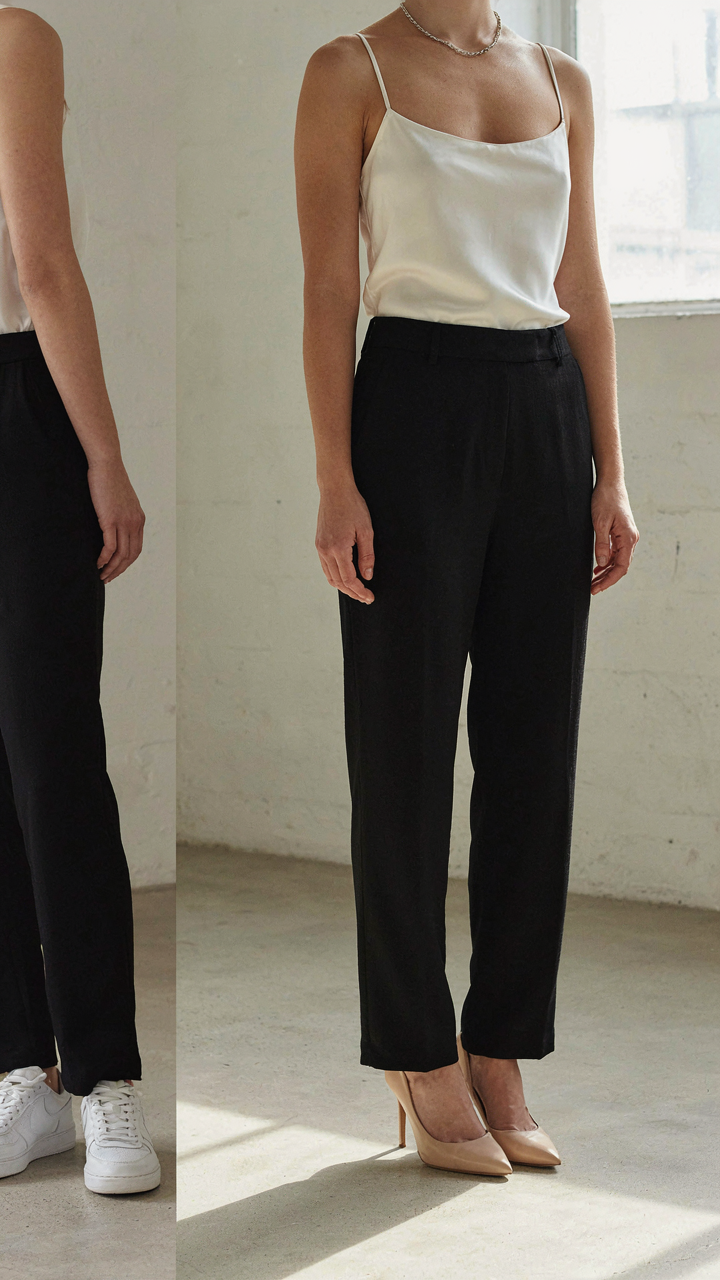
Intention Over Ornamentation
You want people to notice you without knowing why. That’s the real game here, and it requires the opposite of what most women do. Think in terms of signal-to-noise ratio from information design: every piece either clarifies your message or muddies it. A polished dinner outfit removes friction between your intention and how others perceive it.

The mechanism is restraint. One statement piece, everything else in service to it. A silk slip dress doesn’t need a matching bag, a belt, and jewelry fighting for attention. The dress already works. Your role is to decide what that one focal point is, then let composition do the work. Stop adding because you think absence feels incomplete.
Dialing Elegance Without Restarting
Most advice says casual and formal are separate categories. Wrong. They exist on a spectrum controlled by fabric weight, neckline depth, and shoe formality. You move between them by understanding which single variable does the work. A crepe trouser in black reads formal at a gala or business dinner. The same trouser in linen cotton reads casual at a summer event.
Learn what each piece communicates at different levels of formality, then substitute strategically. A white button-up shifts from casual with sneakers to evening-ready with a silk camisole layered underneath and leather pumps. The outfit isn’t a fixed thing you memorize. It’s a system where you control one variable at a time. This is why timeless pieces stack so effectively: they’re neutral enough to anchor different contexts.
Classy Dinner Outfits: Curating Your Visual Authority
Color Palettes That Command Respect
You want people to remember you, not wonder if you tried hard enough. The mechanism is contrast and restraint working together. In color theory, saturation and value determine how an object reads in space—apply this to evening wear and you get a rule: wear colors that create distance between you and the background, then stop adding. Black, navy, charcoal, deep burgundy, and forest green function as visual anchors because they don’t compete with your face or body. Jewel tones like emerald and sapphire work for the same reason. They absorb light rather than reflect it, which centers attention on your presence instead of your outfit.

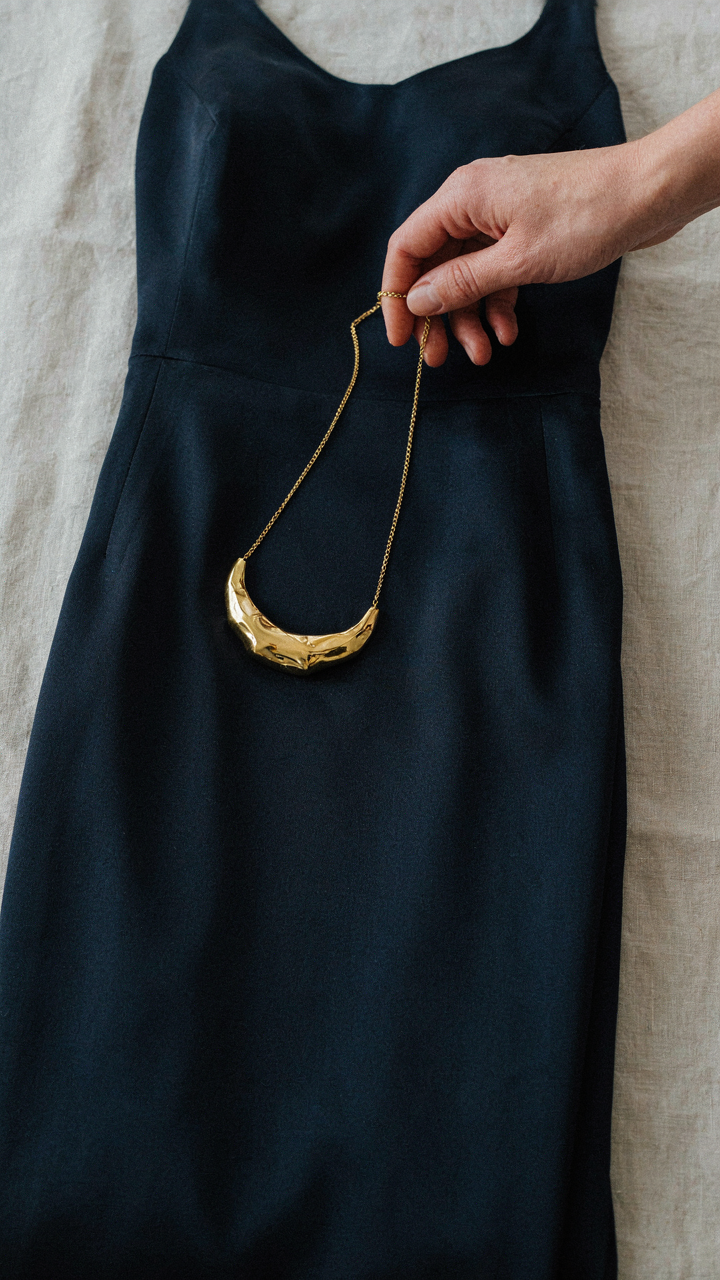
Neutral bases paired with one accent color is not a limitation—it’s the entire system. A black silk column dress with a single statement necklace reads as intentional. A navy gown with no pattern and no competing textures reads as authority. The worst move is equating sophistication with complexity. Solid fabrics in deep colors age like wine. Printed fabrics, pattern mixing, and color saturation trends shift every season. Pick colors you’ll wear in five years, not colors you saw on Instagram last month.
Accessories That Outlast Trends
Timeless accessories are not smaller versions of trendy ones. This is where most women fail—they think a smaller handbag or thinner chain makes something classic. Wrong. Timelessness in accessories requires material stability and proportion restraint. A strand of pearls works for sixty years because pearls don’t change. A gold cuff bracelet works because gold holds its value and appearance. A structured leather clutch works because the form doesn’t reference a specific year. A chandelier earring in a shape that follows the ear’s natural line works because it’s rooted in geometry, not fashion cycle.
The protocol is specific: choose one focal accessory per outfit. If you wear a statement necklace, your earrings disappear. If you wear bold earrings, your necklace stays minimal. Your shoes should be either entirely neutral or match your necklace in metal tone. Leather shoes in black, nude, or deep brown outlast anything else. Metal hardware on bags and shoes should match your jewelry metal—all gold, all silver, or all rose gold, never mixed. This isn’t preference. It’s mathematics.
The Real Obstacle Isn’t Your Wardrobe; It’s Your Inability To Define And Commit To Your Aesthetic Operating Principles

Most women own the pieces. They lack the framework. You’ll keep cycling through outfits until you answer one question: what do you actually stand for visually? Stop collecting. Start deciding. Pick three non-negotiable silhouettes, two color stories, one fabric preference. Write them down today. This isn’t restrictive. It’s liberating. Constraints force confidence, and confidence is what makes any outfit timeless.