


The Unspoken Cost: Why Your Current Wardrobe Fails Every Trip

The Weight You’re Actually Carrying
You pack too much because you’re afraid of looking unprepared, and that fear costs you money and time every single trip. Here’s the mechanism: you own more clothes than you can wear, so you grab pieces randomly, and randomness requires backup. You throw in extra shoes, extra tops, extra layers—all insurance against decisions you haven’t made yet. That insurance policy shows up in airline fees for overweight luggage, in the cognitive load of opening a suitcase with forty options when you need three, and in the hours you waste deciding what to wear in a hotel room instead of exploring a city.
The hidden cost isn’t just financial. It’s opportunity. A woman traveling with a 50-pound suitcase makes different choices than one with a 22-pound carryon. She takes taxis instead of walking. She stays near her hotel. She manages luggage instead of moving freely through a destination. She also returns home with wrinkled clothes that need cleaning, items she never wore, and a sense that packing defeated her before she left. The weight of excess masquerades as security while it actually creates friction at every touchpoint of the trip.
Chaos Disguised As Flexibility
The common advice tells you to “pick a color palette” and call it done, but that misses the actual problem: decision fatigue before the trip even starts. Wardrobe chaos doesn’t just live in your suitcase. It lives in the 90 minutes you spend standing in front of your closet trying to figure out what “works” together, then the second-guessing during the trip when you realize nothing coordinates the way you imagined. That’s not flexibility. That’s the tax you pay for not committing to a system.
Travel stress and wasted time compound because every outfit choice requires mental processing. No system means you stand in front of a mirror in your hotel room at 7 AM trying to solve the same problem you didn’t solve at home. A functional capsule eliminates this by building outfits before you pack, removing the variables, and collapsing decision-making into a single session. Write down every outfit combination the night before you travel, then pack only those pieces. Everything else stays home.
Beyond “Versatile”: The Utility Matrix For Smart Casual Capsule Wardrobe Outfits

What Versatile Actually Means
You want to believe one piece does five jobs so you pack less and feel smarter about it. Here’s what actually happens: most “versatile” pieces do two jobs well and three jobs poorly. The mechanism is simple. A utility matrix forces you to score each item against specific travel contexts—not vague ideas of flexibility. You rate how a piece performs in professional settings, casual environments, climate shifts, and social hierarchies. This generates real data instead of hopeful assumptions.

Economics calls this the concept of “diminishing marginal utility”—each additional use of an item adds less value than the last one. A cream blazer adds massive value in a business dinner setting but near-zero value at a beach town coffee shop. The matrix makes this trade-off visible. Stop thinking about versatility as an abstract quality. Assign it coordinates. A piece either scores high in restaurant dinners and low in casual exploration, or the reverse. This prevents you from packing neutral pieces that actually solve nothing.
Scoring Across Real Travel Scenarios
Most advice says “mix and match everything.” That’s incomplete because it ignores context collapse—your capsule performs differently depending on where you are and what you’re doing. You need a scoring system. Rate each item on a scale of strong, moderate, or weak across five travel contexts: professional environments, casual social settings, climate adaptation, layering capacity, and cultural appropriateness. A linen shirt scores strong on climate and casual, moderate on layering, weak on professional. A structured trousers scores strong on professional and cultural, moderate on casual, weak on climate.
When you quantify performance this way, gaps appear immediately. You might discover you have five items that crush casual settings but only two that work in professional contexts. That imbalance drives your next purchase. The matrix becomes your filter. Before adding anything to your capsule, score it across those five categories. If it doesn’t score strong or moderate in at least four, it doesn’t travel with you. This removes decision fatigue and forces every piece to earn its luggage space.
The “Single Point Of Failure” Protocol: Building A Resilient Womens Capsule Wardrobe
The Bottleneck Items That Determine Your Actual Outfit Count
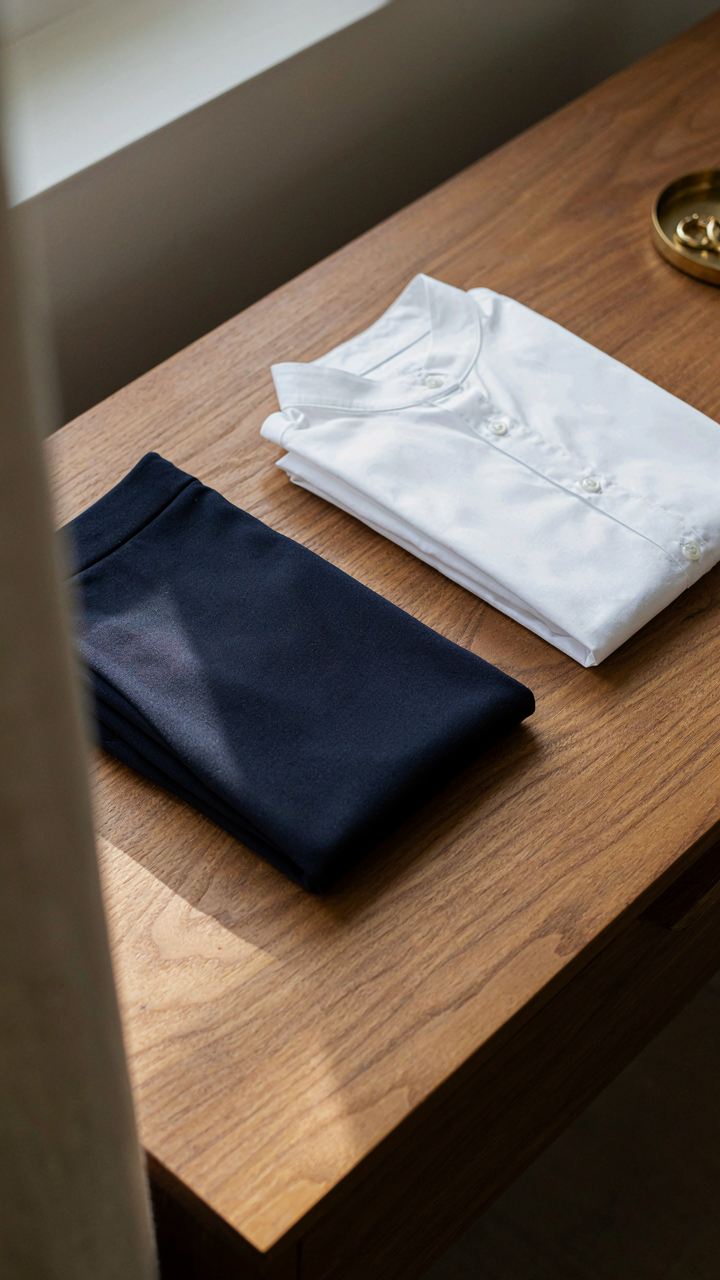
You’re worried about having enough outfits without admitting the real fear: running out of clean clothes mid-trip and looking unprepared. That’s the mechanism at work. In systems thinking, a single point of failure is the one component whose absence breaks the entire structure. Your capsule has them too. A white button-up collapses your smart casual range faster than anything else. Without it, you lose the ability to layer, dress up a casual bottom, or transition between day and evening. Most advice stops at “include basics,” which is lazy. You need to identify which items do the actual work.

The navy ponte pant operates as your functional workhorse in the same way. It anchors both casual and polished looks, works across seasons, and travels well without wrinkling aggressively. A structured blazer that fits your actual shoulders functions as your outfit multiplier. One blazer transforms a t-shirt into a meeting. Remove it, and your casual pieces stay trapped in one context. A white crew neck tee seems obvious until you realize it’s the only thing that bridges print to print without visual chaos. These aren’t interchangeable. Each one solves a different constraint. Map out which item, if missing, forces you to repeat an outfit or break your aesthetic code.
Redundancy Architecture For The Non Negotiable Pieces
The concept of redundancy comes from engineering, where critical systems require backups. In your capsule, redundancy means owning multiples of items that collapse your options when unavailable. You need two white button-ups, not one. One handles washing cycles. The other stays packed. This isn’t buying extra stuff mindlessly. It’s ensuring a washing day in a hostel doesn’t destroy your outfit range. Two neutral blazers in different weights solve the same problem across seasons and fabric care timelines.
Dark jeans and navy ponte serve different functions, but both compress into small spaces and absorb heavy rotation. Own both. A second crew neck tee in a different fiber content protects you when one gets stained or needs washing. Cotton and a cotton-blend behave differently when damp and dry at different speeds. The second one keeps your capsule functional while the first recovers. This isn’t duplication for comfort. It’s the protocol that prevents a single laundry cycle or spill from dismantling your ability to dress. Before packing, confirm each critical piece has a designated backup or a hybrid that serves the same purpose in a different context.
The Cognitive Load Diet: How Less Clothing Means More Brainpower

Decision Fatigue Is The Real Tax On Your Day
You want this section because you suspect your closet is making you dumber, and you’re right. Psychology research documents what researchers call decision fatigue: each choice depletes a finite cognitive resource, leaving you with less mental energy for work that matters. Your brain treats picking an outfit the same way it treats solving a problem. By the time you’ve evaluated five shirts, two pairs of pants, and three shoe options, you’ve already spent decision-making capital you needed for your actual job.

A capsule wardrobe eliminates this tax. When you own twelve pieces that coordinate by design, you stop choosing and start dressing. The mechanism is simple: fewer options equals fewer decisions. Studies on choice architecture show that past a certain threshold, additional options increase anxiety rather than satisfaction. Travellers specifically benefit because they’re already managing luggage variables, hotel logistics, and schedule friction. Remove clothing decisions and you reclaim roughly ten to fifteen minutes of cognitive space per morning, multiplied across every day you travel.
Focus Returns When Options Vanish
The neuroscience here maps onto information theory: every option you consider adds Shannon entropy, or noise, to your decision system. A well-built capsule wardrobe reduces entropy by preselecting combinations that work. You’re not becoming limited, you’re becoming efficient. Your brain stops pattern-matching across infinite possibilities and starts executing a known system.
This mechanism compounds over time. Day one, you save fifteen minutes. Day five, you’re not just faster, you’re calmer. The constant low-level anxiety of “what if I’m underdressed” or “what if this doesn’t match” disappears because you’ve removed the variable. When your clothing works by default, your attention shifts to client meetings, writing, strategy, whatever you actually came to do. Every successful traveller with a capsule wardrobe reports the same thing: they stopped thinking about getting dressed and started thinking about everything else.
The Leverage Point Principle: Maximizing Impact In Your Casual Capsule Wardrobe Women

One Piece, Multiple Outfits
You’re hoping that buying more stuff will solve the outfit problem. It won’t. Economics teaches us the concept of leverage: a small force applied at the right point produces outsized results. In capsule building, a leverage-point piece is an item that shifts entire outfit categories without requiring new purchases. A neutral blazer worn over a t-shirt becomes business casual. The same blazer layered over a dress becomes evening-ready. One piece. Three contexts. That’s leverage.

Most people chase variety through quantity. They buy six tops instead of understanding which one top, paired strategically, eliminates five other purchases. The mechanism is this: leverage pieces share color and construction with everything else in your capsule. They’re not decorative additions. They’re structural connectors that transform existing combinations into new ones. A camel wool blend coat doesn’t just sit on top of outfits; it reframes them entirely by introducing proportion, weight, and a second neutral that anchors everything below it.
Where To Concentrate Your Budget
Spend money on pieces that do work, not pieces that look work. A quality white linen shirt functions as a leverage point because it layers under sweaters, stands alone in summer, tucks into trousers, and knots at the waist over dresses. A decorative silk camisole does one thing: exist visibly. The budget allocation mistake is obvious once you see it: most women spend proportionally on visible pieces and underinvest in structural ones. Blazers, neutral outerwear, and quality base layers should command your highest spend per item because they anchor the entire system.
Test leverage before you buy. If a piece only works in one outfit context or requires additional purchases to feel complete, it’s not a leverage point. It’s overhead. When evaluating a potential purchase, ask this: in how many outfit configurations does this piece function? If the answer is fewer than three, walk past it. The real test happens over two weeks of travel when you actually wear the capsule. You’ll see immediately which pieces pulled multiple outfit combinations out of thin air and which ones sat unused because they lacked the structural properties to connect with what you already owned.
The Environmental Adaptability Framework For Work Outfit Basics

Reading The Room Before You Pack
You want to look competent without overthinking every outfit. The real mechanism here is borrowed from ecology: niche specialization. In fashion, your niche is the specific climate and social pressure of where you’re working. Most travelers pack for an imaginary “average” environment that doesn’t exist. Instead, map your actual destinations against two variables: temperature range and formality expectation. A business casual office in Phoenix operates under completely different rules than one in Seattle. The gap between these two determines which base pieces actually work.

Start by listing each location you’ll visit, its average temperature during your stay, and the dress code you’ll encounter. Don’t guess formality levels. Ask directly or check the company website. This sounds tedious because it is, but it eliminates the most common failure: packing items that fit the climate but miss the social context, or vice versa. You’ll notice patterns emerge. Most travelers can cover four to five distinct environments with one thoughtfully chosen set of basics.
Fabric Weight As Your Operating System
Fabric weight determines whether a piece survives temperature swings and stays functional across contexts. This isn’t about thread count or luxury markers. A mid-weight merino wool or quality cotton blend doesn’t wrinkle in humid climates, handles layering in cold environments, and looks intentional in both boardrooms and casual offices. Lightweight fabrics are traps. They wrinkle instantly, bunch under layers, and signal negligence. Heavy fabrics limit your range because they’re unusable in warm climates. Mid-weight is the only practical choice for travel because it’s the only weight that moves with you instead of against you.
The second variable is fiber content. Natural fibers breathe and regulate temperature. Synthetic blends resist wrinkling and dry faster. The best travel pieces combine both. Look for 70/30 cotton-poly blends or merino-synthetic mixes. Avoid pure linen unless you’re staying in one cool climate for the entire trip. Test fabrics in person before committing. Hold them up to light, feel the weight, and understand how they drape. This determines whether your basics actually work in the field or become deadweight in your luggage.
Deconstructing The “Casual Office Capsule Wardrobe” Illusion

Myths That Tank Your Actual Wardrobe
You’re hoping that “business casual” is a fixed dress code you can memorize once and stop thinking about. It isn’t. The mechanism at work here is organizational role creep: every company redefines casual differently based on client-facing visibility, industry tradition, and whoever hired last. What reads as casual in a tech office reads as sloppy in consulting. The consensus advice says “just add a blazer.” That’s incomplete because it ignores context, which is the only variable that matters.

Common myths collapse when you test them against real professional environments:
- “Casual means no structure”: Structure signals competence regardless of formality level. Unstructured pieces read as unprepared, not relaxed. Fit matters more than fabric weight in determining professionalism.
- “One blazer solves everything”: A blazer changes the equation only if it matches the room’s aesthetic baseline. A wool blazer over denim works in creative fields but signals confusion in traditional settings.
- “Neutral colors are always safe”: Grays and blacks in cheap fabric read as placeholder clothing. Camel, navy, and white in quality materials often read smarter because they hold shape and don’t disappear into background static.
- “Jeans are casual office standard”: Many professional environments still restrict denim entirely. Others allow it every day. Assuming it’s acceptable wastes a piece that doesn’t travel well across contexts.
- “Casual equals comfortable”: Casual pieces that don’t fit your body properly create discomfort through self-awareness. Fit precision matters as much in relaxed pieces as formal ones.
The real constraint isn’t the dress code itself. It’s the gap between your assumption about what casual means and what your specific workplace actually accepts. Most women waste capsule space on pieces that split the difference instead of dominating the actual requirement.
Redefining Smart Casual Across Different Rooms
Every professional setting operates with an unwritten formality floor and an opacity ceiling. The floor is the minimum polish required to not stand out negatively. The opacity ceiling is how much visual attention you should attract. Smart casual works when you hit that floor without crashing through the ceiling, and this changes per industry.
In finance and law, smart casual still maintains visual hierarchy: tailored separates, limited pattern, conservative silhouettes. In tech and creative work, smart casual means intentional simplicity without formality. In healthcare and education, smart casual prioritizes function and washability over silhouette perfection. In hospitality and retail management, smart casual requires visible grooming and alignment with brand aesthetic. The pieces themselves may look identical, but deployment logic differs. A white button-up in consulting functions as a base layer under a blazer. The same shirt in a tech office stands alone as a complete statement. Your capsule needs to account for which economy of dress you actually move through, then build backward from there instead of forward from generic guidelines.
Curating Your Personal “Wardrobe OS”: Beyond Just Clothes
Accessories And Footwear As System Architecture
You want to believe that a few good base pieces solve everything. They don’t. Accessories and footwear aren’t decoration bolted onto your outfit—they’re the operating system that determines whether your capsule actually works across different contexts and climates. Think of your wardrobe like software architecture: your core pieces are the kernel, but accessories and shoes are the protocols that let the system run in different environments without rewriting the whole thing.

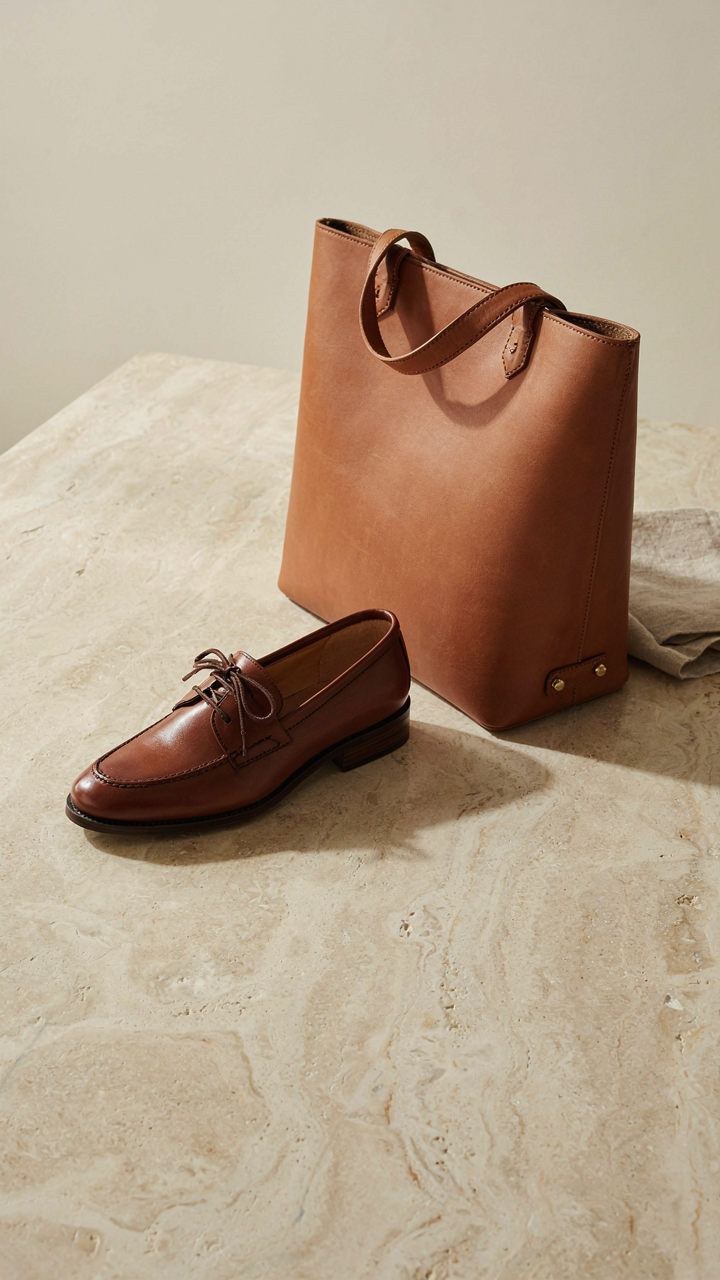
The mistake most people make is treating shoes and bags as afterthoughts. You need one neutral leather sneaker or loafer that pairs with everything from jeans to trousers. You need one structured bag that holds what travels demand without screaming “tourist.” You need a leather belt that works in multiple neutral tones. Scarves function as both visual anchors and temperature control—silk or cotton, not synthetics that pill. These aren’t optional; they’re what make your four base pieces feel like twelve different outfits.
The Maintenance Protocol That Keeps Everything Wearable
Most advice on wardrobe care is vague nonsense about “treating your clothes right.” Here’s what actually matters: your capsule needs a specific care schedule based on fabric and wear patterns, not sentiment. Spot cleaning extends life more than washing does. A garment bag for travel prevents wrinkles that damage fibers. Fabric refresher spray cuts down on full washes. Proper hangers—wooden or padded, never plastic—prevent shoulder creasing on knits and structured pieces.
The real lever is this: inspect every piece every two weeks for damage that gets worse if ignored. A small snag caught early stays small. A seam beginning to fray gets reinforced before it splits. You store off-season items in breathable containers, not plastic. You rotate shoes so no single pair bears constant stress. This isn’t neurotic. This is treating a functional system like one—regular maintenance prevents catastrophic failure and extends the useful life of your investment by years.
Your Wardrobe Isn’t The Problem; Your Cluttered Mindset Is
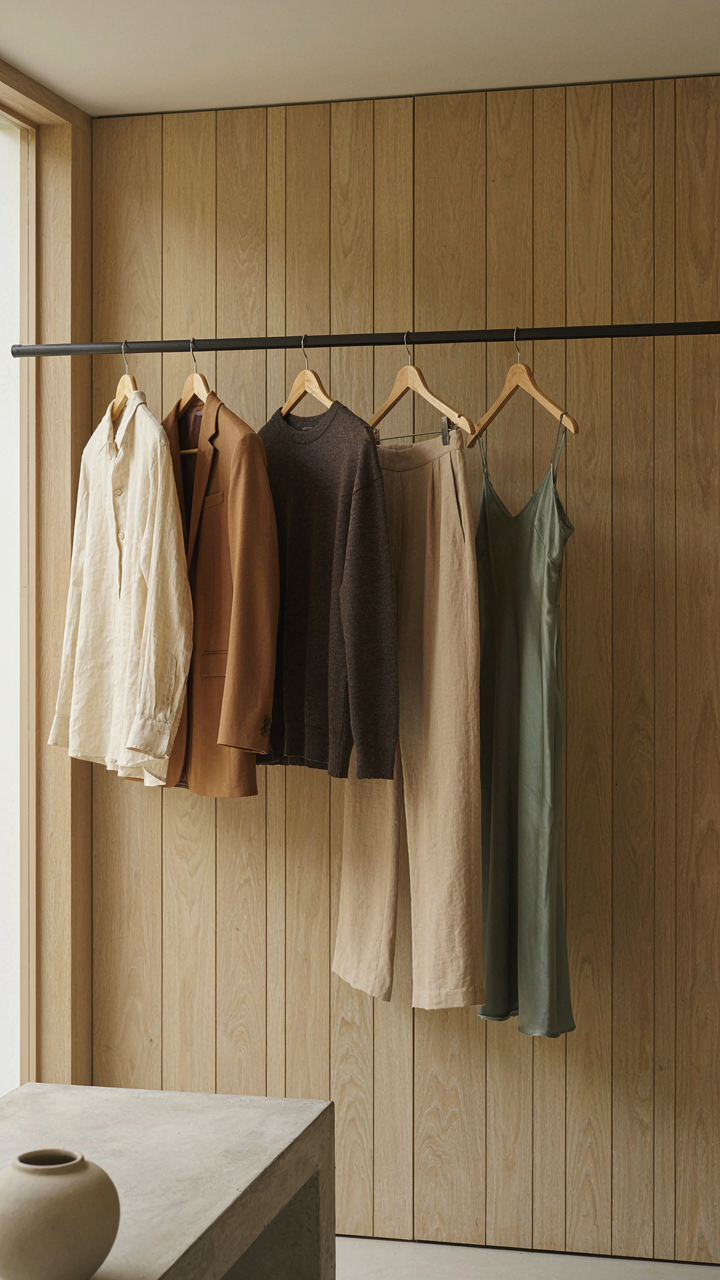
You don’t need more clothes. You need permission to stop shopping like you’re preparing for every possible life scenario. A smart casual capsule works because it forces decisions, not because it’s magical. Today, pull out everything you’ve worn zero times in six months and move it out of your closet. You’re not being wasteful. You’re being honest. Your wardrobe grows when your standards do.