


The Unseen Battle: Why Your Summer Office Capsule Wardrobe Fails
Comfort Over Competence Is A Trap
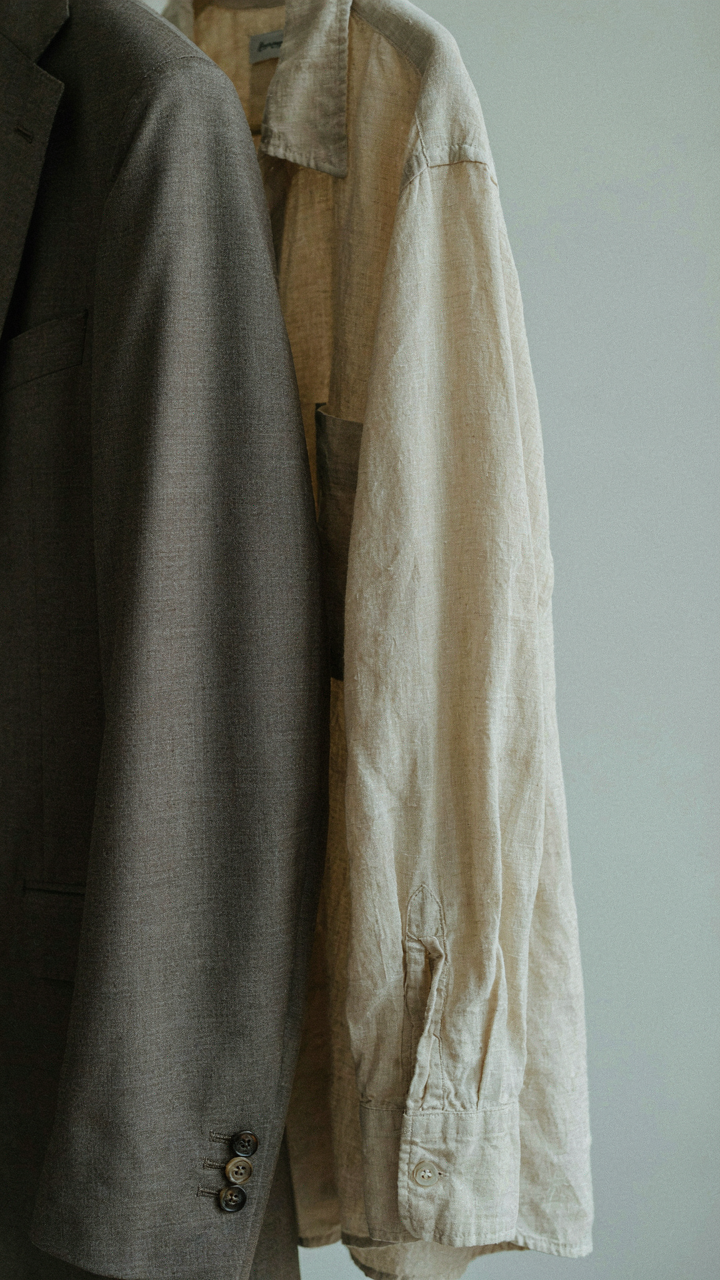
You want to be seen as serious. That’s the real reason you’re reading this. But here’s the mechanism nobody names: in climate-controlled offices, you’re competing on signal, not survival. You pick breathable fabrics and loose cuts because you’re hot, but your brain registers loose and breathable as casual. Perception lags behind intention. The person in the fitted linen blend reads as intentional. The person in the oversized cotton reads as defeated by heat.
Summer office dressing isn’t about what feels best on your skin. It’s about what communicates competence in a room where temperature control is a symbol of control itself. The executive in the AC-blasted corner office doesn’t dress for heat relief. They dress for the role. Your capsule wardrobe fails because you’ve optimized for your comfort instead of the signal you’re sending in the first ninety seconds of a meeting.
Fabric And Fit Communicate Rank
Think of semiotics, the study of signs and meaning. In office hierarchies, weave patterns function as status markers, not decoration. A structured cotton-linen blend in a tight weave signals intention and resource. A loose, drapey rayon signals availability and flexibility, which reads as junior. Fit matters identically. A tailored sleeve hits different than a relaxed one, regardless of temperature.
The subtle signals operate below conscious awareness. Your colleagues won’t say “that fabric feels expensive.” They’ll feel something shift in how they receive your ideas. Higher thread count and natural fiber blends that hold shape communicate that you’ve invested thought into presence. Wrinkled cotton that’s been air-dried communicates that you prioritized convenience. When you build a summer capsule around fabric weight and silhouette consistency, you’re not fighting heat. You’re controlling how you’re perceived before you open your mouth.
The 3 Piece Power Play: Mastering The Summer Office Uniform
Build Your Foundation Around Constraint, Not Trend
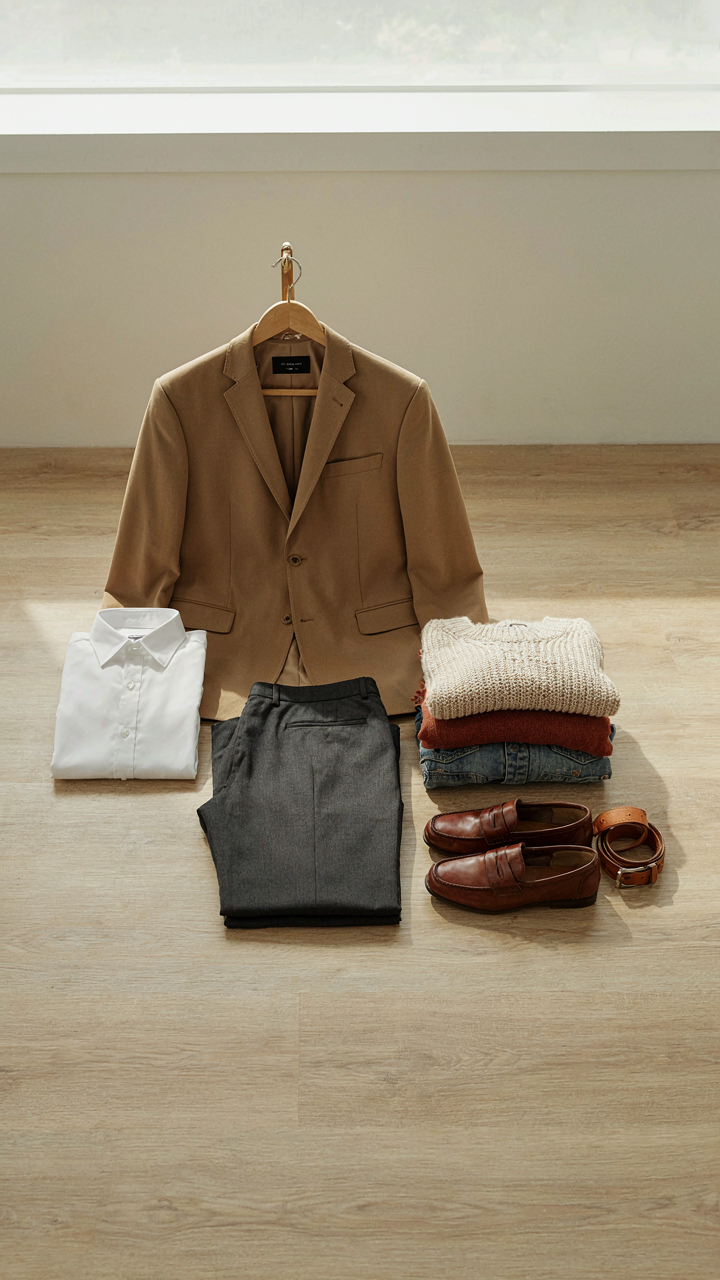
You want to look competent without thinking about it. That’s the real reason you’re reading this. The mechanism is simple: fewer pieces force intentional design. You pick three foundational items that share a color story and fabric weight. Everything else attaches to these three. This isn’t minimalism for aesthetics. This is mathematical efficiency. A neutral blazer, a base layer shirt, and trousers become the skeleton. All other pieces solve for specific conditions: heat, air conditioning, client meetings, casual Fridays. Nothing gets chosen randomly. Everything earns its spot by working with the three core pieces at least twice.

The summer office environment creates two competing demands: you sweat outside, then freeze inside. Standard advice tells you to layer, which is true but incomplete. The real play is choosing the three pieces based on fabric performance, not color. Linen and cotton blends in lightweight weaves handle both transitions better than pure cotton. Your blazer should be unlined or half-lined to reduce heat load. Your base shirt needs a tight weave to manage moisture without clinging. Trousers must breathe but hold structure through humidity. These three pieces work as a system. Pick them as a system, not individually.
The Math Behind Rotation
Outfit combinations follow multiplication, not addition. Pick three blazers, four shirts, three trousers, and two accessories. That’s 3 x 4 x 3 x 2 equals 72 outfit combinations from nine pieces. Most people think outfit variety comes from buying more items. It doesn’t. It comes from choosing pieces that combine predictably. Each new piece should multiply your options, not just add to your closet. A neutral color palette magnifies this effect dramatically.
The constraint forces better decisions at purchase time. You can’t hide a poorly made piece in a small wardrobe. If a shirt doesn’t work with at least three other items, it fails the system. If a blazer only matches one trouser color, it’s dead weight. Every piece must earn its place through versatility. Test combinations before buying. Bring items together in the store. Take photos. See what actually works in daylight and under office fluorescents. This single step eliminates 80 percent of wardrobes mistakes.
The Strategic Fabric Protocol: Beating Heat & AC With Intent
Performance Fabrics Win Through Function, Not Feel
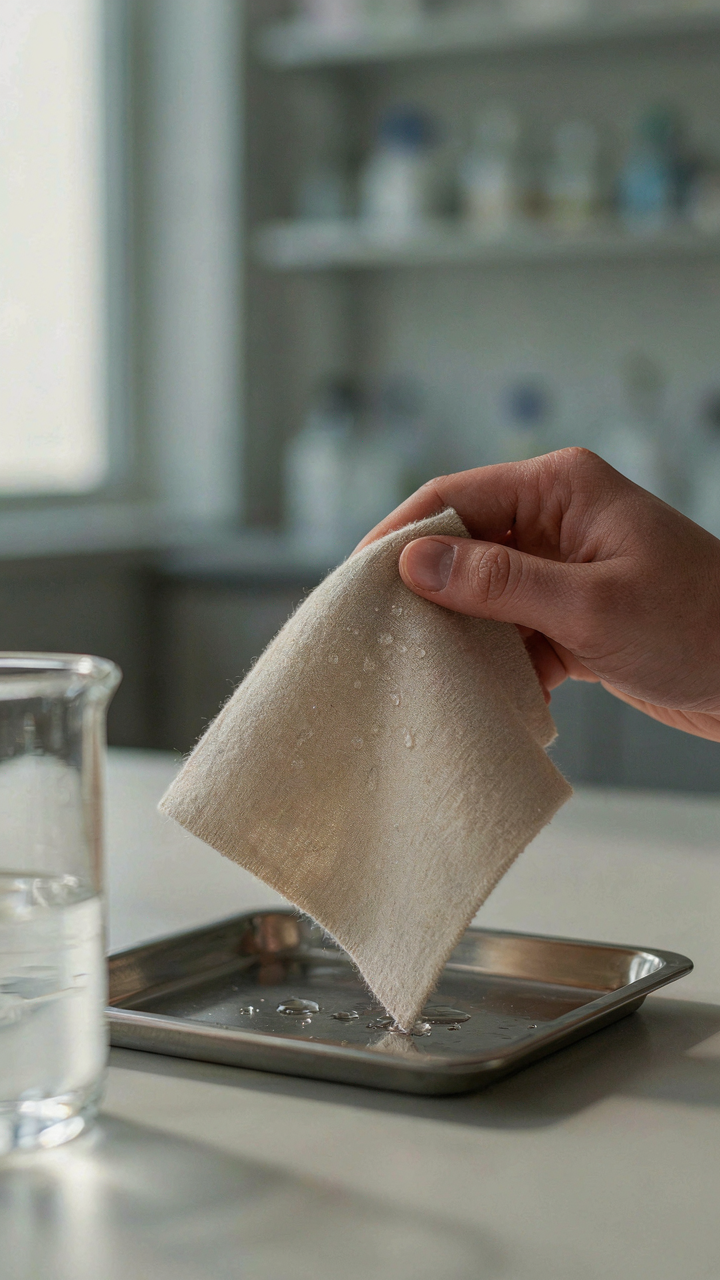
You want to feel cool because looking flustered at work signals weakness. But that’s not why fabric choice matters. The real mechanism is moisture management and thermal regulation. Fabrics don’t just hold or release sweat—they control how fast evaporation happens, which determines whether you stay functional or degrade into distraction.

Borrow a term from thermodynamics: wicking. A fabric’s ability to move moisture away from skin and toward the surface where it evaporates is what separates performance from theater. Cotton absorbs sweat and holds it against your skin, creating drag and discomfort. Synthetic blends and natural performance fibers move that moisture outward, maintaining the temperature gradient your body needs to think clearly.
- Merino wool blends: Regulates temperature across seasons, wicks moisture effectively, resists odor through natural antimicrobial properties, maintains structure through multiple wears without washing.
- Linen: Breathes fast in high heat, loses shape quickly when damp, excellent for core pieces but requires quality construction to avoid wrinkled appearance in office settings.
- Synthetic blends (polyester/nylon base): Engineered wicking, quick-dry capability, wrinkle resistance built-in, best paired with natural fiber content to avoid plastic feel and poor breathability.
- Tencel and lyocell: Semi-synthetic from wood pulp, breathes like natural fiber, wicks like synthetic, stronger when wet than cotton, holds shape better through summer humidity.
- Cotton-linen blends: Splits the difference—absorbs slightly less than pure cotton, dries faster, maintains natural fiber comfort while gaining practical durability for office wear.
The common advice is to chase “breathable” fabrics. Worthless term. Every fabric breathes. What matters is fiber weight and weave density. Lightweight performance fabrics in the 90-120 gram per square meter range move air through the material while maintaining enough structure for professional appearance. Buy pieces that dry completely within two hours of wear and you’ve eliminated half the friction in your summer wardrobe.
Layering For Leverage Across Temperature Zones
The problem everyone misses is that office buildings operate on a different thermostat than reality. You walk through 92-degree heat, enter a 68-degree lobby, work in a 70-degree conference room, grab lunch in an 85-degree restaurant. Your wardrobe must absorb five temperature shifts daily without looking defensive. This is where the capsule structure becomes tactical.
A strategic layer system means building outfits where each piece adds or removes thermal protection without changing the core aesthetic. Start with a fitted base layer in performance fabric—this stays constant. Add a structured shirt or blouse that works alone and also over the base. Then position a lightweight overshirt, blazer, or structured cardigan as the third layer. The mechanism is simple: each layer slides on or off without disrupting silhouette or formality. You’re not carrying a sweater in your bag like you’re unprepared. You’re wearing the system.
Construct your summer layers using these anchors: fitted sleeveless shell or thin-strap tank in merino or synthetic blend as base, short-sleeve or three-quarter performance blouse as mid-layer, and unstructured linen shirt or lightweight blazer as outer layer. Fabric weight drops as you move outward—dense at core, airy at edges. Neutral colors maintain visual continuity across the stack. When AC hits too hard, you have coverage that looks intentional. When you step outside, pull back to minimum layers without appearing to struggle against climate. The transition happens in seconds and reads as control, not reaction.

Color Theory For Influence: The Summer Office Edition
How Color Commands Without Shouting
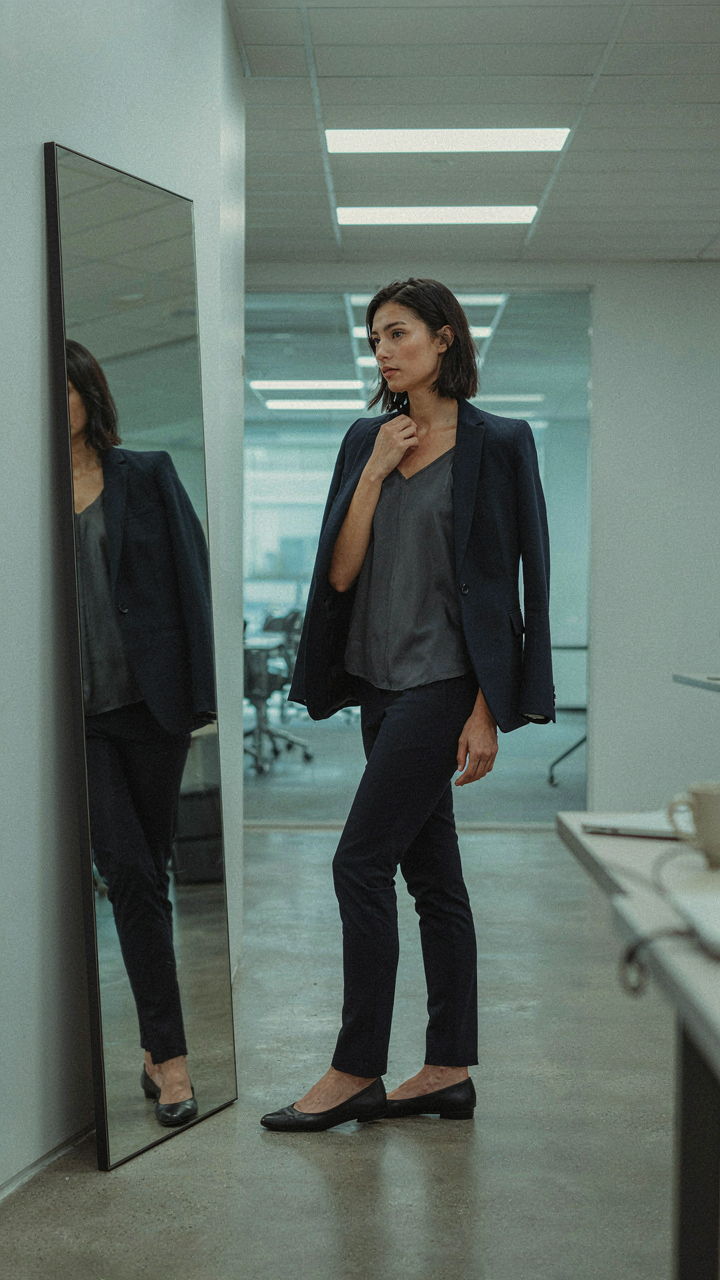
You want people to register your competence before you open your mouth. The mechanism here is contrast, borrowed directly from visual hierarchy in graphic design. In an office where most people wear pale neutrals to combat summer heat, strategic color placement creates what designers call “figure-ground separation”—your presence detaches from the background noise. This isn’t about wearing bold colors. It’s about deploying them where they land hardest: a structured blazer in deep navy, a silk shell in charcoal, a belt that anchors the frame.
Color psychology works through association, not emotion. Cool tones signal authority because they’re rare in heat-stressed environments where people default to beige and white. Your brain registers rarity as intentionality. A summer capsule built on navy, charcoal, soft olive, and cream forces a choice: you either fade into the AC-blasted monotony or you stand as someone who knows the rules well enough to bend them. The second option compounds across meetings, presentations, and decisions that hinge on whether people trust your judgment before you prove it.
Building A Palette That Doesn’t Crack
Most “capsule wardrobe” advice collapses here because people treat color like a mood board instead of an operational constraint. Your palette must solve two problems simultaneously: surviving AC temperature swings and commanding attention in fluorescent lighting. The real answer is tonal cohesion, not variety. Pick three base colors that sit in the same value range—depths that don’t scream at each other. Navy, charcoal, and sage work. Cream, white, and ivory work. The failure mode is mixing bright jewel tones with muted neutrals, which creates visual conflict that reads as indecision.
Test your palette under the specific lighting where you work. Fluorescent light flattens warm undertones and exaggerates cool ones. A charcoal that looks powerful under natural light can read as dead under office fixtures. The operational protocol: photograph five outfit combinations under the actual lights in your office, not your home. If a piece photographs as muddy or washed out, it doesn’t belong in the capsule. Cohesion isn’t about sameness—it’s about every piece amplifying the others instead of competing for attention.

The Accessory Arsenal: Subtle Weapons For Summer Work Capsule Wardrobe 2026
Small Details, Maximum Effect
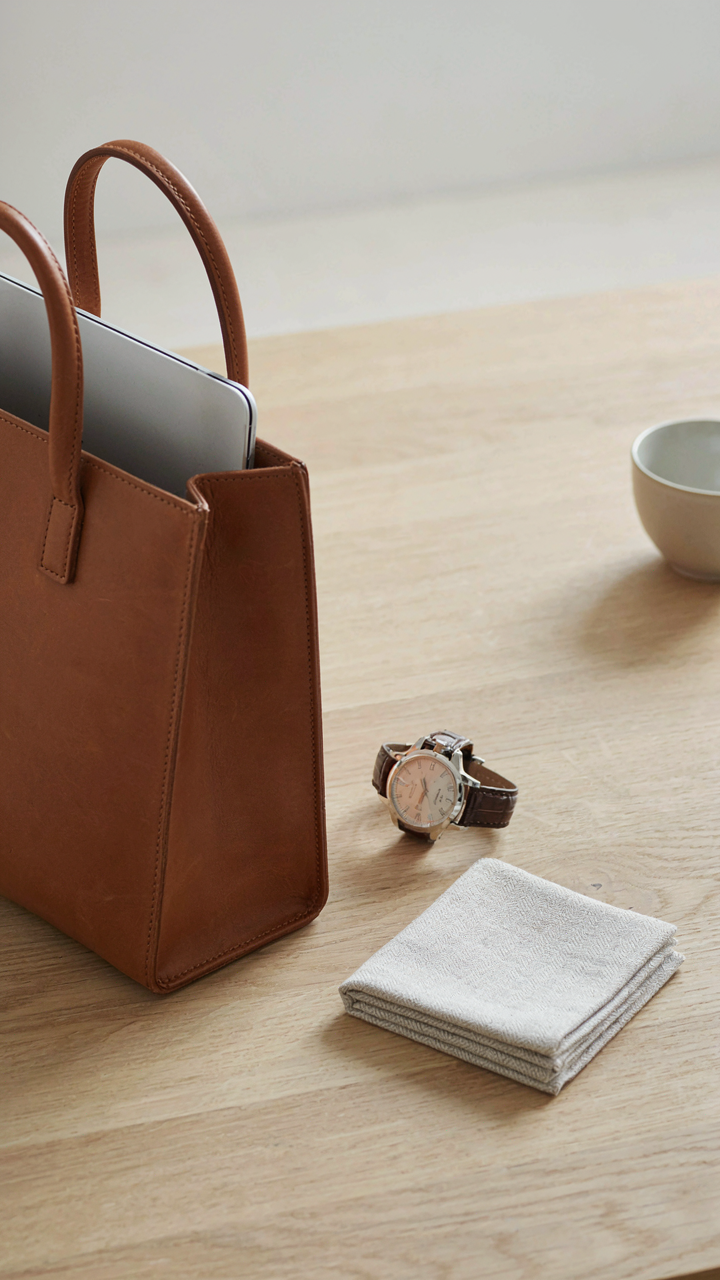
You care about this section because you think accessories are optional. They’re not. In economics, this is called leverage: small inputs producing disproportionate outputs. A single scarf or watch transforms three base pieces into twelve outfits. The mechanism is simple. Accessories create visual interruption without adding bulk or heat. In summer office settings, they solve the core problem: you need variety without the thermal liability of layering. A linen pocket square, a structured bag, a minimal watch—each one changes the story the outfit tells while occupying zero real estate in your capsule.
The constraint of summer actually makes accessory selection easier, not harder. You can’t hide behind heavy textures or volume. What remains must work harder. This forces discipline. Pick accessories that solve a functional problem first, aesthetic problem second. Your bag needs to hold a laptop and water bottle. Your watch needs legibility in fluorescent light. Your belt needs to anchor looser linen pieces. Once you’ve solved function, the aesthetic layer falls into place naturally. You end up with fewer pieces that do more.
Purpose Over Decoration
Forget the advice about “statement accessories” or “pops of color.” That’s decoration thinking, and decoration fails in summer offices because it reads as trying. You need utility that happens to look intentional. A structured leather belt in natural tan isn’t decoration—it’s the structural element that keeps oversized linen shirts from looking sloppy. A minimal metal watch isn’t decoration—it’s professional visibility. A lightweight scarf in cotton or linen isn’t decoration—it’s thermal regulation for over-air-conditioned spaces.
The protocol is straightforward. Audit your accessories for dual function. A bag must carry work items and transition between office and external meetings. A watch must be readable and require no charging or maintenance during the workday. Scarves and wraps must pack small and handle both warmth and style shifts. Belts must secure garments and stand up to repeated cinching throughout humid days. Eliminate anything that exists purely for looks. This reduction paradoxically creates more impact because every piece earns its weight.

The Cognitive Load Reduction Method: Building Your Office Capsule Wardrobe
Decision Fatigue Kills Focus Before Heat Does
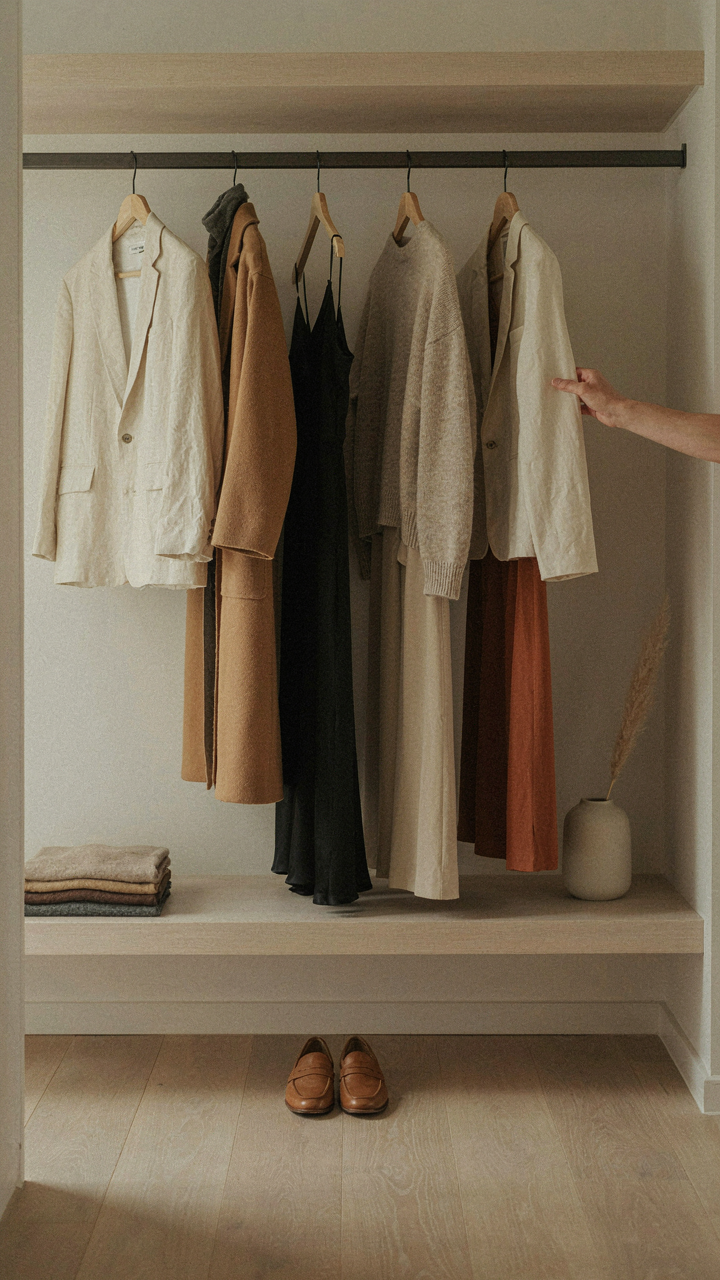
You want a capsule wardrobe so you stop wasting mental energy on what to wear. That’s the real reason. Decision fatigue is measurable: every choice your brain makes depletes glucose and willpower reserves, leaving less capacity for actual work. A smaller, intentional wardrobe removes the friction between waking up and being productive.
The mechanism is simple. Each morning, you face fewer options. Your prefrontal cortex doesn’t exhaust itself ranking between twelve neutral shirts. Instead, it preserves cognitive resources for problems that matter. Office environments in summer force a constraint anyway: air conditioning pulls the temperature down to 68 degrees while outside it’s 92. A capsule wardrobe acknowledges this reality and builds around it, eliminating choices that won’t work across both conditions.
Lean Manufacturing Principles Shrink Your Closet
Manufacturing teaches waste elimination. Toyota calls it muda. In capsule wardrobing, muda is every piece that doesn’t work across multiple conditions, fabrics that require special care, or colors that limit combinations. You strip the closet to velocity: items that move between outfit compositions.
Start by categorizing pieces as either core or flex. Core pieces work 80 percent of the time in both AC and outdoor heat. Flex pieces bridge the gap for specific scenarios. Then ruthlessly audit: does this piece combine with at least three others in the capsule? If not, it’s inventory sitting idle. Apply the principle of one-piece flow to your morning routine. You pick up one piece at a time because the sequence is predetermined. No backlog of unworn clothes accumulates.

Beyond Trends: Future Proofing Your Summer Business Outfits Women
Timeless Pieces Trump Seasonal Noise
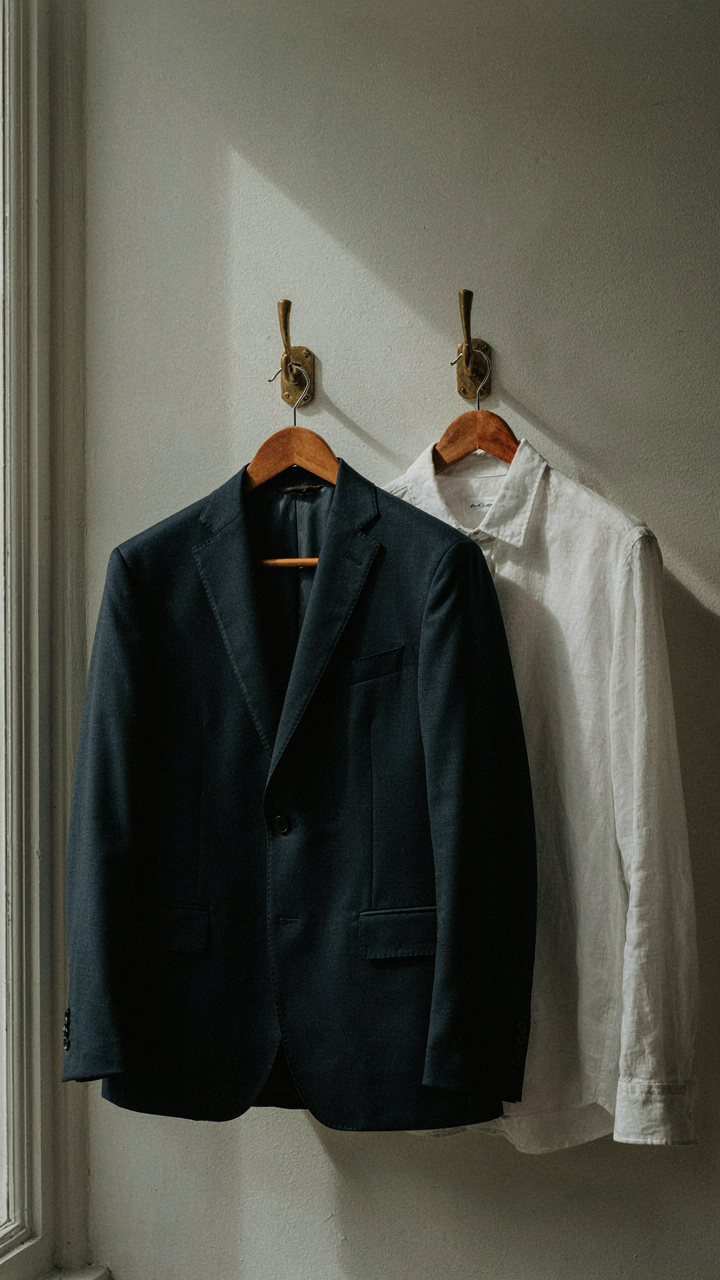
You want to feel like you have your life together without buying a new wardrobe every season. The real mechanism is this: trends are predictions about what others will wear, not directives about what works. A cotton blend blazer in neutral tones functions the same way in 2024 as it did in 2014. Brands cycle colors and cuts to create urgency. You eliminate that pressure by recognizing the difference between a garment that solves a problem and one that solves a feeling.
Classic office pieces survive because they solve structural problems, not emotional ones. A white linen shirt breathes in heat and reads as professional in any decade. A tailored trouser in a neutral shade pairs with everything you’ll own for years. Invest in construction quality over novelty. When you buy a piece, ask whether it solves a specific constraint—AC exposure, body temperature regulation, meeting formality. If it doesn’t solve something tangible, it’s filler masquerading as strategy.
How Clothing Signals Career Momentum
Career economics teaches us that signals compound over time. In workplace signaling theory, every garment choice broadcasts a message about your competence before you speak. Inconsistent dressing signals you haven’t thought through your role. A wrinkled shirt or mismatched formality suggests you prioritize other things over preparation. Consistent, intentional dressing signals you respect the environment enough to optimize it. That signal compounds. Colleagues notice. Decision makers notice. Three years of clean, appropriate summer dressing creates a reputation anchor that sloppy choices dismantle in months.
Clothing choices impact career trajectory because they’re invisible to most people until they’re absent. Someone in a well-maintained capsule wardrobe fades into professionalism and gets noticed for work output. Someone constantly adjusting to temperature, fighting wrinkles, or switching between formality levels gets noticed for distraction. The second-order effect is this: your wardrobe either removes friction from how others perceive you, or it adds it. Remove friction by building a system that requires no daily decisions and no visual compromises, then redirect that mental energy toward work that actually advances your position.

The Office Outfit Capsule Wardrobe: Your Manifesto For Unwavering Presence

The Morning Decision Collapse
You’re afraid that looking unprepared will cost you a promotion. Here’s the mechanism: decision fatigue erodes authority. Every morning you waste mental energy on outfit selection is energy not spent on the work that actually builds your reputation. A capsule system eliminates the friction. You own seven to ten pieces that work in predictable combinations. Light colors reflect heat. Breathable fabrics regulate temperature. You know what works before you open the closet. The ritual isn’t about fashion. It’s about reclaiming cognitive resources for the moments that determine how people perceive your competence.
The system works because it removes variables. You’ve already solved the problem. Now you execute. The same five neutral base pieces pair with two to three layering options designed specifically for office air conditioning swings. Lightweight trousers, linen-cotton blends, and merino wool perform in heat without wrinkling into chaos. Your morning takes four minutes. You dress with intention, not panic. This consistency builds a visual identity. People notice you show up the same way every day. That consistency reads as control.
Command Without Spectacle
Dressing for authority in summer is counterintuitive. The common advice says wear bold colors or make a statement. That’s wrong. Authority in heat comes from fit precision and material discipline. Think of sartorial presence like signal-to-noise ratio in engineering: your job is to maximize the message while minimizing distraction. A well-fitted cream linen blazer over tailored trousers communicates decisiveness. A wrinkled oversized shirt communicates you didn’t plan. The office doesn’t care about your personal style. It cares whether you appear in control of basic execution.
Fabric choice does the heavy lifting here. Merino wool, despite being wool, breathes and resists sweat marks better than cotton. Natural linen wrinkles intentionally, which reads as textural choice rather than neglect. Moisture-wicking synthetic blends keep you dry but trap heat if they’re not engineered properly. Your pieces must have structure even when the temperature climbs. Tailoring matters more than brand. A piece that hangs correctly on your body projects authority. A piece that doesn’t, regardless of cost, projects carelessness. The capsuled summer wardrobe solves this by limiting pieces to those that fit your actual proportions without adjustment.

The Ultimate Obstacle Isn’t The Mercury, But Your Failure To Weaponize Simplicity In A World Of Endless Options
You don’t need more clothes. You need permission to stop shopping. The real game isn’t building a capsule wardrobe—it’s having the spine to wear the same seven pieces without apologizing for it. Pick your five neutral anchors today. Commit to them for ninety days. Watch how clarity compounds into confidence, and how confidence makes you actually memorable at work. Boring people dress to impress. Interesting people dress to move.