

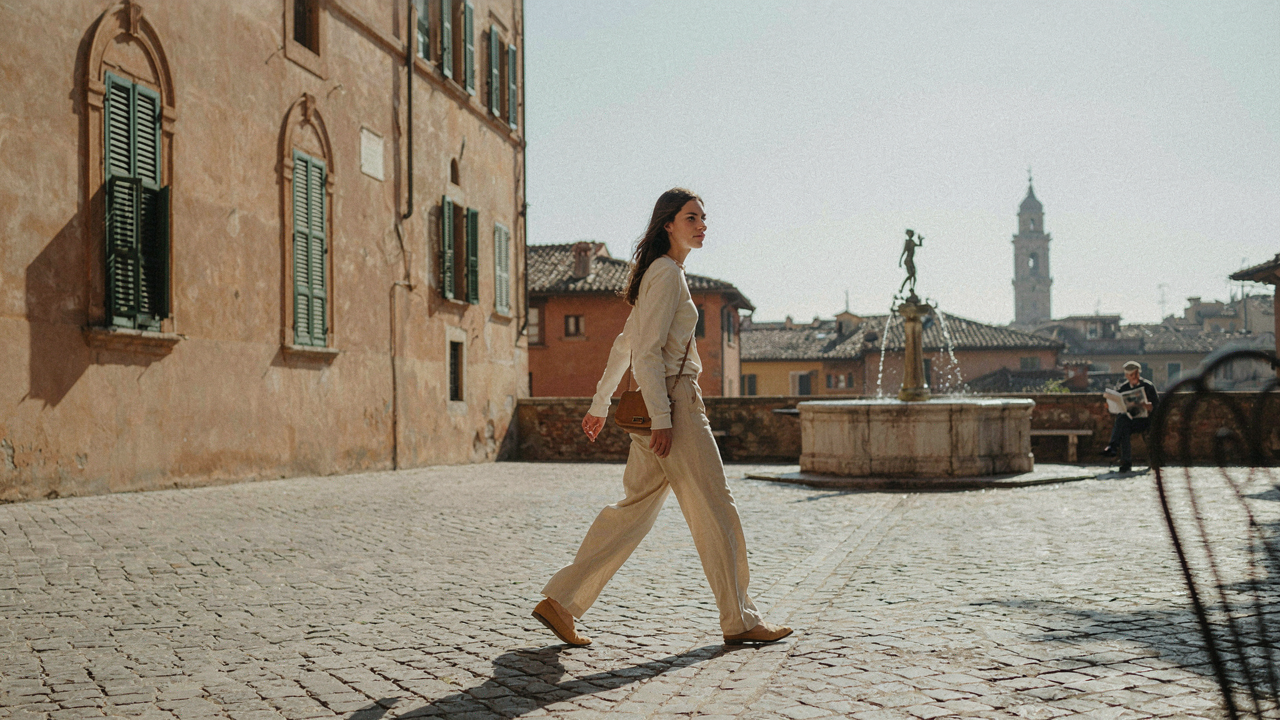
The Roman Heat Fallacy: Why Linen Isn’t Your Savior
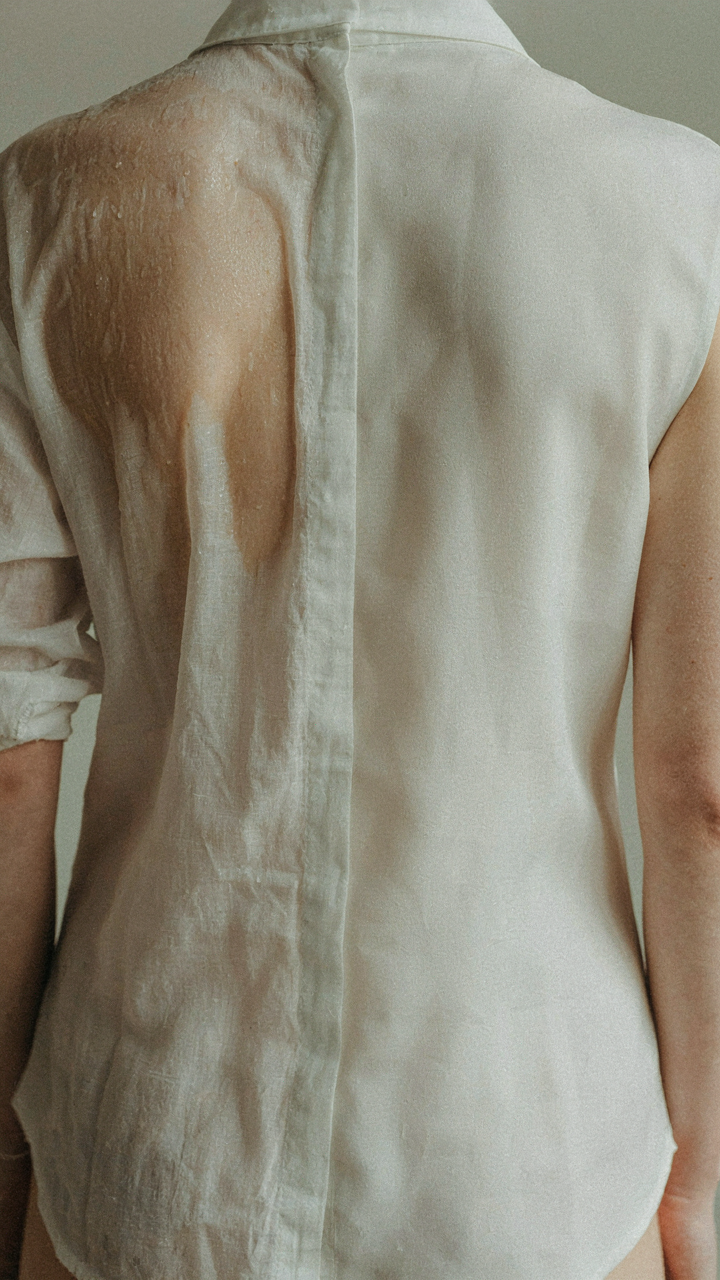
Fabric Performance Against Marketing Hype
You want linen because it signals taste and intelligence. Here’s what actually happens: linen breathes well, but the marketing around it ignores thermodynamics. Breathability means air moves through the fabric. Heat transfer requires the fabric to move moisture away from skin and release it fast. Linen does the first part. It fails at the second when sweat saturates it because the fiber swells and traps moisture against your body. Cotton behaves identically. Both fabrics feel damp within twenty minutes in 90-degree heat with humidity above 60 percent, which describes Rome in July and August perfectly.
The real mechanism is evaporative cooling. Sweat evaporates off skin, not off fabric. When fabric stays wet, evaporation stops. Synthetic blends perform better because they repel moisture instead of absorbing it, allowing sweat to transfer through the fabric faster and evaporate from the outer surface. Polyester mixed with nylon creates a moisture-wicking system. Natural fibers marketed as “breathable” are actually just comfortable failures. You’ll stay cooler in a technical blend than in premium linen, regardless of what your aesthetic preferences tell you.
Sweat Management Beats Perceived Style
The goal isn’t looking dry. The goal is preventing your core temperature from rising. Sweat management is pure function. Choose fabric that moves moisture away from skin quickly and dries fast, not fabric that feels natural or looks refined. A moisture-wicking synthetic shirt dries in four to six hours in summer sun. Linen dries in eight to twelve hours. The difference compounds over a full day of walking churches and narrow streets in Rome. You’re either creating conditions for your body to cool itself or you’re working against biology. There’s no middle ground here.
Wear the synthetic blend. Accept that it won’t feel as luxurious. The trade is direct: comfort and temperature control versus aesthetic signaling. Your body doesn’t care what label the fabric carries. It responds to physics. Buy a lightweight synthetic base layer in white or pale neutral tones. Pair it with shorts or lightweight pants in the same synthetic blend. Reserve linen for evening when temperatures drop. This isn’t a compromise. This is reading the conditions and responding strategically instead of following consensus opinion.
The Church Entry Scam: How Modesty Became A Tourist Trap
What Actually Gets You Inside
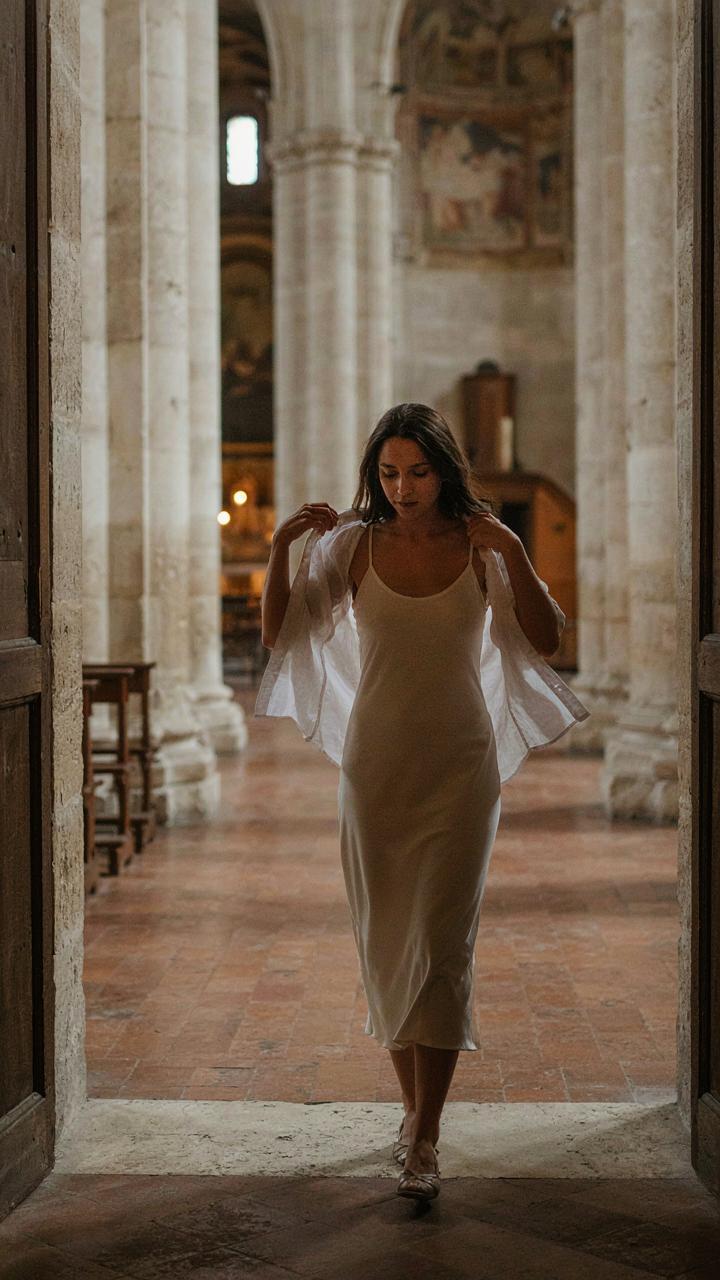
You’re anxious about breaking an unspoken rule and looking like an ignorant tourist. Here’s the mechanism: Italian churches enforce one actual rule, and you’ve internalized five fictional ones. The real requirement is covering shoulders and knees. That’s it. Everything else—the panic about sleeveless dresses, the fear of linen, the conviction that you need a cardigan—is theater you’ve bought into. Churches don’t have dress codes because modesty is sacred. They have them because uncovered shoulders and thighs create distraction during active worship. The rule is functional, not moral.

Most travel guides pad this section with vague warnings about “respect” and “cultural sensitivity.” Skip that noise. Italian summer temperatures hit 32°C regularly. You’re not covering yourself because it’s pious. You’re covering yourself because the rule exists, and compliance takes sixty seconds. The distinction matters because it kills the anxiety. You’re not sacrificing comfort for virtue. You’re following a simple operational requirement, the way you remove shoes in someone’s home. The lever here is transparency: once you name the actual mechanism, the decision becomes transactional instead of loaded.
Strategic Layering For Effortless Compliance
The common advice is to pack a dedicated cardigan or shawl. Wrong approach. You’re carrying dead weight through 32-degree heat because you didn’t recognize the real pattern. Use the garments you’re already wearing. A linen shirt stays in your day bag—not as a devoted cover-up, but as a base layer you’d wear anyway indoors when the heat drives you into air-conditioning. Throw it on when you approach a church entrance. Your brain stops spinning anxiety stories the moment you stop treating the covering as a special sacrifice.
The protocol is mechanical: before entering any church, scan for exposed skin between shoulder and elbow, and between knee and ankle. If you find it, add coverage from what’s in your bag. Linen works because it’s light and packs flat. A thin button-up shirt over a sleeveless dress takes up almost no space. You don’t need specialized travel wear—you need the same pieces everyone brings to Italy anyway, deployed strategically at church doors instead of languishing in your luggage.
The Italian Vacation Wardrobe: Deconstruct Your “Essentials” List
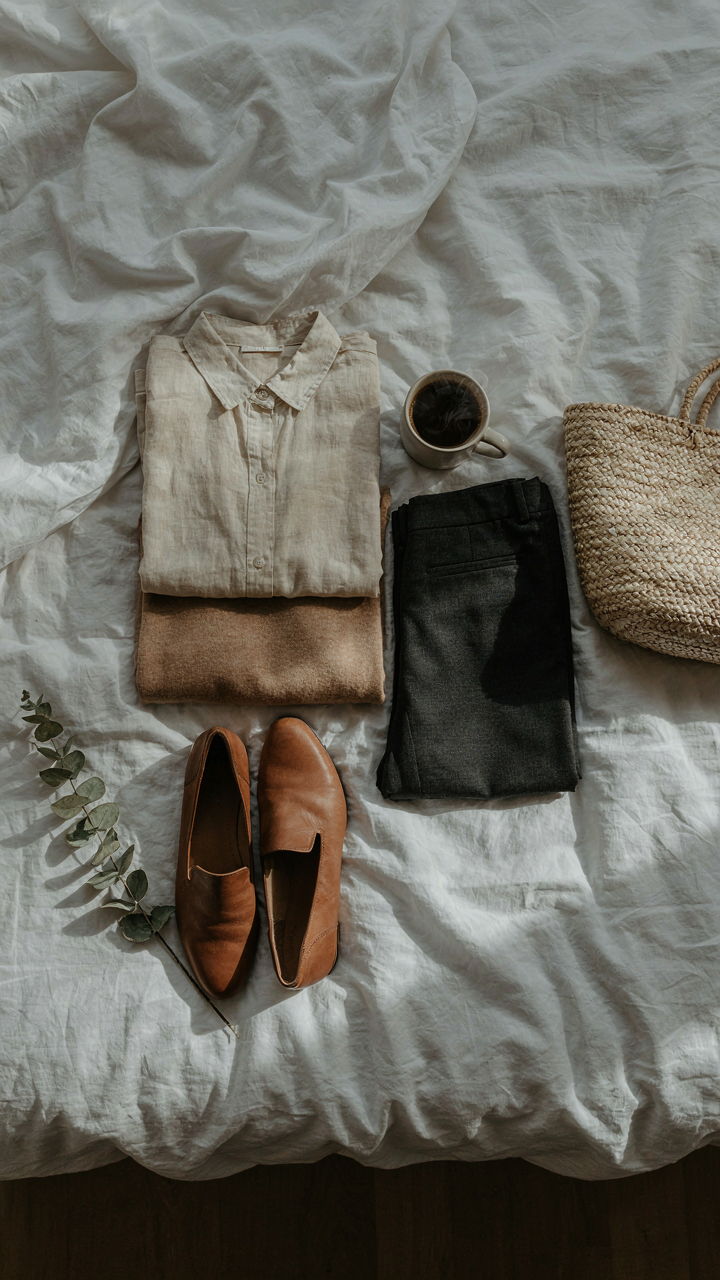
Pack Half Of What You Think You Need
You’re afraid of being underdressed, so you overpack to feel safe. The mechanism is simple: more clothes equals more decisions, more laundry, more friction. Italian summer demands constraint, not abundance. You’ll wear the same seven items on rotation because heat makes variety irrelevant. Every piece you pack that doesn’t earn its weight becomes dead weight in your bag and a decision tax in your mind.

Strip your list down by asking one question per item: does this solve a specific problem I’ll face, or does it just exist? A linen shirt handles heat and formality. Shorts handle casual days. One pair of walking shoes, one pair of sandals. One light layer for aggressive air conditioning indoors. Anything beyond this is negotiation with yourself you’ll lose anyway. Churches don’t care if you wore the same neutral pants three days running.
Function Before Fashion In Hot Weather
Think in terms of material science, not style. Cotton and linen have opposing mechanisms: cotton absorbs sweat and holds it against your skin, creating that clammy feeling. Linen wicks moisture away and dries fast, creating the opposite effect. The Italians understood this centuries before performance fabrics existed. In summer, linen isn’t a aesthetic choice—it’s a thermal regulation strategy that happens to look intentional.
Your wardrobe should operate on substitution, not addition. One neutral base color (cream, tan, or soft gray) paired with two accent pieces you can rotate through the week. This isn’t minimalism as a lifestyle choice—it’s operational efficiency. You reduce decision fatigue, pack lighter, and maintain the same effective outfit variety. The formula collapses if you add colors that don’t talk to each other. Stick with pieces that layer onto each other without creating visual conflict, then move through Italy without thinking about what you’re wearing.
The Footwear Illusion: Ditch The “Stylish” Pain
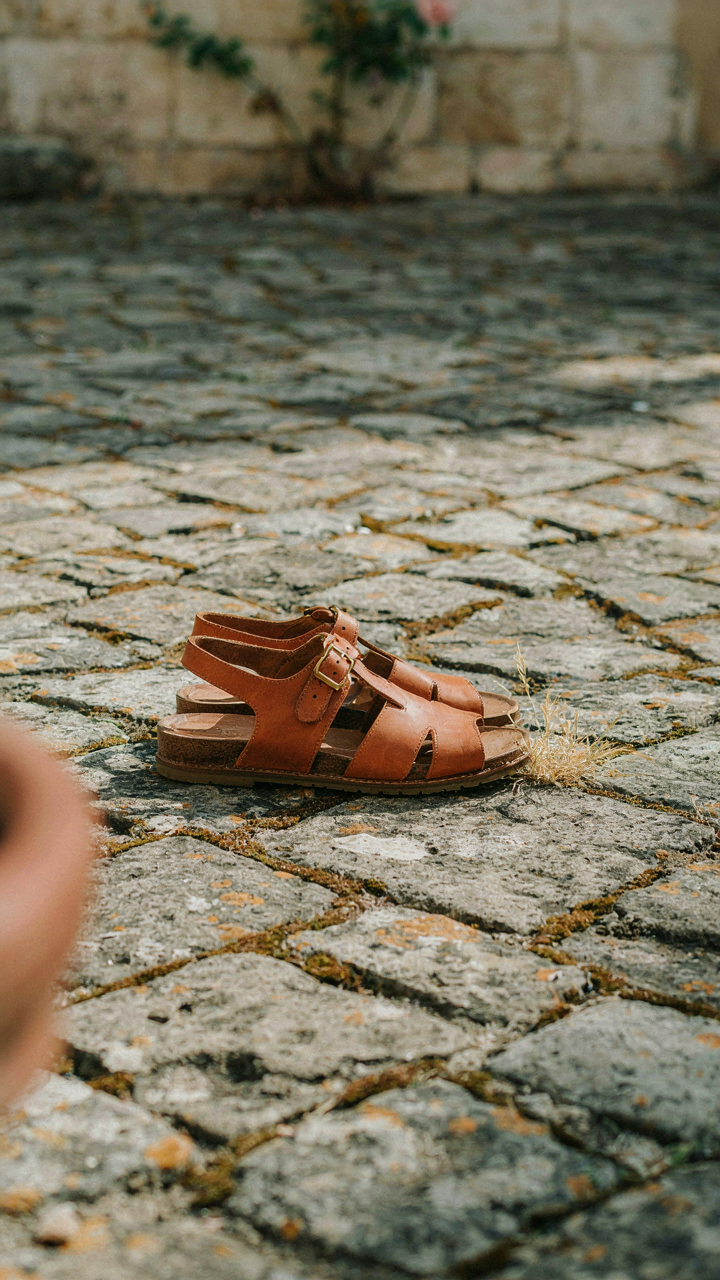
Arch Support And Sole Integrity
You want to look effortless in Italy, which means you’re willing to suffer for it. That’s the trap. The real mechanism here is biomechanics: your foot is a lever system, and a flat sole with zero arch support turns eight hours of walking into structural collapse. Cheap leather sandals and flimsy canvas sneakers fail because they offer no midfoot rigidity. Your arch flattens, your plantar fascia tightens, and by day three you’re limping through the Uffizi Gallery.

Real footwear for Italian summers needs a defined arch, not cushioning theater. Leather desert boots with firm insoles, quality leather sandals with contoured footbeds, or minimalist sneakers with actual arch structure work because they maintain the foot’s natural geometry under load. The sole matters more than aesthetics. A shoe that doesn’t collapse under your weight won’t fail you when you’re navigating cobblestone streets at 95 degrees. Pick footwear that supports the arch, and you’ll walk twice as far without degradation.
Shoe Rotation For Recovery
Rotating shoes isn’t luxury. It’s recovery protocol. When you wear the same pair daily in heat and humidity, the insole material compresses from sweat and foot strike, losing its structural properties by day five. The shoe never dries completely. Bacteria accelerate breakdown. A second pair lets the first pair decompress, dry fully, and regain its cushioning profile.
Bring two pairs minimum: one leather pair for churches and nicer situations, one breathable pair for daily walking. Wear them on alternating days. This extends both pairs’ functional life and prevents the foot pain that compounds as materials degrade. Your feet recover overnight when you rotate, not because rest is magic, but because you’re actually giving the shoe structure time to return to its original support geometry. Alternate daily and you reset the degradation cycle.
The Accessorizing Anomaly: Less Is Actually More
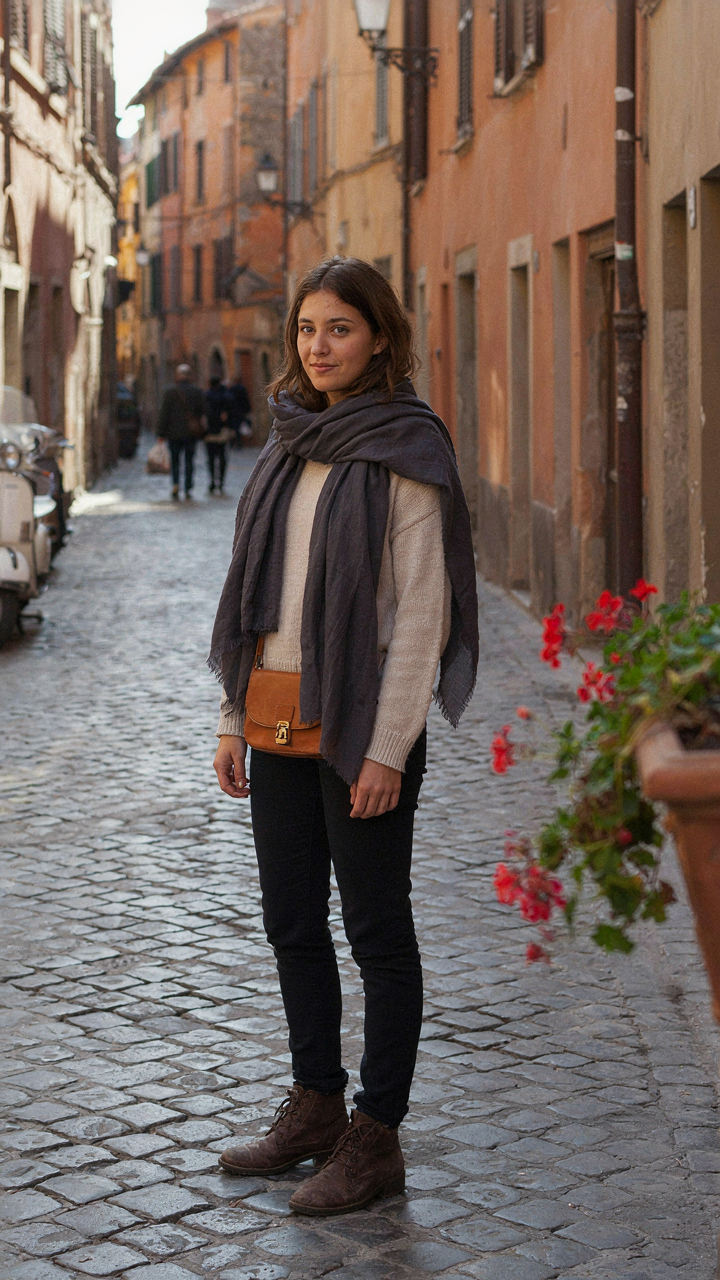
Carry Only What Survives Scrutiny
You want accessories to signal you belong, not that you’re a tourist fumbling through logistics. The mechanism is simple: every item you carry either solves a problem or creates one. In summer Italy, that means a single bag, a watch or nothing, sunglasses, and a scarf. Everything else gets left behind. Each piece must justify its weight and visibility. A crossbody bag in leather or canvas works because it keeps your hands free, sits against your body, and doesn’t scream “expensive camera rig.” Skip the fanny pack, the hiking backpack, the phone lanyard. They signal you haven’t planned the day.

The scarf isn’t decoration. It’s tactical. Use it for church shoulders, sun protection, or as a makeshift head covering when UV intensity peaks midday. Wear it draped once around the neck or knotted at your hip. A watch matters only if you’re wearing one already. If not, your phone does the job and pockets it. Sunglasses need real UV protection, not runway credibility. Polarized lenses reduce glare off stone buildings and water. Keep the frame simple. Oversized frames and mirrored lenses broadcast “I’m performing travel,” which invites vendors and pickpockets simultaneously.
Visibility Reduction Changes Behavior Toward You
Military strategy uses the term “signature” to describe how detectable you are to threats. In summer Italy, your accessory signature determines who approaches you and why. Visible expensive items, multiple bags, dangling cameras, and jewelry create a signature that attracts attention from vendors, scam operators, and pickpockets. Reduce it deliberately. A single small crossbody bag in neutral color, minimal jewelry, and no visible tech reduces your threat profile by lowering your perceived wealth and tourist status.
Leave the statement necklace at home. Skip the designer bag. One simple ring works if you wear one already. A single pair of drop earrings or small studs, nothing that dangles. Thieves on the street operate on quick visual assessment. They’re looking for easy targets: tourists with multiple bags, loose grip, expensive watches, large cameras around the neck. You want to blend into the background of locals running errands. The fewer and simpler your accessories, the faster vendors categorize you as someone not worth the sales pitch. This changes the entire dynamic of how people interact with you on the street.
The “Italy Outfits” Trap: Stop Copying Instagram
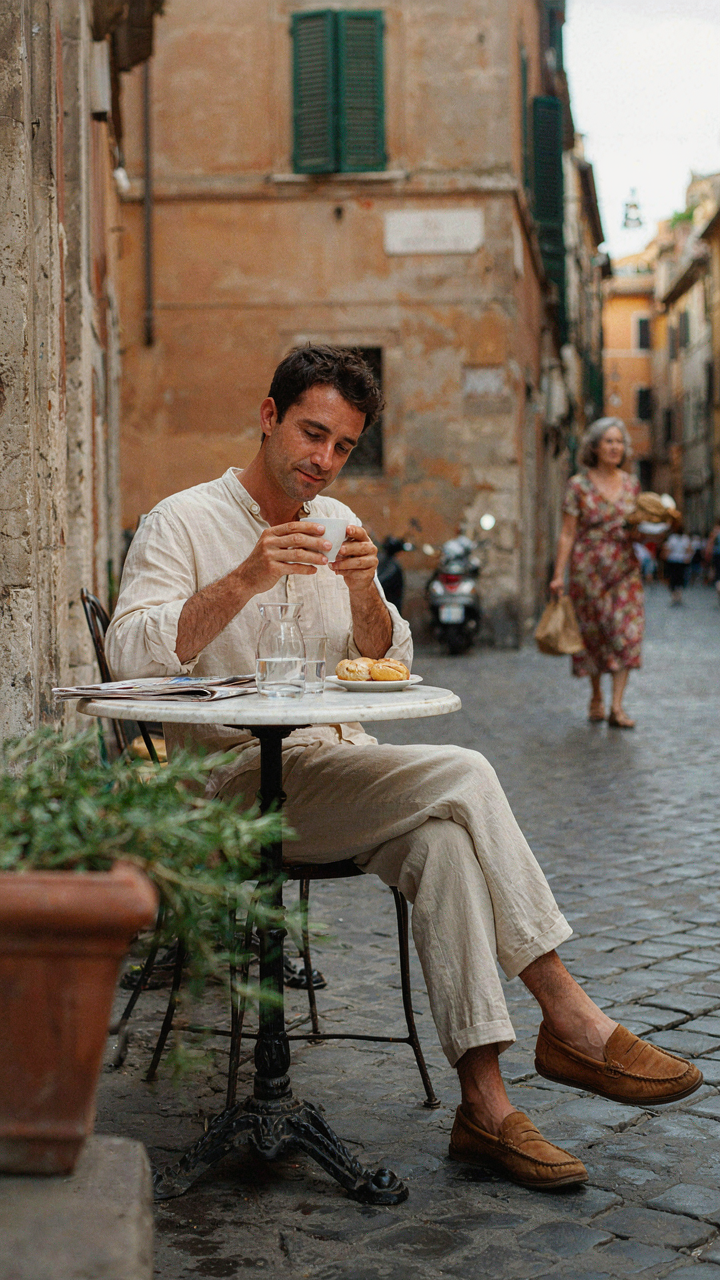
Authenticity Over The Performance
You want permission to look like you belong there without the anxiety of being spotted as a tourist. The mechanism is simple: Instagram Italy outfits are curated for the algorithm, not for the heat, the marble floors in churches, or the actual friction of moving through 35-degree days. They optimize for visual contrast and narrative, not function. You end up wearing linen pieces that photograph well but wrinkle within two hours, or choosing colors that look cohesive in a feed but clash with how light actually behaves in Mediterranean towns.

Real Italians in summer wear what solves their problem, not what tells a story. They own fewer pieces in neutral tones. They prioritize breathability over Instagram coherence. They know that lightweight cotton and linen in cream, white, and soft grey don’t fail under heat or inside dim churches. The gap between “Italy outfit” and actual functional Italian summer dressing is where most travelers waste money on pieces they’ll never wear again.
Build Your System, Ignore The Cycle
Trends in travel fashion move faster than your actual wardrobe rotation. By the time you buy the “it” pieces from summer travel content, the algorithm has moved on to the next aesthetic. Fashion economics teaches us that trend-driven purchases have the shortest utility curve. Your job is to build a personal uniform for summer heat and religious spaces, then stick to it.
Start with your climate reality: you need pieces that work at 32-38 degrees Celsius, dry quickly, don’t show sweat, and respect dress codes in basilicas and cathedrals. That means lightweight fabrics, loose fits, and strategic layering options. Ignore what performed well last season. Wear the same neutral base repeatedly, adjust your accessories, and move through Italy without the mental load of matching outfits to social expectations.
The Climate Adaptation Protocol: A Bio Mimicry Approach

How Desert Animals Dress Better Than You
You want to look like you belong in Italy, not like you’re suffering through it. That’s the real motive here. But the actual mechanism is thermoregulation: biology teaches us that survival in extreme heat requires loose, light-colored layers that trap air and reflect radiation, not skin exposure. Desert animals don’t strip down. They cover up strategically.

Linen and cotton in natural colors work because they’re porous enough to release body heat while creating a micro-climate of still air between fabric and skin. Italians wear long sleeves in summer specifically to block direct sun. The white shirt isn’t aesthetic tradition. It’s applied physics. Wear natural fibers in cream, white, or pale earth tones. Dark colors absorb heat and release it into your body. Skip the shorts and tank top strategy entirely.
Humidity Is A Heat Exchange System
The Mediterranean coast holds moisture that flat-brim advice ignores. Think of your skin as a heat exchanger: humidity prevents evaporative cooling, the primary mechanism your body uses to shed heat. High humidity means sweat doesn’t evaporate efficiently, so your body temperature rises faster than in dry climates. Standard summer wear logic fails here because it assumes dry heat.
Wear breathable, moisture-wicking natural fabrics that allow sweat to move away from skin without trapping it. Linen performs better than cotton in this scenario because it has lower moisture regain. Loose fit matters more than fabric choice because airflow management becomes your cooling system. Let fabric move against skin rather than cling. This is why Italians wear slightly loose linen shirts, not fitted athletic wear. The gap between fabric and body is functional, not stylistic.
The Amalfi Coast Outfits: Beyond The Resort Wear Facade
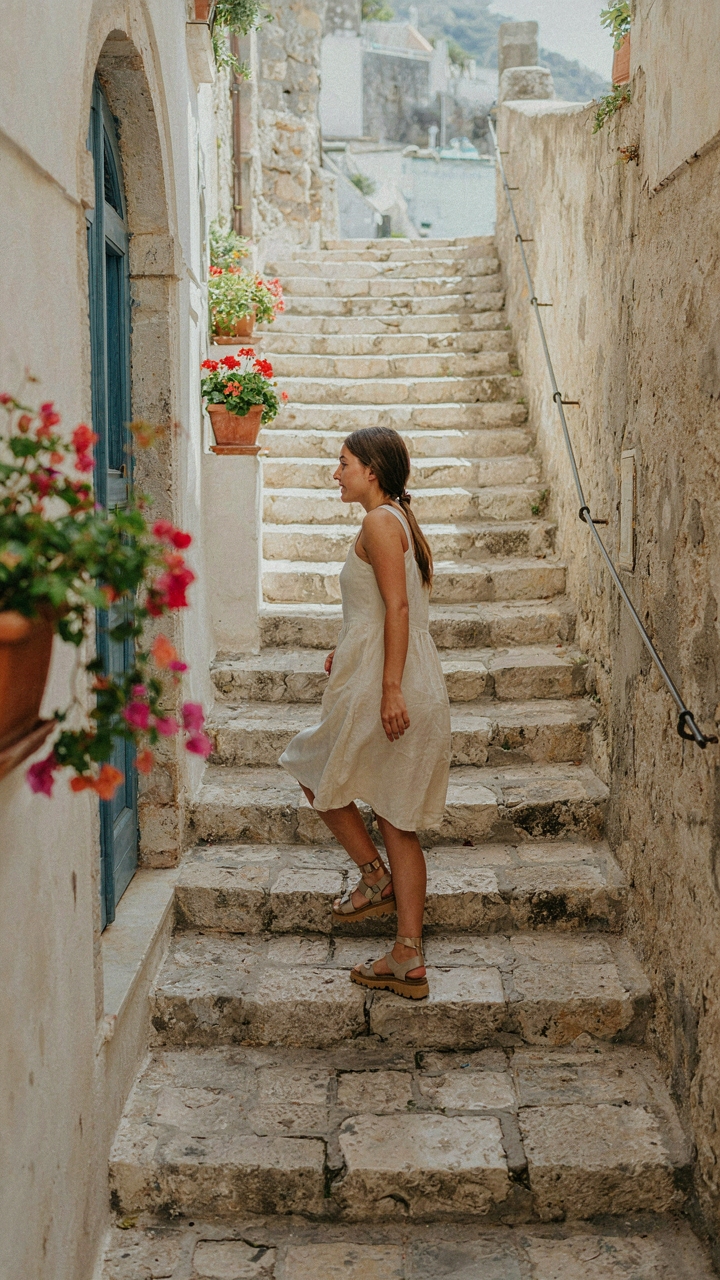
Footwear For Vertical Terrain And Water
You want to look effortless, which is exactly why you’ll fail on the Amalfi Coast if you pack the wrong shoes. The coastline isn’t a flat promenade. It’s stairs, uneven stone, boat decks, and sloped village streets that punish soft soles and narrow ankles. Boat travel compounds this: wet decks demand grip, not aesthetics.

Wear leather sandals with structured soles and ankle support, not flip-flops or minimalist slides. The Amalfi region’s rough terrain functions like a traction test in materials science: your shoe becomes a variable affecting stability and injury risk. Vibram or equivalent rubber outsoles grip both dry and wet surfaces. Closed-toe options like canvas slip-ons work for boat transfers. Pack one pair only, worn daily, broken in before departure.
Dressing Around Tourist Uniform Mistakes
Everyone photographs the same way on the Amalfi Coast because everyone wears the same thing: oversized linen, straw hats, gold jewelry, and pastels that signal “vacation mode.” This is visible conformity masking practical failure. Those outfits photograph well stationary. They collapse under actual use.
Skip the Instagram uniform. Wear fitted linen or cotton blends instead of oversized pieces that cling when sweat-damp and billow awkwardly on boat rides. A baseball cap outperforms straw for sun protection and stays on during wind. One neutral-toned sundress or two pairs of lightweight chinos work better than rotating six items. Quality basics in cream, white, and navy layer through churches and restaurants without triggering dress code friction. Choose functionality first, then photograph the result.
The Paris Summer Outfits And Spain Outfit: Cross Contamination Errors
Why Paris And Spain Advice Breaks Down In Italy
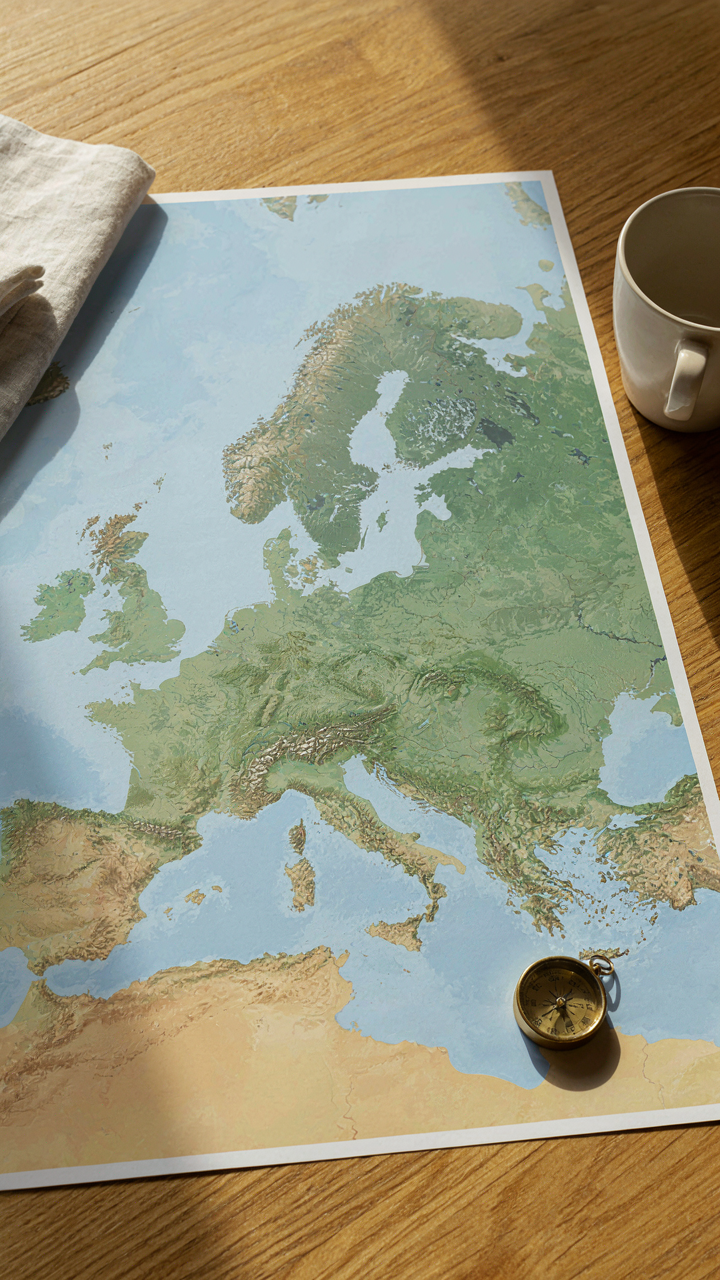
You’re copying Pinterest boards from cooler climates because you want proof you’ll look right. Here’s the mechanism: climate zones operate like supply chains. Paris summers peak around 77°F with moderate humidity. Spain’s coast runs 82°F with sea breeze regulation. Italy’s interior hits 95°F with trapped heat and zero air movement. The fabric weight that works in one zone becomes a liability in another. Cotton that breathes in Barcelona suffocates in Florence.

The mistake isn’t wearing linen instead of cotton. The mistake is thinking regional fashion advice transfers across different thermal environments. Paris favors structured pieces because cooler air supports fabric architecture. Spanish coastal style relies on loose cuts that catch wind. Italian summer demands complete system redesign: looser weave, lighter base layers, different silhouette rules. Your outfit template won’t survive the temperature differential. You need to recalibrate every variable.
Stop Borrowing Frameworks That Don’t Fit Your Context
The common advice tells you to “adapt Paris style” or “go minimal like Spain.” That’s incomplete. Both regions have lower sweat production and lower sun intensity than central Italy. Paris and coastal Spain benefit from ocean proximity or continental cooling. Rome, Milan in August, Florence don’t have that buffer. You’re working with raw heat reflection off stone streets and zero escape routes.
Tailor your approach to Italy’s specific mechanics: high UV index, limited shade, sustained ground heat, crowded churches requiring covered shoulders and knees. A sleeveless linen shirt works in Barcelona because sea air keeps skin dry. The same shirt in Rome makes sweat visible within twenty minutes and violates church dress codes entirely. Build your outfit system around Italian constraints, not borrowed regional aesthetics. Your first move is always: identify what churches you’ll enter, then work backward to define coverage requirements, then forward to manage thermoregulation in exposed areas.
The “What To Wear In Italy” Paradox: The Real Solution
Comfort As The Ultimate Elegance
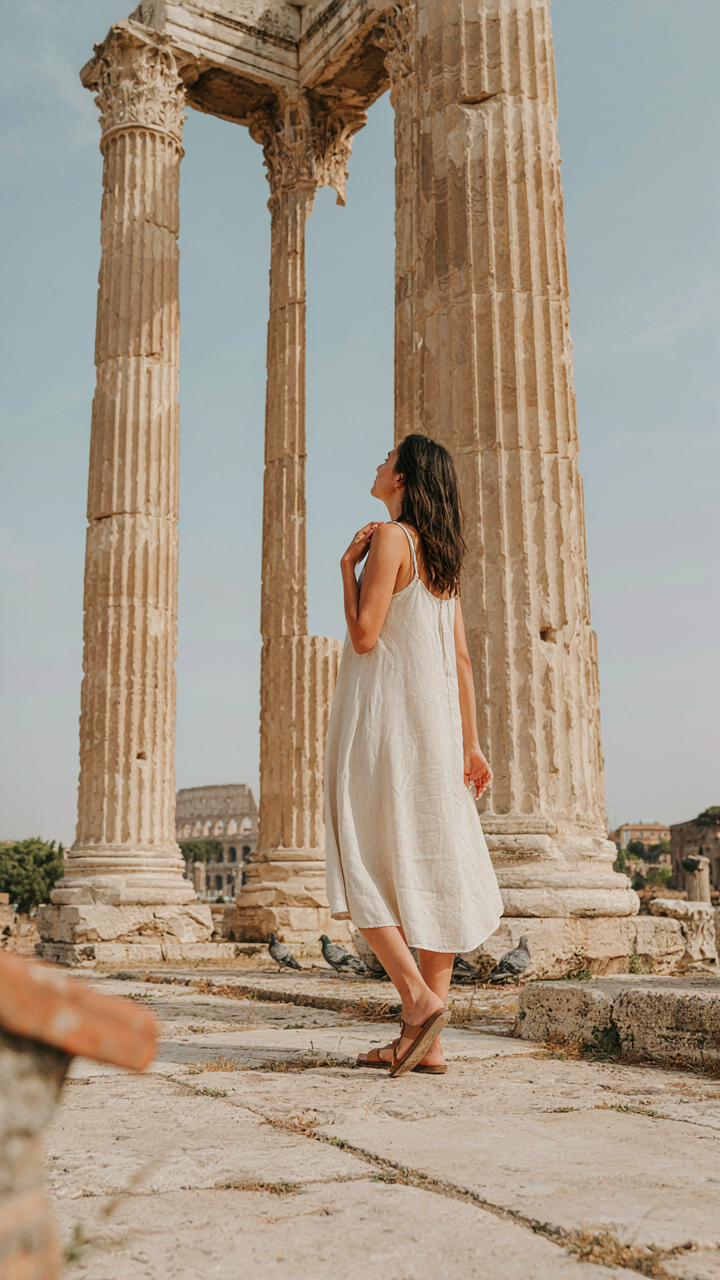
You’re worried people will judge you for sweating through your shirt. Here’s the mechanism: the moment you stop performing for invisible observers, you actually look better. Italian summer heat demands you abandon the costume mentality entirely. Comfort isn’t a compromise on style—it’s the foundation that makes style visible. When your body isn’t fighting the climate, your clothing choices read as intentional instead of desperate.
The best-dressed people in Italy during summer wear linen, cotton, and lightweight wool because these fabrics work with physiology, not against it. They choose loose cuts that breathe, neutral colors that don’t absorb heat, and minimal layers. This isn’t noble suffering—it’s engineering. Italians perfected this centuries ago by necessity. Your job is to copy the system, not reinvent it around ego.
Prioritize Moments Over Appearances
Treating clothing as a performance metric wastes the actual resource: time in a place you’ll never experience exactly this way again. Economics calls this opportunity cost—the real value you sacrifice by choosing the wrong path. You can either spend mental energy obsessing over outfit coordination in 95-degree heat, or you can allocate that energy toward the cathedral, the meal, the conversation. Experiences compound. Outfit regret evaporates.
- Lightweight linen button-ups: Breathe in extreme heat, dry quickly, wrinkle naturally without looking sloppy. Pair with neutral trousers or shorts for churches and casual settings.
- Flat-front shorts in neutral tones: Khaki, cream, or soft grey work everywhere from markets to casual dinners. Hit just above the knee for appropriateness without restriction.
- Breathable walking shoes: Leather sneakers or suede loafers prevent blistering during hours on stone streets. Avoid rubber-soled athletic shoes that trap heat and moisture.
- Lightweight scarf or shawl: Functions as both sun protection and shoulder covering for churches. Fold compactly into your bag—it occupies almost no space.
- Moisture-wicking undergarments: Technical fabrics prevent chafing and visible sweat marks better than cotton. Worn under natural fabrics, they solve the problem invisibly.
The mechanism is simple: pack items that solve multiple problems at once, then stop thinking about clothing. You enter a church dry and appropriate. You walk six hours and your feet don’t hurt. You stay cool without constantly adjusting fabric. This frees your brain to actually absorb the place instead of managing your appearance.
Your Fear Of Being Underdressed Is Just A Symptom Of Overthinking A Simple Problem
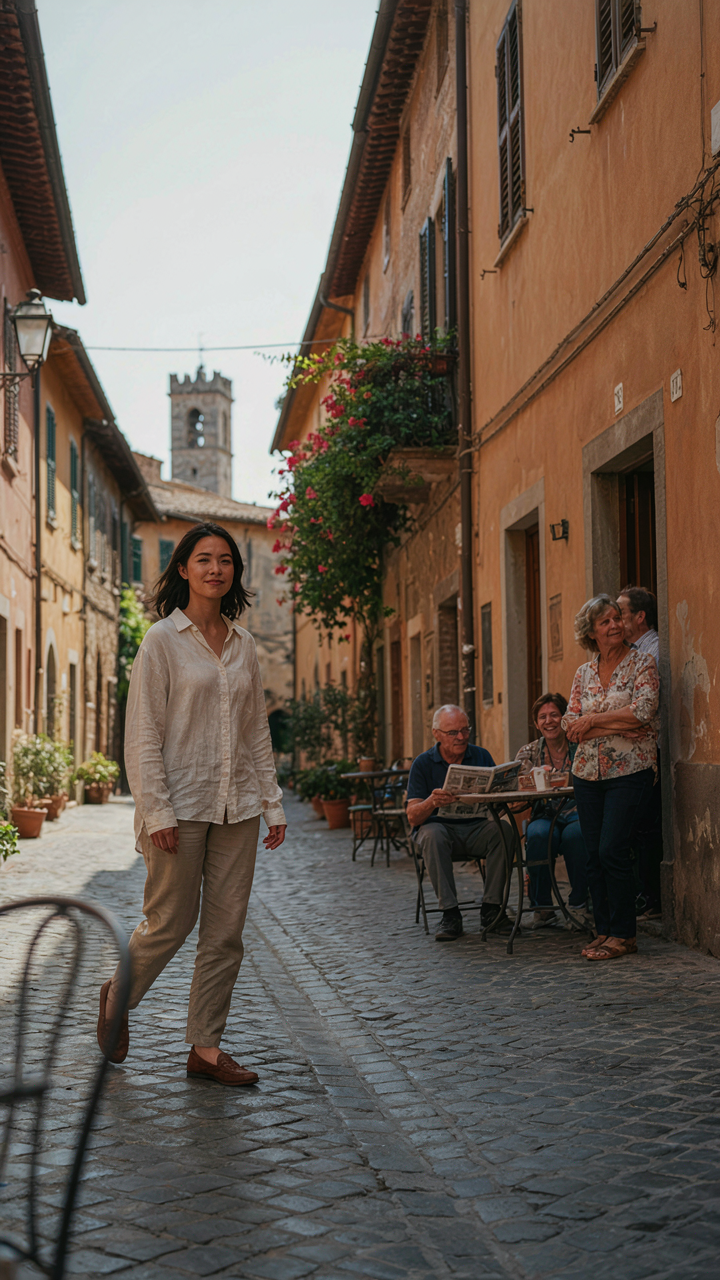
You’re not worried about fabric weight or neckline rules. You’re worried about being seen as someone who doesn’t belong. Here’s the shift: Italians don’t judge visitors for dressing like visitors. They judge visitors for dressing like they’re still at home. Buy one linen shirt today. Wear it. Realize nobody cares. Everything else you pack becomes noise because you’ve already solved the only problem that mattered: you showed up willing to adapt instead of demanding the world match your closet.