

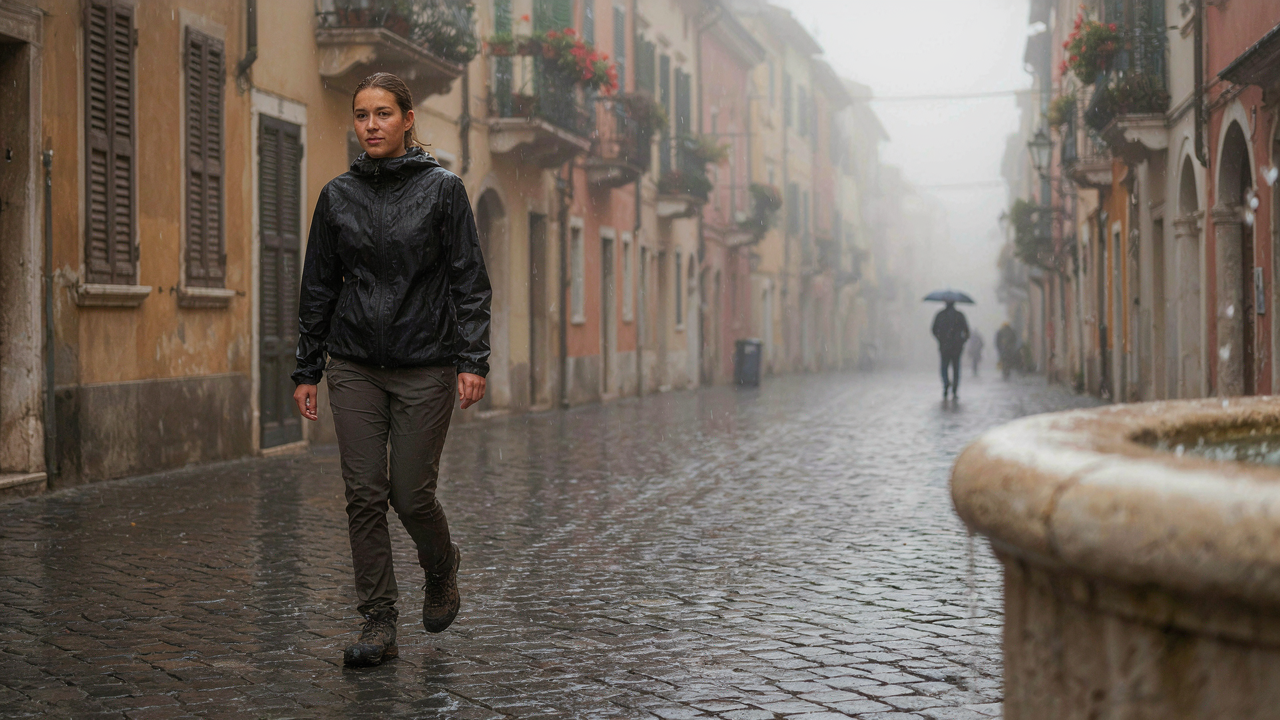
The Hydro Dynamic Protocol: Forget Waterproof, Embrace Quick Dry
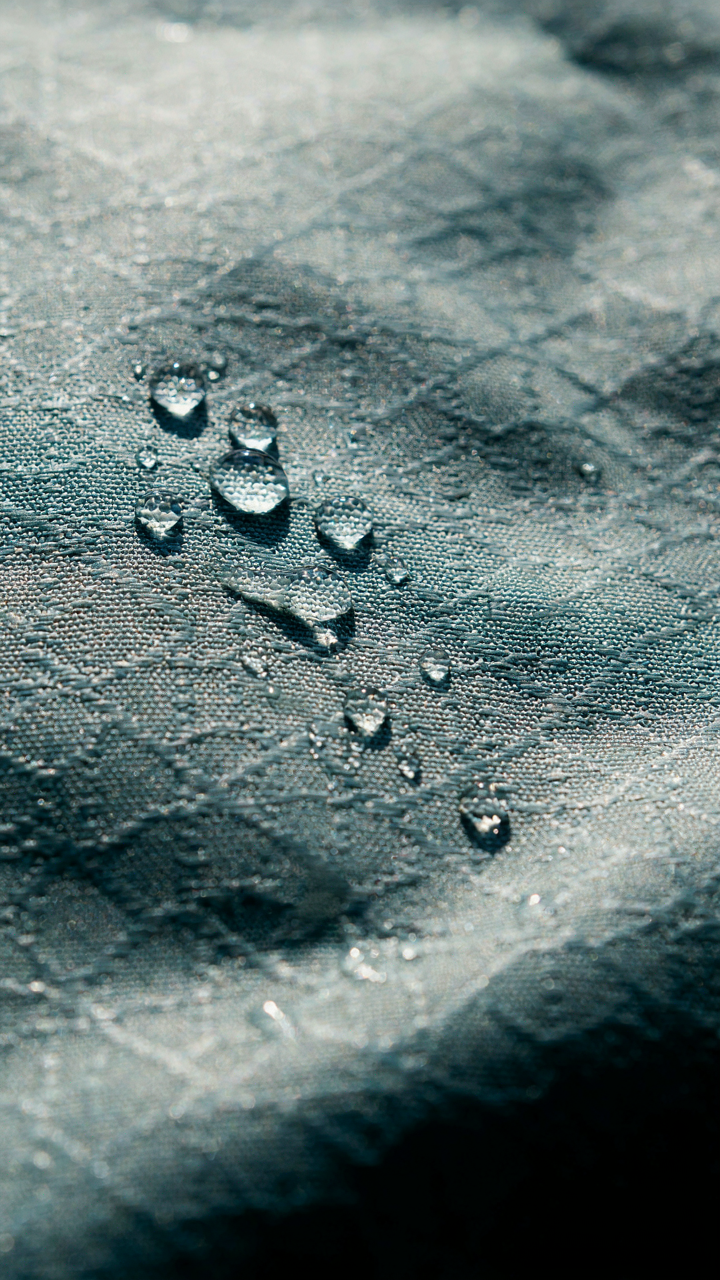
Synthetics Hold Water, Then Release It
You want waterproof because you think it means staying dry. It doesn’t. Waterproof fabrics trap moisture inside the garment, which means sweat stays trapped against your skin while rain sits in the weave. The real mechanism borrowed from materials science: fiber hydrophobicity determines whether water beads on the surface or absorbs into the yarn itself. Synthetic fibers like polyester and nylon reject water at the molecular level, but they still need a pathway to move moisture away from your body through the fabric structure.
Natural fibers absorb water into their cellular structure, which makes them slower to dry and heavier when wet. Wool is the exception because lanolin creates temporary water resistance, but it still absorbs moisture internally and takes hours to dry. For a rainy destination capsule, synthetics win because they move moisture through the fabric rather than storing it. Patagonia’s research on athletic synthetics shows polyester moves moisture three times faster than cotton when both are wet. Your base layers and outer shells should prioritize synthetic content, not cotton blends that manufacturers market as breathable compromises.
The Weave That Won’t Hold Rain
Everyone talks about breathability as if it’s a single property. It’s not. Breathability is actually the balance between two opposing forces: how fast water vapor escapes versus how fast liquid water penetrates. A tight weave blocks rain but traps sweat. A loose weave breathes but wicks rain inward. The real distinction is between hydrophobic weaves and wicking geometries. Ripstop and tight basketweave patterns create surface tension that repels standing water, while microfiber and nylon taffeta use their texture to move moisture laterally across the fabric before it soaks through.
Moisture wicking works through capillary action, the same force that moves water up a plant stem against gravity. Your fabric should move sweat away from skin horizontally, then release it to the air at the outer surface. Test this yourself: spray water on a synthetic shirt with a tight weave versus a loose one. The tight weave creates beads that roll off. The loose weave absorbs them. For a capsule built around quick dry, select garments with synthetic microfiber weaves or ripstop patterns that repel water on contact while the fiber composition itself evaporates residual moisture in under two hours of air exposure.
Rainy Season Outfit: The Evaporation Economy Of Layers
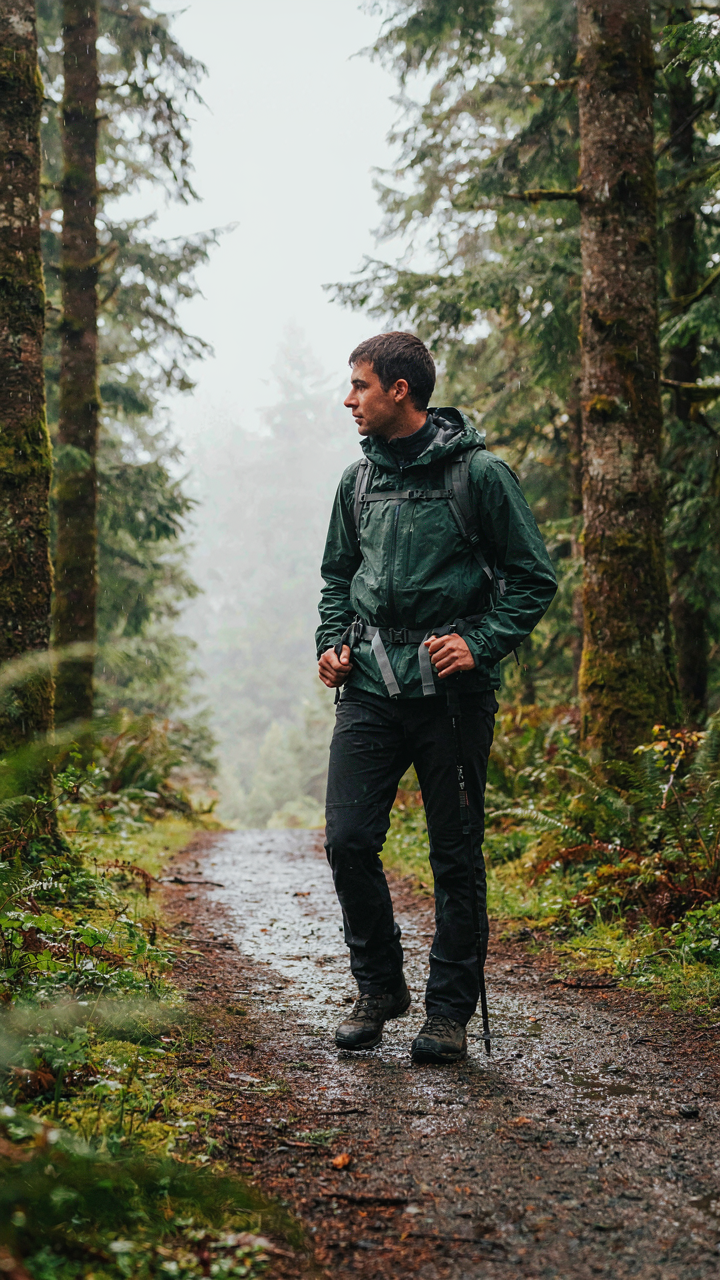
Base Layers That Move Water Away From Skin
You want to look like you have your life together while staying dry. The real mechanism is capillary action, borrowed from physics: water moves through a material along a gradient from wet to dry. Your base layer’s job is to reverse that gradient so moisture travels away from your skin toward the next layer, where it can evaporate. Cotton does the opposite. It absorbs water and holds it against your body like a sponge, which is why the generic “dress in layers” advice fails in humid rain climates.

Synthetic base layers and merino wool both wick moisture through capillary action, but they behave differently. Synthetics like polyester or polypropylene dry fastest because they repel water chemically and move it outward aggressively. Merino wool wicks more slowly but handles temperature regulation better and resists odor across multiple wear cycles. Choose synthetics if you’re in steady rain and need garments dry within hours. Choose merino if you’re layering for variable conditions and plan to wear pieces multiple days between washes. The base layer is your moisture traffic controller, not your insulator.
Mid Layers For Warmth Without Bulk
Warmth without volume seems contradictory until you understand that insulation traps dead air, not the material itself. The material is just architecture for that air. In rainy climates, most people overpack jackets and fleece, then get damp because they can’t layer efficiently. Fleece works in dry cold but becomes a moisture trap in rain because it holds water between fibers and takes hours to dry. Synthetic quilted jackets and down alternatives beat fleece because they compress tighter, dry faster, and don’t absorb water the same way.
The mechanical advantage is this: a thin synthetic quilt layer under a waterproof shell outperforms a thick fleece alone and dries 40 percent faster because water moves through fewer fiber layers to reach air. Pick a mid-layer rated for 40 to 60 grams of insulation, not the bulkier 100 to 200 gram versions marketed for extreme cold. Pair it with your base layer and shell, then monitor how your skin feels. If you’re sweating or damp, you’re over-insulated and creating humidity inside your own microclimate. Strip the mid-layer and let the base layer and shell manage moisture alone.
Capsule Outfits: The Strategic Weight Reduction Principle
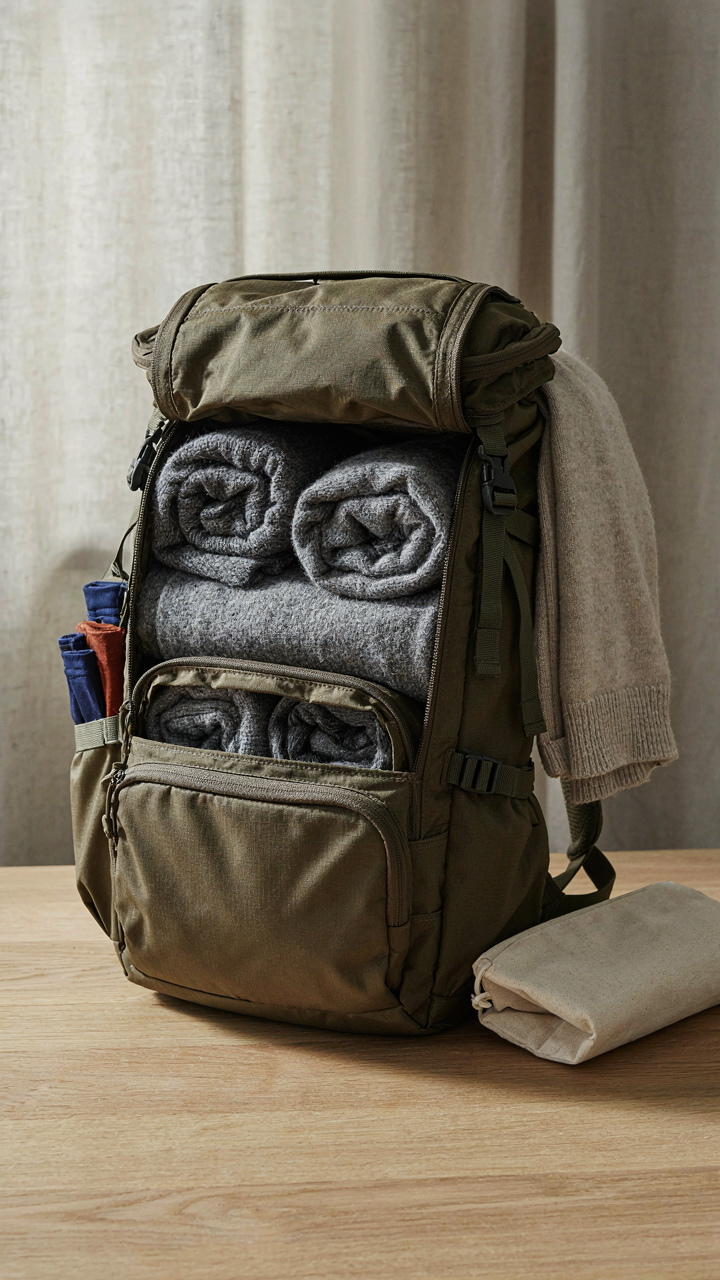
Density Over Quantity
You want to pack light without looking like you packed light. That’s the real tension here. The mechanism is straightforward: in wet climates, volume kills you because damp fabric takes up more physical space than dry fabric, and wet gear doesn’t compress the way dry gear does. Think in terms of physics—specifically density. A capsule wardrobe for rainy destinations operates on the density principle: maximize output per unit of weight and space carried.

The math is brutal. A single merino wool sweater works across ten outfit combinations. A cotton sweatshirt works in two. You’re not building an outfit collection. You’re building a system where each piece earns its spot through sheer functional overlap. Strip out anything that serves only one purpose, one season, one mood. What remains is what actually travels.
Interchangeable Layers Without The Waste
Most advice tells you to pack neutral colors and basic shapes. That’s incomplete. The real move is building pieces that layer across body positions and weather states without redundancy. A lightweight rain shell worn alone works over t-shirts in drizzle, over sweaters in downpour, and alone when humidity peaks. One piece. Three deployment modes.
Eliminate the backup. You don’t need a rain jacket and a windbreaker. You don’t need dark jeans and black chinos. You pick the single version that dries fastest and performs in the widest temperature band. Then you stop. Quick-dry synthetic blends in outerwear, merino wool bases that manage moisture without absorbing it—these aren’t luxury choices. They’re the only rational choices when your clothes must function wet and dry equally well. Each piece you keep must perform across at least three distinct scenarios.
Travel Capsule Wardrobe: The Alaskan Cruise Outfitting Anomaly
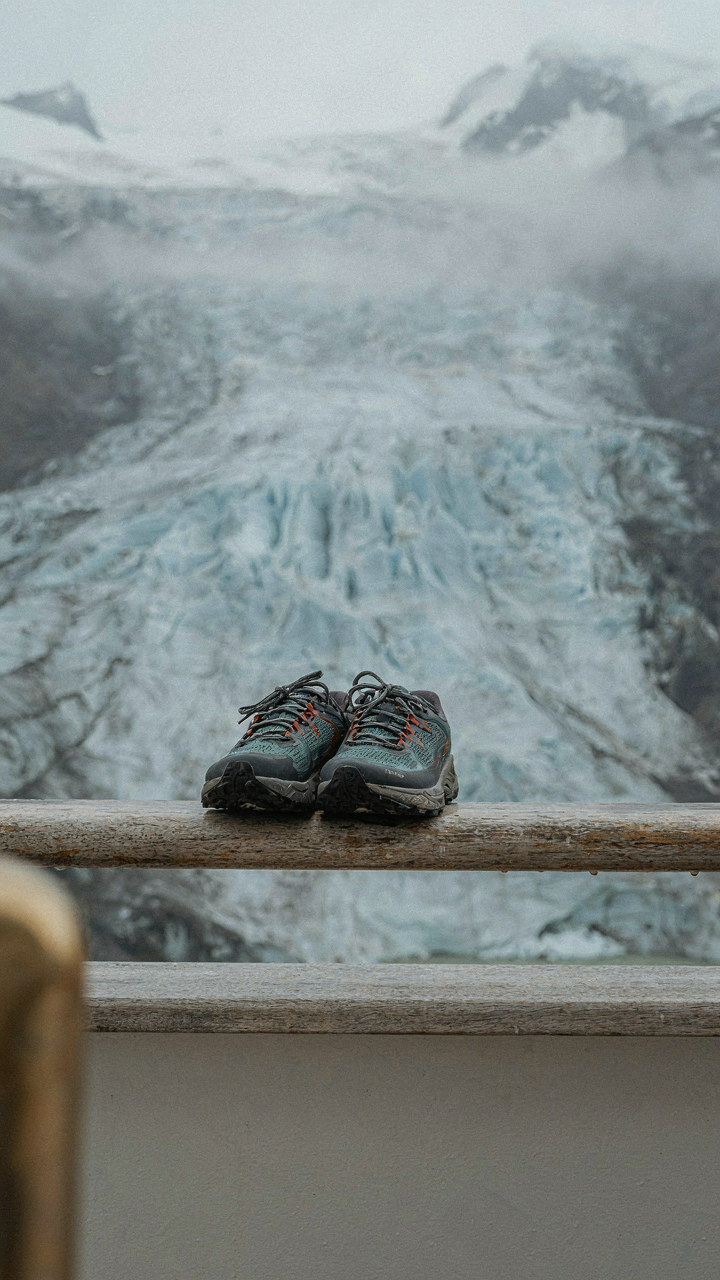
Temperature Layering Across Microclimates
You’re worried you’ll look unprepared or get stuck shivering in front of people. The real mechanism is thermodynamic stratification: different elevations and proximity to water create distinct temperature zones on a single ship and across ports. An Alaskan cruise moves you between glacier-adjacent decks (32–45°F), cabin interiors (70°F), and protected ports (40–55°F) in hours. You don’t need more clothes. You need the right base, mid, and outer layers that work across all zones without redundancy.

Merino wool or synthetic base layers are non-negotiable because they insulate while wet and dry in transit between zones. Mid-layer fleece should compress small enough to stash in a daypack. Your outer shell handles wind and precipitation but stays breathable so you don’t sweat indoors. Most travelers pack three complete outfits when they need one outfit’s worth of pieces mixed across three temperature bands. The mistake is treating each port as a separate climate instead of a spectrum you move through continuously.
Footwear Built For Evaporation, Not Just Water Resistance
The consensus is wrong here. Waterproof does not mean fast-drying. Waterproof hiking boots trap moisture inside the liner and take 24+ hours to dry. On a cruise where you move ports every two days, wet feet become a logistics problem, not a minor annoyance. Physics demands that your footwear prioritize evaporative surface area and material composition over barrier waterproofing.
Neoprene-lined shoes or trail runners with mesh uppers shed water fast because they’re designed to drain, not seal. Vibram or similar aggressive soles grip wet wooden docks and slippery glacier walks without slipping. Wear one pair daily, keep them on the cabin balcony overnight where sea wind and temperature swing accelerate drying. Pack a second pair identical to the first so you can rotate. This isn’t luxury. It’s the operating protocol for staying functional across consecutive wet days.
Fashion Capsule Wardrobe: The Thermodynamic Efficiency System
Why Fabric Weight Actually Matters
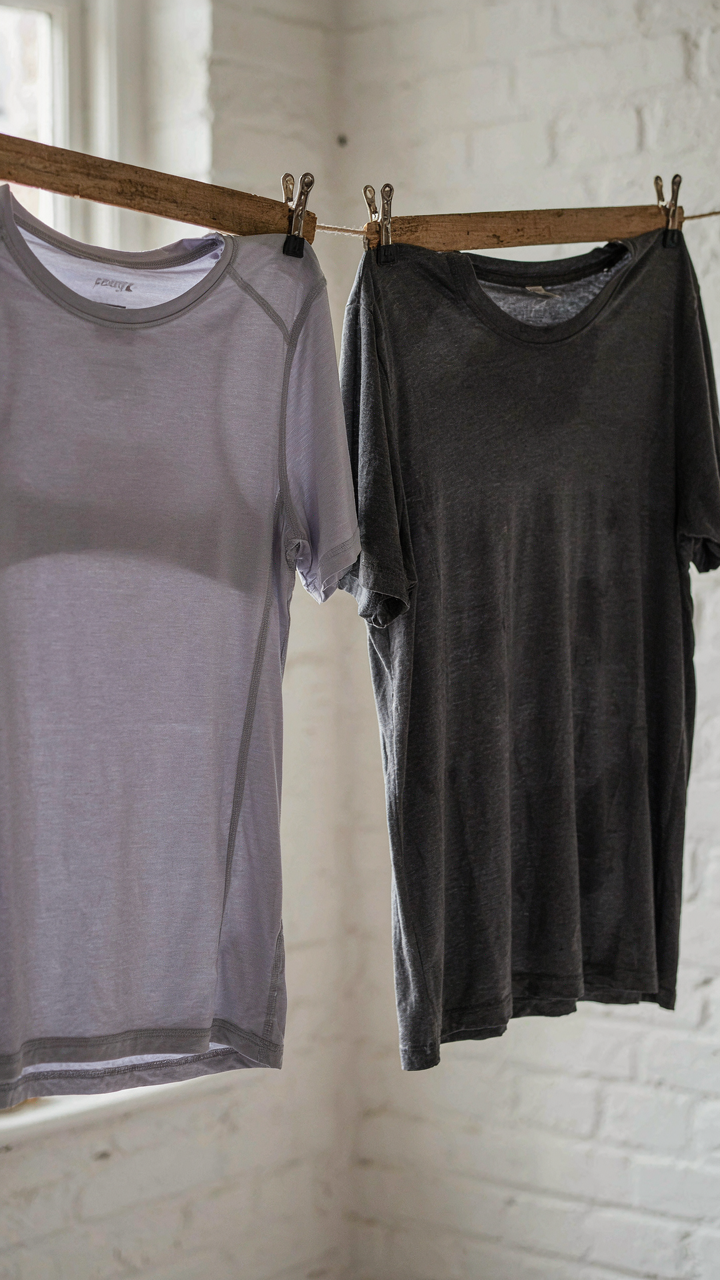
You want to pack less and look composed while soaked. That’s not shallow—it’s logistics. Thermodynamics governs how fast water leaves cloth: heat transfer moves moisture from fabric surface to air. Heavier materials trap water longer because they absorb more volume and release it slower. A 200-gram merino wool shirt holds more moisture than a 120-gram synthetic blend. The mechanism is simple: surface area exposure combined with material density determines evaporation rate. Choose lighter base layers and shells that shed water fast, not ones that absorb it like insulation.

Most capsule advice skips this entirely and just says “pick quality fabrics.” Wrong. Quality alone doesn’t accelerate drying. A premium cotton t-shirt still weighs down with water for hours. The real move is matching fabric construction to weather exposure. Tight weave synthetics with low gsm (grams per square meter) dry in two to three hours. Dense wools dry in four to six. Cotton dries in eight-plus hours. When you’re in a rainy destination, drying speed determines how many pieces you actually need.
The Layering Stack That Resets Between Days
Stop treating layers as insulation choices alone. Each layer’s primary job in rain is managing moisture without trapping it. A synthetic base layer wicks sweat away from skin into the mid-layer. The mid-layer pulls moisture up and outward. The outer shell blocks incoming rain while letting internal vapor escape. This sequence only works if each material plays its role—and each dries independently.
The common mistake: wearing cotton anywhere near your skin in rainy climates. Cotton absorbs sweat, keeps moisture against your body, and takes twelve-plus hours to dry. Synthetic or merino base layers wick moisture outward in minutes. Mid-layer fleece or thin wool moves that moisture further out. Your shell stays dry on the outside, damp on the inside—and air-dries overnight on a chair. This stack means you rotate three pieces across two days instead of carrying six.
The Minimalist’s Monsoon Manual: Gear That Pulls Its Weight
Quick Dry Accessories That Earn Their Space
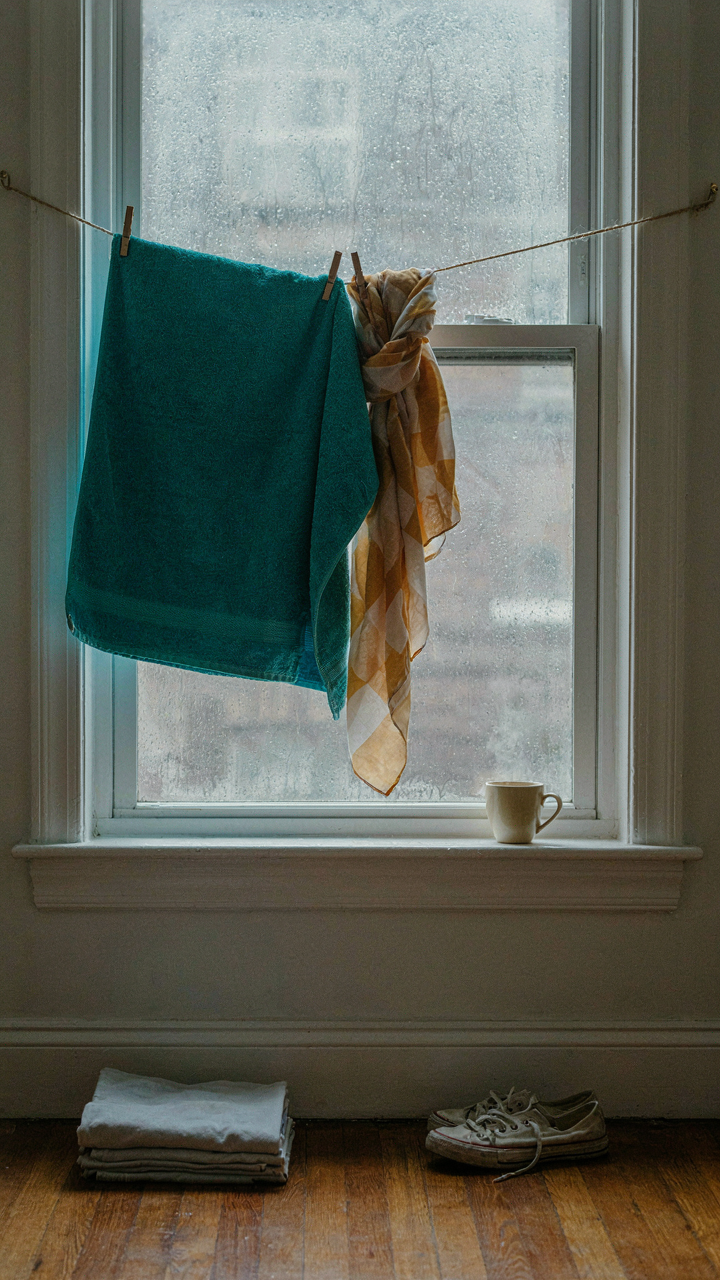
You want to look like you have it together in wet climates without hauling a steamer trunk. The real mechanism is evaporation rate: synthetic materials shed water faster than natural fibers because they don’t absorb moisture into their structure. Cotton holds water. Nylon and polyester reject it.
- Microfiber Towel: Dries in 2-4 hours versus cotton’s 8-12. Packs to the size of a water bottle. Essential for face, hands, and quick gear dry-downs throughout the day.
- Synthetic Scarf: Acts as neck coverage and emergency hand towel. Nylon or polyester blends dry within an hour. Weighs almost nothing and doubles as a sun barrier.
- Wool Beanie: Merino wool regulates temperature when wet and resists mildew better than synthetics. Won’t smell after three rainy days of wear. One beanie covers your entire head rotation.
- Fast Dry Socks: Merino wool or nylon blend, not cotton. Dries in 4-6 hours hanging indoors. Buy two pairs maximum to rotate while one dries.
- Compact Umbrella: Nylon canopy with metal frame. Folds to 7-8 inches. Keeps your torso dry while hands stay free for walking uneven terrain.
These items compress into a fist-sized packing cube and handle 80 percent of moisture management. The constraint isn’t space. It’s choosing materials that work against water instead of fighting it.
Hanging And Stacking Wet Items Without Mold
Most guides tell you to “air dry everything properly” then vanish. That’s incomplete. The actual problem is airflow. A wet jacket draped over a chair in a 70-square-foot hotel room creates a humidity pocket that breeds mold spores within 18 hours, regardless of how “open” the space feels.
Open the window. Position wet items three feet away from it on a rack or towel rod. This creates a pressure gradient that pulls moisture out instead of trapping it. Use gravity: hang items vertically rather than laying them flat. Pants on a hanger dry 40 percent faster than pants on a chair. Place a towel underneath hanging items to catch drips and protect flooring. Rotate items once midday. If no window exists, use the bathroom exhaust fan while keeping the door cracked. Check your items every 8-12 hours. If they still feel damp past that window, they won’t dry indoors and mildew will set in.
Rainy Capsule Wardrobe: The Post Storm Recovery Protocol
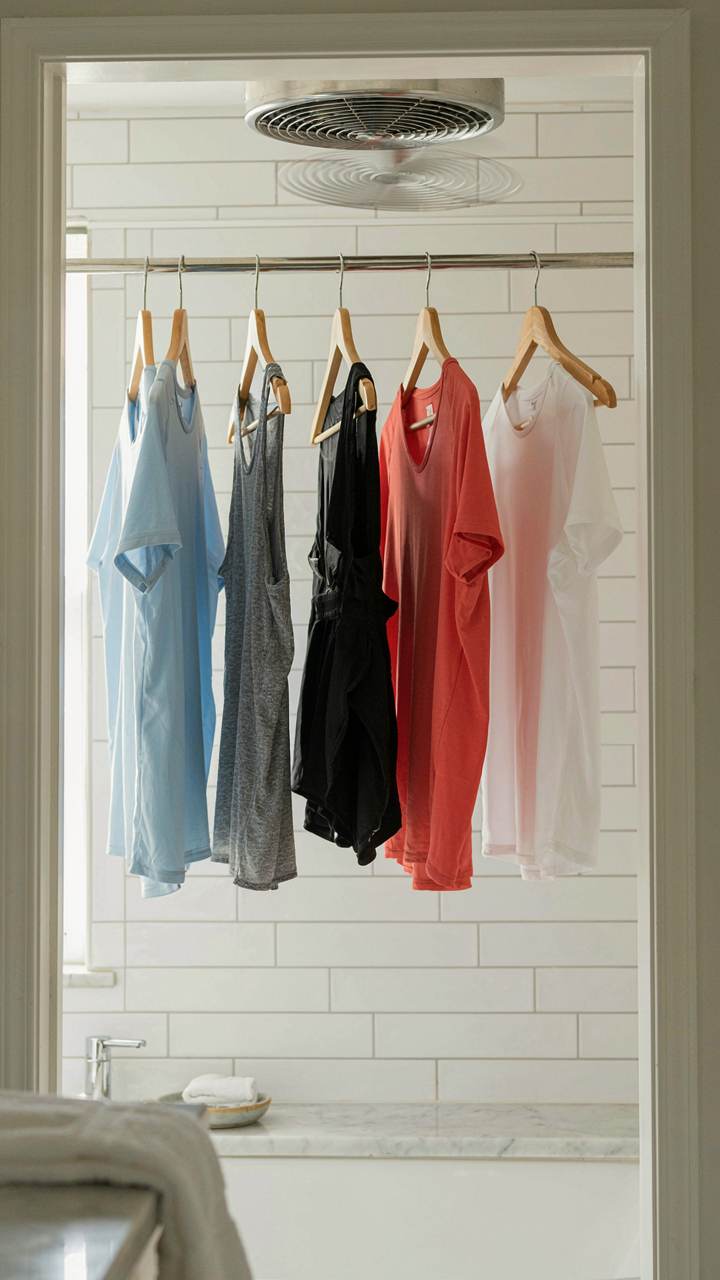
Air Flow Before Heat
You want dry clothes fast because wet fabric sitting in your luggage breeds mold, which costs you money and comfort. The mechanism is simple: moisture needs to move from fabric to air, and air movement is the only free variable you control in a hotel room or shared space. Heat alone doesn’t work—trapped humidity just bounces between fabric and surrounding air. You need airflow.

Open windows aggressively, even in rain. Position damp pieces perpendicular to the window, not parallel. Hang merino wool and synthetics on hangers spaced apart, never bunched together. If you have a bathroom with a vent fan, run it while clothes hang in the doorway. A small portable fan pointing at hung garments cuts drying time in half because it forces humid air away from fabric. The goal is turnover, not temperature.
Bacterial Refresh Without Washing
Everyone says spray your clothes with diluted vinegar or baking soda water, which misses the real problem. Those substances don’t kill bacteria—they just mask smell temporarily. The actual mechanism comes from microbiology: anaerobic bacteria thrive in damp fabric and produce odor compounds as waste. Oxygen exposure kills them. Sunlight accelerates the process because UV radiation damages bacterial cell membranes, but airflow alone works if sun isn’t available.
Never seal damp clothes in a bag. Hang them openly where air circulates freely. If you must wash between wears, use cold water with a small amount of detergent designed for technical fabrics, then hang dry immediately. Merino wool resists odor naturally because lanolin in the fiber inhibits bacterial growth, so prioritize it in your rainy destination rotation. The recovery protocol is straightforward: expose, ventilate, repeat before you pack items away.
Travel Capsule: The Wet To Wearer Velocity
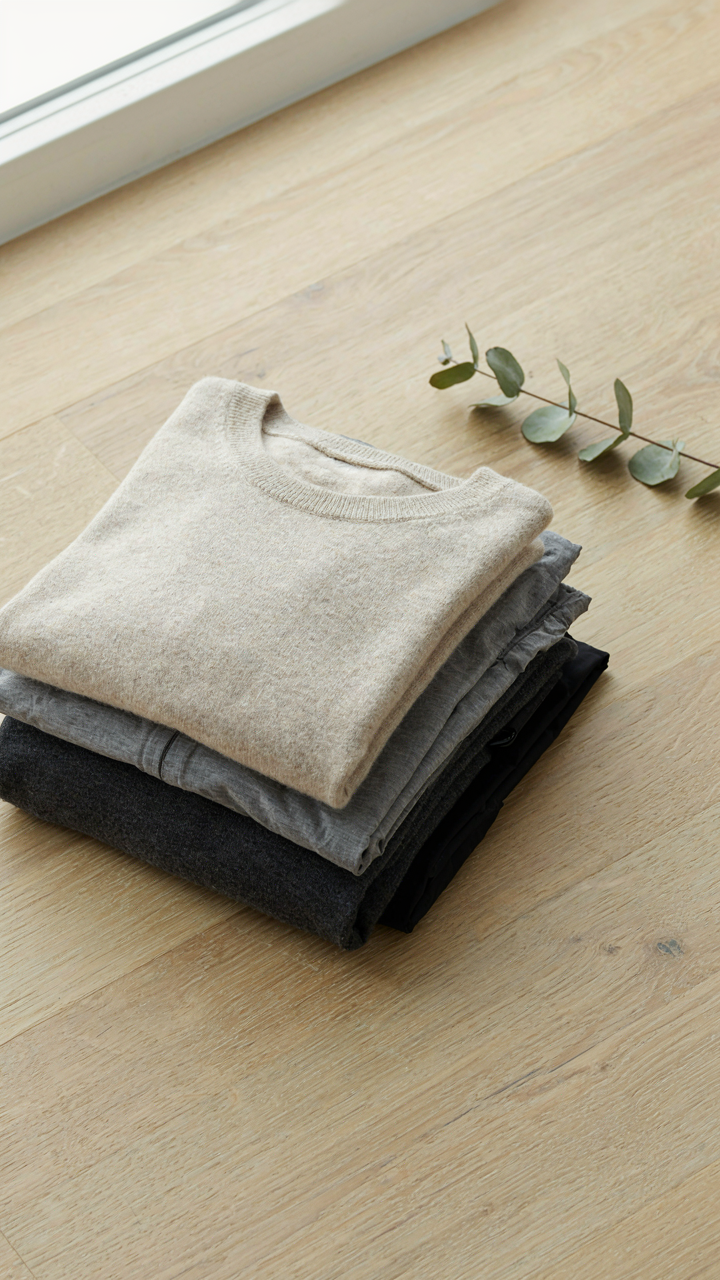
Pack Density Beats Redundancy
You want to avoid looking like you’re unprepared or carrying too much, so you pack duplicates of safe pieces. This fails because wet fabric takes up more space when damp and doesn’t dry faster just because you have a backup. The real mechanism is load reduction. Fewer total items force you to wear each piece more frequently, which means higher air exposure and faster evaporation. A five-item core rotates through your body heat and ambient air faster than ten items that sit folded in a damp bag.

Start with a base of four bottoms and five tops, all synthetic or merino wool. Skip cotton entirely. Choose pieces that work both damp and dry without looking disheveled. Nylon and polyester dry 40 to 60 percent faster than cotton because water beads on the surface rather than absorbing into fibers. Your constraint is deliberate. When you have only what you’ll actually wear, moisture moves through the fabric and into the air instead of pooling in your luggage.
Layering For Active Moisture Management
Moisture management isn’t about staying dry, it’s about controlling where water goes. Think in terms of physics, specifically capillary action, the same force that pulls water up through fabric fibers. Your stack should pull moisture away from skin, through the midlayer, and into open air. A merino base layer wicks sweat and rain moisture to a synthetic mid-shell. The shell doesn’t absorb water, it sheds it while allowing vapor through. A breathable outer jacket completes the chain without trapping dampness against your body.
This layering system works because each material has a specific job in the moisture pathway. Merino holds moisture while remaining comfortable against skin. Polyester or nylon moves that moisture outward. A DWR-treated shell repels liquid water while remaining permeable to vapor. Wear the three-piece stack when conditions turn wet, then separate layers as soon as conditions improve. Skin dries fastest when exposed directly to air after the base layer dries, so remove the mid-shell once your shell handles the rain alone.
Your Fear Isn’t Rain; It’s The Lingering Discomfort Of Unpreparedness
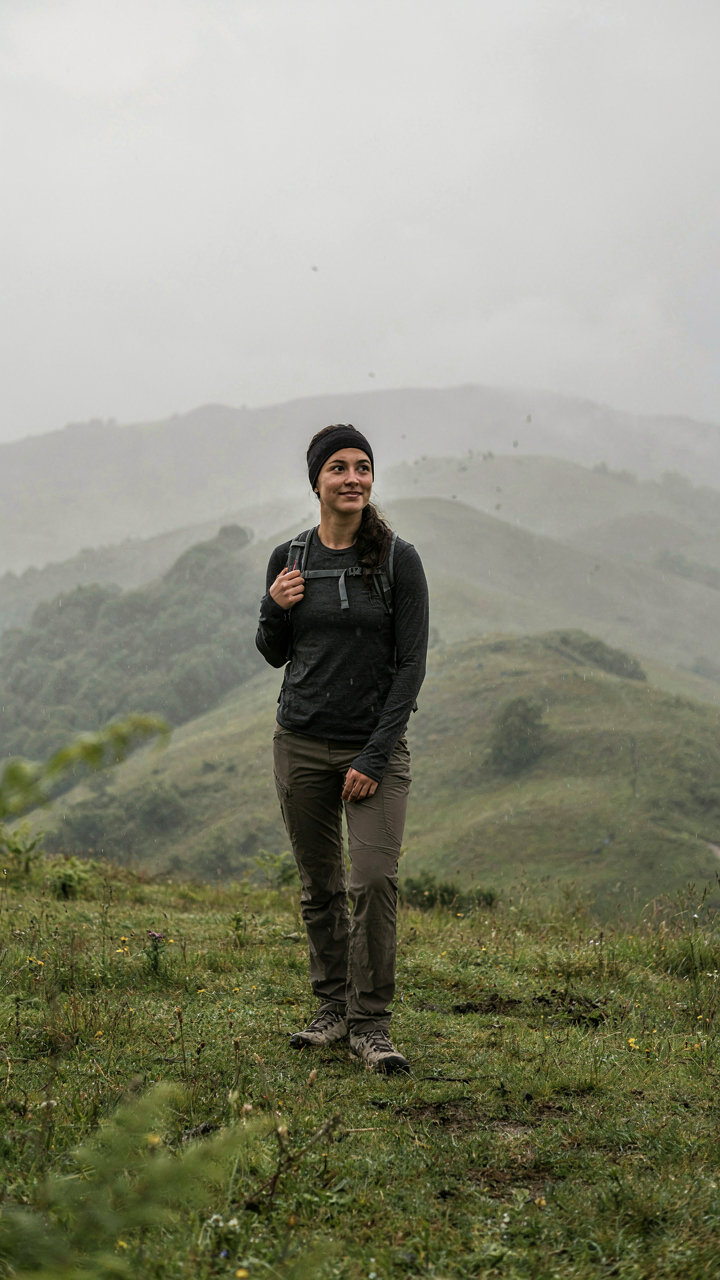
Most people don’t fear rain. They fear the soggy helplessness of wearing the wrong fabric, watching their entire trip derail because they packed cotton. The real problem isn’t the weather—it’s showing up unprepared. So stop researching and start buying today. Pick three fast-drying pieces that actually fit your body, test them in your shower, then book that trip. Confidence beats weather every single time.