

The Thermal Dynamics Of A Cold Weather Travel Capsule

How Heat Actually Leaves Your Body
You want this section because you’re terrified of being cold while looking competent. Here’s what matters: physics calls this heat transfer, and your capsule operates on the same principle as industrial insulation. Heat moves through conduction, convection, and radiation. Your layers intercept each mechanism differently. Down traps still air in clusters, which resists conductive heat loss. Synthetics like polyester and nylon do the same work mechanically but handle moisture differently. Air itself is the insulator. The material just holds it in place.
Down dominates when dry because goose or duck clusters create dead air pockets that don’t compress easily. Synthetic insulation (polyester, acrylic, or polypropylene blends) mimics this architecture artificially. Synthetics recover faster when damp, down performs better in bone-dry cold. Neither choice is universally superior. Your actual decision hinges on where you travel and how you pack.
Moisture Wicking And Vapor Barriers
The common advice here is wrong. Everyone says wear moisture-wicking base layers, and they’re partially right but incomplete. The real mechanism is vapor pressure differential. Your skin generates moisture constantly. If that vapor gets trapped in your insulation layer, it condenses, kills the insulating air pockets, and you freeze faster than if you wore nothing. The solution isn’t just wicking. It’s strategic barrier placement.
Wear a moisture-wicking base layer directly on skin to move sweat away from your body. Position your insulation layer next. Add an outer windproof shell that blocks external moisture while allowing internal vapor to escape. Test any layering combination indoors before traveling: wear it, move for fifteen minutes, then remove the outer shell and check your insulation layer for dampness. If it feels wet, your vapor barrier isn’t working and you need a different shell or base layer material.
Beyond The Hype: True Winter Essentials For Utility

What Actually Keeps You Warm In Cold
You want permission to buy more gear. That’s the real question hiding under “what do I actually need.” The mechanism is simple: your body loses heat through convection, conduction, and radiation. Layering addresses all three, but most people stack items randomly instead of understanding what each layer actually does. A base layer wicks moisture. A mid layer traps dead air. An outer layer blocks wind. That’s the system. Everything else is noise.

The gap between popular advice and function is massive. Fashion bloggers sell you seven sweaters when three do the job. They’re not lying about warmth. They’re selling volume. What you need instead is brutal honesty about material performance. Merino wool holds warmth when wet. Synthetic fills compress in a bag. Down is lighter but dies when damp. Pick based on where you’re traveling and what conditions you’ll actually face, not what looks good on Instagram.
Crossover Pieces That Multiply Your Options
Think like a systems engineer. In engineering, redundancy wastes resources. But in capsule wardrobe design, overlap creates efficiency. A heavy wool sweater works as a mid layer under a jacket or as a standalone top indoors. A wool scarf becomes a shawl, a blanket on planes, or emergency insulation wrapped around your torso. A long-sleeve linen shirt layers under everything in fall and serves as a cover-up in spring. Sarongs work as blankets, skirt liners, or head wraps in sudden sun.
The real win is this: each item solves two or three problems instead of one. You reduce total piece count while expanding outfit combinations. A merino base layer isn’t just underwear. Wear it as a thin shirt on moderate days, layer it under heavier pieces on cold days, and pack it for recovery at night. Scarves made from wool or cashmere function as both thermal insurance and the single most versatile accessory you own. Buy pieces that earn their space by serving multiple roles in your travel context.
The Winter Packing Capsule: A Systems Approach
Layering As Thermal Architecture
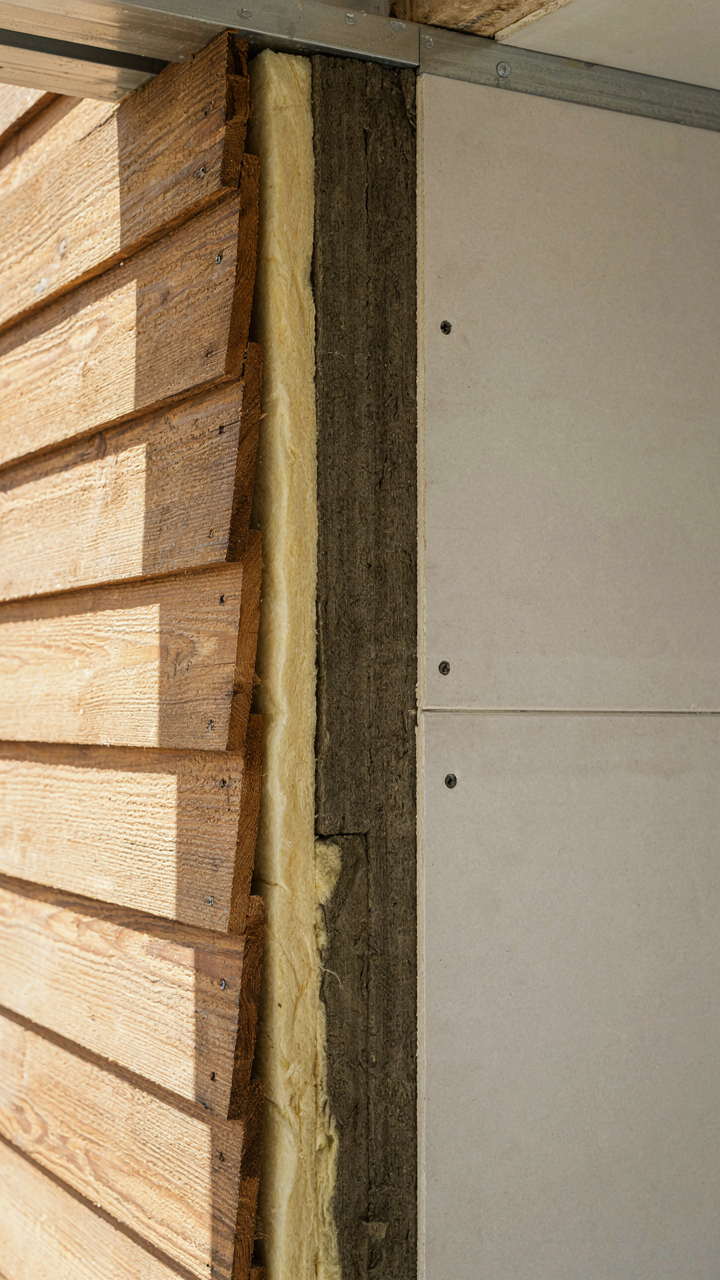
You want to travel light without freezing, and you think buying premium gear solves this. It doesn’t. Think in terms of building science: the R-value matters less than the assembly order. Cold air moves through gaps. A capsule works because each piece occupies a specific thermal role that nothing else can fill.

Start with the base layer touching skin. Merino wool or synthetic materials wick moisture and regulate temperature across a wide range. The middle layer traps dead air. Fleece or wool pile holds heat when wet, which cotton never does. The outer layer blocks wind and precipitation. Order matters because skipping one creates a thermal bridge where cold penetrates.
Mixing Pieces Across Days And Temperatures
Most travel advice tells you to pick neutral colors. That’s incomplete. The real move is horizontal compatibility: every top pairs with every bottom, and every outer layer works over every combination beneath. This isn’t about aesthetics. It’s about math.
You need two pairs of neutral bottoms that work across eight to ten days. Three base layers. Two to three mid-layers in different weights. Two outer jackets covering different conditions. One item should never sit in a bag unused because it conflicts with something else. Test combinations before you pack. If a sweater only works with one coat, you’ve built friction into your system.
Cold Weather Travel Capsule: The “Onion Layer” Protocol

Start With Skin Contact
You want to believe one jacket solves everything because buying gear feels like progress. It doesn’t. Thermal regulation happens at the base layer, the fabric touching your skin. Physics calls this the “boundary layer”—the thin zone where your body’s heat either escapes or gets trapped. In capsule terms, your base layer is your boundary layer. It controls whether sweat evaporates away from skin or pools against it, triggering the cold that kills your trip.

Most base layer advice is wrong. Cotton holds moisture. Merino wool and synthetic blends move it. Merino works because the fiber structure wicks liquid laterally before it soaks in, keeping skin dry. Synthetics like polyester do similar work through different mechanics. A single quality base layer—either merino or synthetic—handles 90 percent of cold weather travel because it solves the mechanism, not just the symptom. You need one for each day you’re gone, plus one backup.
Stack Insulation Then Barriers
Mid layers trap dead air. Outer layers block wind and precipitation. The mistake most travelers make is treating these as one problem. They’re separate. You can have a perfect insulator that fails in wet conditions, or a perfect barrier that doesn’t insulate. Mid layers work best in fleece or down because both trap air effectively. Fleece dries fast and resists compression from packing. Down compresses smaller but requires weather protection underneath it, not just over it.
Your outer layer does one job: stop external elements from reaching your insulation. A hardshell jacket blocks wind and rain. A softshell adds mobility but sacrifices absolute weather resistance. On a cold travel capsule, one hardshell jacket covers both mid and base layers. Wear your mid layer under it. In milder moments, wear your mid layer alone. The protocol: base layer always touches skin, mid layer adds warmth, outer layer creates the seal.
Winter Travel Capsule Wardrobe: The Economic Efficiency Model

Cost Per Wear: Investing In Durable, Versatile Pieces
You want permission to spend money without guilt. That’s the real reason this matters. Cost per wear is borrowed from economics, where it measures total value extracted from a single asset over time. A $200 merino wool base layer worn 40 times across two years costs $5 per wear. A $30 synthetic shirt worn 5 times costs $6 per wear. The difference isn’t price. It’s longevity and function across different conditions.

Durable pieces compound. A wool sweater resists pilling, retains warmth when damp, and doesn’t degrade after repeated compression in luggage. Synthetic alternatives fail faster or require replacement mid-trip. Calculate backwards from your actual travel frequency and trip length, then buy pieces that survive that stress. A $150 down jacket worn on eight trips across three years beats a $80 jacket you replace twice. The math works only if you stop buying cheap items you’ll abandon after one use.
Opportunity Cost Of Excess Baggage: Time, Money, Stress
Packing more than necessary doesn’t cost you money directly. It costs you speed, mental space, and decision fatigue every morning. Every extra piece you carry requires a choice. That decision happens when your brain is worst at deciding. You wake up cold, tired, in an unfamiliar place, and suddenly a closet full of options paralyzes you instead of solving the problem.
Pack for the constraint, not the fantasy. A tight capsule forces you to wear pieces multiple times, which means you notice what actually works versus what looked good in the store. When you reduce to seven tops instead of twelve, you move faster through airports, wait less for laundry, and stop second-guessing yourself. Before each trip, count the days and subtract one piece for every two days you travel.
The Minnesota Winter Outfits Playbook
When Wind And Cold Become Physics
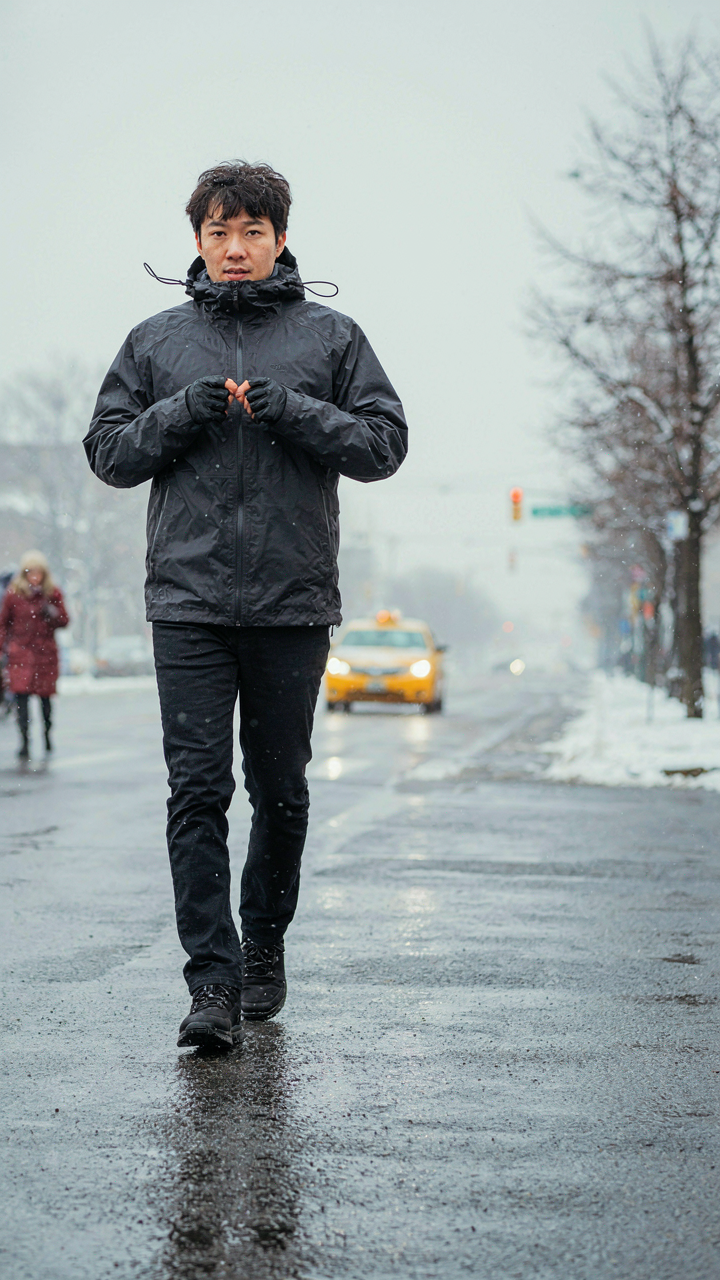
You want proof that your gear works before you need it to save your life. Here’s the mechanism: cold exposure operates on a military logistics principle—you defend your perimeter in layers, not with a single impenetrable wall. Wind doesn’t just feel worse. It strips away the insulating air pocket your body creates around itself. A 20-degree day with 30 mph wind feels like minus 25 degrees. Your capsule responds by treating wind as a separate enemy from cold itself.

Most capsule advice ignores this split. It treats cold as one problem. That’s incomplete. You need a base layer that wicks moisture, a mid-layer that traps air, and an outer shell that blocks wind and snow. Merino wool handles sweat better than synthetics in extended cold. Down or synthetic insulation fills the gap. A shell fabric with a tight weave stops wind penetration. Stack these three deliberately, not randomly, and you survive Minnesota. Skip the shell layer and you lose 40 percent of your insulation value in wind.
What Actually Happens To Your Extremities
Feet and hands fail first because they’re farthest from your core and highest surface-to-volume ratio. When your body decides core temperature matters more than fingers, blood flow stops reaching them. Conventional advice says “buy better gloves.” That misses the point. Gloves work only if they fit inside your jacket cuff correctly, and your jacket cuff fits inside your coat sleeve. One gap in that sequence and wind reaches bare wrist skin in seconds.
Footwear requires the same ruthless specificity. Your feet sweat inside boots. That moisture freezes. Vapor barrier socks—a thin plastic or wool layer between your skin and insulation—stop this cycle. Boots need room for two thick socks without compression. Compression cuts off blood flow and creates frostbite risk. Insulation needs to be real down or synthetic rated for the coldest temperature you’ll actually experience, not the worst-case scenario you’ll never face. Your capsule includes two shoe models: one for movement days, one for stationary cold exposure. The stationary boot has more insulation and less need for mobility.
Winter Travel Carry On Capsule Wardrobe: Tactical Packing
Compression And Organization Techniques
You want to feel like you’re not struggling, like packing a winter capsule into carry-on is effortless. It isn’t. The mechanism is this: compression trades volume for access speed. When you compress items, you reduce dimensional waste but increase the time cost of retrieval. Military logistics calls this the compression paradox. Your capsule wardrobe exists in the same tension. Tight packing saves space but forces you to unpack strategically or accept wrinkled layers.

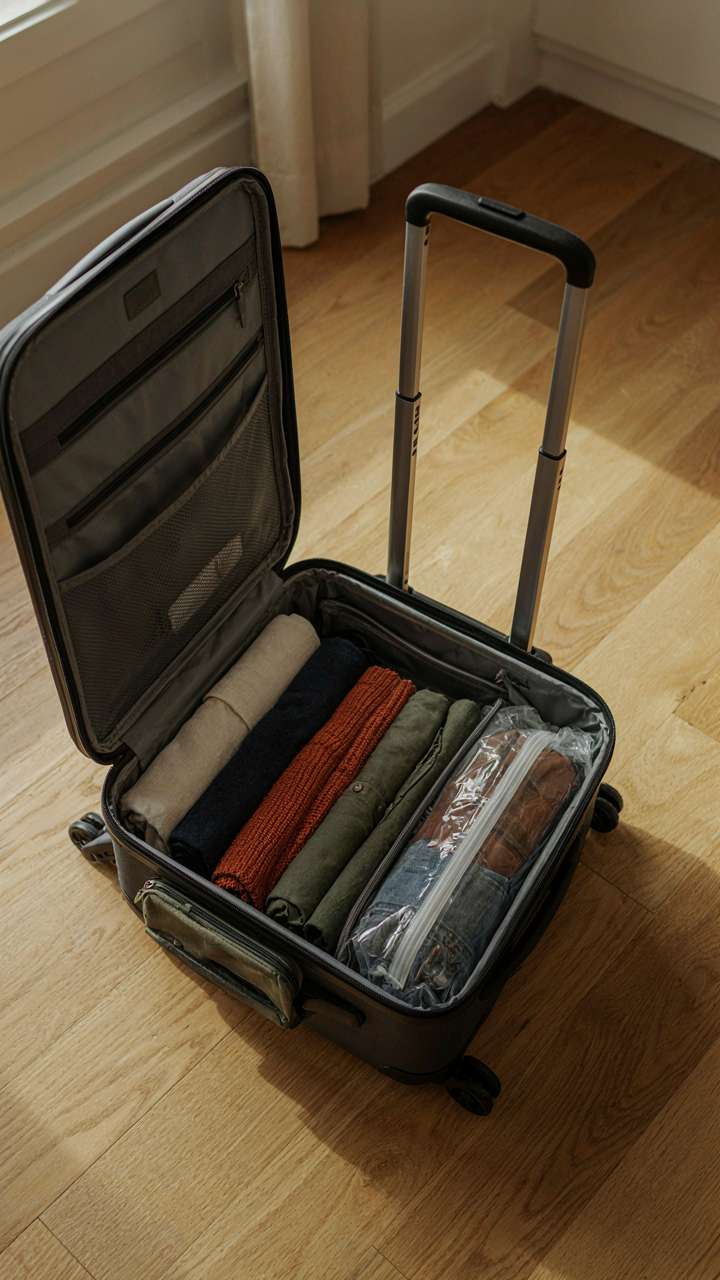
Start with vacuum-seal bags for off-rotation items only. Your merino base layers and secondary sweaters compress well without damage because the fibers are resilient. Roll, don’t fold, your main layers to cut volume by thirty percent while keeping them accessible. Place daily-rotation pieces on top where you don’t need a bag. The goal isn’t maximum compression. It’s compression where it matters without sacrificing the rhythm of your morning routine.
Weight Distribution And Accessibility
Physics dictates that heavier loads centered over your hips reduce fatigue on shoulders and lower back. Your carry-on works the same way. Denser items belong in the bottom center of your bag, lighter insulation layers above and around them. This isn’t arbitrary. It changes whether travel feels manageable or punishing by day three.
Place your heaviest cold-weather layer, your outerwear jacket, flat on the bottom. Stack your base layers and mid-layers directly on top. Keep your lightest pieces, socks and thermal underwear, in easy-access pockets or on top. Arrange your bag so the most-worn piece sits where your hands naturally reach without digging. This setup eliminates the moment where you’re standing in an airport bathroom unpacking your entire bag to find one layer. Execution is simple: densest to center-bottom, lightest to accessible edges.
Capsule Wardrobe For Winter: Debunking Style Myths

The Cold Calculus Of Warmth Over Aesthetics
You want to look acceptable while traveling because you fear judgment. Here’s the mechanism: warmth is visible. A person shivering reads as incompetent. Layering solves this because each layer traps dead air, and dead air doesn’t conduct heat away from your skin. Merino wool, down, and synthetic insulation all work the same way mechanistically. The material doesn’t matter as much as the principle. Your visible comfort signals competence to everyone around you, which means you stop performing and start existing.

Fashion magazines sell the lie that winter style requires coordinated statement pieces. It doesn’t. What actually works is choosing pieces that perform their function without demanding visual attention. A technical baselayer under a wool sweater under a shell jacket isn’t a look you curate. It’s a system you build once and repeat. The payoff is that you stop thinking about cold halfway through your trip and start thinking about what you’re actually there to do.
Intention In Neutral Tones And Texture
Color palette strategy borrows from industrial design, where constraint drives clarity. In cold-weather dressing, your constraint is this: every piece must layer beneath or over existing items. Navy, charcoal, cream, and black work because they combine without creating visual noise. Texture becomes your variable. A smooth merino crewneck stacks differently under a cable-knit wool sweater than under a down puffer. You’re not building an Instagram feed. You’re building a system where each combination performs a different thermal function.
Pick three base colors and two accent tones, then choose textures that stack without bulk. Smooth synthetic baselayers, mid-weight knits, and structured shells each have different compression properties. This isn’t aesthetic preference. It’s engineering. When you get to your destination and layer your charcoal merino under your navy shell, you’ve already solved the problem of looking intentional without thinking about it. The texture choice does the work your brain shouldn’t have to do.
Winter Capsule Wardrobe Women: Specific Considerations
How Women Lose Heat Differently
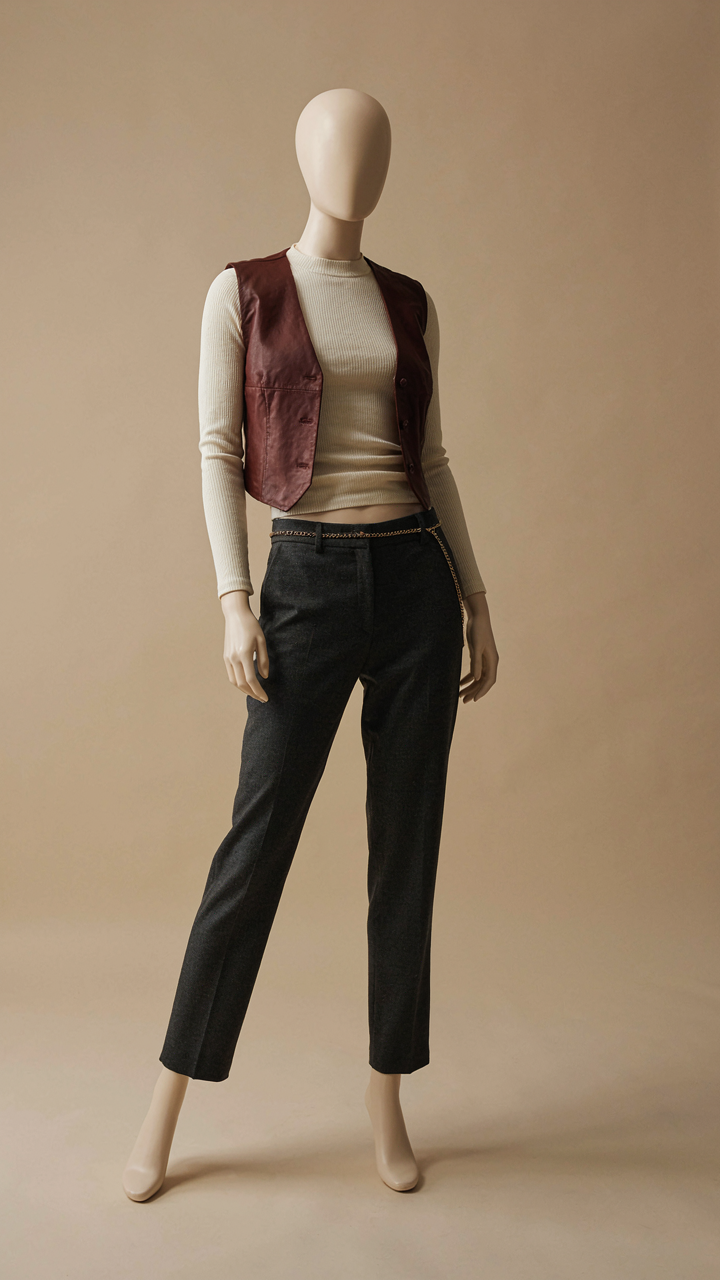
You want this section because you’re tired of wearing men’s advice to cold climates and looking like you’re playing dress-up. Women’s thermoregulation works differently than men’s, and clothing designed without this fact wastes layers and money. Body composition matters: women carry less muscle mass and more subcutaneous fat distributed differently, meaning core warmth strategies that work for men create dead zones around the torso and extremities in women. The mechanism is biological, not preference. Standard “layer up” guidance ignores this entirely.

Strategic layering for women requires targeting the upper back, chest cavity, and hip area where heat loss concentrates. A fitted base layer sits closer to skin without restricting movement, a mid-layer vest or cropped puffer concentrates warmth at the core while leaving arms free for activity, and an outer shell seals without bulk. This isn’t about fashion. It’s about energy efficiency. Build your capsule around this three-zone system instead of copying unisex advice that treats the body as a generic tube.
Dresses And Skirts With Layering Intent
Everyone says women traveling in winter should skip dresses and wear only pants. That’s incomplete thinking. Dresses work in cold weather when you treat them as a layering canvas, not a standalone piece. The mechanism is simple: dresses provide visual variety without adding items to your luggage, and they layer under tights, thermal leggings, and long cardigans in ways that look intentional rather than desperate.
A knee-length wool or wool-blend dress pairs with opaque tights and a fitted sweater or long cardigan, creating distinct looks from one base piece. Midi skirts work the same way: add tall boots and heavy tights for one outfit, then layer a cropped puffer and sneakers for another. The dress or skirt becomes the variable while your layering pieces stay constant. This approach cuts down your total item count while expanding outfit combinations. Commit to one neutral dress or skirt, stock versatile layering pieces, and rotate the combinations instead of rotating entire outfits.
The Unspoken Rule Of Winter Trip Capsule Wardrobe Success

Test Your Layers Before You Leave
You want to avoid looking foolish on camera or feeling exposed in front of people who dress better than you do. That’s not the real problem. The real problem is that your body hasn’t calibrated to the pieces you’ve chosen. Testing simulates the actual conditions you’ll face. Wear your planned outfit in cold weather for extended periods before departure. This exposes gaps in coverage, reveals which layers actually trap heat versus just looking warm, and shows you whether your combinations actually work when you’re moving, sitting, and standing.
Most people skip this step because it feels redundant. It’s not. Your capsule wardrobe only functions if each piece performs under load. Wear your base layer plus mid layer plus outer shell while running errands in similar temperatures to your destination. Notice where cold air enters. Check if your collar fits over your neck without choking. Verify that your gloves don’t slip off when your hands sweat. Refinement happens in the field, not in your bedroom.
Adaptability Beats Perfection
Military logisticians call this operational flexibility, and your capsule wardrobe needs the same principle applied to it. You’re not packing for the trip you planned. You’re packing for the trip that actually happens, which will be different. Build buffer pieces that serve multiple functions instead of locking yourself into a rigid outfit sequence.
Include one lightweight layer that works as both a mid-layer under your coat and a standalone piece indoors. Choose a versatile neutral color in your outerwear that pairs with every bottom you brought. Accept that weather forecasts shift, indoor heating varies wildly between locations, and your own tolerance for cold changes as you acclimate. Pack one swap piece that lets you adjust your system instead of suffering through a poorly planned day. The trip changes you. Your wardrobe needs to change with it.
The Only Wasted Space Is The Space In Your Head, Not Your Suitcase
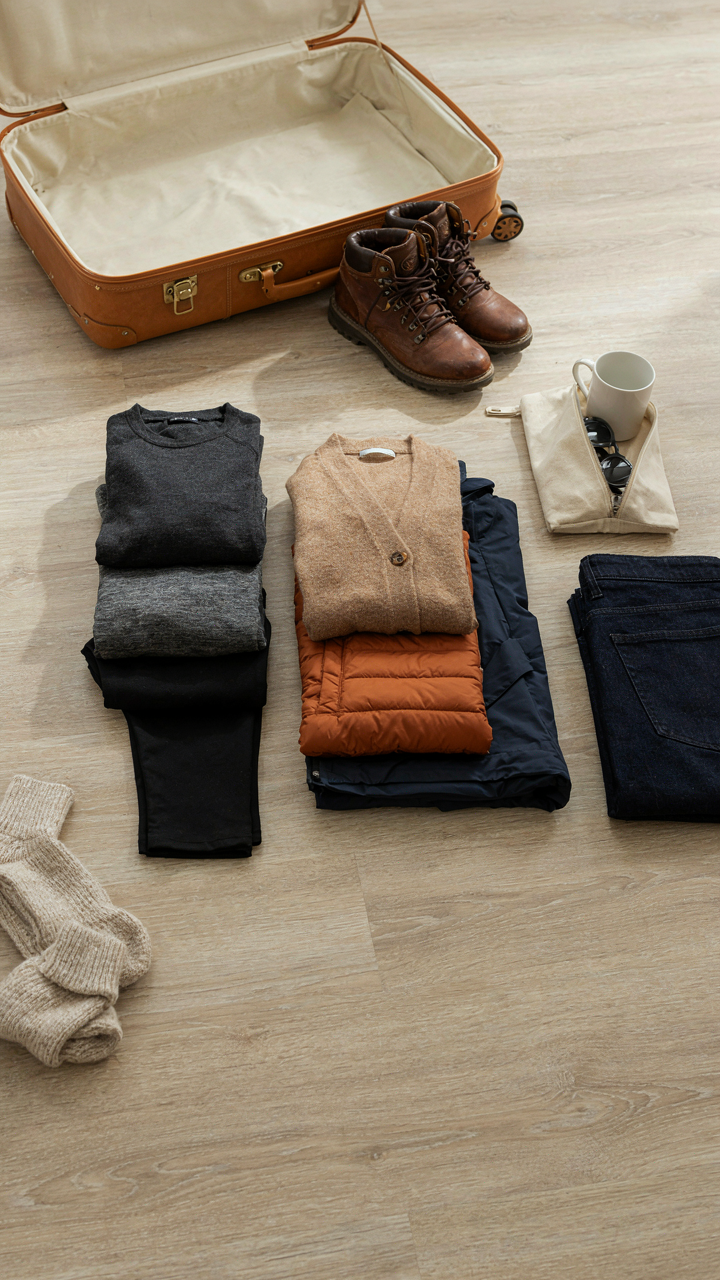
Most travelers pack their insecurity. They throw in eleven options because choosing one feels risky. A capsule wardrobe for cold weather travel works because it forces you to commit. Pick your base layers, your mid layers, your shell. Wear them. Stop hedging. Open your suitcase today and remove everything you wouldn’t wear twice. You don’t need options. You need conviction.