


The Material Deception: Beyond “Breathable Fabrics”

Natural Fibers Versus Synthetics
You want to believe natural fibers are objectively superior because it feels cleaner, more ethical, more you. The mechanism is simpler: fiber structure determines how fast moisture moves through fabric, and this isn’t a natural versus synthetic war. It’s a physics problem. Cotton absorbs moisture directly into the fiber itself, holding it against your skin until evaporation occurs. Linen has a hollow core that moves moisture through faster. Polyester doesn’t absorb moisture at all; it wicks it to the surface where evaporation happens quicker. In hot climates, wicking beats absorption. This explains why performance synthetic shirts outperform cotton in identical conditions.
Natural fibers win in one scenario: breathability at rest. When you’re stationary in heat, cotton’s moisture absorption creates a cooling effect through evaporation. But the moment you move or sweat consistently, synthetics manage thermal load more efficiently. Linen splits the difference, wicking moisture reasonably well while maintaining the comfort of natural fiber. The choice isn’t moral. It’s functional. Pick the fiber that matches your activity level and climate intensity, not your identity.
Weave And Weight Matter More Than Brand Labels
Everyone fixates on fiber content and ignores the structure that actually controls airflow through the cloth. Weave density and thread thickness determine how much air passes through fabric, not whether the label says “premium” or costs three times more. Gauze weave lets maximum air through because the structure is deliberately loose. Oxford cloth is denser and traps heat. A lightweight linen shirt with tight weave underperforms a heavier cotton shirt with open weave in pure heat management. Weight indicates thread thickness and yarn density. Lighter doesn’t always mean cooler if the weave compensates with density. The real specification you should compare is thread count paired with weave type, not brand positioning or price.
When building a hot climate capsule, test actual garments in your climate rather than trusting descriptions. Buy one piece in each weight and weave combination that interests you. Wear them on your most typical day. Measure how long you stay comfortable and how much you sweat. This takes one week of fieldwork but eliminates months of wrong purchases. The weave determines drape and movement against skin. The weight determines how much fabric sits on your body, creating insulation or allowing airflow. Select weave and weight based on your body’s response, then lock those specifications into every similar piece you acquire.
The “Classy Yet Trendy” Delusion In Hot Weather

Why Trends Collapse In Real Heat And Humidity
You want to look current without looking desperate. That’s the real fear here. But trends fail in heat because they’re engineered for air-conditioned environments and Instagram lighting, not for the physics of moisture and fabric behavior. Humidity doesn’t care about what’s in. It only knows fabric weight, fiber type, and how much surface area you expose to air movement. Trends prioritize visual impact over thermal function. That disconnect kills them instantly once you step outside.

The mechanism is simple: trending silhouettes in hot climates usually feature heavy layering, tight fits, or synthetic blends that trap humidity against skin. Oversized blazers, cropped tops with visible midriffs, dark colors, and structured fabrics dominate trend cycles because they photograph well indoors. None of these work when your environment demands sweat evaporation and unrestricted airflow. Trends demand you update seasonally. Heat demands you stop fighting physics. Pick one.
Silhouettes That Survive The Day
Timeless shapes survive heat because they solve a problem, not because they look good on TikTok. Straight-cut linen pants, unstructured button-ups, and loose-fitting dresses move with your body and create micro air gaps that cool you. The A-line silhouette, used across Mediterranean and tropical cultures for centuries, works because it flares away from skin. Looser sleeves allow underarm ventilation. High necklines with breathable fabric work better than low-cut trendy tops because they protect skin from sun while allowing heat escape. These aren’t mistakes. They’re solutions.
The action is direct: evaluate every piece by its thermal function first, aesthetic second. Does it create dead zones where sweat pools? Does it restrict airflow at joints? Does the hem trap hot air against your legs? If yes to any of these, it will fail on day three of real wear. Build your capsule around silhouettes that let heat move through them, not around them.
The Hot Weather Capsule Wardrobe: Quantity Vs. Utility
What Utility Actually Means In Heat
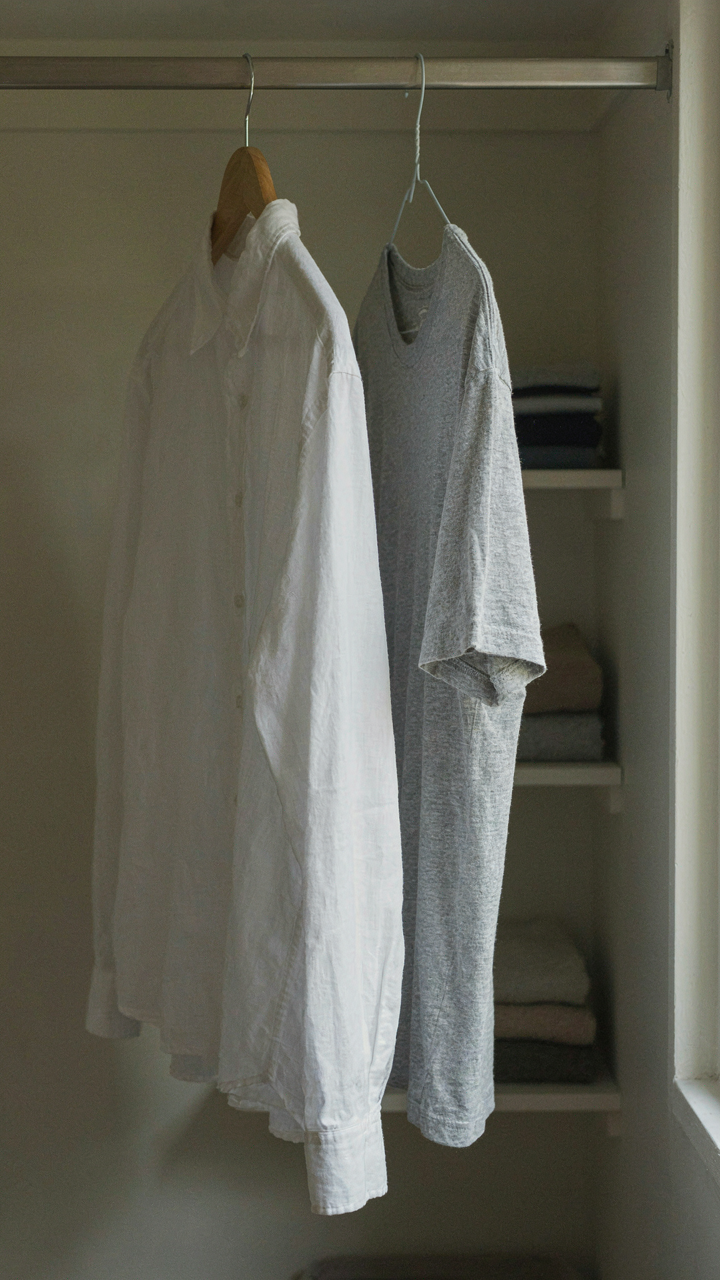
You want fewer pieces that work harder because you think that sounds efficient. The real mechanism is different. Utility in extreme heat means a garment’s ability to manage moisture and temperature across the specific activities you actually do, not theoretical versatility. Most people confuse “goes with everything” with “works in heat,” and that gap costs them.

Heat utility breaks into two hard requirements: moisture management and thermal regulation. A linen shirt that pairs with five bottoms fails utility if it absorbs sweat and clings to your skin. A technical fabric that breathes but pills after three wears fails utility too. True utility means the piece performs its thermal job while surviving repeated washing. This is why generic “versatile basics” advice falls apart in hot climates. You need pieces selected for specific heat conditions, not outfit combinations.
The Economics Of Fewer, Better Pieces
Economics calls this “capital efficiency”: getting maximum output from minimum resources. Apply that directly to your capsule. Instead of owning twelve shirts, own five that actually regulate temperature. One expensive, high-performance linen shirt beats three cheap ones that shrink or lose shape within months.
The math favors heavier investment in fewer pieces because heat destroys cheap fabric faster. Cotton loses elasticity. Synthetics trap moisture. Blends fail in both directions. You either buy pieces that handle heat’s mechanical stress—sweating, UV exposure, repeated washing—or you buy replacements constantly. The cost difference evaporates when you factor in replacement frequency. Select pieces based on fabric longevity and thermal performance, then commit to that reduced quantity rather than hedging with extra items.
The Humid Climate Protocol: What You’re Missing

Fabrics Engineered For Humidity, Not Just Heat
You want to look put-together without melting through your shirt by noon. That’s the real reason you’re reading this. Heat you can manage. Humidity defeats most clothing choices because it stops your body’s primary cooling mechanism: evaporation. In thermodynamics, evaporative cooling requires moisture to move away from skin, not sit on fabric. Linen, cotton, and modal all absorb water aggressively, which means they hold sweat against your body instead of letting it escape. The fabric becomes a thermal mass working against you.

High-performance synthetics like polyester and nylon were engineered for this exact problem, but they solve it wrong for capsule building. They wick moisture away fast but trap heat and generate odor quickly because bacteria love the sealed environment. The real answer sits in blends: 55 to 70 percent natural fiber paired with 30 to 45 percent synthetic creates capillary action that moves moisture outward while maintaining breathability and durability. Linen-cotton blends specifically cut drying time by 40 percent compared to pure linen, and the synthetic component prevents mildew formation in stored pieces.
Drying Times And Odor Retention: The Hidden Factors
Most advice stops at “choose breathable fabrics” and calls it done. That’s incomplete. What actually matters is how fast fabric dries and what happens to bacteria growth during that window. A piece that dries in eight hours accumulates far less bacterial load than one that takes 24 hours. In humid climates, cotton dries slowly because air saturation prevents evaporation. Polyester-cotton blends dry two to three times faster due to lower water absorption and higher capillary efficiency.
Odor retention is the mechanism that determines wardrobe longevity in humidity. Bacteria colonize wet fabric and produce odor compounds. Faster drying starves that process. Blended fabrics also allow antimicrobial treatments to bond more effectively during manufacturing, meaning the garment resists odor formation before bacteria even arrives. Your capsule pieces should be 50-70 percent natural fiber blends specifically selected for drying time data, not aesthetic preference. Check manufacturer specs for water absorption rates and drying times before buying, then build the rest of your wardrobe around those pieces.
The “Spring Capsule Wardrobe” Trap: Seasonal Myopia

Why Seasonal Thinking Breaks In The Tropics
You want to believe one wardrobe works year-round because that validates your purchase discipline. The mechanism is simple: seasonal frameworks were built for temperate zones with actual seasonal variation. Tropical and subtropical climates don’t swing 40 degrees between seasons. They swing 5 to 15 degrees, if at all. Temperature stays in a narrow band. Humidity is the variable that shifts, not heat. This inverts the entire logic of seasonal capsules.

The real problem is that most capsule advice treats hot climates as a simplified version of temperate ones. They aren’t. A piece “perfect for spring” in New York fails in Miami because the problem it solves doesn’t exist. Spring in temperate zones means layering for unpredictable swings. Hot climates mean managing constant heat and variable moisture. The pieces that work in one system actively sabotage the other. Seasonal thinking becomes a liability.
Build Around Thermal Bands, Not Calendar Months
Temperature is a spectrum, not a season. Treat your hot climate wardrobe like a physicist treats thermal dynamics: define the operating range and optimize for function within that zone. A capsule for 78 to 92 degrees Fahrenheit performs completely differently than one for 65 to 78 degrees. Most people blur these ranges together and wonder why nothing fits the moment.
Map your actual local temperatures month by month, then group them into thermal bands of 10-degree ranges. Each band gets specific fabric weights and silhouettes. A 78-degree range might work in lighter linens and cotton. An 88-degree range demands moisture-wicking synthetics and tighter fits to prevent fabric clinging. You’re not buying for seasons. You’re buying for the physics of evaporative cooling and fabric behavior at specific heat levels. Document your ranges now, then build accordingly.
The Warm Weather Capsule Wardrobe: The Anti Sweat System

Underlayer Strategies For Moisture Control
You want underlayers because you think they’ll keep you dry. They won’t. What they actually do is move sweat away from your skin fast enough that it evaporates before it pools and ruins your outer layer. Moisture management is a physics problem, not a comfort problem. The mechanism: synthetic fibers like polyester and nylon have no water affinity, so sweat moves through them via capillary action toward the surface where air hits it. Cotton does the opposite—it absorbs and holds moisture against your skin.

The gap between cheap synthetic underlayers and effective ones comes down to fiber denier and knit density. Merino wool underlayers work in hot climates too, but most people dismiss them as winter-only. That’s wrong. Merino wicks faster than cotton, regulates temperature better than polyester alone, and resists odor because bacteria can’t reproduce on it as easily. Wear a synthetic or merino underlayer under every outer piece in humid climates. Change it when it’s damp, not when it smells.
Ventilation Architecture In Garment Design
Most capsule wardrobe advice tells you to buy loose clothing in hot climates. That’s incomplete. Loose fabric traps heat when there’s no airflow to move it away from your body. The real mechanic is gap geometry. Garments need strategic openings that create pressure differentials—think of it like HVAC system design for your torso. When you move, air should flow through, not around.
Look for shirts with side vents that go high enough to create cross ventilation. Oversized sleeves matter only if they’re cut to let air move vertically along your arm. Pants with thigh vents perform better than standard cuts because they interrupt the heat pocket around your legs. The key isn’t looser—it’s strategically vented. Measure your garments’ opening geometry, not their volume.
The Hot Summer Capsule Wardrobe: Durability Over Disposable
Cost Per Wear In Harsh Conditions
You want permission to spend more money upfront without feeling foolish. Here’s the mechanism: heat accelerates fabric degradation through UV exposure, sweat chemistry, and washing cycles. A cheap synthetic shirt fails in 40 wears in a hot climate. A quality linen or cotton piece lasts 200 wears. Cost per wear flips the math entirely. The expensive garment becomes cheaper over time because you actually keep wearing it.

Durability in hot climates isn’t about preference. It’s about material science and fiber resilience under stress. Linen develops softness after repeated washing instead of pilling. High-quality cotton gains strength when wet, resisting sweat-induced breakdown. Synthetics typically yellow, lose shape, and weaken in UV light within months. Calculate your actual cost by dividing price by realistic wear cycles in your climate, not wishful thinking. Most people wear cheap clothes twice weekly for one season. Quality pieces get worn four times weekly for five years.
Maintenance Protocols That Extend Garment Life
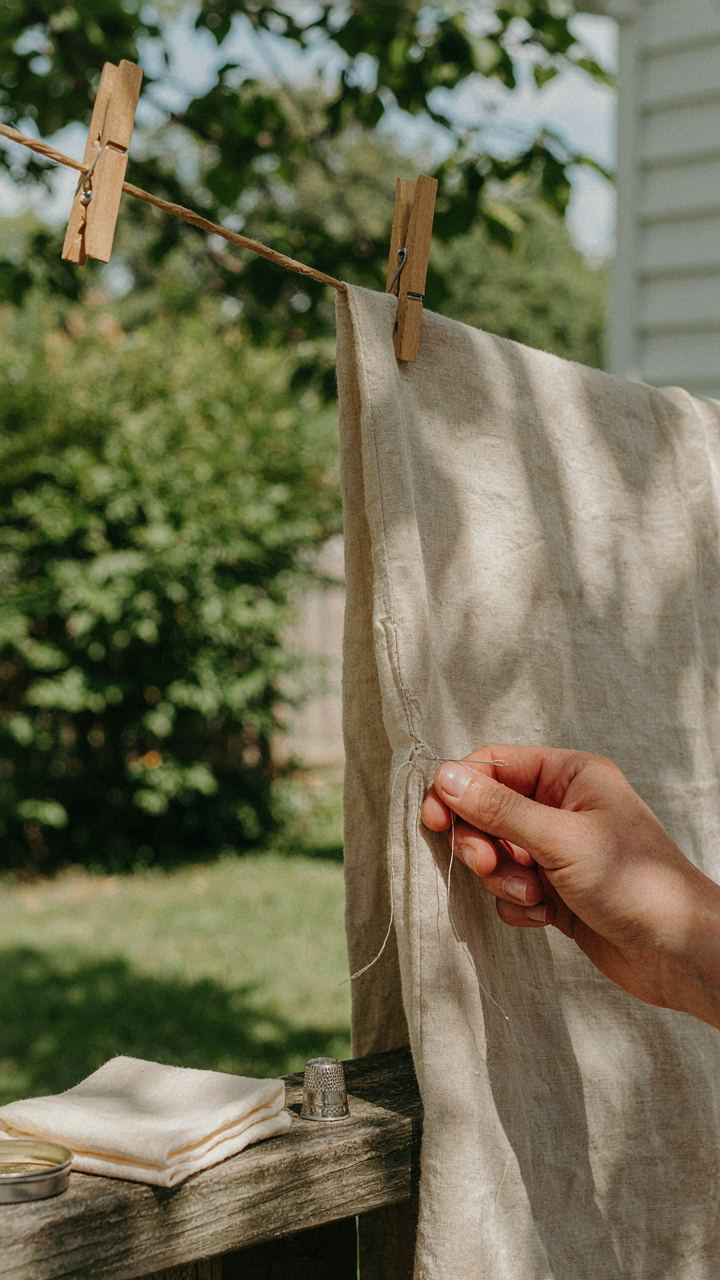
The common advice about gentle washing and line drying is incomplete. Here’s what actually matters: the specific actions you take after each wear determine whether a garment survives or deteriorates. Sweat residue oxidizes on fabric, weakening fibers and creating permanent damage. You need a protocol, not suggestions.
Establish this sequence: wear garment, hang it in shade immediately after removing it, let it air dry fully before storing, wash only when necessary using cold water and minimal detergent, dry flat or hang in shade, repair any damage before it compounds. This isn’t fussy. This is how people in hot climates have maintained clothing for generations. A single loose seam becomes total seam failure if ignored. A small hole expands exponentially with washing. Repair immediately after detecting damage, before the next wear cycle begins.
The Wardrobe Reframe: From Consumption To Combat Readiness

Mission Critical Items Only
You want this section to validate that you’re already buying the right things. You’re not. The mechanism is constraint: military planners strip operations to essential inputs because redundancy costs lives and slows deployment. Your capsule wardrobe operates on the same principle. Mission-critical means the item solves a specific problem in hot climates that nothing else in your wardrobe solves, or solves it measurably better.

Most people confuse “things I like” with “things I need.” The difference is friction. A mission-critical piece creates zero friction between your body, the heat, and your daily task. Linen shirt, cotton shorts, canvas sneakers, wide-brimmed hat, moisture-wicking underwear. Each one addresses a mechanical failure point: sweat evaporation, skin irritation, UV exposure, foot heat retention. Everything else is negotiable. Strip your list until adding one more item would genuinely harm your function in heat.
Decision Architecture For Speed
- Capsule baseline (core items): 5-7 neutral-colored pieces in breathable fabrics that layer without bulk and transition from morning to evening without changing.
- Context swaps (one-off items): Specialized pieces for specific environments—swim cover-up for coastal work, long sleeves for sun-intensive outdoor labor, closed-toe shoes for safety requirements.
- Fabric rotation (seasonal micro-adjustments): Linen in peak summer, cotton blends when humidity drops, lightweight wool for temperature-controlled spaces you enter repeatedly.
- Color logic (contrast and reflection): Neutrals anchor the system; one accent color reduces decision load and prevents the “nothing fits together” trap that kills capsule discipline.
- Exit protocol (removing pieces): If you haven’t worn an item in 30 days during the season it’s designed for, it’s not mission-critical—pull it and replace it with something that solves an actual problem.
A getting-dressed process that takes more than three minutes signals bloat. You pick the same three outfits anyway because everything else is friction. Streamline by removing the ability to choose badly. When every piece works with every other piece, decisions vanish. This is the entire point of the capsule system—not aesthetics, not minimalism for its own sake, but speed and reliability in heat-specific conditions.
The Illusion Of The “Perfect” Hot Weather Wardrobe
You’re Chasing A Problem That Doesn’t Exist
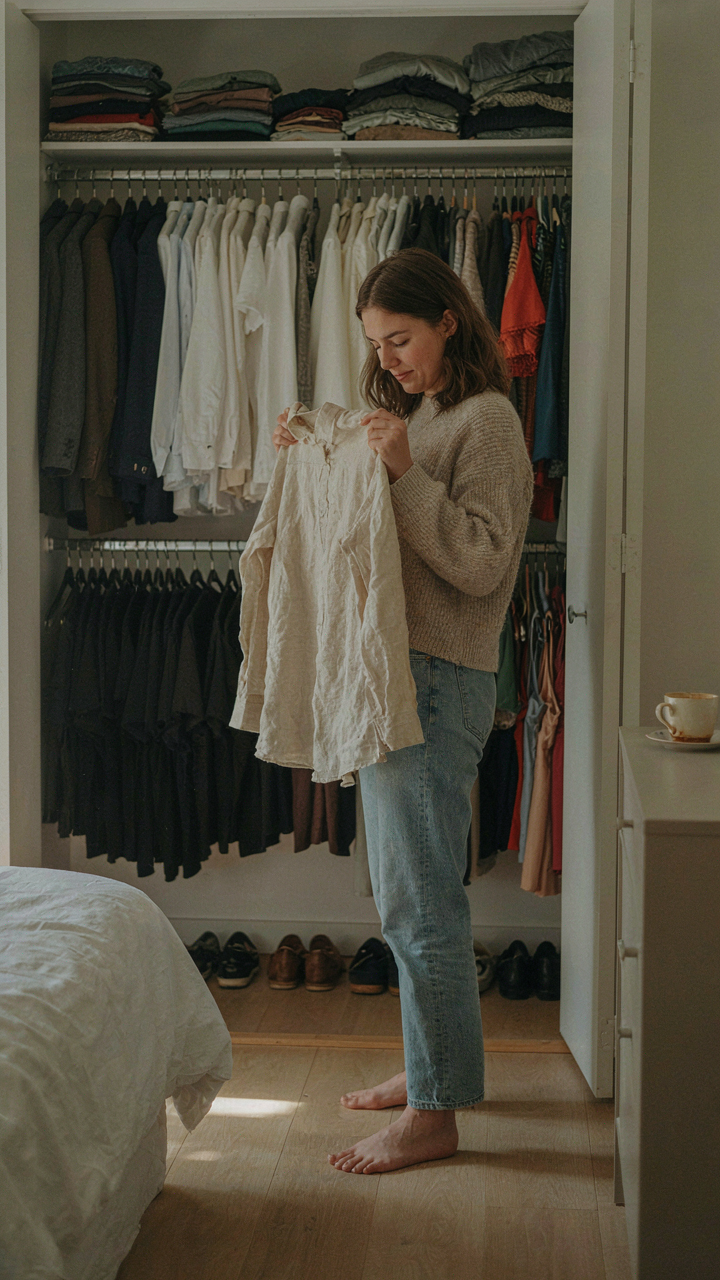
You want a checklist because checklists feel like control. The real mechanism at work here is decision fatigue dressed up as optimization. You think buying the right pieces in the right fabrics will solve the fact that you haven’t built a system. It won’t. Most people spend months researching capsule wardrobes, buy seven new items, then wear the same three pieces because the mental load of combining unfamiliar pieces exceeds the friction of repetition.
The “perfect” hot weather capsule is a myth perpetuated by people selling you something. No algorithm generates a wardrobe that works across your actual life: your commute, your social obligations, your body’s sweat response, your regional humidity. You’re trying to outsource judgment to a template. That’s where the paralysis lives. The moment you realize your wardrobe doesn’t match the template, you start over instead of adapting it.
Your System Beats Any Framework
Forget the idealized lists. The common advice here is incomplete because it treats capsule building like a design problem instead of a behavior problem. You don’t need more information about linen versus cotton. You need a protocol: wear something, notice if it functions for two weeks, keep it or cut it. That’s the only data that matters.

Start with six base pieces in your climate’s highest-performing fabrics. Wear them for fourteen days straight without adding anything. Document which ones you reach for and which ones sit. This isn’t about purity or aesthetic matching. It’s about discovering what your body and your schedule actually require. The pieces that survive this real-world test become your non-negotiable foundation. Everything else builds from function, not from a magazine spread.
Your Closet Isn’t The Problem; Your Indecision Is

You already know what works in heat. Linen breathes. Cotton doesn’t trap sweat. Light colors keep you cool. The real friction lives between knowing this and actually committing to it. Stop scrolling for the perfect piece and buy three neutral linen shirts today. Wear them for a week. You’ll realize a capsule wardrobe for hot climates isn’t about owning less, it’s about owning what actually moves on your body instead of against it. Decisiveness beats perfection every single time.