

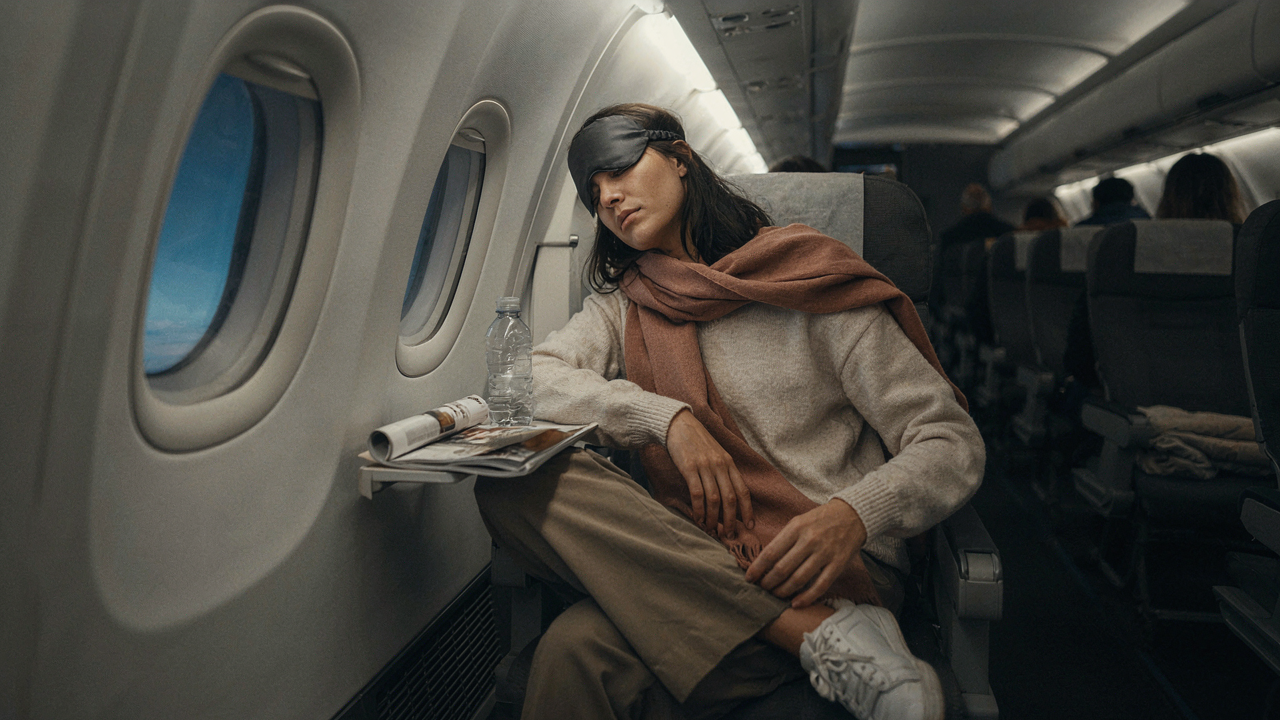
The “Airport Outfit” Fallacy: Why Your Strategy Fails
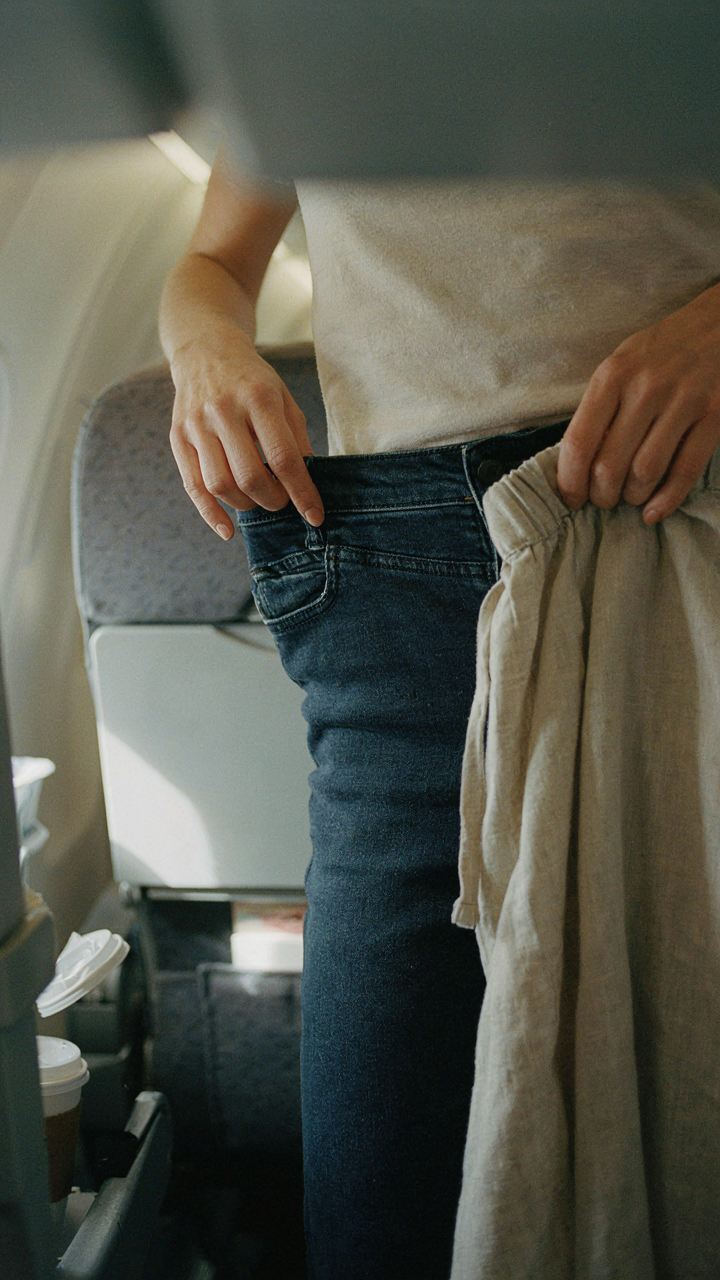
Performative Dressing Kills Actual Comfort
You care about this because you’re terrified of looking sloppy in public, and that fear costs you hours of comfort you’ll never get back. The mechanism is simple: airport outfit advice treats the terminal as a stage where strangers judge your taste. It doesn’t. Nobody remembers what you wore. They’re thinking about their own flights, their connections, their problems. The real cost of performative style on long haul is that you optimize for photos instead of the thirteen hours ahead. You wear jeans that photograph well but cut into your waist at 35,000 feet. You choose a structured blazer because it “elevates” the look, then spend eight hours rigid in your seat. This isn’t style. It’s self-sabotage disguised as sophistication.
The airport is a functional space, not a runway. Treat it like one. Your outfit serves a single job: get you from check-in to landing without physical distraction. Everything else is noise. When you stop performing and start engineering, you make different choices. Loose-fitting materials instead of tailored cuts. Shoes you can slip off instantly instead of lace-ups that trap your feet. Layers that adjust to cabin temperature swings instead of one “statement piece” you’re locked into. The mechanism is elimination: every item either serves the flight or it goes.
Function First, Trends Never
Most advice tells you to “balance comfort with style,” which is corporate speak for “you can have both if you compromise on both.” That’s incomplete. You can have one or the other. Pick function. Trends on long haul flights expire before takeoff. The jetset aesthetic that looks sharp in the airport lounge becomes a liability in economy seating for twelve hours. Looser silhouettes, breathable fabrics, and flat shoes aren’t trending right now, but they work every single time. They’ve worked for decades. They’ll work in five years. What won’t work: tight tailoring, rigid materials, and restrictive footwear that made sense for a two-hour commute.
The protocol is straightforward. Start by listing what your body needs during flight: temperature regulation, blood circulation in your legs, unrestricted breathing, and the ability to move without fabric resistance. Then choose items that deliver those things. Linen pants over denim. Slip-on flats over heeled boots. A cardigan over a fitted jacket. Each swap costs you nothing socially and gains you hours of actual comfort. That’s the real metric. Not whether someone thinks you look polished at baggage claim.
Deconstructing Comfort: Beyond Sweatpants On Long Flights
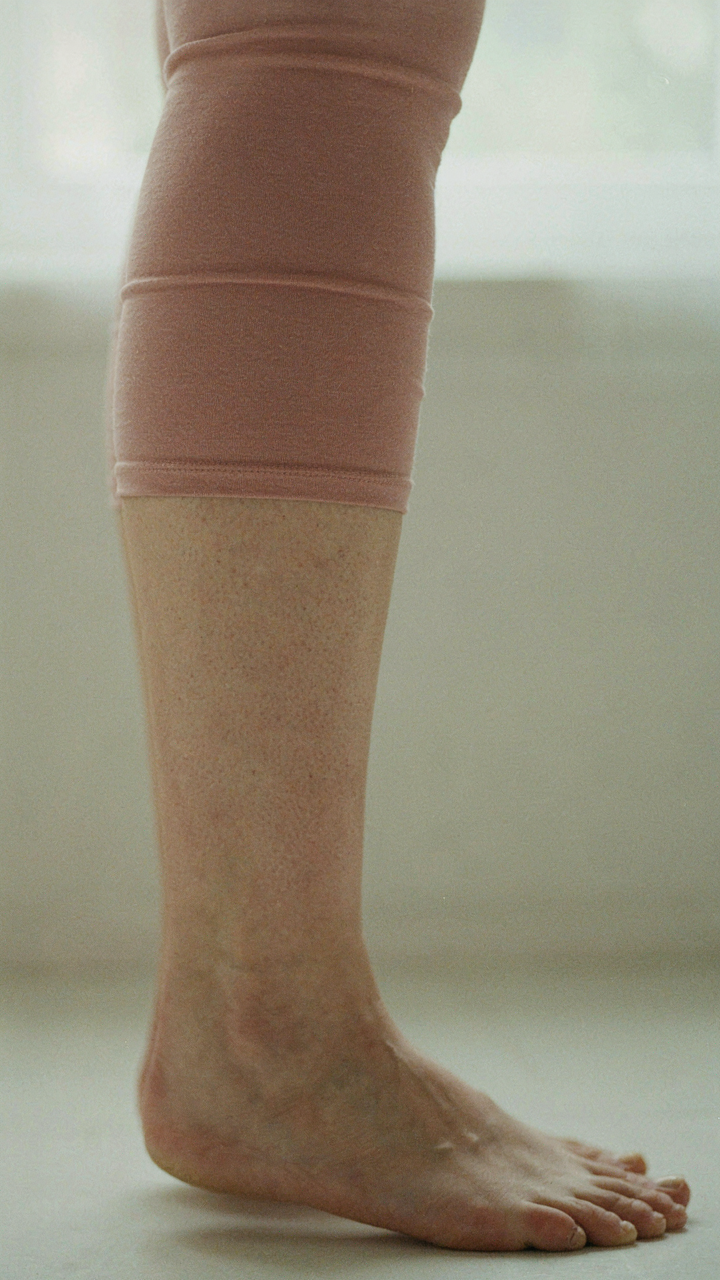
What Your Skin Actually Needs At 35,000 Feet
You think you want comfort because sitting hurts. That’s the real problem nobody states: after eight hours in economy, your legs swell, your back locks up, and compression from immobility triggers inflammation. The mechanism is pure physiology—not fashion opinion. Breathability matters because cabin air sits around 20 percent humidity. Your skin dries out fast. Synthetic fabrics trap moisture against your body, creating a microclimate that accelerates dehydration and makes you feel sticky without actually sweating much. Natural fibers or breathable blends pull moisture away from skin, maintaining equilibrium.
Stretch fabrics prevent restriction that compounds swelling. When fabric doesn’t move with your body, it cuts off micro-circulation in your legs and torso. Elastane blended into cotton or linen (typically 2 to 5 percent) lets fabric expand as your body expands during flight without creating visible bagginess. The fabric returns to shape, so you don’t look disheveled on arrival. Compression happens whether you choose it or fight it—pick fabrics that work with your body’s expansion cycle, not against it.
Movement In A Space That Wasn’t Designed For Bodies
Aircraft cabins apply a concept from ergonomics called “negative space availability”—the room you actually need to move without touching something. You get roughly 17 to 19 inches of seat width and 31 to 32 inches of legroom in economy. Your outfit either restricts your range or expands it. Fitted jeans lock your hips. You can’t cross your legs, shift your weight, or stand without awkward maneuvering. Clothing with actual give lets you adjust position every 20 minutes without pulling fabric or re-tucking.
Structured outfits fail long haul because they demand static posture. Your body needs to move—not much, but frequently. Fabric panels that run vertically rather than horizontally allow leg movement without bunching at the waist. Drop-waist cuts prevent fabric from riding up when you recline or fold forward. The mechanism is simple: if your outfit constrains position changes, you won’t make them, and immobility triggers clotting risk and pain. Wear clothes that don’t punish repositioning.
The Layering Protocol: Mastering Temperature Regulation
The Three Layer System
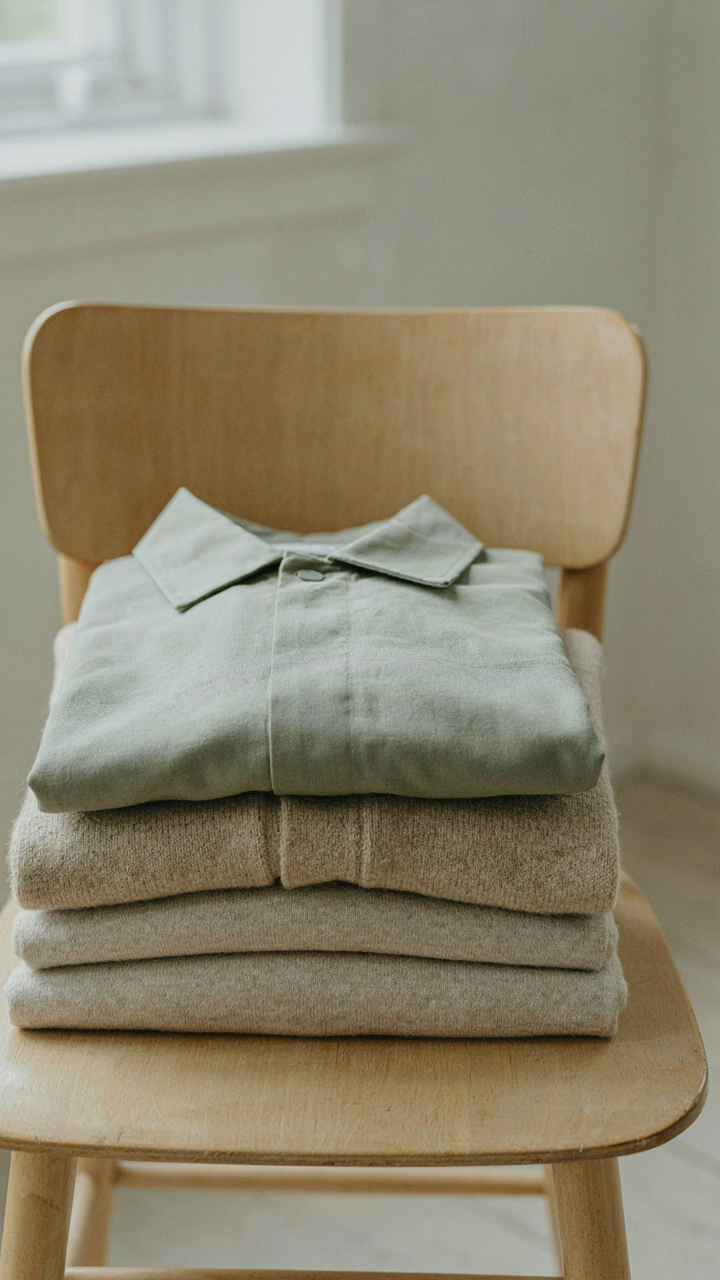
You’re worried you’ll look frumpy. That’s not the real problem. The real problem is that airplane cabins swing between 65 and 78 degrees Fahrenheit depending on the section, time of flight, and how many people complained to the crew. Thermal regulation uses the principle of insulation gradients from physics. Think of your outfit as three discrete zones creating air pockets that trap or release heat on demand. Each layer serves a specific function. None of it is about looking put-together.

The base layer sits against your skin and manages moisture. The mid layer traps warm air. The outer layer blocks direct cold or absorbs excess heat. This stacking system lets you adjust without changing clothes. Cotton absorbs sweat and dries slowly, making it inferior. Merino wool or synthetic blends wick moisture and regulate temperature across wide ranges. Your base should be fitted but not tight. Compression restricts circulation and makes you colder overall.
- Merino wool base top: Naturally temperature regulating and odor resistant. Wear it against skin for maximum efficiency across 12+ hour flights.
- Lightweight cashmere or modal mid layer: Traps air without bulk. Easy to tie around waist if cabin warms, stays compact in seat pocket.
- Oversized linen or cotton cardigan: Blocks direct AC vents and adds instant coverage. Drapes enough to move freely in confined space.
- Structured travel blazer: Acts as outer shell. Doubles as professional layer for descent and airport movement without changing.
- Compression leggings or merino blend pants: Keeps legs warm since cabins prioritize upper body comfort. Allows blood flow better than jeans.
Pack an extra mid-weight layer in your carry-on. Crew temperature adjustments happen mid-flight. You need something deployable in your seat without standing up. Test your layers before the flight. Wear them on a 4-5 hour domestic flight to find gaps. Adjust before committing to long haul.
Climate Shifts Demand Reversibility
Cabin temperature doesn’t stay static. It changes when the plane climbs, descends, or crew adjusts systems. You cannot control this. You can only anticipate it and build flexibility into what you wear. Most women pack layers but treat them as one-way additions, forgetting they also need removal. The mechanism is simple: reversible garments and easy-access pieces win over items that commit you to a temperature choice.
Wear your cardigan inside-out if the knit shows sweat. Use your blazer as a blanket across your lap without needing to stand. Roll your mid layer and place it between your lower back and seat. This creates a thermal barrier against the cold cabin wall without overheating your core. A strategically placed layer shifts your comfort zone by 5-8 degrees. Wear pieces with no snug waistbands so you can layer over them without constriction cutting off blood flow and making you feel colder than you are.
Footwear For Long Haul Flight: Grounding Your Journey
Why Your Feet Swell And What Actually Works
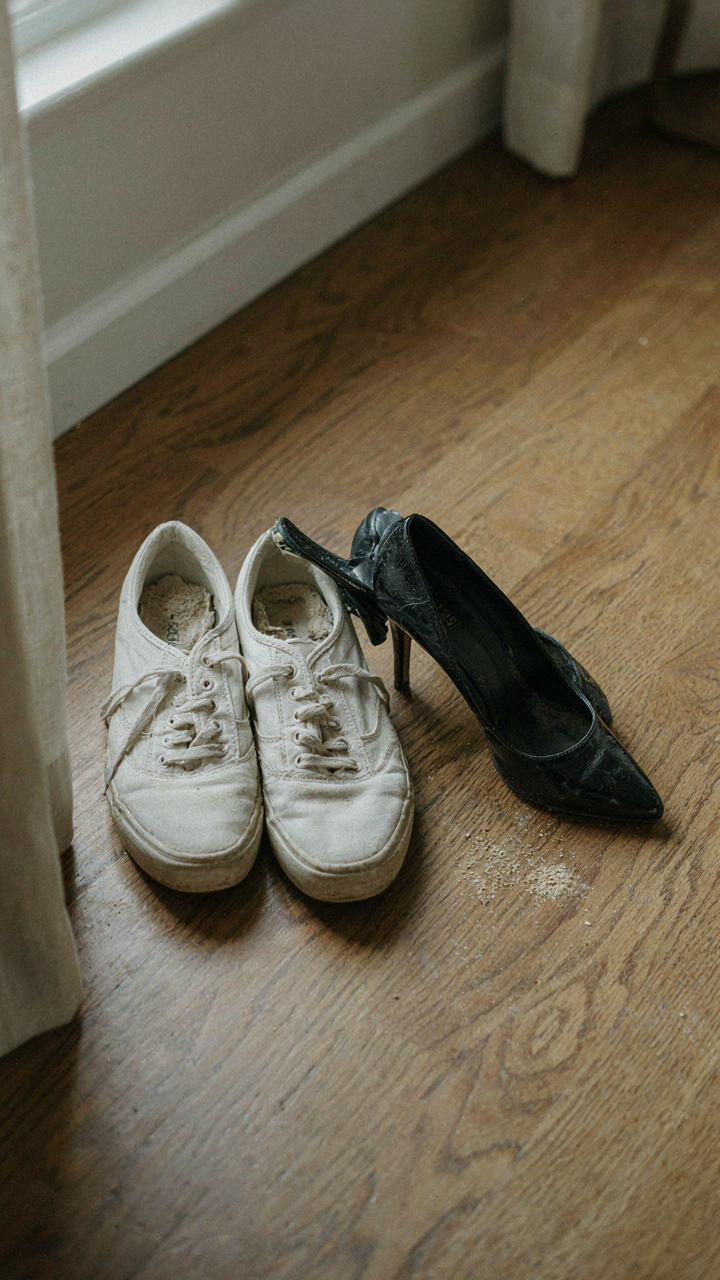
You want to land looking put-together, not hobbling off the plane in shoes that cut circulation. Here’s the mechanism: cabin pressure at altitude is lower than sea level, and your body compensates by shifting fluid into soft tissues. Your feet swell predictably on flights over 6 hours. This isn’t cosmetic—swelling changes how your arch supports weight and creates pressure points that become painful by hour 8.

Support doesn’t mean rigid. Compression-ready shoes need structured arch support that yields slightly, not shoes that force your foot into a fixed shape. Flexibility matters because swelling isn’t uniform—your forefoot expands differently than your heel. Look for shoes with memory foam or cork insoles that compress gradually, not foam that collapses flat immediately. Brands like Vionic and Clarks engineer this balance deliberately. Wear the same shoes you’ll fly in at least twice before the flight so they’ve already adapted to your foot’s actual shape, not the manufacturer’s ideal foot.
Security Line Speed Versus Repeated Removal
The slip-on versus laced debate is actually about transaction cost. Every time you remove shoes at security, you lose 60-90 seconds and add contact points during re-entry. Common advice says slip-ons are mandatory for long haul. That’s incomplete. Slip-ons with no arch support cause foot fatigue that compounds over 12+ hours because your muscles work harder to stabilize a loose shoe. The real move is finding slip-on shoes with structured insoles—not slip-on sandals or flats.
Loafers with memory foam insoles or slip-on sneakers with genuine arch engineering give you both speed at security and support during flight. Brands like Allbirds and Rothy’s make slip-ons with actual foot architecture. You move through security in under a minute, then sit for hours in shoes that actually hold your arch. That’s the mechanism: reducing friction at the airport while preserving the structural integrity your feet need during the flight itself.
Compression: The Unsexy Secret Of Savvy Travelers
Why Your Legs Matter More Than Your Outfit
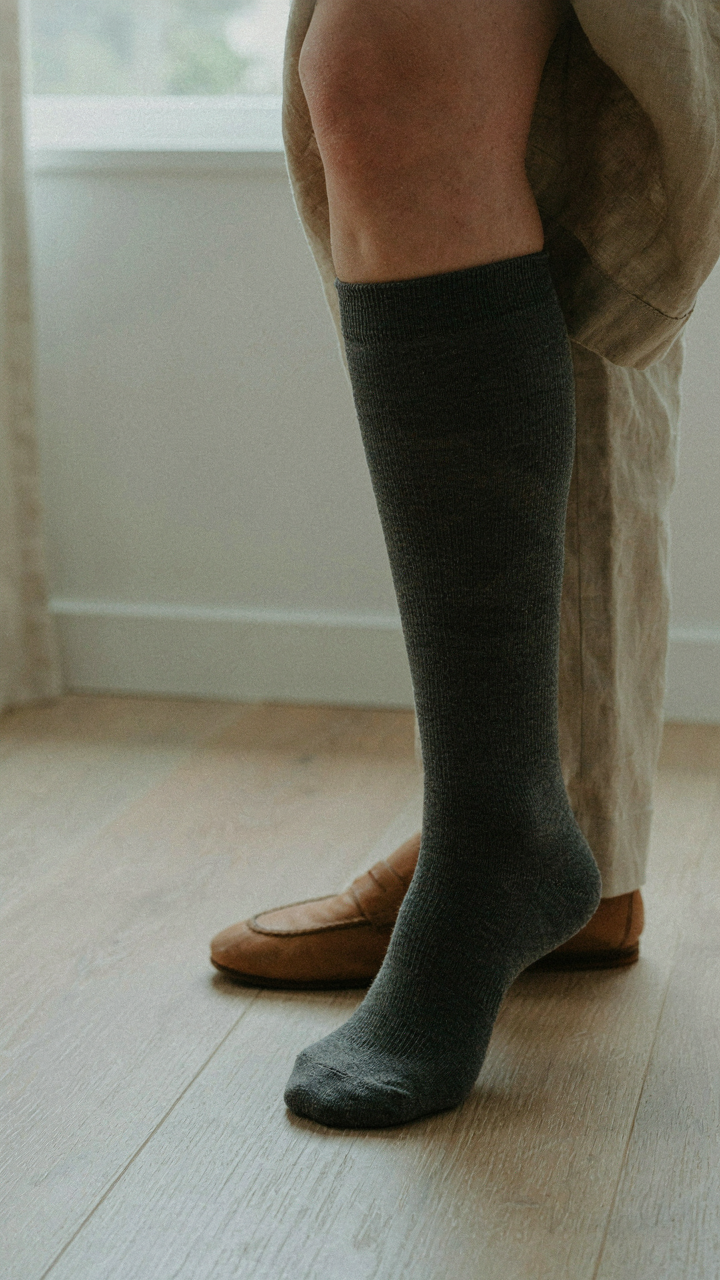
You’re not thinking about DVT because it sounds boring, but because eight hours of immobility can kill you—and you’d rather not spend the flight feeling like your calves are hardening into concrete. Borrow the concept from vascular physiology: blood flow requires pressure gradients. When you sit, gravity pools blood in your lower legs. Compression garments create an external pressure gradient that pushes blood back toward your heart, countering what inactivity does naturally. The difference between swollen ankles and clear circulation is measurable, mechanical, and non-negotiable on flights over six hours.

Most travelers think compression means those flesh-colored granny socks. Wrong. Modern compression comes in graduated levels measured in millimeters of mercury, and you need 15-20 mmHg minimum for flight use. Medical-grade compression exists, but flight-specific compression—designed for the exact pressure profile of sitting—outperforms it because it accounts for leg bend at the knee. Buy compression tights or knee-highs that match your shoe color, not your skin tone. This eliminates the aesthetic penalty while delivering the circulatory benefit that actually keeps you functional when you land.
Beyond Socks: Strategic Pressure Points
Compression socks are the decoy while strategic layering does the actual work. Tight leggings underneath loose linen pants create a pressure system without screaming “medical device.” The leggings compress your calves and thighs; the outer layer hides the function. This approach works because you’re not fighting aesthetic rules—you’re honoring them while solving the mechanical problem compression exists to solve.
Add compression arm sleeves if you sleep across seats or press your arms into the armrest for hours. Your forearms swell the same way your calves do. Wear the sleeves under a loose cardigan. Nobody notices. The payoff: no dead-arm sensation when you wake, no pins-and-needles recovery period. On a twelve-hour flight, this compounds into hours of better rest. Your circulation system doesn’t care about fashion; it cares about pressure applied consistently. Apply it, and your body lands functional instead of inflamed.
The Minimalist Wardrobe: Reducing Decision Fatigue
Build A Outfit System, Not A Closet
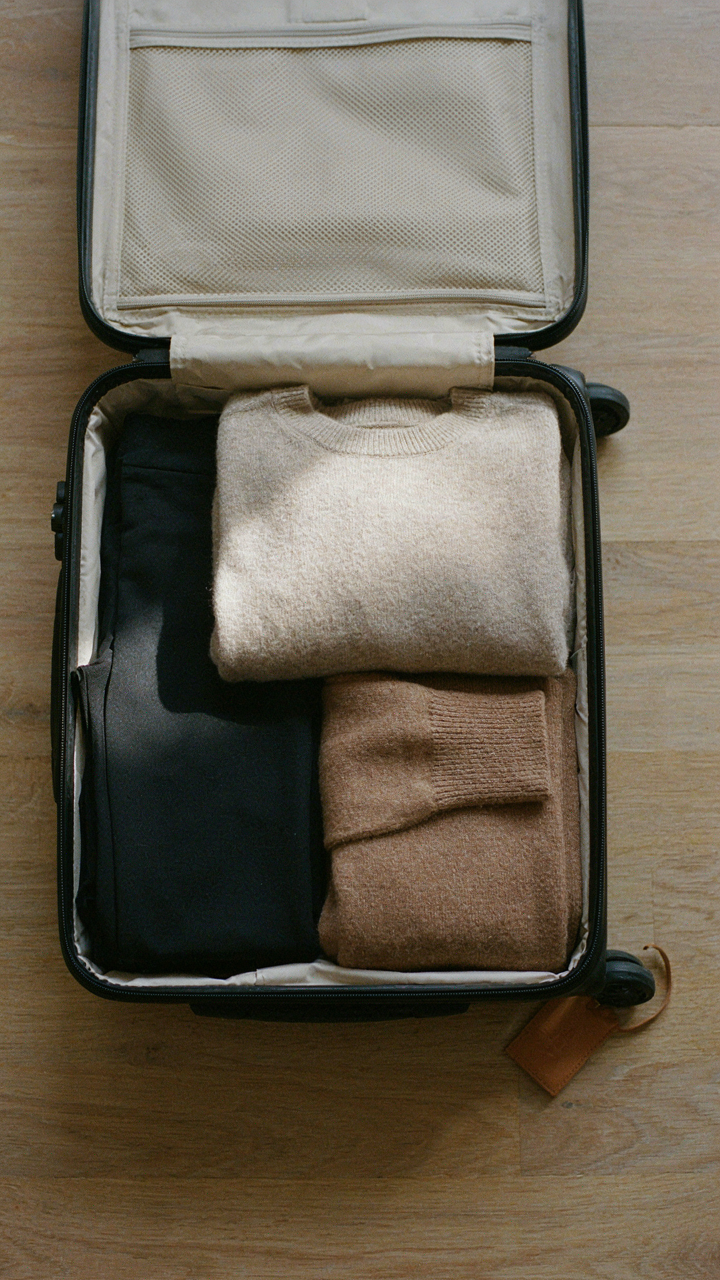
You want to feel put together without thinking about it. That’s the real reason you’re reading this. The mechanism is simple: every piece you pack must work with at least two other pieces. This is constraint-based design from industrial engineering. You’re not buying outfits. You’re buying interchangeable components that stack into multiple combinations.
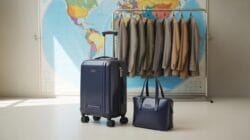
Pack neutral base layers in one color family. Black, navy, or grey works. Add one midtone piece and one lighter piece. Each item should layer into others without clashing. A charcoal sweater works over a cream base and under a navy jacket. A black ponte pant works with every top. Repetition is the point, not variety.
Garments That Earn Their Weight
Every piece must do minimum two jobs or it stays home. Clothing serves a purpose on a twelve-hour flight beyond looking fine. A merino wool crewneck regulates temperature, resists wrinkles, and neutralizes odor without washing. A structured cardigan doubles as a pillow when rolled and keeps you warm without bulk. A pair of high-waisted trousers with stretch works from airport to sleep to arrival without discomfort.
Fabric matters more than cut. Jersey blends with elastane move with your body. Linen wrinkles, so skip it. Wool breathes and self-cleans. Nylon stretches and compresses small. Choose materials that forgive pressure, maintain shape, and don’t hold odor. Each garment replaces two items that don’t multitask. Pack one functional outfit instead of three decorative ones.
Accessorizing For Airport Outfit Utility, Not Distraction
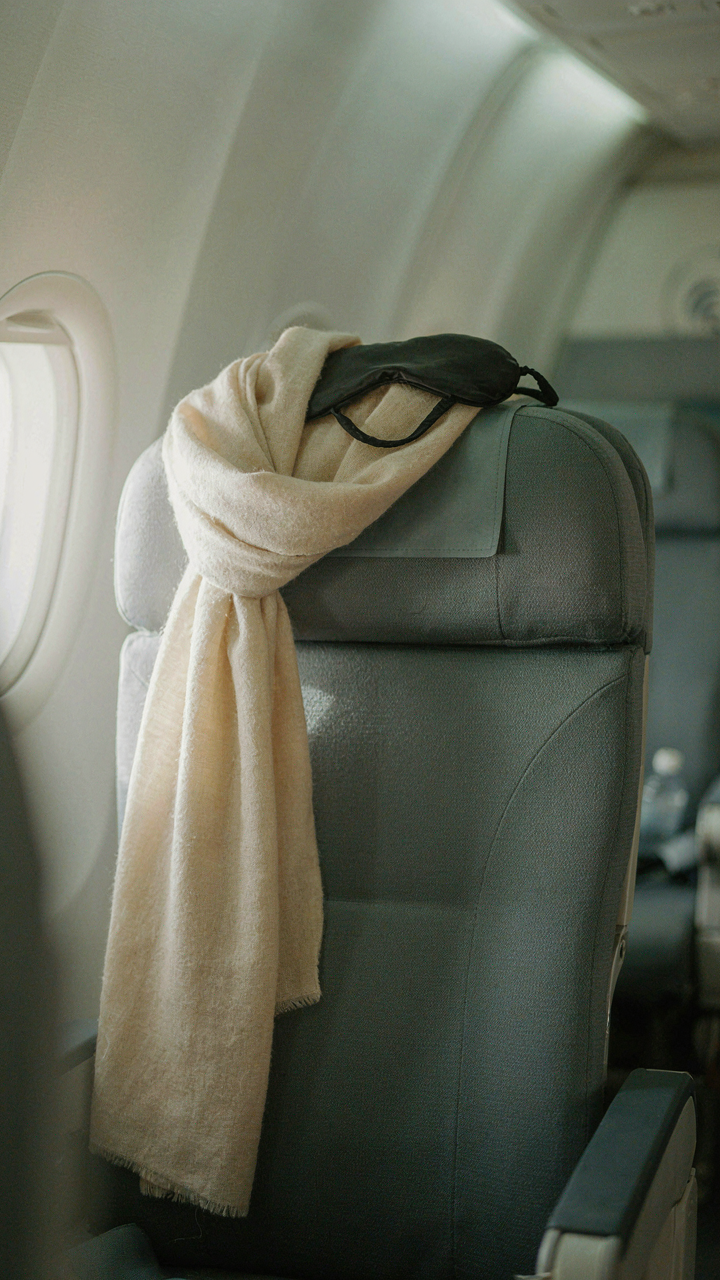
The Scarf And Eye Mask Swap
You want accessories that signal you know what you’re doing. Here’s the mechanism: most women pack accessories for the airport lounge fantasy, not the 14-hour reality. Borrowing from systems design, think of your accessories like load-bearing walls—each one must serve structural function or it’s wasted weight. A scarf does three jobs: neck support during sleep, temperature regulation when cabin air kicks in, and a blanket substitute when you need coverage without bulk. An eye mask isn’t optional on long haul. It collapses the cabin light problem entirely. These two items compress into a space smaller than a paperback.

The eye mask solves a real problem: your circadian rhythm gets hijacked by artificial lighting at 35,000 feet. A quality mask blocks light completely—not mostly, completely—which lets your body recognize sleep mode. The scarf works as thermal regulation because airplane cabins oscillate between hot and freezing. Drape it, roll it, fold it around your shoulders. One scarf replaces the emotional appeal of carrying three “just in case” items you’ll never touch. Pack the scarf and mask first. Everything else fights for the remaining space in your carry-on.
Metal Free Packing For Checkpoint Speed
The common advice says minimize metal to speed through security. That’s incomplete. The real issue is that metal in pockets, zippers, and hardware creates friction points—literal delays and psychological friction that compounds over a 12-hour travel day. Think operationally: TSA checkpoints process volume through friction reduction. Every metal piece you carry is a micro-decision point for agents. Remove the variable. Your belt comes off. Your watch comes off. Zippers on bags get flagged. You’re optimizing for flow state, not fashion.
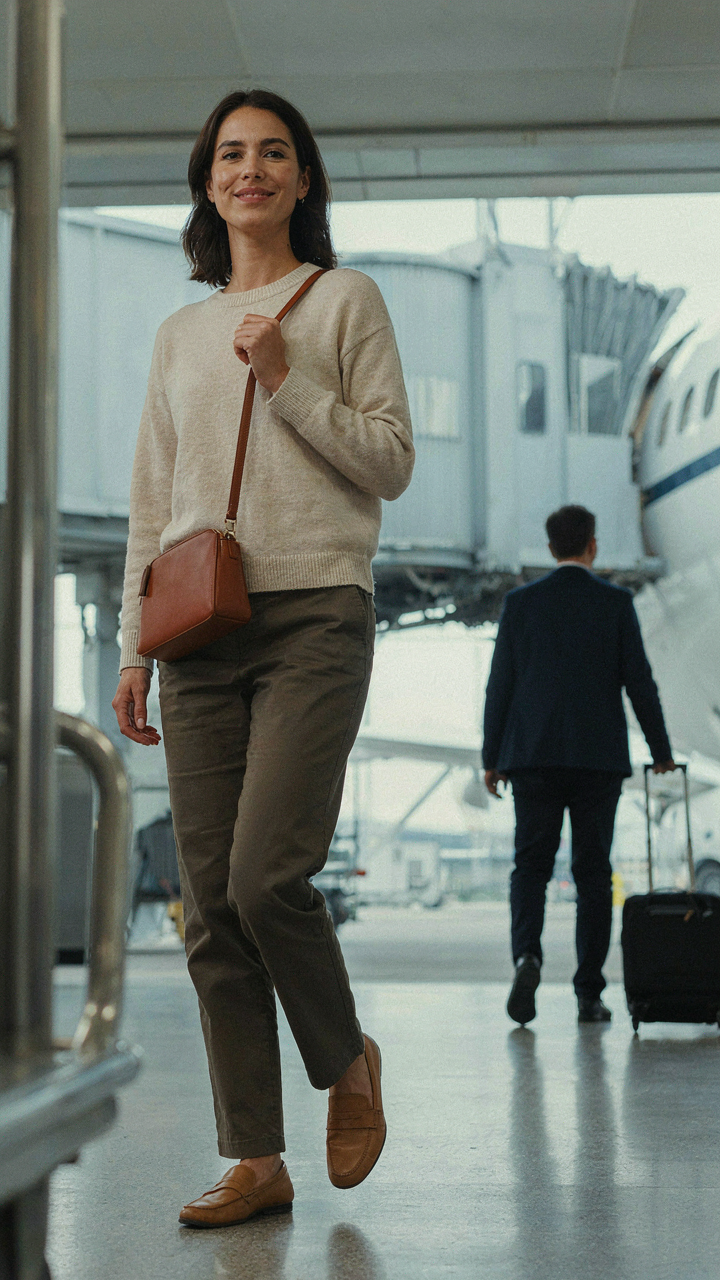
Choose a crossbody bag with a plastic clip instead of a buckle. Wear slip-on shoes instead of laced or buckled styles. Your jewelry stays minimal: no chunky rings, no stacked bracelets. This isn’t about looking minimal. It’s about moving through the system without creating inspection points. When you hit the gate, you’ve saved fifteen minutes of handling, waiting, and mental load. That buffer matters on a long haul—you board calmer, settle faster, and your nervous system starts the flight ahead instead of behind.
The Psychology Of Your Flight Outfit: Confidence Vs. Pretense
Fewer Choices, Better Decisions
You want this section to validate that looking good matters. Here’s the truth: it does, but not for the reason you think. The real mechanism is cognitive load. Every decision you make burns mental energy. On a twelve-hour flight, you have a finite budget of that energy. Spend it on outfit deliberation before boarding, and you have nothing left for actual comfort or rest.

Cognitive load reduction works like a decision budget. You allocate resources upfront so the system runs smoothly later. A pre-planned outfit eliminates the option paralysis that hijacks travelers mid-journey. You chose layers, fabric weight, and shoe type before the flight. Now your brain handles only comfort adjustments, not identity crisis at thirty thousand feet.
Readiness Over Appearance
Feeling prepared is not the same as feeling dressed. Most advice tells you to look polished. That’s incomplete. The real mechanism is self-efficacy: the belief that you can handle what comes. A woman in sweatpants who chose them deliberately has higher self-efficacy than one in heels who compromises comfort to signal status.
Preparation means knowing why each piece works. You selected compression socks because they reduce blood clot risk on long flights, not because they look intentional. You wear a wrap because you verified the cabin temperature range and layering logic. You know your shoes slip off without creating pressure marks. This knowledge creates actual confidence, which shows up as presence, not as polish. The outfit becomes a system you trust, not a costume you defend.
Post Flight Transition: Arriving Composed, Not Rumpled
Fabrics That Don’t Betray Time
You care about this because wrinkles signal you’ve been traveling, and that reads as loss of control. The mechanism is simple: natural fibers wrinkle because their cellulose structure collapses under pressure and humidity. Synthetic blends and technical fabrics resist this collapse. Nylon, polyester, and spandex hold their shape because they don’t absorb moisture the way cotton and linen do. This isn’t about luxury. This is about physics working for you instead of against you.

High quality knits outperform wovens on long haul flights. A merino wool blend or quality cotton-poly blend maintains its form through 14 hours of sitting, pressure, and cabin humidity shifts. When you land, you step out looking like you dressed two hours ago, not twelve. The key is the blend ratio: aim for 50 percent synthetic minimum if you want genuine wrinkle resistance without sacrificing breathability. Buy one piece in the fabric type you’re testing. Wear it. Sit in it for four hours. Then decide if it holds.
The Refresh Kit That Actually Works
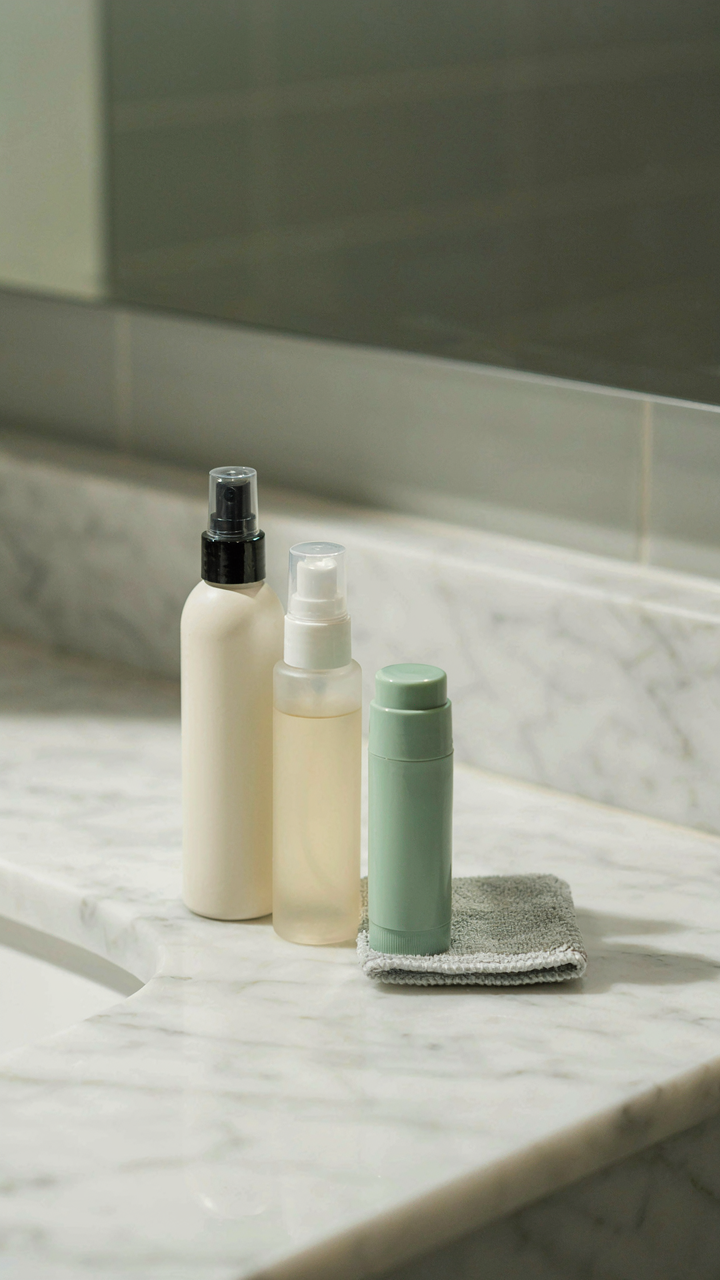
Don’t pack a cosmetics bag and call it a refresh strategy. That’s amateur thinking. You need targeted items that address the specific damage long haul travel inflicts: dehydration, creasing, stale smell, and oil buildup. A solid refresh kit takes up minimal space and handles these in sequence. Bring a microfiber cloth, face mist, solid deodorant, dry shampoo, and a small container of face wash or cleansing wipes. These aren’t comfort items. They’re tactical tools for resetting your appearance in a airport bathroom in under five minutes.
Apply them in order: dry shampoo first to absorb scalp oil, then face mist to hydrate and set makeup, then wipes or wash to strip dead skin, then deodorant, then the microfiber cloth to smooth fabric creases if needed. This sequence works because it moves from scalp to skin to fabric. You’re essentially reversing the deterioration that happened in the cabin. Do this in the airport bathroom 30 minutes before deplaning, not after. You’ll walk out looking functional instead of wiped.
The Unspoken Rules Of True Long Haul Flight Outfit Elegance
Practicality As The Real Power Move
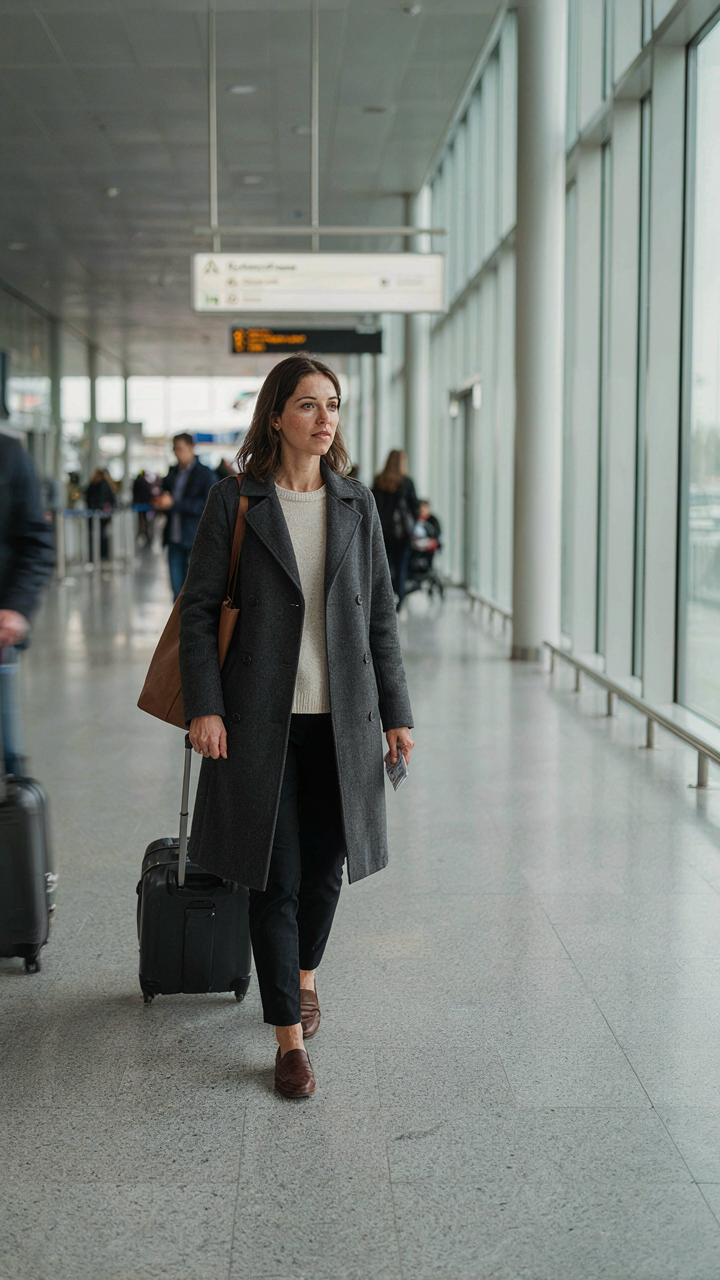
You care about this because you want people to assume you fly often enough to know better. The mechanism is simple: practicality signals competence. Wear what solves problems instead of what looks effortful, and observers interpret that as experience. A woman in a structured linen blend and flat shoes who moves through an airport without adjusting anything reads as someone who has done this before. The opposite outfit, the one that demands constant repositioning and fussing, broadcasts amateur status regardless of brand names.
This is economics applied to perception. Scarcity signals value, and genuine travel competence is scarce. Most people dress for the fantasy of flying, not the reality of twelve hours in a metal tube. You opt out of that theater by choosing materials that breathe, cuts that don’t restrict your legs when sitting, and shoes you can slip off without ceremony. The payoff isn’t Instagram validation. It’s the absence of discomfort masking as sophistication, which is the only thing that matters on hour seven of a flight.
The Outfit That Proves You Know What You’re Doing
Effortless travel is a display of competence, not casualness. When you show up in pieces that work together without thought, you’re not being lazy. You’re showing that you’ve eliminated variables. A long haul flight outfit women actually wear repeatedly uses the same three or four core pieces in rotation because those pieces survive twelve hours, multiple climates, and close quarters without failing. You don’t need a capsule of forty items. You need five that function.
The mechanism here is friction reduction through repetition. You wear the same neutral base layer every time because it doesn’t pill, doesn’t cling, and doesn’t require washing after one flight. You pair it with the same compression leggings because you know exactly how they perform in a reclined seat and whether they hold up during the walk to customs. This isn’t boring. This is the difference between dressing and solving. A woman who knows what works stops searching for what looks good.
Your Fear Of Looking Disheveled Isn’t About The Outfit; It’s About Control You Don’t Actually Have
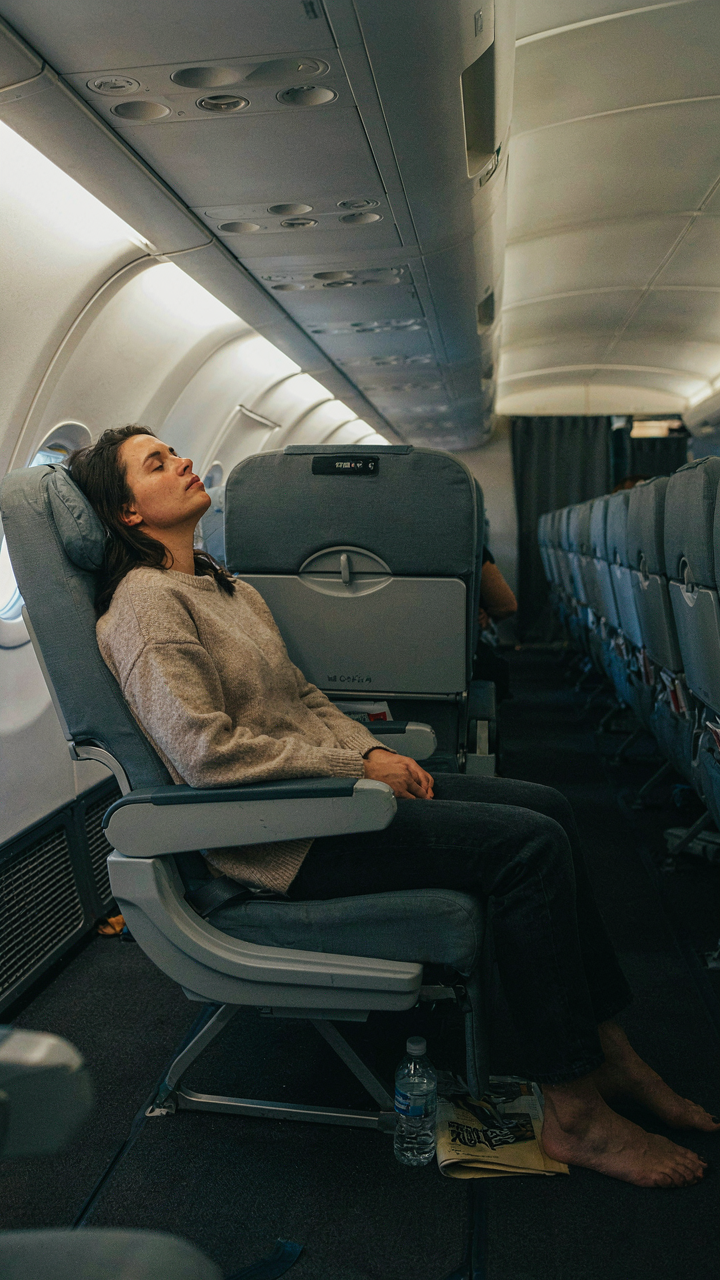
You can’t control turbulence. You can’t control the person next to you. You can’t control the cabin temperature. So you obsess over the one thing you think you can: how you look. Stop it. Pick your outfit now, commit to it, and forget it exists for twelve hours. The moment you stop fighting for control you don’t have, you actually feel comfortable. Your outfit isn’t armor. It’s permission to let go.