


The “Weather Proof” Fallacy: Why Your Raincoat Is Sabotaging Your Style
London Actually Gets Less Rain Than You Think
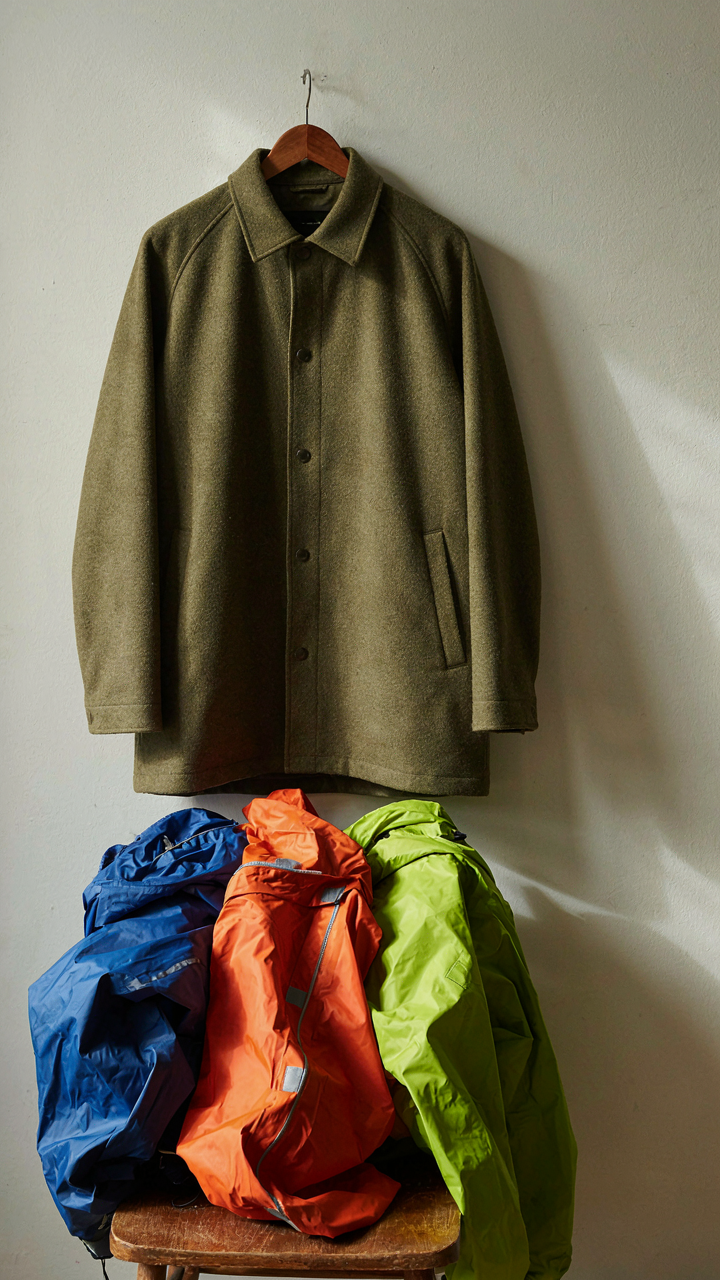
You’re building a capsule around a fear that doesn’t match reality. London gets roughly 600mm of annual rainfall, spread across many light drizzles rather than the constant downpour your mental model assumes. The real mechanism: you’re preparing for the worst-case scenario instead of the statistical norm, which bloats your wardrobe with pieces you wear 15 percent of the time. This decision paralysis—buying every rain layer available—crowds out the pieces that actually earn their weight in rotation.
The Met Office data backs this. Most London rain falls as light precipitation in autumn and winter, not as heavy downpours requiring industrial waterproofing. You don’t need a technical raincoat for 90 percent of London weather. You need layering flexibility and one genuinely water-resistant piece for the actual rainy weeks. This distinction collapses entire categories of unnecessary purchases from your capsule planning.
Strategic Layering Beats Weather Armor
Over-preparing for London weather is the opposite of adaptability. Economics calls this opportunity cost: every pound spent on redundant rain gear is a pound not spent on pieces that work across conditions. A proper October outfit in London needs a single water-resistant outer layer paired with base and mid layers you can mix across seasons. The trap most people fall into is building separate “rain wardrobes” alongside regular wardrobes, doubling their inventory needlessly.
A London capsule wardrobe functions best when each piece solves multiple problems simultaneously. A wool-blend overshirt works as a mid-layer in October, as a standalone layer in spring, and adds texture on theater nights. One quality rain layer—not five—handles wet weather while the rest of your pieces manage temperature variance. This is where your budget goes: into pieces with genuine versatility, not into weather-specific insurance policies you’ll regret owning in six months.
London Capsule Wardrobe: The Anti Tourist Playbook

Neutral Foundations That Actually Work
You want to look like you belong in London, not like you’re visiting it. The real mechanism is constraint, borrowed from systems design: fewer inputs force better outputs. A london capsule wardrobe works because limitation eliminates decision fatigue and forces every piece to earn its place through genuine versatility, not theoretical flexibility.

Start with a palette of three neutrals: charcoal, navy, and cream. These aren’t boring. They’re the working base that lets texture and cut carry the load instead of color. Add one secondary neutral like camel or grey. This isn’t minimalism for its own sake. It’s the hard math of rotation: fewer colors mean more outfit combinations because pieces stack without clashing.
Strip The Tourist Signals
The Union Jack is everywhere in London gift shops and nowhere on people who live there. Common advice says add a pop of color or a statement piece. That’s wrong. London dressing is about subtraction, not addition. You signal that you understand the place by rejecting what marks you as an outsider.
Ditch logos, ditch large graphics, ditch anything that shouts nationality or brand. Look instead at fit, fabric weight, and seam quality. A well-cut wool blazer from Reiss or a structured Barbour jacket communicates more intelligence than any thematic accessory. The mechanism is simple: restraint signals knowledge. Restraint signals you’ve been here long enough not to perform.
The Theater Night Gambit: Elevating Without Overdoing It

Smart Casual Beats Formal In West End Context
You want permission to look expensive without trying. Here’s the real mechanism: West End audiences expect restraint. Theater crowds in London dress down from the 1980s formal standard because the cultural signal shifted. Smart casual works because it reads as intentional rather than obligatory. You’re not following a dress code. You’re choosing what you wear.

The mistake most people make is treating “theater night” as a formal event. It isn’t. A structured blazer over dark trousers, a quality knitwear piece, and minimal accessories signals you understand the space without performing formality. This is how London works. Overdressing announces you don’t belong there. The capsule wardrobe handles this by already containing pieces that sit exactly at this intersection.
The Minimal Addition Strategy
Day to night transitions fail because people add too many pieces instead of swapping one or two. Economics teaches diminishing returns: each additional item adds friction without proportional value. Your London capsule already contains your day foundation. One swap executes the full transformation.
Swap your daytime bag for a structured leather option. Replace your everyday shoes with a leather oxford or ballet flat. Keep every other layer identical. The audience doesn’t see your morning layers under the evening piece anyway. This approach avoids buying duplicate pieces and keeps your wardrobe functional for actual life instead of fantasy scenarios.
Fall Travel Outfit: The One Bag Military Strategy

Applying Combat Logic To Packing
You want to look effortless in London without hauling luggage that betrays you’re a tourist. Military supply chains operate on a principle called “force multiplication”—achieving maximum output with minimum inputs. A London capsule wardrobe does the same thing: each piece multiplies its utility by layering with others, so you carry fewer items but generate more outfit combinations.

The mechanism is constraint, not abundance. Most travelers pack redundantly because they fear running out of options. Military planners do the opposite. They identify the single mission requirement, then strip everything else away. For London fall travel, your mission is staying warm, moving through rain, and dressing for theater or dining without changing hotels twice. That clarity eliminates 70 percent of what you’d normally pack.
The Non Negotiable Items That Enable Everything
Everyone recommends “basics,” which is useless advice because it’s too vague to act on. You need the specific items that prevent mission failure in London’s climate and social contexts. A wool trench coat in charcoal or camel isn’t style fluff—it’s your insulation layer, rain barrier, and dressing-up piece in one object. Merino wool long-sleeves function as your base layer system, wicking moisture and regulating temperature whether you’re walking the Thames or sitting in a theater. Dark jeans or wool trousers work because London dress codes accept them in nearly every context outside formal dining.
The differentiator is footwear: Chelsea boots or oxford brogues that handle wet pavement and transition from day to evening without looking out of place. Invest here. One pair handles rain, cobblestones, and a theater lobby. Add a crew neck merino sweater, a plain white linen or cotton shirt, and a leather belt. These five core items generate approximately fifteen distinct outfits when layered and rotated. Your one bag stays under twelve pounds, and you never repeat an outfit combination twice in a seven-day trip.
The Layering Protocol: How To Actually Stay Warm (and Cool)
Start With Skin Contact, Not Fashion
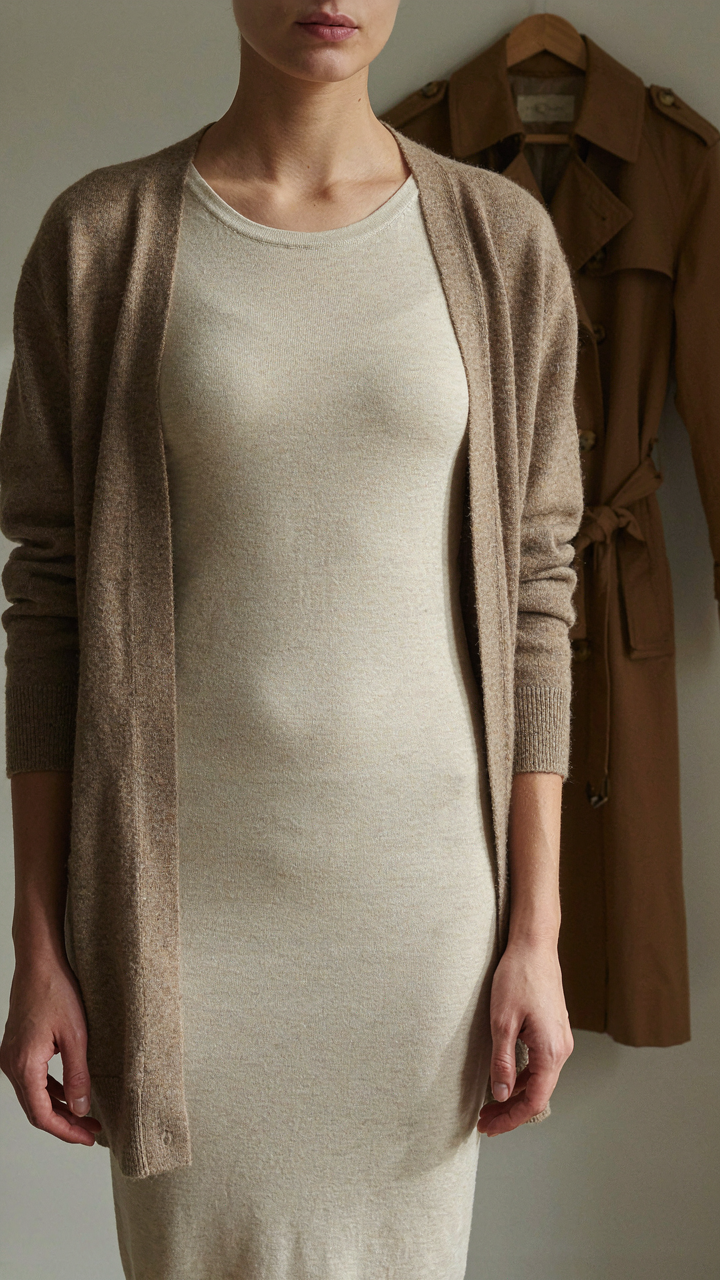
You want layering to make you look intentional without looking like you’re trying. That’s the real reason you’re reading this. The mechanism is thermoregulation: your body loses heat through conduction, convection, and radiation. In a London capsule wardrobe, your base layer is your first conductor of heat management. Cotton absorbs moisture and holds it against skin, which cools you down fast in damp air. Merino wool or synthetic blends wick moisture away, keeping your core stable when temperature swings between heated theaters and rain-soaked streets.

Wearing the wrong base layer is like trying to regulate a room’s temperature by changing the wallpaper. The fiber matters more than the fit. Your base layer should fit close to skin without restriction, which means you’re not layering loose-fitting pieces on top of each other. This is where most people fail: they add bulk instead of strategic trapping. Merino works year-round in London because it breathes when you’re moving indoors and insulates when you step outside. A single quality base layer in charcoal or black becomes invisible under everything else in your capsule.
Outerwear As Your Armor And Silhouette
A coat in London isn’t protection from cold. It’s your operating system for every outfit you build. The coat structure determines what you can layer beneath it without looking overstuffed or shapeless. A well-cut wool coat or raincoat with clean proportions creates definition even when worn over multiple layers. Oversized coats hide the silhouette you worked to maintain with your base layers. The real play is choosing one outerwear piece that accommodates your full range of under-layers while keeping the visual line sharp.
Theater nights and rain require different outerwear for different reasons, but in a capsule wardrobe you don’t have the luxury of specificity. A wool coat works for both because it breathes in heated venues and handles London’s damp. Opt for a classic trench, wool coat, or technical raincoat with a tailored cut. Avoid quilted jackets unless your capsule is specifically built around them as a visual anchor. Your outerwear must earn its place through versatility and silhouette contribution, not just warmth. The coat you choose determines whether your layering looks composed or chaotic.
London October Outfit Ideas: The Unsung Heroes

Shoes That Survive London Streets
You care about this because you don’t want to look like you’re visiting. The mechanism is simple: London’s streets demand footwear that handles wet pavement, uneven Victorian cobblestone, and the psychological weight of being watched. Shoe choice isn’t decoration in a capsule wardrobe—it’s infrastructure. You need pieces that function in rain without becoming slippery, won’t need replacing mid-trip, and won’t scream “tourist” the moment you step onto Brick Lane.
- Chelsea Boots (leather, Chelsea or Chelsea-adjacent): The London standard for autumn. Elastic side panels mean you slide them on without ceremony. Leather ages visibly and improves over time, signaling you’ve lived somewhere, not visited once.
- Suede Desert Boots (sand or tan colorway): Lightweight enough for theater lobbies, structured enough for city walking. Suede darkens when wet but dries without staining. Avoid in heavy downpour, but October rarely delivers that.
- White Leather Sneakers (minimal, low-top): Pairs with everything. Waterproofing spray makes them viable in drizzle. The capsule workhorse that contradicts “smart London dressing” until you realize versatility beats formality.
- Brogues (oxford or derby, closed-toe): Theater-appropriate and street-ready. The perforations provide texture that reads elevated, not athletic. Leather soles need rubber heels installed before arrival to prevent slipping on wet stone.
- Loafers (leather, minimal hardware): Slip-on design means no bending down on public transport. Bronze or black metalwork works across evening and daytime contexts. The London uniform for people who’ve stopped performing.

October humidity and rain mean your shoes do the actual work. Buy one pair in black leather, one in neutral suede or canvas. Rotate them. Wet shoes breed fungus and odor—capsule wardrobes fail when people ignore the maintenance protocol underneath.
Layers That Signal Intent, Not Temperature
Accessories aren’t status symbols—they’re the contract between your intention and how others read you. Think of signal theory from information design: accessories transmit data about whether you’re moving with purpose or wandering. A silk scarf in October reads differently than a fleece neck gaiter. Both keep you warm. One signals you understand the room you’re entering. In a London capsule wardrobe, accessories close the gap between what you’re wearing and what the setting requires.
The common advice says “add a scarf, add a hat.” That’s incomplete. Your accessories need to shift weight between contexts without taking up luggage space. A wool scarf can be worn loose for West End theater matinees, tied tighter for Soho coffee meetings, or used as a shoulder wrap indoors when venues overcool. Silk scarves pack smaller than cotton ones. Wool holds its shape better through repeated styling. The mechanism is layering that compresses—three settings from one piece. Choose scarves in neutral tones that match your base layers and footwear, not your outerwear. This creates visual continuity even when you’re swapping jackets. Your accessories should earn their weight by transforming, not by existing.
Clothes To Wear In London In October: Material Science For The Savvy Traveler

Wool, Cashmere, And The Synthetics That Actually Work
You want to look like you belong in London, not like you’re fighting the weather. The real mechanism is this: October in London demands fabrics that regulate moisture without trapping it, and that means understanding fiber physics. Wool is the baseline because its scale structure naturally wicks sweat while maintaining insulation when damp, which cotton cannot do. Merino wool specifically solves the “itchy” objection most people use to avoid wool entirely, making it the working uniform of London capsule wardrobes.

Cashmere adds softness and thermal efficiency but requires honest inventory management—it pills, it stretches, it demands hand washing or dry cleaning. Synthetics like nylon and polyester get dismissed by fashion gatekeepers, but they excel at quick-drying and won’t degrade in repeated rain exposure. The smart move: use synthetics for outer layers that take weather abuse, reserve wool and cashmere for mid-layers and base layers where they control your core temperature without degrading. A 70/30 wool-synthetic blend outperforms pure wool for London’s rain-heavy October because the synthetic fibers accelerate drying time by roughly half.
What Cotton Really Costs You In October Rain
Everyone says “breathable” when they mean “absorbs water and holds it against your skin for hours.” Cotton is the trap. It feels comfortable in dry conditions, so retailers stock it, fashion magazines feature it, and travelers pack it thinking they’re making a smart choice. October rain in London isn’t romantic—it’s persistent, and cotton becomes a cold compress against your body within twenty minutes of exposure. The alternative isn’t complicated: linen dries slightly faster but still absorbs moisture. Rayon and modal perform better but remain inferior to wool-synthetic blends.
The protocol is straightforward. Replace every cotton base layer with merino wool or wool-synthetic blend. Keep cotton for dry, indoor contexts only—your hotel room, theater nights, dinner indoors. For layering over rain exposure, commit to synthetics in your outer shell and mid-layer. Test this before London: wear a cotton shirt in cool, damp conditions for ninety minutes. Notice how it clings. Now understand that’s what most travelers experience daily in October while believing they packed correctly. Your capsule wardrobe survives October because the layers dry before your next movement, not after.
London Trip Outfit Ideas: Blending In, Standing Out
What Londoners Actually Wear Daily
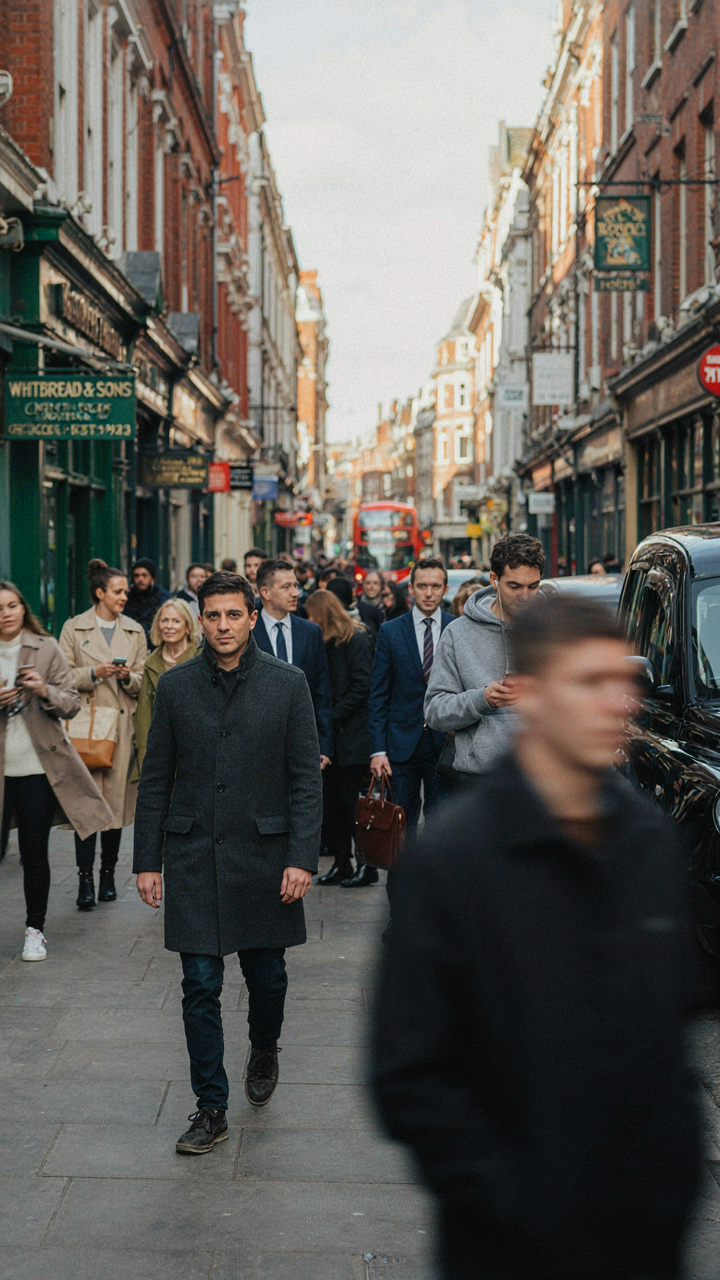
You want to know what to wear so people don’t clock you as a tourist. That’s the real question here. The mechanism is simple: Londoners dress for function and climate, not for a story. They layer because rain arrives without announcement. They choose dark colors because the city is gray, not because it’s trendy. They wear trainers to commute and flats to walk. No performance, no costume.

The uniform exists across income levels. Black or navy base layer. A coat that works in drizzle and wind. Jeans or trousers that fit without announcing themselves. Boots or simple shoes. A bag that carries a day’s worth of items without strain. Londoners don’t rotate eight versions of the same outfit type to feel variety. They rotate two or three and move on with their lives.
Building Your Own London Aesthetic, Not A Copy
The advice to “just copy what you see” misses the actual mechanism. In game theory, a dominant strategy beats all others when the conditions are fixed. Your conditions aren’t London’s. Your body, budget, schedule, and actual life happen elsewhere. Copying creates friction. Adapting creates integration. The difference is whether you choose pieces that solve your real constraints while respecting London’s climate and pace, or whether you import a list someone else validated.
Start by identifying one constraint that matters most to you: theater attendance, walking ten thousand steps daily, working in an office, moving between rain and indoor venues. Build outward from that single need. If theater is primary, your coat must transition from street to seat without bulk. If walking is primary, your shoes must not fail after three miles. Your capsule succeeds when it solves your specific problem while looking like it belongs in a London street, not when it matches a mood board. The test is simple: wear it for a full day across three different environments and adjust what fails.
What To Wear In London In October: The Indifference Principle
Dressing For The Person In The Room, Not The Room
You’re worried people will judge your outfit. That’s the real reason you’re reading this. The mechanism is simple: you’re outsourcing confidence to fabric choices, which means no outfit will ever work. Confidence is not an output of your clothes. It’s a prerequisite. The London capsule wardrobe works because it forces you to stop seeking approval through novelty and start trusting repetition instead.

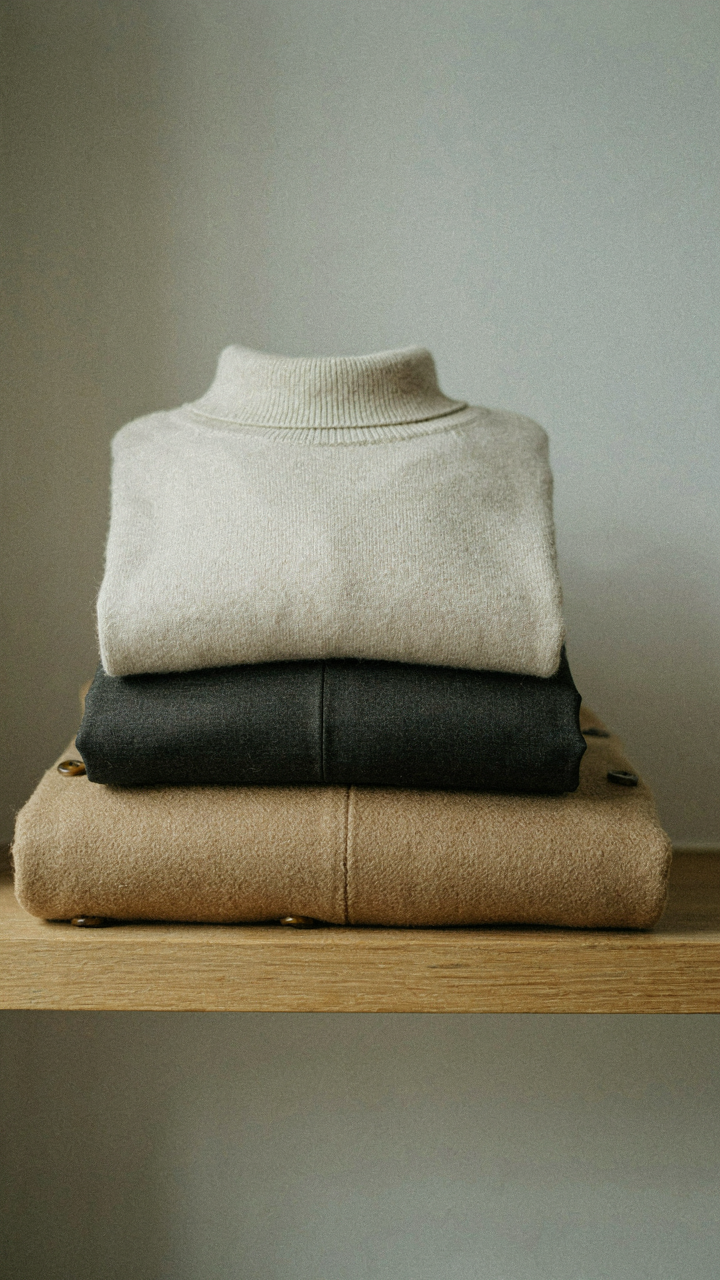
October in London demands layers, but the real demand is internal. You wear the same quality pieces repeatedly because they perform their function without demanding attention. A merino wool roll neck, a wool trousers, a camel overcoat—these disappear into the background of your presence. You become visible because you stopped trying to be seen through your clothes.
Effort Disguised As Casualness
Everyone says effortless style comes from not trying. That’s incomplete. Effortless style comes from trying once, then never again. You spend the effort upfront selecting pieces that work together by design, not accident. Then you wear them on rotation without thinking. The London aesthetic isn’t lazy. It’s strategic laziness.
A capsule wardrobe in October means choosing fabrics and cuts that withstand rain, theatre seats, and pub humidity without losing shape. Wool holds structure. Cotton blends breathe under layers. Dark colors mask the wear that weather inflicts. You’re not dressing for how things look in a photo. You’re dressing for how they function across eight hours of movement, temperature changes, and actual life. That function is what reads as effortless.
Beyond The Clothes: The Mindset Of A True Londoner

Practical Stoicism With Unpredictability
You want to believe that owning the right pieces solves the problem. It doesn’t. A London capsule wardrobe fails the moment you expect it to eliminate friction—the real mechanism is learning to operate inside constraints without resenting them. Stoicism from ancient Rome teaches this: the distinction between what you control and what you don’t. Your clothes are controllable. London weather, canceled theater dates, sudden drinks in Soho—these aren’t. The capsule works because it trains you to stop fighting the gap between plan and reality.
Rain hits. Your theater booking gets rescheduled. The bar you planned to visit is packed. A functional wardrobe reduces decision noise in these moments, but it won’t prevent the moments. What shifts is your response. You wear the same neutrals, grab the wool coat, and move. No wardrobe revision. No recalculation. You’ve built a system that absorbs disruption instead of creating new problems when disruption arrives. This is the actual work. The clothes are just the visible structure.
Adaptability Beyond Fabric Combinations
Adaptability isn’t about owning pieces that work in multiple contexts—that’s just smart purchasing. The real adaptation is psychological: you stop treating your wardrobe as a statement of your current mood and start treating it as infrastructure. This shift happens quietly. You’ll notice it when you stop judging your outfit for being “boring” on a gray Tuesday, because you’ve already accepted that the outfit’s job isn’t entertainment—it’s efficiency.
London demands this specifically because the environment changes hourly and social situations stack without warning. You might move from office to wine bar to late dinner without time to change. Your capsule pieces don’t need to transform you; they need to move you through contexts without creating friction. When you internalize this, you stop buying for aspirational scenarios and start buying for actual use. The mechanism is simple: remove the need to feel exceptional in your clothes, and you free mental energy for things that actually matter.
The Real Problem Isn’t Your Wardrobe; It’s Your Inability To Trust Your Own Judgment

You already know what works. A London capsule wardrobe doesn’t fix indecision, it exposes it. Most people buy ten pieces and still feel lost because they’re waiting for permission to wear what they own. Stop outsourcing your taste to algorithms and seasonal trends. Pick five core items today that actually make you feel sharp, then wear them without apology for a week. Your wardrobe doesn’t need fixing; your confidence does.