

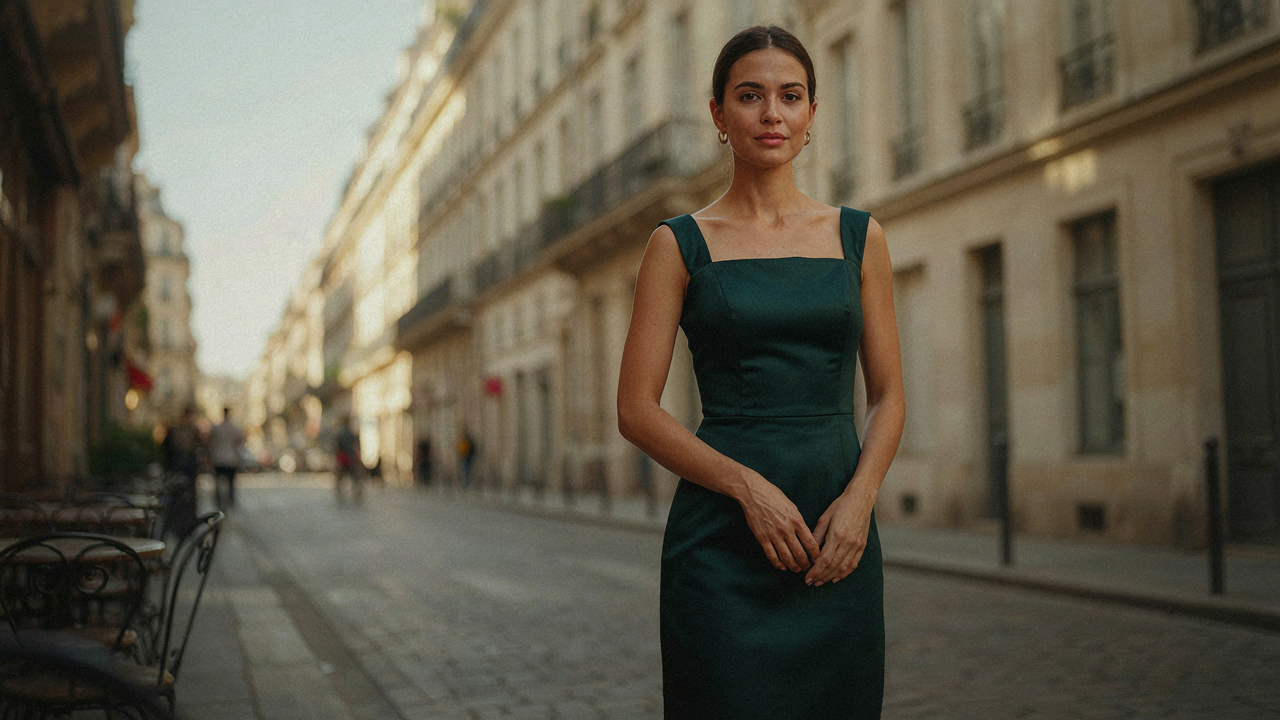
The Geometry Of Confidence: Decoding Your Silhouette
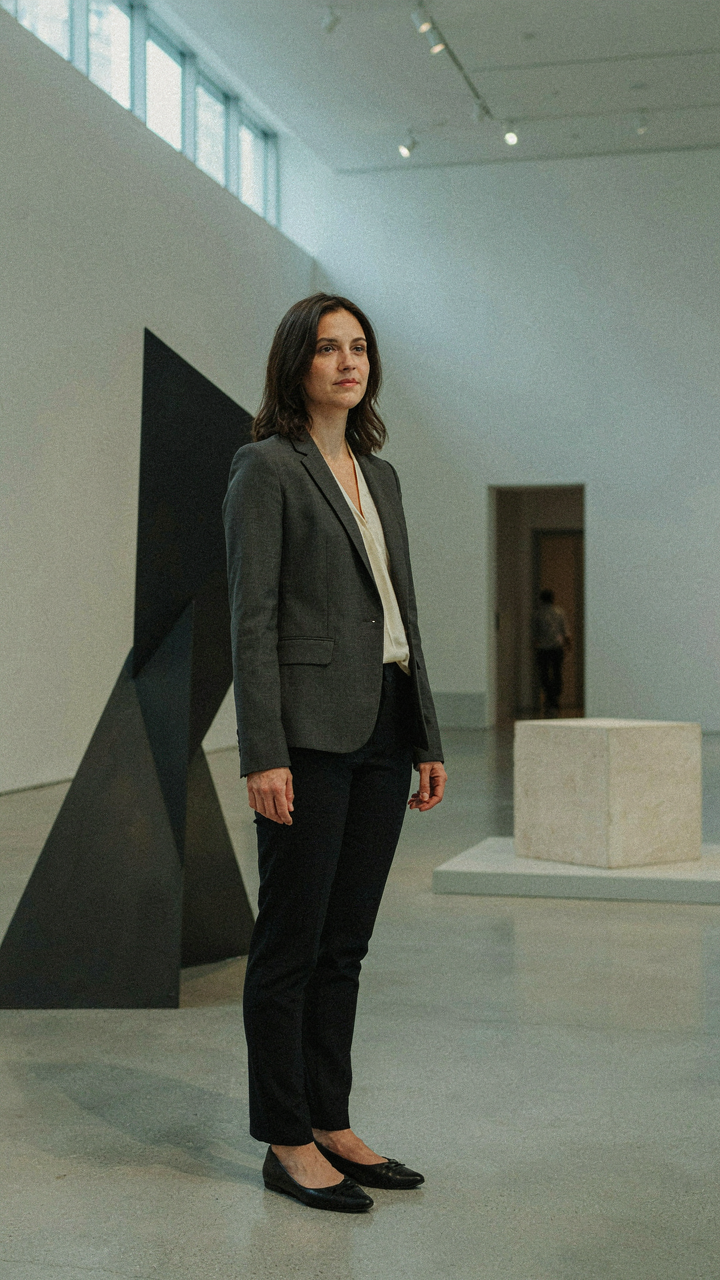
What Your Bone Structure Actually Tells You
You want to know if a square neck will make you look good because you’re afraid you’ll waste money on something that works against your frame. Here’s the mechanism: your bone structure creates visual angles and proportions that either echo or contradict the neckline’s geometry. A square neck is literally a horizontal line with right angles at the shoulders. It either reinforces your natural proportions or fights them.
Start by identifying where your shoulders actually sit relative to your jaw and collarbones. Square necks sit lower than crewnecks but higher than scoop necks, typically one to two inches below the collarbone. If your shoulders are naturally broad and your jawline defined, the square neck’s geometry mirrors what you already have. If your frame is narrow or your shoulders slope inward, the neckline’s horizontal emphasis broadcasts width you don’t possess. This isn’t opinion. It’s visual math.
When Square Necks Work Against You
The common advice says square necks flatter everyone. That’s incomplete. A square neck compresses your vertical visual space and demands horizontal width to balance. If you have a long, narrow neck and sloped shoulders, this neckline cuts you in half and makes your upper body look smaller, not refined. The neckline’s hard angles also highlight any asymmetry in your shoulder structure or collarbone prominence.
The real filter is this: a square neck enhances a frame that already has definition. It conflicts when your natural lines are soft, narrow, or vertically elongated. If your shoulders naturally angle inward or your collarbone is barely visible, a square neck will sit on you like a borrowed frame. Test this by observing how the neckline sits when you stand normally. Does it follow your shoulder line naturally, or does it gap and shift? That gap is your answer.
The “Architectural Advantage” Protocol For Square Neck Dress Selection
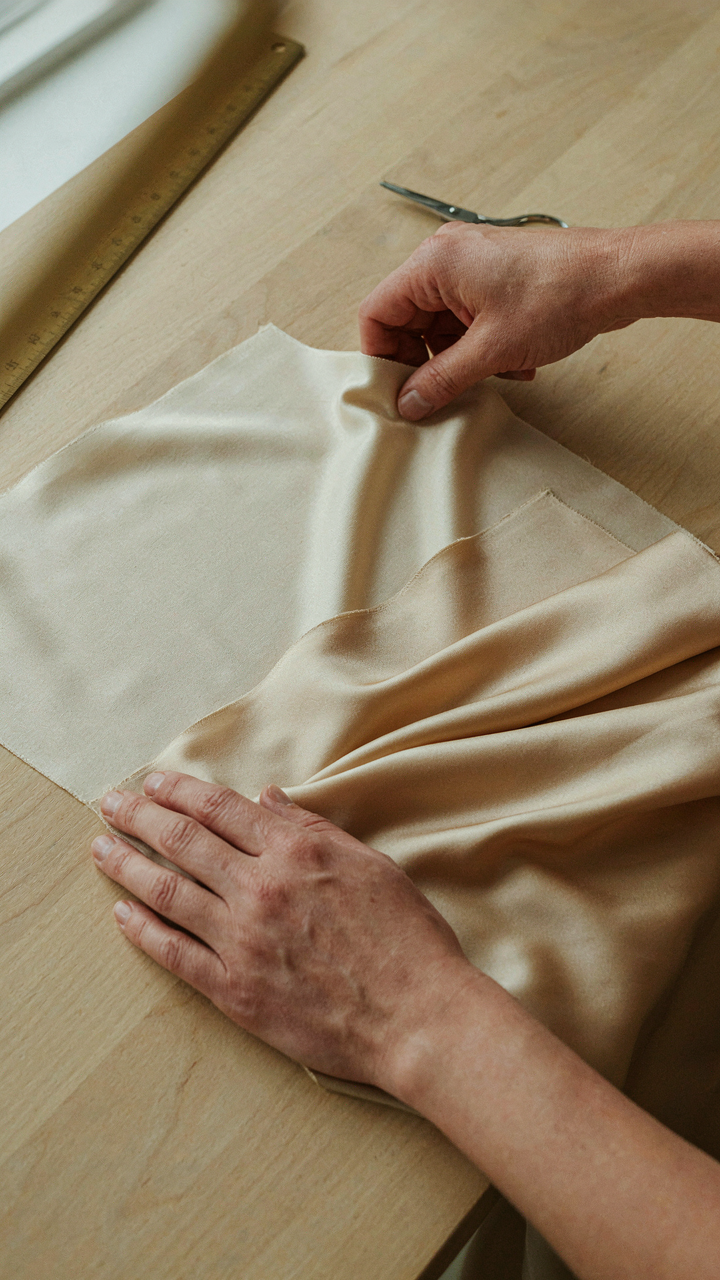
Fabric Choice Determines Neckline Behavior
You care about this because you’ve bought dresses that looked good on the hanger and terrible on your body. The real mechanism: fabric acts like load-bearing material in architecture. A square neckline demands structural integrity from its material. Stiff fabrics hold the geometric line; flowy fabrics collapse it into a rounded mess. Crepe, structured cotton blends, and faille maintain the architectural promise. Chiffon and silk charmeuse betray it. The neckline’s visual impact lives or dies by what holds it up.

Drape and structure exist on opposite ends of a spectrum. Cotton blends with elastane give you definition without rigidity. Satin-back crepe provides weight at the hem while keeping the neckline crisp. Linen wrinkles unpredictably and reads as casual, which breaks the square neck’s formal signal. Dense knits offer control but often feel costume-like in cocktail contexts. Test the fabric’s behavior at the shoulders and collarbone before committing. The dress only works if the neckline stays where you put it.
Proportion And Length Create Visual Anchors
Length determines whether a square neckline reads sophisticated or costume-adjacent. Most cocktail dresses land at knee or mid-calf. A square neckline on a knee-length dress creates visual weight at the top, which demands balance through fitted hips and thighs. A longer length, especially at mid-calf, elongates the torso and makes the neckline feel less dominant. Shorter than knee risks juvenile proportions because the exposed leg competes with the structured neckline. Length isn’t decorative. Length controls where the eye stops.
The ratio between shoulder width and hemline distance matters more than anyone states. A square neckline sitting two to three inches below the collarbone works with most body types. Pair this with hem length that extends past your widest point, usually the hip or upper thigh. Shorter dresses with square necklines work only if you have a straight silhouette or intentionally want bold contrast. Measure from neckline to hem, compare to your natural proportions, and choose length that makes the neckline feel intentional rather than accidental.
Square Neck Dress: Beyond The Obvious “Elegant”
The Geometry Of Restraint
You want to know if this neckline works because you’re afraid a dress won’t read as put-together without it. Here’s the real mechanism: the square neck operates on the principle of negative space from visual design. The horizontal lines create a frame that stops the eye from wandering upward into your face or downward into shapelessness. That bounded emptiness is what does the work. Most advice says “it’s timeless” and leaves you there. The actual power lives in the geometry itself. A square neck forces proportion into clarity. Your shoulders anchor the top. Your collarbone gains definition. The neckline doesn’t compete with your features because it establishes a visual boundary first.

The dress works hardest when fabric and cut respect the geometry. Stiff materials like structured cotton blends or silk hold the square shape without collapsing inward. Loose weaves betray the design. The neckline loses its architectural purpose and becomes a drooping mistake. Fit matters more than fabric weight here. Tailoring the shoulder seams to sit exactly where your shoulders end prevents the neckline from sliding or pulling. That precision is what separates a square neck that commands from one that confuses.
Stillness Commands More Than Movement
Everyone thinks bold necklines need color or embellishment to register. Wrong. A square neck in solid black or navy does more work than a round neckline in a printed pattern because it doesn’t compete for attention with itself. The neckline becomes the statement through clarity alone. This follows the principle of contrast in graphic design: isolation increases impact. When nothing distracts the eye from the shape itself, the shape becomes impossible to ignore.
The dress achieves this through deliberate emptiness rather than addition. Keep the rest of the garment simple. Long sleeves, fitted waist, midi or knee length in matching tone. The eye settles on that geometric neckline because there’s nowhere else to land. The mechanism is subtraction, not accumulation. When you wear it, stand still for the first five seconds of entering a room. Let the line register before you move. That’s when the geometry does its job without needing you to perform.
The Black Midi Dress: A Foundation, Not A Finish Line
The Minimalist Canvas Rewards Intent
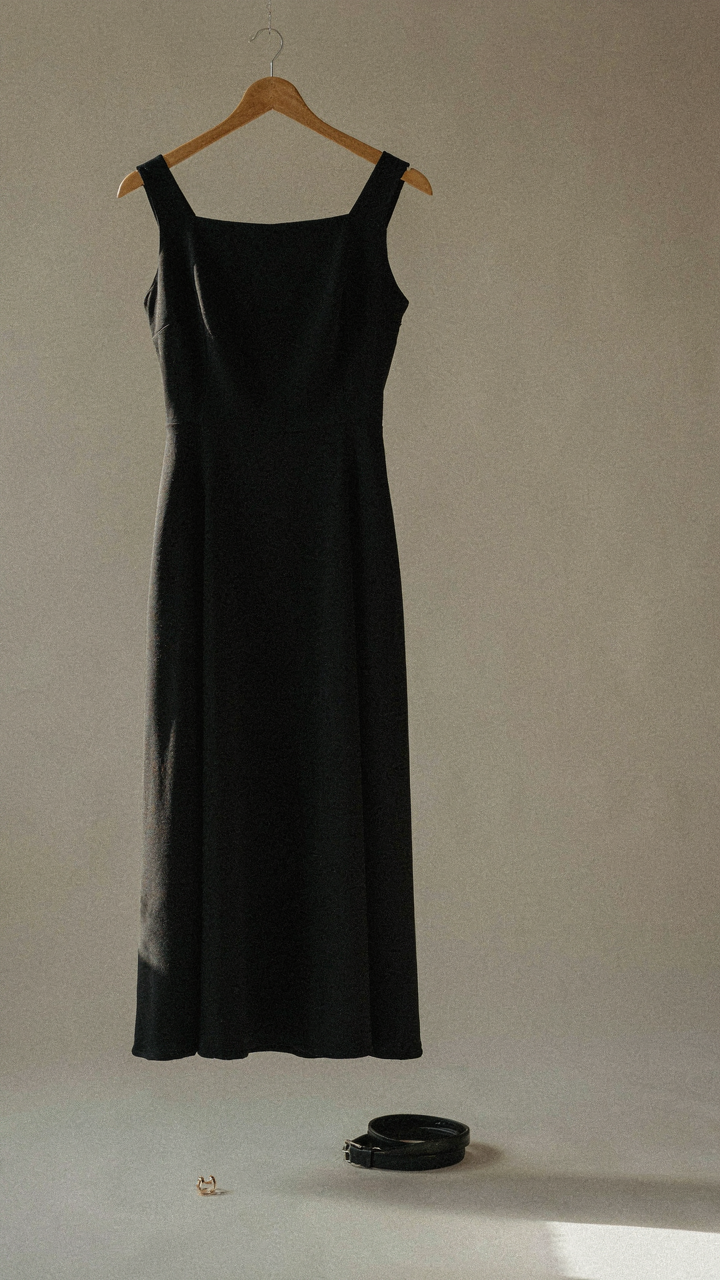
You want the black midi square neck dress because it promises invisibility—a way to look put-together without the risk of standing out wrong. That’s backwards. The mechanism at work here comes from economics: scarcity creates value. A black midi dress with a square neckline is abundant. What creates actual value is constraint. You don’t choose the black midi to disappear. You choose it to force better decisions everywhere else.

The square neckline on a black midi operates as a baseline, not a destination. It sits at the collarbone, creates geometric definition, and refuses ornamentation. This clarity strips away excuses. Every accessory choice, every shoe, every layer becomes visible. The dress itself contributes nothing to the visual story except structure. That structure is the entire point. You’re building on solid architecture, not fighting a print or a trend.
How You Actually Elevate This Dress
Most style advice tells you to add jewelry and call it done. That misses the real work. Elevation here means understanding proportion and material contrast. A black midi square neck dress has defined shoulders and a clean silhouette. Elevating it requires you to work against its neutrality with deliberate interruption, not addition.
Fabric weight matters more than decoration. A structured crepe or cotton blend holds its shape and reads intentional. Pair it with pointed-toe flats for elongation or a structured coat for architectural contrast. The square neck already handles formality. Your job is to manage texture, line, and fit. Ensure the dress hits between mid-calf and ankle, sits clean at the shoulders, and doesn’t bunch at the square neckline seam. The finish isn’t what you add. It’s what you refuse to compromise on when you assemble it.
The 1920s Dress Principle: Adornment As Emphasis
How Nature Designs Focal Points
You want to know where to put the visual weight because you’re afraid of looking like you’re trying too hard. The mechanism is simple: nature doesn’t decorate randomly. It concentrates contrast and texture exactly where it needs attention. The square neckline is already a focal point because of its geometric break from the body’s curves. Everything else must either reinforce that or stay silent.

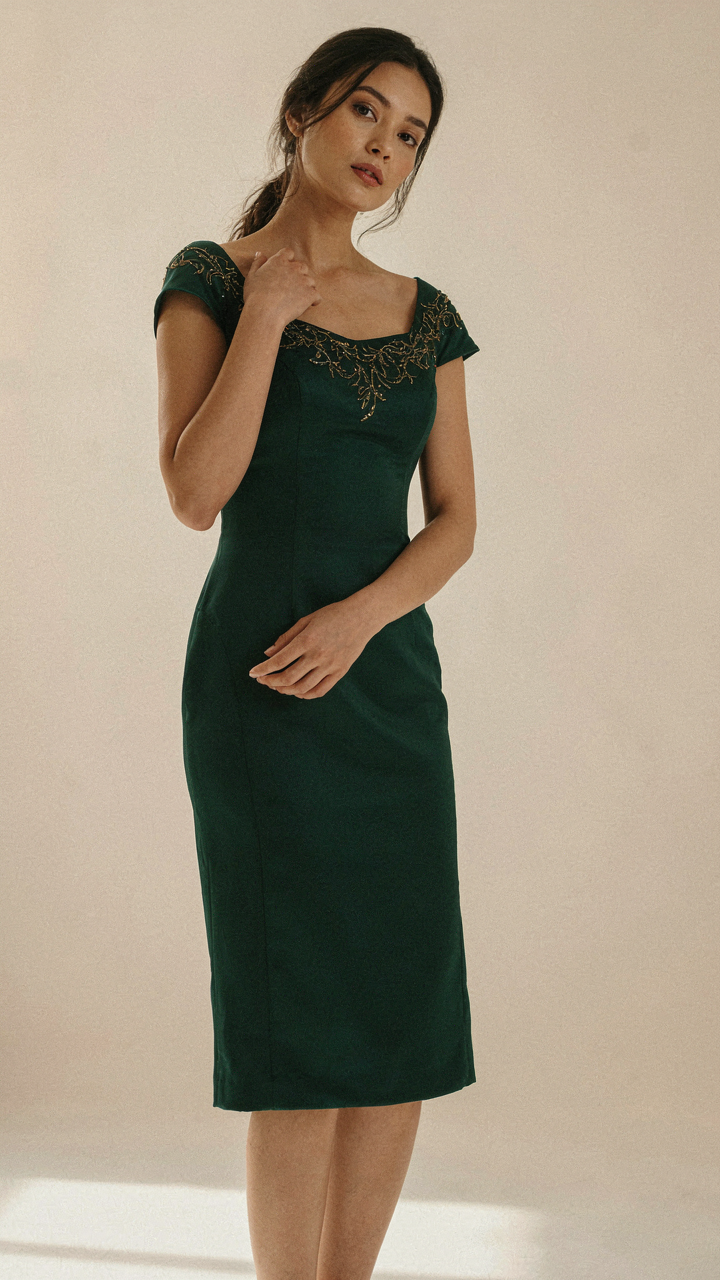
The 1920s got this right without overthinking it. That era understood that a dress doesn’t need ornament everywhere—it needs ornament in the spots that frame the face and shoulders. A beaded collarbone catches light differently than a beaded hemline. One controls where eyes land. The other diffuses them. The square neck creates a natural platform for this contrast because the horizontal line across the collarbone is already where human eyes travel first when reading a face.
Strategic Placement Changes Everything
In biology, organisms use color saturation and texture density at mating displays—concentrated in high-visibility zones. Apply that principle directly: on a square neck cocktail dress, place your densest adornment in the neckline zone or the upper chest. Anything lower competes with the neckline’s architecture and weakens both.
Beading along the neckline edge itself amplifies the geometric statement. Embroidery in the shoulder seams redirects the eye upward. Metallic threading in the upper bodice creates a cohesive glow that pulls focus to your face, not your waist or legs. The dress doesn’t need to be decorated everywhere to feel intentional—it needs decoration in the right zone. When you place embellishment strategically, the unadorned portions of the dress become negative space that makes the focal area read louder. That’s the trade. Control the adornment zone and you control what the dress communicates.
Square Neck Midi Dress: Mastering The Middle Ground
Where The Hemline Actually Matters
You’re worried the midi length won’t work for your frame, and that fear is blocking you from seeing what actually happens when fabric hits below the knee. This is geometry, not magic. The square neckline functions as a visual anchor that divides your torso into zones. Where that hemline lands determines whether those zones feel balanced or fractured.

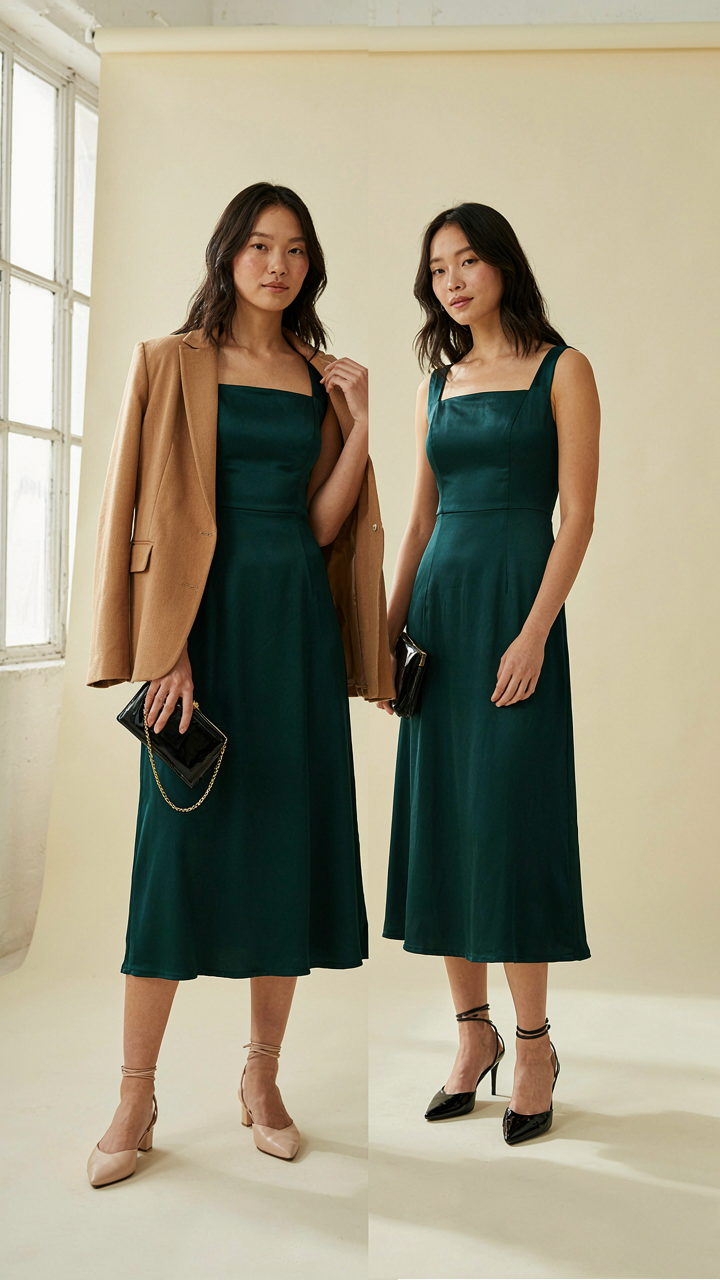
For women under 5’6″, a midi that hits at the natural calf creates visual weight that grounds a petite frame without consuming it. Women 5’6″ to 5’10” gain the most flexibility: a midi at the lower shin elongates the leg while the square neck keeps the eye centered on the upper body. Taller women can push the hemline closer to the ankle without losing proportion, because the square neckline already controls what the eye registers first.
Outfit Flexibility Beyond The Obvious
Forget the advice that midi dresses are either day OR night. That’s incomplete. The square neck midi transitions because the neckline itself reads as structured and intentional, not casual. Swap footwear and outerwear, and the dress rewires its entire context without needing to leave your closet.
Wear it to the office with a blazer, flat shoes, and a minimal bag. The square neck signals formality in daylight. At night, remove the blazer, switch to heeled sandals or pumps, add a clutch and a layered pendant or drop earrings, and the same dress becomes cocktail appropriate. The neckline doesn’t change. Your accessories and confidence do. The mechanism: the square neck absorbs structural weight, so everything else becomes negotiable.
Business Dresses: Professionalism On Your Terms
When The Square Neck Commands Respect
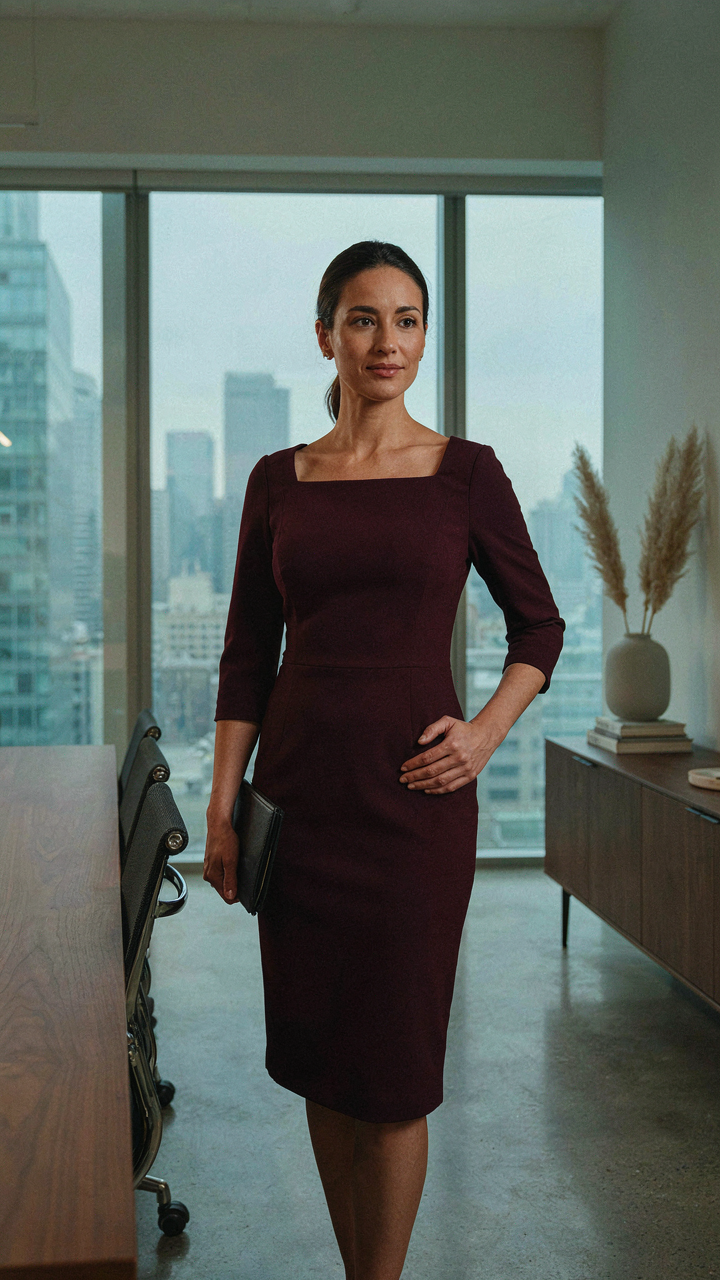
You want people to take you seriously without looking like you’re playing dress-up in someone else’s uniform. The square neckline works here because it borrows from tailoring logic: constraint creates authority. A square neckline sits flush against the collarbone and shoulders, which is the exact geometry that reads as intentional rather than accidental. This matters because vague necklines signal uncertainty. The square doesn’t apologize.

The square neck cocktail dress bridges the gap between “I’m trying too hard” and “I don’t care enough.” Pair it with structured fabrics like crepe or ponte, keep the silhouette clean, and you’ve signaled competence before you speak. Most people default to safe black or navy here, which is correct but incomplete. A jewel tone square neck dress gives you authority without disappearing into the background. The formula is simple: fit the shoulders, keep the neckline crisp, and let the dress do the talking.
Breaking Free From The Corporate Uniform Trap
Everyone tells you that business dressing means blending in. They’re wrong. Blending in makes you forgettable, and forgettable people don’t move up. The square neck cocktail dress actually solves this contradiction because the neckline itself is distinctive enough to register without being loud. You’re not wearing a costume. You’re wearing a statement about how you see yourself.
The mistake most people make is treating business dressing as restriction when it’s actually permission. A square neck dress in burgundy or forest green reads as polished and deliberate inside a corporate setting, which means you control the narrative about who you are. The key is fabric weight and fit precision. Cheap fabric and sloppy tailoring make even a strong neckline look desperate. Invest in a dress that holds its shape and choose your moment to wear it. That’s when the square neck becomes a tool, not a costume.
Plus Size Bridesmaid: Defying Generic Expectations
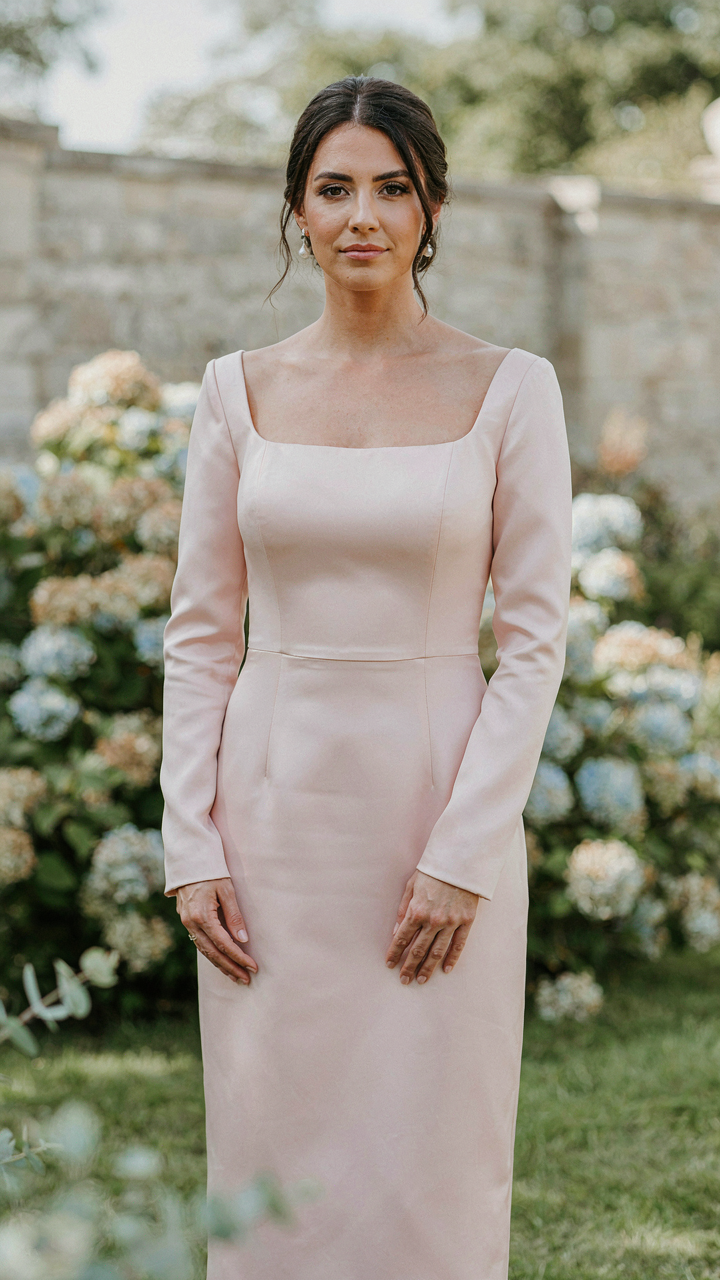
The Square Neck Does The Work You Won’t
You’re worried people will judge your body in the wedding photos. That’s the real reason you’re reading this. The mechanism is simple: a square neckline creates visual structure where convention says plus-size bodies need concealment. It’s basic geometry. The horizontal line across the collarbone anchors the eye and distributes visual weight downward instead of letting it collapse into the torso. You stop fighting the dress and the dress stops apologizing.

The square neck works because it refuses the industry’s default move: vertical stretching and draping that actually highlights size by demanding attention to the vertical axis. Instead, this neckline establishes a frame. The fabric sits flush against the shoulders, creating definition without tension. Fit matters more than fabric weight. A square neck in a plus size requires the seams to land exactly on your shoulder point, not floating inward. Tailoring is non-negotiable here. Most bridesmaids skip this step and wonder why the dress fights them.
Presence Replaces Apology
Generic advice tells you to wear black, add a shawl, or choose “slimming” fabrics. That’s cowardice dressed as guidance. The real variable isn’t what you hide but what you refuse to diminish. A square neck cocktail dress worn with posture and fabric choice that fits your actual measurements signals you’re not managing perception, you’re stating fact. Confidence isn’t a feeling you generate. It’s a behavioral output tied directly to fit.
Choose a fabric with structure: structured cotton blends, crepe, or ponte knit that holds shape without clinging. Avoid jersey and anything with excessive drape that reads as accommodation rather than design. The square neck demands a dress that stands. When the garment fits correctly at the bust, waist, and hip without pulling or sagging, your nervous system detects the security and your posture shifts upright. The mechanism is physical, not psychological. Stand for the photos as though the dress was built for you, because if it was tailored correctly, it was.
Your ‘Classic Shape’ Isn’t A Constraint; It’s Your Undeniable Competitive Advantage
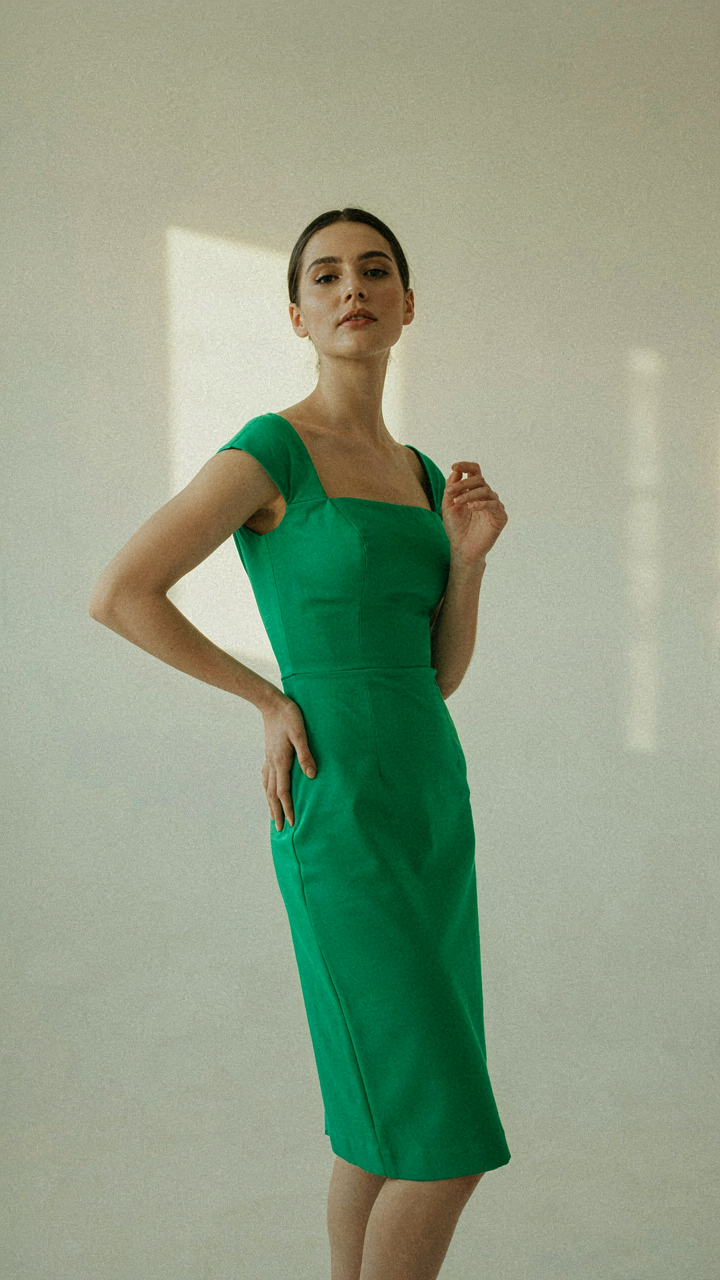
Stop treating your body like a problem to solve. The square neckline doesn’t hide your shape—it announces it. Pull one on today and notice how it commands attention instead of deflecting it. You’re not looking for camouflage. You’re looking for a dress that makes you look like you made a choice instead of a compromise. The square neck cocktail dress does exactly that. Own the shape you have, because apologizing for it is exactly how you disappear.