

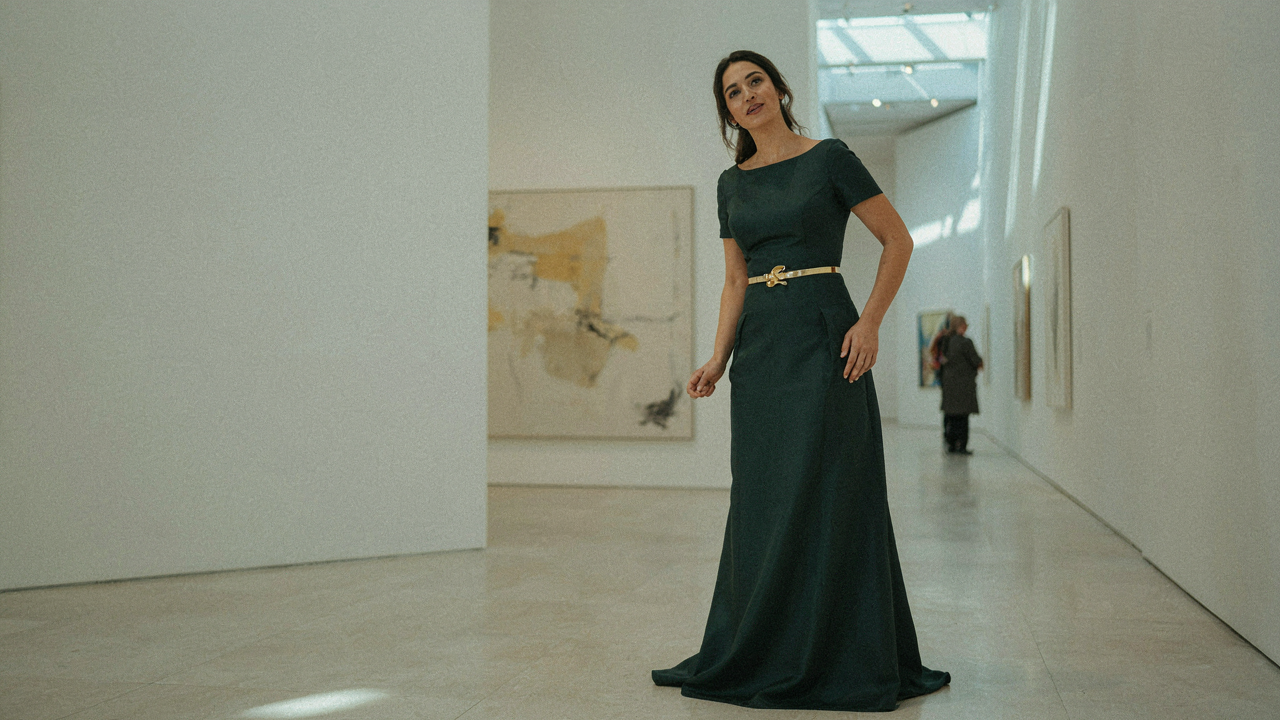
Beyond Cinching: The Illusion Of Proportion

Where You Place The Belt Changes Your Body’s Geometry
You want a belt with formal dress to make you look intentional, not like you grabbed what was nearby. Here’s what nobody says plainly: a belt is a horizontal line that divides your body, and where that line sits determines whether you look taller, wider, balanced, or broken. This is basic visual proportion, borrowed from architecture. In building design, a horizontal division point controls perceived height and mass. Your torso works the same way. A belt positioned at your natural waist creates one visual ratio. Move it lower, and you’ve shifted the entire proportion calculation. Move it higher, and you’ve rewritten the equation again.
The standard advice says “wear your belt at the natural waist.” That’s incomplete and ignores body type. If you’re short-legged, a lower belt position extends the visual line of your legs before the division hits. If you’re long-waisted, a higher belt position shortens the perceived torso. The mechanism is this: the eye registers the belt as a stopping point. Everything above it reads as one unit. Everything below reads as another. By controlling where that stop occurs, you manipulate perceived leg length and torso depth without changing a single piece of clothing.
Building An Hourglass From Whatever You Start With
The hourglass silhouette requires visible contrast at three points: shoulders, waist, and hips. Most people think the belt creates this by “cinching.” Wrong. The belt creates it by establishing a visual anchor that your jacket, shirt, and trousers then frame around. If your jacket drapes straight without definition, adding a belt changes nothing. If your jacket has structure or taper, a belt at the right position amplifies that structure because it creates a horizontal reference line the eye uses to measure everything else.
The formal dress context matters here. A properly fitted jacket already carries implied shoulder width. Trousers already imply hip dimension through their cut. A belt placed at true waist height completes the visual sandwich. But the belt itself must have enough visual weight to register as a stopping point. A thin, cheap belt disappears. A belt with proper thickness, material quality, and color contrast to your shirt actually creates the visual division that forces the eye to recognize the three-point proportion. Without that visual distinction, you’re just wearing an accessory that has no structural purpose.
The Formal Dress With Belt: A Strategic Partnership
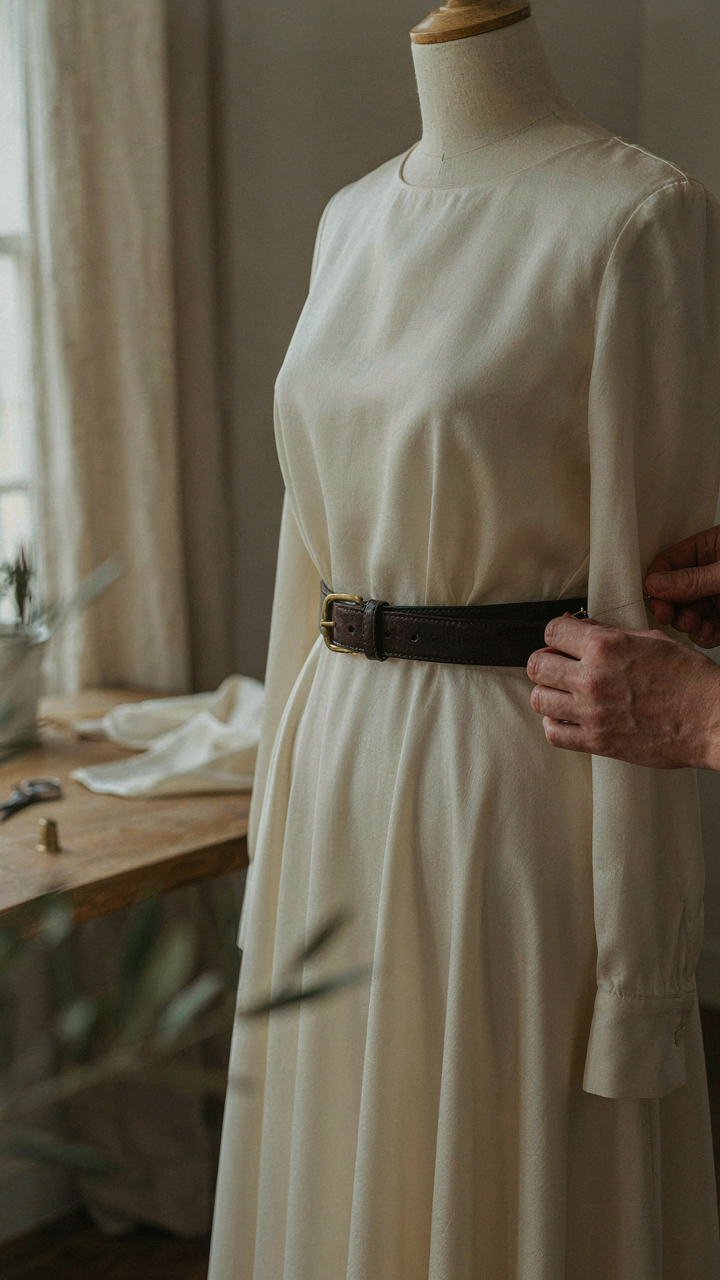
Structure Over Drape Demands Intention
You’re reading this because you sense a belt changes how people perceive your body, and you want that control. The mechanism is simple: a belt creates a horizontal line that divides the torso, which physics calls a “constraint line”—it compresses fabric above and below, forcing the dress to hold shape rather than fall. This works only when the dress itself has structure underneath.

Dresses with internal boning, rigid fabrics like taffeta or structured cotton blends, and fitted bodices respond to belts. Fluid fabrics like chiffon or loosely draped jersey don’t. The belt cinches, but the dress collapses around it because there’s nothing to anchor. You need the dress built for containment before a belt does anything but mark where your waist sits. Test this: pull a belt tight on a structured dress versus a loose one. The structured dress holds its shape; the loose one just pinches fabric. Choose structure first, belt second.
Materials That Actually Work Together
Forget the generic rule about matching metals or colors. Belt and dress fabric must share physical properties or they fight visually. Leather belt on silk evening gown reads as competing surfaces because they catch light differently and move at different speeds. The eye sees two separate things instead of one unified silhouette.
Cotton, linen, and structured wool pair with leather because both materials have matte surfaces and similar weight presence. Silk, satin, and velvet need belts in the same fabric family—a silk dress takes a silk-faced belt, not polished leather. Metallic mesh dresses work with chain or beaded belts because the reflective properties match. The real test: place the belt against the dress fabric in natural light. If they compete for attention, they’re incompatible. If one visually recedes and anchors the other, you have synergy.
Wide Leather Belt: The Power Player Protocol

Hardware That Commands Attention
You want people to notice you’ve thought about this. That’s not shallow—it’s recognition that formal dress without a focal point reads as costume, not intention. In structural engineering, load-bearing capacity determines how much weight a point can hold. A wide leather belt’s hardware functions the same way: the buckle becomes the anchor that justifies the belt’s visual weight in formal composition.

A wide belt with substantial hardware—solid brass, brushed silver, or burnished gold—creates a deliberate interruption on the body. The buckle works as a visual stop, forcing the eye to land there rather than drift. This is why thin belts with minimal buckles fail in formal settings: they disappear. The mechanism is straightforward: proportion + material + fixture = presence. Choose hardware that reflects light or carries texture, never flat or hollow construction.
Definition Through Fabric Suspension
Formal fabrics that drape—silk, wool blends, tuxedo materials—lack natural waist definition without intervention. A wide belt doesn’t just sit at the waist; it physically arrests the fabric’s fall and reshapes the torso’s silhouette. The belt becomes structural support, not decoration. This matters because formal dress codes expect a defined line, not an undifferentiated vertical drop from shoulder to hem.
Position the belt at true waist level, not hips. Leather that’s at least one and a half inches wide provides enough surface area to anchor fabric without creating bunching or roll. The buckle placement matters more than buckle style—dead center on the body creates symmetry; offset placement signals intentionality. Measure and mark before wearing to guarantee the belt sits where it creates the cleanest line through the garment.
The “Belt On Dress” Decision Matrix: Is It An Upgrade?
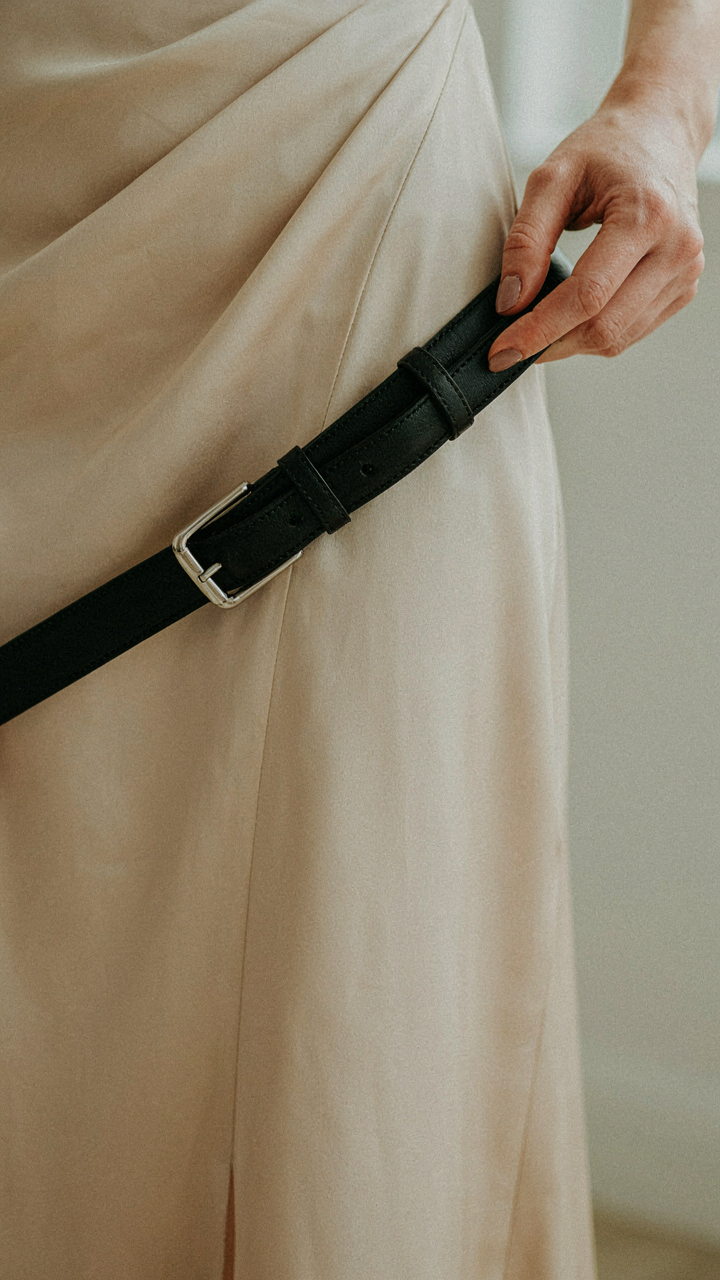
Assessing Dress For Belt Compatibility
You’re asking this question because you sense a belt might fix something that feels off, and you want permission to add it without looking like you’re trying too hard. Here’s the real mechanism: formal dresses fall into structural categories, and only certain ones have the proportional framework to accept a belt without collapsing the intended silhouette. A belt works on dresses with defined waistlines, structured fabric, or intentional seaming at the torso. Unstructured shift dresses, empire waists, and bias-cut gowns reject belts entirely because their design demands vertical flow or dramatic drape. The dress itself determines the answer before you do.

Check three things. First, does the dress have a natural waistline or seaming that anchors horizontally? Second, is the fabric stiff enough to support the belt’s weight without bunching? Third, examine the original designer intent: if the silhouette prioritizes length or drape over definition, a belt fights the garment’s purpose. A structured sheath dress invites a belt. A flowing chiffon gown does not. The incompatibility isn’t subjective—it’s structural.
Calculating Aesthetic ROI Of Belt Addition
Economics offers the concept of diminishing returns: at some point, adding more input produces less proportional output. Apply this directly to belts on formal dresses. A belt creates visual division, which is only valuable if it improves proportion relative to your frame and the dress’s proportions. On a dress already tailored to your waist, a belt wastes money and visual real estate. On a dress with undefined middle or excess fabric gathering at the torso, a belt recovers wasted space and creates intentional line.
The decision hinges on what the dress lacks, not on what a belt can add. Before purchasing a belt, photograph yourself in the dress and identify the specific visual problem: Is the waist invisible? Does bulk accumulate there? Does your frame disappear into the silhouette? Only problems warrant solutions. A belt solves proportion failure, not fashion indecision.
Belts To Wear With Dresses: The Bio Mimicry Approach

The External Frame
You want the belt to work because you’re afraid an unbroken vertical line makes you look formless. That fear has merit, but it’s not about looking “balanced”—it’s about skeletal support. In biology, an external frame provides structural integrity. A belt functions identically: it creates a load-bearing line that interrupts the dress mass and anchors the body’s center. Without it, formal dress drapes in one undifferentiated column. With it, you establish a defined point of reference.

The mechanism matters more than aesthetics. A belt positioned at the natural waist (typically at the narrowest point between ribs and hips) creates two visual zones above and below. This isn’t decoration—it’s architecture. The dress still flows, but now it has a spine. Formal contexts demand this clarity because precision signals intentionality. The belt width determines how aggressively it claims territory: a 1.5-inch width integrates subtly; anything wider commands the composition.
Form Responds To Constraint
Most belt advice ignores how the body and fabric actually behave under pressure. When you cinch a formal dress, the fabric redistributes upward and downward from that point, much like organisms adapt to environmental constraints. The belt doesn’t just sit—it reshapes the garment’s silhouette. A dress that hangs straight without a belt will gather slightly at the waist once the belt compresses it, creating subtle volume above and below.
Choose your belt width based on dress construction, not trend. Heavy fabrics (silk charmeuse, structured cotton blends) handle narrow belts better because they maintain their shape without extra reinforcement. Lighter fabrics (crepe, gabardine) need wider belts to prevent the cinch point from distorting the hang. Measure your natural waist, then position the belt there—not at the hip, not floating in between. Consistency in placement prevents the dress from looking accidentally crooked.
The Belted Dress Archetypes: Mastering Intentional Style
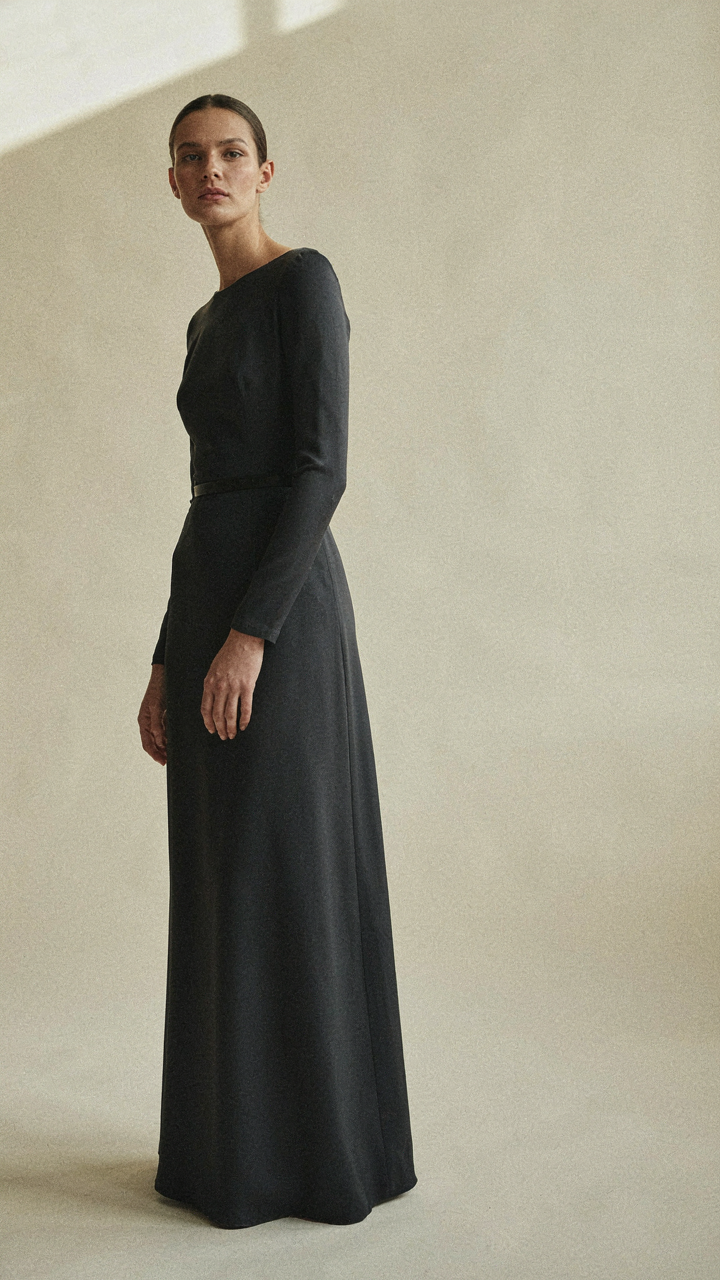
When Less Dominates The Frame
You want people to notice you’re refined enough not to need rescue. The mechanism is constraint: a barely-there belt signals control by refusing to announce itself. Think of it as negative space in design—what you omit creates the impression. A thin leather belt in matching or neutral tone compresses the dress at the natural waist without drawing the eye. The dress itself stays the focal point. Your body shape defines the silhouette, not hardware.

This approach works because it respects proportion. Formal wear depends on clean lines. A delicate belt in black, cognac, or the dress color reinforces those lines instead of interrupting them. Material matters—quality leather, not fabric—because it holds its shape and reads as intentional rather than decorative. Wear it snug enough to create a defined waist. Loose belts defeat the purpose and signal indifference.
When Power Needs A Visible Anchor
Statement belts work in formal wear when the dress itself is minimal or neutral. A bold belt becomes the architectural element that prevents the outfit from feeling plain or unfinished. Choose pieces that command attention through metal work, width, or distinctive buckles rather than competing colors or patterns.
- Wide leather belts with structured buckles: Create a commanding waist definition. Best paired with simple, solid-colored dresses. The buckle becomes jewelry and focal point simultaneously.
- Metal cinch belts: Deliver immediate impact through shine and structure. Typically 2 to 3 inches wide. Works with evening dresses that benefit from waist emphasis.
- Obi-style formal belts: Borrow from Japanese menswear tradition. Tie at the waist for adjustable compression. Read as intentional and sophisticated in formal settings.
- Gold or silver chain belts: Add luxury through precious metals. Sit at the natural waist or slightly lower. Best on simpler dress designs to avoid visual clutter.
- Ornate vintage brooches as belt closures: Transform a quality leather backing into a custom formal piece. Adds heirloom value. Requires tailoring to fit properly and safely.
The rule: let the belt own its role. If you choose it, make sure the dress doesn’t compete for attention in the same space. Pair statement belts with dresses that are either solidly colored or have print concentrated elsewhere. Wear the belt at true waist height so it creates actual definition rather than sitting loose on the hips. Measure the buckle width against your frame—wider looks powerful on larger frames, narrower on smaller ones.
Belt Style For The Modern Architect
Hardware That Signals Restraint
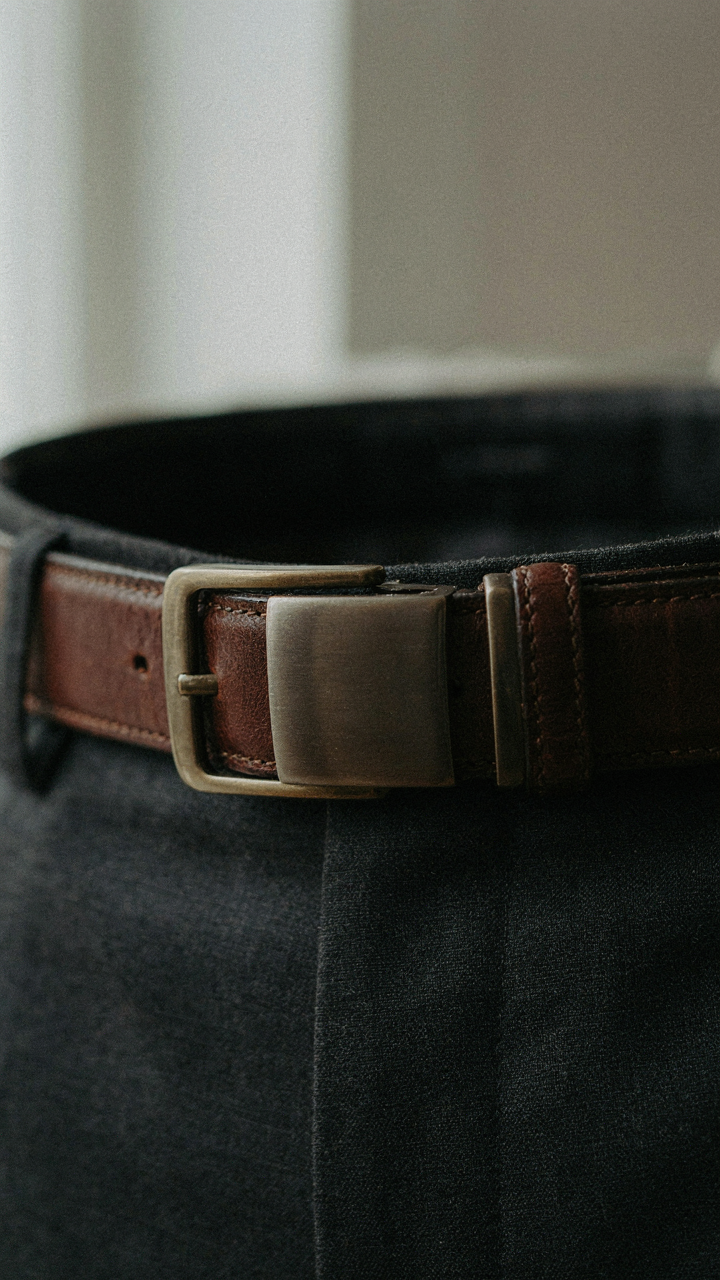
You’re hoping the right buckle makes you look intentional instead of like you grabbed whatever was closest. The mechanism is simple: hardware is the only moving part of a belt in formal dress, so it becomes a focal point by default. Oversized or ornate buckles pull attention down and break the vertical line formal wear depends on. Architects understand proportion. Apply the same principle here.

Formal dress demands hardware that disappears into function. Brushed metal buckles in silver or gunmetal work because they don’t catch light aggressively. Avoid polished finishes that compete with shirt cuffs or jacket buttons. The buckle should measure no wider than 1.5 inches for most formal contexts. A simple rectangular or minimalist geometric shape beats anything decorative. Your hardware should prove you made a choice, not that you defaulted to ornament.
Anchoring The Vertical Line
Most formal wear guidance skips the real job a belt performs: it’s not decoration, it’s structural geometry. Think of it in architectural terms, where load-bearing elements must align with sight lines. A belt’s position, width, and material either reinforce your silhouette or fracture it. Too wide and it chops your torso. Too thin and it disappears, wasting the opportunity to define proportion. The belt sits where your natural waist actually is, not where trends tell you it should.
The belt’s role shifts based on what’s above it. Under a waistcoat, it vanishes entirely, so material and color matter less. Under a jacket worn open, the belt becomes a visual anchor between your frame and legs. Choose leather in black, charcoal, or deep brown for all-purpose formal wear. The texture should be smooth or subtly grained, never embossed or patterned. Integrate the belt as the element that completes vertical alignment, not as an accessory bolted on afterward.
Belts On Dresses: The Unspoken Language Of Authority

Where Your Waist Becomes Your Argument
You want to know if a belt matters because you sense it does, but you’re not sure why. A belt with formal dress works through the same principle military strategists use to hold territory: it creates a visible line of demarcation. Psychology research on embodied cognition shows that people perceive a defined waistline as a marker of intentionality and control. Your nervous system reads a clear horizontal division as order. When you cinch a formal dress at the waist, you’re not decorating. You’re establishing a boundary that signals you’ve made deliberate choices about your appearance.

The mechanism is simple. A belt compresses the midsection and creates visual contrast between upper and lower body mass. This contrast triggers the viewer’s eye to process you as structured rather than amorphous. Confidence follows the body. When your silhouette has definition, your central nervous system registers that definition as external validation of the internal state you’ve already chosen. The belt doesn’t create confidence. It removes the visual noise that competes with it.
Hierarchy Through Visual Interruption
Every formal space operates on unspoken hierarchies based on visual mass and proportion. A belt interrupts the vertical line of a dress and forces the eye to acknowledge your waist as the organizing principle of your body. This is attention capture through contrast, not decoration. Without a belt, a formal dress often reads as one continuous vertical shape. The viewer’s eye travels down without stopping. A belt stops the eye. That pause is where authority lives.
Material and placement determine how much authority you command. A structured leather belt at the natural waist creates a sharper visual interrupt than a fabric belt positioned lower. The formal dress code evolved from aristocratic dress codes where visible structure signified rank and access. A defined waist signals that you understand the room’s expectations and chose to meet them deliberately. This isn’t about vanity. It’s about sending the message that you’re literate in the language the space speaks.
Belt For Maxi Dress: Elongation, Not Interruption
The Waist Definition Without Visual Break
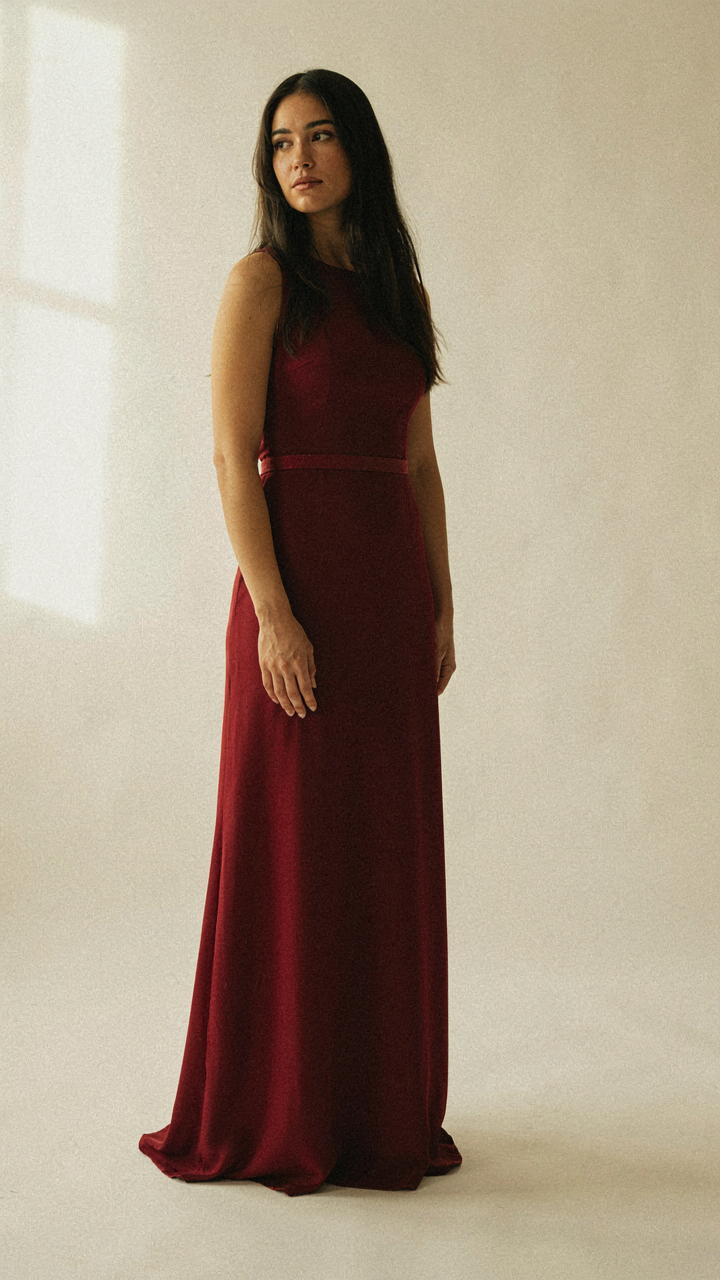
You want the belt to make you look taller and thinner, not chop your frame in half. That’s the real equation here. In visual hierarchy, the belt operates like a sight line in architecture: it either guides the eye vertically or stops it cold. A maxi dress already extends your vertical line. A belt placed wrong collapses that advantage into horizontal segments.

The mechanism is simple. Your eye follows contrast. A dark belt on a light dress creates a horizontal anchor that divides the body. Place it at true waist level on a maxi, and it reads as a cutoff point. The dress below becomes visually separate from the dress above. That’s the interruption. You need the belt to sit where it doesn’t compete with the garment’s length story.
Placement For The Illusion That Actually Works
Wear the belt slightly higher than anatomical waist, closer to where your natural ribcage ends. This positioning lets the maxi fabric flow unbroken from that point downward. The eye reads the total length first, then registers the belt as accent, not partition. This is why fashion editors photograph maxi dresses on models with belts three inches above the actual waist.
Color matching accelerates the elongation effect. A belt that mirrors the dress fabric—or sits muted against it—extends the vertical plane instead of interrupting it. Width matters too: narrow belts under two inches create cleaner sight lines than statement buckles. Measure your belt placement with your thumb and index finger at rib-height, then move down. That gap between your hand and hip becomes your positioning target.
The Only Thing Truly Undefined Is Your Lack Of Strategic Intent
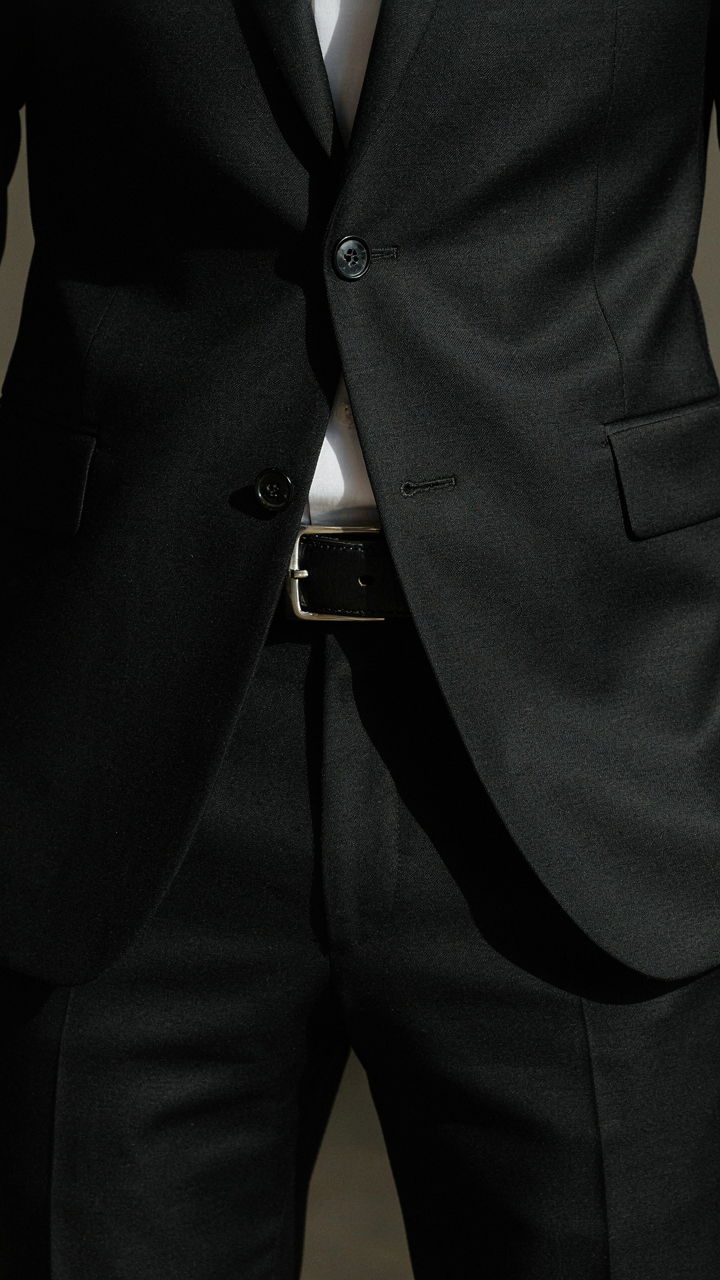
Most men treat belts as an afterthought. You won’t. A belt isn’t filler between your jacket and pants. It’s the punctuation mark that separates intentional dressing from accident. Pick one belt in black leather, one in brown, wear them with purpose, and watch how the rest of your formal game tightens. A man who controls his waist controls the room.



