

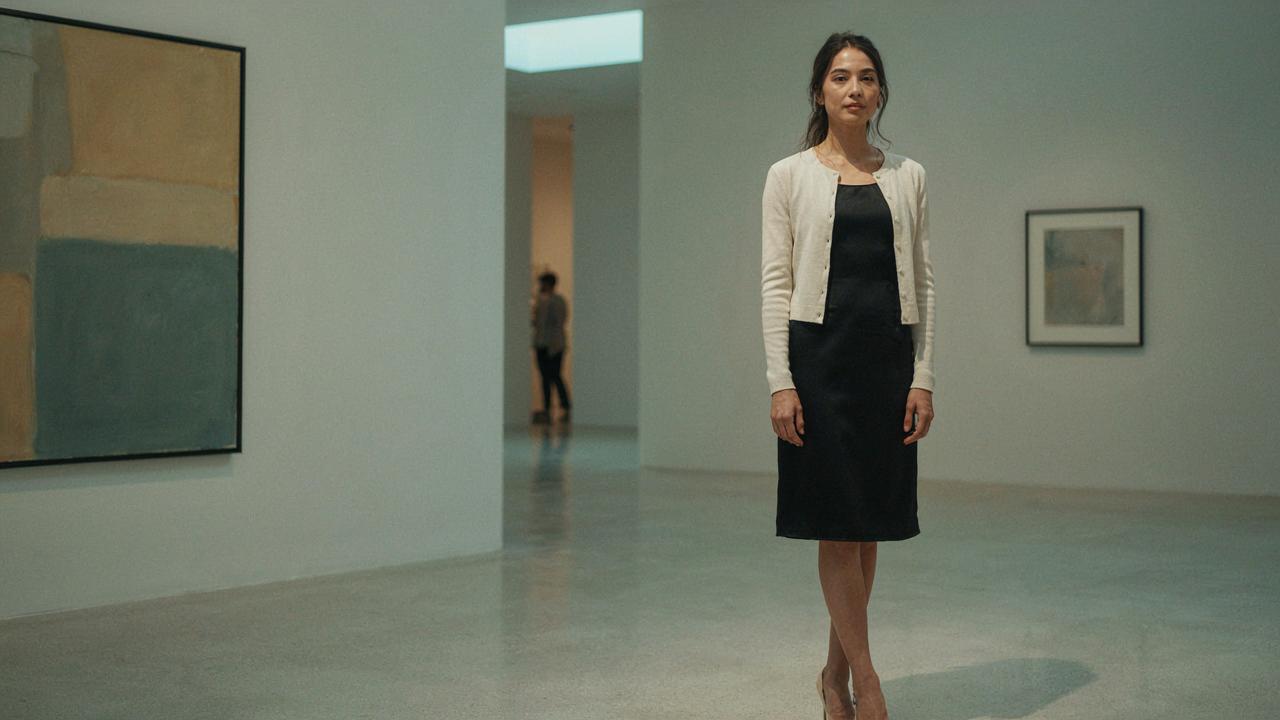
The Dominance Principle: Cardigan As Power Play
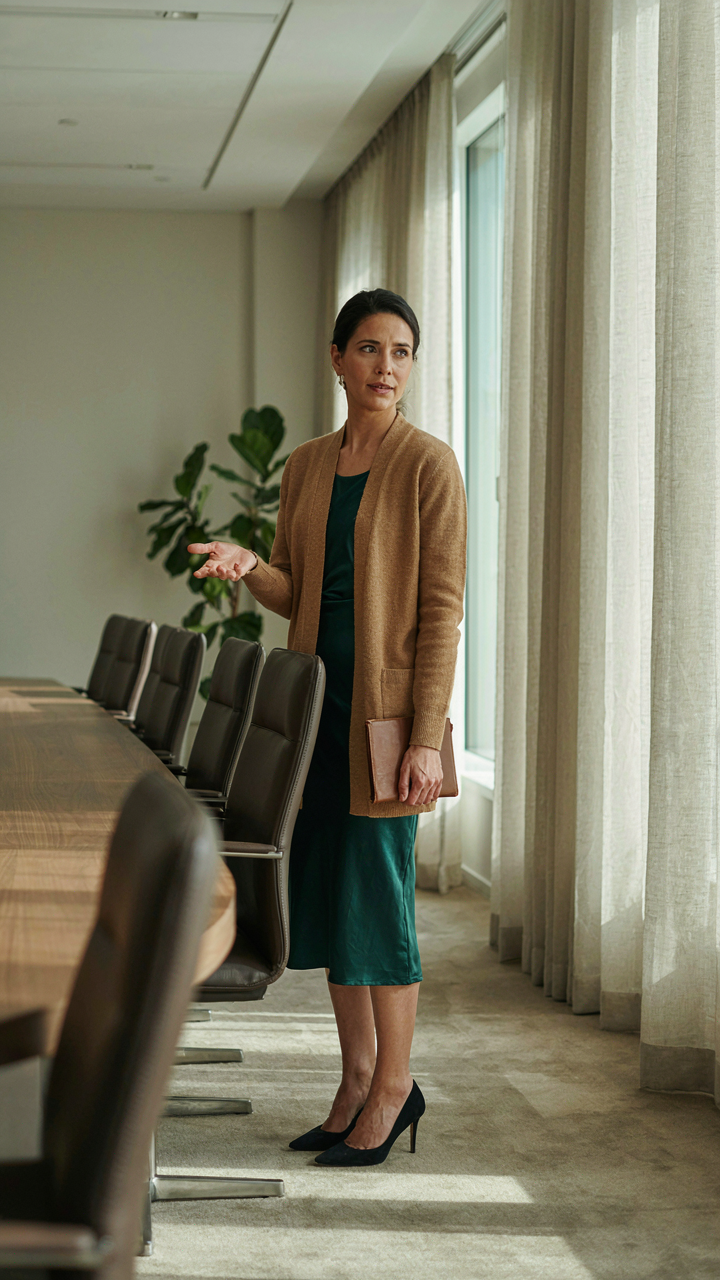
Why Layering Fails Without Strategy
You’re afraid the cardigan will look like an accident—like you grabbed it because you were cold, not because you planned it. That fear is the real problem. Most layering advice treats the cardigan as a functional add-on instead of a compositional choice. The mechanism is simple: a cardigan only works over a cocktail dress when it shifts the visual hierarchy, not when it just sits on top like an afterthought. Conventional layering treats both pieces as equals competing for attention. That creates visual noise.
The cardigan must either dominate or disappear. There’s no middle ground that works. When you layer with equal visual weight—a textured cardigan over a patterned dress, for example—the eye bounces between them with no anchor. The outfit reads as confused. Dominance means the cardigan establishes the silhouette and color story first, and the dress supports it underneath. This is a compositional principle borrowed from graphic design: establish a clear figure-ground relationship. The cardigan is the figure; the dress becomes the ground. Your job is to decide which one leads before you even get dressed.
Intentional Contrast Over Blending
Matching a cardigan to a cocktail dress in tone or texture is the lazy default, and it wastes the entire point of layering. You don’t layer to hide the dress—you layer to create a deliberate compositional shift. A structured wool cardigan over a fluid silk slip dress creates visual tension that reads as intentional. The contrast signals control. A neutral cardigan over a bold dress works because the cardigan frames and contains the pattern. A jewel-tone cardigan over a neutral dress becomes the focal point while the dress creates volume and movement below.
The mechanism is contrast as information. When two pieces differ materially, texturally, or in scale, the outfit communicates strategy. Blending signals hesitation. A cream cardigan over a cream slip dress reads as one weak piece, not as layered sophistication. Instead, choose one element to dominate—either weight, color temperature, or visual texture—and let the other recede. If your dress is the statement, your cardigan should be architectural or tonal. If your cardigan is the statement, your dress should provide surface and silhouette without competing. Your first move is deciding which piece does the work.
Decoding Dress With Cardigan: Beyond Basic Warmth
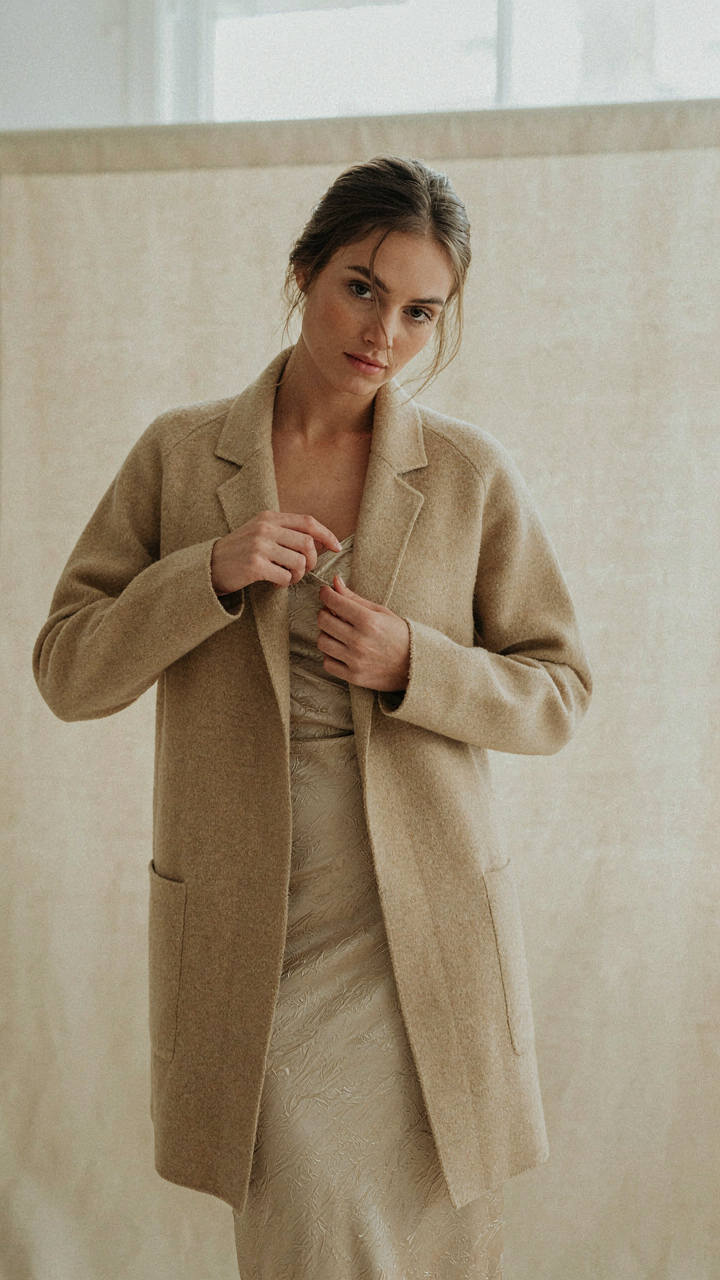
The Illusion Of Effortlessness
You want people to think you didn’t try. That’s the real driver here. The cardigan over cocktail dress works because it borrows from fashion’s principle of negative space: you’re subtracting the appearance of effort while adding visual complexity. The mechanism is constraint. When you layer deliberately, you remove the “trying too hard” signal that a solo cocktail dress sometimes broadcasts.

The cardigan functions as a reset button. It takes a formal piece and makes it look like an afterthought, which paradoxically requires intention. The fabric weight matters. A structured wool or cotton blend holds the silhouette; a loose knit collapses into rumpled. The cardigan doesn’t soften the dress. It reframes it. You’re not dressing for warmth first. You’re dressing to control the narrative of how dressed you are.
Conviction Over Comfort
Common advice says layer for temperature. That’s incomplete. This is actually a status signal disguised as practicality, borrowing from economics’ concept of signaling: you’re communicating access and control through sartorial choice. The cardigan proves you don’t need the dress to carry the full weight of formality. Confidence reads as indifference to how formal you look.
The cardigan worn over a cocktail dress says you attended because you chose to, not because the dress demanded compliance. It’s the difference between dressing for an event and dressing through an event. The fit reveals everything. Wear the cardigan loose but structured, not oversized or tight. Button it or leave it open based on the dress’s neckline: if the dress has visual interest at the neck, leave the cardigan unbuttoned to frame it. This is the protocol that separates intentional layering from random coverage.
The Disruption Protocol: How To Style A Cardigan
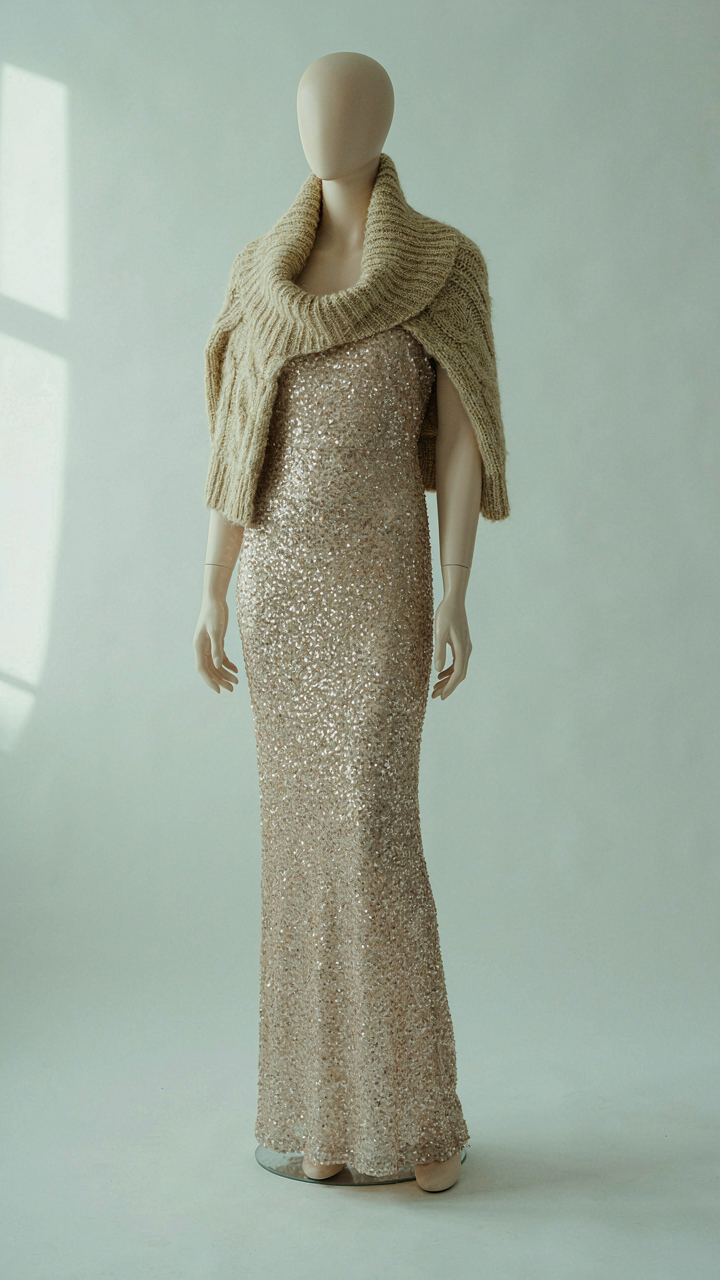
Length And Texture Mismatch
You want permission to break the rule everyone else follows without looking wrong. The mechanism is contrast. In design, contrast operates like tension in physics—opposing forces create visual weight and hold attention. A cardigan over a cocktail dress works because the two pieces fight each other. The cardigan’s relaxed structure interrupts the dress’s formal intention. This tension is the entire point. Without it, you just look like you’re cold.

Most styling advice says match the formality level. Ignore that. The power move is the deliberate mismatch. Throw a cropped, chunky-knit cardigan over a floor-length sequined dress. Drape an oversized linen cardigan over a fitted, structured cocktail dress. The longer the dress, the shorter the cardigan should be. The more rigid the dress fabric, the softer the cardigan. This creates visual rhythm instead of redundancy. The cardigan isn’t hiding the dress—it’s reframing it.
Visual Rebellion Through Layering
Accessories don’t complete an outfit. They establish hierarchy. When you layer a cardigan over a cocktail dress, you’ve already made the primary statement. The cardigan is now the dominant layer, so your accessories must acknowledge that shift instead of fighting it. Don’t load the neck. Keep jewelry minimal or move it to the wrists and hands. A statement ring works. A collar necklace doesn’t.
The defiance lives in restraint. Wear the cardigan open and unbuttoned to telegraph that you chose this look intentionally. Button it halfway. Leave the dress visible at the shoulders. These choices signal control, not accident. Shoes matter more than usual—they bridge the two garments visually. A metallic heel or pointed flat pulls the formality forward. A flat sandal pushes casual intent. Choose the shoe first, then decide how much of the cardigan you actually close.
Cropped Cardigan: The Architectural Approach
Where The Hemline Sits
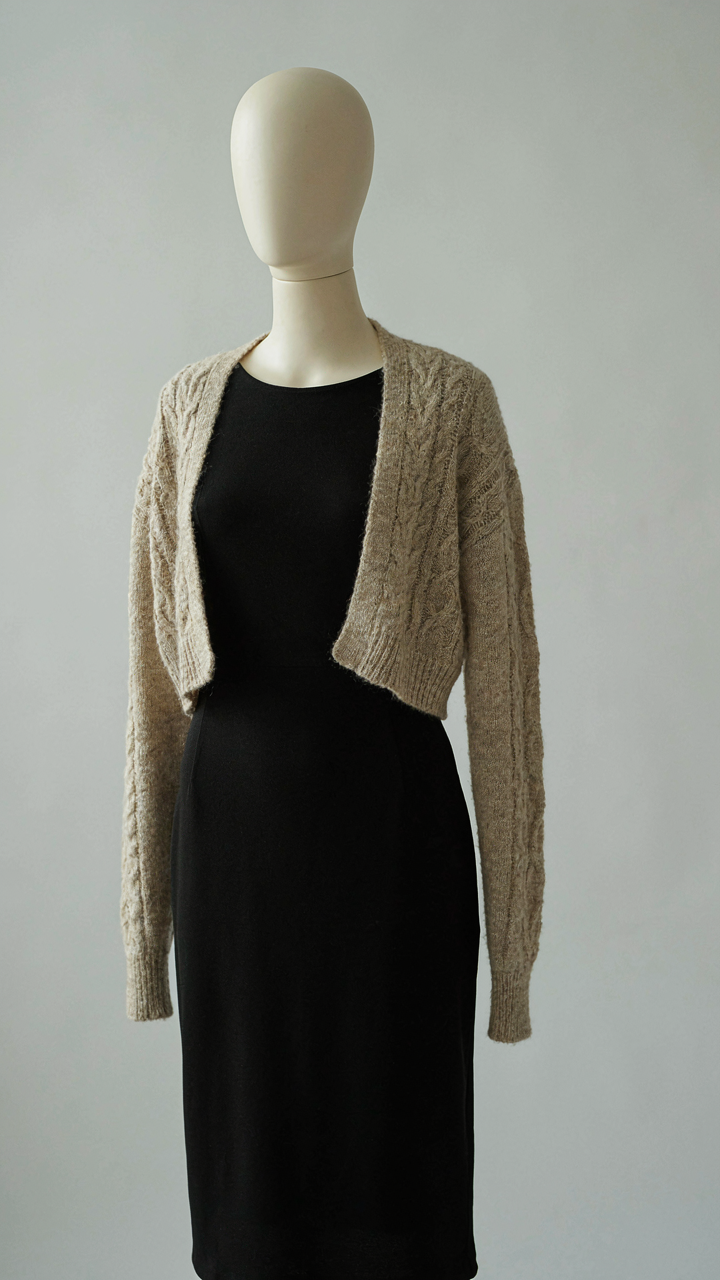
You want a cropped cardigan over a cocktail dress because you’re afraid the dress alone reads as trying too hard. Here’s the mechanism: a cropped cardigan functions like a load-bearing wall in architecture—it interrupts vertical space and creates visual weight distribution where you control it. The hem placement of the cardigan determines whether the dress reads as intentional or accidental. Crop above the natural waist and you emphasize the torso. Crop at hip length and you ground the silhouette. The dress doesn’t change. Your eye does.

Most people get this backward and treat the cardigan as optional layering. It’s not. A cropped cardigan actively rewrites the proportions of the dress underneath by creating a new horizontal line. That line splits the body into distinct zones—top and bottom cease reading as one garment and instead become two deliberate pieces. The placement of that line determines whether the overall effect feels balanced or fractured. Measure from your natural waist down. One to three inches below creates visual separation without cutting the body in half. Four to six inches sits at the hip and anchors the look.
Breaking And Rebuilding Proportion
The real tactical advantage of a cropped cardigan lies in its ability to reset what you’re already wearing. You can take a midi dress that skims the body and add definition at the torso. You can take a dress with a low waistline and reestablish the waist where your body actually is. The cardigan doesn’t cover the dress—it reframes it. Think of it as digital editing for your silhouette, except you’re using fabric instead of filters. The dress underneath stays identical. The perceived shape shifts.
Button the cardigan closed to create a defined front panel and visual weight in the center. Leave it open to maintain the dress as the visual anchor while the cardigan acts as a frame. The distance between the cardigan hem and the dress hem creates air that matters. No gap reads as fused. A two-inch gap reads as intentional layering. A six-inch gap reads like you forgot the cardigan was there. The mechanism is simple: gaps signal intention or accident, and intention is what separates a deliberate look from a mistake you’re covering.
The Art Of Juxtaposition: Cardigan Outfits From Biology

When Patterns Work Against Each Other
You want this to work because wearing a cardigan over a cocktail dress feels like you’re getting away with something. The real mechanism is biological mimicry, which works in fashion the same way it works in nature: signal sends a specific message, and your outfit either reinforces or contradicts it. A cocktail dress signals formality and exposure. A cardigan signals practicality and concealment. Layering them creates visual camouflage that softens the dress’s intent while retaining its structure underneath.

Warning coloration in nature advertises danger. A cocktail dress does the opposite—it advertises availability and intentionality. The cardigan acts as camouflage not by hiding the dress but by fragmenting its message. You’re visible but protected. The fabric weight matters here: a thin knit cardigan preserves the dress’s silhouette while a chunky wool obscures it entirely. Choose based on what signal you actually want to send, not what feels safe.
Partnership, Not Coverage
Symbiotic relationships work because both organisms gain something. The cardigan gains structure from the dress’s cut. The dress gains wearability from the cardigan’s warmth and coverage. This isn’t about one element serving the other. They function as a system. The cardigan’s drape depends on the dress’s shape. The dress’s formality depends on the cardigan’s finish. Pull the cardigan too far forward and you’ve created a mumbled message. Leave it too far back and the dress dominates, making the cardigan feel like an afterthought.
The mechanism is proportion. A fitted sheath dress needs a oversized or cropped cardigan to avoid visual stacking. A flowing dress needs a fitted cardigan to maintain line clarity. Match fiber content when possible—wool over silk, cotton over linen. The layers should move together, not fight. When they do, the outfit reads as intentional rather than improvised. Test the combination by sitting, moving your arms, and checking if both pieces remain in position without constant adjustment.
Cardigan Over Dress Outfit: Slip Dress Outfit Elevation
From Lingerie To Luxe: The Transformation
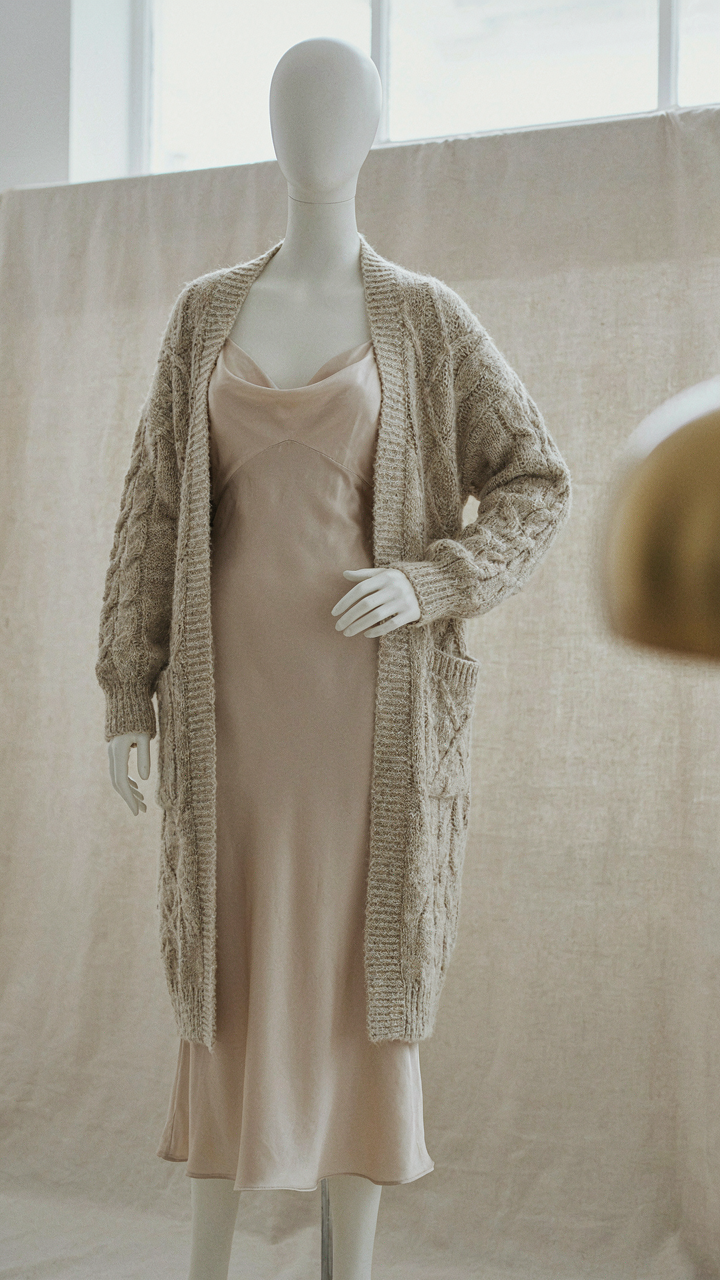
You want permission to wear something that reads as underwear in public. Here’s what actually happens: a slip dress alone signals intimacy or casualness depending on context. Add a cardigan and you’ve solved the mechanism—you’ve introduced a buffer layer that reframes the slip dress as intentional eveningwear rather than resort wear masquerading as formality.
- Silk or satin slip base: Creates visual luxury through sheen and drape. The cardigan transforms it from boudoir piece to structured evening silhouette by anchoring the look with weight.
- Lightweight knit cardigan: Long-line or cropped versions work. The key is the cardigan creates a visual “frame” around the slip, making it read as a deliberate layering choice, not a wardrobe gap.
- Neutral cardigan colors: Cream, black, or charcoal work best. These colors recede visually and let the slip dress remain the focal point while the cardigan handles the sophistication load.
- Oversized fit cardigan: Loose proportions over a fitted slip create contrast and visual interest. This pairing signals editorial intention rather than accident, which is where the status registration happens.
- Jewel-tone slip dress: Deep emerald, sapphire, or burgundy slips pair with camel or cream cardigans. The contrast creates dimension and makes the layering read as deliberate design choice.

The slip dress existed in nightclubs and bedrooms for decades before fashion editors legitimized it as eveningwear. The cardigan solved the cultural code problem. Wear the cardigan open, buttons undone, so the slip remains visible. This isn’t hiding—it’s editing. The cardigan becomes the permission structure.
Fabric Interplay And Textural Depth
Contrast in materials is physics: opposing surfaces create visual tension and depth. A heavy knit cardigan over a lightweight slip operates like this principle. The cardigan’s structure and weight create a visual anchor that makes the slip’s drape and sheen appear more intentional, more refined.
Most advice tells you to “match your textures” or “keep things unified.” That’s incomplete. Uniformity reads as costume. The real mechanism is controlled contrast. A chunky cable-knit or ribbed cardigan over silk creates tactile and visual interest that a matched fabric set never achieves. The friction between surfaces—heavy versus liquid, matte versus shine—makes the overall look read as deliberate styling rather than default dressing.
Thickness and opacity of the cardigan matter more than most people realize. A paper-thin cardigan collapses the visual hierarchy and fails to do the framing work. You need weight in the cardigan to counterbalance the slip’s fluidity. This is why wool blends and cotton knits work better than linen or gauze. The cardigan must hold its shape and create defined lines where it meets the body and where it opens to reveal the slip beneath. Button placement on the cardigan affects how much slip shows—leave it open and unbuttoned to let the slip’s silhouette read clearly through the cardigan’s structure.
Cream Cardigan Dress: The Monochrome Myth
When Matching Fabrics Backfire
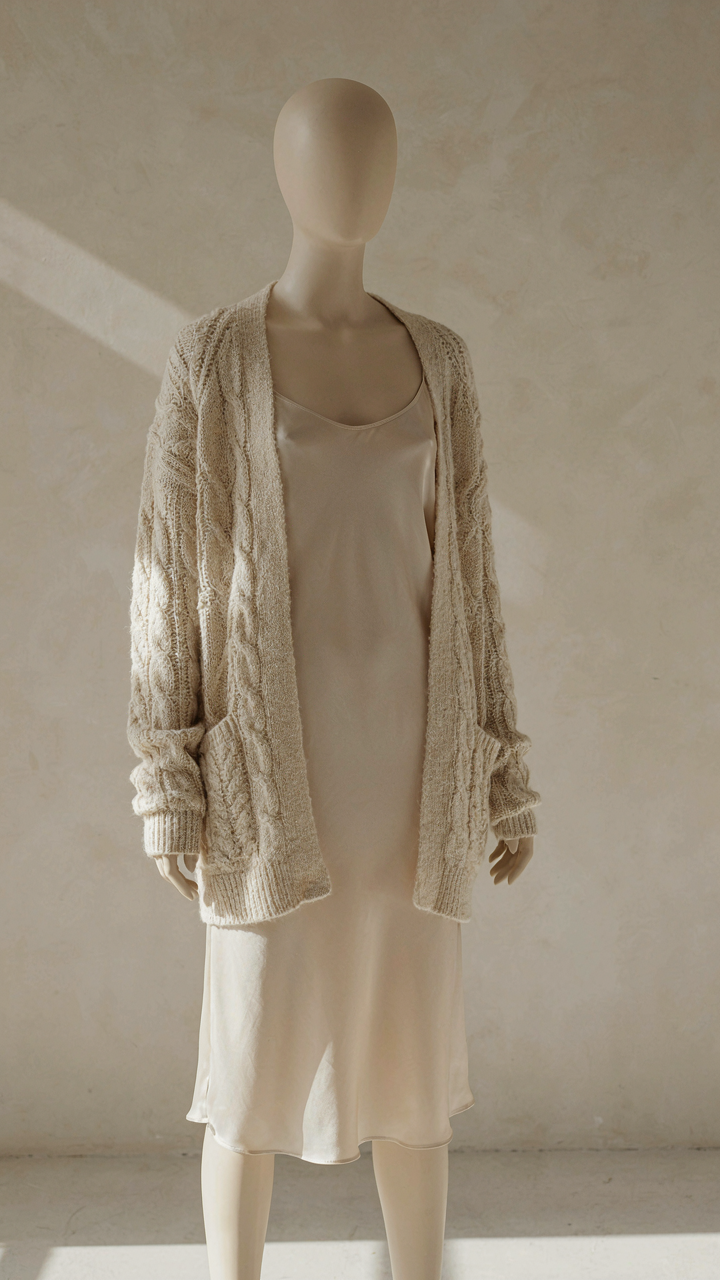
You want the cream cardigan and cream dress to “disappear” together so the outfit reads as one cohesive piece. That’s the fear underneath—that a mismatch signals you didn’t plan, that you’re amateur. The mechanism is the opposite of what you think. Identical tones without texture variance flatten the silhouette. The cardigan becomes visual noise instead of structure.

Fabric weight matters more than color matching. A lightweight silk charmeuse dress under a chunky cable knit cream cardigan creates dimensional interest even when both are cream. The eye reads two distinct pieces layering intentionally. A thin jersey dress under a thin cardigan in the same shade collapses into formlessness. The human eye tracks contrast through texture before it tracks contrast through hue.
Depth Over Exact Matching
- Cream on ivory: Use a warmer cream cardigan over a cooler ivory dress to create subtle separation without obvious color breaking. The undertones do the work your eye barely registers but your brain processes as intentional.
- Matte over sheen: Pair a matte wool cardigan with a satin or silk dress in the same cream family. Light bounces differently off each surface, creating perceived depth without requiring you to change colors entirely.
- Knit over structured fabric: Layer a soft knit cardigan over a tailored dress in cream. The textural shift reads as deliberate layering, not color uncertainty, even when the base tones are nearly identical.
- Heavyweight over lightweight: Use a substantial cream cashmere or merino cardigan over a delicate cream chiffon or crepe dress. The weight difference creates visual hierarchy and signals editorial choice.
- Ribbed against smooth: A cream cardigan with visible ribbing or cable detail over a plain cream dress creates textural interest that prevents the outfit from reading as a single flat object.
Monochrome only works when you engineer separation through mechanism, not accident. Pick your cardigan and dress first. Then ask if they have different surface qualities. If both are matte knits, one fails. If one is matte and one catches light, you’ve built something that holds together visually.
Dresses And Beauty: The Unseen Edge

Hair And Makeup As Strategic Accents
You’re reading this section because you want permission to matter—to be noticed and remembered in a room. Here’s the mechanism: hair and makeup aren’t decoration when you wear a cardigan over a cocktail dress. They’re contrast managers. The cardigan softens lines and adds texture, so your face becomes the visual anchor. Too minimal makeup disappears into the bulk. Too heavy and it fights the cardigan’s restraint. The goal is to sharpen what the cardigan obscures.
Forget the generic “enhance your natural features” advice. That’s incomplete. Your makeup must work in proportion to what you’re covering. A cardigan over a cocktail dress creates visual weight on your torso, which means your eye makeup and lip color carry more load. Use deeper eyeshadow and defined brows to pull focus upward. A muted lip competes with the cardigan’s texture and loses. A structured, pigmented lip (cream or satin finish, not shimmer) holds its own. Hair pulled back or swept to one side prevents the cardigan from appearing to swallow your frame entirely.
The Psychological Impact Of Polish
Observer psychology reveals that consistency signals control. When someone sees a cardigan worn correctly over a cocktail dress—no wrinkles, sleeves positioned properly, coordinated belt or jewelry—their brain interprets it as intention rather than compromise. The common mistake is treating the cardigan as a last-minute layer. It isn’t. It’s a commitment to the outfit’s architecture that either reinforces or undermines everything else you’ve groomed for.

Polish in this context means grooming details that frame the cardigan-dress combination as one unified choice, not two separate pieces competing for attention. Your nails, if visible at the wrist, should read as intentional. Your jewelry should taper—fewer, larger pieces beat scattered smaller ones. The cardigan’s neckline and collar must sit flush against the dress’s neckline. A crooked cardigan collar tells every observer that you didn’t check yourself before leaving. One check takes ten seconds and changes how people perceive your entire presence.
The Real Obstacle Isn’t The Dress Code; It’s Your Timid Imagination

You already own everything you need. The cardigan over cocktail dress works because you stopped asking permission to break the rules. Most people layer like they’re apologizing. You layer like you designed it that way. Open your closet today and grab one piece you’ve never paired before. Throw it over something formal. The dress code didn’t change. Your confidence did.



