

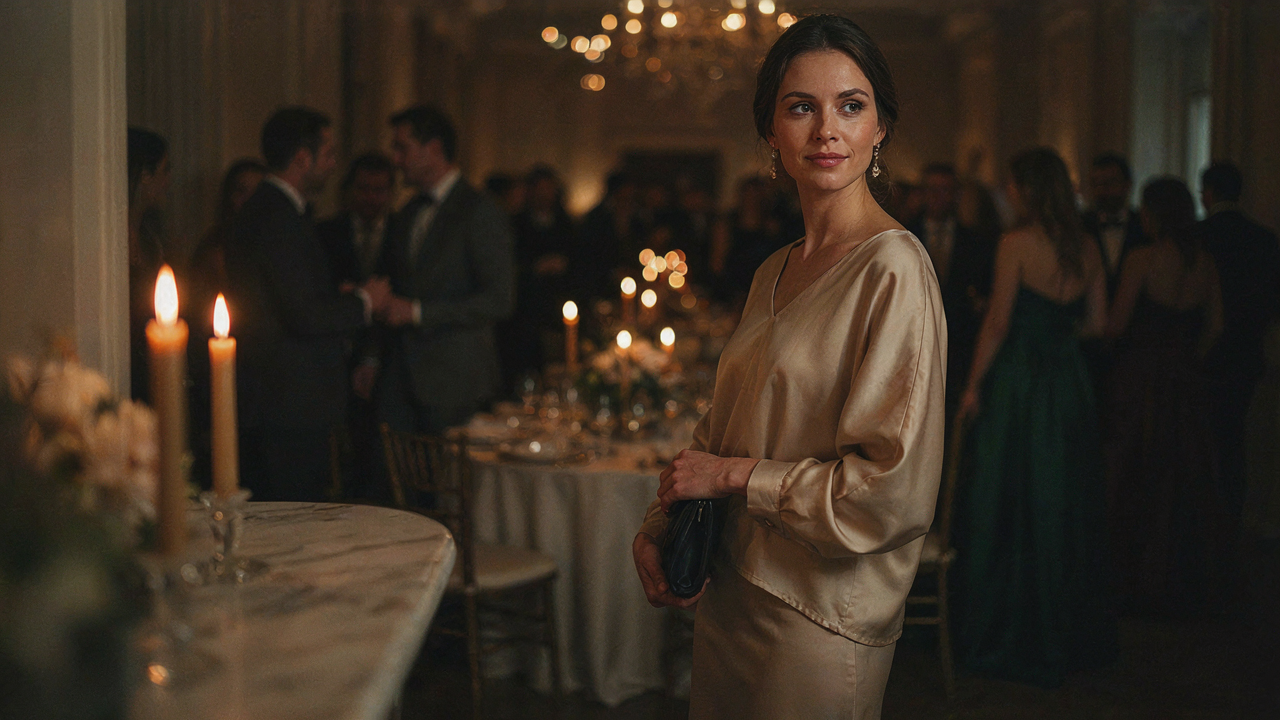
The Unspoken Rules Of Satin Shirt Outfit Selection
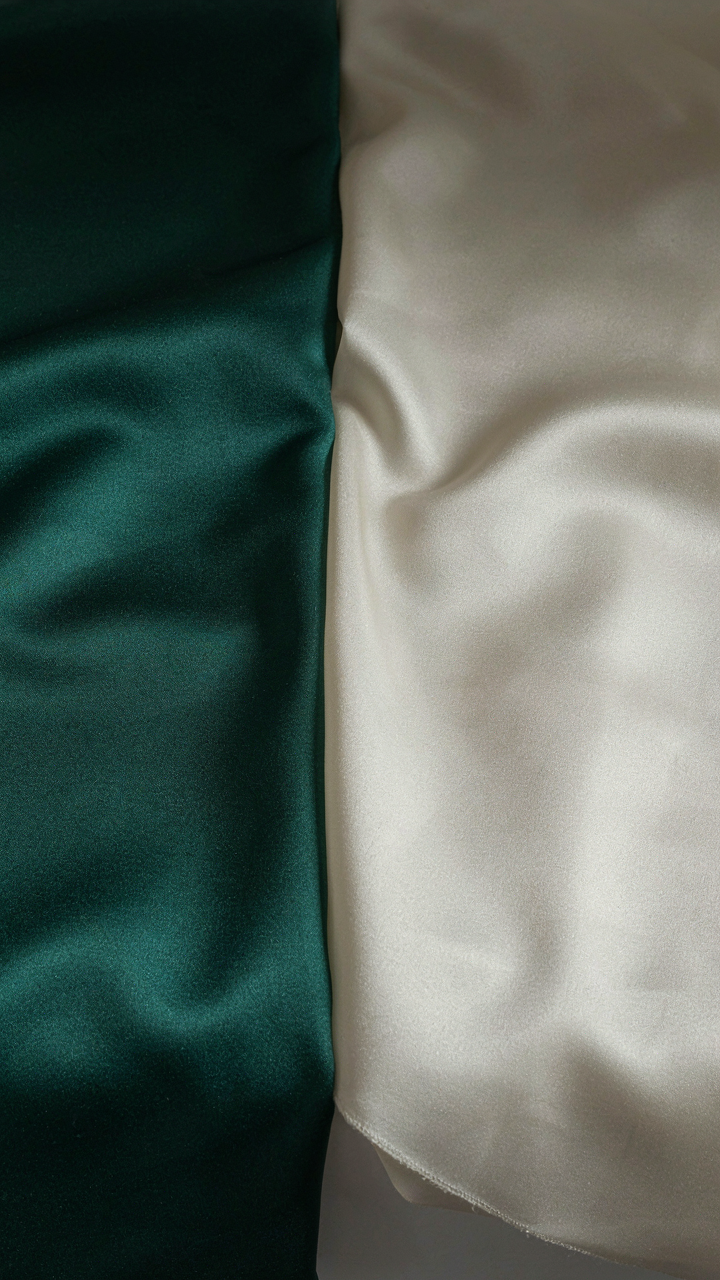
Weight And Drape Work Against Each Other
You want to look expensive at dinner, not like you’re trying. That’s the real fear underneath this choice. Here’s what actually matters: satin’s drape depends entirely on weight, and these two properties move in opposite directions. Heavy satin holds structure and hangs like authority. Light satin moves with your body and reads as intentional ease. Most people buy mid-weight satin thinking it splits the difference. It doesn’t. It compromises both properties and leaves you looking uncertain.
The fabric’s fiber content determines how it responds to your body temperature and movement. Silk satin moves differently than polyester satin because of molecular density. Real silk releases moisture and settles into shape. Polyester clings and bounces back. For dinner parties, you need to know which one you own before you build the outfit. Pick one property: structure or flow. Then buy fabric weight accordingly. Don’t chase both at once.
When The Dress Code Contradicts What You Should Wear
Most people read the stated dress code and stop thinking. That’s lazy and it shows. The stated code (business formal, cocktail attire) masks the actual social expectation underneath. A dinner party at someone’s home has a different visual hierarchy than a restaurant event, even if both say cocktail. Home gatherings tolerate softer tailoring and personal expression. Restaurants enforce conformity through proximity to strangers. Your satin blouse outfit must match the invisible rule, not the written one.
Walk through the specific venue in your mind. How many people will you stand near? Are you seated or standing most of the night? What’s the lighting—restaurant fluorescent or home ambient? Those details determine whether satin reads as polished or overdone. A satin blouse in dim home lighting looks sophisticated. The same blouse under bright restaurant light looks like you’re trying to catch attention. Choose your satin weight and shine level based on the venue’s actual conditions, not the invitation’s wording.
Satin Blouse Outfit: The Silhouette Discipline
Know What Your Body Actually Does
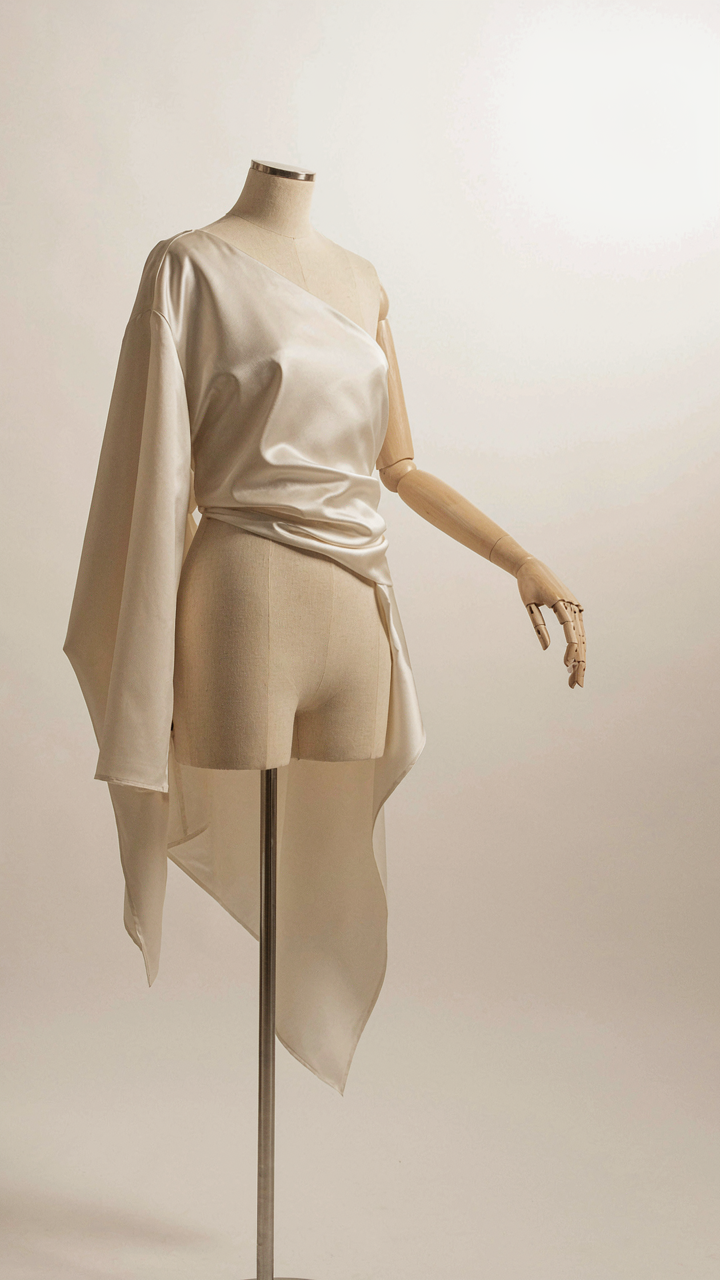
You want to know if satin makes you look good because you’re afraid it won’t, and buying the wrong piece feels like wasting money on something that exposes rather than hides. Here’s the mechanism: satin’s reflective surface amplifies whatever shape it drapes over. It doesn’t create illusion. It reveals structure. Your body has natural lines—shoulder width, hip placement, torso length, chest position. These are fixed points. A satin blouse either aligns with them or fights against them. Most people buy based on the hanger, not based on how fabric interacts with their actual proportions when they move and sit.

Drape is borrowed from textile physics. In physics, tension and angle determine how an object falls. On your body, the satin blouse finds the path of least resistance. It clings to fullness, skims over flat areas, and pools where there’s space. If your shoulders are narrow, satin won’t suddenly widen them. If your torso is long, satin won’t shorten it. You need to measure your actual dimensions first—shoulder point to shoulder point, armhole depth, blouse length relative to your hip—then match them to cut, not color or brand reputation.
The Fit Problem Nobody Speaks About Plainly
Everyone says find something “flattering,” which is useless advice. Flattery is subjective and sells nothing. The real problem is that most satin blouses are cut for a body type they don’t name on the tag. High-armhole designs suit people with shorter upper arms and higher chest placement. Low-armhole designs suit longer arms and lower chest placement. Oversized cuts assume you want volume; fitted cuts assume you want definition. You can’t know which works until you know your own measurements and what they mean in relation to garment construction. Buy blind, and you’re gambling against physics.
The protocol is simple. Before you try anything on, write down three measurements: your shoulder width, your natural waist to hip drop, and your ideal blouse length when standing. Then try on the satin blouse, move your arms forward and back, sit down, and watch where the fabric settles on your body relative to those points. If the armhole pulls, the cut is wrong. If the hem hits below your hip when you want it to hit at your hip, the proportions don’t match your frame. Buy only when the fabric stays where you want it without adjustment or conscious holding.
Beyond Basic: Satin Blouse Outfit Ideas With Intent
Color Theory For Impactful Pairings
You’re reading this because you want to stop blending in at dinner parties. The real mechanism at work is simultaneous contrast, borrowed from color theory in visual design. When you place a satin blouse in one color family next to a bottom or jacket in a contrasting value or hue, the satin’s reflective surface amplifies the difference. Light bounces off satin differently than matte fabrics, so contrast becomes visible from across a room instead of just up close.

Forget generic “neutrals with pops of color.” That advice exists because it’s safe, not because it works. Satin blouses demand intentional pairing based on undertone matching. A champagne satin blouse works with deep charcoal or navy because the warm undertone in the satin creates tension against cool tones. A true white satin blouse paired with black trousers creates maximum separation and reads as deliberate. The action is simple: identify your satin blouse’s undertone first, then choose a bottom that sits at least two values darker or lighter on the brightness scale.
Texture Contrasts That Elevate
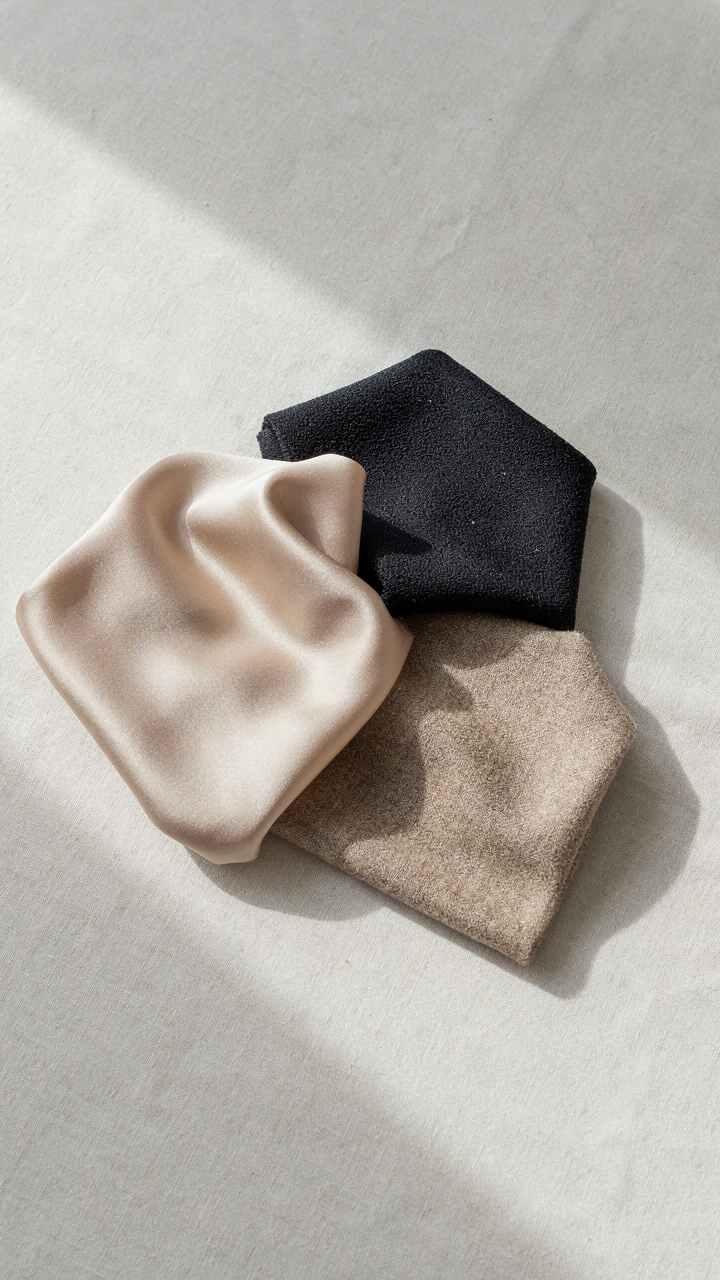
Texture opposition is the applied mechanics here, borrowed from material science. Satin has high sheen and directional light reflection. When you pair it against matte, rough, or structured fabrics, you create visual hierarchy and prevent the outfit from reading as flat or costume-like. A satin blouse tucked into structured wool trousers achieves balance because each fabric occupies its own visual space.
Most people pair satin with satin or silk with silk, thinking “matching quality” means matching texture. That’s backwards. A luxe satin blouse needs a grounding texture to land as sophisticated rather than slick. Pair it with matte crepe trousers, brushed cotton, wool suiting, or leather accessories. The satin reads as intentional when it’s the only reflective element. Your protocol: commit one texture choice per outfit. If your blouse is satin, keep your pants, skirt, and outer layer in matte or structured materials.
The Accessorizer’s Dilemma: The Minimalist’s Way

Restraint Beats The Clutter Reflex
You’re worried that a satin blouse alone won’t signal you tried hard enough. That’s the real fear. But here’s the mechanism: satin already broadcasts luxury through surface texture. Add competing textures and metals, and you dilute that signal instead of amplifying it. Think of it like signal-to-noise ratio in electrical engineering. The blouse is your signal. Every accessory either strengthens it or weakens it. Most people pile on jewelry to fill silence they feel but guests don’t hear.

The rule isn’t about being minimal for moral reasons. It’s about contrast. A satin blouse with one statement earring and a single metal cuff creates visual weight through absence. Your eye lands on the blouse’s sheen because nothing else demands attention. Bare wrists and ears around satin read as intentional, not unfinished. Remove one piece from what feels “complete” and you’ve found the actual baseline.
Anchor One Element, Strip The Rest
Decide what gets the visual real estate before you touch anything else. If your satin blouse is jewel-toned or patterned, anchor accessories to metal tone only: gold, silver, or rose. Skip the gemstones and dangling pieces. If your blouse is solid and neutral, you can anchor to one piece of statement jewelry at the ears or wrist, then add nothing else visible.
The placement mechanics matter because human attention follows hierarchy. Satin draws light through its weave structure. Jewelry reflects light. Put both in the same zone and they compete. Place jewelry at ears or wrists with the blouse as the chest focal point, and each element owns its territory. A single structured clutch in a coordinating color completes this without noise. Everything serves the satin, not itself.
Satin Shirt Outfit Classy: The Understated Edge Protocol
Where The Tuck Actually Matters
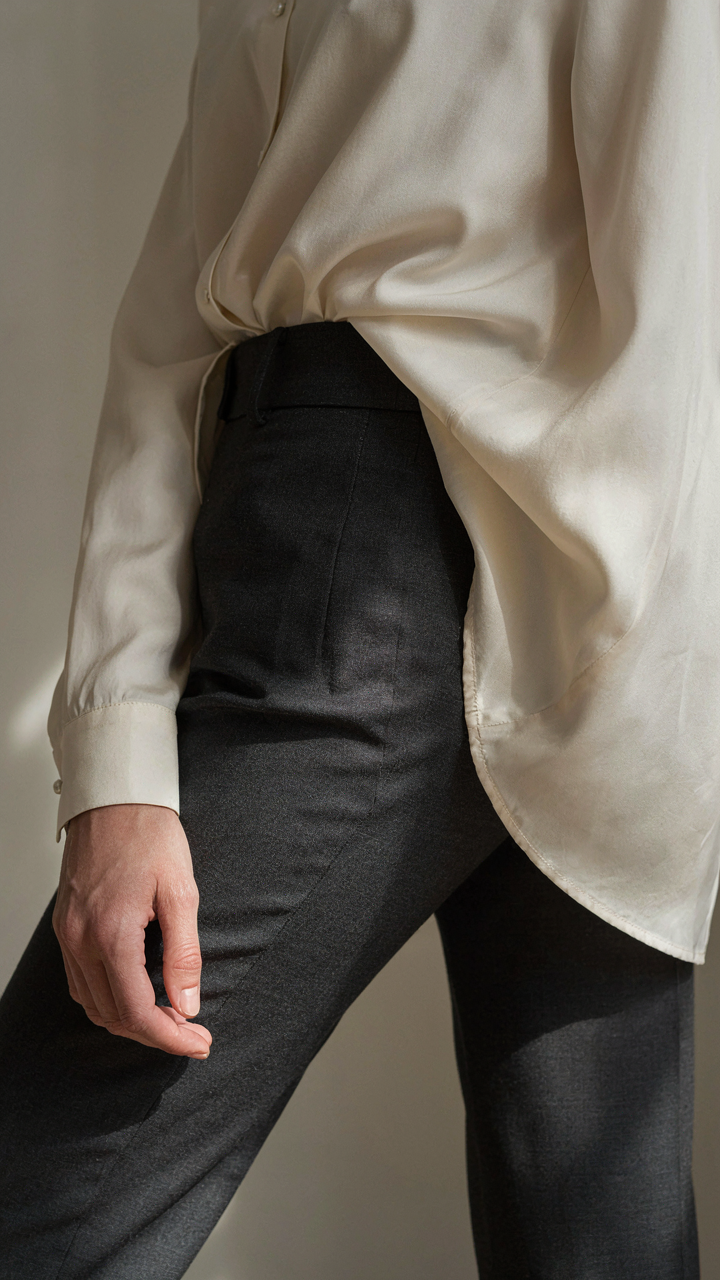
You care about this because you’re terrified of looking sloppy, and the tuck is where amateurs expose themselves. Here’s the mechanism: tuck depth controls visual weight distribution. A full tuck shortens your torso and locks your proportions. A half tuck floats fabric at the hip, creating negative space that reads as intentional rather than undecided. No tuck leaves the satin draping, which demands either a fitted silhouette underneath or a structured outer layer to avoid formlessness.

Satin’s sheen amplifies every fold choice. A full tuck into high-waisted trousers works when your goal is formal compression and clean lines at a black-tie dinner. A half tuck into tailored pants or a skirt works when you want movement without sacrifice. No tuck only functions if your satin blouse ends at hip bone and something structured contains it. The satin’s reflectivity means tucking mistakes become visible under restaurant lighting. Pick one strategy and commit to the silhouette it demands.
Sleeve Treatment For Actual Precision
The common advice is to roll your sleeves and call it relaxed. That’s incomplete. Sleeve styling on a satin blouse operates like a visual anchor in composition. Your sleeve length and cuff detail either ground the look or leave it floating. A satin blouse with fitted sleeves to the wrist creates formality through completion. Pushed-up sleeves expose forearm and soften the piece, but only if intentional and even on both sides.
Cuff styling matters more than people admit. Satin cuffs that hit the wrist bone create a stopping point that feels deliberate. Rolling the cuff inward shows the inside fabric texture and requires the satin interior to be worth showing. Leaving cuffs unrolled and fastened feels more formal, especially with structured trousers or a skirt. The cuff sits at your wrist for hours at a dinner party, so precision here determines whether people notice your outfit as thoughtful or see you fussing with fabric all night.
The Inconvenient Truth Of Satin Button Up Outfits
Why Buttons Matter More Than You Think
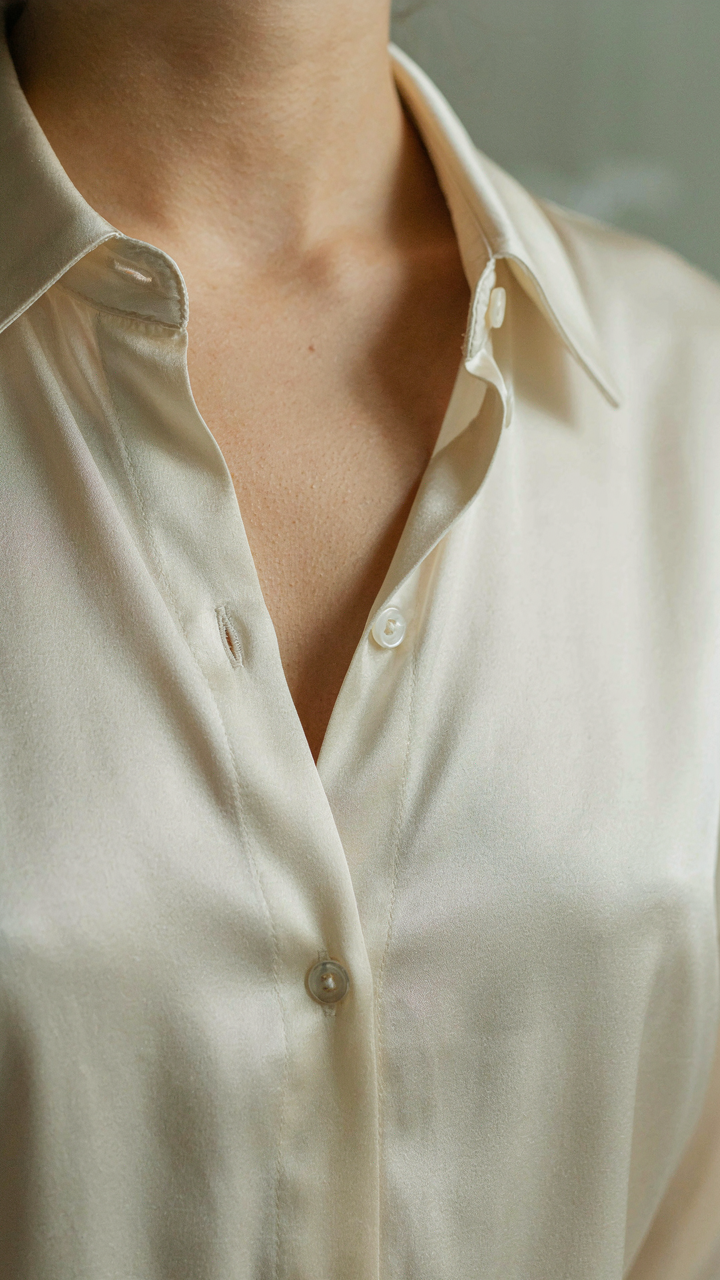
You care about this because you sense that buttons signal something about intent, and you’re right to be paranoid about sending the wrong message at a dinner party. The mechanism is simple: buttons are permission gates. A fully buttoned satin blouse reads formal and controlled. Each unbuttoned notch moves you toward accessibility and ease. The shirt itself doesn’t change, but the viewer’s read of your approachability does. This isn’t psychology in the soft sense. It’s signal transmission. What you button and what you leave open tells people whether you’re in listening mode or defense mode.

The mistake most people make is treating buttons as purely aesthetic. They’re functional communication. A satin blouse buttoned to the neck works for formal dinner settings where distance is expected. Unbutton to the sternum and you shift the energy to social and collaborative. The texture of satin amplifies this effect because it catches light and draws attention to whatever area you’ve chosen to expose. Your job before the party is deciding what signal you want active in the room, then buttoning accordingly. Don’t overthink it. Button the blouse to match the role you’re playing that night.
Contrast As Strategic Positioning
Military strategists call this asymmetric advantage. You have it in satin blouses: the fabric itself is already high-contrast because it reflects light where regular cotton absorbs it. This means you can exploit contrast deliberately instead of hoping it happens. Pairing a jewel-tone satin blouse (emerald, sapphire, burgundy) with neutral bottoms and muted accessories creates a focal point nobody can ignore. The satin does the heavy lifting. Everything else fades into support structure.
The common advice to “mix textures” is incomplete. That’s not what’s happening here. You’re not mixing textures for visual interest. You’re using contrast to anchor attention where you want it. A cream satin blouse against charcoal trousers, or black satin against cream silk creates directional pull. The human eye moves toward the highest contrast point first. Control that, and you control the read of the entire outfit. Wear the satin blouse. Make everything else defer to it. Your accessories should be 40 percent less visually loud than the blouse itself.
Silk Blouse Outfit Vs. Satin: Debunking The Material Myth
Weave Is The Real Story, Not The Fiber
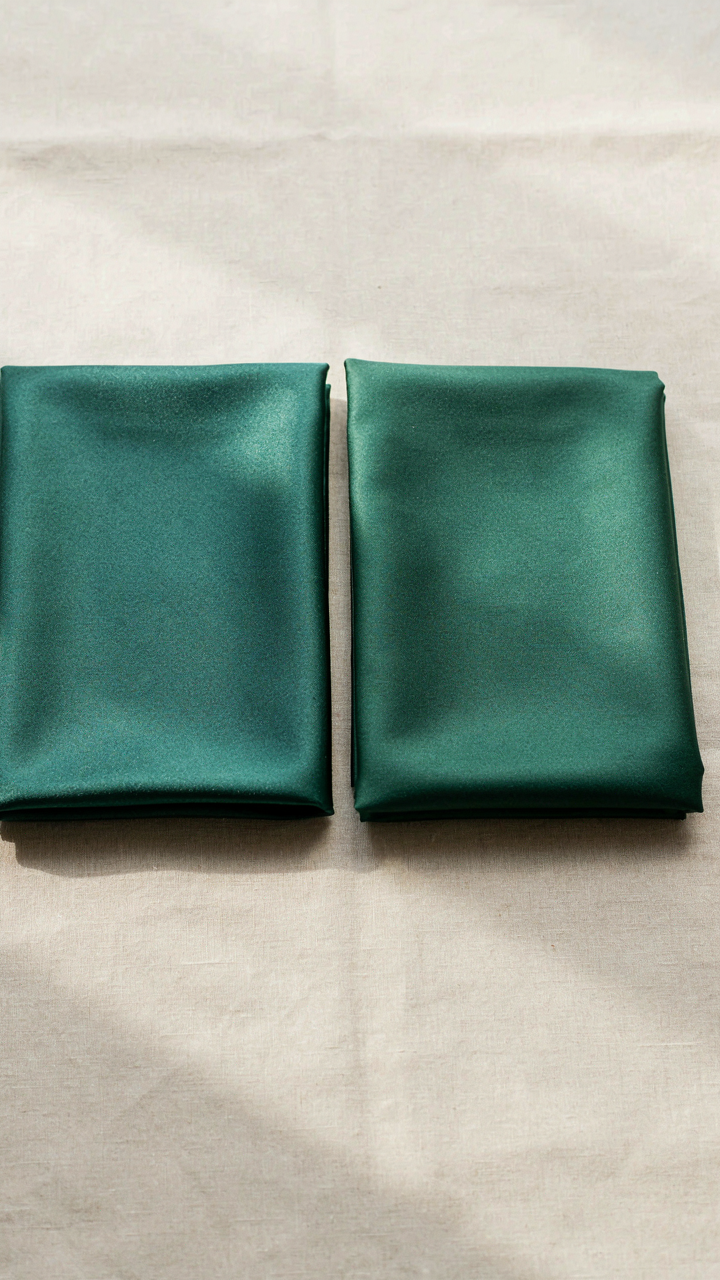
You’re worried you’re buying the wrong thing and looking ignorant at the event. The real mechanism is this: satin and silk are not interchangeable terms. Silk is a fiber. Satin is a weave pattern. Textile engineering distinguishes between raw material and construction method. A satin blouse can be made from silk, polyester, cotton, or nylon. The weave creates the light-reflecting surface. The fiber determines durability and breathability. Most dinner party satin blouses use polyester satin because it holds the sheen longer and costs less to produce.

The weave works by floating threads over the surface instead of interlocking them. This creates the characteristic luster and smooth texture. A silk charmeuse blouse uses a different weave that creates less dramatic shine. For a dressy outfit, satin’s reflection is the visual goal. Silk fiber in a satin weave costs significantly more than polyester satin with the same visual effect. Know what you’re paying for: the look or the longevity.
Care Determines Whether It Survives The Season
Everyone says hand wash delicates and hang dry, which ignores the actual failure points. Satin deteriorates from friction and heat, not water. Machine washing destroys satin because the agitation breaks down the weave structure. Dry cleaning with standard solvent works, but costs add up. The practical protocol is spot cleaning for small marks, hand washing in cool water with mild detergent, and air drying flat on a towel to prevent stretching.
Storage matters more than most people admit. Satin creases permanently if folded. Hang it on padded hangers to maintain the silhouette for your next dinner party. Keep it away from direct sunlight, which fades the color over time. Friction from zippers, jewelry, or rough fabrics damages the weave. The difference between a blouse lasting one season and three seasons is how you handle it between wears, not the washing itself.
Blouse Outfit Longevity: The Investment Mindset
Quality Where It Counts: Seams, Stitching, And Finish
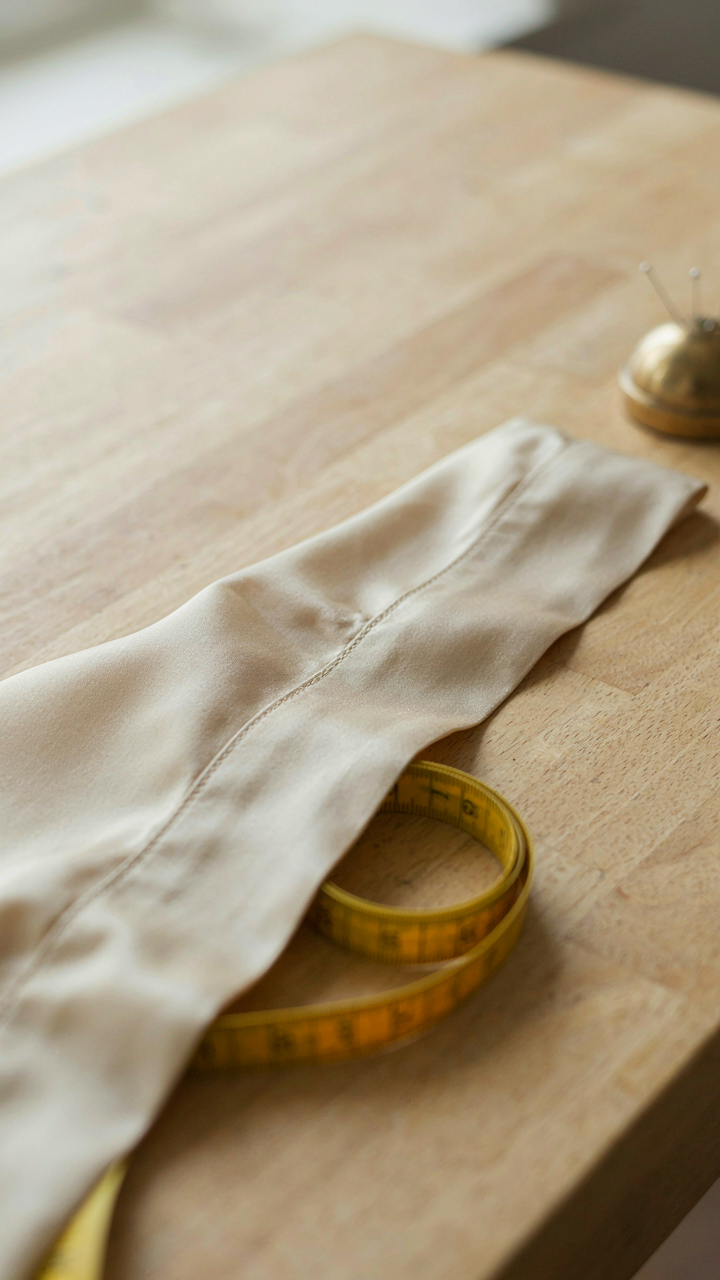
You’re afraid you’ll waste money on something that falls apart. Here’s what actually determines whether a satin blouse survives repeated wear: the execution of the construction, not the fabric itself. Think of a satin blouse like structural engineering. The material is the blueprint. The seams are the foundation. Cheap construction collapses first at stress points, regardless of how expensive the satin feels against your skin.
- Seam Allowance Width: Quality satin blouses have seam allowances between half-inch to three-quarter inch. Narrow allowances fray faster and tear under arm and shoulder movement during dinner events.
- Stitch Density: Count stitches per inch at the armhole and side seams. Fifteen stitches per inch or higher indicates industrial-grade construction. Lower counts mean the seams will separate within two seasons.
- Thread Quality: Polyester thread on satin blouses degrades from body heat and friction. Look for mercerized cotton or high-quality polyester that matches the fabric weight, not flimsy thread that snaps.
- Collar and Cuff Reinforcement: Examine where the collar attaches. Reinforced interfacing prevents the neckline from stretching out after five wears. Cheap blouses skip this step entirely.
- Button Attachment: Buttons should be sewn through reinforced thread loops on the underside, not simply pierced through the fabric. This prevents the button from pulling fabric fibers loose over time.

Run your finger along the inside seams. If you feel loose threads or uneven stitching, the blouse will deteriorate visibly after three dinner parties. Factories that rush production leave raw edges and weak connections. This isn’t about perfectionism. It’s about identifying which blouses will actually last.
The Core Wardrobe Equation
Stop buying satin blouses as standalone pieces. That’s where most people leak money. A satin blouse dressy outfit only gains value when it functions across multiple contexts: formal dinners, business events, casual elevated occasions. You need anchor pieces that work with each blouse you own, not the reverse.
Build three foundational bottoms first. A tailored black trouser. A structured skirt in cream or navy. A second trouser in charcoal or burgundy. These three pieces should fit perfectly and stay unworn in a dark closet when not in use, preserving their shape. Then add satin blouses incrementally. Each new blouse must work with all three bottoms. This forces discipline into your purchases. It also means one new blouse expands your outfit combinations by a factor of three, not one.
Your Real Problem Isn’t The Blouse; It’s Believing You Need External Validation To Dress Well

You already know what looks good on you. That satin blouse sits in your closet because you doubt your instinct, not because you lack options. Stop scrolling for permission. Pick the outfit that makes you feel like you belong at the table, wear it tonight, and watch how differently people treat you when you stop apologizing for your choices. Confidence isn’t something you find in an outfit. It’s what you prove by wearing one anyway.




