


Beyond The Gown: Why The Jumpsuit Is The New Power Play
Formal No Longer Means A Dress
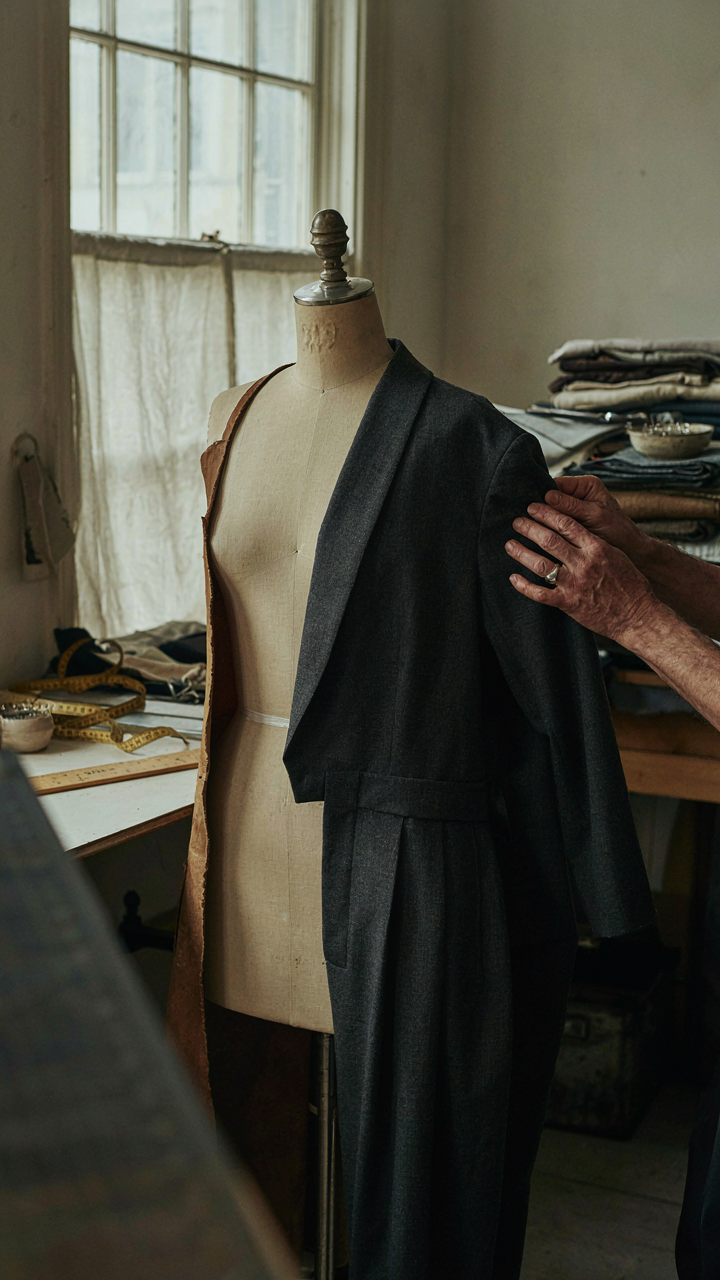
You want permission to break the rule without looking like you’re breaking it. Here’s the mechanism: formal wear’s entire purpose is signaling constraint. A gown signals you’ve accepted the dress code. A jumpsuit with sleeves signals you’ve mastered it enough to rewrite it. The distinction matters because formality isn’t about the garment type, it’s about tailoring, fabric weight, and construction quality. A structured jumpsuit in silk or wool crepe with proper sleeve architecture meets every technical requirement of formal wear. Designers like Stella McCartney and Ralph Lauren have proven this empirically by placing floor-length jumpsuits in evening collections for decades.
The reason traditional etiquette still gates women into dresses comes down to history, not logic. Formality codes emerged when women wore restrictive garments as status markers. The jumpsuit bypasses that entirely. It delivers the same signal through different mechanics: precision fit, luxe fabric, tailored proportions. A jumpsuit with sleeves formal enough for black-tie events communicates restraint and intention identically to a gown. The construction demands more skill from the manufacturer because sleeve pitch and torso length can’t hide flaws. This is why the jumpsuit works.
Signal Through Subtraction
Think in terms of semiotics, the study of signs and meaning. In formal contexts, a gown operates as a sign because it conforms. A jumpsuit operates as a sign because it diverges while maintaining all the structural markers of formality. The status play isn’t that you wore something different. It’s that you wore something different and the room registered it as appropriate. This only works if the garment itself is impeccable. Loose seams, cheap fabric, or poor sleeve construction immediately read as costume, not confidence. The person in the room notices.
The real leverage is this: a formal jumpsuit with sleeves eliminates the performance of femininity that traditional evening wear demands. You maintain formality without the constraint narrative. Executives, artists, and people with actual control wear them because they don’t need to prove compliance through clothing. The garment becomes a filter. People who understand contextual dressing recognize it. People locked in binary thinking don’t. When you select a jumpsuit with tailored sleeves and fabric weight equivalent to evening wear, you’re not making a statement. You’re following a more sophisticated set of rules.
The Dress Code Decoding Protocol For Jumpsuits
What The Invitation Actually Demands
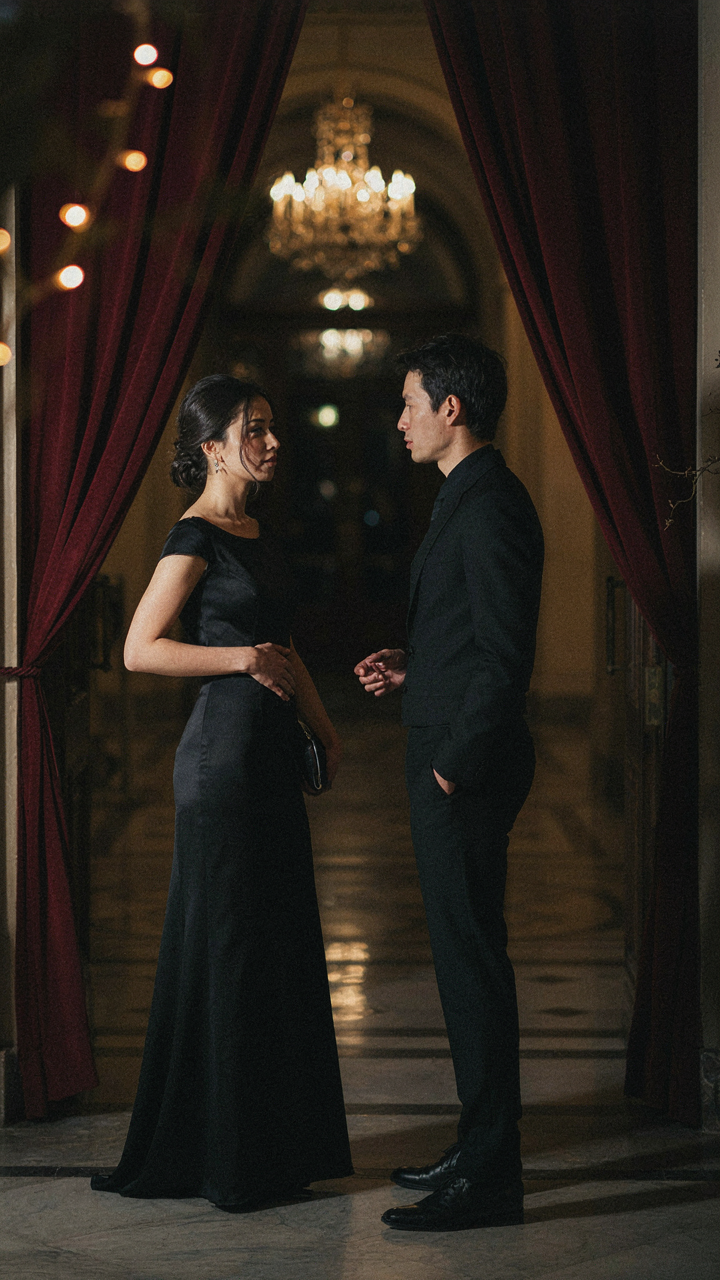
You’re worried people will judge you for wearing a jumpsuit when everyone expects a dress or suit. That fear is the real problem here, not the garment. Dress codes operate on signal hierarchy. A formal event uses codes to separate who belongs from who doesn’t. A jumpsuit with sleeves reads as intentional formality when the construction matches the event’s severity. Sleeves, structured fabric, and tailoring send the same message as traditional formal wear. The mechanism is this: events enforce codes through visual consistency, not through arbitrary rules.

Formal dress codes historically emerged from military and aristocratic hierarchies where uniform construction communicated rank and access. A jumpsuit with sleeves occupies the same functional role that a tuxedo or gown does. The event doesn’t care what shape your formal wear takes. It cares that you read as someone who prepared intentionally. A poorly fitted dress signals carelessness the same way a poorly fitted jumpsuit does. The code isn’t about the category of garment. It’s about whether you took the venue’s formality seriously enough to show up dressed like you did.
Know When To Break The Rule
Everyone says “just wear what makes you feel confident.” That’s incomplete advice and gets people wrong. You break dress code expectations only when you understand what expectation you’re breaking and why it matters to that specific room. A jumpsuit with sleeves at a black-tie wedding works because the construction reads as formal. At a corporate gala, the same jumpsuit works because tailoring communicates respect for the setting. The variable isn’t the jumpsuit. It’s whether your specific audience treats form over convention or convention as the actual form.
Conservative events are conservative because their attendees value predictability as a status signal itself. A wall street firm’s gala expects traditional dress not because it’s objectively superior but because deviation signals you don’t know the room’s values. A creative industry event expects boundary-pushing. A formal jumpsuit with sleeves in that context reads as someone who respects formality while refusing cookie-cutter thinking. Before you wear it, know whether the room rewards or punishes intentionality. Then dress accordingly. Your specific choice happens only after you answer that question.
Long Sleeve Jumpsuit: The Unsung Hero Of Elegant Overalls
Fabric Choices That Command Attention
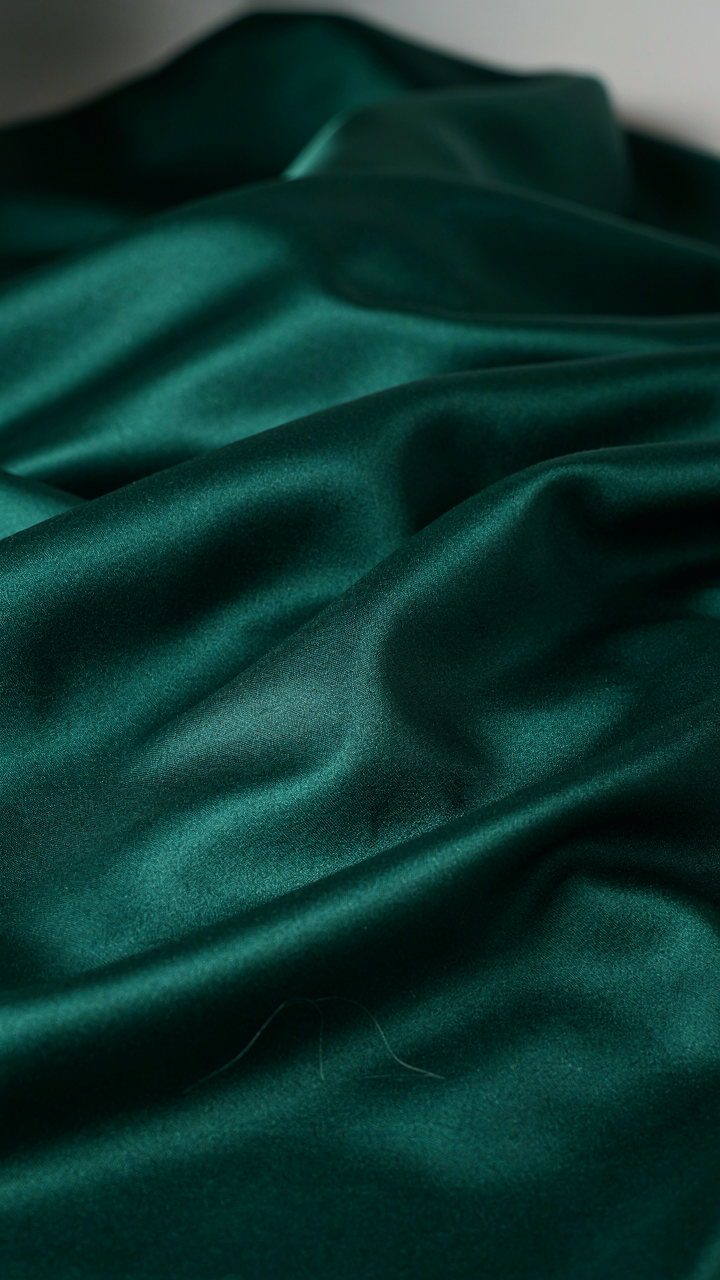
You want fabric that proves you didn’t settle, because fabric is where most people expose their indifference. The mechanism is simple: natural fibers with structure telegraph intentionality in a way synthetics never do. Silk charmeuse, wool crepe, and linen blends hold their form under movement and reflect light with specificity rather than gloss. These materials age visibly, which means commitment shows. Cotton blends work for daytime formality but collapse under evening wear expectations because they lack the recovery a structured night demands.

Weave density matters more than thread count in formal contexts. A tight twill or crepe weave in a long sleeve formal jumpsuit prevents the garment from reading as casual, even when the cut suggests otherwise. Matte finishes dominate evening wear because shine broadcasts cheap construction and draws attention to flaws. Choose fabric with minimal give in the longitudinal direction and controlled stretch perpendicular to it, which gives you movement without distortion. This is how you prevent the fabric from morphing into a different silhouette mid-event.
Tailoring For An Impactful Silhouette
The standard advice about tailoring is to “get it fitted,” which tells you nothing about where the fit actually matters. In architectural terms, a long sleeve formal jumpsuit operates like load-bearing structure: the shoulder seams are the foundation, the torso is the main span, and the leg taper is the finish. Most jumpsuits fail because tailors treat them like modified dresses, adding waist suppression without considering how it fights the garment’s inherent geometry. The real move is establishing clean shoulder lines first, then working downward from that anchor point.
Inseam length for formal jumpsuits sits at the base of your heel, not on top of your shoe. Sleeve length ends at the wrist bone when arms rest naturally. The torso should skim without clinging, which requires removing excess fabric through the side seams rather than the center front or back. If the garment bunches at the armpit or pulls across the shoulder blade, the sleeve cap is too tight and needs letting out before any other adjustment. Have the tailor make these changes before hemming anything permanent.
Wide Leg Trousers: The Illusion Of Effortless Power
How Fabric Volume Controls The Room
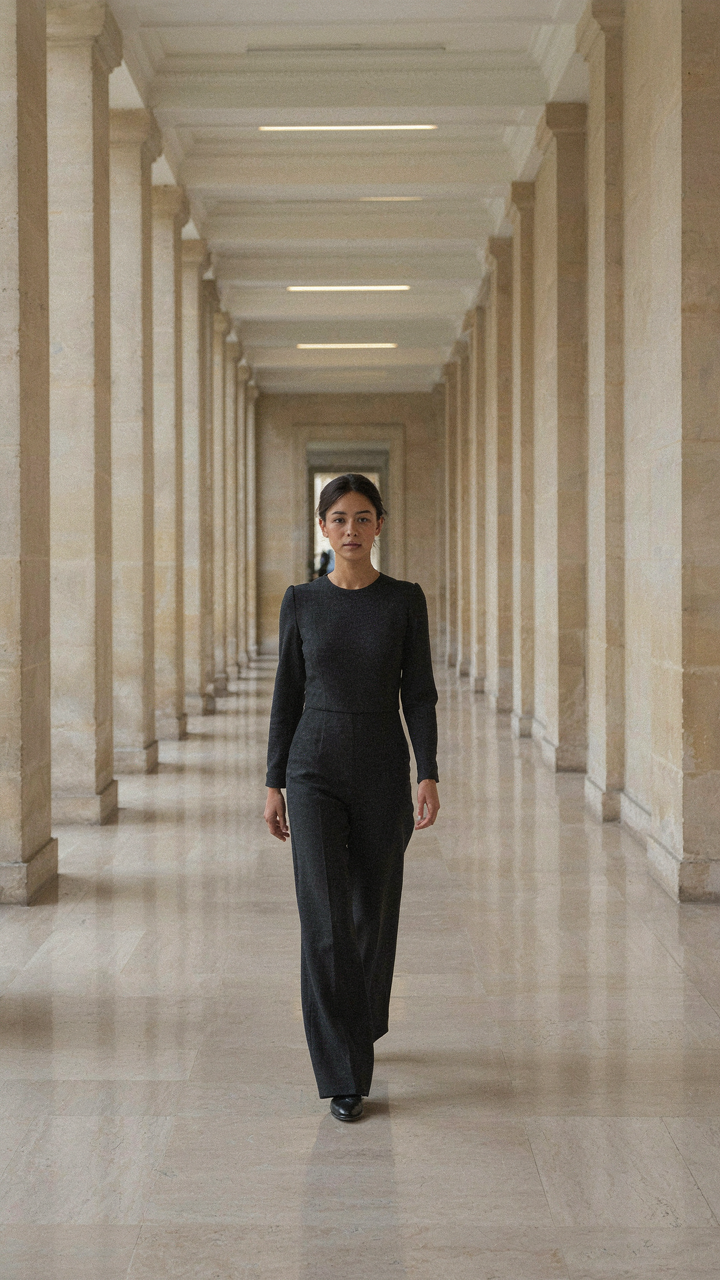
You want people to assume you’re comfortable without trying. That’s the real reason this matters. In visual hierarchy, volume functions like territorial expansion. Wide legs on a formal jumpsuit with sleeves don’t just hang there—they occupy space and force the eye to process more fabric, which reads as confidence or authority depending on cut and context. The mechanism is simple: more horizontal spread at the base anchors your presence and makes you harder to ignore.

The fabric itself determines whether wide legs read formal or sloppy. Heavy materials like wool suiting, structured cotton blends, or silk hold shape and create clean lines. Cheap jersey or thin synthetics bunch and collapse, which kills the effect instantly. Choose fabric weight that maintains its geometry when you stand still and when you move. A formal jumpsuit with sleeves needs trousers that don’t require constant adjustment to look intentional.
Power Requires Controlled Movement
This is where most formal jumpsuit styling advice breaks down: people assume wider legs limit mobility, so they overthink it. Movement physics says the opposite. Fabric that swings freely requires less muscular tension to operate, which means you move with less strain showing in your shoulders and neck. When you walk in wide-leg trousers, you don’t fight the fabric—you guide it, which actually projects more command than the stiff, restricted walk that comes from tight pants.
The stride length matters more than the leg width. Wide legs work in formal settings because they reward a deliberate, measured gait. Rush your steps and the fabric reads chaotic. Control your pace and the movement becomes a visual rhythm that suggests authority. When wearing a formal jumpsuit with sleeves, walk at 60% of your normal speed for the first 30 seconds. This establishes the visual pattern and trains how others perceive your presence in the space.
Modest Outfit Ideas: Strategic Subtlety, Not Hiding
The Contrast Game
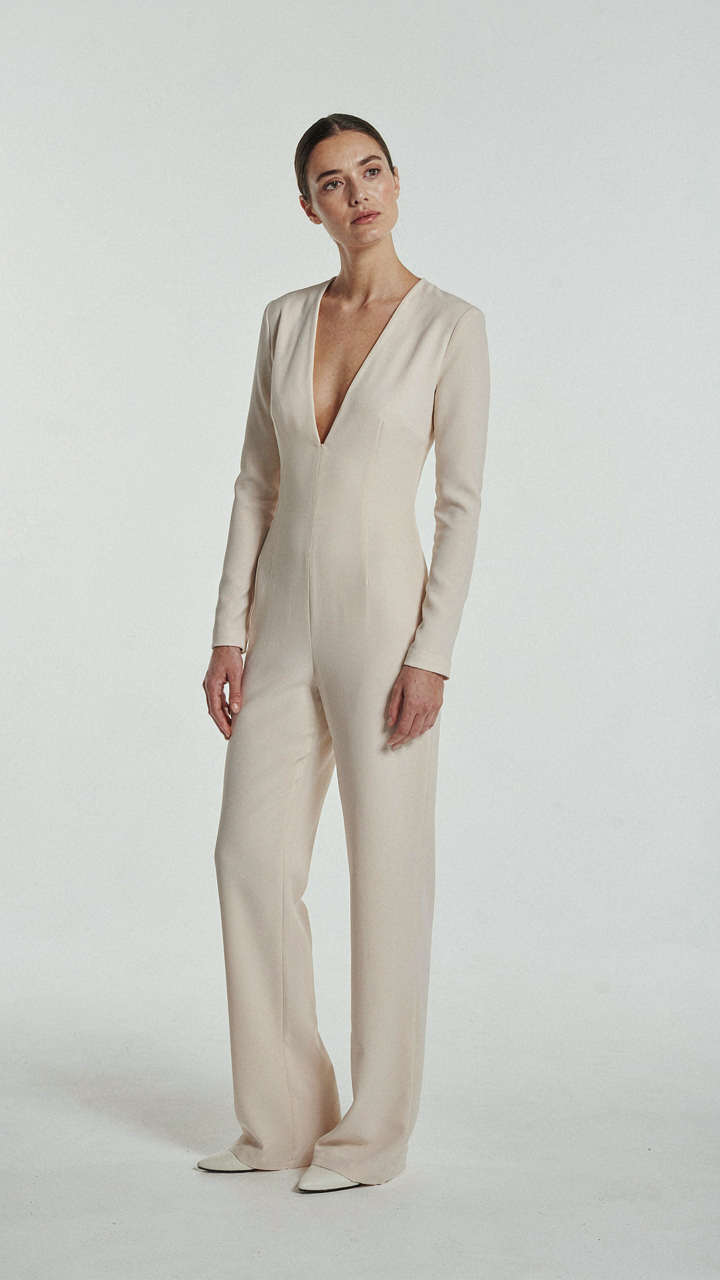
You want modesty to read as elegance instead of timidity. That’s the real reason you’re here. The mechanism is contrast. In visual design, the eye reads covered areas as intentional choice, not constraint, when they sit against exposed ones. A sleeved jumpsuit with a deep neckline or high slit triggers this contrast. Your covered arms become a deliberate move, not a covering move. The formality registers because of what you chose to show, not what you hide.

Fabric choice amplifies this effect. Silk charmeuse over a calf-length sleeved jumpsuit hits different than cotton. The sheen creates a visual anchor that signals control and intention. The sleeves themselves become architecture. Long, fitted sleeves with a draped neckline or asymmetrical hemline break the equation people expect from modesty. You’re not playing smaller. You’re playing smarter. The formality reads because the piece refuses to be apologetic.
The Perception Shift
Modesty in formal wear triggers a psychological anchor most people won’t name: authority. In organizational psychology, perceived competence rises when people dress in ways that suggest internal standards rather than external pressure. A jumpsuit with sleeves reads as self-directed. No one forced you into it. You selected a boundary, which signals you know your own rules. That’s the opposite of hiding.
The sleeves themselves become a signal of intention. When sleeves are tailored at the wrist, cuffed precisely, or feature subtle structure, they read as deliberate styling, not concealment. Pair long sleeves with minimal jewelry and a sharp silhouette. Skip the layers that add bulk. The formality emerges from what the outfit doesn’t do: it doesn’t murmur, doesn’t apologize, doesn’t seek permission. The mechanism is simple. Modesty becomes authority the moment people perceive it as your choice.
The Wedding Guest / Officiant Attire Gambit
When You’re Invited But Not The Focus
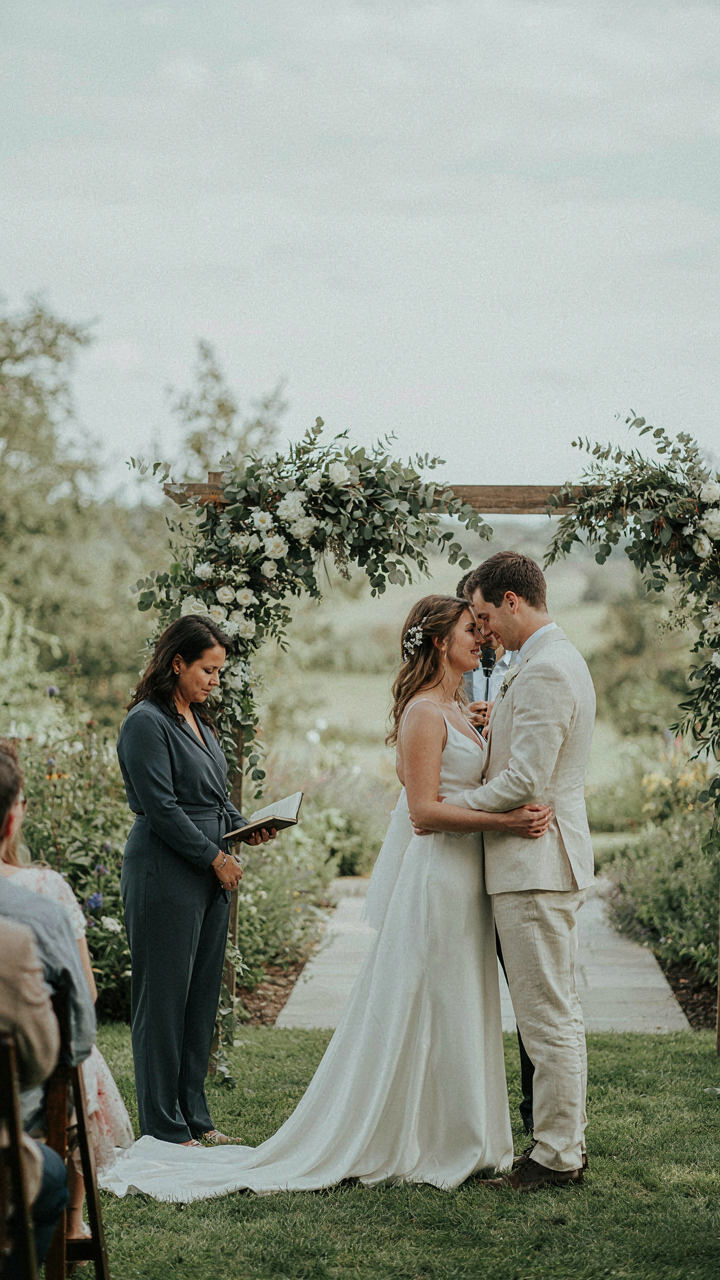
You want the jumpsuit to signal you have taste without broadcasting that you’re trying harder than the couple. That’s the real tension here, and most advice gets it wrong by treating this like a fashion statement when it’s actually a status calibration problem. The mechanism is borrowed from game theory: you’re signaling restraint, not dominance. A formal jumpsuit with sleeves works because it says “I respect the occasion enough to dress deliberately, but I’m not competing.” The sleeves matter specifically because they read as intentional tailoring rather than casual coverage. You’re occupying a middle ground between guest-who-tried-too-hard and guest-who-didn’t-try-at-all.

The execution requires one constraint: the fabric and fit must cost money without looking expensive. Matte crepe, structured cotton blends, or wool suiting in charcoal, navy, or black work because they absorb light rather than reflect status. Avoid shine, excessive draping, or novelty cuts. The formal jumpsuit’s power isn’t in standing out, it’s in being exactly appropriate while everyone else is in predictable dresses or suits. Choose a cut that sits clean on your body without requiring explanation. When you arrive, nobody notices the jumpsuit because it’s already solved the problem of what you should wear.
The Officiant’s Declaration Without Ego
An officiant needs visual authority that doesn’t diminish the couple, which is where most formal jumpsuits fail because they read as bride-adjacent. The real mechanism here is hierarchy signaling from military dress codes: rank visibility without aggression. A formal jumpsuit with sleeves actually works for officiants because it creates vertical silhouette and clear structure, separating you from guests through tailoring precision rather than decoration. Black or deep navy in a structured weave establishes authority. The sleeves become the functional detail that says “I’m dressed for a role,” not “I’m dressed for attention.” Proper shoulder seaming and a defined waistline complete the visual distance you need.
The protocol is specificity in construction. Commission or source a formal jumpsuit where the neckline stays understated, the waistband sits at your natural line, and the hem breaks cleanly at your shoe. Add a jacket or structured overshirt in a complementary tone if the ceremony demands more formality. Avoid patterns, statement jewelry, or anything that draws the eye away from the moment. When you stand to officiate, the jumpsuit’s structural clarity should make you visually distinct from guests while remaining secondary to the couple. The test is simple: nobody should comment on what you wore, only remember that you looked prepared for the role.
Bridal Jumpsuit: The Ultimate Rejection Of Convention

When The Dress Stops Working
You want permission to break the rule without feeling like you’re breaking it. The mechanism is simple: tradition persists not because it’s optimal, but because it requires no decision-making. A bridal gown is a solved problem. A jumpsuit with sleeves forces you to own the choice, which means owning who you actually are instead of who the industry expects you to be. This is why it threatens people more than it excites them.

The bridal jumpsuit emerged as formal wear because it solved a real problem the dress never addressed: movement and comfort in a garment meant to last eight hours. A structured jumpsuit with tailored sleeves gives you the formal silhouette without the machinery underneath. You’re not rebelling for rebellion’s sake. You’re selecting the tool that fits the job.
Signal Through Opposition
Contrast in design works like signal-to-noise ratio in communications: the more uniform your environment, the more power any deviation carries. When ninety-five percent of bridal events feature traditional gowns, a sleek jumpsuit with structured sleeves doesn’t whisper. It broadcasts. The mechanism isn’t aesthetics. It’s information density.
The formal jumpsuit with sleeves becomes a statement because it’s unexpected in a context where expectation is the default currency. This works only if the garment itself maintains formal markers: tailoring precision, fabric weight, sleeve construction that reads as intentional rather than casual. A poorly made jumpsuit reads as confusion. A well-made one reads as conviction. Choose the fabrication and fit as your primary leverage point.
Accessorizing For Impact: The “Less Is More” Fallacy
Why Your Accessories Actually Matter
You want permission to do less because effort feels risky. But here’s what evolution programmed into human perception: adornment signals resource allocation and intentionality. In biology, costly signaling theory explains why organisms display traits that consume energy or create vulnerability. A formal jumpsuit with sleeves operates the same way. The garment already commands attention through cut and proportion. Accessories either amplify that signal or dilute it through noise. Most people choose dilution because it feels safer than strategic placement.

The mechanism is simple: your eye has finite processing capacity. When accessories scatter across a formal outfit, they fragment attention instead of directing it. Jewelry, belts, bags, and shoes all compete for cognitive load. The viewer’s brain expends energy identifying each piece rather than absorbing the cohesive impact. This is why expensive accessories on weak outfits often backfire. You’re not adding value. You’re adding clutter. The jumpsuit with sleeves formal demands restraint because the garment itself already carries the weight of the look.
Build Around One Focal Point
Strategic focal points work because human attention flows toward contrast and intentional design, not random accumulation.
- Statement earrings with minimal neck jewelry: Draw focus upward toward the face. This works because the jumpsuit’s structured neckline already frames the upper body. Adding a competing necklace dilutes both pieces.
- Pointed-toe heels in metallic finish: Anchor the lower half without competing with the silhouette. The sleeves and torso retain dominance. Shoes become the secondary visual endpoint.
- Structured clutch in a single contrasting tone: Acts as a visual anchor at hand level. Choose one color family. Mixing metallics or textures weakens the signal.
- Minimal rings on one hand only: Keeps the accessory load low while maintaining polish. Stacking rings across both hands scatters focus when the jumpsuit already demands presence.
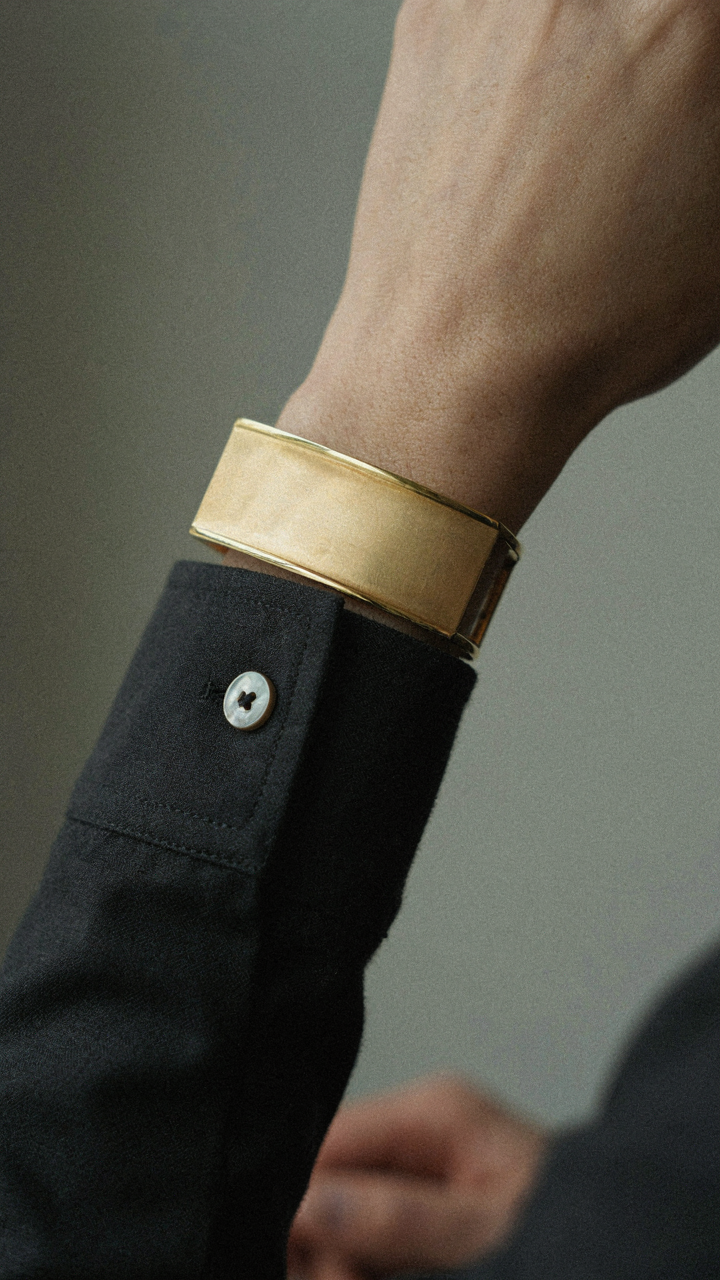
- Single bracelet in proportion to wrist and sleeve opening: A thick cuff works when sleeves taper. A delicate chain works with relaxed cuffs. Match the accessory weight to the sleeve geometry.
The formal jumpsuit with sleeves doesn’t need rescue through accessorizing. It needs amplification through precision. Choose one element that contradicts the outfit’s existing tonality or structure. Make that element undeniable. Leave everything else quiet. This is not restraint for aesthetic reasons. This is restraint as a compression mechanism for impact.
Maintaining The Edge: Beyond The First Impression
Fabric Care And Storage Strategy
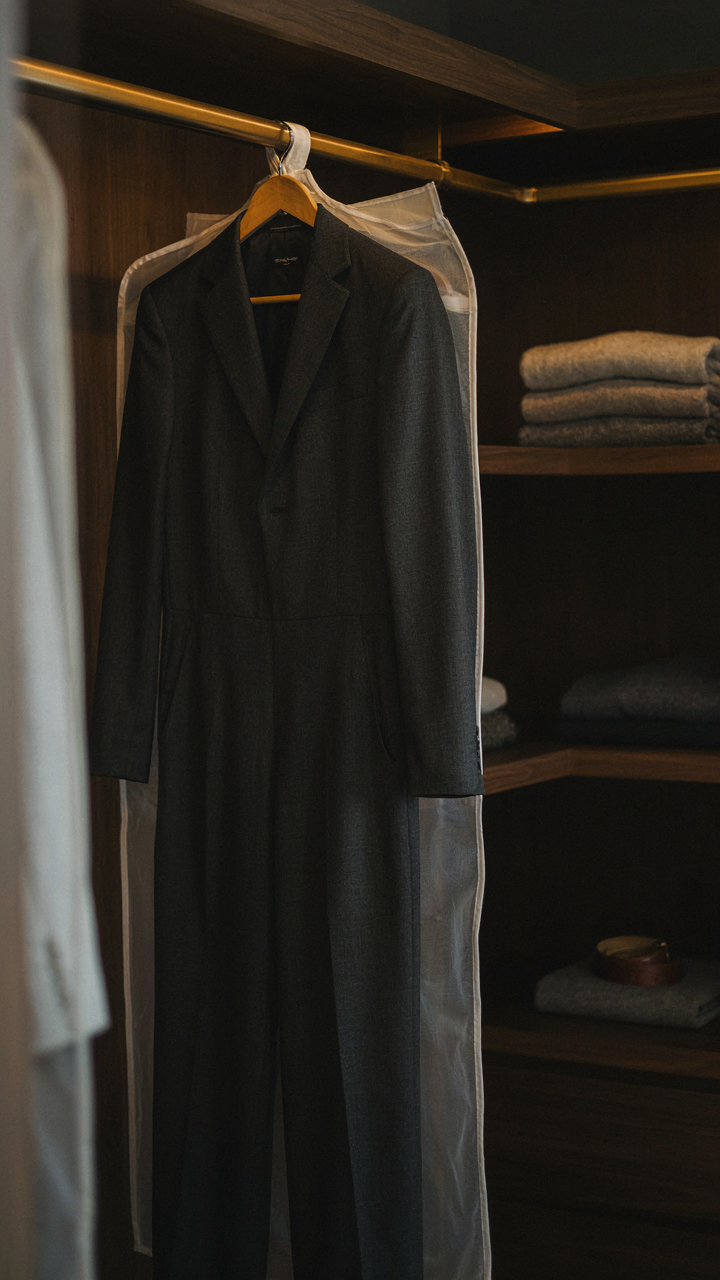
You’re worried the jumpsuit won’t survive the season, which means you’re really worried you wasted money. Here’s the mechanism: a formal jumpsuit with sleeves deteriorates fastest at stress points, not from general wear. The armholes, crotch seam, and sleeve vents take damage because fabric flexes there repeatedly. Store it on a proper hanger, not folded. Hang it by the inside waistband loop, never the shoulders. Keep it in a breathable garment bag away from direct light and heat.

Professional cleaning matters more than home washing for structured jumpsuits. Most formal versions use blended fabrics that demand specific temperature and chemical protocols. Dry clean before storage at season end, not after wearing once or twice. The investment in proper cleaning costs less than replacing the piece. Most formal jumpsuits last five to seven years with this routine. That’s measured from the first wear date forward with consistent upkeep.
Adaptation Without Abandonment
Seasonal shifts don’t require buying new pieces, which is what retail wants you to believe. Think in terms of wardrobe load balancing from physics: you redistribute weight across seasons without adding mass. Summer wear means switching to lightweight layering under the jumpsuit sleeves or removing the overshirt entirely if the fabric breathes. Winter wear means adding structured blazers over top or pairing with heavier knits underneath. The jumpsuit becomes the anchor, and the surrounding pieces absorb seasonal demand.
Color coordination and shoe selection change the perceived formality without touching the jumpsuit itself. Winter calls for darker shoes and muted tones in accompanying pieces. Spring and fall allow for lighter shoes and warmer metallics. This keeps the jumpsuit relevant across multiple years without modification. You wear one piece strategically, not rotate five identical items.
The Real Formal Barrier Isn’t The Fabric, It’s Your Fear Of Standing Out
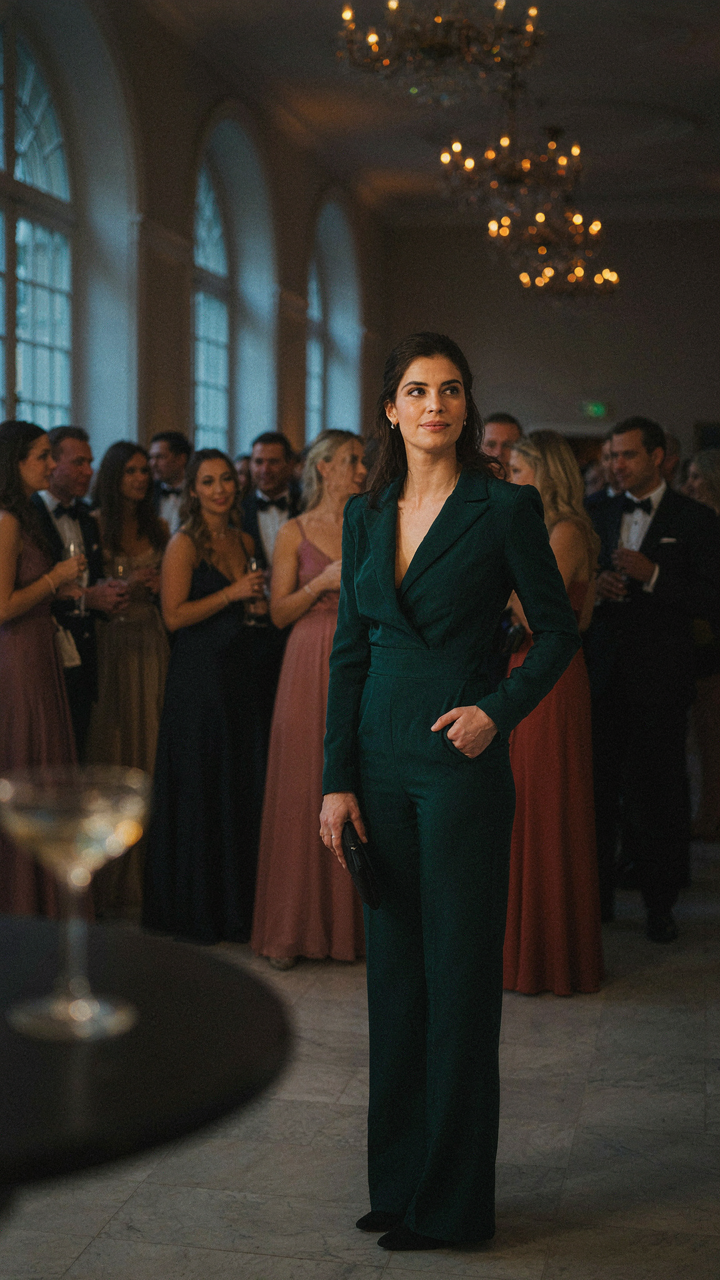
You’ve been trained to disappear into formal wear. A jumpsuit with sleeves breaks that rule and your brain flags it as risky. But formal events are where conformity dies fastest because everyone’s already uncomfortable. The move isn’t picking the “safe” jumpsuit. It’s wearing the one that makes you pause before clicking checkout. Go find that piece today. The only real dress code violation is looking like everyone else at a formal event.



