


The “Support System” Illusion: Why Straps Are Overrated
Where Bust Support Actually Lives
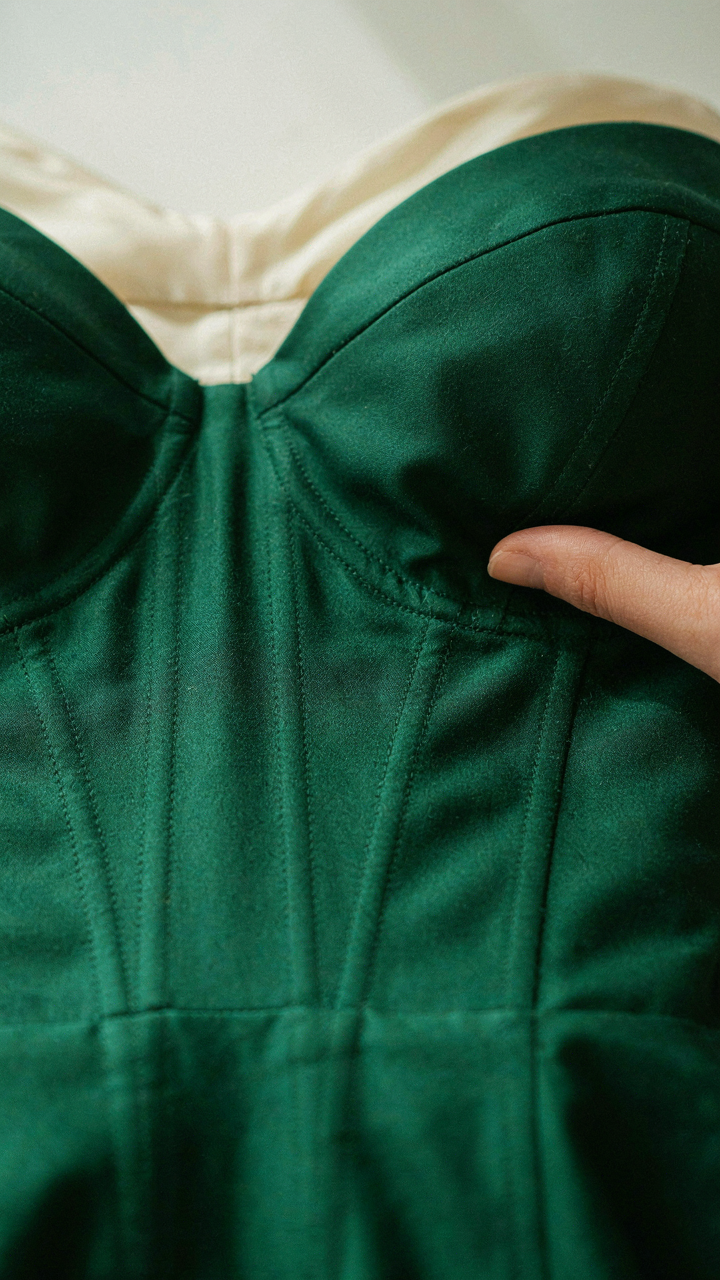
You care about this section because you’re worried a strapless jumpsuit won’t hold up—that you’ll spend the evening adjusting instead of existing. Here’s what matters: engineering calls this “load distribution,” and a strapless jumpsuit doesn’t rely on straps to manage load at all. The support comes from the garment’s internal architecture: the bodice structure, the bust cup depth, and how the fabric tension transfers weight downward through the torso.
Straps are psychological comfort, not mechanical necessity. A well-constructed strapless bodice uses a combination of fitted seaming, internal boning placement, and strategic fabric weight to anchor the bust. The garment distributes pressure across the chest wall and rib cage instead of hanging everything from two shoulder points. When a strapless jumpsuit fails, it fails because the bodice was shallow, the internal structure was absent, or the fabric lacked the density to maintain tension. Not because straps were missing.
How Fabric Decides If It Actually Works
Everyone says “choose a structured fabric” and stops there. That’s incomplete. Fabric structure determines whether the garment holds its shape under body heat, movement, and gravity. Stiffer fabrics like structured cotton blends, jacquard, or blended synthetics with high thread count maintain the bodice’s form without sagging. Lighter fabrics like crepe or charmeuse need internal support architecture to compensate—boning, layered underlining, or fitted princess seams that work like a cage.
The jumpsuit’s vertical lines also matter here. A strapless jumpsuit with a long inseam creates downward weight distribution that actually stabilizes the bodice rather than pulling it down. The fabric’s elasticity works against you if it’s too high. Look for materials with minimal give in the cross-grain direction—this prevents the bodice from expanding under body heat and losing tension throughout the night. Test any candidate by pulling the fabric horizontally. If it snaps back quickly and firmly, it will hold.
Architectural Integrity: Choosing Your Formal Jumpsuit Foundation

Crepe Jumpsuit: Weight, Drape, And Texture
You want the jumpsuit to hold your body the way confidence holds a room, and crepe does that because it refuses to cling or betray. Crepe is a woven fabric with a crimped surface structure that creates inherent texture and weight distribution. The fiber twist in the weave produces a subtle grip without tension, meaning fabric stays where you position it rather than shifting with body heat or movement.

The real mechanism: crepe’s crimped yarn creates micro-friction between fibers. For a strapless jumpsuit evening look, this prevents the neckline from sliding inward while the fabric still drapes cleanly from the bodice through the legs. The weight sits between 4 to 6 ounces per square yard, heavy enough to resist bunching at the waist, light enough for summer nights when fabric cling becomes the enemy. Blend polyester crepe with wool or silk for evening formality, or pure polyester crepe for easier maintenance and lower cost.
Lining And Boning: Hidden Engineering For Silhouette
Everyone says “get a good lining” and then disappears. What they mean is structural engineering underneath the visible layer. Boning runs vertically or diagonally along the bodice interior, creating rigid support that holds the jumpsuit’s shape against your body without requiring straps to do the work. This is load distribution: the boning transfers weight from shoulder area down through the bodice seams into the hip panel.
Boning placement determines whether your strapless jumpsuit evening silhouette stays locked or drifts south by ten PM. Use spiral boning along side seams and center front panels, paired with a structured inner lining of cotton or linen blend for breathability. The lining should extend from the neckline down through the hip curve. This dual system means the outer crepe fabric remains free to drape while the inner architecture holds the structural line. Test the fit standing and sitting before finalizing construction.
The “Guest Attire” Paradigm Shift: Jumpsuits As Power Pieces

Why A Jumpsuit Commands Attention
You’re actually worried people will think you’re trying too hard. The mechanism is simple: a strapless jumpsuit evening look operates like signal theory in economics. Your outfit sends one unified message instead of competing signals. A dress says “formal.” Pants say “casual.” A strapless jumpsuit says “I made a deliberate choice,” which reads as confidence before anyone processes the actual garment.

Most advice tells you jumpsuits are just “fun alternatives” to dresses. That’s incomplete. The real power comes from how a jumpsuit eliminates visual fragmentation. Your silhouette reads as one intentional shape. In warm evening settings, this creates psychological dominance without appearing aggressive. The person wearing it controls the narrative because there’s no second-guessing what category of formality it occupies.
Matching Venue Logic To Fabric And Fit
Everyone says “dress for the occasion.” They don’t say how. A strapless jumpsuit evening outfit requires you to reverse-engineer the dress code from venue temperature, guest count, and activity type, not from the event name alone. A rooftop cocktail party demands breathable linen or cotton blend fabrics with a relaxed fit. A formal dinner requires structured crepe or ponte with a tailored silhouette that holds its shape throughout the night.
The distinction matters because fabric choice determines whether you look prepared or underdressed. Lightweight materials in warm conditions prevent the visual catastrophe of visible sweat or wrinkles that accumulate as the evening progresses. Tailored fit in strapless designs ensures the jumpsuit stays positioned correctly without constant adjustment, which erodes authority. Pair venue research with material selection first, then finalize color and accessory choices.
The Elegant Fitted Cocktail Pants Protocol: Bottoms That Elevate

Wide Leg Vs. Tapered: The Posture Mechanism
You care about this because you sense that pants shape controls how you move, and you’re right. Posture isn’t about standing straighter—it’s about weight distribution. Physics calls this center of gravity. A wide-leg cut disperses visual mass downward, forcing your spine to stabilize differently than tapered cuts do. Wide legs create a lower perceived center of gravity, which actually relaxes your shoulders and opens your chest. Tapered pants concentrate weight toward your ankles, which tightens your hip flexors and pulls your posture forward.

The strapless jumpsuit evening silhouette demands a specific posture choice. Wide-leg bottoms pair with strapless designs because both require shoulder engagement. Your upper body compensates for the visual weight below, creating natural tension that reads as confident. Tapered legs under a strapless top create visual imbalance—your frame looks pinched at the bottom and exposed at the top, which triggers compensatory slouching. Choose wide legs if the jumpsuit hits at the natural waistline. Choose tapered only if the design has architectural structure at the hips.
Hemline Precision: Shoe Selection As Foundation
Hemline length isn’t decorative—it’s a structural anchor point for the entire look. The gap between your shoe and the start of the jumpsuit leg determines whether proportions collapse or read sharp. A strapless jumpsuit evening piece with a cropped hemline (ankle-length or above) demands a shoe with vertical emphasis—heels, pointed toes, or both. This visual line extends your leg and prevents the outfit from appearing chopped.
Floor-length strapless jumpsuits require shoes that disappear or emerge cleanly. Thin heels or flat sandals work because they don’t compete with the hem. A chunky sole creates visual confusion where fabric meets shoe, breaking the line your strapless top established. The protocol: measure the hemline while wearing the shoes you’ll actually use. Mark where the fabric should land—typically one half-inch above the heel or sitting flush on the shoe’s vamp. This single measurement choice eliminates proportion failure.
Jumpsuit Styling: The Art Of Strategic Distraction
Accessories As Functional Augmentation
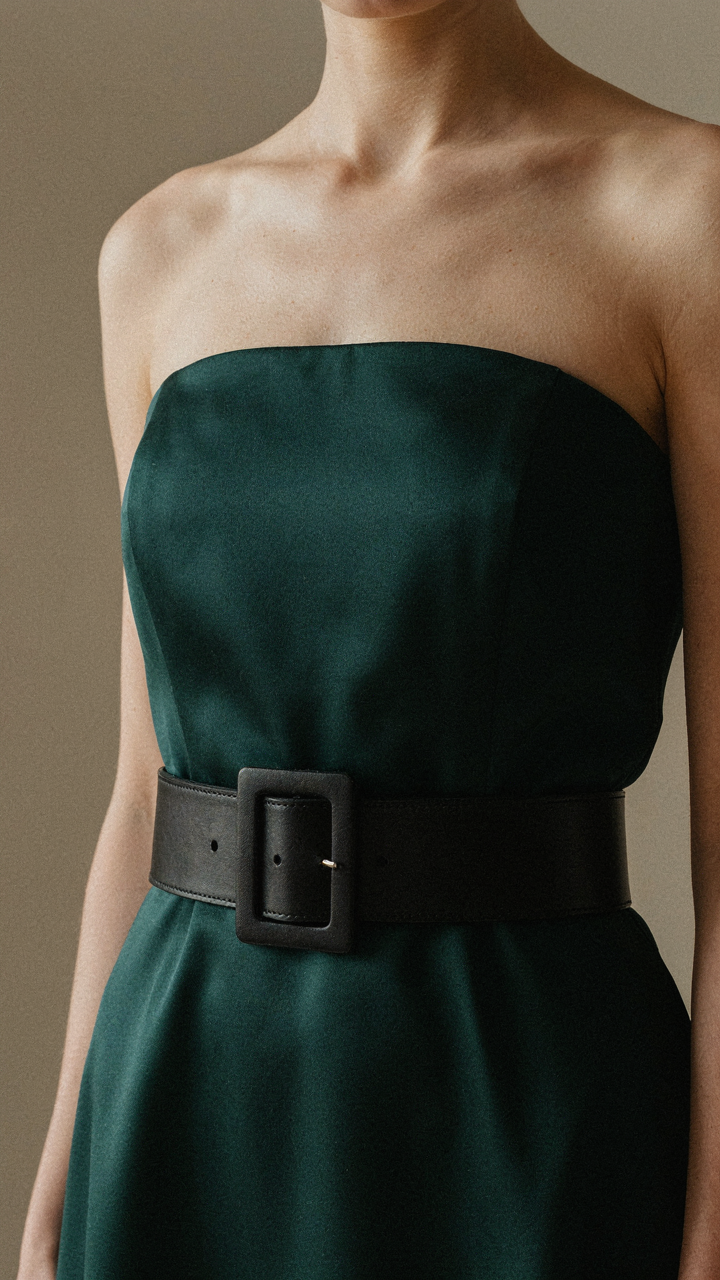
You want people to notice you’re wearing something intentional, not accidental. That’s the real play here. Cybernetics teaches us that augmentation works when it extends capability without adding visual noise. Apply this: every accessory on a strapless jumpsuit must either anchor the silhouette or redirect attention deliberately. A wide belt doesn’t just cinch the waist. It creates a visual anchor point that makes the jumpsuit read as intentional tailoring instead of shapeless fabric.

The strapless cut exposes the shoulder line completely. This demands accessories that either frame or extend that line. A structured clutch held at hip height creates horizontal continuity. A layered necklace that hits mid-chest provides vertical pull without competing with the neckline. Avoid stacking multiple accessories in the same visual zone. Choose one focal point per outfit and build around it with restraint.
Visual Signal Clarity
Generic advice says add gold jewelry to warm skin tones. Wrong move if the jumpsuit already carries metallic shimmer or pattern. Information theory explains signal-to-noise ratio: too many competing signals destroy meaning. Your strapless jumpsuit is already the dominant signal. Everything else must support it or stay silent.
A matte leather belt with minimal detail beats ornate hardware. Simple sandals beat embellished heels. When the garment carries structural impact, accessories become secondary architecture. Start by identifying what the jumpsuit already communicates. Then choose pieces that amplify one element of that message. Remove anything that forces the eye to work harder. This is not minimalism for its own sake. This is precision.
Modern Fashion’s Verdict: Why Strapless Is The New Classic
Formality Without The Costume
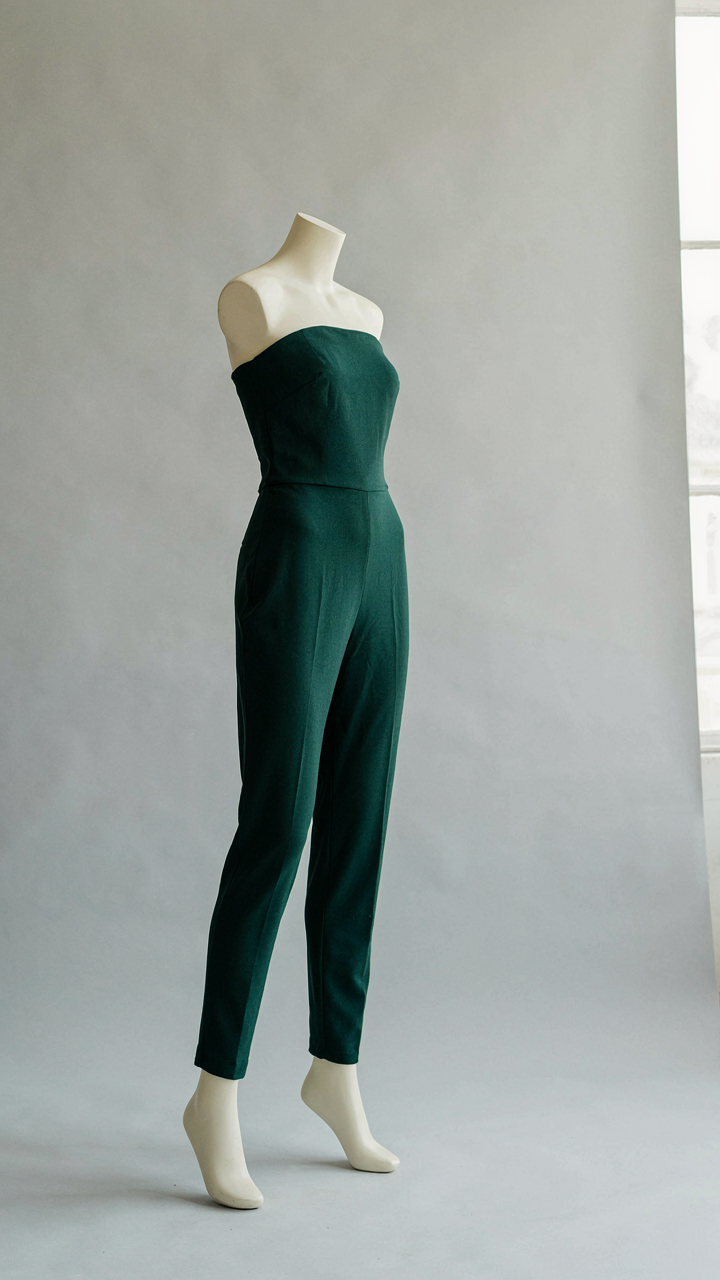
You want permission to break the rules without looking underdressed. That’s the real calculation here. The strapless jumpsuit solved a problem that formal wear created: the need to signal occasion without signaling constraint. Formality used to mean rigid structure—defined shoulders, prescribed necklines, layers that announced “I dressed up.” The mechanism borrowed from systems thinking: constraints breed innovation. Remove the constraint of straps and you don’t lose formality, you relocate it. Formality moves from what holds you up to what you’re made of—fabric weight, cut precision, fit.

The strapless jumpsuit works because it demands better tailoring, not more decoration. A structured bodice becomes the work that straps used to do. Wide legs or a tapered cut signal intention. The garment reads as deliberate rather than casual because it requires confidence to wear and competence to construct. You’re not fighting the piece to stay put. That tension—between exposure and control—is what reads formal now.
Restraint Reads As Authority
Confidence communicates through subtraction, not addition. Minimal design isn’t about having less; it’s about making every element earn its place. Apply the economics framework here: opportunity cost. Every detail you include costs attention. A strapless jumpsuit with pattern, ruffles, or heavy embellishment competes with itself. One clean line from shoulder to ankle doesn’t. The viewer processes the shape, the proportion, the fit. Nothing distracts from the person wearing it.
This is the real inversion happening in modern formal wear. Busy used to signal wealth and occasion. Now it signals uncertainty. A strapless jumpsuit in solid fabric, proper fit, quality material says you don’t need decoration to matter. The protocol is simple: choose one focal point, usually fit or fabric quality. Let everything else fade. Your presence becomes the statement, not the garment’s noise.
Beyond The Romper: Distinguishing The Jumpsuit Elegant

Fabric Weight And Drape
You want to know the difference because you’re afraid cheap fabric will betray you mid-event. Here’s the mechanism: fabric weight controls how a strapless jumpsuit moves against your body. Heavier fabrics hold structure without internal support. Lighter fabrics require built-in architecture or they collapse into your torso.

Silk charmeuse, crepe, and structured cotton blends weigh between 3 to 8 ounces per square yard. This density creates clean lines at the bodice and prevents gaping at the neckline. Cheap evening jumpsuits use thin polyester that shifts and bunches because it lacks the tensile strength to maintain shape. Weight telegraphs intention. Check the fabric composition tag first, not the brand name.
Silhouette Construction Reveals Everything
Everyone says “tailoring matters,” which is lazy. Tailoring is the symptom. Construction is the cause. A loungewear jumpsuit uses flat seams, minimal darts, and elastic waistbands because the garment doesn’t need to hold a body up. An elegant strapless jumpsuit uses princess seams or strategic darts at the bodice, a structured waistband with internal interfacing, and bust darts that create uplift without straps.
The strapless jumpsuit evening silhouette demands internal boning or structured panels that run vertically along the torso. Loungewear has none of this. When you try on a jumpsuit, press your finger into the bodice. If it compresses like foam, it will fail. If it resists and springs back, the internal structure will hold you through the night. This single test eliminates 70 percent of options.
The Jumpsuit Romper Fallacy: Evening Wear’s Impostor
When Short Becomes A Liability
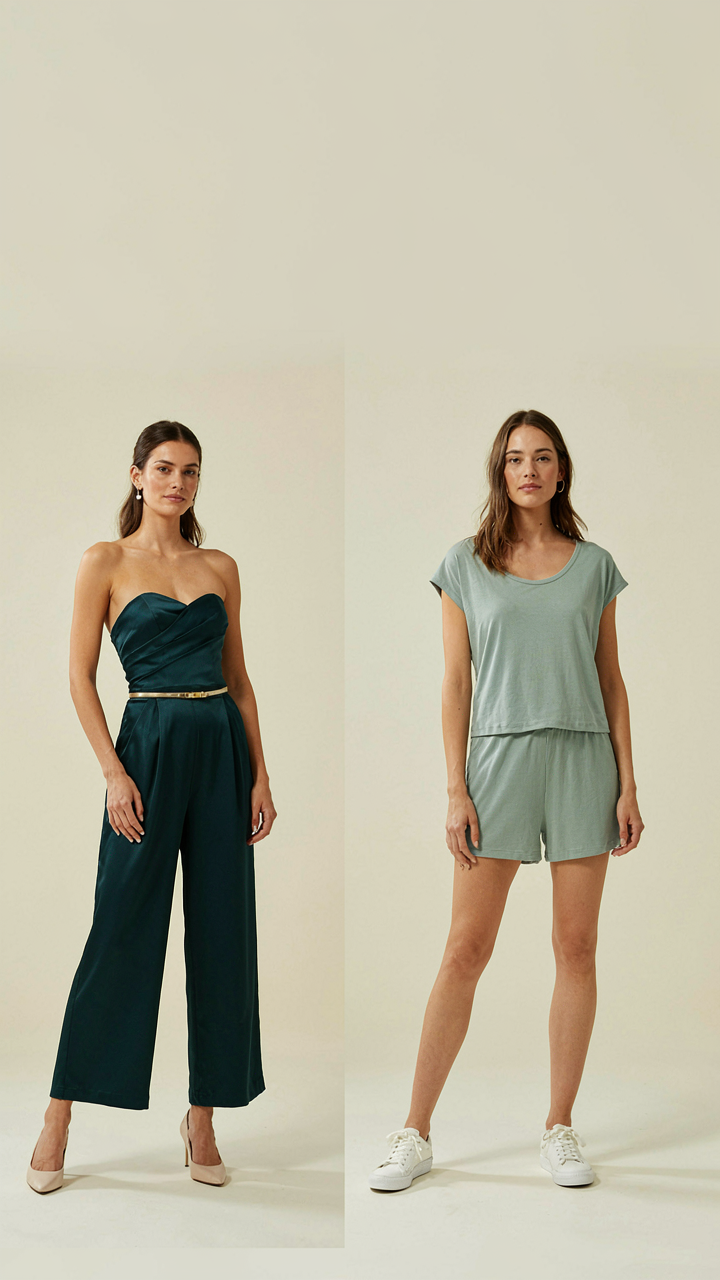
You’re worried people will mistake your evening jumpsuit for casual wear and think less of you for it. Here’s what actually happens: the romper, a shorts-based jumpsuit, reads as leisure because of its historical origin in resort wear and athletic contexts. Evening jumpsuits must have full-length legs. The distinction matters because garment length triggers an immediate social read before fabric or cut even register. A romper at night signals confusion about context, not sophistication.

The mechanism is simple. Leg length determines formality tier in Western dress codes. Shorts and cropped pants sit in the casual and smart-casual zones. Full-length trousers occupy formal territory. When you wear a romper to an evening event, you’re mixing a casual foundational element with formal intent, and the brain resolves this contradiction by defaulting to the more casual signal. Your accessories and fabric can’t override this base layer rule.
Fabric And Cut Define The Formality Threshold
Formality works like signal-to-noise ratio in engineering: higher quality materials and construction reduce ambiguity about your intention. Cheap polyester with loose seaming reads as resort wear regardless of length. A full-length jumpsuit in silk charmeuse, crepe, or structured cotton blend with tailored seams and interior construction details reads as evening wear. The cut must taper at the leg, not hang loose like beach pants. Structured shoulders or a defined waistline reinforce formality further.
The real problem with generic advice: people say “choose quality fabric” without explaining why. Quality fabric holds its shape, moves deliberately, and reflects light in a controlled way. Loose fabric moves like casual wear moves. A strapless evening jumpsuit needs tension in its construction to signal formality. Check the seaming inside. Feel the weight. If the garment shifts when you move, it belongs in daytime. The formality threshold happens when cut and fabric create presence rather than flow.
Accessorizing For Impact: The Strapless Jumpsuit Ensemble

Statement Jewelry: Focal Points, Not Distractions
You want the jewelry to do the work so people notice you, not the piece itself. Here’s what actually matters: apply the principle of contrast from visual hierarchy. A strapless jumpsuit removes the collarbone and shoulder real estate most people default to for jewelry placement. Your neck and ears become the active zones. One bold piece—a layered gold collar, a sculptural earring, a structured bracelet—anchors attention at the point the eye naturally travels first. Wearing multiple competing statement pieces kills the effect because the jumpsuit already makes a statement through its cut and proportion.

The mechanism is constraint. The strapless neckline forces your accessories into fewer positions. That limitation is your advantage, not your problem. A single 2 to 3-inch cuff bracelet or a pair of architectural earrings reads louder against bare shoulders than the same piece would layered with three necklaces on a conventional outfit. Scale the jewelry to the skin it touches. Oversized doesn’t mean loud; it means intentional placement that the strapless silhouette actually supports rather than competes with.
Footwear And Bags: Completing The Narrative
The footwear and bag aren’t accessories—they’re the foundation that determines whether the jumpsuit reads as deliberate or unfinished. Most people grab whatever shoe feels “fancy” and assume that covers it. Wrong. The leg line of a strapless jumpsuit extends all the way down; your shoes interrupt that line visually. A strappy sandal, a pointed flat, or a block heel changes the entire proportion conversation. The bag works the same way: it either anchors the silhouette or creates visual clutter depending on scale and material.
- Thin Strappy Sandals: Elongate the leg by maintaining the clean line from hip to toe. Gold or metallic finishes complement warm skin tones without competing with the jumpsuit.
- Pointed Flats or Mules: Create visual momentum downward. A pointed toe extends the leg optically and works better than rounded shapes with strapless cuts.
- Block Heel or Ankle Strap: Grounds the outfit if the jumpsuit sits closer to neutral or cool tones. The ankle strap adds structure the bare shoulder already lacks.
- Structured Evening Clutch: Keep it minimal and proportionate to your frame. Oversized bags compete with the exposed torso; a clutch or small frame bag maintains balance.
- Metallic or Leather Crossbody: Works only if the strap doesn’t cut across the bare shoulder line. A back-positioned crossbody avoids breaking the front visual plane.
The final layer is timing. Choose shoes and a bag before you wear the outfit, not as an afterthought. The strapless jumpsuit has already made a bold architectural choice. Your feet and hands either reinforce that choice or undermine it. If the jumpsuit is tailored and structured, match that energy with defined footwear and a defined bag shape. If it has drape or flow, let the shoes and bag echo that ease without becoming sloppy.
The Unspoken Rules Of Strapless Jumpsuit Maintenance
Proper Fit: The Non Negotiable For Elegance
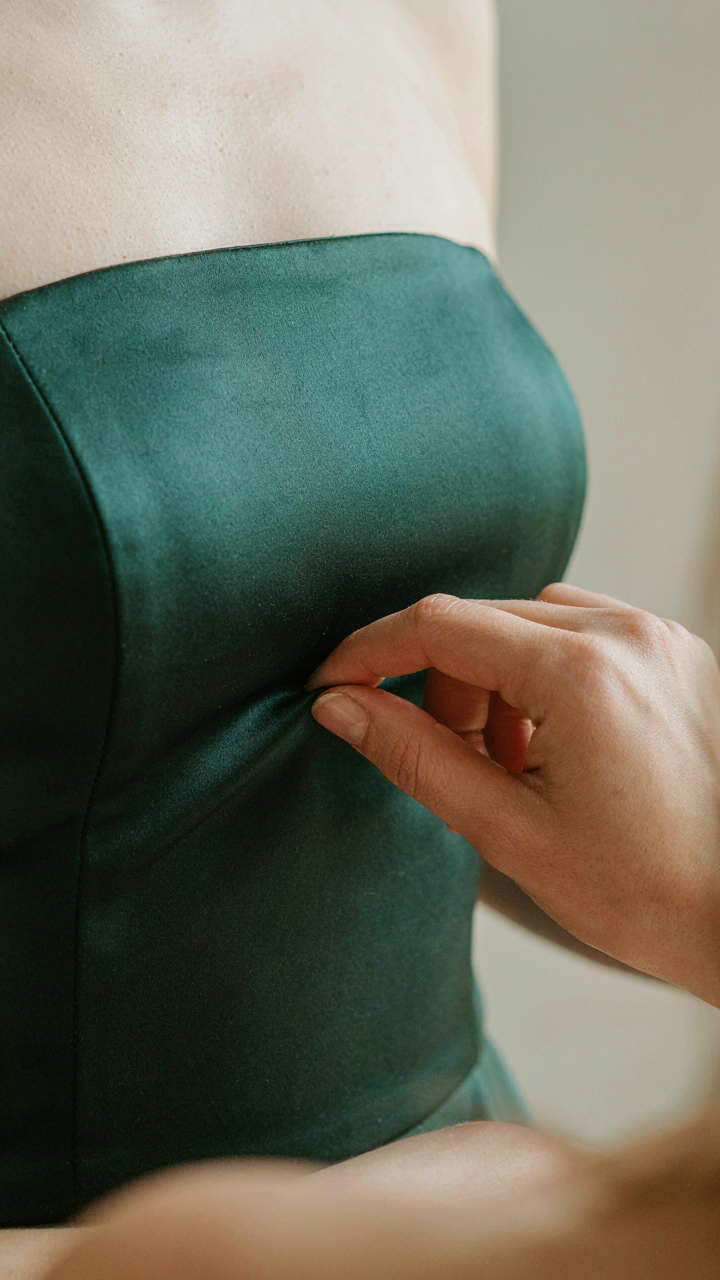
You care about this because a loose strapless jumpsuit reads as either careless or poor, and there’s no middle ground. The mechanism is simple: a strapless garment has no anchor points, so it relies entirely on tension and bodice construction to stay positioned. Without proper fit, you’re fighting physics all night instead of wearing clothes.
The bust measurement matters more than any other dimension on a strapless jumpsuit. A quarter-inch too loose across the chest and the entire piece shifts downward throughout the evening. Get the band fitted snug enough that you can fit one finger—not two—between your skin and the fabric when standing straight. This isn’t about discomfort; it’s about stability as your body moves and temperature fluctuates.
Care And Storage: Preserving Structural Integrity
Most people treat jumpsuits like regular clothing and wonder why the elastic dies or the seams separate. Strapless jumpsuits demand storage protocol closer to swimwear than to blouses because the elastic and seam tension degrade faster under standard conditions. Humidity and heat accelerate this breakdown, which means your climate control strategy directly impacts garment lifespan.
Hang the jumpsuit on a padded hanger immediately after wearing, never folded or crumpled in a closet. The weight of the fabric creates stress on the seams and elastic when hanging, but that stress is manageable over time. Fold only when necessary for extended storage, and use acid-free tissue paper between folds to prevent creasing that stresses seam integrity. Store in a cool, dry space away from direct light, and inspect the elastic band and underarm seams every six months for signs of deterioration or separation.
The True Constraint Isn’t The Garment; It’s Your Adherence To Outdated Sartorial Rules

You’ve been trained to believe a strapless jumpsuit evening outfit requires permission. It doesn’t. The barrier between you and actually wearing what works for your body, your climate, your life is imaginary. Stop asking if it’s “appropriate.” Go buy the piece. Wear it this weekend. Watch how fast the rules you thought mattered dissolve the moment you stop performing them. Fashion isn’t democratic, it’s dictatorial, and the only tyrant that matters is you.



