

The Unspoken Rules Of Resort Formal: Beyond The Brochure

What The Dress Code Actually Signals
You want to know what “resort formal” means because you’re afraid of looking out of place. The real mechanism is that resort settings use formality as a filter for guest behavior, not just appearance. Hotels designed around fine dining expect guests to self-regulate through dress codes. When you dress formally, you’re signaling you understand the social contract of that space. This isn’t snobbery. It’s operational design. The restaurant controls noise, pacing, and clientele by setting an entry threshold through attire expectations.
The problem with generic advice is that it treats resort formal like a fixed category. It isn’t. “Formal” at a beachfront hotel in the Caribbean differs fundamentally from “formal” at a mountain resort in the Alps. The setting dictates the formula. Tropical resorts embed relaxation into their formal code—lightweight fabrics, open collars, bare feet acceptable in certain venues. Alpine or urban resorts enforce traditional structure—jackets required, closed shoes mandatory, no deviation. The dress code card in your room tells you the rule. What it doesn’t tell you is that you’re reading the resort’s operational philosophy. Read it correctly and you move through the space without friction.
Formal Does Not Mean Traditional
Most people assume resort formal borrows from black-tie weddings or corporate events. Wrong. Resort formal is a hybrid category that emerged in the 1980s as luxury hospitality expanded beyond city centers. It discards rigidity while keeping structure. A resort formal dinner doesn’t require a tuxedo or even a blazer in many cases. What it requires is intentionality. You’ve chosen clothes that signal effort and respect for the space. That distinction changes everything about how staff and other guests perceive you.
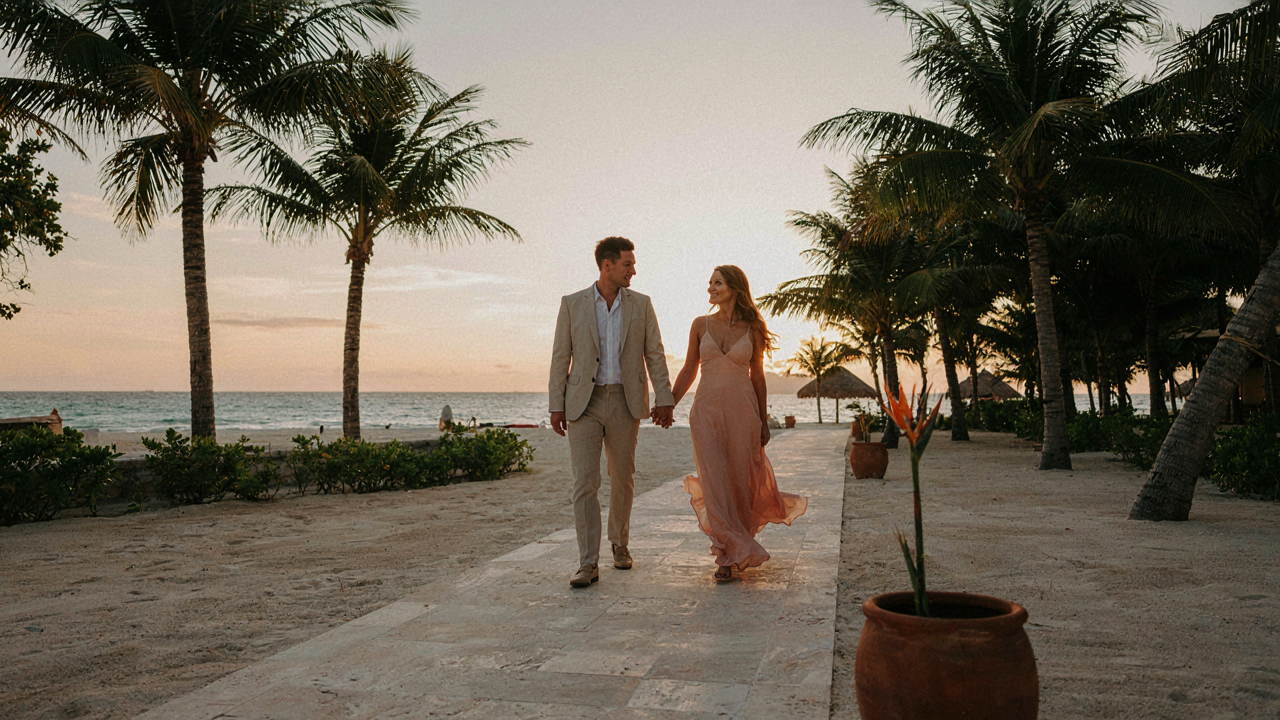
The mechanism works through contrast. In a resort environment, formality stands out because the baseline is casual. Someone in a linen shirt and tailored trousers reads as formal at a beachfront restaurant. The same outfit reads as underdressed at a downtown steakhouse. Resort formal attire trades specificity for context awareness. You’re not following a rule book. You’re reading the room and responding with appropriate elevation. This is why the dress code matters less than understanding that formality at a resort is relative to its setting, not absolute to tradition.
Strategic Wardrobe Deployment: The Traveler’s Paradox
Packing Light While Dressing Heavy
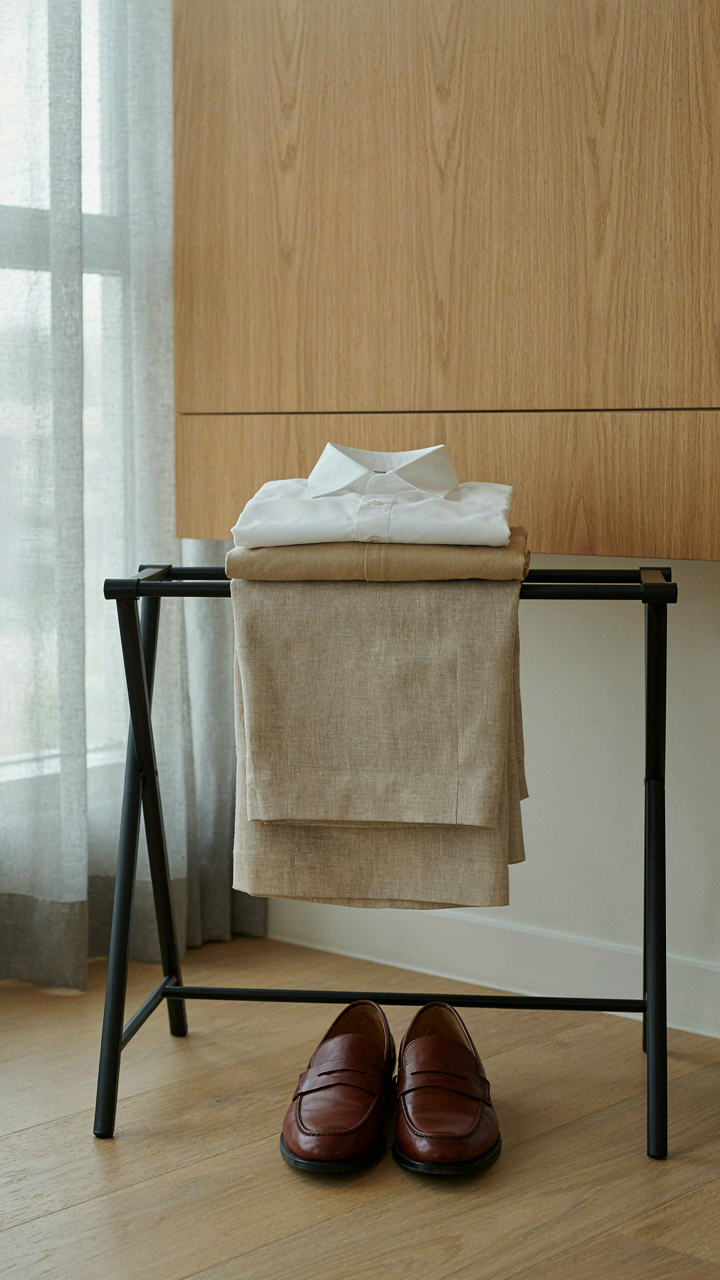
You’re anxious about looking underdressed and wasting money on clothes you’ll wear once. The mechanism is constraint forcing intention. Resort formal packing works like military logistics: you win by ruthlessly eliminating redundancy, not by hoarding options. Most travelers pack eight outfits for four dinners. The real play is three pieces that function across five different scenarios through layering and swapping accessories.

The math works because resort formal isn’t about variety. It’s about calibration. A single neutral blazer in linen or cotton blend worn over different shirts, paired with either tailored shorts or trousers, shifts the formality register without requiring a second jacket. One belt. One pair of leather shoes. One watch. The constraint forces you to think in systems instead of isolated outfits, which paradoxically creates more flexibility than travelers who pack without discipline.
Pieces That Refuse Obsolescence
The common advice here is dead: “invest in versatile basics.” That’s not actionable because it doesn’t tell you which basics work at a resort. You need pieces that cross the line between resort formal and casual resort wear without looking confused. A camp collar shirt in a solid color reads formal at dinner with tailored pants, then works casual the next day with linen shorts and no jacket. Linen trousers in cream or stone work over multiple days because the fabric demands less frequent washing than cotton, and the neutral tone pairs with any top.
The single highest-leverage piece is a lightweight, unstructured blazer that doesn’t require pressing between wears. It compresses flat, doesn’t wrinkle permanently, and signals formality when you need it without the bulk of a traditional sport coat. Wear it open over evening wear at dinner, then over a t-shirt and shorts during a casual evening walk. The mechanism is: choose pieces that shift function through layering and context, not through color or pattern variation alone.
Island Chic Wedding Attire Guest: The Art Of Understated Dominance

Fabrics That Command Respect, Beat Heat
You’re worried people will think you’re trying too hard, so you’re overthinking the fabric choice. Here’s what actually happens: fabric selection is thermodynamic authority. Linen, cotton, and silk don’t just feel better in heat—they signal you understand the climate enough to dress for it instead of against it. Most guests wear heavy synthetics to tropical events because they packed for air conditioning. That mistake broadcasts uncertainty.

High-thread-count cotton and linen blends regulate temperature through breathability, not by trapping air. Silk absorbs moisture without clinging, which is why it dominated resort wear before synthetic marketing convinced people otherwise. A 100% linen shirt wrinkles intentionally—that’s not a flaw, it’s proof you’re not performing formality. The wrinkle pattern itself becomes evidence of authenticity. Blend your base layer with at least 40% natural fiber if you can’t go pure, and your body temperature stays lower while your credibility stays higher.
Colors For Tropical Authority
The advice tells you to wear pastels to look tropical. Wrong. Pastels read as diluted, which means uncertain. Tropical authority comes from saturated, warm neutrals that work with—not against—the environment’s light intensity.
Navy, charcoal, cream, and warm khaki don’t just survive tropical light, they anchor it. Cream in particular works because it reflects light without washing you out the way pale pink or baby blue does. Deep jewel tones like emerald or sapphire work if the event leans formal, but they require confidence in fit because saturation demands precision. Earth tones—terracotta, rust, olive—establish dominance by refusing to compete with the sunset. Wear one solid color or pair cream with navy. Pattern dilutes authority at formal events. The goal is for people to see you before they see what you’re wearing.
The Resort Dinner Outfit: Projecting Effortless Sophistication
Accessories That Actually Anchor The Look
You want people to assume you didn’t think about what you’re wearing. That’s the real game here, and it requires precision. Think of accessories like load-bearing walls in architecture: remove one and the structure fails, but add too many and you’ve cluttered the space into collapse. The mechanism is constraint, not addition.

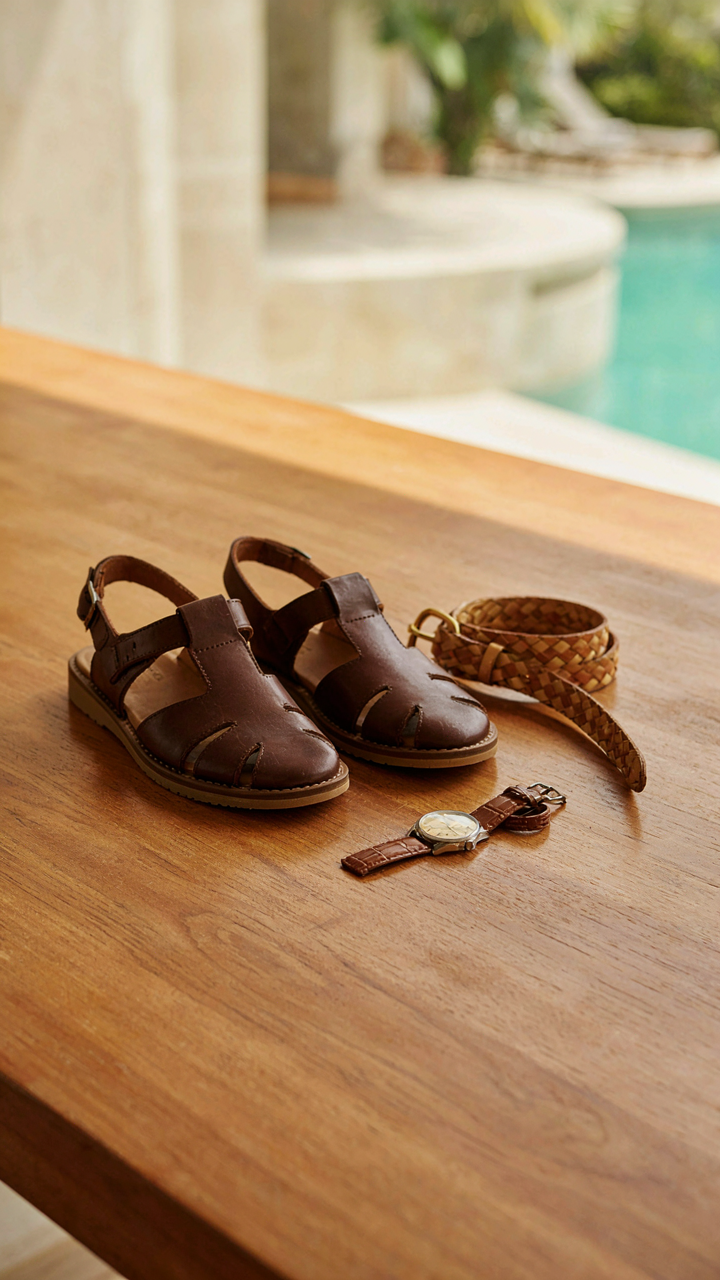
A single statement piece—a watch, a linen pocket square, or a woven belt—does the work of five mediocre items. The piece must relate functionally to your outfit, not float separately. A leather belt coordinates with your shoes and grounds your silhouette. A silk scarf tied at the neck bridges your shirt and jacket. The item should solve a visual problem first, look expensive second.
Footwear That Speaks Volumes, Quietly
Shoes determine whether you look resort-ready or overdressed for a backyard barbecue. Leather sandals with structured soles work in warm climates; canvas loafers in neutral tones handle temperate islands. The critical rule: your shoes must match the formality of your top half, not contradict it. Casual flip-flops under a linen blazer read as confusion, not style.
Material matters more than novelty. Full-grain leather ages well and signals investment. Suede absorbs salt water and deteriorates fast—skip it unless you’re replacing it yearly. Sole construction determines comfort on resort tile and stone: cushioning reduces foot fatigue during multi-hour dinners, while structure prevents your arch from collapsing by dessert. Choose footwear you’ve already walked in for at least two hours.
Beach Formal Wedding Attire: Navigating Sand And Status
What Actually Fails On Sand
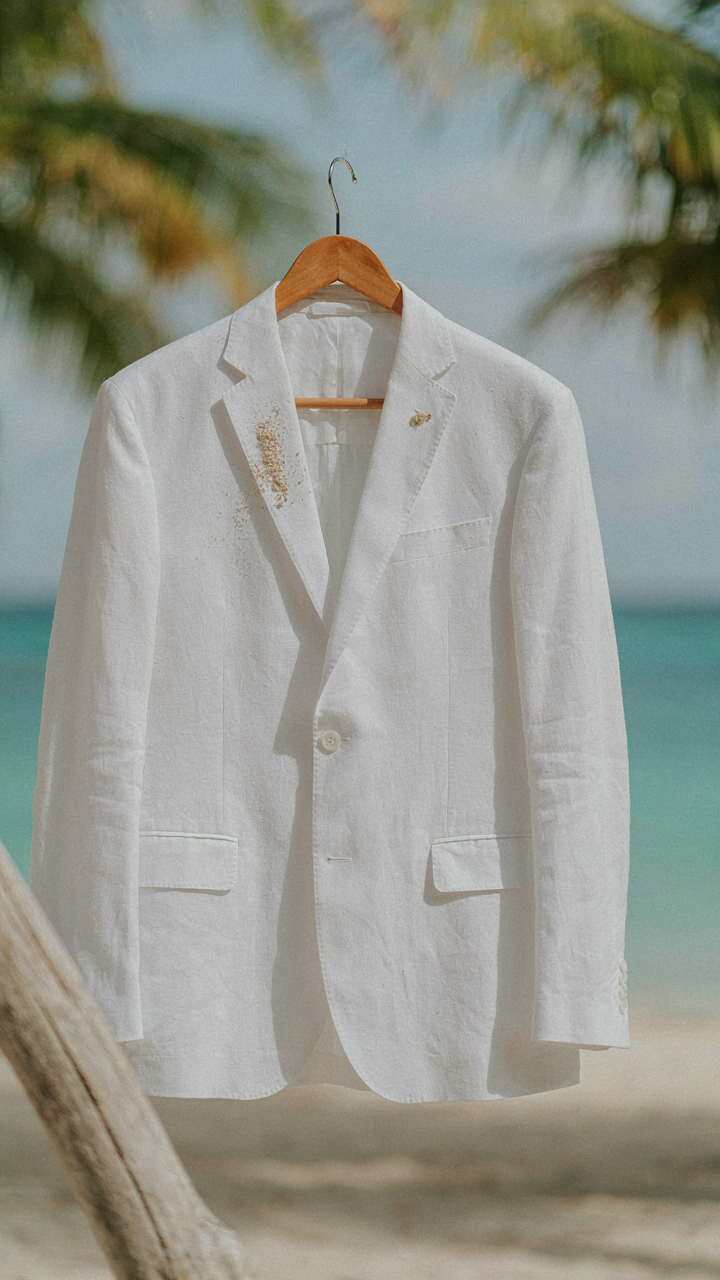
You’re worried people will judge you for not looking sharp enough when the stakes feel high. Here’s what actually happens: traditional formal fabrics break down in salt air and sand faster than you think. Physics applies here—moisture and friction are degradation variables. A standard wool tuxedo absorbs humidity, loses its drape, and collects sand in the weave. Linen, by contrast, releases moisture and sheds particles. The mechanism is material science, not fashion opinion.

Most advice tells you to just “adapt your formal wear to the beach.” That’s incomplete. You need to swap materials entirely, not just roll up your sleeves and call it casual formal. A linen suit in a structured weave holds its shape under humidity where cotton blends fail. Silk bow ties stain and absorb salt water. Grosgrain or linen alternatives survive the environment. The difference isn’t style—it’s durability under specific conditions.
When The Dress Code Contradicts Reality
Formal dress codes were written for climate-controlled ballrooms, not 85-degree salt spray. Most resorts print “resort formal” or “black tie optional” without accounting for what actually works when you’re ten feet from ocean. That gap between stated rules and environmental facts is where most people make wrong choices. The solution isn’t ignoring the dress code. It’s understanding which formal elements survive the beach and which don’t.
Lightweight wool or high-quality linen jackets work. Flat-front trousers in natural fibers breathe and dry fast if they get wet. Leather shoes absorb salt and crack—opt for suede or canvas alternatives that won’t deteriorate. Cummerbunds and vests trap heat and add bulk you don’t need. Skip them. The constraint isn’t the dress code itself. The constraint is selecting fabrics and silhouettes designed for heat and moisture instead of pretending traditional black tie adapts to beach conditions.
Tropical Wedding Attire: Beyond The Hawaiian Shirt
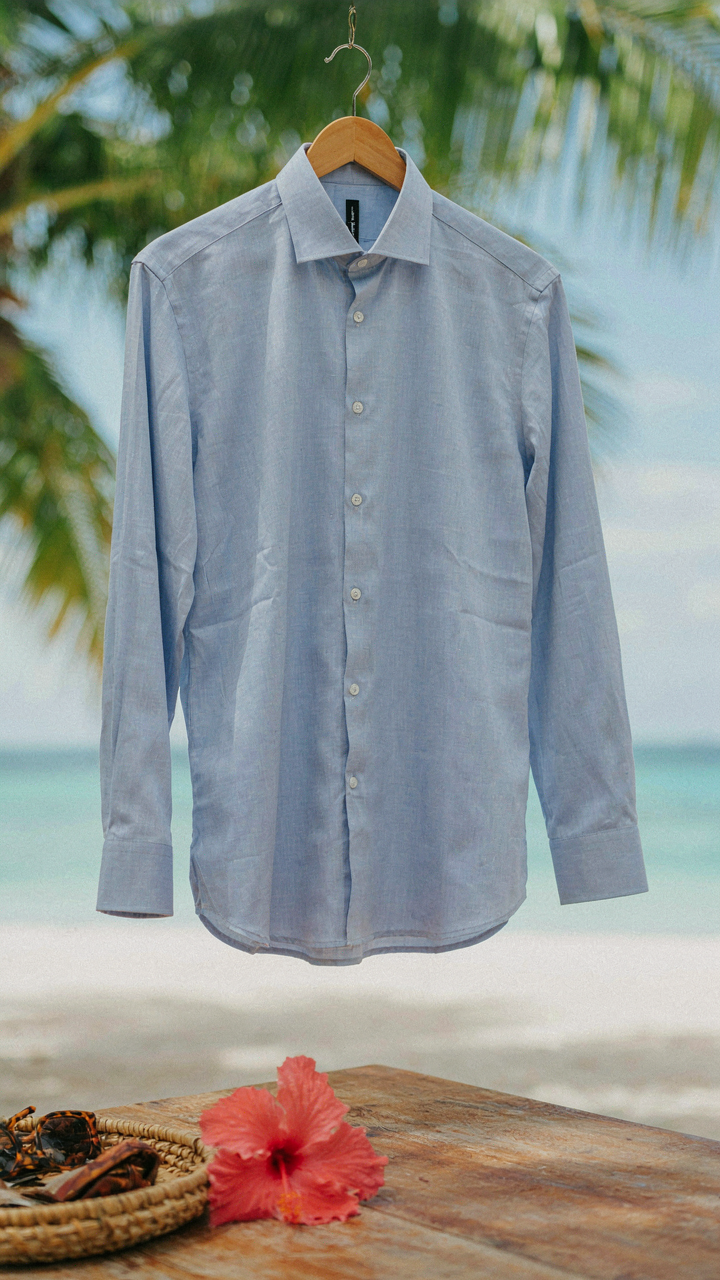
The Tailored Linen Difference
You want people to notice you didn’t try too hard. That’s the real fear underneath this entire section, and linen is how you solve it.

Linen works in tropical settings because of weight distribution, a principle borrowed directly from fabric engineering. Heavy cotton absorbs humidity and clings. Linen’s loose weave lets air move through the fibers, so the garment stays structured instead of collapsing against your body. A tailored linen shirt with darts and a fitted waist reads as intentional, not rushed. The wrinkles that form are part of the material’s honest nature, not a sign of neglect.
The common advice says “embrace the wrinkles.” That’s incomplete. You need the wrinkles to form in ways that flatter your shape, which only happens if the garment fits correctly at the shoulders, chest, and torso first. Untailored linen just looks like you grabbed something off a shelf. Tailored linen looks like you made a choice.
Pattern Selection For Sophisticated Rebellion
Most resort advice pushes either all-solid or tropical prints so loud they announce your vacation before you walk in. Both are plays it safe.
The mechanism here is contrast and restraint. A subtle geometric weave, tone-on-tone stripes, or a small-scale pattern in earth tones reads as knowing what you’re doing because it refuses to compete for attention with the setting. Micro-check, jacquard weave, or a muted botanical print in one accent color breaks monotony without screaming. Your pattern should complement the landscape, not fight it. Pick one statement piece, not three. A patterned shirt pairs with solid trousers. A patterned pocket square pairs with solids everywhere else. Pattern selection is about deliberate placement, not coverage.
The execution step is simple: pull samples into natural light at the time you’ll actually wear them. Indoor resort lighting changes how color and pattern read. What looks balanced under a showroom’s fluorescent system can flatten or intensify in evening tropical light. If you hesitate for more than three seconds, the pattern is doing too much.

The Destination Wedding Dress Guest Protocol: Your Visual Algorithm

Reading The Room Before You Enter It
You’re actually terrified of looking underdressed and losing status in front of strangers. The mechanism is simpler than you think: formality cues aren’t hidden. They’re broadcasted through the invitation itself, the venue geography, and the guest list composition. Information theory calls this signal detection. In resort formal attire, the signal is your dress code line item, the venue’s operating hours, and whether the event happens before or after sunset. Those three data points eliminate 80 percent of your guesswork.
The invitation tells you the floor. A destination wedding with “resort formal” printed explicitly means the host has removed ambiguity intentionally. They want you to know the baseline. The venue matters next. A beachfront pavilion at 6 PM reads differently than a hotel ballroom at 8 PM. A beachfront setting at early evening allows lighter fabrics and open-toe shoes. A ballroom at night demands structure, closed construction, and weight. Decode the physical environment first, then match your attire to its constraints, not your comfort.
Dressing For Leverage, Not Approval
Game theory teaches us that optimal strategy means playing the game differently than everyone else while staying within legal bounds. In resort formal settings, most guests aim for approval by matching. You gain leverage by staying one formality level above consensus without breaking the dress code. If the event says “resort formal,” wear what approaches black tie without crossing into it. A structured linen blazer. A tailored knee-length dress. Shoes with intention. You signal competence while everyone else signals compliance.
The actual leverage comes from this: you become the person who understood the assignment and elevated it. You’re not overdressed because you stayed within bounds. You’re visibly intentional. This works because resort formal is informal enough that most guests undershoot it. They wear cocktail attire to a resort formal event and wonder why they feel out of place. You read the gap between the stated code and actual guest performance, then positioned yourself in between. That positioning compounds across the evening as people remember who looked prepared.

Mexico Beach Wedding Attire: Mastering Cultural Nuances
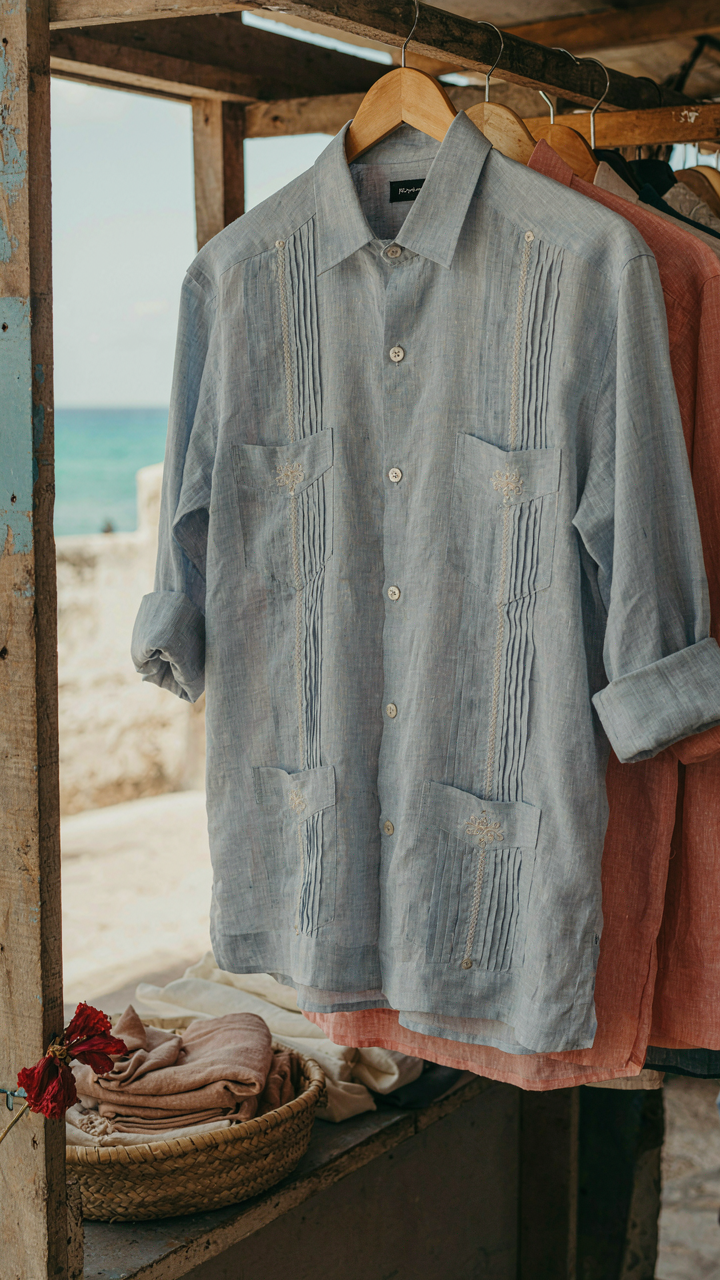
Respecting Tradition Without Sacrificing Style
You’re worried you’ll look ignorant or offensive, and that fear will paralyze you into wearing something generic that offends nobody and impresses nobody. The real mechanism is signal stacking: you layer respect for local custom with personal polish so both operate at once. Mexican beach weddings often involve Catholic ceremony elements followed by reception formality that borrows from European tradition but maintains distinct regional codes around color, fabric weight, and embellishment.
The mistake everyone makes is treating tradition and personal style as opposing forces. They’re not. A guayabera in quality linen respects the garment’s heritage while the fit and tailoring signal you didn’t grab the first one off a resort shop rack. Lightweight fabrics matter because Mexican coastal regions demand breathability, not because tradition demands discomfort. Choose cream, ivory, or pale blue guayaberas for evening events, pair with tailored trousers, and you’ve positioned yourself as someone who understands context, not someone performing respect through costume.
Local Flair: Incorporation Vs Appropriation
Appropriation happens when you extract aesthetics from their function and wear them as decoration. Incorporation happens when you understand what a garment does and wear it for those reasons. The economics of fashion determines this: appropriation signals you consume culture as commodity, incorporation signals you understand value exchange. A hand-embroidered huipil worn as a beach cover-up by someone who bought it as “ethnic beachwear” reads differently than wearing one because it performs the specific function of sun protection and social positioning in a particular region.
The operational rule is simple: if you can explain why locals wear this piece and that explanation matches why you’re wearing it, you’re clear. A lightweight linen shirt worn because the climate demands it and the formality codes require long sleeves. Embroidered sandals worn because they’re practical for sand transitions between dinner and dancing. Avoid treating Mexican design elements as print patterns for Western garments. Source pieces from actual makers in resort areas, wear them for their intended function, and let the cultural knowledge come through your choices.

Beach Wedding Dress Code: The Illusion Of Constraint
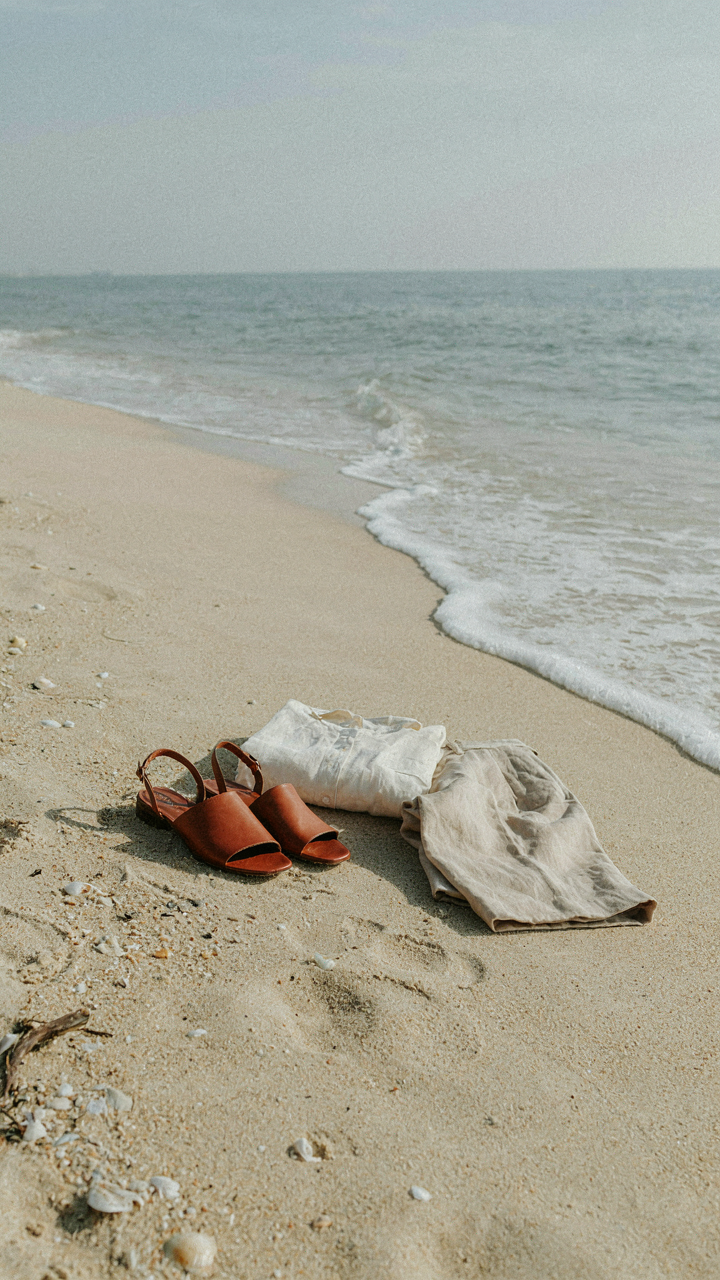
What Beach Formal Actually Means
You’re worried the rules are too loose and you’ll look stupid. The real mechanism is this: “beach formal” is a constraint that removes the burden of formality without removing the burden of intention. It’s borrowed from signal theory in economics—you’re broadcasting that you respect the event while rejecting the artifice of a ballroom.
The term emerged in resort hospitality around the 1980s as destinations wanted guests to feel dressed up without the suffocation of traditional black tie. It lives in that specific zone where you can’t wear shorts, but you also can’t wear a tuxedo without looking like you missed the memo. The constraint forces clarity instead of confusion.
- Linen over cotton: Breathes in heat, wrinkles intentionally, signals you dressed for place not pretense
- Unstructured jackets: Tailored enough to read formal, loose enough to feel appropriate to climate and setting
- Sandals that aren’t flip-flops: Leather slides, strappy heels, or dressy thongs bridge casual and formal without contradiction
- Lightweight fabrics in dark or jewel tones: Color grounds formality while fabric choice acknowledges the environment
- Minimal jewelry with intention: One statement piece beats a scatter of accessories that suggests uncertainty
The common advice says “dress for the weather”—that’s incomplete. You’re not dressing for weather, you’re dressing for the specific social contract of that resort and dinner. Check the venue’s actual rules, not the feeling of the word “beach.”
Building A Personal Resort Formal System
Stop treating each beach dinner like a new problem to solve. You build a signature system instead. Pick one color palette that works on your skin tone, one silhouette that fits your frame, one shoe that translates across events. Consistency reads more sophisticated than variety because variety suggests you’re still figuring it out.
The mechanism is reduction, not expansion. Resort formal works because it removes choices, not because it offers them. Once you own three quality linen pieces, one structured jacket, and two formal-adjacent shoes, you stop wasting mental energy on getting dressed. You show up prepared, which is the only thing resort formal actually asks for.
Beach Cocktail Wedding Attire: Blending Relaxed With Refined

The Mechanics Of Controlled Underdressing
You’re worried people will mistake relaxation for carelessness. Here’s what actually happens: resort formal operates on signal compression. In traditional formal wear, fabric weight, construction detail, and fit do the talking. On a beach, those markers disappear under fabric movement and light. You need pieces that read as intentional despite the casual setting.
Linen blazers and high-quality cotton shirts compress the formal signal into material choice and fit precision. A structured blazer in natural fiber signals effort without the heat penalty of wool. The mechanism isn’t “dressing down”—it’s swapping heavy fabrication for expensive simplicity. Your body shape and garment proportion matter more than fabric weight when the stakes are stripped bare.
Restraint Over Statement Jewelry
Most resort formal advice says “add sparkle” or “go bold with accessories.” This is wrong. Oversized jewelry compensates for weak fundamentals in fit and fabric. On a beach at dusk, metal catches light unpredictably. One quality piece—a watch with a solid bracelet, a single ring, cufflinks in brushed metal—creates coherence without noise.
Cotton and linen absorb light differently than evening wear fabrics, so your accessories must anchor rather than compete. Skip chandelier earrings and cocktail rings. Choose pieces with matte or brushed finishes that don’t scatter light. A single tactical accessory forces the viewer’s eye to your silhouette instead of bouncing across your frame. Your restraint becomes the statement.
The Only Constraint Is Your Imagination, Not Their Dress Code
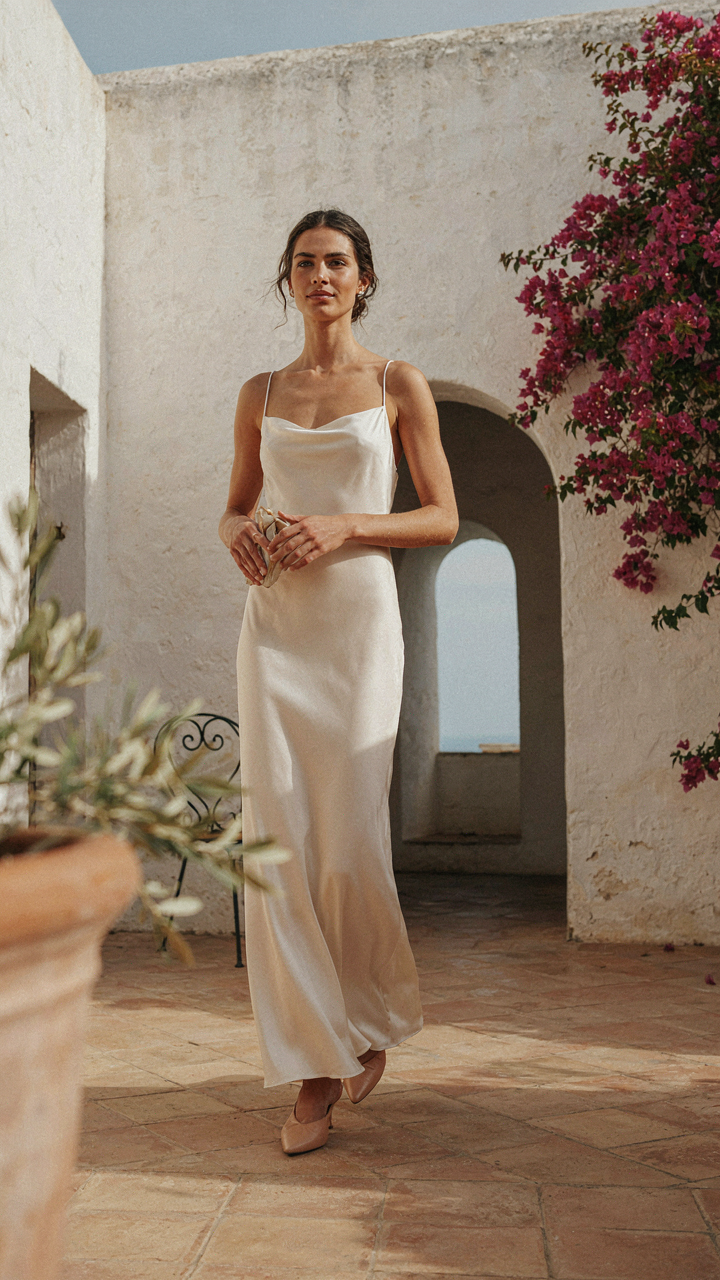
Most people dress for the event. Smart people dress for who they want to become at the event. Resort formal attire isn’t about following rules. It’s about owning a room before you walk in. Your next move: pull three pieces from your closet that make you feel like a version of yourself worth being, then build around them. The dress code doesn’t control you. Your confidence does.