

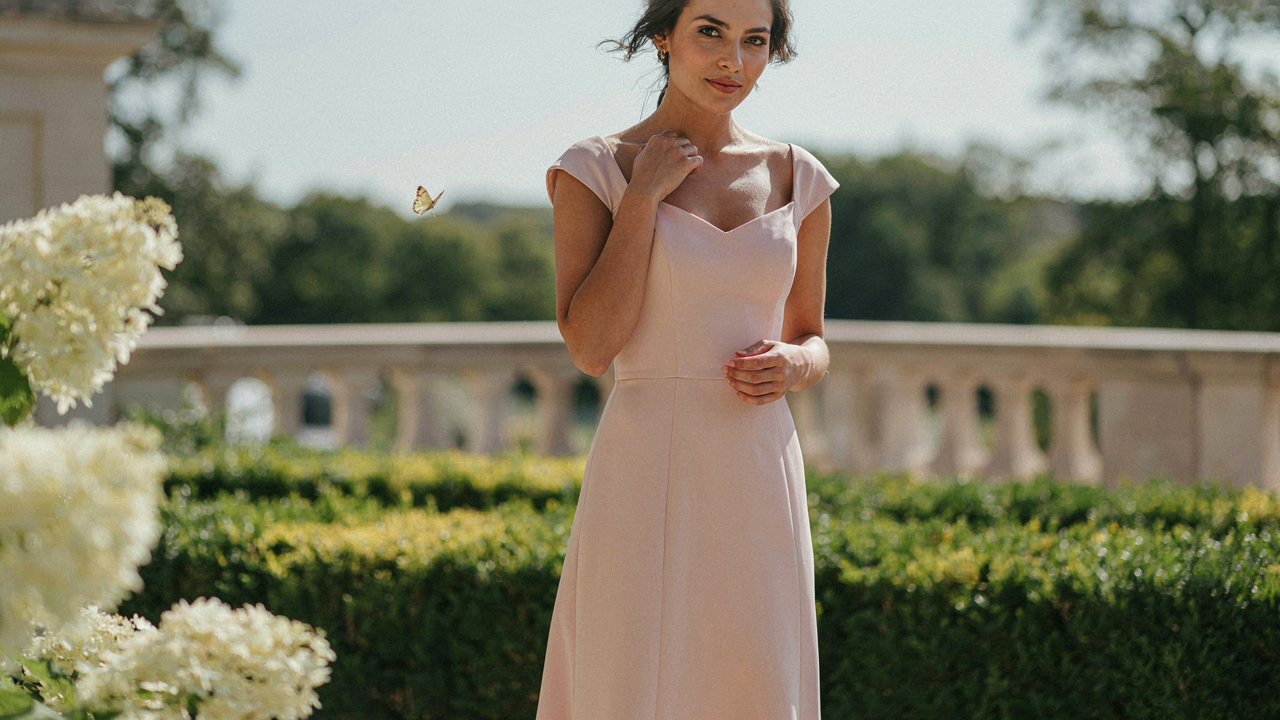
The Inverted Triangle Advantage: Stop Apologizing For Structure
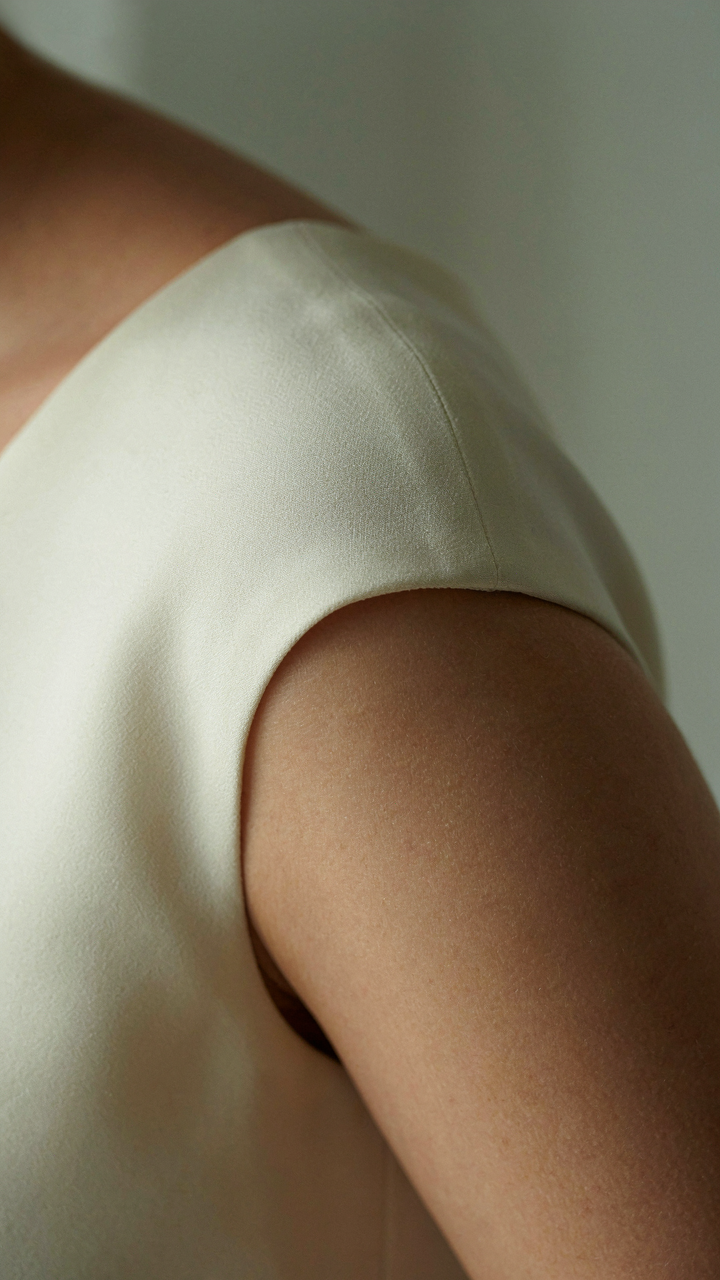
Embrace The Inverted Triangle
You’re worried broad shoulders read as masculine or unfeminine at a wedding, and that anxiety is costing you real options. The mechanism is simple: your shoulder width isn’t a flaw to hide—it’s a structural asset that defines how fabric drapes. Fashion terminology calls this an inverted triangle silhouette, borrowed from basic geometry. A dress that acknowledges this shape doesn’t fight your proportions; it works with them.
The common advice tells you to “draw attention downward” or “add volume to your lower half.” That’s incomplete. You need a dress that anchors visual weight at the shoulders first, then manages the transition. A boat neckline, structured shoulders, or strategic ruching at the shoulder seam doesn’t hide width—it frames it as intentional. When the shoulders of the dress match your actual shoulder span, the eye stops scanning for imbalance and registers you as coherent.
Power Posing With Silhouette
Physics calls this load distribution, and your dress fabric works the same way. Tension and balance matter more than volume. A fitted bodice with a defined waistline creates vertical continuity from shoulder through hip, which actually makes broad shoulders appear proportional rather than dominant. When you break that line with empire waists or gathered fabric at the shoulders, you fragment the visual field and make width more noticeable.
Sleeves function as structural anchors here. Cap sleeves, flutter sleeves, or sleeves that extend to mid-arm ground the shoulder line and prevent it from reading as an isolated wide point. A dress without sleeves requires the neckline and bodice seaming to do this work alone—possible, but harder. The protocol: choose a neckline that sits close to your actual neck, pick sleeves that have some body to them, and ensure the dress seams align with your shoulder points, not inward of them.
The Kinetic Balance Protocol For Dresses For Broad Shoulders
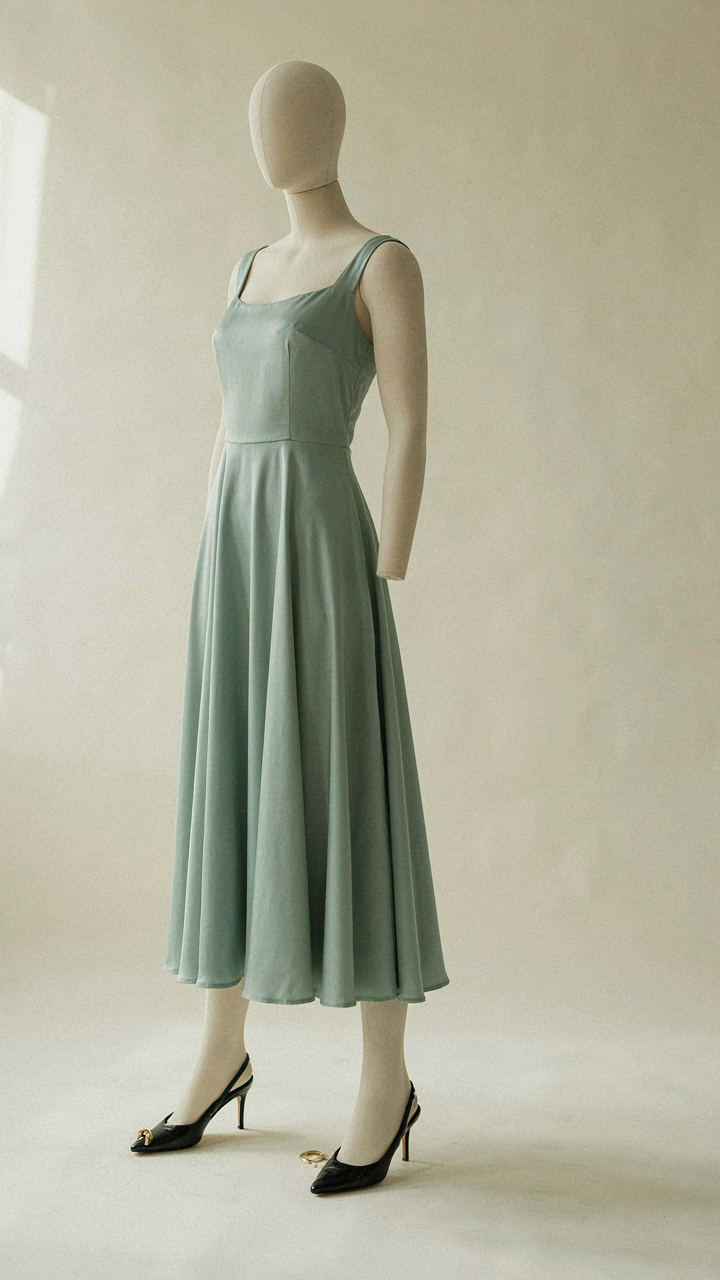
Where Visual Weight Lives
You’re worried people will see you and think “linebacker.” That fear is backwards. The real mechanism is this: your shoulders create a visual anchor point. Everything else on the dress either reinforces that anchor or contradicts it. In physics, we call this equilibrium. In dress design, we call it proportion. The shoulder width isn’t the problem—visual imbalance is.

Most advice tells you to add volume at the hip or hem to “balance” broad shoulders. That’s incomplete. You’re not actually balancing anything by adding bulk. You’re creating competing visual weights that confuse the eye. The dress needs structural coherence, not contradiction. A narrow hem against broad shoulders doesn’t look delicate—it looks fractured. The goal is to distribute visual mass so the eye reads one unified shape, not a top-heavy conflict.
Hemline Length Meets Shoulder Span
Hemline-to-shoulder ratio isn’t decoration theory—it’s proportion math. A midi hem on someone with wide shoulders works differently than it does on someone with narrow shoulders. The longer the dress extends from your shoulder, the more horizontal visual weight your shoulders command in the composition. A knee-length dress reads as a different proportion than a floor-length gown on the same frame.
- Midi Length (below knee): Creates a balanced visual field where shoulders don’t dominate the overall silhouette; works best when the fabric has controlled drape rather than volume.
- Knee Length: Emphasizes shoulder width because the eye travels a shorter distance before hitting the hem; use this only if the bodice narrows intentionally toward the waist.
- Floor Length: Extends the visual field downward; allows shoulders to feel proportionate within the full frame; requires clean lines or structured drape to avoid tent-like effect.
- High-Low or Asymmetrical Hem: Breaks the horizontal line that your shoulders naturally create; the visual interruption redirects attention away from shoulder width toward the silhouette shift.
- A-Line Silhouette: Expands gradually from shoulder to hem; this gradual expansion creates optical continuity and prevents the “wide shoulders on narrow base” problem that trapeze or fit-and-flare dresses amplify.
The protocol is simple: measure the visual distance from your shoulder point to your hemline, not in inches but in how the eye travels. If your shoulders are prominent, extend that distance. If you choose a shorter hem, compensate with structured fabric that creates intentional line breaks. Never let the hemline hang passively below broad shoulders—make it an active design choice with geometric or fabric purpose.
Neckline Dynamics: Beyond “Flattering” For Dress For Broad Shoulder Women

The V Neck Redirect
You want a neckline that makes your shoulders disappear from the conversation, not disappear from view. The V-neck works through basic optics: vertical lines draw the eye downward, breaking the horizontal line your shoulders naturally create. This is borrowed from visual hierarchy in graphic design, where the viewer’s attention follows directional cues. The V acts as an arrow pointing away from width.

A true V (not a shallow scoop pretending to be one) needs to hit between your collarbones and your sternum. Too shallow and you’re wasting the mechanism. The fabric must fall straight down without pulling or bunching at the shoulders, which means the armhole placement matters more than the neckline depth itself. If the armhole is cut too wide, you’ve neutralized the V’s entire advantage.
Asymmetrical Cuts Break The Mirror
Asymmetrical necklines fail most broad-shouldered women because the advice is half-correct. One-shoulder designs do redirect visual weight, but only if they’re built to handle your actual shoulder span. The mechanism that works: an off-center neckline prevents both shoulders from reading as a single block.
The real problem: most asymmetrical wedding guest dresses get designed for narrower frames first, then scaled up. This means the asymmetry sits wrong on you. The single strap pulls inward instead of sitting at a natural shoulder point. Test this in a fitting by checking if the strap placement aligns with your actual shoulder bone, not where a size 4 model’s strap would sit. If the dress forces you to adjust it constantly, the neckline design wasn’t built for your proportions.
The Strategic Sleeve: Not Just Cover Up For Designer Bridesmaid Dresses
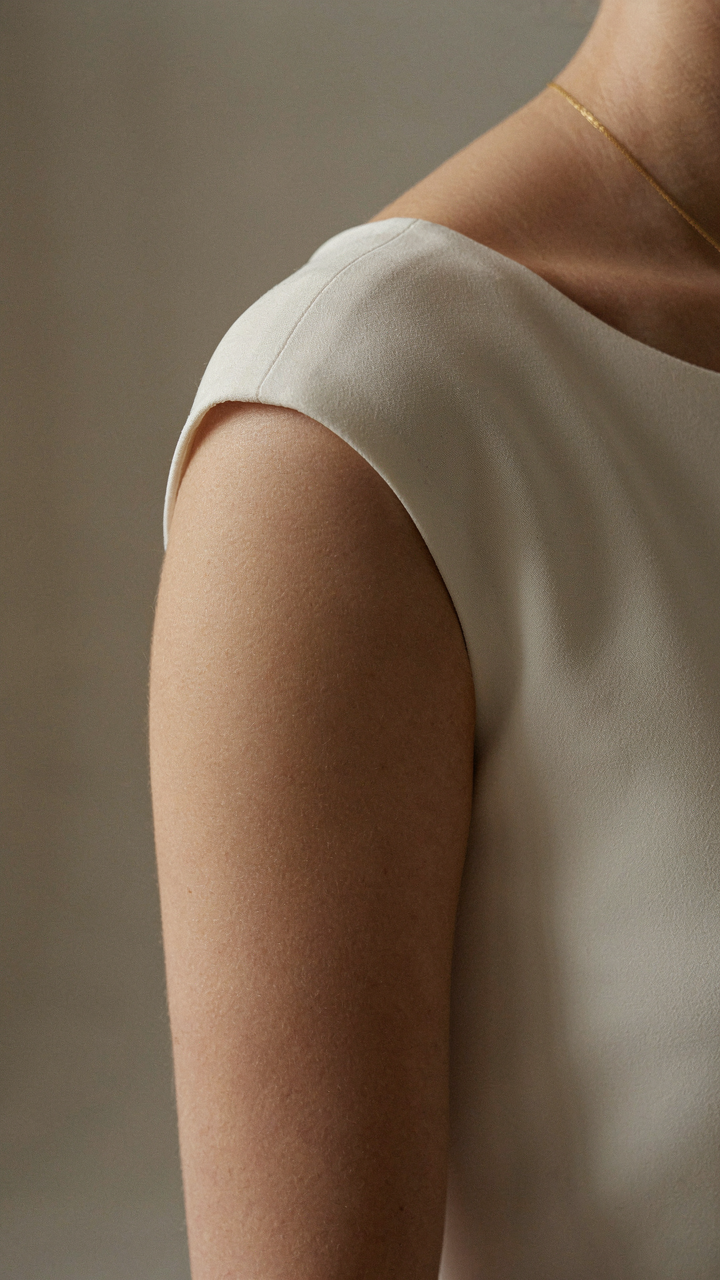
Cap Sleeve As Architectural Element
You’re worried a sleeveless dress will expose too much shoulder width and make you look wider. Here’s what’s actually happening: you’re confusing coverage with proportion. Using architecture’s principle of visual load distribution, a cap sleeve functions as a horizontal line that interrupts the shoulder’s widest point rather than extending it. The cap sits directly on the shoulder joint, creating a defined edge that reads as a frame, not an expansion.

Most advice tells you to hide broad shoulders. That’s incomplete. A well-cut cap sleeve doesn’t hide anything—it anchors the shoulder into the dress’s total silhouette. The fabric weight matters here. A structured cotton blend or crepe holds shape and creates shadow line definition. A flimsy knit collapses into the shoulder and defeats the entire mechanism. The cap should measure one to two inches in depth, covering only the shoulder tip itself. Anything deeper becomes a short sleeve and loses the architectural advantage.
Three Quarter Sleeve Variations
First paragraph goes here.
- Tapered three quarter sleeve: Fitted from shoulder to elbow, then narrows at the forearm. Creates a line that moves the eye downward and away from shoulder width. Works best on dresses with A-line or wrap silhouettes.
- Push up three quarter sleeve: Designed to sit slightly above the wrist with intentional gathering or ruching. The gathered fabric adds visual weight at the forearm, balancing broad shoulders by drawing attention lower.
- Sheer overlay three quarter sleeve: A semi-transparent layer in tulle or chiffon over solid fabric beneath. Reads lighter than solid fabric while maintaining the length advantage. Breaks up shoulder width without dense coverage.
- Dolman three quarter sleeve: Loose at the shoulder with progressive tapering toward the wrist. Adds volume at the broadest point initially but the taper counteracts this by creating a narrowing line down the arm.
- Fitted bell three quarter sleeve: Snug from shoulder to mid-forearm, then flares slightly at the hem. The flare creates a secondary horizontal line away from the shoulder, reducing perceived width at the widest point.
Three quarter sleeves solve a specific problem: they give you vertical line without the visual cost of sleeveless. The key is sleeve taper. A loose three quarter sleeve that stays wide to the wrist mirrors your shoulder width downward and amplifies the broadness. Tapered versions reverse this by creating a funnel effect toward the hand, pulling the viewer’s eye away from the shoulder joint. The fabric must have enough structure to hold taper—jersey or bias cut alone will stretch out of proportion.
The “Gravitational Pull” Principle: Drawing The Eye Downward
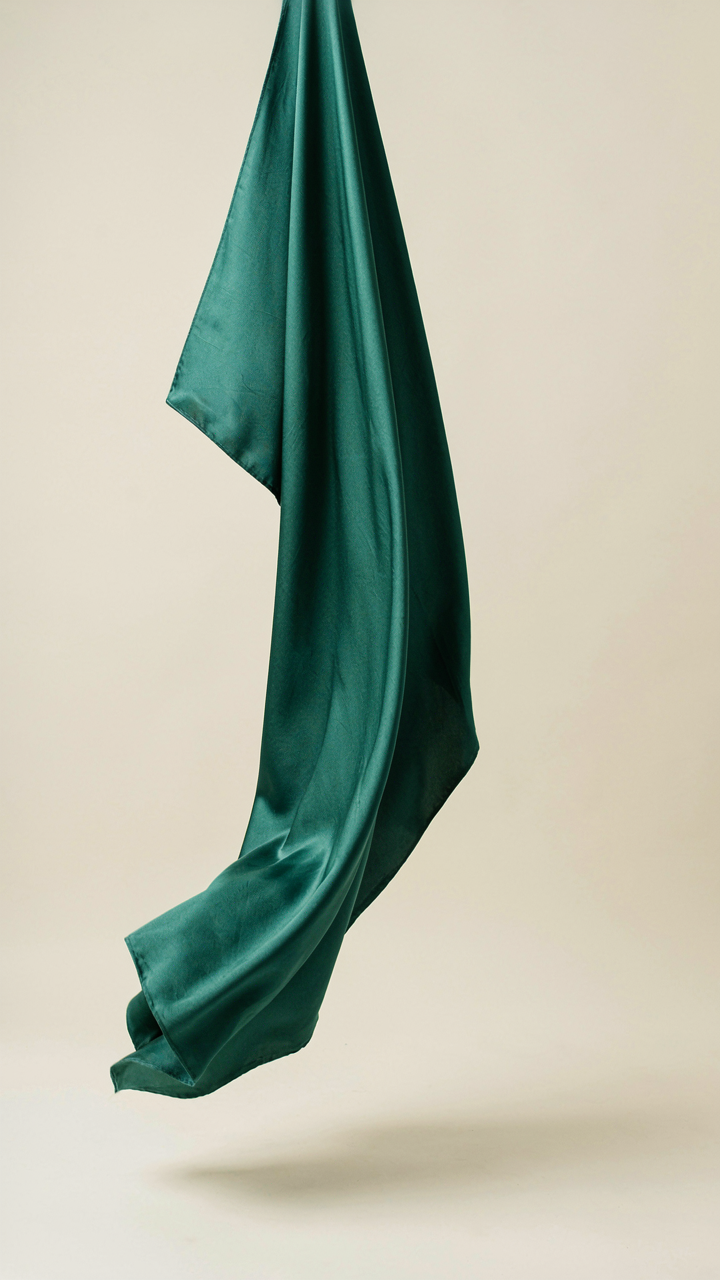
Where Visual Weight Actually Lives
You want the dress to make your shoulders look smaller. That’s the fear underneath this whole problem. But the mechanism isn’t about hiding anything. It’s about mass distribution. In physics, an object’s center of mass determines perceived balance. Apply this to the dressed body: shift visual weight downward, and broad shoulders become a non-issue because the eye follows the heavier visual element instead.

Narrow shoulders sit at the top of your silhouette. Broad shoulders occupy real estate there too, but they feel dominant only when they’re the visual endpoint. Move the focal point down through strategic weight placement, and the shoulder width becomes proportional context rather than the main event. The dress itself becomes the object your eye travels through.
How Fabric Behaves Under Its Own Logic
Most advice says “drape fabric” without explaining why drape works. Fabric drape isn’t magic. It’s a response to gravity. Heavy, fluid fabrics fall downward and create vertical lines that guide the eye. They also move away from the body at the shoulders because gravity pulls them down, creating space between fabric and skin.
Structured fabrics sit against your shoulders and amplify their width because they don’t move. Linen, cotton, and rigid synthetics cling to the broadest point. Silk charmeuse, rayon blends, and wool crepe fall immediately and create visual flow away from the shoulder zone. The fabric choice determines whether your silhouette expands or contracts at its widest point. Pick drape that moves, not fabric that holds.
Waistlines As Anchors: Defining The Core Of Your Look
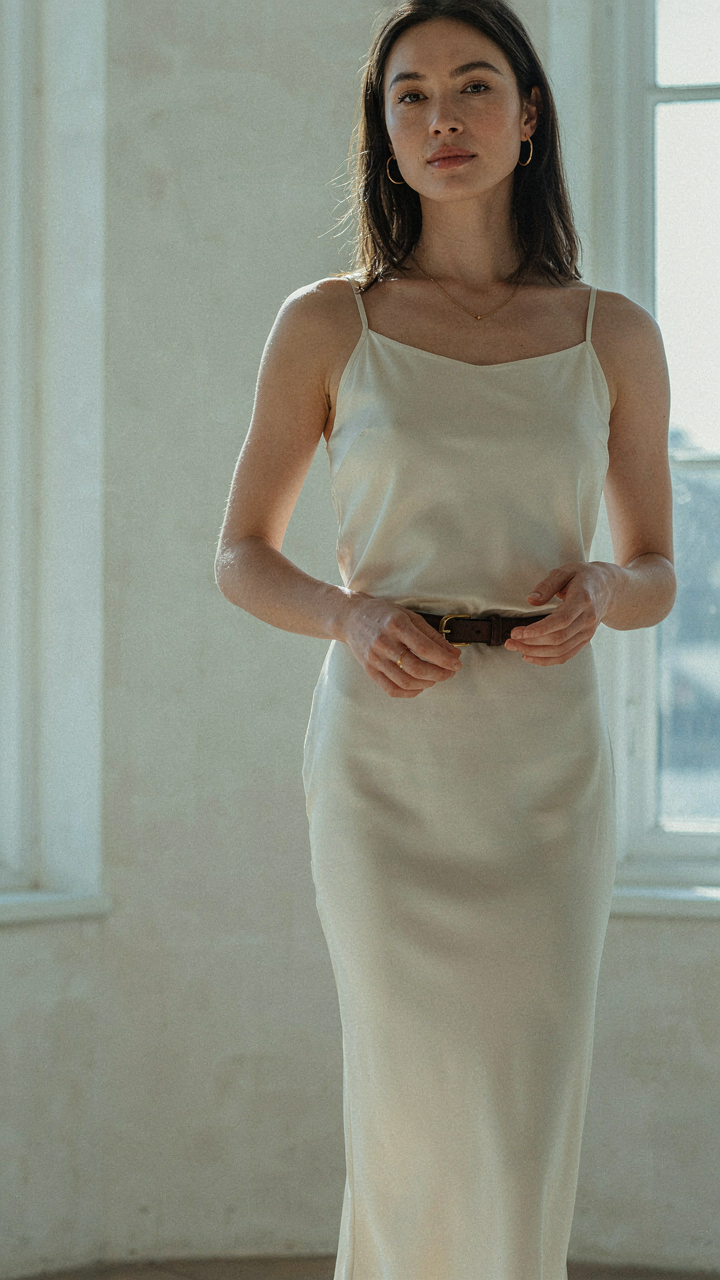
Empire Versus Natural Waist Distinction
You’re worried a waistline in the wrong spot will make your shoulders look bigger. Here’s the actual mechanism: your eye follows horizontal lines, and a waistline is a horizontal line. Where you place it determines what your brain measures as your widest point. Empire waists sit high, just below the bust. They create visual separation between your shoulder mass and your lower body. Natural waists sit at your actual waist. They divide your torso into two distinct sections, which reads as narrower overall because the eye doesn’t collapse the shoulder width into one continuous shape.

The common advice says empire waists “hide” broad shoulders. Wrong. They don’t hide anything. They reframe what counts as “width.” A natural waist on a broad-shouldered frame creates a visual anchor that your body tapers to. Your shoulders stay the same width, but the proportional relationship changes. The waistline becomes the reference point, not the shoulder span. This is why structured empire waists work better than loose ones. You need the line to register as intentional, not accidental fabric bunching.
The Belt As Focal Point Use
Belts don’t narrow you. They redirect attention downward and create a second horizontal anchor point below your broadest plane. Think of it in terms of visual hierarchy from graphic design. Your shoulders are the dominant element. A belt introduces a competing element that forces the eye to process multiple focal points instead of settling on width. Thin belts fail because they don’t create enough visual weight to compete. You need a belt with presence, one that lands at your natural waist and has actual mass or texture.
The mechanism is contrast and interruption. A dark belt on a light dress stops the eye mid-torso. A textured or patterned belt creates a second area of visual interest. Placement matters more than width. Position your belt one finger below your natural waist, where your smallest circumference sits. This maximizes the anchor effect. A belt worn too high or too low loses its power because it doesn’t land on the actual narrowest part of your frame. Wear your belt snug enough that it stays put all evening. A shifting belt kills the entire effect.
Fabric As Form Shaper: The Unsung Hero
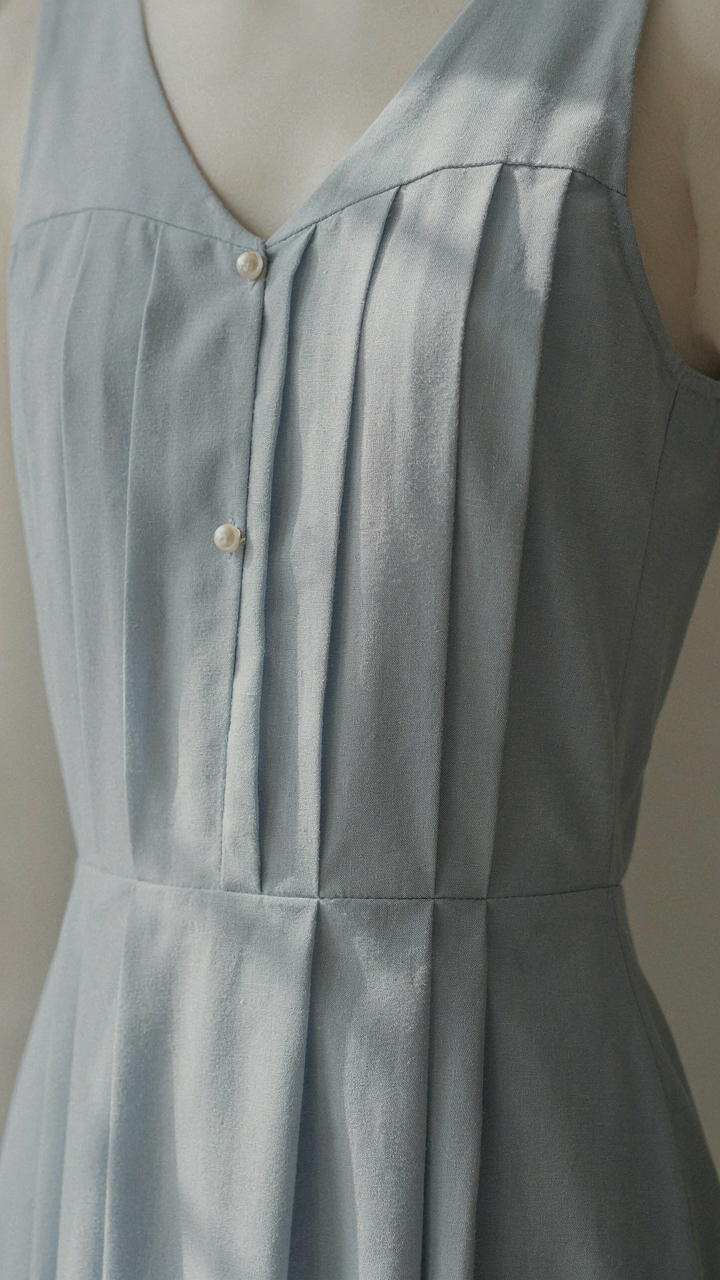
Structured Fabrics Vs. Drapes
You care about this because you’ve spent money on dresses that made your shoulders look wider instead of balanced. Here’s what actually happens: fabric is physics. A structured material resists movement and holds shape independent of your body. A drape follows gravity and clings to contours. For broad shoulders, structure is load-bearing architecture. Stiff cotton blends, linen, structured jersey, and dupioni silk create a perimeter that doesn’t collapse into your frame. They refuse to amplify width because they’re not negotiating with your shoulder line.

The mistake everyone makes is assuming “draping” solves proportion problems. It doesn’t. Draping is surrender. It lets fabric fall where your body tells it to fall. On broad shoulders, that means pooling at the shoulders, creating visual weight exactly where you don’t want it. Structured fabrics cut a hard line. They create a boundary. A structured A-line dress in cotton blend holds its shape from shoulder to hem. A draped dress in charmeuse clings and emphasizes. Choose structure first, then worry about neckline.
Satin Bridesmaid Dresses Texture Play
Satin moves light differently than matte fabrics because of surface reflectivity, not mystical draping power. A high-sheen satin catches light and scatters it horizontally, which can amplify apparent width. Matte finishes absorb and contain light closer to the fabric surface. This is optical fact, not opinion. A bridesmaid dress in matte crepe reads as narrower than the identical cut in glossy charmeuse. Your shoulders don’t actually change. The light behavior does.
That doesn’t mean you skip satin. It means you use it strategically. A matte satin with slight sheen (not high-gloss) at the bodice, paired with structured side panels, works. A full-satin A-line dress works if the fabric weight is heavy enough to hold rigidity. Lightweight satin reads clingy and emphasizes every contour. Heavy satin (typically 12 momme weight or higher) holds structure and becomes an asset. Test the fabric weight before committing. Run your hand across it twice. If it feels paper-thin, the dress will cling. If it feels substantial, it will hold form.
The Color & Pattern Game: Visual Deception, Not Subtraction
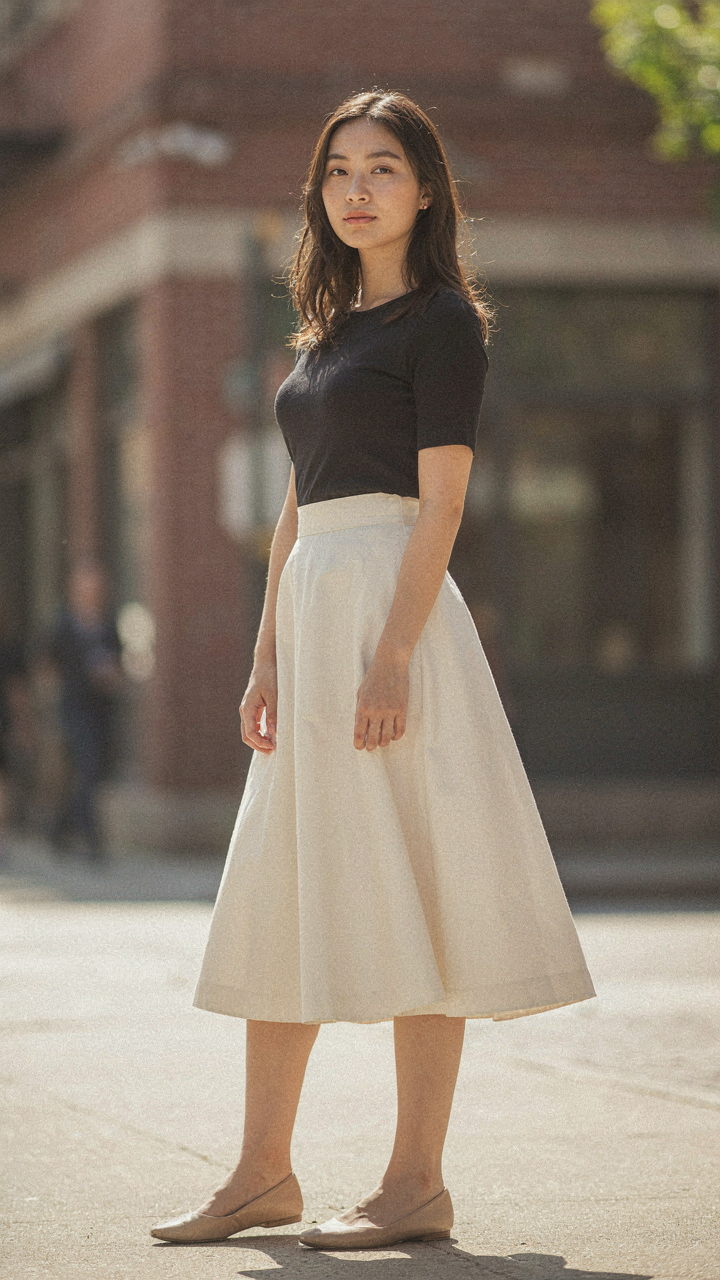
Dark Top, Light Bottom Creates Optical Weight Distribution
You want people to stop noticing your shoulders. That’s the real goal here, and color contrast is the mechanism that makes it happen. Borrow from basic visual hierarchy in graphic design: the eye moves toward light and contrast first, then settles on darker areas. A dark top paired with a light bottom inverts where viewers focus. Your shoulders sit in the darker zone. Your legs sit in the lighter zone. Attention follows the light.

The strategy works because fabric color absorbs and reflects light at different intensities. A charcoal or navy top above a cream or white bottom creates a visual break at your waistline instead of following the line of your shoulders upward. This isn’t about hiding. It’s about redirecting the focal point downward and outward. Wear the dark on top, the light on bottom, and the architecture of your frame becomes secondary to the contrast itself.
Vertical Lines Elongate Without Widening
Vertical patterns don’t shrink your shoulders. The common advice that says they do is incomplete. What they actually do is create a visual pathway that moves the eye up and down instead of side to side. This is basic motion design applied to fabric. A striped dress, a column of pleats, or a vertical seam line establishes a directional force that competes with horizontal dimension.
The key: the pattern must run from shoulder to hem with no horizontal interruption. A vertical stripe that stops at the waist loses its effect. A chevron pointing downward works. A horizontal stripe amplifies width and has no place here. Select patterns that move the eye in one continuous direction, and pair them with a fitted or semi-fitted silhouette so the vertical line doesn’t get lost in excess fabric.
The Accessory Amplification: Maid Of Honor Dress Ideas Beyond The Dress
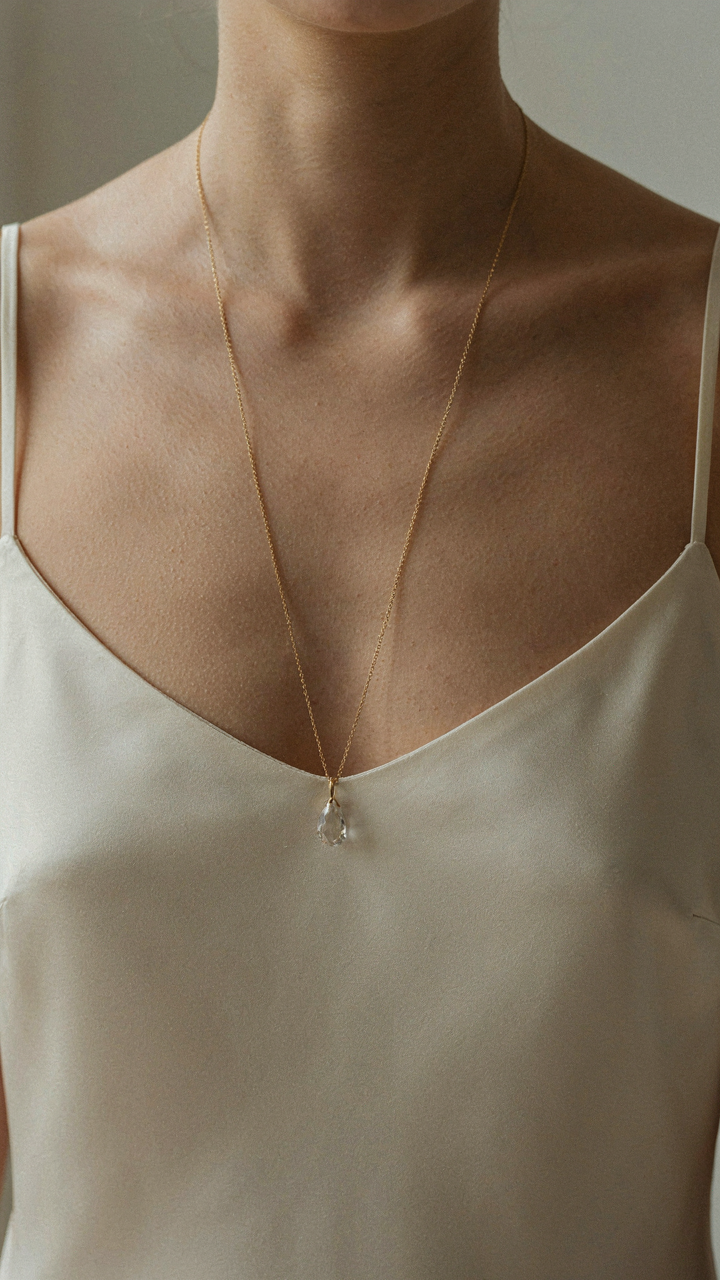
Long Necklaces Create Vertical Pull
You want accessories to do the work so the dress doesn’t have to carry the entire visual load. Borrowed from basic physics, a vertical line creates the illusion of length and narrowness, which counteracts horizontal shoulder width. Long necklaces exploit this principle by drawing the eye downward instead of outward, effectively breaking up the expanse of shoulder real estate that typically reads as bulk on broad frames.

The mistake most guidance makes is treating necklaces as decoration. They’re not. A necklace is a visual anchor that either reinforces or corrects your silhouette. For broad shoulders, anything that stops at the collarbone amplifies width. Drop the necklace to at least mid-sternum, ideally lower. A pendant that lands at your natural waist diverts attention entirely from shoulder width and restores proportion to the torso.
Statement Earrings Balance Frame Width
Earrings function as counterweight to broad shoulders. Large frames need earrings with visual density to avoid looking unanchored in their own proportions. Tiny studs read as insignificant against shoulder mass and actually emphasize the imbalance.
Statement earrings work because they demand focal attention at head and face level, drawing sight lines upward and inward rather than letting the eye scan laterally across your shoulders. Chandelier, drop, or sculptural styles accomplish this better than anything that hugs close to the ear. The earring should have dimension and movement. When you select an earring for a maid of honor role, you’re not being decorative, you’re rebalancing the geometry of your frame.
Engagement Party Outfit Guest Plus Size: Volume Management, Not Erasure
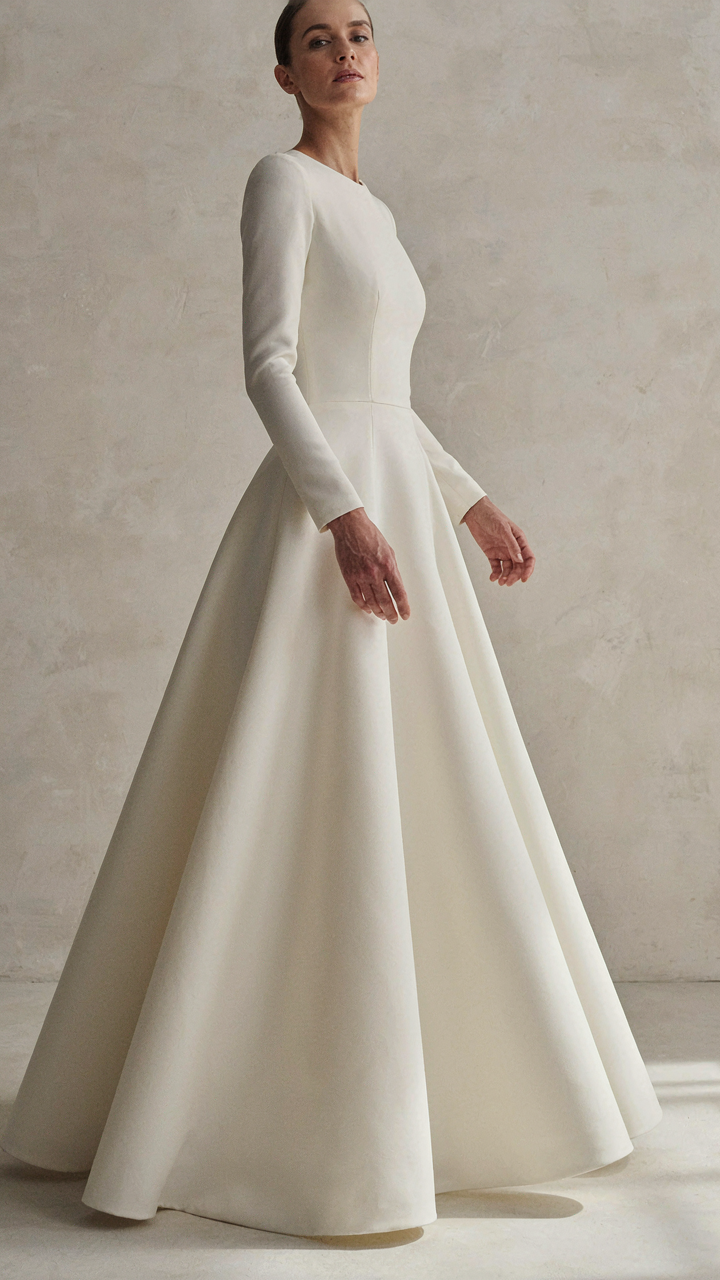
A Line Skirts Volume
You’re worried that volume reads as shapeless, that it erases you instead of flattering you. Here’s the truth: volume is a physics problem, not a moral one. The mechanism is distribution. A-line skirts work on broad shoulders because they redirect visual mass downward and outward, creating counterbalance. The wider your shoulders, the more floor-length volume you need to avoid top-heavy silhouettes. Short A-lines on broad frames create visual tension and read unintentionally severe.
Length matters more than cut. A-line skirts hitting mid-calf or floor create the proportional anchor broad shoulders demand. The fabric weight determines how volume reads: structured cotton or linen holds shape and reads intentional; flimsy polyester collapses and reads accidental. Pair floor-length A-line volume with a fitted bodice, not a loose top. The fitted top establishes the shoulder line as a feature, not something to hide beneath fabric. Volume below the waist then becomes design strategy, not camouflage.
Proportionality In Layering
Layering without hierarchy confuses the eye and wastes the visual real estate broad shoulders command. Think in terms of graphic design’s foreground and background. Your shoulder width is your foreground; everything else recedes. Most advice tells you to layer loosely. That’s incomplete. You layer tight above the waist, loose below it. This creates a visual narrative that reads intentional.
A fitted slip dress under a structured blazer, paired with a flowing skirt, works because each layer serves a function. The slip dress anchors your torso to your shoulders. The blazer defines the shoulder line and prevents formless drape. The skirt provides volume without competing for visual attention at the top. When layering, ensure the outermost layer at your shoulders sits close enough to confirm your frame, not hide it. This single protocol prevents the bloated silhouette that comes from layering loose pieces together.
The Real Problem Isn’t Your Shoulders; It’s Your Inability To See Them As A Design Asset
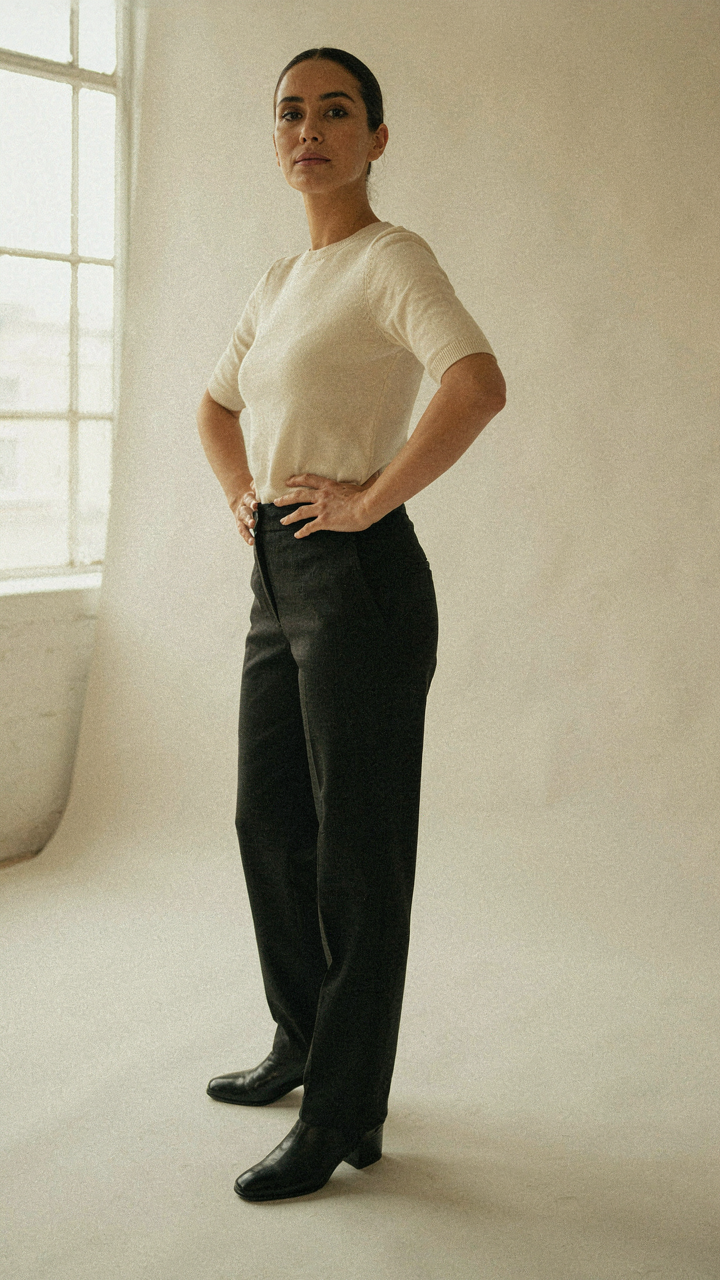
Most women spend their entire lives apologizing for their frame instead of weaponizing it. Broad shoulders aren’t a flaw to hide. They’re a structural advantage that demands the right cut, not camouflage. Stop scrolling through “flattering” dress guides built for average frames. Go find one dress in your closet right now and try it on with the intent to own the room, not disappear into it. Your shoulders aren’t the problem, your mindset is.