

The Myth Of The Matronly Maxi: Reclaiming Your Wedding Guest Style
Where Generic Advice Breaks Down
You’re afraid you’ll look heavy. That’s the real fear threading through every dress search, and it drives you toward the same bad recommendations everyone gets: go dark, go loose, go long. The mechanism is simple: conventional advice treats large busts as a problem to hide rather than a proportion to dress. Most guidance ignores how fabric weight distributes across a larger chest, how necklines actually anchor a silhouette, and why “supportive” often means “shapeless.” You end up in dresses that hide your body instead of fitting it.
The standard playbook fails because it was built for average frames. A maxi dress that skims beautifully on a B-cup creates tent proportions on a D-cup or larger. Empire waists that balance smaller chests create visual bulk on yours. Stretchy fabrics that cling delicately elsewhere bunch and gap at your bust. These aren’t styling problems. They’re fit problems. No amount of layering or color choice fixes a dress that’s architecturally wrong for your proportions.
Support Doesn’t Mean Sacrificing Silhouette
Physics governs how fabric sits on a large bust: weight and tension create pull vectors that standard construction can’t handle. A regular B-cup bra panel works through simple support. Your bust needs architecture: structured fabrics, strategic seaming, and weight distribution that prevents that downward drag that makes everything look sloppy. The false choice most advice presents is between “supported and shapeless” versus “stylish and unstable.” You don’t accept that trade-off in everyday bras. Don’t accept it in wedding guest dresses.
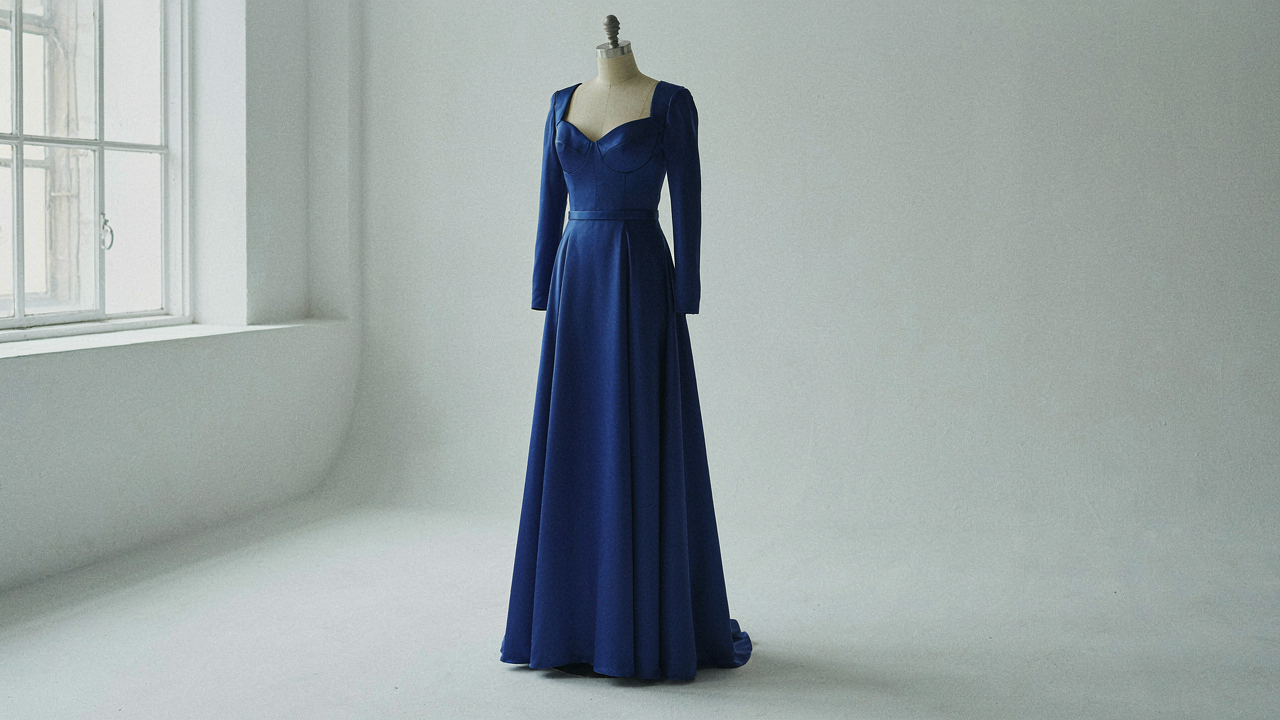
Dresses with defined seaming, internal structure, or corset-style boning give you both support and definition. A fitted bodice with vertical seaming doesn’t hide your chest, it stabilizes it. Structured fabrics like crepe, ponte, or blended materials hold their shape instead of clinging and distorting. The real move: find dresses engineered for larger cup sizes, not dresses sized up from smaller frames. Brands that make H-cup bras understand the engineering problem. Their dresses solve it.
The Architectural Advantage: Dress Silhouettes For Large Busts
Weight Distribution Over Compression
You want to look contained without admitting that containment matters. Here’s the mechanism: physics treats load-bearing structures differently than restrictive ones. In engineering, distributed load spreads stress across multiple points instead of concentrating it at one failure point. A wedding guest dress for large bust works the same way. The goal isn’t to squeeze everything into a smaller footprint. It’s to move weight away from the chest and shoulders onto the torso and hips where your frame handles it better.

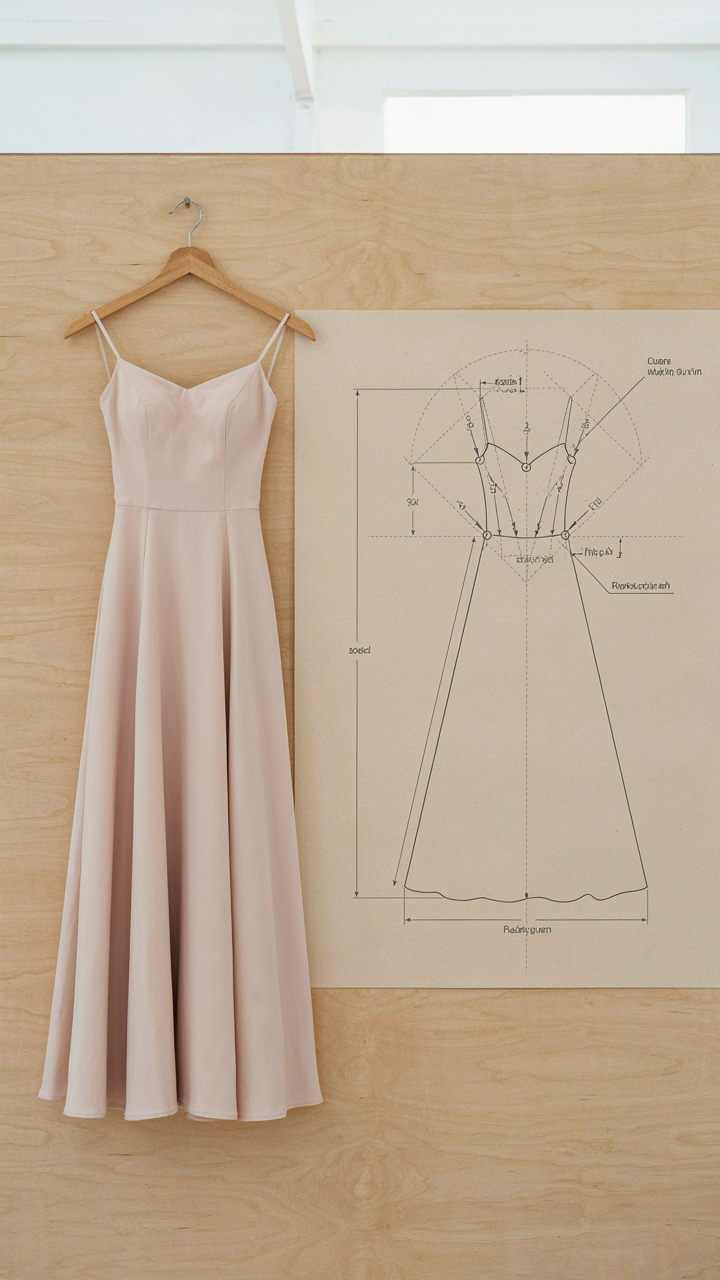
Cinching the bust creates a pivot point where fabric pulls upward and straps dig into shoulders. Distributed silhouettes anchor weight lower. A-line cuts, empire waistlines, and structured bodices move the visual weight and actual weight distribution downward. The dress carries itself instead of your shoulders carrying the dress. This is why certain cuts feel effortless while others exhaust you by cocktail hour.
Silhouette Mechanics That Actually Work
The common advice says “wear whatever makes you feel confident.” Wrong. Some silhouettes are mechanically superior for large busts regardless of how you feel. A-line dresses widen from the waist down, which creates visual balance and allows fabric room to drape without pulling. Empire waistlines sit at the natural waist and rise to under the bust, moving the structural support point away from the shoulder seams. Fit-and-flare dresses fit snugly through the ribs and waist, then release at the hip, preventing upward fabric migration that happens in straight-cut styles.
Each silhouette works because it addresses a specific load problem. A-line prevents the chest from pulling the dress forward and creating shoulder strain. Empire removes the bust from the dress’s main structural equation entirely. Fit-and-flare allows fabric to sit properly without requiring compression at the bust itself. Test a dress by raising your arms and bending forward. If the dress pulls, rides up, or requires constant adjustment, the silhouette isn’t built for your proportions.
Undergarment Uncensored: The Real Foundation For Formal Dresses For Big Busted Women
The Calibrated Lift: Proper Bra Fitting Essentials
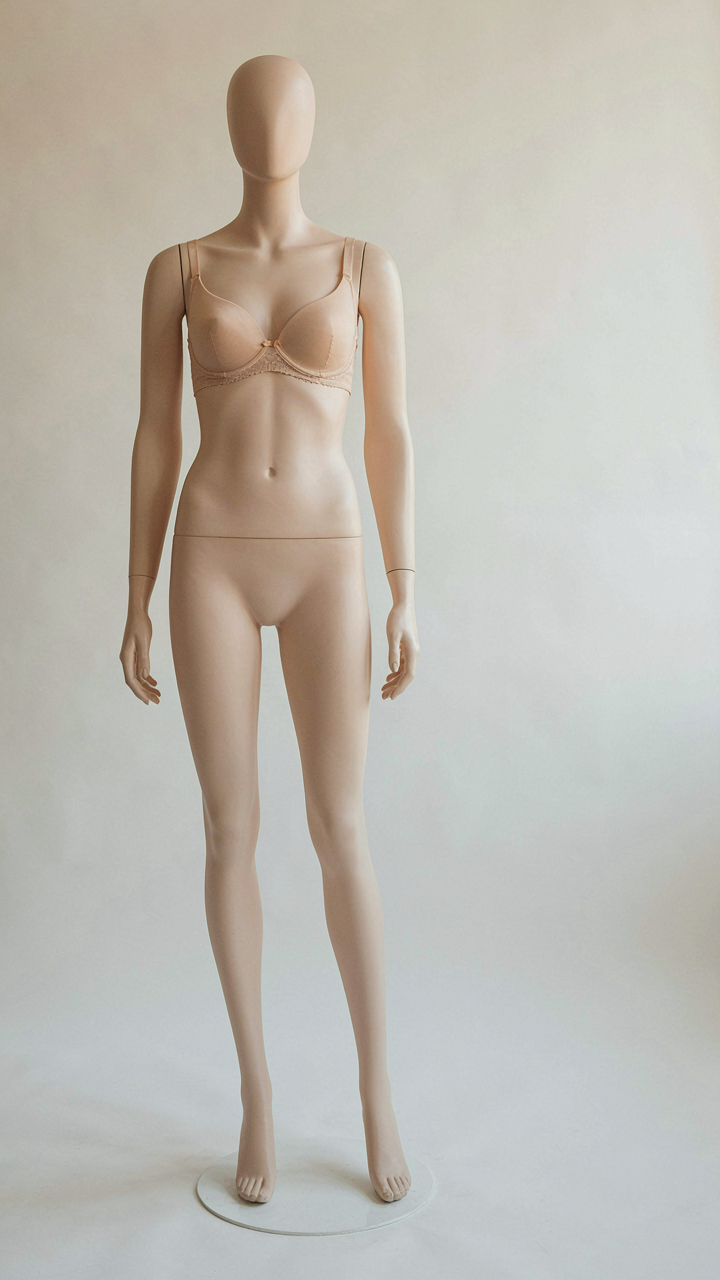
You’re here because you’re tired of choosing between looking flat or looking desperate. The real mechanism is simple: bra fitting works like structural engineering. You need the right load distribution to prevent collapse at pressure points. Most women wear the wrong band size entirely, which tanks everything downstream.
- Band Size Over Cup Size: The band carries 80% of the weight. A too-loose band rides up your back and forces straps to compensate, creating shoulder divots under fabric. Get professionally measured at a lingerie store that uses a measuring tape, not just eyeballing.
- Underwire Placement and Gauge: The underwire should sit flush against your ribcage with zero gap at the sides. Thinner gauge wire flexes under load and won’t hold position through a four-hour reception. Thicker gauge (16 or 18 gauge) maintains structure in formal settings.
- Full Coverage Cups For Formal Wear: Demi or balconette cups create visible breast tissue overflow under fitted formal fabrics. Full-cup or minimizer styles contain tissue completely, which is non-negotiable under satin or crepe. The seam sits at or above your natural breast tissue line, not below it.
- Strap Placement and Depth: Straps set too close together pinch shoulders and create visible tension ridges under sleeveless or thin-strap dresses. Well-spaced straps (at least 4 inches apart) sit parallel to your spine and anchor at a lower back point for stability.
- Closure Type and Hook Count: Three-hook closures distribute tension more evenly than two-hook designs and resist riding up throughout the day. Bras with six or more hooks spread load across a wider band surface, critical for larger bust weights.

The fit test is tactile: slip one finger under the band at your back. If you can fit two fingers, it’s too loose. If you can’t fit one, it’s too tight. A bra that gaps at the top is the wrong cup size, not a sign you need less coverage.
Bodysuits, Camis, And Seamless Solutions
Bodysuits serve one purpose under formal wear: preventing shifting. They don’t add support on their own. The consensus pitch is that they’re “smoothing” or “slimming.” That’s marketing language. What they actually do is anchor your undergarments to your dress so nothing migrates north during dinner or dancing.
Seamless construction matters only if your dress fabric is clingy enough to show every seam edge. Camisoles layered under sheer or thin formal fabrics prevent nipple visibility and reduce bra strap show without adding bulk. Pick cami thickness based on your dress opacity, not your bust size. A bodysuit with boning or panels adds structure but creates visible lines under fitted dresses. Wear one only if your dress has enough fabric weight to hide its presence. For most formal settings, a fitted cami under a dress with adequate lining does the work without the extra layer.
The Drapery Doctrine: Fabric & Detail For Dresses For Big Bust
Weight And Hang Matter More Than Thread Count
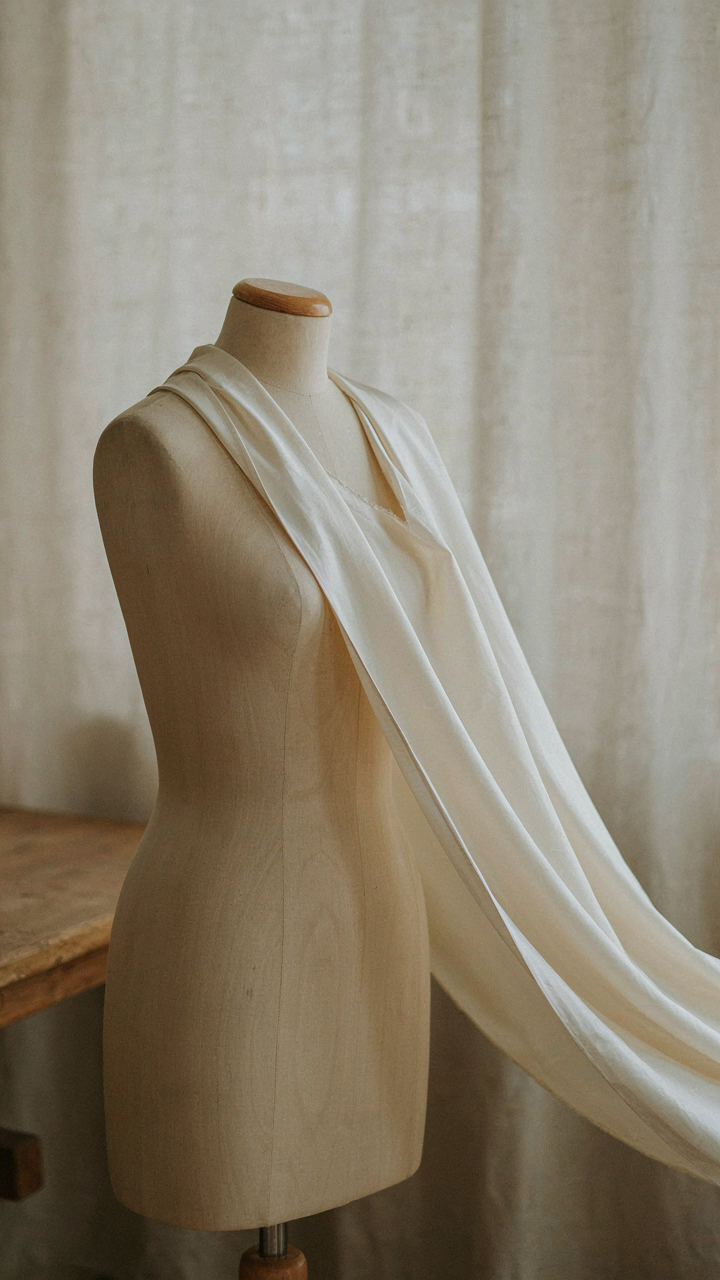
You want fabric that won’t betray you by clinging or shifting. The real mechanism here borrows from physics: drape is about how mass distributes across surface area. Heavier fabrics anchor themselves. They don’t cling to the body because gravity pulls them straight down. Cotton blends, structured silk, crepe, and ponte knit all perform because they have actual weight. Lightweight chiffon and jersey betray every contour unless they’re layered thick enough to defeat the point.

The mistake most advice makes is treating fabric choice as aesthetic. It’s structural. A large bust needs fabric that resists upward tension and maintains its intended silhouette through the day. Charmeuse, gabardine, and structured cotton sateen earn their place in a wedding guest wardrobe because they hold shape without requiring constant adjustment. Test any dress by raising your arms and leaning forward. If it shifts or clings, the fabric won’t survive a ceremony and reception.
Strategic Cuts Beat Decoration Every Time
Ruching, pleats, and neckline placement aren’t decorative choices for a large bust. They’re load-bearing architecture. Vertical ruching down the center front distributes visual mass and prevents the dress from reading as a single monolithic shape. Pleats that begin at the bust (not the waist) create intentional fabric volume that moves with you instead of against you. Diagonal ruching skims rather than clings. The common advice here is wrong: adding pattern or detail to “distract” from your bust doesn’t work. What works is redirecting how the eye traces the dress’s construction.
Necklines matter more than most understand. A shallow V or U-neck spreads tension across the shoulders and collarbone instead of concentrating it at one point. Scoop necklines with princess seaming from the neckline down to the hem reinforce structure. Square necklines with ruching that flows downward create visual interest while anchoring fabric placement. Avoid crew necks and high round necklines on dresses without strategic ruching, they create a focal point that emphasizes rather than balances. The protocol is simple: neckline plus ruching or pleating must work as a system, not separately.
Color & Pattern Psychology: Visual Illusions For A Balanced Look
The Optical Weight Of Darkness
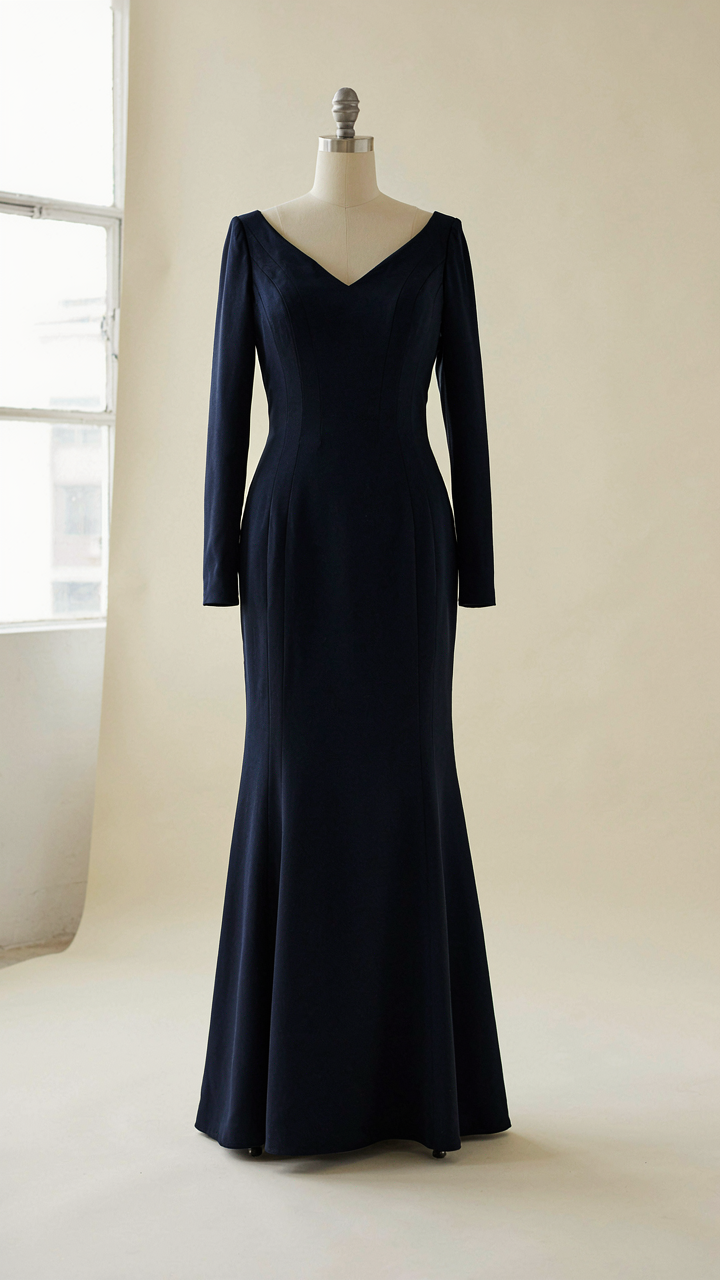
You want to look smaller without looking like you’re hiding. That’s the real tension here, and color solves it through basic optics, not magic. Dark colors absorb light instead of reflecting it, which compresses visual mass. Black, deep navy, charcoal, and forest green create a boundary around your frame instead of broadcasting it outward. This is physics, not opinion. A dark dress with a larger bust reads as one cohesive shape rather than a division between your upper and lower body.

Vertical lines amplify this effect by pulling the eye up and down instead of side to side. Seams, stripes, pleats, or asymmetrical cuts that run lengthwise prevent the eye from settling on width. The mechanism is directional: your brain follows lines, and vertical lines train it to measure you in height rather than circumference. This works because the human eye processes movement and direction before it processes mass.
Scale, Placement, And The Anchor Point
Most advice about patterns for larger busts is incomplete. People tell you to avoid bold patterns. Wrong. Bold patterns placed correctly actually control how people frame your silhouette. The real rule is scale and anchor point. A large-scale pattern attracts attention and holds it in one location. If that location is your waist or hip, your bust becomes background noise. If it’s scattered everywhere, you become a target.
Place patterns below the bust or use them strategically at the hip and thigh. Avoid horizontal stripes across the chest. Diagonal lines work because they create movement without width. A chest that is solid in color with pattern detail lower down creates visual hierarchy. The eye lands on the pattern first, then back-fills the solid area as secondary. This breaks the bust into a non-event rather than a focal point.
The Seasonal Strategy: Fall Wedding Guest Dress & Beyond
Fabric Weight Matches Temperature Logic
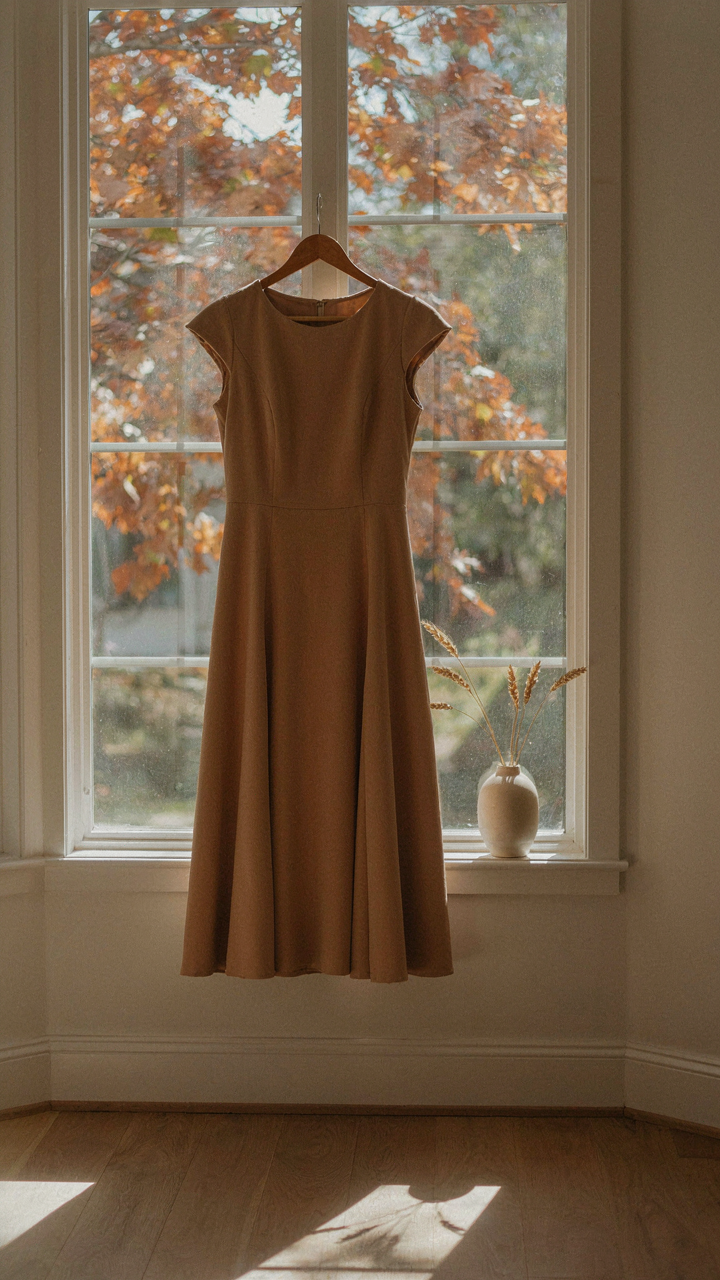
You’re worried the dress won’t photograph well because you’ll look cold or uncomfortable. That’s not the real problem. The mechanism is simple: fabric density determines how much your bust gets supported and how the silhouette reads in different climates. Heavier fabrics hold structure. Lighter fabrics drape. A fall wedding demands fabric that won’t collapse under your own weight while you’re standing for hours.

Cotton blends and wool crepes work for fall because they have density without rigidity. These materials don’t cling to fuller busts the way silk charmeuse does. Summer weddings call for structured cotton or linen blends that breathe while maintaining lift. Winter requires double-faced knits or heavier silks that provide compression naturally. Spring allows for lighter cotton or cotton-poly blends. The mistake most women make: buying the same dress weight year-round and expecting it to work.
Layers Build Architecture, Not Coverage
Layering isn’t about hiding yourself. It’s borrowed from structural engineering: you’re creating load-bearing walls. A slip layer under a sheer overlay lets you control transparency while the outer layer adds visual interest without adding actual weight on your bust. This matters because more fabric directly on the bust creates pull and gap issues.
Strategic layering starts with a fitted slip dress underneath, then a sleeveless or capped-sleeve outer dress. This keeps the weight distributed across your shoulders instead of concentrating pressure on the neckline. A matching mesh or sheer panel at the collarbone adds sophistication and prevents the dress from moving. For colder months, a structured blazer over a fitted dress shifts support to your shoulders entirely, which is where it belongs for larger busts. Build layers into your core structure, not as an afterthought.
Plus Size Wedding Guest Dress: Beyond The “Big Tent” Mentality
The Tailoring That Changes Everything
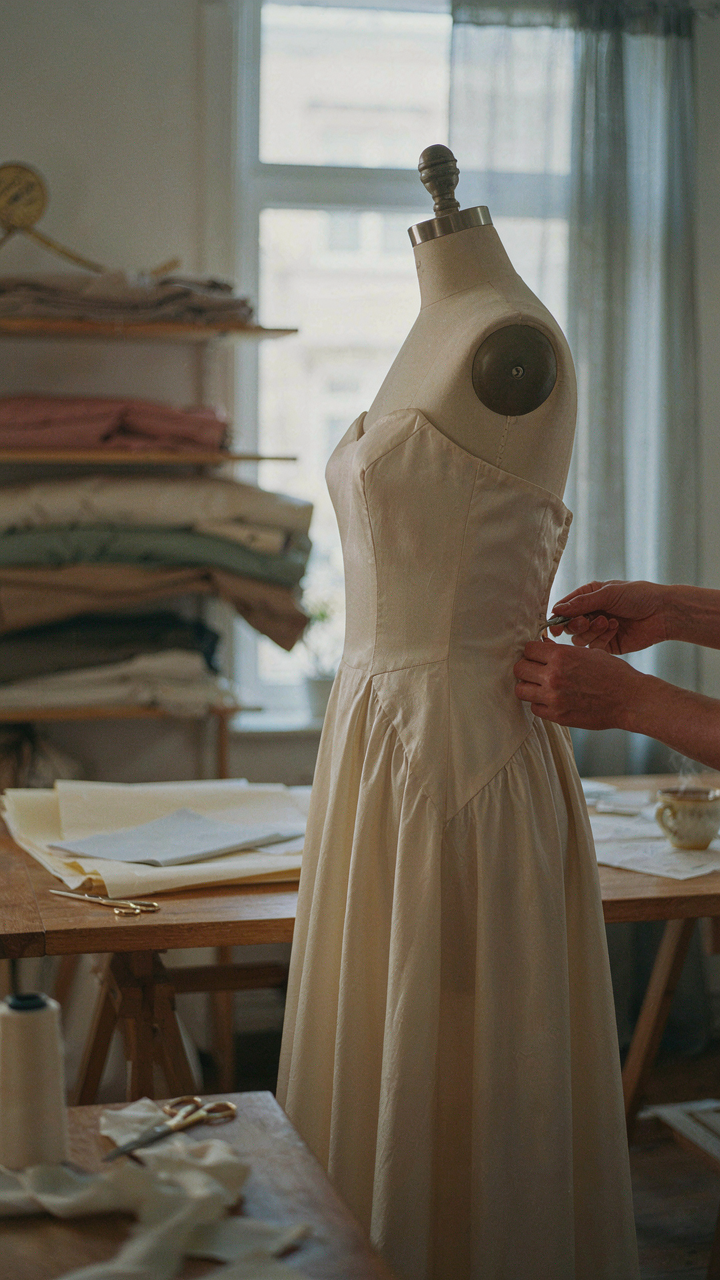
You’re afraid a dress won’t fit right, so you buy bigger and hope it works. That doesn’t work. Tailoring isn’t a luxury add-on for plus size dresses with large bust support—it’s the actual dress. A professional tailor maps the bust point, adjusts side seams, and resets armholes to match your shoulder width. Most dresses ship with generic proportions. Tailoring corrects the gap between what exists and what fits your body’s actual geometry.

Side seams and darts are where the mechanism lives. A tailor moves side seams forward or backward to center the bust, adds or removes dart depth to control cup shape, and takes in or lets out the back to stop fabric from bunching. This costs 40 to 100 dollars and solves fit problems a size change cannot. Start by finding a tailor who has worked on formal wear before, not just hemming pants.
Shape Strategy Over Coverage
The common advice here is wrong: concealing a large bust in loose fabric only makes you look larger and shapeless. The real mechanism is contrast. Designers use ruching, structured panels, and strategic seaming to create definition, not to hide. A dress with vertical seaming and a fitted bodice reads as intentional design, not an attempt to disappear.
Structured support redistributes visual weight through the torso, which flattens and grounds your silhouette. Wrap dresses, fit-and-flare cuts, and high-waisted styles with defined waistlines all work because they create proportion and anchor the eye. Built-in shelf bras with underwire or molded cups handle the physical load. The goal is to build a frame that lets the dress hang correctly, which means your bust becomes part of the design instead of something fighting against it.
The Accessorization Algorithm: Completing Your Cocktail Dress Large Bust Look

Necklines And Jewelry Placement
You’re worried people will stare at your chest instead of your face. The real mechanism here is visual hierarchy: jewelry either competes with your bust or redirects attention upward. High necklines pair with statement earrings and minimal neck jewelry. Low or modest necklines work better with a simple pendant or nothing at all around the collarbone. Your goal is to give the eye a second stopping point above the chest line.

Avoid layering multiple necklaces on fuller frames. A single piece worn at the collarbone or slightly lower creates a clear focal point without cluttering the visual space. Oversized drop earrings work because they naturally draw attention to the face and shoulders. Keep ear jewelry proportional to your face size, not your bust size. This is the single tactical error most people make: they scale accessories to body dimensions instead of facial proportions.
Outerwear And Silhouette Control
Jackets and wraps do two jobs at once: they manage proportion and create a finished line. A structured blazer over a cocktail dress grounds your frame and breaks up the bust line visually. Unstructured cardigans or shawls drape awkwardly when the dress already has significant volume at the chest. Choose outerwear that adds definition rather than softness.
Clutches should sit at hip height or waist height, never dangling at your sides where they emphasize vertical length through the torso. A structured bag with a defined handle anchors the lower half of your look and prevents the outfit from reading as top-heavy. Wraps work only if they’re tailored or pinned to stay in place. Anything loose and flowing on a larger-busted frame reads as attempting to hide rather than coordinate.
The Unapologetic Presence: Own Your Formal Style
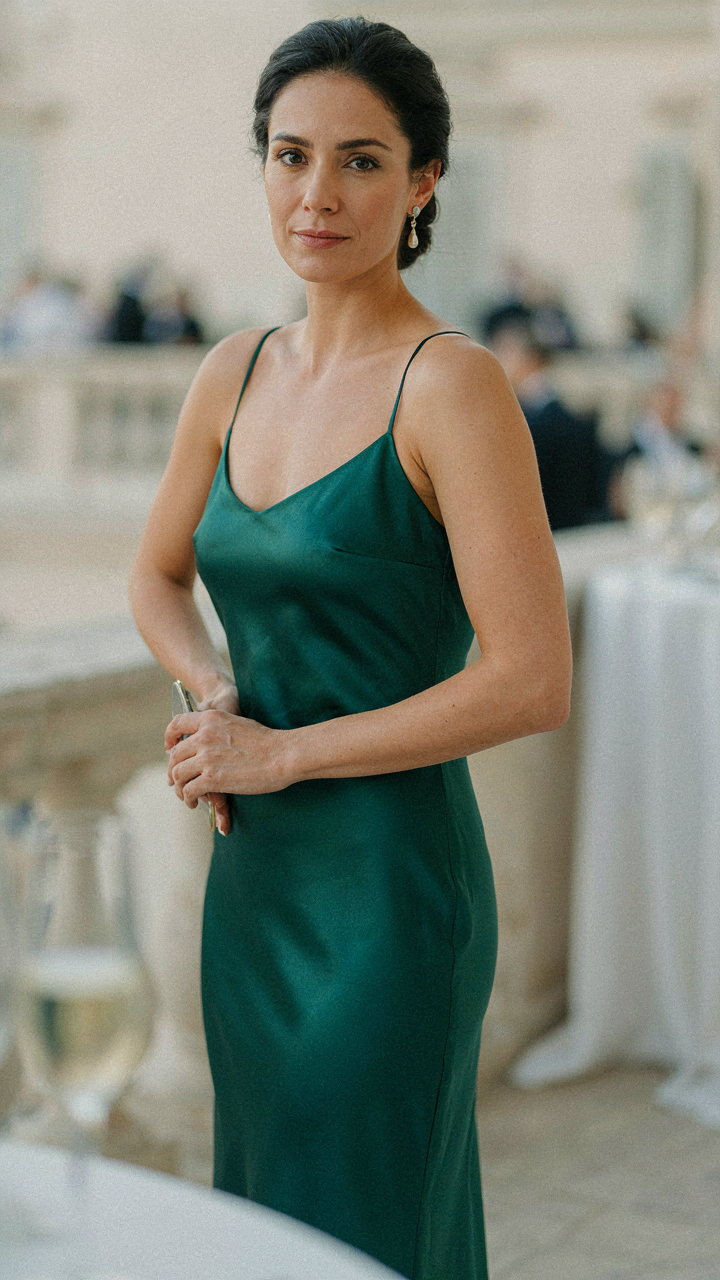
Confidence As The Ultimate Accessory
You’re worried people will judge you before they judge your dress. The mechanism is simple: presence fills space before appearance does. When you enter a room certain of your choice, observers process confidence first and body shape second. Uncertainty broadcasts louder than fabric ever will. The dress does not create confidence. Your decision to stop negotiating with yourself does.

Most advice here treats confidence as a feeling to manufacture. It’s not. Confidence is a protocol. You chose this dress because it solves a structural problem—support without collapse, line without deception. You know why you chose it. Repeat that reason when doubt arrives. This is how you move through a formal event without performing hesitation. The dress works because you stopped asking permission to wear it.
Why Flattering Doesn’t Mean Hiding
The fashion industry uses “flattering” to mean “minimize.” That’s incomplete and it’s wrong. Flattering means the garment does what it claims without fighting you. A dress that provides support under the bust, maintains its shape through the evening, and lets you breathe is flattering. A dress that strains, gapes, or forces you into corrective posture is not flattering no matter how dark the color.
Real flattery is functional. A structured neckline that anchors fabric instead of letting it migrate. A weight distribution that doesn’t collect fabric at the sides. A hem that hangs because the support system works, not because you’re holding your breath. Flattering doesn’t mean you disappear. It means the dress stops working against you so your presence can work for you.
The Real Obstacle Isn’t Your Bust Size; It’s Your Outdated Mental Model Of What Supportive Looks Like

You’ve spent years believing support means hiding. It doesn’t. Support means construction. The dress that works for your body stops apologizing and starts engineering. Go find one dress in your size today, try it on, and notice what actually happens when fabric meets architecture instead of compromise. Your bust doesn’t need camouflage. It needs a dress that was built for you to win in it.



