


The “Apple Shape” Fallacy: Why Generic Advice Fails You
Body Type Labels Are Marketing, Not Science
You care about this because you want permission to stop second-guessing yourself. The real mechanism: body type categories exist because the fashion industry needed a filing system, not because your body matches a rigid box. Apple, pear, hourglass, rectangle—these aren’t biological classifications. They’re marketing shorthand born in the 1980s and 1990s when retailers needed a way to talk about fit without acknowledging that bodies exist on a spectrum.
The problem isn’t the label itself. The problem is treating it as destiny. Your torso-to-hip ratio might read as “apple,” but that tells you almost nothing about your actual dress needs without knowing your height, shoulder width, where you carry weight, and how you move. The label collapses real information into a flat category. What matters isn’t the name—it’s understanding your specific proportions and how fabric behaves against them.
Flattering Is Code For Invisible
Conventional advice says to wear “flattering” cuts that “minimize” your midsection. This is incomplete guidance masquerading as help. Flattering without context means nothing because it assumes you want to look like someone else. The actual mechanism: fabric choice, seam placement, and color distribution either guide the eye or they don’t. That’s it.
A well-fitted dress that acknowledges your proportions will always outperform a loose garment trying to hide you. The goal isn’t invisibility—it’s presence. For apple-shaped bodies at a wedding, this means choosing dresses where the structure supports your frame, where the waistline either sits at your actual waist or skips it entirely, and where fabric weight doesn’t create bulk at the torso. Stop chasing flattery. Start choosing dresses built for how you’re actually built.
The Architects Of Illusion: Fabric & Structure
When Fabric Works Against You
You want the dress to do the work so you don’t have to think about your midsection. That’s the real reason you’re reading this. Fabric choice determines whether a dress clings, skims, or creates distance between your body and the observer’s eye. Physics applies here: dense fabrics with weight and structure create volume without clinging. Lightweight fabrics telegraph every contour. For an apple shape, this distinction is not optional.

Structured fabrics like cotton blends, linen, and certain jacquards hold their shape independent of your body. They create a silhouette that exists separate from you. Fluid fabrics like jersey and crepe conform to whatever they touch, making them work against your goal. The common advice says “choose what feels comfortable.” That’s incomplete. Choose what doesn’t betray you first, then evaluate comfort. A dress made from a fabric with body prevents the dress from becoming a map of what you want to obscure.
The Engineering Beneath The Surface
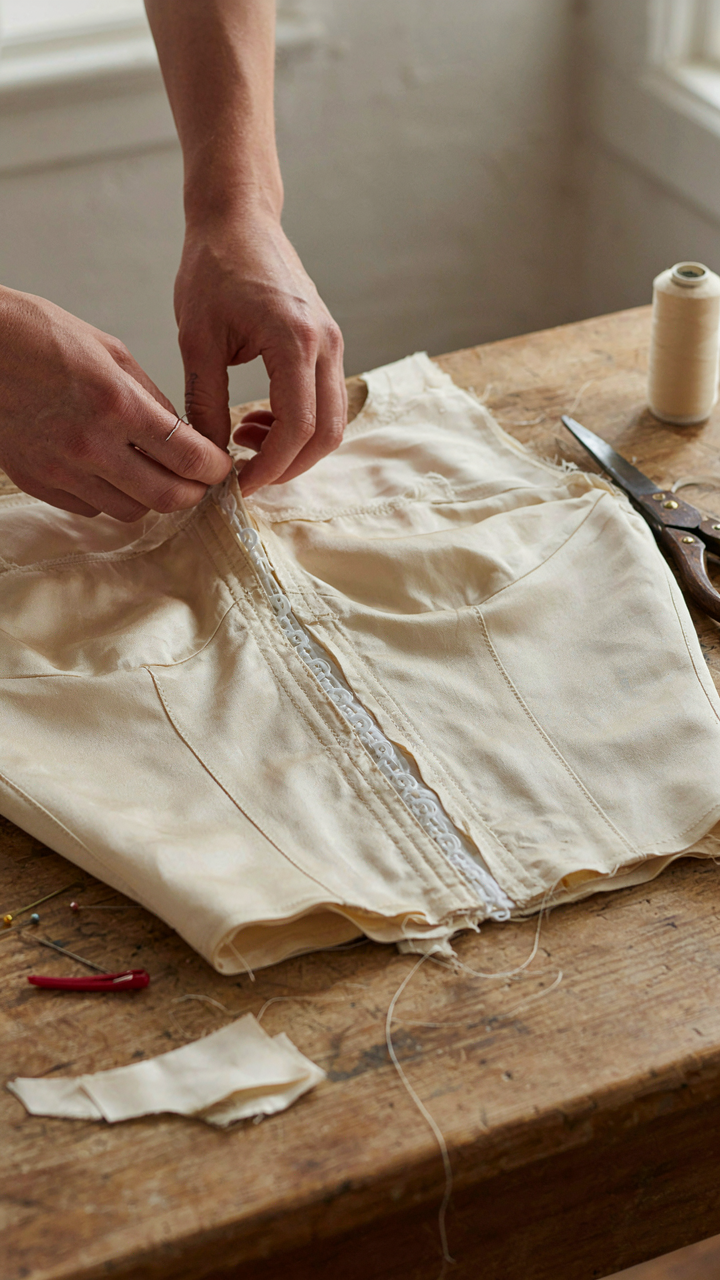
Corsetry and internal structure are not decoration. They’re mechanical systems that redistribute visual weight. Boning placed vertically along the side seams creates definition without compression. Structured panels sewn into the dress liner function as invisible scaffolding. Many wedding guest dresses lack this entirely, which is why they fail apple shapes immediately. The difference between a dress that works and one that doesn’t often lives in construction details you’ll never see from across a room.
Draping serves a specific function here: it channels the eye downward and away from the torso. A draped bodice with strategic gathers at the hip initiates movement that prevents static observation of your center. Internal stays or a hidden support layer beneath the bodice keep the fabric from sagging into unflattering folds. Verify construction before purchase. Run your hand along the interior seams and check for reinforcement. Poor construction collapses under wear. Good construction holds the intended shape from first wear through the reception.
The Golden Ratio Protocol For Apple Shapes

Where To Anchor The Cinch
You want the dress to hide your midsection without screaming “I’m hiding my midsection.” The mechanism is simple: break the vertical line of your torso so the eye stops traveling up and down. In design terms, this is negative space allocation—you’re forcing the viewer’s attention to stop at strategic points instead of scanning the whole silhouette. The cinch point matters because it determines whether the dress reads as intentional or desperate. Empire waists sit just under the bust and work because they interrupt the body’s center mass early, directing focus upward to your face and shoulders. High waistlines also work, positioned around your natural waist if it’s defined, or slightly above if your waist and hip are close in width. Sweetheart necklines and structured shoulders anchor attention at the top third, making the middle section feel proportionally smaller by comparison.

The protocol is this: cinch or define somewhere between your shoulder and your natural waist, never lower. A waist definition below your natural waist widens the visible midsection. Peplum tops and ruching that starts at the hip move attention downward and make the core look wider. Test the dress by standing sideways in a mirror and noting where your eye naturally lands first. If it lands at your midsection, the dress hasn’t anchored your proportions correctly. Adjust the neckline depth, sleeve structure, or waist placement until your eye moves to your face or collarbones instead.
The Geometry Of Three Silhouettes
The standard advice says “A-line hides everything.” That’s incomplete. A-line, empire, and wrap dresses work through different optical mechanisms, and picking the wrong one for your specific apple shape wastes the dress. A-line dresses expand from the waist downward, which only works if your waist is clearly defined. If your waist is straight or your weight distributes from bust through hips evenly, A-line actually emphasizes the width of your midsection because it starts the flare exactly where you don’t want expansion. Empire waists skip the midsection entirely by starting below the bust, making them mechanically superior for undefined middles. The fabric drops straight down past your problem area before any flare occurs, which is why they’re reliable. Wrap dresses create diagonal lines that break the horizontal plane of a round midsection, but they only work if tied correctly at or above your natural waist.
Structured wrap dresses tied at the bust or high hip work best for apple shapes because the diagonal creates a visual interruption that A-line can’t match. The wrap tie must sit high enough that it doesn’t compress your midsection—compression actually highlights the area you’re trying to downplay by making the fabric cling. A-line works only for apple shapes with visible hip flare. Empire waists work for everyone, which is why they feel like the safest choice. The protocol: measure your natural waist and hip circumference. If they differ by three inches or less, skip A-line and choose empire or wrap. If your hips are significantly wider than your waist, A-line becomes viable, but test it by checking if the flare starts at the widest part of your midsection or below it.
Strategic Camouflage: Drawing The Eye Where You Want It (Wedding Guest Dress Apple Shape)
The Neckline That Controls Attention
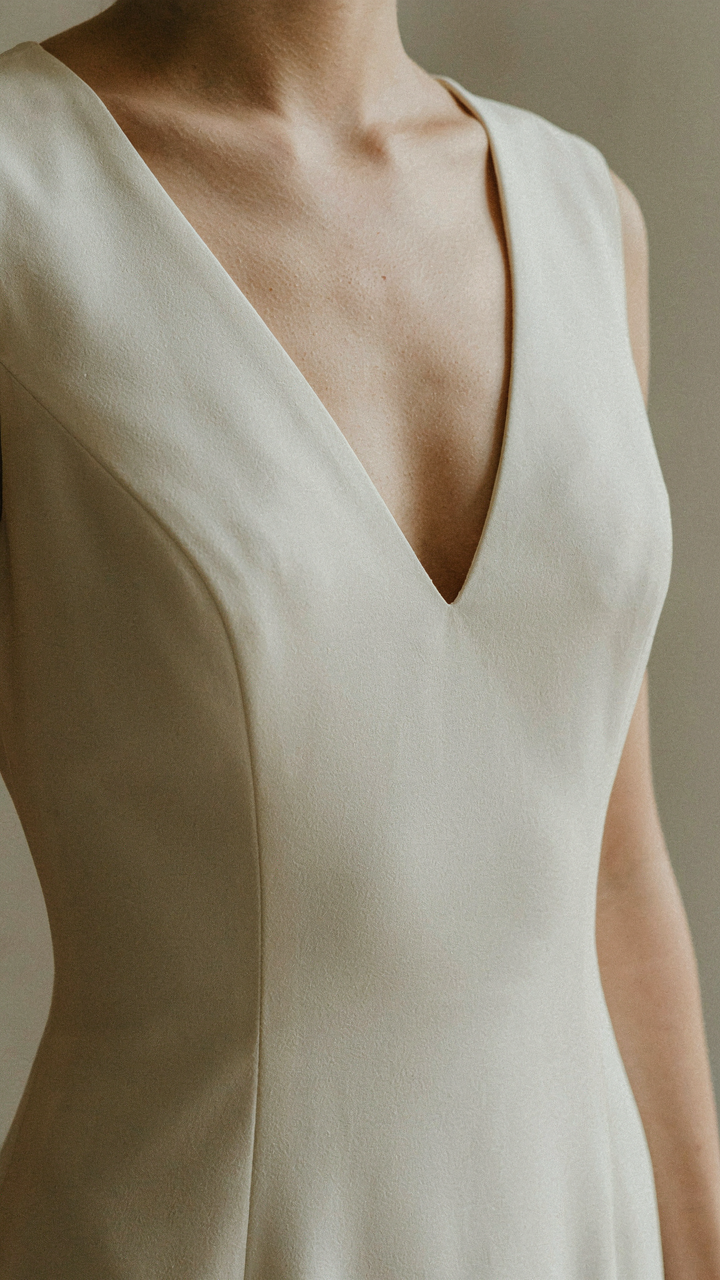
You want people to look at your face, not your midsection. That’s the real reason necklines matter. Think of attention like light in physics: it travels in straight lines toward what’s brightest or most defined. A V-neck creates a vertical vector that pulls the eye downward and outward, away from the torso entirely. A boat neck does the opposite, it locks attention horizontally across the shoulder line, which reads as width on an apple shape and wastes the one asset you’re trying to emphasize.

A sweetheart neckline splits the difference poorly. It rounds toward the bust, which on an apple shape emphasizes exactly what you’re trying to de-emphasize. V-necks work because they create negative space that your eye naturally follows away from the body’s center. The steeper the V, the more dramatic the redirect. Start with a V-depth that reaches mid-sternum at minimum. Anything shallower defeats the purpose entirely.
Sleeve Length And The Vertical Stretch
Sleeve and hem length aren’t decoration; they’re proportion multipliers. Long sleeves on an apple shape create a continuous vertical line from shoulder to wrist, which optically stretches your perceived height and draws the eye downward in a single stroke. Short sleeves leave your arms exposed and stop the vertical momentum, forcing attention back to the torso. Three-quarter sleeves represent the lazy compromise that helps nobody.
Hem length works the same principle. A midi or maxi on an apple shape extends that vertical line further, compounding the effect. Anything knee-length or shorter terminates the line too high, leaving the top-heavy silhouette unbalanced. Pair a long sleeve with a long hem for maximum optical elongation. This is basic proportion math, not opinion. The length of your dress determines how far down the eye travels before it stops.
The Uncomfortable Truth About Comfort: It’s Not About Stretch
Movement Without Restriction
You want comfort because you’re terrified you’ll look stiff or anxious in photos. The real problem: most wedding guest dress advice treats stretch fabric like a solution when it’s actually a band aid. Borrow from biomechanics here. In human movement, ease comes from the relationship between fabric recovery and range of motion. Recovery is how fast fabric returns to shape after you move. An apple shape needs dresses that let your midsection expand when you sit, eat, or breathe without the fabric fighting back or sagging loose. Stretch alone creates a trap. Fabric snaps back into place but restricts the actual movement you need.

The mechanism is simple. A structured dress in the right cut moves with you because the design itself accommodates your body shape, not because the material is elastic. A-line silhouettes, empire waists, and wrap styles give you real freedom because they redirect volume away from your midsection rather than clinging to it. Thick, recovery-rich fabrics like ponte or structured knits work because they hold their shape without needing constant tension. Wear a dress that fits loose at the torso and you’ll move naturally. Wear one that’s tight but stretchy and you’ll spend the wedding thinking about how stretched out you look.
The Engineering Under The Surface
Undergarments aren’t accessories to your outfit. They’re the load-bearing architecture that determines whether you’re comfortable or spending six hours fighting your dress. Most guidance pretends shapewear solves everything. It doesn’t. Shapewear compresses and smooths but it creates a competing pressure system against your dress fabric. For an apple shape, this causes bunching at the waist and visible panty lines because the shaping pulls inward while the dress pulls outward.
The real protocol: wear minimal, strategic support instead. A slip or thin camisole under a structured dress prevents ride-up and provides a clean surface. Skip shapewear that covers your entire torso. If you need support at the midsection, use a targeted waist slip or a dress with built-in support panels. Lighter layers under a well-cut dress handle more volume than thick compression garments ever will. Your dress breathes, you move freely, and nothing fights against itself.
Accessorizing As An Extension Of Design Plus Size Wedding Guest Outfit

Jewelry As Focal Points
You want accessories to do the work your dress can’t, so you’re hoping one bold piece fixes everything. It doesn’t. Jewelry operates on the principle of visual weight distribution, borrowed from graphic design: a single heavy element draws the eye there and holds it, but only if everything else recedes. For apple-shaped bodies, this means one statement piece near the face or collarbone, never at the midsection where you’re already storing volume.

The mistake is treating jewelry like decoration instead of directional architecture. A chandelier earring or structured necklace acts as an anchor, pulling attention upward and away from the torso. Keep your wrists bare or minimal. Skip layered chains. Avoid anything that draws a line across your belly or emphasizes width at the widest point. One piece wins. Everything else disappears.
Belts And Wraps Defining Waist Intentionally
Most advice says belt an apple shape to create definition. That’s incomplete. The actual mechanism is interruption: a belt only works when it sits above your natural waist and interrupts the visual line of the dress fabric itself. This requires precision, not just any belt at any point.
A structured wrap or sash worn high and tied to one side creates asymmetry, which breaks up the forward-facing volume that apple shapes carry. Position it between ribs and natural waist, never lower. Wide wraps work better than thin belts because they cover more territory and create a clearer boundary. The wrap becomes the waistline, not an accent. Wear it intentionally or don’t wear it at all.
The Evolutionary Advantage Of Well Dressed Best Dress For Apple Shape
Confidence Signals Through Strategic Fit
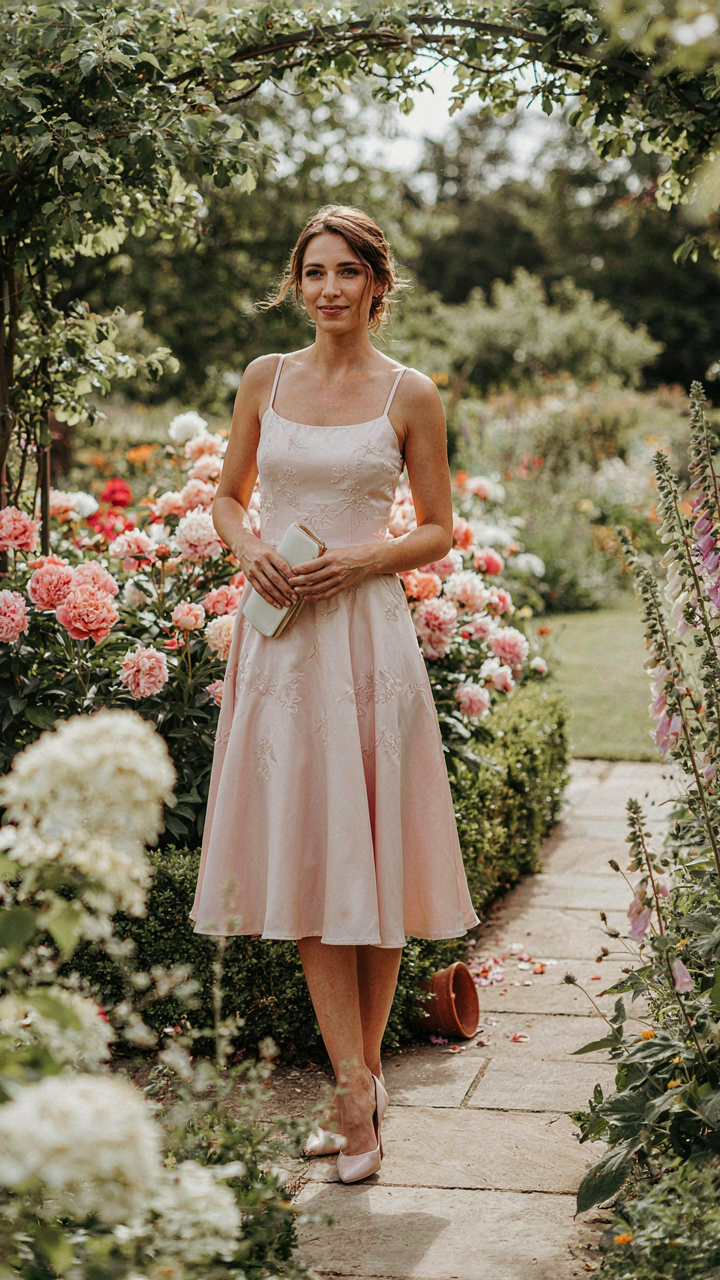
You’re reading this because you want people to perceive you as competent and put together, not because you actually care about fabric weight. Game theory explains this: you signal information through visible choices. In signals theory, a costly signal is one hard to fake. Fit is your costly signal. A dress that skims your midsection without clinging, balances your shoulders, and moves with you costs effort to find and wear. Apple shapes who wear poorly fitted dresses broadcast indifference. Apple shapes who wear strategically fitted dresses broadcast intention. The fit is the message.

The mechanism is simple: observers process your silhouette in under two seconds and make competence judgments based on visual coherence. A dress that fights your body shape creates cognitive dissonance. A dress that respects your proportions creates alignment. You don’t need expensive fabrics or trendy cuts. You need a wrap dress, A-line cut, or structured empire waist that skims rather than clings to your torso, pairs wide necklines or horizontal seaming above the waist, and creates visual balance by drawing attention away from the midsection. That’s not a style preference. That’s strategic signaling.
Authenticity Over Borrowed Aesthetics
The conventional wedding guest dress advice says dress like someone else. Wear what fashion magazines show. Wear what celebrities wear. This approach fails for apple shapes because it ignores the gap between their body and the model’s body. Mimicry only works when the base is similar. Fashion traps emerge when you copy silhouettes designed for pear or hourglass figures and expect them to land the same way on you.
Authenticity here means identifying what actually works on your frame, then owning it. A-line skirts with structured tops, vertical seaming, wrap closures, and asymmetrical hemlines all genuinely suit apple shapes because they respect your proportions instead of fighting them. When you wear a cut that aligns with your body, you move differently. You hold yourself differently. That physical alignment is what reads as confidence, not the dress itself. The action: try on three silhouettes that work for apple shapes, pick the one you actually wear comfortably, and stop second guessing whether it matches what you saw on Instagram.
Beyond The Aisle: Dressing An Apple Shape With Intentional Design

Know Your Principles Before You Know Your Trends
You want to look good at the wedding without overthinking it every time you open your closet. Here’s the mechanism: style principles are your operating system. Trends are just software updates that expire. For an apple-shaped frame, your principles aren’t about what’s fashionable this season. They’re about how fabric behaves on your specific proportions, where you carry weight, and which silhouettes don’t fight your body’s geometry.

Most people chase trends and wonder why nothing fits right. That’s because trends ignore your actual structure. Your principles ask: Does this neckline draw attention up or down? Does this waistline sit where my narrowest point is? Does the fabric drape over my midsection or cling to it? Once you answer these questions, you stop guessing. You build a decision framework that works whether you’re shopping in 2024 or 2027.
The Real Cost Of Guessing Wrong
Not understanding your body’s architecture wastes money and kills confidence on the day it matters most. When you wear a dress that fights your apple shape—fitted at the bust, tight through the middle, nowhere to hide—you spend the entire event adjusting, tugging, and mentally checking out. You pay for the dress, you pay for tailoring, you pay with your attention and presence.
The mechanism here is simple: misaligned design creates friction between you and the garment. Friction becomes mental load. Mental load becomes distraction. A-line silhouettes with strategic ruching, wrap dresses with adjustable waist control, and vertical line details work because they redirect the eye and distribute volume intelligently, not because they’re trendy. Once you own this principle, you stop buying mistakes.
Your Discomfort Isn’t The Dress’s Fault; It’s Your Failure To Understand How Fabric And Form Manipulate Perception
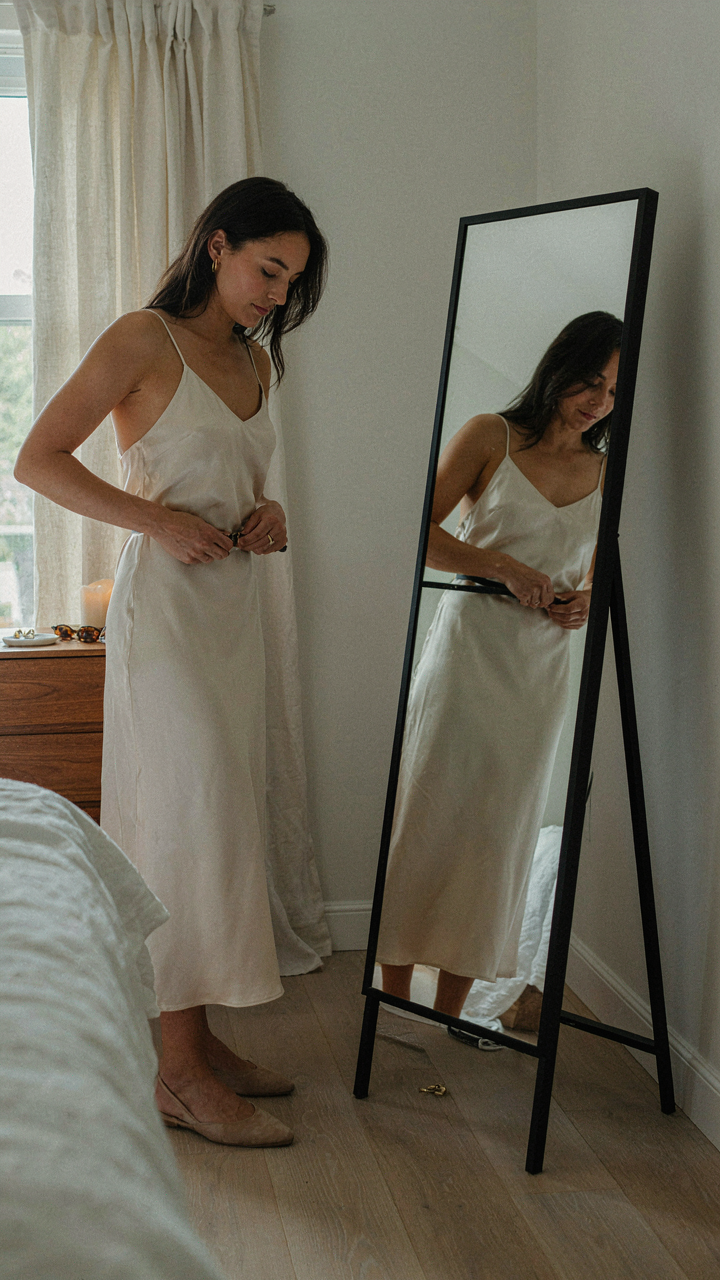
Stop blaming your body. The wedding guest dress for apple shape that actually works isn’t the one that hides you. It’s the one that controls where attention lands. Fabric weight, neckline depth, and waist placement aren’t random design choices. They’re tools. Master them and you stop fighting your shape. You start using it. Go find one dress in your closet right now. Try it with a different belt or neckline adjustment. Notice what shifts. That’s your real education starting. The dress doesn’t fix you because you were never broken.




