
Beyond The Obvious: Decoding December Dress Codes
What Festive Actually Means
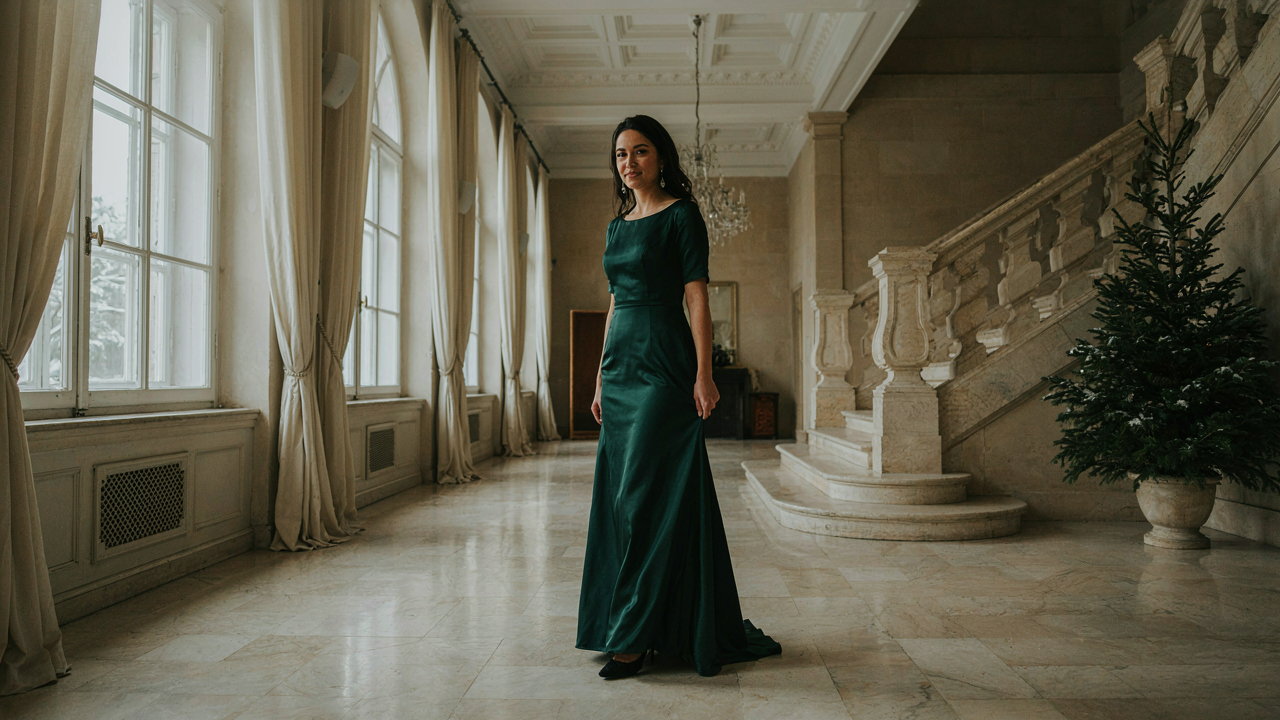
You care about this because you’re terrified of showing up wrong and signaling you don’t belong. The real mechanism: “festive” is code for permission to break baseline formality rules without breaking the event itself. It’s a release valve, not a costume instruction. December weddings borrowed this term from retail and party culture, where it means “more color, more sparkle, more texture than Tuesday.” But at a wedding, festive has limits. It means you can wear deep jewel tones, metallics, or pattern. It doesn’t mean you abandon fit, fabric quality, or silhouette discipline. Formal stays formal. Festive just removes the grayscale requirement.
The distinction matters because both exist on the same invitation. A black-tie festive wedding is still black-tie. A cocktail festive wedding still requires structured pieces. Most people read “festive” and think they can dress like the event itself is decorative. The signal you send is the opposite. Restraint with one elevated element beats chaos with ten. Choose one festive anchor—a metallic fabric, a jewel tone, a structured sequin piece—and keep everything else refined. This prevents looking like you confused a holiday wedding with holiday shopping.
Read The Venue, Not The Words
Venue language is economics disguised as aesthetics. A historic manor demands different choices than a rooftop loft, not because of vibes but because of physics: light, ceiling height, floor material, temperature. These constraints determine what actually works. Generic advice says “coordinate with the wedding colors” or “wear what makes you feel confident.” Both are useless. The venue tells you the real rules. An outdoor December wedding in a garden means cold, wind, and ground conditions. A hotel ballroom means controlled climate and polished surfaces. A barn means texture that shows every thread.
Start with the venue name and look at actual photos. Not the wedding’s Pinterest board—photos from events held there. See what guests wore. See how light hit the space. See if people stood or moved around. A formal evening wedding in a wood-beam venue reads differently than the same dress code in chrome and glass. The venue determines your fabric weight, shoe grip, accessory scale, and whether you can wear something that requires humidity or stillness to look correct. Build backward from venue reality, not invitation wording.
The Strategic Fabric Selection Protocol For Winter Wedding Attire
Wool, Velvet, And Silk Mechanics For December Ceremonies
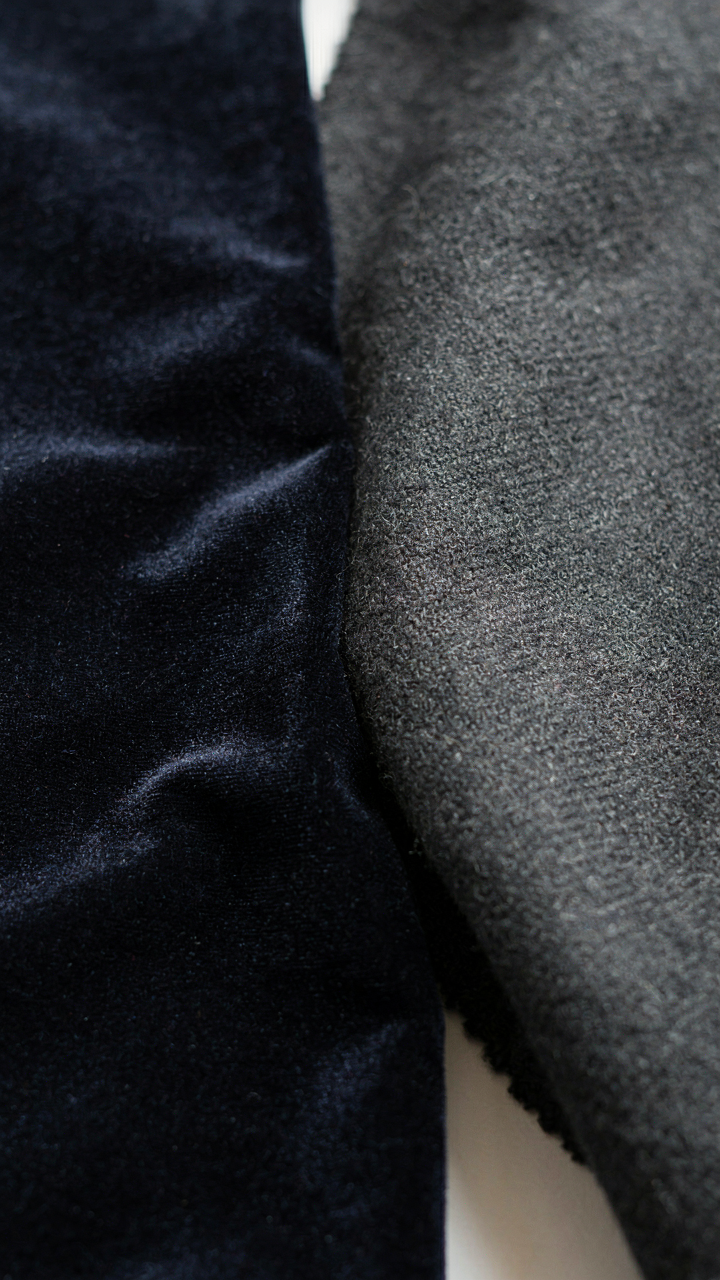
You’re reading this because you’re afraid of looking cold or underdressed. The real mechanism is thermal resistance combined with visual weight. Wool traps air in its fiber structure, creating insulation without bulk. Velvet’s pile density does the same thing while adding perceived formality through light absorption. Silk conducts heat poorly, which is counterintuitive but matters for layering under structured pieces.

Wool remains the baseline for winter wedding guests because it performs across temperature swings common in December venues. A 100-percent wool blazer or dress maintains shape under movement and photographs well under indoor lighting. Velvet works as an accent fabric on dresses or jackets, creating texture that reads as intentional rather than decorative. Silk linings and underlayers prevent wool from feeling rough against skin, solving a comfort problem that kills confidence mid-ceremony.
The Real Fabric Failures Nobody Names
Most wedding guest advice says avoid synthetics and you’re fine. That’s incomplete. The actual problem is blend ratios and fiber weight working against each other. Polyester blends feel cheaper under movement because they generate static and cling to skin. Cotton, despite being natural, absorbs moisture and loses insulation when damp, which matters in December venues where coat removal happens indoors.
The setup that fails most: a dress made from cotton-poly blend in a thin weight, worn without structured layering. It moves wrong, clings in ways that read as cheap, and doesn’t hold temperature. Pick wool content above 60 percent, velvet as a top layer rather than a base, or silk charmeuse as an alternative to cotton blends. Test how fabric moves against your body before committing to the purchase, then commit.
Color Theory For Impact: Not Just Christmas Cocktail Outfit Hues
Skip The Expected Palette
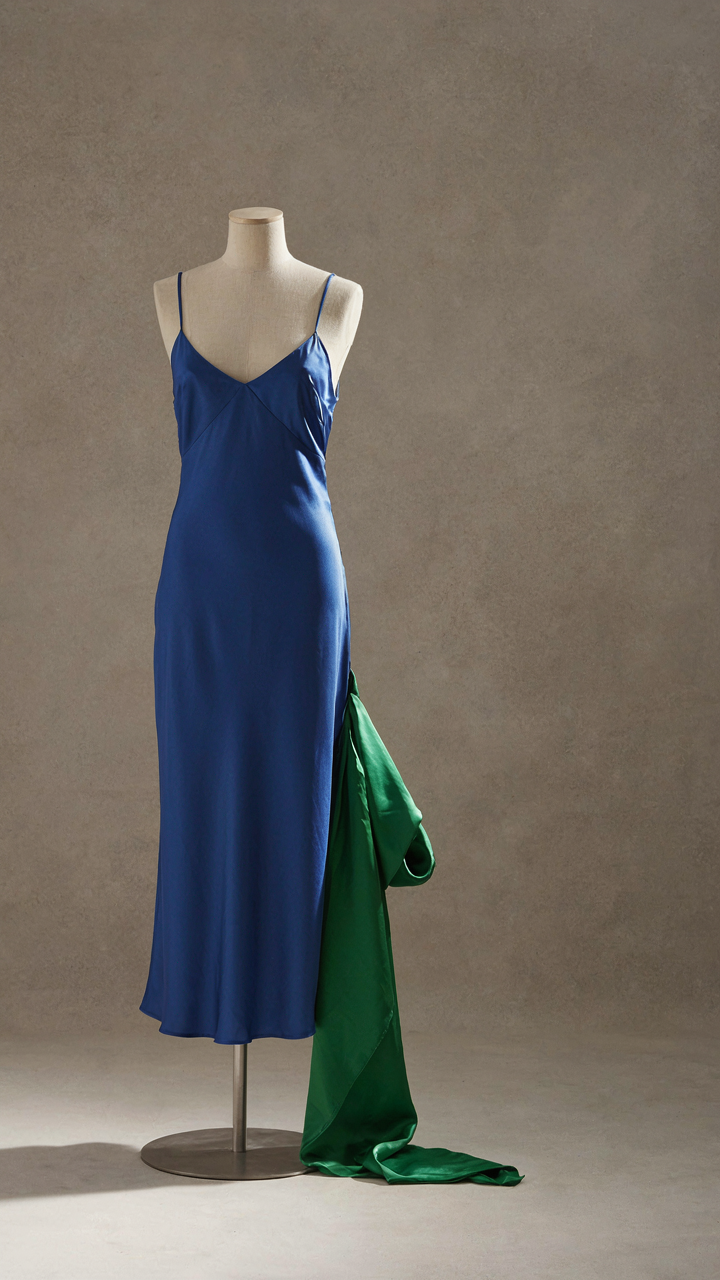
You want to stand out without looking like you’re trying. That’s the real driver here. The mechanism: people process color before they register fit, fabric, or cut. You have roughly two seconds to land an impression before someone’s brain files you away as “another guest.” The consensus move is red or forest green—the safe, thematic choice that proves you know what season it is. This is precisely why it fails. Everyone makes the same calculation. You’re fighting for distinction in a room where half the women wear burgundy and the other half wear black.

The actual leverage is contrast and temperature. A deep jewel tone like sapphire, emerald, or rich plum reads as intentional and elevated without the Christmas decoration vibe. Navy works if your cut is sharp and your accessories push it forward. The mechanic: choose a color that sits outside the warm red-green spectrum but lands in the “formal” range. Slate, charcoal, deep teal, or wine-adjacent burgundy all work because they signal deliberation rather than theme compliance. Your color choice should answer the question “Why this?” not “It’s December.”
How Color Changes The Room’s Read Of You
Color psychology operates like a status signal in social hierarchies. Warm tones project approachability and energy. Cool tones project authority and reflection. At a holiday wedding, the ambient environment is already warm—golden lighting, candles, red florals. You’re competing for visual weight in that context. Warm colors blend. Cool colors cut through. If you wear navy or charcoal, you become a focal point by design, not accident. The room unconsciously reads you as composed and separate from the seasonal noise.
This isn’t mysticism. It’s how human perception works. Neuroscience confirms: warm colors activate approach responses; cool colors activate evaluation responses. In a social setting, evaluation is higher status than approach. Saturation matters equally. A muted, desaturated color reads as refined. A bright, primary-level color reads as costume. Choose depth over brightness. Pick a cool-toned jewel shade, keep it matte or silk-finish fabric, and you’ve already won the color game before anyone assesses your fit or accessories. The protocol: select one cool-toned base, keep all other colors neutral or complementary, and let the base carry the weight.
The “Burgundy Wedding Guest” Effect: Understated Power
Why Burgundy Works Year Round
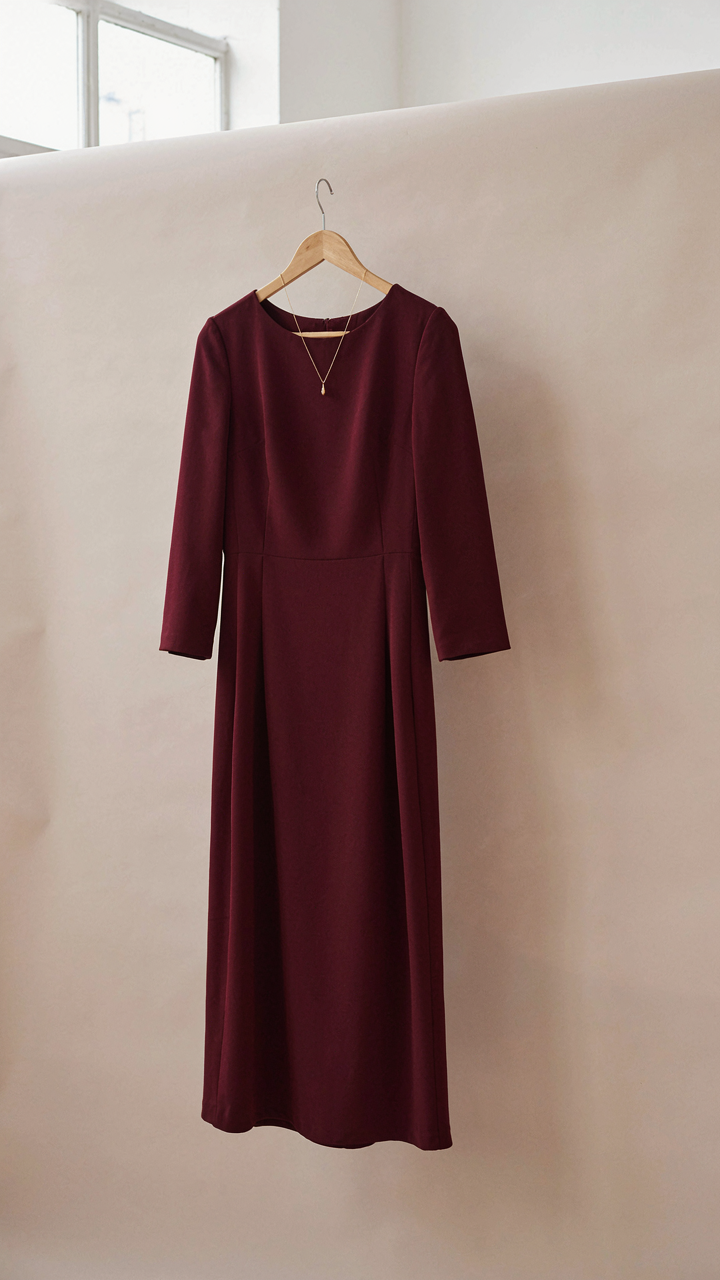
You want to look intentional without looking like you tried too hard. Burgundy solves that. The color sits in a perceptual sweet spot: deep enough to read as formal, warm enough to feel personal, and detached enough from seasonal trends that you wear it in December without it screaming “holiday.” Using color theory’s principle of simultaneous contrast, burgundy appears richer against winter’s cool-toned lighting while maintaining sophistication against any venue’s backdrop. The mechanism is simple: your brain registers depth before it registers seasonality.

Burgundy dresses and separates dominated formal wear across the 1980s and resurged through the 2010s because the color carries no expiration date. It doesn’t depend on metallics, sequins, or other December conventions. A burgundy midi dress in crepe or a burgundy blazer in wool works in February the same way it works in December. You’re not making a seasonal statement. You’re making a competence statement. The dress becomes an asset, not a one-time purchase.
Building Layers Without Visual Clutter
Most advice tells you to “add dimension” with accessories. That’s vague and usually wrong. What you actually need is strategic repetition in material, not multiplication of objects. A burgundy base demands restraint elsewhere, not abundance. Take the restraint principle from minimalist design: one quality piece per category. One metal, one texture, one secondary color maximum. A gold watch, a black clutch, burgundy shoes. That’s the full inventory.
The moment you add a patterned shawl, metallic belt, and statement earrings to a burgundy dress, you’ve created visual noise that reads as insecurity. The outfit stops working for you. Depth comes from fabric weight and fit precision, not accessory stacking. A simple gold pendant on a burgundy crepe dress creates more perceived luxury than three accessories ever will. The protocol: choose burgundy, lock in one metal tone, select one neutral bag, stop.
Dresses Vs. The Unconventional: Defying Expectations
Jumpsuits And Tailored Separates As Power Moves
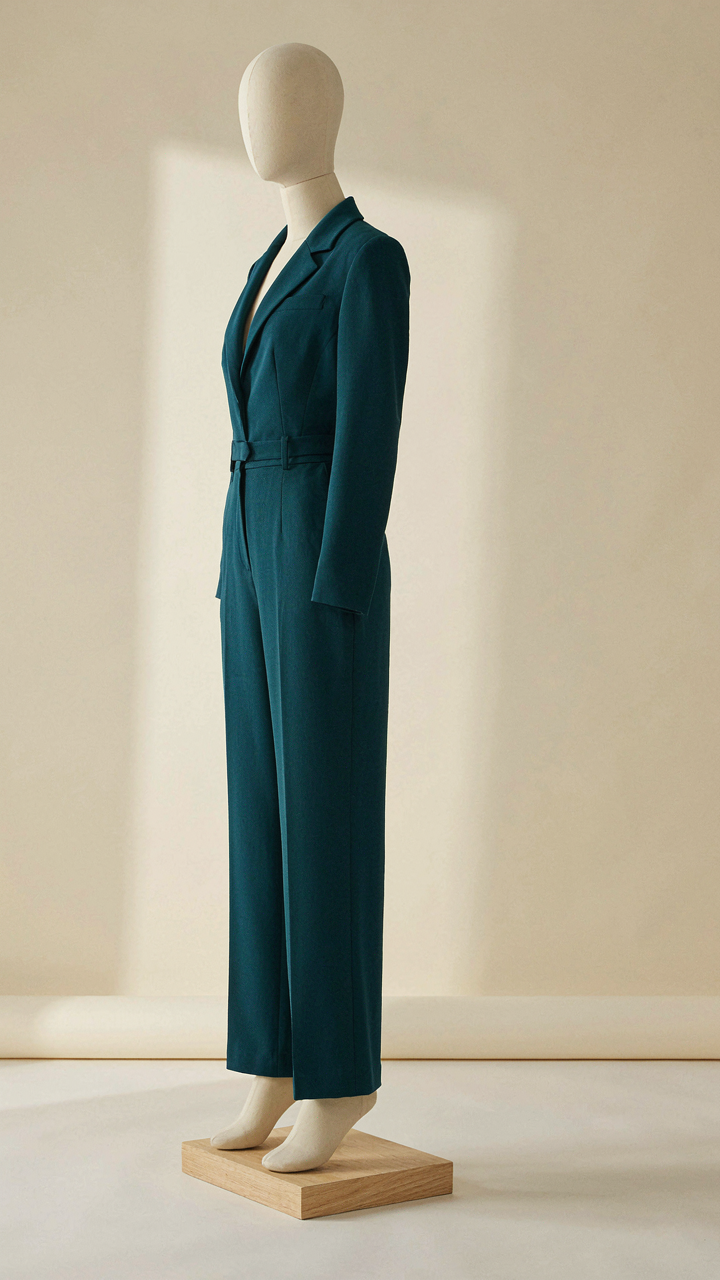
You’re worried people will judge you for not wearing a dress. That’s the real calculation happening here. The mechanism is simple: a jumpsuit or tailored separates signal intentionality and control. They read as a choice, not a default. Menswear tailoring codes authority because it requires commitment to fit and proportion. December weddings amplify this because formal dressing is already mandatory—standing out requires active deviation, not accident.

A well-fitted jumpsuit or two-piece tailored set dominates a room precisely because it defies the passive femininity people expect. You’re not negotiating with convention. You’re declaring a position. The fabric matters less than the structure. A wool blend or quality cotton blend holds its shape through a five-hour reception. Skip the compromise pieces. Go structured or go home.
Choice As The Operating System
Economics calls this the paradox of preference: abundance of options creates decision paralysis and identity diffusion. Your outfit choice at a holiday wedding functions the same way. The real power isn’t in owning ten options. It’s in understanding why you’re selecting one thing over another. Most people dress by elimination, not intention. They wear what feels safe. That’s not choice. That’s compliance.
When you deliberately choose separates over a dress, tailoring over loose fabric, or structure over flow, you’ve moved from consumer to creator. You’re not shopping for permission. You’re shopping for tools that express a specific version of yourself. The guest who picked her outfit three months prior and adjusted nothing owns her presence differently than the guest who panic-bought something last week. Decide your approach before you enter the store.
Midi Formal Dress Winter: The Versatility Illusion
Why Midi Actually Moves
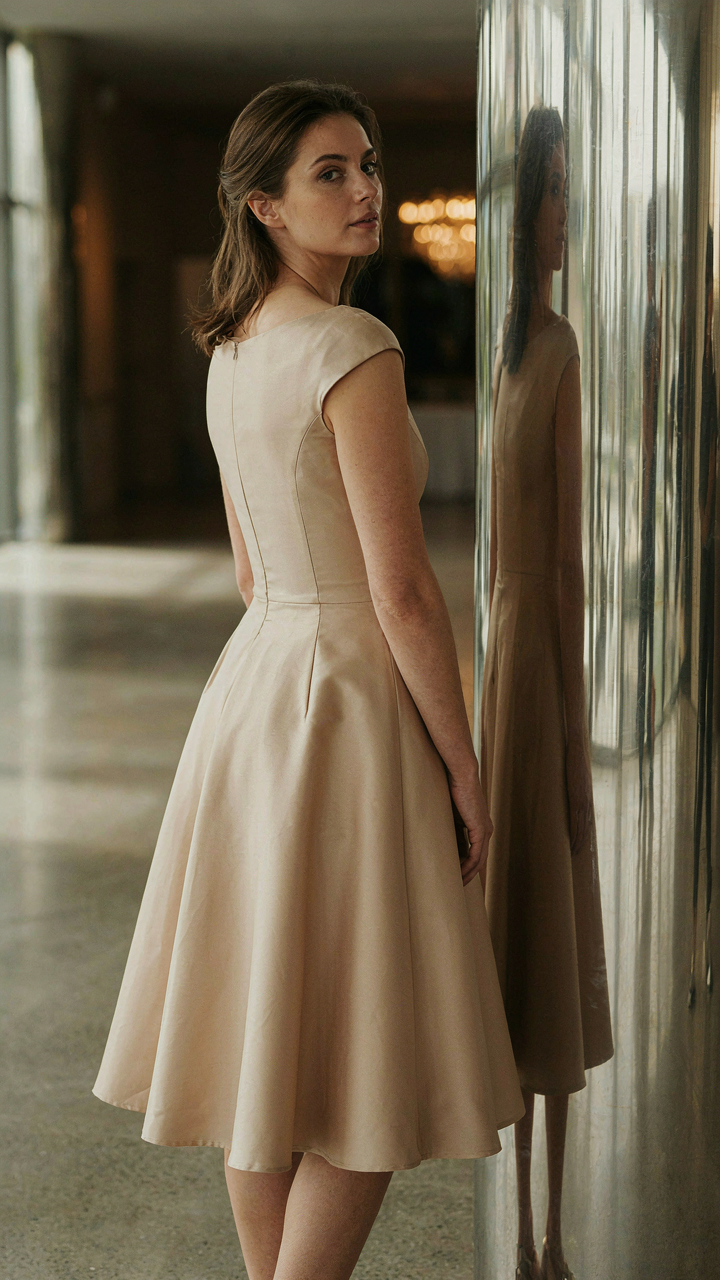
You want midi length because you think it signals sophistication while keeping you safe from judgment. That’s not the real reason to wear it. Midi solves a physics problem: it distributes your weight across a longer fabric column, which means you can sit, stand, and navigate a crowded reception without fighting the dress. A too-short formal dress forces micro-adjustments all night. A too-long one becomes a tripping hazard on stairs or dance floors.

December weddings demand this practical advantage because venues shift between heated interiors and cold entries repeatedly. Midi gives you the range to move between environments without the dress becoming a liability. You walk differently in a dress that restricts your stride. Midi preserves your gait and your composure, which is the actual output of sophistication, not the length itself.
Heavy Soles Meet Hard Floors
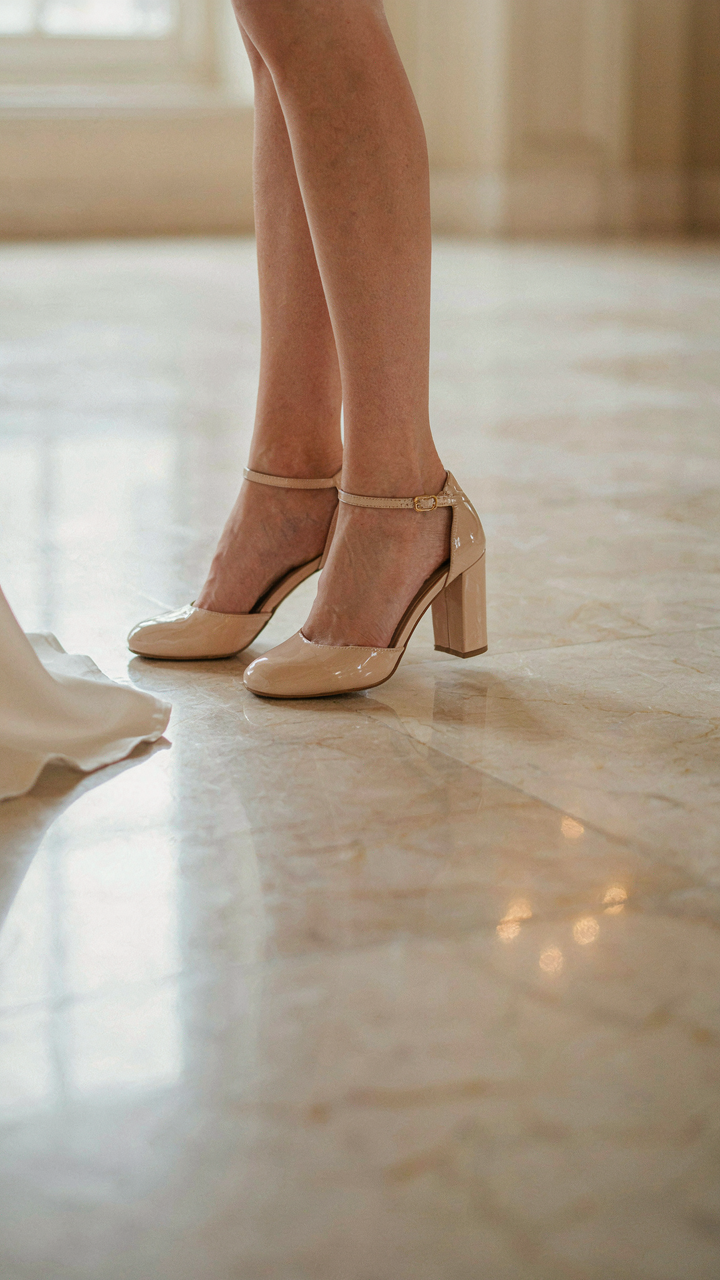
The advice to pair midi dresses with delicate heels is incomplete. Ballroom floors in December venues are often marble, concrete, or polished wood. Thin heels create sound and instability on these surfaces. You need a heel with actual base contact and grip to move safely through a crowd of a hundred people.
Block heels or low block heels with textured soles give you traction and reduce fatigue. Metallic leather or suede provides grip without looking industrial. Pair them with midi and you eliminate the mental load of “am I going to slip?” That mental clarity matters. You’ll actually engage with people instead of managing your footing. Closed-toe options work year-round and eliminate the bare-skin-to-cold-floor shock many overlook.
The “Red Fall Wedding Guest Dress” Fallacy: Timing Is Everything
Why Autumn Colors Miss The Mark In December
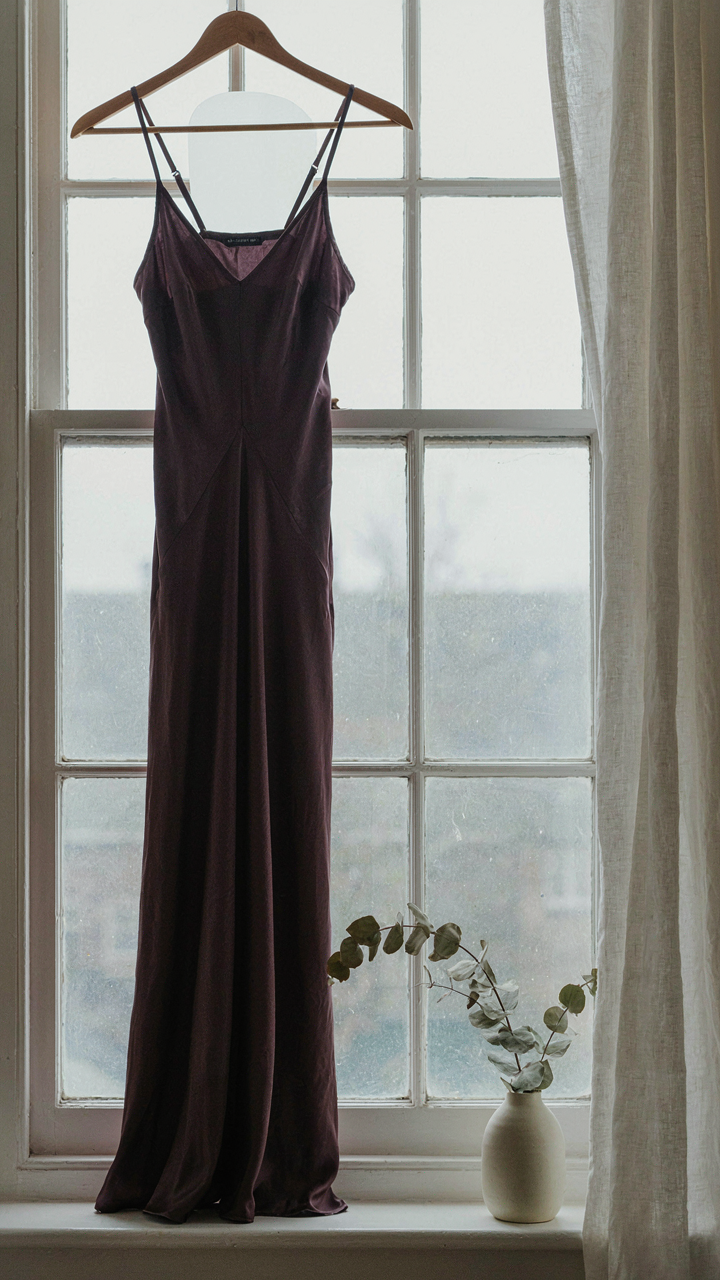
You’re drawn to this section because you’re afraid of showing up wrong—of being the person who didn’t read the room. Here’s the mechanism: autumn colors work in fall weddings because they align with the visual environment. In December, that environment has changed. Burgundy, rust, and burnt orange exist in a void when everything around them reads winter. Color gain relevance through contrast and context, not through personal preference or what looked good in September.
December light is cooler and harder. It has a different angle and intensity than October light. Fabrics that absorbed warmth in fall read as dull or muddy under winter conditions. The dress isn’t the problem—the timing is. Wearing autumn’s palette to a winter ceremony creates visual static instead of coherence. Your outfit should echo what’s actually happening outside the venue, not what happened two months prior.
Reframe Your Color Strategy For Winter Ceremonies
- Deep jewel tones: Emerald, sapphire, and amethyst hold visual weight under cool winter light and read intentional rather than seasonal.
- Metallics and shimmer: Gold and silver reflect winter’s hard light effectively. They catch and distribute illumination rather than absorbing it.
- Rich neutrals with depth: Charcoal, navy, and chocolate brown anchor winter settings. Add texture through fabric weight to prevent flatness.
- True reds and crimsons: Not burnt orange masquerading as red. True reds have blue undertones that sync with winter’s color temperature.
- Black with intentional contrast: Pair black with bright whites, silvers, or jewel accents. Solo black reads somber in winter without strategic balance.
The adaptation isn’t about abandoning color—it’s about matching your palette to the actual season you’re dressing for. Winter ceremonies demand colors with cooler undertones and fabrics with enough structure to hold shape under harsh light. Check your dress choice under natural light at the time of day the ceremony happens. What looks balanced in your bedroom under artificial light will behave differently in a December evening venue. Test it before you commit.
Wedding Guest Looks Winter: Beyond The Single Event
The Rotation Strategy That Justifies Real Investment
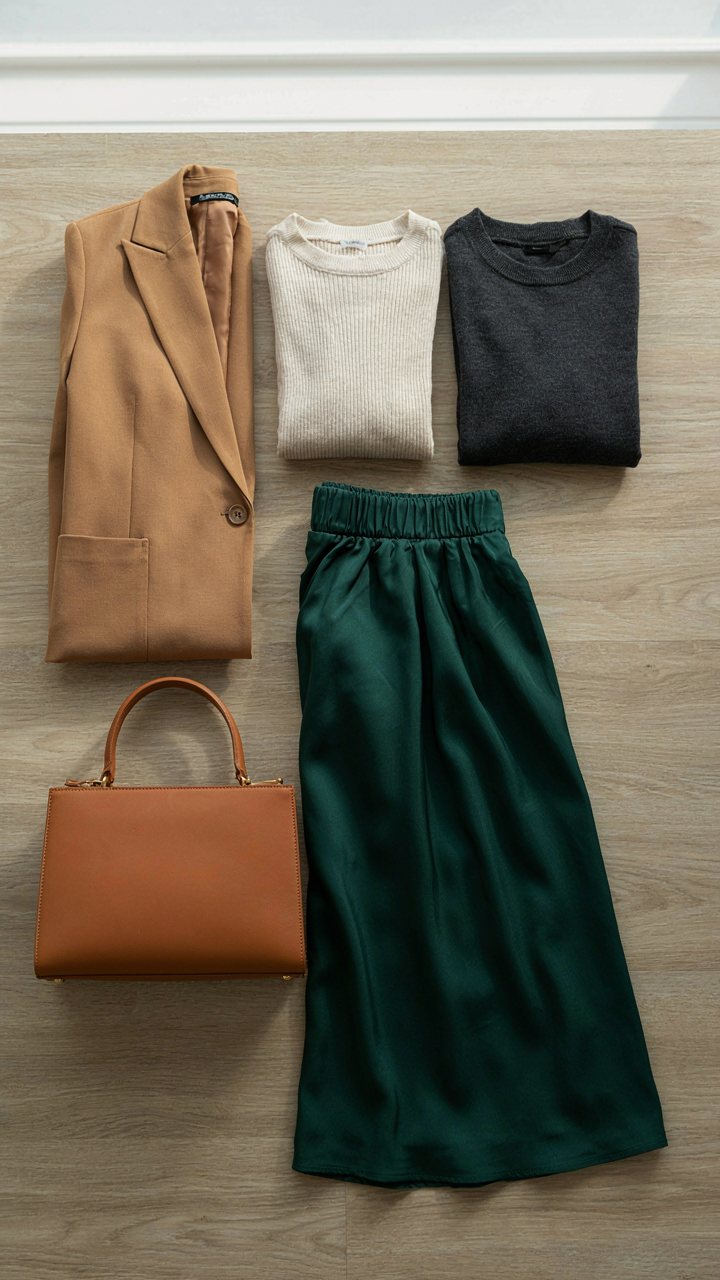
You’re worried about being seen in the same outfit twice. That’s the real concern underneath all this, and it’s costing you money because you chase disposable pieces instead of building a system. Think in economics terms: you’re treating each wedding as a one-time transaction instead of recognizing the portfolio effect, where five core pieces rotate through different combinations to generate fifteen distinct looks across the season.
The math works like this. A structured blazer, two quality base layers, one statement bottom, and a single accessory piece swap in and out across four different events. The blazer moves from formal to business-casual depending on what you layer underneath. Fabrics matter here because they hide repeat wear better. Wool blends and quality synthetics show wear less visibly than cotton, and dark jewel tones photograph differently under various lighting than neutrals do, even when it’s technically the same piece.
Pieces That Outlive The Season
Most wedding guest advice tells you to buy seasonal trends. That’s backward thinking that leaves your closet full of dead weight by February. A structured wool or wool-blend blazer in charcoal, navy, or burgundy will work at December weddings this year and next year and the year after. The fabric quality determines longevity, not the cut, so you’re looking at materials with at least 70 percent wool content for durability and shape retention.

Invest in tailoring as part of the piece cost, not an afterthought. A 40 dollar pair of trousers that fits perfectly after alterations outperforms a 120 dollar pair that fits wrong straight off the rack. For a holiday wedding guest outfit, this means buying pieces one size up if needed, then having them fitted to your actual measurements. The investment compounds because a well-fitted piece works across body changes and styling variations that a tight-fitting trend piece never will.
The Real Obstacle Isn’t The Dress Code; It’s Your Fear Of Standing Out

You already know what to wear. Your actual problem is that you’re waiting for permission to wear it. Stop scrolling outfit boards looking for validation. Pick one piece you actually want to wear, commit to it, and build around that instead of building around what you think a “holiday wedding guest” should look like. The dress code exists to solve logistics, not to make you invisible. Everyone remembers the person who showed up as themselves, not the person who blended in perfectly.