


The Illusion Of Body Types: Why Categorization Fails Your Wrap Dresses
The Real Problem With Type Systems
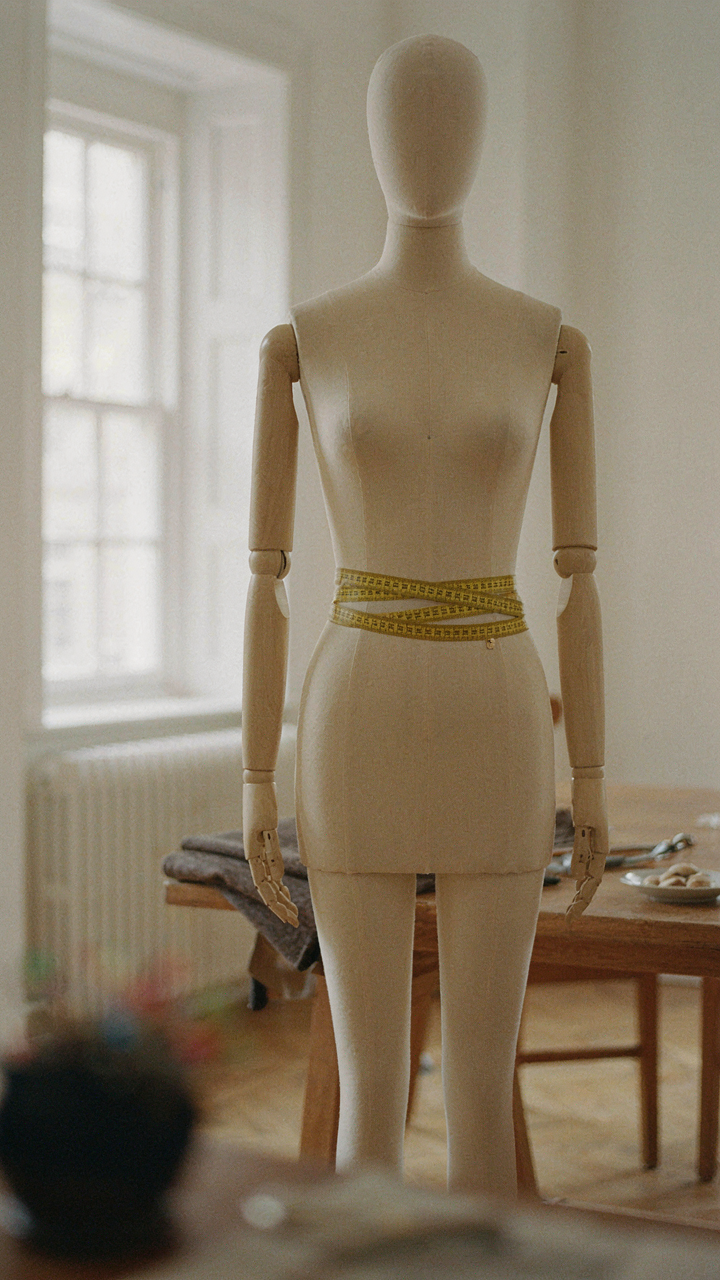
You want a shortcut. A formula that works without thinking. The fashion industry sells body type systems because they’re easy to market and they make you feel like you’ve solved something when you haven’t. Here’s the mechanism: wrap dresses expose a flaw in all categorical thinking. Economics calls this the “averaging problem”—when you classify something into a bucket, you lose the specific variables that actually matter. A wrap dress doesn’t flatter a “pear shape” or an “hourglass.” It fits based on torso length, hip width, bust placement, and how fabric drapes on your specific proportions. The categories are abstractions that pretend precision.
These type systems were invented by retailers and fit models, not by engineers solving real problems. They persist because they’re repeatable and profitable, not because they work. A wrap dress worn by two women with identical “body types” will read completely different based on shoulder slope, rib cage depth, and where their natural waist actually sits. The system fails because it ignores variance.
Stop Accepting Borrowed Answers
Generic advice says wrap dresses flatter everyone. They don’t. That’s incomplete. The actual rule is simpler: wrap dresses work when the tie placement matches where your body naturally narrows. If your narrowest point is at your actual waist, a standard wrap works. If your narrowest point is six inches higher, you’ll create bunching and visual width. The standard advice skips this step because it requires you to measure, not just buy.
Most wrap cocktail dress guidance tells you to “enhance your shape” or “create balance,” which are feelings, not actions. Instead, establish your narrowest horizontal line first. Locate it physically before shopping. Then find a wrap dress with tie placement that matches that line exactly. This single protocol eliminates most fit failures. You’re not dressing a type. You’re matching a garment to a specific body measurement.
The Proportionality Blueprint: Unlocking Your Best Wrap Dress Outfit
Finding Your Frame’s Natural Ratios
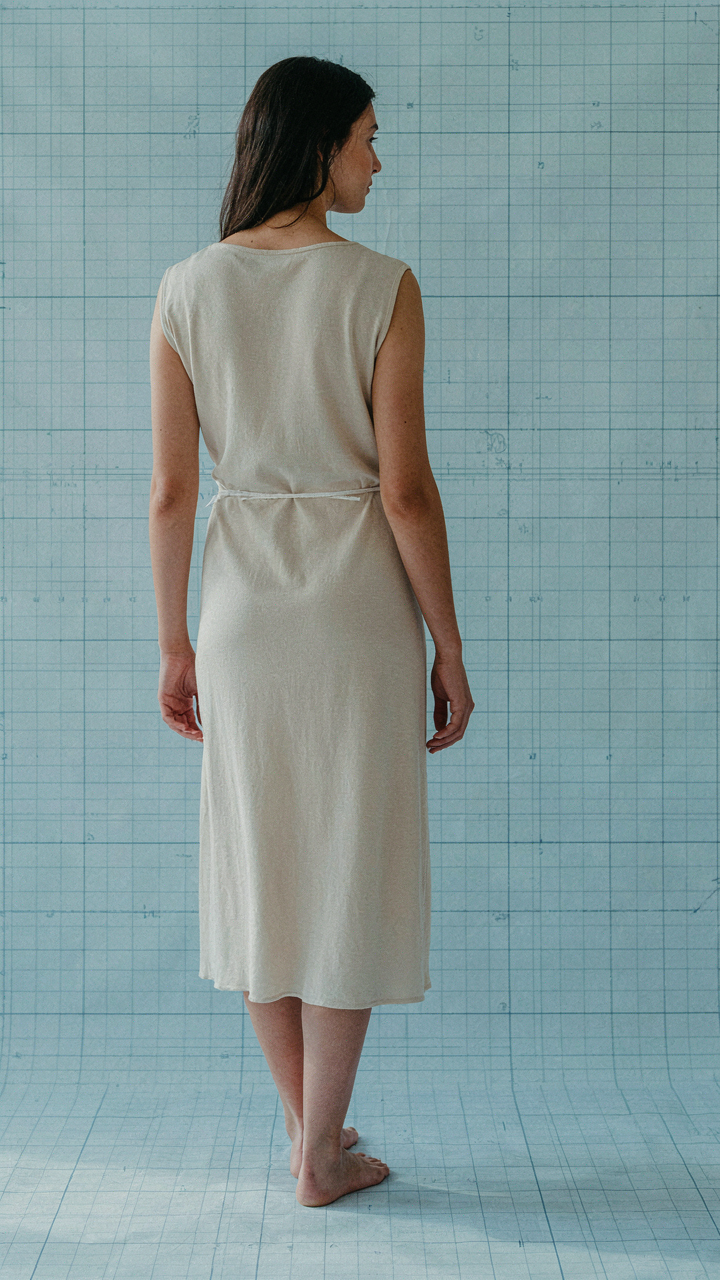
You want to know this because looking proportional signals competence and intentionality, not accident. The wrap dress works because it lets you control two independent variables: where the wrap closes and how much fabric pools around your frame. Your job is identifying whether you’re building a silhouette that’s longer on top or bottom, wider in the shoulders or hips, to know which wrap placement stops chaos and starts strategy.

Think of your body as a column divided into thirds vertically and halves horizontally. The wrap itself is a lever—closing it above the natural waist shortens your torso visually, while closing it lower extends your legs and compresses your midsection. Measure from your shoulder to your natural waist, then from waist to hip bone, then hip bone to floor. Which distance is longest? That distance controls where your wrap should terminate. You’re not guessing anymore. You’re matching fabric placement to actual spatial facts.
Where Your Belt Changes Everything
Most advice says wear a belt to define your waist. That’s incomplete. A belt becomes strategic only when you understand force distribution—borrowed from architecture, where load-bearing points determine structural strength. Your wrap dress has two natural closure points: the side seam and wherever the wrap ties. A belt placed at your actual waist works only if your waist is your narrowest point. If your hips are significantly wider, the belt creates visual tension and shortening instead of elongation.
Place your belt one inch below your natural waist if your torso is longer than average, or skip the belt entirely and rely on the wrap’s closure point to define shape. If you wear a belt, anchor it at the wrap’s tie point rather than fighting against it. This consolidates the visual weight into one decisive line instead of competing hierarchies. You’re simplifying the eye’s path, not adding complexity.
Fabric As Function: The Engineering Of An Elegant Wrap Dress
Weight And Weave Structure
You’re reading this because you want to know which fabric won’t betray your body by clinging or billowing at the wrong moment. The mechanism is simple: fabric weight and weave density determine whether a wrap dress clings to your frame or skims past it.

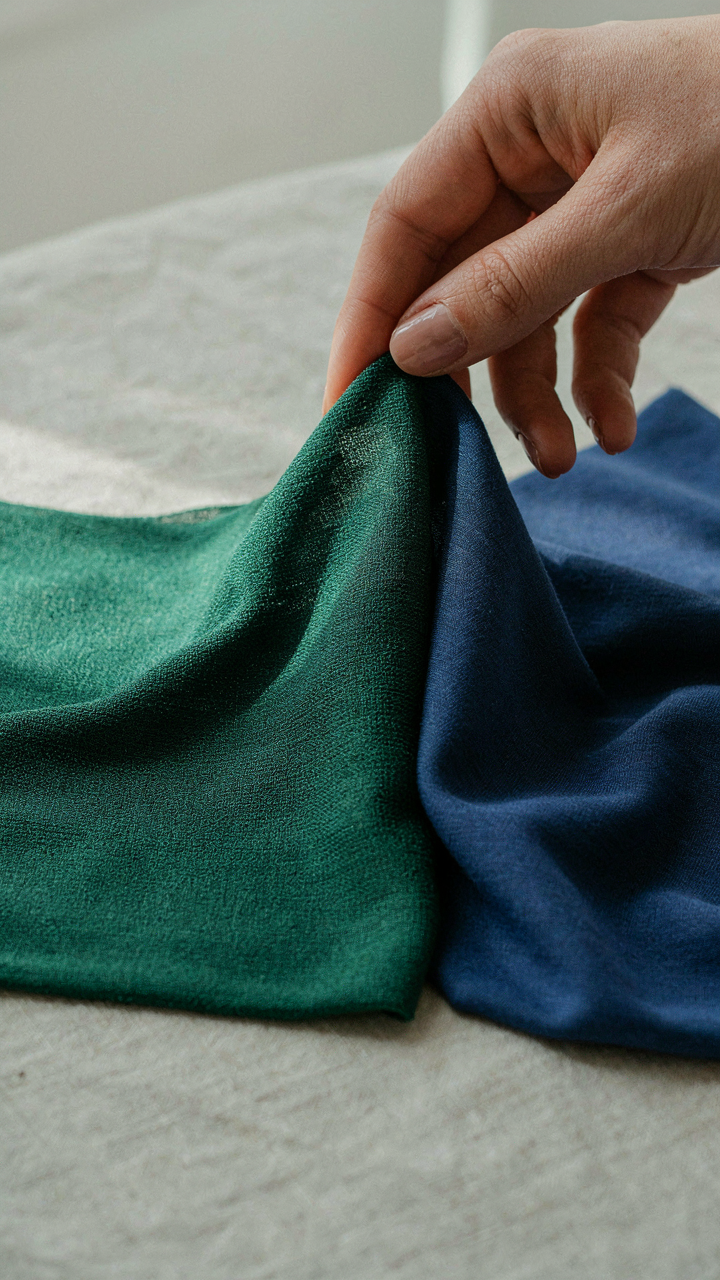
The common advice says “go with natural fibers.” That’s incomplete. Weight matters more than fiber content. A heavy linen wraps differently than lightweight silk charmeuse, even though both are natural. Weave density—how tightly threads interlock—controls how fabric responds to body heat and movement. Loose weaves breathe and move; tight weaves hold structure. A wrap dress needs enough weight to maintain the wrapped shape without sagging, but not so much that it adds bulk.
- Crepe weaves: Tightly twisted yarns create texture that grips fabric together, preventing slipping at wrap points. Works at all body sizes without gapping.
- Jersey knits: Fluid and forgiving, these stretch slightly to accommodate body curves. Lower weight means less support for wraps on larger frames.
- Cotton blends (minimum 40% polyester): Polyester adds recovery—the fabric returns to shape after stretching. Pure cotton wrinkles and loses structure throughout the day.
- Viscose rayon: Drapes like silk but costs less. Weighs enough to stay wrapped without stiffening. Wrinkles easily if not blended with synthetics.
- Ponte knit: Engineered fabric with structure and stretch. Holds wraps securely on all sizes without restrictive tightness.
Pick fabric by weight first, fiber second. A 4 to 6-ounce fabric per square yard holds a wrap securely. Below 4 ounces, the dress slides and gaps. Above 7 ounces, you’re adding unnecessary bulk that defeats the wrap’s slimming effect. Test by draping a swatch across your body—if it clings immediately, it’s too light; if it bunches, it’s too heavy or too stiff.
How Fabric Flows Against Resistance
Fabric doesn’t float freely on your body. Physics calls this fluid dynamics: how a material moves against objects in its path. Your body creates drag and pressure points on the wrap dress, and the fabric’s response to that resistance determines whether the wrap flatters or fails.
When you move, fabric experiences pressure from your shoulders, torso, and hips. Silk charmeuse slides against skin with minimal friction, which is why it drapes beautifully but can slip out of the wrap. Cotton crepe has higher friction, which keeps the wrap anchored even during movement. The fabric doesn’t need to be tight—it needs enough surface grip to stay in place. This is why wrap dresses in matte fabrics outperform glossy ones on larger body sizes. The matte surface grabs slightly, preventing the slip that turns a flattering wrap into a gaping disaster. A fabric that flows too freely requires tighter tying to stay secure. A fabric with textured grip lets you tie the wrap gently and still maintain the shape. Observe how the fabric sits on your body after sitting down for five minutes—if the wrap has shifted or loosened, the fabric’s flow is too uninhibited for your body.
The Unspoken Power Of The Neckline In Any Wrapped Dress
How Deep V Necks Command Attention
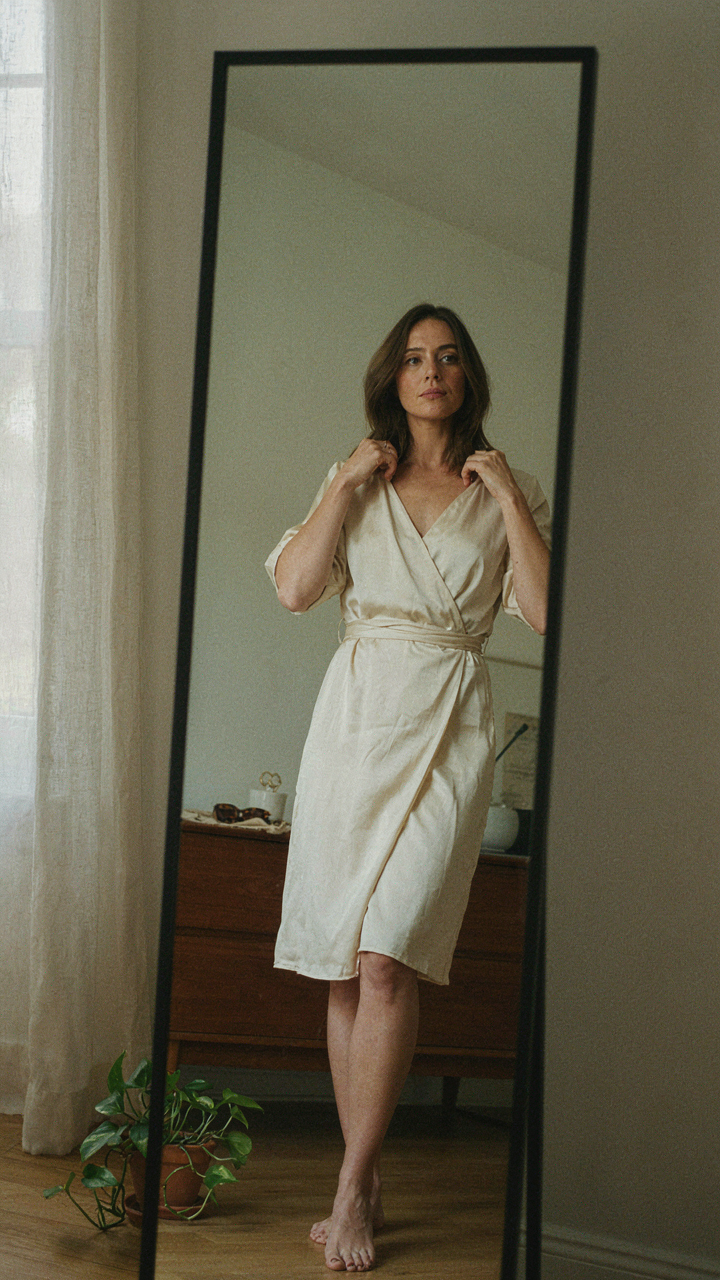
You care about this because a neckline determines whether people see your face or your chest first, and that controls the entire social read of the room. In design terms, a neckline functions as a visual anchor point. The deeper the V, the longer the sight line travels down the body before stopping. A wrap dress’s V-neck depth works like a vector in geometry: it creates direction and pulls attention along a specific path. Control that path, and you control how the dress reads on your frame.

The common advice is to “match your neckline to your body type,” which is vague and useless. What actually matters is the relationship between V-depth and torso length. A shallow V sits above the sternum and shortens the visual distance from shoulder to waist. A true deep V (plunging to mid-sternum or lower) extends that distance and creates vertical line continuity. Most wrap cocktail dresses sit somewhere between these points because the wrap structure itself creates a natural V by design. The mechanics of the wrap fold limit how extreme a neckline can be before the dress becomes unwearable or unstable.
Shoulders And Neckline Must Track Together
The shoulder line and neckline width work on the same axis, and most people skip this entirely. In tailoring, these elements function as counterbalances: a wide neckline opening requires shoulder structure to contain it, while a narrow neckline can sit on narrower shoulders without appearing unanchored. A wrap dress with a tight neckline and narrow shoulder seams creates visual pinching at the collarbone area, which compresses the upper body and reads as smaller. A wider neckline paired with shoulder seams that sit at or slightly beyond your natural shoulder point creates openness and presence.
The wrap’s inherent structure creates diagonal lines that meet at the neckline, so neckline placement directly controls where those lines intersect. If the neckline sits too high, the wrap lines converge before reaching your shoulder, creating bulk across the chest. If it sits at the right depth, those lines extend across the natural shoulder width and then down the body, creating a proportional frame. Test this by standing in front of a mirror with a wrap dress and noting where the wrap’s edge lines intersect with your collarbone and shoulder structure. Adjust the dress until those lines create an X that sits centered on your shoulder point, not bunched inward.
Sleeve Strategy: Sculpting Your Arms With A Modern Dress
How Sleeve Length Rewires Your Proportions
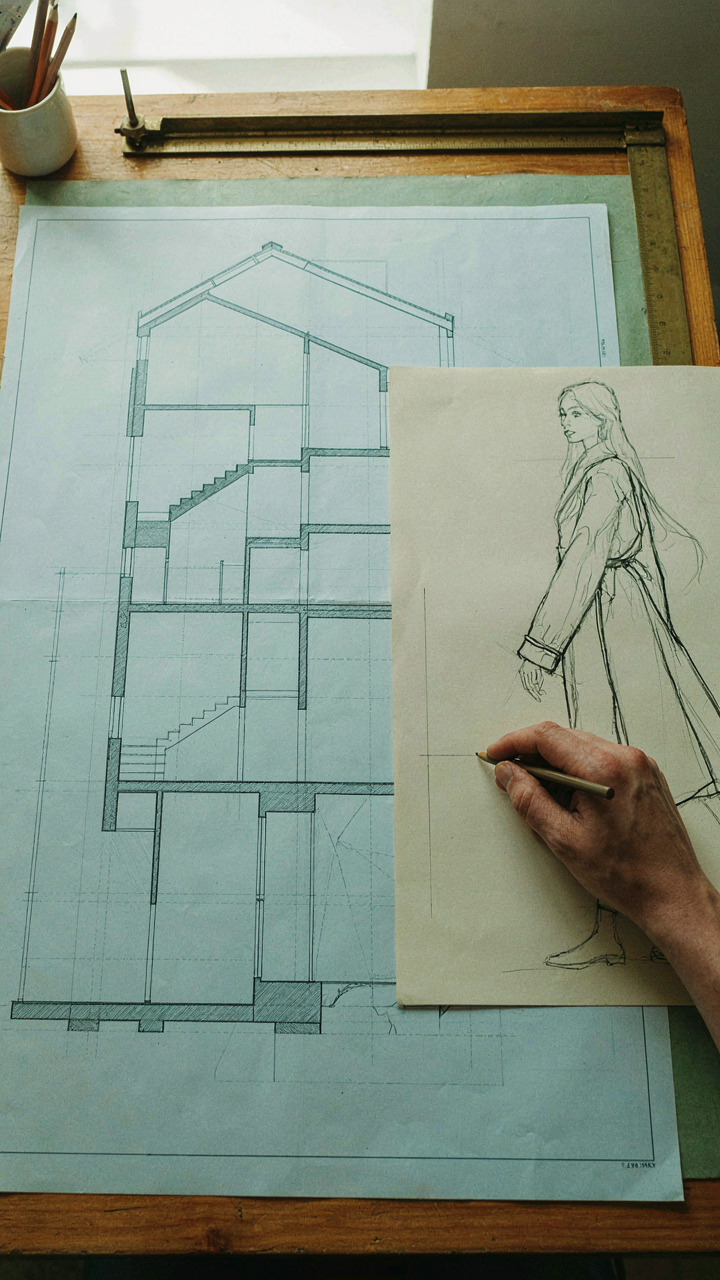
You care about this because sleeve length is the one variable you can’t hide or fake. It’s either wrong or right for your frame, and wrong reads as sloppy. Sleeve length operates on a principle borrowed from architecture: the rule of thirds. Where your sleeve ends determines whether your arm looks elongated or compressed relative to your torso. A wrap dress sleeve ending mid-forearm creates visual separation between arm and hand. One that stops at the wrist erases that break entirely, extending the line of your silhouette downward.

The sleeve doesn’t just frame the arm. It anchors the proportional math of the entire dress. On petite frames, a three-quarter sleeve that hits below the elbow shortens perceived arm length and prevents the drowning effect of full-length fabric. On taller frames, cap sleeves and short sleeves expose more arm, which reads as incomplete unless the dress compensates elsewhere. The wrap dress works here because its fitted bodice already establishes control. Your sleeve choice then either honors or undermines that structure. Test sleeves by standing at arm’s length from a mirror and noting where the fabric endpoint sits relative to your wrist bone, not your actual wrist.
Where Sleeve Volume Actually Matters
Sleeve volume and cuff details are not decorative choices. They’re structural anchors that determine whether the wrap dress reads tailored or shapeless. The common advice says “add volume to balance wider hips.” That’s incomplete. Volume only works if it sits at the right position on the arm and has enough visual weight to create actual counterbalance, not just puff.
A tapered sleeve with a fitted cuff grounds the silhouette. The cuff creates a stopping point that prevents the eye from drifting past the arm’s natural edge. Conversely, a bell sleeve or flutter cuff pulls attention outward and upward, which works on rectangular frames where you need to suggest dimension at the shoulder line. The mechanism is simple: where fabric ends, visual interest concentrates. A structured cuff detail at the wrist transforms a basic sleeve into an intentional design choice, which signals the entire dress has been thought through. Measure your actual wrist circumference before ordering, then check the cuff opening against that number to ensure the detail lands where it should.
The Hemline Dictate: Mastering The Wrap Midi Dress And Beyond
Where Your Legs Actually End Matters
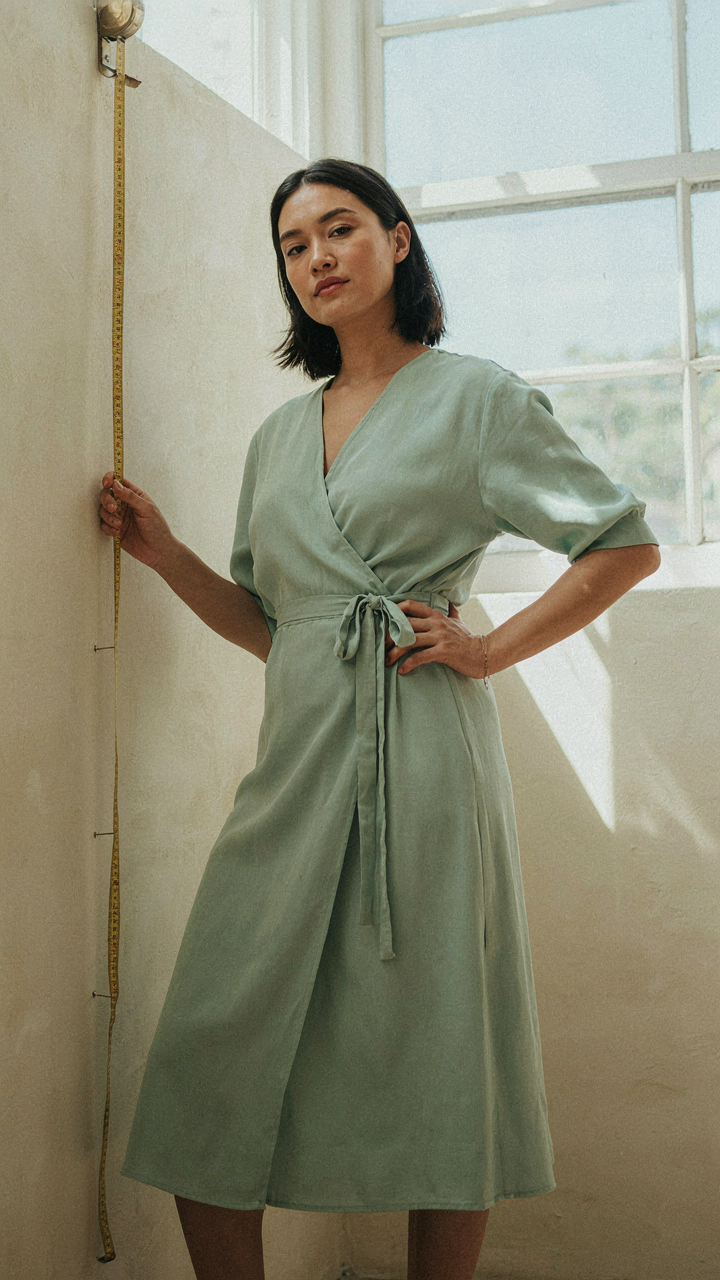
You want the hemline to hide your problem spots and make your legs look longer. That’s the real reason you’re reading this. But here’s what actually works: hemline placement functions as a visual anchor point. In optics, an anchor is the fixed reference the eye uses to measure everything around it. Move that anchor, and you change how long or short the entire leg appears. A wrap cocktail dress hemline isn’t decorative—it’s strategic geometry.

The wrap midi dress typically hits between knee and mid-calf, which is why it became standard. This length creates a natural pause that doesn’t cut the leg into unflattering segments. If you’re under 5’4″, hitting mid-knee elongates the line because the ratio of exposed leg to dress stays proportional. If you’re over 5’9″, dropping to mid-calf works because you have the leg length to absorb the coverage without looking compressed. The mechanism is simple: the hemline should land where it creates visual continuity from hip to floor, not where fashion rules say it should.
How The Hemline Interrupts Your Silhouette
The common advice is that all hemlines break the line equally. That’s incomplete. Design principle from fashion architecture says a hemline break is either vertical or horizontal in its visual weight. Most wrap dresses create a horizontal break, which stops the eye and shortens perception. You either amplify that break intentionally, or you eliminate it entirely. There’s no neutral ground.
When the wrap dress hem hits at your widest calf point or directly at your knee joint, you get maximum visual interruption. This works if you want to draw focus away from the upper body or thighs. But if you want visual continuity—legs appearing as one unbroken line—the hemline must fall just below the knee or extend to the ankle. Asymmetrical hems on wrap dresses create a secondary mechanism: they redirect eye movement downward along a diagonal, which lengthens perceived leg length compared to a straight horizontal cut. Test this on yourself before buying: measure from hip to where the fabric falls, then decide if that break serves you or works against you.
Color And Pattern As Weapons: Elevating Your Cocktail Outfit
How Color Blocks Reshape Your Silhouette
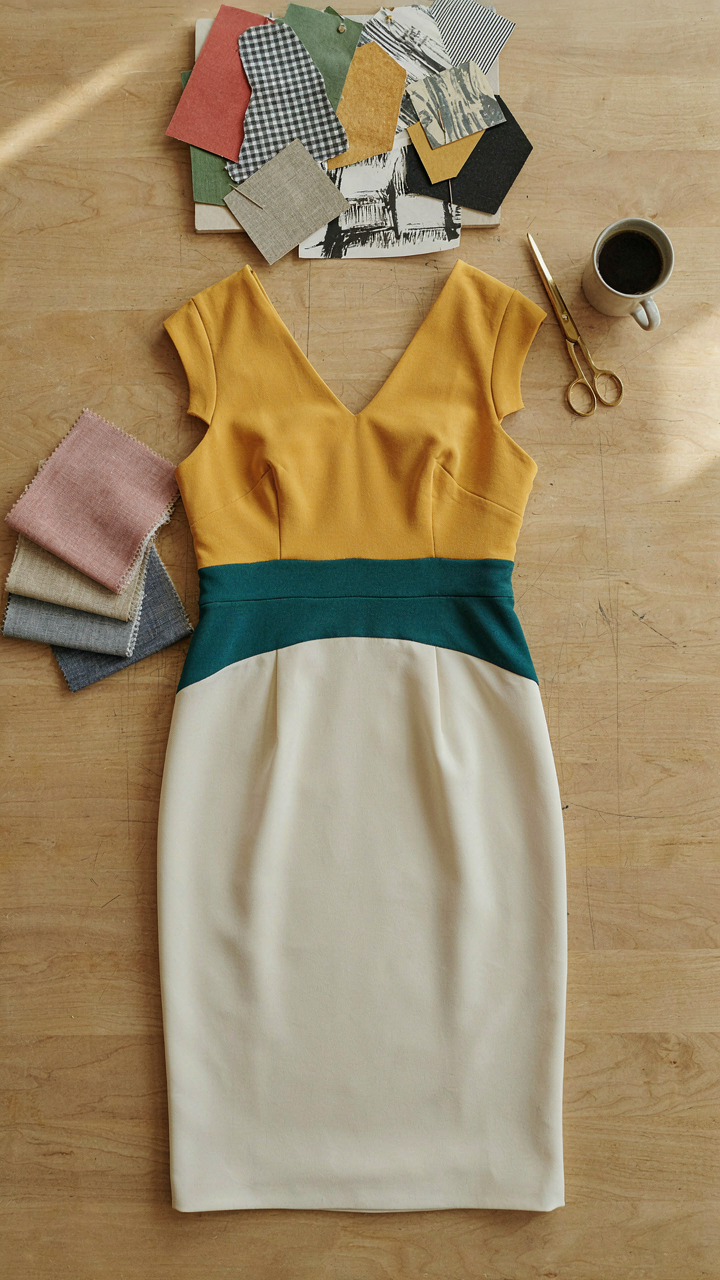
You want color to do the work your body won’t. That’s the real reason you’re reading this. Color blocking works on a principle borrowed from graphic design: contrast creates perceived boundaries. A wrap dress gives you the structure to weaponize this. Horizontal color breaks at the waist, chest, or hip trick the eye into seeing proportions that don’t exist. Dark panels compress, light panels expand. The mechanism is simple: your brain reads color transitions as shape markers.

The wrap’s tie point becomes your anchor for blocking strategy. If you tie high, block color below that point to draw focus downward and away from the upper body. If you tie low, reverse it. A monochromatic wrap eliminates visual interruption but wastes the dress’s potential. Two-tone wraps that split at the tie line give you immediate dimension without looking forced. The key is aligning your color blocks with the dress’s natural construction lines, not against them.
Scale Matching Between Print And Physical Presence
Print scale has nothing to do with how trendy a pattern is. It’s pure optics. A small-scale floral reads as visual noise on someone tall or broad shouldered because the print repeats too many times across the body. A large-scale geometric works better because fewer repetitions mean fewer anchor points for the eye. Wrap cocktail dresses in smaller prints require you to own more physical real estate to avoid being swallowed. Larger prints demand restraint because they command attention faster.
Your presence means how much space you occupy and the distance at which people register you. Someone petite and compact can wear a medium-scale pattern without it overwhelming them. Someone with broader proportions needs either large-scale prints or solid colors with textural interest instead. The common advice to “wear what you love” ignores this entirely. Test your pattern choice by stepping back six feet from a mirror. If the print dissolves into texture or screams too loudly, you’ve mismatched scale to presence. Make the adjustment before you buy.
Accessories As Amplifiers: Not Just Afterthoughts For Wrap Dresses
The Belt’s Real Job
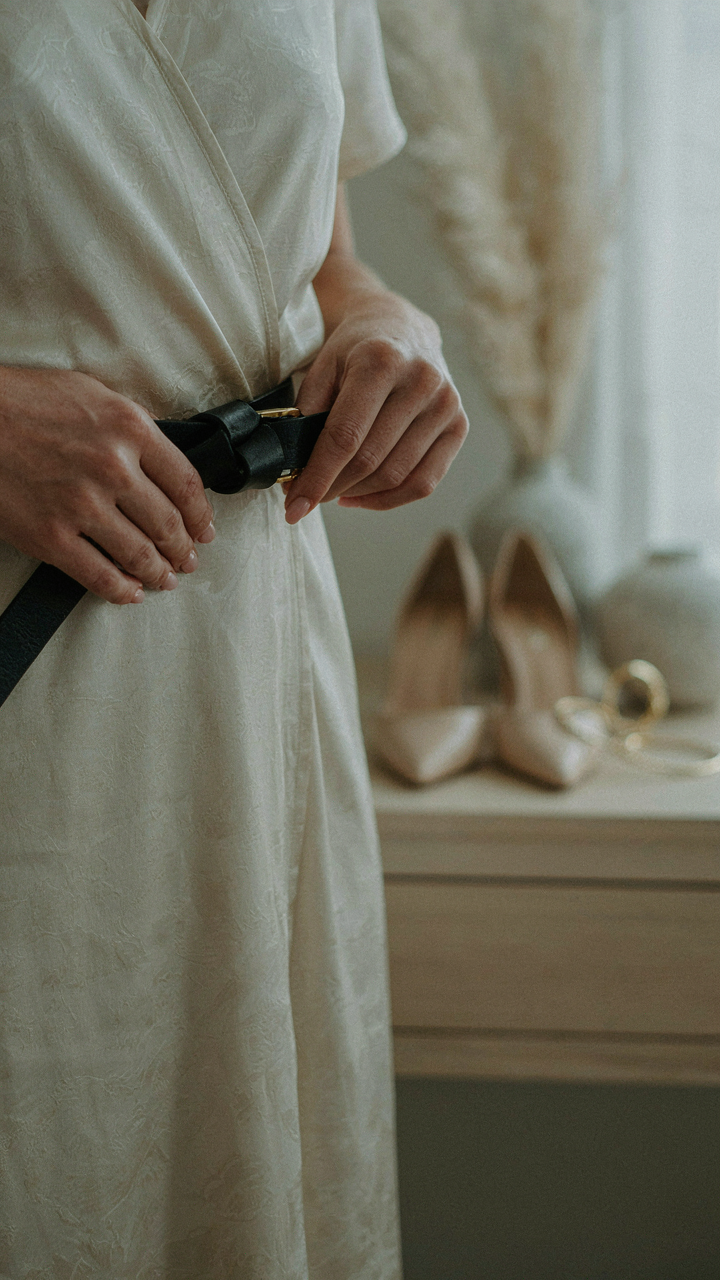
You want the belt to hide what you think is wrong with your body. That’s not what it does. A belt on a wrap dress doesn’t conceal—it interrupts the line and redefines where your waist actually lives. Think of it like a visual anchor point in graphic design: it creates a focal point that forces the eye to land where you place it, not where the dress naturally falls.

The wrap dress already creates a vertical seam at center front. A belt there becomes redundant. Place it instead at your natural waist, slightly off-center, or at your hip to shift visual weight and interrupt an unflattering vertical line. A structured belt made from leather or rigid fabric holds its shape and doesn’t get swallowed by the dress fabric like a soft belt would. Width matters too—a two-to-three-inch belt reads as intentional; anything thinner gets lost.
Shoes And Jewelry Complete The Signal
- Pointed-toe heels or flats: Extend leg line and create vertical momentum that echoes the wrap dress’s lengthening effect. Color-matching to hose amplifies this further.
- Nude or metallic footwear: Disappear into the background and let the dress dominate, or add shine and draw eye downward depending on which you choose.
- Statement earrings or necklace, not both: A wrap dress already has visual weight at the center. One anchoring piece on top prevents clutter and keeps focus on the torso where the dress is strongest.
- Layered delicate chains: Sit flat against the body and won’t fight with the wrap dress’s fabric texture the way chunky pieces do when they shift with movement.
- Structured handbag in leather or suede: Grounds the outfit with a second focal point below the dress. Soft or slouchy bags undermine the intentionality a wrap dress creates.
Jewelry and shoes aren’t decoration—they’re narrative consistency. They either reinforce or contradict the message your wrap dress sends. If you choose a sleek metal heel and delicate chains, you’re signaling precision and form. If you choose a soft flat and chunky gold, you’re signaling comfort and texture. The wrap dress works with both, but only if the pieces actually align. Mismatched signals confuse the eye and dilute whatever advantage the dress gives you.
The Context Code: Decoding Your Dress Code Wedding Or Date Night Dresses
Formality Levels Determine Wrap Placement And Fabric
You’re worried the wrong wrap choice will broadcast that you don’t belong in the room. The mechanism is simple: formality operates like a signal system in military strategy, where your outfit’s visual weight and structure must match the operation’s scale. Black-tie demands structured wraps in heavy silk or crepe. Cocktail events tolerate lighter jersey wraps that move. Business formal requires tailored wraps that close crisply. Casual events let you abandon the wrap entirely or use a draped, unstructured version. The formality level determines whether your wrap reads as intentional or careless.
Your wrap’s closure method signals compliance with the occasion’s rules. A tied wrap at a black-tie wedding reads as incomplete or experimental. A clasped or pinned wrap at the same event reads controlled. For cocktail and semi-formal events, a loose wrap you can adjust works because the event already permits movement. Check the invitation wording first. If it says black-tie, assume structured. If it says cocktail, you have latitude. If it says business casual, the wrap becomes optional decoration rather than functional garment.
Reading The Room Without Following Generic Rules
Common advice says “match the formality level to the dress code.” This misses the actual mechanism. Your job isn’t matching rules. Your job is reading whether the occasion rewards visual restraint or visual expression. A wrap cocktail dress at a casual gallery opening where other women wear jeans reads overdressed because you’re using more visual intensity than the environment expects. That same dress at a formal dinner where other women wear floor-length gowns reads underdressed. The wrap itself doesn’t fix this problem. Your baseline dress formality must align first. The wrap only adjusts tone after that alignment exists.

The protocol: identify what other attendees will wear, then position your wrap’s visual weight one step up from the casual extreme or one step down from the formal extreme. This keeps you visible but not conspicuous. Your wrap should close easily in under five seconds when you arrive, and open or adjust smoothly during the event without requiring a mirror. A wrap cocktail dress works for the occasion when it lets you move through the space without managing it. If you’re constantly re-tying or re-positioning, the dress code and your wrap choice have misaligned.
Owning The Wrap: Confidence As Your Ultimate Wrap Dress Outfit
Posture Determines How The Wrap Reads
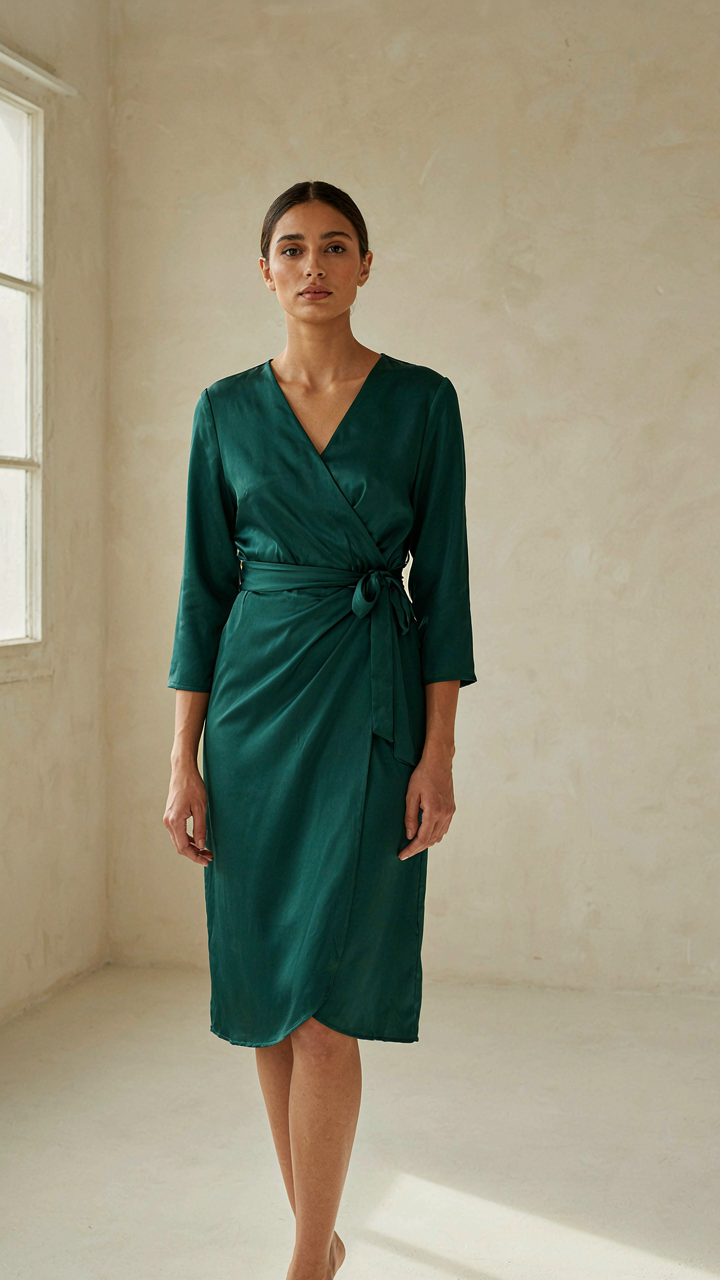
You care about this because you sense that wearing the right dress won’t matter if you undermine it with your body language. Here’s the mechanism: a wrap dress depends on tension. The fabric wraps around you. If you collapse into your frame, that wrap loses its structure and reads as shapeless. Stand with your shoulders back and your spine neutral. The wrap dress wasn’t designed for slouching. It was engineered for someone who takes up space deliberately. When your posture is upright, the diagonal seams of the wrap activate. They guide the eye where they’re supposed to go. Slouching neutralizes the entire geometry.
Posture is load-bearing in fashion, like a load-bearing wall in architecture. The wrap cocktail dress places weight on your frame through its closure and drape. Poor posture redistributes that weight chaotically. Your shoulders rolled forward compress the chest and make the wrap bunch. Your lower back rounded flattens the hip emphasis the wrap is designed to create. You don’t need to look rigid. You need spinal alignment. This is non-negotiable because the dress itself cannot compensate for a collapsed frame. The wrap will only flatter your shape if your shape maintains its natural architecture first.
Your Signature Beats Everyone Else’s Moment
Most fashion advice tells you to follow trends in how you style a wrap dress. That’s incomplete. Trends are noise designed to make you buy more things. Your signature style is what makes the wrap dress actually work for you across years, not seasons. Pick one version of the wrap cocktail dress that suits your body type. Wear it repeatedly in different contexts. Let people recognize it on you. Stop rotating through dozens of styles. The wrap dress became iconic because it lived on the same body, in the same way, for years. Jackie Kennedy didn’t own seventeen wrap dresses styled differently. She owned the formula.
Ignore trend cycles in accessories, color, and hair with your wrap dress. Your job is to build recognition. When someone sees you, they should see consistency, not desperation to look current. This means picking a hem length that works, a wrap style that flatters, and returning to it. Build your signature around that single piece. The wrap dress was invented to be a workhorse, not a trend piece. Use it that way. Wear it until people associate it with you, not with what’s in magazines this month. That association is what actually makes you look polished.
The Endless Pursuit Of Flattering Isn’t About The Dress; It’s About Your Unresolved Insecurity With Your Own Form
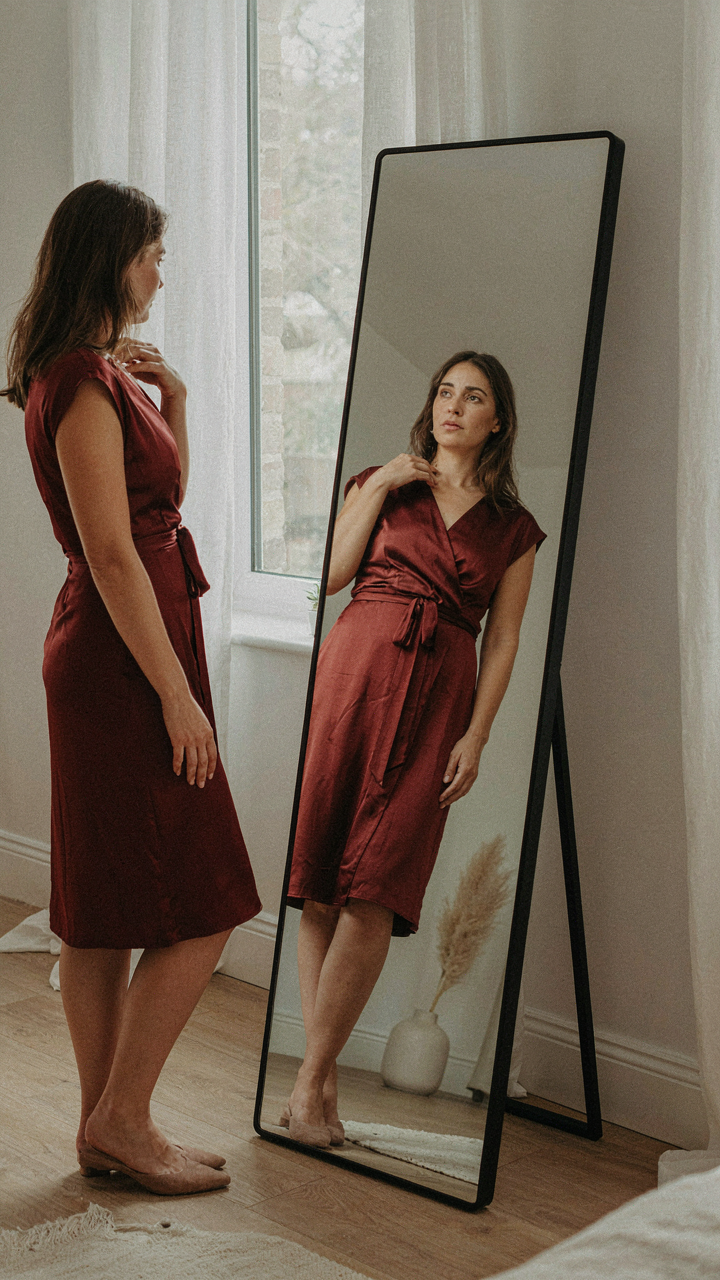
You don’t need a wrap cocktail dress to fix how you feel in your body. You need to stop outsourcing your confidence to fabric. The dress works because you decide it works. Try on one today that scares you slightly, wear it for an hour around your house, and notice what actually changes. Spoiler: nothing external shifts. Only your permission does.



