

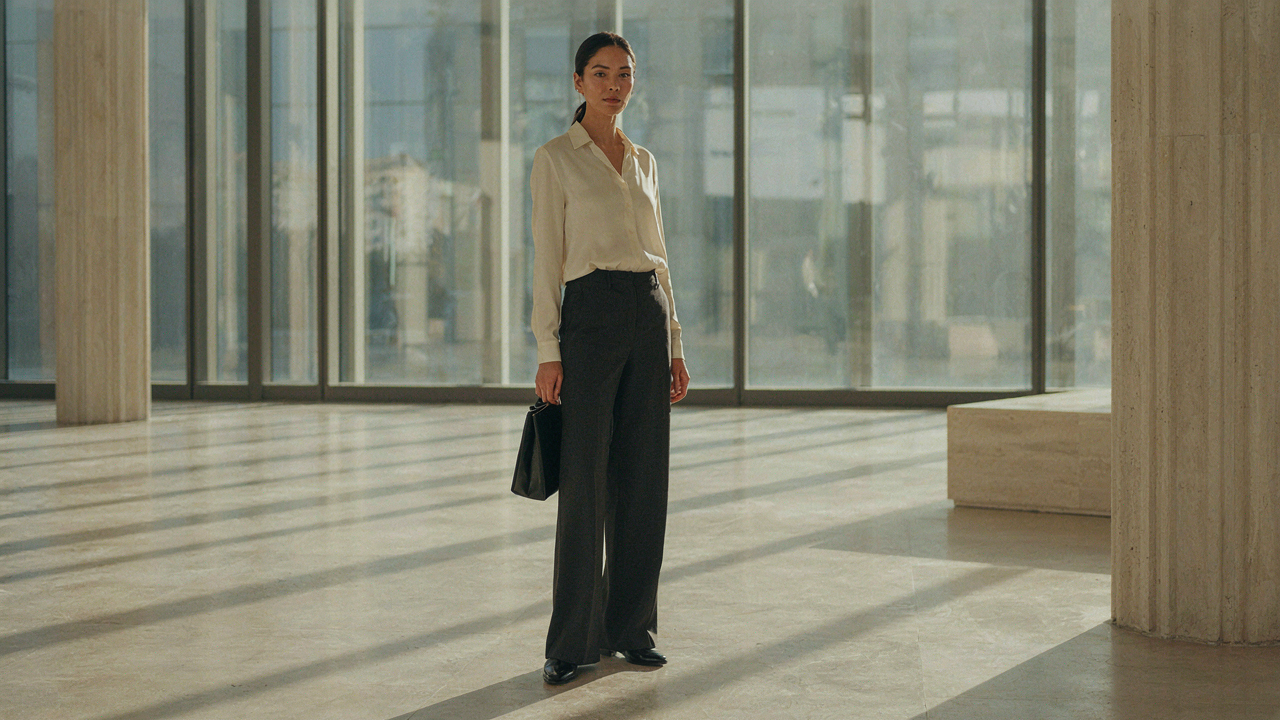
Beyond Trends: Why Wide Leg Pants Demand Respect, Not Just Comfort
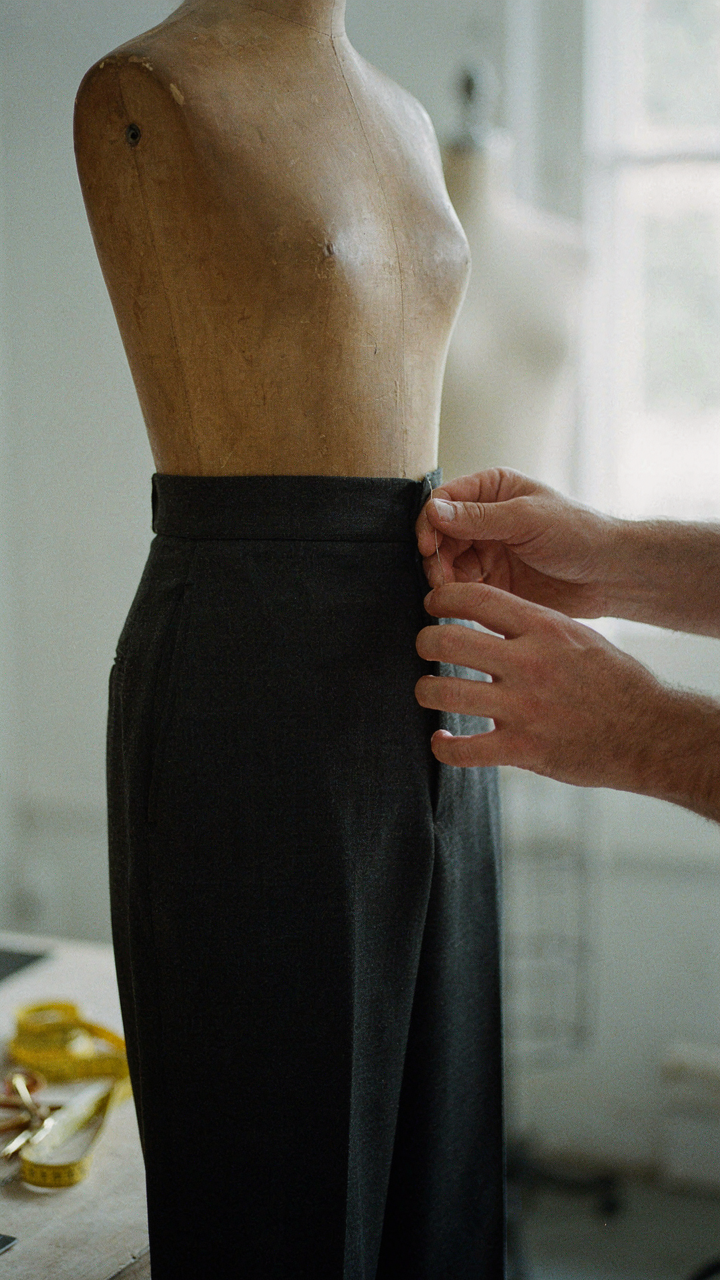
Formal Wear Isn’t Actually Easier
You want wide leg pants to solve the comfort problem without sacrificing formality. Here’s the mechanism nobody states: formal wear works through constraint, not freedom. Tailored silhouettes command respect because they signal control. Wide leg pants break that contract the moment they stop looking intentional. The fabric weight, break length, and waist placement determine whether you look composed or like you’re hiding something.
Most advice says wide leg pants are “easier” to wear. That’s incomplete. They demand more precision because you can’t hide behind fit. A poorly hemmed wide leg reads as sloppy in formal settings where every line gets scrutinized. The drape has to start at the hip and follow geometry, not accident. Get the construction wrong and the formality evaporates regardless of the fabric quality.
The Silhouette Carries The Signal
In semiotics, the study of signs and meaning, a garment’s proportions transmit information before anyone reads your face. Wide leg pants at a formal event signal either deliberate style or indifference, depending on execution. The distinction lives in three mechanical details: how the waistband sits relative to your hip bone, the angle at which fabric leaves the thigh, and the precise break point where the pant meets your shoe.
Authority in formal dress comes from looking like you made a choice, not stumbled into the outfit. Wide leg pants require this precision because their volume makes every measurement visible. Wear them one inch too long and you signal carelessness. Wear them with a jacket that ends too high and the proportions scream amateur. The wearer’s job is to make the mathematics invisible so the viewer only feels the presence.
The Silhouette Strategy: Architecting Authority With Wide Leg Pants Outfit
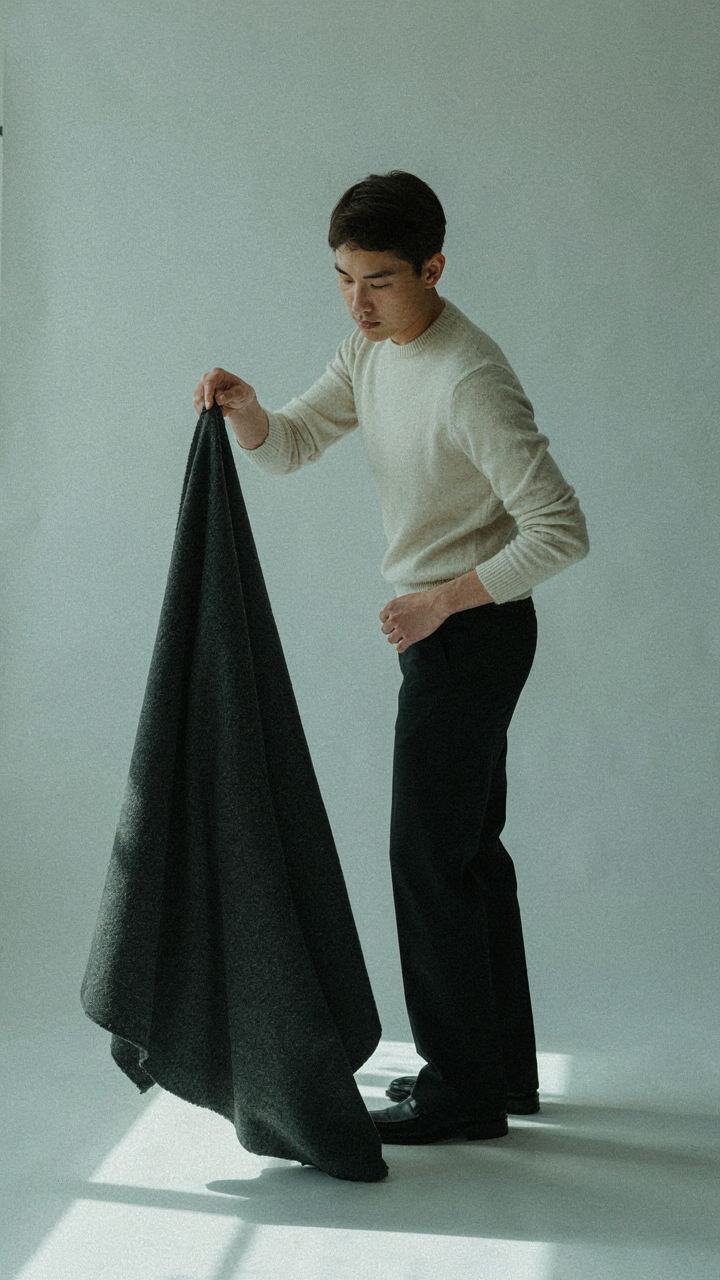
How Fabric Defines Your Physical Presence
You want to look powerful without trying, and fabric architecture is how you actually do it. Think of geometry: a wide leg pant uses negative space the way load-bearing walls use structure. The fabric doesn’t cling or compress—it extends outward from your body, creating actual distance between you and the observer. This expansion signals occupancy. You take up room. The pants don’t flatter your legs; they frame them as a foundation for the entire silhouette above.

The mechanism is simple. Fabric volume around your lower half forces your torso upward visually. Your shoulders appear broader because the eye travels up and out instead of down. Tailoring matters less here than cut. A wide leg pant with a proper rise and drape will do this work regardless of your body type. This is why the silhouette works in formal settings—it’s physics applied to clothing, not opinion about what looks good.
Strategic Fabric Selection And Movement
Fabric choice determines whether your formal outfit commands attention or dissolves into the room.
- Wool Suiting (140s to 180s count): Dense, structured fabric holds its shape and creates clear architectural lines. The weight prevents collapse and maintains the silhouette throughout the event without constant adjustment.
- Linen Blends (85+ percent linen): Breathes in warm climates while maintaining drape. Wrinkles add texture rather than destroy formality, which suits dressy events where authenticity matters more than sterile perfection.
- Silk Blends (60+ percent silk content): Creates liquid movement that flows rather than clings. Formal events benefit from this—the fabric moves when you do, showing intentional design instead of static fit.
- Cotton Gabardine: Crisp and structured without rigidity. Works well for semiformal to formal events where you need clean lines without the weight of heavy wool.
- Mohair Blends (5 to 15 percent mohair): Adds subtle sheen and dimension to formal suiting. The light reflection prevents flat, dead appearance while maintaining traditional formal aesthetic.
Wide leg pants demand fabric with actual weight and recovery. Thin materials bunch at the hem and collapse at the waist. You need enough substance to hold the silhouette’s promise. When you walk, the fabric should move as a unit with your body, not separate from it. This is your protocol: test the drape by holding the inseam and letting gravity work. If it holds its shape and returns without wrinkles, it works.
Mastering The Formal Topography: What Tops Command Attention
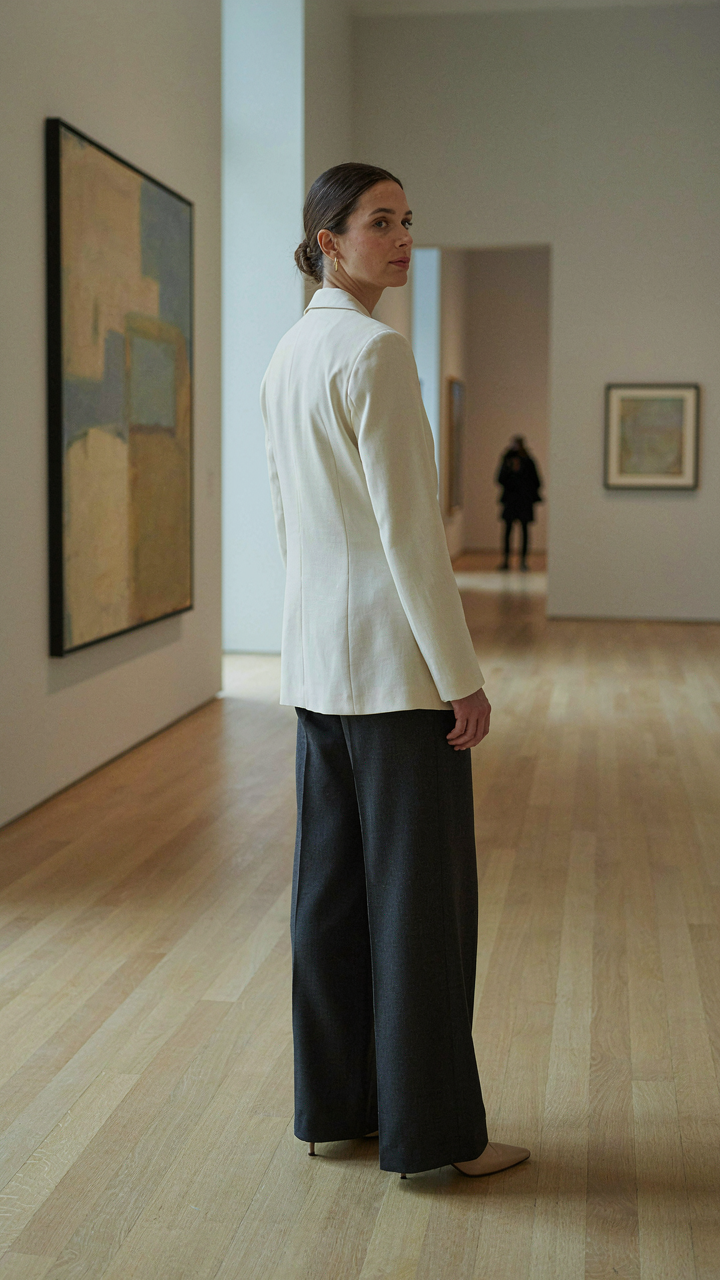
Cropped Precision For Waist Definition
You care about this because you sense that wide legs kill your silhouette unless the top cuts it off at the right place. The mechanism is simple: borrowed from tailoring geometry, the fulcrum point determines visual balance. When your top ends above the hip, you create a horizontal line that breaks the vertical leg volume. This stops wide pants from reading as a shapeless drape and instead reads as intentional proportion.

A cropped blazer, fitted shirt tucked to the natural waist, or a peplum top all work because they establish a visual anchor. The crop doesn’t need to be extreme, just precise enough to land where your hip bone sits. This matters because formal events reward intention over casualness. The top must end cleanly at a structural point on your body, not float in the dead zone between your ribs and hips.
Structured Blazers And Power Jackets
Most advice tells you to “balance” wide legs with a fitted top, which misses the real move: structured jackets create visual weight at the shoulders that counteracts leg volume from above. The jacket does the work. Without structure, a loose top just adds fabric to fabric. You need shoulder seams that sit exactly at your shoulder point and fabric that holds its shape through the torso.
Double-breasted blazers work harder than single-breasted for formal events because the button placement creates visual lines that draw the eye vertically. A jacket with darts or seaming through the back also maintains definition instead of collapsing into the wide leg below. Choose wool blends over cotton for this reason, since they hold structure through the night. Wear it buttoned at formal events. The closure creates geometric tension that prevents the whole outfit from reading as one loose shape.
The Black Wide Leg Pants Outfit: A Non Negotiable Power Base
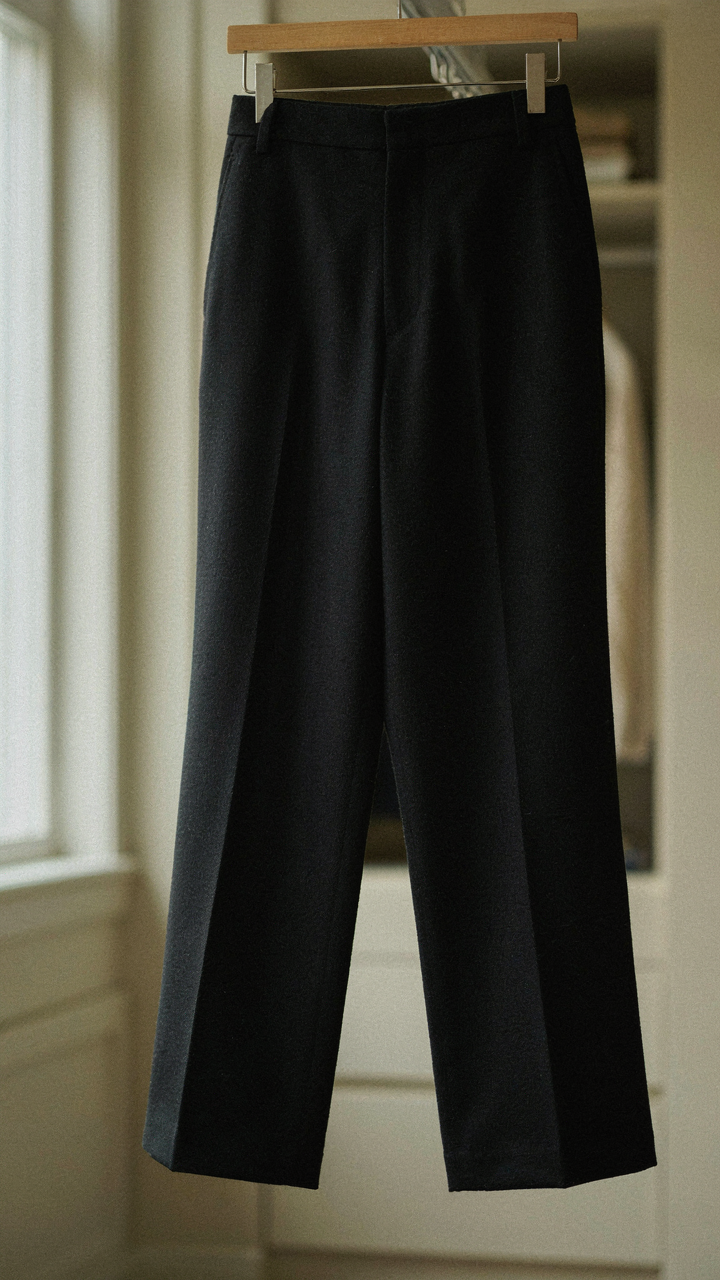
Why Black Fabric Commands The Room
You want black because you’re tired of being evaluated. Black absorbs light instead of reflecting it back for scrutiny. In color theory, black represents the absence of chromatic information, which forces observers to read you through silhouette and fabric quality instead of hue. This shifts attention from surface noise to structure.

Black formal wide leg pants work because they don’t negotiate with trends or skin tone politics. The fabric itself becomes invisible, letting the cut and drape do the actual work. A well-fitted black wide leg pant in a formal setting reads as intentional restraint, not default safety. The formality comes from the shape and construction, not from the pigment.
Weave And Weight Over Assumed Elegance
Saying “choose quality fabric” is what lazy stylists tell you. The real mechanism is density. Heavier fabrics hold structure better on wide cuts because gravity doesn’t collapse them into shapelessness. Look for tight weaves in wool blends or wool-dominant compositions, not loose cotton or linen blends that wrinkle and sag within an hour.
A 100 percent wool fabric at 14 ounces per yard or higher will maintain crisp breaks at the hem and keep the leg volume from appearing sloppy. Worsted wool specifically has a tighter twist in the yarn, which creates surface smoothness and durability. Gabardine or tropical weight wool both work for formal events because they resist wrinkling and drape with intention rather than accidental looseness.
Footwear As Foundation: Anchoring Your Wide Leg Pants Outfit Presence
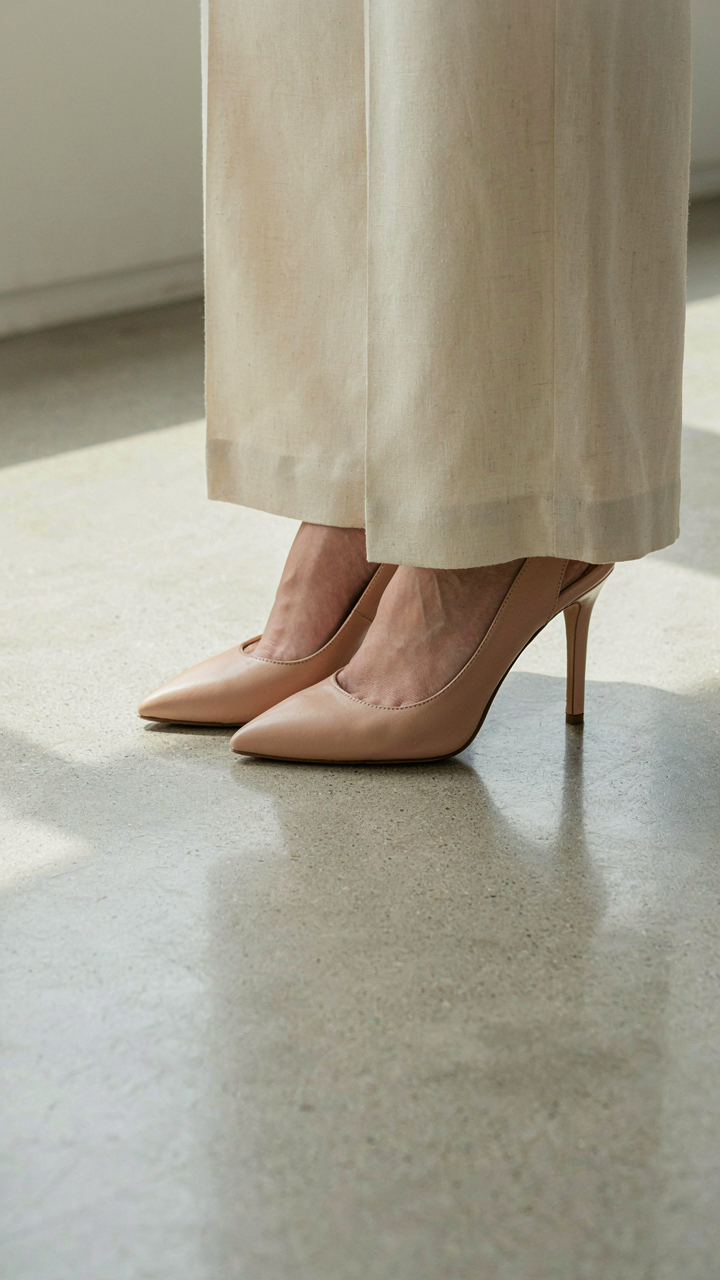
The Heel Height Problem
You want the shoe to disappear from the equation so people focus on your face and words instead of your feet. Here’s what actually matters: heel height functions like leverage in physics. A higher heel tilts your pelvis forward, shortening your leg line and making wide pants pool differently. A lower heel keeps your leg geometry neutral. Most advice says “wear what feels comfortable,” which is incomplete. Comfort masks the real mechanism: heel height controls how fabric breaks at your ankle and how your posture reads.

The formal standard exists for mechanical reasons, not fashion rules. A 2 to 3.5 inch heel balances the visual weight of wide pants without exaggerating your stride or creating ankle bulk. Go below 1.5 inches and the pooling becomes sloppy. Push past 4 inches and your posture compensates in ways that register as strain, even when you’re not straining. Your heel height choice determines whether wide-leg pants look intentional or collapsed. Test this by walking past a mirror at different heel heights and watching how the fabric breaks at your instep.
Toe Shape As Visual Anchor
Pointed toes and rounded toes send opposite signals to the viewer’s eye. Think of semiotics, the study of signs and meaning. A pointed toe stretches the line of your leg forward, creating visual continuity that makes wide pants read as intentional proportion rather than volume. A rounded toe stops the line abruptly, which can make loose pants feel like they’re swallowing your foot. The common advice treats this as preference. It’s not. Toe shape changes how the eye reads the entire leg proportion.
Pointed toes work with wide legs because they complete the silhouette grammatically. Your eye travels down the pant leg and the toe finishes the sentence with a period, not a comma. Rounded toes create a visual pause that reads as unfinished. For formal events, pointed toes in black or metallic leather anchor the outfit and clarify intention. This isn’t subjective styling. Pointed toe geometry paired with wide legs creates proportional coherence that rounded toes cannot achieve in formal settings.
Accessories: The Leverage Points Of A Classy Work Outfits
Minimalist Jewelry For Maximum Effect
You’re worried that showing up underdressed will cost you something. So you load up. The mechanism is inverse: restraint signals control, and control signals authority. In jewelry, this means subtract, don’t add. Wide leg pants already command visual space through volume and proportion. Jewelry that fights for attention kills the outfit’s coherence.

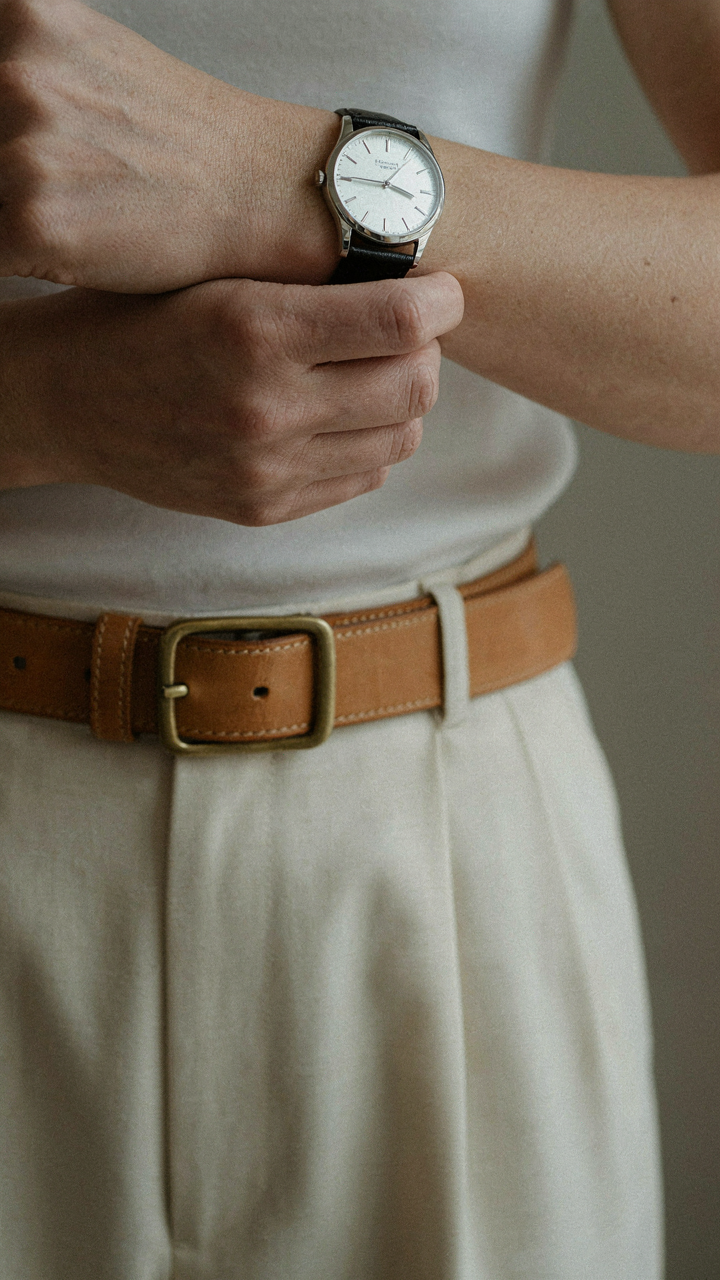
Wear one statement piece or nothing. A thin gold chain, a structured watch, a single ring on one hand. The formal setting doesn’t need proof of taste through quantity. Metal finishes should match your belt and shoes to create visual continuity rather than competing focal points across your body.
Belts As Waist Sculptors, Not Afterthoughts
Most advice treats belts as optional. Wrong. A belt transforms wide leg pants from shapeless to intentional by defining your waist and creating horizontal line division. Think of it as a load-bearing wall in architecture: it distributes visual weight and creates structural purpose where otherwise exists only fabric.
Choose a belt with defined buckle and structured material. Leather works best because it holds shape and reads as intentional rather than decorative. Width should sit between half and three-quarter inch. Position it at your natural waist, not your hips, then ensure your shirt isn’t so long it hides the belt entirely. The belt must be visible to function.
Fabric Intelligence: Selecting Materials For New Fashion Outfits 2026
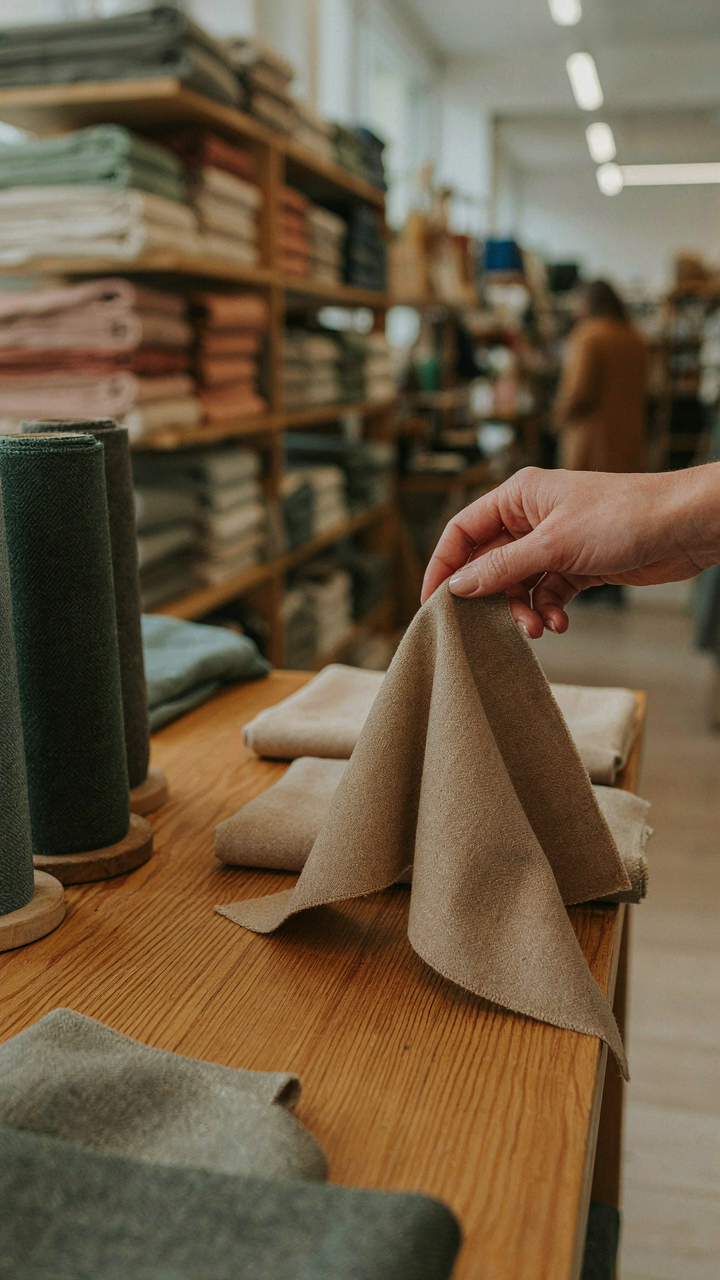
The Drape: Wool, Silk, And Structured Blends
You care about this because bad fabric choice exposes you instantly. The mechanism is simple: drape is physics. Gravity pulls fabric down, and material density determines how that pull reads. Wide leg pants live in the space between structure and flow, and the wrong fiber makes you look either stiff or sloppy.

Wool is the default for formal wide legs because it has memory. The fibers resist permanent wrinkles and hold a crease without rigidity. Silk adds movement but demands precision in tailoring because it drapes with zero forgiveness. Structured blends—wool mixed with synthetics like polyester or nylon—give you both hold and hang without the maintenance burden. The blend ratio matters more than you think. A 55/45 wool-synthetic split outperforms pure wool for formal events because it locks the silhouette longer through the day.
Wrinkle Resistance: Avoiding Sartorial Sloppiness
Most advice says “choose wrinkle-resistant fabric and you’re done.” That’s incomplete. Wrinkle resistance is a combination of fiber type, weave construction, and finish treatment. The fiber alone doesn’t control the outcome. A tight weave traps wrinkles less than a loose one. Chemical finishes add durability but also reduce breathability and can yellow over time.
For formal wide leg pants, seek a finish called mercerization on cotton-blended fabrics or stable weaves on wool. Mercerized cotton absorbs less moisture, which means fewer wrinkles form during wear and sitting. Check the care tag for “easy care” or “permanent press” designations, but verify the weave density by touch. Tight weaves feel slightly stiff initially but maintain shape through a full event. Before buying, sit in the pants for five minutes at the store, stand up, and inspect the seat and inner thigh. That’s your indicator of real wrinkle behavior under pressure.
Strategic Color Theory: Beyond Basic Black And White Outfits For Girls
Deep Jewel Tones For Quiet Status
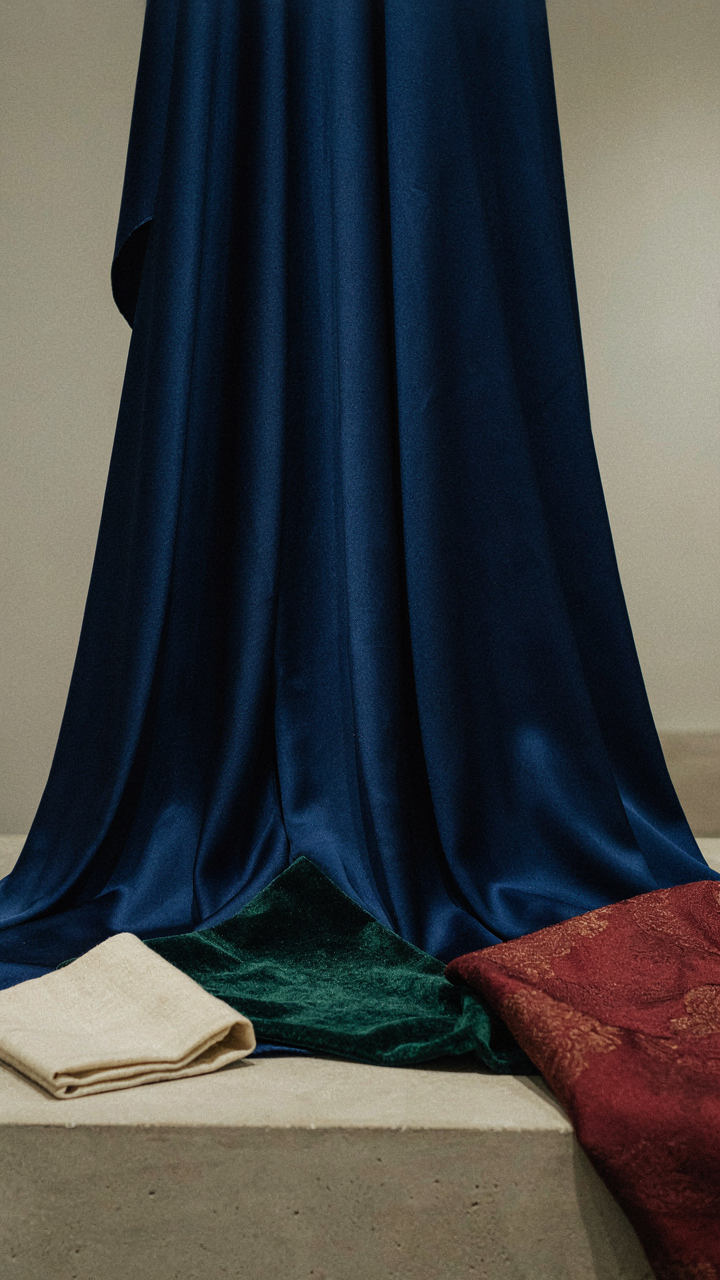
You want permission to wear color without looking reckless. The real mechanism is this: jewel tones work because they reflect light in a narrow band, which signals control. Navy, emerald, sapphire, and burgundy don’t compete for attention the way bright red does. They sit closer to black in the color spectrum but retain depth that reads as intentional rather than safe.

Wide leg pants in jewel tones anchor a formal outfit because the fabric’s volume needs visual weight to balance it. Sapphire or deep forest green creates that weight without the flatness of black. Pair them with a structured blazer in cream or soft gray to let the pants hold the room’s attention. The contrast works because it’s deliberate, not because you defaulted to matching everything.
Monochromatic Dressing Without The Washed Out Effect
The common advice is wrong: monochromatic doesn’t mean wearing one flat color top to bottom. In fashion architecture, monochromatic means using the same color family at different saturation levels and values. A formal outfit using this principle demands texture variance to stay alive. Wide leg trousers in deep charcoal paired with a matte black silk blouse and a lighter gray structured jacket creates visual interest without introducing new colors.
The mechanism is simple: your eye reads the outfit as intentional rather than lazy because the saturation shifts signal knowledge. Add a single metallic accessory in gold or silver to create a controlled break point. This prevents the monochromatic look from collapsing into a shapeless silhouette. The formal event sees sophistication, not limitation.
Occasion Engineering: Tailoring Your Pants Outfit To The Event
Gala Versus Corporate: Subtle Adjustments
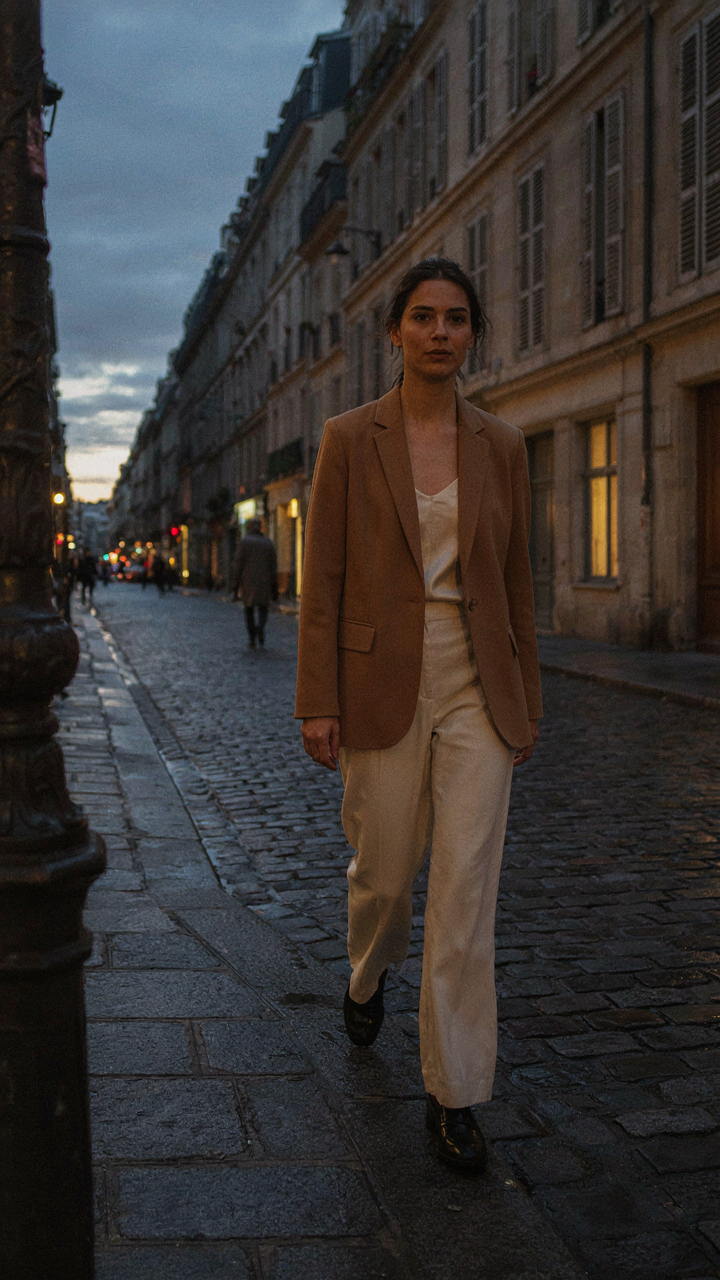
You’re worried the wrong trouser choice tanks your credibility in the room. The mechanism is fabric weight and break length, which signal whether you understand the unspoken dress code of each space. Gala events demand heavier wool blends that drape with intention and a break that grazes the shoe without pooling. Corporate galas require the same silhouette but in lighter suiting weight, allowing the fabric to move without looking ceremonial.

The real distinction isn’t decoration. It’s restraint applied differently. At a corporate gala, keep the jacket structured and the waistband high. At a black-tie gala, you can afford a lower rise because the formality is already anchored by the event itself. Wide leg pants work because they absorb these adjustments without screaming the difference.
Daytime Gravitas Versus Evening Allure
Daylight and darkness change how fabric reads on the body through pure physics: reflection and absorption of light wavelengths alter perceived texture and volume. Daytime formal events require matte fabrics and higher contrast pairings because natural light flattens everything. Evening events tolerate subtle sheen and tonal dressing because artificial light creates depth. Your wide leg pants need a crisp crease visible in daylight but can hold a softer press for evening.
The verb here is “reveal,” not “dress.” Daytime requires your outfit to work harder for visibility. Evening allows the fit to do the work. For daytime, pair wide leg trousers with a blazer that has visible structure and a white or cream shirt. For evening, the same pants accept a silk blouse and looser jacket without losing formality. Adjust the shoe shine and fabric composition based on light condition, not sentiment.
The Power Of Intentionality: Your Workwear Fashion Statement
Every Choice Signals Something
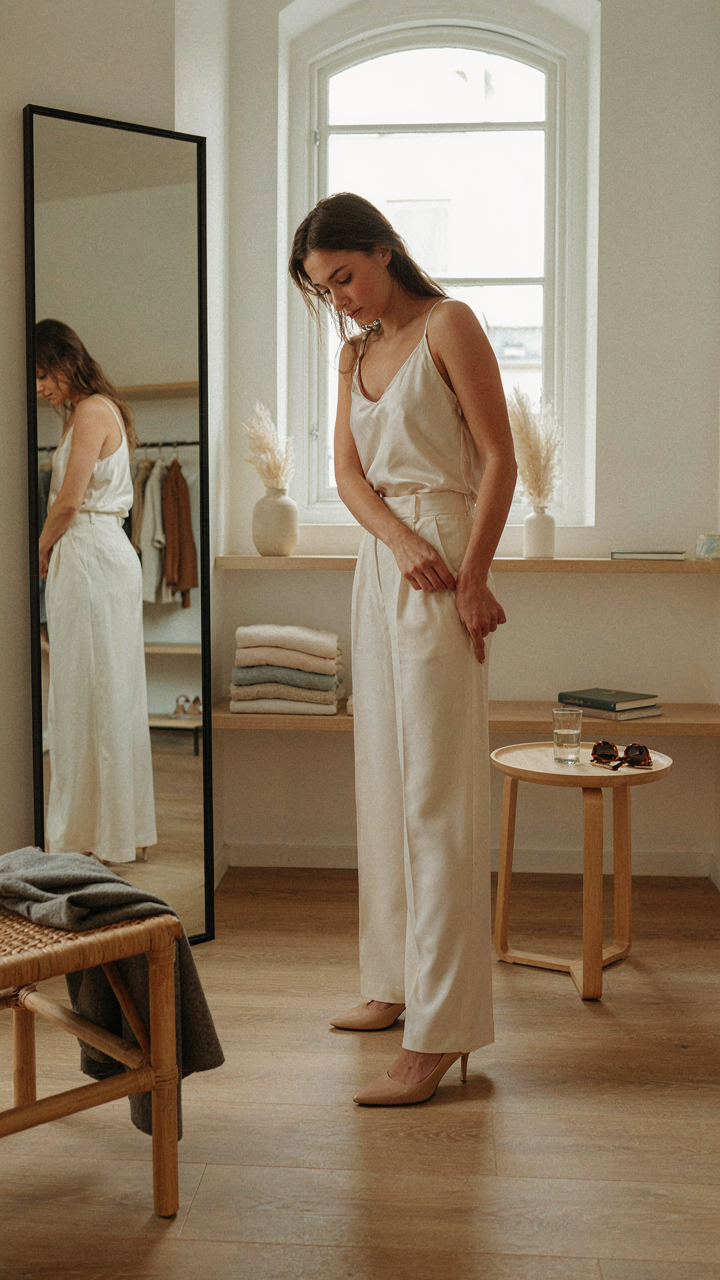
You care about this because you know that people read you before they listen to you. The mechanism is simple: wide leg pants in a formal outfit work when they’re chosen deliberately, not defaulted to. Most people grab them because they’re “comfortable” or “trendy,” which broadcasts indecision. A tailored wide leg silhouette in a formal context requires you to commit to fit, fabric weight, and proportional balance. That commitment shows.
The alternative is invisible. A sloppy wide leg outfit reads as someone who doesn’t know how to dress for the room. Deliberation means selecting a specific rise, inseam break, and fabric that complements your torso length and the formality level. You’re not following a trend. You’re executing a choice with clear reasoning behind it. That distinction lands.
Confidence Arrives From Knowing Why
Projection of confidence through deliberation borrows from decision science: constraints create clarity. When you narrow your wide leg pants choice to three specific parameters—fabric drape, waist suppression, and shoe proportion—you eliminate the mental tax of wondering if you got it right. You know you did because you applied a system.
Most formal outfit advice ignores this. It tells you to “feel confident” without explaining that confidence emerges from eliminating variables. When you walk into a formal event wearing wide leg pants that fit your actual frame, break properly at your shoe, and move without bunching, you stop thinking about your pants. That freed mental space reads as poise. The action is simple: before any formal event, try on the exact outfit, walk for two minutes, and note what your body needs to adjust. Execute those adjustments and you’re done.
Your True Obstacle Isn’t The Pants; It’s Your Refusal To Engineer Your Presence With Calculated Precision
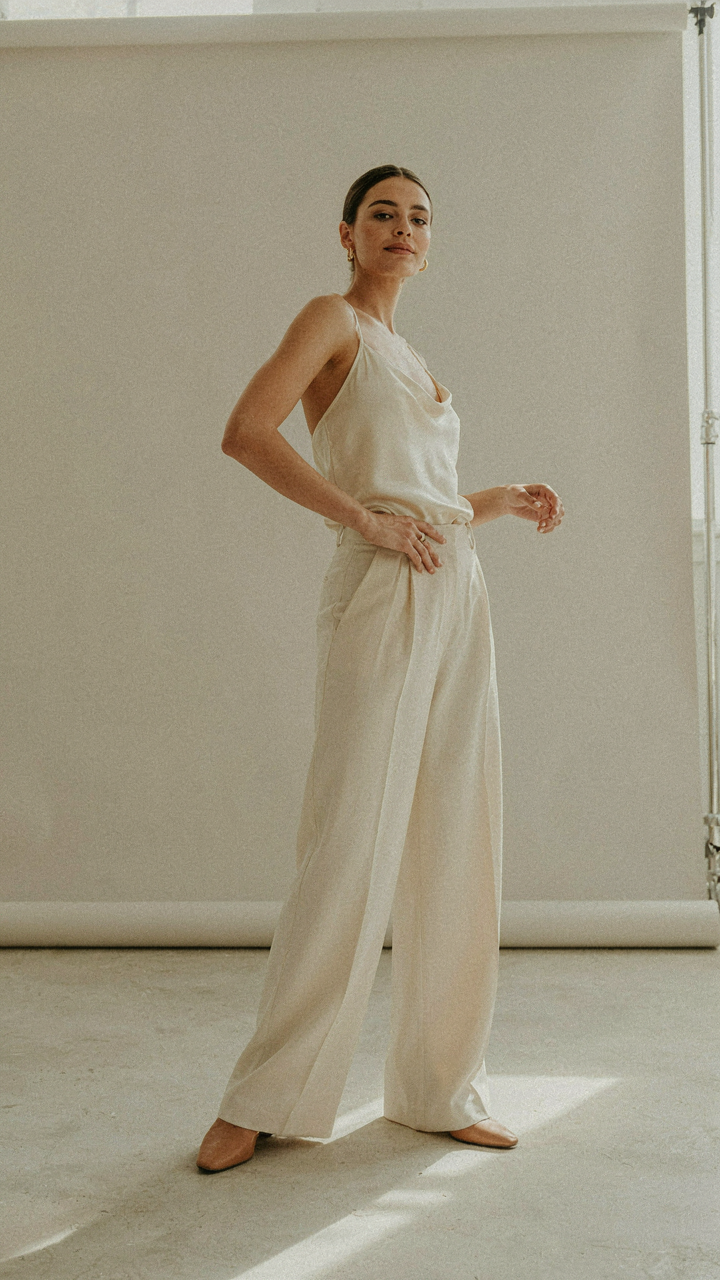
Stop treating formal dressing like you’re following instructions. Wide leg pants work because they communicate intentionality. You either dress like you’ve decided who you are, or you dress like you’re apologizing for existing. The pants don’t matter. Your commitment to looking deliberate does. Pick one outfit today. Commit to it completely. Wear it like you designed it yourself, because you did.



