

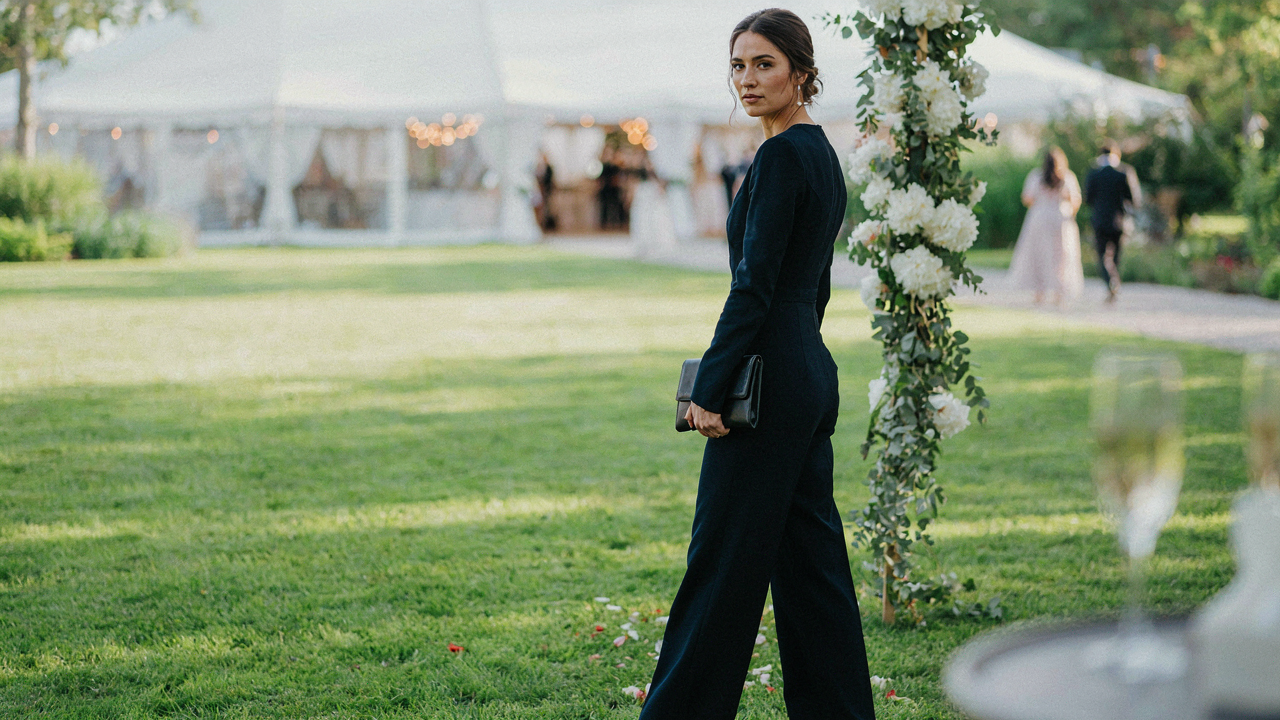
The “Jumpsuit Is A Dress” Fallacy
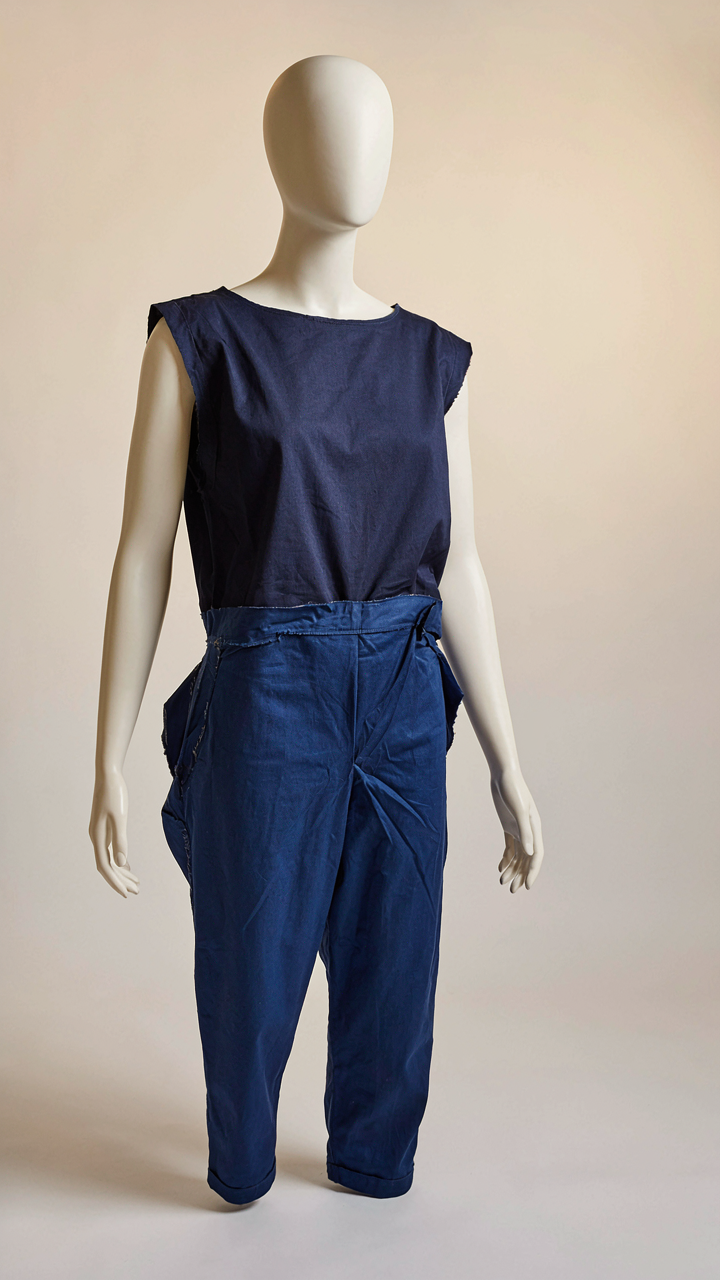
Why Jumpsuits Demand More Deliberate Styling
You want the jumpsuit to work because you’re afraid of looking like you tried too hard or not hard enough. That fear is rational. The mechanism: a jumpsuit is fundamentally a divided silhouette masquerading as a unified one. Unlike a dress, which reads as a single garment from shoulder to hem, a jumpsuit splits the visual plane at the crotch. This division forces the eye to evaluate proportion, balance, and intent separately—meaning casual styling reads as sloppy instead of effortless.
A dress forgives fit inconsistency. A jumpsuit exposes it. The legs demand the same tailoring precision as trousers because they functionally are trousers. The top must work with the bottom without visual conflict. Fabric weight matters more because the jumpsuit lacks the natural drape recovery a dress provides. This is why “wear it like a dress” advice fails. You’re not wearing a dress. You’re wearing a two-piece unit that requires coherent styling across both pieces simultaneously.
The Casual Trap: Fabric, Cut, And Occasion Alignment
Most guidance tells you to “dress up the jumpsuit” or “accessorize it right.” This is incomplete. The real problem starts before styling—at the fabric and cut stage. A wedding guest jumpsuit needs suiting-weight fabrics or structured knits that communicate occasion. Linen blends, cotton twills, or crepe work. Loose jersey or unstructured cotton voile do not. The cut matters equally. A tapered or cropped leg reads dressy. A wide or cropped wide leg reads intentional and fashion-forward but only in elevated fabrics. A full, flowing leg in casual fabric reads like you grabbed something from your closet.
The occasion alignment rule is mechanical: if the dress code is “cocktail,” your jumpsuit’s fabric must be as formal as the silks and satins everyone else is wearing. If it’s “black tie optional,” your jumpsuit needs the weight and sheen that signals elevation. Cut your legs to your shoe. A cropped leg hitting mid-ankle works with heels. A full-length leg pooling on the floor works only with specific heel heights and risks reading careless. This is not about rules. This is about controlling what your clothing communicates in the first five seconds someone sees you.
Sleek Tailored Jumpsuit: The Architecture Of Elegance
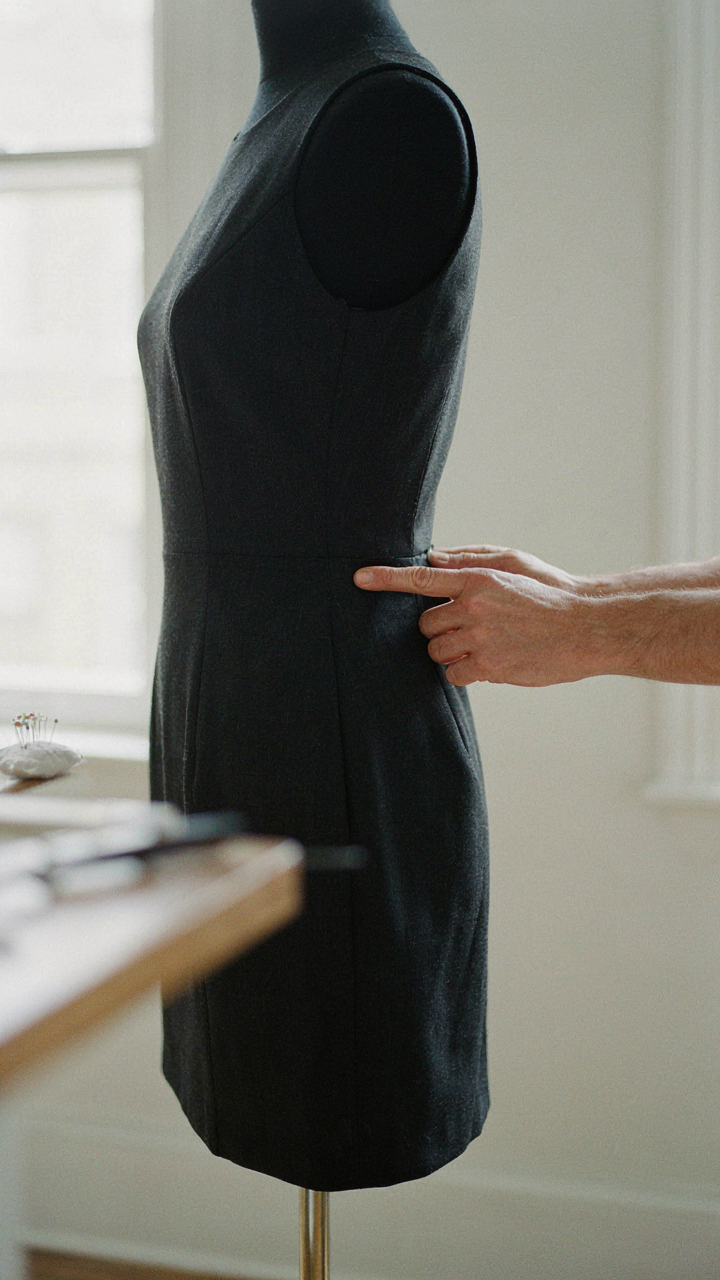
Structure Over Drape: Architectural Principles Of Fit
You want people to notice you’re expensive without you saying anything. That’s the real driver here. Architecture solves this through load-bearing walls and stress distribution. A tailored jumpsuit works the same way: seams and panels carry visual weight strategically so fabric hangs with intention, not accident. The difference between “costume” and “dressed” lives entirely in how structure controls the garment’s relationship to your body.

Off-the-rack jumpsuits drape everywhere equally, which reads as unfocused. Tailored versions use strategic seaming to create zones of control. The inseam runs true. The shoulder seam sits exactly where yours begins. Darts at the bust and waist create the illusion that the garment was built for this specific body, not assembled for a generic one. When panels align with your proportions instead of fighting them, the whole piece communicates precision. A well-structured jumpsuit never needs to announce itself because the fit does the work.
The Precision Of Tailoring: Turning Off The Rack Into Bespoke
Generic jumpsuit advice says “find your size and go.” That’s incomplete. Tailoring isn’t luxury padding. It’s the difference between wearing a garment and inhabiting one. A tailor doesn’t add fabric or destroy the original cut. They adjust the skeleton: shortening the inseam for your leg length, tapering the leg opening to your ankle width, adjusting the rise so it doesn’t gap at the back waist, bringing in the shoulder if it overhangs.
The investment math is straightforward. A quality jumpsuit costs 150 to 400 dollars. Tailoring runs 60 to 120 dollars. That transforms a piece that fits some theoretical person into one that fits you. The seams align with your body’s actual geometry. The hem hits exactly where it should. Precision tailoring makes a jumpsuit look intentional rather than borrowed. This is where the wedding guest jumpsuit stops being a shortcut and becomes a statement about how seriously you treat preparation.
The Jumpsuit Outfit Equation: 3 Pillars Of Impact

Accessories As Force Multipliers
You’re worried accessories won’t carry weight on a jumpsuit the way they do on a dress. That fear drives most of the boring advice. Here’s the mechanism: in physics, force multiplies through leverage points. Accessories work the same way on a jumpsuit. A single statement piece anchors visual hierarchy on a body wearing one unbroken line. The jumpsuit has no fabric breaks for accessories to hide behind, so placement matters more than on traditional formal wear.

This is why a structured clutch or bold earrings hit harder on a jumpsuit than on a gown. The garment demands accessories that create contrast or intentional visual pauses. A thin belt at the waist interrupts the vertical line and adds proportion. Metal cuffs or a layered necklace create focal points without competing with the garment itself. Gold hardware outperforms delicate silver on jumpsuits because it reads as deliberate, not accidental.
Footwear And Bags: Completing The Formal Circuit
Skip the matching-set logic. Most guests treat footwear and bags as a paired unit, which kills the visual sophistication a jumpsuit allows. Your shoes and bag should finish the outfit through contrast, not repetition. A jumpsuit’s single-fabric dominance means your shoes and bag become the secondary anchors that define formality level and personal edge.
Heeled sandals or pumps in metallics or jewel tones ground a neutral jumpsuit without blending in. A structured bag in a different texture or finish than the fabric creates visual separation and reads as intentional design. The protocol is simple: choose your shoe first based on the venue’s formality, then pick a bag that complements the shoe without matching it exactly. This creates visual rhythm instead of visual flatness.
Beyond Black: Color Theory For Wedding Guest Jumpsuit

Match The Venue’s Light Temperature
You’re worried black won’t stand out enough in photos. Here’s what actually matters: color behaves differently under tungsten, daylight, and LED. In photography, this is called color temperature, and a jumpsuit’s hue shifts based on the light source hitting it. Warm indoor venues flatten cool colors like navy and silver. Outdoor daytime weddings wash out warm neutrals. Scout the venue’s lighting beforehand, then choose a jumpsuit color that reads intentional under those exact conditions, not generic.

A jumpsuit in warm taupe photographs as beige under fluorescent light but holds depth in natural sun. Test fabric swatches under the wedding’s actual lighting if possible. If the ceremony happens at dusk, colors appear muted regardless of choice. Venues with mixed lighting require a color with enough saturation to survive translation across all three temperature zones without looking washed out or artificial.
Know When Patterns Betray You
The conventional advice says avoid patterns at formal weddings. That’s incomplete. Patterns fail when they compete for attention with the event’s focal point, the couple. They succeed when they follow proportion rules from textile design. Small repeating geometric or damask patterns read as sophisticated texture from three feet away. Large contrasting prints read as costume. The pattern’s scale relative to your body size determines whether it signals intentional taste or desperation to be noticed.
A micro-checked jumpsuit in two close values works because the eye perceives it as a unified neutral from a distance. A jumpsuit with alternating bold color blocks reads as statement wear at a formal event, which is correctly social calibrated only at ultra-modern or creative industry weddings. Solids and tight repeating patterns are low-risk. Everything else requires you to understand how your audience perceives pattern density from across a room before you wear it.
Formal Jumpsuit: The Unspoken Dress Code Decoded
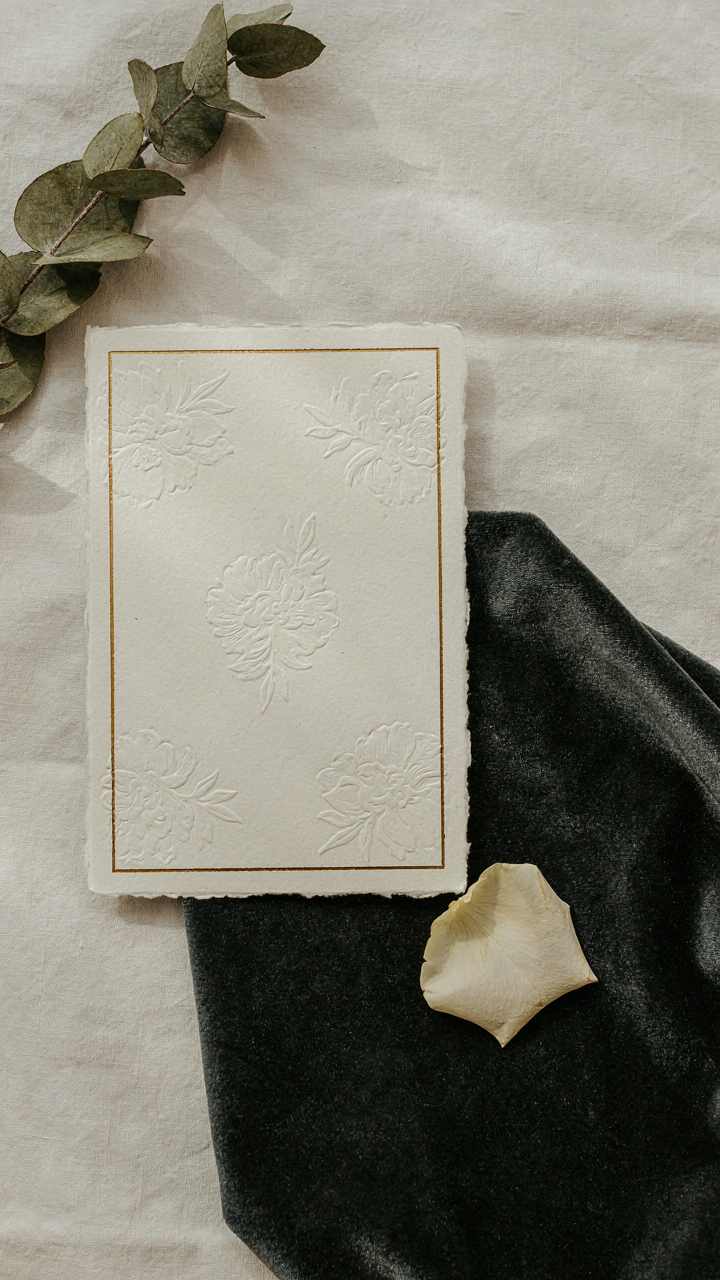
Reading The Invitation Like A Signal
You’re worried people will judge you for breaking the unspoken rules, so you’re looking for permission to wear what you actually want to wear. The real mechanism: formal dress codes exist on a spectrum, not in rigid categories, and a jumpsuit lands differently depending on what the invitation actually says versus what convention assumes it means.

“Black tie” and “black tie optional” demand structure—a tailored jumpsuit in wool or silk blend with a sharp waistline works because it mirrors the formality of a tuxedo without the separates. “Formal” or “cocktail” gives you latitude; you can choose jumpsuits with architectural seaming, subtle texture, or relaxed proportions. Read the specific words on the card, not your anxiety about what others expect. A jumpsuit that fits well and uses premium fabric passes every gate.
Fabric And Layer Strategy For Your Season
The common advice says “wear what feels comfortable,” which is useless. What matters: fabric weight and fiber content determine whether you look intentional or underdressed in the actual season you’re attending.
Summer events need breathable fabrics—linen blends, cotton-silk mixes, or lightweight rayon that won’t cling or wrinkle excessively. Layer with a structured blazer or shawl, not a heavy wrap. Winter calls for wool, crepe, or dense blends that hold shape and project formality. Spring and fall sit in the middle; a standard cotton-blend suiting or a ponte fabric handles temperature shifts without looking provisional. Always check the venue type—indoor air conditioning changes everything. Pick your base fabric first, then build layers that add visual weight without bulk.
The Cocktail Jumpsuit Imperative: Balancing Flair And Formality
Fabric Weight And Drape Economics
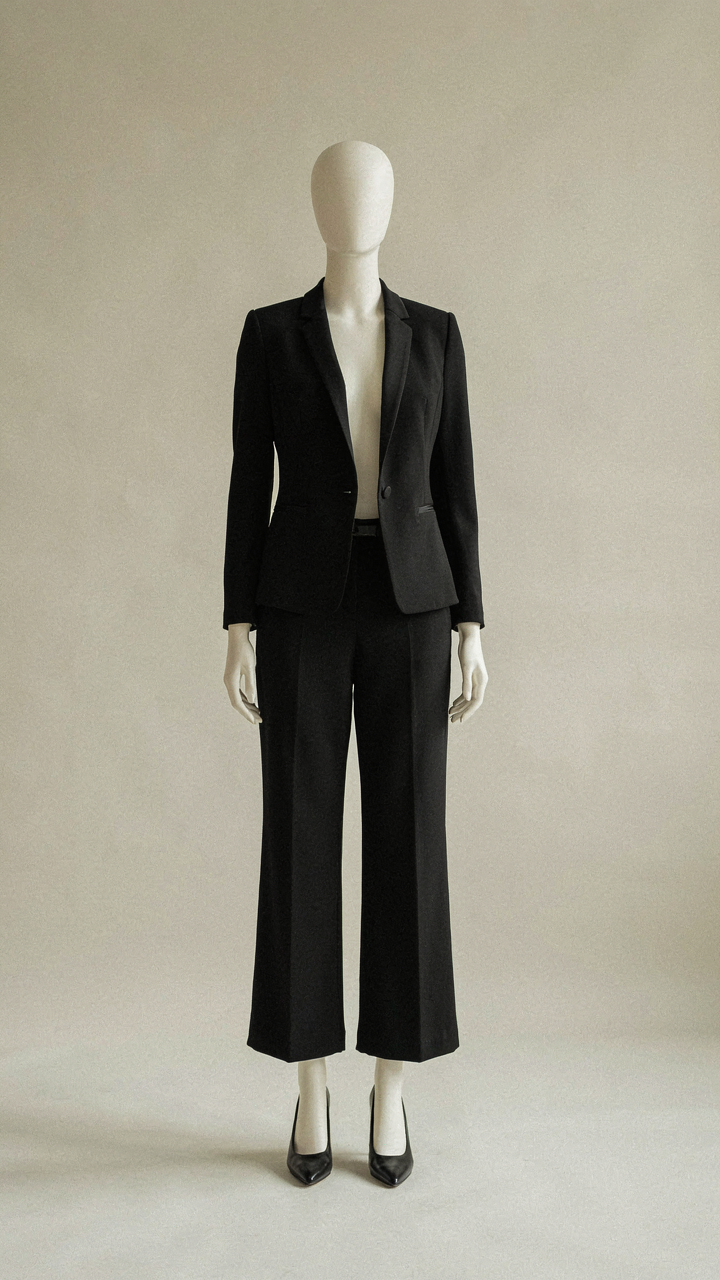
You want permission to stand out without actually risking being wrong. That’s the real calculation here. The mechanism is simple: fabric weight determines how much movement and confidence a jumpsuit demands from your body. Heavier fabrics like crepe, structured wool blends, and satin-back materials create clean silhouettes that forgive posture mistakes. They hold shape. Lightweight fabrics demand precision. A silk charmeuse or rayon blend reads as less formal automatically because it moves too much. Save those for resort wear. Choose crepe or a quality polyester blend that mimics suiting weight.

The fabric choice also controls how the jumpsuit photographs and reads across distances. Matte finishes absorb light and project formality. Glossy finishes bounce it around and read as playful or trendy. For a cocktail event, matte fabrics anchor authority while subtle sheen on strategic panels (lapels, cuffs) adds dimension without broadcasting costume energy. Weight the fabric toward structured materials. The jumpsuit will sit correctly, move correctly, and you’ll move inside it correctly.
Intentional Details Over Noise
Most guidance on jumpsuit embellishment misses the actual problem: people add details to compensate for weak construction, not to elevate it. A well-cut jumpsuit in the right fabric needs almost nothing. Strategic embellishments work when they do one specific job, not when they announce themselves. Piping along seams, subtle beading on lapels, or tonal embroidery on cuffs read as deliberate craft. Scattered sequins, oversized rhinestones, or mismatched textures read as panic dressing. The distinction matters because formality requires restraint, and restraint requires confidence in the base piece.
Embellishment works as contrast, not clutter. If your jumpsuit is solid black, a beaded bodice panel or metallic threading on lapels creates a focal point without compromising the silhouette. Keep embellishments to one zone: chest, cuffs, or hem. Never all three. This maintains the line and prevents the piece from fragmenting visually. When you add detail, remove something else. Trade pockets for tonal beading. Trade a belt for a structural seam detail. Every addition costs space. Spend it deliberately, then stop.
The Jumpsuit Confidence Protocol
Fit And Movement Before The Event
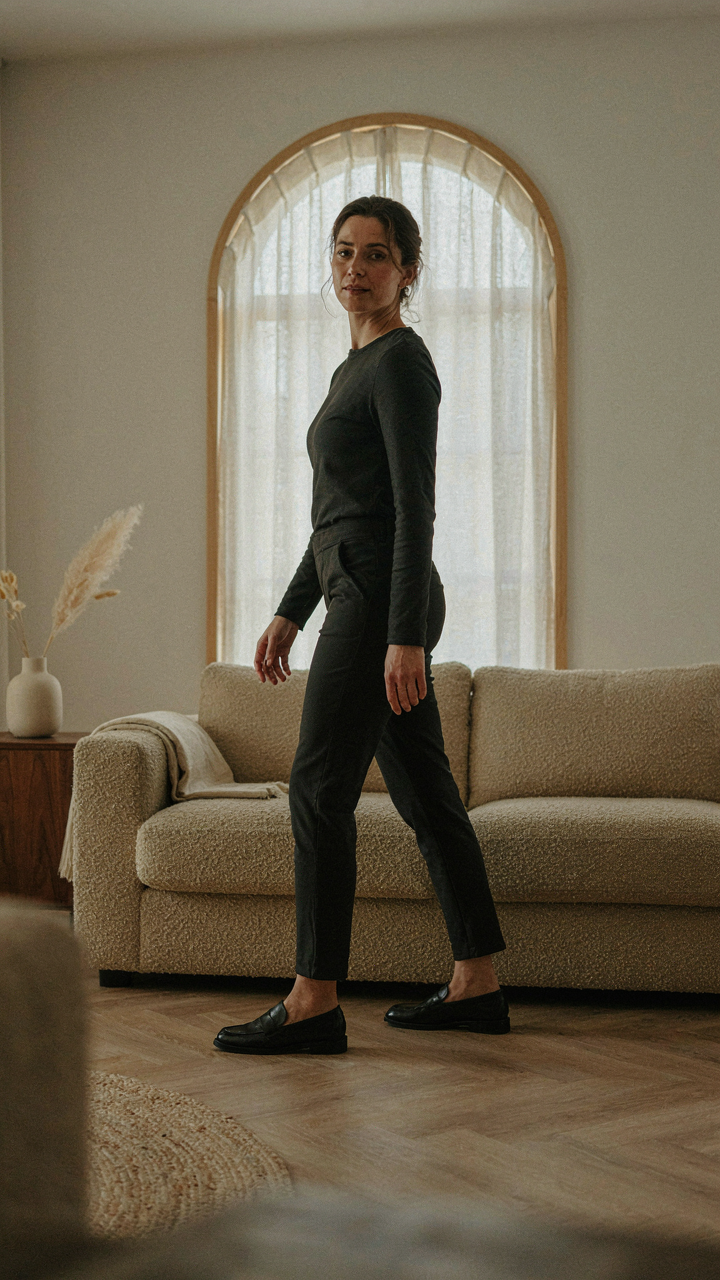
You’re worried people will notice if something’s off. They will. The real mechanism is proprioception—your nervous system’s awareness of where your body occupies space. A jumpsuit that doesn’t fit right hijacks this system. Your brain spends the entire event managing discomfort instead of managing the room. Test the fit by sitting, standing, walking stairs, and reaching across your body. Move in ways you’ll actually move at the event. Bend forward. Raise your arms. Check sleeve length, torso taper, and inseam while wearing the shoes you’ll wear that day.

The second pass is grip. Stand in front of a mirror and deliberately move for three minutes straight. Walk, gesture, sit, stand repeatedly. If you reach for a cocktail and the fabric pulls. If you sit and the waistband digs. If you dance and the leg rides up. Stop and fix it now. These aren’t minor annoyances. They’re the difference between owning a room and managing a malfunction. Your body knows the truth before your mind does.
Posture Becomes Your Statement
How you carry the jumpsuit matters more than the jumpsuit itself. Slouching in formal wear reads as uncertainty. Standing with shoulders back and spine neutral reads as intentional. This isn’t about vanity. It’s about how your physical positioning shapes how others perceive authority and comfort. A tailored jumpsuit on a collapsed posture looks expensive and wasted. The same jumpsuit on an aligned frame looks commanding.
The protocol is mechanical. Before you enter the event, reset your baseline. Stand tall. Drop your shoulders down and back. Tuck your chin slightly. Breathe from your diaphragm. This resets your nervous system and anchors your physical presence. Then maintain it throughout the event by catching yourself every 15 minutes. You won’t be perfect. You’re building the habit of noticing. By the end of the night, aligned posture becomes your default, not your effort.
The Wedding Outfit Reimagined: Jumpsuit As Power Play
When Conformity Becomes Your Liability
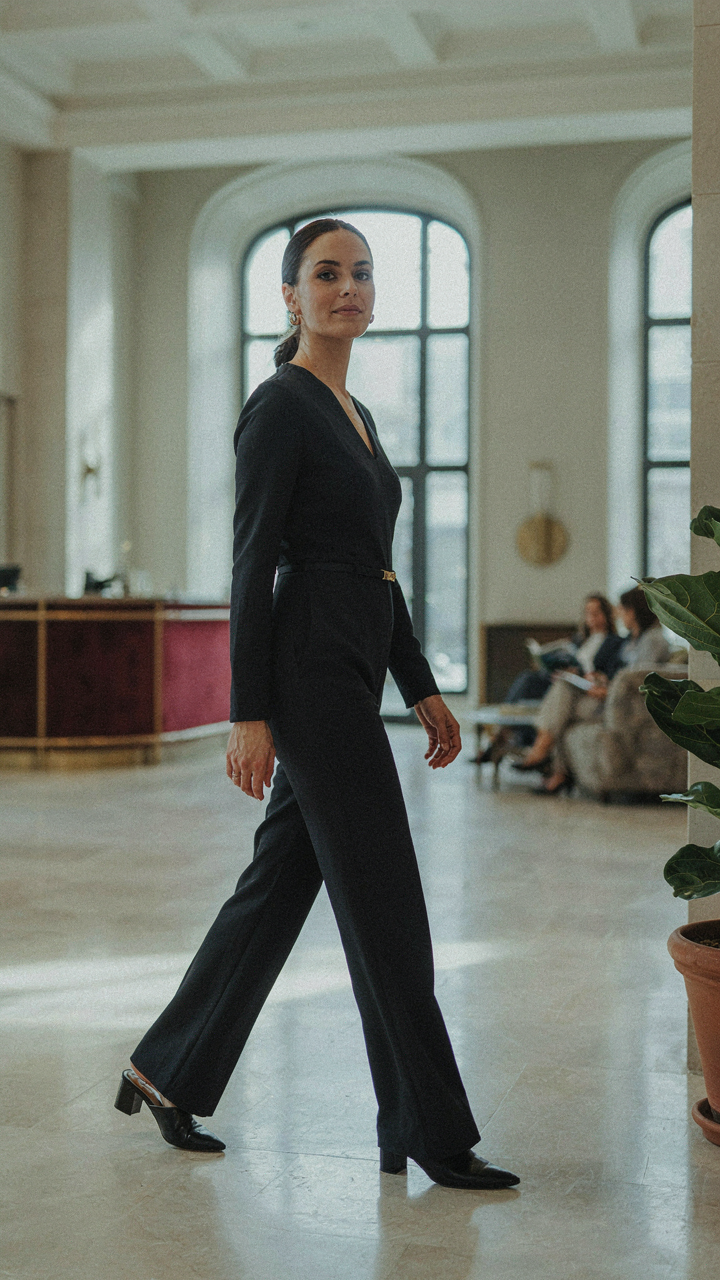
You want the jumpsuit because you’re tired of looking like everyone else, but you’re afraid it signals you don’t respect the event. That’s the real tension. Here’s the mechanism: a jumpsuit disrupts the visual hierarchy people expect at weddings. Men wear suits. Women wear dresses or separates. A jumpsuit violates both categories at once, which makes it read as intentional rather than confused. When you choose one deliberately, you’re not breaking protocol—you’re proving you understand it well enough to modify it.

The jumpsuit works because it borrows from tailoring logic, where structure and proportion matter more than category. A well-cut jumpsuit has the formality of a suit jacket paired with the freedom of pants. It signals you’ve invested thought into your appearance rather than defaulting to rental formality. This is why cheap jumpsuits fail at weddings—they look like costumes. Quality construction is the entire message. Fabric weight, seaming precision, and fit accuracy are what separate “I’m making a statement” from “I couldn’t find a dress.”
The Garment That Pays Back Rent
Most wedding guest advice treats the outfit as consumable—wear it once, photograph it, forget it. That’s wasteful thinking. A jumpsuit built for weddings has structural advantages that extend its utility far beyond one event. The tailored construction translates directly to professional settings, evening dinners, and situations where you need formal impact without traditional formality.
This is where selection strategy matters. A neutral tone like black, navy, or charcoal stretches across seasons and occasions. A silk-blend fabric resists wrinkles during travel and storage. A fitted silhouette at the waist photographs well and accommodates minor weight fluctuations. After the wedding, this same jumpsuit works for client dinners, industry events, or date nights that demand presence. Each wear compounds the initial investment’s value. Within twelve months of intentional use, you’ve paid down the cost-per-wear to the level of a standard work blazer, except this piece still carries the weight of that first impression it made.
Your Sartorial Success Isn’t About The Garment, But The Intentionality You Bring To Every Thread

Most people buy a wedding guest jumpsuit and hope it works. You’re going to do the opposite. Pull three jumpsuits from your closet or a rental site today and wear each one around your house for an hour. Notice what you actually move like, what you actually feel in. That sensation is your signal. The jumpsuit doesn’t dress you. Your confidence in the choice does. Show up intentional or don’t show up at all.