

The Event Driven Fallacy: Why Context Is Overrated
Dress Codes Are Suggestions, Not Laws
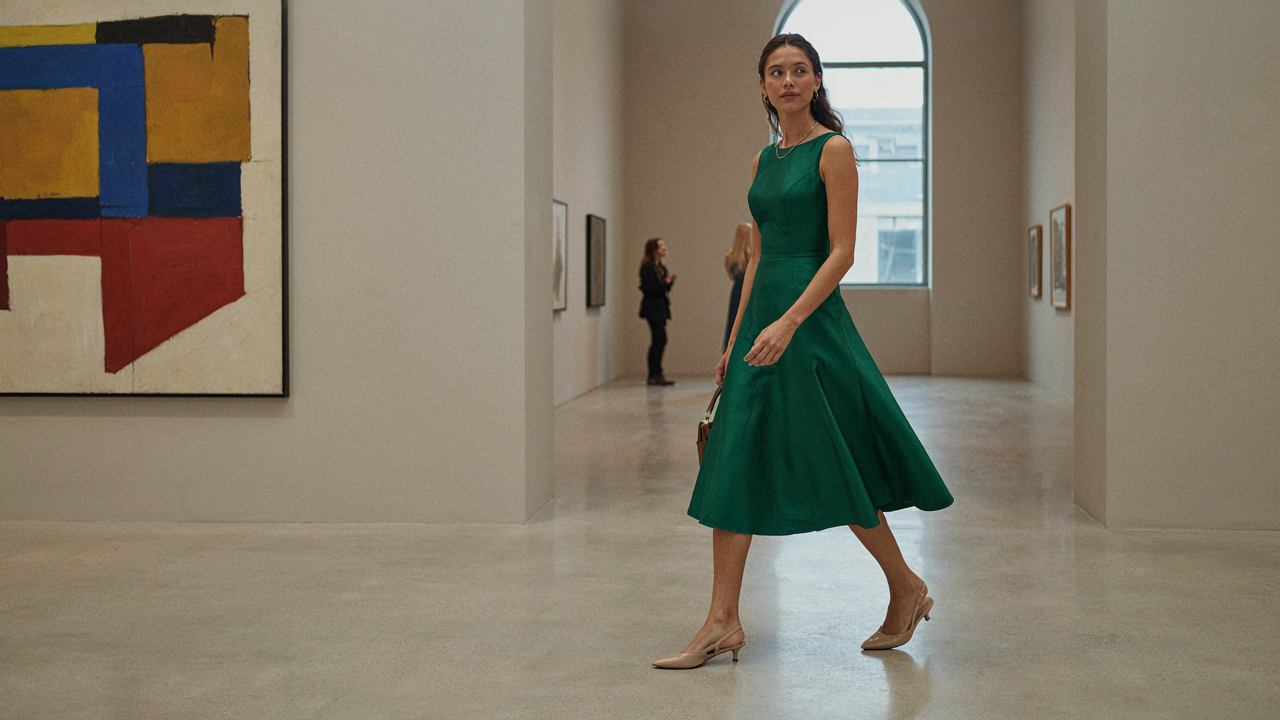
You’re looking for permission to break a rule you haven’t actually broken yet. That’s the real mechanism here: you want someone to tell you it’s acceptable to deviate from stated expectations so you can feel smart about ignoring them. The truth is simpler. Dress codes exist as social insurance, not doctrine. A cocktail dress works across formal settings because it occupies a middle ground by design, not accident. The shoe choice follows the same logic. What matters is whether your selection reads as intentional or careless to the room.
The common advice says “match the formality of the event.” This is incomplete. Formality is a spectrum your shoes navigate independently of the dress itself. A satin pump reads formal regardless of venue. A metallic flat reads modern regardless of the dress. What separates acceptable from jarring is coherence: your shoes should signal you understood the environment and made a deliberate choice within it, not that you defaulted to whatever was comfortable. The real constraint isn’t the event label. It’s whether you can explain your choice in one sentence without sounding defensive.
Your Comfort Dictates Your Confidence
Comfort functions like a tell in poker: your body broadcasts what your mind hasn’t admitted yet. When your feet hurt, you shift your weight. When you shift weight, your posture collapses. When your posture collapses, people read you as uncertain about your right to occupy space. This isn’t psychology. This is observable physical mechanics. A heel that pinches your arch makes you stand differently. A shoe that’s too loose makes you grip the floor with your toes. Both patterns register as nervous energy, which registers as lower status in social hierarchies built on silent cues.
The real decision point happens hours before the event, not at the door. Test your shoes in the exact conditions you’ll wear them: walking on the venue’s actual flooring, standing still for twenty minutes, sitting down and standing up multiple times. If any of these create genuine pain rather than minor adjustment, the shoe fails regardless of how it photographs. Confidence isn’t a feeling you manufacture. It’s the absence of a signal your body would otherwise broadcast. Choose shoes that let you forget about your feet entirely. That’s when the rest of your presence has room to operate.
Cocktail Attire Shoes: Beyond The Stiletto Trap
The Elegant Heel Assumption
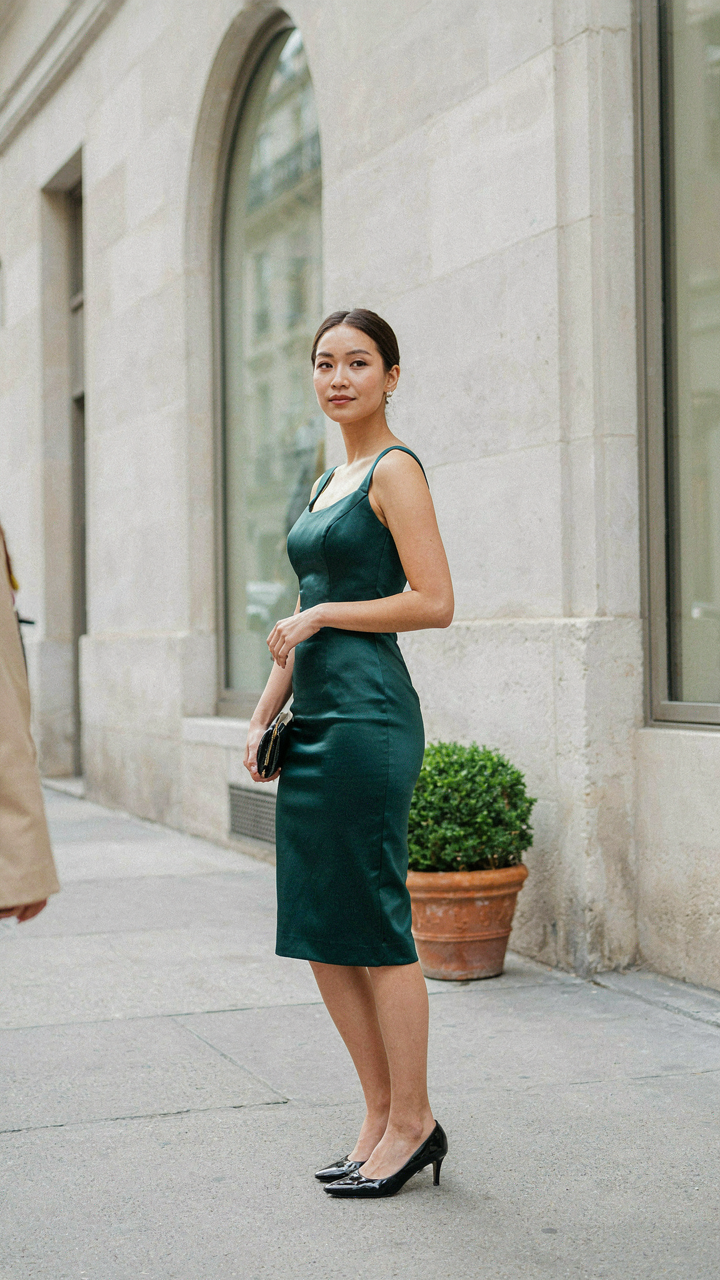
You’re worried a flat shoe signals you don’t care enough about looking put-together. Here’s the mechanism: the stiletto became the default cocktail shoe because it was rare and expensive to manufacture in the mid-20th century, not because it’s functionally superior for every body type or event. Rarity created perceived status. Status became law. Now most people follow without questioning.

The stiletto persists as cocktail orthodoxy despite biomechanical reality. A four-inch heel changes your center of gravity, limits standing time, and restricts your movement to controlled poses. Fashion magazines reinforced this through repetition, not through any objective measure of elegance. The real cost of this assumption is your actual comfort and your ability to move through an event without planning your next rest stop.
Flats That Command The Room
Comfort is the wrong frame. Economics teaches us about trade-offs, and shoes involve a trade-off between visual weight and functional capacity. A ballet flat or pointed-toe loafer gives you functional capacity while reading as intentional, not lazy. The mechanism works like this: a flat shoe in a formal setting signals confidence, not compromise. You’re not reaching for comfort because you’re struggling. You’re wearing flats because you chose function.
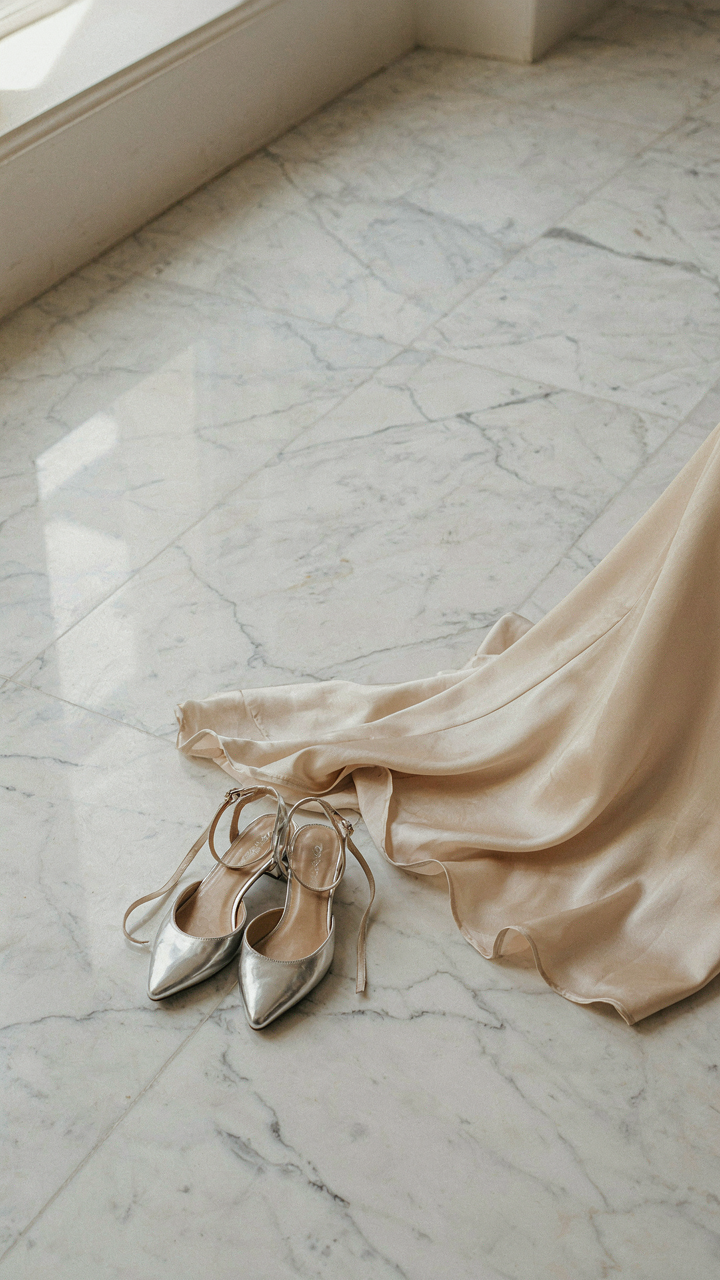
Flat shoes work at cocktail events when they’re constructed from quality materials and styled with intention. Patent leather, suede, or metallic finishes elevate the category. A pointed toe elongates your silhouette the way a heel does, but your feet stay planted. Elegant flats require the same sartorial commitment as heels, which is precisely why wearing them reads as deliberate rather than default.
The Material Truth: Fabric Dictates Form
When Texture Matters More Than Color
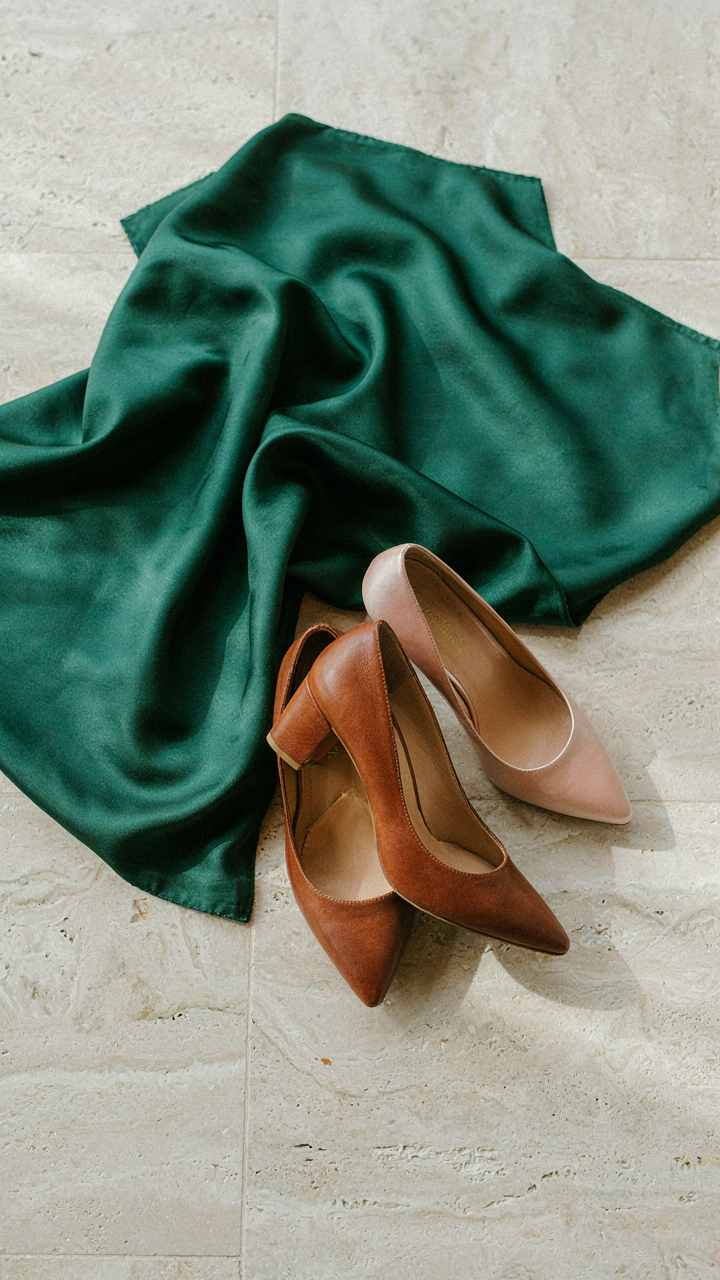
You care about this section because matching textures feels like invisible work—and you want proof it actually moves the needle. Here’s the mechanism: fabric has memory. Suede absorbs light and holds visual weight. Satin reflects it. Leather projects formality through density. Borrowing from materials science, texture creates surface friction—literally and visually. A satin shoe next to a matte crepe dress creates visual contrast that reads as careless. Match the reflection profile and you solve the entire problem without thinking about it again.

The common advice says “just pick a neutral color.” That’s incomplete. Two black shoes—one suede, one patent leather—behave like different objects when paired with the same dress. Suede calms a silk dress. Patent leather fights it. The dress fabric determines which shoe surface completes the equation, not your mood or the season. Test this: place a suede pump against your dress fabric under natural light, then a satin pump. One disappears into the silhouette. One competes with it. That’s your answer.
The Seasonal Shoe Myth Stops Here
Seasonal rules exist because retailers need inventory rotation, not because physics changed. Wearing a closed-toe leather pump in July doesn’t violate a natural law. The real variable is the cocktail dress material, not the calendar. A lightweight silk crepe dress in winter reads as intentional sophistication. A heavy velvet dress in summer reads as commitment. The shoe material should match the dress weight first, weather second.
Here’s the protocol: identify your dress fabric weight and surface finish. Does it breathe? Is it structured or fluid? Pick shoe material with matching properties. Heavy silk charmeuse pairs with substantial leather or satin. Lightweight cotton voile pairs with delicate strappy sandals or thin metallic leather. The season becomes irrelevant once you solve for fabric compatibility. Your shoe choice becomes defensible, not arbitrary.
Shoes For Cocktail Dresses: The “Rule Of Three” Protocol
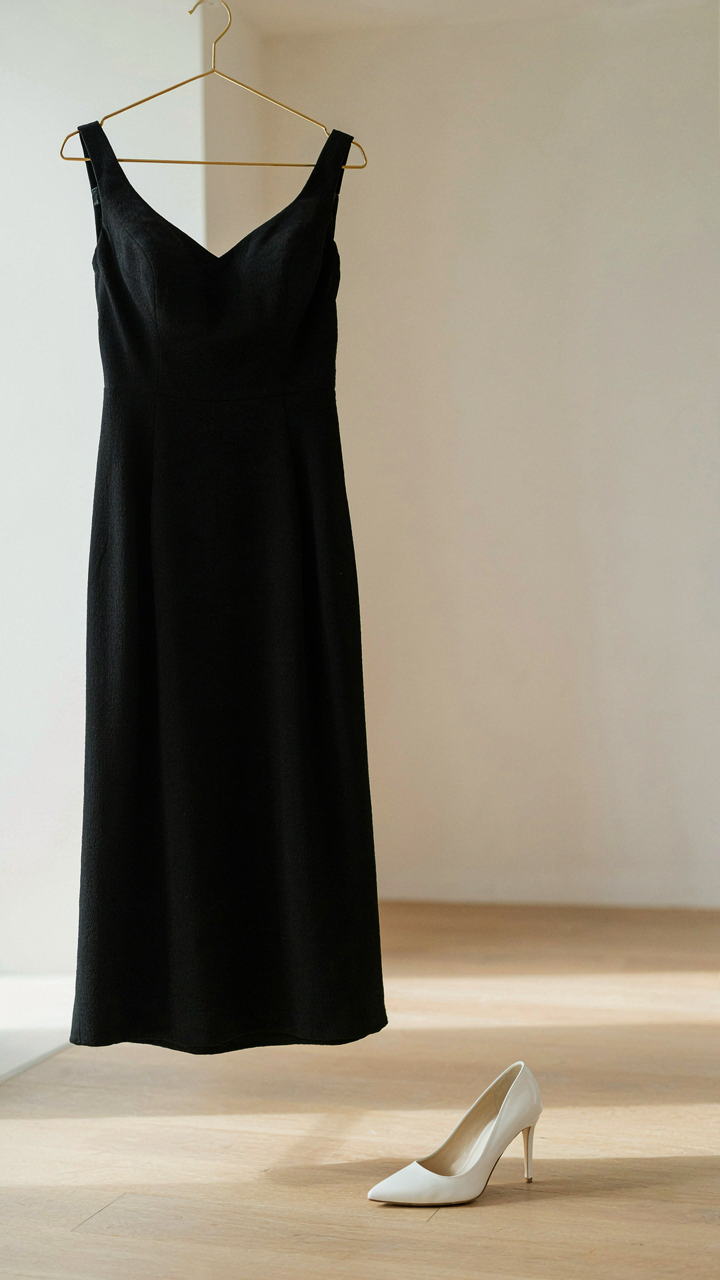
Weight Distribution Across Three Points
You’re worried the shoe will kill the outfit. That’s the real anxiety here. The mechanism is borrowed from physics: load distribution. A cocktail dress creates visual weight through fabric, structure, and often embellishment. Your shoe either anchors that weight or destabilizes it. Think of your outfit as a three-point system: the dress carries most visual load, the shoe must counterbalance without competing, and the leg bridges them. A heavy stiletto under a structured dress collapses the balance. A delicate sandal under a dense, sequined dress looks abandoned.

The protocol is simple. Match shoe weight to dress weight in the opposite direction. A dense cocktail dress needs a grounded, simple shoe that doesn’t fight for attention. A minimal slip dress needs a shoe with presence, even if that presence is just a distinctive silhouette or material. The shoe isn’t an afterthought, it’s ballast. Assess your dress first: how much visual material does it command? Then choose a shoe that completes the geometry, not one that mirrors it.
Contrast And Tonal Matching
Common advice says match your shoe to your dress color. That’s incomplete and often wrong. The real choice is between two strategies with opposing outcomes: contrast creates intentional friction, tonal harmony creates visual continuation. Contrast draws the eye down and makes legs longer. It signals intention. Tonal matching dissolves the line between dress and shoe, elongating the entire silhouette. Contrast says the shoe is a deliberate choice. Harmony says the dress descends unbroken.
Your decision depends on what you want the outfit to communicate. Black dress with nude shoe creates the leg-lengthening effect, useful for formal events where you want elongation without drama. Black dress with white or metallic shoe creates a visual stop, useful for environments where the shoe itself matters as a detail. Neither is objectively better. Choose the mechanism that serves your venue and your confidence level at that moment.
Tea Length Dress Shoes: The Proportionality Principle
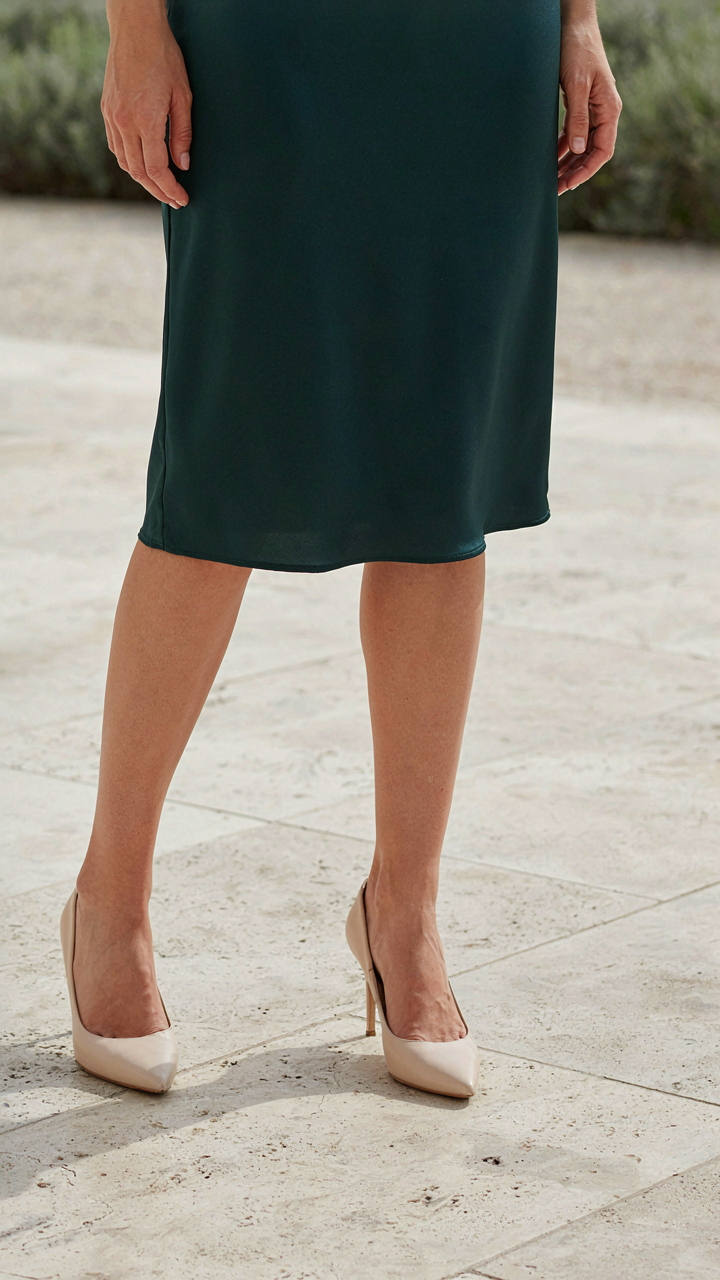
Balance Visual Weight To Match Hem Length
You care about this because wearing the wrong shoe with a tea length dress makes you look like you don’t understand how your own body reads to others. Borrow a concept from architecture: load distribution. Your shoe carries visual weight the same way a foundation carries structural weight. Tea length—typically hitting at the calf or just below—creates a specific visual pocket. A delicate stiletto reads as weightless in that pocket. A chunky platform reads as grounded. The dress exposes your leg, which means your shoe must either complete the vertical line or intentionally break it. Most people ignore this mechanism and wonder why they look off.

The proportionality principle demands that shoe volume match the visual real estate you’re showing. A tea length dress reveals roughly 12 to 16 inches of leg and ankle. Your shoe must scale to that exposure, not to the dress’s silhouette alone. A pointed pump works because the tapered toe extends your leg line and reduces perceived foot mass. A round-toe loafer works differently—it grounds you, making the exposed leg feel intentional rather than incomplete. Choose based on whether you want vertical extension or horizontal stability, then size the shoe’s visual footprint to match that intent.
Heel Height As Your Posture Lever
Heel height functions as a mechanical lever for your entire kinetic chain, not just shoe aesthetics. Architecture uses load paths; your body uses postural paths. A three-inch heel shifts your weight forward and elongates your calf. A one-inch heel keeps your weight centered and shortens visual leg length. The tea length hem magnifies this effect because it frames exactly where your heel does its work. Most advice says “wear what’s comfortable,” which ignores that comfort and visual proportion are unrelated problems.
The leverage point operates in two directions. Higher heels make your leg appear longer within the exposed zone, which works for proportions under 5’8″. Lower heels work for taller frames because they prevent the leg from reading as a single stretched line. A kitten heel (1.5 to 2 inches) splits the difference—it provides slight elongation without the ankle stress or postural demand of higher heels. Your choice matters because the heel height determines whether the dress reads as proportional or whether it reads as “legs go on forever” or “legs stop abruptly.” Measure your exposed leg length in the mirror, then select heel height to extend or anchor that visual space deliberately.
The Navy Blue Dress Outfit: Unlocking Versatility
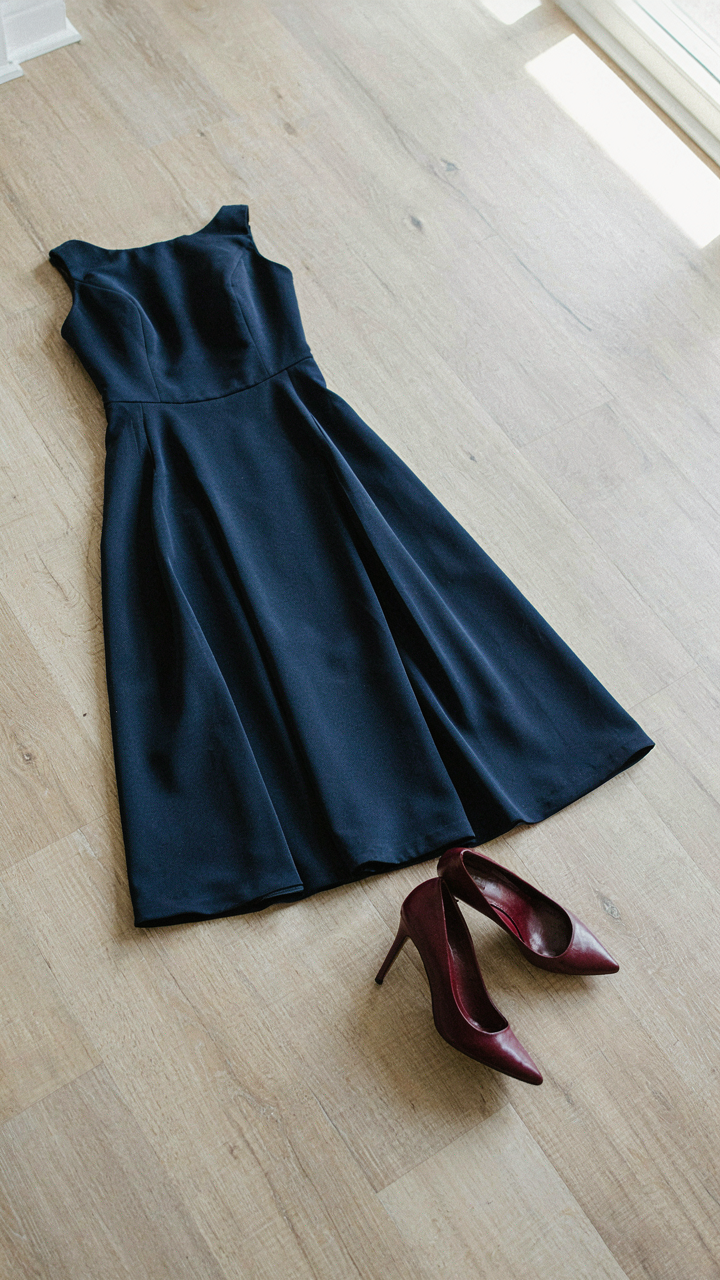
Stop Defaulting To Nude And Black
You’re scared of looking wrong, so you reach for what everyone else wears. But nude and black aren’t neutrals—they’re fear decisions. Navy operates on the same principle as a blank canvas in design: it recedes enough to let other elements dominate, yet it’s saturated enough to anchor bold choices. The mechanism is contrast ratio. Dark navy needs a shoe that either matches its depth or creates deliberate visual tension. Burgundy, forest green, deep teal, and even muted terracotta all work because they respect the navy’s weight without competing for attention. These aren’t unexpected—they’re calculated. Most people never try them because they assume navy demands predictability.

The real play is treating navy as permission to stop playing it safe. A cognac leather pump works. A slate gray strappy sandal works. Even a deep plum works if the shoe has enough structure to stand beside the dress rather than disappear into it. The test is simple: does the shoe feel like it belongs in the same color family or does it create intentional contrast? If it does neither, it fails. Navy cocktail dresses tolerate ambition. Use that.
Metallics Function As A Neutral System
Think about metallics through the lens of physics, specifically reflectivity. Unlike matte fabrics, metallics bounce light rather than absorb it, making them behave as visual moderators. Silver and gold don’t compete with navy the way a bright color does because their value comes from light reflection, not pigment saturation. Silver leans cool and reads as modern; gold leans warm and reads as intentional elegance. Both neutralize the dress by redirecting focus to texture and silhouette instead of color clash.
Silver works when you want the shoe to recede but still register as deliberate. Gold works when you need the outfit to feel complete and cohesive. Champagne and rose gold occupy the middle ground—they’re softer than pure metallics but still carry the reflective property that makes them function as system neutrals. The protocol is straightforward: pick metallics based on the undertones in your skin and the lighting of the venue. Cool-toned venues favor silver. Warm-lit spaces favor gold. Metallics aren’t optional accessories—they’re problem-solving tools.
Shoes For Sequin Dress: The Reflection Reflex
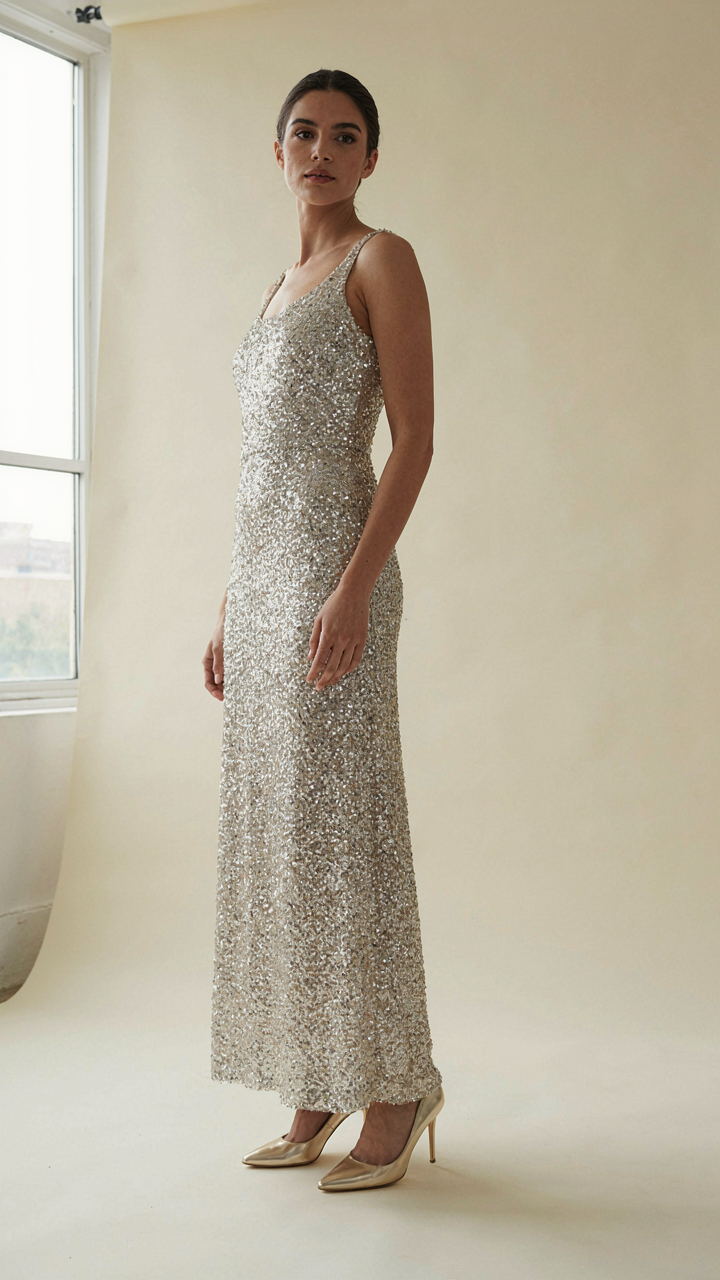
Mirror The Shimmer, Don’t Compete
You want the sequins to do the talking because you’re afraid a bold shoe will steal focus. Here’s the mechanism: sequins create visual noise through repetition and light scatter. Add competing texture or color and you’ve fractured attention into three separate arguments instead of one unified statement. The dress already solved the problem of being seen. Your shoe’s job is containment, not contribution.

Metallics work here because they’re not competing—they’re amplifying. Gold, silver, or bronze shoes don’t add a new visual element; they extend the existing light-play language the sequins already established. Nude or black shoes flatten the visual impact entirely by creating a hard stop at the ankle. The sequin dress demands continuity. A metallic heel maintains the shimmer’s momentum downward without introducing a conflicting design story that your eye has to process and reconcile.
Understated Power Plays The Long Game
Most advice tells you to match metallics exactly, which is wrong. A perfect gold-on-gold match looks accidental, like you forgot to think. Intentional contrast within the metallic family—a rose gold shoe with cool-toned silver sequins, for instance—signals you know the difference between matching and coordination. The mechanism here borrows from visual hierarchy: the dominant element (the dress) stays loud while the secondary element (the shoe) adds precision through restraint.
Satin or smooth leather finishes outperform embellished shoes because they read as deliberate choice rather than confusion. A sequin dress plus a embellished shoe says you couldn’t decide what kind of event this is. A sequin dress plus a clean metallic pump says you understand proportion. The heel height matters less than the shoe’s visual weight. A thin stiletto disappears; a chunky block heel grounds the sequin’s energy. Wear the shoe that makes the dress the story, not the supporting player.
The “Comfort Over Everything” Dogma: A Refutation
Strategic Discomfort For Impact
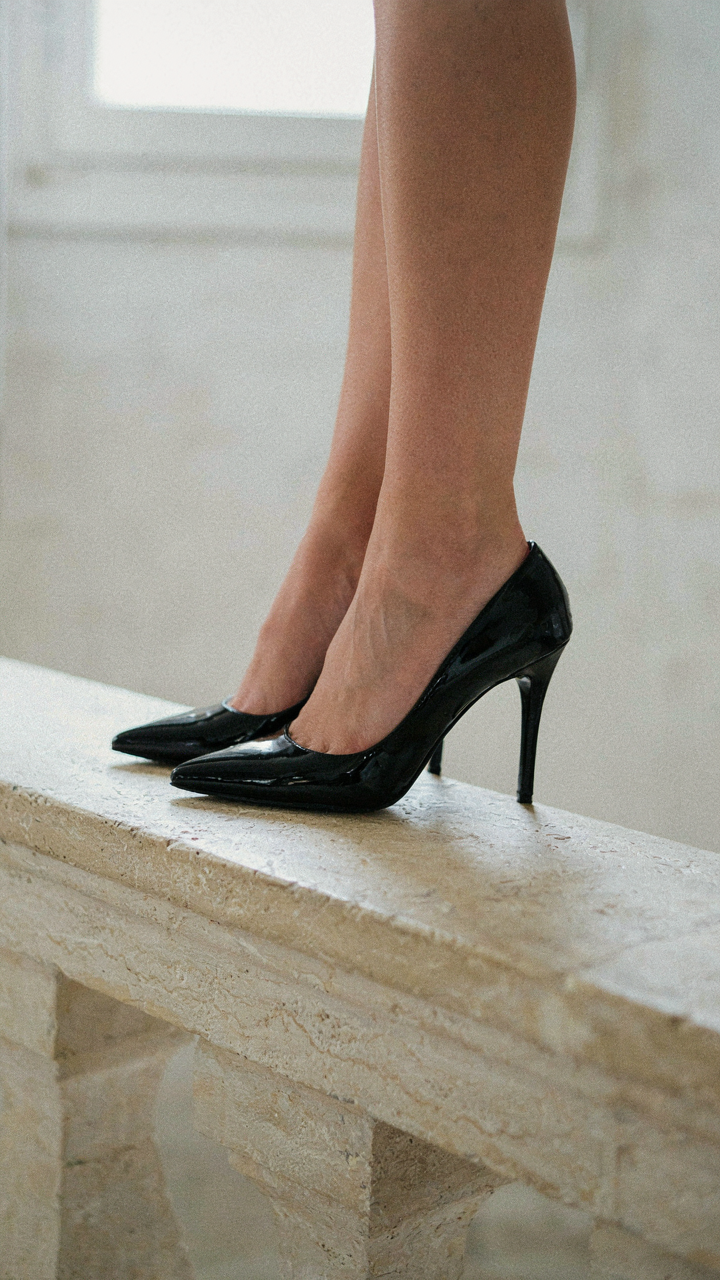
You want permission to suffer because suffering signals commitment. Here’s what nobody says: discomfort is a tool, not a flaw. Borrow from physics the concept of tension. A shoe creates tension between your body and the ground, between what feels safe and what commands attention. A cocktail dress demands a shoe with architectural presence, not orthopedic accommodation. That presence costs friction.

The real mechanism is this: your nervous system reads difficulty as significance. A heel that requires postural adjustment, a narrow toe box that demands precision in movement, a material that hasn’t broken in yet—these create micro-challenges your body responds to with heightened awareness. You stand differently. You move with intention instead of autopilot. The room reads that as confidence, not discomfort. Wear the shoe that makes you slightly more alert, not the one that lets you forget you’re wearing shoes.
The Psychological Edge Of A Challenging Shoe
Consensus advice tells you to prioritize what feels good in the moment. That’s incomplete. A shoe that delivers zero resistance also delivers zero signal. When a heel sits at three inches with a fitted shank, your calf engages differently than it would in a flat. That muscular engagement isn’t punishment—it’s proprioceptive feedback that sharpens your presence in a room.
The choice matters more than the comfort. Selecting a pump, a strappy sandal, or a metallic oxford is an active decision. That decision-making process rewires how you inhabit the shoe. You’re not passively wearing it; you’re wearing it with purpose. Before you enter an event, stand in the shoe for five minutes without moving. Let your body calibrate. That calibration period is where the psychological edge forms. Walk in with that tension present, and it becomes your baseline instead of your burden.
The “Investment Shoe” Scam: Why Price Doesn’t Matter
Cost Per Wear Ignores The Real Variable
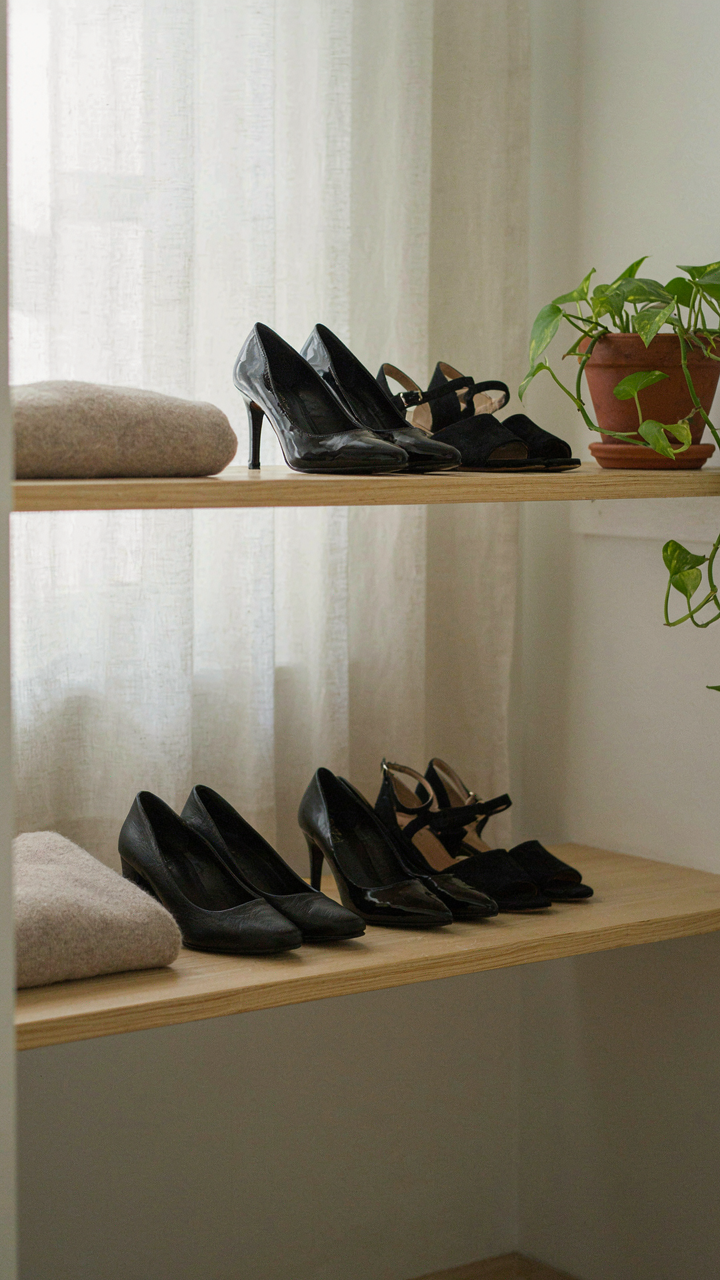
You’re hoping a three-hundred-dollar shoe justifies itself by being worn a hundred times. That’s the trap. Economics calls this “amortization,” but the mechanism doesn’t work for cocktail shoes because the real cost isn’t the price tag—it’s the closet space and mental load of owning something you’ll actually wear. A sixty-dollar heel worn twice has already cost you more than a two-hundred-dollar pair gathering dust.

The math everyone cites assumes consistent use. Cocktail shoes break this assumption. You buy them for specific moments, wear them unevenly, then store them. A expensive pair doesn’t change the friction of that workflow. What matters is whether you reach for it. The shoe that disappears into your rotation has better economics than the one that demands justification every time you open your closet.
Style Is Earned Not Bought
The advice about “investment pieces” is incomplete. It treats shoes like financial assets when they’re actually tools for a specific social context. Your style emerges from decisions you repeat, not from owning premium inventory. A pedestrian choice made consistently reads better than an expensive choice worn hesitantly.
The mechanism is simple: confidence comes from familiarity, not price. Wear the same shoe silhouette three times, and you own it. Wear an expensive shoe once, and you’re still borrowing someone else’s taste. Build your cocktail shoe roster around what you actually move in, what you actually reach for, and what actually works with the rest of your rotation. That’s where real style accumulates.
The Future Of Footwear: Adapting To The Unknown

Build Your Personal Style Algorithm
You’re reading this because you’re afraid you’ll pick wrong and look stupid. The real mechanism here is signal detection: your brain filters millions of data points to identify what works, then rejects what doesn’t. With cocktail dress shoes, most people never systematize this process. They copy what they saw once and call it taste.
Start by auditing your actual closet, not your Pinterest board. Document which shoes you’ve worn with dresses more than twice. Note the context: venue, season, dress color, your confidence level that night. After ten outings, patterns emerge. Certain heel heights dominate. Certain materials repeat. Certain colors work across multiple dresses. This is your personal algorithm. It’s more useful than any trend forecast because it reflects your actual body, lifestyle, and the real events you attend.
Reject The Cycle Before It Rejects You
The fashion industry needs you to believe trends matter more than they do. Trendy shoes to wear with cocktail dresses get discarded faster than they sell, while foundational pieces compound value. A black pointed-toe pump from five years ago works today. A neon metallicplatform from last season won’t. The lie is that staying current requires constant replacement. The truth is that relevance comes from fit, material quality, and proportional accuracy to your body.
Your protocol: buy shoes in neutral leather that will last three to five years. Prioritize comfort over novelty because you’ll actually wear them repeatedly. When you test a shoe, wear it for a full evening, not a fitting room walk. Document how your feet feel at hours two, four, and six. This data becomes your filter for future purchases. The best shoes to wear with a cocktail dress are the ones you don’t think about because they work every single time.
The Real Obstacle: Your Fear Of Being Underdressed

You don’t need a new shoe. You need permission to stop apologizing for your choices. Most people pair cocktail dresses with the wrong shoes because they’re playing it safe, terrified of standing out. The mechanism that changes everything is this: confidence isn’t about owning expensive heels. It’s about owning your decision. Pick one pair you already own, wear it this week without hesitation, and watch how nobody cares. The person who seems underdressed is always the one still wondering if they are.



