

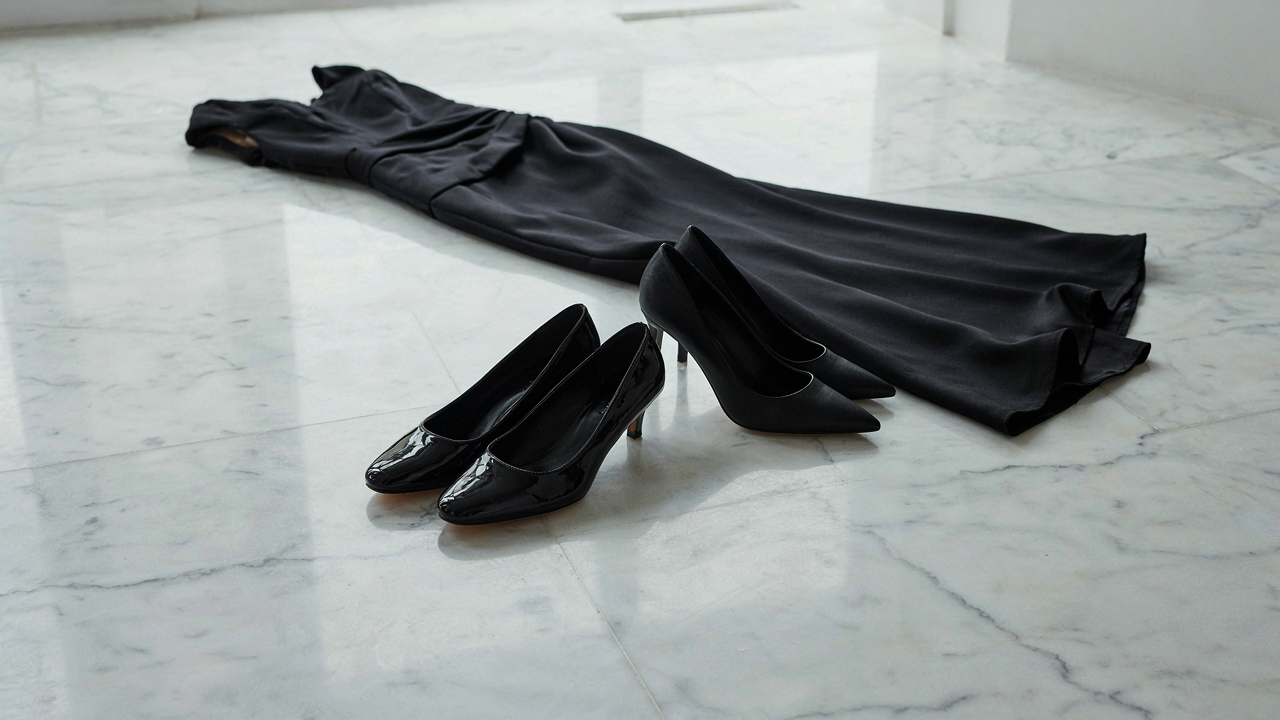
Beyond The Black Pump: The Unseen Power Of Flat Dress Shoes
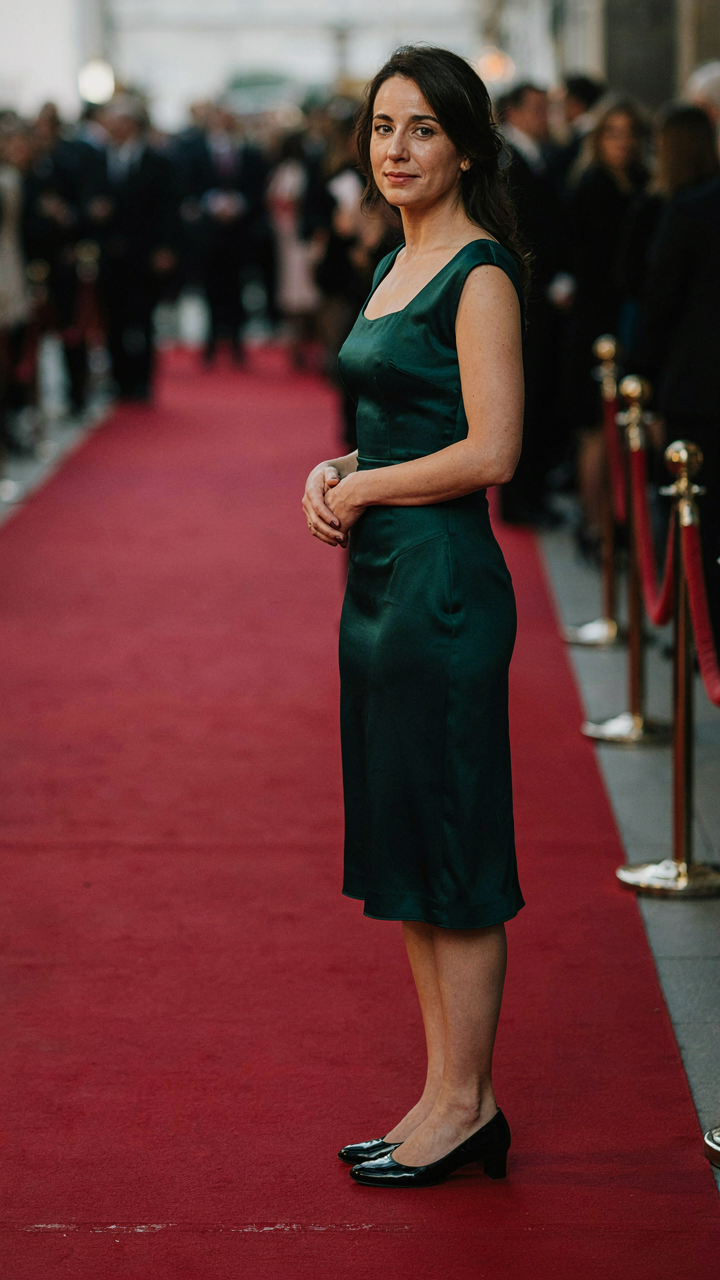
Why Heels Aren’t The Default Answer
You’re worried that flat shoes will make you look less formal. That’s the real fear here. The mechanism is simple: you’ve been sold a false equation where height equals formality. Black tie dress codes don’t require heels. They require polish, proportion, and intentional design. Patent leather oxfords, elegant flats, and structured loafers all meet the standard. The confusion exists because fashion marketing spent decades linking heel height to occasion level.
Conventional advice treats heels as mandatory for black tie. This is incomplete and often wrong. Formal dress codes originated in 18th century court settings where men wore heels too. The modern association between women’s heels and formality is marketing, not etiquette. What actually signals formality is material quality, finish, fit, and color coordination with your outfit. A woman in a flat dress shoe with pristine stitching and proper proportions reads more formal than someone in a scuffed heel.
When Comfort Becomes The Smarter Choice
The real calculation isn’t comfort versus formality. It’s sustainability versus compromise. You’ll spend a four-hour event on your feet. A shoe that causes pain degrades your posture, facial expression, and presence. Economics teaches diminishing returns: the pain from unsuitable heels erases the formality gain. A flat shoe worn with confidence projects more authority than a heel worn with grimacing. The choice becomes strategic, not aesthetic.
Flat dress shoes work when the event demands extended standing, dancing, or networking. Patent leather dress flats, elegant ballet-style options, and structured suede shoes all maintain black tie standards. Choose flats if your event runs longer than three hours, requires standing in receiving lines, or involves multiple venue changes. Pair them with a dress that skims the ankle or hits at knee length to maintain visual proportion. The shoe’s construction and material drive formality, not its heel height.
The “Elegant Resistance” Protocol: How To Dress With Flats
Black Patent Leather Flats As Power Move
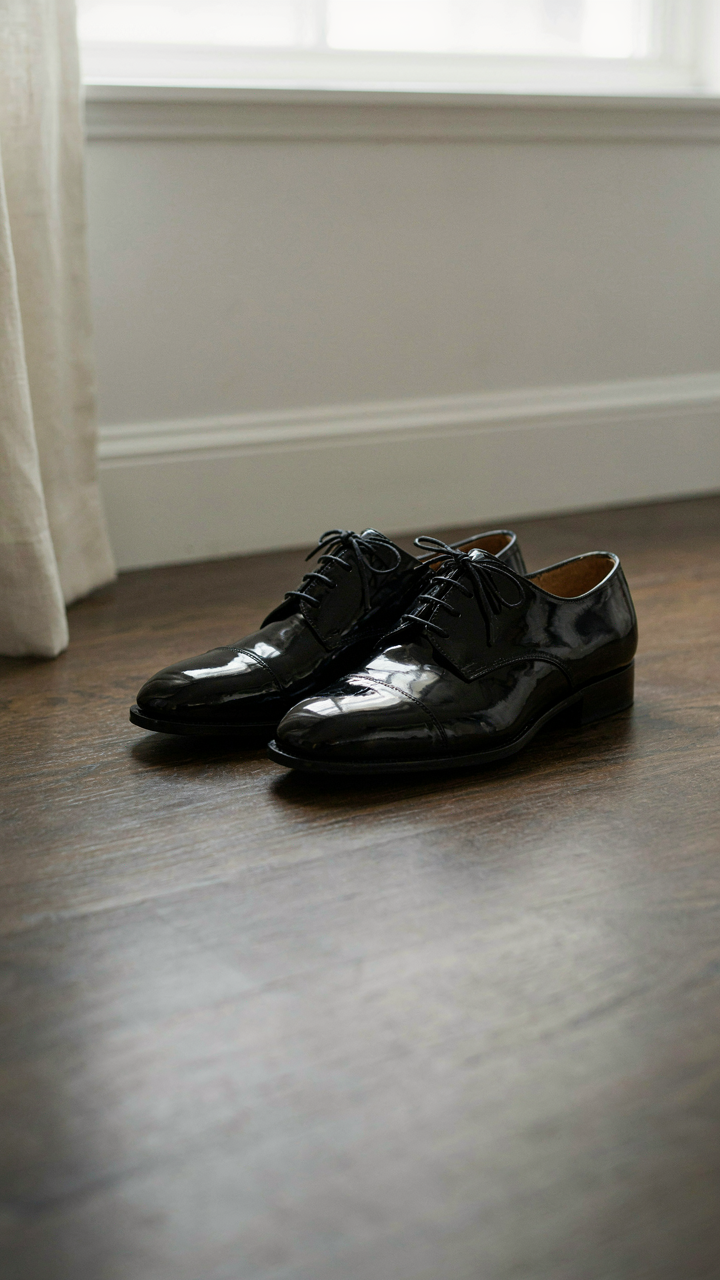
You want permission to break the rule without looking like you broke it. Here’s the mechanism: black patent leather flats signal intention. They’re not a compromise—they’re a deliberate choice that reads as confidence, not constraint. Patent leather reflects light like a dress shoe, which tricks the eye into reading formality. The shoe trades heel height for material authority. A flat in patent leather accomplishes what a 3-inch heel accomplishes in gloss and visual weight, which means it performs the same optical function in formal dress codes while removing the physical demand.

The reason patent leather works for black tie is simple biomechanics. Formal events demand visual cohesion from feet to waist. Patent leather’s reflective surface creates the same light-catching quality as a polished oxford or pump heel. Your foot doesn’t disappear into the outfit—it anchors it. The flat sole changes nothing about how the shoe reads in the visual hierarchy of the ensemble. Wear patent leather flats in pure black, never patent with matte accents or mixed finishes. That’s where the trick fails.
Flat Silhouettes Across Black Tie Codes
The common mistake is thinking all flats read the same in formal wear. They don’t. A ballet flat collapses the formality of black tie. A pointed-toe flat maintains it. The silhouette determines whether the shoe registers as formal or casual, regardless of material. A black pointed-toe flat in leather pairs cleanly under a floor-length gown because the shape echoes the elongation the gown creates. An almond toe works. A rounded toe reads softer and loses authority against structured black tie fabrics.
For tuxedo pairings, a flat-front loafer in black or an oxford-inspired flat works because it mirrors the geometric precision of menswear tailoring. The shoe doesn’t need to match the tuxedo’s line—it needs to share its logic. A structured flat with minimal ornamentation lets the outfit’s architecture speak. Add texture through material, not through buckles or hardware. The protocol is straightforward: choose a flat that echoes the geometric language of your black tie silhouette, then commit to it fully without hedging with accessories that signal doubt.
Black Wedding Heels: The Overlooked Details Of Impact
Material And Texture Signal Intention
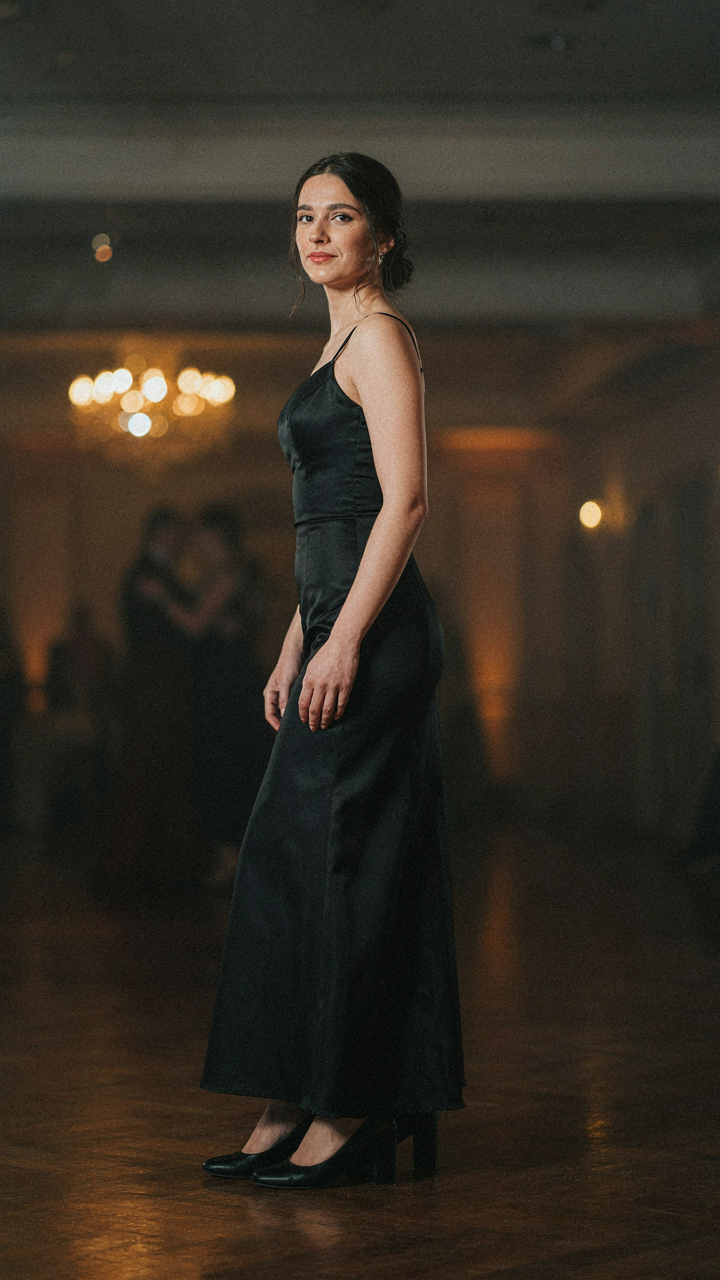
You care about this because material is the first thing other people’s eyes actually register, and you’re terrified of looking cheap. Here’s the mechanism: fabric and leather have different light reflection properties. Satin absorbs and disperses light evenly, creating formal elegance. Patent leather bounces light sharply, reading as intentional formality. Matte fabrics disappear into the background. The material choice tells observers whether you understand the event’s codes or you’re just wearing black shoes.

Patent leather and satin dominate black tie footwear for a reason. Patent reads expensive because it requires maintenance and commands attention without screaming. Suede is a trap—it photographs poorly under flash, absorbs moisture, and looks dingy within hours. Silk or silk-blend uppers exist but demand professional cleaning. Leather with a subtle sheen provides the sweet spot: formal enough to signal respect for the occasion, practical enough to wear again without obsessive care.
Heel Height And Shape Dictate Presence
The physics of balance applies here. A lower center of gravity projects confidence; a higher heel tilts the body forward, signaling vulnerability. The conventional wisdom is that higher heels look more formal, but that’s incomplete. A 2.5 to 3.5 inch heel on a pointed or almond toe distributes weight efficiently and maintains posture. Anything above 4 inches becomes a statement that crowds attention toward your feet rather than your overall presentation. The shape matters equally—pointed toes elongate the leg, round toes read softer, square toes feel architectural.
Most people choose heel height for appearance alone and pay the price in discomfort and visible strain. The real calculation is durability plus wearability. A stable block heel or kitten heel performs better under sustained standing than a thin stiletto, but thin heels look sleeker. The compromise is a tapered heel with a slightly thickened base that maintains the visual line without sacrificing structural integrity. When you select shoes, your first priority is whether you can stand for four hours without your posture collapsing, because collapsed posture ruins every element of black tie formality.
The “French Girl Chic” Blueprint For Black Tie
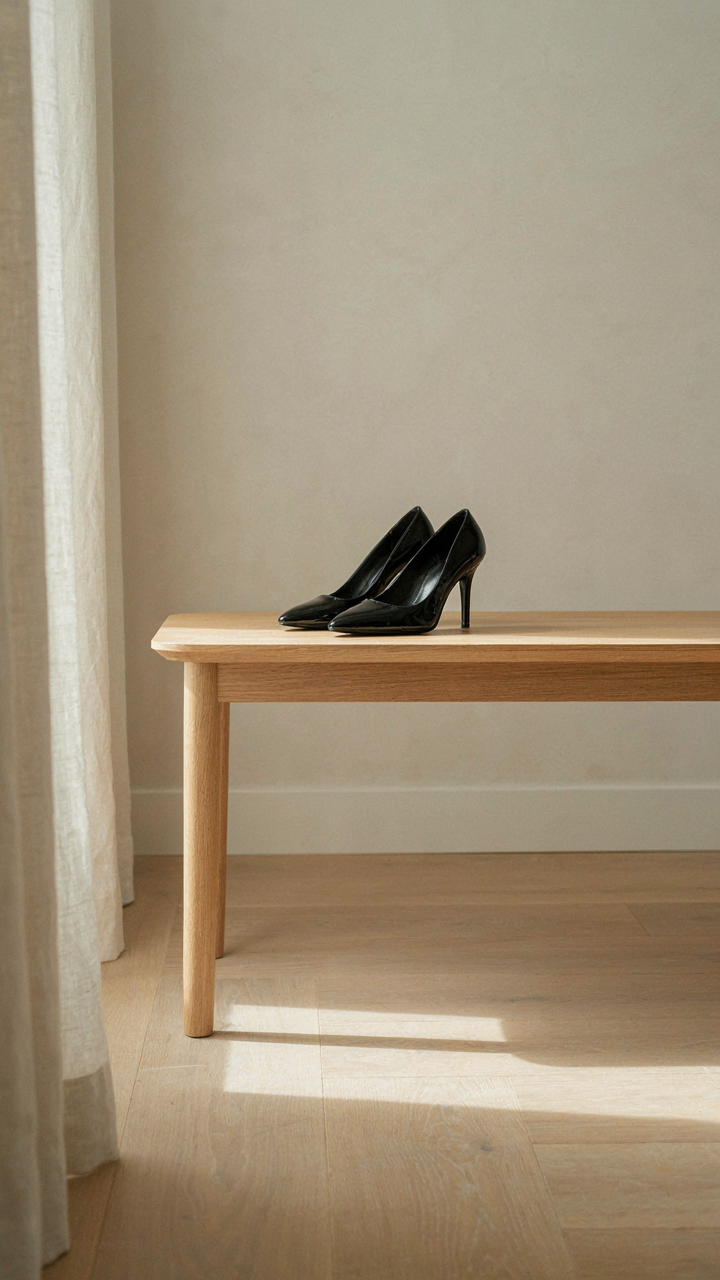
Quality Over Quantity Wins Every Time
You want people to notice you didn’t try hard. That’s the real goal here, and it works because constraint signals control. The French girl aesthetic isn’t about owning more shoes. It’s about owning shoes so correct they become invisible. One pair of black patent leather oxfords beats ten mediocre options. Investment in construction and materials eliminates the need for rotation or backup plans.

The mechanism is simple: poor shoes demand attention through visual noise. Scuffs, cheap finishes, and thin soles telegraph anxiety. Quality shoes don’t announce themselves. They anchor the entire outfit by being exactly what they should be. Patent leather reflects light uniformly. Leather soles age predictably. A proper heel seat doesn’t collapse. This is boring to talk about because it works.
Restraint Becomes Your Competitive Edge
Physics teaches leverage: minimal force applied to the right point creates maximum displacement. Apply this to shoe selection at black tie events. One refined shoe choice displaces more status than three mediocre ones. Most people load their outfit with competing details. A single, perfect shoe choice removes all that noise and forces attention upward to your face and presence.
Black patent leather pumps or oxfords serve as the load-bearing wall of your black tie outfit. Everything else hangs off them. This is why the consensus advice to “choose what makes you comfortable” misses the mechanism entirely. Comfort matters only after you’ve solved for correctness. Pick the shoe that matches the formality level of the room, then wear it enough before the event that it becomes physically comfortable. That’s the sequence. Not comfort first.
Black Pointed Toe Wedding Shoes: Precision In Design
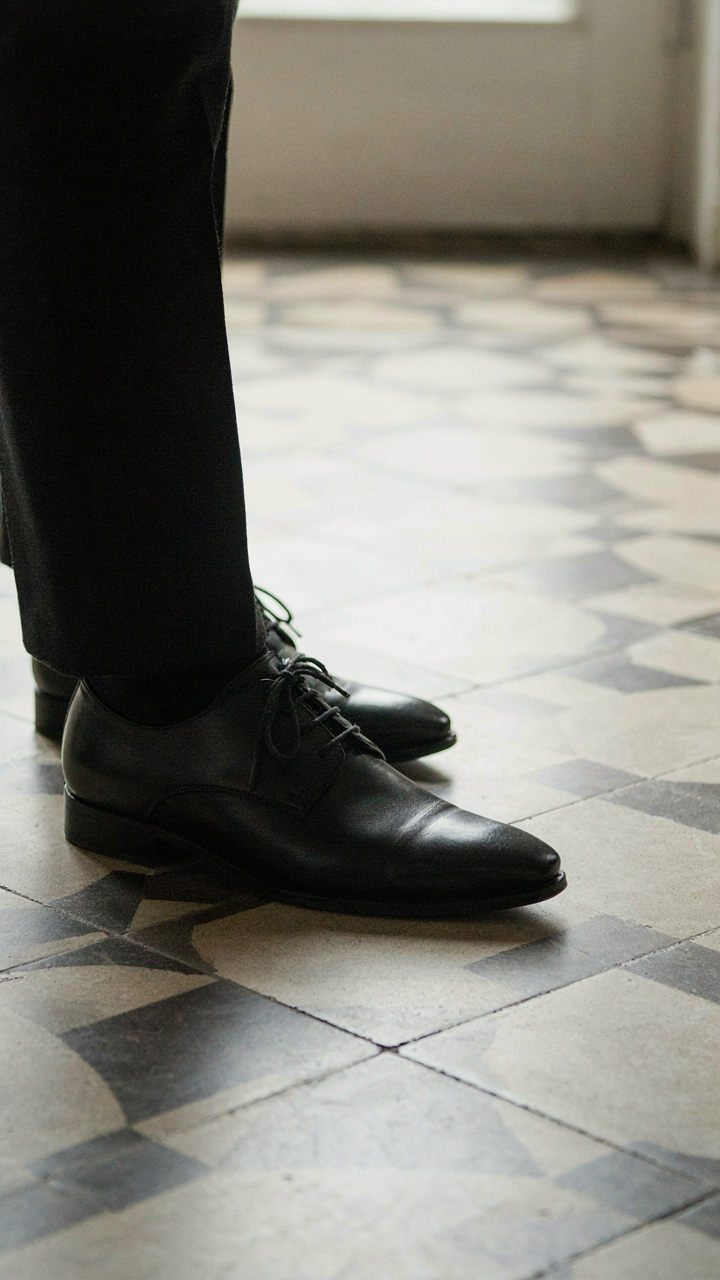
The Geometry Of Signal
You want to know if a pointed toe actually matters because you’re terrified a rounded toe will make you look cheap. Here’s the mechanism: pointed toes work through contrast. In design language, contrast creates visual weight and directs attention. A pointed toe elongates the foot’s silhouette and sharpens the overall line from ankle upward, creating what graphic designers call “visual tension.” That tension reads as intentional, not accidental. The shoe becomes a statement about specificity.

Black pointed toe shoes for formal events exist because they close a visual loop. Your tuxedo or formal suit already features sharp angles: notched lapels, structured shoulders, crisp lines. A rounded toe contradicts this geometry. A pointed toe completes it. The foot no longer appears as an afterthought but as the final punctuation mark on a carefully constructed outfit. Wear a pointed toe intentionally, not because you heard it was “more elegant.”
The Anchor Shoe That Works
Most men treat black pointed toe shoes as decorative. Wrong. They function as the anchor that holds your entire formal outfit in proportion. Think of architecture’s load-bearing wall: it doesn’t add beauty, but nothing stands without it. A quality black pointed toe shoe performs this role by establishing visual hierarchy. Everything above it references that sharp, downward taper. Your proportions become sharper, cleaner, more deliberate.
Classic black pointed toe shoes work because they create no distraction. Patent leather, matte finish, oxford or derby cut—the variation matters less than the consistency of color and toe geometry. The shoe stays subordinate to the outfit while simultaneously strengthening it. This is the paradox most men miss: the best formal shoes disappear into the whole while making everything else look better. Buy one pair in true black leather with a genuine point, not a rounded fake point. Wear it until the sole wears through.
Heels For Black Tie Event: Beyond The Obvious Choice
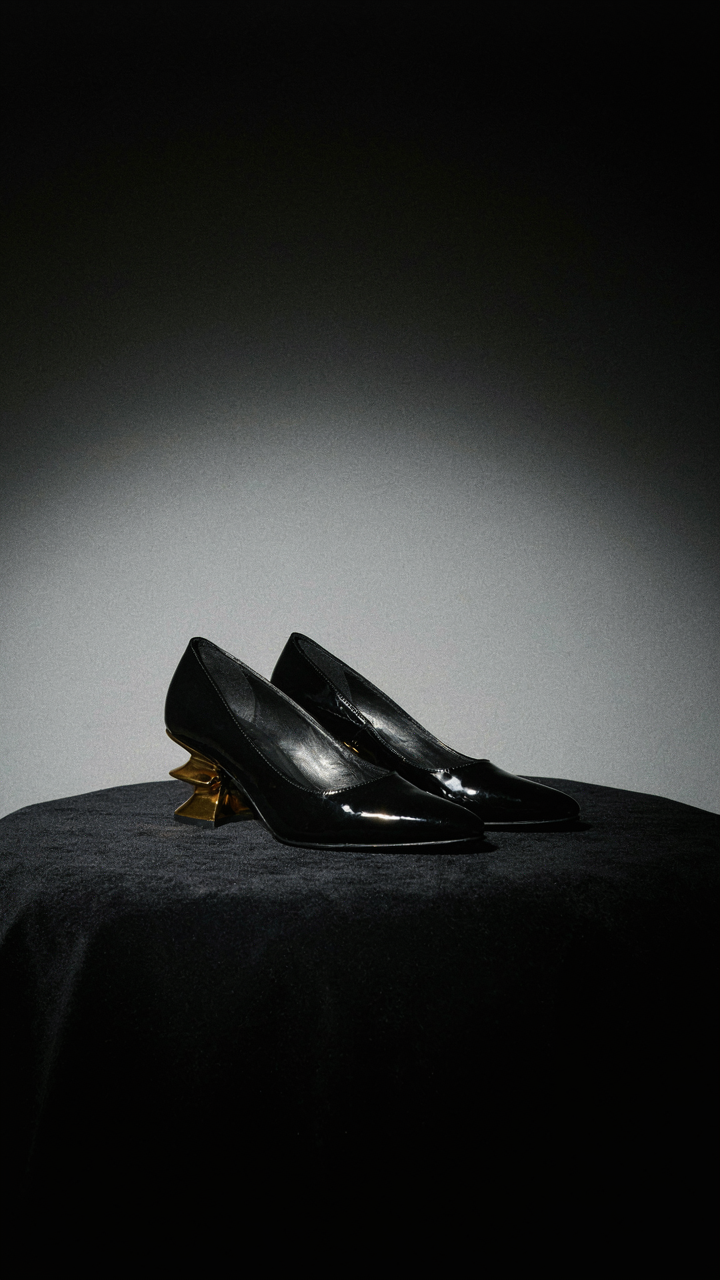
Structure Over Decoration
You want the heel to signal that you understand the room. The common advice says “wear whatever makes you feel confident.” That’s incomplete. Think in terms of architecture: load-bearing capacity matters more than ornamentation. A heel’s structural integrity determines whether it reads as refined or desperate.

A well-proportioned heel has a visible architecture. The shank supports the arch without collapsing inward. The heel itself sits perpendicular to the sole, not angled or beveled at weird angles. Patent leather hides construction flaws. Matte finishes expose them. This is why a simple satin pump, properly made, reads expensive while a glittery heel with poor construction reads like a costume.
When A Heel Commands The Room
Deploying a statement heel without vulgarity requires removing everything else. Most people get this wrong by adding more: a bold heel plus a bold dress plus bold jewelry. That’s visual noise, not impact. A statement heel works when the shoe itself is the focal point.
A metallic heel in gold or silver over a black dress is legible because the dress stays quiet. A sculptural heel with an architectural element (an unexpected curve, a geometric cutout, a bold color like deep burgundy) reads as intentional when paired with classic clothing. A nude heel that extends the leg is a statement through proportion, not embellishment. The protocol is simple: pick one element of the outfit to dominate, then make every other choice submissive to it.
Classy Flats: The Underrated Power Play
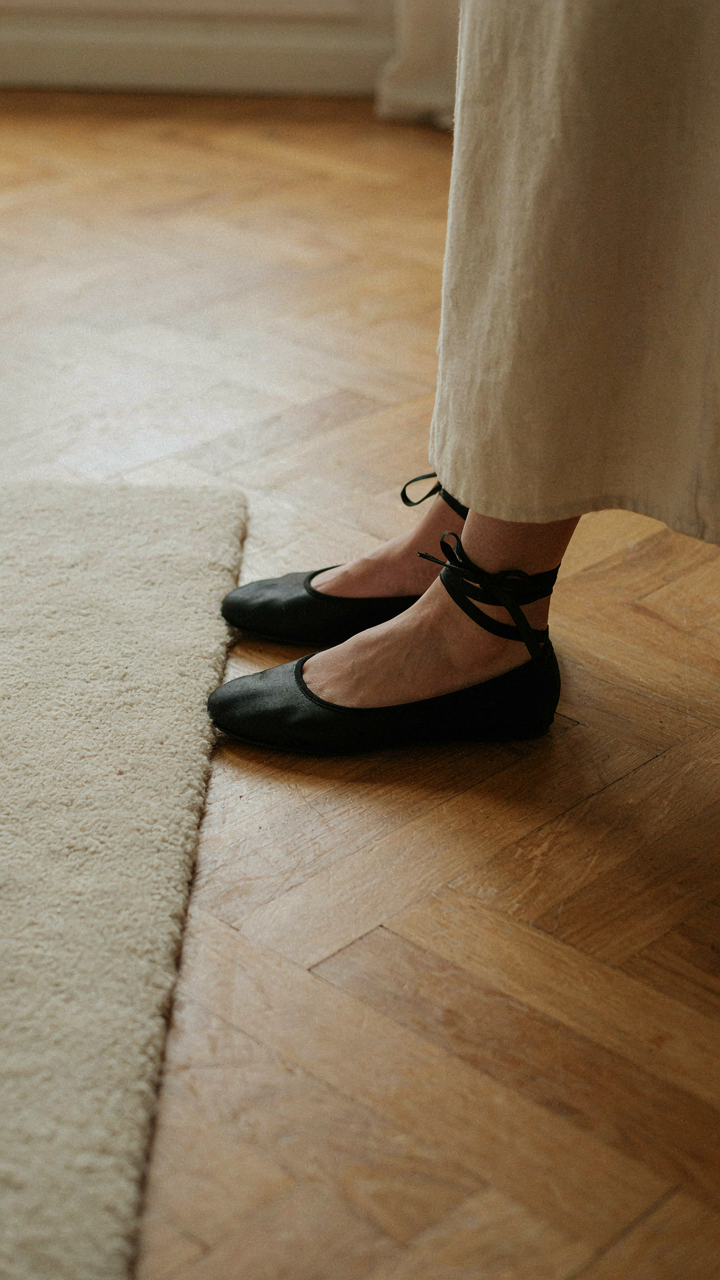
Material And Finish Do The Heavy Lifting
You’re considering flats because you don’t want to suffer through heels all night, but the real reason matters: you’re afraid flats signal you didn’t try hard enough. That fear is backwards. The mechanism is simple: a flat’s authority lives entirely in surface treatment and material density, not heel height. Patent leather, satin, burnished leather, and metal finishes read as intentional on a flat in ways they don’t on a heel. The shoe’s job becomes pure material storytelling.

Black tie doesn’t demand elevation. It demands refinement. A flat in polished leather or satin communicates restraint and confidence more clearly than a standard pump because it refuses to apologize for what it is. The finish must be flawless—scuffs and dullness tank the effect immediately. Quality matters here because the shoe has nowhere to hide. Select materials that hold their appearance through an entire event without maintenance.
Where Flats Actually Work Best
A truly classy flat doesn’t stay confined to one outfit or one body type. Versatility comes from strategic color and material choices, not from the shoe’s inherent design.
- Midnight Or Navy Satin: Works with lighter gowns where black feels too stark. Satin’s sheen catches light differently than matte finishes, keeping the shoe visible without appearing decorative.
- Burnished Leather In Black: The subtle texture variation in burnished finishes creates depth that photographs well and reads expensive. Pairs with any black tie ensemble without competing.
- Patent Leather Flats: High-gloss finish works for women who want impact without height. Patent reads formal and deliberate. Avoid scuffing by checking the shoe’s edge treatment before purchase.
- Jeweled Or Metallic Options: Gold and silver flats work for cocktail-forward black tie events. These finishes bridge formal and fashion-forward without breaking dress code expectations.
- Leather With Grosgrain Trim: Ribbon detailing adds visual interest to an otherwise simple silhouette. The contrast signals intentionality and works across multiple outfit combinations.
The real play is pairing your flat with a statement elsewhere—jewelry, a clutch, or fabric texture in your gown. Flats give permission to invest your visual weight into pieces that actually frame your face. This is basic distribution of attention. Build your protocol around this one rule: if the flat is quiet, everything else gets louder.
Black Tie Bridesmaids: Synchronicity Not Uniformity
The Coordination Trap
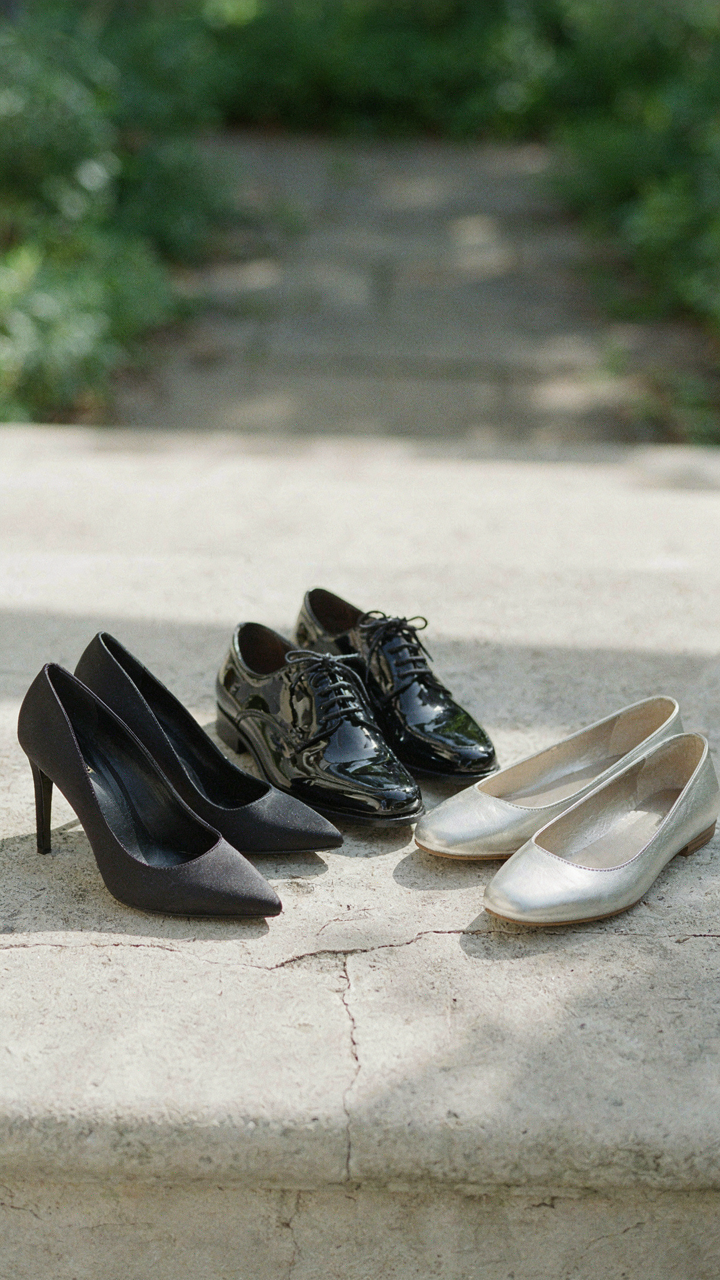
You’re worried matching shoes will make bridesmaids look like a wedding party instead of individuals, which matters because status lives in the details. The mechanism is simple: black tie code doesn’t demand identical footwear. It demands adherence to material and silhouette rules. Patent leather, satin, or polished leather oxfords, pumps, and evening shoes in black, deep navy, or metallics work. The shoes don’t need to be the same brand or exact style. They need to follow the same grammar.

The common advice here is garbage: “let everyone wear whatever they want.” That creates visual chaos and reads as indecision. The real move is setting parameters, not prescriptions. Tell bridesmaids the shoe must be closed-toe, have a heel or formal flat profile, use formal materials, and stay within a three-color palette. One wears a satin pump. Another wears a patent leather oxford. Both read as intentional coordination without cloning.
Expression Within The Code
Black tie operates like grammar in language: strict syntax, infinite vocabulary. Bridesmaids express personality through shoe choice while respecting the rule structure. A pointed-toe pump differs from a round-toe pump. A grosgrain ribbon detail differs from a simple silhouette. Both remain black tie compliant. The shoes speak for the wearer without breaking the dress code.
Personal expression within constraint is what separates sophistication from sloppiness. Provide bridesmaids with a one-page brief: acceptable materials, heel heights (typically 2-4 inches for formal events), color options, and closure types. Then let them source their own version. One chooses Manolo Blahnik. Another chooses a quality high street option. The coordination happens at the structural level, not the label level. Distribute the brief four weeks before the event so choices matter and pressure builds gradually instead of all at once.
The “Contextual Command” Method: Mastering Your Footwear
Reading The Room
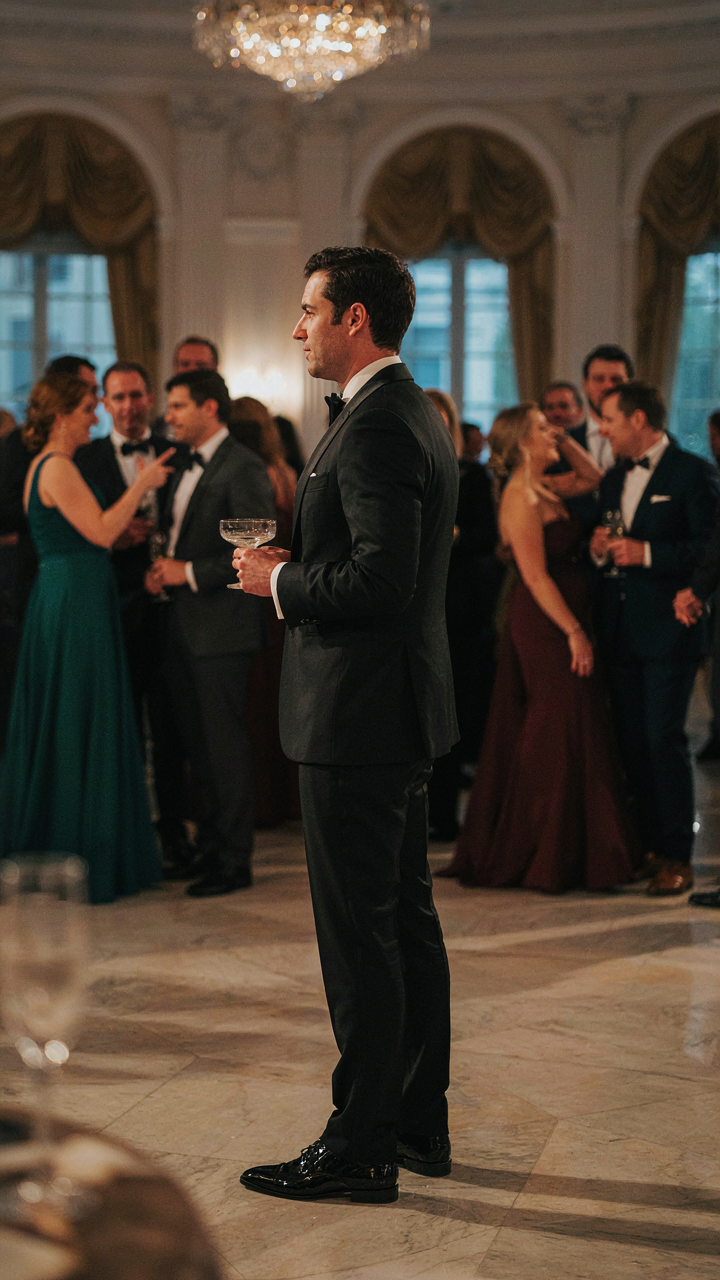
You’re worried that the wrong shoes will expose you as an outsider. That fear is rational. Shoes communicate faster than words because people don’t consciously register them—they just absorb the signal. In formal settings, footwear operates like military rank insignia: it broadcasts your understanding of protocol without you saying a word.

The unspoken rules shift between venues. A black-tie charity gala tolerates oxfords with a subtle sheen. A classical music concert demands matte leather with zero gloss. A wedding reception lets you wear European-cut loafers if the groom does. The mechanism is social calibration: you’re matching the formality level others have already set, not inventing it. Scan the room before you arrive if possible. Ask the host about dress code specifics. Check if the event leans traditional or modern.
Personal Brand Through Sole Work
The shoes you choose tell people whether you understand the difference between dressing for the occasion and dressing for yourself. This isn’t about conformity. It’s about respect. A man wearing pristine cap-toe oxfords signals competence and restraint. A man in patent leather signals he researched formality. A man in worn dress shoes signals he doesn’t care enough to maintain them. Shoes are the only part of formal wear that requires active maintenance, which makes them a pure test of intent.
Your brand compounds over years. If you show up to formal events in the same impeccable black oxford every time, people remember that consistency. If you alternate between three options, you demonstrate intentionality without rigidity. If you wear damaged or mismatched shoes, you’ve telegraphed that this moment doesn’t matter to you. The protocol is simple: choose one baseline shoe, maintain it obsessively, and let that become part of how people perceive your character.
The Real Obstacle Isn’t The Dress Code; It’s Your Fear Of Deviating From It
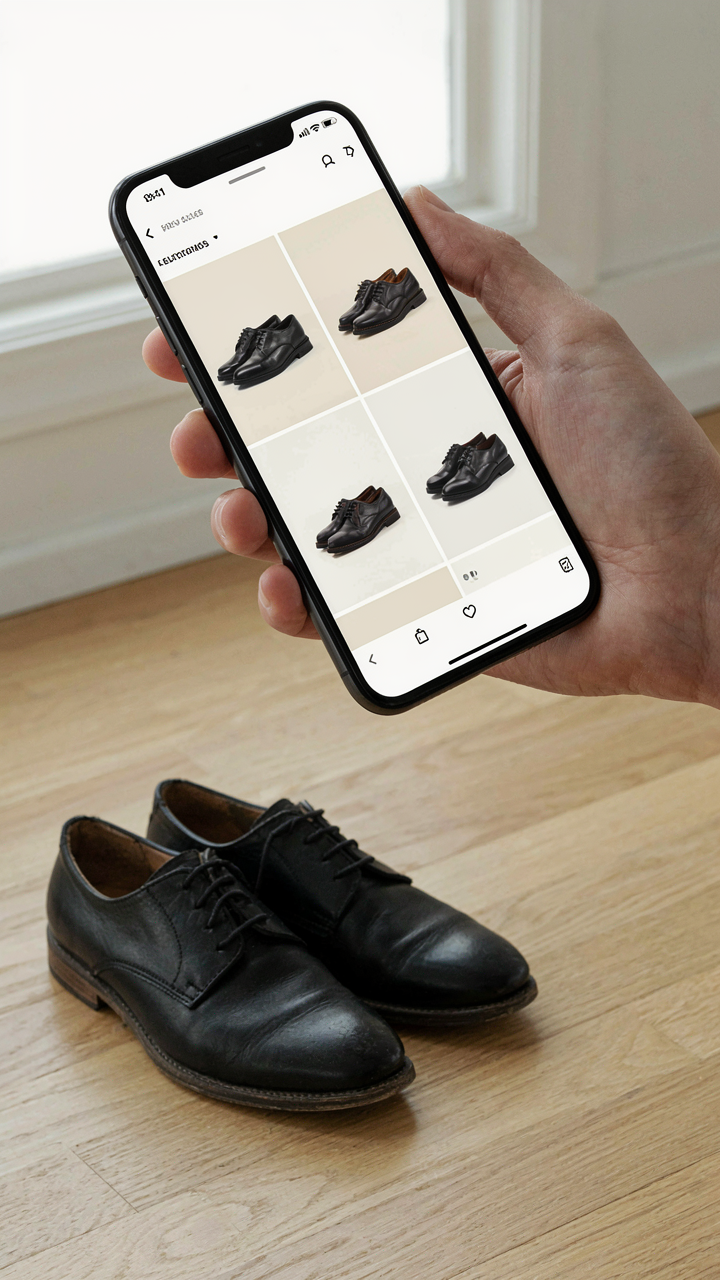
Most men choose black oxfords because they think the rulebook demands it. The rulebook doesn’t. Your fear does. Pick up your phone right now and search “black tie shoes” on three luxury brand sites you actually like. Notice how they vary. Tomorrow, order one pair that fits your body and your taste. Stop performing the dress code and start wearing it.



