


The Luster Deception: Why Most Metallic Dresses Fail
Fabric Weight And Drape Matter More Than Shine
You want the dress to do the work for you so you can stop thinking about whether you look right. Here’s the mechanism: metallic fabrics behave like composite materials in engineering, where the base structure determines performance more than the surface coating. A thin polyester with metallic threading collapses under its own weight. A structured laminate holds its shape but feels like wearing armor. Most dresses split the difference and produce neither presence nor comfort, which means you spend the night aware of the garment instead of invisible in it.
Polyester blends dominate the market because they’re cheap to produce and hold metallic coating predictably. The real problem is that cheap metallic finishes sit on top of loose weaves, creating drag without structure. Premium cocktail dresses use heavier base fabrics like silk blends or structured cotton-polyester with metallic threading woven through the material itself, not applied after. This changes how light hits the dress and how the dress moves against your body. When you try on a metallic dress, move your arms. If the fabric lags behind your movement, the base is too light.
The Sparkle Trap Obscures Construction Flaws
Most advice says “go bold with sparkle.” That’s incomplete. Sparkle camouflages poor construction because movement and shine distract the eye from seam placement, fit problems, and cheap zippers. The dress catches light when you move, so observers see glitter before they see that the armhole is cut wrong or the side seam pulls. This works short term at a single event. It fails the moment you wear the dress twice because the novelty wears off and fit issues become obvious.
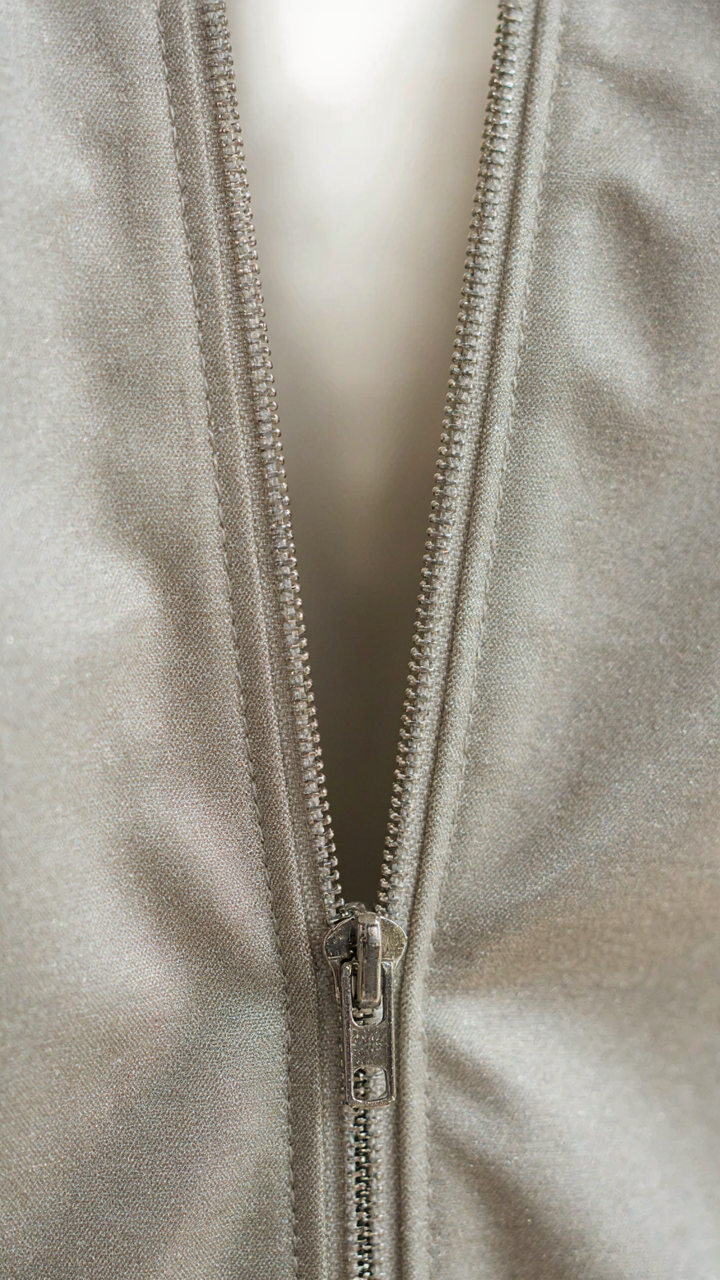
Real metallic cocktail dresses rely on clean construction underneath the finish because the garment has to function during a three to four hour event. Check the seams before buying. Run your finger along internal stitching. The thread should sit flat and consistent. The zipper should operate smoothly without catching fabric. The hem should be finished, not raw or glued. A well-constructed metallic dress in a simple cut beats an overcomplicated one loaded with false details every time because the construction supports the finish rather than competing with it.
The Albedo Protocol: Manipulating Light With Metallic Silver

When Light Becomes Currency
You want people to notice you without looking like you’re trying. That’s the real problem here. In physics, albedo measures how much light a surface reflects instead of absorbing. A metallic cocktail dress functions as controlled albedo—it bounces light deliberately rather than letting it vanish into dark fabric. The difference between metallic and matte isn’t aesthetic preference. It’s the difference between being seen and being invisible. Metallic fabrics use metal particles or coated fibers to create a reflective surface. Matte fabrics absorb most light wavelengths. This choice determines whether you command attention or fade into the room.

Most metallic dresses fail because designers treat reflectivity as an on-off switch. You either go full mirror or you don’t. The real mechanism is calibration. Polyester microfiber blended with aluminum particles creates controlled bounce—enough to register, not enough to blind. Nylon with metallic coating gives sharper reflection for structured designs. The weight and weave density of the base fabric determine how the light disperses. A loose weave scatters light diffusely. A tight weave creates directional reflection. Pick the material based on the specific light environment where you’ll wear it, not based on what looks shiny on a hanger.
The Geometry Of Visibility
Strategic placement isn’t about covering yourself in silver. It’s about creating light anchors where movement and shadow naturally occur. Drape metallic fabric across the collarbone or shoulder line, and light hits it constantly as you move your head. Place it along the hip or thigh, and it reflects light from leg movement. The torso stays relatively static, so metallic concentration there wastes the reflective potential. Side panels, asymmetrical cutouts, and draped elements work because they shift position with your body. Every shift redirects light to different parts of the room. This creates perceived movement and energy even when you’re standing still.
The real protocol: use metallic silver in zones where your body generates motion. Shoulders move when you talk. Hips move when you walk. Legs move when you gesture. Concentrate metallics there, and the dress becomes a kinetic light tool rather than a static garment. Solid metallic coverage from neck to hem actually reduces visual impact because the light pattern stays constant. Fragmented placement—metallic banding, cutouts, side inserts—creates dynamic reflection that reads as more interesting to the observer. Build your dress construction around movement zones, not around traditional symmetry.
Beyond Basic Shine: Curating Your Metallic Cocktail Dress Aesthetic
The Physics Of Fabric Finish
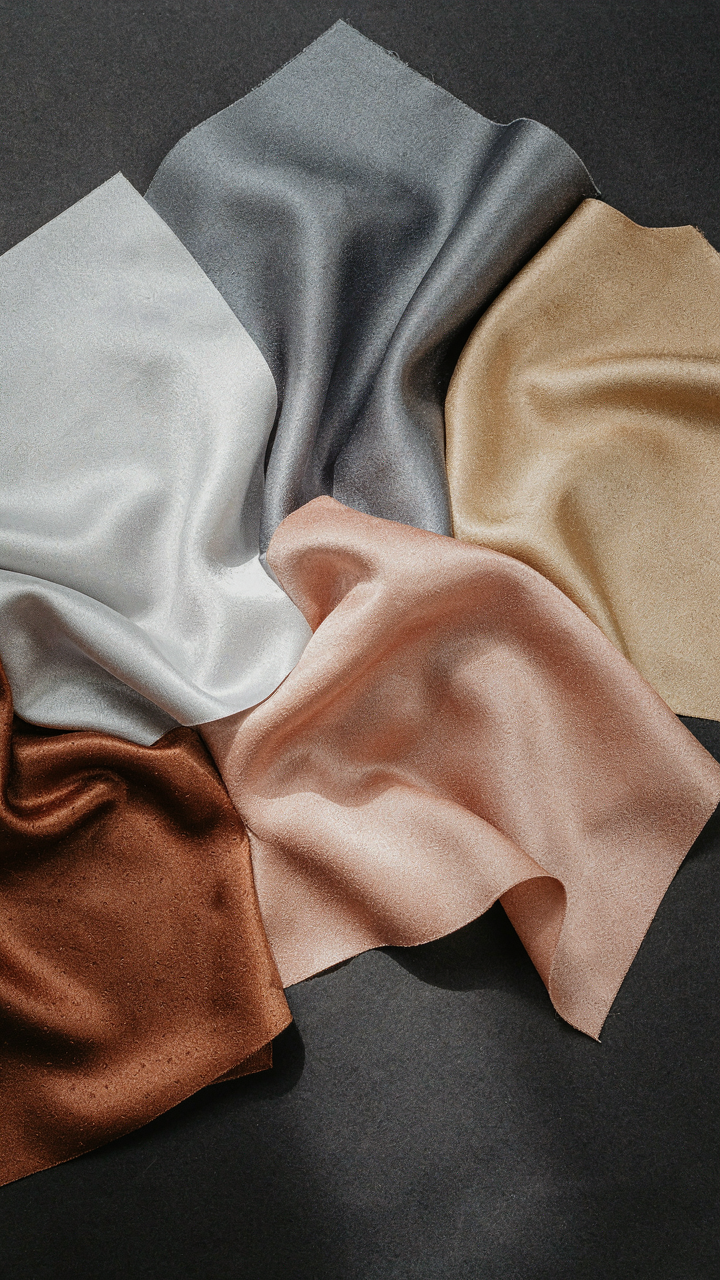
You want the dress to do the work for you so you don’t have to think about whether you look right. That’s the real calculation. Here’s the mechanism: fabric sheen is determined by how light scatters off the fiber surface, and this scatter pattern changes your perceived body silhouette in ways solid colors cannot. Smooth fibers reflect light in one direction, creating mirror-like shine. Textured fibers scatter light randomly, producing matte or diffused shimmer. A metallic dress’s actual shine level depends on fiber type, weave density, and finish treatment, not just the metallic pigment applied to it.

Polyester dominates metallic cocktail dresses because it holds synthetic luster indefinitely and costs less than natural fibers. Silk blends create softer, warmer shine and drape better, but cost more and fade faster under repeated wear. Lamé, which bonds metallic foil to a fabric backing, produces the most intense reflective effect but restricts movement and wrinkles easily. Cotton or linen metallics exist but rarely hold shine durably. Your choice here isn’t aesthetic preference—it’s the trade-off between durability, movement, and light reflection intensity you can tolerate for the specific event.
Formality Determines Metallic Intensity
A gold lamé dress reads costume at a corporate dinner. A subtle silver polyester reads underdressed at a nightclub. Formality levels demand specific sheen levels, and most people ignore this entirely. Black-tie events and galas require metallics that catch light without dominating the room—think satin-backed metallic blends or subdued champagne tones. Semi-formal events tolerate higher shine and bolder colors. Casual nightlife venues expect maximum visual impact, which means mirror-finish lamé or high-gloss polyester works. Metallic intensity should increase as formality decreases, not the reverse. Your sheen level should amplify the event’s energy level, not work against it.
The dress code determines your fabric choice, which determines your shine level, which determines whether you fit the visual hierarchy of the room. Check the event’s stated dress code and observe what attendees wore to similar events previously if possible. If no photos exist, ask the event organizer directly or look at the venue’s Instagram. When in doubt, choose satin-finish metallics over lamé or mirror finishes. They work across multiple formality levels without looking out of place or, worse, like you misread the room entirely.
The Gravitational Pull Of Silhouette: A Metallic Dress Masterclass
When Rigidity Becomes Your Weapon
You want the dress to do the work so you don’t have to think about how you’re standing. That’s the real motive here. Metallic fabrics operate under a physics principle called “memory”—they either hold shape or they don’t, and that choice determines whether you look controlled or collapsed. Most advice treats metallic and non-metallic fabrics the same. Wrong. Metallic fibers (polyester coated with aluminum or polyurethane laminate) have zero give compared to silk or cotton blends. Fluid metallics exist, but they’re engineered differently: they use thinner laminate layers and stretch blends underneath.

The mechanism is simple: stiff metallics demand architectural silhouettes because they can’t conform to softness. A sheath dress in rigid metallic works because the fabric enforces the line. A gathered metallic dress fails because the material fights the folds and creates bulk where you wanted drape. Choose structured silhouettes for high-shine, heavy-weight metallics. Choose fluid metallics only if the base fabric is a stretch blend with at least 15 percent elastane. The dress either supports your shape or fights it. Pick one intentionally.
The Sculpting Edge Of Strategic Folds
Drape is not decoration. Drape is geometry applied to fabric to redirect how light hits your body and how your body occupies space. In fashion design, controlled drape serves one function: it creates perceived shape by manipulating volume and shadow. A metallic dress with poorly placed folds reads as shapeless because metallic multiplies every angle—light bounces off every wrinkle, every bunch, every mistake. Strategic folds do the opposite.
The protocol: identify where you want to add visual mass (shoulders, bust) and where you want to subtract it (waist, hips). Place folds at subtraction zones only. A fold at the side seam pulls inward and creates definition. A fold across the chest spreads light and adds presence. Folds at the underarm kill the silhouette by catching light in unflattering angles. When you try on a metallic dress, move. Watch how the folds shift. If they don’t move with intention, the dress isn’t sculpting—it’s just bunching.
The Kinetic Energy Of Texture: Enhancing Your Metallic Cocktail Attire
Surface Disruption And Visual Weight
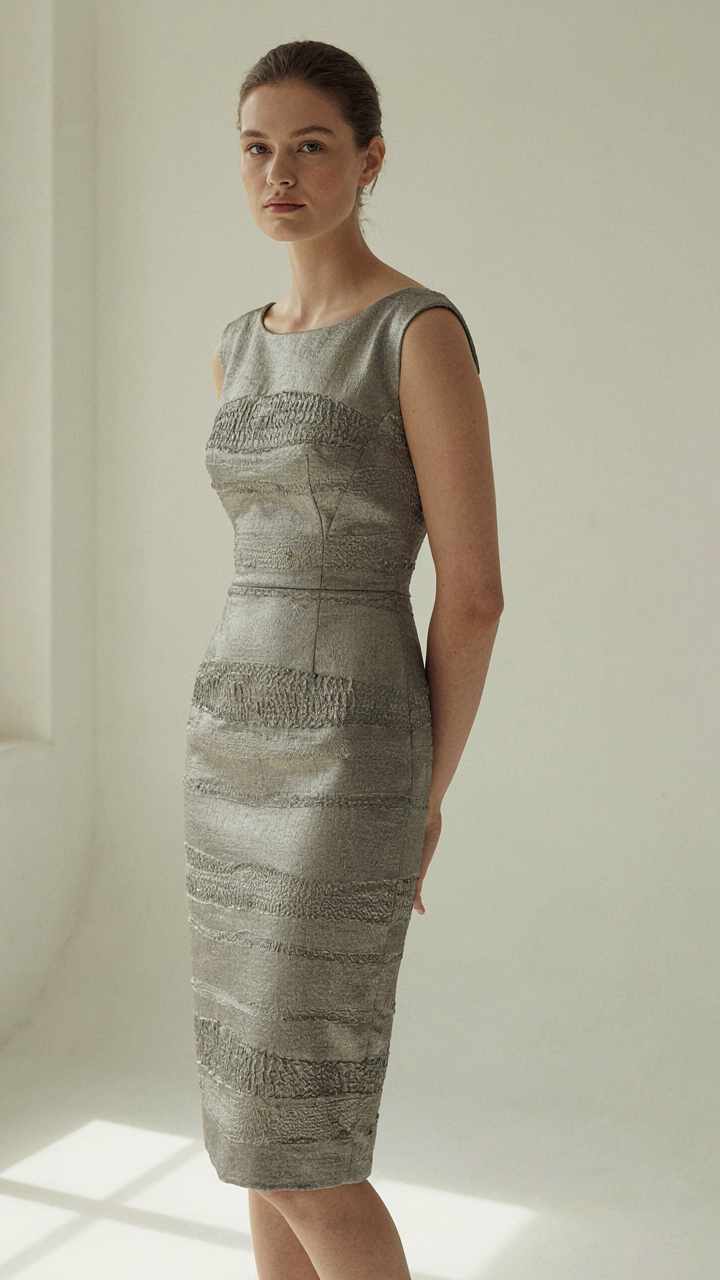
You want texture on your metallic dress because smooth metallics broadcast insecurity masquerading as elegance. Texture solves this by breaking up reflective surfaces, which forces the eye to work harder and registers as intentionality rather than desperation for shine. Psychology calls this the contrast effect: objects appear more defined when surrounded by variation. Apply this to metallics by introducing matte panels, pleats, or jacquard weaves that interrupt the uniform reflection. The dress stops looking like a mirror and starts looking like a choice.

The mechanism is straightforward. A completely smooth metallic fabric reflects light uniformly, which reads as one-dimensional and actually diminishes presence. Texture creates micro shadows and highlights that shift as you move, generating what designers call visual kinesis. This movement catches attention and holds it longer than flatness can. A metallic cocktail dress with textured sections automatically commands more spatial authority in a crowded room because your eye can’t process it in one glance.
Forgotten Metallic Finishes Worth Considering
Most people see metallic cocktail dresses and think only of satin or lamé. That’s incomplete. Metallic jacquard fabrics, which combine raised patterns with metallic thread, have been used in formal wear since the 18th century and create dimensionality without looking costume. Crinkled or crushed metal fabrics catch light differently than smooth versions, aging better and reading as higher craft. Burnout velvet with metallic undertones creates depth that standard metallics cannot achieve because the velvet pile absorbs light while metallic fibers reflect it.
Chainmail and mesh metallics sit underutilized in cocktail contexts. Chainmail creates deliberate gaps that break visual monotony while maintaining the metallic read. Mesh metallics layer sheer texture over structure, which sophisticated dressers recognize as the opposite of trying too hard. Consider also metallicized organza or tulle, which add airiness and movement that dense metallics cannot deliver. The texture here isn’t about roughness, it’s about strategic opacity and light diffusion. When selecting your metallic cocktail dress, assess the specific weave and finish before color or cut.
The Unwritten Laws Of Necklines For Dresses In Metallic
How Metallic Necklines Shape Your Face
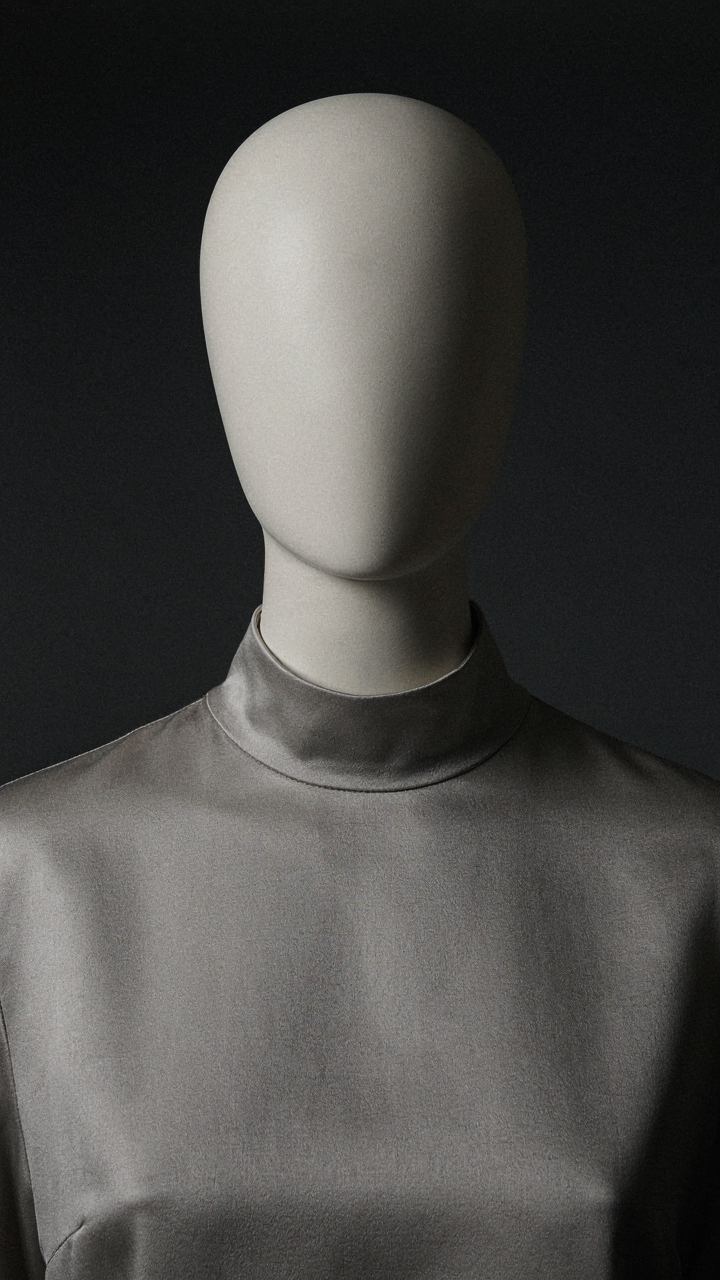
You’re worried the wrong neckline will kill your look. Here’s the mechanism: metallic fabric reflects light directly onto your face and neck, so the neckline geometry becomes a lighting system, not just decoration. A plunging V-neckline elongates your face and draws the eye downward, dispersing metallic reflection across a wider area. A high crewneck concentrates light at your jawline and cheekbones. A sweetheart neckline frames the face symmetrically, using metallic shine to emphasize bone structure rather than compete with it. Choose based on where you want the light to land, not on trend.

The mistake most people make is treating metallic necklines like regular fabric. They pick based on comfort or fashion magazines instead of the physics at play. Gold and silver metallics behave differently under club lighting and candlelight. Gold tends to warm the skin and works better with lower necklines that spread reflection. Silver concentrates harsh light, so it demands either high necklines or structured cutouts that break the reflection into smaller zones. Test your neckline choice under the exact lighting conditions of your event, not in daylight.
When The Wrong Neckline Kills Momentum
The standard advice says pick a neckline that flatters your body type. That’s incomplete. What matters is whether your neckline competes with or complements the metallic fabric’s natural attention-grabbing power. An off-shoulder metallic dress already pulls focus upward and outward. Add a sweetheart neckline and you’ve created visual chaos. The eye doesn’t know where to land. A simple boat neckline or straight across neckline lets the metallic do the work without fighting for dominance.
Metallic cocktail dresses with dramatic asymmetrical necklines look bold in photos but fail in motion. When you sit, move, or turn, the neckline shifts. The metallic reflection changes. The illusion breaks. Stick with necklines that stay in the same position regardless of your posture: halters, structured high necks, and clean V-shapes. The neckline itself should be a fixed asset, not a variable. This is why simple geometric necklines outperform trendy cutouts in real-world performance at night events.
The Apex Predator Approach To The Cocktail Party

Choosing Metallic For Authority
You want people to notice you without looking desperate for attention. This is about signal, not noise. In biology, predators use reflective surfaces to communicate dominance without aggression. A metallic dress works the same way. The finish itself becomes the weapon. Gold and silver don’t whisper—they broadcast. The material does the work so you don’t have to perform.

The cut matters more than the color. A metallic fabric on a poorly fitted silhouette reads as costume, not presence. Fit tight enough to show your shape, loose enough to move. The fabric should catch light at specific angles, not everywhere. This means construction quality determines whether you own the room or just shine in it.
Contrast, Placement, And Proportion
Everyone says wear metallics to stand out. What they miss is that metallics alone actually blend you into the visual chaos of a lit venue. You need opposition. Black metallics create depth and draw the eye to specific zones. Gold paired with deep jewel tones grounds the look. Silver reads clean with neutrals.
- Skin tone matching: Gold suits warm undertones and deeper complexions. Silver works across all skin tones but hits hardest on cool undertones. Test under the actual venue lighting, not your bathroom mirror.
- Sleeve and neckline strategy: Full coverage in metallic feels heavy. Sleeveless or thin straps let the dress breathe and prevent visual bulk. Open backs in metallic create visual interest without adding material.
- Length calibration: Midi metallics ground your presence. Short metallics can read juvenile depending on venue and execution. Maxi works only if the cut is precise and the fabric drapes, not pools.
- Footwear contrast: Nude or black shoes elongate your silhouette. Matching metallics to your dress dulls the entire effect. The dress should be the focus, not a metallic head-to-toe monotone.
- Accessory minimalism: One statement piece works. A metallic dress already commands attention. Additional metallics create visual fight. Choose one focal point and let the dress support it.
The rule: let the dress do the dominance work, then use contrast to control where attention lands. Move through the room and watch where eyes track. If they track to your face, the dress is working right.
Beyond Prom Night: Elevating The Short Party Dress
When The Dress Moves Up The Room
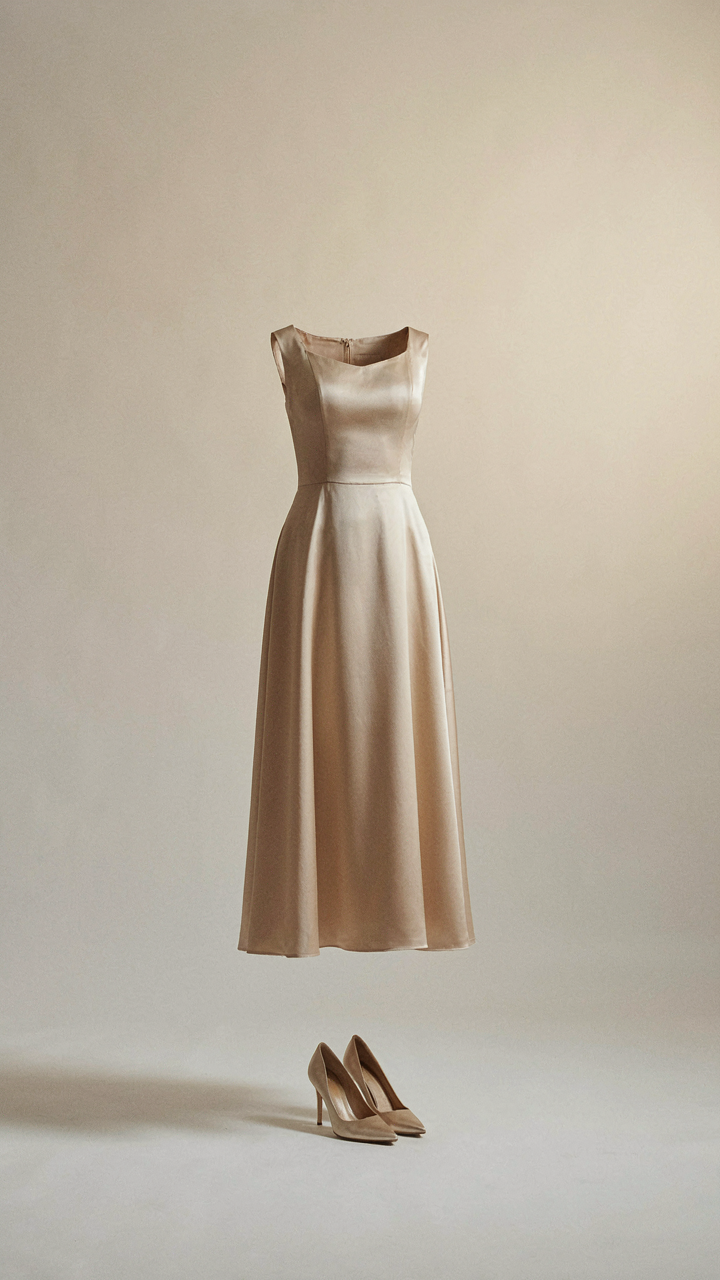
You want permission to wear a short metallic dress to an event where everyone expects floor-length, and you’re looking for the loophole. Here it is: fabric weight and drape are your signal system. A metallic short dress works at sophisticated events because construction, not hemline, determines formality. Heavy crepe-backed satin with structured seaming reads formal regardless of length. Thin lamé that clings reads juvenile. The mechanism is material density. Thicker fabrics with body create visual weight that compensates for exposed leg.

Context matters second. A metallic short dress at a formal dinner needs architectural precision in cut and zero wrinkles. Seaming should be clean, necklines restrained, and fit deliberate. Avoid anything that looks like it came from a mall. The venue, guest list, and host expectation determine whether short works. If you’re unsure, it doesn’t. A knee-length or midi metallic option in the same fabrication solves the problem without negotiation.
Restraint Is The Only Multiplier
Most accessorizing advice treats a metallic dress like a blank canvas asking for more. It’s the opposite. The dress already broadcasts; adding volume of jewelry, texture, or pattern dilutes its power instead of amplifying it. One deliberate piece outperforms five competing ones. A structured metallic clutch in the same finish creates cohesion rather than contrast. Minimal, matching metal tones compound the formality signal.
Shoes anchor the outfit’s sophistication tier faster than any other choice. Heeled metallic pumps or strappy sandals in silver or gold keep the dress in formal territory. Flat ballet flats or embellished sandals create a different message entirely. Hair pulled back and a single statement earring or bracelet finish the look without fighting the dress itself. The protocol is simple: subtract before you add.
The Unseen Art Of Maintenance: Sustaining Your Metallic Investment
Keeping Metallic Fabric Intact
You want this dress to last because dropping money on something disposable feels like failure. Here’s the mechanism: metallic fabrics work through a base textile with a metallic coating or laminated layer. That coating is the vulnerability. It doesn’t breathe like natural fiber, which means moisture and friction accelerate degradation faster than with standard cocktail dresses. The coating breaks down from repeated flexing at stress points.

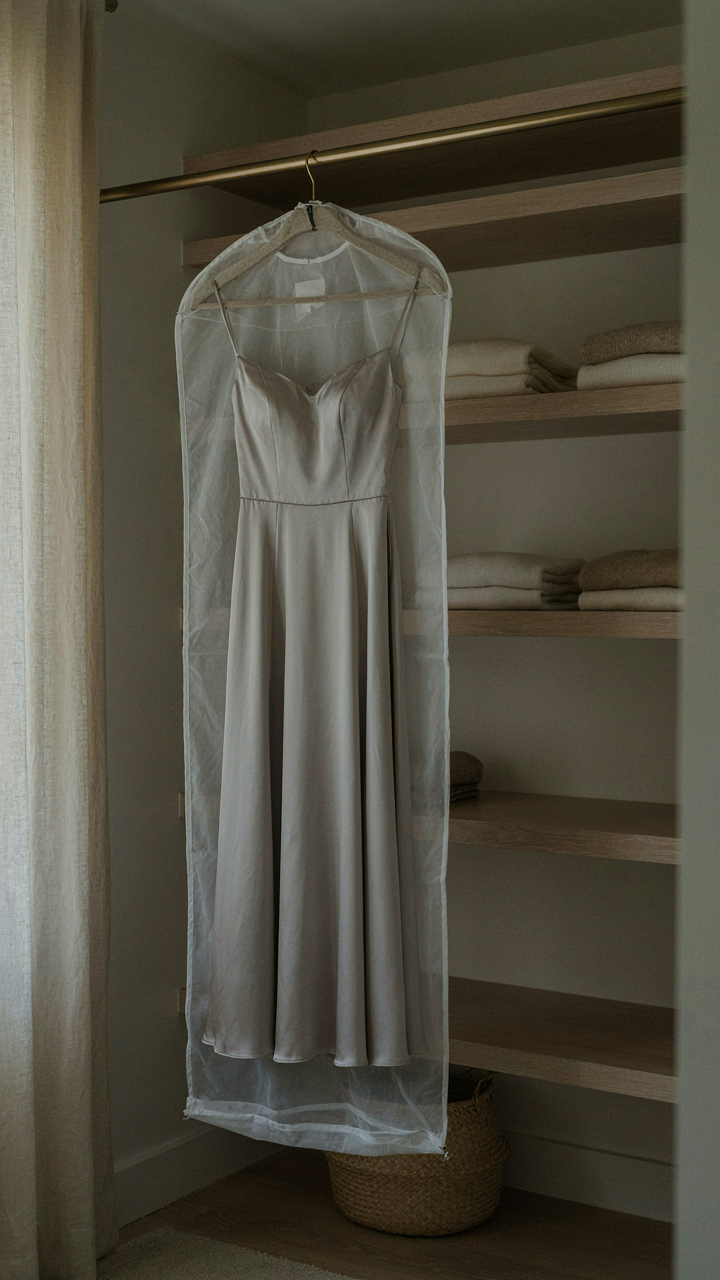
Storage matters more than cleaning frequency. Hang the dress on a padded hanger in a cool, dry closet away from direct sunlight. Never fold metallic cocktail dresses for extended periods because creasing the coated areas causes permanent cracking. Moisture is the enemy of longevity. A breathable garment bag protects from dust without trapping humidity. Check the care label first because some metallic fabrics are hand-wash only, while others tolerate gentle machine cycles on delicate settings.
Damage Prevention Through Real Constraints
Most advice tells you to “be careful,” which means nothing. The actual constraint is this: your body heat and sweat activate the chemical breakdown of metallic coatings. Wear a slip or nude undergarment beneath the dress to create a barrier between your skin and the coating. This single protocol cuts degradation in half because you’re removing the primary accelerant.
Avoid contact with sharp jewelry, rough textures, and seat friction. Metallic finishes snag and pill when rubbed against wool, suede, or velvet. The coating flakes off in visible streaks. Before wearing, inspect seams and hems for loose threads that catch the metallic layer. After wearing, let the dress rest flat on a bed for two hours before returning it to the closet. This allows the fibers to relax and prevents permanent wrinkles in the coating.
Your Metallic Dress Isn’t The Problem; Your Understanding Of Its True Power Is

Most women treat a metallic cocktail dress like armor they wear to blend in. Wrong move. That dress is a statement tool that demands you show up differently. Pull it from your closet tomorrow night and wear it like you’re the most interesting person in the room, because the dress already decided that for you. Stop hiding inside expensive fabric and start commanding the space you paid to occupy.



